Archive for the ‘ Muslims ’ Category

Flood Relief: A US Helicopter Pilot’s Tale

By John Bockmann for The Express Tribune

I am an American helicopter pilot in Pakistan.  My colleagues and I came because Pakistan and its people are enduring the aftermath of a devastating flood.  We were ordered to be here, and we miss our homes, but most of us are glad to help because we believe it’s the right thing to do.

I did not know much about Pakistan before I arrived here.  I knew of the food.  I knew of monsoons and Mohenjo Daro, Karachi and the Khyber Pass, but I had no concept of what Pakistan looked, felt, or sounded like. I even thought many Pakistanis would want us to leave.

I had no idea what the people would be like in person.  I wondered if they would resemble the images I’d seen on TV – would they protest our presence in the streets?  Would they tolerate us?  Or would they simply ignore us and go about their business?

After a few weeks of packing and planning, we were ready to deploy.  Full of excitement and some anxiety, I kissed my wife, took one last picture and was gone. We flew on a cargo jet from Alaska to Islamabad and the flight took so long I hardly knew whether it was day or night when we finally arrived.  Shouldering my gear, I headed to the terminal, weaving among Pakistani military and civilians on the tarmac.  A US Marine captain guided my group inside where we filled out information cards and relaxed in the cool quietness, surveying our area; smooth stone floors, low-slung furniture, and ceiling fans spinning high above.  The captain was talking to a Pakistani man who had been helping us.  Before we left, the man shook my hand and looked me in the eyes. “Thank you for coming to my poor country,” he said quietly.

I wanted to convey the depth of my feelings toward him and his homeland, but all I said was, “You would probably do the same for us” as I walked away.

That was my first interaction with a Pakistani here.

The days since arriving have passed quickly.  Every day we take rice, flour, blankets, housing materials, cooking oil – anything – up and down the Swat and Indus River Valleys.  We also bring sick, injured, and displaced people to hospitals and hometowns.

My first mission took us up the Indus river valley, and I embarrassed myself by constantly exclaiming its beauty.  Below me was the Karakorum Highway – the old Silk Road into China – and the valley itself, with terraced farmland overshadowed by majestic, snow-capped mountains.

Along with the beauty, though, I see reminders of the flood, bridges that are broken or missing and roads and fields that have been washed away.  I am beginning to see widespread reconstruction now as well and feel hope for the people in these villages.  They will soon have another way to get help.

I realize that some who read this will question our intentions and some may even wish us ill.  I certainly did not imagine that cheering throngs would greet us at each village though – we are always welcomed.  I did not expect our goodwill to be taken at face value by all of Pakistan, but we have received immense support.

I have learned in my time here that Pakistani people are truly gracious.  Strangers have invited me for chai and conversation.  Almost anyone will shake my hand and ask my name, inquire about my health and how I am getting along.  Instead of a handshake at our first meeting, I have sometimes been embraced.  “Strangers shake hands,” my new friend Mahmood explained, “but brothers hug each other.”

This warms my heart.  My mission, our mission, is straightforward, noble, and good.  I am deeply grateful to those who support us here, for we need all the help we can get in order to help those in need.   I am honored to do this work. I feel at home here beyond anything I could have expected.

Ah, home!  I miss my home, my wife and family; each day I wonder when I will see them again. But we have a humanitarian mission to accomplish.  Since I must be away, I’m glad that I am here, doing work that’s needed and good.

When I do return home, I will bring with me hundreds of pictures, dozens of journal entries, six duffel bags, and several recipes for local dishes that I have enjoyed, but I will also bring innumerable memories that I will treasure for life — memories of Pakistan and its people.  They have surprised me with friendship.  I hope that through our work of compassion we may surprise them with friendship as well.

Bill O’Reilly’s Full Of It..

By Gotham Chopra for The Huffington Post

A clip from The view is making the rounds today showing hosts Joy Behar and Whoopi Goldberg walking off set after engaging in a heated dialogue with guest Bill O’Reilly.

I’ve been talking dogs so long that it almost slipped my attention before I realized that this is the stuff I live for. Commenting on blustery (Fox) commentators like O’Reilly and Sean Hannity and just how unperceptive and misdirected they really are.

The gist of it: O’Reilly’s view that the Ground Zero Mosque should not be constructed because 1) 70% of Americans allegedly are against it and 2) Because Muslims killed Americans on 9/11. (His words, not mine)

1) So what? 65% of Americans also admit to knowing little or nothing about Islam. Crossover with O’Reilly’s aforementioned 70%? I’ll bet. Let’s not be led astray by the admittedly ignorant and misinformed.

Btw – those 70% are perfectly welcome to line up across the street and peaceably protest. Along with Muslims and everyone else practicing their faith free of persecution and prejudice, it’s one of the great privileges our constitution affords us. Yeah America!!!

2) Declaring Muslims killed Americans on 9/11 is dangerously inflammatory. Radicals who happened to be Muslim killed Americans and well over a dozen other nationalities that fateful and tragic day. By Mr. O’Reilly’s logic, Christians shouldn’t be allowed to build churches in Oklahoma City because Tim McVeigh was, after all, Christian and killed 168 people there. Wait, what? Yeah…

Here’s the thing: there are 1.3 billion Muslims in the world and growing. We can either go Bill’s way which is to perpetuate misconception, ignorance, conflict, rage, antagonism, and moral arrogance or we can engage in dialogue, empathy, creative conflict resolution and non-violent communication and possible create a more secure and sustainable future for our grandchildren. And yes, it will take time because evolution always does.

I’ll take the latter, but know Mr. O’Reilly will take the former because, he after all has ratings and book sales to consider…which I indeed empathize with.

You can buy Walking Wisdom wherever books are sold 🙂

Gotham Chopra, is the founder of Liquid Comics, the author of Walking Wisdom and other fine books, and the son of Dr. Deepak Chopra.

Islam: A Religion of Love

By William C Chittick for The Huffington Post

In the field of religious studies, the word “religion” is commonly understood to designate a worldview along with the various cultural phenomena that embody it, such as doctrine, ritual and art. In this broad sense of the term, everyone has a “religion,” whether acknowledged or not.

By studying the religions of others we can hope to gain a bit of distance from the unquestioned worldviews that underlie our own thinking. Such study is much like learning a new language — we gradually come to see the strengths and weaknesses of our own way of talking and writing. So also each religion, including the atheistic versions, has its own genius and its own limitations.

It seems fairly clear that most thoughtful people nowadays think that we live in interesting times. Some look to other worldviews precisely to gain insight into their own lives. This is a major factor in the great popularity of religious studies in North American universities. The fact that Rumi has become a household name points in the same direction.

Part of Islam’s intellectual heritage is a vast literature exploring and elucidating the nature of love, that most precious of human experiences. Now that I have been offered this forum and told to write about anything I feel like, well, I feel like talking about love. My two previous posts and the responses to them have highlighted the fact that most people have already made up their minds as to the nature of “true Islam.” So let me turn to something that most people, Muslim or not, typically leave out of their understanding of Islam, not least because of their obsession with the world of politics and catastrophes.

Ibn Qayyim al-Jawziyya was a famous theologian from Baghdad who died in 1350. Part of his fame lies in the fact that he was the leading disciple of one of the most cantankerous theologians of Islamic history, Ibn Taymiyya, a favorite of Sunni ideologues. Surprisingly for those who think that people of this ilk were narrow-minded bigots, Ibn Qayyim dedicated a large part of his prolific output to love, compassion, forgiveness and other such mild-mannered themes.

In one of his many books, written late in life — Ighathat al-lahfan, “Aid for the Sorrowful” — Ibn Qayyim says that the root of Islam is “love for God, intimacy with Him, and yearning to encounter Him.” He also says, “The revealed books of God, from the first to the last, revolve around the commandment to love.”

Remember that Muslim scholars traditionally spoke of “124,000 prophets,” beginning with Adam and ending with Muhammad. What Ibn Qayyim is trying to say is that every true religion — that is, all the religions established by the 124,000 prophets — are founded on love. It makes no difference who these prophets were or where they lived. When Muslims settled down in China, for example, they soon recognized that Confucius had been a prophet.

Claiming that “love” is the heart of Islam or of religion generally is not unusual in the Islamic context. Another example is provided by the major Sunni scholar Rashid al-Din Maybudi, who completed the longest pre-modern Persian commentary on the Quran in 1126. In explaining why the Quran calls itself “a book from God” (verse 2:89), he says that the book deserves to be titled “the eternal love” and that its content is “the story of love and lovers.”

One hundred years after Maybudi and as many years before Ibn Qayyim, Rumi’s famous teacher, Shams-i Tabrizi (who disappeared in the year 1247), said that the Quran is “a book of love,” or “a love letter” from God. He explained that if lawyers, philosophers and theologians fail to see it this way, that is because they are too preoccupied with their own specialties. First, you need to love God rather than law or theology or philosophy (or politics). Then, you should read the book. It is worth noting here that Shams, despite his reputation as an unlearned rascal of spirituality, was a professional Quran-teacher.

No one is surprised to hear that Rumi saw the Quran as a book of love, but most seem to think that Rumi was out of kilter with the Islamic mainstream. Nothing could be further from the truth. It is no accident that his six-volume epic poem in celebration of love, the Mathnawi, has often been called “the Quran in the Persian language.”

Shams al-Din Muhammad, the greatest and most beloved of Persian poets, provides another example. He is known by his chosen pen name, “Hafiz,” a word that designates someone who has memorized the Quran. Anyone familiar with his poetry knows that it is permeated with love and beauty, so much so that native-speakers can become intoxicated simply by listening to it. Hafiz holds that all religion and indeed, all human striving, is rooted in love. One verse will have to suffice:

Everyone, sober or drunk, is seeking a beloved,
everywhere, mosque or synagogue, is the house of love.

Muslim scholars who talk about love as the heart of Islam and of religion generally take the position that God’s love and compassion motivated him to create human beings so that they could love him in return. The goal of creation is to bring lovers into existence, and the goal of lovers — that is, you, me and everyone else — is to escape false loves and return to what we really love. This, for them, is the key message of the Quran, “the story of love and lovers.”

William C. Chittick, is a Professor of Religious Studies, Department of Asian and Asian American Studies, State University of New York, Stony Brook. For a survey of the role of love in religion generally, including his essay on Islam, see the volume edited by Jeff Levin and Stephen G. Post, Divine Love: Perspectives from the World’s Religious Traditions.

Muslim-Jewish Evening Raises $$ For Pakistanis

By Cristina Costantini for The New Haven Independent

Farhan and Shahida Soomro became American citizens on Friday. Originally from the Sindh Province in Pakistan, they have lived in the U.S. for ten years. Two days after becoming Americans, they held an event with their friends Ron Miller and his wife Cathie Miller to raise money and awareness about the floods which have ravaged their province in Pakistan. “It’s been a busy weekend!” said Shahida Soomro.

The event—“An Evening to Support Pakistani Flood Relief at the Community Foundation for Greater New Haven”—was held Sunday night at the Community Foundation for Greater New Haven on Audubon.

The Soomro family is Muslim; the Miller family, of Westville, is Jewish. The idea for the event, a “Jewish-Muslim collaboration,” came about over a dinner with old friends, Cathie Miller said. The Millers then sought the support of the Social Action Committees of the Temple Emanuel of Greater New Haven and the Congregation Mishkan Israel of Hamden, which were instrumental in the organization of the event.

After guests Sunday night enjoyed a wide spread of ethnic foods, Farhan Soomro opened the presentation by relaying the severity of the crisis. While the Soomro family was not present during the flooding, they have stayed in constant contact with their relatives in the region. With a fifth of Pakistan underwater, 20 million people displaced, and two million homes destroyed, Soomro explained, farmers have lost two seasons of crops and the Pakistani government cannot meet the food and shelter demands the disaster has triggered.

The event raised about $3,000.

Timothy Rogers, the director of charitable gifts for Save the Children in Westport described to guests where their donations would go. “We have been in Pakistan for 31 years now,” said Rogers. “What are we doing in Pakistan now? We’re providing emergency medical care, we’re distributing tents, shelter kits, food, and other supplies, we’re distributing water purification tablets, and bed nets.”

According to Cathie Miller, Save the Children was chosen as the charity for the event because over 90 percent of money donated goes to direct relief, and the Soomros have heard anecdotal evidence from their relatives and friends in the Sindh province that Save the Children has been effective in the region.

Rogers raised questions about the lack of American response and media coverage to the tragedy. Americans have given disproportionally less than other developed nations in the world. Although Save the Children has sent about $46 million to help alleviate suffering in Pakistan, the American public’s contribution makes up only $2.3 million of this total. Norwegian citizens, a country with a much smaller population, has already donated over $4 million in assistance funds through Save the Children. Rogers posited that donations might be down because of “donor fatigue due to recent tragedies” or because of a lack of media coverage. Ron Miller linked the trend to Islamophobia.

“I think even though we don’t want to say it, Americans have a hard time understanding and appreciating Muslims,” Miller said. “And one of the reasons that, myself as a Jew, and I’ve talked with various synagogues which they are present here today, is the importance for both Jews and Muslims and Muslims and Americans to come to grips with who we are, what our cultures are and what our values are. One of our reasons for doing this, was in our small way, a Muslim family, and a Jewish family, over dinner decided to try to do something to show that that gulf doesn’t exist between us and our Muslim colleagues.”

One audience member admitted her initial hesitations about donating to the cause. “My knee-jerk reaction, when I heard about this event, was how do I know my money isn’t going to go to the Taliban? Of course this was ignorant, and I really think the reason we don’t talk about this flood is that our government is struggling with Pakistan,” she said.

A Pakistani member of the audience responded to her comments, suggesting that crisis alleviation in the area is one of the best ways to win a war of ideas: “The Pakistani people realize that Save the Children is coming from the American people. Winning the hearts and minds is the key thing, our policy makers have allocated $30 million to public diplomacy work in Pakistan. It should be a no-brainer that if we use our resources to help get their homes together that this will be much more effective.”

“This is a great opportunity for us to change and affect the hearts and the minds of the Pakistani people,” he concluded.

The event drew around 50 guests.

Donations are still being accepted. Checks can be made out to “Save the Children” with a memo note: “Pakistani Flood.” In order to count as a part of the Greater New Haven response to this disaster the check must be sent to The Community Foundation for Greater New Haven, 70 Audubon Str., New Haven 06510 Attn: Lee Cruz. All donations will be sent to Save the Children within the week.

Sufi Shrine in Pakistan Is Hit by a Lethal Double Bombing

By Huma Imtiaz for The New York Times

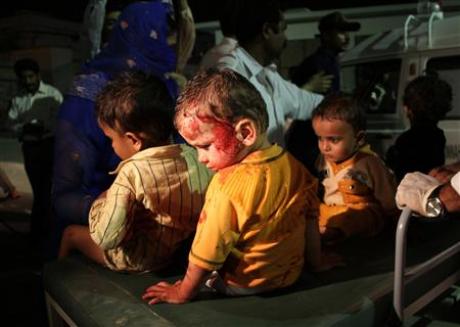
KARACHI, Pakistan — A nearly simultaneous double explosion that may have been the work of suicide bombers struck a crowded Sufi shrine in Pakistan’s main port city of Karachi on Thursday evening, killing at least 7 people and wounding 65, officials and rescue workers said. Pakistani women mourn the death of a child killed in an attack on the shrine Sufi Saint Abdullah Shah Ghazi.

It was the first attack on the shrine, the grave of the Sufi saint Abdullah Shah Ghazi, and it appeared to be an effort by hard-line militants in Pakistan to strike at the heart of Sufism, the moderate, more flexible blend of Islam practiced by most Pakistanis.

The attack came three months after militants struck one of the country’s most important Sufi shrines in the city of Lahore, which left at least 42 people dead.

The first blast at the Karachi shrine occurred at the main gate. Police officials said that within 25 seconds, the second blast hit the steps leading up to the saint’s grave.

Rescuers said three children were among the dead.

Dr. Seemi Jamali, deputy director of the emergency ward at Jinnah Hospital in Karachi, where the wounded were taken, said “many of them have severe injuries, trauma to the head and neck.”

Television channels showed body parts strewn at the site and chaotic scenes of unnerved, sobbing survivors.

The home minister of Sindh Province, Zulfiqar Mirza, told reporters that the severed heads of two suspected suicide bombers had been recovered from the site. Police officials were more circumspect, saying it was premature to conclude that the attack was by suicide bombers.

Local TV channels reported later that Tehreek-e-Taliban, or Movement of Taliban, an umbrella group of militants, had claimed responsibility for the attack. The group is known to have trained cohorts of suicide bombers for attacks in Pakistan and Afghanistan.

The attackers apparently chose Thursday night because it is one of the most crowded times of the week at the shrine, when hundreds throng to seek blessings from the saint and to receive free food.

The government closed all shrines in the city after the bombings.

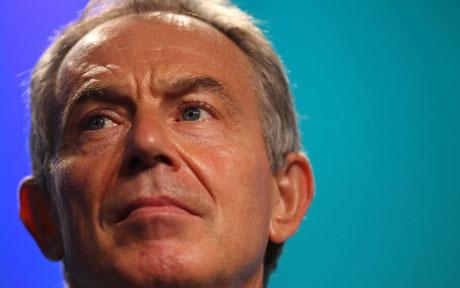
The West is Being ‘Outmanoeuvred’ by Violent Islamist Extremists: Tony Blair

By John Swaine for The Telegraph

In a speech in New York, the former prime minister said that warnings over the past week of new terrorist plots against Europe should remind people that they remain under threat.

Mr Blair said a “narrative” that Muslims were under attack from the US and its allies, who act out of support for Israel, had been allowed to take hold, aided by “websites and blogs”.

A fresh confrontation is needed because it will be impossible to defeat extremism “without defeating the narrative that nurtures it”, he said.

“The practitioners of extremism are small in number. The adherents of the narrative stretch far broader into parts of mainstream thinking,” Mr Blair told the Washington Institute for Near East Policy.

“It is a narrative that now has vast numbers of assembled websites, blogs and organizations.” Mr Blair said it was “absurd” that some people were surprised at how powerful Islamist extremist groups were, given the amount of funding they received and indoctrination they spread.

“Measure, over the years, the paucity of our counter-attack in the name of peaceful coexistence,” he said. “We have been outspent, outmaneuvered and out-strategized.”

Mr Blair said a tendency to “sympathize” with extremism was not only dangerous but also disempowering for moderate Muslims, because it made people resent them as much as extremists.

He said he was “intrigued” by the fact that western leaders, including Barack Obama, the US President, felt the need to condemn Terry Jones, a pastor who threatened to burn a Koran.

“Suppose an Imam, with thirty followers, in Karachi was to burn a bible,” he said. “I can barely imagine a murmur of protest. It wouldn’t be necessary for the President of Pakistan to condemn it because no one here would remotely consider he supported it.”

The former prime minister also called on the west to make it “crystal clear” to Iran that their acquisition of a nuclear bomb would be unacceptable to the entire “civilized world”.

“Go and read the speech of Iran’s President to the United Nations just days ago here in New York, and tell me that is someone you want with a nuclear bomb,” he told those who disagree.

He stressed that the achievement of a peace settlement between Israel and Palestine would remove “much of the poison which the extremists use”.

And he defended his decision to invade Iraq and Afghanistan, saying: “whatever you think of the original action, we enabled the people to choose their Government”.

Mr. Blair last night appeared on the Late Show with David Letterman on American television. He said that satirists like Letterman had been wrong to paint George W. Bush as unintelligent. “You don’t get to this position by being a fool,” he said.

Female Imams Blaze Trail Amid China’s Muslims

By Louisa Lim for National Public Radio

It is 5:50 in the morning, and dark shadows scurry through narrow alleys to the mosque, as the call to prayer echoes from a minaret in Kaifeng. This city in central China’s Henan province has an Islamic enclave, where Muslims have lived for more than 1,000 years.

In an alleyway called Wangjia hutong, women go to their own mosque, where Yao Baoxia leads prayers. For 14 years, Yao has been a female imam, or ahong as they are called here, a word derived from Persian.

As she leads the service, Yao stands alongside the other women, not in front of them as a male imam would. But she says her role is the same as a male imam. “The status is the same,” Yao says confidently. “Men and women are equal here, maybe because we are a socialist country.”                                        

Yao Baoxia is a female ahong, or imam, at Wangjia Hutong Women’s Mosque in Kaifeng, in central China. She sits alongside believers during prayers, not in front of them like male imams. She believes male and female imams are equal in their role as teachers and leaders of prayers. Yao Baoxia is a female ahong, or imam, at Wangjia Hutong Women’s Mosque in Kaifeng, in central China. She sits alongside believers during prayers, not in front of them like male imams. She believes male and female imams are equal in their role as teachers and leaders of prayers.

China has an estimated 21 million Muslims, who have developed their own set of Islamic practices with Chinese characteristics. The biggest difference is the development of independent women’s mosques with female imams, something scholars who have researched the issue say is unique to China.

Yao studied to become an imam for four years, after being laid off from her job as a factory worker. First she studied under a female imam, then with a male imam alongside male students.

Her main role is as a teacher, she says. “When people come to pray, they don’t know how to chant the Quran, so my job is teaching people about Islam, helping them to study one line at a time and leading the prayers,” she says.

Mosques Began As Quranic Schools

The modest courtyard of Wangjia Hutong Women’s Mosque contains within it the entire history of China’s mosques for females. It’s the oldest surviving women’s mosque in China, with one gray plaque high up on a wall dating back to 1820.

Like other women’s mosques, it began as a Quranic school for girls. These sprang up in the late 17th century in central China, including Shanxi and Shandong provinces. They morphed into women’s mosques about 100 years ago, starting in Henan province. Remembering her own childhood, 83-year-old Tang Guiying says even then the women’s mosque was the only place a girl could receive education.

“I didn’t go to school when I was small,” she chuckles. “We were all too poor; none of us girls studied. But I came here to play and study. The old imam was very, very old — she was 80-something, and she had bound feet.”

Tang is sitting in the mosque’s washroom as she talks. This is where women conduct ritual ablutions before prayer. This space — and the mosque itself — doubles as a social center for these women, the heart of a community. In Kaifeng, there are 16 women’s mosques, one-third the number of mosques for males.

A Unique Chinese Tradition

Shui Jingjun, of the Henan Academy of Social Sciences and co-author of a book on the phenomenon, says that so far there are no women’s mosques in other countries. In most of the Muslim world, women pray behind a partition or in a separate room, but in the same mosque as men.

Shui points out that the women’s mosques in China are administered independently, by women for women, in addition to being legally separate entities in some cases. “After reform and opening up [in 1979], some female mosques registered independently, which shows the equality of male and female mosques,” she explains.

Controversy still rages in the Muslim world about whether women can be imams. In 2006, Morocco became the first country in the Arab world to officially sanction the training of female religious leaders.

China is the only country to have such a long history of female imams. However, there are things that, according to the customary practices of Chinese Muslims, female imams can’t do.

They can’t, for instance, lead funeral rituals or wash male corpses. Forty miles away in the provincial capital of Zhengzhou, white-sashed mourners wail as they process through the streets carrying the coffin from a mosque. No female imams are participating.

Opposition Still Exists To Women’s Roles

In central China, most Muslims support the female mosques, but there is some resistance closer to China’s border with Pakistan and Afghanistan, closer to the harder-line Wahhabi and Salafi influences.

“Historically in northwestern China, there were no female mosques,” says Shui, the researcher. “There was resistance because people thought that building female mosques was against the rules of religion. But in central China and most provinces, people think it’s a good innovation for Islam.”

In the past decade, some women’s mosques have been established in northwest China. The phenomenon appears to be spreading, helped politically by the Islamic Association of China, a state-controlled body that regulates Islam and issues licenses to practice to male and female imams alike.

This is part of the anomaly that is religion in China — the atheist Chinese authorities are endorsing a practice some Muslims find unacceptable. While there is broad support among Kaifeng’s Muslims for female mosques and imams, there is also some opposition.

“The education of Islamic women is a very important job,” says Guo Baoguang, of the Islamic Association of Kaifeng. But he admits that he has been criticized for organizing religious education forums for Muslim men and women to take part in together.

“There were some criticisms that women ought to be in the home, and ought not take part in social activities. I think these criticisms are too conservative, and don’t account of the importance of women’s education in Islam,” he says.

Guo believes that when it comes to female imams, China is leading the way.”Given the fast development of China’s economy, and as its political status rises, I think Chinese Islam will become more important in the Islamic world,” Guo says. “The developments Chinese Islam has made, like the role played by Chinese women, will be more accepted by Muslims elsewhere in the world.”

Greatest Challenge Is Economic

In the women’s mosques, most of the faithful are elderly. Young women with families often don’t have the time to worship, especially given the lengthy purification rituals several times a day.

Third-generation imam Sun Chengying, who has been practicing for 21 years, worries about the future.

“I haven’t had any students since 1996,” she says, shaking her head. “Women don’t want be imams anymore, because the salaries in the mosques are too low. No one is willing to do it.”

Female imams sometimes earn as little as $40 a month, one-third of what can be earned in other jobs. Younger women need to earn more to support their families. And so it appears the future of female imams in China is threatened — not by the state, not by resistance from inside Islam, but by the forces of market economics.

-Pakistanis for Peace Editor’s Note- Chinese Muslim female imams are unique to China but this practice of allowing female imams is one that should be encouraged throughout the Muslim world. Female imams as well as increased rights for women in Islam across the board will only help strengthen Muslim societies.

Message to Muslims: I’m Sorry

By Nicholas D Kristof for The New York Times

Many Americans have suggested that more moderate Muslims should stand up to extremists, speak out for tolerance, and apologize for sins committed by their brethren.

Go to Columnist Page »That’s reasonable advice, and as a moderate myself, I’m going to take it. (Throat clearing.) I hereby apologize to Muslims for the wave of bigotry and simple nuttiness that has lately been directed at you. The venom on the airwaves, equating Muslims with terrorists, should embarrass us more than you. Muslims are one of the last minorities in the United States that it is still possible to demean openly, and I apologize for the slurs.

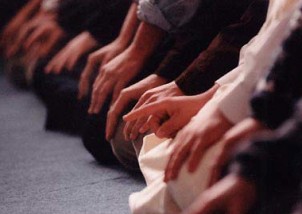
I’m inspired by another journalistic apology. The Portland Press Herald in Maine published an innocuous front-page article and photo a week ago about 3,000 local Muslims praying together to mark the end of Ramadan. Readers were upset, because publication coincided with the ninth anniversary of 9/11, and they deluged the paper with protests.

So the newspaper published a groveling front-page apology for being too respectful of Muslims. “We sincerely apologize,” wrote the editor and publisher, Richard Connor, and he added: “we erred by at least not offering balance to the story and its prominent position on the front page.” As a blog by James Poniewozik of Time paraphrased it: “Sorry for Portraying Muslims as Human.”

I called Mr. Connor, and he seems like a nice guy. Surely his front page isn’t reserved for stories about Bad Muslims, with articles about Good Muslims going inside. Must coverage of law-abiding Muslims be “balanced” by a discussion of Muslim terrorists?

Ah, balance — who can be against that? But should reporting of Pope Benedict’s trip to Britain be “balanced” by a discussion of Catholic terrorists in Ireland? And what about journalism itself?

I interrupt this discussion of peaceful journalism in Maine to provide some “balance.” Journalists can also be terrorists, murderers and rapists. For example, radio journalists in Rwanda promoted genocide.

I apologize to Muslims for another reason. This isn’t about them, but about us. I want to defend Muslims from intolerance, but I also want to defend America against extremists engineering a spasm of religious hatred.

Granted, the reason for the nastiness isn’t hard to understand. Extremist Muslims have led to fear and repugnance toward Islam as a whole. Threats by Muslim crazies just in the last few days forced a Seattle cartoonist, Molly Norris, to go into hiding after she drew a cartoon about Muhammad that went viral.

And then there’s 9/11. When I recently compared today’s prejudice toward Muslims to the historical bigotry toward Catholics, Mormons, Jews and Asian-Americans, many readers protested that it was a false parallel. As one, Carla, put it on my blog: “Catholics and Jews did not come here and kill thousands of people.”

That’s true, but Japanese did attack Pearl Harbor and in the end killed far more Americans than Al Qaeda ever did. Consumed by our fears, we lumped together anyone of Japanese ancestry and rounded them up in internment camps. The threat was real, but so were the hysteria and the overreaction.

Radicals tend to empower radicals, creating a gulf of mutual misunderstanding and anger. Many Americans believe that Osama bin Laden is representative of Muslims, and many Afghans believe that the Rev. Terry Jones (who talked about burning Korans) is representative of Christians.

Many Americans honestly believe that Muslims are prone to violence, but humans are too complicated and diverse to lump into groups that we form invidious conclusions about. We’ve mostly learned that about blacks, Jews and other groups that suffered historic discrimination, but it’s still O.K. to make sweeping statements about “Muslims” as an undifferentiated mass.

In my travels, I’ve seen some of the worst of Islam: theocratic mullahs oppressing people in Iran; girls kept out of school in Afghanistan in the name of religion; girls subjected to genital mutilation in Africa in the name of Islam; warlords in Yemen and Sudan who wield AK-47s and claim to be doing God’s bidding.

But I’ve also seen the exact opposite: Muslim aid workers in Afghanistan who risk their lives to educate girls; a Pakistani imam who shelters rape victims; Muslim leaders who campaign against female genital mutilation and note that it is not really an Islamic practice; Pakistani Muslims who stand up for oppressed Christians and Hindus; and above all, the innumerable Muslim aid workers in Congo, Darfur, Bangladesh and so many other parts of the world who are inspired by the Koran to risk their lives to help others. Those Muslims have helped keep me alive, and they set a standard of compassion, peacefulness and altruism that we should all emulate.

I’m sickened when I hear such gentle souls lumped in with Qaeda terrorists, and when I hear the faith they hold sacred excoriated and mocked. To them and to others smeared, I apologize.

God Bless Islam with Courageous Leadership

By Ebrahim Moosa for Religion Dispatches

As Muslim Americans and millions around the world celebrate the end of Ramadan 2010 what will they pray for? What was the spiritual harvest of the month of fasting, prayer, deep reflection, and discipline? Given the growing hostility directed towards Muslims in the United States and the horrible deeds perpetrated by persons aligned to Islam on 9/11 and elsewhere in the world, I for my part, will be making two prayers.

The first is to urge Muslims to affirm their solidarity with all of humanity. The words of this prayer come from a tradition of the Prophet Muhammad. It reads:

Oh Allah, Lord (Rabb) of all things. I testify that You alone are the Lord of the world, Lord of all things… I testify that all servants of God are one family… Make me and my family truthful to you in every moment of life in this world and the next. Oh powerful and generous one, hear and respond to my prayers…

My second prayer is that God bless Islam with a religious leadership that has a modicum of Solomonic wisdom and tons of moral courage.

Why these two prayers? I think many Muslims have forgotten the message of humanism and solidarity with all creation that are the cornerstones of Islam. All servants of God are part of a single family, the Prophet Muhammad taught. So how can faiths be at war, if only to serve earthly gods? Many of our religious leaders have forgotten that our theologies, teachings, and practices were means to serve a transcendent Creator; not for idolatrous ends. Many of the most prominent Muslim religious and moral authorities the world over—clergy, intellectuals, scholars, politicians—have, through silence and inaction, invited a plague of craven violence on a number of Muslim societies. In a manner of speaking, in many places, the asylum is in charge of the mosque. Religious leaders are more interested in cowing to public adulation through demagoguery than in showing courage and exhorting people to piety and sanity.

Check if the sermon in the`Id al-Fitr (End of Fasting) sermon at your mosque hinted at the cowardly acts of al-Qaeda who killed thousands on September 11 and elsewhere. Or if deeds of the Somalian Shabab who killed dozens of Ugandans watching a soccer World Cup match in the suburbs of Kampala caused outrage. Has anyone been able to keep track of the death toll inflicted in Pakistan by Taliban suicide bombers, who most recently killed more than 60 people in Quetta because they were Shi’a? Did anyone even notice that a radical Muslim group in India chopped off the hand of a Catholic professor in the state of Kerala in July for apparently offending the image of the Prophet Muhammad in an exam questionnaire?

`Id is a day of celebration with family and friends. But it is unconscionable if Muslims do not think seriously and act in unison about the deep moral crises afflicting our communities here and abroad. To think critically is not to bow to the hate of the Islamophobes, it is a sign of strength and faith. Those who claim that there are no “moderate” Muslim voices denouncing acts of violence committed by Muslims are wrong, and yes, there are many good things happening in Muslim societies that do not make the headlines. Yet it is delusional to think that the evil masquerading as faith does not erode the belief and values each Muslim.

To Muslim Americans I say, next time you wonder why young men like the Times Square bomber Faisal Shahzad become entangled in conspiracies to commit acts of violence in this country and abroad please ask the following questions: What is the qualification of the imam at your mosque? Is he enriched by the best of American and Islamic culture, in tune with his environment, or is he preaching a theology no longer even appropriate for people in Iran, Egypt, or Pakistan? Does he teach the tradition creatively and help people think imaginatively? Or does he focus on impieties and promote the virtues of paraphernalia like the dress code and the mandatory length of facial hairs? If the imam is as wise as the religious leader in the Canadian sitcom Little Mosque on the Prairie, it will be a huge step up.

Mosque committees share their burden of responsibility too. Often they appoint preachers by applying the lowest and cheapest standard; theological diversity is frequently absent and enlightened thinking is considered too challenging and burdensome for them to contemplate. Will the smart Muslims in America and around the world stand up and be counted?

-Originally printed on Sep 9, 2010 for Religion Dispatches. Ebrahim Moosa is a professor of Islamic Studies at Duke University and an author of several books on Islam.

For Imam in Muslim Center Furor, a Hard Balancing Act

By Anne Barnard for The New York Times
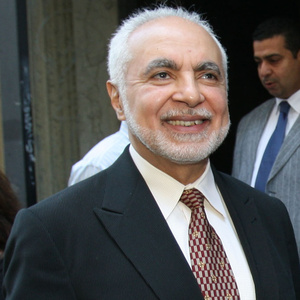
Not everyone in the Cairo lecture hall last February was buying the imam Feisal Abdul Rauf’s message. As he talked of reconciliation between America and Middle Eastern Muslims — his voice soft, almost New Agey — some questioners were so suspicious that he felt the need to declare that he was not an American agent.

Muslims need to understand and soothe Americans who fear them, the imam said; they should be conciliatory, not judgmental, toward the West and Israel.

But one young Egyptian asked: Wasn’t the United States financing the speaking tour that had brought the imam to Cairo because his message conveniently echoed United States interests?

“I’m not an agent from any government, even if some of you may not believe it,” the imam replied. “I’m not. I’m a peacemaker.”

That talk, recorded on video six months ago, was part of what now might be called Mr. Abdul Rauf’s prior life, before he became the center of an uproar over his proposal for a Muslim community center two blocks from the World Trade Center. He watched his father, an Egyptian Muslim scholar, pioneer interfaith dialogue in 1960s New York; led a mystical Sufi mosque in Lower Manhattan; and, after the Sept. 11 attacks, became a spokesman for the notion that being American and Muslim is no contradiction — and that a truly American brand of Islam could modernize and moderate the faith worldwide.

In recent weeks, Mr. Abdul Rauf has barely been heard from as a national political debate explodes over his dream project, including, somewhere in its planned 15 stories, a mosque. Opponents have called his project an act of insensitivity, even a monument to terrorism.

In his absence — he is now on another Middle East speaking tour sponsored by the State Department — a host of allegations have been floated: that he supports terrorism; that his father, who worked at the behest of the Egyptian government, was a militant; that his publicly expressed views mask stealth extremism. Some charges, the available record suggests, are unsupported. Some are simplifications of his ideas. In any case, calling him a jihadist appears even less credible than calling him a United States agent.

Growing Up in America

Mr. Abdul Rauf, 61, grew up in multiple worlds. He was raised in a conservative religious home but arrived in America as a teenager in the turbulent 1960s; his father came to New York and later Washington to run growing Islamic centers. His parents were taken hostage not once, but twice, by American Muslim splinter groups. He attended Columbia University, where, during the Six-Day War in 1967 between Israel and Arab states like Egypt, he talked daily with a Jewish classmate, each seeking to understand the other’s perspective.

He consistently denounces violence. Some of his views on the interplay between terrorism and American foreign policy — or his search for commonalities between Islamic law and this country’s Constitution — have proved jarring to some American ears, but still place him as pro-American within the Muslim world. He devotes himself to befriending Christians and Jews — so much, some Muslim Americans say, that he has lost touch with their own concerns.

“To stereotype him as an extremist is just nuts,” said the Very Rev. James P. Morton, of the Church of St. John the Divine, in Manhattan, who has known the family for decades.

Since 9/11, Mr. Abdul Rauf, like almost any Muslim leader with a public profile, has had to navigate the fraught path between those suspicious of Muslims and eager to brand them as violent or disloyal and a Muslim constituency that believes itself more than ever in need of forceful leaders.

One critique of the imam, said Omid Safi, a professor of religious studies at the University of North Carolina, was that he had not been outspoken enough on issues “near and dear to many Muslims,” like United States policy on Israel and treatment of Muslims after 9/11, “because of the need that he has had — whether taken upon himself or thrust upon him — to be the ‘American imam,’ to be the ‘New York imam,’ to be the ‘accommodationist imam.’ ”

Akbar Ahmed, chairman of Islamic studies at American University, said Mr. Abdul Rauf’s holistic Sufi practices could make more orthodox Muslims uncomfortable, and his focus on like-minded interfaith leaders made him underestimate the uproar over his plans.

“He hurtles in, to the dead-center eye of the storm simmering around Muslims in America, expecting it to be like at his mosque — we all love each other, we all think happy thoughts,” Mr. Ahmed said.

“Now he has set up, unwittingly, a symbol of this growing tension between America and Muslims: this mosque that Muslims see as a symbol of Islam under attack and the opponents as an insult to America,” he added. “So this mild-mannered guy is in the eye of a storm for which he’s not suited at all. He’s not a political leader of Muslims, yet he now somehow represents the Muslim community.”

Andrew Sinanoglou, who was married by Mr. Abdul Rauf last fall, said he was surprised that the imam had become a contentious figure. His greatest knack, Mr. Sinanoglou said, was making disparate groups comfortable. At the wedding, he brought together Mr. Sinanoglou’s family, descended from Greek Christians thrown out of Asia Minor by Muslims, and his wife’s conservative Muslim father.

“He’s an excellent schmoozer,” Mr. Sinanoglou said of the imam.

Mr. Abdul Rauf was born in Kuwait. His father, Muhammad Abdul Rauf, graduated from Cairo’s Al-Azhar University, the foremost center of mainstream Sunni Muslim learning. He was one of many scholars Egypt sent abroad to staff universities and mosques, a government-approved effort unlikely to have tolerated a militant. He moved his family to England, studying at Cambridge and the University of London; then to Malaysia, where he eventually became the first rector of the International Islamic University of Malaysia.

As a boy, Feisal absorbed his father’s talks with religious scholars from around the world, learning to respect theological debate, said his wife, Daisy Khan. He is also steeped in Malaysian culture, whose ethnic diversity has influenced an Islam different than that of his parents’ homeland.

In 1965, he came to New York. His father ran the Islamic Center of New York; the family lived over its small mosque in a brownstone on West 72nd Street, which served mainly Arabs and African-American converts. Like his son, the older imam announced plans for a community center for a growing Muslim population — the mosque eventually built on East 96th Street. It was financed by Muslim countries and controlled by Muslim diplomats at the United Nations — at the time a fairly noncontroversial proposition. Like his son, he joined interfaith groups, invited by Mr. Morton of St. John the Divine.

Hostage Crisis

Unlike his son, he was conservative in gender relations; he asked his wife, Buthayna, to not drive. But in 1977, he was heading the Islamic Center in Washington when he and Buthayna were taken hostage by a Muslim faction; it was his wife who challenged the gunmen on their lack of knowledge of Islam.

“My husband didn’t open his mouth, but I really gave it to them,” she told The New York Times then.

Meanwhile, the younger Mr. Abdul Rauf studied physics at Columbia. At first, he recalled in interviews last year, it was hard to adjust to American social mores. By 1967, he and a Yale student, Kurt Tolksdorf, had bonded at summer school over their shared taste in women and fast cars. But Mr. Tolksdorf said his friend never subscribed to the “free love” of the era.

When the 1967 war broke out in the Middle East, Mr. Tolksdorf said, Mr. Abdul Rauf reacted calmly when Israeli students tried to pick a fight. A classmate, Alan M. Silberstein, remembers debating each day’s news over lunch.

“He was genuinely trying to understand the interests of American Jews — what Israel’s importance was to me,” he said. “There was a genuine openness.”

In his 20s, Mr. Abdul Rauf dabbled in teaching and real estate, married an American-born woman and had three children. Studying Islam and searching for his place in it, he was asked to lead a Sufi mosque, Masjid al-Farah. It was one of few with a female prayer leader, where women and men sat together at some rituals and some women do not cover their hair. And it was 12 blocks from the World Trade Center.

Divorced, he met his second wife, Ms. Khan, when she came to the mosque looking for a gentler Islam than the politicized version she rejected after Iran’s revolution. Theirs is an equal partnership, whether Mr. Abdul Rauf is shopping and cooking a hearty soup, she said, or running organizations that promote an American-influenced Islam.

A similar idea comes up in the video of his visit to Cairo this year. Mr. Abdul Rauf, with Ms. Khan, unveiled as usual, beside him, tells a questioner not to worry so much about one issue of the moment — Switzerland’s ban on minarets — saying Islam has always adapted to and been influenced by places it spreads to. “Why not have a mosque that looks Swiss?” he joked. “Make a mosque that looks like Swiss cheese. Make a mosque that looks like a Rolex.”

In the 1990s, the couple became fixtures of the interfaith scene, even taking a cruise to Spain and Morocco with prominent rabbis and pastors.

Mr. Abdul Rauf also founded the Shariah Index Project — an effort to formally rate which governments best follow Islamic law. Critics see in it support for Taliban-style Shariah or imposing Islamic law in America.

Shariah, though, like Halakha, or Jewish law, has a spectrum of interpretations. The ratings, Ms. Kahn said, measure how well states uphold Shariah’s core principles like rights to life, dignity and education, not Taliban strong points. The imam has written that some Western states unwittingly apply Shariah better than self-styled Islamic states that kill wantonly, stone women and deny education — to him, violations of Shariah.

After 9/11, Mr. Abdul Rauf was all over the airwaves denouncing terrorism, urging Muslims to confront its presence among them, and saying that killing civilians violated Islam. He wrote a book, “What’s Right With Islam Is What’s Right With America,” asserting the congruence of American democracy and Islam.

That ample public record — interviews, writings, sermons — is now being examined by opponents of the downtown center.

Those opponents repeat often that Mr. Abdul Rauf, in one radio interview, refused to describe the Palestinian group that pioneered suicide bombings against Israel, Hamas, as a terrorist organization. In the lengthy interview, Mr. Abdul Rauf clumsily tries to say that people around the globe define terrorism differently and labeling any group would sap his ability to build bridges. He also says: “Targeting civilians is wrong. It is a sin in our religion,” and, “I am a supporter of the state of Israel.”

“If I were an imam today I would be saying, ‘What am I supposed to do?’ ” said John Esposito, a professor of Islamic studies at Georgetown University. “ ‘Can an imam be critical of any aspect of U.S. foreign policy? Can I weigh in on things that others could weigh in on?’ Or is someone going to say, ‘He’s got to be a radical!’ ”
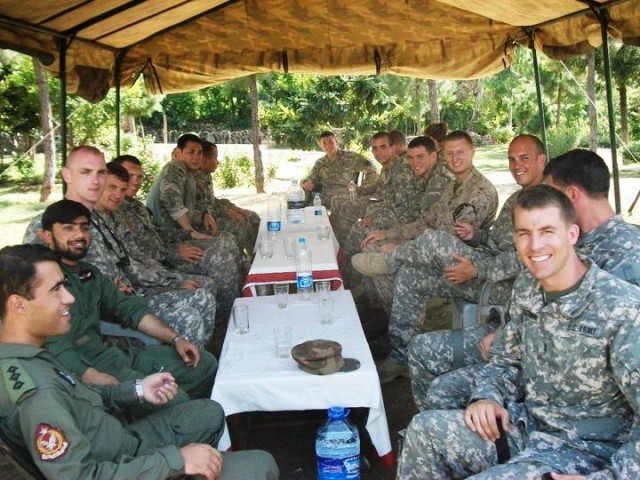
Aisam-Ul-Haq Qureshi Delivers Message of Peace at U.S. Open After Indo-Pak Express Suffers Defeat

By Stefan Bondy for NY Daily News

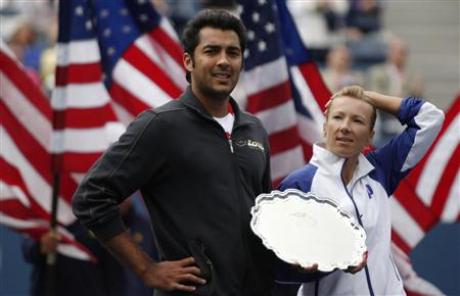
Aisam-Ul-Haq Qureshi delivered his message loud and peacefully, and it had nothing to do with forehands or backhands, or even the doubles title he failed to win.

As a Muslim from Pakistan playing in the U.S. Open doubles final, he said New York needed his words the most, as post-9/11 counsel. So the 30-year-old grabbed the microphone and addressed the estimated 15,000 at Arthur Ashe Stadium – probably the biggest crowd to watch a Grand Slam doubles final – and made sure the moment wasn’t lost.

“I want to say something on behalf of all Pakistanis,” he said following Friday’s 7-6 (5), 7-6 (4) defeat to the Bryan brothers, Bob and Mike. “Every time I come here, there’s a wrong perception about the people of Pakistan.

“They are very friendly, very loving people. We want peace in this world as much as you guys.”

The crowd cheered. By now, such poignancy is expected from Qureshi and, to a lesser extent, his doubles partner, Rohan Bopanna of India. Together, they’ve formed the politically charged tandem known as the Indo-Pak Express, breaking down barriers with their kinship and jettisoning expectations with their recent play.

Their respective neighboring countries have warred with and terrorized each other since the 1940s, citing religion as their great chasm. But Qureshi and Bopanna, a Hindu, represent peace, both on and off the court. Indian and Pakistani fans filled pockets of Arthur Ashe Friday, arriving as early as two hours before the match. U.N. ambassadors from both countries sat side-by-side in the President’s Box – the second straight match they’ve attended together – cheering the same unexpected struggle their team brought to the greatest doubles team of all time, the Bryan brothers. The 16th-seeded Qureshi and Bopanna followed up their run to the Wimbledon quarterfinals with five wins in Flushing.

“They’ve proven that when Indians and Pakistanis get together we can raise fire,” Pakistan ambassador Abdullah Hussain Haroon said. “I think on a people-to-people basis, they’re setting an example that the politicians should follow.”

Prize money and rankings were never a motivating factor, Qureshi said, only good news for his flood-stricken countrymen and a platform to express his message of American misunderstanding. He also defended the decision to build a mosque near the World Trade Center site.

“For me, as a Muslim, that’s what makes America the greatest country in the world – freedom of religion, freedom of speech,” Qureshi said. “If the mosque is built, I think it’s a huge gesture to all the Muslim community out there in the world. I would really appreciate it.”

Pakistan, which borders Afghanistan, has long been considered a headquarters of Al Qaeda.

Qureshi said he’s been stopped at airport immigration “every time” in New York – three hours at a time – including after his latest flight for the Open. And on the eve of the ninth anniversary of the 9/11 attacks, he wanted to defend his country’s masses.

“Since September 11, every time I come to the States or western countries I feel people have the wrong impression about Pakistan as a terrorist nation,” Qureshi said. “I just wanted to declare that we are very friendly, loving and caring people, and we want peace in this world as much as Americans and the rest of the world wants.

“There are extremists in every religion, but just because of them you cannot judge the whole country as a terrorist nation. I just wanted to get this message across as a Pakistani.”

A Muslim’s Prayer for Peace and Religious Tolerance

Merciful God, You made all of the people of the world in Your own image and placed before us the pathway of salvation through different Preachers who claimed to have been Your Saints and Prophets. But, the contradictions in their teachings and interpretations of them have resulted in creating divisions, hatreds and bloodshed in the world community. Millions of innocent men, women and children have so far been brutally killed by the militants of several religions who have been committing horrifying crimes against humanity, and millions more would be butchered by them in the future, if You do not help us find ways to reunite peacefully.

In the name of God, The Compassionate, The Merciful, look with compassion on the whole human family; take away the controversial teachings of arrogance, divisions and hatreds which have badly infected our hearts; break down the walls that separate us; reunite us in bonds of love; and work through our struggle and confusion to accomplish Your purposes on earth; that, in Your good time, all nations and races may jointly serve You in justice, peace and harmony. (Amen)

-Pakistanis for Peace, September 11, 2010

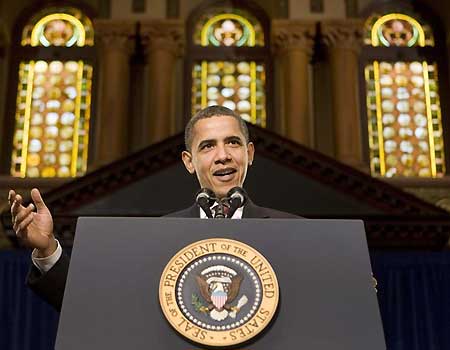
Obama Calls For Religious Tolerance

By Christi Parsons, Tribune Washington Bureau

In a news conference on the eve of Sept. 11, he speaks of his own Christianity, the economy, and asks Americans to remember they’re not at war with Islam, but with terrorists that distort the faith.

President Obama spoke of his own Christianity on Friday while calling on Americans to turn away from religious divisions and join together as “one nation, under God.” It was a rare personal reference from the president, coming in a news conference that sounded more like a homily to the nation before a somber anniversary.

“As somebody who relies heavily on my Christian faith in my job, I understand the passions that religious faith can raise,” Obama said. “But I’m also respectful that people of different faiths can practice their religion, even if they don’t subscribe to the exact same notions that I do, and that they are still good people, and they are my neighbors and they are my friends, and they are fighting alongside us in our battles.”

In his first news conference in several months, Obama talked up his plans for stimulating economic growth and complained about Republican obstruction to his proposals. He said people should remember that there is still a terrorist threat to Americans nine years after Sept. 11, even though U.S. troops overseas are successfully compromising the ability of extremists to carry out new plots.

Capturing or killing Osama bin Laden and Ayman Zawahiri, Al Qaeda’s No. 2 leader, is a high priority, he said, though it “doesn’t solve all our problems.”

But as a Florida preacher held out the possibility of a Koran-burning demonstration on Saturday, tying it to plans for the development of a mosque near the site of the World Trade Center attacks, even Obama’s messages about the economy and overseas conflict were interwoven with a larger message about religious tolerance.

If there is an increase in suspicion and resentment of Islam in this country, Obama said, it arises during trying times when the country is feeling a sense of general anxiety. He said he worries that the threat of a Koran burning could endanger American troops and cause others around the country to think it’s a good way to get attention.

The proposed New York City mosque has run up against the “extraordinary sensitivities around 9/11,” he said. “But I go back to what I said earlier: We are not at war against Islam,” Obama said. “We are at war against terrorist organizations that have distorted Islam or falsely used the banner of Islam to engage in their destructive acts.”

Americans, he said, must cling to the shared belief in religious tolerance. “We’ve got millions of Muslim Americans, our fellow citizens, in this country,” he said. “They’re going to school with our kids. They’re our neighbors. They’re our friends. They’re our co-workers. And when we start acting as if their religion is somehow offensive, what are we saying to them?”

Obama devoted a substantial portion of his Friday remarks to the economy, beginning with the announcement that he is naming Chicago economist Austan Goolsbee to head his Council of Economic Advisors. Goolsbee is an economist with expertise in tax policy.

The president refused to characterize his proposal to spend money on infrastructure as a “second stimulus” plan, despite one reporter’s prodding and even though he said he has “no problem with people saying the president is trying to stimulate growth and hiring.”

“I would assume that’s what the Republicans think we should do, to stimulate growth and jobs,” Obama said. Senate Republican leader Mitch McConnell of Kentucky fired off a speedy critique, saying Americans are more interested in lower taxes and reductions in federal spending.

“The president spent a lot of time blaming others and talking about more government spending,” McConnell said. “But Americans want to know that Washington is going to stop the reckless spending and debt, the burdensome red-tape and job-killing taxes.”

But McConnell and others hastened to echo the president’s words about who, exactly, the U.S. is targeting with its war effort. “I agree wholeheartedly with the president that we need to do everything we can to fight Al Qaeda, while being clear who the enemy is,” McConnell said. “This war on terror goes on,” McConnell said. “We are confident in the strength and goodness of our cause and our country.”

Qureshi Uses U.S. Open Platform to Call For Understanding

By Matt Majendie for Reuters

Pakistan’s Aisam-ul-Haq Qureshi used the platform of the U.S. Open to deliver a message of peace on the eve of the ninth anniversary of the September 11 attacks in New York and Washington.

Qureshi lost in Friday’s men’s doubles final alongside India’s Rohan Bopanna, the other half of a unique partnership nicknamed the “Indo-Pak Express.”

In his on-court after-match speech, Qureshi said: “I feel there’s a very wrong perception of Pakistan as a terrorist country.

“We are a very peace-loving country and we want peace as much as you.”

Peace has very much been the message of Bopanna and Qureshi since their doubles partnership began with them sporting “Stop War, Start Tennis” sweatshirts in a bid to improve relations between their two countries.

Qureshi delved further into the message he was trying to get across at Arthur Ashe Stadium after the 7-6 7-6 defeat to Americans Bob and Mike Bryan.

“Since September 11, every time I come to the States or Western countries, I feel people have the wrong impression about Pakistan as a terrorist nation,” he said.

“There are extremists I think in every religion but, just because of them, you can’t judge the whole country as a terrorist nation.

“I just want to get this message across as a Pakistani.”

Qureshi said he vividly recalled the moment of the 2001 attacks in New York, which resulted in the deaths of nearly 3,000 people.

An up-and-coming tennis player at the time, he had been at a training camp in Holland when he saw events unfold at the World Trade Center in lower Manhattan.

“It was strange but I was going through the channels and I actually thought it was a movie or something,” he recalled. “I switched the channel again and then felt like it was the same movie on a different channel.

“I was kind of confused. Everything was mostly in Dutch so I couldn’t really understand. Then I actually realized what had happened. It was a very shocking moment.”

Why The Mosque Needs To Be Built At Ground Zero

By Manzer Munir for Pakistanis for Peace

This is already my third article on the NYC Mosque controversy. When I started my Facebook group and website Pakistanis for Peace by the same name nearly two years ago, I did it in response to the tragic and callous terrorist attacks in Mumbai India in 2008 and my desire to see peace in that region and beyond. As a firm believer in God, but not a particularly religious person, I never would have imagined that I would end up making a big part of my focus not just peace between India and Pakistan, but also peace and understanding between the Muslim and non-Muslim worlds as well. Heaven knows I have my own questions and issues with certain Muslim laws and practices and I of all people am the least suitable to be one of its defenders. However, I am a strict constitutionalist and as mentioned in my previous articles on this subject, I have advocated the building of the mosque simply on First Amendment religious freedom grounds.

Now here I am in less than one month, I find myself already writing a third article on the mosque controversy. Much has been written already by others on this topic also, but I wanted to give a few more opinions from a rational, moderate and patriotic American Muslim perspective, one which is missing in the current dialogue.

We know that many people who are opposed to the building of the mosque in lower Manhattan simply ask “Why there?” “Why would “they” possibly want to build it there of all places? It is seen as an affront by them that Muslims should want to build an inter-faith mosque, community center and a planned outreach ministry in the heart of Manhattan two city blocks from the site of the World Trade Center and the attacks of September 11, nine year ago. In fact, last night, while watching CNN, I saw Rick Sanchez ask former Governor George Pataki of New York about the Ground Zero Mosque controversy and his views on the subject. “Why there of all places would you build a mosque?” asked Gov. Pataki.  Why there?  As if he had fully bought into a favorite point of right wing groups that “Muslims build mosques at places they conquer” and that this is somehow a celebration of their “victory” over us because of the deaths of so many of our fellow countrymen on 9/11. That statement is wrong on so many levels that normally I would not even waste energy answering a clearly misguided assumption, but I will make an exception to clear the air as that is precisely what this article aims to do.

First of all, the 9/11 attacks were not a result of the actions of mainstream Muslims or the collective billion plus adherents of the religion but instead by members of a terror group known as Al-Qaeda, whose leader, Osama Bin Laden, we were very familiar and friendly with during the Soviet Afghan War of the 1980’s as he had assisted us in stopping the Red Army from conquering Afghanistan at the height of the Cold War between the two superpowers. Also a mosque is a place of worship. It is not a place where bombs are made and terrorists are trained either in ideology or practical training. To equate the building of a mosque to a direct link to terrorism or some other nefarious activity is in itself a deeply offensive argument to any Muslim, if one must speak of insensitivities.

So are we at war with Islam? This really is the only question we must ask ourselves to understand the debate over the mosque controversy. Debra Burlingame, the co-founder of 9/11 Families for a Safe and Strong America, issued a statement saying that “Building a 15-story mosque at Ground Zero is a deliberately provocative act.” This is simply not true as it is not exclusively just a mosque, but rather a multi layered structure that will house an auditorium, restaurant, gymnasium, library, conference rooms and multi-faith prayer halls devoted to allowing non-Muslim visitors the chance to come explore the center and at the same time take time to meditate and pray according to their own customs.

The center, as its leader Imam Faisal Abdul Rauf pointed out recently, “will establish this community as the place where the moderate Muslim voice condemns terrorism and works for new, peaceful, and harmonious relationships with all New Yorkers and indeed all Americans.” Just the fact that this center will have a restaurant, conference rooms, a library and multi-faith dialogue and prayer rooms, already makes this proposed building the most uniquely American mosque in the world. Nowhere else will one find a mosque so devoted to understanding and bridge building between Islam and other religions and no other place and location will it be more sorely needed in the years to come than in New York City! Too often, many non-Muslims complain about the self segregation practices of Muslims and indeed a characteristic of all minority communities to be in their own bubble and for not having a lot of interaction between other communities or faiths.

Many times my own non-Muslim friends have been curious and inquired on how Muslims pray and what they believe in and what exactly goes on in a typical mosque. But typically a small, regular mosque does not have the sort of access and resources to satisfy this curiosity and neither the infrastructure nor the logistics to handle curious visitors of other faiths. Primarily mosques in this country have been built with Muslims as its sole audience and occupants. This is the first time a mosque and cultural center is being proposed that will eliminate the barriers that many non-Muslims feel when it comes to understanding Islam and Muslims and actually takes into considerations its non-Muslim visitors when planning the structure. For many years to come, many Americans and indeed tourists from around the world will be coming to the proposed complex now under construction at the site of the World Trade Centers that will house the 9/11 Memorial. What better place  will there be than a few blocks away from the 9/11 Memorial where visitors can be told about the Islam of the great boxer Muhammed Ali and hall of fame basketball player Kareem Abdul Jabbar and not that of evil individuals such as Mohammed Atta and Osama Bin Laden? Where else should they be told of the difference between the Islam that is practiced by comedian Dave Chappelle and Oprah’s Dr Mehemt Oz versus the one practiced by the backward barbarian murderers known as the Taliban in the mountains of Afghanistan? Where else can they come to know of the type of Islam practiced by patriotic Bronze Star and Purple Heart decorated deceased US soldier Kareem Rashad Sultan Khan or the one practiced by the deranged Major Nidal Malik Hasan, the accused perpetrator of the Fort Hood Army base who sadly killed 13 fellow soldiers almost 1 year ago?

Now in order to satisfy the opponents and critics of the center, I also believe that all the funding needs to be transparent, there needs to be a multi-faith board of directors, and the Muslim leadership needs to be cognizant that this is indeed a very special place for all Americans and a place of national mourning. This mosque needs to therefore address the attacks of 9/11 and also needs to be a reminder not just to non-Muslims of the tragedy that was 9/11 but more importantly it needs to  serve as a constant reminder to the rest of the Muslim world of the terrible actions some have committed in the name of Islam.

Why build it here of all places you may still ask? Why not here? What other place in America, nay, what other place in the world did Islam take the biggest blow to its reputation and image? It is Ground Zero and lower Manhattan itself where this religion of over a billion people got literally hijacked and its message of peace and tolerance got forever destroyed in the eyes of the world’s non-Muslims by events of 9/11 and the actions of a handful of radical extremists who were terrorists and part of a network known as Al-Qaeda. So, why not build a monument to tolerance and understanding for the very religion that took the biggest hit to its global credibility by events that happened in this area?  I believe that it is not out of any provocation or insensitivities that Muslims want to build a community center near Ground Zero, but rather because this is the one place in the world where truth about the religion needs to be told and the need to showcase the real Islam of the world’s Muslims rather than allow the story of the hatred and violence perpetrated by the terrorists to be the only story one hears when discussing the religion of Islam. This center needs to be a part of the healing process we must go through as a nation and will be a testament for the rest of the Muslim world outside our shores of the grandeur of our nation and for our acceptance of Muslims and for not allowing the stereotyping of a religion of hundreds of millions of people over the actions of 19 evildoers. 

Trust me, the terrorists will triumph if this mosque does not get built.  We must not forget who we’re fighting against, and what we are indeed fighting for. The Taliban, the terrorists and other radical Islamists do not respect religious freedom or tolerance. Their distorted and narrowly interpreted Wahhabi views of Islam leave no room for dissent, debate or disagreements. These terrorists are responsible for more deaths of dissenting and or differing Muslims than of any other religion at their hands. These terrorists are Islam’s biggest enemy and threat and we must remember that this is not a war between us and the Muslim world. It is a war between us and Al-Qaeda. And to prevent moderate, peace seeking, bridge building, and patriotic American Muslims from building a structure that will help ease the pain and misunderstanding of the events of that dark day 9 years ago in September will only play into the hands of those who hate us for our freedoms. To have Muslim Americans potentially lose these very freedoms due to all the pressure, in this land built on freedom and liberty, will only strengthen the hands of the terrorists and bolster their claims that this is truly a war on Islam and that they are second class citizens who do not even have the fundamental rights to worship that is afforded to all Americans. This is a battle for Islam itself, one where the forces of evil are attempting to commandeer the entire religion towards their narrow minded interpretation of the sacred texts. We must hold steadfast to our principles and ideals and support moderate Islam in taking back the religion from the extremists and allowing this mosque to be built will go a long ways in turning the tide of radicalism, and ensuring that we stand for our time tested principles, no matter how unpopular they may be in the current climate.

-Manzer Munir, founder of Pakistanis for Peace, a proud Pakistani American and peace activist, is a freelance journalist that writes for PakistanisforPeace.com and other publications.