Archive for the ‘ Muslims ’ Category

A Brave Man Killed

A New York Times Editorial

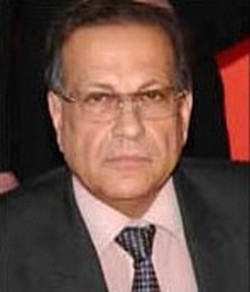
Some twisted person has created a Facebook page in support of Malik Mumtaz Hussain Qadri, the bodyguard accused of assassinating Salman Taseer, the governor of Pakistan’s Punjab province. Mr. Taseer was a brave man who had called for the repeal of Pakistan’s outrageous anti-blasphemy law.

Whoever killed Mr. Taseer must be condemned and repudiated, not extolled. Otherwise, Pakistan will certainly continue on a downward spiral in which intolerance and self-destruction triumph.

The governor’s death is a tragedy not just for Pakistan but for all who understand that just and stable societies need honest debate and full respect for minorities. Pakistan cannot afford to lose any fair-minded leaders, especially at a time when it is struggling with a virulent insurgency, an unraveling economy and an unraveling central government.

Mr. Taseer — a longtime ally of President Asif Ali Zardari and his wife, Benazir Bhutto, who was assassinated in 2007 — was Pakistan’s most prominent defender of the rights of women and minorities. He had pressed hard for repeal of the blasphemy law, which imposes a mandatory death sentence on anyone convicted of insulting Islam.

The law is popular with the Muslim majority but is routinely manipulated to settle personal rivalries and persecute minorities. And Mr. Taseer had been particularly outspoken, calling for leniency for a Christian mother of four who was sentenced to death under the law, in a case that stemmed from a dispute in her village.

Pakistani officials, who have the bodyguard in custody, say he killed Mr. Taseer because of the governor’s opposition to the blasphemy law. But there are far too many unanswered questions: Did the suspect act alone? Why did the Punjab police assign a religious conservative to protect Mr. Taseer? News reports first said nine bullets were fired into Mr. Taseer, and hospital officials later said he was hit 24 times. Yet other members of the security detail did not shoot to stop Mr. Qadri, who surrendered with his hands up.

Pakistani authorities need to investigate thoroughly and share their full findings with the Pakistani people.

The United States and the international community must make clear their outrage over this killing. So must every Pakistani. The country’s political leaders and the Pakistani media also need to consider whether the way they have shaped the debate on the blasphemy law — some have argued that mentioning reform is blasphemy punishable by death — is further fueling conflict.

Ultimately, only Pakistanis can save their nation, and they must answer the more profound questions: Do they want a country in which Muslims and non-Muslims can peacefully co-exist? Or one in which religious zealots, espousing the most intolerant interpretation of Islam, kill anyone brave enough to defend the defenseless? That would be the true blasphemy.

Blasphemy Cases Draw Focus in Pakistan

By Alex Rodriguez for The Los Angeles Times

NANKANA SAHIB, Pakistan | Muslim cleric Muhammad Salim isn’t worried that a court or Pakistan’s president might spare a Christian mother from this village who has been sentenced to death on blasphemy charges.

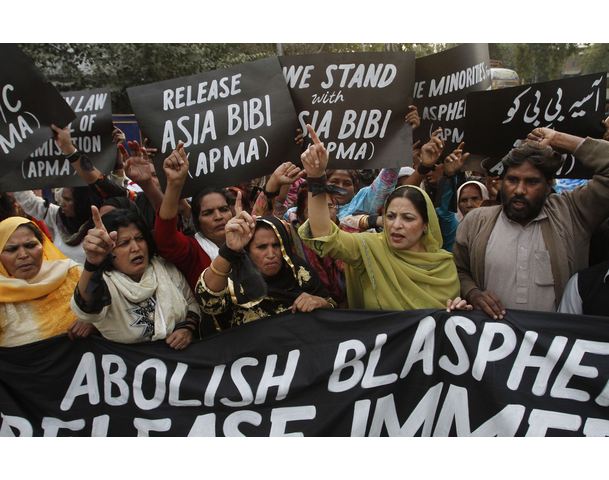
After all, if Asia Bibi escapes the hangman’s noose, he’s confident someone else will kill her.

“Any Muslim, if given the chance, would kill such a person,” Salim said calmly, seated cross-legged on a straw mat at a mosque here. “You would be rewarded in heaven for it.”

Salim isn’t the only one calling for vigilante justice. A cleric in Peshawar has offered 500,000 rupees, or $6,000, to anyone who kills Asia Bibi, if her execution doesn’t take place.

The mother of five is accused of disparaging the prophet Muhammad and the Qur’an during a dispute with three other women. She denies the charge. “My God knows that I never used those words,” she told investigators.

Her case has exposed deep rifts in Pakistan over the blasphemy law, seen by some as an appropriate measure to defend the tenets of Islam, but viewed by others as a dangerous tool easily abused in a society that is a volatile patchwork of ethnicities, religions and sects.

There have been other controversial blasphemy cases. Accused of burning pages from the Koran, Imran Latif was charged with blasphemy in Lahore but then released on bail Nov. 3. Eight days later, two men shot him to death.

This month in the southern city of Hyderabad, a Shiite doctor was arrested on blasphemy charges after police received a complaint that he had maligned the prophet Muhammad. His crime? He tossed out the business card of a pharmaceutical company representative whose first name, Muhammad, was printed on it. The doctor belongs to the smaller Shiite sect known as Ismailis.

“There’s a fundamental lunacy to it,” said Ali Dayan Hasan, South Asia researcher for Human Rights Watch. “There is no good spin to put on the blasphemy law. It’s used frequently in these preposterous ways, for preposterous reasons.”

The law dates to the 1980s and the rule of Gen. Zia ul-Haq. Since Zia’s rule, 974 people have been charged under the law, according to the Pakistani news media. No one has been put to death for a blasphemy conviction.

The Illiteracy of Hate

A News and Opinion Special Report by Manzer Munir for Paksitanis for Peace

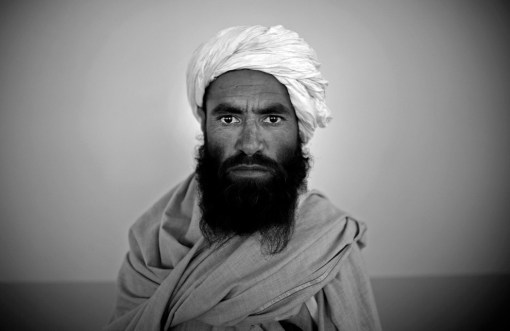
Alleged Taliban Member pic courtsey of Boston Globe

The Taliban are not just simply a bunch of illiterate thugs and bullies for they too often prove to be even worse than animals and barbarians.

Nowhere else in the world has a country experienced a more tragic and callous attack as the one on Christmas day, the birth day of Jesus, the Prince of Peace, than the one Pakistan experienced. In an attack described by President Obama as an “affront on humanity”, the cowards attacked helpless women, children and men while they queued up in food and aid distribution site such as the WFP depot, people who mind you are already suffering from the ongoing war, once in a lifetime floods, and the poverty and radicalism of a generation of desperate, hopeless and increasingly uneducated young men brainwashed by the Taliban and other radical Muslim extremists.

I am still disturbed by the disdain for basic human life that this new attack proves about this radical and extreme enemy. I imagine another one of their brain washed ‘walking zombies’, this time purportedly a woman suicide bomber, a first, even for Pakistan, killed in excess of 43 people in Bajur Pakistan at a World Food Program rations and aid storage and distribution center.

The Pakistani authorities and several domestic and foreign NGO’s who provide food aid at various centers in the area are temporarily closing these centers in order to have increased security. This means that aid distribution will come to a crawl and up to several hundred thousand people will now have to suffer at the hands of the attacker and their backers, the Taliban who have claimed responsibility. The authorities will have to ensure the safety of aid organizations and their personnel for both Pakistani and non Pakistanis relief workers involved in getting food, water and medicine to many people who are either suffering from the war or from the floods.

This catastrophe, although not of near Biblical proportions, does present both a security and humanitarian problem to both the government of Pakistan as well the suffering citizens in the northwest areas of the country where; Taliban fighters take sanctuary from the war in Afghanistan to regroup and return to the fight in warmer weather after the winter months as we have seen in years past. In fact, the reach of the Taliban in Pakistan is now not only reputed to be in the headquartered areas such as in Quetta Pakistan among the restive Baluchi population, now they are so often found to be in major cities like Karachi, Lahore, Rawalpindi, Peshawar and many points in between as they use their religious cover to endear themselves to certain impressionable, weakened or illiterate individuals that are so commonly found in throughout the country. 

Here are the some of the depressing facts. Pakistan, a nation approaching 180 million people at current estimates, perhaps only boasts to having about 60-65% of the male population at a literate level and at best, the females to be only at 40-45% of the total female population. Sadly, what this means is that 4 out of 10 Pakistani males are completely illiterate while up to as many as 6 out of 10 women are not able to read or write. Poverty breeds extremism since there is no support from any government programs or hope for any solution.

Time and time again throughout history and not just of Pakistan’s, we can see that the role of the church, synagogue or mosque in building the community is deeper than that of any government initiatives or other measures. The poverty for these young men along with the lack of jobs like for those individuals who are either very poorly paid construction site workers, household labor or servants, or beggars and sewer workers, a job sadly almost seems to have been reserved for Pakistan’s Christian community members as many can attest in Pakistan of their unfortunate and depressing state. One does not need to remind the reader of the plight of Asia Bibi (also Aasia and Ayesa), the Christian Pakistani woman who is still awaiting her fate in Pakistani courts after more than a year and a half since first being accused of a BS blasphemy charge and being in jail ever since. 

The medieval mentality of these radical extremists is not something that needs to be described as the evidence is here in this latest attack . Certainly anyone alive in any part of the world outside Pakistan and Afghanistan with eyes, TV, radio or newspaper within their reach can see plenty of near daily reminders of the carnage that many natives of these lands see, and to what they have painfully become accustomed.

 The Pakistani and Afghani Talibans have by all the various reports in newspapers and media sources over the last several years have pointed out to the fact that these groups all have too often similar goals. Not only that, these groups all share the same characteristics. The anti-Americanism, the pro-Wahaabi or Orthodox version of Islam, the need for justice for the ‘suffering of the Palestinian people’ , and the anti-colonial and often times anti western sentiment amongst these groups. The radicalization of certain Muslim groups be they Hamas and Hezbollah in the Mideast or Lashkar e taiba, or any other militant outfit operating in this part of the world as mentioned in this quote a few days before he passed, the late Richard Holbrooke of the US State department said that there are a range of militant groups such as the Afghan Taliban, the Pakistani Taliban, the Haqqani Network, Lashkar-e-Taiba, and that “an expert could add another 30.” His exact words are in quotations. 

The radical Muslim groups who take prey of the weaker, cannot think for themselves because they are scions of those abjectly illiterate segments of the society who are only educated in the madrassahs of Pakistan. This is the de facto way of educating Pakistan’s poorer children in little mosque schools which consist of nothing but Qu’ranic surahs and words of ‘wisdom’ or ‘interpretation’ by the local mullah of the said mosque/school. Most probably these children in many Pakistani madrassahs, especially the ones who live near the border areas within the NWFP or North West Frontier Province of Pakistan as this is the part of the country most affected by its close proximity to Afghanistan.

The people in this area of Pakistan, as well as their cousins in Afghanistan have been fighting one enemy or another for the better part of 100 years now. Whether to them the enemy be the British, during the height of the British Raj rule in India, or to the Soviets and the Red army and the Cold War, then in chronological order came the infighting after the Russian withdrawal as various Tajik, Afghani, Uzbek, Pakistani warlords came in to try and consolidate power to now us Americans and the Pakistanis who are our allies in this war.

Granted we do often hear that the Pakistanis can be doing more. By all accounts, the Pakistani government can do more in terms of fighting this war on terror. Numerous western reports and articles in respected dailies have alleged that small elements within both Pakistan’s Army as well as the spy agency, the ISI, have sympathizers to either the Taliban’s cause or they want to be on favorable terms with a powerful entity that most in Pakistan’s establishment believes that Pakistan will be dealing with and not a weakened Karzai once the US begins to draw down troops and end the war by 2014. If this is indeed true, then these ‘officers’ and supposed ‘leaders’ of Pakistan should realize that the colluding with the enemy, which in this case is the Taliban, is tantamount to treason, and the members of the armed forces of Pakistan as well as the intelligence community should not be assisting the enemies of all concerned: Afghanistan, Pakistan and the United States. 

Of course we must not kid ourselves and assume that only alleviating the illiteracy and poverty of the Pakistani youth will and bettering the education system of the Pakistani poor, particularly that of the refugees and residents of the northwest areas near the Afghan border. No there needs to be a study and introspection by the people of these two countries where this hatred breeds. To to get out of this darkness, the population needs be provided not only safety when delivering food aid and or medicine but aldo most importantly give them a book, a pen, and a paper. And teach them how to fish for knowledge with basic comprehension and deductive reasoning skills that can reject a radical and violent view of Islam too often manipulated by the clergy. This is the only way we can come to end this illiteracy of hate.

–Manzer Munir, is a proud and patriotic Pakistani American, an author, who plans to write a book on Pakistan, who is also a blogger and journalist, and as the Founder of Pakistanis for Peace  can be found at www.PakistanisforPeace.com, www.DigitalJournal.com ,www.Open.Salon.com, www.Examiner.com, as well at other websites as a freelance journalist and writer.

Holiday brings Muslims, Jews Together to Volunteer

By Niraj Warikoo for The Detroit Free Press

Detroit, Michigan– For the past 20 years, hundreds of local Jews have volunteered on Christmas to help needy people on a day when many Christians are busy celebrating the holiday.

But because Dec. 25 falls on a Saturday this year — a day of rest for observant Jews — the Muslim community will be filling in on Christmas, helping at soup kitchens, senior citizen homes and in impoverished neighborhoods.

The Council of Islamic Organizations of Michigan hopes to get 400 volunteers.

The Jewish community will move its volunteer efforts to today, Christmas Eve, as part of Mitzvah Month, which refers to good deeds. Last year, the Jewish community invited the Muslim community to help out on Christmas for the first time. That partnership continues this year, with some Muslims helping on Christmas Eve, too.

“The more contact we have, the more understanding,” said Freya Weberman, 51, of Huntington Woods, who will be delivering toys in Detroit today with the Jewish Community Relations Council of Metro Detroit. “There is fear of the unknown. By bringing people together and having shared experiences, we see our commonalities.”

When Micki Grossman of Farmington Hills read journalist Helen Thomas’ comments about Zionists earlier this month, the Jewish woman was hurt. “It caused a lot of pain for me,” she said.

“I also wish that we could have had more of our Muslim friends stand up and say, ‘This was not appropriate.’ ”

But some Muslims and Arab Americans were upset that Jewish leaders pressured Wayne State University to remove an award in her name.

At the annual banquet this month of the local chapter of the American-Arab Anti-Discrimination Committee, people wore buttons reading “Defender of Thomas,” said regional director Imad Hamad.

“You can’t punish someone for the right of freedom of expression,” Hamad said, referring to Thomas, who is of Lebanese descent.

Despite the differences of opinion, about 200 Jewish volunteers — along with 40 Muslim ones — will work together today to help serve poor people across metro Detroit.

Grossman will be among them, glad to help people in need while bringing two communities together.

Gigi Salka, 41, a Muslim from Bloomfield Township whose children attend bar mitzvahs, also will be volunteering — one of dozens of Muslims helping on Christmas.

It is one way in which local Jews and Muslims are trying to build ties despite their differences on politics and foreign affairs. Last month, a health fair run by Jews and Muslims was held in a Detroit mosque. And Muslim leaders spoke earlier this year before the board of the Jewish Community Relations Council of Metro Detroit.

The council organizes the event, which is usually held Christmas Day, but this year that is on the Jewish Sabbath, a day of rest for observant Jews.

Last year, the Jewish community invited Muslims to help them volunteer on Christmas. The partnership was a historic first, with about 60 Muslims helping 900 Jewish volunteers. This year, up to 400 Muslims led by the Council of Islamic Organizations of Michigan will take the lead on Christmas.

“We have many similarities,” Grossman said. “Let’s look for the sameness rather than the differences.”

Such partnerships are playing out across metro Detroit.

Victor Begg of Bloomfield Hills, a co-founder of the Islamic council who is helping to lead the volunteer effort with Muslims this week, said they “are part of an ongoing effort by our communities to bridge the gap.” He had no comment on the Thomas controversy.

Hamad said he was upset over the Jewish community’s pressure on WSU to drop the award in Thomas’ name, but he maintains contact with Jewish leaders such as Betsy Kellman, head of the Michigan branch of the Anti-Defamation League, a civil rights group.

“We are Americans first,” Hamad said. “We should not see ourselves as an extension of the external conflict abroad.”

Ismael Ahmed, a longtime Arab-American leader who is the director of the state Department of Human Services, spoke to the board of the Jewish council this month about poverty issues.

“The Jewish and Arab communities have a huge amount in common — a sense of family, a sense of community,” Ahmed said. “But we have different views on the Middle East.” At the same time, “I think that isn’t a major divide” because “we’re very much alike.”

Salka will be volunteering on Christmas because it is important to give back, she said. To her, interacting and forging ties with people of various backgrounds is part of her everyday life.

“My friends are from all different faith traditions,” Salka said. It’s on an individual level, “how you change hearts and minds, the personal connections.”

A Muslim Christmas on Long Island

By Farhan Husain for The Long Island Report

Christmas is turning into a cultural holiday for some Muslims in the Long Island area as they mark the occasion with gifts, decorations, and family get-togethers.

“Growing up, we did have a Christmas tree… I think just because he [dad] didn’t want us to feel left out,” said student Asra Arif, 20, from Deer Park.

Indeed, it’s becoming almost a custom to celebrate Christmas for most Muslim-Americans. Many came from countries that don’t even have a word for “Christmas” but it becomes almost inevitable to join in with friends and neighbors who go “holiday-crazy” during this time of year.

“It’s really just celebrating the season. It’s the only time of the year where families don’t have work or anything like that,” Arif said.

Arif is a first-generation Muslim-American with Pakistani parents. Her family, like many others, has made it a tradition to gather with loved ones and exchange gifts during Christmas time.

However, unlike Christian and Catholic families who celebrate the birth of Christ every Dec. 25, Arif’s family celebrates the atmosphere of the holidays. “I just enjoy the spirit of it. I’m not celebrating anything religious, just being with family…” Arif said.

Retail manager Dafina Mexhuani, 21, from Westbury, does the same. “It’ll be celebrating to the extent of, not really Christmas… but you know like the whole decorating, and the gift giving, and all that stuff. But if you call that celebrating it, then I guess I am,” she said.

She celebrates a holiday with her family every year around Christmas time, but doesn’t call it Christmas. “I grew up in an apartment building and my dad was the super. We always used to put up a tree in the lobby, and so we started doing it in my house. It’s just how it’s always been, really,” she said.

Mexhuani was born in the Bronx and her family of three siblings and her parents were born and raised in Albania. She’s never experienced a year without Christmas.

“The idea of Christmas we just think of generally as a winter holiday, so we don’t necessarily celebrate it… or have a significant religious attachment to it,” said Mehreen Syeda 27, from New Hyde Park, Long Island.

Syeda will be celebrating the holiday season with her Pakistani-American family, because it’s the only time of the year where everyone is off from work. Though she was not born or raised in the U.S., Syeda and her family wrapped and exchanged presents, solely to be part of something that was happening culturally around them.

“I think it’s important for kids to be knowing what their friends are going to be doing, and why they’re doing what they’re doing,” she said when describing how she was going to handle the holiday season with her children. Syeda said she would never steer her children away from experiencing it, though she would draw a fine line between religion and culture.

Some Muslims dislike the idea of celebrating Christmas as the “holiday season.” Things like Christmas trees and stocking stuffers tend to be associated with Christmas, so some choose to avoid those all together while still pleasing their children.

“We do give gifts and stuff, but we don’t have a tree or any of that up… It’s not a Muslim holiday, therefore, we don’t celebrate it,” said student Armend Cobovic, 19, from Manhattan. Cobovic and his family are from Montenegro and knew about Christmas before they moved here 15 years ago, but he was surprised to see that other Muslim-Americans celebrate Christmas.

“I think they [Muslim-Americans] are stuck into society nowadays instead of going back to their own culture,” he said. Thought he doesn’t celebrate Christmas, he does exchange gifts during the holidays for another reason, “I understand getting a present, just so your child isn’t left out… but say it’s for new year.”

With New Year’s and other religious holidays around the end of December, it makes it the only time families get to spend time with each other.

Musho Kolenovic, 18, from Stony Brook, always gets together with his family in their upstate house during Christmas time. “It’s one of the few times in the year where everyone has off, and we can meet up, and just have good old family time,” Kolenovic said.

His family does exchange gifts during this time of the year, but they never call it “celebrating Christmas” because they never put up lights or a tree. “I’ll take the presents over the tree anytime.”

Whether they call it Christmas or not, the family time, gifts for children, and the spirit of the holidays gets the better of Muslim-Americans because of the American culture.

“Not that my parents are opposed to it, I think their culture is different. They aren’t used to celebrations like we are,” said student Sameera Namazi, 21, Valley Stream. Culture in America has adopted Christmas as part of being American, and Sameera had no issue with it, “Muslims do believe in Jesus, we can commemorate his birth… So if we want to, we can.”

Sufi Islam: Reclaiming Muslim Spirituality

By Fahad Faruqui for The Huffington Post

After two bombs recently claimed dozens of innocent lives at the shrine of esteemed Sufi Ali Hajviri, fingers were pointed at the al-Qaeda-linked militants who see Sufism as the work of heretics. The New York Sufi Music Festival was brought to U.S. to showcase the spiritual dimension of Islam and the rich heritage of Pakistan, counteracting a view that Pakistan is predominantly a country known for its terror factories. Sadly, the image of militants waging war is overwhelming and hard to supersede.

Hearing Abida Parveen sing Bulleh Shah’s ecstatic poetry, which enriched the centuries-old Sufi tradition of the Indus valley, made me realize how the Islamists have stripped away spirituality from the religion and left believers with rituals, sketchy interpretations of the divine laws and fear of God’s wrath. Sufi Muslims of the subcontinent, who converted to Islam in the pre-partition era, were drawn to the Sufi path of knowledge that has been hijacked by the al-Qaeda ideology of violence.

The rapturous quality of Sufi poetry continues to fascinate me, but the very idea of loving and seeking God while listening to radical mullahs (like the clerics of Red Mosque) is deeply troubling. Prostration to God devoid of spirituality is no different from doing sit-ups. Surely, the label Sufi is not necessary. What’s important is the sentiment. It helps the cause of clarity to call those on the path “Sufis” rather than “mystics,” which will more likely conjure images of Aladdin on his flying carpet.

Islam is the fastest-growing religion but has too few religious scholars with requisite understanding to link rituals and divine laws to creative spiritual ascension. I reached a level of comfort with my faith through good guidance from prominent Muslim thinkers such as Hamza Yusuf, Faraz Rabbani and Zaid Shakir, who drink deeply of the Quran’s spring of wisdom.

Faith is ineffable; so is our search for God. Ecstatic poetry and Sufi treatises speaking of “annihilation of self” and “Oneness with the Creator” are merely tools to evoke the Sufi sentiment, which is not peculiar to Islam. Teresa of Avila’s “Libro de la Vida,” Bulleh Shah’s ecstatic poetry, Allama Iqbal’s intimate conversation with God in “Shikwa” (complaint) and Mansoor Al-Hallaj’s proclamation “Anal-Haq” (I am the Truth) are all expressions of the acquired wisdom gleaned from deep introspection.

Though unsuccessful, Iqbal tried to revive the true spirit of Islam. He was quick in identifying that the hardline mullah was a hopeless case. But the Sufis were either consumed in “other worldliness” or digressing from the core of Sufism. For Iqbal, a profound religious experience is one that benefits humanity, which is most unlikely if the seeker retreats to constant seclusion.

Saudi Arabia’s government is often accused of demolishing tombs of the companions of the prophet, fearing veneration of graves, and of discouraging Muslims from praying at prominent sites like the Cave of Hira (where Muhammed received his first revelation). Why they discourage is another column, but one thing is certain: visiting graves and sites mentioned in the Quran will not miraculously lead to divine illumination. The essence of Sufism is to dig into the depths of your soul to seek the One. In the shrines of Sufi masters in the subcontinent, one can expect to find numerous vagabonds pretending to be Sufis, who earn a living by giving false hopes to troubled wives, jobless men and childless couples. This defeats the premise of Sufism — absolute reliance on Almighty.

In a phone conversation, a prominent Sufi scholar, William Chittick, said, “The core of Sufism is to strive for nearness to God.” Even though God is absolutely Other, he presupposes a direct relationship with the seeker. No doubt. Allah says in the Quran (50:16): “I am closer to you than your jugular vein.”

It is our egos that have created boundaries between sects within Islam and ensuring rivalries with non-Muslims. Reviving the spiritual dimension of Islam may be the only way to fight intolerant radical elements internally.

Muslim American Artists Strive to Bridge a Chasm

By Thalia Gigerenzer for The New York Times

When Wajahat Ali, a young Muslim American playwright from Fremont, needed to build an audience for his work, he produced his plays in cramped Pakistani restaurants in the East Bay and used Facebook to get the word out.

His play “The Domestic Crusaders” went on to open at the Berkeley Repertory Theater in 2005, and then moved to Off Broadway. Now, family members who were initially skeptical of Mr. Ali’s decision to pursue writing see great power in his profession.

Mr. Ali said his uncle had told him that he wished he had “made his son into a journalist,” because “after 30 years of living in this country, I turn on the TV and see myself as a terrorist.”

Mr. Ali is one of a growing number of Bay Area artists who are reimagining one of the country’s most complicated compound identities: Muslim American.

At a time when Islam has been heavily politicized, many Muslim artists say they hope the arts can expand understanding of their faith among non-Muslims as well as bridge American and Islamic traditions.

“We’re at a point where Islam is really being defined in this country, and it’s going to be through the arts,” said Javed Ali, founder of Illume, a Muslim online news, arts and culture magazine based in Newark that serves as one of the central nodes of the Bay Area Muslim American network.

Bay Area Islamic organizations, including the much-heralded Zaytuna College in Berkeley, have embraced the shift toward culture. In January, the Islamic Cultural Center of Northern California will open a new gallery in the center to showcase Muslim artists.

The cultural center, in Oakland, decided to increase its arts programs six months ago, said Ali Sheikholeslami, its executive director. The center regularly hosts an event called “Islam and Authors,” which invites authors to discuss topics related to Islam.

“We want to break through common stereotypes and present the whole spectrum of Muslim reality,” said the cultural center’s marketing and development director, Jason van Boom.

Hatem Bazian, one of the Islamic scholars behind Zaytuna College, the first Muslim liberal arts institution in this country, echoed that thought.

“In American society,” Mr. Bazian said, “artistic expression is the way we narrate our story, so Muslims are beginning to draw their own narrative.”

The Bay Area’s Muslim population, estimated to be 250,000, is one of the most diverse in the United States.

Mr. Bazian, who is also a senior lecturer at the departments of Near Eastern and ethnic studies at the University of California, Berkeley, said the wide mix of ethnicities and large number of converts in the Bay Area’s Muslim population “creates synergies” that can be seen in new art forms that break ethnic molds.

Some local artists have taken an online entrepreneurial approach to Islam. Khadija O’Connell, a Hayward resident, started her Web-based arts and craft business, Barakah Life, in 2003 as a way to bring a modern, handcrafted aesthetic to Muslim items most commonly found in gaudy, imported styles.

Ms. O’Connell relies on online tools like blogging and Facebook to promote ideas like her pop-up crescent moon cards that would look at home on the popular crafts site Etsy.

“People used to adapt neutral Christmas ornaments, like stars, and hang them up for Ramadan,” recalled Ms. O’Connell, who converted to Islam in college. “I wanted to bring new traditions to Muslims living in the West.”

For local Muslim American artists whose art has been deemed “radical” by more conservative Muslims, the road has not been an easy one.

Audience members walked out of an early November U.C. Berkeley performance of the play “Hijabi Monologues,” which features the stories of Muslim women and contains sexual references. “I’ve spent more time and energy negotiating with the community whether music is haraam [“forbidden”] than putting out content,” said Anas Canon, a convert and the founder of the record label and Muslim artist collective Remarkable Current, which includes the Bay Area MC/spoken word artist Baraka Blue. The label’s music ranges from soul to hip hop and has collaborated with artists such as Mos Def.

When Remarkable Current, which is based in both Oakland and Los Angeles, recently held a masquerade-themed book-signing with a D.J. in an Oakland home, debate erupted online ostensibly over men and women in costumes interacting together. An impassioned Facebook note condemning the event unleashed heated comments from Muslims across the Bay Area.

In the wake of controversies like the one over a proposed Muslim cultural center near ground zero in New York City, some second-generation Muslims’ art is tinged with a sense of urgency.

“Our narrative has been stolen from us,” Wajahat Ali said, referring to the common depiction of Muslims in the American news media.

The tendency of his parents’ generation to push their children to prestigious professions like medicine and business discouraged creative voices, he said.

But Bay Area Muslim artists are fast creating new narratives. Mr. Ali’s play, which depicts a modern Pakistani-American family, is featured in McSweeney’s literary magazine this month.

For many years, Mr. Ali said, he had described the local arts scene as “latent, with a heartbeat.” But now, he said, “it’s dancing.”

Blasphemy Trials in Pakistan Reveal a Broken Justice System

By Karin Brulliard and Shaiq Hussain for The Washington Post
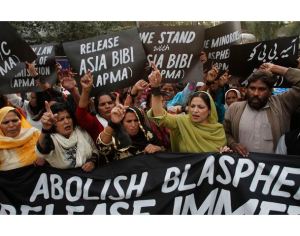
With its single dirt road, friendly residents and abundance of drowsing donkeys, this village hardly seems a hotbed of religious radicalism.

Nevertheless, four years ago, dozens of angry townspeople marched and chanted, “Death to the blasphemer!” Their demands were answered. Two years later, court records show, a teenaged Muslim named Muhammad Shafique was sentenced to hang for cursing the Prophet Muhammad and tossing pages of the Koran onto “cow dung and urine.”

Today, an air of regret permeates Kulluwal. Shafique’s accusers fled town, and their relatives now say the allegations were lies. Many residents call the case a setup fueled by political and personal rivalries. But as Shafique waits on death row, his appeal stuck in Pakistan’s glacial courts, no one is quite sure what to do.

“The situation at that time was emotional. It was the responsibility of the police to sift through the facts and find the truth,” said Chaudhry Safraz Ahmed, 42, a community leader whose father was one of Shafique’s accusers. “That did not happen. And Shafique is behind bars.”

Pakistan is in the midst of a heated debate over its ban on blasphemy following the sentencing to death last month of a Christian woman, Asia Bibi. The pope condemned that sentence, which has not yet been carried out. Human rights organizations, meanwhile, have demanded the repeal of a law that they say is used to harass religious and sectarian minorities in this Sunni Muslim-majority nation.

But blasphemy cases, about half of which involve Muslim suspects such as Shafique, also point to a more fundamental problem with grave implications for the nation’s U.S.-backed fight against militancy: Pakistan’s broken justice system, corrupt and lacking in expertise, often rewards vendettas and encourages radicalism.

In this system, religious extremism is less an epidemic than a menacing shadow – just as it is across Pakistan, an unstable democracy where Islamist threats often eclipse the majority’s more peaceful views.

The law against blasphemy – which encompasses vaguely worded prohibitions on insults against Islam – gives radicals a tool with which to bully those who don’t share their hardline religious views. Legal experts say lawyers, witnesses and authorities are frequently intimidated into helping to enforce the law, leading to injustices that bolster militants’ anti-government arguments.

“These are the kind of provisions that allow space for extremists to act with impunity,” Ali Dayan Hasan, a Pakistan-based representative for Human Rights Watch, said of the blasphemy law. “This country is, in that sense, at a crossroads where it is time for people to stand up.”

Just what happened on the evening of March 17, 2006, in this agrarian corner of Punjab province remains in dispute. It took a court in the nearby city of Sialkot 73 hearings over 27 months to gather enough testimony for a verdict. Lawyers’ strikes, witnesses’ absences and a funeral caused delays. In the end, the key evidence against Shafique, now 22, was witness accounts and soiled scraps of pages from a Koran, which the judge deemed impossible to fake.

“The question arises whether . . . a Muslim can think to smear the pages of the Holy Book with cow dung and urine just to create an evidence to involve his opponents,” the judge wrote in 2008. “Not an iota of evidence has been produced by the accused in this regard.”

But Shafique’s family, along with many others in Kulluwal, cite two reasons for such a plot. Shafique, an aspiring electrician, had accused his brother’s wife of adultery. And her alleged paramour had powerful allies, among them a town politician with his own motive: Shafique’s brother was challenging him in a village election.

Whatever the case, word of Shafique’s alleged rampage spread, and a crowd beat him viciously, residents recalled. Qari Qadir, the village imam, said he declined requests to announce the offense over his mosque’s loudspeaker, fearing a “serious situation.” Instead, he led a march the next day at which protesters demanded that police file charges.

“Everybody was against him,” said Ahmed, the community leader. “The police thought it could become a law-and-order situation if they did not take action.”

According to court records, two main accusers – the politician and Ahmed’s father – did not testify. Four young men who did gave nearly identical statements about seeing Shafique curse the prophet and rip the Koran.

Shafique testified that the charges were personal and political, and that he “heatedly” loved Allah.

The court sentenced Shafique to join about 7,600 others in Pakistan on death row, about 60 of whom are convicted blasphemers, according to the Human Rights Commission of Pakistan. The country has not executed anyone since 2008, and blasphemy cases are often overturned on appeal.

But for many, that potential reprieve is little help. Suspects are often murdered in prison or after release, a fact one Pakistani court used to justify the blasphemy law – in prison, it reasoned, suspects are protected from public rage.

Blasphemy was outlawed during British colonial rule but made a capital crime in the 1980s under the Islamist military rule of Mohammed Zia ul-Haq. Now, the law is being scrutinized; a bill in parliament would shorten sentences, require evidence that the crime was committed intentionally and introduce punishment for false accusation.

But while recent international attention has galvanized opponents of the current law, it has also roused defenders. Conservative religious parties have threatened mayhem if the law is changed, an idea they deem a Western conspiracy. One cleric in northwest Pakistan went further, promising $6,000 to anyone who kills Bibi, the Christian woman.

Amid this debate, Mirza Shahid Baig, Shafique’s lawyer, sticks to technical arguments. The wrong police investigated, he said, and there was no serious look at Shafique’s side of the story.

“I am a very true lover of the holy prophet, but this case was totally false,” Baig said one recent afternoon at his dusty basement office in the bustling city of Lahore. “Whether the law is correct or not correct according to the morality, this is not my job.” In Kulluwal, most everyone seems to agree that a blasphemer deserves death. But they are certain Shafique was not one.

The investigators and witnesses who testified against him have all left town, and no one else recalls seeing Shafique’s alleged rampage. Ahmed said his father is ready to recant in court.

“This is a baseless charge,” said Ahmed, calmly sipping tea with Shafique’s parents on a recent day. “The issue is religious, so it had an influence on the police. It interfered with the investigation.”

Another resident, Mohammed Ibrahim, is the brother of the politician who accused Shafique and the father of one youth who testified. Ibrahim said his son has since told him he was pressured to lie, and that his brother forced police to file charges.

“He thought of himself as important, as someone who could not be challenged politically,” Ibrahim said of his brother, who, he added, has moved to Canada. To some Kulluwal residents, the whole affair proves elders should resolve disputes, not courts.

Shafique, meanwhile, writes letters to his family from solitary confinement. In one recent missive, he said that prison guards avoid touching him. He understands, he wrote, for he reserves no sympathy for blasphemers.

“My heart weeps for the innocent ones,” he wrote. “But I have no words of sympathy for the sinners . . . I would have killed them myself if I could.”
Aasia Bibi and Impurities in the Land of the Pure

By Manzer Munir for Pakistanis for Peace

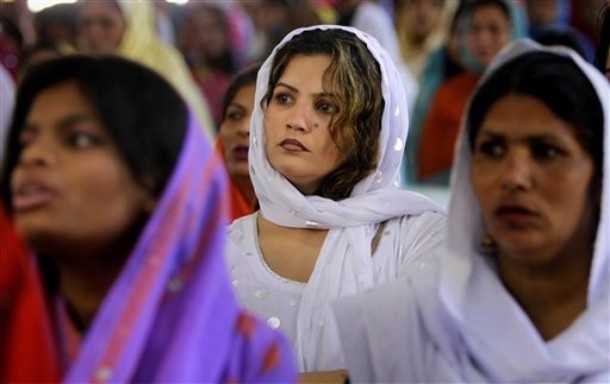
The case of Aasia Noreen aka Aasia Bibi illustrates how far Pakistan has to go to secure freedoms for its religious minorities. Christians and Hindus are not the only minorities who are persecuted for their beliefs but it is also Muslim minorities such as the Ismailis, Ahmadis, and Shiites who are routinely harassed, discriminated and also killed. Sadly, it is the case of Aasia Bibi that has brought some much needed attention to Pakistan’s sad state of affairs towards the treatment of its religious minorities.

Several sections of Pakistan’s Criminal Code consist of its blasphemy laws and of all the Muslim countries of the world that have anti-blasphemy laws, Pakistan’s anti-blasphemy laws are by far the strictest. There is section 295 that forbids damaging or defiling a place of worship or a sacred object. Then there is section 295-A that “forbids outraging religious feelings.” There is also 295-B which prohibits defiling the Qu’ran and was originally punishable by life imprisonment but has since been amended to up to three years imprisonment.

No section of the blasphemy law is more controversial or harder to prove than Article 295-C, the law that Aasia Bibi is allegedly charged with having broken. In respect to prophet Muhammad, this statute states that ” Whoever by words, either spoken or written, or by visible representation, or by any imputation, innuendo, or insinuation, directly or indirectly defiles the sacred name of the Holy Prophet Muhammad shall be punished with death, or imprisonment for life and shall also be liable to a fine.”

Aasia’s case and charges against her started almost a year and a half ago when there was a quarrel over a bowl of water in a dusty village in the heart of Pakistan’s Punjab province. A group of women were working the fields in the heat of the Pakistani sun when one of them, Aasia Bibi, dipped her glass in the communal bucket of drinking water to fetch herself and others a glass of water to drink and immediately was rebuffed by the other women who claimed that the water was now unclean as it had been touched by a non-Muslim. According to witnesses, instead of quietly bowing her head and taking the indignities, Aasia’s crime was that she mounted a strong defense of her faith and remained steadfast in her demeanor that she did nothing wrong. Too often in Pakistan, the blasphemy laws are used against religious minorities to settle personal vendettas and old scores according to Pakistan’s Human Rights Watch, a watchdog group monitoring the case.

The news traveled fast in Aasia’s village of Ittan Wali, in Punjab’s Sheikhupura district that a Christian woman had insulted the prophet. The local mullah got on the mosque loudspeakers, urging the “faithful” to take action against Aasia Bibi. In sad but familiar pattern, her defense of her faith was somehow twisted into an accusation of blasphemy, according to her family and others familiar with the case. Soon as a mob gathered outside her home ready to take the law into their own hands and handing out vigilante justice, the police moved in and took her into custody. But instead of protecting her, they charged her with insulting Islam and its prophet under the blasphemy laws.

And then on Nov. 8, after suffering 18 months in prison, Aasia Bibi was sentenced to death by a district court, making her the first person to be handed the death penalty in Pakistan under the blasphemy laws. Many before her over the years have been charged, but punishment had been commuted to lesser penalties than the death sentence imposed on Aasia Bibi. No concrete evidence was ever presented against Aasia, according to Pakistan’s Human Rights Watch. Instead, the district judge relied on the testimonies of three other women, all of whom were hostile towards her.

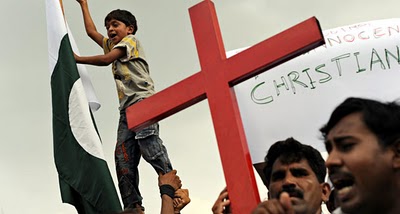
Unfortunately this is a common insult hurled at many of Pakistan’s 2 million Christians who make up just 1.59% of the total population. Often, Christians in Pakistan are discriminated and persecuted and many times only get the lowest of the low jobs such as street sweepers, janitorial and sanitation workers. In fact, in Pakistan, the term ‘Chura‘ has become synonym with the Christian community as it relates to an unclean person akin to how the untouchables or Dalit community is seen in India. In India however, the Dalits are not subjected to arcane state blasphemy laws geared towards religious minorities as in Pakistan or are threatened with their lives at the hands of the Hindu majority.

As discussed in a couple of my previous articles, Taliban 1o1, History and Origins and Taliban 201, The Rise of the Pakistani Taliban, the Islamization of Pakistan started under the late General Zia ul Haq of Pakistan who took over the leadership of the country through a military coup in 1977 when he hung the deposed and democratically elected Prime Minister Zulfiqar Ali Bhutto. Earlier in 1973, the 1973 Constitution of Pakistan had declared that “Islam shall be the religion of the Pakistan” and had systematically begun the process of restricting the participation of religious minorities in government and politics.

Before General Zia, there were only two reported cases of blasphemy. Since the death sentence was inserted in 1986 into the Penal Code for the blasphemy laws, this number has now reached 962 — including 340 members of the Ahmadi Muslim community, 119 Christians, and 14 Hindus. A close examination of the cases reveals the blasphemy laws are often invoked to settle personal scores, or they are used by Islamist extremists as cover to persecute religious minorities, sadly with the help of the state under these laws.

General Zia began this policy of Islamization of Pakistan in conjunction with his support for the war against the Russians and assistance to the Afghan Mujahedeen as well as the building of thousands of madrassahs or religious schools across Afghanistan and Pakistan which nurtured the young men into what later became the Taliban. Many of these blasphemy laws fully came into being under his reign, although some were around since as early as more than 100 years prior when the British drew up the Indian Penal Code of 1860 which was initially an ill foreseen aim at keeping the peace among the many fractured faiths of the subcontinent. For instance, section 295-A, which “forbids outraging religious feelings”, could have been applied against a Muslim who insulted a Hindu or a Hindu who taunted a Sikh or Christian or vice versa. However under Zia, the blasphemy laws were expanded and almost exclusively applied against Muslim minorities such as the Ahmadis, Islamilis and Shiites as well as against the Christian and Hindu populations.

Recently, a religious ‘leader’ came out and has offered over $6000 to anyone who can kill Aasia Bibi while she awaits her punishment in police custody. Outrage and denunciations on this case are coming from across the world as many people are appalled at the sad state of rights for religious minorities in Pakistan. The Pope has intervened also asking for clemency for Aasia Bibi from Pakistan’s President Asif Ali Zardari. Against all manner of reason and justice, Lahore’s High Court recently issued an order on November 29, 2o1o, preventing Zardari from exercising his constitutional authority to pardon Aasia Bibi.

In a country rife with violence and chaos and one that has become synonymous with terror the world over, the case of Aasia Bibi is yet another dark stain on the country’s image around the world. The Taliban and the extremist groups ravaging Pakistan can be explained as being a violent minority and do not and should not reflect on the nation as a whole as the majority of people in Pakistan are opposed to them and their views of Islam. But the blasphemy laws, for as long as they have stayed on the books in Pakistan and in the constitution, cannot and should not be excused in any shape or form. These laws need to be repealed and the constitution needs to be amended in an emergency manner so that Aasia Bibi and other religious minority citizens of Pakistan are not subjected to cruel and subjective laws that are almost exclusively used against minorities to settle scores, personal vendettas, and instill terror in less than 3 percent of the country that is not part of the religious majority of Sunni Muslims.

There needs to be international pressure placed on Pakistan from the United Nations, the United States, Europe and others to modify the constitution immediately and to pardon this 45 year old mother of five children. It is ironic that in a country where many people sympathize with Osama’s Al Qaeda and profess to hate the west with one hand, they decry with the other why not enough western aid has came to their country when it recently saw the worst flooding in its history. Can you blame the American citizens, the Europeans or citizens of any other Christian nation from hesitating to give aid to a country that not only plays a duplicitous game when it comes to terrorists and terror havens but also treats Christians and other religious minorities in the manner as in the case of Aasia Bibi?

The name Pakistan literally translates into “The Land of the Pure”. And as a child growing up I was told that the meaning of Pakistan’s flag is this: “The green is a traditional Islamic color and the crescent moon and star are also Islamic symbols. The white stripe represents the non-Muslim minority and religious groups of Pakistan and there place in the country.” In my view, as long as the nation sanctions and tolerates these utterly unjust and biased blasphemy laws, the religious minorities of Pakistan clearly have no place in this land of the ‘pure’.

-Manzer Munir, a proud Pakistani American and peace activist, is the founder of Pakistanis for Peace and blogs at www.PakistanisforPeace.com as well at other websites as a freelance journalist and writer.

Majority of Muslims Reject Al-Qaeda

As Reported by Sandra Johnson for The Daily Mail

Muslims in many parts of the Islamic world overwhelmingly reject al Qaeda, support a large role for their faith in government and believe democracy is preferable to any other kind of political structure, according to a new survey released by Pew Research Center’s Global Attitudes Project.

The study also found falling support for suicide bombings, as well as mixed attitudes towards Hamas and Hezbollah, Islamic groups designated as terrorist organizations by Western governments but which operate extensive social services networks in parts of the Muslim world.

The survey, conducted this spring in Jordan, Lebanon, Nigeria, Indonesia, Egypt, Pakistan and Turkey, found that only in Nigeria did Muslim populations have anything approaching a favorable view of al Qaeda, with 49 percent expressing positive views and 34 percent holding an unfavorable opinion.

At least seven in 10 Muslims had unfavorable views of the group in Egypt, Turkey and Lebanon, as did lesser majorities in Jordan and Indonesia, according to the study.

But views of Hamas and Hezbollah were more mixed. Both groups got favorable ratings from a majority of Jordanian Muslims, with 60 percent supporting Hamas and 55 percent holding favorable views of Hezbollah, Pew reported.

Muslims in every nation but Turkey expressed a positive feeling about Islam’s influence in their nation’s politics. More than nine in 10 Indonesian Muslims said its influence is positive, as did more than eight in 10 Egyptian and Nigerian Muslims. In Jordan, 76 percent of Muslims approved of Islam’s influence, as did 69 percent in Pakistan and 58 percent in Lebanon.

In Turkey, 38 percent had a positive opinion of Islam’s influence in political life.

At the same time, majorities of Muslims in every country but Turkey said they were concerned about Islamic extremism in the world and their own countries.

Democracy was favored by a majority of Muslims in every country but Pakistan, although even there it received the largest share of responses. Lebanese Muslims were most favorable toward democracy, followed by those in Turkey, Jordan, Nigeria, Indonesia and Egypt.

Support for suicide bombing had also fallen by double digits since 2002 in every country except Turkey, where it was never well-received among Muslims, according to the study.

Time to Repeal the Blasphemy Law

By Nasim Zehra for The Express Tribune

In June 2008, Asiya Bibi, a Pakistani farm worker and mother of five, fetched water for others working on the farm. Many refused the water because Asiya was Christian. The situation got ugly. Reports indicate Asiya was harassed because of her religion and the matter turned violent. Asiya, alone in a hostile environment, naturally would have attempted to defend herself but was put in police custody for her protection against a crowd that was harming her.

However, that protection move turned into one that was to earn Asiya a death sentence. A case was filed against her under sections 295-B and C of the Pakistan Penal Code, claiming that Asiya was a blasphemer. Her family will appeal against the judgment in the Lahore High Court.

The Asiya case raises the fundamental question of how Pakistan’s minorities have been left unprotected since the passage of the blasphemy law. There may have been no hangings on account of the law but it has facilitated the spread of intolerance and populist rage against minorities, often leading to deaths. There is also a direct link between the Zia-ist state’s intolerance against minorities and the rise of criminal treatment of Ahmadis.

Cases have ranged from the Kasur case to the more recent Gojra case, from the mind-boggling row of cases between 1988-1992 against 80-year-old development guru Dr Akhtar Hameed Khan, to the case of the son of an alleged blasphemer, an illiterate brick kiln worker who was beaten to death by a frenzied mob.

Although doctor sahib faced prolonged mental torture, he was saved from the maddening rage that has sent to prison, and in some cases devoured, many innocent, poor and hence unprotected Pakistanis.

There is a long list, prepared by the Human Rights Commission of Pakistan, of unjust punishments handed down to Pakistani citizens whose fundamental rights the state is obliged to protect. Beyond punishments, minorities live in constant fear of being lethally blackmailed by those who want to settle other scores.

Yet most political parties have refrained from calling for the law’s repeal or improvement in its implementation mechanism. When, in the early 90s, I asked Nawaz Sharif sahib to criticise the hounding of Dr Khan, his response was a detailed recall of the story in which Prophet Muhammad (pbuh) went to ask after the health of a non-Muslim woman who repeatedly threw garbage over him. He condemned what was happening but said politics prevented him from doing so publicly. Later, General Musharraf, advised by other generals, reversed his announcement of changing the law’s implementation mechanism. Small crowds protested against it. Among politicians, very few exceptions include the PPP parliamentarian Sherry Rehman and, more recently, the ANP’s Bushra Gohar, who asked for its amendment and repeal.

Already sections of the judiciary have been critical of flawed judgements passed by lower courts in alleged blasphemy cases. Recently in July, Lahore High Court Chief Justice Khawaja Sharif quashed a blasphemy case against 60-year-old Zaibunnisa and ordered her release after almost 14 years in custody. According to the judgment, the “treatment meted out to the woman was an insult to humanity and the government and the civil organisations should be vigilant enough to help such people.” Surely the Bench should know the plethora of abuses that Pakistan’s minorities have suffered because of an evidently flawed law.

A message more appropriate, perhaps, would be to repeal the black law that grossly undermines the Constitution of Pakistan and indeed the teachings of Prophet Muhammad, one of the most tolerant and humane law-givers humankind has known. This environment of populist rage, fed by the distorted yet self-serving interpretation of religion principally by Zia and a populist mixing of religion and politics by a politically besieged Zulfikar Ali Bhutto, must be emphatically challenged. A collective effort to roll back these laws must come from parliament, the lawyers’ forums, the judiciary, civil society groups and the media.

Righteous Among the Nations: Muslims Who Saved Jews from Holocaust

By Tim Townsend for The St. Louis Dispatch

In 2003, Norman Gershman was looking for some of the righteous.

What he found astonished the investment banker-turned-photographer, and led him toward a project now on display in a St. Louis synagogue.

The Righteous Among Nations are gentile rescuers who make up “a small minority who mustered extraordinary courage to uphold human values,” according to Yad Vashem, Israel’s Holocaust memorial museum.

They are, the museum says, “the few who helped Jews in the darkest time in their history.”

Gershman’s story begins during the Holocaust and involves Albanian Muslims — villagers, peasants and farmers — who risked their lives and the lives of their families to shelter Jews fleeing Nazi Germany.

Italy invaded Albania in 1939 and occupied the country until the overthrow of Benito Mussolini in 1943. Germany then took over the Albanian occupation. Before the war, Gershman estimates from his research, only about 200 Jews lived in Albania, a country that is about 70 percent Muslim.

During the years of occupation, 10 times as many Jews streamed into Albania to escape persecution from Poland, Yugoslavia, Czechoslovakia, Greece and Italy. Gershman says it was the only country in Europe where the Jewish population grew by the end of the war.

Most of the hidden Jews either fled to Israel or back to their native countries after the war. Albania’s postwar communist regime made it impossible for the Jews who had been hidden to stay in touch with the Albanian Muslims who had provided shelter.

In 2003, New Jersey native Gershman heard hints of the story and began doing research, eventually traveling to Albania to begin interviewing those Muslims who took part and who were still alive. Gershman said it wasn’t just Muslim families who shielded Jews from the Nazis, but also Orthodox and Catholic families.

All of them were motivated by an Albanian code of honor called “besa,” a concept that can be translated into “keeping the promise,” Gershman says. The Albanian villagers were motivated to risk their lives by the simple concept of helping one’s neighbor.

“We chose to focus on the Muslims because, who ever heard of Muslims saving Jews?” Gershman said in a telephone interview from Israel, where he is at work on his next project.

Gershman’s research eventually led to an exhibit of his photographs, “Besa: A Code to Live By,” which opened recently at Congregation Temple Emanuel, and a book, Besa: Muslims Who Saved Jews in World War II.

The exhibit makes the case that the Muslim Albanian villagers who sheltered Jews from deportation to concentration camps did so from a sense of religious obligation.

“Besa is a cultural idea, but for the Muslims in Albania it was ingrained in their faith as well,” Gershman said.

Ahmet Karamustafa, professor of history and religious studies at Washington University, said saving a life is a universally acknowledged Muslim value.

Protecting a life, Karamustafa said, “has always ranked at the very top of moral and legal categories articulated by legal and theological scholars in Islam.”

The exhibit has been traveling the world since 2006, opening in Yad Vashem in Israel, the United Nations in New York, and synagogues, mosques, college campuses and Holocaust museums from Turkey to El Paso, Texas.

The exhibit of 30 photographs includes one of Lime Balla, born in 1910, who told Gershman that a group of 17 Jews came from the capital city of Tirana to her village of Gjergi in 1943 during the holy month of Ramadan.

“We divided them amongst the villagers,” Balla said, according to Gershman. “We were poor. We had no dining table, but we didn’t allow them to pay for food or shelter. We grew vegetables for all to eat. For 15 months, we dressed them as farmers like us. Even the local police knew.”

David Sherman, president of Temple Emanuel, said the synagogue “decided it could be an opportunity to educate the public about this piece of history that was a model of dialogue and tolerance.”

The synagogue’s rabbi, Justin Kerber, said one of the Reform congregation’s goals with the exhibit is to combat a common depiction of the modern relationship between Jews and Muslims.

“There’s so much coverage about Muslim-Jewish strife and conflict,” Kerber said. “It’s important to tell people that’s not the whole story, and these are examples of Muslim-Jewish respect, tolerance and love. This was a good opportunity for us to be part of that conversation.”

‘Islam in a Nutshell’ Explained at Episcopal Church

By Mitchell Landsberg for The Los Angeles Times

The Rev. J. Edwin Bacon, rector of All Saints Church in Pasadena, had just returned from vacation when he heard about a Florida pastor who was threatening to burn copies of the Koran, Islam’s holy book.

“I was disgusted,” said Bacon, whose Episcopal church is known for its progressive stance on many issues, interfaith relations among them. He said he thought: “Rather than burning Korans, we should be studying them.”

The Koran burning never took place. But from Bacon’s reaction was born “Islam 101,” a speaker series that ended Saturday with a lecture by Dr. Maher Hathout, senior advisor to the Muslim Public Affairs Council and a leading voice of Muslims in Southern California.

About 75 people went to the church to hear Hathout give a brief overview of “Islam in a nutshell,” then answer questions from a friendly audience that seemed concerned about both Muslim extremism and American hostility toward Islam.

Hathout told the audience that as the “new kid on the block” among the three Abrahamic faiths, which include Judaism and Christianity, Islam has had two options: “to be accepted by other religions or to fight with them.”

He continued: “We are now discovering … that we can be different without fighting, or it will be a miserable life. And it is a miserable life right now, if you ask me.”

Hathout expressed horror at the discovery of explosives bound from Yemen to the United States, part of a suspected Al Qaeda terrorist plot. He said terrorism violates Islamic theology and could ultimately destroy Islam. By using it “to defend Islam, you sacrifice Islam,” he said.

At the same time, Hathout complained about the use of the term “Muslim terrorist.” No one ever says a “Christian terrorist” bombed an abortion clinic, he said, adding, “They will not give the religious adjective to that person.”

And he said he is angered by people who say that moderate Muslims have been too reluctant to denounce extremism.

“If I shout and you don’t hear me, it means you are deaf,” he said. “It doesn’t mean I didn’t shout.”

All Saints is not alone in reaching out to the Muslim community in an attempt to better understand Islam. In the years since Sept. 11, 2001, numerous churches and synagogues, generally those associated with the progressive or liberal wings of their faiths, have invited Muslim speakers or partnered with Islamic organizations on interfaith events.

During the question-and-answer session, one member of the audience observed that if Hathout were to attend a “Christianity 101” lecture at All Saints, it would be different than a similar lecture at an evangelical church. She wondered if the same were true of Islam. Hathout said there is diversity within Islam, but also boundaries that cannot be crossed.

The question also spoke to another point: To a large degree, Saturday’s event was a meeting of like-minded sensibilities. There probably weren’t any prospective Koran burners in the audience. Hathout wasn’t changing minds so much as informing them.

Bacon acknowledged as much afterward. “I’ve always thought that preaching to the choir is a very important thing,” he said, “because the choir needs to be radicalized. On one level, you want to get the message taught. But on another level, you want them to be equipped and empowered to go out and courageously act.”

Those who attended the three-lecture series, he said, will be better able to explain to others that “most of the 1.6 billion Muslims in the world view their religion as a religion of peace, not as a religion of terrorism.”

“This is the real Islam,” he said.

Alleged Would Be Terrorist Thwarted At Every Turn

By Richard Serrano for The Los Angeles Times

Abdel Hameed Shehadeh, according to the FBI, traveled the world in search of jihad. But Pakistan turned him away, and Jordan did too. He tried to get into Somalia, but U.S. authorities placed him on the no-fly list. An American citizen, he visited an army recruiting station in New York’s Times Square hoping to be sent to Iraq; they did not want him either.

So, the FBI said, the 21-year-old born and raised in New York created websites and posted threats of radical Islamic violence, including one from another American expatriate, Anwar al Awlaki. Then Shehadeh flew to Hawaii and allegedly started taking target practice.

FBI agents said he wanted to join a jihadist group to learn “guerilla warfare and bomb-making.” Had he been welcomed into the U.S. army, they said, his plan was to defect in Iraq and turn against his comrades.

Shehadeh’s journeys ended last Friday. He was arrested in Honolulu and accused in a federal criminal complaint, unsealed Monday, of making false statements in an international terrorism case.

For two and a half years federal officials followed his travels, tracked his websites and enlisted help from his grade school friends. On Tuesday they singled him out as someone much like Awlaki — eager to forfeit his U.S. citizenship for a life of jihad.

Florence T. Nakakuni, the U.S. attorney in Hawaii, said the investigation covered “a six-hour time difference and 5,000 miles.” In New York, FBI assistant director Janice K. Fedarcyk said “stopping one prospective terrorist can prevent untold numbers of casualties.”

Shehadeh faces up to eight years in prison. His Hawaiian attorney, Matthew Winter, said he “wants to return as soon as possible to New York and face the charges there.”

He is slightly built, thin and clean-shaven. He does not evoke the image of an angry Islamic radical. But his arrest comes during a heightened alert over threats from homegrown terrorists.

“My brothers of revolutionary Islam, I am with you as long as you keep struggling,” Shehadeh allegedly posted on his website. “Trust me there are many brothers and sisters in America that are ready to speak up. They just need a push.”

He first drew the eye of FBI agents in June 2008 for signing into the online Expedia travel agency and purchasing a one-way ticket to Pakistan. A New York detective interviewed him at the airport; Shehadeh said he was going to Pakistan to attend an Islamic school there.

Customs and Border Patrol searched his checked baggage. They found a sleeping bag, toiletries, three books and two changes of clothes. When the plane landed at Islamabad, he was not allowed in.

According to the FBI, he created his own websites. One highlighted the “Benefits of Jihad in Our Times.” Another ran speeches from al Awlaki. A third, titled “civiljihad,” included warnings dripping in blood.

He visited the recruiting station at Times Square in October 2008, according to the complaint. The army turned him away because he failed to disclose his trip to Pakistan. Two weeks later he flew to Jordan, but the authorities would not let him in.

The FBI developed two confidential informants who were boyhood classmates of Shehadeh. The agents said they learned Shehadeh wanted American Muslims to travel to Muslim countries and fight against the U.S. He allegedly told them he wanted to die a martyr, that there were “no more excuses” for avoiding jihad. He spoke of an afterlife with 72 virgins.

In June 2009 he purchased a ticket to Dubai. Again FBI agents said they interviewed him; he told them his destination was Somalia. But now he was on the no-fly list; he could not even leave the U.S.

He went to Hawaii. In October 2009, he visited the SWAT Gun Club, and practiced firing an M-16 assault rifle, .45 caliber and 9 mm semi automatic pistols, and a .44 caliber Magnum revolver. Last April, he again spoke to the FBI. The conversation turned to why U.S. muslims become radicalized. The agents said Shehadeh told them, “take my story for example.”

Pakistanis for Peace Editor’s Note– Deranged individuals such as Abdel Hameed Shehadeh, Faisal Shahzad, and Nidal Malik Hasan do not deserve American citizenship and all the freedoms and privileges it entails. The US government must remain vigilant and suspicious of anyone who espouses treasonous acts against the republic and its interests regardless of their race, ethnicity, citizenship, religion or any other identifying characteristic. It is our hope that the Obama administration will continue to remain proactive and alert in apprehending and stopping all individuals who pose danger to the country and patriotic Muslim Americans must continue to do more to assist the nation in keeping safe.

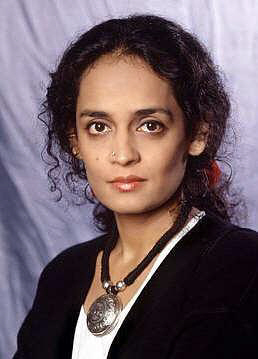
Arundhati’s Statement From Srinagar: Full Text

By Arundhati Roy
October 26, 2010
Noted Indian Hindu writer Arundhati Roy Tuesday said her speeches supporting the call for azadi were what “millions” in Kashmir say every day and were “fundamentally a call for justice”. Following is the full text of the statement that she has issued.
 
“I write this from Srinagar, Kashmir. This morning’s papers say that I may be arrested on charges of sedition for what I have said at recent public meetings on Kashmir. I said what millions of people here say every day. I said what I, as well as other commentators have written and said for years. Anybody who cares to read the transcripts of my speeches will see that they were fundamentally a call for justice. I spoke about justice for the people of Kashmir who live under one of the most brutal military occupations in the world; for Kashmiri Pandits who live out the tragedy of having been driven out of their homeland; for Dalit soldiers killed in Kashmir whose graves I visited on garbage heaps in their villags in Cuddalore; for the Indian poor who pay the price of this occupation in material ways and who are now learning to live in the terror of what is becoming a police state.  

“Yesterday I traveled to Shopian, the apple-town in South Kashmir which had remained closed for 47 days last year in protest against the brutal rape and murder of Asiya and Nilofer, the young women whose bodies were found in a shallow stream near their homes and whose murderers have still not been brought to justice. I met Shakeel, who is Nilofer’s husband and Asiya’s brother. We sat in a circle of people crazed with grief and anger who had lost hope that they would ever get ‘insaf’—justice—from India, and now believed that Azadi—freedom— was their only hope. I met young stone pelters who had been shot through their eyes. I traveled with a young man who told me how three of his friends, teenagers in Anantnag district, had been taken into custody and had their finger-nails pulled out as punishment for throwing stones.

“In the papers some have accused me of giving ‘hate-speeches’, of wanting India to break up. On the contrary, what I say comes from love and pride. It comes from not wanting people to be killed, raped, imprisoned or have their finger-nails pulled out in order to force them to say they are Indians. It comes from wanting to live in a society that is striving to be a just one. Pity the nation that has to silence its writers for speaking their minds. Pity the nation that needs to jail those who ask for justice, while communal killers, mass murderers, corporate scamsters, looters, rapists, and those who prey on the poorest of the poor, roam free.”

Arundhati Roy is a novelist, essayist and human rights activist. She won a Booker Prize in 1997 for her novel, The God of Small Things. For more on her read http://en.wikipedia.org/wiki/Arundhati_Roy

Pakistanis for Peace Editor’s Note– Arundhati Roy’s courageous plea to her country is to be lauded. Although branded a traitor by many in India and within the government, she knows that she stands for peace, justice and fairness for all humanity. She wants self determination for all Kashmiris, be they Muslim, Hindu, Buddhist or Christian.

We at Pakistanis for Peace want nothing more than peace between India and Pakistan and therefore understand that Kashmir is the one and single most important issue between the two countries. Solve it and you do not have the threat of cross border attacks, friction, animosity, perpetual war and a tense border between two neighbors of nearly 2,000 miles. If we continue to ignore it then it will eventually be the crisis that starts a 4th and possibly nuclear war between the two neighbors. A war that neither the neighborhood nor the world can afford.