Archive for the ‘ Pakistan Floods 2010 ’ Category

Muslim-Jewish Evening Raises $$ For Pakistanis

By Cristina Costantini for The New Haven Independent

Farhan and Shahida Soomro became American citizens on Friday. Originally from the Sindh Province in Pakistan, they have lived in the U.S. for ten years. Two days after becoming Americans, they held an event with their friends Ron Miller and his wife Cathie Miller to raise money and awareness about the floods which have ravaged their province in Pakistan. “It’s been a busy weekend!” said Shahida Soomro.

The event—“An Evening to Support Pakistani Flood Relief at the Community Foundation for Greater New Haven”—was held Sunday night at the Community Foundation for Greater New Haven on Audubon.

The Soomro family is Muslim; the Miller family, of Westville, is Jewish. The idea for the event, a “Jewish-Muslim collaboration,” came about over a dinner with old friends, Cathie Miller said. The Millers then sought the support of the Social Action Committees of the Temple Emanuel of Greater New Haven and the Congregation Mishkan Israel of Hamden, which were instrumental in the organization of the event.

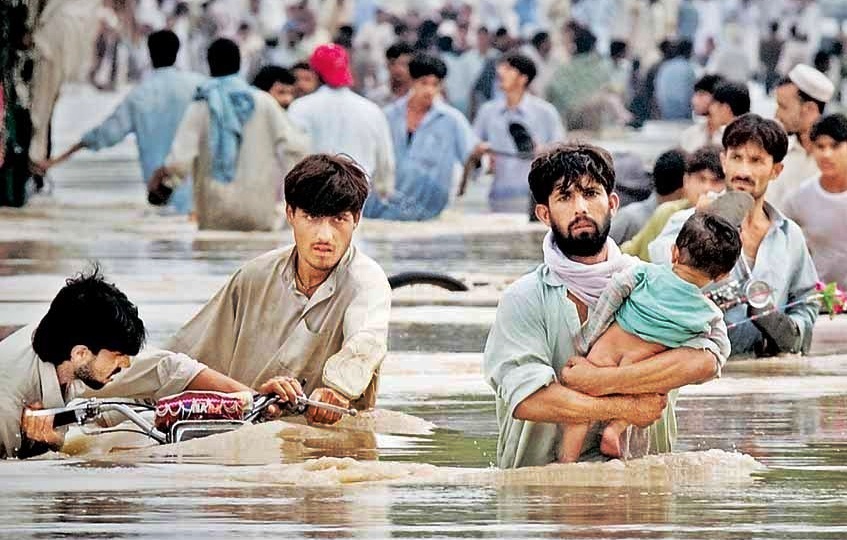
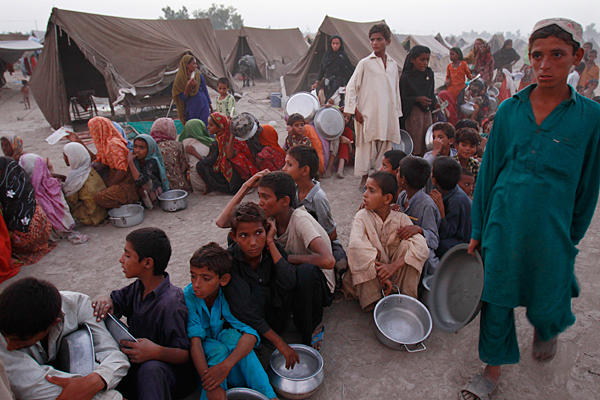
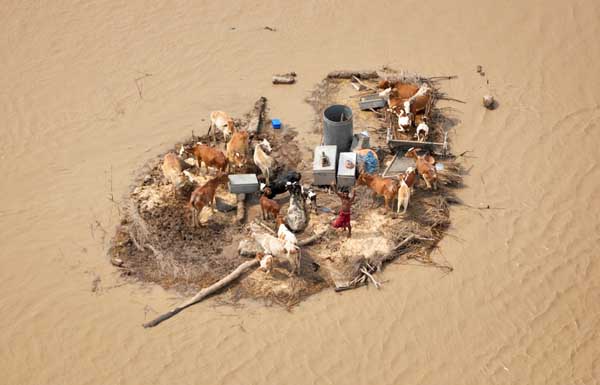
After guests Sunday night enjoyed a wide spread of ethnic foods, Farhan Soomro opened the presentation by relaying the severity of the crisis. While the Soomro family was not present during the flooding, they have stayed in constant contact with their relatives in the region. With a fifth of Pakistan underwater, 20 million people displaced, and two million homes destroyed, Soomro explained, farmers have lost two seasons of crops and the Pakistani government cannot meet the food and shelter demands the disaster has triggered.

The event raised about $3,000.

Timothy Rogers, the director of charitable gifts for Save the Children in Westport described to guests where their donations would go. “We have been in Pakistan for 31 years now,” said Rogers. “What are we doing in Pakistan now? We’re providing emergency medical care, we’re distributing tents, shelter kits, food, and other supplies, we’re distributing water purification tablets, and bed nets.”

According to Cathie Miller, Save the Children was chosen as the charity for the event because over 90 percent of money donated goes to direct relief, and the Soomros have heard anecdotal evidence from their relatives and friends in the Sindh province that Save the Children has been effective in the region.

Rogers raised questions about the lack of American response and media coverage to the tragedy. Americans have given disproportionally less than other developed nations in the world. Although Save the Children has sent about $46 million to help alleviate suffering in Pakistan, the American public’s contribution makes up only $2.3 million of this total. Norwegian citizens, a country with a much smaller population, has already donated over $4 million in assistance funds through Save the Children. Rogers posited that donations might be down because of “donor fatigue due to recent tragedies” or because of a lack of media coverage. Ron Miller linked the trend to Islamophobia.

“I think even though we don’t want to say it, Americans have a hard time understanding and appreciating Muslims,” Miller said. “And one of the reasons that, myself as a Jew, and I’ve talked with various synagogues which they are present here today, is the importance for both Jews and Muslims and Muslims and Americans to come to grips with who we are, what our cultures are and what our values are. One of our reasons for doing this, was in our small way, a Muslim family, and a Jewish family, over dinner decided to try to do something to show that that gulf doesn’t exist between us and our Muslim colleagues.”

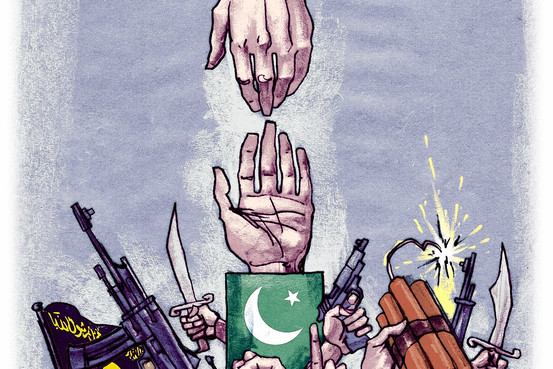
One audience member admitted her initial hesitations about donating to the cause. “My knee-jerk reaction, when I heard about this event, was how do I know my money isn’t going to go to the Taliban? Of course this was ignorant, and I really think the reason we don’t talk about this flood is that our government is struggling with Pakistan,” she said.

A Pakistani member of the audience responded to her comments, suggesting that crisis alleviation in the area is one of the best ways to win a war of ideas: “The Pakistani people realize that Save the Children is coming from the American people. Winning the hearts and minds is the key thing, our policy makers have allocated $30 million to public diplomacy work in Pakistan. It should be a no-brainer that if we use our resources to help get their homes together that this will be much more effective.”

“This is a great opportunity for us to change and affect the hearts and the minds of the Pakistani people,” he concluded.

The event drew around 50 guests.

Donations are still being accepted. Checks can be made out to “Save the Children” with a memo note: “Pakistani Flood.” In order to count as a part of the Greater New Haven response to this disaster the check must be sent to The Community Foundation for Greater New Haven, 70 Audubon Str., New Haven 06510 Attn: Lee Cruz. All donations will be sent to Save the Children within the week.
Moving Forward From the Flood – II

By Arif Belgaumi for The Express Tribune

The Indus, like the other rivers that originate in the Himalayas, carries an enormous sediment load — something in the order of 300 tons per square kilometre per year. The Himalayas, a relatively young mountain range, is comprised of soft rocks which are highly susceptible to erosion by the monsoon rains. In the past – every spring and summer – the Indus would bring the waters of melted snow and rains from the mountains, as well as millions of tons of sediment to the plains and eventually to its delta at the Arabian Sea. The sediment would be deposited along the river banks as the river flooded, and in the delta, in a vast fan that stretches several hundred kilometres out into the Arabian Sea.

In the last 150 years, with the construction of numerous levees, barrages and dams on the Indus and its tributaries, the natural flow of the river has been dramatically altered. To bring more land under cultivation, the course of the Indus has been restricted within its banks. Huge quantities of water – nearly 75 per cent of the total – are drawn off from the Indus for crop irrigation. Unfortunately, water management projects are engineered to control the flow of water and are rarely designed to address the enormous sediment load. Large amounts of water, drawn from the Indus for irrigation, limit the river’s ability to carry the sediment which settles in the river bed. Over the years this has resulted in raising the river bed well above the surrounding land. Even higher levees are then built to contain the river within its banks.

In its constrained state, the Indus is incapable of handling flood surges. Once the flood waters breach the levees there is no way for the flood waters to drain back into the river. This year, the flood itself was a short event; we have spent most of the last several weeks moving the water from one area to another, trying to spread it out and minimise its damage. The Indus and its tributaries naturally drain a vast area of this country. Our water management infrastructure has rendered them incapable of performing that function. In trying to convert the Indus into the equivalent of a vast domestic water system, whereby with the turn of a switch water can be tapped off as and when needed, we have severely compromised its ability to drain its watershed.

Similarly, dams will do little in the long run to control floods or even store extensive amounts of water for irrigation. Again, the sediment in the river is the determining factor. The Tarbela Dam, which was completed in the mid 70s and was a major engineering achievement for Pakistan, has already lost about 28 per cent of its reservoir capacity due to silting. In another generation, it is quite likely that the Tarbela’s water storage capacity will be reduced to nothing and it will simply function as a run-of-the-river hydroelectric power generator. That seems like an extremely short lifespan for a major infrastructure project which, during its construction, was responsible for an enormous socio-cultural and environmental impact on the surrounding region.

The Kalabagh Dam, or any other dam on the Indus, will likely face the same choice of a very high initial cost in terms of financial investment, population displacement and environmental cost, for diminishing returns over a relatively short lifespan. This is not to say that dams do not have their utility. The Tarbela Dam has been instrumental in revolutionising agriculture in Pakistan. But the benefits of large dams need to be weighed against the huge costs paid by the affected people and by the environment.

A balance needs to be struck between the needs for agriculture and domestic use and the need for the river system to sustain itself and its delta. New thinking on water management strategies must be introduced in Pakistan. More thought and effort must be expended on water conservation, reduction of wastage, and careful selection of low-water-consuming crops. This public discourse is sorely missing in Pakistan and needs to be initiated at the earliest so that we move forward from this calamity and establish a more productive relationship with the river that sustains our country.

Pakistan is Not America’s Enemy

 By Ryan Crocker for The Wall Street Journal

 The news from Pakistan is grim. NATO helicopters engage suspected militants inside Pakistan, killing three, only to discover they are Pakistani soldiers. The angry Pakistani government blocks NATO fuel shipments at the Khyber Pass, and militants attack the stalled trucks. An Obama administration report to Congress charges that the Pakistanis aren’t doing enough against the Taliban and al Qaeda. Press accounts quote unnamed officials asserting that elements in Pakistani intelligence are encouraging the Taliban to step up attacks on NATO forces. And Bob Woodward cites President Obama as saying “the cancer is in Pakistan.”

One could easily conclude that we are describing an enemy, not an ally. Many in Pakistan feel the same way. And yet the prospects for stabilizing Afghanistan, defeating al Qaeda and preventing further attacks on the United States are a direct function of that strained alliance. It is time for a collective deep breath.

Pakistan’s historical narrative focuses on how the U.S. worked with Pakistanis and Afghans to drive the Soviets from Afghanistan in the 1980s: We succeeded—and then we left. And on our way out, we slapped sanctions on Pakistan, ending all security and economic assistance because of the country’s nuclear program, which we had known about since 1974 when Pakistan’s prime minister announced it publicly. We left Pakistan alone to deal with a destabilizing civil war in Afghanistan, and when the Taliban emerged as a dominant force in the mid-1990s, Islamabad supported them as a means of ending the conflict.

Then came 9/11 and the U.S. was back. Pakistanis welcomed the renewed assistance. But a constant question I heard while serving as ambassador to Pakistan from 2004-2007 was “How long will you stay this time, and what mess will you leave us with when you go?” For a fragile state with innumerable problems, including a vicious internal insurgency, these are existential questions.

Never in Pakistan’s six decades of existence has the U.S. sustained a long-term, strategic commitment in the country. The Bush administration recognized this and enacted security and economic assistance programs designed to make a long-term difference in education, health care and governance. In 2006, I argued successfully for a five-year assistance package for Pakistan’s Federally Administered Tribal Areas (FATA), which are notable both for chronic underdevelopment and extremism. The Obama administration has built on this, and last year’s Kerry-Lugar bill provided $7.5 billion in assistance over five years. So we have the architecture in place to build a strategic relationship.

Still, short-term pressures risk undermining long-term strategy. When I was ambassador, voices in Congress, the media and even the administration were constantly calling for the U.S. to get tough on Pakistan, make Pakistanis do more, threaten them with consequences. Such exhortations were—and remain—generally counterproductive, as they fuel fears that the U.S. will again abandon Pakistan.

The U.S. can better work with Pakistan if we improve our understanding of history: Given its rivalry with India and its organic disunity, which dates back to its founding, Pakistan fears for its basic survival. The country has always had a difficult relationship with Afghanistan, not least because in the 19th century the British deliberately drew the Pakistani-Afghan border, the so-called Durand Line, in order to divide the Pashtun people. Today Pashtuns make up Afghanistan’s largest community, but there are more Pashtuns in Pakistan.

The Durand Line also set the groundwork for the tribal areas, which are legally distinct from the rest of Pakistan because the British could never exert direct control over them. No central authority ever has. Winston Churchill’s first published work, “The Story of the Malakand Field Force,” is about fierce tribesmen declaring jihad against a Western army. It could be a contemporary account.

So what does this mean in concrete terms?

First, the U.S. should appreciate Pakistan’s challenges and support its government in dealing with them. This summer’s devastating floods have disappeared from the U.S. media but will continue to wreak havoc in Pakistan for a long time to come. In 2005 and 2006, after an earthquake in Kashmir killed almost 80,000 Pakistanis, the U.S. organized the largest relief operation since the Berlin Airlift. The floods’ death toll is lower, but their long-term damage will be far greater. U.S. support should be commensurate.

Second, the U.S. should not carry out cross-border military actions, which I strongly resisted as ambassador. They are clearly counterproductive, and not just because we hit the wrong target. If NATO can carry out military actions in Pakistan from the west, Pakistanis wonder, what stops India from doing the same from the east? There are other options, including drone strikes, which the U.S. is now coordinating more closely with Pakistanis.

Third, with Pakistan’s government (as with Afghanistan’s), we must be private in our criticism and public in our support

Private talks should deepen regarding challenges like the insurgent Haqqani network in North Waziristan, and we need to listen at least as much as we lecture.Fourth, any talks between the U.S. or Afghanistan and the Taliban must be transparent to the Pakistanis. A nightmare for Islamabad is the prospect that the Americans and Afghans come to some accommodation with Taliban elements that would leave them hostile to Pakistan. If Pakistan is not part of the process, we will be working at cross-purposes and only the Taliban will benefit.

Pakistan’s arrest of Taliban leader Abdul Ghani Baradar—at a time when he had begun reconciliation talks with Afghan authorities—underscored the risks of leaving Islamabad out of the loop. Going forward, the timing and nature of talks with the Taliban should be set by Afghans, Pakistanis and Americans working together.

None of this will be easy, but it is essential. A sustained U.S.-Pakistani partnership after the Soviet withdrawal from Afghanistan could have produced a very different history than the one we wrestle with today. Writing a different future requires making long-term commitments—on both sides of the Durand Line.

Mr. Crocker, the dean of Texas A&M’s George Bush School of Government and Public Service, was U.S. ambassador to Pakistan from 2004 to 2007 and U.S. ambassador to Iraq from 2007 to 2009.

The Media Turns a Blind Eye to Pakistan

By Maryam Jameel for North by Northwestern

U.S. media coverage of Pakistan’s flood disaster remains low while apathy and misinformation run high.

Throughout the summer, while politicians and news correspondents debated endlessly over the precise coordinates of New York’s Park 51 community center, an immense disaster struck the nation of Pakistan. Floods covered much of the country, leaving an area roughly the size of England underwater, and inflicting more damage than South-East Asia’s tsunami, and Haiti and Kashmir’s recent earthquakes combined.

The U.S. media, however, has scarcely reported on the flooding. In the two weeks following Haiti’s earthquakes, The New York Times published 88 articles on the topic. About the flooding? 15. And only one of these was front page – one discussing “hard-line Islam” in flooded Pakistan.

In an effort to raise awareness of Pakistan’s situation and contribute donations for flood relief, Northwestern students have launched a campaign called NU Stands with Pakistan. Weinberg junior and SASA co-president Sahil Mehta is one of the students leading the initiative. “I think it’s a unique opportunity to push a world view of saying we’re all in this together, these people are the same people who are suffering in the United States, the people who are suffering in Pakistan are the same people who were suffering in New Orleans during Katrina, the same people who are suffering in Haiti,” he says.

Members of Northwestern’s community were personally affected; Northwestern has a large number of Pakistani international students and students of Pakistani descent. “NU Stands with Pakistan is about what stance our community takes when something like this happens. Whether its in Haiti, whether it’s a tsunami, whether it’s in Pakistan,” Mehta says.

Alongside the underreporting of Pakistan’s floods, there has been a low response in aid donated for Pakistani flood relief compared with other recent natural disasters. “I think at the end of the day our information controls our action, we are reactions to what we see, and if we’re not seeing anything, I think it’s going to de-motivate people to act,“ Mehta says.

Weinberg senior Sana Rahim is also at the head of NU Stands with Pakistan. “There is mass Islamophobia in this country, and I don’t want to say it, and I don’t want to believe it, but I do think that has to have some kind of hand in why so many people are not paying attention,” says Rahim. “When they see images of Pakistan, and when the media talks about the terrorist activities in Pakistan, it’s not going to really call people to respond.”

Professor Loren Ghiglione says that while U.S. media is a large influence upon its audience, it is also a reflection of its audience. “There’s good coverage [available], but it’s probably in a limited number of places, and the question is also who bothers to look at it? Partly, it’s the public’s response too,” he says.

McCormick sophomore Khalid Aziz lives in Lahore, Pakistan. Lahore, alongside Pakistan’s other major cities, was not directly affected by the flooding; however, most of Pakistan is experiencing the economic effects of the disaster and the pain of watching so much of its population displaced. “Whenever we tried going out, you just couldn’t have fun in Pakistan because you were feeling so guilty, because one fifth of the population was directly affected by these floods, and the rest were indirectly effected by the rising food prices, and it’s only going to get worse because so much of agrarian life is underwater,” Aziz says.

Though the majority of Pakistanis have zero connection to the so-called terrorist groups that the media frequently covers, the constant news reports affiliating Pakistan with terror creates quite the opposite impression. “I think that the media needs to have a bit more of a conscience in this regard. [When] the only thing [the average American] sees about Pakistan is about terrorism, he might not send in the 10 dollars or 20 dollars he could have otherwise sent to the flood victims,” Aziz says.

Aziz reflects that to expect Americans to express nothing but kindness and generosity towards Pakistanis after years of negative, often sensationalized reports, would be unrealistic. On articles depicting Pakistanis’ current situation, he saw many individuals write comments saying that they would not want to spend their hard-earned money to help a “terrorist country.”

With the limited media coverage of Pakistan, most of which talks of violence and some of which now speaks of suffering, displaced human beings, deciding how to feel towards Pakistan remains a challenge for many. “There may be a sense of ‘is Pakistan our friend or our enemy or what?’” Ghiglione says.

“Pakistanis are people who Americans’ fear is instinctively telling them not to feel bad for, but their human side is saying that these are just regular people, these are average people who are trying to lead lives and earn honest livings just like myself and my neighbor,” Mehta says.

NU Stands with Pakistan is raising funds throughout this week at Norris and Scott Hall. Funds will go to Oxfam to assist with flood relief efforts.

“We’re hoping to motivate a dialogue that continues past this campaign, that continues into the year and continues in classes and discussions an other events,” Mehta says.

Pakistan: Study Shows Appreciation for US Disaster Aid

By Howard LaFranchi for The Christian Science Monitor

A survey of Pakistanis living near the worst-hit areas of 2005 earthquake finds enduring positive attitudes toward foreigners, including Americans.

Is all that foreign aid flowing into Pakistan in the aftermath of last month’s massive floods changing the way Pakistanis feel about the West, and in particular the United States?

Public opinion surveys conducted in Pakistan in the past have suggested that the country’s very low opinion of Westerners and Americans in particular doesn’t improve much as a result of sudden foreign largesse in response to a natural disaster.

But a new study plumbing the views of more than 28,000 households in 126 villages in the part of Pakistan devastated by a massive earthquake in 2005 finds that attitudes toward foreigners, including Americans, shifted significantly to the positive and in an enduring manner as a result of assistance from abroad.

“What we found is that trust in foreigners changes in response to action,” says Tahir Andrabi, a political economist at Pomona College in Claremont, Calif., who organized the study with Jishnu Das, a World Bank research economist. “The big picture from our work says that what you do on the ground as a country and a people really does matter.”

Debate over the impact of foreign aid and what role it plays in improving America’s image abroad has bubbled ever since the 9/11 terrorist attacks and the ensuing national probing around the theme of “Why do they hate us?” Surveys showed that opinions of America improved sharply among Indonesians after significant US assistance flowed in following the 2004 tsunami. But similar polls in Pakistan suggested that minor improvements in America’s rock-bottom image after the 2005 earthquake were soon lost.

Subsequent surveys of Pakistani opinion also have suggested no lasting improvement in views of the US and Americans. The question is resurfacing once again in the wake of the summer’s centennial floods and the significant assistance the US has provided.

At a ministerial meeting at the United Nations in New York Sunday, Secretary of State Hillary Rodham Clinton announced that the US has provided about $345 million in what was initially rescue and emergency aid efforts and which has now shifted to relief and early recovery work. The American military was involved in the rescue of more than 15,000 people and in delivering more than 7 million pounds of food and other supplies, she said.

In particular, a Pakistan Relief Fund created especially for individual Americans to make $10 donations over their cell phones has brought in $2 million, Secretary Clinton said. That sum will be matched by Proctor and Gamble and will go towards new water purification projects in flood-stricken areas.

Not only is such assistance appreciated, but Mr. Andrabi found in his study that affected populations remember who provided assistance – and retain a positive image of foreigners because of it – years after the disaster. Andrabi and the World Bank’s Mr. Das carried out their study in 2009, four years after the earthquake.

“What really struck me is that the image of foreigners remained so positive in many of these households a considerable length of time after the disaster, and also over a period that included things that tarnished Westerners’ image generally in Pakistan,” he adds. Such harmful factors include the controversy over the Danish cartoons depicting the prophet Muhammad, the growing use of US drones in Pakistan in targeted attacks on Taliban leaders, and rising terrorist violence across the country that many Pakistanis attribute to stepped-up US involvement in domestic issues.

In particular, Andrabi’s study finds that trust of foreigners rose higher the closer people lived to the quake’s fault line, while the level of trust in national institutions did not vary over the wider quake-effected region. That suggests to Andrabi that the concentration of foreign assistance in the most devastated areas – often in places where few foreigners had traveled before – was retained by locals as a positive expression of global concern. Previous polling of Pakistani attitudes sought to reflect national views.

The Andrabi survey shows that while the affected populations understood that the US and other foreign countries were operating from a mix of motivations, most people did not see the assistance as “a cynical attempt by Americans to win hearts and minds,” Andrabi says.

“Hillary Clinton speaks about a ‘shared humanity’ that is behind the US relief effort, and I think most people see it that way,” he says. “People are smart enough to understand that America has multiple faces, we all do,” he adds. “But what they seem to have concluded is that the basic motivation is human.”

U.S., Procter & Gamble send water purifiers to Pakistan

By joseph Picard for The International Business Times

Procter & Gamble is teaming up with the U.S. government to provide 28 million water purification kits to help flood victims in Pakistan.

“P&G is eager to bring clean drinking water to the people of Pakistan by partnering with USAID and the U.S. State Department’s Pakistan Relief Fund so that our many partners in Pakistan can provide more than a quarter of a billion liters of clean drinking water,” said Bob McDonald, P&G chairman of the board, president and CEO.

The purchase and distribution of water purification supplies marks the first disbursement of the State Department’s Pakistan Relief Fund. Created in the aftermath of the horrific floods that have devastated the country since July, the fund serves as a mechanism for the public to contribute money to the ongoing relief efforts.

According to the State Department, approximately $500,000 in private American and other contributions, including significant support from the Pakistani-American Diaspora community, will be matched by $500,000 from Procter & Gamble.

An additional $1 million will be provided by the United States Agency for International Development, or USAID, a State Department agency.

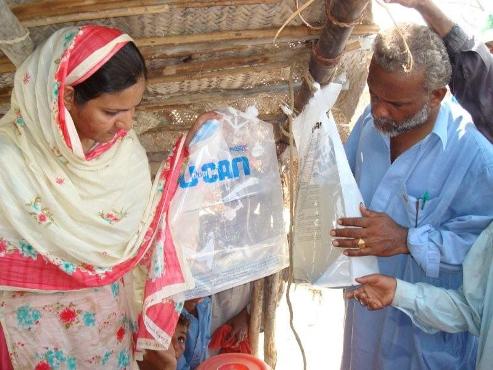
The $2 million will purchase the 28 million water purification kits and deliver them to Pakistani flood victims. These kits include buckets and filtering cloths, which will generate 280 million liters of clean drinking water for 1.5 million people in desperate need.

The P&G kits utilize PUR packets, a water purifying technology developed by P&G and the U.S. Centers for Disease Control and Prevention to help reduce sickness and death resulting from drinking contaminated water.

One small PUR packet quickly turns 10 liters of dirty, potentially deadly water into clean, drinkable water, P&G said.

McDonald said that P&G is well positioned to respond to this crisis with the PUR packets because they are manufactured in Pakistan. The company and its partners in Pakistan will work with local humanitarian groups to provide PUR packets as well as training to ensure proper use.

“The floods that have devastated Pakistan have taken weeks and have caused terrible damage, but the recovery will take much longer than that,” said U.S. Secretary of State Hillary Clinton. “As the waters recede, the people of Pakistan must know that they will not be alone. They can count on the U.S. and the international community to stand with them.”

Millions are without safe drinking water and water-borne diseases are spreading, the State Department said.

Approximately 2,000 people have died in the floods, which began in July and are considered the worst natural disaster in the nation’s history. The UN estimates that close to two million homes have been destroyed and as many as 21 million people have been injured and or left homeless by the catastrophe.

The UN, trying to feed 6 million Pakistanis, sent out another call for assistance to the world’s nations this weekend – the largest disaster appeal in UN history – asking for $2 billion in aid.

In response, the United Kingdom more than doubled its pledge to Pakistani relief, bringing the total to $209 million. The U.S. raised its commitment to $345 million.

Pakistan’s Strange Response Towards Indian Aid offer

by Omer Farooq Khan for The Times of India

The worst floods in Pakistan’s history provided a good opportunity for both the South Asian nations to come closer. Accepting Indian aid offers half-heartedly and that too after US insistence, Pakistan has given an impression that it is convinced that its policy on India cannot change.

Pakistan’s initial response to the Indian offer of five million dollars was a positive one but then it was unsure how to respond. It took several days for Pakistan to finally accept the offer, saying that the aid had to come through the UN. Now, a total of $25 million Indian assistance for flood relief efforts in Pakistan has to be spent by the UN.

Pakistan’s foreign minister Shah Mehmood Qureshi had said that the delay was due to the sensitivities involved in the relationship with India. Even, a section of policymakers, conspiracy theorists in media and some India-centric elements within the Pakistani establishment blamed India for opening floodgates of its dam to inundate Pakistan’s cities and towns. While building public opinion, they did not care that their contention was technically wrong. The fact is that the rivers that caused destruction in Pakistan do not originate in India.

Some defence analysts argue that Pakistan’s strange response towards India’s aid offer was meant not to get obliged. “Pakistan reacted politically towards Indian humanitarian gesture. The destruction is so colossal that petty politics must be avoided. Pakistan asks for help and when it is offered by a neighbour, its ego comes its way. The main hurdle was that Pakistan did not want to be obliged,” argues defence analyst General Talat Masood.

Kamran Shafi, Dawn’s columnist says that Indian-centric approach within the security establishment and intelligence agencies was the main predicament that the government accepted Indian offer half heartedly. “Values and wisdom demand that politics must be kept aside at time of tragedy. Pakistan needed to have warmly welcomed neighbour’s goodwill gesture.”

India and Pakistan have made major efforts in recent months to build confidence in their relations, which were badly strained by the Mumbai 2008 terror attacks that India blamed on militants from Pakistan. If Indian civil society, volunteers and NGO’s were allowed to do relief work in the flood affected areas, this could have been an ideal confidence building measure in the relations of the two countries.

Certainly, it would have served the spirit of Thimphu where Pakistani PM Yusuf Raza Gilani and his Indian counterpart Manmohan Singh tasked their top diplomats to create CBMs. An opportunity is still not lost if governments, media and civil societies in both the countries come forward and create enough space to use this calamity into an opportunity.

-Editor’s Note for Pakistanis for Peace- The writer is spot on with his analysis of Pakistan’s aid offer from India. During times of a humanitarian crisis of biblical proportions, its political response was petty and irresponsible to its citizens. Furthermore, half heartedly accepting several days after the response does little to build on the goodwill. Either accept it right away with gratitude (our advice) or reject it outright. It did neither and so was ineffective in either cause. The politicians of Pakistan continue to show their incompetence by ineffectively managing the affairs of the country both domestically and internationally.

$11-Million Monument to Benazir Bhutto: APPROVED

By Shirin Sadeghi for The Huffington Post

This week, as flood waters ravage Pakistan’s land and 20 million of its people, and after Pakistan’s own president, Asif Ali Zardari, managed to muster only $58,000 of his own vast wealth to the flood relief (a donation nearly doubled by Angelina Jolie), yet another devastating blow has hit Pakistan: news that the government has now approved an $11-million statue of the President’s assassinated wife, Benazir Bhutto.

And yes, this is Pakistani taxpayer money.

The statue itself will cost 4.7 million dollars, and it will be built on land that is worth another 5.9 million dollars. Apparently, Mr. Zardari, whose personal wealth is estimated to be more than 1 billion dollars, just couldn’t afford to donate the land or the statue in honor of the mother of his children.

His government decided the people of Pakistan could afford it, though. People who, according to the World Bank, have an average per capita income of $870 annually.

Admirably, the people of Pakistan have taken it upon themselves to try and stop this misguided use of funds in the midst of a national disaster. A legal action failed, but now a petition is available online.

Another day, another battle in the Pakistani people’s war for a representative government.

Aisam-Ul-Haq Qureshi Delivers Message of Peace at U.S. Open After Indo-Pak Express Suffers Defeat

By Stefan Bondy for NY Daily News

Aisam-Ul-Haq Qureshi delivered his message loud and peacefully, and it had nothing to do with forehands or backhands, or even the doubles title he failed to win.

As a Muslim from Pakistan playing in the U.S. Open doubles final, he said New York needed his words the most, as post-9/11 counsel. So the 30-year-old grabbed the microphone and addressed the estimated 15,000 at Arthur Ashe Stadium – probably the biggest crowd to watch a Grand Slam doubles final – and made sure the moment wasn’t lost.

“I want to say something on behalf of all Pakistanis,” he said following Friday’s 7-6 (5), 7-6 (4) defeat to the Bryan brothers, Bob and Mike. “Every time I come here, there’s a wrong perception about the people of Pakistan.

“They are very friendly, very loving people. We want peace in this world as much as you guys.”

The crowd cheered. By now, such poignancy is expected from Qureshi and, to a lesser extent, his doubles partner, Rohan Bopanna of India. Together, they’ve formed the politically charged tandem known as the Indo-Pak Express, breaking down barriers with their kinship and jettisoning expectations with their recent play.

Their respective neighboring countries have warred with and terrorized each other since the 1940s, citing religion as their great chasm. But Qureshi and Bopanna, a Hindu, represent peace, both on and off the court. Indian and Pakistani fans filled pockets of Arthur Ashe Friday, arriving as early as two hours before the match. U.N. ambassadors from both countries sat side-by-side in the President’s Box – the second straight match they’ve attended together – cheering the same unexpected struggle their team brought to the greatest doubles team of all time, the Bryan brothers. The 16th-seeded Qureshi and Bopanna followed up their run to the Wimbledon quarterfinals with five wins in Flushing.

“They’ve proven that when Indians and Pakistanis get together we can raise fire,” Pakistan ambassador Abdullah Hussain Haroon said. “I think on a people-to-people basis, they’re setting an example that the politicians should follow.”

Prize money and rankings were never a motivating factor, Qureshi said, only good news for his flood-stricken countrymen and a platform to express his message of American misunderstanding. He also defended the decision to build a mosque near the World Trade Center site.

“For me, as a Muslim, that’s what makes America the greatest country in the world – freedom of religion, freedom of speech,” Qureshi said. “If the mosque is built, I think it’s a huge gesture to all the Muslim community out there in the world. I would really appreciate it.”

Pakistan, which borders Afghanistan, has long been considered a headquarters of Al Qaeda.

Qureshi said he’s been stopped at airport immigration “every time” in New York – three hours at a time – including after his latest flight for the Open. And on the eve of the ninth anniversary of the 9/11 attacks, he wanted to defend his country’s masses.

“Since September 11, every time I come to the States or western countries I feel people have the wrong impression about Pakistan as a terrorist nation,” Qureshi said. “I just wanted to declare that we are very friendly, loving and caring people, and we want peace in this world as much as Americans and the rest of the world wants.

“There are extremists in every religion, but just because of them you cannot judge the whole country as a terrorist nation. I just wanted to get this message across as a Pakistani.”

Qureshi Uses U.S. Open Platform to Call For Understanding

By Matt Majendie for Reuters

Pakistan’s Aisam-ul-Haq Qureshi used the platform of the U.S. Open to deliver a message of peace on the eve of the ninth anniversary of the September 11 attacks in New York and Washington.

Qureshi lost in Friday’s men’s doubles final alongside India’s Rohan Bopanna, the other half of a unique partnership nicknamed the “Indo-Pak Express.”

In his on-court after-match speech, Qureshi said: “I feel there’s a very wrong perception of Pakistan as a terrorist country.

“We are a very peace-loving country and we want peace as much as you.”

Peace has very much been the message of Bopanna and Qureshi since their doubles partnership began with them sporting “Stop War, Start Tennis” sweatshirts in a bid to improve relations between their two countries.

Qureshi delved further into the message he was trying to get across at Arthur Ashe Stadium after the 7-6 7-6 defeat to Americans Bob and Mike Bryan.

“Since September 11, every time I come to the States or Western countries, I feel people have the wrong impression about Pakistan as a terrorist nation,” he said.

“There are extremists I think in every religion but, just because of them, you can’t judge the whole country as a terrorist nation.

“I just want to get this message across as a Pakistani.”

Qureshi said he vividly recalled the moment of the 2001 attacks in New York, which resulted in the deaths of nearly 3,000 people.

An up-and-coming tennis player at the time, he had been at a training camp in Holland when he saw events unfold at the World Trade Center in lower Manhattan.

“It was strange but I was going through the channels and I actually thought it was a movie or something,” he recalled. “I switched the channel again and then felt like it was the same movie on a different channel.

“I was kind of confused. Everything was mostly in Dutch so I couldn’t really understand. Then I actually realized what had happened. It was a very shocking moment.”

Angelina Jolie Meets Flood Victims in Pakistan

By Inamur Rehman for The Associated Press

American movie star Angelina Jolie met flood victims in northwestern Pakistan on Tuesday and appealed to the international community to provide aid needed to help the country recover from its worst natural disaster.

The flow of aid money has stalled in recent days, and officials expressed hope the two-day visit by Jolie — who serves as a “goodwill ambassador” for the U.N.’s refugee agency — will convince foreign countries and individuals to open their wallets.

The 35-year-old actress said she met with many people whose lives have been devastated by the floods, including mothers who lost their children and an elderly Pakistani couple who feared they would never be able to rebuild the home they lost.

“I am very moved by them and I hope that I am able to, today and tomorrow, be able to do something to help bring attention to the situation for all of the people in need in Pakistan,” Jolie told reporters after visiting a refugee camp in the Jalozai area.

She toured the area wearing a long black robe and a black headscarf adorned with a thin red stripe — the kind of conservative clothing worn by many Muslim women in Pakistan.

The floods began in the northwest at the end of July after extremely heavy monsoon rains and slowly surged south along the Indus River, swallowing up hundreds of villages and towns and killing more than 1,700 people. Another 17 million have been affected by the floods, and many will need emergency assistance to survive.

The United Nations issued an appeal for $460 million in emergency funds on Aug. 11, but only $294 million, or 64 percent, has been received so far, and donations have more or less dried up in recent days.

Ajay Chhibber, a U.N. assistant secretary general, said he hopes Jolie’s visit will have “a very big impact” on the inflow of aid money and will keep people focused on the crisis.

“We need more … well-known figures who can keep the spotlight and focus because people tend to forget internationally,” said Chhibber, who is also the U.N. development agency’s regional director for Asia. He spoke to reporters during a visit to Islamabad.

How Pakistan’s Floods Have Made Women Dangerously Visible

By Rania Abouzeid for TIME

Nagina drew her modest light-green cotton dupatta, the scarf that Pakistani women drape over their arms, head and chest, up over her face as she cautiously peered out from a muddy white tent to watch her youngest child, a barefoot, trouserless four-year-old boy in a navy blue shirt streaked with mud. The timid Pathan woman has four other children, three older girls and a boy, but her daughters are not with her in this overcrowded cluster of tents known as the Khandar relief camp in Nowshera, a flood-devastated northwestern district some 90 miles west of the capital Islamabad in the insurgency-plagued, religiously conservative Khyber Pakhtunkwa province. “We are trying to keep the girls away,” Nagina says, “because parda is impossible now.”

Parda, which is also spelled “purdah” and means “curtain” in Urdu, is the practice of shielding women from men they are not directly related to, both through physical segregation and through the custom of modesty, that is, with the women wearing clothing to conceal their shape. It is observed by many women in rural areas of Pakistan, including in the majority-Pathan northern belt bordering Afghanistan. In these parts, a family’s honor is often tied to the chastity and obedience of its women — and protecting and defending the honor of women from verbal and physical harm is part of an ancient code of honor and revenge. But the code is all too often taken to extremes. Barely a week goes by without stories appearing in the Pakistani media about an enraged male — from across Pakistan’s multiethnic spectrum — who has killed his female relative or relatives for some perceived infringement of “honor.” For women adhering to Parda, it’s usually easier and safer for them to simply remain secluded in their homes.  

The floods have made that option unavailable in many places. Desperation has driven women to vigorously jostle with men for limited relief goods at distribution points. Overcrowding and densely pitched tents have forced them into close quarters with men they don’t know, the flimsy canvas coverings providing little privacy from prying eyes. In the camp at Nowsherra, Adiba nods in gloomy agreement as her sister-in-law Nagina discusses the limits of parda amid the calamity . Her tribal tattoos — a green dot on her forehead and another on her chin — mark her as a member of a conservative tribe from the Taliban-infested town of Bajaur. Both women say their husbands are understanding of the conditions but they fear that their men’s patience will run out. “My husband is very upset,” says Adiba, a mother of six. “This is why we’re just sitting in our tents during the day and the night, like in a cage.”  

Pakistan’s northwest, the first region to be hit by the floods and the most devastated, “is an extremely conservative society,” says Imtiaz Gul, author of The Most Dangerous Place, a book about the Pakistan’s northwestern tribal belt bordering Afghanistan. “You hardly see women outside and they hardly have any role except for cooking and cleaning the house and that’s about it.”  

Nagina, like many of the women in Nowsherra’s camps and other places the Pathan have sought refuge from the waters, has sent her unmarried daughters away to live with relatives whose homes were not washed away by the deluge. She hasn’t seen them for a month. “We have no choice,” she says sullenly. “This situation is forced on us.”

Gul says that the longer it takes to get people back to their homes, the greater the possibility of social unrest between men from different conservative towns who have been thrown together. The situation “is pregnant with the possibility of social friction,” he says. “Frustrations will start boiling over. People are saying the worst is over, but I would say that the worst has just started.”

Akbar Ali, a 27-year-old driver who has been in the Khandar camp for 18 days now with his wife and two-year-old daughter, is simmering. He is desperately trying to rent a house at any price he says, to get his family indoors, but there’s little left on the market. He has been offered work, but turned it down because he did not want to leave his wife, who used to be in parda, alone in the camp. “We are all Pathan but we are still very different from each other. The men move around the camp. I’m just afraid that one day if they say something to my wife, it will cause a problem, a fight because I will have to respond, it’s my duty.”

As relative newcomers to the camp, Ali and his small family had missed out on securing a tent on the grounds of the Government College of Technology, or a space inside the school’s two-storey brick structure. The classrooms were already brimming with evacuees, packed four or five families per room, by the time he arrived. And so, he has had to make do with a slab of concrete outside the college cafeteria open to the elements. “We have become like dogs,” he says bitterly from behind dark sunglasses. “Wherever we hear that relief supplies have arrived, we just run after them.”

To avoid violence, he and the several other men whose families are also squatting along the cafeteria wall, have banded together to try and prevent strangers from approaching them. “Some people have tried to come around here, but they only try once,” Ali says. “They know not to come around again.”

What Are Chinese Troops Doing in Kashmir?

By Randeep Ramesh for The Guardian

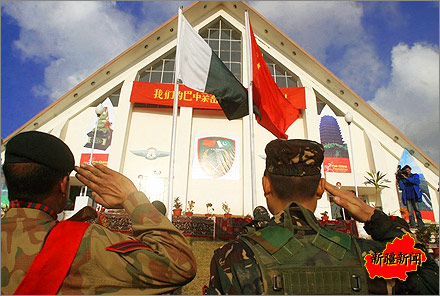
The claim that more than 7,000 Chinese troops have been handed “de facto control” of Gilgit-Baltistan, a northern part of Kashmir, by Islamabad, has set alarm bells ringing in Delhi. India – which, like its nuclear-armed rival Pakistan, claims the entire state – has long been worried that the People’s Liberation Army was working on roads and railway projects in the Karakoram mountains.

What is true is that China plans a massive highway linking western China to the port it is building at Gwadar, Pakistan, on the shore of the Arabian Sea. The benefits are obvious: the journey time from factory gate in, say, China’s wild west, to container ships bound for the Gulf will be cut from weeks to a few days. Eventually it may even become a key energy supply route.

All of this troubles Delhi, which has long asked for China to keep its nose out of Kashmiri affairs. However, the rise of the Middle Kingdom and its need to secure passage through its own troublesome provinces of Xinjiang and Tibet through to Pakistan make this unlikely. But India suspects, too, that China is intent on becoming the hegemon of much of the eastern hemisphere – able to dictate to smaller powers the rules of the game.

In Kashmir this had led to a round of tit-for-tat diplomatic incidents. So when India refuses to allow a Chinese diplomat to visit its troubled north-eastern state of Manipur for a talk, China responds by blocking the visa of a top Indian general because it appears his command includes Kashmir.

The Himalayan state is a piece of real estate whose sovereignty has long been contested. With its demography as varied as its topography, its various peoples have long been imbued with a stubborn streak of independence.

So it may be unsurprising that when heavy rains washed away villages in the Pakistan’s “Northern Areas” and Islamabad’s response was to sit on its hands, the simmering revolt against Pakistani rule flared again. In response Pakistan, so the claim goes, turned to its all-weather friend China, which was more than happy to send boots flying.

All this is dismissed in Beijing but only after referring to Gilgit as a “northern part of Pakistan”, which simply angered Delhi further. While Pakistan’s problem in its part of Kashmir has been of too little government action, India’s rule in its portion of the state has been heavy-handed and self-defeating.

Faced with a largely nonviolent revolt which began in 2008, the Indian authorities have provoked a much larger crisis with a regime of curfews and the killings of teenagers shot dead with nothing but slogans in their mouths and rocks in their hands. It is time for India to admit that its political and military strategy has failed to stabilise Kashmir.

The actions of both Pakistan and India vitiate claims that somehow either could keep the entire state happy. China has little sympathy with separatist claims – and holds sway over large chunks of the former Kashmiri kingdom.

The only way out of this mess is for Islamabad and Delhi to start rebuilding a peace process that will eventually lead to self-governance on both sides of the de facto border and a withdrawal of substantial numbers of Indian, Pakistani and, yes, even Chinese troops from Kashmir.

It’s Not Just Cricket

By Alan Black for The Huffington Post

The English in their empire conquests to India and Pakistan brought the game of cricket in their armory, best understood as complicated. With the pavilion hosting tea, the sound of the leather ball on the willow bat soon spread across the verdant lands of the subcontinent. The locals embraced a game played by spectacularly white men with unimpeachable manners, in spectacularly white clothes.

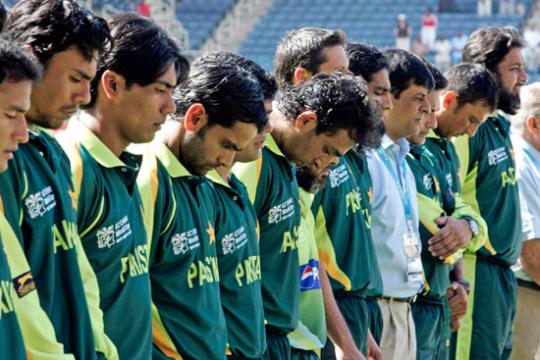
Today, India and Pakistan are as mad for cricket as they are for being at each others nuclear throats. Cricket has helped keep the peace by allowing Indians and Pakistanis to throw cricket balls at each other. But while democratic India has become a stage for Western capital and its values, Pakistan sinks deeper into a sticky wicket of terrorism, biblical style floods and now something disabling and disastrous for the nation’s identity — the Pakistani national cricket team, the pride of the nation, have been caught red handed in a betting scandal that has knocked the tea cups off the saucers, spoiling the cucumber sandwiches.

Currently, Pakistan is playing England at the home of cricket in London, a sporting venue grandly named Lords. Over the last weekend, a national UK newspaper revealed a sting operation conducted by undercover journalists, who paid a man around $250,000 for information on when certain Pakistan players on the field were going to cheat. The operative, it is claimed, is linked to illegal gambling syndicates. Sure enough, the players cheated on cue and the sounds of the London bobbies running to catch the villains came shortly after. Now, the Pakistanis require something slightly stronger than tea — high powered lawyers will be a start, maybe a stolen plane to make their getaway.

For years, Pakistani cricket has been suspect. Investigators in the past were stumped and failed to prove what seemed obvious to any sentient viewer — Pakistan was cheating, throwing games to cash in on payments from gambling crime, the cricket version of baseball’s Black Socks. Pakistan has been on the back foot over the claims denying it as a conspiracy against them. But this scandal has bowled them out. The News of the World has all the evidence on videotape. It’s irrefutable — in flagrante delicto.

The London police and cricket’s governing authority are using much diplomatic nuance at this stage of the criminal investigation, Only recently, the British Prime Minister David Cameron insulted Pakistan while he was visiting their enemy, India. And now this! Cheats at Lords, the home of English cricket. This stain on the linen will provide more ammo for the prejudice merchants loading another flare to fire at poor old Pakistan — how can you trust them?

Should Pakistan be banned from international cricket, somewhat unlikely but possible if the poison goes all the way to the top of their game, the impact back home will be enormous. For millions of Pakistanis, cricket is more important than life or death. It is Pakistan’s rope to the world. A chance to show how great they are at a tremendously demanding and skillful sport. Add one more disaster to a nation seriously down on its luck.

Millions of Pakistani Kids Risk Waterborne Disease

By Asif Shahzad for The Associated Press

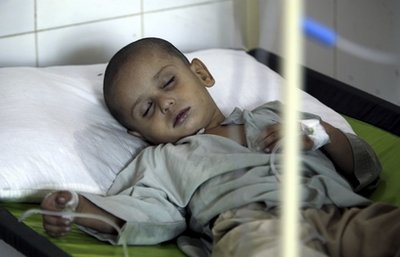
Five-year-old Shahid Khan struggled to remain conscious in his hospital bed as severe diarrhea threatened to kill him. His father watched helplessly, stricken at the thought of losing his son — one of the only things the floods had not already taken.

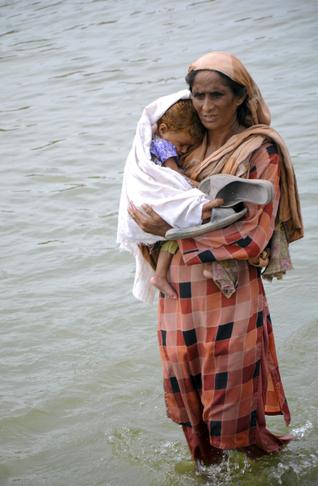
The young boy is one of millions of children who survived the floods that ravaged Pakistan over the last month but are now vulnerable to a second wave of death caused by waterborne disease, according to the United Nations.

Khan’s father, Ikramullah, fled Pabbi just before floods devastated the northwestern town about a month ago, abandoning his two-room house and all his possessions to save his wife and four children.

“I saved my kids. That was everything for me,” said Ikramullah, whose 6-year-old son, Waqar, has also battled severe diarrhea in recent days. “Now I see I’m losing them. We’re devastated.”

Ten other children lay in beds near Khan at the diarrhea treatment center run by the World Health Organization in Pabbi, two of whom were in critical condition.

Access to clean water has always been a problem in Pakistan, but the floods have worsened the situation significantly by breaking open sewer lines, filling wells with dirty water and displacing millions of people who must use the contaminated water around them.

Children are more vulnerable to diseases such as diarrhea and dysentery because they are more easily dehydrated. Many children in Pakistan also were malnourished before the floods, weakening their immune systems.

The Pakistani government and international aid groups have worked to get clean water to millions of people affected by the floods and treat those suffering from waterborne diseases. But they have been overwhelmed by the scale of the disaster, which has displaced a million more people in recent days.

The floods started in the northwest in late July after extremely heavy monsoon rains and surged south along the Indus River, killing more than 1,600 people, damaging or destroying more than 1.2 million homes and inundating one-fifth of the country — an area larger than England.

Some 3.5 million children are at imminent risk of waterborne disease and 72,000 are at high risk of death, according to the United Nations.

The World Health Organization set up the diarrhea treatment center in Pabbi about a week ago with the help of several other aid groups. Workers have already treated more than 500 patients, mostly children, said Asadullah Khan, one of the doctors.

Some of the patients have been treated multiple times because broken sewer lines have contaminated the water in the town’s wells and pipes, said the doctor. “It is circulating the disease again and again,” he said.

The aid groups set up a similar treatment facility several days ago in Nowshera, a city adjacent to Pabbi that was also engulfed by the floods. Residents who have begun to return in recent days have encountered a scene of total destruction: caved-in houses and streets covered with mud and debris.

Most of the population lacks access to clean water, and mosquitoes have proliferated in stagnant floodwater around the city, raising the risk of malaria. Government help is nowhere to be found.

“It is trash, dirt, germs and odd smells everywhere,” said Zahid Ullah, whose 3-year-old and 10-year-old sons were being treated for gastroenteritis at the facility in Nowshera. “It is a big danger.”

Even at the hospitals where the diarrhea treatment centers have been set up, mobs of flies hovered around the patients despite attempts by staff to kill them.

The World Health Organization and the United Nations Children’s Fund appealed to the world on Saturday to provide water purification units, family hygiene kits and other items needed to increase access to clean water in Pakistan.

Guido Sabatinelli, the head of the World Health Organization in Pakistan, said the international community’s help was critical to help Pakistan avoid a second wave of death from waterborne disease.

“We are fearing the epidemic of disease,” said Sabatinelli. “Access to safer water, potable water” is critical, he said.

Asma Bibi couldn’t agree more. The young mother searched in vain for clean water on the outskirts of Nowshera as her feverish 2-month-old son, Ehtesham, sweltered in a tent set up for flood victims. They had run out of water the day before.

“My son is sick. He hasn’t breast-fed in two days,” she said. “He needs milk. He needs water.”