Archive for the ‘ Pakistan ’ Category

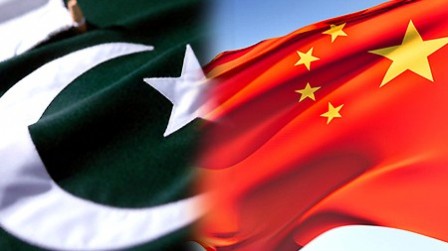
China, Pakistan Discuss Another Nuclear Plant

By Jeremy Page for The WallĀ Street Journal

BEIJING—China’s main nuclear power company announced that it is in talks to build a one-gigawatt nuclear power plant in Pakistan, even as the two countries face U.S. and Indian concerns over their cooperation to build other plants in Pakistan.

Pakistan has not signed the Nuclear Non-Proliferation Treaty, and U.S. and Indian officials worry that nuclear material might fall into the hands of al Qaeda and Taliban militants based near the Afghan border in northwestern Pakistan.

The state-run China National Nuclear Corp. has already helped Pakistan build its main nuclear power facility at Chashma in Punjab province, is completing a second reactor there and has contracts to build two more 300-megawatt reactors.

Qiu Jiangang, vice president of CNNC, told a meeting in Beijing on Monday that the first reactor was operating safely, the second one was now being tested and expected to start formal operations by the end of the year. “Both sides are in discussions over the CNNC exporting a one-gigawatt nuclear plant to Pakistan,” he added, without giving details.

There was no immediate reaction from the U.S. or India. Officials from both countries expressed concern after China signed a deal in February to build the additional two 300-MW reactors. U.S. officials said such plans required special exemption from the 46-nation Nuclear Suppliers Group, which China joined in 2004, and which is supposed to regulate the global nuclear trade.

Vann H. Van Diepen, the U.S. acting assistant secretary of state for international security and nonproliferation, suggested before the House Foreign Affairs Committee in July that the U.S. would vote against such an exemption.

The U.S. and many other NSG members have long had concerns about nuclear proliferation from Pakistan, especially since A.Q. Khan, its top nuclear scientist, confessed in 2004 to selling nuclear secrets to North Korea, Iran and Libya.

Abdul Basit, a Pakistani Foreign Ministry spokesman, declined to comment on the one-gigawatt plant, but said Pakistan’s nuclear cooperation with China was for civilian purposes. “The nuclear cooperation between the two countries are in accordance with international obligations and comes under IAEA safeguards,” he said, referring to the International Atomic Energy Agency.

China and Pakistan argue that the U.S. set a precedent by sealing a landmark deal to sell civilian nuclear fuel and technology to India in 2006 even though New Delhi had yet to sign the NPT.

That agreement, which lifted a U.S. ban imposed after India tested its first nuclear device in 1974, is seen as the cornerstone of a new partnership with New Delhi designed to counterbalance China’s influence in Asia.

Critics, however, say it undermined the global non-proliferation regime by recognizing India as a global nuclear power, but not Pakistan, even though the South Asian rivals developed nuclear bombs simultaneously.

Message to Muslims: I’m Sorry

By Nicholas D Kristof for The New York Times

Many Americans have suggested that more moderate Muslims should stand up to extremists, speak out for tolerance, and apologize for sins committed by their brethren.

Go to Columnist Page Ā»That’s reasonable advice, and as a moderate myself, I’m going to take it. (Throat clearing.) I hereby apologize to Muslims for the wave of bigotry and simple nuttiness that has lately been directed at you. The venom on the airwaves, equating Muslims with terrorists, should embarrass us more than you. Muslims are one of the last minorities in the United States that it is still possible to demean openly, and I apologize for the slurs.

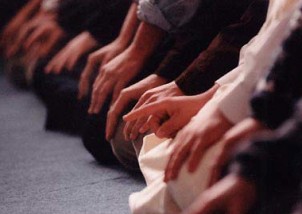
I’m inspired by another journalistic apology. The Portland Press Herald in Maine published an innocuous front-page article and photo a week ago about 3,000 local Muslims praying together to mark the end of Ramadan. Readers were upset, because publication coincided with the ninth anniversary of 9/11, and they deluged the paper with protests.

So the newspaper published a groveling front-page apology for being too respectful of Muslims. ā€œWe sincerely apologize,ā€ wrote the editor and publisher, Richard Connor, and he added: ā€œwe erred by at least not offering balance to the story and its prominent position on the front page.ā€ As a blog by James Poniewozik of Time paraphrased it: ā€œSorry for Portraying Muslims as Human.ā€

I called Mr. Connor, and he seems like a nice guy. Surely his front page isn’t reserved for stories about Bad Muslims, with articles about Good Muslims going inside. Must coverage of law-abiding Muslims be ā€œbalancedā€ by a discussion of Muslim terrorists?

Ah, balance — who can be against that? But should reporting of Pope Benedict’s trip to Britain be ā€œbalancedā€ by a discussion of Catholic terrorists in Ireland? And what about journalism itself?

I interrupt this discussion of peaceful journalism in Maine to provide some ā€œbalance.ā€ Journalists can also be terrorists, murderers and rapists. For example, radio journalists in Rwanda promoted genocide.

I apologize to Muslims for another reason. This isn’t about them, but about us. I want to defend Muslims from intolerance, but I also want to defend America against extremists engineering a spasm of religious hatred.

Granted, the reason for the nastiness isn’t hard to understand. Extremist Muslims have led to fear and repugnance toward Islam as a whole. Threats by Muslim crazies just in the last few days forced a Seattle cartoonist, Molly Norris, to go into hiding after she drew a cartoon about Muhammad that went viral.

And then there’s 9/11. When I recently compared today’s prejudice toward Muslims to the historical bigotry toward Catholics, Mormons, Jews and Asian-Americans, many readers protested that it was a false parallel. As one, Carla, put it on my blog: ā€œCatholics and Jews did not come here and kill thousands of people.ā€

That’s true, but Japanese did attack Pearl Harbor and in the end killed far more Americans than Al Qaeda ever did. Consumed by our fears, we lumped together anyone of Japanese ancestry and rounded them up in internment camps. The threat was real, but so were the hysteria and the overreaction.

Radicals tend to empower radicals, creating a gulf of mutual misunderstanding and anger. Many Americans believe that Osama bin Laden is representative of Muslims, and many Afghans believe that the Rev. Terry Jones (who talked about burning Korans) is representative of Christians.

Many Americans honestly believe that Muslims are prone to violence, but humans are too complicated and diverse to lump into groups that we form invidious conclusions about. We’ve mostly learned that about blacks, Jews and other groups that suffered historic discrimination, but it’s still O.K. to make sweeping statements about ā€œMuslimsā€ as an undifferentiated mass.

In my travels, I’ve seen some of the worst of Islam: theocratic mullahs oppressing people in Iran; girls kept out of school in Afghanistan in the name of religion; girls subjected to genital mutilation in Africa in the name of Islam; warlords in Yemen and Sudan who wield AK-47s and claim to be doing God’s bidding.

But I’ve also seen the exact opposite: Muslim aid workers in Afghanistan who risk their lives to educate girls; a Pakistani imam who shelters rape victims; Muslim leaders who campaign against female genital mutilation and note that it is not really an Islamic practice; Pakistani Muslims who stand up for oppressed Christians and Hindus; and above all, the innumerable Muslim aid workers in Congo, Darfur, Bangladesh and so many other parts of the world who are inspired by the Koran to risk their lives to help others. Those Muslims have helped keep me alive, and they set a standard of compassion, peacefulness and altruism that we should all emulate.

I’m sickened when I hear such gentle souls lumped in with Qaeda terrorists, and when I hear the faith they hold sacred excoriated and mocked. To them and to others smeared, I apologize.

Pakistan’s Strange Response Towards Indian Aid offer

by Omer Farooq Khan for The Times of India

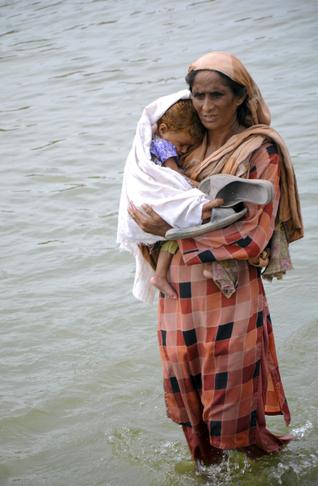
The worst floods in Pakistan’s history provided a good opportunity for both the South Asian nations to come closer. Accepting Indian aid offers half-heartedly and that too after US insistence, Pakistan has given an impression that it is convinced that its policy on India cannot change.

Pakistan’s initial response to the Indian offer of five million dollars was a positive one but then it was unsure how to respond. It took several days for Pakistan to finally accept the offer, saying that the aid had to come through the UN. Now, a total of $25 million Indian assistance for flood relief efforts in Pakistan has to be spent by the UN.

Pakistan’s foreign minister Shah Mehmood Qureshi had said that the delay was due to the sensitivities involved in the relationship with India. Even, a section of policymakers, conspiracy theorists in media and some India-centric elements within the Pakistani establishment blamed India for opening floodgates of its dam to inundate Pakistan’s cities and towns. While building public opinion, they did not care that their contention was technically wrong. The fact is that the rivers that caused destruction in Pakistan do not originate in India.

Some defence analysts argue that Pakistan’s strange response towards India’s aid offer was meant not to get obliged. “Pakistan reacted politically towards Indian humanitarian gesture. The destruction is so colossal that petty politics must be avoided. Pakistan asks for help and when it is offered by a neighbour, its ego comes its way. The main hurdle was that Pakistan did not want to be obliged,” argues defence analyst General Talat Masood.

Kamran Shafi, Dawn’s columnist says that Indian-centric approach within the security establishment and intelligence agencies was the main predicament that the government accepted Indian offer half heartedly. “Values and wisdom demand that politics must be kept aside at time of tragedy. Pakistan needed to have warmly welcomed neighbour’s goodwill gesture.”

India and Pakistan have made major efforts in recent months to build confidence in their relations, which were badly strained by the Mumbai 2008 terror attacks that India blamed on militants from Pakistan. If Indian civil society, volunteers and NGO’s were allowed to do relief work in the flood affected areas, this could have been an ideal confidence building measure in the relations of the two countries.

Certainly, it would have served the spirit of Thimphu where Pakistani PM Yusuf Raza Gilani and his Indian counterpart Manmohan Singh tasked their top diplomats to create CBMs. An opportunity is still not lost if governments, media and civil societies in both the countries come forward and create enough space to use this calamity into an opportunity.

-Editor’s Note for Pakistanis for Peace- The writer is spot on with his analysis of Pakistan’s aid offer from India. During times of a humanitarian crisis of biblical proportions, its political response was petty and irresponsible to its citizens. Furthermore, half heartedly accepting several days after the response does little to build on the goodwill. Either accept it right away with gratitude (our advice) or reject it outright. It did neither and so was ineffective in either cause. The politicians of Pakistan continue to show their incompetence by ineffectively managing the affairs of the country both domestically and internationally.

God Bless Islam with Courageous Leadership

By Ebrahim Moosa for Religion Dispatches

As Muslim Americans and millions around the world celebrate the end of Ramadan 2010 what will they pray for? What was the spiritual harvest of the month of fasting, prayer, deep reflection, and discipline? Given the growing hostility directed towards Muslims in the United States and the horrible deeds perpetrated by persons aligned to Islam on 9/11 and elsewhere in the world, I for my part, will be making two prayers.

The first is to urge Muslims to affirm their solidarity with all of humanity. The words of this prayer come from a tradition of the Prophet Muhammad. It reads:

Oh Allah, Lord (Rabb) of all things. I testify that You alone are the Lord of the world, Lord of all things… I testify that all servants of God are one family… Make me and my family truthful to you in every moment of life in this world and the next. Oh powerful and generous one, hear and respond to my prayers…

My second prayer is that God bless Islam with a religious leadership that has a modicum of Solomonic wisdom and tons of moral courage.

Why these two prayers? I think many Muslims have forgotten the message of humanism and solidarity with all creation that are the cornerstones of Islam. All servants of God are part of a single family, the Prophet Muhammad taught. So how can faiths be at war, if only to serve earthly gods? Many of our religious leaders have forgotten that our theologies, teachings, and practices were means to serve a transcendent Creator; not for idolatrous ends. Many of the most prominent Muslim religious and moral authorities the world over—clergy, intellectuals, scholars, politicians—have, through silence and inaction, invited a plague of craven violence on a number of Muslim societies. In a manner of speaking, in many places, the asylum is in charge of the mosque. Religious leaders are more interested in cowing to public adulation through demagoguery than in showing courage and exhorting people to piety and sanity.

Check if the sermon in the`Id al-Fitr (End of Fasting) sermon at your mosque hinted at the cowardly acts of al-Qaeda who killed thousands on September 11 and elsewhere. Or if deeds of the Somalian Shabab who killed dozens of Ugandans watching a soccer World Cup match in the suburbs of Kampala caused outrage. Has anyone been able to keep track of the death toll inflicted in Pakistan by Taliban suicide bombers, who most recently killed more than 60 people in Quetta because they were Shi’a? Did anyone even notice that a radical Muslim group in India chopped off the hand of a Catholic professor in the state of Kerala in July for apparently offending the image of the Prophet Muhammad in an exam questionnaire?

`Id is a day of celebration with family and friends. But it is unconscionable if Muslims do not think seriously and act in unison about the deep moral crises afflicting our communities here and abroad. To think critically is not to bow to the hate of the Islamophobes, it is a sign of strength and faith. Those who claim that there are no ā€œmoderateā€ Muslim voices denouncing acts of violence committed by Muslims are wrong, and yes, there are many good things happening in Muslim societies that do not make the headlines. Yet it is delusional to think that the evil masquerading as faith does not erode the belief and values each Muslim.

To Muslim Americans I say, next time you wonder why young men like the Times Square bomber Faisal Shahzad become entangled in conspiracies to commit acts of violence in this country and abroad please ask the following questions: What is the qualification of the imam at your mosque? Is he enriched by the best of American and Islamic culture, in tune with his environment, or is he preaching a theology no longer even appropriate for people in Iran, Egypt, or Pakistan? Does he teach the tradition creatively and help people think imaginatively? Or does he focus on impieties and promote the virtues of paraphernalia like the dress code and the mandatory length of facial hairs? If the imam is as wise as the religious leader in the Canadian sitcom Little Mosque on the Prairie, it will be a huge step up.

Mosque committees share their burden of responsibility too. Often they appoint preachers by applying the lowest and cheapest standard; theological diversity is frequently absent and enlightened thinking is considered too challenging and burdensome for them to contemplate. Will the smart Muslims in America and around the world stand up and be counted?

-Originally printed on Sep 9, 2010 for Religion Dispatches. Ebrahim Moosa is a professor of Islamic Studies at Duke University and an author of several books on Islam.

Prominent Pakistani Politician Murdered Outside His London Home

By Laura Roberts and Heidi Blake for The Telegraph

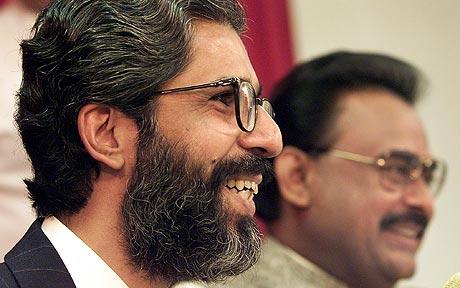
Imran Farooq, a prominent Pakistani politician, has been murdered outside his home in London. Dr Farooq, 50, was repeatedly stabbed in the head and neck during the assault in Edgware, north London.

He was a leading member of the Muttahida Quami Movement (MQM) party, which is one of the largest in Pakistan.

There were suggestions from Pakistan that he may have known his killer. When police arrived at the scene, they found Dr Farooq’s body outside his house.

A spokesman for the Metropolitan Police said officers attended an address in Green Lane, Edgware, shortly before 5.30pm after reports of a serious assault. ā€œOn arrival, officers found a single Asian man aged 50 with multiple stab wounds and head injuries,ā€ the spokesman said.

ā€œParamedics attended the man but he was pronounced dead at the scene.ā€

Next of kin have been informed and no arrests have been made.

Dr Farooq was expected to attend a birthday celebration at the MQM headquarters on London’s Edgware Road on Thursday night but the event was cancelled at the last minute. Police said it was too early to know if the murder was politically motivated.

The politician claimed asylum in Britain after spending seven years on the run as one of Pakistan’s most wanted fugitives. He was accused of a range of charges, including murder and torture.

He has not returned to Pakistan since his arrival in England in 1992.

He claimed that year that he was wanted ā€œdead or aliveā€.

ā€œThis gave licence and impunity to every individual in Pakistan to assassinate me,ā€ he said.

Dr Farooq said he spent more than seven years in hiding in Karachi, southern Pakistan. He continued: ā€œIt was impossible for me to remain in Pakistan due to the continued threat on my life and liberty.ā€

He insisted the claims against him in Pakistan were politically motivated and continued his involvement with the party from Britain.

Last month Raza Haider, another MQM member, was gunned down with his guard as he attended a funeral near the centre of Karachi. The killing triggered violence in which dozens of people were killed and at least 100 wounded.

Azeem Tariq, the former chairman, was murdered in Karachi 13 years ago. Intruders entered his home and shot him as he slept.

MQM, based in Karachi, is the fourth largest party in Pakistan and is part of the ruling coalition government. It has a strong anti-Taliban stance, although rivals accuse it of exaggerating the threat of the Taliban.

The party represents mainly descendants of Urdu-speaking migrants from India who settled in Pakistan when it was created in 1947.

A statement on the MQM website said the party had declared a ten-day period of mourning in Pakistan and around the world.

London has played host to many of Pakistan’s exiled politicians. Gen Pervez Musharraf, the former president, lives in self-imposed exile in London.

Hero’s Welcome for Aisam

By Umar Farooq for The Express Tribune

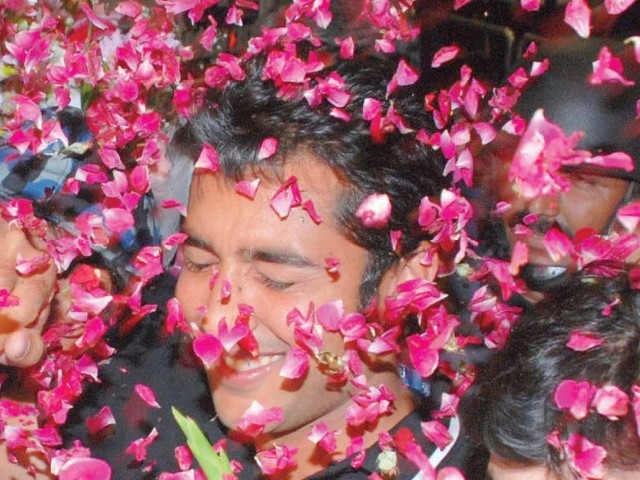
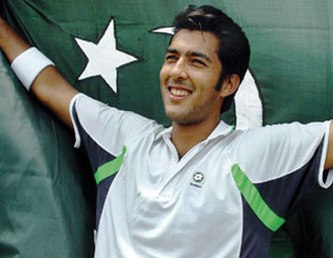
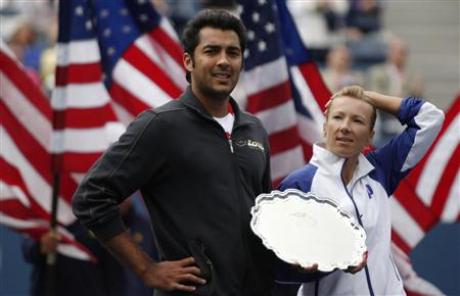
LAHORE: Aisamul Haq Qureshi returned home to a hero’s welcome with thousands of fans greeting him at Lahore airport to catch a glimpse of the Pakistan tennis sensation.

Aisam, who reached the finals of the US Open men’s doubles and mixed doubles events, became the first player from his country to achieve the feat.

ā€œI feel like a winner,ā€ said Aisam, who partnered Indian player Rohan Bopanna. ā€œI might not have won the US Open title but the reception here has made me feel like I won the Grand Slam event.ā€

Though the Pakistan-India pair went down against top-seeds Mike and Bob Bryan 7-6, 7-6, Aisam won the hearts of millions of fans through a moving speech at the closing ceremony, acting as an ambassador of peace on behalf of the country. The 30-year-old also climbed to a career-best number six in the ATP DoublesĀ  team World Rankings.

ā€œFollowing the recent success, I am now eying the number one spot in the doubles rankings,ā€ said Aisam, whose welcome was held in collaboration with the Pakistan Tennis Federation (PTF) and the Punjab Lawn Tennis Association.

Meanwhile, partner Bopanna was happy with the success and admitted a lot of hard work went into the win.

ā€œThis entire year was a transition period for us. We started thinking seriously about doubles, put our heads and our games together and started getting good results,ā€ said Bopanna to The Hindu. ā€œWe were combining well and knew it was only a matter of time that comfort with each other would translate into wins.ā€

However, Bopanna, 30, admitted that he was nervous about playing the doubles final.

ā€œIt was a huge moment for me to play the final at Arthur Ashe Stadium. Aisam had already played the mixed doubles final there, so I was the nervous one. But as soon as I hit the first ball, everything was fine.ā€

A new source of inspiration

The PTF has hailed Aisam’s success and termed the 30-year-old as a ā€˜source of inspiration for the youth of the country’.

ā€œHe indeed is the new hero of Pakistan and I am proud of him,ā€ said the PTF President Dilawar Abbas. ā€œHis performance and achievement is remarkable and appreciated by all Pakistanis.

ā€œI believe sportsmen are the best ambassadors of peace and goodwill and Aisam’s gesture in the ceremony has won many hearts.

ā€œIt not only helps the country but this will boost the scope of sports in the country.

ā€œWhat Aisam said in the ceremony was enough for the government to take a cue from,ā€ said Abbas.

Aisam’s mother, a former national tennis champion, and his sister Shiza Qureshi, also a tennis player, were proud of Aisam’s achievements.

ā€œHe is a winner for us,ā€ said Nosheen Ahtisham. ā€œWinning and losing is part of the game. But to reach this far is impressive enough. The pair competed well throughout the match and it was touch and go in the end.ā€

$11-Million Monument to Benazir Bhutto: APPROVED

By Shirin Sadeghi for The Huffington Post

This week, as flood waters ravage Pakistan’s land and 20 million of its people, and after Pakistan’s own president, Asif Ali Zardari, managed to muster only $58,000 of his own vast wealth to the flood relief (a donation nearly doubled by Angelina Jolie), yet another devastating blow has hit Pakistan: news that the government has now approved an $11-million statue of the President’s assassinated wife, Benazir Bhutto.

And yes, this is Pakistani taxpayer money.

The statue itself will cost 4.7 million dollars, and it will be built on land that is worth another 5.9 million dollars. Apparently, Mr. Zardari, whose personal wealth is estimated to be more than 1 billion dollars, just couldn’t afford to donate the land or the statue in honor of the mother of his children.

His government decided the people of Pakistan could afford it, though. People who, according to the World Bank, have an average per capita income of $870 annually.

Admirably, the people of Pakistan have taken it upon themselves to try and stop this misguided use of funds in the midst of a national disaster. A legal action failed, but now a petition is available online.

Another day, another battle in the Pakistani people’s war for a representative government.

For Imam in Muslim Center Furor, a Hard Balancing Act

By Anne Barnard for The New York Times
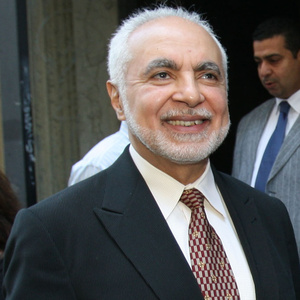
Not everyone in the Cairo lecture hall last February was buying the imam Feisal Abdul Rauf’s message. As he talked of reconciliation between America and Middle Eastern Muslims — his voice soft, almost New Agey — some questioners were so suspicious that he felt the need to declare that he was not an American agent.

Muslims need to understand and soothe Americans who fear them, the imam said; they should be conciliatory, not judgmental, toward the West and Israel.

But one young Egyptian asked: Wasn’t the United States financing the speaking tour that had brought the imam to Cairo because his message conveniently echoed United States interests?

ā€œI’m not an agent from any government, even if some of you may not believe it,ā€ the imam replied. ā€œI’m not. I’m a peacemaker.ā€

That talk, recorded on video six months ago, was part of what now might be called Mr. Abdul Rauf’s prior life, before he became the center of an uproar over his proposal for a Muslim community center two blocks from the World Trade Center. He watched his father, an Egyptian Muslim scholar, pioneer interfaith dialogue in 1960s New York; led a mystical Sufi mosque in Lower Manhattan; and, after the Sept. 11 attacks, became a spokesman for the notion that being American and Muslim is no contradiction — and that a truly American brand of Islam could modernize and moderate the faith worldwide.

In recent weeks, Mr. Abdul Rauf has barely been heard from as a national political debate explodes over his dream project, including, somewhere in its planned 15 stories, a mosque. Opponents have called his project an act of insensitivity, even a monument to terrorism.

In his absence — he is now on another Middle East speaking tour sponsored by the State Department — a host of allegations have been floated: that he supports terrorism; that his father, who worked at the behest of the Egyptian government, was a militant; that his publicly expressed views mask stealth extremism. Some charges, the available record suggests, are unsupported. Some are simplifications of his ideas. In any case, calling him a jihadist appears even less credible than calling him a United States agent.

Growing Up in America

Mr. Abdul Rauf, 61, grew up in multiple worlds. He was raised in a conservative religious home but arrived in America as a teenager in the turbulent 1960s; his father came to New York and later Washington to run growing Islamic centers. His parents were taken hostage not once, but twice, by American Muslim splinter groups. He attended Columbia University, where, during the Six-Day War in 1967 between Israel and Arab states like Egypt, he talked daily with a Jewish classmate, each seeking to understand the other’s perspective.

He consistently denounces violence. Some of his views on the interplay between terrorism and American foreign policy — or his search for commonalities between Islamic law and this country’s Constitution — have proved jarring to some American ears, but still place him as pro-American within the Muslim world. He devotes himself to befriending Christians and Jews — so much, some Muslim Americans say, that he has lost touch with their own concerns.

ā€œTo stereotype him as an extremist is just nuts,ā€ said the Very Rev. James P. Morton, of the Church of St. John the Divine, in Manhattan, who has known the family for decades.

Since 9/11, Mr. Abdul Rauf, like almost any Muslim leader with a public profile, has had to navigate the fraught path between those suspicious of Muslims and eager to brand them as violent or disloyal and a Muslim constituency that believes itself more than ever in need of forceful leaders.

One critique of the imam, said Omid Safi, a professor of religious studies at the University of North Carolina, was that he had not been outspoken enough on issues ā€œnear and dear to many Muslims,ā€ like United States policy on Israel and treatment of Muslims after 9/11, ā€œbecause of the need that he has had — whether taken upon himself or thrust upon him — to be the ā€˜American imam,’ to be the ā€˜New York imam,’ to be the ā€˜accommodationist imam.ā€™Ā ā€

Akbar Ahmed, chairman of Islamic studies at American University, said Mr. Abdul Rauf’s holistic Sufi practices could make more orthodox Muslims uncomfortable, and his focus on like-minded interfaith leaders made him underestimate the uproar over his plans.

ā€œHe hurtles in, to the dead-center eye of the storm simmering around Muslims in America, expecting it to be like at his mosque — we all love each other, we all think happy thoughts,ā€ Mr. Ahmed said.

ā€œNow he has set up, unwittingly, a symbol of this growing tension between America and Muslims: this mosque that Muslims see as a symbol of Islam under attack and the opponents as an insult to America,ā€ he added. ā€œSo this mild-mannered guy is in the eye of a storm for which he’s not suited at all. He’s not a political leader of Muslims, yet he now somehow represents the Muslim community.ā€

Andrew Sinanoglou, who was married by Mr. Abdul Rauf last fall, said he was surprised that the imam had become a contentious figure. His greatest knack, Mr. Sinanoglou said, was making disparate groups comfortable. At the wedding, he brought together Mr. Sinanoglou’s family, descended from Greek Christians thrown out of Asia Minor by Muslims, and his wife’s conservative Muslim father.

ā€œHe’s an excellent schmoozer,ā€ Mr. Sinanoglou said of the imam.

Mr. Abdul Rauf was born in Kuwait. His father, Muhammad Abdul Rauf, graduated from Cairo’s Al-Azhar University, the foremost center of mainstream Sunni Muslim learning. He was one of many scholars Egypt sent abroad to staff universities and mosques, a government-approved effort unlikely to have tolerated a militant. He moved his family to England, studying at Cambridge and the University of London; then to Malaysia, where he eventually became the first rector of the International Islamic University of Malaysia.

As a boy, Feisal absorbed his father’s talks with religious scholars from around the world, learning to respect theological debate, said his wife, Daisy Khan. He is also steeped in Malaysian culture, whose ethnic diversity has influenced an Islam different than that of his parents’ homeland.

In 1965, he came to New York. His father ran the Islamic Center of New York; the family lived over its small mosque in a brownstone on West 72nd Street, which served mainly Arabs and African-American converts. Like his son, the older imam announced plans for a community center for a growing Muslim population — the mosque eventually built on East 96th Street. It was financed by Muslim countries and controlled by Muslim diplomats at the United Nations — at the time a fairly noncontroversial proposition. Like his son, he joined interfaith groups, invited by Mr. Morton of St. John the Divine.

Hostage Crisis

Unlike his son, he was conservative in gender relations; he asked his wife, Buthayna, to not drive. But in 1977, he was heading the Islamic Center in Washington when he and Buthayna were taken hostage by a Muslim faction; it was his wife who challenged the gunmen on their lack of knowledge of Islam.

ā€œMy husband didn’t open his mouth, but I really gave it to them,ā€ she told The New York Times then.

Meanwhile, the younger Mr. Abdul Rauf studied physics at Columbia. At first, he recalled in interviews last year, it was hard to adjust to American social mores. By 1967, he and a Yale student, Kurt Tolksdorf, had bonded at summer school over their shared taste in women and fast cars. But Mr. Tolksdorf said his friend never subscribed to the ā€œfree loveā€ of the era.

When the 1967 war broke out in the Middle East, Mr. Tolksdorf said, Mr. Abdul Rauf reacted calmly when Israeli students tried to pick a fight. A classmate, Alan M. Silberstein, remembers debating each day’s news over lunch.

ā€œHe was genuinely trying to understand the interests of American Jews — what Israel’s importance was to me,ā€ he said. ā€œThere was a genuine openness.ā€

In his 20s, Mr. Abdul Rauf dabbled in teaching and real estate, married an American-born woman and had three children. Studying Islam and searching for his place in it, he was asked to lead a Sufi mosque, Masjid al-Farah. It was one of few with a female prayer leader, where women and men sat together at some rituals and some women do not cover their hair. And it was 12 blocks from the World Trade Center.

Divorced, he met his second wife, Ms. Khan, when she came to the mosque looking for a gentler Islam than the politicized version she rejected after Iran’s revolution. Theirs is an equal partnership, whether Mr. Abdul Rauf is shopping and cooking a hearty soup, she said, or running organizations that promote an American-influenced Islam.

A similar idea comes up in the video of his visit to Cairo this year. Mr. Abdul Rauf, with Ms. Khan, unveiled as usual, beside him, tells a questioner not to worry so much about one issue of the moment — Switzerland’s ban on minarets — saying Islam has always adapted to and been influenced by places it spreads to. ā€œWhy not have a mosque that looks Swiss?ā€ he joked. ā€œMake a mosque that looks like Swiss cheese. Make a mosque that looks like a Rolex.ā€

In the 1990s, the couple became fixtures of the interfaith scene, even taking a cruise to Spain and Morocco with prominent rabbis and pastors.

Mr. Abdul Rauf also founded the Shariah Index Project — an effort to formally rate which governments best follow Islamic law. Critics see in it support for Taliban-style Shariah or imposing Islamic law in America.

Shariah, though, like Halakha, or Jewish law, has a spectrum of interpretations. The ratings, Ms. Kahn said, measure how well states uphold Shariah’s core principles like rights to life, dignity and education, not Taliban strong points. The imam has written that some Western states unwittingly apply Shariah better than self-styled Islamic states that kill wantonly, stone women and deny education — to him, violations of Shariah.

After 9/11, Mr. Abdul Rauf was all over the airwaves denouncing terrorism, urging Muslims to confront its presence among them, and saying that killing civilians violated Islam. He wrote a book, ā€œWhat’s Right With Islam Is What’s Right With America,ā€ asserting the congruence of American democracy and Islam.

That ample public record — interviews, writings, sermons — is now being examined by opponents of the downtown center.

Those opponents repeat often that Mr. Abdul Rauf, in one radio interview, refused to describe the Palestinian group that pioneered suicide bombings against Israel, Hamas, as a terrorist organization. In the lengthy interview, Mr. Abdul Rauf clumsily tries to say that people around the globe define terrorism differently and labeling any group would sap his ability to build bridges. He also says: ā€œTargeting civilians is wrong. It is a sin in our religion,ā€ and, ā€œI am a supporter of the state of Israel.ā€

ā€œIf I were an imam today I would be saying, ā€˜What am I supposed to do?ā€™Ā ā€ said John Esposito, a professor of Islamic studies at Georgetown University. ā€œĀ ā€˜Can an imam be critical of any aspect of U.S. foreign policy? Can I weigh in on things that others could weigh in on?’ Or is someone going to say, ā€˜He’s got to be a radical!ā€™Ā ā€

Aisam-Ul-Haq Qureshi Delivers Message of Peace at U.S. Open After Indo-Pak Express Suffers Defeat

By Stefan Bondy for NY Daily News

Aisam-Ul-Haq Qureshi delivered his message loud and peacefully, and it had nothing to do with forehands or backhands, or even the doubles title he failed to win.

As a Muslim from Pakistan playing in the U.S. Open doubles final, he said New York needed his words the most, as post-9/11 counsel. So the 30-year-old grabbed the microphone and addressed the estimated 15,000 at Arthur Ashe Stadium – probably the biggest crowd to watch a Grand Slam doubles final – and made sure the moment wasn’t lost.

“I want to say something on behalf of all Pakistanis,” he said following Friday’s 7-6 (5), 7-6 (4) defeat to the Bryan brothers, Bob and Mike. “Every time I come here, there’s a wrong perception about the people of Pakistan.

“They are very friendly, very loving people. We want peace in this world as much as you guys.”

The crowd cheered. By now, such poignancy is expected from Qureshi and, to a lesser extent, his doubles partner, Rohan Bopanna of India. Together, they’ve formed the politically charged tandem known as the Indo-Pak Express, breaking down barriers with their kinship and jettisoning expectations with their recent play.

Their respective neighboring countries have warred with and terrorized each other since the 1940s, citing religion as their great chasm. But Qureshi and Bopanna, a Hindu, represent peace, both on and off the court. Indian and Pakistani fans filled pockets of Arthur Ashe Friday, arriving as early as two hours before the match. U.N. ambassadors from both countries sat side-by-side in the President’s Box – the second straight match they’ve attended together – cheering the same unexpected struggle their team brought to the greatest doubles team of all time, the Bryan brothers. The 16th-seeded Qureshi and Bopanna followed up their run to the Wimbledon quarterfinals with five wins in Flushing.

“They’ve proven that when Indians and Pakistanis get together we can raise fire,” Pakistan ambassador Abdullah Hussain Haroon said. “I think on a people-to-people basis, they’re setting an example that the politicians should follow.”

Prize money and rankings were never a motivating factor, Qureshi said, only good news for his flood-stricken countrymen and a platform to express his message of American misunderstanding. He also defended the decision to build a mosque near the World Trade Center site.

“For me, as a Muslim, that’s what makes America the greatest country in the world – freedom of religion, freedom of speech,” Qureshi said. “If the mosque is built, I think it’s a huge gesture to all the Muslim community out there in the world. I would really appreciate it.”

Pakistan, which borders Afghanistan, has long been considered a headquarters of Al Qaeda.

Qureshi said he’s been stopped at airport immigration “every time” in New York – three hours at a time – including after his latest flight for the Open. And on the eve of the ninth anniversary of the 9/11 attacks, he wanted to defend his country’s masses.

“Since September 11, every time I come to the States or western countries I feel people have the wrong impression about Pakistan as a terrorist nation,” Qureshi said. “I just wanted to declare that we are very friendly, loving and caring people, and we want peace in this world as much as Americans and the rest of the world wants.

“There are extremists in every religion, but just because of them you cannot judge the whole country as a terrorist nation. I just wanted to get this message across as a Pakistani.”

Musharraf Says Plans to Form New Party, Contest Pakistan Elections in 2013

By Simeon Bennett forĀ Bloomberg News

Pervez Musharraf, the former president of Pakistan, said he plans to form a new political party and contest elections scheduled for 2013, before seeking to become prime minister or president.

ā€œA time has come in Pakistan where we need to introduce a new political culture, a culture which can take Pakistan forward on a correct democratic path, not an artificial, make-believe democratic path,ā€ Musharraf, 67, said in an interview with the British Broadcasting Corp.

Musharraf, a former army chief who seized power in 1999 and became a U.S. ally against terrorism, stepped down as president in 2008 to avoid impeachment charges for illegally seizing power and mishandling the economy. He left Pakistan after resigning and now lives in London, according to the BBC.

Police in Pakistan last August issued charges against him for unlawfully keeping top judges under house arrest in 2007, when he imposed emergency rule in the country.

Musharraf said if he returns to Pakistan he will face some legal cases, may risk being killed, and will answer every allegation against him, the BBC reported.

Opinion polls, which show Musharraf’s popularity is low in Pakistan, can be manipulated, he said, adding that his popularity is increasing.

ā€œAs far as Pakistan as a state and the people of Pakistan are concerned, we did wonders for them in those seven years, which should be compared with the 50 years of the past,ā€ Musharraf said.

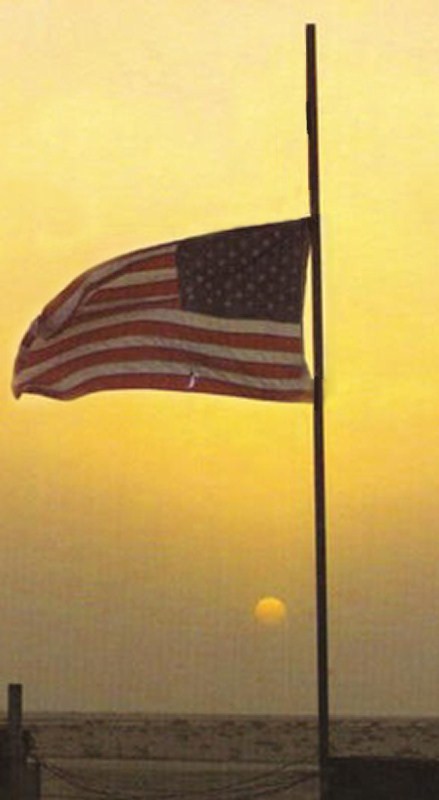
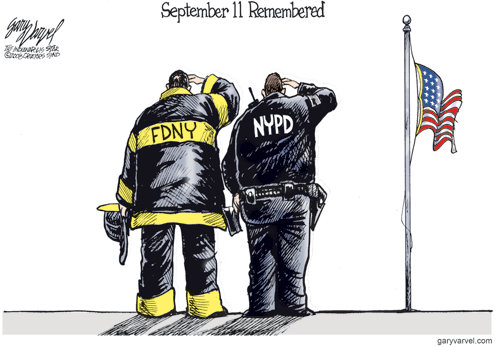
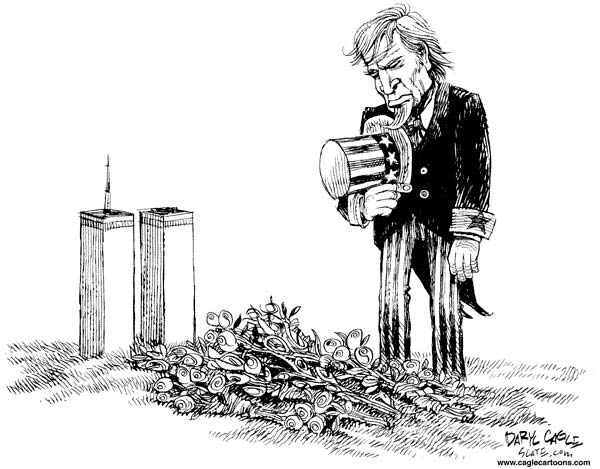
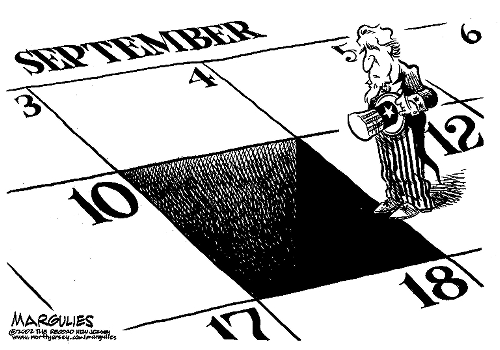
9/11 Remembered in Pictures

A Muslim’s Prayer for Peace and Religious Tolerance

Merciful God, You made all of the people of the world in Your own image and placed before us the pathway of salvation through different Preachers who claimed to have been Your Saints and Prophets. But, the contradictions in their teachings and interpretations of them have resulted in creating divisions, hatreds and bloodshed in the world community. Millions of innocent men, women and children have so far been brutally killed by the militants of several religions who have been committing horrifying crimes against humanity, and millions more would be butchered by them in the future, if You do not help us find ways to reunite peacefully.

In the name of God, The Compassionate, The Merciful, look with compassion on the whole human family; take away the controversial teachings of arrogance, divisions and hatreds which have badly infected our hearts; break down the walls that separate us; reunite us in bonds of love; and work through our struggle and confusion to accomplish Your purposes on earth; that, in Your good time, all nations and races may jointly serve You in justice, peace and harmony. (Amen)

-Pakistanis for Peace, September 11, 2010

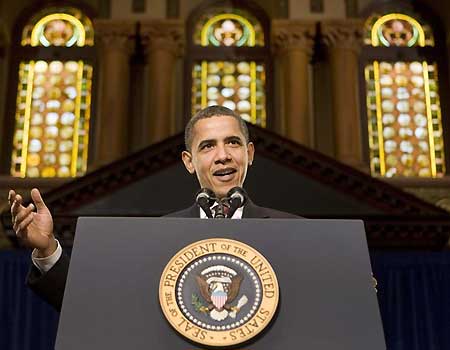
Obama Calls For Religious Tolerance

By Christi Parsons, Tribune Washington Bureau

In a news conference on the eve of Sept. 11, he speaks of his own Christianity, the economy, and asks Americans to remember they’re not at war with Islam, but with terrorists that distort the faith.

President Obama spoke of his own Christianity on Friday while calling on Americans to turn away from religious divisions and join together as “one nation, under God.” It was a rare personal reference from the president, coming in a news conference that sounded more like a homily to the nation before a somber anniversary.

“As somebody who relies heavily on my Christian faith in my job, I understand the passions that religious faith can raise,” Obama said. “But I’m also respectful that people of different faiths can practice their religion, even if they don’t subscribe to the exact same notions that I do, and that they are still good people, and they are my neighbors and they are my friends, and they are fighting alongside us in our battles.”

In his first news conference in several months, Obama talked up his plans for stimulating economic growth and complained about Republican obstruction to his proposals. He said people should remember that there is still a terrorist threat to Americans nine years after Sept. 11, even though U.S. troops overseas are successfully compromising the ability of extremists to carry out new plots.

Capturing or killing Osama bin Laden and Ayman Zawahiri, Al Qaeda’s No. 2 leader, is a high priority, he said, though it “doesn’t solve all our problems.”

But as a Florida preacher held out the possibility of a Koran-burning demonstration on Saturday, tying it to plans for the development of a mosque near the site of the World Trade Center attacks, even Obama’s messages about the economy and overseas conflict were interwoven with a larger message about religious tolerance.

If there is an increase in suspicion and resentment of Islam in this country, Obama said, it arises during trying times when the country is feeling a sense of general anxiety. He said he worries that the threat of a Koran burning could endanger American troops and cause others around the country to think it’s a good way to get attention.

The proposed New York City mosque has run up against the “extraordinary sensitivities around 9/11,” he said. “But I go back to what I said earlier: We are not at war against Islam,” Obama said. “We are at war against terrorist organizations that have distorted Islam or falsely used the banner of Islam to engage in their destructive acts.”

Americans, he said, must cling to the shared belief in religious tolerance. “We’ve got millions of Muslim Americans, our fellow citizens, in this country,” he said. “They’re going to school with our kids. They’re our neighbors. They’re our friends. They’re our co-workers. And when we start acting as if their religion is somehow offensive, what are we saying to them?”

Obama devoted a substantial portion of his Friday remarks to the economy, beginning with the announcement that he is naming Chicago economist Austan Goolsbee to head his Council of Economic Advisors. Goolsbee is an economist with expertise in tax policy.

The president refused to characterize his proposal to spend money on infrastructure as a “second stimulus” plan, despite one reporter’s prodding and even though he said he has “no problem with people saying the president is trying to stimulate growth and hiring.”

“I would assume that’s what the Republicans think we should do, to stimulate growth and jobs,” Obama said. Senate Republican leader Mitch McConnell of Kentucky fired off a speedy critique, saying Americans are more interested in lower taxes and reductions in federal spending.

“The president spent a lot of time blaming others and talking about more government spending,” McConnell said. “But Americans want to know that Washington is going to stop the reckless spending and debt, the burdensome red-tape and job-killing taxes.”

But McConnell and others hastened to echo the president’s words about who, exactly, the U.S. is targeting with its war effort. “I agree wholeheartedly with the president that we need to do everything we can to fight Al Qaeda, while being clear who the enemy is,” McConnell said. “This war on terror goes on,” McConnell said. “We are confident in the strength and goodness of our cause and our country.”

Qureshi Uses U.S. Open Platform to Call For Understanding

By Matt Majendie for Reuters

Pakistan’s Aisam-ul-Haq Qureshi used the platform of the U.S. Open to deliver a message of peace on the eve of the ninth anniversary of the September 11 attacks in New York and Washington.

Qureshi lost in Friday’s men’s doubles final alongside India’s Rohan Bopanna, the other half of a unique partnership nicknamed the “Indo-Pak Express.”

In his on-court after-match speech, Qureshi said: “I feel there’s a very wrong perception of Pakistan as a terrorist country.

“We are a very peace-loving country and we want peace as much as you.”

Peace has very much been the message of Bopanna and Qureshi since their doubles partnership began with them sporting “Stop War, Start Tennis” sweatshirts in a bid to improve relations between their two countries.

Qureshi delved further into the message he was trying to get across at Arthur Ashe Stadium after the 7-6 7-6 defeat to Americans Bob and Mike Bryan.

“Since September 11, every time I come to the States or Western countries, I feel people have the wrong impression about Pakistan as a terrorist nation,” he said.

“There are extremists I think in every religion but, just because of them, you can’t judge the whole country as a terrorist nation.

“I just want to get this message across as a Pakistani.”

Qureshi said he vividly recalled the moment of the 2001 attacks in New York, which resulted in the deaths of nearly 3,000 people.

An up-and-coming tennis player at the time, he had been at a training camp in Holland when he saw events unfold at the World Trade Center in lower Manhattan.

“It was strange but I was going through the channels and I actually thought it was a movie or something,” he recalled. “I switched the channel again and then felt like it was the same movie on a different channel.

“I was kind of confused. Everything was mostly in Dutch so I couldn’t really understand. Then I actually realized what had happened. It was a very shocking moment.”

Why The Mosque Needs To Be Built At Ground Zero

By Manzer Munir for Pakistanis for Peace

This is already my third article on the NYC Mosque controversy. When I started my Facebook group and website Pakistanis for Peace by the same name nearly two years ago, I did it in response to the tragic and callous terrorist attacks in Mumbai India in 2008 and my desire to see peace in that region and beyond.Ā As a firm believer in God,Ā but not a particularly religious person, I never would have imagined that I would end up making a big part of my focus not just peace between India and Pakistan, but also peace and understanding between the Muslim and non-Muslim worlds as well. Heaven knows I have my own questions and issues with certain Muslim laws and practicesĀ and I of all people am the least suitable to beĀ one of itsĀ defenders. However, I am a strict constitutionalist and as mentioned in my previous articles on this subject, IĀ have advocated the building of the mosque simply on First Amendment religious freedom grounds.

Now here I am in less than one month, IĀ find myselfĀ already writing a third article on the mosque controversy. Much has been written already by others on this topic also, but I wanted to give a few more opinions from a rational, moderate and patriotic American Muslim perspective, one which is missing in the current dialogue.

We know thatĀ many people who are opposed to the building of the mosque in lower Manhattan simply ask ā€œWhy there?ā€ ā€œWhy would ā€œtheyā€ possibly want to build it there of all places? It is seen as an affront by them that Muslims should want to build an inter-faith mosque, community center and a planned outreach ministry in the heart of Manhattan two city blocks from the site of the World Trade Center and the attacks of September 11, nine year ago. In fact, last night, while watching CNN, I saw Rick Sanchez ask former Governor George Pataki of New York about the Ground Zero Mosque controversy and his views on the subject. ā€œWhy there of all places would you build a mosque?ā€ asked Gov. Pataki.Ā  Why there? Ā As if he had fully bought into a favorite point of right wing groups that ā€œMuslims build mosques at places they conquerā€ and that this is somehow a celebration of their ā€œvictoryā€ over us because of the deaths of so many of our fellow countrymen on 9/11. That statement is wrong on so many levels that normally I would not even waste energy answering a clearly misguided assumption, but I will make an exception to clear the air as that is precisely what this article aims to do.

First of all, the 9/11 attacks were not a result of the actions of mainstream Muslims or the collective billion plus adherents of the religion but instead by members of a terror group known as Al-Qaeda, whose leader, Osama Bin Laden, we were very familiar and friendly with during the Soviet Afghan War of the 1980’s as he had assisted us in stopping the Red Army from conquering Afghanistan at the height of the Cold War between the two superpowers. Also a mosque is a place of worship. It is not a place where bombs are made and terrorists are trained either in ideology or practical training. To equate the building of a mosque to a directĀ linkĀ to terrorism or some other nefarious activity is inĀ itselfĀ a deeply offensive argumentĀ to any Muslim, if one must speak of insensitivities.

So are we at war with Islam? This really is the only question we must ask ourselves to understand the debate over the mosque controversy. Debra Burlingame, the co-founder of 9/11 Families for a Safe and Strong America, issued a statement saying that “Building a 15-story mosque at Ground Zero is a deliberately provocative act.” This is simply not true as it is not exclusively just a mosque, but rather a multi layered structure that will house an auditorium, restaurant, gymnasium, library, conference rooms and multi-faith prayer halls devoted to allowing non-Muslim visitors the chance to come explore the center and at the same time take time to meditate and pray according to their own customs.

The center, as its leader Imam Faisal Abdul Rauf pointed out recently, ā€œwill establish this community as the place where the moderate Muslim voice condemns terrorism and works for new, peaceful, and harmonious relationships with all New Yorkers and indeed all Americans.” Just the fact that this center will have a restaurant, conference rooms, a library and multi-faith dialogue and prayer rooms, already makes this proposed building the most uniquely American mosque in the world. Nowhere else will one find a mosque so devoted to understanding and bridge building between Islam and other religions and no other place and location will it be more sorely needed in the years to come than in New York City! Too often, many non-Muslims complain about the self segregation practices of Muslims and indeed a characteristic of all minority communities to be in their own bubble and for not having a lot of interaction between other communities or faiths.

Many times my own non-Muslim friends have been curious and inquired on how Muslims pray and what they believe in and what exactly goes on in a typical mosque. But typically aĀ small, regular mosqueĀ does not have the sort of access and resourcesĀ to satisfy this curiosity and neither the infrastructure nor theĀ logistics to handle curious visitors of other faiths. Primarily mosques in this country have been built with Muslims as its sole audience and occupants. This is the first time a mosque and cultural center is being proposed that will eliminate the barriers that many non-Muslims feel when it comes to understanding Islam and Muslims and actually takes into considerations its non-Muslim visitors when planning the structure. For many years to come, many Americans and indeed tourists from around the world will be coming to the proposed complex now under construction at the site of the World Trade Centers that will house the 9/11 Memorial. What better placeĀ  will there be than a few blocks away from the 9/11 MemorialĀ where visitors can be told about the Islam of the great boxer Muhammed Ali and hall of fame basketball player Kareem Abdul Jabbar and not that of evil individuals such as Mohammed Atta and Osama Bin Laden?Ā Where else should they be told of theĀ differenceĀ between theĀ Islam that is practiced by comedian Dave Chappelle and Oprah’s Dr Mehemt Oz versus the one practiced by the backward barbarianĀ murderers known as the Taliban in the mountains of Afghanistan? Where else can they come to know of the type of Islam practiced by patriotic Bronze Star and Purple Heart decorated deceased US soldier Kareem Rashad Sultan Khan or the one practiced by the deranged Major Nidal Malik Hasan, the accused perpetrator of the Fort Hood Army base who sadly killed 13 fellow soldiers almost 1 year ago?

Now in order to satisfy the opponentsĀ and critics of the center, IĀ also believe that all the funding needs to be transparent, there needs to be a multi-faith board of directors, and the Muslim leadership needs to be cognizant that this is indeed a very special place for all Americans and a place of national mourning. This mosque needs to therefore addressĀ theĀ attacks of 9/11Ā and also needs to be a reminder not just to non-Muslims of the tragedy that was 9/11 but more importantly it needs toĀ  serve as a constant reminder to the rest of the Muslim world of the terrible actions some have committed in the name of Islam.

Why build it here of all places you may still ask? Why not here? What other place in America, nay, what other place in the world did Islam take the biggest blow to its reputation and image? It is Ground Zero and lower Manhattan itself where this religion of over a billion people got literally hijacked and its message of peace and tolerance got forever destroyed in the eyes of the world’s non-Muslims by events of 9/11 and the actions of a handful of radical extremists who were terrorists and part of a network known as Al-Qaeda. So, why not build a monument to tolerance and understanding for the very religion that took the biggest hit to its global credibility by events that happened in this area?Ā  I believe that it is not out of any provocation or insensitivities that Muslims want to build a community center near Ground Zero, but rather because this is the one place in the world where truth about the religion needs to be told and the need to showcase the real Islam of the world’s Muslims rather than allow the story of the hatred and violence perpetrated by the terrorists to be the only story one hears when discussing the religion of Islam. This center needs to be a part of the healing process we must go through as a nation and will be a testament for the rest of the Muslim world outside our shores of the grandeur of our nation and for our acceptance of Muslims and for not allowing the stereotyping of a religion of hundreds of millions of people over the actions of 19 evildoers.Ā 

Trust me, the terrorists will triumph if this mosque does not get built.Ā  We must not forget who we’re fighting against, and what we are indeed fighting for. The Taliban, the terrorists and other radical Islamists do not respect religious freedom or tolerance. Their distorted and narrowly interpreted Wahhabi views of Islam leave no room for dissent, debate or disagreements. These terrorists are responsible for more deaths of dissenting and or differing Muslims than of any other religion at their hands. These terrorists are Islam’s biggest enemy and threat and we must remember that this is not a war between us and the Muslim world. It is a war between us and Al-Qaeda. And to prevent moderate, peace seeking, bridge building, and patriotic American Muslims from building a structure that will help ease the pain and misunderstanding of the events of that dark day 9 years ago in September will only play into the hands of those who hate us for our freedoms. To have Muslim Americans potentially lose these very freedoms due to all the pressure, in this land built on freedom and liberty, will only strengthen the hands of the terrorists and bolster their claims that this is truly a war on Islam and that they are second class citizens who do not even have the fundamental rights to worship that is afforded to all Americans. This is a battle for Islam itself, one where the forces of evil are attempting to commandeer the entire religion towards their narrow minded interpretation of the sacred texts. We must hold steadfast to our principles and ideals and support moderate Islam in taking back the religion from the extremists and allowing this mosque to be built will go a long ways in turning the tide of radicalism, and ensuring that we stand for our time tested principles, no matter how unpopular they may be in the current climate.

-Manzer Munir, founder of Pakistanis for Peace, a proud Pakistani American and peace activist,Ā is a freelanceĀ journalist that writes for PakistanisforPeace.com and other publications.