Archive for the ‘ Pakistanis ’ Category

Breaking Pakistan’s Sufi Heart

By Mira Sethi for The Wall Street Journal

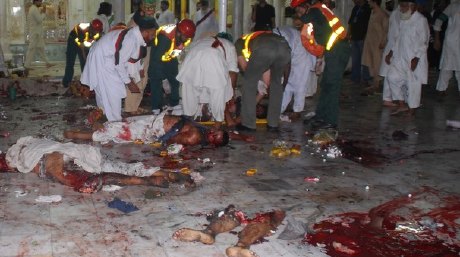
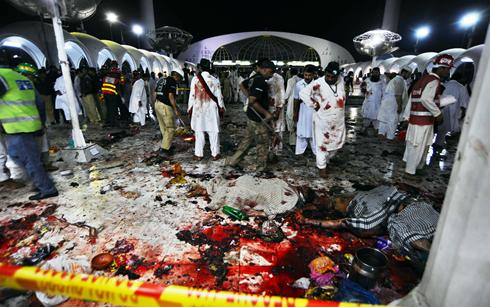
The two suicide bombers chose midnight on July 1, when the throng of worshipers in the ancient Data Darbar shrine in Lahore, Pakistan, was at its peak, to blow themselves up. Forty-five people were killed and 175 were injured. The attack on the 1,000-year-old center of Sufi Islam—the religion’s mystical, unorthodox face—was the first Taliban attack of its kind in Punjab province, the heartland of the country’s moderate, majority Barelvi sect.

The day after the attack on the shrine, Lahore’s students, politicians, traders and housewives took to the streets in loud, visceral protest. Major commercial centers were shut down, and in a rare show of sympathy, students from religious seminaries blocked roads and burned a few tires.

Pakistanis are now asking themselves: Is this America’s war or is it ours too? How can we fight it? Why did our military nurture these warriors for three decades and why has it turned against them now? How and when are we going to be at peace with our neighbors, especially India with which the military is obsessed and for whom these non-state actors were originally spawned?

To understand why this attack is so shocking, one must first look at Pakistan’s religious history. The majority of Pakistanis are Barelvis, who respect the inclusive traditions of the Sufis who brought Islam to the Indian Subcontinent. This is completely unlike the harsh version of Islam imported from Wahabi Saudi Arabia after the petro-dollar boom in the Middle East in the 1970s.

So the bombing of the Sufi shrine has symbolic resonance: Sufism has always thrived as a reaction to the politics of the state. In modern Turkey Sufism grew as a response to Ataturk’s secularism; in the Soviet Union, it grew as resistance to the state’s official policy of promoting atheism; in Algeria, it was a reaction to French colonialism. In Pakistan, Sufism has thrived as an alternative to the state-sponsored Wahabi Islam of the Deobandi jihadi sect.

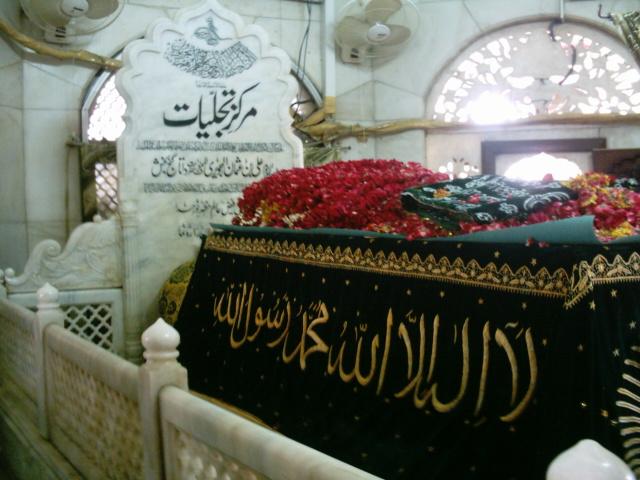
If there’s one thing that Pakistanis are proud of, it’s their Sufi heritage. The shrine attacked in Lahore housed the tomb of one of the most famous Sufis to have ever lived, Ali Hajwiri, affectionately known by Lahoris as Data—one who facilitates the fulfillment of aspirations. Hajwiri wrote a seminal text in Sufi thought, the Kashf-al-Mahjub or “Unveiling of the Hidden.” An early example of Sufi doctrine, the book’s importance has grown over the centuries.

Although not a native of Lahore, Hajwiri decided to settle in the city for the last 34 years of his life at the end of the 11th century. Even then, Lahore’s fame as a center of culture was widespread. It was known for its old fortified city, a nourishing river, and a collection of free-spirited artists, artisans, and musicians. During his 34 years of residence, Hajwiri became a revered dervish, offering an inclusive mystical path to Lahore’s non-Muslim population, many of whom were subject to a punishing caste hierarchy.

Hajwiri’s shrine remained protected through centuries of rising and falling empires in the Punjab. Even the Sikh marauder Maharaja Ranjit Singh left the shrine untouched as he plundered many of Lahore’s riches.

In attacking Hajwiri’s shrine, the Taliban have grossly miscalculated. They had hoped to provoke anger at the Pakistani government for fighting America’s war. Instead they have managed to convince more and more Pakistanis that this is now their war, not just America’s.

Pakistani Hotel Cleaner Returns $50,000 in Cash Left Behind By Forgetful Guest

By Rob Crilly for The Telegraph


A hotel cleaner who earns minimum wage has been hailed a national hero in Pakistan after he returned $50,000 in cash left behind by an absent minded guest.

Essa Khan found the bag of notes stuffed in a safe deposit box while carrying out a routine inspection of a room vacated by a Japanese NGO worker before another guest arrived.

After years of negative publicity from terror strikes and political unrest, politicians have lauded the housekeeper’s honesty as the “real face of Pakistan”. But Mr Khan told The Daily Telegraph he was simply doing his job.

“I have a responsibility as a human being, as a Pakistani, a Muslim,” he said on Sunday. “I never thought about keeping the money.” Mr Khan, 50, has worked for the past 20 years at the Gilgit Serena Hotel, which stands amid dramatic scenery at the foot of the Karakoram mountains, in northern Pakistan.

Hotel staff managed to track down the guest, who works for the Japan International Co-operation Agency, and return the money, which was intended to fund a feasibility study into tourism projects in northern Pakistan.

Rashid Uddin, the hotel’s general manager, said the Japanese man, who has not been named, was embarrassed to learn he had lost the cash.

“Even after three days, he had no clue that he had left the money,” Mr Uddin said by telephone from Gilgit. “He came in the next day, and it was easy to see from the look on his face just how relieved he was.” The hotel has given Mr Khan a 10,000-rupee (£77) reward for his honesty. But his general manager said his actions deserved wider recognition. “In these economic conditions, and in a region of poverty, we should be very, very proud of people like this,” said Mr Uddin.

The story has been taken up by politicians in a country tired of negative publicity. Years of suicide bombings mean tourist hotels have struggled to survive as foreigners stay away. Salman Taseer, the governor of Punjab province, declared Mr Khan a “national hero”. “He’s a humble housekeeper and we are really proud of him,” he said. “This is the face of Pakistan that people don’t see normally.” He telephoned Mr. Khan on Sunday to promise him another reward and to invite him to Lahore for a ceremony in his honor.

Pakistani woman appointed to Canadian Senate

By Latafat Ali Siddiqui for Dawn

 Salma Ataullahjan on Friday became the first Canadian woman of Pakistani origin to get into the Senate when Prime Minister Stephen Harper appointed her to fill a vacancy from the province of Ontario.

“I am pleased to announce the appointment of Salma Ataullahjan to the Senate of Canada,” said Prime Minister Harper in a statement on Friday evening.

“A professional, artist, parent and strong activist for the South Asian community in the Greater Toronto Area, Ms Ataullahjan brings a remarkable dedication and energy to her new role as a senator for the province of Ontario,” he said.

The appointment comes into effect immediately. “I’m delighted to hear the good news of my appointment as a senator,” said Ms Ataullahjan, who immigrated to Canada from Pakistan 31 years ago, becoming a Canadian citizen in 1989.

She pledged to support the government in its efforts to make the Senate more democratic and accountable, including bringing in legislation to limit the Senate’s tenure and to allow provinces to elect senators.

Ms Ataullahjan, who belongs to the family of the late Khan Abdul Wali Khan, has settled in Toronto and is associated with the real estate sector for 21 years.

She has served several organizations, including as founder and chairperson of the Parent Council of David Lewis Public School, as member of the South Asian Regional Council and on the executive of the Pakistani Canadian Professionals and Academics.

She has also worked for the Toronto chapter of the Citizens Foundation, a charity that builds not-for-profit schools in poor districts of Pakistan. Ms Ataullahjan is an accomplished artist and paints in watercolours. She and husband Saleem have been married for 31 years and have two daughters.

Pakistan Are Over Here But Thinking About Home

By Stephen Brenkley for The Independent

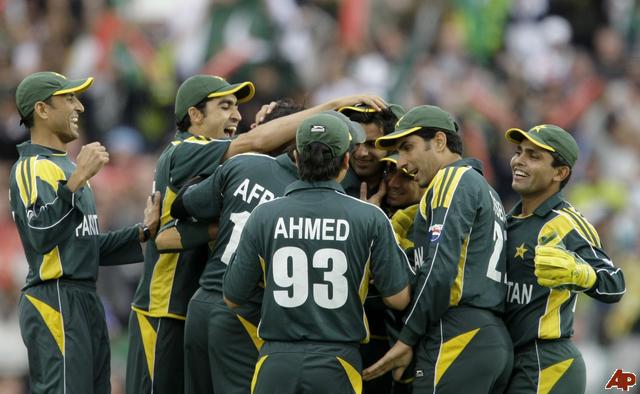
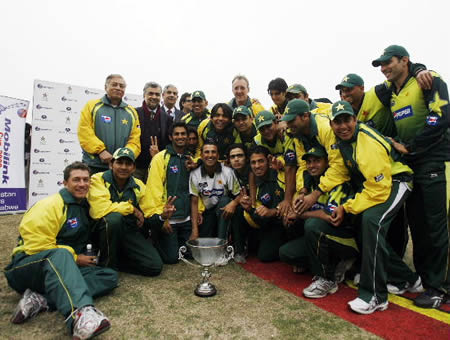
Pakistan are here to win. Anybody who thought that they were in England this summer to make up the numbers, licking their wounds, grateful to be given a temporary home, would be misguided. 

They may indeed be the refugees of world cricket, unable to play in their own country because teams refuse to go there, but they will be nobody’s fools. It is the most bizarre of tours they have embarked on. Starting on Tuesday at Lord’s, they play the first of two Tests against Australia, which will be considered as home matches.

 They then play four Tests against England in which they will be the touring side. Such have been the ramifications of the terrorist activities at home. Pakistan have been forced to play where they can. “It’s a big tour. It’s not easy to get hold of 17 boys, a lot on their first tour here, and I don’t think we have ever played six Test matches in two months,” said Yawar Saeed, their wise, veteran manager.

 “We have a young side here and it was important to keep them together. There is plenty of talent in this team. The one sitting there, Umar Akmal, is just a bundle of talent, God is so kind to him. I have told him, if he doesn’t use his talent I will beat him one of these days. I see him as a future Vivian Richards. Look at his confidence at his age and look at the way he’s playing. He’s a very good kid and I’m trying to help him and the left-arm fast bowler, [Mohammad] Aamer, who’s only 18 and can also do great things.”

There is, of course, no physical intent by Yawar towards the precocious Umar, he merely makes the point to reinforce his desire not to waste his gifts. There has been precious little sign of that so far.

Yawar is on his 26th or 27th tour – he really has lost count – as manager. At 75, he thought he had unpacked for the last time but with the shifting of officials yet again in the Pakistan Cricket Board he has returned as a safe pair of hands. He is an Anglophile who was educated at Millfield, played for Somerset for three seasons in the mid-Fifties and whose father, Mohammad Saeed, was the first captain of Pakistan post-partition and pre-Tests.

At the core of the thinking of those who run cricket in Pakistan is the day when they can play at home again. Somehow, cricket is being sustained despite the lack of international competition but Yawar and the PCB hierarchy know that cannot last while understanding the virtual boycott.

The memory is still raw of the Sri Lanka team being attacked on the way to a Test in Lahore last year. Yawar and the Pakistan team were in a coach 40 yards behind. “The whole thing is dependent on the conditions and security within the country,” he said. “You have to ask: Yawar, if you were an Australian or an Englishman, would you go there? It’s very difficult, I don’t blame any of the people who are hesitant to come there. But all I can say is it’s not as bad as it looks from here. I’m not saying it’s perfect.”

Pakistan have taken a big risk by appointing as captain Shahid Afridi, who has been in regular trouble for ill-discipline. He has not so far shown diplomatic tendencies when they may be needed. In England four years ago, Pakistan’s tour was almost derailed when the Fourth Test was abandoned amid allegations of ball-tampering.

On the tour of Australia last winter, disharmony led to a whitewash and a series of disciplinary actions later on. Shahid himself was penalised for being spotted biting a ball. “We had problems about the captain,” said Yawar. “I can see in Shahid the one who can get them all together, mould them into one team. People who matter have had a chat with Shahid. I am very confident he’s going to be OK. Even this ball-biting thing, it’s just that he’s so keen, he’s keen to win like a lot of people, so he does lose control at times. I don’t think he will as captain.”

So to Australia on Tuesday. “Playing Australia you have got to be mentally tough. That’s where I’m working on them. I have seen Australia play, I have seen these boys play, I know their psyche. I can’t say that overnight we will become X, Y, Z, but you will see a graph going up by the Test match.”

But nobody in Pakistan will rest until the next touring team arrives to play this attractive, gifted young team. “It has to be reintroduced. I can’t put a date on it but I think that something should happen within the next three or four years. I would love to see cricket being played in Pakistan again. Before I say goodbye to this world, I would love to see that.”


Two Die in Gunfire at India-Pakistan Border

By Augustine Anthony for Reuters

An exchange of fire at the Indian-Pakistan border near Pakistan’s Punjab province has killed two Indian troops and wounded a Pakistani soldier and several villagers, officials said Wednesday.

The neighbours have in the past exchanged almost daily fire across what is known as the Line of Control separating the two armies in Kashmir, but the latest incident occurred in the Sialkot sector of Pakistan which rarely experiences trouble.

A spokesman for the Pakistan Rangers said Indian border security forces fired automatic weapons and mortars at a village along the Sialkot working boundary, north of the Pakistani city of Lahore.

“First they fired yesterday morning and then again in the evening and the firing continued sporadically throughout the night until Wednesday morning,” said Nadeem Raza.

“One of our soldiers and several villagers have been wounded in the Indian firing.” A senior Indian border official confirmed the incident but said Indian forces retaliated for “unprovoked firing” from the Pakistani side.

“We were facing unprovoked firing from the Pakistani side for the last two days, resulting in the death of two of our men. We were forced to retaliate,” said K. Srinivasan. “The firing was precise, but at this stage we cannot say for sure who fired at us.”

The flare-up comes ahead of Indian Foreign Minister S.M. Krishna’s trip to Pakistan next week to meet with his counterpart in a renewed bid to normalise ties.

Relations between the nuclear-armed neighbours, who have fought three wars since 1947, were frozen when Pakistan-based militants attacked the Indian city of Mumbai in 2008, killing 166 people.

A late 2003 cease-fire between the two sides across the cease-fire line in Kashmir has largely held although there have been several exchanges of fire over the past year. Raza said Pakistani forces returned fire after Indian forces “did not respond to the call for a flag-meeting” and continued firing.

The Director General of Pakistan Rangers in Punjab, Major General Yaqub Khan, said a protest had been lodged with Indian forces. “In future, a strong reply will be given by Rangers and loss of civilian lives and property will not be tolerated at any cost,” he was quoted as saying in a statement issued after visiting the area.

This was the third violation of a cease-fire in that area in the last two weeks, according to the statement. India has long accused Pakistan of backing militants fighting Indian security forces in the Himalayan region of Kashmir.

Pakistan supports what it calls a freedom struggle by the people of Kashmir against what it sees as the brutal and illegitimate Indian occupation of the region. But it denies arming the guerrillas, who have been fighting Indian forces since 1989.

Pakistani Student Britain Couldn’t Deport was ‘Involved in Planning Attack in US’

By Duncan Gardham for The Daily Telegraph

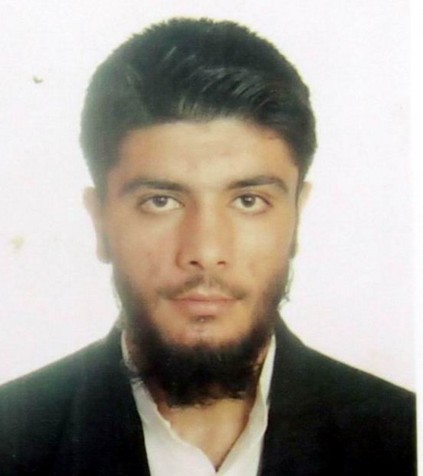
A suspected terrorist who Britain is unable to deport has been arrested on suspicion of plotting to bomb New York’s underground system. A US warrant was issued for Abid Naseer, who is accused of helping an al-Qaeda cell planning suicide bomb attacks in the city. Naseer was arrested on Wednesday in Middlesbrough, sources said, and the US authorities have requested he is extradited for trial.

He was among a group of 12 men arrested in Manchester last year accused of plotting to blow up shopping centres, but was never charged. Naseer, 24, was subsequently released and is thought to have been put under a control order and electronically tagged. In May the Special Immigration and Appeals Commission ruled that he was connected to al-Qaeda but could not be deported back to Pakistan on human rights grounds.

However, US authorities believe he stockpiled July 7-style bomb making materials for the planned attack in Manchester. The same type of material was to be used in the thwarted bomb attacks on the New York Metro.

He is also believed to have been in touch with the same senior al-Qaeda commanders.

The US Department of Justice (USDoJ) said the American plot was “directly related to a scheme by al-Qaeda plotters in Pakistan to use Western operatives to attack a target in the United Kingdom.”

Naseer is accused of providing material support to al-Qaeda and conspiracy to use a firearm in New York and elsewhere. According to a US statement, “large quantities of flour and oil were found” when Naseer’s address in Cheetham Hill, Manchester was raided by police.

The operation, codenamed Pathway, had to be brought forward 24 hours after Assistant Commissioner Bob Quick was photographed entering Downing Street to brief the Prime Minister with details of the raids visible.

Two members of the US cell, Najibullah Zazi and Zarein Ahmedzay have pleaded guilty to planning to conduct suicide bombings in New York using improvised explosive devices made from supplies such as hydrogen peroxide, acetone, flour and oil – ingredients similar to those used in the July 7 attacks five years ago.

In other addresses, Greater Manchester Police allegedly found surveillance photographs of public areas in Manchester – thought to be the Arndale shopping centre – and maps of Manchester’s city centre posted on the wall with one of the locations from the surveillance photographs highlighted.

Another student called Tariq ur-Rehman who returned to Pakistan after he was released from British custody, was allegedly recruited at the same time. The US Department of Justice said ur-Rehman was not in custody.

A US indictment says Naseer and ur-Rehman were members of a terrorist cell coordinated by Rashid Rauf – a British al-Qaeda commander who was also involved in the July 7 attacks of 2005.

Rauf is thought to have been killed in Pakistan by a missile from a US drone in November 2008 but according to the indictment the plot was also allegedly directed by Adnan el-Shukrijumah, known as “Hamad”, a 34-year-old Saudi citizen with a $5m price on his head from the FBI, and Saleh al-Somali, another al-Qaeda commander.

All three were said by the US to be leaders of al-Qaeda’s “external operations programme”.

The students were allegedly recruited in Peshawar, Pakistan in November 2008 along with the leader of the US plot, Najibullah Zazi.

After returning to Britain, Naseer allegedly sent emails to the same account that a man calling himself Sohaib, but also known as Ahmad and Zahid, was using to communicate with the US cell on behalf of al-Somali.

The Daily Telegraph previously reported that MI5 tipped off the FBI about the US plot and published the emails that used the names of girls as code words for bomb-making ingredients and a wedding to refer to the planned attack between April 15 and 20 last year.

Zazi had agreed a similar code, the Americans say, and emailed Sohaib that the “marriage is ready” just before he left Colorado for New York City in early September last year.

Sectarianism Has Poisoned Pakistan

By Basim Usmani for The Guardian

The recent attacks on a prominent shrine in Lahore demonstrate how the unrest in Pakistan is caused by a minority of few who cannot tolerate the plurality of beliefs in Pakistan. The Tehrik-e-Taliban are lying through their teeth when they claim that they do not attack public places. It’s becoming more and more apparent that these militants aren’t resisting American hegemony; this a war to determine Pakistan’s future and, by proxy, the future of Islam.

Whether the Tehrik-e-Taliban actually arranged the bombers’ suicide belts is irrelevant; they have created a domino effect that’s likely to spread from commercial capitals such as Lahore to cities with historic shrines and Pakistani historical sites, such as Multan, or Taxila.

Unlike Baghdad, where violence between Islamic sects is a product of the war America is waging, the onus of last Thursday’s blasts falls squarely on us, the citizens of Pakistan. We have been complacent about sectarianism for too long.

A good friend who works for a transportation company told me in 2007 that in villages along the highways to Waziristan where the Taliban had seized control were the bodies of butchered Shia Muslims. That year, Lahore’s public was too busy mobilising about the judiciary and President Musharraf to pay the violence any mind.

Sectarianism has a brutal history in Pakistan that existed long before militants in Afghanistan began calling themselves the Taliban. I remember as a child in Lahore the broadcasts of gun violence outside Shia houses of worship during the early 1990s.

Many Pakistanis feel that the attacks on two Ahmadiyya mosques last May, where gunmen unloaded bullets and grenades on Friday prayer-goers, were unprecedented. Certainly the Ahmadiyya community doesn’t think they are.

To have a Pakistani passport requires citizens to assert that they are not part of the Ahmadiyya community. In a sense, holding that passport also makes you complicit in the blasts that killed dozens in Lahore’s most famous Sufi shrine last week. Our inability to understand that this war is about national identity is rooted in the same complacency.

We are OK with the state deciding for us who is or isn’t Muslim. In this regard, the Pakistani government has the weakest moral fibre in taking on this growing strand of extremism. It is hypocritical to fight the Taliban in Waziristan if we are okay about denying citizenship to millions of Muslims born in Pakistan.

It may sound extreme of me, but we should be jailing clerics in Pakistan that give edicts declaring believers to be non-Muslim or anti-Pakistani. It may seem extreme to an American that writers who deny the Holocaust are imprisoned in Europe, but extreme contexts call for extreme measures.

Pakistanis must stress how being born or raised in their country is enough to be Pakistani; laws preventing Ahmadis from referring to themselves as Muslims were amended to the constitution by Zulfikar Ali Bhutto in the 1970s.

I remember being uneasy at my desk in middle school when I was studying at Aitchison College in Lahore, and some of my classmates were getting bullied for having marks on them after returning from Shia processions during Muharram. Pakistanis themselves are the only ones capable of stamping out this discriminatory culture.

Some proactiveness is necessary on our part to make it clear that mystics, Shias, Ahmadis and Christians are all fellow Pakistanis. When you are pulled over by street police in any major Pakistani city, the first bit of information the police ask for is your family name. From one name your caste, religious beliefs and affluence is determined.

This came as a shock to all of my family who have emigrated away: that collectively our stock in our own nationhood has plummeted so. In a sense, these problems are all accrued debt we’ve accumulated for being so complacent. In the light of our bigoted constitution and deterministic culture we have to – for ourselves – decide that being Pakistani is enough to make us all countrymen. Otherwise, we might as well just refer to ourselves as Taliban, Muslim extremists, Islamic militants, and so forth.

A Pakistani American Celebrates July 4

By Manzer Munir for Pakistanis for Peace

Thousands of Pakistani Americans celebrate the July 4 Independence Day holiday with their friends and families across the United States today. As different as Pakistan and the United States may be as countries and societies, one thing they both have in common is that both countries were founded on religious reasons. Unfortunately, that is where their similiarites end as the religious freedom experience in these present day countries varies greatly.

The earliest settlers of these United States were in fact Europeans who felt persecuted in the old countries of Europe for their religious beliefs. Many of these Puritans came to America in search of religious freedom.  Their hope was to escape the religious persecution they were facing in their countries and so the United States was founded on religious grounds.

Pakistan too is a country that sees the basis of its founding for a religious purpose. The nationalist movement for an independent India from British rule also caused communal conflicts between the Hindus and Muslims as there were calls by many Muslim leaders for a separate country for the Muslims of India since many felt being a minority in a Hindu dominated country would come at the expense of their rights. So a separate country for the Muslims of India and for their right to practice their religion gained momentum and indeed on August 14, 1947, the Islamic Republic of Pakistan became independent, a country founded on religious freedom for the Muslims of India.

This is not to deny the fact that Muslims still exist in India and are free to practice their religion under a Hindu dominated country. In fact, there are more Muslims in India than there are in present day Pakistan. However, many Muslims at the time of partition felt that they would be freer to practice Islam in a Muslim country rather than a Hindu one. It is an open debate whether people in Pakistan today have more freedom to practice their religion. If you are a member of either a minority Muslim group as Shiite or if you happen to be a Christian, Hindu, Sikh or Jew In Pakistan today, you have far less freedom of religion than a comparable religious group in present day India. There is absolutely a very low level of tolerance in Pakistan today for other religions or ways of life different than the majority group.

The promise of religious freedom that saw the founding of both Pakistan and the United States has seen the two countries go separate ways in realizing the dream of each countries forefathers. While the American Founding Fathers dream of a nation that respects freedom of religion and honors a separation between church and state held true, Pakistan unfortunately  has become a country that has become intolerant of other religions. Many religious minorities such as Christians, Hindus, and even Muslim Ahmadis are routinely persecuted or attacked by Muslims who see these groups as infidels and heathens and not merely as human beings with different religious beliefs. The influx of Taliban and religious extremists inside Pakistan has further made life difficult for anyone who is not a devout Sunni Muslim. On many occasions, the police does not investigate or prosecute attacks on religious minorities by various extremist groups leading to a constant fear of their lives and properties.

As Pakistani as well as Muslim Americans across the United States today celebrate the the July 4 holiday, they are keenly aware  that their brethren back in their original countries are not as free to practice their religion, speak their minds, and or protest peacefully as they are able to do in the United States. For this nation indeed guarantees freedom and liberty for all and not just a certain religious or ethnic group.

That is why Pakistani Americans such as myself and Muslim Americans across the US are appreciative of the fact that in this, our adopted country, our religious and civic freedoms are safe guarded in that greatest of living documents, the US Constitution. I have long felt that after the three great religious books of the Torah, the Bible, and the Koran, the US Constitution is the next best thing that man ever wrote down on paper. The Founding Fathers of America were indeed some of the greatest minds in history for crafting a document that continues to make the United States the freest country in the world and one that stayed true to its founding of liberty and freedom for all. Happy Birthday America, May you have many more!

–Manzer Munir, a proud Pakistani American plans to celebrate the July 4 Independence Day with family and friends at a picnic with fireworks and by watching a parade.

China, Pakistan Reach Nuclear Energy Deal

As reported by United Press International

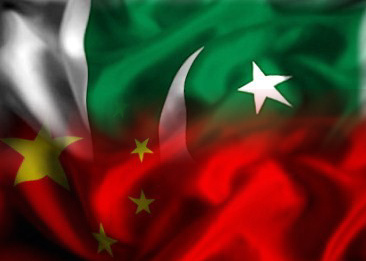
The Pakistani government has finalized a deal with China to build two new nuclear power plants in the country, the Pakistani foreign minister said.

Pakistani Foreign Minister Mehmood Qureshi said Pakistan was working with its Chinese counterparts on more than 120 different projects, including two nuclear power facilities in Pakistan, the Associated Press of Pakistan reports.

Despite concerns over the proliferation of nuclear material, the foreign minister said his country was moving ahead with its nuclear activity in line with international expectations

“We have no objections on inspections by the International Atomic Energy Agency because we are proceeding ahead in a transparent manner,” he said. Pakistan is facing a looming energy crisis that is creating rolling blackouts in parts of the country.

The energy deal comes as Pakistani President Asif Ali Zardari accepted the credentials of Liu Jian, the new Chinese envoy to Islamabad. Zardari said trade relations with China fell well short of their potential.

“Strengthening and enhancing cooperation with China in all sectors is one of the key principles guiding Pakistan’s foreign policy,” said the Pakistani president.

Deadly blasts hit Sufi shrine in Lahore

By Syed Shoaib Hasan for The BBC

Suicide bombers have launched a deadly attack on a Sufi shrine in the eastern Pakistani city of Lahore. At least 35 people died in the blasts at the popular Data Darbar shrine late on Thursday evening, officials say. At least 175 other people were hurt in the blasts, believed to be the first targeting a shrine in Lahore. Thousands of people were visiting the shrine at the time, officials say. It holds the remains of a Persian Sufi saint, Abul Hassan Ali Hajvery.

Although no-one has yet said they carried out the attack, Taliban militants and their Punjabi jihadi allies have been involved in several such bombings in the northern Khyber Pakhtoonkhwa province. The shrine is largely frequented by members of the majority Barelvi sect, who are seen as heretics by the Taliban. Most of the Taliban belong to the rival Deoband Sunni sect, which strongly disapproves of worship at shrines. Many are also allied to the Sipah-e-Sahaba, and its armed splinter group, Lashkar-e-Jhangvi, which seeks to turn Pakistan into a Deoband Sunni state.

The shrine is visited by hundreds of thousands of people each year from both Sunni and Shia traditions of Islam. At least two attackers were involved, although police initially said three explosions had been heard.  The impact of the blasts ripped open the courtyard of the shrine. Rescue workers could be seen clambering over the rubble as they carried out the victims. Khusro Pervez, commissioner of Lahore, said two of the attacks took place in the main courtyard and one in the lower level of the shrine.

The first attacker struck in the underground area where visitors sleep and prepare themselves for prayer, he said. As people fled, a second bomber detonated his explosives in the upstairs area. Officials say they believe the bombers used devices packed with ball-bearings to maximise the impact of their attack.  A volunteer security guard at the shrine described scenes of devastation.

“It was a horrible scene,” said Mohammed Nasir. “There were dead bodies all around with blood and people were crying.” The attack is the biggest on a Sufi shrine in Pakistan since militant attacks began in 2001.  No group has said it carried out the attack, but correspondents say the attacks continue a growing trend among militants to target members of other sects as well as minorities.

Lahore has been hit by a series of bomb attacks, including a suicide blast at anti-terrorist offices in March, when at least 13 people died. In May, more than 90 people were killed in a double attack on the minority Ahmadi sect in the city.

Earlier, security chiefs had been congratulating themselves after what was the first month in two years in which there had been no suicide bombings in Pakistan, the BBC’s Aleem Maqbool reports from Islamabad.

They said it was proof the militant networks had been disrupted. Most Pakistanis knew the battle against militancy in this country was far from over, he adds. Last year Pakistan launched a major military offensive against militant strongholds in South Waziristan.  In December the military said they had achieved victory, but subsequent reports have suggested the militants remain active in the region.

Vengeful New Militant Group Emerges in Pakistan

By Kathy Gannon for The Associated Press
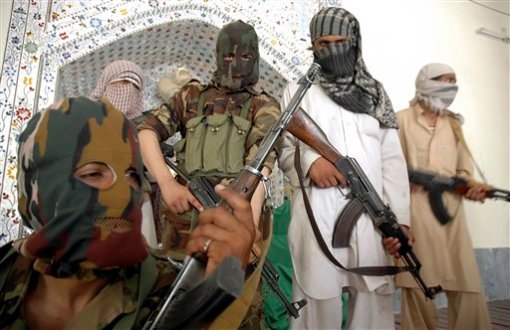
Pakistani authorities now believe a dangerous new militant group, out to avenge a deadly army assault on a mosque in Islamabad three years ago, has carried out several major bombings in the capital previously blamed on the Taliban.

The emergence of the Ghazi Force was part of the outrage among many deeply religious Pakistani Muslims over the July 2007 attack by security forces against the Lal Masjid, or Red Mosque, a stronghold of Islamic militants.

The fierce attack, in which scores of young, heavily armed religious students died, inspired a new generation of militants. These Pakistanis have turned against a government they felt has betrayed them and, to their dismay, backed the U.S. role in neighboring Afghanistan.

The brief but bloody history of the Ghazi Force illustrates the unintended results of Pakistan’s policy of promoting Islamic extremists to fight India in the disputed area of Kashmir. That policy — which Pakistan denies it pursues — now threatens regional stability as the U.S. and Pakistan’s other Western partners pour billions of dollars into the country to stop the rise of Islamic militancy.

The new group is made up of relatives of students who died in the Red Mosque assault. It is named after the students’ leader, Maulana Abdul Rashid Ghazi, who was also killed. The mosque’s religious school, or madrassa, had been a sanctuary for militants opposed to Pakistan’s support of the U.S.-run war in Afghanistan.

Private television stations broadcast vivid scenes of the assault — commandos in black fatigues rapelling down ropes, the crackle of gunfire, bodies of black-shrouded girls carried out through the smoldering gates. Those images stunned the nation, especially families of the students and Pakistanis with deep religious feelings.

“Before the Lal Masjid, militants hadn’t yet declared war on the state of Pakistan. That changed with Lal Masjid,” said Zahid Hussain, author and terrorism expert who has written extensively about Pakistan.

Islamabad’s inspector general of police, Kalim Imam, told The Associated Press that the Ghazi Force was behind most of the deadliest attacks in the capital during the last three years. The attacks targeted the military, the Inter-Services Intelligence agency or ISI — which had ties to a number of militants — and a five-star hotel frequented by foreigners and the Pakistani elite.

The Ghazi Force helped recruit a security official who blew himself up inside the office of the World Food Program last October, killing five people, according to Imam. The force also sent a suicide bomber in September 2007 into the mess hall of the commando unit that attacked the Red Mosque, killing 22 people, he said.

Ghazi Force members may also have been involved in the audacious June 9 attack north of the capital that killed seven people and destroyed 60 vehicles ferrying supplies to NATO and U.S. soldiers next door in Afghanistan, Imam said.

Many of those attacks had been attributed to the Pakistani Taliban, which operates in the remote tribal areas of the northwest along the border with Afghanistan. There is evidence of close ties between the Ghazi Force and the Pakistani Taliban, which the government has vowed to crush.

The Ghazi Force is believed to be headquartered in the Orakzai region of the border area, where the leader of the Pakistan Taliban, Hakimullah Mehsud, held sway for years. The leader of the Ghazi Force is believed to be Maulana Niaz Raheem, a former student at the Red Mosque.

Anger over the bloodshed at the mosque was all the greater because many of the militants and their supporters felt betrayed by a government that had once supported them. Both Ghazi and his brother Maulana Abdul Aziz Ghazi, who was freed on bail this year after two years in jail, were widely believed to have been on the payrolls of both the government and the ISI intelligence service.

Their father, Maulana Mohammed Abdullah, enjoyed a close relationship with the late President Mohammad Zia ul-Haq, and the mosque was a center for recruiting volunteers to fight against the Soviets in Afghanistan in the 1980s.

As opposition grew to Pakistan’s support of the U.S. role in Afghanistan, the mosque became a center of religious agitation against the government, with armed students taking over the complex and police laying siege.

A former senior official in the Interior Ministry told The Associated Press that the police wanted to storm the mosque and end the siege at its outset, send the students home and shut down the religious school and a neighboring library until tempers cooled.

President Gen. Pervez Musharraf refused, the official said, even though police knew that members of al-Qaida’s affiliate organization Jaish-e-Mohammed, which is banned in Pakistan, were bringing in weapons for the students.

Musharraf relented and ordered the assault after militants kidnapped several Chinese nationals running a massage parlor in Islamabad, accusing them of prostitution. The death toll remains in dispute. Red Mosque officials say hundreds died. The government says fewer than 100 were killed.

In a rare interview, Abdul Aziz Ghazi told AP he warned the government that an assault on the mosque would unleash forces that no one could control.

“I have been in jail. I did not form this force and I don’t condone the violence but they are angry at the injustices done,” he said this week.

Although the assault turned many Islamic hard-liners against the government, Pakistan remains unwilling to break all ties to the militants, instead following a high-risk strategy of coddling “good militants” while fighting those deemed “bad militants,” analysts say.

“The military and the ISI have given importance to these militants as assets. But those who have openly declared war, and there is no chance of them returning back to the state, the army is going after them,” said Manzar Jameel, a terrorism expert and researcher on the growth of extremism in Pakistan. “Yet they still believe that some are still assets and that they can keep control of the assets. It’s a failure of strategy.”

Army spokesman Maj. Gen. Athar Abbas denies any assistance to militant groups, saying past ties have long since been severed. He says the Ghazi Force is among the groups the 120,000 Pakistani soldiers waging war in the tribal regions are fighting.

Yet Anatol Lieven, a terrorism expert with the Department of War Studies at London’s King College, said it’s clear that the ISI continues to protect some militant groups, even if it has broken with others.

In a June report, the Rand Corporation think tank also alleged that Pakistan’s military and intelligence still support some militant groups “as a tool of its foreign and domestic policy.”

“A key objective of U.S. policy must be to alter Pakistan’s strategic calculus and end its support to militant groups,” the report said.

Christine Fair, a co-author of that report and an assistant professor at Georgetown University’s Center for Peace and Security Studies, said the battle against extremists in Pakistan is mired in layers of subterfuge by Pakistani intelligence and a “mystifying” acceptance by the CIA of Pakistan’s “good-militant, bad-militant” policy.

She said U.S. intelligence knows Pakistan protects one group — Lashkar-e-Taiba, which India blames for the 2008 Mumbai assault and Afghanistan accuses of masterminding deadly attacks against the Indian Embassy in Kabul.

“Lashkar-e-Taiba remains intact. I have had conversations with … officials in Washington. It is not their priority. Lashkar-e-Taiba is not an issue,” she said in an interview. “Yet Lashkar-e-Taiba has been attacking us in Afghanistan since 2004.”


Imran Khan Moves Supreme Court Against Drone Attacks

As reported on Despardes.com

Cricketing legend-turned politician Imran Khan has filed a lawsuit in Pakistan’s apex court asking it to declare drone attacks as war crimes.

According to published reports, the Pakistan Tehrik-i-Insaf (PTI) chief on Wednesday filed a petition in the Supreme Court asking it to declare drone attacks as attacks on the sovereignty and defence of Pakistan and a war crime.

The petition, filed by Imran Khan’s lawyer Shaukat Aziz Siddiqui, argues that the provisions of logistics and facilities to any foreign country or alliance for mass destruction through drone strikes inside the territory of Pakistan resulting into killings of Pakistani citizen is illegal, unwarranted, unconstitutional, in violation the United Nations Charter, universal declaration of human rights, international law as well as the international humanitarian law, a war crime and an attack on the sovereignty, solidarity, integrity and defence of Pakistan.

Imran Khan’s petition was filed today after a Lahore court Lahore cort ruled against drone strikes and called on the government to take appropriate measures to halt strikes by unmanned drones in Pakistan if they aren’t approved by Islamabad.

Federal authorities should take measures to stop drone attacks in Pakistan if they are carried out without formal approval, the court said on Wednesday. The court was responding to a petition that said drone strikes were a violation of national sovereignty.

Drone attacks have increased under the authority of U.S. President Barack Obama, notably inside Pakistan. The CIA, a civilian entity, said it is acting according to the code of law in carrying out the strikes.

Pakistan’s government publicly objects to the attacks, saying they violate its sovereignty. But it is widely thought there is a tacit agreement between the U.S. intelligence agency, the CIA, and Islamabad to allow such strikes, reported Voice of America on its website today.(http://www1.voanews.com/english/news/asia/Suspected-US-Missile-Strike-Kills-10-in-Pakistan-97396999.html)

Two missiles believed fired Tuesday by an unmanned drone struck a village in the tribal regions of Pakistan, killing militants including Hamza al-Jufi, an Egyptian allied with al-Qaida.

Aisam-Rohan Reach Wimbledon Quarter-Finals: Next Stop, Wagah

By Sehar Tariq for All Things Pakistan

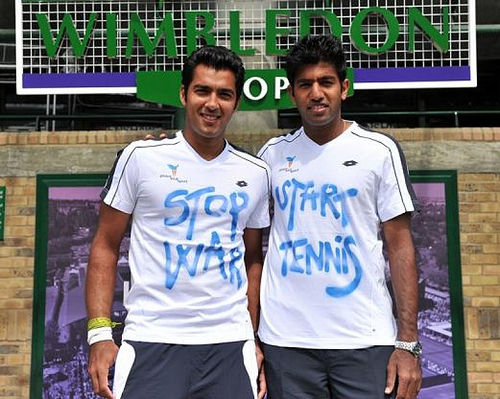
Pakistan’s stellarly good-looking tennis champ Aisam-ul-Haq Qureshi became the first Pakistani to reach the quarter-finals at Wimbledon when along with his Indian partner Rohan Bopannahe beat Lucas Lacko of Slovakia and Sergiy Stakhovsky of Ukraine in straight sets in the Mens’ Double. Their straight set victory – 7-5, 7-6 (7-4), 6-2- in the Round of 16 now take them to the Mens’ Doubles Quarterfinals, and already place them in the top-8.

It was only two years ago that Aisam – who is Pakistan No. 1 and World No. 43 for Men’s Doubles –  became the first Pakistani to play at Wimbledon since 1976. Since then he has been steadily improving his game, including beating a doubles duo with Roger Federer in it last year. The news report in Dawn points out that “the Pakistani number one and world number 42 is a grass-court specialist and has been improving his performance at the world’s most prestigious tennis tournament in the last few years.”

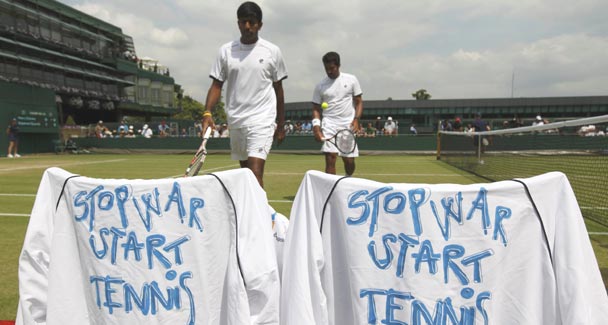
But Pakistani Aisam-ul-Haq Qureshi and his doubles partner Rohan Bopanna from India are also attracting a lot of attention for where they come from, and what they are doing together. The unlikely Indo-Pak pair have been playing as one team and they have been sporting tennis jackets that say “Stop War Start Tennis.” Now they have suggested a novel idea of a tennis match played at the Wagah border.

The world is not used to seeing India and Pakistan step onto any field as one team so the unlikely duo have been making headlines. And they are making full and good use of it by promoting the game of Tennis in the cricket dominated subcontinent and spreading the message of peace. Aisam and Rohan met at the age of 16 at a tennis camp and they have been good friends ever since. They are a good example of how friendship can overcome barriers or race, religion and nationality. While their international tennis playing status has allowed them to remain friends and see each other frequently, there are thousands of people on both sides of the border who long and yearn to see the people and places they once loved and knew as home but have been unable to see for over 60 years due to cruel visa regimes and heartless politicians who drive wedges deeper and wider between India and Pakistan for personal gain.

According to a report in the Guardian , the two tennis players want to play a tennis match at Wagah, the border separating India and Pakistan. The border will serve as the net. Aisam will play on the Indian side and Rohan will play on the Pakistani side of the border. I want very much for the two to win the Quarter-Finals at Wimbledon, but maybe even more than that I want to see them playing at Wagah Border Crossing!

The tennis stars are trying to turn this fantastic idea into reality. And at this point in time, I think that is exactly what the two countries need. Their performance at Wimbledon and the recent positive vibes coming from the governments as well as civil society in both India and Pakistan makes this a very good time to pursue this idea.

I don’t know much about tennis but I really want this match to happen! I will go to watch. And I promise to read up everything I can and ask anyone I can to help me understand the game better so I am prepared to watch the war of tennis at the border. And I’m sure a lot of other Pakistanis will too. As will many Indians. We all love a little bit of healthy competition with the Indians!

I don’t know how one goes about organizing a tennis match at an international border. But I wish I knew how to do it. So if any of you have ideas, please help.

I would like to see some Indo-Pak tennis and also some regional peace and good will. And while I watch this match, I will put aside my intensely competitive patriotic feelings and cheer loudly for Rahul Bopanna. So Rohan, you try to make this tennis match happen – and we the 170 million people of Pakistan will cheer you on with all our might!

As both Aisam and Rohan have been saying: Its time to “Stop War Start Tennis!”

World Cup 2010: Football’s India vs Pakistan

By Paul Beckett for The Wall Street Journal

It is standard for newspapers, including ours, to include the following sentence in almost any story about India and Pakistan: The two countries have fought three wars since Independence in 1947. You do not read the same about England and Germany: The two countries have fought two World Wars since 1914. Except at times like this.

For a series of reasons, part historical part psychological, there may be no match up in soccer that is quite equivalent to England versus Germany. Not for the quality of the football although Germany last night ran over England at the FIFA World Cup 2010 with some of the best football of the tournament so far, winning 4-1. Germany now advances to the quarter finals.

Nor does the significance of the game come from the fervor of football in each country. Yes, both are football crazy but there are plenty of countries that take football as seriously, if not more so, as these two do.

But there may be no bigger game when it comes to two nations who view each other as former enemies, now allies and rivals. Indeed, it is hard to imagine any other sporting event where two major nations weave so much national drama into men running around on grass, with the possible exception of when India and Pakistan play at cricket.

Why is this so?

India and Pakistan may have been separated at birth, but England and Germany have their own shared attributes (which certainly don’t get any attention at times like this): They are both northern, beer-drinking, sausage-eating nations; Britain’s current monarchy, the House of Windsor, has German origins; they may be more alike as nations than England is when compared with any nation outside the British Isles (just don;t tell the English.)

Of course, the situations have as many similarities as they do differences. England and Germany are friendly nations (despite what you read in the British press at times like this) bound together by the European Union and NATO. “It is high time to forget (World War II),” said Germany coach Joachim Loew, according to the Associated Press. “This is year 2010, we are all in the EU and it’s highly inappropriate to raise this subject.”

India and Pakistan, meanwhile, are caught in a diplomatic netherworld between war and peace that only now is showing signs of some thaw.

England and Germany, overall, have prospered in the past few decades, even if Germany’s industrial might means its economy has eclipsed that of the U.K.; India has prospered while Pakistan has struggled as the two nations took dramatically different courses, politically and economically, post Independence.

Yet there are times when sport comes to represent something that defines relations, seizes national imaginations and confirms dearly-held stereotypes, and that is the case with England versus Germany at football and India versus Pakistan at cricket.

It is not that the fans of either team hate the fans of the other (despite what you read in the British press at times like this.) It is a strange mix of respect, rivalry, historic ties, insecurities, bluster, hope, fear and a desire to read deeper meaning in a game of football that makes these games so compelling.

It is a time when entire nations stop to watch. When everything else is eclipsed in favor of one game and people want to think they are watching something that will go down in the history books, a marker of where they were when.

“It’s insane, the roads are completely empty here right now,” an Indian friend said in a text from London before yesterday’s kick-off. When Miroslav Klose in the 20th minute pierced a sloppy England defense to score, he followed with: “And the pub goes quiet.”

England also got the required controversial referee’s decision that will let it, as a nation, worry over its beads for years: a shot by Frank Lampard that clearly bounced over the line but which was not allowed as a goal.

That would have equalized the game at 2-2 and who knows what would have happened next, mate, it would have done the England team no end of good mate, you hear what I’m saying, it’s all about the psychology and that was devastating for the lads, just devastating wasn’t it and I’m not saying that Germany didn’t outplay them, mate, but you’re never gonna win when the ref’s an #%^& and mine’s a pint of lager.

“Fabio’s flops are battered in Bloemfontein,” said The Sun, a reference to English manager Fabio Capello. The headline ran on top of a picture of Frank Lampard realizing he hadn’t scored. “Three Lions Muller-ed by Germans…and the Ref,” said The Mirror, a reference to Thomas Muller, who scored goals three and four for Germany and the referee. Imagine an umpiring decision that incorrectly dismisssed Sachin Tendulkar from the crease against Pakistan.

This was a matchup that probably carried greater weight for England than for Germany, even before the opening whistle. Germany has had the better of England in big tournaments in the last several years. Germany also took a famously young side to these World Cup finals; many of them will return four years from now.

Not so England. Only are handful – and not including Steven Gerrard, John Terry, or Mr. Lampard – are likely to have a shot at Brazil 2014.

And now England can sink into its other national sport: getting depressed over the underperformance of its football team. As my friend in London texted: “All you hear is the german girl laughing. Totally quiet otherwise. This is amazing.” Not long after, he added: “This really tortured drunk guy screamed at Rooney at that last corner. And then put his head in his hands. Awesome.”

Record Number of Indian-Americans Seeking Office

By Jesse Washington

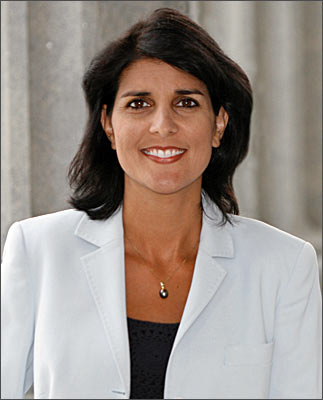
Meet Reshma, Surya, Manan, Raj, Ami, Ravi, Nimrata and Kamala — a new wave of Indian-American politicians. At least eight children of Indian immigrants are running for Congress or statewide office, the most ever. The star of this trend is Nikki Haley, born Nimrata Nikki Randhawa, who is favored to win the election for governor of South Carolina.

Indian heritage is where Haley’s similarity with the other candidates seems to end. She is the only Republican, the only one who has been widely mistaken for a white woman, the only one who has been accused of abandoning her heritage for converting from the Sikh faith to Christianity.

Yet when Haley’s motives are questioned and some suggest Indians must become less “foreign” to get elected, many of these new candidates are quick to ask: Who are we to judge the mashup of American ambition with an ancient culture?

Manan Trivedi, a doctor and Iraq war veteran who recently won a Democratic primary for Congress in eastern Pennsylvania, said he did not view his ethnicity as a handicap: “The American electorate is smarter than that.”

He called criticism of Haley’s name and religion unfounded. “Nikki Haley and (Republican Louisiana Gov.) Bobby Jindal are on the wrong side, but they worked their butts off, they had the bonafides to get the votes, and I think it had so much more to do with their work ethic than the fact that they may have changed their names and adopted a different religion.”

Jindal was elected the nation’s first Indian governor in 2007, at age 36. Named Piyush at birth, he told his Hindu parents when he was 4 that he wanted to be called Bobby, like the “Brady Bunch” boy. He converted to Catholicism as a teenager.

As Jindal’s star rose, the meaning of his assimilation drew much scrutiny. Many people outside South Carolina only learned Haley is Indian after a fellow South Carolina lawmaker used a racial epithet to describe her. Now her choice of names, marriage to a white man and Methodist conversion is raising similar questions.

Christianity is a more critical issue for white Republicans than other groups — could a Hindu who worships multiple gods, or a turbaned Sikh who doesn’t cut his hair, survive a statewide Republican primary in the Bible Belt?

Vidya Pradhan, editor of India Currents magazine, thinks not.

Haley and Jindal “were really ambitious about their politics, and they could not do it being Hindu or their old religion,” Pradhan said. “I do think it was a political move. They felt that not being a Christian would hurt them.”

Haley and Jindal declined to be interviewed for this story. But J. Ashwin Madia, a Minnesota Democrat who lost a congressional election in 2008 and is a follower of the Jain religion, says their faith is irrelevant.

“They can choose to be called what they want to be called, they can worship what they want to worship,” said Madia, a board member of the Indian American Leadership Initiative, which supports Democratic candidates. “I don’t think being Indian-American is this thing they need to strive for or meet some sort of purity test. They are finding the right balance for themselves.”

Madia stopped using his first name, Jigar, when he joined the Marines about age 22. “I’m not running from something or ashamed of it. I’m proud of my name and where I come from. But I was constantly explaining it or hearing it mangled.”

Barack Hussein Obama, known as Barry in his younger days, proved that an unusual name was not an insurmountable political barrier. Some Indian politicians seem to be following his blueprint as they embrace their Indian names while describing their faith in voters’ lack of bias.

“This campaign is all about vision and values and policies,” said Raj Goyle, who is battling for the Democratic congressional nomination in his hometown of Wichita, Kan. “I don’t spend time thinking about differences, I think about ways that Kansans can come together.”

Goyle worships at an Indian temple. His first name is Rajeev, but he has gone by Raj since childhood. In 2006, he became the first Indian-American elected to the Kansas Legislature and the first Democrat to hold his statehouse district.

He said he doesn’t worry about appearing more American or more Indian. “I am who I am, I’m proud of my background and what I’ve accomplished and my family. Kansas voters absolutely will choose the best candidate based on the merits.”

Indians began immigrating to the United States in large numbers about 50 years ago, but just two have been elected to Congress: Dalip Singh Saund in 1956 and Jindal, who entered Congress in 2004 and became governor midway through his second term.

In 2008, Madia says he was the only major Indian-American candidate for Congress. Today there are six, including Goyle and Trivedi. Ami Bera in California, Ravi Sangisetty in Louisiana and Reshma Saujani in New York face upcoming primaries, and Surya Yalamanchili won a primary in Ohio.

In California, Kamala Harris, the child of an Indian mother and black father, won the Democratic nomination for state attorney general and is favored to win the election this fall. Harris was raised in a black neighborhood, attended black churches and graduated from historically black Howard University. She also worshipped in her mother’s Hindu temple and has made many visits to her family in India.

“Running for office, you have to simplify or condense or put into pre-existing boxes who you are,” Harris said, “so people will have a sense of you based on what they easily and quickly identify.”

“I grew up in a family where I had a strong sense of my culture and who I am, and I never felt insecure about that at all,” she said. “Slowly, perhaps, with each of us taking on more prominent positions, people will start to understand the diversity of the people.”

Pakistanis for Peace Editor’s  Note 11/03/2010– We at Pakistanis for Peace want to congratulate Nikki Haley for winning the governorship of South Carolina in a very tough and hard fought race. Both as an American as well as ethnically being a person from the Indian subcontinent aka Desi, we are proud to see her elected to serve as governor, despite disagreeing with her party on many issues.

Her rise as well as that of Governor Bobby Jindal of Louisiana to the top of American politics is a source of pride for all Desis, be they Indian, Pakistani, Bengali, etc. We invite people of all races, ethnicities, and backgrounds to join our Facebook group at Pakistanis for Peace and strengthen those who support peace between India and Pakistan and around the world. To join us on Facebook, click:http://www.facebook.com/group.php?gid=37793413510&v=wall