Archive for the ‘ Peace ’ Category

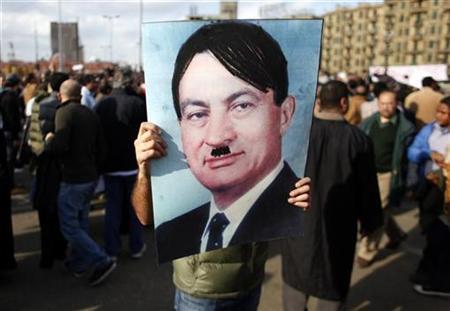
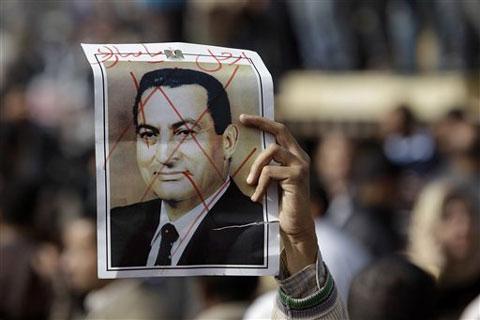
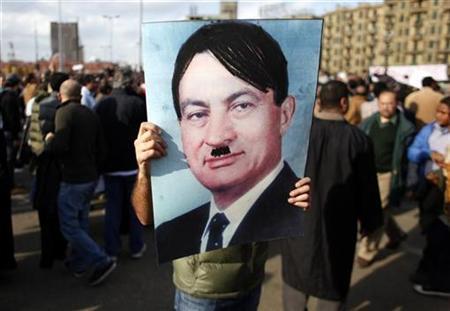
How Hosni Mubarak Got Filthy Rich

By Rick Newman for US News Money
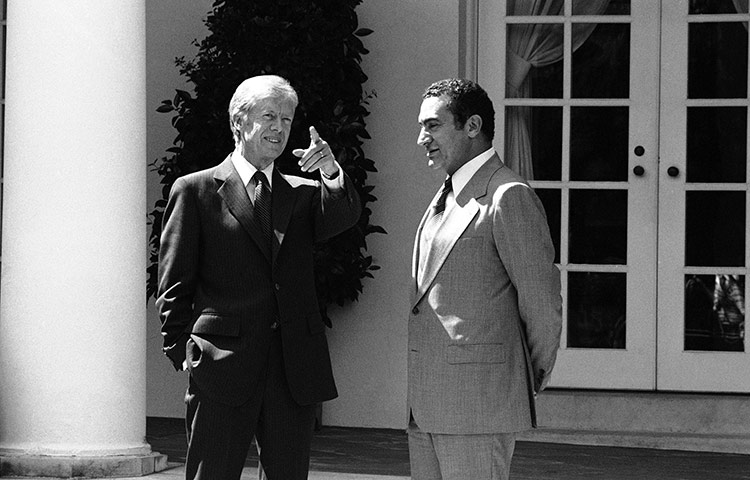
There are no Mubaraks on the Forbes list of the world’s richest people, but there sure ought to be.

The mounting pressure from 18 days of historic protests finally drove Egyptian President Hosni Mubarak from office, after three decades as his nation’s iron-fisted ruler. But over that time, Mubarak amassed a fortune that should finance a pretty comfortable retirement. The British Guardian newspaper cites Middle Eastern sources placing the wealth of Mubarak and his family at somewhere between $40 billion and $70 billion. That’s a pretty good pension for government work. The world’s richest man—Mexican business magnate Carlos Slim—is worth about $54 billion, by comparison. Bill Gates is close behind, with a net worth of about $53 billion.

Mubarak, of course, was a military man, not a businessman. But running a country with a suspended constitution for 30 years generates certain perks, and Mubarak was in a position to take a slice of virtually every significant business deal in the country, from development projects throughout the Nile basin to transit projects on the Suez Canal, which is a conduit for about 4 percent of the world’s oil shipments. “There was no accountability, no need for transparency,” says Prof. Amaney Jamal of Princeton University. “He was able to reach into the economic sphere and benefit from monopolies, bribery fees, red-tape fees, and nepotism. It was guaranteed profit.”

Had the typical Egyptian enjoyed a morsel of that, Mubarak might still be in power. But Egypt, despite a cadre of well-educated young people, has struggled as an economic backwater. The nation’s GDP per capita is just $6,200, according to the CIA—one-seventh what it is in the United States. That output ranks 136th in the world, even though Egypt ranks 16th in population. Mubarak had been working on a set of economic reforms, but they stalled during the global recession. The chronic lack of jobs and upward mobility was perhaps the biggest factor driving millions of enraged Egyptian youths into the streets, demanding change.

Estimates of Mubarak’s wealth will probably be hard to verify, if not impossible (one reason dictators tend not to make it onto Forbes’s annual list). His money is certainly not sitting in an Egyptian vault, waiting to be counted. And his delayed exit may have allowed Mubarak time to move money around and hide significant parts of his fortune. The Swiss government has said it is temporarily freezing any assets in Swiss banks that could be linked to Mubarak, an uncharacteristically aggressive move for the secretive banking nation. But that doesn’t mean the money will ever be returned to the Egyptian people, and it may even find its way to Mubarak eventually. Other Mubarak funds are reportedly sitting in British banks, and Mubarak was no doubt wily enough to squire away some cash in unlikely places. Plus, an eventual exile deal could allow Mubarak to retain some of his wealth, no questions asked, as long as he and his family leave Egypt and make no further bids for power.

Epic skimming is a common privilege of Middle Eastern despots, and Mubarak and his two sons, Gamal and Alaa, were a bit less conspicuous than some of the Saudi princes and other Middle Eastern royals seen partying from time to time on the French Riviera or other hotspots. The family does reportedly own posh estates in London, New York, and Beverly Hills, plus a number of properties around the Egyptian resort town of Sharm El Sheikh, where Mubarak reportedly went after resigning the presidency.

Mubarak also spread the wealth far and wide in Egyptian power circles—another Middle Eastern tradition—one reason he incurred the kind of loyalty that allowed him to rule for a remarkable three decades. Top Army officials were almost certainly on his payroll, which might help explain why the Army eased him out in the end—allowing a kind of in-country exile—instead of hounding him out of Egypt or imprisoning him once it was clear the tide had turned against him for good.

That money trail, in fact, will help determine whether Egypt becomes a more prosperous, democratic country, or continues to muddle along as an economic basket case. Even though he’s out of power, Mubarak may still be able to influence the Army officials running the country, through the financial connections that made them all wealthy. And if not Mubarak, the next leader may be poised to start lining his pockets the same way Mubarak did. For Egypt to have a more effective, transparent economy, all of that will have to be cleaned up. There are probably a lot of people in Cairo who have been checking their bank balances lately.
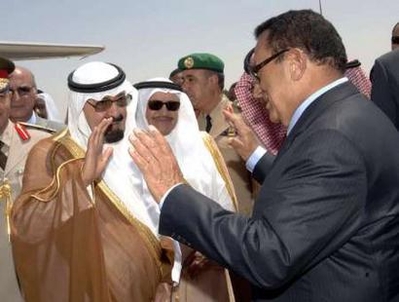

U.S. Pressure on Mubarak Opens a Rift With Arab Allies

Adam Entous, Julian E. Barnes, and Jay Solomon for The Wall Street Journal

President Barack Obama’s attempt to abruptly push aside Egyptian President Hosni Mubarak in favor of a transition government has sparked a rift with key Arab allies Saudi Arabia and United Arab Emirates, which fear the U.S. is opening the door for Islamist groups to gain influence and destabilize the region.

Vying to influence the outcome of events, Saudi Arabia and the U.A.E. have sent public and private messages of solidarity to Mr. Mubarak and his vice president, longtime intelligence chief Omar Suleiman, diplomats said. The messages amount to support for the president and Mr. Suleiman to oversee the transition and to ensure that Islamists can’t fill any possible power vacuum.

The support from Arab states has provided a measure of comfort to Mr. Mubarak, who announced he wouldn’t take part in September’s election. It may in part explain why the Egyptian president rebuffed Mr. Obama’s call for an immediate transition that includes the opposition.

The backlash shows how the turmoil in Egypt is rapidly reshaping U.S. policy in the region. In deciding to set itself against Mr. Mubarak, a U.S. ally for decades, the United States is now facing the disquiet of other friendly Arab governments, who have long provided support for American policy goals. Meanwhile, Islamists in the region, including Hamas and Hezbollah, believe they are on the ascent as U.S. allies falter.

Such a scenario was one that defenders of the Middle East’s status quo warned was possible, and shows how Mr. Obama’s options were all, in some sense, unpalatable. The president was criticized early in the unrest for not clearly favoring antigovernment protesters. Now, having done so, he might have alienated key regional U.S. partners in the fight against al Qaeda and Iran. People familiar with the situation said Israel, the United States’ closest ally, has privately echoed Arab concerns about a U.S. push to kick out Mr. Mubarak, and worries Washington underestimates domestic Egyptian support for the Muslim Brotherhood and other Islamist parties.

It is unclear how much sway the Saudis have with Mr. Mubarak’s regime in Cairo, given that the extent of its financial aid to Egypt isn’t known. The United States gives Cairo about $2 billion a year. Egypt and Saudi Arabia are major trading partners, and experts say Saudi and Egyptian intelligence services have especially close ties.

Saudi King Abdullah bin Abdulaziz al-Saud has harshly criticized Egyptian protesters in a statement carried by the Saudi state news agency, describing them as “infiltrators” bent on destabilizing Egypt and the region, accusing them of “malicious sedition.”

“You don’t need to read between the lines too much to see [the Saudis] are in favor of stability,” said Richard Fontaine, an analyst with the Center for New American Security and a former adviser to Republican Sen. John McCain of Arizona.

Senior officials from the U.A.E., another key regional ally, have said in recent days that the unraveling of Mr. Mubarak’s government threatens to provide breathing room for Islamic extremists and Tehran. Egyptian security forces have been among the most aggressive in seeking to combat Hamas and Hezbollah, Palestinian and Lebanese militant groups that receive their arms from Iran and Syria.

“What hurts men and women as well as the leadership in Egypt hurts us all, and our standing with Egypt is an urgent need,” U.A.E. Foreign Minister Sheikh Abdullah bin Zayed Al Nahyan said on a visit to Iraq this week. “But our disapproval is of certain parties who might try to exploit the situation with an external agenda.”

Another Arab official from a government aligned with Washington said the Obama administration seems to be humiliating Mr. Mubarak, despite his close cooperation over the years. This could lessen the willingness of Arab states to cooperate with Washington in the future, said the official.

“[The Saudis] are at odds with the U.S. position, publicly pushing Mubarak out. And frankly so are we—this isn’t how you handle issues in region,” said the Arab official. “Egypt needs to be treated with respect.”

Mr. Obama took a calculated risk by aligning himself this week with the opposition, which includes the powerful Muslim Brotherhood, a group banned by Cairo and long shunned by Washington because of concerns about its ties to Islamist extremism.

U.S. officials acknowledge that Mr. Obama’s decision to turn on Mr. Mubarak has raised ire in Arab states, which fear the United States could turn up the pressure on them next.

The perception among key U.S. allies in the region is that the U.S. “threw Mubarak under the bus,” a senior U.S. official said. “It is fair to say there is definitely concern.”

Another U.S. official said the Obama administration understood Arab concerns that Islamists might try to take advantage of the Egyptian elections to win power, but said Arab states nonetheless needed to revamp their sclerotic political systems. Officials are reassessing the extent it could engage with Muslim Brotherhood.

White House spokesman Tommy Vietor said what really matters is the “voices of the Egyptian people.”

Anthony Cordesman, an influential defense analyst at the Center for Strategic and International Studies, played down the impact of outside influences on Mr. Mubarak, whether Saudi or U.S. Mr. Obama, he added, was “one voice among many” and argued that domestic considerations were the biggest factor for the regime in figuring out what to do next.

White House officials spent Thursday working on new language the U.S. president might use to make his demands on Mr. Mubarak more forceful, according to outside advisers. Much of the administration’s attention was on the treatment of journalists in Cairo. U.S. officials suspect regime element might have been behind the attacks.
Secretary of State Hillary Clinton urged Mr. Mubarak to “immediately” begin talks with opposition leaders on handing over power to a transitional government. “I urge the government and a broad and credible representation of Egypt’s opposition, civil society and political factions to begin immediately serious negotiations on a peaceful and orderly transition,” Mrs. Clinton said.

Middle East experts say the goal of creating a new transitional government is not yet in reach. The Egyptian military would have to become more assertive to “control the arena,” said Martin Indyk, a former U.S. ambassador to Israel.

“This will require the military to undergo an overnight conversion to democracy promoters. That’s more than a stretch in the current circumstances,” Mr. Indyk said.

Administration officials are anxiously awaiting events Friday, a traditional day of protest in the Muslim world. “Friday could be a ‘Tiananmen moment,’ ” said Mr. Indyk. “If that happens, there will be no orderly and peaceful transition, just a bloody and long confrontation.”

—Jonathan Weisman contributed to this article.

Global Sufi Fest Attracts Thousands

As Reported by the Times of India

Soulful renderings of Sufi music by wandering minstrels from different parts of the world left the listeners spellbound here at the three-day ‘Sufi Sutra’ which ended on Sunday.

Besides Indians, Sufi singers and musicians from Afghanistan, Bangladesh, Egypt, Iran, Syria and Tajikistan presented mystic Islam through songs, dance and poetry.

Notwithstanding the current political turmoil back home, an eight-member Egyptian Mawlawyiah troupe enthralled the audience by an audio-visual of music and circular dervish dance whirling around singers in a circle.

A Bangladeshi team, led by Anusheh Anadil, sang the household songs of the famous 18th century poet-philosopher Fakir Lalon Shah, on whom based the recent Golden Peacock winning Bengali film ‘Moner Manush’.

The ‘bauls’ and ‘fakirs’ of West Bengal’s Nadia and Murshidabad districts were huge hits by their spontaneous, simple and meaningful lyrics.

Another Bengal team led by Armaan Fakir presented the little-known ‘Bangla Qawwali’. Traditionally performed at the Dargahs, the devotional songs had ‘Dhol’ and ‘Khol’ as percussions replacing Tabla.

The first Sufi ensemble also included the ‘Warsi Brothers’ from Hyderabad, Delhi’s ‘Druv Sangari’ and team, ‘Mirs’ from Bikaner and ‘Haji Md Ahmed Khan Warsi’s team from Uttar Pradesh.

“It is a peace concert in times of violence. We want to bring a convergence of ideas about truth, harmony, self-belief and peace through music. It is a celebration of the quest for the divine through love,” organiser Amitava Bhattacharya said.

Besides musical performances, the festival included workshops and exhibitions to showcase the traditional culture, beliefs and music of the Sufi mystics.

“We had more than 10,000 people at the open-air concert, while more than 700 people, including young students, learnt about Sufism at the pre-concert workshops,” Bhattacharya said.

The event would also help the poor musicians, most of whom were from the rural areas, to earn a livelihood, he said.  The festival was organised by Banglanatak.com in collaboration.

Pakistanis for Peace Editor’s Note– It’s a sad reality that singers from a  country rich in Sufi history and traditions like Pakistan, are  unable to attend this festival due to the 60+ year friction between the two brothers India and Pakistan. They are two halves of one nation.

Cultural exchanges like these, billions in cross border trade, Bollywood and Lollywood collaborations, sports matches, etc are just some of the things the two are missing out on due to their relations. We hope one day peace can finally come to this ancient and holy land that is the subcontinent.

Top Diplomats From India, Pakistan Meet on Sidelines of Regional Conference

By Anjana Pasricha for The Voice of America

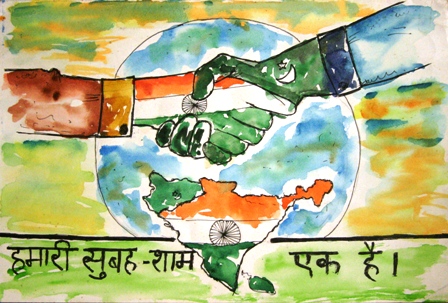
Officials from India and Pakistan have met to discuss the possible resumption of a stalled peace process. The meeting was held Sunday on the sidelines of a regional conference in Bhutan. The discussions are another step in building trust between the two rival nations.

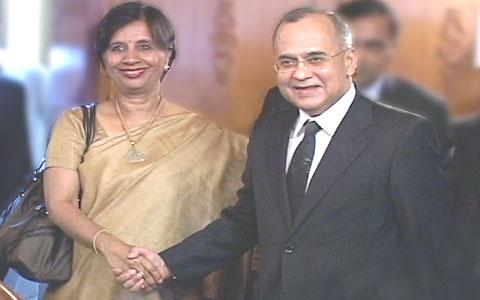
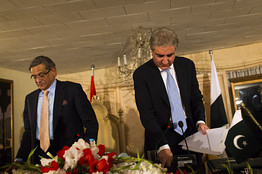
Indian and Pakistani diplomats made no specific announcements, but sounded positive after their late Sunday discussions in the Bhutanese capital, Thimpu.

Indian Foreign Secretary Nirupama Rao expressed optimism on Monday. But she also said government leaders would remain realistic, pointing out that the relationship between the two countries is “complex.”   

“We talked about the process to chart the way forward, what the best modalities would be,” Rao said.

The meeting in Bhutan was held on the sidelines of a South Asian Association for Regional Cooperation conference. It was the first time in six months that officials representing the two countries met to discuss the possibility of resuming peace talks. India suspended peace talks more than two years ago after terror attacks in Mumbai killed more than 160 people. The attacks were blamed on Pakistan-based Islamic militants.

There had been some expectation that the two countries would set a date for resuming full-fledged peace talks, but that did not happen.

Commenting on the meeting, Indian Foreign Minister S.M. Krishna said in New Delhi that the two countries are trying to re-build trust, and build bridges of confidence.

“The very fact that the two foreign secretaries have met, it is certainly an indication of the fact that solid foundations are being laid for getting the two countries on to a sustained engagement,” Krishna said.  

India is under pressure to return to the negotiating table and resolve its many differences with Pakistan.

But New Delhi accuses Islamabad of not doing enough to bring the Pakistan-based perpetrators of the Mumbai terror attacks to justice. It says relations between the two countries cannot improve unless Pakistan cracks down on the Islamic militant group, Laskhar-e-Taiba.

Pakistan says it has put on trial seven of the suspected Mumbai attackers. Meanwhile, Islamabad says it wants New Delhi to take action against those responsible for the 2007 bombing of a train that runs between the two countries.

Books Not Bombs at Pakistan Literature Festival

As Reported by The AFP

Pakistan is hosting one of the world’s youngest and fastest-growing literary festivals, a showcase of new talent where writers urge citizens to reverse the tide of Islamist extremism and global isolation.

Now into a second year and determined to become an annual fixture on the international circuit, the Karachi Literature Festival portrays the softer face of a country more often associated with terrorism than award-winning prose.

Students, authors, budding writers and avid readers have descended on a hotel in an exclusive neighbourhood near the Arabian Sea for two days of book launches, workshops, dance, music and theatrical exhibits ending Sunday.

“It’s to promote our authors, who are underrated and do not get the credit they’re due, and also to interest people in reading and buying books,” organiser and Oxford University Press managing director Ameena Saiyid told AFP.

Women in T-shirts and skinny jeans rub shoulders with religious girls cloaked in Islamic veils at events with standing room only, as pensioners on crutches fold themselves into chairs and children race up the aisles.

Gathering nearly 100 authors and moderators, a handful from Britain, France, Germany and the United States give the event a veneer of the cosmopolitan, but the government denied visas to three of six Indians invited, organisers said.

Peace efforts between nuclear rivals India and Pakistan have been stagnant since Islamist gunmen killed 166 people in Mumbai in 2008. India and the United States blamed the attack on Pakistani militants.

Pakistan denies it is not doing enough to shut down Islamist terror groups, in a country where more than 4,000 people have been killed in Taliban-related bomb attacks in three years.

At the festival, where up to 5,000 people devoted their weekend to listen to their favourite authors — about twice the number of visitors compared with last year — some felt there was a duty to confront growing extremism.

“It’s the most fabulous development for Karachi,” said Aliya Naqvi, a doctorate student in Islamic history and wife of author H.M. Naqvi, whose debut novel “Home Boy” recently won an Indian prize for South Asian literature.

“Life goes on. You take a risk every time you step outside… But to ignore the rise of extremism would be disingenuous. It has to be acknowledged,” she told AFP between sessions.

The September 11, 2001 attacks put Pakistani writers on the international map as inquisitive Westerners searched for insight into the Taliban and Islam, at the same time as throwing the country into war and chaos.

Ahmed Rashid, whose book “Taliban” became a US bestseller, delivered a thundering address, saying it was time Pakistan faced up to its own mistakes rather than blame the United States.

“We have to do something to save ourselves,” he said, accusing Pakistan of meddling in Afghanistan, obsessing about India at the expense of national interest, failing the economy, sheltering Al-Qaeda and sponsoring the Taliban.

Nuclear physicist and social activist Pervez Hoodbhoy went further, warning a packed session on “Taking Stock: Where is Pakistan Now?” that the country is on “a knife-edge” and at risk of being overrun by a “clerical tsunami”.

Mohsin Hamid, best-selling author of novels “Moth Smoke” and “The Reluctant Fundamentalist”, said he did his best to look for the positive but conceded: “Fear is fundamental to what it’s like to live in Pakistan right now.”

The revolts in Egypt and Tunisia have resonated widely in Pakistan and were touched upon in questions from the audience. In response to one man, Hamid said it was not for him to lead a social movement onto the streets.

Inevitably in a country where mastery of English remains the preserve of the elite, who often live more luxuriously than the middle classes in the West and where the poor struggle on less than a dollar a day, there were cries of elitism.

While the event was free to all, sponsored by the British Council, Oxford University Press and USAID, some complained it was not on the public bus route.

US-educated novelist Bina Shah, whose new book “Slum Child” was snapped up like hotcakes, was asked how difficult she found it to write about a slum when she herself did not use public transport or go out to work.

“I’ve been in a rickshaw!” she hit back.

“My experience of a slum is obviously going to be different. It should convince you enough that a slum person could have told the story,” she said.

Pakistan Observes Kashmir Solidarity Day Today

As Reported on Sify News, India

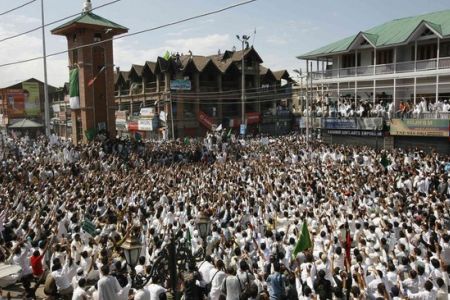
Pakistan is observing the Kashmir Solidarity Day on Saturday (today) to renew its pledge to provide full moral, political and diplomatic support to the Kashmiri people.

“We would not rest unless the people of Kashmir get their right to self-determination and win freedom from the Indian domination. We regard the Quaid-i-Azam’s dictum as our ideal wherein he said, “Kashmir is our jugular vein”. The day is not far when the Kashmiris would determine their own future,” The Nation quoted Prime Minister Syed Yousuf Raza Gilani, as saying in his message on the occasion.

The government and the people of Pakistan join their Kashmiri brothers and sisters in observing the Kashmir Solidarity Day, said Gilani, adding that the whole nation stands united in seeking a just and peaceful solution to the Jammu and Kashmir dispute in accordance with the legitimate aspirations of the Kashmiris as enshrined in relevant UN resolutions.

It will be a public holiday throughout Pakistan today, and special programmes will be broadcasted on television in this regard.

Apart from mass rallies, symposia, conventions meetings and speech declamations, a unique ceremony will be held at all six bridges linking Pakistan and PoK, where Pakistani and Kashmiri people will form a human chain.

It may be mentioned here that the day is observed every year in Pakistan, in continuation of the first call given by the then Prime Minister Zulfiqar Ali Bhutto in 1975.

Third World Thugs and Dictators- A History of Self Serving Interests

By Manzer Munir, Pakistanis for Peace

What is it about power and its hold on a person? Not just the common man, but even the most noblest and patriotic of men have let its allure defy the loyalty to their county’s best interests. They say that absolute power corrupts absolutely. The recent events in Egypt have proven this axiom quite aptly as we are witnessing history in the making with the protests against the regime of Hosni Mubarak.

There is a popular, grassroots, and mostly peaceful uprising against the repressive and longtime authoritative administration of President Hosni Mubarak. Only the fourth president in the history of the modern day republic of Egypt, Mubarak was a soldier in the Yom Kippur War against Israel and served as the Commander of the Air Force as well as the Deputy Minister of Defense.

Having served nearly 30 years, he is the only leader most people in Egypt have ever known where more than half the population is under 25. Long seen by the outside world as a model of stability in the volatile neighborhood of the Middle East, Mubarak’s policies of continuing the peace treaty with Israel signed by his predecessor Anwar Sadat, belied the fact that at home in Egypt he had employed many heavy handed and authoritarian tactics to quell dissent at various times in his 30 year rule.

But what may have appeared as strengths to the outside world were weaknesses at a domestic level. Mubarak came to be seen by the average Egyptians as presiding over policies that increased unemployment and also raised the cost of living for many already struggling people. For many, the economic reforms had come to be equated with corruption, as many political leaders were mixing  family business interests with their official roles, and corruption at the highest levels has fully become entrenched in all levels of Egyptian society, much like in many developing countries.

Another example of the measure of cronyism and despotic rule practiced in Mubarak’s Egypt that showed contempt for the democratic aspirations of the common man was his grooming of his son Gamal for eventual leadership of Egypt. It was no surprise in the international community that for the last 8 years Mubarak was exposing his son to more and more official state functions and visits, having most recently brought Gamal to Washington for the opening of Middle East peace talks in the fall of 2010.

Now in the last few weeks, after protests in another North African Arab country of Tunisia that saw the toppling of the 24 year reign of Zine El Abidine Ben Ali, Mubarak’s iron grip on power seems a lot less secure to Egyptians who have been bolstered by the ouster of Ali, another notoriously corrupt and dictatorial ruler of Mubarak’s ilk.

It has become common place to see time after time, in developing countries across the world, but especially in Africa and Asia, autocratic and corrupt rulers who either seize power in military coups or are initially elected in some democratic way, only to hold on to power any way they can. Whether the ruler be Robert Mugabe of Zimbabwe, who has held power of that country since 1980 and who despite having lost even the last few rigged elections, has remained defiantly in power. One could also point to another African leader, Laurent Gbagbo of the Ivory Coast who refuses to step down from power after having lost the elections of his country in November of 2010 to Alassane Ouattara. Despite losing the election he sits in the presidential palace in the capital Yamoussoukro, still refusing to listen to the world community and even personal pleas from President Obama to relinquish power to the victor of the Ivory Coast elections, Alassane Ouattara.

An Indonesian friend mentioned to me that what is happening in Egypt is exactly how the Indonesians got rid of Suharto, who had come to power and control over Indonesia 32 years prior in large part due to his service and rank in the military.

Examples of such greed for power, money and influence as well as the disregard for the health and well being of their nations are more commonplace in the developing world than in the industrialized nations. It is not to say that in European and western countries there have not been cases of greed and corruption.  However, when the stability and very health of a country’s political system was severely tested, as in my homeland of the United States, a president like Richard Nixon resigned from power, however embarrassingly and went off quietly into history, rather than hold on to the last vestiges of power and control over a sinking country and its national spirit.

For Mubarak, the question should be asked how can this soldier of the uniform can look in the mirror the last few days knowing that every passing day that there are riots in the streets of Cairo, he is undermining the sovereignty, nationhood and the very peace of his motherland. A person like this obviously cares more about their place in history than the well being of their people, their institutions, and their country.

Sooner or later, the chants will get loud enough to be heard outside Mubarak’s residence in the presidential Heliopolis Palace and the people will undoubtedly ask: “Oh Mubarak can’t you see? Time to join Ben Ali.”

Manzer Munir is a proud Pakistani American and peace activist, who is a Sufi Muslim and is also the founder of Pakistanis for Peace and blogs at www.PakistanisforPeace.com and at other websites such as www.DigitalJournal.com, www.Allvoices.com, www.Examiner.com and www.open.salon.com as a freelance journalist and writer. He asks that you join the official Facebook Page of Pakistanis for Peace to be informed of the latest articles  here: http://www.facebook.com/home.php#!/pages/Pakistanis-for-Peace/141071882613054


Egypt Unrest

As reported by the BBC

A massive demonstration is due to be held in Cairo as protesters step up their efforts to force President Hosni Mubarak from power. Organisers say they hope one million will come onto the streets in what is expected to be the biggest show yet. A rally is also planned in Alexandria. Egypt’s powerful army has vowed it will not used force against the protesters.

Meanwhile, new Vice President Omar Suleiman says he will hold cross-party talks on constitutional reform. Mr Mubarak reshuffled his cabinet on Monday to try to head off the protests, replacing the widely despised Interior Minister Habib al-Adly.

But correspondents say that the army’s statement has been a major blow for President Mubarak, and appears to have encouraged protesters.

The BBC’s Middle East editor Jeremy Bowen, in Cairo, says that the feeling that change is coming in Egypt is getting stronger. Too much has happened too quickly to go back to the way things were before, he says.

At least 100 people have been killed across the country since protests began a week ago following an internet campaign and partly inspired by the ousting of President Zine al-Abidine Ben Ali in Tunisia last month.

Egypt has since cut off internet in the country and text messaging services have been disrupted. Google announced late on Monday that it is operating a special service to allow people in Egypt to send Twitter messages by dialing a phone number and leaving a voicemail.

Some protesters defied the curfew and continued to camp out in Tahrir Square through the night, saying they will stay there until Mr Mubarak’s 30-year-long rule ends. 

The protests in Egypt are posing a policy dilemma for President Obama’s administration, which has now despatched an envoy, former US ambassador Frank Wisner, to Cairo

One of them, Tarek Shalabi, told the BBC that groups were camped out in tents or sleeping out in the square, and described the atmosphere as “overwhelming”. “We’re here because we want to make a statement. We’re not going until Mubarak steps down,” he said.

He said a stage had been set up where people could go up and make speeches, read out poetry or sing or chant political slogans. “It has a festive feel to it,” he said. We all have one thing in common. We all hate the current regime,” he said.

Another demonstrator, 45-year-old lawyer Ahmed Helmi, said: “The only thing we will accept from him is that he gets on a plane and leaves”. On Monday, the Egyptian army said it respected the “legitimate rights of the people”.

In its statement, carried on Egyptian media, the military said: “To the great people of Egypt, your armed forces, acknowledging the legitimate rights of the people… have not and will not use force against the Egyptian people.”

Our correspondent says the announcement is absolutely critical because it takes away a huge measure of uncertainty from the mind of any potential demonstrator. Whatever happens next, this will change the Middle East, our correspondent adds. In his statement, Mr Suleiman said the president had ordered new government policy to be outlined “in the next few days”.

The review would include “clear and definite policies” to tackle unemployment, poverty, corruption and the cost of living, the statement said.

There would also be new elections in some districts where there was evidence of irregularities in last November’s parliamentary poll.

Meanwhile, the US state department has despatched a special envoy to Cairo, former ambassador to Egypt Frank Wisner.

Concerns have also grown about the economy, as global oil prices on Monday topped $100 (£62) a barrel amid fears of the ongoing unrest.

Indo-Pak Express: Chugging for Peace

Originally posted on Aman Ki Asha

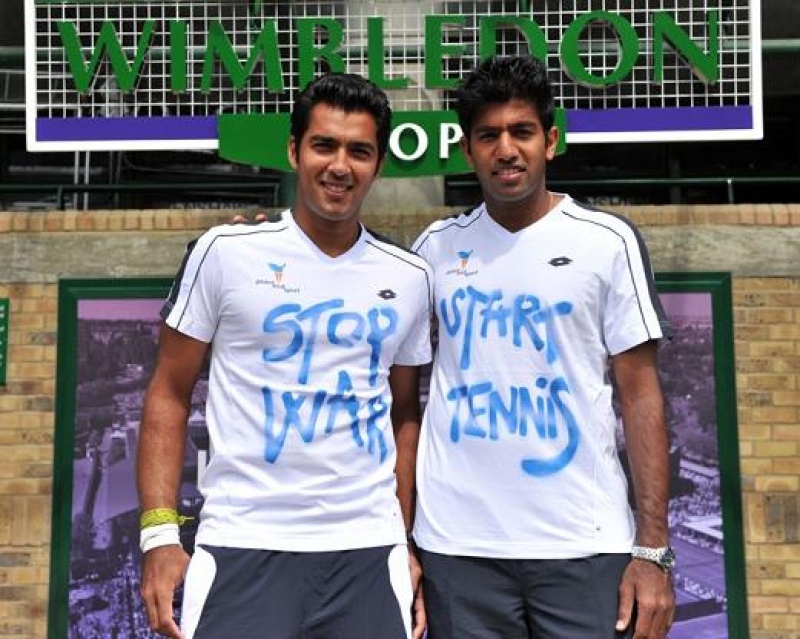
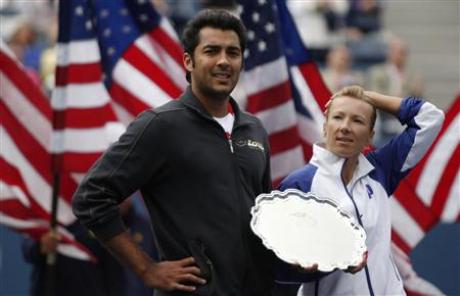
The unique tennis doubles team, Pakistani Aisam-ul-Haq Qureshi and Indian Rohan Bopanna popularly known as ‘Indo-Pak Express’ have urged their governments to allow tennis matches across the border.

There is growing support for their symbolic event – the Stop War Start Tennis campaign. Both players want a match organised between the two countries, but with a twist. They want the match to be held with a net strung across Wagah border. Now that would be a great feat.

The duo are hopeful that their doubles partnership will improve bitter relations between their countries, particularly since the initiative is now backed by the world tennis body and an international peace group.

The International Tennis Federation (ITF) has thrown its support behind the scheme, along with Peace and Sport, a non-governmental organisation run by Prince Albert of Monaco.

“A lot of good things have been achieved, the ITF is now supporting this, Peace and Sport is also supporting this,” Qureshi, who is also Aman ki Asha Ambassador, has said. “The letters have gone to both the prime minister and president of both countries.

“It is a political issue and there are a lot of security concerns, so we are just hoping that the governments will give us the green light so we can play that match on the border.”

Both players, who were finalists at last year’s US Open and gave their opponents, the top-seeded Bryan brothers tough competition, are confident of a positive response from their respective governments.

“Things are going in the right direction,” Qureshi said.
“Last year, at the US Open, both the UN Ambassadors for Pakistan and India came and watched our matches, which was a huge thing and they are supporting the cause as well.
“Things are going in the right direction; we just have to keep playing our matches and get more and more publicity on the bigger occasions. Hopefully it will happen this year.”
– Aman Ki Asha

Israel Fears Unrest in Egypt Could Jeopardize Peace Treaty

By Robert Berger for The Voice of America

The unrest in Egypt is sending shock waves throughout the Middle East, including in neighboring Israel.

Israel is extremely concerned about the situation in Egypt because President Hosni Mubarak has preserved the peace treaty between the two countries for 30 years. Israel considers the treaty a strategic asset, and it fears that a regime change in Egypt could put the peace agreement in danger.

Israeli analyst Yoni Ben-Menachem says an Egyptian government led by opposition groups or the Muslim Brotherhood would take a harder line on Israel.

“It might be a hostile regime to Israel that will not respect the peace treaty with Israel and will cancel it, abolish this agreement, and we will go back to a situation of hostility between Israel and Egypt,” said Ben-Menachem.

That would complicate Israel’s situation strategically, because it already shares two borders with hostile elements: Hezbollah in Lebanon and Hamas in Gaza.  And Ben-Menachem believes neighboring Jordan could be next.

“This can create the domino effect, and this fall of the regime in Egypt can also continue to Jordan, and also with Jordan we have another peace treaty,” added Ben-Menachem.  “And if this will happen, if there will be a strategic change in the Middle East, that will not be for the benefit of the State of Israel.”

While the treaty between Egypt and Israel is often described as a “cold peace,” Ben-Menachem says Israel values its relationship with President Mubarak and sees him as a bridge between Israel and the Arab world.

Thou Shalt not Mock or It May Cost You Your Life!

By Manzer Munir for Pakistanis for Peace

In the wake of the murder of Salmaan Taseer, the Governor of Punjab a couple weeks back, I did a great deal of contemplation about the situation in Pakistan and the current state of affairs of Pakistan and indeed in much of the Muslim world.

The current situation, especially in Pakistan and when it concerns the rights of the non-Muslims, is apparently the worst of anywhere in the Muslim world. Indeed, the plight of Asia Bibi, (also known as Aasia, Ayesa Noreen) Islam and Islamic Blasphemy laws have come under rightful scrutiny as of late.

One question that tugs at the heart of the debate for me is why is it that Muslims seem to get so very offended to the point they want to KILL you over a remark or something that comes out of your mouth? As Americans, we wonder to ourselves, “Haven’t they ever heard of sticks and stones may break my bones, but words don’t hurt me?!

Sadly, what the fundamentalist preachers at all the podiums of their Friday sermon or khutbah, nor any of their brethren on the run and in caves like the Taliban and Al Qaeda fail to realize that we are all God’s children. And God, Allah, Yahweh, Jesus, or whatever name you assign him, he is One and the same God of all religions. He is too big to fit into just one religion, concept, version or story of him.

And we all are his creations. Not one of us is superior over the other in his eyes and he judges us all equally. To him, the children of these three religions and its offspring’s are all related to each other. Adam being the first man, then Eve, and then all the Biblical figures and names such as Noah, Abraham, Moses, Jesus, yes especially Jesus. He is their Messiah too!

Jesus, in fact is mentioned some 28 times in the Muslim holy book, Qu’ran whereas their own prophet Muhammad is mentioned only 4 times. And the fact that Jesus is also considered by Muslims to be the Messiah, it is sad that his followers should get such abject treatment in Pakistan and sadly, many Muslim countries.

If only the bad guys realized the connections between Christians and Jesus only then would a Pakistani Christian woman, suffering needlessly in a cell tonight going on 2 years away from her children in solitude, and constantly fearful for her life, would see her horrific ordeal come to an end.

These people are incapable of understanding basic rights, freedoms and even the unhindered concept of free will. No, they are primitive minded in their their spiritual and daily lives. They fail to see that a Christian’s God and a Muslim’s God are the one and the same. And he never would agree to laws like Pakistan’s Blasphemy laws at all. Why? Well because the Muslim God is known first and foremost as a Gracious, Merciful, Compassionate God.

In fact, the Arabic phrase Bismillah ir-Rahman ir-Rahim is a beautifully poetic phrase which offers both deep insight and brilliant inspiration to the average Muslim who says it countless times as he or she starts each day and till they rest their head to sleep. “ It has often been said that the phrase Bismillah ir-Rahman ir-Rahim contains the true essence of the entire Qur’an, as well as the true essence of all religions. Muslims often say this phrase when embarking on any significant endeavor and the phrase is considered by some to be a major pillar of Islam. This expression is so magnificent and so concise that all except one chapter of the Qur’an begins with the words Bismillah ir-Rahman ir-Rahim.”

The common translation:”In the name of God, most Gracious, most Compassionate” essentially is saying that God is compassionate, and full of grace. So how would this God punish Asia Bibi? What would he do if he is so full of compassion and mercy? Would he even punish her? And if he is such a gracious and a compassionate God, then wouldn’t he feel that nearly a two year jail sentence in solitary is already far more than her crime not to mention being away from husband and children and being worried about mob vengeance on her or the death penalty?

That God may act in a multitude of ways and we cannot ever know till said Judgment Day. That is what Judgment Day is all about after all. In fact, this is probably one day when the man upstairs works overtime judging all of us mankind, from the beginning with Adam to the last standing comes till Tribulation and the End of Days. It is only he, the Creator who will do the judging and this is something that the men with the loudspeakers who climb to the top of the minaret five times a day to call the faithful to prayers, just do not really understand, in my opinion. They apparently constantly seem to forget and pass judgment from the pulpit and this in turn helps set the “popular” opinion amongst the ultra-religious faithful of Pakistan’s society.

My only prayer to this Creator is that may he keep Asia Bibi safe tonight and continue to give her strength. And if God should call her home and have her die a death at the hands of the real savages those that not only kill but shockingly, in your name, then please Allah grant her heaven just as you should governor Salmaan Taseer, a man who was only defending the rights of all your children, including those of other faiths. He was being compassionate and gracious towards a fellow human being God, as he was only trying to emulate his creator, You Lord. Ameen.

And while you are at it Lord, will you also please let the imam at the microphone know that “Thou shall not mock, should not cost you your life.” Afterall, “Thou shall not kill is one of your top 10 commandments, whereas mocking prophets or religious figures does not make the list!

Manzer Munir, a proud Pakistani American and peace activist, is a Sufi Muslim who is also the founder of Pakistanis for Peace and blogs at www.PakistanisforPeace.com and at other websites such as www.DigitalJournal.com, www.Allvoices.com, www.Examiner.com and www.open.salon.com as a freelance journalist and writer. He asks that you like the Official Facebook Page of Pakistanis for Peace to get the latest articles as they publish here: http://www.facebook.com/home.php#!/pages/Pakistanis-for-Peace/141071882613054

Difficult Outlook for India-Pakistan Talks

By Tom Wright for The Wall Street Journal 

The Times of India reported today that India and Pakistan may try to rekindle peace talks in early February.

The paper says Pakistan Foreign Minister Shah Mehmood Qureshi could meet his Indian counterpart, S.M. Krishna, informally after a regional meeting in Bhutan on Feb. 8.

The report suggests that the idea is to set the ground rules for an official visit to India by Mr. Qureshi sometime later this year in a bid to normalize relations that have soured since a major terror attack in Mumbai in 2008.

Given the disastrous outcome of Mr. Krishna’s last formal visit to Pakistan – in July of last year – those ground rules will be important.

At that meeting, Mr. Qureshi became incensed during a press conference over India’s claims that Pakistan’s military intelligence services had orchestrated the Mumbai attacks in November 2008, during which 10 Pakistani gunmen killed more than 160 people over three days.

Mr. Krishna arrived back in India to criticism of being made to look a fool by Mr. Qureshi and a peace talks process begun in 2004 was put on hold amid mutual recriminations. The slow-moving (and now stalled) dialogue is an attempt to normalize relations that have been rocky ever since the two nations were created out of British India in 1947.

India has stuck to its claims of official Pakistan involvement in the Mumbai attacks and says Islamabad is not doing enough to prosecute the perpetrators and rein in India-focused militants in general.

Pakistan retorts that it is committed to fighting terrorism. It also has called on India to broaden the agenda for peace talks to include other topics, such as the disputed Himalayan territory of Kashmir, which both countries claim in its entirety.

It is uncertain whether talks at this stage can produce anything meaningful

India is set against any wider peace talks until Pakistan sentences seven militants that it has charged for involvement in the Mumbai attacks.

But the atmosphere in Pakistan right now means it is unlikely that any politician will want to be seen vigorously cracking down on Islamist groups.

The killing earlier this month of Salmaan Taseer, governor of Pakistan’s Punjab province, by one of his own police guards has uncovered the extent to which hardline religious views have permeated many layers of society.

The police guard admitted he was angered by Mr. Taseer’s defense of a Christian woman sentenced to death by a Pakistani court in November for blasphemy.

In recent days, scores of Pakistanis, including lawyers and clerics, have publicly rallied in support of the police officer.

Gandhi and King- Two Martyrs Who Will Never Die

By Manzer Munir for Pakistanis for Peace

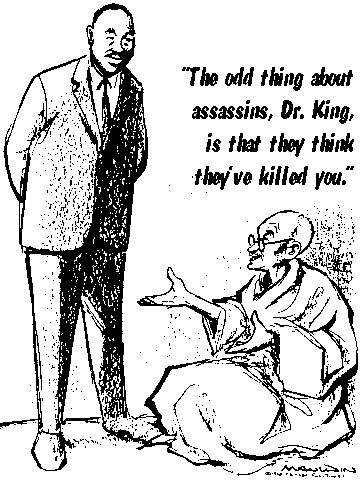
Martin Luther King Jr, who would have been 82 years old January 15, was a great believer of Mohandas K Gandhi, the leader of India’s independence movement from Britain. King saw that Gandhi’s peaceful civil disobedience and non-violent methods of protest were very effective in bringing down the British Empire in India and as a result Pakistan after some 300 years of direct and indirect rule. Gandhi had believed that people could resist immoral government action by simply refusing to cooperate. Gandhi adopted many peaceful resistance techniques in developing his concept of Satyagraha, which was a philosophy and practice of passive nonviolent resistance.

Gandhi had earlier used this resistance technique in his struggles for freedom and equality for blacks and Indians in South Africa where both minorities were subjected to second and third class citizenry. His methods and refusal to bow down to the injustices that Indians faced in colonial South Africa inspired Nelson Mandela several years later to start his own peaceful struggle that eventually led to the end of Apartheid in South Africa in 1990.

While at Morehouse College, King learned about Gandhi and became very excited about his ideas. He wanted to further educate himself and read many books on Gandhi and his life and beliefs. In his book, Stride Toward Freedom, King states that “Gandhi was probably the first person in history to lift the love ethic of Jesus above mere interaction between individuals to a powerful and effective social force on a large scale. He further writes in his book that “It was in this Gandhian emphasis on love and nonviolence that I discovered the method for social reform that I had been seeking. I came to feel that this was the only morally and practically sound method open to oppressed people in their struggle for freedom.”

King felt that he had finally found a way to where oppressed people could successfully unlock social protest through Jesus’ teachings of love. In fact Gandhi himself had said “What does Jesus mean to me? To me, he was one of the greatest teachers humanity has ever had.” He also once mentioned Jesus as the “most active resister known perhaps to history. His was non-violence par excellence” Therefore to the Christian minister living in the pre-civil rights era in the South in America, Gandhi appeared to King as a follower of Christ, someone who preached peace and love even at the expense of suffering. Martin Luther King once said of Gandhi “It is ironic yet inescapably true that the greatest Christian of the modern world was a man who never embraced Christianity.”

In 1959, King visited India and became fully convinced that Satyagraha could be effectively applied to the struggle by blacks in the United States for racial integration. He came back to the United States where he continued the struggle for freedom and equality for all Americans. Like Gandhi, King also talked about suffering as a path to self purification and spiritual growth. He not only experienced this suffering by being jailed, beaten and harassed by the authorities of the day, but he eventually ended up paying for this cause for freedom for all with his life.

 Mohandas K Gandhi and Martin Luther King Jr arguably were two of the greatest men of the last century.  Both men believed that “injustice anywhere was a threat to justice everywhere.” They both led their people and millions of others out of slavery and servitude against seemingly insurmountable odds to freedom and salvation. On what would have been his 82nd birthday, let us recognize that despite an assassin’s bullet and in the greatest democracy in the history of the world, the spirit and dream of a King still live on.


Originally published on 1/18/2010 for Pakistanis for Peace

Pakistanis, Indians want peace, friendship, says poll

As Reported by SANA (South Asian News Agency)

Despite a history of conflicts, mistrust and estranged relationship, an overwhelming number of Pakistanis and Indians want peace and friendship between the nuclear-armed South Asian nations, a survey conducted on both sides of the border has revealed.

The survey – conducted by independent research agencies and sponsored by the Jang Group of Pakistan and The Times of India on the first anniversary of their joint peace initiative ‘Aman Ki Asha’ – showed that 70 per cent of Pakistanis and 74 per cent of Indians want peaceful relations.

Although, the process of composite dialogue between Islamabad and New Delhi remains stalled since the 2008 Mumbai carnage, 72 per cent Pakistanis and 66 per cent Indians hope to see ’sustainable friendly relations’ in their lifetime. Compared with last year, the number of Indians hoping to see peace in their lifetime has surged by 17 per cent.

The optimism at the people’s level appears in a stark contrast to the current bitter official positions. The Indian government accuses Pakistan of harbouring terrorists and not doing enough against the alleged sponsors of the Mumbai attack, while Islamabad says that New Delhi has been using this incident as a ‘propaganda’ tool to avoid talks on the core issue of Kashmir. Islamabad also blames India for instigating violence in Balochistan.

According to the survey, awareness of the Kashmir problem as being central to the state of relations between the two countries, particularly in India, has increased. The survey results show that 77 per cent Pakistanis and 87 per cent of Indians feel that peace can be achieved by settling the protracted Kashmir dispute.

The scientific survey covered 10 Pakistani cities and 42 villages, covering a cross-section of people from rural and urban areas. Pakistani cities where the survey was carried out were: Karachi, Lahore, Rawalpindi, Islamabad, Peshawar, Quetta, Multan, Faisalabad, Hyderabad and Sukkur. In India, the survey was conducted in six cities: Delhi, Mumbai, Kolkata, Bangalore, Hyderabad (Deccan) and Chennai. Adult population, both male and female, were represented in the survey.

This was the second survey on Pakistan-India relations. The first survey was conducted in December 2009; just before the Aman Ki Asha peace campaign was launched. Survey results show a consistent and marked improvement in perceptions about each other by people in both countries.

The survey showed that the issue of Pakistan-India relations featured in the thoughts of 73 per cent Pakistanis and 68 per cent Indians. The survey results said apart from settling the Kashmir dispute, 80 per cent Pakistanis and 91 per cent Indians think ’stronger relations and better defence’ would also contribute in achieving the goal of peace.

The survey tracked the impact of the Aman Ki Asha campaign in India by asking a similar set of questions to two groups of people – one aware of this peace campaign and the other not aware of it. On all four questions asked – perceiving Pakistan as a high threat to India, as a sponsor of terror, desire for peace and being hopeful for achieving sustainable peace – there was a marked difference in the responses of the two groups. The group that was aware of the Aman Ki Asha initiative had a much better perception of Pakistan.

Around 77 per cent of Pakistanis and 87 per cent Indians consider that international pressure may help in bringing peace, while 71 per cent Pakistanis and 72 per cent Indians pin hopes on greater people-to-people contact to pave the way for friendly relations. Eighty-one per cent Pakistanis and Indians see people-to-people contact as an effective ‘instrument of peace’.

An increase in business has also been tipped as a vehicle of peace by 67 per cent Pakistanis and 69 per cent Indians, the survey said. Among other steps needed to promote peace, 32 per cent Pakistanis pinned hopes on sports, 28 per cent on business, 22 per cent on tourism, 20 per cent on travel for health treatment and 13 per cent each on culture and higher education. The data from the Indian side regarding this questionnaire was not available.

For 51 per cent of Pakistanis, business can help bring peace, while 46 and 45 per cent of respondents said that it can also be done through sports and tourism respectively.

AMAN KI ASHA: The first of its kind peace drive ‘Aman Ki Asha’ was seen by a vast majority as articulating the aspirations of the people. Around 87 per cent Pakistanis and 74 per cent Indians were of the view that this sustained campaign ‘developed tremendous awareness about the Indo-Pak relationship’. Around 85 per cent Pakistanis and 61 per cent Indians said Aman Ki Asha communicated ‘peoples’ desire for peace to their governments, while 80 per cent Pakistanis and 86 per cent Indians said it ‘helped bring the people of the two countries together’.

The Jang Group and The Times of India have held a series of events over the last 12 months that involved a broad section of people, including students, intellectuals, artists, businessmen, doctors, information technology experts and ordinary citizens in an attempt to boost people-to-people ties.

In Pakistan, the recall of the ‘Aman Ki Asha’ campaign has been around an impressive 92 per cent. Shahrukh Hasan, Group Managing Director of the Jang Group, said this media-led civil society movement had made a huge contribution for peace at a time when tensions remained high between the two countries.

“The survey results should lay to rest any misgivings or apprehensions people may have had about the objectives or chances of success of the campaign,” he said. “The survey results show that Aman Ki Asha has brought about a sea change in perceptions in India about Pakistan. Every negative perception has decreased and every positive perception has improved. The Jang Group feels vindicated and is delighted that we have helped put across Pakistan’s point of view through honest dialogue, seminars, people-to-people contacts and cultural events.”

According to the survey, the terror perception in India about Pakistan is down to 42 per cent from 75 a year ago, of bomb threats to 29 per cent from 54 and awareness about the Kashmir dispute rising to 17 per cent from a mere four per cent. Hasan hoped that the Pakistani and Indian governments would continue to facilitate the Aman Ki Asha peace campaign and take advantage of the access to the hearts and minds of the people of the two countries that the Jang Group and the Times of India provided.

Pakistan, India Swap Nuclear Sites Lists

By Zhang Xiang for Xinhua News

Pakistan and India exchanged lists of nuclear installations and facilities on Saturday in spite of a tension over the 2008 Mumbai attacks that has disrupted the dialogue process between the two countries, the Foreign Ministry said.

The two countries exchange the lists of nuclear sites on the first day of the new year under an agreement signed in 1988 and came into force in January 1991.

“The government of Pakistan and India today exchanged lists of their respective nuclear installations and facilities in accordance with Article-II of the Agreement on Prohibition of Attacks against Nuclear Installations and Facilities between Pakistan and India of Dec. 31, 1988,” a Foreign Ministry statement said.

The statement said the Ministry of Foreign Affairs handed over the list of Pakistan’s nuclear installations and facilities to an officer of the Indian High Commission in Islamabad at the Foreign Office on Saturday morning.

The Indian side also handed over their list to an officer of the Pakistan High Commission at the Ministry of External Affairs in New Delhi, it said.

After the agreement was signed the first exchange took place Jan. 1, 1992.

Sources said it is the 20th consecutive list exchange between the two countries.

Pakistan and India conducted tit-for-tat nuclear tests in 1998. India conducted its first nuclear test in 1974, followed by five more in 1998. Pakistan conducted its six nuclear tests in 1998. Neither India nor Pakistan is a signatory to the Nuclear Non- Proliferation Treaty (NPT).

India considers the NPT discriminatory, while Pakistan has indicated that it won’t join the international agreement till its neighbor does so.

Neither of the two rival neighbors have signed the Comprehensive Test Ban Treaty.

In 2004 they launched a peace process, but that is now on hold following the Mumbai attacks, with New Delhi pressuring Islamabad to do more to punish those responsible for the carnage and to crack down on anti-India groups.

Meanwhile, both countries also exchanged Lists of Prisoners in the two countries, the Foreign Ministry said.

According to the Agreement on Consular Access signed between Pakistan and India on May 21, 2008, both countries are required to exchange lists of prisoners in each other’s custody on Jan. 1 and July 1 every year, the statement said.

“Consistent with the provisions of this Agreement, the Ministry of Foreign Affairs handed over the list of Indian prisoners in Pakistan to the Indian High Commission in Islamabad today,” it said.