NANKANA SAHIB, Pakistan | Muslim cleric Muhammad Salim isn’t worried that a court or Pakistan’s president might spare a Christian mother from this village who has been sentenced to death on blasphemy charges.
After all, if Asia Bibi escapes the hangman’s noose, he’s confident someone else will kill her.
“Any Muslim, if given the chance, would kill such a person,” Salim said calmly, seated cross-legged on a straw mat at a mosque here. “You would be rewarded in heaven for it.”
Salim isn’t the only one calling for vigilante justice. A cleric in Peshawar has offered 500,000 rupees, or $6,000, to anyone who kills Asia Bibi, if her execution doesn’t take place.
The mother of five is accused of disparaging the prophet Muhammad and the Qur’an during a dispute with three other women. She denies the charge. “My God knows that I never used those words,” she told investigators.
Her case has exposed deep rifts in Pakistan over the blasphemy law, seen by some as an appropriate measure to defend the tenets of Islam, but viewed by others as a dangerous tool easily abused in a society that is a volatile patchwork of ethnicities, religions and sects.
There have been other controversial blasphemy cases. Accused of burning pages from the Koran, Imran Latif was charged with blasphemy in Lahore but then released on bail Nov. 3. Eight days later, two men shot him to death.
This month in the southern city of Hyderabad, a Shiite doctor was arrested on blasphemy charges after police received a complaint that he had maligned the prophet Muhammad. His crime? He tossed out the business card of a pharmaceutical company representative whose first name, Muhammad, was printed on it. The doctor belongs to the smaller Shiite sect known as Ismailis.
“There’s a fundamental lunacy to it,” said Ali Dayan Hasan, South Asia researcher for Human Rights Watch. “There is no good spin to put on the blasphemy law. It’s used frequently in these preposterous ways, for preposterous reasons.”
The law dates to the 1980s and the rule of Gen. Zia ul-Haq. Since Zia’s rule, 974 people have been charged under the law, according to the Pakistani news media. No one has been put to death for a blasphemy conviction.
A News and Opinion Special Report by Manzer Munir for Paksitanis for Peace
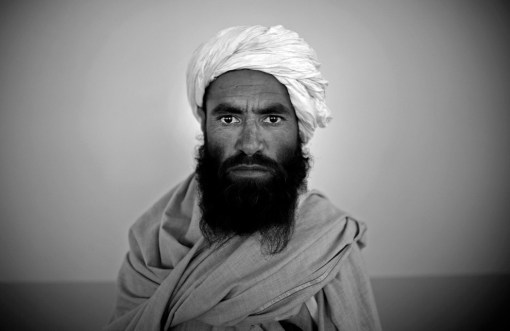
Alleged Taliban Member pic courtsey of Boston Globe
The Taliban are not just simply a bunch of illiterate thugs and bullies for they too often prove to be even worse than animals and barbarians.
Nowhere else in the world has a country experienced a more tragic and callous attack as the one on Christmas day, the birth day of Jesus, the Prince of Peace, than the one Pakistan experienced. In an attack described by President Obama as an “affront on humanity”, the cowards attacked helpless women, children and men while they queued up in food and aid distribution site such as the WFP depot, people who mind you are already suffering from the ongoing war, once in a lifetime floods, and the poverty and radicalism of a generation of desperate, hopeless and increasingly uneducated young men brainwashed by the Taliban and other radical Muslim extremists.
I am still disturbed by the disdain for basic human life that this new attack proves about this radical and extreme enemy. I imagine another one of their brain washed ‘walking zombies’, this time purportedly a woman suicide bomber, a first, even for Pakistan, killed in excess of 43 people in Bajur Pakistan at a World Food Program rations and aid storage and distribution center.
The Pakistani authorities and several domestic and foreign NGO’s who provide food aid at various centers in the area are temporarily closing these centers in order to have increased security. This means that aid distribution will come to a crawl and up to several hundred thousand people will now have to suffer at the hands of the attacker and their backers, the Taliban who have claimed responsibility. The authorities will have to ensure the safety of aid organizations and their personnel for both Pakistani and non Pakistanis relief workers involved in getting food, water and medicine to many people who are either suffering from the war or from the floods.
This catastrophe, although not of near Biblical proportions, does present both a security and humanitarian problem to both the government of Pakistan as well the suffering citizens in the northwest areas of the country where; Taliban fighters take sanctuary from the war in Afghanistan to regroup and return to the fight in warmer weather after the winter months as we have seen in years past. In fact, the reach of the Taliban in Pakistan is now not only reputed to be in the headquartered areas such as in Quetta Pakistan among the restive Baluchi population, now they are so often found to be in major cities like Karachi, Lahore, Rawalpindi, Peshawar and many points in between as they use their religious cover to endear themselves to certain impressionable, weakened or illiterate individuals that are so commonly found in throughout the country.
Here are the some of the depressing facts. Pakistan, a nation approaching 180 million people at current estimates, perhaps only boasts to having about 60-65% of the male population at a literate level and at best, the females to be only at 40-45% of the total female population. Sadly, what this means is that 4 out of 10 Pakistani males are completely illiterate while up to as many as 6 out of 10 women are not able to read or write. Poverty breeds extremism since there is no support from any government programs or hope for any solution.
Time and time again throughout history and not just of Pakistan’s, we can see that the role of the church, synagogue or mosque in building the community is deeper than that of any government initiatives or other measures. The poverty for these young men along with the lack of jobs like for those individuals who are either very poorly paid construction site workers, household labor or servants, or beggars and sewer workers, a job sadly almost seems to have been reserved for Pakistan’s Christian community members as many can attest in Pakistan of their unfortunate and depressing state. One does not need to remind the reader of the plight of Asia Bibi (also Aasia and Ayesa), the Christian Pakistani woman who is still awaiting her fate in Pakistani courts after more than a year and a half since first being accused of a BS blasphemy charge and being in jail ever since.
The medieval mentality of these radical extremists is not something that needs to be described as the evidence is here in this latest attack . Certainly anyone alive in any part of the world outside Pakistan and Afghanistan with eyes, TV, radio or newspaper within their reach can see plenty of near daily reminders of the carnage that many natives of these lands see, and to what they have painfully become accustomed.
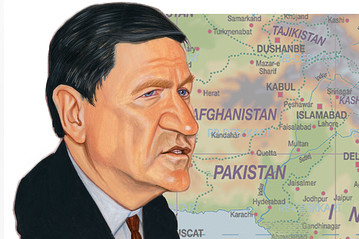
The Pakistani and Afghani Talibans have by all the various reports in newspapers and media sources over the last several years have pointed out to the fact that these groups all have too often similar goals. Not only that, these groups all share the same characteristics. The anti-Americanism, the pro-Wahaabi or Orthodox version of Islam, the need for justice for the ‘suffering of the Palestinian people’ , and the anti-colonial and often times anti western sentiment amongst these groups. The radicalization of certain Muslim groups be they Hamas and Hezbollah in the Mideast or Lashkar e taiba, or any other militant outfit operating in this part of the world as mentioned in this quote a few days before he passed, the late Richard Holbrooke of the US State department said that there are a range of militant groups such as the Afghan Taliban, the Pakistani Taliban, the Haqqani Network, Lashkar-e-Taiba, and that “an expert could add another 30.” His exact words are in quotations.
The radical Muslim groups who take prey of the weaker, cannot think for themselves because they are scions of those abjectly illiterate segments of the society who are only educated in the madrassahs of Pakistan. This is the de facto way of educating Pakistan’s poorer children in little mosque schools which consist of nothing but Qu’ranic surahs and words of ‘wisdom’ or ‘interpretation’ by the local mullah of the said mosque/school. Most probably these children in many Pakistani madrassahs, especially the ones who live near the border areas within the NWFP or North West Frontier Province of Pakistan as this is the part of the country most affected by its close proximity to Afghanistan.
The people in this area of Pakistan, as well as their cousins in Afghanistan have been fighting one enemy or another for the better part of 100 years now. Whether to them the enemy be the British, during the height of the British Raj rule in India, or to the Soviets and the Red army and the Cold War, then in chronological order came the infighting after the Russian withdrawal as various Tajik, Afghani, Uzbek, Pakistani warlords came in to try and consolidate power to now us Americans and the Pakistanis who are our allies in this war.
Granted we do often hear that the Pakistanis can be doing more. By all accounts, the Pakistani government can do more in terms of fighting this war on terror. Numerous western reports and articles in respected dailies have alleged that small elements within both Pakistan’s Army as well as the spy agency, the ISI, have sympathizers to either the Taliban’s cause or they want to be on favorable terms with a powerful entity that most in Pakistan’s establishment believes that Pakistan will be dealing with and not a weakened Karzai once the US begins to draw down troops and end the war by 2014. If this is indeed true, then these ‘officers’ and supposed ‘leaders’ of Pakistan should realize that the colluding with the enemy, which in this case is the Taliban, is tantamount to treason, and the members of the armed forces of Pakistan as well as the intelligence community should not be assisting the enemies of all concerned: Afghanistan, Pakistan and the United States.
Of course we must not kid ourselves and assume that only alleviating the illiteracy and poverty of the Pakistani youth will and bettering the education system of the Pakistani poor, particularly that of the refugees and residents of the northwest areas near the Afghan border. No there needs to be a study and introspection by the people of these two countries where this hatred breeds. To to get out of this darkness, the population needs be provided not only safety when delivering food aid and or medicine but aldo most importantly give them a book, a pen, and a paper. And teach them how to fish for knowledge with basic comprehension and deductive reasoning skills that can reject a radical and violent view of Islam too often manipulated by the clergy. This is the only way we can come to end this illiteracy of hate.
–Manzer Munir, is a proud and patriotic Pakistani American, an author, who plans to write a book on Pakistan, who is also a blogger and journalist, and as the Founder of Pakistanis for Peace can be found at www.PakistanisforPeace.com, www.DigitalJournal.com ,www.Open.Salon.com, www.Examiner.com, as well at other websites as a freelance journalist and writer.
WASHINGTON: Pakistan was shifting its emphasis away from its eastern border with India, a decision it had taken on its own because of a “definite shift” in Islamabad’s military posture brought about by fundamental changes within the country, the US has said.
It said while it does want Islamabad to act more aggressively against extremists within Pakistan it played little role in Islamabad’s decision to move its troops away from the border with India.
“First of all, how Pakistan decides to deploy its military forces is a decision for Pakistan,” State Department spokesman P. J. Crowley told reporters Friday what role the US had played in the movement of 140,000 troops away from the Pakistani-Indian border as mentioned by Secretary of State Hillary Clinton.
“We’ve made no secret of our desire to see Pakistan take more aggressive action against extremist elements within its own borders,” he said. “That is a threat to Pakistan itself.”
“And as the Secretary said, we have seen Pakistan shift its emphasis away from the Pakistani-Indian border and more aggressively to the Swat Valley and other areas where these extremists operate.”
“And no military has suffered more significant casualties in undertaking these operations than Pakistan. But these were obviously decisions for Pakistan to make,” Crowley said.
“But the context of increasing dialogue and reducing tensions between Pakistan and India is something that we have stressed in our dialogue with both countries,” he said.
Asked if Clinton was making an announcement, Crowley said: “Yeah, we’ve seen a definite shift in the Pakistani military’s posture. (But), it wasn’t an announcement.”
“I think it was a reflection of fundamental changes that have occurred in Pakistan as part of our strategic dialogue and our cooperation on dealing with the threat on both sides of the Afghan-Pakistan border.”
Asked about India’s role in Afghanistan after the recent review of the US Af-Pak strategy, Crowley said: “Well, we do have a regional strategy. India has legitimate interest in helping with the future of Pakistan.
“It has contributed significantly to development and reconstruction projects within Afghanistan. And we encourage that activity, even as we stress the importance of dialogue between India, Pakistan, Afghanistan, other countries. So no efforts like this are misunderstood,” he said.
One half Indian, the other Pakistani, they are the most talked-about partnership in tennis.
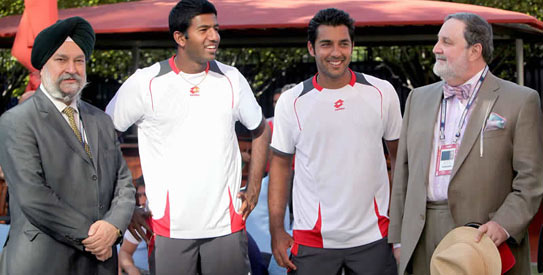
Dubbed “the Indo-Pakistan Express,” Rohan Bopanna and Aisam-Ul-Haq Qureshi hope to end their breakthrough year with a showdown at the infamous Wagah border that divides their countries.
Bopanna, an Indian Hindu, and Qureshi, a Pakistani Muslim also aged 30, reached their first major doubles final at the U.S. Open in September and climbed to eighth in the world rankings.
Yet their work off the court has attracted just as much attention as they try to soften the often-fractious relationship between their two nations since partition in 1947.
The pair have been honored with a string of awards for their humanitarian work in the past 12 months, and are determined to start picking up tournament titles in 2011.
But a showpiece clash at the notorious border crossing that hosts a nightly pageant between India and Pakistan’s border forces would be the perfect way to carry their “Stop War, Start Tennis” campaign into the new year.
“We’re thinking how to get to a wider audience and spread the message of peace through our partnership and thought,” Qureshi told CNN’s Open Court.
“How about playing a match at the Wagah border, with Rohan playing on the Pakistani side and me on the Indian side for a gesture of friendship?
“At the U.S. Open the ambassadors to the United Nations for Pakistan and India both came to watch the semifinals and finals. That was a huge deal because normally you don’t see two diplomats cheering for one cause — it was a really positive sign. I just hope in the near future we can have that match at the border, that would be great.”
The village of Wagah, near the Indian city of Amritsar and the Pakistani city of Lahore, is the only road border crossing between the two countries, and the daily ceremony — which includes a lot of strutting, stamping and saluting — regularly attracts a crowd of thousands.
A match there could be a watershed moment for a pairing that first emerged in 2003 but did not make a major impact until this season.
Their burgeoning partnership on court is allied to a deep-rooted desire to strengthen links between two countries which have a long and deep distrust of each other.
“We’re both brand ambassadors for an organization called Peace and Sport,” Bopanna said. “Right now we’re trying to see if we can help tennis in both our countries, promote it and keep the sport growing as much as we can.”
As well as receiving the Arthur Ashe Humanitarian of the Year award at the recent ATP World Tour Finals in London, they were also given the Peace and Sport Award for 2010 at a glittering ceremony in Monaco.
I’ve always told him I think he’s the most popular Indian guy in Pakistan this year!
–Aisam-Ul-Haq Qureshi on Rohan Bopanna
The citation read: “Their commitment to promoting peace between the two countries and their conviction that peace was possible was shown amply during the year.”
Joel Bouzou, president of the Peace and Sport Foundation, added of the proposed Wagah match: “The sport is ready for peace. Will the two governments rise to the occasion?”
Their partnership may have attracted plenty of headlines but for Qureshi, teaming up with his Indian counterpart made perfect sense.
“I’ve been playing with Indian players ever since I started playing tennis,” he said.
“Unfortunately there are not that many Pakistanis on the tour, and playing with an Indian was actually the most natural thing that came to me — having the same language, most of the time having the same dinner, Indian or Pakistani foods in the evening.
“The first time I ever traveled to India when I was 16, I was one of the top [Pakistani] juniors and he was one of the top juniors in India and that’s how I got to know him.
“Knowing his attacking style of play, I always knew if we played together we’d be able to make a really good impact. I think results clearly show in that way I was right, though normally he tells me that I am always wrong!”
As well as their run to the final of the U.S. Open, where they were beaten by the Bryan brothers from America, they also enjoyed success at Wimbledon which made them household names back home.
“This year we made the quarterfinal at Wimbledon and that was very, very big in Pakistan,” Qureshi said. “I’ve always told him I think he’s the most popular Indian guy in Pakistan this year!
“I can thank him enough for that because obviously without him I wouldn’t have been able to achieve all those goals, and with him being my best friend on the tour it makes it the icing on the cake. It’s been a great journey so far.”
President George H.W. Bush once described him as the “most persistent advocate I’ve ever run into.” President Obama’s special envoy to Afghanistan and Pakistan, Ambassador Richard Holbrooke, died earlier today after complications from heart surgery. He was a gifted diplomat and a tough negotiator who was considered one of the superstars of international diplomacy. Richard Holbrooke died Monday evening at George Washington University Hospital after doctors had performed emergency surgery Saturday to repair a tear in his aorta, the largest artery in the human body responsible for carrying blood from the heart to all parts of the body.
Described only days ago by President Obama as a “towering figure in American diplomacy,” Holbrooke was a career diplomat who started his career in 1962 as an officer during the Vietnam War where he initially worked at the US Agency of International Development. He continued to work on Vietnam issues during the war under President Lyndon B. Johnson and was a part of the delegation that presided in Paris for the peace negotiations to end the war. He also served as the director of the Peace Corps in Morocco in the early 1970’s as well as the assistant secretary of state for East Asian and Pacific Affairs in the Carter administration. He was in charge of US ties with China when relations between the two countries were “normalized” in late 1978.
Later in his career, he also held senior positions at a few prestigious Wall Street firms before returning to diplomacy under the Clinton administration. During this time he was credited with his most illustrious achievement to date when he helped orchestrate the Dayton peace agreement which ended the horrific war and genocide in Bosnia. He later went on to write a memoir titled “To End a War” and become somewhat of a celebrity in the Balkans, and is widely believed to have become the Secretary of State under Hillary Clinton if she had won. He also went on to serve as the US ambassador to Germany as well as the United Nations under President Bill Clinton before being tapped by the incoming Obama administration with the herculean task of being the special envoy of the United States to Afghanistan and Pakistan.
His last assignment was arguably his most difficult as he himself stated that “There’s no Slobodan Milosevic. There’s no Palestinian Authority. There is a widely dispersed group of people that we roughly call the enemy. There’s also al Qaeda, with which there’s no possibility of any discussion at all.” He mentioned that in the AfPak region, (a term he is credited with having coined), there are a range of militant groups such as the Afghan Taliban, the Pakistani Taliban, the Haqqani Network, Lashkar-e-Taiba, and that “an expert could add another 30.”
Such was the difficulty of his last assignment that some close to him are speculating whether the high level of stress and travels associated with shuttling between Washington, Kabul and Islamabad might have been a factor in causing a tear in his aorta. Certainly the complex and high strung meetings with Karzai and Zardari as well as the delicate balancing acts of diplomacy along with military operations in a region of the world described as “the most dangerous in the world” possibly took a toll on his health.
But to those that knew Richard Holbrooke, he was a man capable of taking on and winning the challenges of this and any difficult assignment as he had done so many times in his career. A New York Times reporter once wrote “if you want somebody to pull the trigger, or close a deal, think Holbrooke.”
Tonight in Washington DC, President Obama, Secretary Clinton, and the thousands of employees of the US State Department mourn the death of this icon of American diplomacy and celebrate his lifelong service to the United States and the American people in search of peace in troubled spots the world over. Meanwhile, thousands of miles away, a job vacancy has sadly opened up in the dangerous AfPak region of the world for an assignment that no one is capable of fulfilling quite like Mr Holbrooke. For the sake of the success in the Afghan war, peace and stability in Pakistan and securing America’s vital national interests in the region and around the world, let us hope that his successor will be half as capable a diplomat and negotiator as the late Richard C. Holbrooke, truly a giant of American diplomacy.
–Manzer Munir, a proud Pakistani American and peace activist, is the founder of Pakistanis for Peace and blogs at http://www.PakistanisforPeace.com as well at other websites as a freelance journalist and writer.
Simply put, our challenge is this-can we make the twenty-first century a century of human development, when all people enjoy access to education and health, when each individual is enabled to utilize her or his full human potential, when all people have developed their basic capabilities and enjoy equal access to the opportunities of life? Now let us be clear. This is a vision of human competition, not state welfare. It is a vision of access to opportunities, not access to charity. It is a vision of the enrichment of human lives, not just the enrichment of national income or wealth, and the investment required to realize this vision is fairly modest.
We wish to move over the next fifteen years toward a society where there is universal basic education, primary health care for all, safe drinking water for all, adequate nutrition for all malnourished children, and family planning services for all willing couples. In other words, we wish to move toward a world society where basic social services are available to everyone, both men and women, and women before men; where the worst human deprivations curbing the potential of more than 1.3 billion people today have been finally overcome; where all essential ingredients for the full flowering of human potential are available in the form of adequate education, health, and nutrition. We wish to achieve all this.
What is the financial cost of achieving such a society? According to the best available estimates, the cost will be around an additional $34 billion a year-34 billion dollars. This cost is less than 1 percent of the total income if the poor nations bear all the burden themselves and this cost will be reduced to less than one-seventh of 1 percent of global income if the international community decides to share the cost along with the poor nations. That is the cost.
The question we face today is this: Can we persuade the leaders of the world to accept such a global compact for human development for the twenty-first century?
Let us again be very clear. Such a global compact is not yet another treaty requiring the formal approval of the governments of the world. It is, in fact, a shared vision of what the world can and must achieve. It requires global understanding, not a global treaty, because in the last analysis most action must begin at the national level, and often at the grassroots level, and such action must begin in the developing world itself.
These countries do not lack financial resources. What they lack is political courage. We need to ask the leaders of the Third World, and ask them bluntly, why they insist on spending $130 billion each year on the military when even a quarter of this expenditure can finance their entire essential social agenda. And we must ask them why they insist on having six soldiers for every one doctor when their people are dying of ordinary diseases, from internal disintegration, not from external aggression, from many threats to human security, not any threats to territorial security.
And we must also ask them why they are not convinced that everything they buy costs the immunization of four million children and every jet fighter they purchase costs the schooling of three million children and every submarine they store away in the waters denies safe drinking water to sixty million people. Why do we let them argue poverty of resources for human development when they have well-fed armies but unfed people and when many of these nations spend more on their armies every year than their total education and health budgets?
And at the same time, we must ask the leaders of the rich nations, why do you keep subsidizing your arms exports to poor lands when you argue against even food subsidies in these poor nations? Why is it that you refuse to close down your military bases, phase out your military assistance, and restrict the export of the sophisticated military weapons even now when the Cold War is over? What is your excuse? And why do you make such handsome profits on your exports of arms to poor, starved, disintegrating countries while giving them lectures all the time on respect for basic human rights? And we need to ask these leaders, why do they not invest in human development and instead make profits out of the future prosperity of poor lands and not out of the current state of human deprivation?
I believe, my friends, what we need to change is the mindset of our leaders in developing countries as well as in rich nations, because changes in policies will then follow and adequate resources for priority human development agendas will then be mobilized.
Let us spread the message to all world leaders that such a compact is not only desirable-it is eminently doable, it is feasible. And many years from now, we can look our grandchildren right in the eye and tell them quite proudly: “Yes, we tried.”
-Described as “the most articulate and persuasive spokesman” for the developing world, and as one of the most brilliant economists the world has ever known, Pakistan born Dr. Mahbub ul-Haq pioneered many economic policies to help the poor. He served as chief economist of Pakistan’s National Planning Commission during the 1960s, director of the World Bank’s Policy Planning Department in the 1970s, and in various Pakistani cabinet posts during the 1980s. As special advisor to the United Nations Development Program, he created the Human Development Index, which measures development by people’s well-being, rather than by their income alone. Haq was the author of six books on poverty and development. He died in 1998 in New York.
The case of Aasia Noreen aka Aasia Bibi illustrates how far Pakistan has to go to secure freedoms for its religious minorities. Christians and Hindus are not the only minorities who are persecuted for their beliefs but it is also Muslim minorities such as the Ismailis, Ahmadis, and Shiites who are routinely harassed, discriminated and also killed. Sadly, it is the case of Aasia Bibi that has brought some much needed attention to Pakistan’s sad state of affairs towards the treatment of its religious minorities.
Several sections of Pakistan’s Criminal Code consist of its blasphemy laws and of all the Muslim countries of the world that have anti-blasphemy laws, Pakistan’s anti-blasphemy laws are by far the strictest. There is section 295 that forbids damaging or defiling a place of worship or a sacred object. Then there is section 295-A that “forbids outraging religious feelings.” There is also 295-B which prohibits defiling the Qu’ran and was originally punishable by life imprisonment but has since been amended to up to three years imprisonment.
No section of the blasphemy law is more controversial or harder to prove than Article 295-C, the law that Aasia Bibi is allegedly charged with having broken. In respect to prophet Muhammad, this statute states that ” Whoever by words, either spoken or written, or by visible representation, or by any imputation, innuendo, or insinuation, directly or indirectly defiles the sacred name of the Holy Prophet Muhammad shall be punished with death, or imprisonment for life and shall also be liable to a fine.”
Aasia’s case and charges against her started almost a year and a half ago when there was a quarrel over a bowl of water in a dusty village in the heart of Pakistan’s Punjab province. A group of women were working the fields in the heat of the Pakistani sun when one of them, Aasia Bibi, dipped her glass in the communal bucket of drinking water to fetch herself and others a glass of water to drink and immediately was rebuffed by the other women who claimed that the water was now unclean as it had been touched by a non-Muslim. According to witnesses, instead of quietly bowing her head and taking the indignities, Aasia’s crime was that she mounted a strong defense of her faith and remained steadfast in her demeanor that she did nothing wrong. Too often in Pakistan, the blasphemy laws are used against religious minorities to settle personal vendettas and old scores according to Pakistan’s Human Rights Watch, a watchdog group monitoring the case.
The news traveled fast in Aasia’s village of Ittan Wali, in Punjab’s Sheikhupura district that a Christian woman had insulted the prophet. The local mullah got on the mosque loudspeakers, urging the “faithful” to take action against Aasia Bibi. In sad but familiar pattern, her defense of her faith was somehow twisted into an accusation of blasphemy, according to her family and others familiar with the case. Soon as a mob gathered outside her home ready to take the law into their own hands and handing out vigilante justice, the police moved in and took her into custody. But instead of protecting her, they charged her with insulting Islam and its prophet under the blasphemy laws.
And then on Nov. 8, after suffering 18 months in prison, Aasia Bibi was sentenced to death by a district court, making her the first person to be handed the death penalty in Pakistan under the blasphemy laws. Many before her over the years have been charged, but punishment had been commuted to lesser penalties than the death sentence imposed on Aasia Bibi. No concrete evidence was ever presented against Aasia, according to Pakistan’s Human Rights Watch. Instead, the district judge relied on the testimonies of three other women, all of whom were hostile towards her.
Unfortunately this is a common insult hurled at many of Pakistan’s 2 million Christians who make up just 1.59% of the total population. Often, Christians in Pakistan are discriminated and persecuted and many times only get the lowest of the low jobs such as street sweepers, janitorial and sanitation workers. In fact, in Pakistan, the term ‘Chura‘ has become synonym with the Christian community as it relates to an unclean person akin to how the untouchables or Dalit community is seen in India. In India however, the Dalits are not subjected to arcane state blasphemy laws geared towards religious minorities as in Pakistan or are threatened with their lives at the hands of the Hindu majority.
As discussed in a couple of my previous articles, Taliban 1o1, History and Origins and Taliban 201, The Rise of the Pakistani Taliban, the Islamization of Pakistan started under the late General Zia ul Haq of Pakistan who took over the leadership of the country through a military coup in 1977 when he hung the deposed and democratically elected Prime Minister Zulfiqar Ali Bhutto. Earlier in 1973, the 1973 Constitution of Pakistan had declared that “Islam shall be the religion of the Pakistan” and had systematically begun the process of restricting the participation of religious minorities in government and politics.
Before General Zia, there were only two reported cases of blasphemy. Since the death sentence was inserted in 1986 into the Penal Code for the blasphemy laws, this number has now reached 962 — including 340 members of the Ahmadi Muslim community, 119 Christians, and 14 Hindus. A close examination of the cases reveals the blasphemy laws are often invoked to settle personal scores, or they are used by Islamist extremists as cover to persecute religious minorities, sadly with the help of the state under these laws.
General Zia began this policy of Islamization of Pakistan in conjunction with his support for the war against the Russians and assistance to the Afghan Mujahedeen as well as the building of thousands of madrassahs or religious schools across Afghanistan and Pakistan which nurtured the young men into what later became the Taliban. Many of these blasphemy laws fully came into being under his reign, although some were around since as early as more than 100 years prior when the British drew up the Indian Penal Code of 1860 which was initially an ill foreseen aim at keeping the peace among the many fractured faiths of the subcontinent. For instance, section 295-A, which “forbids outraging religious feelings”, could have been applied against a Muslim who insulted a Hindu or a Hindu who taunted a Sikh or Christian or vice versa. However under Zia, the blasphemy laws were expanded and almost exclusively applied against Muslim minorities such as the Ahmadis, Islamilis and Shiites as well as against the Christian and Hindu populations.
Recently, a religious ‘leader’ came out and has offered over $6000 to anyone who can kill Aasia Bibi while she awaits her punishment in police custody. Outrage and denunciations on this case are coming from across the world as many people are appalled at the sad state of rights for religious minorities in Pakistan. The Pope has intervened also asking for clemency for Aasia Bibi from Pakistan’s President Asif Ali Zardari. Against all manner of reason and justice, Lahore’s High Court recently issued an order on November 29, 2o1o, preventing Zardari from exercising his constitutional authority to pardon Aasia Bibi.
In a country rife with violence and chaos and one that has become synonymous with terror the world over, the case of Aasia Bibi is yet another dark stain on the country’s image around the world. The Taliban and the extremist groups ravaging Pakistan can be explained as being a violent minority and do not and should not reflect on the nation as a whole as the majority of people in Pakistan are opposed to them and their views of Islam. But the blasphemy laws, for as long as they have stayed on the books in Pakistan and in the constitution, cannot and should not be excused in any shape or form. These laws need to be repealed and the constitution needs to be amended in an emergency manner so that Aasia Bibi and other religious minority citizens of Pakistan are not subjected to cruel and subjective laws that are almost exclusively used against minorities to settle scores, personal vendettas, and instill terror in less than 3 percent of the country that is not part of the religious majority of Sunni Muslims.
There needs to be international pressure placed on Pakistan from the United Nations, the United States, Europe and others to modify the constitution immediately and to pardon this 45 year old mother of five children. It is ironic that in a country where many people sympathize with Osama’s Al Qaeda and profess to hate the west with one hand, they decry with the other why not enough western aid has came to their country when it recently saw the worst flooding in its history. Can you blame the American citizens, the Europeans or citizens of any other Christian nation from hesitating to give aid to a country that not only plays a duplicitous game when it comes to terrorists and terror havens but also treats Christians and other religious minorities in the manner as in the case of Aasia Bibi?
The name Pakistan literally translates into “The Land of the Pure”. And as a child growing up I was told that the meaning of Pakistan’s flag is this: “The green is a traditional Islamic color and the crescent moon and star are also Islamic symbols. The white stripe represents the non-Muslim minority and religious groups of Pakistan and there place in the country.” In my view, as long as the nation sanctions and tolerates these utterly unjust and biased blasphemy laws, the religious minorities of Pakistan clearly have no place in this land of the ‘pure’.
-Manzer Munir, a proud Pakistani American and peace activist, is the founder of Pakistanis for Peace and blogs atwww.PakistanisforPeace.comas well at other websites as a freelance journalist and writer.
When Pakistani Americans Mahnaz Fancy and Zeyba Rahman launched Pakistani Peace Builders ( PPB ) in May, they did so to bring Pakistani music and heritage to American audiences. An independent cultural diplomacy campaign, PPB aimed to counteract stereotypes and misperceptions of Pakistanis that Fancy and Rahman saw becoming more prominent.
“The only way we know how to make a difference is to show the other face of Pakistan,” she added. “We as Pakistani Americans are very concerned about being misread and misconstrued.”
Exposing Pakistan’s rich cultural roots “is a really important way of explaining that the fundamentalists are a minority,” Fancy said.
In July, New York City delighted in a celebration of one aspect of Pakistani tradition at PPB’s first event, a hugely successful festival of Sufi music. Nearly 25 musicians representing different regions of Pakistan performed a free, outdoor show in Union Square, one of the most popular public spaces in Manhattan.
“It was an unbelievable experience. … People needed some way to feel good about themselves as Pakistani Americans,” Fancy said.
And then the floods came.
PPB immediately added a humanitarian angle to its cultural mission following the devastating floods that struck Pakistan in late July, killing 1,800 people, affecting more than 20 million others and destroying crops across the country. Building on the momentum generated by the Sufi festival, the PPB partnered with ML Social Vision, the venture philanthropy arm of Washington-based ML Resources, to start Relief4Pakistan, a grass-roots effort to mobilize funds for relief in the flood affected areas.
“As we were wrapping up the concert and the floods hit, I just kept getting phone calls from people all over [the United States] saying, ‘What do we do? How do we respond?’” said Fancy. “People had ideas of packing food and sending it. [The pace] was insane in that initial moment.”
To give donors some direction, Relief4Pakistan sends donations to Mercy Corps, a Seattle, Washington-based nongovernment organization. Mercy Corps has an established reputation and experience on the ground in Pakistan, according to Fancy. Some of Mercy Corps’ efforts include providing safe drinking water, setting up water filtration units and distributing food and relief materials.
Using Facebook and personal networks to encourage support and raise money, Relief4Pakistan has raised nearly $150,000 in aid since August.
“We’ve had donors from all over the place. We’ve had friends hosting events and sending the proceeds,” Fancy said.
Celebrity endorsements have helped bring in funds as well. Aasif Mandvi, an Indian-born, British-raised comedian and cast member of the popular U.S. television program The Daily Show, hosted a stand-up comedy night to benefit Relief4Pakistan, and Pakistani-American actor Faran Tahir — whose credits include Iron Man ( 2008 ) and Star Trek ( 2009 ) — has also joined the campaign.
Relief4Pakistan’s second phase of flood assistance launches in November with a major reconstruction project. The effort will focus on Bangla Ichha Union Council, a four-village area in the Rojhan subdistrict of the Rajanpur district in southern Punjab. According to Fancy, 95 percent of the 40,000 people living in the villages depend on their own crops for sustenance, and their fields remain ravaged by the floods.
“Our first goal is to plant at least 1,000 acres of wheat by the end of November. We want to raise money to get seeds and fertilizer for some of the most vulnerable people, those that own less than five acres of land,” Fancy said.
To complete the project, Relief4Pakistan is partnering with Operation USA, a Los Angeles–based relief agency that “shares our philosophy that development ought to be done by empowering the local community to learn skills and develop a sustainable strategy to take care of themselves,” explained Fancy. Relief4Pakistan and Operation USA are reaching out to local Pakistani organizations to tap their resources and train the community members in necessary skills.
Relief4Pakistan will raise funds through Facebook again, but has also already engaged a wider circle of American philanthropists, Fancy said. Their goal is to build a sort of global village, a network of people worldwide coming together to help, and Fancy hopes the model of “the power of a global village” will set a precedent for other successful relief efforts.
“We’re really riffing off of [Secretary of State] Hillary Clinton’s ‘It takes a village to raise a child.’ … Our overarching goal is to appeal to the humanity of the wider donor public,” said Fancy. “It takes effort from Pakistani Americans and Pakistanis in other countries … it’s the responsibility of each member of this global village.”
At the height of its flood relief efforts, PPB has not forgotten its mission of cultural diplomacy. In fact, much fundraising continues to come from film screenings, art exhibitions and comedy performances showcasing the talents of Pakistani artists.
“Part of our cultural mission is using culture to humanize [Pakistan] and at the same time putting it into action through these much needed flood relief efforts,” Fancy said.
PPB plans to hold more cultural events beyond those dedicated to flood relief. The organization would like to hold the Sufi music festival annually, expanding it to include artists from other South Asian countries.
“[We want] to show what Sufism is in other parts of the world. Pakistan is a microcosm of a larger issue, which is the whole Muslim world,” Fancy said. “Muslims in [South Asia] have been remarkably liberal and secular in comparison to what people think they are.”
Through PPB, Fancy, who is 41 years old, will keep working to transform the younger Pakistani-American generation’s misconceptions of the Muslim world.
“I find it so distressing that people of our parents’ generation know much more about Pakistan than our generation,” she said.
And she worries that the knowledge the younger generation has gained from the media has left it grossly misled about Pakistani and Muslim identities.
“This sense of being primitive and tribal is not the true modern history of this part of the world,” Fancy said. “It’s only true of the minority that has taken the loudspeaker and is misbroadcasting lots of things they think are collective traits [of Muslims], but they’re not.”
( This is a product of the Bureau of International Information Programs, U.S. Department of State. Web site: http://www.america.gov )
I can see your stares! I get them every time I say we are twinning our mosques and synagogues this month. “Really?” people ask, jaws dropping.
For the third year, this exercise of interfaith exchange has progressed in good faith. Synagogues agree to twin with nearby mosques, with congregants visiting each other during Jewish Sabbath and Muslim Friday prayer services and, in some cases, inviting guest speakers or jointly carrying out a community service project like doing a Hanukkah and Eid party together.
I have personally taken students to the synagogue. One young Pakistani-born boy marveled at how cordial Jews were and how familiar the service is. One Palestinian girl at first refused to enter the synagogue but after meeting a warm female rabbi, left saying how different it was from what she’d thought.
Many people wonder about the term “Twinning” to describe the event. But the history of the Muslims genealogically is an ancestral path that leads to Ishmael, a son of Abraham, while that of the Bani Israel, the Quranic term for the Jewish people, leads to another of Abraham’s sons, Isaac.
So we’re children of two brothers – a good reminder actually – since around this time Muslims commemorate Abraham’s story during the hajj, the pilgrimage to Mecca, on Eid al-Adha.
Twinning was initiated to encourage a better understanding between Muslims and Jews living in the West, regardless of political inclinations, with a more direct opportunity to have a dialogue about their faith traditions specifically.
In Toronto, in addition to Jewish visits to hear imams’ Friday sermons at mosques and Muslim visits to hear the Torah read in synagogues, the Noor Cultural Centre – which promotes cultural education and bridge-building in the Muslim Canadian community – has organized a weekend-long educational study conducted by Rabbi Dr. Reuven Firestone and Dr. Mahmoud Ayoub. The focus of the study is to reach out to students of both communities and discuss images of war and violence in Jews’ and Muslims’ scriptural texts.
According to Walter Ruby, the man behind the scenes at the New York-based Centre for Ethnic Understanding: “Twinning has brought together thousands of Muslims and Jews to jointly promote tolerance, understanding, education and goodwill in an effort to combat Islamophobia and anti-Semitism.”
It has grown from a mere 50 places joining hands last year in North America to more than 100 mosques and 100 synagogues in 22 countries on four continents.
Normally hosted the first weekend in November, Twinning events also take place throughout the month, providing meaningful exchanges for Muslims and Jews to understand each other’s faith – or participate in community initiatives, no matter how creative or how basic, like simply having a rabbi and an imam chat over coffee.
In Toronto, Dr. Barbara Landau plays a key role in promoting the Twinning and works to ensure such events are not limited only to November.
Landau is a friend and long-standing peace activist in Toronto among Jews and Muslims. She has participated in missions to conflict areas in the Middle East to share how Canadians can serve as role models. She has worked tirelessly with others, including her co-chair at the Canadian Association of Jews and Muslims, Shahid Akhtar, since 9/11 to see that young people in our communities understand each other and work on common projects for the goodness of humanity.
“The Weekend of Twinning has time and time again shown us that Jews and Muslims can not only live together peacefully as neighbors, but also partner together to build a better community at-large,” said Rabbi Marc Schneier, president of The Foundation for Ethnic Understanding and lead organizer of the Weekend of Twinning.
And, with many more mosques and synagogues notifying her of their willingness to participate in the event, Landau is optimistic that next year’s Twinning weekend will be even bigger and better.
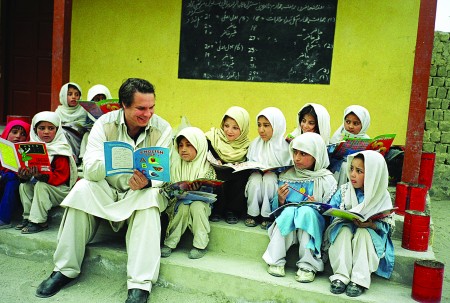
He is well known for his best-selling novel “Three Cups of Tea” and as the American who builds schools in Afghanistan and Pakistan, yet his story began with an accident that changed his life.
Greg Mortenson first went to Pakistan on an attempt to climb the mountain K2. After getting lost twice, cold, sick and hurt, Mortenson stumbled upon the small village of Korphe where the locals nursed him back to health. It was here, Mortenson said during his recent visit to Dallas, that he first encountered what would become his new life.
“I saw 84 children sitting in the dirt doing their school lessons,” Mortenson said. “Most of them were writing with sticks in the sand. When I saw those 84 children sitting in the dirt and they asked for help to build a school, I made a promise that day that I would help them.”
Mortenson didn’t realize then that the climb ahead was still steep. He came back to the states and wrote letters to 580 celebrities asking them to donate to the cause. He got one response: a check for $100. But he did not give up, speaking at schools and appealing to people’s desire that all children have a right to an education. Mortenson eventually got the funds he needed to begin the school he had promised.
“I built that school and then 78 more and I’m still doing it today,” Mortenson said.
This is his life’s purpose and he constantly strives to fulfill it, said Sadia Ashraf, outreach coordinator for the Central Asia Institute, a nonprofit Mortenson started to promote education in remote regions of Northern Pakistan and Afghanistan. It is his passion for the cause that has made him so remarkable at what he does, she added.
It is this ability to mix passion with a unique perspective that many say makes him a revolutionary.
“I think philosophically speaking he’s looking at an issue that’s been there for many years, looking at it through completely fresh eyes and also looking at it through the perspective of an American, which is a little bit unique,” said Amir Omar, city councilman for Richardson. “And his ability to come back to the States and explain those needs in terms that other Americans would understand, I think that has a really compelling message to it. It not only impacts children in Pakistan but also it impacts the perceptions of Americans.”
Yet Mortenson’s vision is not just designed to change perspectives, but to alter future generations by educating today’s youth, especially women.
“When a girl learns how to read and write, one of the first things she does is teach her own mother,” Mortenson said. “The girls will bring home meat and veggies, wrapped in newspapers, and the mother will ask the girl to read the newspaper to her and the mothers will learn about politics and about women who are exploited.”
Teaching women, Mortenson says, is the way to changing the world.
“When someone goes on jihad, they first should get permission and blessings from their mother,” he said. “And if they don’t, it’s very shameful or disgraceful. And I saw that happen after 9/11. They were primarily targeting illiterate, impoverished society because many educated women were refusing to allow their sons to join the Taliban.”
But education of this sort can only take place when you don’t walk in as strangers to try and change the world, but first become family, Mortenson said.
That happens with three cups of tea.
“The first cup you’re a stranger, second cup a friend and the third cup you become family. That doesn’t mean you just go around drinking tea, having peace in the world,” he said. “But what it means is that first we have to build relationships and get to know each other.” That’s how Mortenson believes in promoting peace: one school at a time.
Pakistanis for Peace Editor’s Note– Greg Mortenson’s humanitarian work in Afghanistan and Pakistan shows that one man can make a difference and leave a lasting mark in the lives of many. He is a great unofficial ambassador of the United States much like aid worker Todd Shea of Shine Humanity. We commend both individuals and many others for their honorable work on behalf of the people of these two neighboring nations.
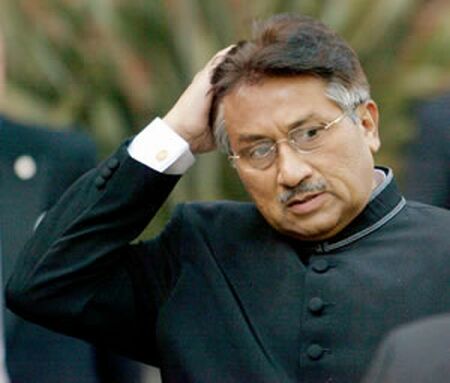
Former military ruler Pervez Musharraf on Friday said India and Pakistan were “moving forward towards drafting an agreement” on Kashmir during his tenure and that Prime Minister Manmohan Singh was genuinely committed to peace in the region. “I was certainly trying for it (peace).
And we were reaching success. I have always praised Prime Minister (of India) for his sincerity to reach peace,” said Musharraf, in an interview with NPR. Manmohan Singh and we almost reached peace on all the three issues…the third one, Kashmir, we had made some certain parameters and we were moving forward towards drafting an agreement,” he added. “Unfortunately, that was not to be, but I tried my best.”
Noting that peace is the only way forward, Musharraf noted that the deadlock on Kashmir was rendering the South Asian Association for Regional Cooperation (SAARC) useless.
“And I think the way forward is peace for the sake of world, which thinks that this is a nuclear flash point; for the sake of SAARC, which is impotent because of the conflict because of India and Pakistan,” said the former president.
“And for the sake of bilateral Pakistan-India advantages socio-economic advantages which will flow from peace between the two countries,” he noted.
Musharraf is in the US to drum up support for his comeback, which he announced earlier this year by launching a new political party — the All Pakistan Muslim League that would contest elections in 2013. Earlier this week, he accused India of trying to create an “anti-Pakistan Afghanistan.” “If I’m allowed to be very, very frank, India’s role in Afghanistan is to create an anti-Pakistan Afghanistan, said Musharraf, speaking at the Council on Foreign Relations on Tuesday.
Today, he characterised the narrative of the Indo-Pak dispute as “impartial”. “So, unfortunate reality, why I have to be so emotional about it, is every time it is Pakistan who is a rogue,” he said.
“Indian bomb is not a Hindu bomb. Pakistan bomb is a Islamic bomb. I think we are being very impartial, we are being very unfair to Pakistan…”
Nine years into the war in Afghanistan, the United States should have a clear idea of Pakistan’s interests there. It’s time to take these lessons to heart — and start applying the right incentives. As recent intelligence findings reported in late October confirm, Pakistan remains at the heart of the U.S.-led coalition’s problems in Afghanistan — where the war is hardly lost, yet hardly headed for clear victory either. Indeed, Pakistan arguably remains the most complex ally the United States has ever had in wartime, making President Franklin D. Roosevelt’s challenges in dealing with Stalin (a far worse leader, but at least one who knew the outcome he wanted) seem simple by comparison.
Nine years into the campaign, we still can’t clearly answer the question of whether Pakistan is with us or against us. America needs bold new policy measures to help Islamabad — in all its many dimensions and factions — make up its mind.
The crux of the problem is this: Despite allowing massive NATO logistics operations through its territory and helping the United States pursue al Qaeda operatives, Pakistan tolerates sanctuaries on its soil for the major insurgencies fighting in Afghanistan. These include the Afghan Taliban (otherwise known as the Quetta Shura Taliban because its principle base remains in Quetta in the Pakistani province of Baluchistan) as well as the Haqqani and Hezb-i-Islami Gulbuddin (HiG) networks. The Haqqanis straddle the border between the Afghan provinces of Khost, Paktia, and Paktika as well as North Waziristan and other tribal areas within Pakistan; HiG is further north, operating in and around the Khyber Pass connecting Kabul and Jalalabad in Afghanistan with Peshawar and points east in Pakistan. Thus, all three major Afghan insurgent groups have home bases in Pakistan, and despite the occasional drone strike are generally beyond NATO’s reach as a result.
Pakistan has done some worthy things against extremists in its remote northern and western areas in recent years. Specifically, it has recognized the so-called Pakistani Taliban (the Tehrik-i-Taliban Pakistan, or TTP) as a mortal threat to the Pakistani state and responded accordingly. After suffering hundreds of bombings and assassination attacks by the TTP, including the killing of former Prime Minister Benazir Bhutto in 2007 and several thousand casualties a year to its troops and citizens since roughly that time, it has responded in force, particularly over the last year and a half or so. It has swung about 100,000 troops previously guarding the border with Pakistan’s nemesis India to the northwestern tribal regions and cleared several major areas including South Waziristan, Bajaur, and the Swat Valley. This is all to the good.
Pakistanis argue, however, that limited numbers of ground troops combined with the past year’s admittedly devastating floods prevent them from doing more. Quetta, North Waziristan, and other key places remain dens of iniquity, havens for extremists who continue to attack NATO and Afghan troops across the border and then return home for rest, regrouping, and fresh recruiting. Major command-and-control hubs are permanently located within Pakistan as well, and key insurgent leaders like Mullah Omar (to say nothing of Osama bin Laden) probably remain safely ensconced on Pakistani territory where U.S. forces cannot get at them.
But even if limited Pakistani capacity is part of the problem, there’s more at stake. Pakistan worries that President Barack Obama’s promise to start reducing U.S. troops in Afghanistan come July will lead to anarchy and civil conflict next door, and it is retaining proxies that it can use to ensure that its top goal in Afghanistan — keeping India out — can be accomplished come what may. Pakistan would rather have the Taliban and the Haqqanis back in power, especially in the country’s south and east, than any group like the former Northern Alliance, which it views as too close to New Delhi. It is this strategic calculation, more than constrained Pakistani resources, that constitutes Obama’s main challenge in Afghanistan. And it could cost him the war.
Under these circumstances, part of the right policy is to keep doing more of what the Obama administration has been doing with Pakistan — building trust, as with last month’s strategic dialogue in Washington; increasing aid incrementally, as with the new five-year $2 billion aid package announced during that dialogue; and coordinating militarily across the border region. But Obama also needs to think bigger.
First, he needs to make clear America’s commitment to South Asia, to wean Pakistan away from its current hedging strategy. Obama has frequently used general language to try to reassure listeners in the region that there will be no precipitous U.S. withdrawal next summer. But few fully believe him. Hearing stories like Bob Woodward’s accounts of how the vice president and White House advisors have generally opposed a robust counterinsurgency strategy in favor of a counterterrorism-oriented operation with far fewer U.S. troops, they worry that next summer’s withdrawal will be fast. Obama needs to explain that he will not revert to such a minimalist “Plan B” approach under any imaginable circumstances. More appropriate would be a “Plan A-minus” that involves a gradual NATO troop drawdown as Afghan forces grow in number and capability, without necessarily first stabilizing the entire south and east, should the current strategy not turn around the violence by next summer or so. This would represent a modification to the current plan rather than a radical departure. The president can find a way to signal that this is in fact his own thinking, sooner rather than later — ideally before the year is out.
Second, Obama should offer Islamabad a much more expansive U.S.-Pakistani relationship if it helps win this war. Two major incentives would have particular appeal to Pakistan. One is a civilian nuclear energy deal like that being provided to India; Pakistan’s progress on export controls in the wake of the A.Q. Khan debaclehas been good enough so far to allow a provisional approval of such a deal if other things fall into place as well. Second is a free trade accord. Struggling economically, Pakistan needs such a shot in the arm, and a trade deal could arguably do even more than aid at this point.
But the key point is this: Pakistan should be told that these deals will only be possible if the United States and its allies prevail in Afghanistan. Small gestures of greater helpfulness are not adequate; bottom-line results are what count and what are needed. If Afghanistan turns around in a year or two, the deals can be set in motion and implemented over a longer period that will allow the United States to continually monitor subsequent Pakistani cooperation in the war.
It may seem harsh to Pakistan that America would put things in such stark terms — but in fact, it is not realistic that any U.S. president or Congress would carry out such deals if the United States loses the war in Afghanistan partly due to Pakistani perfidy. As such, these terms are really just common sense, and they are based on political realism about America’s domestic politics as well as its strategic interests.
America’s current strategy for the war in Afghanistan is much improved. But it is not yet sound enough to point clearly toward victory. The most crucial problem is the role of Pakistan in the war, and so far, the Obama administration is not thinking creatively enough about how to fix it.
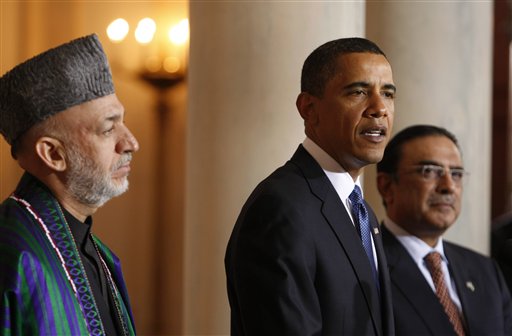
Barack Obama has called on India and Pakistan to renew their efforts to find peace, even as he said Islamabad was not moving quickly enough to counter militants operating from inside its borders.
In comments that appeared to underscore the high-wire act of diplomacy the US president is trying to pull off while on the three-day visit to India, Mr Obama said Washington would not act as an intermediary between the two countries.
However, he told a group of students in Mumbai: “My hope is that over time, trust develops between the two countries, that dialogue begins, perhaps on less controversial issues, building up to more controversial issues. There are more Pakistanis who’ve been killed by terrorists inside Pakistan than probably anywhere else.”
The president has received criticism from some opposition parties in India after he failed to directly mention Pakistan when he arrived in India on Saturday and spoke of the 2008 attacks at the Taj Hotel and other locations in Mumbai, that left more than 160 people dead.
In the aftermath of the attacks, the so-called “composite dialogue” peace process between India and Pakistan was put on hold and while there have been a series of high-level meetings, the relationship between the two remains tense.
The president, who stayed at the seafront hotel in what aides said was a clear sign of solidarity, had talked about the militants and the terror they wrought, but was criticised by the right-wing Bharatiya Janata Party (BJP) for failing to attribute the blame to Pakistan.
Asked why he had not done so, Mr Obama reflected a reality in which the US is paying billions of dollars to Pakistan in aid as it pushes it to do more against militants responsible for cross-border strikes in Afghanistan.
“Pakistan is a strategically important country, not just for America, but for the world,” he said. “India and Pakistan can prosper and live side by side. This can happen and this should be the ultimate goal. The US can be a partner but cannot impose this process. India and Pakistan have to arrive at an understanding.”
Mr Obama started his visit to India, one of four countries he is including on a tour through Asia, by announcing more than 20 deals he said were worth up to $10bn and would help support 50,000 US jobs.
He also said the US was to relax export controls over sensitive technology, a demand of India’s that will help deepen ties between the two countries. The president is to hold formal talks today with India’s prime minister, Manmohan Singh.
On a domestic level, Mr Obama also recognised he needed to make “midcourse corrections” in the aftermath of last week’s mid-term elections if he is going to win over a frustrated and divided electorate.
As NATO forces prepare to pull out of Afghanistan, worries about the country falling back to Taliban control are paramount. But in neighbouring Pakistan, where suicide bombings and brazen attacks on security forces have become regular occurrences, the stakes are also high.
“What happens in Afghanistan affects us and vice-versa,” says Akbar Zeb, Pakistan’s High Commissioner to Canada. “We have four million Afghan refugees still living in Pakistan, and it’s in our interest to have a stable country where we can send them back. A Taliban takeover won’t be just detrimental to Afghanistan. It would harm Pakistan and the whole region.”
Zeb said that under the civilian government of President Asif Ali Zardari, relations have improved with Afghanistan, and contrary to reports of friction, there are “frequent contacts” between the two countries that would be helpful in creating stability.
But he added that Canada, and other Western countries, should not repeat the mistakes of the post-Soviet era, when the West lost interest in Afghanistan and Pakistan as soon as the Soviet troops withdrew.
During the rule of Pakistan’s military leader, President Pervez Musharraf, groups of Taliban-linked militants got a foothold in Pakistan, but were not seen as a danger to the country until internal attacks began to spread. Former prime minister Benazir Bhutto was assassinated, and suicide bombings took the lives of hundreds of civilians. Under pressure from the U.S., the Pakistani military began a massive campaign against the Taliban along the Afghan border.
“We have managed to clear a lot of areas from the Taliban,” said Zeb. “Military campaigns are the only language they understand. But they alone won’t help to win the war. We have border regions with a lot of poverty, and backward elements that have been ignored for a long time.”
Canada has announced support for road and rail projects linking Afghanistan and Pakistan to speed trade between the two countries.
“It’s a very good initiative, but scope is limited,” said Zeb.”We wish the projects were larger and not just (confined to) those that involve both Afghanistan and Pakistan.”
Talks with Islamabad are also ongoing on the use of ports in Karachi for shipping out Canadian troops and military supplies from Afghanistan.
But as the war continues, Pakistan has also been urged to be tougher on the Taliban. In the past two years it has carried out attacks against the militants in its border regions with some success, while American-launched drone strikes have killed high-ranking Taliban. The catastrophic floods that wiped out some of the most important agricultural areas of Pakistan brought a temporary truce, but militant attacks have resumed since the waters receded.
Last week, talk of a peace deal between the notorious Taliban-linked Haqqani network, and an opposing tribe in the remote northwest raised fears that it could open the way for Taliban access to strategic border areas. But the U.S. has also urged a Pakistani offensive against the network in North Waziristan, a volatile region where 400,000 civilians are vulnerable to displacement.
According to Pakistani officials, the country has lost some 7,000 security forces in a decade of fighting the militants — more than three times the coalition deaths in Afghanistan. Meanwhile 30,000 Pakistani civilians have died. The border region, a tangle of mutually hostile tribes, remains a haven for militants.
“It’s a difficult balance for Pakistan,” said Zeb. “Foreign troops may leave, and for them Afghanistan is a distant land. We’re Afghanistan’s neighbours. We helped with the fighting in the decade-long war against the Soviets. And we have to live with the outcome of this war.”
In 2003, Norman Gershman was looking for some of the righteous.
What he found astonished the investment banker-turned-photographer, and led him toward a project now on display in a St. Louis synagogue.
The Righteous Among Nations are gentile rescuers who make up “a small minority who mustered extraordinary courage to uphold human values,” according to Yad Vashem, Israel’s Holocaust memorial museum.
They are, the museum says, “the few who helped Jews in the darkest time in their history.”
Gershman’s story begins during the Holocaust and involves Albanian Muslims — villagers, peasants and farmers — who risked their lives and the lives of their families to shelter Jews fleeing Nazi Germany.
Italy invaded Albania in 1939 and occupied the country until the overthrow of Benito Mussolini in 1943. Germany then took over the Albanian occupation. Before the war, Gershman estimates from his research, only about 200 Jews lived in Albania, a country that is about 70 percent Muslim.
During the years of occupation, 10 times as many Jews streamed into Albania to escape persecution from Poland, Yugoslavia, Czechoslovakia, Greece and Italy. Gershman says it was the only country in Europe where the Jewish population grew by the end of the war.
Most of the hidden Jews either fled to Israel or back to their native countries after the war. Albania’s postwar communist regime made it impossible for the Jews who had been hidden to stay in touch with the Albanian Muslims who had provided shelter.
In 2003, New Jersey native Gershman heard hints of the story and began doing research, eventually traveling to Albania to begin interviewing those Muslims who took part and who were still alive. Gershman said it wasn’t just Muslim families who shielded Jews from the Nazis, but also Orthodox and Catholic families.
All of them were motivated by an Albanian code of honor called “besa,” a concept that can be translated into “keeping the promise,” Gershman says. The Albanian villagers were motivated to risk their lives by the simple concept of helping one’s neighbor.
“We chose to focus on the Muslims because, who ever heard of Muslims saving Jews?” Gershman said in a telephone interview from Israel, where he is at work on his next project.
Gershman’s research eventually led to an exhibit of his photographs, “Besa: A Code to Live By,” which opened recently at Congregation Temple Emanuel, and a book, Besa: Muslims Who Saved Jews in World War II.
The exhibit makes the case that the Muslim Albanian villagers who sheltered Jews from deportation to concentration camps did so from a sense of religious obligation.
“Besa is a cultural idea, but for the Muslims in Albania it was ingrained in their faith as well,” Gershman said.
Ahmet Karamustafa, professor of history and religious studies at Washington University, said saving a life is a universally acknowledged Muslim value.
Protecting a life, Karamustafa said, “has always ranked at the very top of moral and legal categories articulated by legal and theological scholars in Islam.”
The exhibit has been traveling the world since 2006, opening in Yad Vashem in Israel, the United Nations in New York, and synagogues, mosques, college campuses and Holocaust museums from Turkey to El Paso, Texas.
The exhibit of 30 photographs includes one of Lime Balla, born in 1910, who told Gershman that a group of 17 Jews came from the capital city of Tirana to her village of Gjergi in 1943 during the holy month of Ramadan.
“We divided them amongst the villagers,” Balla said, according to Gershman. “We were poor. We had no dining table, but we didn’t allow them to pay for food or shelter. We grew vegetables for all to eat. For 15 months, we dressed them as farmers like us. Even the local police knew.”
David Sherman, president of Temple Emanuel, said the synagogue “decided it could be an opportunity to educate the public about this piece of history that was a model of dialogue and tolerance.”
The synagogue’s rabbi, Justin Kerber, said one of the Reform congregation’s goals with the exhibit is to combat a common depiction of the modern relationship between Jews and Muslims.
“There’s so much coverage about Muslim-Jewish strife and conflict,” Kerber said. “It’s important to tell people that’s not the whole story, and these are examples of Muslim-Jewish respect, tolerance and love. This was a good opportunity for us to be part of that conversation.”





You must be logged in to post a comment.