Archive for the ‘ President Obama ’ Category

Staying Nimble to Fight Al-Qaeda’s Shifting Threat

By David Ignatius for The Washington Post
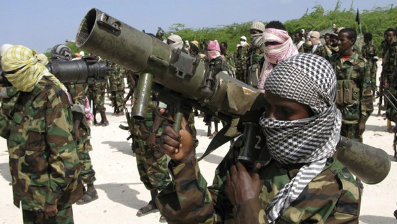
Behind the latest terrorism plots is an al-Qaeda leadership that is getting battered in Pakistan but that is determined to strike back wherever it can – using a dispersed network and new tactics that are harder to detect.

The package bombs sent last week from Yemen are one face of al-Qaeda’s continuing campaign. The Yemeni operatives are nimble, adaptive and “frustratingly clever,” says a U.S. counterterrorism official. “They have one main goal, which is to mess with us.”

The Yemen-based operations came as intelligence officials were struggling to disrupt another al-Qaeda plot to launch Mumbai-style attacks in European cities. Officials say that plan involved roughly 25 al-Qaeda terrorists, organized into cells of perhaps three to five members who would stage roving assaults in one or more European cities. Of the 25, about 10 have been captured or killed, according to a second U.S. official.

While these operations are tactically separate, officials say they both reflect a secret mid-2009 directive from an embattled Osama bin Laden to his followers to demonstrate that al-Qaeda could still do damage.

For U.S. officials, these latest terror plots have been a grim reminder that there’s a long fight ahead against al-Qaeda, with no “quick fixes” available. Defense isn’t enough: The explosives sent from Yemen can’t be detected by conventional X-ray screening or sniffer dogs, so stopping these plots requires good intelligence, as was the case last week when Saudi Arabia tipped the United States about the package bombs.

Nobody wants to say so publicly, but the lesson of the past few weeks, for me at least, is that one of these days the terrorists will succeed – and people should be prepared for that likelihood. The greatest damage won’t be the attack itself but the public response. The Yemeni plotters saw the frenzy produced by their failed Christmas Day bombing attempt on a flight to Detroit. They must be hoping now, with the package bombs, to disrupt cargo-handling around the world and damage a fragile global economy.

As the CIA has stalked al-Qaeda over the past two years, this has been a story of punch and counterpunch, of escalating U.S. drone attacks over Pakistan’s tribal areas and defiant al-Qaeda responses. As the senior U.S. official says, this is a “learning enemy” that adapts its tools and tactics as the West alters its defenses.

To understand the latest news, it helps to scroll back to early 2008. The CIA gathered intelligence that al-Qaeda leaders were regrouping, forming new alliances and planning new operations in the West. At that time, the CIA’s attacks from Predator drones were sporadic, and Pakistan was consulted before each attack.

So the Bush administration escalated the drone attacks in mid-2008. Now, Pakistan was given only “concurrent” notification, which in practice meant it was informed after the drone had launched its missile. Moreover, the CIA was authorized to strike targets that had a “signature” of terrorist activity, rather than a precise identification. President Obama has increased the tempo of Predator attacks even more.

The drone attacks have pounded al-Qaeda and killed key members of its leadership. Bin Laden reacted with his mid-2009 directive, which the U.S. official summarizes this way: “Undertake operations however and wherever you can. We need to prove ourselves again.” Specifically, bin Laden directed operatives to plan assaults in Europe similar to the November 2008 attacks that killed about 175 people and terrified Mumbai.

The United States and its European allies have been working hard to disrupt the Mumbai copycat operations. Since the third week of August, the CIA has conducted more than 40 drone attacks on the tribal areas, more than in all of 2008. A British national was killed in Pakistan in September, and two Germans in October. Other plotters have been arrested in Europe and Pakistan. Officials say they can’t be sure yet whether the terror plans have been shelved.

A similar escalation is likely in Yemen, with soldiers from the U.S. Joint Special Operations Command working with Yemeni government forces. The JSOC sums up its lethal approach with the phrase “find, fix, finish,” but a U.S. official says it has been hard to keep track of al-Qaeda targets in Yemen’s tribal villages and cities.

The reality is that the adversary that declared war on the United States in 1996 is still active – morphing and mobilizing even as it is hunted by America and its allies. It’s a nasty fight, and it’s far from over.

New U.S. Ambassador to Pakistan Delivers Flood Relief

By Gunnery Sgt Bryce Piper for The Defense Video & Imagery Distribution Sysem

 U.S. Ambassador to Pakistan Cameron P. Munter distributed flood relief supplies today at a World Food Program distribution point at Hassan Khan Jamali, Pakistan.

As the newly-appointed ambassador, Munter participated in the operation to see and participate in the Pakistan and U.S. military flood relief efforts conducted in Sindh province.

“It is an honor to have the chance to work with the Pakistani military and the American military together, who are working to help the Pakistani people,” said Munter. “This is a place that I think all of us will remember as a symbol and as a reality of our cooperation, what we can do when we work together, when we face problems together. And I’m very, very grateful to the Pakistanis and Americans who’ve done all this work.”

Munter arrived at the Pakistan military’s Pano Aqil Cantonment in the afternoon and then flew to the Hassan Khan Jamali relief site where he and a team of Pakistani and U.S. military members unloaded approximately four tons of food aid from two helicopters. Pakistanis waiting at the site collected the humanitarian supplies for distribution in the surrounding area.

This was the ambassador’s first trip to flood-affected areas of Sindh since arriving in Pakistan Oct. 27.

In addition to delivering food aid, Munter and his wife Marilyn Wyatt had an opportunity to meet with local flood victims. The couple flew to Hassan Khan Jamali aboard a U.S. CH-53E Super Stallion helicopter of the 26th Marine Expeditionary Unit. 26th and 15th MEUs have been conducting humanitarian relief efforts from Pano Aqil Cantonment since Sept. 3, 2010.

The Marines there have delivered more than 3.7 million pounds (over 1.6 kilograms) of food and other supplies to more than 150 locations throughout Sindh Province, flying more than 450 heavy-lift helicopter sorties.

Since Aug. 5, 2010, U.S. military aircraft and personnel, working shoulder-to-shoulder with the Pakistan military, have provided humanitarian airlift for the delivery of more than 20 million pounds (over 9 million kilograms) of relief supplies and the transport of more than 27,000 displaced persons throughout Pakistan.

In addition to humanitarian airlift, the U.S. Government is providing more than $398 million to assist Pakistan with relief and recovery efforts, while USAID and other U.S. civilian agencies continue to provide assistance to flood victims.

U.S. efforts are part of a multi-national humanitarian assistance and support effort lead by the Pakistani government to bring aid to flood victims.

Obama Will Try to Avoid the K Word

By Paul Beckett for The Wall Street Journal

To some U.S. officials, it is known simply as the “K-word.” Kashmir. It’s a topic we expect U.S. President Barack Obama to try his level best to avoid during his three-day trip to India that starts next week.

The issue got the former British foreign secretary in hot water when he was here last year. And when Richard Holbrooke, Mr. Obama’s special representative on Afghanistan and Pakistan at one point suggested he tackle Kashmir too, the idea received a furious rebuff from the Indians.

If the topic does come up, Mr. Obama will likely follow the same tack taken by his advisers earlier this week in a briefing with reporters. When asked, “Will the President talk publicly or privately about Kashmir and the tensions between India and Pakistan?” this was the response from Ben Rhodes, deputy national security advisor for strategic communication.

“The President believes that the U.S. relationship with India and the U.S. relationship with Pakistan does not take place within any kind of zero-sum dynamic.  It’s often been viewed that way in the past, that if we become closer to one it’s at the expense of the other. And we’ve tried to send the signal that it’s the opposite with this administration; that, in fact, actually you see that borne out in the fact that we had a very successful strategic dialogue here, with the Pakistanis in town last week, discussing greater security cooperation in governance and economic issues.

And as a part of that, the President met with the Pakistani delegation and ended up speaking to President Zardari yesterday to discuss that strategic dialogue and said that he’d very much like to visit Pakistan next year and is planning to visit Pakistan next year.”

If you’re counting, that almost 150 words – and not one of them is “Kashmir.”

William Burns, undersecretary of state for political affairs, added his own non-Kashmir Kashmir response. “We have always welcomed dialogue between India and Pakistan and certainly encouraged efforts to improve relations between those two very important countries.  Obviously, the pace, scope and character of that dialogue is something that Indians and Pakistanis have to shape.  But we’ll continue to both welcome and encourage it.”

White House reporters being an intrepid bunch, another questioner brought up the topic again, using the K-word specifically.

“Just to follow Steven’s question on Kashmir. Will the President be making some public remarks explaining the U.S. position on Kashmir?  And will he also be addressing — explaining the U.S. relationship with Pakistan publicly?”

This time Mr. Rhodes was even more eloquent, going for a full 286 words, not a single one of them Kashmir.

The Pakistan Paradox

By Bret Stephens for The Wall Street Journal

Any serious observer of the war in Afghanistan will tell you that we can’t win without striking hard at the safe havens the Taliban and its allies enjoy in Pakistan. That means going beyond drone strikes and deploying ground forces in places like North Waziristan.

Any serious observer of Pakistan will also tell you that such strikes would complicate, and perhaps fatally compromise, our relations with the country whose cooperation we require to win in Afghanistan.

Both observations are on the mark. Isolating the battlefield is a cardinal rule of warfare. So long as the Taliban can shrink away to Pakistan to lick their wounds and plot their return—as they have in the wake of their recent reversals in Kandahar—then we have failed to isolate them. Yet if Pakistan should begin to turn against us—as they briefly did earlier this month following the accidental killing of Pakistani border guards in a NATO strike—then we are the ones who will be isolated.

So how do we finesse the Pakistan paradox?

It helps to see the country for what it is. Pakistan suffers from an abandonment complex rooted in historical facts, especially the Pressler Amendment that cut off Pakistan-U.S. military ties throughout the 1990s. Those fears are compounded by a national paranoia that is the product of conspiracy theory, misplaced indignation and jingoism. The country’s elites typically divide between secularists, mainly feudal aristocrats or corrupt parvenus like President Asif Ali Zardari, and Islamists of either conservative or radical bent.

Standing astride the Islamist-secular divide is the military, which profits from cultivating both connections and is Pakistan’s most competent—and least accountable—institution. Down below is an ethnically fractious and largely destitute population of 170 million people, just emerging from a flood that swamped 20% of the country.

From this unsavory stew it’s unrealistic to expect a high degree of clarity or consistency in Pakistani policy. At best it leans one way or the other, never very far and rarely for very long. Mr. Zardari’s government has deployed the army against the Taliban, or parts of it, and consented to a dramatic increase in Predator strikes. But that’s happening concurrently with the intelligence service, or ISI, providing material aid to the al Qaeda-linked Haqqani network, and failing (or more likely refusing) to break up the so-called Quetta Shura of Mullah Mohammed Omar.

If there’s an overarching logic here it’s that Islamabad wants to preserve its options. Uncertainty about U.S. staying power in Afghanistan helps explain why Pakistan will not entirely forsake its erstwhile clients in the Taliban and the mujahedeen. Pakistani fears are further exacerbated by America’s recent tilt toward India. And while the Obama administration has made much of its aid packages for Pakistan—$1.5 billion a year on the civilian side, followed last week by the announcement of another $2 billion for the military—Pakistani officials complain that only a small fraction of the funds have been disbursed.

What, then, to do? First, instead of publicly lecturing Pakistanis on how they need to get tough with the Taliban, the administration would do better to make good on its existing commitments. Say what you will about Mr. Zardari’s abilities, he has aided the U.S. military effort in a way his predecessor Pervez Musharraf, supposedly a pro-American strongman, never did.

That’s a relationship to build on, quietly and incrementally, not to tear down. So it would be helpful if the administration doesn’t repeat the mistake of blabbing to Bob Woodward, whose book may have helped Mr. Obama seem more presidential but didn’t do any favors to his presidency.

Equally helpful would be to stop mindlessly demanding that military assistance to Pakistan go toward fighting the Taliban instead of arming against India. The missing ingredient in Pakistan’s counterinsurgency effort isn’t the right military tool kit, such as night-vision goggles or Apache helicopters. It’s the will of the Pakistani general staff to cooperate more fully in the fight. If that cooperation can be secured by selling conventional weapons such as F-15s and M-1 tanks to Pakistan, so much the better.

(As for India, it has less to fear from a reasonably well-armed, confident Pakistani army that has strong ties to the U.S. than it does from a poorly armed Pakistan that mistrusts the U.S. and continues to consort with jihadists as a way of compensating for its weakness.)

Finally, the administration ought to understand that Pakistan’s reluctance to defeat the Taliban at any price is a mirror image of our own reluctance. The July 2011 “deadline” to begin withdrawing troops was bound to affect Islamabad’s calculations, and not for the better. The sooner we junk it, the better the cooperation we’ll get.

It’s an old American habit to lament the incompetence and duplicity of our wartime allies, and Pakistan abounds in both qualities. But unless we are prepared to deal with Pakistan as an adversary, we must make do with it as a friend.

Pakistan Urges US to Intervene in Kashmir Dispute

As Reported by The Associated Press

Pakistan called Friday for President Barack Obama to intervene in its longstanding dispute with India over the Himalayan region of Kashmir, the cause of two of the three wars the nuclear-armed rivals have fought.

Pakistani Foreign Minister Shah Mahmood Qureshi made the unusually blunt appeal for Obama to seek a resolution of the dispute when he visits India next month, saying he should “redeem the pledge” he made as a candidate.

The conflict over Kashmir has been the main source of friction between India and Pakistan since they won independence from Britain in 1947. Pakistan has frequently sought outside intervention to resolve it but India vehemently opposes such involvement and the United States has traditionally stayed above the fray.

Qureshi, speaking next to Secretary of State Hillary Rodham Clinton at the closing day of three days of U.S.-Pakistan talks, said Obama must get involved because a crackdown against suspected Muslim militants in Indian-controlled Kashmir threatens the entire region.

“It is in the U.S. strategic interest to work for peace, stability and resolution of the disputes in South Asia,” he said. “The starting point in this quest is justice for the Kashmiri people.”

“President Obama has always understood the importance of a Kashmir solution,” Qureshi said. “His coming visit to the region is the time to begin to redeem the pledge that he made earlier.”

As a presidential candidate in 2008, Obama suggested that the U.S. should encourage India and Pakistan to resolve the Kashmir dispute so Pakistan could better focus on fighting extremists on its own territory and Afghanistan. Although he did not advocate direct mediation, his comments were met with disdain in India.

Obama will not visit Pakistan on his upcoming trip but he plans to spend several days in India, which has cracked down on violent anti-Indian protests in Kashmir since June. The violence has killed at least 111 people, mostly teenage boys and young men in their 20s. Authorities have imposed off-and-on curfews in an attempt to halt the unrest.

Quershi expressed astonishment that the U.S. and other major powers had said little about India’s response to the protests.

“People of conscience have protested the use of force against the defenseless people of Kashmir, in particular the targeting of the Kashmiri youth,” he said. “But the Kashmiri mothers are baffled by the deafening silence of the world’s leadership. History has proved that the force of arms cannot suppress the legitimate aspirations of the Kashmiri people.”

India and Pakistan fought two wars for control of Muslim-majority Kashmir, where rebels have sought independence from India or incorportation with neighboring Pakistan.

More than 68,000 people, most of them civilians, have been killed in Kashmir since fighting began in earnest in 1989.

Meeting Pakistanis, U.S. Will Try to Fix Relations

By Mark Landler and Eric Schmitt for The New York Times

WASHINGTON — As Pakistani civilian and military leaders arrive here this week for high-level meetings, the Obama administration will begin trying to mend a relationship badly damaged by the American military’s tough new stance in the region.

Among the sweeteners on the table will be a multiyear security pact with Pakistan, complete with more reliable military aid — something the Pakistani military has long sought to complement the five-year, $7.5 billion package of nonmilitary aid approved by Congress last year. The administration will also discuss how to channel money to help Pakistan rebuild after its ruinous flood.

But the American gestures come at a time of fraying patience on the part of the Obama administration, and they will carry a familiar warning, a senior American official said: if Pakistan does not intensify its efforts to crack down on militants hiding out in the tribal areas of North Waziristan, or if another terrorist plot against the United States were to emanate from Pakistani soil, the administration would find it hard to persuade Congress or the American public to keep supporting the country.

“Pakistan has taken aggressive action within its own borders. But clearly, this is an ongoing threat and more needs to be done,” the State Department spokesman, Philip J. Crowley, said Monday. “That will be among the issues talked about.”

The Pakistanis will come with a similarly mixed message. While Pakistan is grateful for the strong American support after the flood, Pakistani officials said, it remains frustrated by what it perceives as the slow pace of economic aid, the lack of access to American markets for Pakistani goods and the administration’s continued lack of sympathy for the country’s confrontation with India.

Other potentially divisive topics are likely to come up, too, including NATO’s role in reconciliation talks between President Hamid Karzai of Afghanistan and the Taliban. Pakistani officials say they are nervous about being left out of any political settlement involving the Taliban.

Still, in a relationship suffused by tension and flare-ups — most recently over a NATO helicopter gunship that accidentally killed three Pakistani soldiers and Pakistan’s subsequent decision to close a supply route into Afghanistan — this regular meeting, known here as the strategic dialogue, serves as a lubricant to keep both countries talking.

At this meeting, Secretary of State Hillary Rodham Clinton will formally introduce the new American ambassador to Pakistan, Cameron Munter. Mr. Munter, who recently served in Iraq, replaces Anne W. Patterson, who just wrapped up her tour of duty in Islamabad.

“No country has gotten more attention from Secretary Clinton than Pakistan,” said Richard C. Holbrooke, the administration’s special representative for Afghanistan and Pakistan. Pakistan’s delegation will be led by its foreign minister, Shah Mahmood Qureshi, but much of the attention will be on another official, the military chief, Gen. Ashfaq Parvez Kayani, who is viewed by many as the most powerful man in Pakistan.

White House and Pentagon officials said one immediate goal of this meeting was to ease the tensions that led Pakistan to close the border crossing at Torkham, halting NATO supplies into Afghanistan. Officials on both sides said that acrimony from the border flare-up had already receded, soothed by the multiple apologies that American officials made to Pakistan last week.

Last week, Adm. Mike Mullen, the chairman of the Joint Chiefs of Staff, said that General Kayani had assured him that Pakistan’s army would tackle the North Waziristan haven, but on Pakistan’s timetable. In an interview, Pakistan’s ambassador to the United States, Husain Haqqani, said, “Our American partners understand that we have 34,000 troops in North Waziristan. Our soldiers have been engaged in flood relief after history’s worst floods. It is not a question of lack of will.”

The new security pact would have three parts: the sale of American military equipment to Pakistan, a program to allow Pakistani military officers to study at American war colleges and counterinsurgency assistance to Pakistani troops.

Currently, the United States spends about $1.5 billion a year to provide this same assistance, but it is doled out year by year. The new agreement, if endorsed by Congress, would approve a multiyear plan assuring stability and continuity in the programs, although Congress would continue to appropriate the financing on a yearly basis. “This is designed to make our military and security assistance to Pakistan predictable and to signal to them that they can count on us,” said a senior official.

At the last dialogue in Islamabad in July, Mrs. Clinton presented more than $500 million in economic aid, including plans to renovate hospitals, upgrade hydroelectric dams, improve water distribution and help farmers export mangoes. But the floods upended those plans, and officials said they now planned to redirect funds to more urgent needs.

This week’s meeting will also be shadowed by a new eruption of political instability in Pakistan: the government of President Asif Ali Zardari is locked in a confrontation with the Supreme Court over the court’s demand that senior ministers be fired on corruption charges. Analysts said they were less worried about the atmospherics than the underlying differences in perspective. The administration’s public contrition for the cross-border attack has largely resolved that issue, said Daniel S. Markey, senior fellow for India, Pakistan and South Asia at the Council on Foreign Relations.

But Mr. Markey said he saw potential friction stemming from the American openness to reconciliation with the Taliban. With the United States facilitating rather than guiding the talks, he said, there could be poor coordination between the Afghans, NATO and others — all of which would rattle the Pakistanis.

“Washington is opening the door to a range of negotiations with groups that it has discouraged Pakistan against working with in the past,” he said. “This sends a mixed signal, and cannot help but encourage hedging on Islamabad’s part.”

Another potential bone of contention is one of President Obama’s nuclear objectives: a global accord to end the production of new nuclear fuel. Pakistan has led the opposition to the accord. And without its agreement, the treaty would be basically useless.

Mr. Qureshi blamed the United States for the situation, saying Washington signed a civilian nuclear accord with India that discriminated against Pakistan. “You have disturbed the nuclear balance,” he said in a recent interview in New York, “and we have been forced to develop a new strategy.”

Pakistan is Not America’s Enemy

 By Ryan Crocker for The Wall Street Journal

 The news from Pakistan is grim. NATO helicopters engage suspected militants inside Pakistan, killing three, only to discover they are Pakistani soldiers. The angry Pakistani government blocks NATO fuel shipments at the Khyber Pass, and militants attack the stalled trucks. An Obama administration report to Congress charges that the Pakistanis aren’t doing enough against the Taliban and al Qaeda. Press accounts quote unnamed officials asserting that elements in Pakistani intelligence are encouraging the Taliban to step up attacks on NATO forces. And Bob Woodward cites President Obama as saying “the cancer is in Pakistan.”

One could easily conclude that we are describing an enemy, not an ally. Many in Pakistan feel the same way. And yet the prospects for stabilizing Afghanistan, defeating al Qaeda and preventing further attacks on the United States are a direct function of that strained alliance. It is time for a collective deep breath.

Pakistan’s historical narrative focuses on how the U.S. worked with Pakistanis and Afghans to drive the Soviets from Afghanistan in the 1980s: We succeeded—and then we left. And on our way out, we slapped sanctions on Pakistan, ending all security and economic assistance because of the country’s nuclear program, which we had known about since 1974 when Pakistan’s prime minister announced it publicly. We left Pakistan alone to deal with a destabilizing civil war in Afghanistan, and when the Taliban emerged as a dominant force in the mid-1990s, Islamabad supported them as a means of ending the conflict.

Then came 9/11 and the U.S. was back. Pakistanis welcomed the renewed assistance. But a constant question I heard while serving as ambassador to Pakistan from 2004-2007 was “How long will you stay this time, and what mess will you leave us with when you go?” For a fragile state with innumerable problems, including a vicious internal insurgency, these are existential questions.

Never in Pakistan’s six decades of existence has the U.S. sustained a long-term, strategic commitment in the country. The Bush administration recognized this and enacted security and economic assistance programs designed to make a long-term difference in education, health care and governance. In 2006, I argued successfully for a five-year assistance package for Pakistan’s Federally Administered Tribal Areas (FATA), which are notable both for chronic underdevelopment and extremism. The Obama administration has built on this, and last year’s Kerry-Lugar bill provided $7.5 billion in assistance over five years. So we have the architecture in place to build a strategic relationship.

Still, short-term pressures risk undermining long-term strategy. When I was ambassador, voices in Congress, the media and even the administration were constantly calling for the U.S. to get tough on Pakistan, make Pakistanis do more, threaten them with consequences. Such exhortations were—and remain—generally counterproductive, as they fuel fears that the U.S. will again abandon Pakistan.

The U.S. can better work with Pakistan if we improve our understanding of history: Given its rivalry with India and its organic disunity, which dates back to its founding, Pakistan fears for its basic survival. The country has always had a difficult relationship with Afghanistan, not least because in the 19th century the British deliberately drew the Pakistani-Afghan border, the so-called Durand Line, in order to divide the Pashtun people. Today Pashtuns make up Afghanistan’s largest community, but there are more Pashtuns in Pakistan.

The Durand Line also set the groundwork for the tribal areas, which are legally distinct from the rest of Pakistan because the British could never exert direct control over them. No central authority ever has. Winston Churchill’s first published work, “The Story of the Malakand Field Force,” is about fierce tribesmen declaring jihad against a Western army. It could be a contemporary account.

So what does this mean in concrete terms?

First, the U.S. should appreciate Pakistan’s challenges and support its government in dealing with them. This summer’s devastating floods have disappeared from the U.S. media but will continue to wreak havoc in Pakistan for a long time to come. In 2005 and 2006, after an earthquake in Kashmir killed almost 80,000 Pakistanis, the U.S. organized the largest relief operation since the Berlin Airlift. The floods’ death toll is lower, but their long-term damage will be far greater. U.S. support should be commensurate.

Second, the U.S. should not carry out cross-border military actions, which I strongly resisted as ambassador. They are clearly counterproductive, and not just because we hit the wrong target. If NATO can carry out military actions in Pakistan from the west, Pakistanis wonder, what stops India from doing the same from the east? There are other options, including drone strikes, which the U.S. is now coordinating more closely with Pakistanis.

Third, with Pakistan’s government (as with Afghanistan’s), we must be private in our criticism and public in our support

Private talks should deepen regarding challenges like the insurgent Haqqani network in North Waziristan, and we need to listen at least as much as we lecture.Fourth, any talks between the U.S. or Afghanistan and the Taliban must be transparent to the Pakistanis. A nightmare for Islamabad is the prospect that the Americans and Afghans come to some accommodation with Taliban elements that would leave them hostile to Pakistan. If Pakistan is not part of the process, we will be working at cross-purposes and only the Taliban will benefit.

Pakistan’s arrest of Taliban leader Abdul Ghani Baradar—at a time when he had begun reconciliation talks with Afghan authorities—underscored the risks of leaving Islamabad out of the loop. Going forward, the timing and nature of talks with the Taliban should be set by Afghans, Pakistanis and Americans working together.

None of this will be easy, but it is essential. A sustained U.S.-Pakistani partnership after the Soviet withdrawal from Afghanistan could have produced a very different history than the one we wrestle with today. Writing a different future requires making long-term commitments—on both sides of the Durand Line.

Mr. Crocker, the dean of Texas A&M’s George Bush School of Government and Public Service, was U.S. ambassador to Pakistan from 2004 to 2007 and U.S. ambassador to Iraq from 2007 to 2009.

How to End the War in Afghanistan

As Reported on CNN

New York (CNN) — Afghan President Hamid Karzai has started talks with representatives of the Taliban, a move that analyst Fareed Zakaria says could bring an end to the nine-year-long war.

Karzai convened a meeting Thursday with the Afghan Peace Council, which was formed to help negotiate with the Taliban. Referring to the militants, Karzai said, “I call on them once again to use this opportunity and say ‘yes’ to this endeavor. I want them to come and bring peace to this land.”

The author and host of CNN’s “Fareed Zakaria GPS” spoke to CNN on Thursday. Here is an edited transcript:

CNN: Hamid Karzai has launched a council to help negotiate with the Taliban? What’s the significance of that step?

Fareed Zakaria: I think it’s about time. If you look at any good study of civil wars, what you find is that most of them end in a negotiated settlement. Maybe because Americans have the memory of our civil war in which the North crushes the South, we somehow think that that’s how civil wars end. But that’s actually is very unusual.

What normally happens is some kind of settlement that is negotiated in which the losers are reintegrated into the political order. Civil wars are unlike normal wars, because the winners and losers are going to have to live with one another.

CNN: How does that apply to Afghanistan?

Zakaria: The Taliban, which is mounting this insurgency, is not a foreign element within the body politic. The Taliban is basically the political representative of the conservative elements of the Pashtun community.

The Pashtuns are 50 percent of Afghanistan. … It is a political force in Afghanistan. Coming to terms with it politically and seeing if there’s some way it can be reintegrated into the political order makes sense. You’re not going to kill every member of the Taliban. They’re not going to be exiled to a foreign land. They’re going to be there at the end of the day so it’s better to to have them in the tent.

CNN: The U.S. military view seems to be that the talks haven’t yielded progress so far, and a senior defense official told CNN, “We don’t think the Taliban believe that they’re losing to the degree that they’d come to terms in large numbers.” Are the talks premature because the effects of the U.S. military buildup haven’t been felt yet?

Zakaria: First the very fact that the Taliban are coming to the table in a way they had not been willing to before suggests that they are feeling some pressure.

But I also think you can’t get too hung up with this idea that you have to negotiate from a position of strength. Ideally we would have them totally prostrate on the floor and that would be the time to negotiate. But the reality is that this is a very mixed military campaign. I don’t know if it’s going to be dramatically better one year from now or three years from now.

This is a little like somebody who owns a stock, who says, it’s at six now, I need to sell it, but I’m going to wait till it goes to eight. Well maybe it will go to eight, maybe it will go to four.

You might as well start talking at this point. First of all you learn a lot in the process of negotiations. And secondly, the military campaign could move in many different directions. If the surge starts succeeding even more, that will be reflected in our negotiating posture.

CNN: Is there an idea yet of what a negotiated settlement might involve?

Zakaria: It seems as though the Taliban demands are that they want all foreign troops out. They don’t want to accept the Afghan constitution and they don’t want to lay down their arms.

Now those are obviously their opening demands. Foreign troops aren’t going to be out, but one could point out that President Obama has said there is going to be a reduction of foreign forces next year.

On the Afghan constitution, there is a compromise there where there could be a few amendments to the constitution. But on laying down their arms, that it seems to me you can’t really compromise, they would have to lay down their arms. Could some elements be integrated into the militia, or the Afghan national army? Perhaps — that’s what happened in Iraq.

CNN: Isn’t there also a clashing conception of society, with the Taliban being a closed society that doesn’t recognize an elevated role for women as opposed to a potentially democratic kind of society that’s envisioned by the Afghan constitution?

Zakaria: Yes, it is the kind of society envisioned by the Afghan constitution. But Afghanistan is a fairly conservative society. While the extreme elements of the Taliban have draconian visions which are obviously not supported by the Afghans — the polls bear this out — it’s also true that on issues of women’s rights and some of the more progressive elements of the Afghan constitution, the Karzai government is in a minority and those rights are not popularly supported.

There are clashing visions, but there is probably a reality of Afghanistan which is a lot more progressive and open than the Taliban believe but is still a society that is somewhat conservative, and often tribal, and with very traditional views on something like women’s rights.

The key is creating a situation where these rights are guaranteed but not fetishizing it. For example, one of the things the Afghan constitution has is a requirement for 25 percent representation of women in parliament. We don’t have such a requirement either in the U.S. Constitution or in the amendments. Many European countries don’t.

Is it conceivable that something like that could be compromised? Perhaps, and that’s the kind of thing where we’d have to be creative in coming up with a solution that moderates and some elements of the Taliban could live with.

CNN: Is this an honorable exit for the United States?

Zakaria: I think so, and it’s not really an exit, it’s a reduction in our forces and in our role. And I think it would be appropriate. We’ve been there for nine years. It’s not the only battleground, the only place where al Qaeda operates. There are many more members of al Qaeda in Pakistan than in Afghanistan.

You’re trying to create a political settlement, and a self-sustaining political framework in Afghanistan that can survive the departure of American troops. And finally you’re leaving enough troops in there where you could still prosecute a fairly vigorous counterterrorism operation against those elements of the Taliban or al Qaeda that continue to plot and plan to do violence to civilians, foreigners, westerners.

And I do think, if we could get this kind of a settlement, it would be an honorable way for the United States to begin reducing its exposure in Afghanistan.

Fareed Zakaria is an author and foreign affairs analyst who hosts “Fareed Zakaria GPS” on CNN

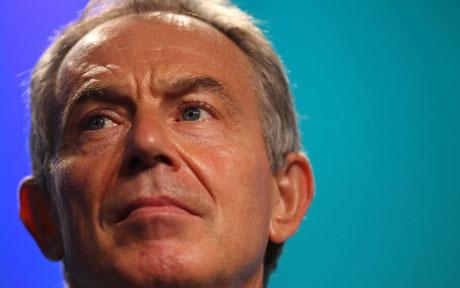
The West is Being ‘Outmanoeuvred’ by Violent Islamist Extremists: Tony Blair

By John Swaine for The Telegraph

In a speech in New York, the former prime minister said that warnings over the past week of new terrorist plots against Europe should remind people that they remain under threat.

Mr Blair said a “narrative” that Muslims were under attack from the US and its allies, who act out of support for Israel, had been allowed to take hold, aided by “websites and blogs”.

A fresh confrontation is needed because it will be impossible to defeat extremism “without defeating the narrative that nurtures it”, he said.

“The practitioners of extremism are small in number. The adherents of the narrative stretch far broader into parts of mainstream thinking,” Mr Blair told the Washington Institute for Near East Policy.

“It is a narrative that now has vast numbers of assembled websites, blogs and organizations.” Mr Blair said it was “absurd” that some people were surprised at how powerful Islamist extremist groups were, given the amount of funding they received and indoctrination they spread.

“Measure, over the years, the paucity of our counter-attack in the name of peaceful coexistence,” he said. “We have been outspent, outmaneuvered and out-strategized.”

Mr Blair said a tendency to “sympathize” with extremism was not only dangerous but also disempowering for moderate Muslims, because it made people resent them as much as extremists.

He said he was “intrigued” by the fact that western leaders, including Barack Obama, the US President, felt the need to condemn Terry Jones, a pastor who threatened to burn a Koran.

“Suppose an Imam, with thirty followers, in Karachi was to burn a bible,” he said. “I can barely imagine a murmur of protest. It wouldn’t be necessary for the President of Pakistan to condemn it because no one here would remotely consider he supported it.”

The former prime minister also called on the west to make it “crystal clear” to Iran that their acquisition of a nuclear bomb would be unacceptable to the entire “civilized world”.

“Go and read the speech of Iran’s President to the United Nations just days ago here in New York, and tell me that is someone you want with a nuclear bomb,” he told those who disagree.

He stressed that the achievement of a peace settlement between Israel and Palestine would remove “much of the poison which the extremists use”.

And he defended his decision to invade Iraq and Afghanistan, saying: “whatever you think of the original action, we enabled the people to choose their Government”.

Mr. Blair last night appeared on the Late Show with David Letterman on American television. He said that satirists like Letterman had been wrong to paint George W. Bush as unintelligent. “You don’t get to this position by being a fool,” he said.

For Better or Worse, White House Bets on Pakistan’s Civilian Government

Reported by Josh Rogin for Foreign Policy magazine

The Obama administration has always been clear that the path to winning the war in Afghanistan goes through Pakistan. But if Bob Woodward’s new book is accurate, the White House considers its war effort much more dependent on the success and survival of Pakistan’s civilian government than was previously known.

Woodward’s “Obama’s Wars,” which hit bookstores Monday, sheds new light on the Obama administration’s vast outreach to the Pakistani civilian government led by President Asif Ali Zardari. It paints a picture of an administration working hard to court the Pakistanis while remaining somewhat confused about Pakistani thinking on a range of issues.

Obama himself was confused about the nature of Pakistani intentions during two crucial decision points in his administration’s Afghan policy — the March 2009 strategy rollout and the deliberations in November 2009, which resulted in a troop surge and a huge expansion of covert operations in Pakistan. However, based on advice from the majority of his key advisers, he nonetheless tried to entice Pakistan to commit to a deep and long-term partnership with the United States by offering the Zardari government incentive after incentive, with relatively few pressures.

According to Woodward’s account, the centrality of Pakistan was championed early on by Bruce Riedel, the Brookings scholar who was brought on as a key figure in the Obama administration’s March 2009 Afghanistan strategy review.

Riedel, who referred to Islamist extremists in Pakistan as the “real, central threat” to U.S. national security, personally convinced Obama, only two months after he took office, that Pakistan needed to be the centerpiece of his new strategy. Riedel’s plan involved arming the Pakistani military for counterinsurgency and increasing economic and other forms of aid to the civilian government. This marked the beginning of the term “Af-Pak,” which drove the administration’s belief that stability in Afghanistan and Pakistan were inextricably linked.

Riedel’s Pakistan focus was not due to his confidence that the civilian government could control the military and intelligence services. In fact, he referred to Army Chief of Staff Gen. Ashfaq Parvez Kayani as a “liar” with regards to the activities of the secretive Inter Services Intelligence agency (ISI), which is widely suspected of aiding the Taliban insurgency. Then Director of National Intelligence Dennis Blair reportedly echoed Riedel’s views on this matter.

Inside the administration, Blair argued that Obama was approaching Pakistan with too many carrots and not enough sticks. He at one point advocated bombing inside Pakistan and conducting raids there without the Pakistani government’s approval. “I think Pakistan would be completely, completely pissed off and they would probably take actions against us … but they would probably adjust,” he once told Obama.

Obama, however, opted to pursue a less confrontational path. He concluded the central task would be convincing the Pakistani leadership to throw its lot in with the United States He said at the time of the initial strategy review in March 2009, “that we had to have a serious heart-to-heart with Pakistani civilian, military and intelligence leaders.”

Later that year, when making the decision to send an additional 30,000 “surge” troops to Afghanistan, Obama knew that his plans to also expand the U.S. military presence in Pakistan and widen drone strikes would be a hard sell to the Zardari government. In an attempt to sweeten the deal, Obama framed the policy as a new “strategic partnership” with Pakistan, even tying the success of the U.S. mission in Afghanistan to the survival of Zardari and the legacy of his deceased wife Benazir Bhutto.

“I know that I am speaking to you on a personal level when I say that my commitment to ending the ability of these groups to strike at our families is as much about my family’s security as it is about yours,” Obama wrote in a letter to Zardari delivered by National Security Advisor Jim Jones and counterterrorism advisor John Brennan.

Zardari’s response to that letter reinforced what many in the administration already suspected: Pakistan’s government was in the grips of an internal struggle over whether to embrace the United States. Zardari’s initial response focused heavily on India, though the Pakistani president only referred obliquely to his country’s strategic rival. Woodward reports that the White House believed the letter was written by the Pakistani military and the ISI. However, the Zardari government did end up accepting Obama’s offer.

Obama’s top advisors told the U.S. president that he would have to accept something short of complete success in convincing Pakistan to turn away from its longstanding obsession with the military threat it perceives from India.

When Obama had a meeting with Zardari in May 2009, he told the Pakistani president the he did not want U.S. taxpayers to be funding Pakistan’s military buildup against India “We are trying to change our world view,” Zardari told Obama, “but it’s not going to happen overnight.”

At times, Obama was downright puzzled by his advisors’ advice regarding Pakistan. For example, intelligence reports confirmed that Pakistani officials were afraid that the United States would leave Afghanistan too early, as they believed had occurred after the end of the resistance to the Soviet regime in the 1980s. On the other hand, Pakistan worried that if the United States was too involved in Afghanistan, it might aid in the establishment of a larger Afghan army than Islamabad was comfortable with.

“What am I to believe?” Obama asked his senior staff. Secretary of State Hillary Clinton, Special Representative Richard Holbrooke, and Defense Secretary Robert Gates all told him these were the types of contradictions that were commonplace when dealing with Pakistan.

For its part, the Pakistani government was just as confused and puzzled by the Obama administration. Woodward recounts one anecdote, in which Zardari tells the former U.S. Ambassador to Afghanistan Zalmay Khalilzad that he believed the United States was involved in orchestrating attacks by the Pakistani Taliban against the Pakistani civilian government.

Pakistan’s Ambassador to Washington Husain Haqqani, a key go-between, tried several times to explain to the Obama administration how to court Pakistani leaders, comparing the dynamic to “a man who is trying to woo a woman.”

“We all know what he wants from her. Right?” Haqqani said in a meeting with Jones, Deputy National Security Advisor Tom Donilon and the NSC’s Gen. Doug Lute.

“But she has other ideas. She wants to be taken to the theater. She wants that nice new bottle of perfume,” Haqqani told them. “If you get down on one knee and give the ring, that’s the big prize. And boy, you know, it works.”

Haqqani said the “ring” was official U.S. recognition of Pakistan’s nuclear program as legitimate. He also warned that the Pakistanis would always ask for the moon as a starting point in negotiations. He compared it to the salesmanship of rug merchants.

“The guy starts at 10,000 and you settle for 1,200,” Haqqani told the Obama team. “So be reasonable, but never let the guy walk out of the shop without a sale.”

Although the Obama administration has had some success improving the relationship between the two governments, Pakistan’s civilian leadership still faces a series of difficulties in its goal of exerting control over its entire national security structure. Stability has also been threatened by the enormous pressures resulting from the war that it is waging inside its own borders, and political attacks leveled against it from the media and the courts. Zardari’s perceived sluggish response to the devastating flood crisis has cost him even more credibility among the Pakistani public.

But while the end of Zardari regime has often been predicted, it appears that he will remain in place for the foreseeable future. The Obama administration, meanwhile, is aware of how crucial his cooperation remains for the success of the mission in Afghanistan.

When Woodward sat down for his interview with Obama earlier this year, he asked the president if the situation was still that Pakistan is the centerpiece of the U.S. strategy. “It continues to this day,” Obama replied.

Arabs Must Recognize Israel’s Right to Exist

By Manzer Munir for Pakistanis for Peace

New York – President Obama delivered his speech to the United Nations General Assembly Thursday in New York and it focused largely on his desire to see the Middle East peace process proceed ahead despite all the difficulties. 

Mr. Obama stated that he wanted it to succeed in accomplishing the peace that has eluded the Arabs and the Israelis for over 60 years. Realizing that there are many obstacles and hurdles ahead during tough negotiations for diplomats from both sides, he stated his concerns and his hopes for the road ahead.

“I hear those voices of skepticism, but I ask you to consider the alternative,” Obama said. If no peace agreement is reached, he added, “then the hard realities of demography will take hold. More blood will be shed. This Holy Land will remain a symbol of our differences, instead of our common humanity.”

“I refuse to accept that future,” he added. “And we all have a choice to make. Each of us must choose the path of peace. …We can say that this time will be different – that this time we will not let terror, or turbulence, or posturing, or petty politics stand in the way.”

“If we do, when we come back here next year, we can have an agreement that will lead to a new member of the United Nations – an independent, sovereign state of Palestine, living in peace with Israel,” Obama said to a loud applause by the delegates of all the countries at the United Nations.

In order for this to happen, the Arabs must first recognize Israel’s right to exist and the right of the Jewish people to claim specifically a part of the Holy Land as theirs. I know, it sounds so basic and a no- brainer. But surprisingly a large portion of the Arab world does not believe in Israel’s right to exist and specifically their right to exist in the southern Levant area which makes up the majority of the area for present day Israel. They want to ignore history and all the Biblical and historical evidence of Jewish settlement and claims to the land. They point to the migration of many Jews all over the world the last few hundred years as reason enough as to why they no longer can call Israel home.

Some Arabs demand that the Jewish homeland should be in Germany. After all, they claim, it is where so many of them were killed by Hitler and the main reason that precipitated the need to allow the Zionists of Europe and America, post World War II, to demand a home for the Jews. Why should the Palestinians pay for the crimes of the Europeans they argue?

Others have blamed the British and the Balfour Declaration when in 1917 the British Foreign Secretary, Arthur James Balfour, declared in a letter to Baron Rothschild, a leader of the British Jewish community for a need for a home for the Jews when he stated: “His Majesty’s government view with favor the establishment in Palestine of a national home for the Jewish people, and will use their best endeavors to facilitate the achievement of this object, it being clearly understood that nothing shall be done which may prejudice the civil and religious rights of existing non-Jewish communities in Palestine, or the rights and political status enjoyed by Jews in any other country.”

Quite simply, no other place makes any sense whatsoever. First of all, there is extensive mentioning of the land of Israel that is promised to the Jews in the Bible as well as the Hebrew texts, not to mention the Qur’an. All three identify geographic areas in present day Israel that has historically been identified as the homeland of the Jews. Jewish people do not even make up more than 1% of any country’s overall population other than in United States (2.2% of overall population), Canada (1.2% of population), France (1% of population) and Israel (75% of population). That means that for the rest of the world, each country’s Jewish population is not even one half of one percent of the overall population of that nation! Where else would the Arabs have them go? Certainly not Germany where many claim that they should be settled since that is where over 6 million of them were killed in the holocaust. The United States actually has more Jews in its boundaries than are currently residing in all of Israel. So they cannot very well say that they should go there as over half the population already lives here.

Most people do not realize that the Jewish population of the world is very small compared to Christianity or Islam. There are an estimated 15 million Jews around the world including in Israel. By comparison, there are over 2.1 billion Christians and nearly 1.5 billion Muslims. Nearly 105 countries of the world are majority Christian nations while there are perhaps at best 55 majority Muslim countries on the planet. Did you ever wonder how many majority Jewish countries of the world are there?  There is just one. Israel.

This is one of the great religions of the world and also one of the oldest monotheistic beliefs aside from Zoroastrianism, and came at a time when polytheistic beliefs were more prevalent as a human concept of divinity. No doubt, both Christianity and Islam owe a great deal of their religious thoughts and laws to the early Hebrew laws and traditions. In fact, large parts of both the Bible and the Qur’an constitute the Old Testament, also known as the Torah, the Jewish holy book and the scriptures revealed to Moses.

Jewish contributions to humanity have been disproportionate and staggering when one realizes that as less than one half of one percent of the world’s populations, the Jews have made immense advances in nearly every field that has benefitted the whole world. We can go from Albert Einstein’s advances in physics to Jonas Salk’s polio vaccine, discuss Galileo’s contributions in astronomy to Freud’s understanding of the mind. We could illustrate how Baruch Spinoza’s rationalist ideas and philosophies laid the groundwork for The Enlightenment of the 18 century or marvel at the brilliant filmmaking of 21st century Jews like Steven Spielberg and Oliver Stone. The list of Jewish contributions and the value of their culture to man’s history cannot be ignored.

What also cannot be ignored is that historically these are a persecuted people. The troubles that they faced in ancient Egypt as illustrated in the Bible as well as the deaths and expulsions during the Spanish Inquisition are part of their sad history. They faced persecution at the hands of both Christians and Muslims during the Crusades and at the time of the Papal States as well as during Muslim rule when they were subjected to the jizya (a per capita tax imposed on free adult non-Muslim males). The worst crimes nonetheless happened in the 20th century leading up to World War II when millions were killed in the Holocaust in Germany by Hitler’s Nazism and by Stalinist Russia.

So as the Israelis and Palestinians, as well as the other Arab countries, sit down over the next couple of weeks to resolve once and for all the Middle East conflict, the Arab street and indeed the entire Muslim world, must come to a realization and acceptance of the fact that the state of Israel has a right to exist; and has a right to exist in this ancient land as much as the Palestinians, who also have the rights to parts of this holy soil that is so important to all three religions. No doubt, historically and Biblically, the Palestinians can make similar claims also. Except, in Israel’s case, there is no other nation for the Jews, whereas, there are 55 others for Muslims. It is only with this undeniable understanding that true and lasting peace will ever be achieved and it can clear the way for a two state solution that President Obama envisions and one that will allow the normalization of relations between Israel, the Arab and the entire Muslim world. 

As perhaps the most famous Jew of all time, Jesus, once said, “Greet ye one another with a kiss of charity and may peace be with you.” Indeed, Shalom and Salaam equal peace and that can finally be achieved once there is mutual respect and acceptance of the right of the other to exist.

–Manzer Munir, a proud Pakistani American and peace activist, looks forward to a day when there will be peace between Israel and all the Muslim countries of the world, including Pakistan. He is the founder of Pakistanis for Peace and blogs at www.PakistanisforPeace.com as well at other websites as a free lance journalist and writer.

Obama Calls For Religious Tolerance

By Christi Parsons, Tribune Washington Bureau

In a news conference on the eve of Sept. 11, he speaks of his own Christianity, the economy, and asks Americans to remember they’re not at war with Islam, but with terrorists that distort the faith.

President Obama spoke of his own Christianity on Friday while calling on Americans to turn away from religious divisions and join together as “one nation, under God.” It was a rare personal reference from the president, coming in a news conference that sounded more like a homily to the nation before a somber anniversary.

“As somebody who relies heavily on my Christian faith in my job, I understand the passions that religious faith can raise,” Obama said. “But I’m also respectful that people of different faiths can practice their religion, even if they don’t subscribe to the exact same notions that I do, and that they are still good people, and they are my neighbors and they are my friends, and they are fighting alongside us in our battles.”

In his first news conference in several months, Obama talked up his plans for stimulating economic growth and complained about Republican obstruction to his proposals. He said people should remember that there is still a terrorist threat to Americans nine years after Sept. 11, even though U.S. troops overseas are successfully compromising the ability of extremists to carry out new plots.

Capturing or killing Osama bin Laden and Ayman Zawahiri, Al Qaeda’s No. 2 leader, is a high priority, he said, though it “doesn’t solve all our problems.”

But as a Florida preacher held out the possibility of a Koran-burning demonstration on Saturday, tying it to plans for the development of a mosque near the site of the World Trade Center attacks, even Obama’s messages about the economy and overseas conflict were interwoven with a larger message about religious tolerance.

If there is an increase in suspicion and resentment of Islam in this country, Obama said, it arises during trying times when the country is feeling a sense of general anxiety. He said he worries that the threat of a Koran burning could endanger American troops and cause others around the country to think it’s a good way to get attention.

The proposed New York City mosque has run up against the “extraordinary sensitivities around 9/11,” he said. “But I go back to what I said earlier: We are not at war against Islam,” Obama said. “We are at war against terrorist organizations that have distorted Islam or falsely used the banner of Islam to engage in their destructive acts.”

Americans, he said, must cling to the shared belief in religious tolerance. “We’ve got millions of Muslim Americans, our fellow citizens, in this country,” he said. “They’re going to school with our kids. They’re our neighbors. They’re our friends. They’re our co-workers. And when we start acting as if their religion is somehow offensive, what are we saying to them?”

Obama devoted a substantial portion of his Friday remarks to the economy, beginning with the announcement that he is naming Chicago economist Austan Goolsbee to head his Council of Economic Advisors. Goolsbee is an economist with expertise in tax policy.

The president refused to characterize his proposal to spend money on infrastructure as a “second stimulus” plan, despite one reporter’s prodding and even though he said he has “no problem with people saying the president is trying to stimulate growth and hiring.”

“I would assume that’s what the Republicans think we should do, to stimulate growth and jobs,” Obama said. Senate Republican leader Mitch McConnell of Kentucky fired off a speedy critique, saying Americans are more interested in lower taxes and reductions in federal spending.

“The president spent a lot of time blaming others and talking about more government spending,” McConnell said. “But Americans want to know that Washington is going to stop the reckless spending and debt, the burdensome red-tape and job-killing taxes.”

But McConnell and others hastened to echo the president’s words about who, exactly, the U.S. is targeting with its war effort. “I agree wholeheartedly with the president that we need to do everything we can to fight Al Qaeda, while being clear who the enemy is,” McConnell said. “This war on terror goes on,” McConnell said. “We are confident in the strength and goodness of our cause and our country.”

Give White House Credit for Mideast Peace Efforts

By Peter A Joseph for The Huffington Post

Skeptics have had a field day criticizing the direct negotiations between Israelis and Palestinians to be launched this week in Washington. To be sure, the obstacles to concluding an agreement are significant, the stakes are high and expectations are low.

But it is time to give the Obama Administration some credit. The White House is launching direct talks on Thursday with tools that previous administrations did not have or were unwilling to employ in past negotiation efforts. Despite the rampant skepticism, there are indeed reasons to be hopeful without being naïve.

The Obama Administration has come a long way to get to this point. The year-long tussle with Israel over West Bank settlement construction, a botched photo-op between the Israeli and Palestinian leadership in New York one year ago, and painstaking attempts to bring the parties to direct talks in recent months have eroded the optimism and expectations that came with the election of President Obama.

However, there are a number of essential ingredients that the Administration has got right as it launches direct talks. Martin Indyk mentioned four of them last week in the New York Times: 1) there is very little violence between the parties today; 2) settlement activity has been limited; 3) the majority on both sides support a two-state solution; and 4) the contours of an agreement are largely already known. Here are four more:

First, violence is down because security cooperation between Israel and the Palestinians is at an all-time high. Palestinian security forces trained with the direct support and supervision of the United States, Israel and Jordan have significantly secured the West Bank and created an atmosphere conducive to economic growth. The success of the burgeoning Palestinian security force is providing Israelis with much needed confidence. Security is – and always has been – Israel’s number one concern. With such cooperation already in place, these talks will have a distinct advantage over all other previous efforts.

Second, the Arab states have endorsed President Mahmoud Abbas’ negotiating with Israel and pledged to be part of the effort. The inclusion of Egypt and Jordan in the launch next week is vital. As co-chairs of the Arab League’s Arab Peace Initiative follow-up committee, Egypt and Jordan bring with them the promise of normal relations for Israel with 22 Arab states following a successfully negotiated agreement on the final status issues.

Regardless of whether Yasser Arafat truly intended to achieve peace with Israel, he never enjoyed the mobilized support of the Arab states, let alone the United States and Israel. Mahmoud Abbas does. The Arab states are providing Abbas with the kind of backing and legitimacy to negotiate with Israel on all of the sensitive final status issues that he will need in order to conclude a historic agreement. This is particularly significant given the political split of the Palestinians between the West Bank and Gaza.

Third, the Palestinians are invested in building the foundation for a Palestinian state. The Palestinians have been plagued in previous negotiation efforts by poor governance and widespread corruption. While concerning issues remain, the progress of Prime Minister Salaam Fayyad to establish the infrastructure for a future state – like the aforementioned security advancements – distinguishes these negotiations from previous ones. The success of the state-building effort to this point and the growth of the West Bank economy lends credibility to the moderate leadership of Abbas and Fayyad and their ability to govern a viable, contiguous state, should the political process enable one to be established. Their efforts should also give Israelis added confidence that they would be establishing a conflict-ending agreement with a responsible neighbor.

Fourth, the Netanyahu government has been calling for negotiations for months, repeatedly stating that an agreement could be reached quickly if negotiated in good faith. The Administration now has a chance to test them on their word.

The make-up of the Israeli government presents both a challenge and an advantage to the renewed talks. The fact that this is a largely right-wing government intended to provide Israel with essential guarantees on security could bolster confidence among the Israeli public for an agreement, should one be achieved. This would remain true even if the government were at some point to replace Avigdor Lieberman’s Yisrael Beiteinu party with Tzipi Livni’s Kadima party. Just as the Likud Prime Minister Menachem Begin secured a peace agreement with Egypt, so too might the current Likud Prime Minister secure the elusive peace agreement with the Palestinians.

Finally, the White House has pledged to be actively engaged and bridge the gaps when necessary. The failed Annapolis process proved that Israelis and Palestinians need the United States to be at the negotiating table in order to help the parties bridge the gaps.

Active engagement by the United States does not just require bridging proposals, but also reminding the parties of the interests at stake. To Israelis, concluding an agreement with the Palestinians would certainly help amplify efforts to mobilize the international community to counter the threat from Iran. To Palestinians, a viable and secure state can only come about through negotiations.

However, even with these various important ingredients in place, there remains a missing one that is vital to the success of direct talks: trust. Without trust between the parties – or in the United States’ leadership – the current effort will undoubtedly fail. Building this trust, beginning with navigating the parties past the September 26th deadline of Israel’s settlement moratorium, is clearly the United States’ most pressing challenge in the weeks ahead. But the foundation to succeed in doing so is beginning to be put into place. The Administration deserves some credit for laying it.

– Peter A Joseph is the president of the Israel Policy Forum

The Next Ronald Reagan?

By James T Hackett for The Washington Times

Ronald Reagan was an American original and a unique political phenomenon. He combined unusual charm and personality and showed common sense that connected with the average American. He was attacked viciously by the political elites, who saw his popular appeal – and his opposition to big government and high taxes – as a threat to their domination of the nation’s politics.

Conservatives have been searching for a new Ronald Reagan, so far without success. But perhaps the Gipper’s heir is in sight. Sarah Palin is remarkably similar to the late president. The Mama Grizzly from Alaska is certainly an American original, and her success in picking political winners against the odds has shown that she is no less a political phenomenon. And the policies she supports are similar – small government and low taxes, plus energy self-sufficiency and a balanced budget.

Just as Reagan was denigrated as an ex-movie actor with limited education, Mrs. Palin is portrayed as an ex-model with limited education, which means she did not go to Harvard or Yale, like most recent presidents and much of the liberal elite. The fact that elites from those institutions have nearly destroyed the economy and bankrupted the country does not reduce their arrogance or diminish their efforts to hold onto power.

Mrs. Palin was roundly criticized when she left the office of governor of Alaska, but since then, she has been riding a populist wave accompanied by Tea Party activists who want a return to common sense and responsible spending. President Obama promised change, which many sought after the budget excesses of the George W. Bush years and the pork-obsessed Republican Congress. But candidate Obama was unclear, telling each audience what it wanted to hear.

Now we know what he meant by change – a much bigger federal government, excessive government spending, harsh new energy and environmental regulations on business, spending in support of labor unions and the bailout of profligate state governments. Under Mr. Obama, the environmentalists are running amok, spending billions on windmills, electric cars and other green-energy schemes while blocking oil drilling in Alaska and the Gulf of Mexico.

The administration does not care that giving money to the states only perpetuates their overspending while doing little to help unemployment. At the same time, their anti-oil bias and excessive regulation are reducing jobs in the all-important private sector. The Keynesian economists in control will not accept that their policies are aggravating the problem.

Most Tea Party activists are grass-roots Americans who see what Washington elites cannot, which is why they keep winning. Sarah Palin has become a political power by encouraging Republican women to run for office and by her amazing ability to pick winners – and often help them win – even against heavy opposition spending. With Mrs. Palin’s support, Republican women are becoming politically successful in growing numbers.

Mrs. Palin has endorsed more than 20 winners in Republican primaries this year, many underdogs who were given little chance against the party’s chosen candidates. Among her notable successes have been the nominations of Nikki Haley, an Indian-American woman, for governor of South Carolina; Carly Fiorina, a former corporate executive running against Sen. Barbara Boxer in California; Rand Paul, a maverick candidate for U.S. Senate in Kentucky; and Susana Martinez, running for governor of New Mexico. Now she is supporting another maverick, Sharron Angle, in her high-profile race against Harry Reid, the Democrats’ Senate leader.

But Mrs. Palin’s biggest success has to be the amazing turnaround in last week’s Alaska election for the Republican Senate nomination. It is very hard to oust an entrenched incumbent such as Sen. Lisa Murkowski, daughter of a former senator and governor, with eight years in office. Her opponent, a virtually unknown lawyer, Joe Miller, was considered a hopeless candidate, with polls showing him far behind and practically no one picking him to win, except Sarah Palin.

Yet, with Mrs. Palin’s endorsement, he came from behind to win the Election Day count by 1,668 votes. The final result waits for the counting of absentee and contested ballots, but the turnaround has nonetheless been spectacular. Mrs. Palin has shown she is a force to reckon with, which is why the left is attacking her so relentlessly.

The question is whether she can apply her keen political instincts and the grass-roots support she generates to become the next Ronald Reagan. The liberal powers clearly fear that she can.


-James T. Hackett is a former Reagan administration official and Heritage Foundation writer.

The American Debate: Where Has All The Love Gone?

By Dick Polman for The Philadelphia Inquirer

As we navigate the waning days of our xenophobic August, with so many opportunists in high dudgeon about Muslims in our midst, perhaps it’d be wise to quote a notably tolerant Republican – somebody whose words might possibly shame the fearmongers who currently pervade his own party.

For instance: “America counts millions of Muslims amongst our citizens, and Muslims make an incredibly valuable contribution to our country. Muslims are doctors, lawyers, law professors, members of the military, entrepreneurs, shopkeepers, moms, and dads. And they need to be treated with respect. In our anger and emotion, our fellow Americans must treat each other with respect. . . . They love America just as much as I do.”

On Sept. 17, 2001, so said President George W. Bush.

Hey, I’m starting to miss the guy. Notwithstanding all the disastrous aspects of his presidency, his generous, inclusive attitude toward immigrants of color – particularly Muslim Americans in the wake of 9/11 – was always in the finest American tradition. We could use a sustained dose of his tone today.

Unfortunately, the conservative movement that he twice led to victory now seems to have shelved that pluralistic tradition, preferring instead to sow fear to reap short-term political gain. And not a single prominent Republican politician has had the courage – heck, it’s not even courage, it’s a duty – to step forward and denounce the roiling irrationality that currently infects our political discourse.

So we’re stuck with the faux issue of a “ground zero mosque” that’s actually not just a mosque (it’s a proposed community center with an interfaith board of directors) and not at ground zero; with Newt Gingrich equating all Muslims with Nazis; with myriad attacks on mosques in Florida (pipe bombs, bullets); with Sarah Palin Twittering her simplicities; with an evangelical pastor who plans to mark the 9/11 anniversary by burning copies of the Quoran (when asked what he knew about the Quoran, he replied, “I have no experience with it whatsoever”); with a tea party blogger who writes that all Muslims are “animals” who worship a “monkey god,” and whatever else the haters are doing in our name.

Since no elected Republican dares to utter a peep, let us try to quell the hatred, however briefly, by skimming the cream of the Bush ouevre. What you’re about to read was mainstream Republican thinking just a few scant years ago.

From the president’s second inaugural address, on Jan. 20, 2005:

“In America’s ideal of freedom, the public interest depends on private character – on integrity and tolerance toward others . . . . That edifice of character is built in families, supported by communities with standards, and sustained in our national life by the truths of Sinai, the Sermon on the Mount, the words of the Quoran . . . .”

From remarks on June 27, 2007, at the rededication of the Islamic Center in Washington:

“We come to express our appreciation for a faith that has enriched civilization for centuries. We come in celebration of America’s diversity of faith and our unity as free people. And we hold in our hearts the ancient wisdom of the great Muslim poet Rumi: ‘The lamps are different, but the light is the same.’ ”

From remarks on Sept. 17, 2001:

“Both Americans and Muslim friends and citizens, tax-paying citizens . . . were just appalled and could not believe what we saw on our TV screens. These acts of violence against innocents violate the fundamental tenets of the Islamic faith. And it’s important for my fellow Americans to understand that. The English translation is not as eloquent as the original Arabic, but let me quote from the Quoran itself: ‘In the long run, evil in the extreme will be the end of those who do evil. For that they rejected the signs of Allah and held them up to ridicule.’ The face of terror is not the true faith of Islam. That’s not what Islam is all about. Islam is peace.”

Compared with what we’re hearing on the Republican right these days, Bush sounds like a “Kumbaya” folkie in the tradition of Peter, Paul, and Mary. But even at the time, he was no starry-eyed naif. Aside from the fact that his calls for tolerance were in the best American tradition, there was also a dash of calculation. He and his advisers knew that al-Qaeda wanted to frame the war on terror as a clash of civilizations. Therefore, it ill-served America to behave as though it were at war with Islam. It was smarter to embrace the followers of Islam, as a way of isolating the violent extremists who had perverted its tenets. Basically, this was a national-security priority. It still is.

Bush’s former chief speechwriter, Michael Gerson, understands that. He’s one of the only Bush alumni who has spoken out; in a recent newspaper column, he reiterated the Bush credo: “A president not only serves Muslim citizens, not only commands Muslims in the American military, but also leads a coalition that includes Iraqi and Afghan Muslims who risk death every day fighting Islamic radicalism at our side.”

In other words, Americans who attack their fellow Muslim citizens – and politicians who inflame such attacks or remain mute – are weakening America. As Gerson put it, treating Muslims as bogeymen, and assailing their Lower Manhattan project, will “undermine the war on terrorism. A war on Islam would make a war on terrorism impossible.”

Of course, it’s easy to understand why the post-Bush GOP has done nothing to quell the Muslim-bashing. Its priorities are decidedly short-term. Forget the war on terror; this party is primarily focused on the war for control of Congress. Its conservative base is angry, fearful, and ginned up for November. Muslim American voters are far less numerous, and the liberals and moderates who lament the current hysteria aren’t likely to vote Republican anyway – or even to vote at all this year.

So it’s probably futile to wave the flag and quote George W. Bush again, but let’s give it one last try. Six days after 9/11, he warned his fellow citizens that Muslims “must be not intimidated in America. That’s not the America I know. That’s not the America I value.”

Is that really so hard to agree with?