Archive for the ‘ President Obama ’ Category

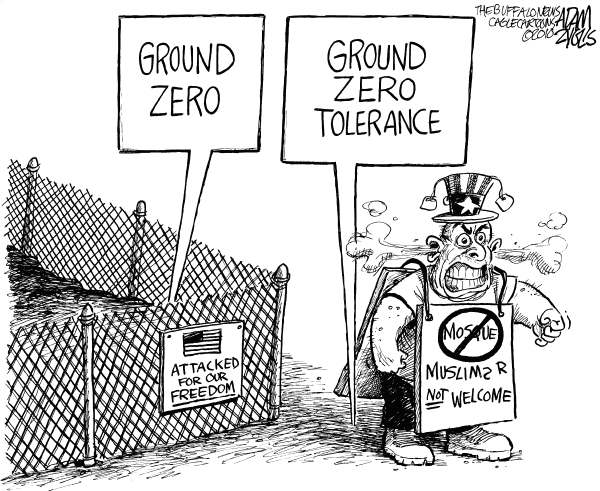
Ground Zero Mosque Controversy Helps Give Rise to Islamophobia Across the US

By Manzer Munir for Pakistanis for Peace

A man was accused of attempted murder for his vicious knife attack on a Muslim New York City Cab driver Tuesday evening in what is being described as a hate crime by the authorities.

Michael Enright, a college student who also did some volunteer work in Afghanistan, was being held without bail on charges of assault and attempted murder as hate crimes.

In a criminal complaint filed by the New York Police Department, Michael Enright allegedly asked the driver if he was a Muslim. The cab driver, Ahmed H Sharif, an immigrant from Bangladesh, replied that yes he was indeed a Muslim. At this point, Mr. Enright is alleged to have uttered the customary Arabic greeting of “Aslaam-a-laikum” (Peace be with you) and brutally attacked the cab driver with a knife, slashing him badly on the face, hands and neck. During the attack, Mr Enright also uttered “Consider this a checkpoint” to the cab driver, all the while brutally attacking him with his knife.

 Besides a serious neck wound, the cab driver, Mr Sharif, suffered cuts on his forearms, face, and hands while trying to defend himself from the attacker.

Inexplicably, Einright had volunteered with Intersections International, a group that promotes interfaith dialogue between religions and an organization that has also supported the plans for the Islamic center and mosque 2 blocks from Ground Zero. He had also recently returned from Afghanistan where he volunteered to be embedded with a combat battalion so that he could document their experiences as soldiers that Einright wanted to showcase in an upcoming documentary.

Police stated that Einright was drunk and intoxicated at the time of the attack on Mr Sharif and it is not clear what his motive was for perpetrating the violence on the cab driver. There is growing speculation however amongst members of the American Muslim community as well as several civil rights organizations such as the ACLU and CAIR that the attack is a result of the growing Islamophobia and fear amongst the American public as a direct result of the Ground Zero Mosque controversy that has been brewing for weeks and has been front and center in the media and the American public for some time now.

The plan to build an Islamic community center and mosque two blocks from the 9/11 tragedy and the site of the World Trade Center towers became controversial as right wing groups seized on what they believed to be “an insensitive provocation towards the American public”. Muslim groups demanded their First Amendment rights of freedom of religion and pointed to the New York City council vote allowing them the permit to build as reasons for what they are doing as legal and in fact an effort to build bridges between Islam and other faiths following the events of September 11. However, the issue became nationally prominent and controversial by then as fanned by right wing blogs and ad campaigns, the majority of the American public became against the building of the mosque, according to recent polls.

Thankfully, the voice of reason in this whole debate has been none other than the billionaire Jewish mayor of New York, Mayor Michael Bloomberg. His stance and views in support of the mosque as a constitutionally protected right has been welcomed by Muslims as well as civil rights organizations and he should be commended for standing up for what is constitutionally the right thing to do. Briefly, President Obama also came out in support of the group’s right to build the mosque as being a constitutional right, before making statements the next day that “questioned the wisdom” of building it there.

Nonetheless, a link has been made by the right wing, no matter how unfairly, that Islam promotes terror and violence. This can be seen in the fact that the vast majority of Americans now have a negative and unfavorable view of Muslims. For the country to be even having a debate whether a group of Americans can build a house of worship is a testament to how far things have regressed.

No one would ever have thought that a constitutionally protected right such as that of freedom of religion would ever seem controversial. Many have argued that only the area around Ground Zero is off limits to Muslims and they are free to build their mosques elsewhere. This does not appear to be the case as mosques thousands of miles away from Ground Zero in California, Tennessee, Ohio and elsewhere across the country have now come under heavy opposition by local zoning boards and people in those communities. The fear and hatred of Muslims is becoming a growing problem as the Ground Zero Mosque controversy has began to fuel acts of violence against Muslims as seen in the attack on the NYC cab driver. It is a message that is being sent to the American public that Muslims in the United States do not deserve the same rights and privileges enjoyed by all others. In fact, there is an attempt to link all mosques to terror somehow, which is very offensive to millions of peaceful Muslims who abhor violence and who live decent hard working lives in their communities.

At first I was not happy to learn that Muslims planned to build a mosque near Ground Zero as I knew that this would become controversial. But as the opposition to mosques has grown across the nation, and not just for building near Ground Zero, but hundreds and thousands of miles away, it has become clear that this anti-mosque movement is not just about that hallowed area near the World Trade Center site but is in fact becoming an opposition to the religion of Islam as a whole.

This idea by the opponents of the mosque and the right wingers that somehow it is perverted and insensitive to build a mosque several blocks from Ground Zero is in reality only true if we buy into the belief that Muslims and Islam brought down the towers and not a handful of radical extremists of the religion of Islam. If we believe that mainstream Islam itself was responsible for all those deaths on American soil and not Osama Bin Laden and his Al-Qaida network, only then would building the mosque there be insensitive. But for us to somehow associate the whole religion of Islam of over 1.5 billion people by the actions of 19 terrorists is ridiculous.

It is my fear that attacks similar to the one a few days ago on the NYC cab driver will continue to grow as we allow an environment of hate to perpetuate and grow against a group of people. At the very least, this opposition to mosques across the country will certainly grow and continue to spread the notion that ALL Muslims are violent and terrorists. This is simply not true as the 5-7 million American Muslims and the 1.5 billion Muslims around the world will attest.

We must remember that we have a war on terror and not a war on Islam. Far away from Ground Zero in cities across the US as more and more mosques come under opposition in their communities, we must hold steadfast to our ideals, principles and to the US Constitution. As the best nation in the world, we have to defend our ideal and the basis of what makes us the best and that is the US Constitution. Speaking as an American and not even as a Muslim, I know that if we stop defending it for fear of being distasteful, insensitive, or inconsiderate, then we lose what makes us who we are as the freest nation in the world and we must not ever let that happen!

-Manzer Munir, a peace activist, and the founder of Pakistanis for Peace, is a freelance journalist who writes for www.PakistanisforPeace.com and other online journals.
Analysis: US Struggles With Image in Pakistan

By Foster Klug  for The Associated Press

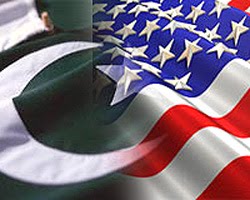
U.S. efforts to help Pakistani flood victims will give America’s image there a boost, but not much of one.

The U.S. reputation in a country the Obama administration sees as crucial to defeating the Taliban and al-Qaida already is so tarnished that even millions of dollars from Washington and the work of U.S. soldiers and diplomats probably will do little to change the thinking of most Pakistanis.

After all, U.S. flood aid is only a drop in a bucket already filled with billions of American dollars that have been shipped to Pakistan since the Sept. 11, 2001, terror attacks against the United States.

All that money, apparently, has done little to impress. A recent Pew Foundation poll found nearly six in 10 Pakistanis viewed the United States as an enemy; only one in 10 called it a partner.

Still, the Obama administration does not have the option of doing nothing.

The U.S. interest in helping goes beyond easing the suffering of the more than 17 million people affected by the floods. Washington also wants Pakistan’s weak civilian government to succeed so that it does not lose ground to the aid work of Muslim charity groups associated with militants.

Making sure the pro-U.S. government looks good, or at least competent, is important to the Obama administration as it encourages Pakistan in its fight against militants operating along the border with Afghanistan, where the United States is fighting a 9-year-old war.

Robert Hathaway, director of the Woodrow Wilson Center’s Asia program, warns against expecting U.S. aid to immediately turn around the deep distrust many Pakistanis feel toward America. “This relationship has a lot of baggage, and it will take an incredible amount of hard work over many years really to rebuild,” Hathaway said.

Many in Pakistan see the United States as interested more in killing insurgents than in helping the country’s poor. Past U.S. support for former Gen. Pervez Musharraf and other military rulers has fueled a perception that Washington cares little about Pakistan’s democracy. Then there is the idea in Pakistan that the United States is anti-Muslim, a view that could be strengthened by opposition to a mosque planned near the World Trade Center site that Islamic extremists destroyed in 2001.

Dan Feldman, the Obama administration’s deputy special representative for Afghanistan and Pakistan, recently bristled at the notion that U.S. relief work is an attempt at image improvement. “We’re doing it as a response to a humanitarian crisis,” he said.

Still, the United States has made sure to spread the word of its response to the floods aggressively, with senior U.S. officials, including Secretary of State Hillary Rodham Clinton, making regular statements.

Feldman said in a briefing this week that the United States is providing up to $150 million in aid. U.S. military helicopters have evacuated thousands of people and delivered hundreds of tons of relief supplies. Among those supplies are 700,000 mosquito nets to help families ward off malaria, giant water treatment machines to provide safe drinking water and tens of thousands of blankets and inflatable boats to help isolated villages.

For people saved from rising waters by U.S. helicopters or given lifesaving medicine or food, America’s image will rise. U.S. aid cannot reach every flood victim, however, and not everyone getting the aid will know it is from the United States.

Along with worrying about helping as many people as possible, the Obama administration also must keep an eye on insurgents who know the people and the terrain and can use the flood to build support among its victims.

Jason Campbell, a South Asia analyst at the Rand Corp. think tank, said Washington understands that any “gaps in U.S. assistance will likely be filled by charities that, if not directly tied to militant groups, are at least sympathetic with them.”

The U.S. aid could provide another boost to counterinsurgency efforts. The sooner the Pakistani military can scale down its relief work, the sooner it can return to fighting insurgents.

Teresita Schaffer, a former State Department South Asia specialist, said the United States must do everything it can to help. But, she said, “I don’t think there will be an attack of the warm fuzzies just because we’re providing some helicopters.”

Mosque Near Ground Zero Divides Sept. 11 Relatives

By Samantha Gross for The Associated Press

Talat Hamdani traveled to Mecca to pray that her missing son, an EMT, was safe in the days after 9/11. She held out hope that his Muslim background had led to his detention as a suspect, considering it better than the alternative.

When part of his body was returned to her — his lower half shattered into 34 pieces — it was final proof he had indeed been killed when Islamic extremists brought down the World Trade Center. As Americans take sides over plans to build an Islamic cultural center and mosque blocks away, Hamdani says it feels personal.

“Why are we paying the price? Why are we being ostracized? Our loved ones died,” she said at her Lake Grove, N.Y., home. “America was founded on the grounds of religious freedom,” and opposition to the cultural center “is un-American. It’s unethical. And it is wrong.”

The thousands of relatives of the 2,976 victims have no single representative and no unified voice, even as another 9/11 anniversary approaches. The conflict is dividing a group that in many ways has never been united, with some saying the cultural center would reopen old wounds too close to hallowed ground and others saying that opposing it is tantamount to bigotry.
And some, like Vandna Jain, walk a middle ground.

“It is unfair to persecute the group, however, in turn, there should be some respect for the feelings of the people that are forever attached to this site due to their losses,” the New City, N.Y., resident, whose father, Yudh, died in the north tower, wrote in an e-mail. “I think people have a right to be upset about it, just as much as people have a right to build a mosque.” Jim Riches, a former New York Fire Department deputy chief whose son, Jimmy, was killed at the trade center, believes the dispute has nothing to do with religious freedom.

“We’re not telling them not to practice their religion. … It’s about location, location, location,” he said, asking why the mosque couldn’t be built farther away from the land that he still considers a cemetery. “It’s disrespectful. You wouldn’t put a Japanese cultural center at Pearl Harbor.”

Liza Murphy feels differently. Her brother, Charlie, died at ground zero, but she says she doesn’t lay claim to the sprawling, 16-acre site. “It’s a place where a terrible tragedy took place, but I don’t see what makes it sacred,” said the Brooklyn resident. “Nine years later, that now belongs to the public. And my brother and his death are private and belong to me.” Murphy says she has no objection to the planned mosque and wouldn’t want to judge one group of Muslims based on the actions of another.

But Peter Gadiel says he owes no apologies for singling one group out. Since his son, James, was killed at the trade center, Gadiel has argued publicly that all Muslims should share some collective guilt for what happened on 9/11.

“The fact is that Islam does not coexist well with other religions, and you can’t separate that from Islam,” the Kent, Conn., resident said, explaining his stand against the mosque. “If that sounds intolerant on my part, that’s too bad.” The families’ impassioned responses to the prospect of the mosque have influenced the public debate.

Gov. David Paterson has suggested moving the project further away from the trade center site out of respect for opponents’ feelings, while Mayor Michael Bloomberg came out in support of the mosque, calling it a test of the separation of church and state.
President Barack Obama has said he believes Muslims have the right to build the Islamic center as a matter of religious freedom, though he’s also said he won’t take a position on whether they should actually build it.

The imam leading plans for the center on Friday called extremism a security threat in both the West and the Muslim world. Feisal Abdul Rauf made his comments to Associated Press Television News in Bahrain during a Mideast tour funded by the U.S. State Department, but he wouldn’t discuss the uproar over the Islamic center.

Relatives of those slain on Sept. 11 have made their diverging voices heard on a number of issues over the years — from whether to try the suspects in a civilian court to the location of a proposed freedom museum at ground zero that is no longer planned for the site.

Charles Wolf, who lost his wife, Katherine, at the trade center, says emotions among family members are especially raw right now.
“This is anniversary season. It’s really, really hard,” the Manhattanite said. “Passions are up and this is bringing up a lot of hurt in people.”

He says he worries that any decision to respond to public pressure and move the mosque would be used by extremists to paint Americans as intolerant.

“The powers of evil were piloting those airplanes,” he said of the Sept. 11 attackers. Now, with the mosque dispute, “here is where we’re falling into the terrorists’ trap … trying to tear each other apart. Good people fighting other good people — does that sound like evil at work?”

U.S. Strategy in Pakistan Is Upended by Floods

By Mark Landler for The New York Times

WASHINGTON — The floods in Pakistan have upended the Obama administration’s carefully honed strategy there, confronting the United States with a vast humanitarian crisis and militant groups determined to exploit the misery, in a country that was already one of its thorniest problems.

While the administration has kept its public emphasis on the relief effort, senior officials are busy assessing the longer-term strategic impact. One official said the disaster would affect virtually every aspect of the relationship between the United States and Pakistan, and could have ripple effects on the war in Afghanistan and the broader American battle against Al Qaeda.

With Pakistan’s economy suffering a grievous blow, the administration could be forced to redirect parts of its $7.5 billion economic aid package for Pakistan to urgent needs like rebuilding bridges, rather than more ambitious goals like upgrading the rickety electricity grid.

Beyond that, the United States will be dealing with a crippled Pakistani government and a military that, for now, has switched its focus from rooting out insurgents to plucking people from the floodwaters. The Pakistani authorities, a senior American official said, have been “stretched to the breaking point” by the crisis. Their ragged response has fueled fears that the Taliban will make gains by stepping in to provide emergency meals and shelter.

“It certainly has security implications,” said another official who, like others interviewed for this article, spoke on the condition of anonymity because he was not authorized to discuss internal policy deliberations. “An army that is consumed by flood relief is not conducting counterinsurgency operations.”

On Thursday, the United Nations will convene a special meeting devoted to the floods, hoping to galvanize what has been a lackluster global response. Secretary of State Hillary Rodham Clinton is expected to announce that American public aid has surpassed $100 million, an official said.

“We’re obviously not oblivious to the political and strategic implications of this catastrophe, but right now, we are fully focused on the emergency relief effort and trying to get a good assessment of the needs,” said the administration’s special representative to the region, Richard C. Holbrooke.

Noting that several weeks remain in the monsoon season, Mr. Holbrooke said, “Worse may be yet to come.”

The disaster comes after a period in which the administration seemed to have made strides in repairing the American relationship with Pakistan. Mrs. Clinton visited Islamabad in July with a long list of pledges, including the upgrading of several power plants and a plan to promote Pakistani mangoes. Now, these projects seem almost beside the point.

“Before, there were power plants in need of refurbishment,” said Daniel S. Markey, senior fellow for India, Pakistan and South Asia at the Council on Foreign Relations. “Now there are power plants underwater.”

In recent days, the United States has sent 15 helicopters, rescuing nearly 6,000 people. On Wednesday, military cargo planes delivered 60,000 pounds of food and other relief supplies, bringing total deliveries to 717,000 pounds. The speed and scale of the effort, officials in both countries said, have helped bolster the checkered American image in Pakistan.

In another hopeful sign, officials said Pakistan and India had been in close touch about the floodwaters, some of which are flowing into Pakistan from India. Such communication, between historic archenemies, could augur reduced tension in other areas, one of the officials said.

Against that, however, are the staggering dimensions of the disaster. A senior Pakistani official told the administration on Tuesday that the next flood surge was likely to inundate much of Punjab, the densely populated region that borders India and produces much of Pakistan’s food.

So far, this official said, the greatest damage has been in regions that are also hotbeds for Islamic insurgents, which has set back the army’s fight against extremist groups. Local governments in those places have largely collapsed, leaving the army as the only source of authority.

With 20 million people displaced from their homes, the Pakistani authorities are girding themselves for an immense migration to the major cities, which they fear could sow further instability.

“Americans have not yet registered the enormity of the crisis,” Pakistan’s ambassador to the United States, Husain Haqqani, said in a telephone interview from Islamabad, the capital.

Pakistani and American officials said reports of hard-line Islamic charities providing relief were exaggerated. One pointed out that the floods had hurt the insurgents as well: there was a report of small arms and ammunition belonging to a militant group floating in the water.

Still, people in both countries warned that if rebuilding and rehabilitation efforts bogged down, the Taliban and other militant groups would try to take advantage of it. “The real test is, can their government provide the most fundamental services?” said an administration official.

Parallels to this crisis are hard to find. One official cited the example of the Indonesian province of Aceh, which had been racked by a three-decade insurgency fought by the separatist Free Aceh Movement. After the tsunami swept through in 2004, killing 170,000 people, the separatists and the Indonesian government quickly signed a peace treaty, in August 2005.

There are, however, big differences between a localized separatist group and an international jihadist movement.

“If the flood proves to tilt the balance of power in Pakistan, it’s more likely to tilt toward the militants than toward the government,” said Bruce Riedel, a former intelligence official who helped the administration formulate its initial policy for Pakistan and Afghanistan.

Already, Pakistan’s president, Asif Ali Zardari, has been exposed to withering criticism at home for going on a trip to Europe during the early days of the flood. American officials said they were determined not to get drawn into the dispute, noting that in any event, Mr. Zardari had been stripped of many of his powers in a recent constitutional change.

Decisions on how the flood will affect American economic aid may be influenced by a trip to Pakistan by Senator John Kerry, the Massachusetts Democrat who co-sponsored the five-year nonmilitary assistance package with Senator Richard G. Lugar, Republican of Indiana.

Senator Kerry, accompanied by Dan Feldman, a deputy to Mr. Holbrooke, is scheduled to tour the flooded areas on Thursday. Mr. Kerry has said he is open to redirecting aid money, though some analysts said they were skeptical that Congress would approve additional financing. Military aid may also come under scrutiny, according to administration officials.

“Every dimension of our relationship — politics, economics, security — is going to see major shifts as a result of this historic disaster,” said Lt. Gen. Douglas Lute, the White House coordinator for Afghanistan and Pakistan. “All the tools of diplomacy have to be examined in light of this new reality.”

Karzai Questions Allies’ Willingness to Act on Pakistani Terror Havens

As Reported by the Voice of America

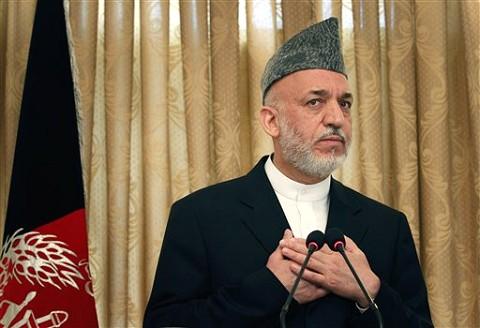
Afghan President Hamid Karzai is questioning the willingness of Western allies to go after terrorist sanctuaries in neighboring Pakistan.

Mr. Karzai said Thursday that the war against terrorism is “not in Afghanistan’s homes and villages” but in the sanctuaries and training centers that lie outside the country.

The Afghan leader told reporters in Kabul that only international forces have the ability to tackle such insurgent forces.

President Karzai’s comments come after the website WikiLeaks released thousands of classified U.S. military documents that allege Pakistan’s intelligence agency was actively collaborating with Afghan Taliban militants.

Pakistan has dismissed the allegations.

Pakistani foreign ministry spokesman Abdul Basit called Mr. Karzai’s remarks “incomprehensible.”  He said Pakistan’s ambassador in Kabul was seeking clarification, noting the neighboring nations have been closely cooperating against terrorism.

President Karzai on Thursday also condemned  WikiLeaks’ release of the military documents and said their leak endangers the lives of Afghans who worked closely with NATO forces.  He said he has ordered a government review of the files.

The 91,000 documents also contain details of civilian casualties allegedly caused by coalition forces.  

U.S. officials have also condemned the documents’ release and launched an investigation into the source of the leak.

Clinton Adds to Curious History of Mango Diplomacy

By Sebastian Abbot for The Associated Press

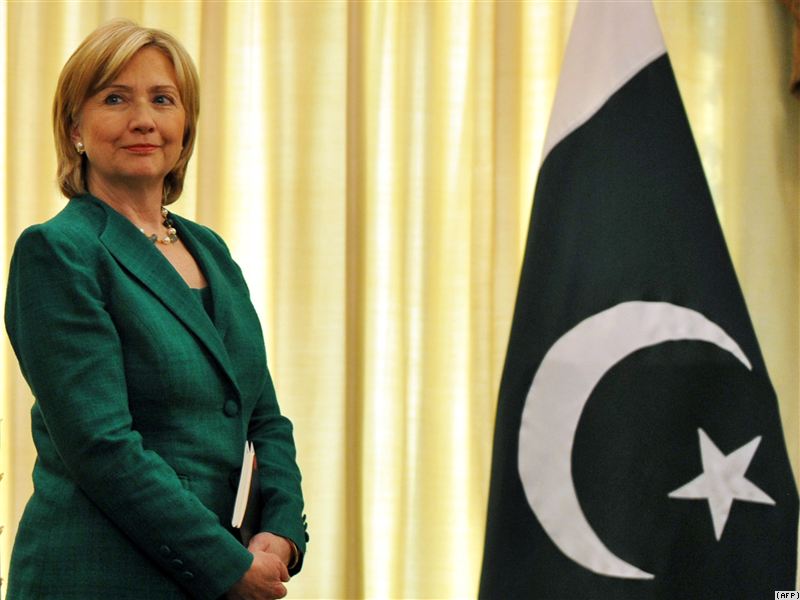
When U.S. Secretary of State Hillary Rodham Clinton offered Pakistan help last week in exporting mangoes to the U.S. in a bid to dampen anti-American sentiment, it marked the latest chapter in the fruit’s curious history of diplomacy and intrigue.

Clinton’s offer came three years after the Bush administration opened up the U.S. market to Indian mangoes in exchange for allowing Harley-Davidson to sell its famed motorcycles in India – a deal that generated goodwill as the two countries finalized a civilian nuclear agreement.

Washington’s mango-powered diplomacy this time around is part of a broader $7.5 billion aid effort that is meant to improve the image of the U.S. in Pakistan, a move officials hope will provide the Pakistani government with greater room to cooperate on turning around the war in Afghanistan.

“I have personally vouched for Pakistani mangoes, which are delicious, and I’m looking forward to seeing Americans be able to enjoy those in the coming months,” Clinton said during her visit to Islamabad last week.

The prominence of mangoes in South Asian diplomacy should come as no surprise since scientists believe the sweet and fleshy orange fruit originated in the region before Buddhist monks and Persian traders introduced the plant to other areas of the world.

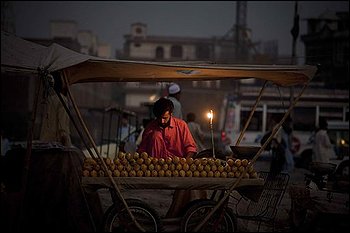
Pakistan and India recognize the mango as their national fruit, and summer in both countries is defined by the sights and sounds of vendors hawking piles of soft, sweet-smelling mangoes or pureeing them to create refreshing drinks that cut through the scorching heat.

Officials from both countries have exchanged crates of mangoes over the years in an attempt to soften tensions between the nuclear-armed rivals that have fought three wars since the partition of British India created the two nations a little over 60 years ago.

Former Pakistani President Zia ul-Haq may have begun the tradition when he swapped mangoes in the early 1980s with the Indian prime minister at the time, Indira Gandhi. The exchange took place several years before ul-Haq was killed in a plane crash that conspiracy theorists blame on a crate of mangoes placed on board moments before takeoff that was supposedly sprayed with a poisonous gas that killed the pilots and other passengers.

But like almost everything else, mangoes have also been a source of tension between Pakistan and India since the two countries view each other as competitors in the export market. Indians and Pakistanis argue over who grows the best mangoes – a debate that resembles the tussle between Lebanon and Israel over who can claim the mashed chickpea dish hummus as their own.

If all goes to plan, Americans will get a chance to conduct their own taste test once Pakistani mangoes break into the U.S. market. The U.S. plans trial shipments later this year and has pledged to support a three-year program to promote the export of Pakistani mangoes by sea to America, the world’s largest importer of the fruit. The initiative is part of a $21 million program to boost Pakistan’s agriculture. The U.S. will help finance hot water treatment facilities, sorting and grading machines and cold storage facilities.

India, meanwhile, is the world’s largest mango producer with about 13 million tons each year, far exceeding all other countries, including Pakistan, which comes in fifth place with about 1.6 million tons. But both countries have struggled to build the necessary infrastructure to really boost exports.

“Farmers are very grateful for the U.S. help,” said Muzaffar Khan Khakwani, the owner of a mango farm near the central Pakistani city of Multan that is benefiting from American aid. “It’s not just the financial help. It’s the capacity building and the exposure of farmers to well managed orchards.”

But it remains to be seen how quickly Pakistan can benefit from Clinton’s recently announced initiative. India had trouble with logistics and pricing when it first tried to export its mangoes to the U.S.

It is even more uncertain whether U.S. aid will really dent anti-American sentiment in Pakistan and motivate the government to step up support for the Afghan war, a move the Pakistanis have resisted for years.

As an Indian proverb says, “You can’t hurry a mango tree to ripen its fruit.”


Cutting Hillary Clinton Some Slack

By Mosharraf Zaidi for The News International

Poor Americans. This is the fellow that Secretary of State Hillary Clinton has to stand beside as she tries to squeeze more juice out of a Kerry-Lugar Bill that had its lifeblood squeezed out of it last year by the Pakistani establishment, when it first became US law. The frustration from that reaction still riles the Americans. So much so that Hillary Clinton, who is a role model and an inspiration, can’t seem to let go. On every trip she reproduces a Bin Laden outburst that is militarily and strategically irrelevant for the US, but that serves as an enduring cancerous tumour for America’s public diplomacy goals in Pakistan.

Still. Mrs Clinton needs to be cut some slack. Her tireless advocacy for health care around the world, and her enduring compassion for South Asians — Indians, Pakistanis, Bangladeshis, Muslims, Hindus, men, children, and most of all, women — is singularly unique among either Democrats or Republicans.

The western media seems as fabulously smitten by Mrs Clinton as I am. The wires, the newspapers and the electronic media all reported Mrs Clinton’s announcement of the allocation of $500 million worth of projects as headline news, when really, it represents the fulfilment of only one-third of Kerry-Lugar-Berman’s sacred covenant with the Pakistani people. One of the most telling things about that covenant? It was signed by the US House of Representatives and the US Senate. It was, in short, a covenant between the US government and the American people, with the US government acting as a proxy for the Pakistani people.

Perhaps now Pakistanis can better understand the frustration of the John Kerrys, the Hillary Clintons and the Richard Holbrookes of the earth. Top US policymakers have fought for over two years to win the Kerry-Lugar Bill. Since then, two things have kept that money from flowing into Pakistan. The first is Mr Holbrooke’s decision to dispense with the Clintonian (Bill, not Hill) model of US aid disbursement through large contracting firms that Americans often refer to as Beltway Bandits. That decision, while long overdue, was rushed and was made in the wrong country, at the wrong time. American development assistance, which is not routed solely through USAID, but often through half a dozen different US departments (or ministries), has been in desperate need of an overhaul for years. But to attempt to reform the instrument of aid delivery in Pakistan, at the climax of Obama’s war in Afghanistan, has been a disastrous decision. The American international aid community is so removed and so distant from the mainstream of western assistance thinking (spearheaded by the OECD and captured in the Paris Declaration) that it doesn’t quite know how to deal with large sums of money without the Beltway Bandits. This has meant that the Kerry-Lugar money has been parked in Washington DC, with a clear destination, but no vehicle to take it there.

The second thing that has kept the Kerry-Lugar money from being spent is the government of Pakistan itself. Pakistan has no clarity whatsoever about what its development priorities are. It required the intervention of the military chief back in March to summon the federal secretaries to begin to articulate a wishlist of pet projects this government would like to see come to fruition. Indecision and the absence of any coherent development strategy within Pakistan have meant that the US government has had to try to figure out what Pakistan wants, kind of on its own. This may seem like comedy noire, but it’s really not funny at all.

The problem with Pakistani government today is that it doesn’t enjoy the competent stability it once used to through the bureaucracy. Today’s Pakistan’s bureaucracy, while made up of individually brilliant officers, is a collection of inward-looking dinosaurs that cannot see beyond their GOR houses, their I-8 plots and their post-retirement benefits. Those officers, in years past, used to be the eyes and ears of oft-changing governments that would seek the guidance of senior bureaucrats in the federal ministries and at the provincial headquarters. While there’s been no discernable change in the quality of governance that democratically elected politicians can render, there has been a severe nosedive in the quality of officers available to either the federal or provincial governments.

Part of the reason for the exodus of top-tier officers during the Musharraf era was the curtailment of powers of district managers, under decentralised local governments. But the decentralisation argument is a red-herring for a much more fundamental shift in Pakistani bureaucracy. While being a CSP or DMG officer was an instrument of social mobility in the 1970s or 1980s, it is now a barrier to the personal and professional growth of officers. Many of Pakistan’s brightest officers can afford to be well-paid UN, World Bank and IMF staffers. Many others can do even better at Wall Street and on Madison Avenue. Still others can be brilliant academics. Across the board, since 1999 we have seen exactly this. An exodus of top-shelf talent that might have been able to deal with rents, with incompetence, and with the heat, but not with the disrespect that the military and political class have for educated Pakistanis in the employ of the government of Pakistan.

So how does all this relate to Mrs Clinton’s troubles in Pakistan? Simple. No matter how democratically legitimate, when the blind lead the blind, there is a problem of vision. Pakistani politicians are so disconnected from any kind of global narrative that it will be a generation before we produce a Chidambaram, a Krishna or a Mukherjee that can win elections without the help of their gaddi (see: Shah Mehmood Qureshi), or the kindness of the Arbab Ghulam Rahims of the world (see: Shaukat Aziz). The nauseating outburst of the foreign minister on Friday was a demonstration that winning an election does not enable you to win an argument. In short, Pakistan’s current political class cannot muster politically legitimate actors that are also competent at statecraft.

Enter the advisory class. This is where the Husain Haqqanis, the Shaukat Tarins and the Dr Hafeez Shaikhs enter the fray. No fake degrees here. Only pedigree. Their problem is of an entirely different nature. They don’t have any stake in Pakistani politics — they enter as unknowns at the thaana kuthchehri and galli-mohalla level, and they leave as unknowns at the thaana kuthchehri and galli-mohalla level. They can talk about all the right kinds of reform, but they can’t deliver. More worryingly, their reform-speak is often deluded, because it is devoid of any political rigour. “Let’s clip military powers by marketing bold ideas in Washington DC, instead of Rawalpindi.” Well. We’ve seen how that has turned out. “Let’s raise taxes!” Sure. Because nobody else has ever thought of that! “Let’s improve education.” Sure. Because it takes genius to figure out that education is a problem. Advice that is anchored in Rubinomics and Bretton Woods theology has been failing Pakistan for the entire duration of Pakistan’s lifetime. This should hardly be a surprise. It never works anywhere.

And that is why Shah Mehmood Qureshi is wrong, again. Perceptions won’t change. $500 million worth of pet projects is a supremely sweet gesture. But even $500 billion worth of aid, delivered through Beltway Bandits, NGOs, budget support or otherwise can’t change the lives of Pakistanis. Only organic reform can achieve such noble goals. When the strategic dialogue in October picks up where this one leaves, Pakistan will still have no CT strategy, no development strategy, an inflated defence budget, no civil service reform, and no hate-speech legislation. All the money in the world can’t change that. And that’s not Hillary Clinton’s fault. That one’s on us.

Clinton Reaffirms US Commitment to Pakistan

By Ayaz Gul for The Voice of America

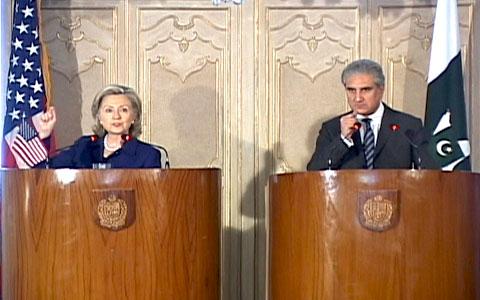
Concluding a second round of the so-called U.S.-Pakistan strategic dialogue in Islamabad, Secretary of State Hillary Clinton on Monday announced more than $500 million in several new aid programs for Pakistan.

The string of new projects unveiled by Clinton during a joint press conference with Pakistani Foreign Minister Shah Memood Qureshi are designed to help Pakistan meet its energy needs and boost power generation, health and agricultural development. The programs are the first to be launched under U.S legislation passed last year tripling civilian aid for Pakistan to $7.5 billion during the next five years.

Secretary Clinton said the United States hopes the new aid will translate into real life improvements for families and communities, describing them as long-term investments in Pakistan’s future.

“We are committed to building a partnership with Pakistan that of course strengthens security and protects the people of Pakistan, but goes far beyond security,” Clinton said. “We want to help you drive economic growth and prosperity, strengthen your democratic government institutions and expand access to the tools of opportunity.”

Pakistan is playing a key role in the international fighting against Taliban insurgents in Afghanistan. But public opinion in Pakistan still views U.S. motives with a considerable amount of suspicion. The skepticism stems from the U.S decision to abandon support for Pakistan after Soviet forces withdrew from Afghanistan.

But Secretary Clinton says she can see positive change resulting from what she called deeper and broader bilateral engagements in recent years.

“We have moved beyond a standoff of our misunderstandings that were allowed to fester and not addressed… to a position where we are engaged in the most open dialogue that I think our two countries have ever had,” she said.

Foreign minister Qureshi also agreed that the enhanced U.S cooperation in various fields such as energy, power, health, agricultural and education sector is critical for changing the public perception in Pakistan.

“The opinion of the United States will change when the people of Pakistan see that their lives have changed,” said Mr. Qureshi.

Sunday, Clinton attended the signing of a landmark trade deal reached by Pakistan and Afghanistan, after years of negotiations. The United States has been pushing Afghan and Pakistani leaders to improve bilateral relations it says will contribute to the fight against extremists.

Secretary Clinton’s next stop as part of her Asia trip will be Kabul, where she will attend an international conference on Tuesday.

At the news conference in Islamabad, she reiterated that insurgents who wish to reconcile must lay down their arms, renounce partnership with al-Qaida and accept Afghanistan’s constitution.

“It seems to us that there will be some who are willing to meet those conditions and others who are not. And we would strongly advise our friends in Afghanistan to deal with those who are committed to a peaceful future where their ideas can compete in the political arena through the ballot box, not through the force of arms.”

Taliban insurgents have stepped up attacks against Afghan and U.S-led coalition forces in recent months. More than 50 foreign troops have died in July while the previous month was the deadliest for international forces since the war against Taliban and its allies began nine years ago.

Clinton, With Initiatives in Hand, Arrives in Pakistan

By Mark Landler for The New York Times

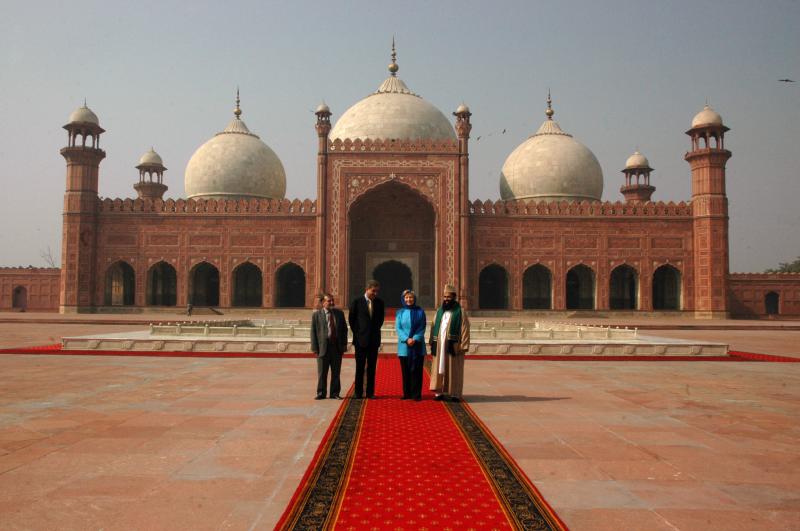
Secretary of State Hillary Rodham Clinton arrived here Sunday for high-level deliberations with Pakistani leaders, the latest in a series of encounters that the Obama administration hopes will chip away at decades of suspicion between Pakistan and the United States.

Hillary Rodham ClintonMrs. Clinton will announce a raft of initiatives to help Pakistan in public health, water distribution and agriculture, to be funded by $500 million in American economic aid. Among other things, the United States will build a 60-bed hospital in Karachi and help farmers export their mangoes.

Yet these projects, however beneficial to this economically fragile country, do not disguise several nagging sources of friction between the two sides. American officials still question Pakistan’s commitment to root out Taliban insurgents in its frontier areas, its motives in reaching out to war-torn Afghanistan and its determination to expand its own nuclear program.

Pakistan plans to buy two nuclear reactors from China — a deal that alarms the United States because it is cloaked in secrecy and is being conducted outside the global nonproliferation regime. Administration officials said they did not know if Mrs. Clinton planned to raise the purchase.

Relations could be further tested if the Obama administration decides to place a major Pakistani insurgent group, the Haqqani network, on the State Department’s list of terrorist organizations. Islamabad maintains ties to the group through its intelligence service, and it is seeking to exploit those connections as a way to extend its influence over Afghanistan.

For all that, tensions between the two sides have ebbed since Mrs. Clinton’s last visit here in October, when she was peppered with hostile questions in public meetings and bluntly suggested that people in the Pakistani government know the whereabouts of Osama bin Laden and Mullah Omar.

“We needed to change the core of the relationship with Pakistan,” said Richard C. Holbrooke, the special representative to Afghanistan and Pakistan. “The evolution of the strategic dialogue, and the fact that we are delivering, is producing a change in Pakistani attitudes.”

Mr. Holbrooke noted a U-turn in Pakistan’s policy on issuing visas to American diplomats. For months, Pakistani officials had held up those applications, creating a huge backlog and frustrating the United States. But Pakistan issued 450 visas in the last five days, he said.

Mr. Holbrooke conceded that public-opinion polls toward the United States had yet to show much of a change. Mrs. Clinton may receive more criticism on Monday at a town-hall meeting in Islamabad. Her visit, which was not announced due to security concerns, is being conducted under tight security.

Vali Nasr, a senior advisor to Mr. Holbrooke, said it was unrealistic to expect “to change 30 years of foreign policy of Pakistan on a dime.” But he said, “On foreign policy issues, we’re seeing a lot more convergence.”

The United States is encouraged by the burgeoning dialogue between President Hamid Karzai of Afghanistan and Pakistani leaders, including the chief of the staff of the army, Gen. Ashfaq Parvez Kayani. Any resolution of the war, Mr. Holbrooke said, must involve Pakistan.

While American officials would like to see a more aggressive Pakistani military push in North Waziristan, the stronghold of the Haqqani network, they praise the military’s campaigns in South Waziristan and the Swat Valley, where Taliban insurgents had also made gains.

Pakistan’s battle against insurgents has exacted a fearful civilian toll. Last week, a suicide bomber killed 45 people, and injured 175, in an attack on a 1,000-year-old Sufi shrine in Lahore. Many Pakistanis blame the American-led war in Afghanistan for fomenting anti-Pakistan terrorism.

A coalition of protest groups issued a statement Sunday, timed to Mrs. Clinton’s arrival, which calls for an end to the war in Afghanistan and for Americans and Pakistanis who are involved in clandestine air strikes on Pakistani targets to be tried for war crimes.

Mrs. Clinton is to meet General Kayani on Monday, after meetings on Sunday with President Asif Ali Zardari and Prime Minister Yousaf Raza Gillani. She was also scheduled to meet Pakistani business leaders and the head of the Pakistani opposition, Nawaz Sharif.

Mrs. Clinton has brought a shopping-bag full of commitments for Pakistan, drawn from the $7.5 billion in non-military aid, over five years, pledged by Congress last year. The emphasis is on basic services like electricity and water, politically-charged issues in this country, particularly during the hot summer.

“Our commitment is broad and deep,” said Rajiv Shah, the administrator of the United States Agency for International Development, who is with Mrs. Clinton. “We will not do what we’ve done in the past.”

Administration officials said the project to upgrade Pakistan’s creaky power grid, which involves building hydroelectric dams and rehabilitating power plants, had helped reduce chronic power outages. But on the day Mrs. Clinton landed, television reports here warned of further outages.

Imran Khan Moves Supreme Court Against Drone Attacks

As reported on Despardes.com

Cricketing legend-turned politician Imran Khan has filed a lawsuit in Pakistan’s apex court asking it to declare drone attacks as war crimes.

According to published reports, the Pakistan Tehrik-i-Insaf (PTI) chief on Wednesday filed a petition in the Supreme Court asking it to declare drone attacks as attacks on the sovereignty and defence of Pakistan and a war crime.

The petition, filed by Imran Khan’s lawyer Shaukat Aziz Siddiqui, argues that the provisions of logistics and facilities to any foreign country or alliance for mass destruction through drone strikes inside the territory of Pakistan resulting into killings of Pakistani citizen is illegal, unwarranted, unconstitutional, in violation the United Nations Charter, universal declaration of human rights, international law as well as the international humanitarian law, a war crime and an attack on the sovereignty, solidarity, integrity and defence of Pakistan.

Imran Khan’s petition was filed today after a Lahore court Lahore cort ruled against drone strikes and called on the government to take appropriate measures to halt strikes by unmanned drones in Pakistan if they aren’t approved by Islamabad.

Federal authorities should take measures to stop drone attacks in Pakistan if they are carried out without formal approval, the court said on Wednesday. The court was responding to a petition that said drone strikes were a violation of national sovereignty.

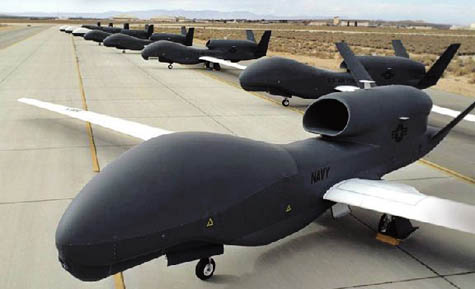
Drone attacks have increased under the authority of U.S. President Barack Obama, notably inside Pakistan. The CIA, a civilian entity, said it is acting according to the code of law in carrying out the strikes.

Pakistan’s government publicly objects to the attacks, saying they violate its sovereignty. But it is widely thought there is a tacit agreement between the U.S. intelligence agency, the CIA, and Islamabad to allow such strikes, reported Voice of America on its website today.(http://www1.voanews.com/english/news/asia/Suspected-US-Missile-Strike-Kills-10-in-Pakistan-97396999.html)

Two missiles believed fired Tuesday by an unmanned drone struck a village in the tribal regions of Pakistan, killing militants including Hamza al-Jufi, an Egyptian allied with al-Qaida.

U.S. Strategy in Afghanistan May Involve Greater Use of Special Operations Forces

By David S. Cloud and Julian E. Barnes for The Los Angeles Times

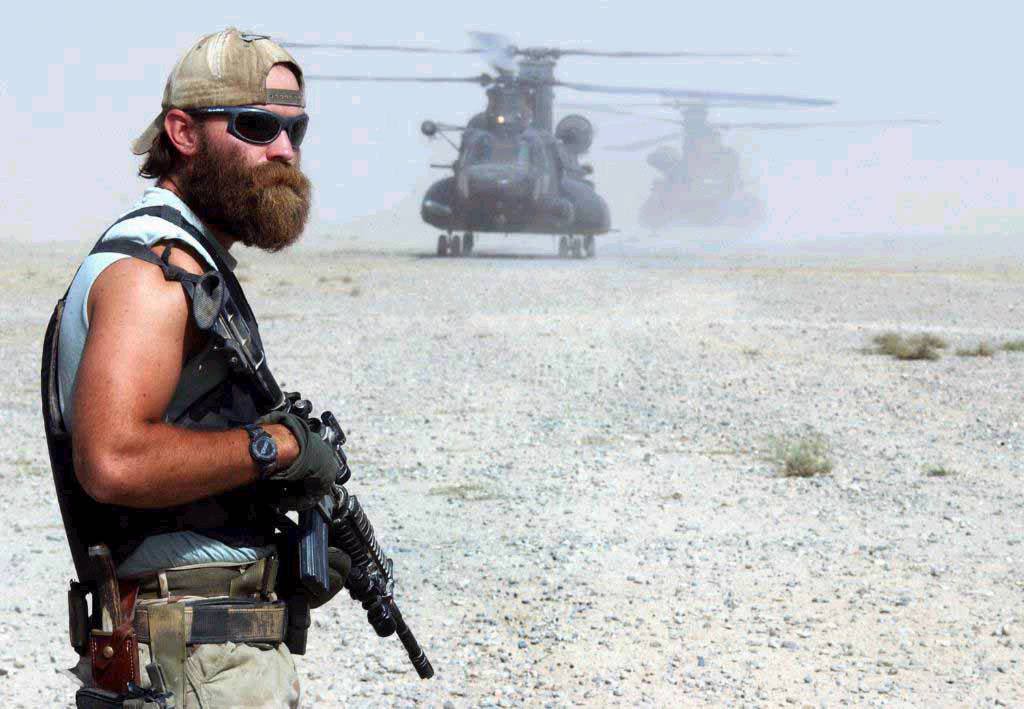
U.S. special operations troops in Afghanistan have stepped up a campaign to kill or capture insurgent leaders, senior U.S. officials say, an effort that began in March and is likely to expand as Army Gen. David H. Petraeus looks for ways to show progress.

Senior U.S. military officials said the raids by special operations troops have killed or captured 186 insurgent leaders and detained an additional 925 lower-level fighters in the last 110 days. That would mark a rare success for American troops in a war that has otherwise gone poorly in recent months.

The operations have been most effective in and around the southern city of Kandahar and in eastern Afghanistan, according to American military officials, who requested anonymity in discussing information that had not been released publicly, and outside analysts. Already, they said, there are signs in these areas that roadside bomb attacks have decreased and the Taliban control is weakening, as senior leaders are killed or captured.

A successful effort would support the contention made by Vice President Joe Biden and other administration officials who are skeptical of the military strategy in Afghanistan: Special operations troops, with their small footprint and skill at tracking and killing the enemy, can be more effective than conventional forces in the difficult conflict the U.S. faces in that country.

Biden has argued for shrinking the U.S. effort and relying largely on special operations troops and airstrikes to disrupt the Taliban and Al Qaeda, officials say.

President Obama has sided so far with those who favor using large numbers of U.S. troops as part of a far-reaching counterinsurgency effort, a point that he reiterated last week in naming Petraeus to replace Army Gen. Stanley A. McChrystal as commander of the war in Afghanistan.

But if the special operations effort is the most successful element of the war effort, Biden and those who agree with him could be in a stronger position to argue for shrinking the U.S. military presence when the strategy is reexamined, perhaps as soon as the December review Obama has promised.

Supporters of the more limited strategy advocated by Biden believe special operations should be the main military effort in Afghanistan. Petraeus, however, argues that special operations troops are just one tool, albeit a highly effective one, in fighting an insurgency.

While leading the U.S. military force in Iraq, Petraeus advocated a comprehensive counterinsurgency strategy aimed at combating militants with both special and conventional forces. He is expected to utilize the same strategy in Afghanistan.

Current and former Petraeus advisors also said the general will try to quickly reverse the perception that the Afghanistan war is going badly. When he appears before the Senate on Tuesday for a hearing on his nomination to lead the allied war effort in Afghanistan, he is likely to emphasize recent successes by special operations forces.

“Trumpeting the successes of ISAF [the North Atlantic Treaty Organization’s International Security Assistance Force] operations, Afghan operations, should be part of the strategy,” said Peter Mansoor, who served as Petraeus’ executive officer in Iraq. “The strategy is clearly to knock the Taliban back, but if you don’t show the world that is happening, what is the use?”

A senior military official in Afghanistan said the killings of leaders since March have reduced the effectiveness of the Taliban, making the militant movement less capable of threatening the Afghan population.

Officials did not release the list of 186 insurgent leaders they say have been killed since March. Last week, however, they did name two insurgent leaders slain last month in Kandahar.

In eastern Afghanistan, the U.S. has been trying to take out key commanders in the Haqqani network, a Taliban-aligned insurgency that maintains a safe haven in Pakistan, said Jeffrey Dressler, a researcher at the Institute for the Study of War in Washington.

“We have seen over the last four weeks an increase in special operation maneuvers,” Dressler said. “And it is having a significant impact on the Haqqani network’s ability to operate.”

But Haqqani fighters still are able to use their base in Pakistan’s North Waziristan region to try and mount suicide bombings across the border in Kabul, the Afghan capital, and has been linked to several recent attacks, including a mortar barrage that disrupted a peace conference convened by Afghan President Hamid Karzai this month.

U.S. officials hope that continued special operations raids against insurgent leaders will encourage lower-level followers to lay down their arms and reconcile with the government in Kabul.

Skeptics of the administration’s overall strategy see the results of the special operations campaign as a powerful argument for shifting away from the counterinsurgency campaign crafted by McChrystal toward the strategy advocated by Biden.

“This is a great opportunity to reconsider the direction of the strategy and move it more towards what is showing some success, the strategy Vice President Biden advocated from the beginning,” said Charles J. Dunlap, a retired Air Force major general who writes extensively on counterinsurgency strategies.

A plan focused first on killing insurgent leaders will ensure that the U.S. does not have to remain in Afghanistan for decades building up the central government, he said.

But advocates of the current strategy said special operations forces alone can disrupt insurgent movements, hindering their advance, but are not enough to stabilize a country and help it take charge of its own security.

“There is a misconception that in counterinsurgency there isn’t any sort of assassinations or special operation forces doing targeted killings,” Dressler said. “As we have seen from Iraq, that is not the case. It is a critical part of counterinsurgency.”

BP Stands for Let’s Blame Palin for the Recklessness of “Drill Baby Drill!”

By Manzer Munir for Pakistanis for Peace

As the BP Oil Spill passes into its 61st day, I began to wonder what the BP in British Petroleum could also stand for. Here is a list of things that I and some friends have come up with that could be the abbreviation for BP.
BP= Bad Planning- The Bad Planning and lack of a coherent emergency response in the event of a rig collapse such as the one that caused the BP Oil Spill and has made a bad situation worse as the company, now still in charge 61 days after a disaster of their own causing, struggles to find a way to stop the leak.

BP= Barely Plugging- More than 6 weeks after the spill started, BP was able to attach a pipe to the well at the bottom of the ocean and is able to siphon 250,000 gallons a day (one tenth of what is estimated to be spilling into the Gulf each day). This clearly is not a solution as this is Barely Plugging the oil spill that continues to poison the ocean and all that live in and around it.

BP= Beach Pollution= See also Bathing Prohibited. The oil from the spill has caused Beach Pollution in Louisiana, Mississippi, Alabama, Texas, and Florida. The loss of revenue by the towns and cities in these states that would normally welcome millions of tourists in the summer months is going to have a very damaging effect to many of these states already reeling from the worst recession since the Great Depression.

BP= Bankrupt Probably- Many experts are saying that BP will not be able to financially survive this disaster and most likely will go Bankrupt Probably. If that happens, will the American public foot the bill as we did for the Wall Street failure? One thing is for sure, the company is looking at a very bleak future both criminally and financially.

BP= Be Prepared- This disaster shows the lack of planning for events such as these and underscores the reason for oil companies as well as government agencies such as the Minerals Management Service to Be Prepared in the event of disasters such as this spill. A lack of an emergency plan both by BP and the government is also at fault for making this disaster as bad as it has been.

BP= Bad People- Are the executives at BP Bad People for being at the helm of a company that caused the greatest disaster in history and worse yet for calling the residents of the Gulf “Small People” and showing great indifference to the plight of the residents of the Gulf and to the American public?

BP= Barren Planet- The oil spill is causing irreparable damage to the environment and to the ecology of the ocean and its long term effects are unknown by scientists at this point. One thing is for sure, water is the source of all life on the planet and as we kill the ocean and all living creatures in it with this oil spill, we are guaranteeing ourselves future where life will be hard to sustain on a Barren Planet.

BP= Behemoth Plume- The oil spill has created a Behemoth Plume that is at least 15 miles wide and 3 miles long and growing. This plume is a dead zone with no oxygen and a place where no living creature can survive. As the oil continues to flow and goes unchecked the size of this plume grows and there are reports of second and third oil plumes now forming in the Gulf.

BP= Beyond Pathetic- 61 days and counting and the leak has not been stopped. This is beyond pathetic for BP, and the government’s oversight departments.

BP= Be Patient- How long can the people of the Gulf of Mexico as well as the American people wait for BP and the government to fix the spill and stop the oil leak, not to mention clean up the gulf? And is that even a possibility?

BP= Barely Progressing- 61 days into the oil spill and it seems we are Barely Progressing as oil continues to spill into the Gulf at alarming rates.

BP= Bad Publicity- No amount of new splashy television or print advertisements will replace the Bad Publicity that the company of BP has received. Rarely in the annals of corporate history has a company ever faced such a public relations nightmare as has BP and it will be interesting to see if it ever recovers from this or ends up going under, much like the rig.

BP= Big Problems- The BP Oil Spill is perhaps the biggest of the Big Problems facing the Obama administration and the American people. The economy can be eventually fixed, the housing prices will come back up, people will eventually get rehired, wars will eventually be won or lost and will come to an end, but an ecological and environmental disaster such as this spill we will never fully recover from as a planet.

BP= Birds Poisoned- Tens of thousands of Birds Poisoned as a result of the oil spill. Many birds and animals that are unique to the Gulf region are feared irreparably harmed due to the disaster.

BP= Black Plague- The oil spilled into the Gulf of Mexico and continuing to do so each day means that this spill has become the Black Plague of death not just to the people and the animals of the area, but indeed quite possibly for marine life and perhaps eventually for the planet as no one knows the true effects of this unprecedented disaster on the ecology of the planet.

BP= Broken Pipeline- The Broken Pipeline at the bottom of the Deepwater Horizon rig in the Gulf of Mexico continues to spill as much as an estimated 1.5 million to 2.5 million gallons of oil a DAY into the ocean!

BP= Blood Pressure- Blood pressure was further raised for those living along the Gulf of Mexico as the administration imposed a ban on all new offshore oil drilling and exploration. This has caused many workers in the area who rely on this industry to feed their families, to be laid off by other oil companies as the government assesses the situation and the safety of offshore drilling.

BP= Boiling Point= The Americans affected by the oil spill that rely on the fishing, boating, and tourism in the area have long reached a Boling Point in their patience with BP and with the government’s response.

BP= Better Prosecute= Attorney General Eric Holder is assigned by President Obama to investigate the BP Oil Spill and into criminal charges against the company are now a certainty, especially given the deaths of 11 workers in the explosion that caused the Deepwater Horizon rig to collapse and start the spill on April 20.

BP= Black Pelicans= Pictures of Black Pelicans and other animals as environmentalists worry that number of dead and affected animals is in the tens of thousands. The animal and sea creatures of the Gulf region are expected to be devastated for many years to come.

BP= Billions Paid- This stands for the billions and billions of dollars already paid by BP and the untold billions that will be paid by them in the future and possibly all of us tax payers if the company goes under and becomes bankrupt

BP= Barack’s Problem- This disaster has become President Barack Obama’s Katrina. But at least with hurricane Katrina, the calamity passed within hours and the government started the clean up and rescue, whereas with the BP Oil Spill this is a disaster that keeps on spewing and keeps on polluting as today is the 61st day the spill has continued to flow. How he has handled himself at the onset of this disaster and its continuation could be the defining moment of his presidency as this is squarely Barack’s Problem, unlike the economy, Iraq, and Afghanistan, which all he inherited.

BP=Bankruptcy Protection- See also bankruptcy probably. The amount of damages and compensation that BP will have to pay out in claims and also in penalties could wipe out the company and it may have to seek Bankruptcy Protection.

BP= Brand Problems- See also Bad Publicity. The BP brand has been damaged forever and no amount of advertisements will change the public image and Brand Problems that the spill has created for BP.

BP= Bleeding Planet- The unchecked, endless, and prolonged seepage of the thick crude oil into the ocean is causing death to millions of wildlife and is making earth a Bleeding Planet which one wonders whether we can survive this catastrophe.

BP= Bathing Prohibited- See also Beach Polluted, hence bathing prohibited. And if no beach visitors, no revenue for many states like Florida from tourists and many other places in and around the Gulf of Mexico that depend on the billions of revenue dollars from the fishing and tourism.

BP= Blame Palin- Probably one of the most poignant points of this article and one ignored by major media publications is that there is a correlation to the BP Oil Spill and Palin’s “Drill Baby Drill” slogan during the presidential campaign. Her proposals of allowing the oil drilling everywhere during the 2008 campaign, including in some of America’s most pristine places such as Alaska, galvanized the oil industry and revved them up into a “Gold Rush” mentality where short cuts were taken and oversight lost by the government in a greedy push for more oil saw sloppiness and Bad Planning cause the worst environmentalist disaster in history.

BP= Bye Planet- If the oil spill continues to go on and spill up to 2.5 million gallons into the ocean each day, how long before it engulfs all our oceans and kills a large portion of plant and animal life on the planet? Would that mean the end of the world when that happens?

So in conclusion, BP stands for The Black Plague, because of the Bad Planning,  now let’s Blame Palin, for the Beach Pollution casued by Broken Pipes, with Billions Paid, now it’s Beyond Pathetic, as we’re Barely Progressing, while Black Pelicans, become Barack’s Problem, and the Behomoth Plumes, mean bye Bye Planet!

U.S. Identifies Vast Riches of Minerals in Afghanistan

By James Risen for The New York Times
WASHINGTON — The United States has discovered nearly $1 trillion in untapped mineral deposits in Afghanistan, far beyond any previously known reserves and enough to fundamentally alter the Afghan economy and perhaps the Afghan war itself, according to senior American government officials.

The previously unknown deposits — including huge veins of iron, copper, cobalt, gold and critical industrial metals like lithium — are so big and include so many minerals that are essential to modern industry that Afghanistan could eventually be transformed into one of the most important mining centers in the world, the United States officials believe.

An internal Pentagon memo, for example, states that Afghanistan could become the “Saudi Arabia of lithium,” a key raw material in the manufacture of batteries for laptops and BlackBerrys.

The vast scale of Afghanistan’s mineral wealth was discovered by a small team of Pentagon officials and American geologists. The Afghan government and President Hamid Karzai were recently briefed, American officials said.

While it could take many years to develop a mining industry, the potential is so great that officials and executives in the industry believe it could attract heavy investment even before mines are profitable, providing the possibility of jobs that could distract from generations of war.

“There is stunning potential here,” Gen. David H. Petraeus, commander of the United States Central Command, said in an interview on Saturday. “There are a lot of ifs, of course, but I think potentially it is hugely significant.” The value of the newly discovered mineral deposits dwarfs the size of Afghanistan’s existing war-bedraggled economy, which is based largely on opium production and narcotics trafficking as well as aid from the United States and other industrialized countries. Afghanistan’s gross domestic product is only about $12 billion.

“This will become the backbone of the Afghan economy,” said Jalil Jumriany, an adviser to the Afghan minister of mines. American and Afghan officials agreed to discuss the mineral discoveries at a difficult moment in the war in Afghanistan. The American-led offensive in Marja in southern Afghanistan has achieved only limited gains. Meanwhile, charges of corruption and favoritism continue to plague the Karzai government, and Mr. Karzai seems increasingly embittered toward the White House.

So the Obama administration is hungry for some positive news to come out of Afghanistan. Yet the American officials also recognize that the mineral discoveries will almost certainly have a double-edged impact. Instead of bringing peace, the newfound mineral wealth could lead the Taliban to battle even more fiercely to regain control of the country.

The corruption that is already rampant in the Karzai government could also be amplified by the new wealth, particularly if a handful of well-connected oligarchs, some with personal ties to the president, gain control of the resources. Just last year, Afghanistan’s minister of mines was accused by American officials of accepting a $30 million bribe to award China the rights to develop its copper mine. The minister has since been replaced.

Endless fights could erupt between the central government in Kabul and provincial and tribal leaders in mineral-rich districts. Afghanistan has a national mining law, written with the help of advisers from the World Bank, but it has never faced a serious challenge.

“No one has tested that law; no one knows how it will stand up in a fight between the central government and the provinces,” observed Paul A. Brinkley, deputy undersecretary of defense for business and leader of the Pentagon team that discovered the deposits.

At the same time, American officials fear resource-hungry China will try to dominate the development of Afghanistan’s mineral wealth, which could upset the United States, given its heavy investment in the region. After winning the bid for its Aynak copper mine in Logar Province, China clearly wants more, American officials said.

Another complication is that because Afghanistan has never had much heavy industry before, it has little or no history of environmental protection either. “The big question is, can this be developed in a responsible way, in a way that is environmentally and socially responsible?” Mr. Brinkley said. “No one knows how this will work.”

With virtually no mining industry or infrastructure in place today, it will take decades for Afghanistan to exploit its mineral wealth fully. “This is a country that has no mining culture,” said Jack Medlin, a geologist in the United States Geological Survey’s international affairs program. “They’ve had some small artisanal mines, but now there could be some very, very large mines that will require more than just a gold pan.”

The mineral deposits are scattered throughout the country, including in the southern and eastern regions along the border with Pakistan that have had some of the most intense combat in the American-led war against the Taliban insurgency.

The Pentagon task force has already started trying to help the Afghans set up a system to deal with mineral development. International accounting firms that have expertise in mining contracts have been hired to consult with the Afghan Ministry of Mines, and technical data is being prepared to turn over to multinational mining companies and other potential foreign investors. The Pentagon is helping Afghan officials arrange to start seeking bids on mineral rights by next fall, officials said.

“The Ministry of Mines is not ready to handle this,” Mr. Brinkley said. “We are trying to help them get ready.” Like much of the recent history of the country, the story of the discovery of Afghanistan’s mineral wealth is one of missed opportunities and the distractions of war.

In 2004, American geologists, sent to Afghanistan as part of a broader reconstruction effort, stumbled across an intriguing series of old charts and data at the library of the Afghan Geological Survey in Kabul that hinted at major mineral deposits in the country. They soon learned that the data had been collected by Soviet mining experts during the Soviet occupation of Afghanistan in the 1980s, but cast aside when the Soviets withdrew in 1989.

During the chaos of the 1990s, when Afghanistan was mired in civil war and later ruled by the Taliban, a small group of Afghan geologists protected the charts by taking them home, and returned them to the Geological Survey’s library only after the American invasion and the ouster of the Taliban in 2001.

“There were maps, but the development did not take place, because you had 30 to 35 years of war,” said Ahmad Hujabre, an Afghan engineer who worked for the Ministry of Mines in the 1970s.

Armed with the old Russian charts, the United States Geological Survey began a series of aerial surveys of Afghanistan’s mineral resources in 2006, using advanced gravity and magnetic measuring equipment attached to an old Navy Orion P-3 aircraft that flew over about 70 percent of the country.

The data from those flights was so promising that in 2007, the geologists returned for an even more sophisticated study, using an old British bomber equipped with instruments that offered a three-dimensional profile of mineral deposits below the earth’s surface. It was the most comprehensive geologic survey of Afghanistan ever conducted. The handful of American geologists who pored over the new data said the results were astonishing.

But the results gathered dust for two more years, ignored by officials in both the American and Afghan governments. In 2009, a Pentagon task force that had created business development programs in Iraq was transferred to Afghanistan, and came upon the geological data. Until then, no one besides the geologists had bothered to look at the information — and no one had sought to translate the technical data to measure the potential economic value of the mineral deposits.

Soon, the Pentagon business development task force brought in teams of American mining experts to validate the survey’s findings, and then briefed Defense Secretary Robert M. Gates and Mr. Karzai.

So far, the biggest mineral deposits discovered are of iron and copper, and the quantities are large enough to make Afghanistan a major world producer of both, United States officials said. Other finds include large deposits of niobium, a soft metal used in producing superconducting steel, rare earth elements and large gold deposits in Pashtun areas of southern Afghanistan.

Just this month, American geologists working with the Pentagon team have been conducting ground surveys on dry salt lakes in western Afghanistan where they believe there are large deposits of lithium. Pentagon officials said that their initial analysis at one location in Ghazni Province showed the potential for lithium deposits as large of those of Bolivia, which now has the world’s largest known lithium reserves.

For the geologists who are now scouring some of the most remote stretches of Afghanistan to complete the technical studies necessary before the international bidding process is begun, there is a growing sense that they are in the midst of one of the great discoveries of their careers. “On the ground, it’s very, very, promising,” Mr. Medlin said. “Actually, it’s pretty amazing.”

Analysis: Turkey Looks East, Snarling Key US Goals

By Steven R Hurst for The Associated Press                                                                                                                                                                                                                                                    President Barack Obama scored two key foreign policy victories this week _ a new round of U.N. sanctions on Iran even as he kept Israeli-Palestinian talks on life support after the Israeli attack on Turkish ship carrying aid to Gaza.  The unintended costs may be heavy.

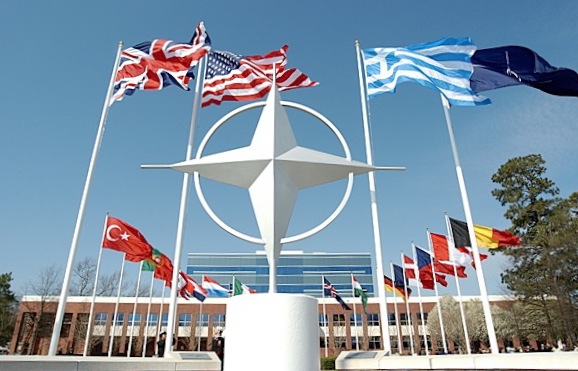
Both issues threaten key alliances with Muslim Turkey. And both test the ability of the U.S. and Israeli to cope with Ankara’s move out of the Western and NATO orbit toward largely Islamic regions of the Middle East and Central Asia. That matters because the United States is losing sway with its longtime NATO anchor, a democracy that bridges Europe to Asia and the Middle East.

Israel too is struggling to avoid Turkey’s threatened estrangement _ a break that would cost the Jewish state its only Muslim military ally. Turkey was one of the first countries to recognize Israel after its establishment more than six decades ago. The widening fissures in both alliances likely carry heavier psychological than strategic implications for the time being, particularly for Israel.

Here’s why. Turkish Prime Minister Recep Tayyip Erdogan “suddenly is the most popular politician in the Arab world and he doesn’t speak a word of Arabic,” asserts Henri Barkey of the Carnegie Endowment for International Peace.

Erdogan’s popularity grew exponentially after the Israeli commando raid on a Turkish-sanction flotilla of aid ships bound for Gaza. Muslims across the Middle East are holding him up as a hero for his tough talk against the Jewish state in their midst. That’s a stunning reversal. Turks, who migrated into modern day Turkey from Central Asia centuries ago, had always been seen in the Arab world as heirs to the Ottoman empire that had oppressed Arabs for 400 years.

Erdogan received a thunderous reception from fellow Muslim leaders Thursday at the Turkish-Arab Economic Forum that opened with calls for an international investigation of the May 31 Israeli raid that killed eight Turkish activists and a Turkish-American teenager. Erdogan’s Islamic-rooted Justice and Development Party came to power in 2002 in a landslide victory, a clear shift away from Turkey’s secular traditions that were established in the modern state, the post World War I and shrunken remnant of the Ottoman Empire.

The political shift was a clear precursor of Turkey’s move toward a more comfortable and powerful place in the Muslim world, despite continued efforts for membership in the European Union. Erdogan has since taken to championing the Palestinians’ cause, often more loudly than their fellow Arabs. That had badly strained Israeli-Turkish relations even before the crisis that blew up around the Gaza aid flotilla.

Then there was Turkey’s insertion of itself into the effort to move Iran away from uranium enrichment and its alleged program to build a nuclear weapon. After Iran rejected a deal to swap nuclear fuel last fall, the United States was determined to impose a fourth round of U.N. sanctions on Tehran. Washington had the backing of fellow U.N. Security Council members France and Britain all along and was on the verge of announcing that Russia and China also were on board.

Turkey, with help from Brazil, suddenly announced that it had revived the swap deal and that Iran had agreed. That agreement, more than a half year after initially rejected by Iran, was deeply flawed.

And the next day the United States said a new sanctions package had unanimous support from all five permanent Security Council members. It thanked Turkey for its efforts but said the train had already left the station. When the council voted earlier this week, only Turkey and Brazil cast no votes. Those did little but register protest since neither country holds a veto.

In spite of its rhetoric and obstructionism, Turkey does not appear ready any time soon the break fully from the West. It has vast interests intricately woven into NATO and the European Union. Turkey has a customs union agreement with its top trading partner, Europe, and wants to become part of the EU. But there is no doubt that the tone in Turkey’s foreign policy is changing.

Although the United States has been its chief ally since the Cold War, Turkey opposed the U.S. invasion of Iraq through Turkish soil, triggering tensions with Washington. Until the late 1990s, Turkish relations with Iran were tense, with its secular, westernized government accusing Tehran of trying to export its radical Islamic regime to this predominantly Muslim but secular country. Today, Turkey wants to build deeper trade ties with Iran.

Erdogan also is building support for next year’s election by playing the Islam card _ one that appeals heavily to traditionalist, rural and Muslim voters who make up the vast majority of the electorate. “This is not being driven by foreign affairs,” said Jonathan Adelman, professor at the University of Denver. “Erdogan is winning points at home _ going back to the country’s Muslim roots.”

India, Pakistan And U.S. Strategic Dialogue

By Apoorva Shah for The American Enterprise Institute

At this week’s first U.S.-India Strategic Dialogue in Washington, D.C., talks between the two countries will cover the spectrum of bilateral and multilateral issues, from trade and economic cooperation to terrorism and regional security. 

American participants may even feel the need to bring up India’s strained relationship with Pakistan. But it would serve them well to first consider a Times of India story from earlier this year, which went almost unreported in the United States.

According to an interview in the Indian newspaper with former Pakistani foreign minister Khurshid Mahmud Kasuri, India and Pakistan in 2007 were days away from reaching a comprehensive accord on their territorial dispute over Kashmir, the axis of the countries’ six-decade-long rivalry and casus belli of three wars between the two nations.

Kasuri, Pakistani leader General Pervez Musharraf’s chief diplomat from 2002 to 2007, said in April that the secret deal had been in progress for more than three years and would have led to a full demilitarization of both Indian- and Pakistani-occupied areas of Kashmir and would have awarded the region a package of loose sovereignty at a point “between complete independence and autonomy.” Not only were Indian and Pakistani leaders on board (including, most importantly, the Pakistani military), so was every Kashmiri leader except for one hard-line separatist, Syed Ali Shah Gilani.

The accord was slated to be signed during Indian Prime Minister Manmohan Singh’s scheduled visit to Islamabad in February and March of 2007, but before the trip ever occurred, a country-wide lawyers’ protest in Pakistan had turned into a broader opposition campaign against General Musharraf. The rest of the year would be one of the most tumultuous in Pakistan’s history, marked by the siege of the Red Mosque in July, the return of former Prime Minister Benazir Bhutto in October and her subsequent assassination in December, and the return of popular leader Nawaz Sharif from exile in September.

By August of the following year, public opposition had peaked, and Musharraf was forced to resign his post as president, ending his decade-long tenure as leader of Pakistan. After Musharraf’s ouster, it appears that the deal had lost much of its momentum.

Then in November, the accord suffered another setback as ten Lashkar-e-Taiba terrorists took India’s largest city, Mumbai, hostage for almost 72 hours, killing more than 160 people and injuring scores more. The attack was quickly coined “India’s 9/11,” and the evidence pointed directly to Pakistan, where the gunmen had been trained and equipped.

In protest, India cut off all diplomatic talks with Pakistan almost immediately; there were even rumors that the country was preparing military action against its northern neighbor. Within a span of less than two years, the India-Pakistan relationship had traveled the spectrum from apparent rapprochement and compromise to mutual suspicion and renewed hostility.

Since then, the signs have only appeared to worsen: for example, in 2009, when Indian Army chief General Deepak Kapoor publicly introduced revisions to his country’s “cold start” military strategy.

This military modernization and training program, which was developed in response to the army’s sluggish mobilization to the Pakistani border following the December 2001 terrorist attacks on the Indian parliament, remained mostly under the radar for most of the early 2000s, relegated to defense journals and the occasional news article.

It was only following the 2008 attacks that “cold start” began to receive renewed attention from the media on both sides of the border and was more publicly discussed by Indian military officials like General Kapoor. Indeed, it appeared as if the next breakthrough in Indo-Pak relations would occur through hard rather than soft power.

Concomitantly, India and Pakistan’s post-Mumbai attempts to return to diplomatic talks also appeared fraught with danger and seemed to only fuel more discord rather than reconciliation.

In February this year, Indian Foreign Secretary Nirupama Rao and her Pakistani counterpart Salman Bashir resumed high-level talks for the first time since November 2008, but both sides appeared unprepared (they could not even agree on the specific subject of the talks prior to sitting down) and spent more time bickering through separate press conferences.

For example, while Bashir accused India of covertly supplying weapons to militants in Pakistan’s Balochistan province, Rao complained that Pakistan had “not gone far enough” in the 2008 Mumbai attack investigation. As India presented a dossier of evidence against one of the Mumbai attack perpetrators, Pakistan responded by calling it a “piece of literature not a dossier.”

It’s hard to see how any progress could be made on improving Indo-Pakistani relations in the midst of this hostility. But does Kasuri’s revelation provide hope that a resolution on Kashmir could be revived? First, excepting Musharraf and Kasuri, many of the supporters of the failed 2007 accord—including Pakistani Army Chief of Staff Ashfaq Kayani, Pakistan’s current track II special negotiator Riaz Mohammed Khan, and, on the Indian side, Prime Minister Singh—still hold high-level positions in their respective governments.

And second, the secrecy of the original deal shows that outward indifference, or even enmity, between the two countries can belie an internal desire for change. In a relationship where hostility is status quo and where amicable relations seem aberrant if not bizarre, a furtive accord lets ruling elites make slow, institutional changes in the relationship while preserving outward form and precedent. It also allows deal-makers to keep tempestuous domestic politicians and party leaders at arms length while deliberating sensitive issues.

Even India’s traditionally hyperactive media seems to understand: A subsequent editorial in the Times of India noted, “the fact that such a deal exists emphasizes the importance of maintaining contact with Islamabad.”

So what can we expect in the months ahead? Indian officials will undoubtedly continue to pressure Pakistan to confront Lashkar-e-Taiba and other terrorist groups that plan to attack India, and another attack could indeed result in Indian military action. There will also be more bickering between the sides—on water rights, “most-favored-nation” clauses, and even cricket.

Yet the revelation of the secret deal should be both a lesson and a sign of hope. It is a lesson because it proves that progress on an entrenched conflict like Kashmir can occur without the United States’ public mediation.

American officials at the U.S.-India Strategic Dialogue this week should keep in mind that the accord was pursued during the final years of the Bush administration, in which the United States made it a point to separate the U.S.-India relationship from the more sensitive Indo-Pak relationship.

It is a sign of hope because, despite the outward appearance of discord between the countries, internally, leaders on both sides have—at least at some point in recent memory—wanted to move forward on a resolution.

As Pakistan continues its domestic offensive against terrorists and India pursues closer economic engagement with its northern neighbor, wanting change may be the best sign that change is on the way.