Archive for the ‘ terrorism ’ Category

No Evidence Pakistan Helped Osama Bin Laden: U.S. Security Adviser

As Reported by The International Business Times

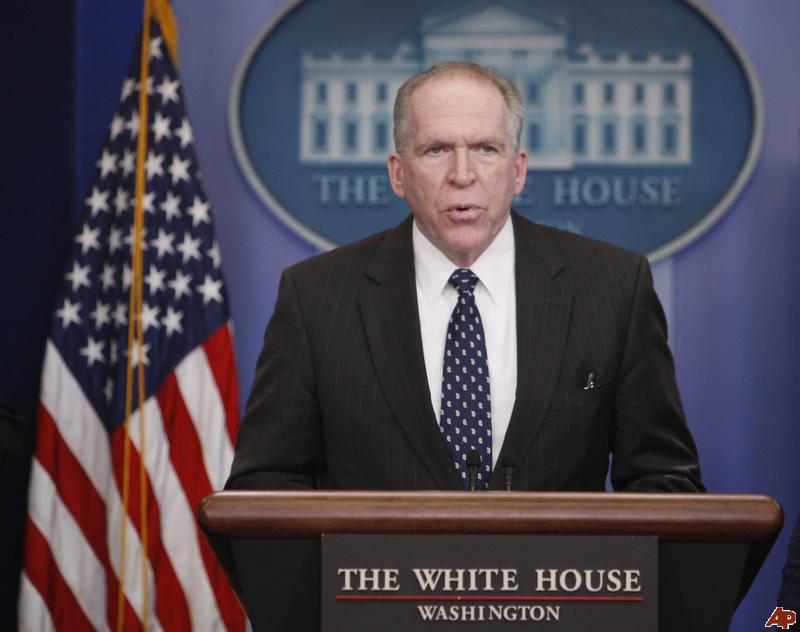
There is no evidence that Pakistan government officials helped and protected Osama bin Laden, claimed John Brennan, Deputy National Security adviser and President Barack Obama’s chief counter-terrorism adviser.

Brennan, speaking to reporters at a morning briefing said “I have not seen anything that the Pakistanis were aiding his refuge there.”

In May, Osama was found and killed by U.S. Navy SEALS in a large compound in the town of Abbottabad in northern Pakistan, near the capital Islamabad. Since that time, rumors have swirled that Pakistani intelligence officials had been aiding the former al-Qaeda terror chief as well as many other militants.

Brennan also said that based on examination of documents and data found and seized at Osama’s compound, it became apparent that bin Laden was “a little out of touch about how debilitated his organization was” after fighting for almost a decade against the U.S.

“It did reveal an organization in distress,” Brennan said.

Brennan also reportedly praised Pakistan’s offensive against terrorist groups operating the country and that Washington has a close working relationship with Islamabad in this joint effort.

He cited the recent arrest in Pakistan of Younis al-Mauritani, a senior al-Qaeda official, is proof that Islamabad is taking its responsibilities seriously.

He noted that al-Qaeda “has taken it on the chin” and has been “degraded significantly over the past couple of years.”

Brennan’s latest comments dramatically contradict assertions he made in May (just after the killing of Osama) when he declared that it was “inconceivable” that bin Laden did not have the support of officials within Pakistan.

A Monster Roaming The World

By Paul Mcgeough for The City Weekly
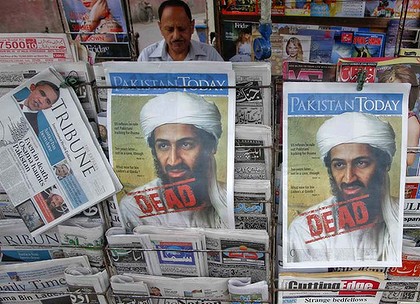
Search for a firm footing in Pakistan and there is none – all is quicksand … strategically, politically, morally.

Here in south Asia, strategically sandwiched between failing Afghanistan and the China and India powerhouses, is a country in which journalists are abducted in the night by agents of the state and murdered; in which the only advance after a decade in which Washington has tried to buy friendship with cheques for more than $20 billion, is the expansion of Pakistan’s nuclear arsenal – which is on the verge of surpassing Britain’s as the fifth biggest in the world.

In Pakistan, a 50-year-old woman is sentenced to death on a dubious blasphemy charge – and politicians who dare to speak in her defence are gunned down; and a woman is gang-raped and paraded naked through her village on the orders of a local council, over bogus claims that her 12-year-old brother has offended a 20-year-old woman from the clan of the men who defiled her.

But that’s village life. In the leafy garrison town of Abbottabad, an hour’s drive north of Islamabad, Osama bin Laden, mastermind of the attacks of September 11, 2001, was able to hide in plain sight for years. The location of his fortified bunker, a stone’s throw from a prestigious military academy, made it harder to give any credence to the generals’ repeated denials that significant elements of Pakistan’s extensive security apparatus sheltered the al-Qaeda chief and continue to give succour to the Taliban and other insurgency and terrorist movements.

In the south-west, in the wilds of provincial Baluchistan, there have been 150 ”kill and dump” operations this year. Most of the victims are Baluch nationalist rebels. Their killers are the Inter-Services Intelligence agency (ISI) and other elements of Pakistan’s national security forces – driven to brutality by a belief, which could be correct, that Pakistan’s arch foe, India, stirs the local nationalist pot. In turn, the Baluch nationalists are accused of running their own death squads – their victims are Punjabi ”settlers”, government workers brought in from other parts of the country.

Baluchistan is half Pashtun, which also makes it a sanctuary for the Taliban from adjoining Afghanistan, where Washington and the world still struggle, with little success, to impose a semblance of democracy on the bones of a fracturing, failing state. Here then is another of the ironies that puts a serious question mark over the bona fides of the Pakistani security forces: the leadership of the Afghanistan Taliban sequesters in Quetta, the provincial capital of Baluchistan, but the various Pakistani security services are so busy putting the Baluch nationalists through the mincer they don’t have time to take down the Taliban command-and-control centre. Instead, they reportedly socialise with the Taliban and sit in on their strategy meetings.

West from Baluchistan is the sprawling port city of Karachi, where the spiralling death toll in renewed ethnic turf-wars gives raw meaning to what local novelist Kamila Shamsie broaches obliquely, recounting how the city ”winks” at her. “Yes, the city said, I am a breeding ground for monsters, ” she writes, “but don’t think that is the full measure of what I am.”

This drab, chaotic home to 18 million people who account for 65 per cent of Pakistan’s economy is being carved up by bullets that this year have accounted for as many as 1000 ”wrong place, wrong time” deaths as gunmen randomly select their targets – sending messages to whole communities, not the individuals with whose blood they paint the rough pavements. As the suburbs seethe, police do little, because they are cowed by the systematic elimination of those in their ranks who intervened in the last iteration of these ethnic wars. Provincial and federal governments and the security forces only wring their hands.

In Karachi everyone lies. No one denies turf wars are being waged. They simply blame everyone else – all the political parties deny any links to the militias that prosecute their bloody agendas and to the crime, drug and land-development mafias that prosper in their wake. And the city’s once-dominant Urdu-speaking Mohajirs fight to maintain their control of corrupted city politics, amid an influx of Pashtuns fleeing upheavals along the Afghan border.

“Tension rises, we see killings and then scores must be settled,” an adviser to the provincial governor says. “We are at war – the political parties say they are not involved, but the mafias take shelter from the parties as they exploit the situation.”

In Islamabad, enter any of the city’s newsrooms, and see fear in the eyes of journalists who risk death and torture for going about assignments. Consider the words of their Karachi colleague Madiha Sattar – “a growth of intolerance has forged an extreme, murderous antipathy to freedom of expression.”

Most shocking in this campaign of fear and intimidation against one of the pillars of democracy was the disappearance in late May of Syed Saleem Shahzad, an investigative reporter for the respected, Hong Kong-based Asia Times Online. Two days after his abduction, Shahzad’s battered body was found at Mandi Bahauddin, 130 kilometres south-east of the capital. The reporter left detailed accounts of the threats he had received from the ISI; in Washington, senior officials unflinchingly confirming that Shahzad’s death had been ”sanctioned” by the Pakistani government.

Umar Cheema might just as easily have been their victim. Behind a door marked ”Investigation Cell” off a basement corridor in the Islamabad offices of The News, the 34-year-old father of two explains that the shock in his colleague Saleem Shahzad’s murder was a realisation it might just as easily have been him.

As Cheema drove home from a party in the early hours during Ramadan last year, 12 men who identified themselves as police commandos abducted him, he says. Informing him first that he was a suspect in a killing, they pulled a bag over his head and hauled him away.

“They took me to a building where the leader stripped off my clothes. Then I was ordered to lie on the floor and they beat me on the back and shoulders for 20 or 25 minutes with leather straps and wooden canes.

“I was writing about corruption in the government and the lack of accountability in the military and intelligence agencies – they said they were beating me because of my reporting. Then they shaved my head and eyebrows – that’s what is done to thieves in rural areas to humiliate them.

“Shahzad’s death left me speechless,” he says. “I was the second last victim before they took him. So I felt very much that this was a message for me – it was very, very personal.”

In Islamabad, the government of Prime Minister Yousaf Gillani is as overwhelmed as it is complicit in the nation’s failings. The economy is in crisis and the government has ceded control of more than half the country to the military or to extremist militias. “None of the cogs of state mesh to make it do what must be done,” Human Rights Commission of Pakistan’s Kamran Arif said.

Just south of Islamabad is Rawalpindi, a more typical Asian city than the sanitised and empty boulevards of Islamabad. As home and headquarters to the men and institutions that comprise Pakistan’s military and intelligence establishment, this is the centre of absolute power in Pakistan. And it is here that a deep-fried sense of humiliation over the American raid to kill Osama bin Laden, in May this year, is felt most acutely.

“After the bin Laden raid, it’s a question of the survival of the state,” the defence analyst and director of the South Asian Strategic Stability Institute, Maria Sultan, says. “The problem now is that by this very public humiliation, the US has lost its biggest supporter – it’s not the capability of the Pakistani military that is affected, it’s its credibility.”

A close reading of ”Getting Bin Laden”, The New Yorker’s inside account of the May 2 raid, reveals the mission was not just a single US incursion that managed to evade Pakistan’s air defences. On the night, there were effectively three separate American missions, none of which was detected by a military-security complex that demands indulgence by the people of Pakistan on the grounds that it is their only protection from the Indian hordes.

Pakistan’s generals faced a grim choice – they had to admit to deceiving the world in harbouring bin Laden, or to incompetence by not knowing he was lounging in their backyard. So supine were they in opting to plead incompetence there were fears of a mutiny in the middle ranks of the security services.

The US signal to the world of just how much it could not trust its south Asian ally came hard on the heels of serial embarrassments at the hands of the Taliban and other militant groups in Pakistan.

There have been a series of militant attacks on the most secure and sensitive defence establishments. The latest, which some observers concluded could not have been undertaken without inside help, saw a 10-man assault team storm the Mehran naval aviation base in Karachi. It took hundreds of Pakistani navy commandos, marines and paramilitaries to retake the base, but not before two aircraft were destroyed, hostages taken and the base had been occupied for the best part of a day.

But it takes a discerning Pakistani general to differentiate between militants – some are ”strategic assets” of the security apparatus and the generals refuse to go after them.

Dr Ayesha Agha, whose military and political commentaries appear in Pakistan’s Dawn newspaper, explains: “The military depends on these ‘assets’ – they are a cost-effective means to fighting wars that the Pakistani military wants to fight in India and Afghanistan.” Extrajudicial killings by the military now are counted in the hundreds.

When men in uniform were filmed recently murdering a detainee, the reckoning in human rights circles was that far from being a lapse of judgment, the recording had been allowed in the knowledge that its distribution on the internet would serve as a useful warning to the wider community.

A Karachi taxi driver becomes excited as he ferries us from the airport to a downtown hotel – “Pakistan lovely country,” he bellows. “Terrorism? No, no, no.”

But a single graphic in a 200-page study of Pakistan, published in May by the Washington-based Centre for Strategic and International Studies, reveals an impossible security challenge. Last year alone, 2113 terrorist attacks, 369 clashes between the security services and militants, 260 operational attacks by the security forces, 135 US drone attacks, 69 border clashes, 233 bouts of ethno-political violence and 214 inter-tribal clashes resulted in more than 10,000 dead and as many injured.

The death of bin Laden and the reported death of al-Qaeda’s new No. 2 figure, Atiyah Abd al-Rahman, in an American drone attack last week, are still being factored into a running debate among intelligence specialists on the extent to which al-Qaeda offshoots elsewhere in the world, especially the Yemen-based al-Qaeda in the Arabian Peninsula [AQAP], have taken the baton from the Pakistani organisation.

But a July study by the New America Foundation of 32 ”serious” jihadist terror plots against the West from 2004 to 2011, finds 53 per cent had operational or training links to jihadist groups in Pakistan – compared to just 6 per cent being linked to Yemen. And the rising tempo of the drone attacks has failed to dent the rising frequency of Pakistan-linked plots against the West, the study finds.

Implicit or explicit in any discussion on Pakistan’s volatile mix of militant violence and governmental chaos, is the level of anxiety around the world about the security of its nuclear arsenal. Confronted with claims such as that by bin Laden that acquiring a nuclear weapon was a ”religious duty” and the hope expressed by one of his lieutenants that such a weapon one day might be seized in Pakistan, officials in Islamabad invariably boast that all is tightly locked down.

But when we ask a Pakistani diplomat how secure were the weapons in the aftermath of the US mission to kill Osama bin Laden, he replies: “Less so, now that the Americans have revealed to the world that it is possible to sneak into Pakistan undetected, to take something that you really want.”

President Obama’s public appeal that Pakistan not become the world’s first ”nuclear-armed militant state” gives context to disclosures by The New Yorker’s Seymour Hersh of the existence of a US Special Operations rapid-response team which would be parachuted into Pakistan in the event of a nuclear crisis.

Rolf Mowatt-Larssen, a former director of intelligence and counter intelligence at the US Department of Energy, is boldest in setting out the fears of Washington, London and other capitals – some of which were disclosed without diplomatic varnish by Wikileaks last year.

Writing in Arms Control Today, Mowatt-Larssen, who served 20 years at the CIA, bills Pakistan as the most likely setting for terrorists bent on acquiring a nuclear device to co-opt a nuclear insider – of whom there are estimated to be as many as 70,000 in Pakistan.

“There is a lethal proximity between terrorists, extremists, and nuclear weapons insiders,” he writes. “Insiders have facilitated terrorist attacks. Suicide bombings have occurred at air force bases that reportedly serve as nuclear weapons storage sites. It is difficult to ignore such trends.

”Purely in actuarial terms, there is a strong possibility that bad apples in the nuclear establishment are willing to co-operate with outsiders for personal gain or out of sympathy for their cause.”

“Not possible,” says Maria Sultan. “About eight to 10,000 personnel working at the strategic level on security,” she says, ticking off seven or eight interlocking layers of complex security, the first of which she says would trip most intruders before they came within 80 kilometres of a nuclear facility. “The idea that a terrorist can walk in and get hold of a device is just not possible.”

Such is the bind in which Pakistanis find themselves. But if it is true feeble and corrupt civilian administrations make circumstances ripe for a military takeover, it is hardly surprising the generals have no respect for democratic fundamentals.

As revealed in one of the Wikileaks cables, Army chief General Ashfaq Parvez Kayani was ready to force President Asif Ali Zardari from office – save for the fact the general thought even less of Zardari’s likely civilian replacement. And historically, Washington has opted to connect with Pakistan through the military power of the generals, rather than the people power of the civilian leadership.

Bruce Riedel, a veteran CIA analyst, sets out the connections in Deadly Embrace: Pakistan, America and the Future of the Global Jihad. “…Richard Nixon turned a blind eye to the murder of hundreds of thousands of Bangladeshis to keep his friends in Pakistan’s army in power, a strategy that ultimately failed,” Riedel writes. “Ronald Reagan entertained Zia-ul-Haq even as Zia was giving succour to the Arab jihadists who would become al-Qaeda. George W. Bush allowed Pervez Musharraf to give the Afghan Taliban a sanctuary from which to kill American and NATO soldiers in Afghanistan.”

And in the judgment of Bushra Gohar, an elected MP from Pakistan’s troubled Swat Valley, Washington still prefers to deal with the military rather than the country’s civilian leadership. “That’s not a role that the military has under the constitution,” she says during a break in the business of the National Assembly in Islamabad. “There has been a democratic transition in this country and we expect the international community to support it.”

Power vacuums become ripe for exploitation, as was revealed with frightening clarity earlier this year when two of three elected figures who had dared to speak out against Pakistan’s draconian blasphemy laws were assassinated. In January, Punjab provincial governor Salman Taseer was gunned down by one of his state-provided security men; in March, the Minorities Minister and the only Christian in Gillani’s cabinet, Shahbaz Bhatti, died in a hail of gunfire as his car left his mother’s home in Islamabad.

Taseer’s killer confessed and became a national hero. His home is a shrine, he is garlanded with rose petals and, in the oddest twist of all, the young lawyers’ movement that effectively bundled Pervez Musharraf, the last dictator, from power in 2008, has taken the side of this cold-blooded murderer – not the principle for which his victim died.

A visitor leaves Pakistan wondering if anyone here speaks the truth. The dictators habitually resort to amping up religious parties – either to drown out secular ones that might be interested in the ideals of selfless democracy, or to further marginalise the country’s Shiia Muslim minority.

“And people like Musharraf have two faces,” Kamran Arif of the Human Rights Commission of Pakistan said. “He would say all the right things for the West and do just what he wanted to do at home.”

Some foreign analysts fall back on the seeming failure of Pakistan’s religious parties at the ballot box as a hopeful sign. But a sense of rising radicalisation, particularly in the military and the middle classes, suggests an asymmetric contest for control of a highly unstable society – the non-religious parties fight in the parliament, but the religious parties are street brawlers.

Sherry Rehman, the only elected figure in the country to defend the convicted blasphemer Aasia Bibi, makes the same point in explaining how that debate was lost. “The discourse shifted from the parliament to the street,” she says.

“We have to keep the agenda in the parliament, and not with the gun-toting thugs who make inflammatory speeches outside.”

Like the financial institutions in the 2008 global financial crisis, Pakistan is deemed by Washington to be ”too big to fail”. Between them, however, Washington and Islamabad have been unable in the past decade to make this relationship work – credibly or creditably.

Predictions of imminent collapse in Islamabad are exaggerated, but perhaps not overly so. “The government does not have the capacity to tackle any of the issues,” says the Human Rights Commission of Pakistan’s Arif. “Things will just keep getting bad … and I don’t discount the fact that we can fall into chaos.”

Like many other analysts, Bruce Riedel laboriously sets out the policy options by which Washington and Islamabad might work together to defeat the global jihadist movement – before he concludes that none is easy or guaranteed.

An adviser to several US administrations and now with the Brookings Institution, Riedel sees Pakistan under siege from a syndicate of radical terrorist groups unified by the notion that nuclear-armed Pakistan could be the extremist jihadist state they have never had.

“They want to hijack Pakistan and its weapons,” he says. Alluding to Islamabad’s role in creating a monster, as often as not with Washington’s sponsorship, he writes: “An extremely powerful jihadist Frankenstein is now roaming the world, with equally powerful protectors in Pakistani society, right up to the very top.

“Who cannot fear that the ‘long beards’ will prevail?”
Pakistan’s 10 Years of Chaos

As Reported by Jennie Matthew for AFP

The 9/11 attacks that thrust Pakistan into the war on terror have brought the nuclear-armed state to its knees, fighting Islamist radicals at home and risking pariah status abroad.

It was already evening in Pakistan when television channels, recently deregulated by then president General Pervez Musharraf, began broadcasting the terrifying scenes from the twin towers in New York.

Few slept that night, realising immediately that the world had changed forever and that Pakistan was in the eye of the storm after spending years fostering extremist movements for its own ends.

“My immediate thought was ‘oh my God, more trouble coming onto Pakistan’,” said author Imtiaz Gul, who has written extensively about the subsequent war and its fallout at home.

“My fears have been borne out… The 9/11 events shocked Pakistan into an unprecedented crisis of insecurity,” he said.
It didn’t take long for Musharraf to weigh up conditions imposed by Washington and announce on September 19 that Pakistan would offer its airspace, territory and capabilities to help the United States defeat terrorism.

But as America put the finishing touches to its war plans, Pakistan desperately tried to persuade its Taliban allies in Afghanistan to give up Osama bin Laden and avert catastrophic military action, to no avail.

Within weeks, bin Laden, his future successor Ayman al-Zawahiri and Taliban leaders had fled the American invasion into Pakistan.

And there in the northwestern tribal belt, which no government has been able to subjugate, they found refuge among an extremist support network dating back to the 1990s jihad against the Soviets in Afghanistan.

They regrouped, forming bases used by the Taliban to direct the insurgency in Afghanistan and training camps for Al-Qaeda to brainwash young extremists from all over the world into carrying out terror attacks.

As a result, the last decade has made the only Muslim nuclear power more unstable than ever before in its bloody and chaotic 64-year existence.

The watershed came in July 2007 when government troops cleared out extremists preaching hate from the Red mosque in the heart of the capital Islamabad.

The militants declared war and in the past four years, around 500 bomb attacks have killed 4,600 people, according to an AFP tally.
Just when it appeared things couldn’t get worse, this year the US discovered bin Laden living close to Pakistan’s equivalent of West Point, sending in Navy SEALs to kill him and sinking already fractured US-Pakistani relations.

“No doubt that this is absolutely the worst time for the country,” said Pakistani journalist Ahmed Rashid, whose book “Taliban” became an international bestseller after 9/11.

Rashid describes Pakistan as “completely isolated” by a war that “brought terrorism, sectarianism, a weakening of the state (and) much greater ethnic insurgencies” within the country.

But the blame — he says — is Pakistan’s for frittering away American aid money and refusing to realign its national security priorities.
“Politically, the most far-reaching mistake was the hosting and relaunching of the Afghan Taliban by the military and the intelligence agencies. That was enormously detrimental and led to the growth of the Pakistani Taliban.” Pakistan routinely proclaims to have sacrificed the most of any country fighting terror.

The government claims that 35,000 people have been killed. The army confirms the deaths of 3,019 soldiers since 2001 — more than the 2,684 Western soldiers to have died in Afghanistan.

More than three million people have been displaced by violence and counter-terrorism activities in Pakistan since 9/11, according to International Crisis Group figures released in 2010.

The army says 147,000 troops are deployed in the northwest compared to 35,000 in October 2001, a drastic reversal from the previous concentration along the Indian border in the east.

Yet extremism has increased. An average of one US drone strike every four days against militants in the tribal belt is raising fears that the campaign is recruiting a new generation of insurgents and suicide bombers.

Jihadist groups — fostered by Pakistan’s security establishment to fight India in Kashmir and maintain Afghanistan as a strategic asset — have splintered, and increasingly turned the guns on their old allies in the state.

“Pakistan is a lot less secure country now than 10 years ago, because it has become a battleground, an extension of the Afghan war. Pakistan is now facing a serious threat for its stability,” said journalist Zahid Hussain.

Yet the public discourse concentrates less on how to defeat militancy than debating the merits of the hugely unpopular US alliance.
Trust between Islamabad and Washington is at an all-time low. Cooperation between the CIA and Pakistan’s ISI spy agency is poor. Blame games on both sides are played out in the media.

Compounding the sense of crisis is the country’s economic meltdown. Pakistan says losses related to the war are $68 billion. Critics say the country has squandered up to $20 billion in aid given by the United States. “The biggest mistake was the failure to really address strategic issues in the economy. Pakistan could have changed its very weak economic structure at that point in time,” said Rashid.

Instead crippling inflation, rampant unemployment and an energy crisis with power cuts of up to 16 hours a day have left millions wondering how to fill the void.

C.I.A. Drone Is Said to Kill Al Qaeda’s No. 2

By Mark Mazzetti for The New York Times


A drone operated by the CIA killed Al Qaeda’s second-ranking figure in the mountains of Pakistan on Monday, American and Pakistani officials said Saturday, further damaging a terrorism network that appears significantly weakened since the death of Osama bin Laden in May.

An American official said that the drone strike killed Atiyah Abd al-Rahman, a Libyan who in the last year had taken over as Al Qaeda’s top operational planner. Mr. Rahman was in frequent contact with Bin Laden in the months before the terrorist leader was killed on May 2 by a Navy Seals team, intelligence officials have said.

American officials described Mr. Rahman’s death as particularly significant as compared with other high-ranking Qaeda operatives who have been killed, because he was one of a new generation of leaders that the network hoped would assume greater control after Bin Laden’s death.

Thousands of electronic files recovered at Bin Laden’s compound in Abbottabad, Pakistan, revealed that Bin Laden communicated frequently with Mr. Rahman. They also showed that Bin Laden relied on Mr. Rahman to get messages to other Qaeda leaders and to ensure that Bin Laden’s recorded communications were broadcast widely.

After Bin Laden was killed, Mr. Rahman became Al Qaeda’s No. 2 leader under Ayman al-Zawahri, who succeeded Bin Laden.

There were few details on Saturday about the strike that killed Mr. Rahman. In the months since Bin Laden’s death, the C.I.A. has maintained a barrage of drone missile strikes on mountainous redoubts in Pakistan, a bombing campaign that continues to strain America’s already turbulent relationship with Pakistan.

The C.I.A almost never consults Pakistani officials in advance of a drone strike, and a Pakistani government official said Saturday that the United States had told Pakistan’s government that Mr. Rahman had been the target of the strike only after the spy agency confirmed that he had been killed.

The drone strikes have been the Obama administration’s preferred means of hunting and killing operatives from Al Qaeda and its affiliate groups. Over the past year the United States has expanded the drone war to Yemen and Somalia.

Some top American officials have said publicly that they believe Al Qaeda is in its death throes, though many intelligence analysts are less certain, saying that the network built by Bin Laden has repeatedly shown an ability to regenerate.

Yet even as Qaeda affiliates in places like Yemen and North Africa continue to plot attacks against the West, most intelligence analysts believe that the remnants of Al Qaeda’s leadership in Pakistan have been weakened considerably. Mr. Rahman’s death is another significant blow to the group.

“Atiyah was at the top of Al Qaeda’s trusted core,” the American official said. “His combination of background, experience and abilities are unique in Al Qaeda — without question, they will not be easily replaced.”

The files captured in Abbottabad revealed, among other things, that Bin Laden and Mr. Rahman discussed brokering a deal with Pakistan: Al Qaeda would refrain from mounting attacks in the country in exchange for protection for Qaeda leaders hiding in Pakistan.

American officials said that they found no evidence that either of the men ever raised the idea directly with Pakistani officials, or that Pakistan’s government had any knowledge that Bin Laden was hiding in Abbottabad.

Mr. Rahman also served as Bin Laden’s liaison to Qaeda affiliates. Last year, American officials said, Mr. Rahman notified Bin Laden of a request by the leader of Al Qaeda’s affiliate in Yemen to install Anwar al-Awlaki, the radical American-born cleric, as the leader of the group in Yemen.

That group, known as Al Qaeda in the Arabian Peninsula, apparently thought Mr. Awlaki’s status as an Internet celebrity, for his popular video sermons, and his knowledge of the United States might help the group’s fund-raising efforts. But according to the electronic files in Abbottabad, Bin Laden told Mr. Rahman that the group’s leadership should remain unchanged.

After Bin Laden’s death, some intelligence officials saw a cadre of Libyan operatives as poised to assume greater control inside Al Qaeda, which at times has been fractured by cultural rivalries.

Libyan operatives like Mr. Rahman, they said, had long bristled at the leadership of an older generation, many of them Egyptian like Mr. Zawahri and Sheikh Saeed al-Masri.

Mr. Masri was killed last year by a C.I.A. missile, as were several Qaeda operations chiefs before him. The job has proved to be particularly deadly, American officials said, because the operations chief has had to transmit the guidance of Bin Laden and Mr. Zawahri to Qaeda operatives elsewhere, providing a way for the Americans to track him through electronic intercepts.

Mr. Rahman assumed the role after Mr. Masri’s death. Now that Mr. Rahman has died, American officials said it was unclear who would take over the job.

Pakistan’s Bitter, Little-Known Ethnic Rebellion

By Carlotta Gall for The New Times

A slim figure in a dark suit, Brahumdagh Bugti, 30, could pass for a banker in the streets of this sedate Swiss city. But in truth he is a resistance leader in exile, a player in an increasingly ugly independence war within Pakistan.

He has been on the run since 2006, when he narrowly escaped a Pakistani Army operation that killed his grandfather and dozens of his tribesmen in the southwestern province of Baluchistan. And since then, the government’s attempt to stamp out an uprising by the Baluch ethnic minority has only intensified, according to human rights organizations and Pakistani politicians.

The Baluch insurgency, which has gone on intermittently for decades, is often called Pakistan’s Dirty War, because of the rising numbers of people who have disappeared or have been killed on both sides. But it has received little attention internationally, in part because most eyes are turned toward the fight against the Taliban and Al Qaeda in Pakistan’s northwestern tribal areas.

Mr. Bugti insists that he is a political leader only, and that he is not taking a role in the armed uprising against the government. He was caught up in a deadly struggle between his grandfather, Nawab Akbar Khan Bugti, a former minister and a leader of the Bugti tribe, and Pakistan’s military leader at the time, Gen. Pervez Musharraf, over control of Baluchistan’s rich natural resources and the establishment of military bases in the province.

Baluch nationalists have never accepted being part of Pakistan and have fought in five uprisings since the country’s formation in 1948. Their demands range from greater control over Baluchistan’s gas and natural resources, fairer distribution of wealth (Baluchistan suffers from the lowest health, education and living standards in the country), to outright independence.

When the Pakistani Army shelled their ancestral home in Dera Bugti in December 2005, Mr. Bugti took to the hills with his grandfather, who was 80 and partly disabled, and they camped for months in mountain caves. Then, in August 2006, the military caught up with them. “I escaped, but he could not,” Mr. Bugti said.

From a hide-out two miles away, he watched the military assault, a furious three-day bombardment by attack jets, helicopter gunships and airborne troops. On the evening of the third day, the government triumphantly announced that Nawab Bugti had been killed. Thirty-two tribesmen died with him, Mr. Bugti said. The day after learning of his grandfather’s death, Mr. Bugti gathered his closest tribal leaders, and they urged him to leave and save himself, he said.

Pakistan and neighboring Iran were hostile to the Baluch, and the only place to go was Afghanistan, though it was consumed by the war with the Taliban. It took 19 days, on foot, to trek from a mountain base near Sibi to the Afghan border. But he had an armed tribal force and scouts with him and made the escape without incident, crossing into Afghanistan along a mountain trail, he said.

Although he had few contacts there, tribal links and traditions of hospitality assured him a welcome. He sent for his wife, his two children — a third was born in Afghanistan — and his mother, and after an elaborate dance to confuse government watchers, they crossed the border to join him days later.

Yet Afghanistan was not a safe haven. The family moved about 18 times over the next 18 months, and despite never going outside, he said, they became the target of repeated suicide bomb attacks by the Taliban and Qaeda militants, who they believe were sent by the Pakistani military. At least one bomb attack, in the upscale residential Kabul neighborhood of Wazir Akbar Khan, was specifically aimed at Mr. Bugti, a Western diplomat and an Afghan intelligence official said.

The Pakistani government has branded Mr. Bugti a terrorist, the leader of the militant Baluch Republican Army, and has made no secret of its desire to kill or capture him. It has repeatedly demanded that Afghanistan hand him over and has accused India of supporting Baluch rebels through its consulates in Afghanistan.

Pakistan’s remonstrations over Mr. Bugti became so insistent that the United States and other NATO members urged Afghanistan to move Mr. Bugti elsewhere, Western diplomats and Afghan officials said, speaking on condition of anonymity because of the politics involved. In October 2010, he and his family arrived in Switzerland and sought political asylum.

Though Mr. Bugti says he supports only peaceful political activism rather than armed resistance, he does share the rebels’ demand for independence for the Baluch. “I support the political struggle and the idea for liberation because the Baluch people demand it,” he said.

He formed a political party shortly after his grandfather’s death, distancing himself from the established parties. The manner of his grandfather’s death, his call for political opposition to the government and his youth have won him broad support beyond his own Bugti tribe, among the educated Baluch middle class and student movements and appointed representatives in every district.

“We got a very good response from all the Baluch,” he said.

It proved to him that people in Baluchistan still hoped and believed in political change, he said. Yet government retribution was swift. Eight members of his political party in Baluchistan have been killed, five members of its central committee are missing since its formation in 2007 and the top leaders have been forced into exile. Even the party’s 76-year-old secretary general, Bashir Azeem, was detained for two months in 2009 and tortured — including being beaten and hung upside down, in a case documented by Human Rights Watch.

It is part of an increasingly deadly government crackdown on political and student nationalist leaders in the province over the last 18 months, politicians and human rights officials say. “They are trying to kill the activists, anyone who is speaking out,” Mr. Bugti said.

Amnesty International and Human Rights Watch have documented a rising number of abuses by the Pakistani security forces in Baluchistan. Amnesty International describes the use of “kill and dump” tactics, under which activists, teachers, journalists and lawyers, even teenagers, have been detained and their bullet-ridden bodies dumped on roadsides at a rate of about 20 a month in recent months.

Human Rights Watch says hundreds of people have disappeared since 2005 in Baluchistan, and it has documented 45 cases of enforced disappearances and torture by Pakistani security forces in the province in 2009 and 2010. Human Rights Watch has also reported a growing trend of retaliation by armed rebels on non-Baluch settlers, including the targeted killings of 22 teachers.

Despite the end of General Musharraf’s rule and Pakistan’s return to a democratic government in 2008, military repression of the Baluch has only increased, Mr. Bugti and others say. Members of the civilian government say they have no power over the military, and the army is obsessed with crushing an uprising that it sees as an effort by India to undermine Pakistani sovereignty.

Mr. Bugti has called on the United States to end aid to the Pakistani Army, which, he said, was diverting resources from intended counterterrorism goals and using them to suppress the Baluch. “If the U.S. stopped the military and financial assistance, they could not continue their operations for long,” he said.

The increased violence has pushed the Baluch far beyond their original demands for greater autonomy and recognition of their rights and toward an armed independence movement. “Ninety-nine percent of the Baluch now want liberation,” Mr. Bugti said.

“The people are more angry and they will go to the side of those using violence, because if you close all the peaceful ways of struggle, and you kidnap the peaceful, political activists, and torture them to death and throw their bodies on roadsides, then definitely they will go and join the armed resistance groups,” he said.

He sees little hope of change from within Pakistan and seeks intervention by the United Nations and Western nations. “We have to struggle hard, maybe for 1 year, 2 years, 20 years,” he said. “We have to hope.”

Pakistan to Hand Back Bali Bombing Suspect to Indonesia

Xinua News Agency

Pakistani authorities will hand back the alleged mastermind of Bali bombing Umar Patek to Indonesia later on Wednesday, reported local Urdu TV channel Geo.

Patek, 41, is suspected as the field coordinator and planner of the suicide bombings in two nightclubs in Bali in 2002 that killed 202 people, most of whom are Australian holiday makers.

He was arrested in January 2011 at the city of Abbottabad where the U.S. army killed Osama bin Laden on May 2. There is no official confirmation about the extradition of Omar Patek yet.

Indonesian authorities had reportedly sought extradition of the suspect to uncover Patek’s network in the country. Pakistan had reportedly invited Indonesian investigators to identify and question the suspect days after his arrest was confirmed.

Patek, alias Abu Syeikh or Umar Arab, escaped from Indonesia in 2003. The U.S. government had put one million U.S. dollars bounty on his head. He has also been included in the United Nations’ consolidated list.

He was captured by the Pakistani security authorities after a decade of escape. Since his arrest the Indonesian police had reportedly been negotiating with the government of Pakistan for bringing back one of the most wanted militants in Southeast Asia.

Indonesian officials said that they had been involved in discussions with Pakistani authorities for extradition of Patek over the past few months. Patek is a suspected member of al-Qaida-linked Southeast Asian network Jemaah Islamiyah (JI).

JI has been accused of carrying out a series of major terrorist strikes in Indonesia that killed over 250 people from 2000 to 2009.

How to Succeed in Business in Pakistan

By Naween Mangi for Bloomberg Businessweek

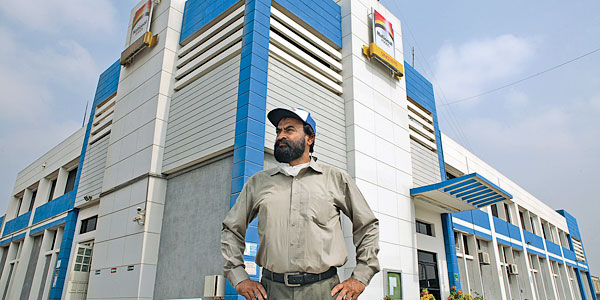
Muhammad Azhar Ali, factory manager for National Foods in Karachi, Pakistan, has a set work routine. At dawn he calls his production managers, who live in different parts of this sprawling city of 18 million on the Arabian Sea, to find out whether outbreaks of violence have rendered any areas dangerous.

If conditions seem especially risky, Ali slips two wallets into his pocket—one real and the other filled with expired credit cards and loose change, ready to hand over if bandits hold him up. He’s been held up once. He checks to make sure he isn’t riding in the same car as the day before, usually shunning his company-provided Toyota Corolla (a favorite vehicle for Pakistan’s upper-middle class) for his own less conspicuous Suzuki Cultus hatchback.

Finally, Ali and his driver head out to meet the 15 buses that have picked up employees at different collection points. Once all the buses have assembled at the rendezvous, Ali leads the convoy 50 kilometers from the city center to National Foods’ main plant. When the convoy arrives at 7:45 a.m. after a 90-minute drive, the workers line up outside a boundary wall topped with barbed wire and go through a body search as guards armed with shotguns look on. Ali monitors the security check on closed-circuit television from his office. The workday is about to begin. He has been up for more than three hours.

“Anyone else in my position in another country would have half the work I do,” says Ali, 49, who has worked at the company, Pakistan’s largest maker of spices and pickles, for over 25 years. “If I didn’t have to spend so much time figuring all this out, I would be looking at ways to enhance productivity.”

Companies across Pakistan’s industrial heartland are struggling to cope with rising insecurity, incessant power outages, and government corruption and inefficiency. Pakistan has lost 35,000 civilians in terrorist attacks since 2006. The war on the Taliban has cost $68 billion in destroyed infrastructure, higher security costs, lost foreign investment, and more.

Karachi has suffered retaliatory attacks from the Taliban such as the 16-hour siege at a naval air base in May that left 10 guards dead. Firefights erupt almost daily between the followers of Pakistan’s numerous political parties. Gunmen killed 664 people in the city between Jan. 1 and June 30, according to the Edhi Foundation, a charitable operator of ambulances. A Karachi resident is almost three times more likely to be killed by a bullet than in a road accident.

Gun battles lead to factory shutdowns in the city almost every month. The government hopes to boost economic growth from 2.4 percent in the last fiscal year to 4.2 percent this year. Growth needs to be 7 percent or more to accommodate all the young people joining the workforce. Large-scale manufacturing contracted 2.3 percent in May, vs. a year ago. Only 1.5 million of 180 million people pay taxes. Many of National Foods’ rivals pay no taxes as they sell unbranded spices bulked up with brick dust. “Working in Pakistan is like always being in a nightmare,” says Abid Muhammad Ganatra, director of finance for the nation’s biggest cement maker, Lucky Cement, in Karachi. “We have to work constantly to mitigate the pressures, to develop strategies to ensure growth. That’s why top management usually has sleeplessness.”

Some companies still manage to grow. At publicly traded National Foods, sales rose 23 percent to 7.4 billion rupees ($81 million) in the fiscal year ended June 30. In the company’s first year, in 1970, revenue was only 5,000 rupees. “Back then, it was a one-room operation where red chili, coriander, and turmeric were manually ground,” says Shakaib Arif, chief operating officer. “Now we make 60 million packets a year with 2,000 employees.”

Political violence is not National Foods’ worst problem. “The biggest challenge by far is energy,” says Arif, 38. Demand for electricity in Pakistan is three times supply. President Asif Ali Zardari is trying to attract independent power producers to Pakistan and has big plans to build hydroelectric plants.

Companies cannot wait. “We have created a mix of power we get from the grid, and what we can generate using our gas and diesel generators,” Ali says. “It costs three times as much to produce the power through generators.” Many factory floor, office, and bathroom lights are kept off to compensate. Ali often visits the powerhouse, a room at the plant that contains huge German-made diesel generators. Scarcity of fuel is a frequent worry. Bigger companies like Lucky Cement don’t rely on the national grid at all. It started generating its own power in 1996 and can produce 150 megawatts from its plants.

Karachi’s residents have taken to the streets this summer, burning tires and disrupting traffic to protest outages lasting days at a time. “In the morning I assess my workers,” says Sajjad Farooqi, who supervises National Foods’ weighing department. “If I find someone is stressed out because he hasn’t slept all night without electricity or that inflationary pressures are causing strain in his family, I have to change his shift and give him easier work.” Inflation averaged 15.5 percent over the last three years because of rising food and energy prices as well as record government borrowing.

National Foods tries to attend to the cultural and economic needs of its workers. A subsidized canteen sells a meal of curry and flatbread for as little as 25 rupees, while a prayer room accommodates 200. Separate working areas exist for women, an unusual perk in a Pakistani factory. Adult literacy classes are available. “We have to provide workers with incentives because they are facing a lot of pressures,” says Khalid Mahmud, who oversees 175 workers in the pickling operation. “Every month I give my most productive worker two T-shirts, 1,000 rupees, and take them to dinner. These prize winners are then keen to help us out when less workers show up and we need to meet production targets.”

The company joined 13 other factories earlier this year to hire a security patrol. A driver, a supervisor, and three armed agents patrol the streets from 7 p.m. to 7 a.m. in an open jeep, stopping at each factory to ensure the guards are not asleep. “We have to plan knowing we are in a war zone,’’ says National Foods Chairman Abdul Majeed. Last year the company was warned by the Karachi police that Taliban fighters had entered the city and were looking for factory jobs to support themselves and their families until they returned to battle. National Foods stepped up its screening and referral process.

The country’s lack of security takes its toll. “Every time I stop at a light, I look around me and think a gunman is about to come,” says Arif, who drives in a small car when visiting the Karachi factory. “I’ve already been held up three or four times.” Ali, the factory manager, has his own way of handling the tension. “When I get into the car in the morning, I close my eyes and rest. I don’t want to know if any gunman is coming. I let my driver take all the stress.”

The bottom line: Violence and energy shortages strain Pakistan’s economy, which is expected to grow 4 percent this year, well below India’s 8 percent rate.

Why My Father Hated India

By Aatish Taseer for The Wall Street Journal

Ten days before he was assassinated in January, my father, Salman Taseer, sent out a tweet about an Indian rocket that had come down over the Bay of Bengal: “Why does India make fools of themselves messing in space technology? Stick 2 bollywood my advice.”

My father was the governor of Punjab, Pakistan’s largest province, and his tweet, with its taunt at India’s misfortune, would have delighted his many thousands of followers. It fed straight into Pakistan’s unhealthy obsession with India, the country from which it was carved in 1947.

Though my father’s attitude went down well in Pakistan, it had caused considerable tension between us. I am half-Indian, raised in Delhi by my Indian mother: India is a country that I consider my own. When my father was killed by one of his own bodyguards for defending a Christian woman accused of blasphemy, we had not spoken for three years.

To understand the Pakistani obsession with India, to get a sense of its special edge—its hysteria—it is necessary to understand the rejection of India, its culture and past, that lies at the heart of the idea of Pakistan. This is not merely an academic question. Pakistan’s animus toward India is the cause of both its unwillingness to fight Islamic extremism and its active complicity in undermining the aims of its ostensible ally, the United States.

The idea of Pakistan was first seriously formulated by neither a cleric nor a politician but by a poet. In 1930, Muhammad Iqbal, addressing the All-India Muslim league, made the case for a state in which India’s Muslims would realize their “political and ethical essence.” Though he was always vague about what the new state would be, he was quite clear about what it would not be: the old pluralistic society of India, with its composite culture.

Iqbal’s vision took concrete shape in August 1947. Despite the partition of British India, it had seemed at first that there would be no transfer of populations. But violence erupted, and it quickly became clear that in the new homeland for India’s Muslims, there would be no place for its non-Muslim communities. Pakistan and India came into being at the cost of a million lives and the largest migration in history.

This shared experience of carnage and loss is the foundation of the modern relationship between the two countries. In human terms, it meant that each of my parents, my father in Pakistan and my mother in India, grew up around symmetrically violent stories of uprooting and homelessness.

But in Pakistan, the partition had another, deeper meaning. It raised big questions, in cultural and civilizational terms, about what its separation from India would mean.

In the absence of a true national identity, Pakistan defined itself by its opposition to India. It turned its back on all that had been common between Muslims and non-Muslims in the era before partition. Everything came under suspicion, from dress to customs to festivals, marriage rituals and literature. The new country set itself the task of erasing its association with the subcontinent, an association that many came to view as a contamination.

Had this assertion of national identity meant the casting out of something alien or foreign in favor of an organic or homegrown identity, it might have had an empowering effect. What made it self-wounding, even nihilistic, was that Pakistan, by asserting a new Arabized Islamic identity, rejected its own local and regional culture. In trying to turn its back on its shared past with India, Pakistan turned its back on itself.

But there was one problem: India was just across the border, and it was still its composite, pluralistic self, a place where nearly as many Muslims lived as in Pakistan. It was a daily reminder of the past that Pakistan had tried to erase.

Pakistan’s existential confusion made itself apparent in the political turmoil of the decades after partition. The state failed to perform a single legal transfer of power; coups were commonplace. And yet, in 1980, my father would still have felt that the partition had not been a mistake, for one critical reason: India, for all its democracy and pluralism, was an economic disaster.

Pakistan had better roads, better cars; Pakistani businesses were thriving; its citizens could take foreign currency abroad. Compared with starving, socialist India, they were on much surer ground. So what if India had democracy? It had brought nothing but drought and famine.

But in the early 1990s, a reversal began to occur in the fortunes of the two countries. The advantage that Pakistan had seemed to enjoy in the years after independence evaporated, as it became clear that the quest to rid itself of its Indian identity had come at a price: the emergence of a new and dangerous brand of Islam.

As India rose, thanks to economic liberalization, Pakistan withered. The country that had begun as a poet’s utopia was reduced to ruin and insolvency.

The primary agent of this decline has been the Pakistani army. The beneficiary of vast amounts of American assistance and money—$11 billion since 9/11—the military has diverted a significant amount of these resources to arming itself against India. In Afghanistan, it has sought neither security nor stability but rather a backyard, which—once the Americans leave—might provide Pakistan with “strategic depth” against India.

In order to realize these objectives, the Pakistani army has led the U.S. in a dance, in which it had to be seen to be fighting the war on terror, but never so much as to actually win it, for its extension meant the continuing flow of American money. All this time the army kept alive a double game, in which some terror was fought and some—such as Laskhar-e-Tayyba’s 2008 attack on Mumbai—actively supported.

The army’s duplicity was exposed decisively this May, with the killing of Osama bin Laden in the garrison town of Abbottabad. It was only the last and most incriminating charge against an institution whose activities over the years have included the creation of the Taliban, the financing of international terrorism and the running of a lucrative trade in nuclear secrets.

This army, whose might has always been justified by the imaginary threat from India, has been more harmful to Pakistan than to anybody else. It has consumed annually a quarter of the country’s wealth, undermined one civilian government after another and enriched itself through a range of economic interests, from bakeries and shopping malls to huge property holdings.

The reversal in the fortunes of the two countries—India’s sudden prosperity and cultural power, seen next to the calamity of Muhammad Iqbal’s unrealized utopia—is what explains the bitterness of my father’s tweet just days before he died. It captures the rage of being forced to reject a culture of which you feel effortlessly a part—a culture that Pakistanis, via Bollywood, experience daily in their homes.

This rage is what makes it impossible to reduce Pakistan’s obsession with India to matters of security or a land dispute in Kashmir. It can heal only when the wounds of 1947 are healed. And it should provoke no triumphalism in India, for behind the bluster and the bravado, there is arid pain and sadness.

—Mr. Taseer is the author of “Stranger to History: A Son’s Journey Through Islamic Lands.” His second novel, “Noon,” will be published in the U.S. in September

-Pakistanis for Peace Editor’s Note– Aatish Taseer’s brutally honest and forthright column is one of the best articles I have read in a long time.  As a Pakistani American, I find a lot of truth in what he is saying, no matter how ill received it may be back in Pakistan, I feel that Aatish does make some good points and it was well worth sharing with you readers.

US Charges Iran with al-Qaeda Links

By Anna Fifield for The  Financial Times

The US government has accused Iran of allowing al-Qaeda operatives to funnel a “significant” amount of money through its territory to the group’s leaders in Pakistan and Afghanistan, making the strongest allegation yet of a link between Tehran and the terrorist network.
The Treasury Department on Thursday imposed sanctions on six men that it says are operating through Iran as part of a “critical funding and facilitation network for al-Qaeda”.

Please respect FT.com’s ts&cs and copyright policy which allow you to: share links; copy content for personal use; & redistribute limited extracts. Email ftsales.support@ft.com to buy additional rights or use this link to reference the article – http://www.ft.com/cms/s/0/43c235e8-b936-11e0-b6bb-00144feabdc0.html#ixzz1TUnJnl8U

The designation was also a direct hit at the theocratic regime in Iran, said David Cohen, the Treasury’s undersecretary for terrorism and financial intelligence.

“Our sense is that this network is operating through Iranian territory with the knowledge of and at least the acquiescence of the Iranian authorities,” Mr Cohen said. “They are not operating in secret. It is pursuant to an agreement.”

The Treasury targeted Ezedin Abdel Aziz Khalil, a senior al-Qaeda facilitator who it said has been living and operating in Iran since 2005 under an agreement between the network and the Tehran regime.

It said that the Iranian authorities were allowing Mr Khalil to move both money and recruits from across the Middle East through Iran to Pakistan. He required each operative to deliver $10,000 to al-Qaeda in Pakistan, it said.

The Treasury also designated five others who were linked to former al-Qaeda leader Osama bin Laden or to al-Qaeda in Iraq, or who had helped deliver money or extremists to the network’s base in Pakistan.

They include Atiyah abd al-Rahman, a Libyan who is the network’s overall commander in Pakistan’s tribal areas. The US is also offering a $1m reward for information leading to his arrest.

The designations ban Americans from financial dealings with the men, and freeze any assets that they might have in the US.
The actions expose “Iranian support for international terrorism,” Mr Cohen said. It is the first time the US has identified signs of agreement between Iran and al-Qaeda.

Suggestions of links between Iran and al-Qaeda are often questioned because Iran’s theocratic regime is from the Shia sect of Islam while the terrorist network is entirely Sunni. Iran is said to have detained Bin Laden’s oldest son, Saad, for several years before releasing him in 2009.
But there have been persistent reports of co-operation between the two given that they share a mutual enemy: the US.
A report for the congressional anti-terrorism caucus in May said that Iran’s elite Al-Quds force, part of the Islamic Revolutionary Guard Corps, was offering support to al-Qaeda, including helping it “counter” American interests.

In taking the action, the Treasury criticised Kuwait and Qatar for being “substantial facilitators for al-Qaeda” and for having “permissive” financial environments that allowed money to flow from both Gulf countries to Iran.

“There is a substantial amount of money flowing out of Kuwait and Qatar through Iran to al-Qaeda’s or their leadership in Pakistan for all of their activities in the Afghanistan/Pakistan area,” Mr Cohen said.

The US would work with the UN’s al-Qaeda sanctions committee to push for multilateral sanctions.

Norway Suspect Wanted European Anti-Muslim Crusade

As Reported by The Associated Press

The man blamed for killing at least 93 people during terrorist attacks on Norway’s government headquarters and an island retreat for young people wanted to trigger an anti-Muslim revolution in Norwegian society, his lawyer said Sunday.

A chief surgeon treating the wounded from Friday’s mass shooting, meanwhile, said he believes the attacker used special “dum-dum” bullets that cause massive internal injuries. The doctor told The Associated Press that the killer’s chosen ammo “exploded inside the body.”

The manifesto that 32-year-old suspect Anders Behring Breivik published online ranted against Muslim immigration to Europe and vowed revenge on those “indigenous Europeans” whom he deemed had betrayed their heritage. The document said they would be punished for their “treasonous acts.”

Police said they were analyzing the approximately 1,500-page document. They said it was published Friday shortly before the back-to-back bomb and gun attacks.

Breivik’s lawyer, Geir Lippestad, said his client wrote the document alone. While police said they were investigating reports of a second assailant on the island, the lawyer said Breivik claims no one helped him.

The treatise detailed plans to acquire firearms and explosives, and even appeared to describe a test explosion: “BOOM! The detonation was successful!!!” It ends with a note dated 12:51 p.m. on July 22: “I believe this will be my last entry.”

That day, a bomb killed seven people in downtown Oslo and, about 90 minutes later, a gunman began opening fire on about 600 young people at a retreat on Utoya Island. Police said the death toll in the shooting rose by one Sunday to 86.

That brings total fatalities to 93, with more than 90 wounded. People remain missing at both scenes. Police have not released the names of any victims.

Authorities revealed Sunday that one of the attacker’s first victims on the island was an off-duty police officer who had been hired by the camp directors to provide private security in his spare time. Oslo Police Union Chairman Sigve Bolstad declined to identify the victim.

That detail sheds new light on the confusion many survivors described during the 90-minute massacre. The attacker arrived dressed as a policeman, and some campers were killed when they approached the killer thinking he was there to save them.

Dr. Colin Poole, head of surgery at Ringriket Hospital in Honefoss northwest of Oslo, told The Associated Press the gunman used special bullets designed to disintegrate inside the body and cause maximum internal damage. Poole said surgeons treating 16 gunshot victims have recovered no full bullets.

“These bullets more or less exploded inside the body,” Poole said. “It’s caused us all kinds of extra problems in dealing with the wounds they cause, with very strange trajectories.”

Ballistics experts say the so-called “dum-dum” bullets also are lighter in weight and can be fired with greater accuracy over varying distances. They commonly are used by air marshals and hunters of small animals. Such characteristics potentially would have allowed the gunman to carry more ammunition and fire his weapons at varying targets without adjusting his sights.

Officials at the lakeside scene of the island shooting spent Sunday continuing to account for the dead.

Six hearses pulled up at the shoreline as orange-jacketed Red Cross searchers on small boats slowly explored the extensive shoreline.

Body parts remain inside the Oslo building, which housed the prime minister’s office. In a chilling allusion to the fact that the tragedy could have even been greater, police said Sunday that Breivik still had “a considerable amount” of ammunition for both his guns — a pistol and an automatic rifle — when he surrendered.

Police and his lawyer have said that Breivik confessed to the twin attacks, but denied criminal responsibility for a day that shook peaceful Norway to its core and was the deadliest ever in peacetime. Breivik has been charged with terrorism and will be arraigned Monday.

Lippestad said his client has asked for an open court hearing “because he wants to explain himself.”

Police Chief Sveinung Sponheim said a forensics expert from Interpol was joining the investigation Sunday.

European security officials said they were aware of increased Internet chatter from individuals claiming they belonged to the Knights Templar group that Breivik describes, in fantastical terms, in the manifesto. They said they were still investigating claims that Breivik, and other far-right individuals, attended a London meeting of the group in 2002. The two officials spoke on condition of anonymity because they were not authorized to speak about the investigation.

The officials would not confirm whether they had identified Breivik as a potential threat.

As authorities pursued the suspect’s motives, Oslo mourned the victims. Norway’s King Harald V and his wife Queen Sonja and Prime Minister Jens Stoltenberg crowded into Oslo Cathedral, where the pews were packed, and people spilled into the plaza outside. The area was strewn with flowers and candles, and people who could not fit inside the grand church huddled under umbrellas amid drizzling rain.

The king and queen both wiped tears from their eyes during the service themed on “sorrow and hope.”

Afterward, people sobbed and hugged one another in the streets. Many lingered over the flowers and candles. The royal couple and prime minister later visited the site of the bombing in Oslo. The royals then visited shooting survivors at Ringriket Hospital.

The attacker picked targets linked to Norway’s left-wing Labor Party. Breivik’s manifesto pilloried the political correctness of liberals and warned that their work would end in the colonization of Europe by Muslims.

Such fears may derive, at least in part, from the fact that Norway has grown increasingly multicultural in recent years as the prosperous Nordic nation has opened its arms to thousands of conflict refugees from Pakistan, Iraq and Somalia. The annual Labor Party retreat — which the prime minister, Stoltenberg, fondly remembers attending in his own youth — reflected the country’s changing demographics as the children of immigrants have grown increasingly involved in Labor politics.

The assaults have rattled Norway, home to the Nobel Prize for Peace and where the average policeman patrolling in the streets doesn’t carry a firearm. Norwegians pride themselves on the openness of their society and cherish the idea of free expression.

“He wanted a change in society and, from his perspective, he needed to force through a revolution,” Lippestad, the lawyer, told public broadcaster NRK. “He wished to attack society and the structure of society.”

Lippestad said Breivik spent years writing the manifesto titled “2083 – A European Declaration of Independence.” It was signed “Andrew Berwick.” The document later explained that 2083 was to be the year when European government would be overthrown en masse.

Sponheim, the police chief, said there was no indication whether Breivik had selected his targets or fired randomly on the island. The manifesto vowed revenge on those it accused of betraying Europe.

“We, the free indigenous peoples of Europe, hereby declare a pre-emptive war on all cultural Marxist/multiculturalist elites of Western Europe. … We know who you are, where you live and we are coming for you,” the document said. “We are in the process of flagging every single multculturalist traitor in Western Europe. You will be punished for your treasonous acts against Europe and Europeans.”

The use of an anglicized pseudonym could be explained by a passage in the manifesto describing the founding, in April 2002 in London, of a group he calls a new Knights Templar. The Knights Templar was a medieval order created to protect Christian pilgrims in the Holy Land after the First Crusade in the 11th century.

A 12-minute video clip posted on YouTube with the same title as the manifesto featured symbolic imagery of the Knights Templar and crusader kings as well as slides suggesting Europe is being overrun by Muslims.

Police could not confirm whether Breivik posted the video, which also featured photographs of him dressed in a formal military uniform and in a wet suit pointing an assault rifle.

The video contained a series of slides that accused left-wing politicians in Europe of allowing Muslims to overrun the continent. One image showed the BBC’s logo with the “C” changed into an Islamic crescent. Another referenced the former Soviet Union, declaring that the end result of the left’s actions would be an “EUSSR.”

In London, the leader of Ramadhan Foundation, one of Britain’s largest Muslim groups, said mosques are being extra vigilant in the wake of the attacks. Mohammed Shafiq told The AP he was talking to European Muslim leaders and British police about the need to increase security.

The last 100 pages of the manifesto apparently lay out details of Breivik’s social and personal life, including his steroid use and an intention to solicit prostitutes in the days before the attack.

Also Sunday, police carried out raids in an Oslo neighborhood seeking explosives. Police spokesman Henning Holtaas said no explosives were found and no one was arrested.

Police said the bomb used in the Oslo blast was a mixture of fertilizer and fuel similar to what home-grown U.S. terrorists used to blow up a federal building in Oklahoma City in 1995.

A farm supply store said Saturday they had alerted police that Breivik bought six metric tons of fertilizer, a popular terrorist component for car bombs.

Musharraf Moves to Mend US-Pakistan Relations

By Lydia Mulvany for The Mimami Hearld

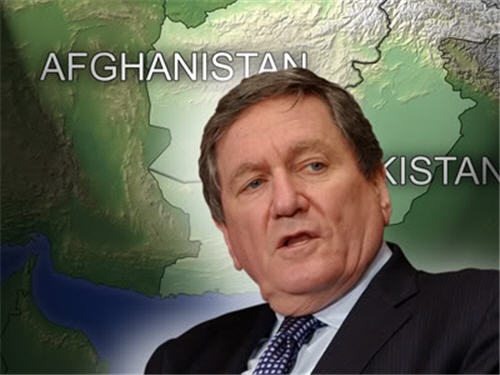
Former Pakistani President Pervez Musharraf said Thursday that his country wasn’t complicit in hiding Osama bin Laden but was “extremely negligent” for not knowing that the al-Qaida leader was living a 75-mile drive from the Pakistani capital.

Speaking in Washington, the former military dictator sought to heal a U.S.-Pakistani relationship that’s become badly strained since the American raid May 2 that killed bin Laden, saying mutual interests in the global war on terrorism bound the countries and that blaming each other was counterproductive.

“The United States and Pakistan must restore trust,” Musharraf told an audience at the Woodrow Wilson International Center for Scholars. “Confrontation would be most unwise.”

The bin Laden incident pushed U.S.-Pakistani relations to their lowest point in years. American officials weren’t happy when, after a decade-long hunt, they found al-Qaida’s leader living in a garrison town so close to Islamabad. Pakistani officials were outraged that they weren’t told about the unilateral raid beforehand.

Since the raid, Pakistan has restricted visas for American officials and expelled military trainers. The U.S. has cut off $800 million, about one-third of its aid to Pakistan’s military. The U.S. has long complained of ties between Pakistan’s military and insurgent groups that have attacked American-led forces in neighboring Afghanistan.

But Musharraf said that if Pakistani intelligence had colluded with bin Laden, it also would have known that the CIA was operating a safe house nearby and whisked the al-Qaida leader away. He described bin Laden’s high-walled compound in the town of Abbottabad as a normal dwelling that wouldn’t have raised suspicion.

He also claimed that Abbottabad – which is home to a major military college that’s been described as Pakistan’s West Point, as well as other military installations – wasn’t a garrison town but a touristy resort area with many colleges.

The recent raid was a “violation of sovereignty,” Musharraf said, echoing a widespread Pakistani complaint. He added that Pakistani antipathy toward the U.S. also stems from the American campaign of drone strikes on militant targets, which reportedly have caused civilian casualties, as well as lingering bitterness over U.S. sanctions for developing nuclear weapons in the 1990s.

The way forward for Pakistan, Musharraf said, is to show that it isn’t complicit with terrorists and to deal with domestic extremism. It also needs to establish an honest, stable government in the 2013 elections, said the former leader, who’s expected to mount a run for president.

Musharraf, who seized power in a military coup in 1999 and resigned in 2008, embodied the frustration and contradictions of American policy toward Pakistan.

Mark Quarterman, a senior adviser at the Center for Strategic and International Studies, a nonpartisan Washington research center, said that many wanted to see Musharraf as a modern, progressive leader: He wasn’t an extremist, his wife and daughter didn’t wear veils and the family even had a dog, an animal many Muslims view as impure. Ultimately, however, Musharraf’s rule was a military dictatorship and, according to many experts, he didn’t do enough to rein in Taliban militants who were operating in remote corners of Pakistan.

Mumbai Counts Its Losses

As Reported by The Hindustan Times

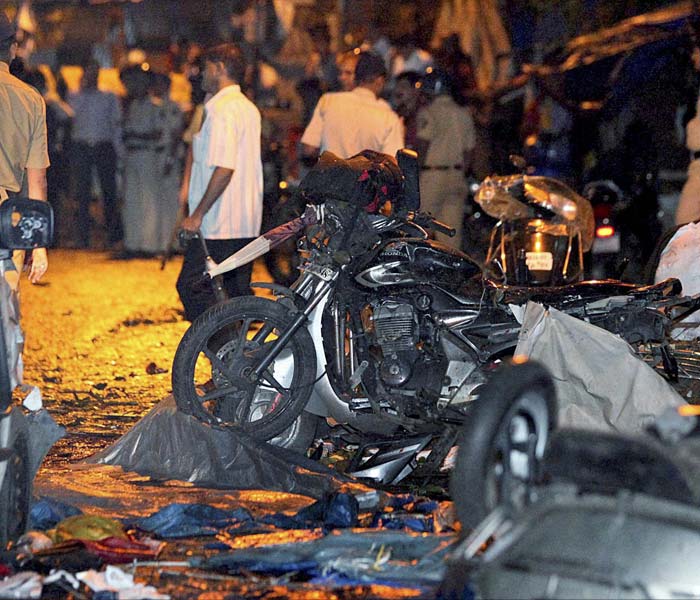
The improvised explosive devices (IEDs) used in the triple bombings were not crude but prepared with “some level of sophistication”, the government said as investigators scrambled for clues on a rain-soaked Thursday and a weary Mumbai picked up the pieces after yet another terror strike.

A day after 17 people were killed and 131 injured when synchronised blasts rocked India’s financial capital, striking the congested areas of Dadar, Zaveri Bazaar and Opera House within minutes of each other, there was no breakthrough on who was behind it.

“We will ensure no matter wherever the accused are, we will identify them and bring them to book,” Maharashtra Anti-Terrorism Squad (ATS) chief Rakesh Maria vowed, appealing for faith and trust.

In a flurry of activity, Prime Minister Manmohan Singh and Congress chief Sonia Gandhi headed for Mumbai. Home minister P. Chidambaram reached on Wednesday night and opposition leader LK Advani on Thursday morning.

Resigned, outraged or simply stoic, Mumbaikars rallied around to battle the crisis, 31 months after the Nov 26-28, 2008 terror assault, India’s worst. They waited outside morgues to claim the bodies of their kin, lined up at hospitals or packed into trains and buses to go about their daily work.

“I am a Mumbaikar and we shall not be scared by these terror attacks. Like me, lakhs of co-commuters are in the trains, buses and roads. It actually helps gives strength to each other,” Archana Shukla said as she went to work.

In Zaveri Bazaar, Mumbai’s most popular address for jewellery that on Wednesday saw its third terror strike, merchants were shocked. But said firmly they were staying put.

“What is the point in shifting base? Are other business locations safer?” asked Raju Solanki, a gold jeweller.

That was a question even experts were loathe to answer as investigators began unravelling the conspiracy behind this latest assault by yet unknown terrorists.

Various agencies, including the National Security Guard (NSG), the Central Forensic Science Laboratory (CFSL) and the National Investigation Agency (NIA) and Mumbai Police, were involved in the probe.

According to union home secretary RK Singh, the ammonium nitrate-based IEDs were “not crude” but indicated “some level of sophistication”.

A top doctor at one of the hospitals where the bodies of the dead were taken for a post mortem said an electric circuit, that may have triggered the blast, was found on one of them, leading to speculation that it may have been a suicide bomber at work.

Sources said traces of ammonium nitrate, also confirmed by Chidambaram, and fuel had been found in the explosives.

“Ammonium nitrate was used with a timer. The fact that they all took place within minutes of each other — eight-to-10 minutes — shows that it was a coordinated terror attack,” Chidambaram said.

The CCTV footage holds the key. Sources told IANS that some of the footage was marred by the rain and bad light Wednesday evening.

Hours after visiting the terror sites, Chidambaram said 131 people had been taken to 13 hospitals with injuries. He said one severed head was also found at the site that could take the death toll to 18.

Addressing a press conference in Mumbai, he admitted there was no prior intelligence input.

Quick to seize the initiative, BJP leader Advani pointed the needle of suspicion towards Pakistan.

“It is a policy failure not intelligence failure. There have been repeated attacks on Mumbai, this is a failure of policy,” Advani told reporters.

Advani quoted reports of a probable link between the blast and the Indian Mujahideen (IM) and said even if it were behind the attack it was being sustained by Pakistan.

“The last attack on our land is proved to have been engineered by the ISI (Inter-Services Intelligence),” Advani said.

“So far as India is concerned, the government of India should shed its ambivalence to terrorism,” Advani said.

Pakistan’s foreign minister comes to New Delhi for talks July 26-27 and external affairs minister SM Krishna said the terror strikes would not impact the strategic dialogue.

The timing of the attack has raised suspicions in informed strategic circles over whether the serial blasts were engineered by those who wanted to derail the peace process in the subcontinent.

Pakistanis for Peace Editor’s Note– We at Pakistanis for Peace are saddened by this loss of life and would like to let our Indian friends know that we as Pakistanis for Peace stand in solidarity with India against acts of terror.

Pakistan threatens to withdraw troops from Afghan border over US aid reduction

By Rob Crilly for The Telegraph

Pakistan has warned it will withdraw troops from the Afghan border where they are fighting Taliban and al-Qaeda-linked insurgents if the US does not reinstate $800m in military assistance which has been suspended amid a worsening diplomatic row.

The cash includes $300m to reimburse the Pakistan military for deploying troops in the mountainous tribal areas close to Afghanistan.

Chaudhry Ahmad Mukhtar, the country’s defence minister, said without it Pakistan could not afford to keep troops at 1,100 checkpoints near the mountainous border.

“The next step would be that the government or the armed forces will pull back the forces from the border areas,” he told the Express 24/7 news channel. “We cannot afford to keep military out in the mountains for such a long period.”

Officials say 147,000 troops are deployed in the tribal areas, where they are engaged in operations against Taliban and al-Qaeda cells.

Relations between the two countries have been fraught ever since they were forced into an awkward alliance in the aftermath of 9/11. This year they have plunged to new depths.

You might like:Prince Harry’s new girlfriend is his cousin (eight times removed)29 Jun 2011(Telegraph News)
News of the World final crossword has a message for ‘ catastrophe’ Rebekah Brooks10 Jul 2011(Telegraph News)
As Gordon and Sarah Brown learnt of son’s illness, The Sun editor Rebekah Brooks called to say she knew11 Jul 2011(Telegraph News)

Pakistan’s military officers are furious that the Pentagon did not inform them of a covert raid to kill or capture Osama bin Laden in May in the town of Abbottabad, only 30 miles from the capital Islamabad.

Since then they have stepped up condemnation of CIA drone strikes against terror suspects and expelled American military trainers, as they try noisily to distract domestic attention from their own failure to find bin Laden or spot the American helicopters as they flew through Pakistani air space.

In return, US officials have questioned Pakistan’s commitment to tackling militants and accused the government of assassinating a troublesome journalist.

At the weekend it emerged that the Pentagon was to end a third of its annual $2.7bn assistance to the Pakistan military.

In Washington, Colonel David Lapan, Pentagon spokesman, said the military aid could be resumed if Pakistan increased the number of visas for US personnel and reinstated the training missions.

However, analysts in Islamabad said such threats would be counterproductive and warned of an anti-American backlash.

“The US needs to treat Pakistan as a country it’s not trying to bully into submission,” said Cyril Almeida, a columnist with Dawn newspaper.

In the meantime, the US has begun using land routes through Central Asia to resupply troops in Afghanistan in case Pakistan shuts the Khyber Pass to convoys carrying food and fuel.

A fresh wave of drone attacks may also exacerbate tension. At least 45 suspected militants were killed by missiles in Pakistan’s northwest, according to local intelligence officials on Tuesday, one of the largest death tolls to date in the controversial air bombing campaign.

US Suspends Pakistan Military Aid as Diplomatic Relations Worsen

By Saeed Shah for The Guardian

The Pakistan military declared it did not need US military aid as the White House confirmed that it would withhold some $800m (£498m) in assistance to the country’s armed forces.

The row will worsen the already poisonous relationship between the two “allies”, which since the unilateral US raid to kill Osama bin Laden in May has lurched towards breakdown.

Pakistan recently expelled US military trainers from the country, limited the ability of US diplomats and other officials to get visas, and restricted CIA operations on its territory. “The Pakistani relationship is difficult but it must be made to work over time. But until we get through these difficulties we will hold back some of the money that the American taxpayers have committed to give them,” William Daley, the White House chief-of-staff, told ABC News on Sunday.

At stake is Pakistani co-operation against al-Qaida, the Taliban and other extremist groups, which the increasingly bitter relationship is putting at risk. Much of al-Qaida’s remaining leadership is believed to be hiding in Pakistan, while Pakistani territory is used as a safe haven by Afghan Taliban and the allied Haqqani network, fighting across the border in Afghanistan.

The new US defence secretary, Leon Panetta, said over the weekend that he believed Bin Laden’s successor, Ayman al-Zawahiri, was in Pakistan’s tribal area and “he’s one of those we would like to see the Pakistanis target”. Pakistan responded by asking for the US to share the intelligence on Zawahiri’s whereabouts.

Nuclear-armed Pakistan is meanwhile fighting its home-grown extremists in the tribal area on the border with Afghanistan, where a new offensive was launched earlier this month. Major General Athar Abbas, the chief spokesman for the Pakistan military, said that the military had received no formal notification of any aid being cut. He also pointed out that the army chief, General Ashfaq Kayani, had already declared that cash reimbursements to the military, known as coalition support funds, should go instead to the civilian government, where there was more need.

“We have conducted our [anti-extremist] military operations without external support or assistance,” said Abbas. “Reports coming out of the US are aimed at undermining the authority of our military organisations.”

Critical stories about Pakistan are leaked on an almost daily basis to the American press, riling Pakistani public and official opinion against Washington. Many in Pakistan believe there is a concerted American effort to weaken Pakistan and its armed forces, which are some of the largest in the world.

For Washington, Pakistan’s refusal to launch an offensive against the Haqqani network and suspicions that Bin Laden benefited from some kind of official support to live in Pakistan has corroded ties.

There are also questions hanging over future civilian aid, which is meant to provide $1.5bn a year in economic help.

Cyril Almeida, a columnist with Pakistan’s Dawn newspaper, said the country was in danger of becoming internationally isolated, while US policy towards Pakistan was muddled.

“The US can’t decide they if they want to stay in this relationship or cut Pakistan off,” he said. “These leaks and pressure tactics just confirm to the army generals the view that America is no friend of Pakistan and it wishes Pakistan harm.”

Since 2001, the US has provided $21bn in civilian and military assistance, including $4.5bn in the 2010-2011 financial year, as aid was increased under the Obama administration. Two proposed bills in Congress over the last week, which were voted down, would have cut off aid to Pakistan altogether.

Pakistan’s economy is spiralling downwards, with electricity shortages shutting down industry, and rising food and fuel prices causing protests on the streets. Karachi, the country’s economic powerhouse, is often shut down by ethnic gang violence, which has claimed more than 100 lives in the current spate of bloodshed.

The End of AfPak

By Scott Malcomson for The New York Times

Remember how after 9/11, Osama bin Laden’s attacks on us could be linked to almost anything, from shopping habits to the rediscovery of Western values to carbon-pricing schemes? Something similar appears to be happening with Bin Laden’s death. Jihadism sure isn’t what it used to be. After 10 years, it seems, the time has come to go home. Troops are and will be coming back to the United States from Iraq and Afghanistan. The military budget will be cut. The outgoing secretary of defense feels able to openly mock NATO because, presumably, he thinks he can afford to — because it doesn’t matter all that much. The global war on terror is being downgraded from Armageddon to something more out of Leviticus: a tricked-out police action, just as John Kerry, in this magazine, always said it should be. On Sunday, Helene Cooper and Mark Landler reported that “American success in the counterterrorism campaign would seem to bolster arguments for a swift withdrawal from Afghanistan.” By Tuesday morning, they were reporting that President Obama would announce his withdrawal plans on Wednesday. Meanwhile, a Harris poll revealed that 51 percent of Americans and 54 percent of Britons believed “the death of Bin Laden meant it was time to bring troops from their countries home.”

That isn’t quite how it looked when I was in Washington a few weeks ago and spoke with about a dozen current and former American officials and with Pakistanis. The impression they each gave was that American withdrawal would be speeded not because of Bin Laden’s death but because of Pakistan’s reaction to it. After the initial shock, Pakistan’s (government-influenced) press latched onto a narrative of “national humiliation” as a result of the American raid, rather than, say, one of jubilation at the demise of a killer whose fantasies have brought Pakistan nothing but misery. A younger generation of military officers — Pakistan is dominated by its military — seemed at times about to revolt in reaction to the insult to Pakistan’s sovereignty. And the Inter Services Intelligence (I.S.I.), Pakistan’s ubiquitous military intelligence outfit, reacted, as was subsequently reported, by scouring the neighborhood around Bin Laden’s house for … evidence of how the C.I.A. found out he was there, and to determine who had been helping the Americans.

Finally, the Pakistan government did not respond to the Bin Laden raid by pressing its new advantage and rolling up terrorist networks across the land. No, it did not do that at all. So Secretary of State Hillary Rodham Clinton and Admiral Mike Mullen, chairman of the joint chiefs of staff, went to Islamabad and on May 27 presented a list of demands. These included the arrest or elimination of Ayman al-Zawahiri (of Al Qaeda), Ilyas Kashmiri (a long-sought semi-free-agent and former Pakistani military man), Sirajuddin Haqqani (of the AfPak-border based Haqqani network) and Atiya Abdur Rahman (Al Qaeda), and the shutting down of bomb factories in Pakistan.

By June 3, Kashmiri was dead. But this promising start now seems isolated. The other wanted men are still at large. The bomb-makers might well be getting tipped off. The revolt by younger Pakistani officers seemed only to get worse.

In short, the U.S. and Pakistan are really not getting along. Among members of Congress, beating up Pakistan has become ritualized; Senators McCain and Rogers were doing it again on the Sunday programs. I wondered: How many times can Pakistan be abandoned? As Bruce Riedel, a former C.I.A. officer and the head of President Obama’s first major AfPak review, shows in his excellent new book, “Deadly Embrace: Pakistan, America and the Future of Islamist Jihad,” embrace and abandonment have formed the pattern of American-Pakistani relations since the majority-Muslim nation was formed out of the breakup of British India in 1947. Harry Truman’s lack of interest yielded to Dwight Eisenhower’s enthusiasm for Pakistan as an anti-Communist bulwark and a base for spying on the Soviets. The relationship was and remained built around security and intelligence. Lyndon Johnson reversed course when India and Pakistan went to war in 1965; he cut off both, but Pakistan had, unlike India, been a strong ally, and it felt betrayed. This set the pattern: ultimately, Pakistan was tactical and India was strategic.

Now, after almost 10 years of intense engagement, Pakistan and the U.S. appear set for another split; at least that was the consensus among the officials I spoke with. There was a pervasive sadness in these conversations. It was due in part to the sheer human effort that has gone into the U.S.-Pakistan relationship. A lot of spies and soldiers and diplomats and politicians have put years of their lives into making “AfPak” work, which requires making Pak work. A lot (not all) of that effort seems to be going down the drain, along with much of the billions of taxpayer dollars that financed it.

There is also personal sadness in that the AfPak effort was associated toward the end with Richard Holbrooke, whose death late last year brought the foreign-policy world up short. Holbrooke did not take great care of himself, so objectively his death could not be entirely a surprise, and among people over 70 the reactions I heard were more of the well-what-did-you-expect variety. But in the 35-to-65 range it was different. Holbrooke represented, very attractively, the assertion of youth and hope against experience. Even at 69 he had a distinct eagerness, even boyishness, alongside the baritone gravitas. He attracted bright young people. He could be young and old at the same time. Once he was gone, that sort of generational bridging disappeared. (Older figures are few in this administration.) The sense of continuity (as well as of optimism) is weakening. There’s something missing now.

There was also a sense of ideological loss of direction. For all their differences, Bill Clinton and George W. Bush shared a tangible optimism about American governmental involvement abroad. President Obama is different, and even if he weren’t the national mood is. The people’s representatives in Congress are vying to bring troops home faster, and if there is an internationalist remaining in the House he or she is keeping quiet. The Republican candidates for president seem to have settled on anti-war isolationism as a winning position. Obama’s great strength in foreign policy — his ability to repackage, and optimize, American power in a multipolar world — is the strategy that dare not speak its name, or it will bring accusations of “declinism.”

Finally, there is the tremendous sadness of Pakistan itself. The country doesn’t have enough water. It lacks the electricity to develop its industries. Literacy, by some reckonings, is actually declining. Democracy has been restored but the government is hardly stable. The one truly semi-stable institution, the military, is struggling against itself, just as Pakistanis are dividing, and attacking each other on an increasing scale (which is saying something).

But, in a way, the saddest thing of all, from a foreign-policy point of view — Pakistani or American — is that the one great card Pakistan has to play is to make itself a problem. Pakistan formed itself into a regional player through building its army, running terrorist proxies in Kashmir and Afghanistan, indulging in enough Islamist millenarianism to make itself frightening, and developing nuclear weapons. None of these strategies have a good future. But in the absence of a long-term committed relationship — what Holbrooke promoted as a “strategic partnership” — with the United States or, perhaps, with China, Pakistan is left with fear as its most successful export.

There was some discussion in Washington as to whether Mullah Omar’s name was on that list that Clinton and Mullen presented in Islamabad. It almost doesn’t matter. The doubt itself is the message: Pakistan stays valuable because it has terrorist “ties” or “links” or “proxies” or whatever. As national existential dilemmas go, Pakistan’s is particularly nightmarish. The U.S. will leave them to it — abandonment again — and choose the happier relationship with India. Secretary Clinton will be at the regional forum of the Association of Southeast Asian Nations in late July, helping to take her longtime initiative of eastward Indian engagement, and the integration of the United States into East Asian political structures, to a new level. This is part of a long-term strategy of accommodating the rise of China and of India.

And Pakistan, after 10 years, will be left behind; as the line in Washington goes, “There is no good solution.”