Posts Tagged ‘ Karachi ’

Flood Relief: A US Helicopter Pilot’s Tale

By John Bockmann for The Express Tribune

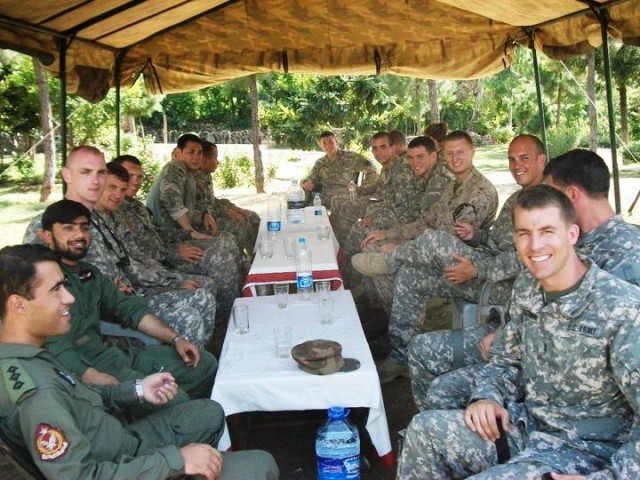
I am an American helicopter pilot in Pakistan.  My colleagues and I came because Pakistan and its people are enduring the aftermath of a devastating flood.  We were ordered to be here, and we miss our homes, but most of us are glad to help because we believe it’s the right thing to do.

I did not know much about Pakistan before I arrived here.  I knew of the food.  I knew of monsoons and Mohenjo Daro, Karachi and the Khyber Pass, but I had no concept of what Pakistan looked, felt, or sounded like. I even thought many Pakistanis would want us to leave.

I had no idea what the people would be like in person.  I wondered if they would resemble the images I’d seen on TV – would they protest our presence in the streets?  Would they tolerate us?  Or would they simply ignore us and go about their business?

After a few weeks of packing and planning, we were ready to deploy.  Full of excitement and some anxiety, I kissed my wife, took one last picture and was gone. We flew on a cargo jet from Alaska to Islamabad and the flight took so long I hardly knew whether it was day or night when we finally arrived.  Shouldering my gear, I headed to the terminal, weaving among Pakistani military and civilians on the tarmac.  A US Marine captain guided my group inside where we filled out information cards and relaxed in the cool quietness, surveying our area; smooth stone floors, low-slung furniture, and ceiling fans spinning high above.  The captain was talking to a Pakistani man who had been helping us.  Before we left, the man shook my hand and looked me in the eyes. “Thank you for coming to my poor country,” he said quietly.

I wanted to convey the depth of my feelings toward him and his homeland, but all I said was, “You would probably do the same for us” as I walked away.

That was my first interaction with a Pakistani here.

The days since arriving have passed quickly.  Every day we take rice, flour, blankets, housing materials, cooking oil – anything – up and down the Swat and Indus River Valleys.  We also bring sick, injured, and displaced people to hospitals and hometowns.

My first mission took us up the Indus river valley, and I embarrassed myself by constantly exclaiming its beauty.  Below me was the Karakorum Highway – the old Silk Road into China – and the valley itself, with terraced farmland overshadowed by majestic, snow-capped mountains.

Along with the beauty, though, I see reminders of the flood, bridges that are broken or missing and roads and fields that have been washed away.  I am beginning to see widespread reconstruction now as well and feel hope for the people in these villages.  They will soon have another way to get help.

I realize that some who read this will question our intentions and some may even wish us ill.  I certainly did not imagine that cheering throngs would greet us at each village though – we are always welcomed.  I did not expect our goodwill to be taken at face value by all of Pakistan, but we have received immense support.

I have learned in my time here that Pakistani people are truly gracious.  Strangers have invited me for chai and conversation.  Almost anyone will shake my hand and ask my name, inquire about my health and how I am getting along.  Instead of a handshake at our first meeting, I have sometimes been embraced.  “Strangers shake hands,” my new friend Mahmood explained, “but brothers hug each other.”

This warms my heart.  My mission, our mission, is straightforward, noble, and good.  I am deeply grateful to those who support us here, for we need all the help we can get in order to help those in need.   I am honored to do this work. I feel at home here beyond anything I could have expected.

Ah, home!  I miss my home, my wife and family; each day I wonder when I will see them again. But we have a humanitarian mission to accomplish.  Since I must be away, I’m glad that I am here, doing work that’s needed and good.

When I do return home, I will bring with me hundreds of pictures, dozens of journal entries, six duffel bags, and several recipes for local dishes that I have enjoyed, but I will also bring innumerable memories that I will treasure for life — memories of Pakistan and its people.  They have surprised me with friendship.  I hope that through our work of compassion we may surprise them with friendship as well.

Suspected Political Violence Kills 25 in Pakistan

By Ashraf Khan for the Associated Press

KARACHI, Pakistan – Gunmen have killed at least 25 people in Karachi in the past 24 hours, raising tensions in Pakistan’s largest city as voters cast ballots Sunday to replace a provincial lawmaker murdered in August.

Police said they were still investigating the motives behind the shootings, but many so-called “target killings” in Karachi have been linked to gangs controlled by the city’s main political parties, which have been feuding for much of the last 20 years.

“We cannot say whether all the killings were politically motivated or some gangs were involved because the killings took place in different parts of the city and were not confined to the area where the elections were being held,” Karachi police Chief Fayyza Leghari said.

The two parties most linked to violence in Karachi — the Muttahida Quami Movement and the Awami National Party_ have their electoral bases in different ethnic groups that make up a large chunk of the city’s population.

The MQM claims to represent the Urdu-speaking descendants of those people who came to Karachi from India soon after the birth of Pakistan in 1947. It is secular and likes to speak out against the so-called Talibanization of the city, a jab at the Awami National Party, which represents the ethnic Pashtuns from the Taliban heartland in the northwest.

Raza Haider, the member of the provincial assembly who was gunned down in August, was a senior member of the MQM. In the wake of the shooting, the MQM accused the ANP of supporting Islamist militants suspected of being behind the murder — an allegation denied by the ANP.

Both parties were competing for Haider’s vacant seat, but the ANP announced Saturday evening that it would boycott the election, saying the MQM would rig the vote. The shootings began around the time the ANP made its announcement.

At least 25 people have been gunned down in Karachi since Saturday evening, said Zulfiqar Mirza, the home minister of Sindh province, where Karachi is the capital. He called on party leaders to come forward to “help us turn Karachi back into the city of light and peace.”

“If someone has a complaint, it should not be settled on the street,” Mirza told a news conference. “It is disappointing that we are shedding our priceless blood with our own hands.”

The dead include members of a broad range of ethnic groups in the city, he said.

Haider Abbas Rizvi, a senior MQM leader and member of Parliament, accused the ANP of being behind the shootings, saying “19 of our workers and supporters have been killed so far.”

Senior ANP member Amin Khattak denied the accusation, saying, “we are not involved in killings, and I think that this blame game should be stopped.”

Leghari, the police chief, said at least three of the killings did not seem to be politically motivated and were carried out during “other criminal offenses.”

The killings were reminiscent of the violence that followed Haider’s murder. At least 45 people died in the days following his killing.

Police have arrested at least 60 people in connection with the most recent shootings, Mirza said. But few killers in such cases have ever been brought to justice, and motives for the attacks have not been revealed.

The rising tension between the MQM and the ANP represents a serious danger to stability in Karachi, a city of some 16 million people and Pakistan’s commercial hub.

Pashtuns have been arriving in the city in greater numbers in recent years, fleeing Pakistan army offensives against the Taliban. An estimated 4 million Pashtuns are now in Karachi and many live in sprawling slums on the outskirts that are “no-go” areas for authorities.

Violence has surged in Karachi this year with hundreds of people slain in target killings. This increase has echoes of the city’s bloody past.

In the 1980s and 1990s, Karachi was regularly convulsed by violence in which hundreds were killed. MQM leader Altaf Hussain fled to London in 1992 as a result of that bloodshed and was granted asylum. He regularly addresses large gatherings of supporters by telephone link.

Sufi Shrine in Pakistan Is Hit by a Lethal Double Bombing

By Huma Imtiaz for The New York Times

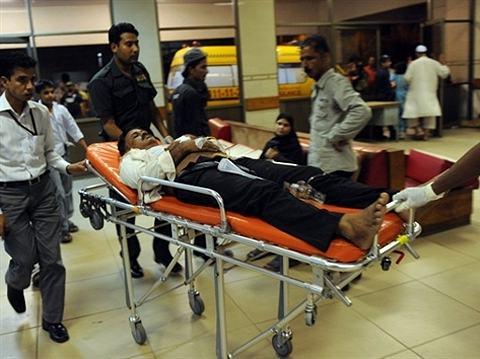
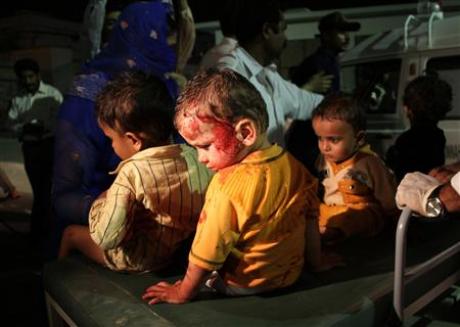
KARACHI, Pakistan — A nearly simultaneous double explosion that may have been the work of suicide bombers struck a crowded Sufi shrine in Pakistan’s main port city of Karachi on Thursday evening, killing at least 7 people and wounding 65, officials and rescue workers said. Pakistani women mourn the death of a child killed in an attack on the shrine Sufi Saint Abdullah Shah Ghazi.

It was the first attack on the shrine, the grave of the Sufi saint Abdullah Shah Ghazi, and it appeared to be an effort by hard-line militants in Pakistan to strike at the heart of Sufism, the moderate, more flexible blend of Islam practiced by most Pakistanis.

The attack came three months after militants struck one of the country’s most important Sufi shrines in the city of Lahore, which left at least 42 people dead.

The first blast at the Karachi shrine occurred at the main gate. Police officials said that within 25 seconds, the second blast hit the steps leading up to the saint’s grave.

Rescuers said three children were among the dead.

Dr. Seemi Jamali, deputy director of the emergency ward at Jinnah Hospital in Karachi, where the wounded were taken, said “many of them have severe injuries, trauma to the head and neck.”

Television channels showed body parts strewn at the site and chaotic scenes of unnerved, sobbing survivors.

The home minister of Sindh Province, Zulfiqar Mirza, told reporters that the severed heads of two suspected suicide bombers had been recovered from the site. Police officials were more circumspect, saying it was premature to conclude that the attack was by suicide bombers.

Local TV channels reported later that Tehreek-e-Taliban, or Movement of Taliban, an umbrella group of militants, had claimed responsibility for the attack. The group is known to have trained cohorts of suicide bombers for attacks in Pakistan and Afghanistan.

The attackers apparently chose Thursday night because it is one of the most crowded times of the week at the shrine, when hundreds throng to seek blessings from the saint and to receive free food.

The government closed all shrines in the city after the bombings.

Prominent Pakistani Politician Murdered Outside His London Home

By Laura Roberts and Heidi Blake for The Telegraph

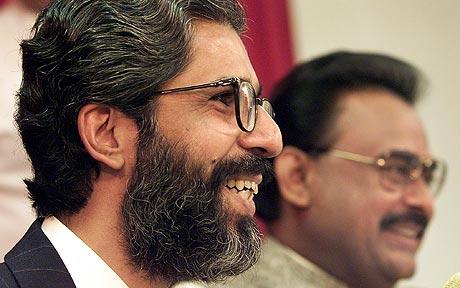
Imran Farooq, a prominent Pakistani politician, has been murdered outside his home in London. Dr Farooq, 50, was repeatedly stabbed in the head and neck during the assault in Edgware, north London.

He was a leading member of the Muttahida Quami Movement (MQM) party, which is one of the largest in Pakistan.

There were suggestions from Pakistan that he may have known his killer. When police arrived at the scene, they found Dr Farooq’s body outside his house.

A spokesman for the Metropolitan Police said officers attended an address in Green Lane, Edgware, shortly before 5.30pm after reports of a serious assault. “On arrival, officers found a single Asian man aged 50 with multiple stab wounds and head injuries,” the spokesman said.

“Paramedics attended the man but he was pronounced dead at the scene.”

Next of kin have been informed and no arrests have been made.

Dr Farooq was expected to attend a birthday celebration at the MQM headquarters on London’s Edgware Road on Thursday night but the event was cancelled at the last minute. Police said it was too early to know if the murder was politically motivated.

The politician claimed asylum in Britain after spending seven years on the run as one of Pakistan’s most wanted fugitives. He was accused of a range of charges, including murder and torture.

He has not returned to Pakistan since his arrival in England in 1992.

He claimed that year that he was wanted “dead or alive”.

“This gave licence and impunity to every individual in Pakistan to assassinate me,” he said.

Dr Farooq said he spent more than seven years in hiding in Karachi, southern Pakistan. He continued: “It was impossible for me to remain in Pakistan due to the continued threat on my life and liberty.”

He insisted the claims against him in Pakistan were politically motivated and continued his involvement with the party from Britain.

Last month Raza Haider, another MQM member, was gunned down with his guard as he attended a funeral near the centre of Karachi. The killing triggered violence in which dozens of people were killed and at least 100 wounded.

Azeem Tariq, the former chairman, was murdered in Karachi 13 years ago. Intruders entered his home and shot him as he slept.

MQM, based in Karachi, is the fourth largest party in Pakistan and is part of the ruling coalition government. It has a strong anti-Taliban stance, although rivals accuse it of exaggerating the threat of the Taliban.

The party represents mainly descendants of Urdu-speaking migrants from India who settled in Pakistan when it was created in 1947.

A statement on the MQM website said the party had declared a ten-day period of mourning in Pakistan and around the world.

London has played host to many of Pakistan’s exiled politicians. Gen Pervez Musharraf, the former president, lives in self-imposed exile in London.

Toll in Karachi Riots Rises to 73

As Reported by Sify News

The toll in the violence that broke out in the Pakistani port city of Karachi following the murder of a Muttahida Qaumi Movement (MQM) legislator rose to 73 on Wednesday, with shootouts continuing through the night.

At least 153 injured were brought to various city hospitals in last two days after the riots triggered by the murder of MQM leader and member of Sindh assembly, Raza Haider.

The most violent areas of the city for the third day running were Isa Nagri, Quaidabad, Malir, Machar Colony, Pirabad, Orangi Town and Qasba Colony, amongst others.

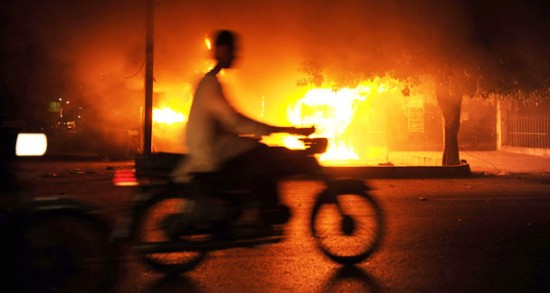
Mobs torched more than 50 vehicles and set several shops and fuel stations on fire. The city roads wore a deserted look for the second day Wednesday as the residents remained hesitant to step out. Though educational institutions and offices opened but attendance remained thin.

Federal Urdu University and Karachi University cancelled their scheduled examinations.

Firing and violence were also reported from Hyderabad, Sukhur, Mirpur Khas and other areas of interior Sindh. More than 100 suspects have been taken into custody by law enforcement agencies on various charges.

Police sources suspected the involvement of banned terrorist outfit Jindullah in the killing of Haider. The sketch of the attackers had been finalised with the help of an eyewitness, sources said.

Raza was shot dead by unidentified gunmen Monday in Nazimabad where he had gone to attend a funeral. A ten-member investigation team, headed by DIG Sultan Khwaja, is probing the case and collecting evidence.

Earlier, Interior Minister Rehman Malik had said that banned outfits like Sipah-i-Sahaba and Tehreek-i-Taliban were involved in the incident.

Dunya TV had reported that security agencies were in the know for more than a year that Raza and two other MQM leaders were on the hit list of terrorists.

The MQM leadership has openly held the Awami National Party responsible for Raza’s murder. The charge has been categorically denied by the ANP leadership, which has demanded a thorough probe to bring the culprits to book.

Both parties have remained fiercely engaged in a political tangle spanned over several decades for control over Karachi, which is Pakistan’s largest city and financial hub. Target killings have claimed more than 1,500 lives in the city over the last two years or so.

National Interest Equals 180 million

By Sibtayn Naqvi for The Blue Rickshaw

With the calamity struck upon Pakistan, many of our citizens have suffered at the hands of a horrific torrential downpour, a tragic AirBlue accident and a sickening “target killing” environment prevalent in Karachi. One would believe to look for guidance, consolation and leadership in the civilian government. To quote spider-man “with great power comes great responsibility”, but for Asif Zardari, this means pursuing “national interests” abroad, while thousands of lives have been disrupted and lost across the nation.

Now all in fairness, as one politician proudly displayed on his twitter “I cannot understand y a State visit by a President to further Pakistan’s national interests shud be politicised. It’s hard work no holiday”. Do tell me, is it absolutely vital for Mr. Zardari at this time to be pursing “national interests” by sipping tea and munching on biscuits with the very Prime Minister who stated that my country should not be allowed to “promote the export of terror”?

The President has made numerous trips abroad to pursue “national interests” since taking the reins of the Presidency. Even though such trips cost (on average) Rs. 20 million, I have rarely seen a public outcry in regards to such escapades. Being the President of a powerful nation housing 180 million people, Mr. President, some empathy in regards to the timing of your foreign affairs could have been witnessed this time around.

Was it absolutely crucial to use public money (that is already bare minimum) to travel abroad in the current circumstances? Would it not have been possible to formulate a domestic trip to Swat, Peshawar or Nowshera to stand by the unfortunate flood victims? Could the Rs. 20 million not have been used to conduct a memorial service for the tragic victims who lost their lives in the Margalla Hills? Is it too much to ask for Rs. 20 million to be spent on increased security in Karachi so we don’t read headlines on target killings every morning?

Throughout Pakistan’s turbulent history we have constantly heard drawing room chatter in regards to the Establishment not allowing the civilian government to flourish. Let’s put a spotlight over the recent weeks to see why the Pakistan Army has an image of being our savior rather than the civilian government. When target killings are carried out in Karachi, the Rangers step in. When ED202 crashed in the Margalla Hills, the Army came to the rescue (while one Minister exclaimed prematurely that there were a number of survivors), when the monsoonal floods hit the Northern regions, General Kayani surveyed the damage while expediting relief efforts, when the British Prime Minister made scathing remarks towards Pakistan, our ISI chief suspended his foreign trip to the United Kingdom. You of all people should know Mr. President public perception does matter.

Why was there a lack of civilian government presence in all the incidents mentioned above? Is the launch of Bilawal Zardari as a 21-year-old PPP-Chairman more important than the diminished livelihood of thousands across the country? Correct me if I am wrong, but didn’t the young Zardari exclaim “jaan chahyai, jaan deingay hum, khoon chahyai, khoon deingay hum”? I’d like to see some of that passion come to the forefront Mr. President.

Now let’s get to the favorite topic of the day. Fake degrees. For the 2008 general elections, there was a provision requiring all candidates to have an undergraduate degree. Regardless of whether the law is satisfactory, it was penned in ink. Do tell me, who gives the right to 47 sitting members of Parliament to provide the Election Commission of Pakistan with phony documents? Ironically, the majority of these illegal Parliamentarians are not even from the Pakistan Peoples Party. Take the high ground, the moral ground, Mr. President. Allow the report presented by the autonomous Higher Education Commission to run its proper course. Break down the barriers being constructed by the Ministry of Education.

Pakistan is a very resilient nation. Over the last decade, we have experienced the effects of an on-going war being carried out in Afghanistan. We have seen a rise in domestic violence that has cost 3,433 lives in 215 suicide attacks. Pakistan lost nearly 80,000 citizens in the tragic earthquake of 2005. Our military has suffered 8785 casualties of which 2273 soldiers have died. Karachi endured 156 incidents of targeted killings in 2009. 334 were targeted and killed in the first seven months of 2010, while their have been 889 murders in Karachi alone during the same time period. 152 Pakistani’s tragically lost their lives in the Margalla Hills, while the current flood that has swept the country has already taken the lives of more than 1,200 citizens.

But we are still standing strong. We carry out an honest day of living without electricity and ridiculously high prices of domestic commodities. Despite the hardships we have faced, our faith in this country has strengthened our confidence. In less than two weeks we will be out in the streets, waving our flags, saluting our soldiers and standing with our heads high. The globe may assume we are a fractured nation, and some may state that we export terror, but our national interests lay within our own borders. Our morals will carry us forward, but being at the helm of affairs Mr. President it is your duty to lead the way. We have suffered enough to watch Establishment dictate terms, or civilian governments bankrupting the national exchequer. It is high time the 180 million are looked after for they make up the “national interests”.

Sibtayn Naqvi is a freelance journalist and writes for The Blue Rickshaw. He may be contacted at sibtaynnaqvi@gmail.com

What We Know About Crashed Flight in Pakistan

By Max Fisher for The Atlantic Wire

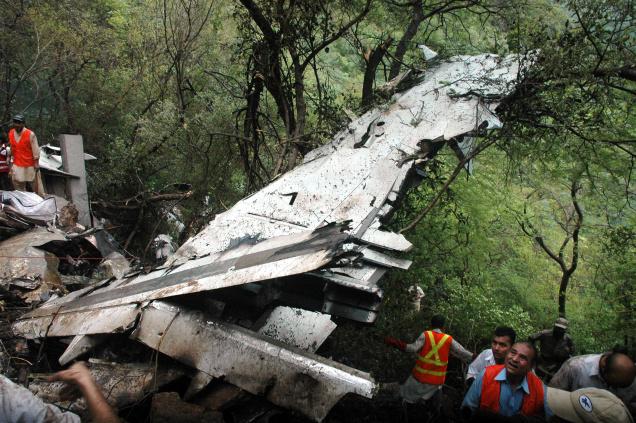
A passenger airliner has crashed outside of the Pakistani capital of Islamabad, reportedly killing all 152 people aboard, including two Americans. The flight, run by Pakistani airline Airblue, was traveling from Karachi. The plane crashed in the unpopulated Margalla Hills amid harsh weather and is not believed to have harmed any bystanders. At this point it remains unclear what precisely caused the crash and how officials will respond. Here’s what we know and possible explanations for what happened.

  • Flight Wasn’t Diverted Despite Bad Weather  The New York Times’ Adam Ellick reports, “Hashim Raza Garvaizi, a captain for Pakistan International Airlines, told GEO television that the airport’s runway has instruments that allow planes to land in weather conditions when there is no visibility. Mr. Garvaizi knew the pilot and said he had an impeccable record. He speculated that the plane could have been struck by lightening or that wind currents could have caused it to dip lower than expected. Mr. Garvaizi said another flight was diverted to Lahore about 30 minutes before the Airblue crash.” The Wall Street Journal’s Zahid Hussain adds, “Many other flights in to Islamabad were cancelled or diverted on Wednesday morning and it isn’t clear why the Airblue flight was given the go-ahead to approach the airport.”
  • Eyewitness: Plane ‘Lost Balance’  The Washington Post’s Shaiq Hussain finds an eyewitness. “A witness, Shahid Ameen, who was in a nearby residential section at the time of crash, said that he saw the plane with a low flight pattern. He said it looked ‘as if the plane had lost balance before I saw it coming down.'”
  • Technical Problems Uncertain  The Wall Street Journal’s Zahid Hussain reports, “Aimal Ahmed, an Airblue spokesman, said the plane was eight years old and flight worthy. ‘There was no technical fault in the plane when it took off. All the safety requirements were completed,’ he said. … ‘We are not sure whether the accident was caused by a mechanical fault or bad weather,’ Mr. Malik told the reporters.”
  • Islamabad Airport’s Dangerous Landing Issues  Pakistan Express Tribune columnist Meekal Ahmed explains the peculiarities of Islamabad airport.

If you are using runway 12 as it seems (the Murree road side) there is no ILS [instrument landing system]. The ILS is on runway 30 (the opposite side). So the procedure (which I never thought was safe) is you fly the ILS to 30 and then you break off and turn right and fly parallel to the Margalla hills and then turn back in and land on 12. It’s not a circle but more of a race-track pattern.

You may ask why not have the aircraft turn left rather than right towards the Margalla Hills. The reason is that on the left of runway 30 is Dhamial Air Base, GHQ and so on and as far as I remember that is all so-called “Restricted” airspace. You cannot fly over it.

This is CFIT (Controlled Flight Into Terrain) not as stated above.

Final point, when you are flying parallel to the Margalla Hills, you are required to keep the airport on your left in sight. So I can visualize the captain in the left seat looking left. Maybe the [flight officer] was flying and craning his neck too. They just seem to have drifted into the Margalla Hills — perhaps because of high winds. They lost what is called “Situational Awareness”. Basically they did not know where they were.

  • Airport Has One of World’s ‘Worst Weather Conditions’  Pakistani newspaper Dawn reports, “The craggy Margalla Hills to the north of the capital and unpredictable wind patterns can make an approach extremely difficult [a Pakistani pilot] said, going so far as to describe Islamabad as ‘one of the worst weather conditions in the world. … Irregular wind systems surround the Margalla Hills often make it difficult for the pilots while in the air.'”
  • Why Recovery Will Be So Difficult  Reuters’ Kamram Haider relates:

More than 90 bodies had been recovered so far, but the bad weather was making recovery efforts difficult.
“We have suspended the air operation because of rain. It will take a long time to clear the area. There’s no way to transport bodies from the site except via helicopters and even helicopters cannot land there,” said Aamir Ali Ahmed, senior city government official, said.

Rescuers said they had to dig through the rubble with their bare hands, with fire and thick smoke hampering their work. The fire has since been extinguished, but access to the hillside remained limited to pedestrians and helicopters.

“You find very few intact bodies. Basically, we are collecting bodies parts and putting them in bags,” police officer Bin Yameen.

Cross-Border Unions: How Indo-Pakistani Marriages Prosper

By Vinita Bharadwaj for The National-UAE
While relations between their countries may be at an all-time low, Indians and Pakistanis who marry each other often find extended family ties confound their nations’ mutual hostility.

It is a truth universally acknowledged, that when two South Asians wed, they not only marry each other, they also marry into each other’s family.

And family matters between Indians and Pakistanis might be expected to be highly charged, given those two countries’ mutual antipathy for more than 60 years.

“When an Indian marries a Pakistani, it’s a loaded event that can only be matched by the energy of a cricket match between the two countries,” says Amra Hyder, a Pakistani.

The partition of British India into Pakistan and India is historically recorded as the largest human migration ever. It displaced millions and forced people of a common culture to choose a new geography and subscribe overnight to the idea of previously non-existent nations.

Most tragically, it split families. The ghosts of the 1947 partition loom large in the psyches of both countries’ modern histories that include three wars, a continuing dispute over Kashmir and terrorism.

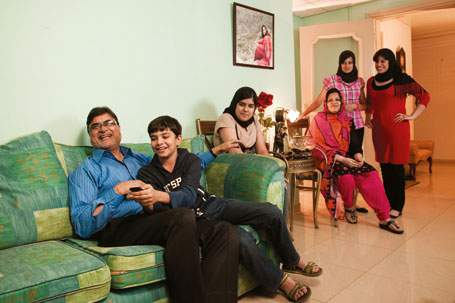
Amra is originally from Pakistan and is married to Zulfiqar Hyder, who hails from India. Amra and Zulfiqar, now Canadian citizens, have lived in Sharjah with their four children since 2006.

In 1992, when the gregarious, romantic 23-year-old Amra married the 33-year old Zulfiqar, a studious man from India, she did not quite know what to expect – from married life, her in-laws and most importantly, her husband’s country. “I also never would have imagined I would be apologetic for both countries’ ridiculous obsession with ‘Shonia’,” she says of the media brouhaha over the recent nuptials of the Pakistani cricketer Shoaib Malik and the Indian tennis player Sania Mirza.

For long before the Malik-Mirza marriage, thousands of Indians and Pakistanis, mostly from families divided by the 1947 partition, have been marrying each other.

The difference is that now these marital alliances are formed outside the extended family circuit. Amra and Zulfiqar did not have an arranged marriage, and neither of them had any intention of settling in either India or Pakistan. They opted to overcome predictable visa hassles by initially residing in the UAE soon after their wedding, and migrated to Canada in 1996 to obtain citizenship, in the hope that it would ease their trips between India and Pakistan.

 
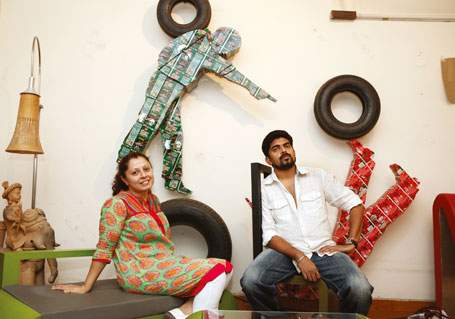
Masooma Syed, from Lahore, met her Keralan husband Sumedh Rajendran at an artists’ residency programme in Delhi. ‘I knew he understood me perfectly.’ Charla Jones

The couple first met in Abu Dhabi at a mutual friend’s party, and married within a year. The wedding took place in Karachi, with Zulfiqar’s entire family flying in from the northern Indian city of Lucknow. “It was a lovely wedding,” Amra recalls, adding that the questioning – albeit, in jest – began soon after they were married. “It was like, ‘Now you’re an Indian daughter-in-law’ and ‘Who will you support in cricket’ or even ‘Who will you support in war’?”

Her response was simple. “I married an Indian, not India. Having said that, I have been welcomed so warmly and given unbelievable respect by Indians, whenever I visit. My relationship with the people, I cherish. The politics, I don’t care for.”

Amra grew up in Abu Dhabi and returned to Lahore for university. Her childhood perception of Indians was to lump them all as people from the Southern Indian state of Kerala. “It was so wrong,” she says regretfully admitting to an error of judgment on her part, “but I honestly never really gave it any thought.” Although her grandfather was an active political leader – initially in the Indian independence struggle and later in the Muslim League, which pressed for Pakistan’s creation – she was uninterested in matters of politics.

On numerous trips to Northern India in the last 18 years, Amra has returned amazed by the cultural similarities she has observed between Indians – including non-Muslims – and her community in Pakistan. “We speak the same kind of language, we appreciate the same food, we like the same clothes, we place the same importance on family values. We even share similar pre-wedding festivities. It’s hardly an alien experience,” she says.

The differences were more to do with class and little do with the country. “Compared to my husband’s childhood, mine was very privileged. He is a self-made man and has single-handedly contributed to his family’s success. If I had to get used to anything, it was holidaying in a home that would experience power cuts and water shortages.”

Amra and Zulfiqar’s children – Hira (17), Anum (13), Zahra (11) and Ali (10) – describe themselves as desi, a generic, originally sanskrit, term used by South Asian immigrants that loosely denotes their origins. They are an animated group and debate the definition of desi among themselves, as their parents look on proudly. The conclusion: among younger generations in urban settings, desi communities have spawned a culture bound by a fondness for Bollywood, cricket, South Asian food and fused elements of their upbringing at home with the globalised, western outlook they are exposed to outside.

Having said that, India and Pakistan enjoy enormous cultural riches – largely attributable to their ethnic, regional and linguistic diversity. Both countries together are akin to the European Union – with each of their provinces having their own quirks, tastes and sensibilities. These subtleties within communities are apparent when embedded among the people in their own land.

Shadab Raza, from Lucknow, India, his Pakistani wife Sana Zehri and their six-year-old son Ali have relatives on both sides of the border. ‘There’s never been this India-Pakistan mentality in our families,’ Shadab said. Siddharth Siva / Arabian Eye

Masooma Syed, an artist from Lahore, lives in Delhi with her husband Sumedh Rajendran, also an artist, but from the south of India. They were introduced to each other at an artists’ residency programme in the Indian capital Delhi in 2003. Following that, they would arrange to meet in Manchester, Sri Lanka and New York before finally geting married in July 2008.

Their cultural backgrounds could not be more different, as are their temperaments and artistic styles. “And yet, I knew he understood me perfectly,” says Masooma of the decision to marry across the border and step into the cumbersome world of visas, soon after exchanging wedding vows in Sri Lanka.

“We never thought about a third country [to live in]. Sumedh has lived in Delhi for the last 15 years and I’ve had absolutely no problem in adjusting to living here. It’s just like Lahore. Ironically, I find Sumedh is more of a foreigner in his own country’s capital than I am. We have discussed moving to a neutral country, especially if visa regulations became tighter, but then as artists all our inspirations stem from this region. Relocating would uproot those emotions and we wonder what impact that would have on our work.”

Kerala, where Sumedh is from, however, is an altogether different milieu. “The first time Masooma visited, she was stunned,” says Sumedh.

“I thought to myself, how lucky am I to be able to see and discover these different facets of India,” she says recalling her reaction to the abundant greenery, the aromatic spices, the swaying coconut palms and the simple people.

But since marrying Sumedh, Masooma has found herself saddled with the unexpected baggage of acting as an ambassador of sorts for both countries. “It’s annoying at times,” she says. “And really it’s all because of immature media reportage in one country about the other. So I end up having to either justify, explain or make excuses for India when in Pakistan or vice versa. I’m not used to being accountable to anyone and this new role is quite tiring, even if it does come with special treatment in some instances.”
The challenges within an Indo-Pak marriage, according to Masooma, seem to be similar to any mixed-culture marriage. Except that among South Asian communities, tradition dictates the wife follows the husband to his home, or homeland. In the specific India-Pakistan context of the 21st century, the complications of visas and work permits make it harder for educated women to carve out an identity for themselves in their new environment. “It’s definitely much easier to be in a third country – either resident or citizen – when in an Indo-Pak marriage. Also, in today’s world, the younger generations of Indians and Pakistanis are meeting and interacting abroad, first as students and then as professionals. Marriages between different faiths among this demographic is on the rise and logistics is no longer a deterrent to falling in love.”

Masooma has been visiting India since 2003 and as an artist she has travelled, exhibited and worked in both countries. “I go through the same motions as all Pakistani nationals applying for an Indian visa. It’s a process and is easy or difficult depending entirely on how you want to look at it,” she says. In early June, the Indian government announced it was relaxing the requirements for granting the extension of long-term visas to four categories of Pakistani nationals, including Pakistani women married to Indian nationals and staying in India. The announcement was welcomed by individuals in her situation.

Her current visa is a ‘visit visa’ valid for nine months that is split into three visits of 90 days each. She has to exit India after each ‘visit’, but says it suits her work commitments that require her to travel abroad. “And I can visit my family in Lahore,” she adds.

Pakistani nationals issued visas to India are typically allowed to visit a maximum of three cities and must report to a police station on arrival and before leaving for their next destination. Masooma is now exempted from the police reporting, as she is a regular traveller between India and Pakistan and is also now married to an Indian national. “I’m allowed to visit more than three cities each time, but it will be a while before I am given complete freedom to travel like any other foreigner,” she says.

She could apply for a residence permit, but would be compelled to stay in India until the paperwork is completed, but it’s diffiuclt to predict how long that would take. Nationality, however, remains a touchy issue, particularly among the educated and liberal women of either country, who see no reason in giving up the passport of the country they originally belong to.

“Unfortunately, political relations keep changing and this spills over into visas and affects people-to-people relationships,” says Zulfiqar Hyder, a staunch believer in encouraging contact between the two countries. The Hyder family hold Canadian passports, but they still have to apply for visas to visit India and Pakistan.

In the wake of the David Headley arrest – a US citizen of Pakistani origin – over his alleged terrorist connections and involvement in the 2008 Mumbai attack, Zulfiqar says having the Canadian passport makes little difference towards easing the process. “I’m trying to get a PIO (Person of Indian Origin) card for the children,” he says of the document issued by the Indian government that functions as a long-term multiple entry visa. As things stand, the foreign spouse of an Indian national is eligible for the PIO card, but the spouses from Pakistan are not, effectively ruling out Amra and her two elder daughters, as they were previously travelling on her passport. “I don’t understand the logic that my children cannot get the PIO card, because their mother is Pakistani,” says Zulfiqar.

The national security argument does not resonate with him as much as it does with Amra. “Frankly, if my family can be assured of safe travel, I don’t mind a little more waiting or dealing with a bit more bureaucracy,” she says. He shakes his head furiously, looks at me and asks: “Did the 26/11 terrorists enter India with passports? Did they? How did they enter India?”

They arrived by night. Across the Arabian Sea, first on a small boat, then a hijacked fishing trawler and finally entered Mumbai’s waters on a rubber dinghy.

Visa-related policies in both countries are updated depending on the warmth or frostiness of the political relationship. Shadab Raza, a 35-year old Indian also from Lucknow, married Pakistani national Sana Zehri, who grew up in the UAE. They have a six-year-old son who has an Indian passport. The families arranged their marriage, as Shadab’s maternal aunts live in Pakistan. “There’s never been this India-Pakistan mentality in our families, because we have relatives on both sides of the border,” says Shadab.

Sana’s ancestry can be traced back to Lucknow, as her grandparents migrated to Pakistan at the time of the partition. On her first visit to the city after her marriage, she visited the ancestral home of her grandparents and filmed it to share with them. “I filmed the house, the neighbourhood and some of the people recorded messages for them. When they watched the video they were consumed by nostalgic sadness. I think partition hurt their generation the most. Our parents to a lesser extent, but they still feel the impact of it as they grew up hearing about it from their parents and visiting immediate relatives in the other country. For my generation, the degree of the trauma is even more reduced, because we haven’t experienced much of the consequences of it directly,” she says.

Shadab and Sana’s son, Ali, however, is quite clear about where he is from. “India,” he says firmly.

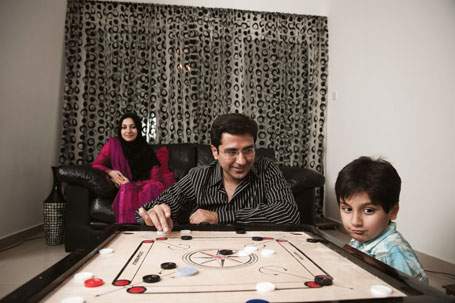
Sana laughs and recalls an incident of him wanting a carrom board specifically ‘made in India’. “My father-in-law had to get the lettering customised because the shop, where they bought it didn’t sell carrom boards with a ‘made in India’ label,” she says. In the meantime, Ali brings out his carrom board and empties out the coins from their container. He then calls out to Shadab to come and play with him.

“There’s never been this India-Pakistan mentality in our families, because we have relatives on both sides of the border,” says Shadab sitting down at the board, across from Ali, who flicks the large striker coin towards the arrangement of smaller black and white coins stacked by colour in the centre of the board. The two towers collapse, some of the coins disperse in four directions, but none of them is pocketed.

“What a mess,” exclaims Ali.
Breaking Pakistan’s Sufi Heart

By Mira Sethi for The Wall Street Journal

The two suicide bombers chose midnight on July 1, when the throng of worshipers in the ancient Data Darbar shrine in Lahore, Pakistan, was at its peak, to blow themselves up. Forty-five people were killed and 175 were injured. The attack on the 1,000-year-old center of Sufi Islam—the religion’s mystical, unorthodox face—was the first Taliban attack of its kind in Punjab province, the heartland of the country’s moderate, majority Barelvi sect.

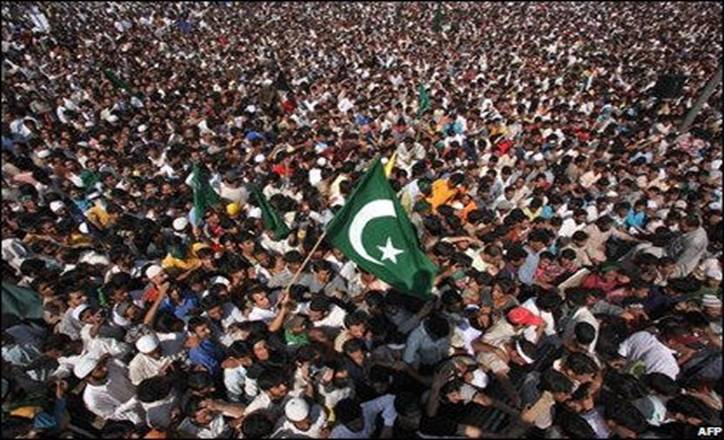
The day after the attack on the shrine, Lahore’s students, politicians, traders and housewives took to the streets in loud, visceral protest. Major commercial centers were shut down, and in a rare show of sympathy, students from religious seminaries blocked roads and burned a few tires.

Pakistanis are now asking themselves: Is this America’s war or is it ours too? How can we fight it? Why did our military nurture these warriors for three decades and why has it turned against them now? How and when are we going to be at peace with our neighbors, especially India with which the military is obsessed and for whom these non-state actors were originally spawned?

To understand why this attack is so shocking, one must first look at Pakistan’s religious history. The majority of Pakistanis are Barelvis, who respect the inclusive traditions of the Sufis who brought Islam to the Indian Subcontinent. This is completely unlike the harsh version of Islam imported from Wahabi Saudi Arabia after the petro-dollar boom in the Middle East in the 1970s.

So the bombing of the Sufi shrine has symbolic resonance: Sufism has always thrived as a reaction to the politics of the state. In modern Turkey Sufism grew as a response to Ataturk’s secularism; in the Soviet Union, it grew as resistance to the state’s official policy of promoting atheism; in Algeria, it was a reaction to French colonialism. In Pakistan, Sufism has thrived as an alternative to the state-sponsored Wahabi Islam of the Deobandi jihadi sect.

If there’s one thing that Pakistanis are proud of, it’s their Sufi heritage. The shrine attacked in Lahore housed the tomb of one of the most famous Sufis to have ever lived, Ali Hajwiri, affectionately known by Lahoris as Data—one who facilitates the fulfillment of aspirations. Hajwiri wrote a seminal text in Sufi thought, the Kashf-al-Mahjub or “Unveiling of the Hidden.” An early example of Sufi doctrine, the book’s importance has grown over the centuries.

Although not a native of Lahore, Hajwiri decided to settle in the city for the last 34 years of his life at the end of the 11th century. Even then, Lahore’s fame as a center of culture was widespread. It was known for its old fortified city, a nourishing river, and a collection of free-spirited artists, artisans, and musicians. During his 34 years of residence, Hajwiri became a revered dervish, offering an inclusive mystical path to Lahore’s non-Muslim population, many of whom were subject to a punishing caste hierarchy.

Hajwiri’s shrine remained protected through centuries of rising and falling empires in the Punjab. Even the Sikh marauder Maharaja Ranjit Singh left the shrine untouched as he plundered many of Lahore’s riches.

In attacking Hajwiri’s shrine, the Taliban have grossly miscalculated. They had hoped to provoke anger at the Pakistani government for fighting America’s war. Instead they have managed to convince more and more Pakistanis that this is now their war, not just America’s.

“This Passport is valid for all the countries of the World, except Israel”

By Junaid Ghumman for Mideast Youth

The world Zionist movement should not be neglectful of the dangers of Pakistan to it. And Pakistan now should be its first target, for this ideological State is a threat to our existence. And Pakistan, the whole of it, hates the Jews and loves the Arabs. This lover of the Arabs is more dangerous to us than the Arabs themselves. For that matter, it is most essential for the world Zionism that it should now take immediate steps against Pakistan.” Ben-Gurion, the Prime Minister of Israel.

This speech was first published in Jewish Chronicles on 9th August 1967. This statement risen many controversies bloggers like me have quoted it many times; various explanations were also given to disprove this statement, but still we read it on every article related to Pakistan and Israel.

Pakistan and Israel do share some history and ideology. These are only two countries in the world created in the name of Religion; Pakistan for Islam, Israel for Judaism and both countries have taken independence from same British Empire after World War II.

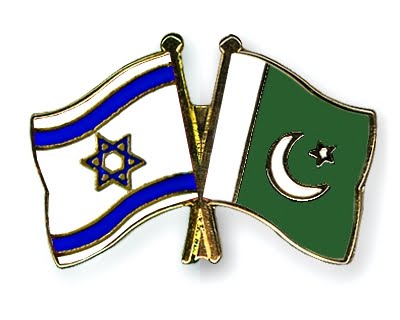
Then why my passport still says, “This Passport is valid for all the countries of the World, except Israel”?

Pakistan claimed its independence from foreign invaders after two centuries of struggle. In 1757 after Battle of Plessey, East India Company started ruling Indian Sub-continent. The first armed resistance was Battle of Independence in 1857 after which the power was transferred to British government. In 1885 the political movement of independence started as Indian National Congress. Some of the Muslim leaders soon separated and launched new movement in 1906 as All India Muslim League for separate Muslim state which led to the creation of independent Islamic state Pakistan on 14th August 1947, which then became Islamic Republic of Pakistan in 1973.

For Israel the timings was same and the rulers were also same as of Indian sub-continents, but events and circumstances were totally different. Israel declared its independence on 14th May 1948 from British Mandate of Palestine. But Israel independence movement was not against British Occupation; rather it was a movement of creating a Jewish State by silently invading the markets, trades and areas to make Jewish settlements. Hovevei Zion or Hibbat Zion refers to organizations that are considered the foundations of the modern Zionist movement. These movements led to creation of Rishon LeZion in 1882 which is the first Jewish settlement in Palestine; which was at that time under Ottoman Empire. First Zionist Congress held in 1897 started the unified Zionist Movement which was converted to World Zionist Organization in 1960. This movement was successful in legalizing its demand of separate Jewish state in Palestine after Balfour Declaration 1917, in which British Mandate of Palestine’s (1917 – 1948) foreign Secretary Arthur James Balfour wrote letter to the leader of British Jewish Community Baron Rothschild, pledging British Empire support of creation of Jewish State in Palestinian Land.

So what kind of relationship does Pakistan and Israel has over period of 60 years?

While writing this blog I also tried to ask couple Pakistanis; their view points about Pakistan-Israel Relationship. Yousaf is Pakistani Engineer living and working in Saudi Arabia. Being in the region, Pakistanis here are emotionally and regionally attached to Middle East crisis. I asked him what kind of relationship both countries have. “Relationship between Pakistan and Israel are tied to the fact that how Israel government treats the Palestinians. In general, as Jerusalem is considered as one of the holiest places in Islam; this fact serves as a thorn in the eyes of Pakistanis.” Yousaf said.

Pakistan is among those 20 UN member nations which do not recognize Israel as an independent state. These 20 countries also include Afghanistan, Algeria, Bahrain, Bangladesh, Chad, Cuba, Indonesia, Iran, Iraq, Kuwait, Lebanon, Libya, Malaysia, North Korea, Saudi Arabia, Sudan, Syria, United Arab Emirates and Yemen. Unofficial media reports say that first Prime Minister of Israel David Ben-Gurion send secret message to Muhammad Ali Jinnah to formally accept its existence, but no response was given back to him. At the time of independence of Pakistan, it was reported that some 2,000 Jews remained in Pakistan, mostly Bene Yisrale Jews. Many left to Israel after its declaration of independence. Jews from Karachi, Pakistan, now live in Ramla, Israel, and they also built a synagogue they named Magen Shalome after the Pakistani Synagogue which was demolished in 1980.

60s, 70s and beginning of 80s were the decades when for the first time both countries came face to face when Arab-Israel war started. In “Six-day Arab Israeli War” of 1967; Royal Jordanian Air Force (RJAF) and Pakistan Air Force (PAF) were flying under a joint command. PAF pilot Flt. Lt. Saiful Azam became the only pilot from the Arab side to have shot down 3 IDF/AF aircraft within 72 hours.

In 1973 Arab-Israeli Yom Kippur War, 16 PAF pilots volunteered to support Syria and Egypt. On 23 October 1973 Flt. Lt. M. Hatif shot down the Israeli Phantom. On 26 April 1974, PAF pilot Flt. Lt. A. Sattar Alvi became the first Pakistani pilot, during the Yom Kippur War; to shoot down an Israeli Mirage in air combat. He was honoured by the Syrian government. Nur Khan, who was the Wing Commander received praised from Israeli President Ezer Weizman who wrote in his autobiography that: “He was a formidable fellow and I was glad that he was Pakistani and not Egyptian”. Pakistan also sent medical ambulances to Egypt and Syria.

After the Israeli attack on Iraq’s under-construction French-built nuclear Osirak-type reactor, Tammuz-I, south of Baghdad on 7 June 1981, Pakistan’s then President President Zia-ul-Haq directed PAF Air Headquarters (AHQ) to make contingency plans for a possible Israeli attack on Kahuta. Kahuta is noted for its nuclear research studies and nuclear development technologies in Kahuta Research Laboratories. On 10 July 1982, a special contingency plan was issued. In the event of an Israeli attack on Pakistan’s strategic installations, plans were drawn up for a retaliatory Pakistani strike on Negev Nuclear Research Centre. The Negev Nuclear Research Centre is an Israeli nuclear installation located in the Negev desert, about thirteen kilometres to the south-east of the city of Dimona.

On political level many statements were given. As chair of the Second Islamic Summit in 1974, then Pakistan’s Prime Minister Zulfiqar Ali Bhutto said: “To Jews as Jews we bear no malice; to Jews as Zionists, intoxicated with their militarism and reeking with technological arrogance, we refuse to be hospitable.”

In of his speeches in National Assembly of Pakistan, before Zulfiqar Ali Bhutto was hanged in 1979, he said, “Mr. Speaker Sir! This is not Desi (local) conspiracy, it’s an international conspiracy. Let me make it quite clear for the history, whatever the future and fate of this individual will be; that doesn’t matter, but let me tell you again this is not a desi (local) conspiracy, this is not PNA conspiracy, this is massive, huge and colossal international conspiracy against the Islamic State of Pakistan.” (PNA was Pakistan National Alliance against the ruling Pakistan Peoples Party). Nowadays people like to refer this international controversy as Zionist or Israeli Conspiracy.

A controversial book was published in 2003, named Charlie’s Wilson war which conspire about use of Israeli weapons supplied to General Zia ul Haq to fight Soviets in Afghanistan (1979 – 1989). Famous Hollywood movie Charlie’s Wilson War was also released in 2007. After that the back door politics started between Pakistan and Israel.

The President of Pakistan General Zia ul Haq was assassinated in plane crash on 17 August 1988. Among the conspiracy theories; Mossad (Israeli Intelligence Agency) involvement is also believed to exist. In the fall 2005 World Policy Journal, John Gunther Dean, a former US ambassador to India, blamed the Mossad for orchestrating Zia’s assassination in retaliation for Pakistan developing a nuclear weapon to counteract India and Israel.

Ali is my friend living in Middle East. I asked him, can there ever be any friendship or peace between Pakistan and Israel, to which he replied, “Yes there can be, Israel is a small country with a group of people belonging to a group of faith. And also it is in its interest that it should be at peace with every country, and especially those countries that it feels can threaten its existence.”

It is believed that, at the time of Benazir Bhutto’s Government both countries had very strong relationship especially in countering terrorism. In 1993 Benazir Bhutto, along with her then-Director-General of Military Operations, Pervez Musharraf, intensified the ISI’s liaison with Mossad in 1993, and she too began to cultivate the American Jewish lobby. Bhutto is said to have had a secret meeting in New York with a senior Israeli diplomat, who flew to the U.S. during her visit to Washington, D.C. in 1995.

In 1996, Pakistan’s Intelligence Agency, FIA, started a secret war against Extremist in Pakistan under Rehman Malik. According to sources, FIA also contacted Israeli intelligence agency Mossad to help and send its officers to investigate the extremism. Even after these strong ties, controversies never left the scenario. Benazir Bhutto was assassinated on 27 December 2007 in one political rally. This was considered to be typical Mossad Assassination style. It is believed that she was the one knowing the reality of 9/11 being inside job and death of Osama Bin Laden, which she also publicly stated in David Frost TV program. That program was edited before telecasting. But Jewish Journals and Media still believed in the opposite way. According to Jewish media, Miss Bhutto asked for Mossad help to protect her on her return to Pakistan as she was afraid she will be killed.

In 1998 Pakistan and Israel were again on the verge of war. On 27 May 1998, day before Pakistan conducted its nuclear test in Chaghi, Southern Province of Baluchistan, Pakistan; unidentified F-16 was found hovering around skies on border areas of Pakistan. Pakistan Air Force; taking is as repetition of Israeli Conspiracy similar to 1981, Air Bourne its fighters to foil any attack. But Pakistan and Israeli UN delegation met in UN soon after Pakistan Nuclear tests in 1998 to give assurance that Pakistan will not transfer its technologies to Iran, the arch enemy of Israel.

Musharraf’s nine years of rule was also golden times for both countries. In 2003, General Pervaiz Musharraf said on television interview, “Mainly Muslim Pakistan must seriously take up the issue of recognizing Israel and avoid dealing with it on emotional grounds”. This statement gave birth to local opposition, esp. among Religious Parties in Pakistan. “Jerusalem is not just an Arab issue, it is linked to the faith of every Muslim” said Qazi Hussain Ahmed, chief of Jamaat-i-Islami Pakistan, the largest and oldest religious political party. “Presenting Palestine as a sole Arab issue is a heinous conspiracy of the imperialists and colonists aimed at disintegrating the Muslims and shattering the concept of Muslim unity. It is for the same reason the colonist forces are trying to portray every Muslim issue as regional or bilateral” said Qazi.

In 2005 Pakistani Foreign Minister Khurshid Kasuri and his Israeli counterpart Silvan Shalom met in Istanbul after Israel withdrew its forces from Gaza, Palestine hoping to start peace talks. However, following the meeting Musharraf said, “Pakistan will not recognize the state of Israel until an independent Palestinian state is established”.

An unofficial Pakistan-Israel Peace Forum was created the next day of the meeting. It was created by 3 friends Waleed Ziad (Pakistan), Dror Topf (Israel), and Michael Berenhaus (US), all currently based in Washington, DC. This forum was an unsuccessful attempt to lobby in UN, US, Israel and Pakistani political establishments, hoping that Pakistani might accept Israel as independent legal state.

Pakistan and Israel are also secretly involved in Weapons and Arms Development Race. Close ties between India and Israel, and arms business between them forces Pakistan to keep an eye on Israel’s weapons industry. Like for example; Pakistan Ordinance Factory (POF) developed POF Eye Gun and exhibited in 2008 to counter the Israeli made Cornershot Rifle which is also known as Jews Gun in Arab World.

Shall Pakistan recognize Israel as an independent state to which Yousaf and Ali shared the same answer, “Pakistan should only consider recognizing Israel if it gives an independent state to the Palestinians with Jerusalem at its capital. And completely cut off itself from the internal affairs of that state, only then Pakistan should even start to consider recognizing them.”

I thought why not to ask some of Palestinians who have been living in exile for almost six decades. Abdul-Rahman is originally from Nabulus, West Bank and Qasim is from Gaza. I asked them what role Pakistan can play any role in solving Middle East Crisis, to which Abdul Rahman replied, “May be or may be not. Pakistan has its own problems with India, in Kashmir and in Afghanistan.” And Qasim said, “Pakistan cannot play any role especially with the current government which is only thinking of business but not Islam or Muslims.” Which actually hit me hard but truth is truth. On inquiring the Pakistan’s nuclear threat to Israel, Abdul Rahman said, “Israelis are even scared of stones so obviously Israel want end to Pakistan’s Nuclear technology, the Islamic Bomb.” But Qasim stuck to his same point, “If Pakistani government wants it can use nuclear technology against Israel, not in war or something but also to play politics.” Then in the end I asked, shall Pakistan Recognize Israel as independent country. Both of them came up with different and interesting answers. Abdul Rahman said, “There is should be a procedure of acceptance. Israel should balance the power and control of every city between themselves and Palestinians, then Pakistan can recognize Israel.” Whereas Qasim said, “Pakistan should recognize Israel. Sitting outside and ending any communication will not resolve the Middle East problem. We need to enter the region to solve the problem and if Pakistan wants it can do that by taking first step of recognizing Israel.”

It was interesting journey going through all the historic events which Pakistan and Israel share and knowing different ideas and opinions. All these events which I have mentioned above, cannot be confirmed from any credible or authentic source as all this happened back stage, behind the camera. But whatever governments’ relationship may be it is true that people of Pakistan still want to call every conspiracy as Zionist conspiracy and this will keep on going until some peaceful solution is devised to Middle East crisis between Muslim Palestinians and Jewish Israelis