Posts Tagged ‘ Pakistan ’

Pakistan and the American Learning Curve

By Ethan Casey for Dawn
On June 1, I took part in a TEDx event hosted by the Princeton Public Library in Princeton, New Jersey, USA. The TED people bill what they do as “ideas worth spreading,” and during the weeks I spent preparing my talk I pondered what ideas I wanted to spread to an American audience. I titled my talk “What Does Pakistan Have to Do with Haiti? (the full text is on my website, and I’m told the video will be online soon), but in an important sense it’s really about the United States.

I used the occasion to try to make some sense of the weird coincidence that the two countries I care about most deeply and personally, other than my own, both were devastated in 2010 by horrific natural disasters. I did find a number of things they have in common, believe it or not, but the most salient is that Pakistanis and Haitians both see the United States from the outside. And what they see is often ugly and cruel, because they live on the receiving end of the American power that we Americans usually don’t experience, because we’re the ones wielding it. This is a point that’s very clearly apparent to many people worldwide, but not always easy to get across to Americans.

One way I tried to do it in Princeton was by arguing that both countries are prime examples of what the Nigerian novelist Chimamanda Adichie, in an excellent TED talk in 2009, called “the danger of a single story.” We Americans tell ourselves a single story about Haiti, and a different single story about Pakistan. Dr. Paul Farmer, a celebrated physician who works in the poorest areas of rural Haiti, wrote a book titled The Uses of Haiti. We use Haiti rhetorically and ideologically and, every time there’s a new fitful spasm of American interest in Haiti, our uses for it rear their heads anew. It’s never an edifying thing to see, and it’s maddening to those of us who know Haiti.

America has different uses for Pakistan, and those are not unlike the uses we used to have for the Soviet Union. If Haiti meets Americans’ need to have someone to pity, Pakistan fulfills our need to have someone or something to fear. Fear, pity, and contempt are easy, self-indulgent emotions. But much more demanding, I said, is to cultivate and practice respect. Respect implies distance and difference, and to practice it entails acknowledging that difference is inevitable and even desirable.

Another thing Haitians and Pakistanis have in common is their experience as immigrants and visitors to America. I tried to bring this home by telling the audience about novelist Edwidge Danticat’s 81-year-old uncle, who fled violence in his neighborhood in Haiti’s capital, Port-au-Prince, in 2004 and made the mistake of asking for political asylum at the airport in Miami. US Immigration officials threw him into the infamous Krome Detention Center and denied him his diabetes medication, and he died in detention. Danticat tells the story eloquently in her wonderful nonfiction book Brother, I’m Dying, which is above all a beautifully composed story about family love, immigrant struggle and aspiration, and the tortured and all too intimate relationship between Haiti and the United States, told by a Haitian who is also an American. I often find myself telling Pakistanis the story of Edwidge Danticat’s uncle, and I know that many Pakistanis would recognize its elements.

The idea I tried to leave the American audience with was that, as I put it, our lazy and self-comforting reductionism says nothing about Haiti or Pakistan, and all too much about us Americans — that the earthquake in Haiti and the floods in Pakistan were natural disasters, to be sure, but didn’t happen in a geopolitical vacuum. I gave them a lot to think about, possibly too much.

What I want, by the same token, to offer Pakistani readers is an occasion to reflect on just how big and delicate is the task of influencing American awareness and opinion. The novelist Upton Sinclair famously quipped that it’s difficult to get a man to understand something when his salary depends on his not understanding it. There’s a national analogue that applies to Americans: we are no less innately patriotic than Pakistanis or anyone else, and no one wants to think ill of his or her own country.

So the job of educating and influencing the American public is a long uphill battle, and changing US foreign policy is like turning around an aircraft carrier: it has to be done carefully and very patiently.

Perhaps it can be helped along by American friends of Pakistan like myself and, even more, by leaders and members of the Pakistani-American community. In the meantime I urge Pakistanis to remember the humanity of ordinary Americans, who have been on a steep learning curve since at least September 11, 2001.

Ethan Casey is the author of Alive and Well in Pakistan: A Human Journey in a Dangerous Time (2004) and Overtaken By Events: A Pakistan Road Trip (2010). He is currently writing Bearing the Bruise: A Lifetime in Haiti, to be published in early 2012. Web: http://www.facebook.com/ethancaseyfans or http://www.ethancasey.com.

Follow Ethan Casey on Twitter: http://www.twitter.com/ethan.casey
Pakistan’s Bubbling Water Crisis

By Haider Warraich for Foreign Policy

More than 1 billion people in the developing world lack access to clean water, with this number slated to rise to more than 2 billion by 2020. According to UNESCO, 2.3 billion people suffer from water-related diseases, 5 million of whom die each year. However, the burden of water scarcity is not shared equally. According to Rajendra Pachauri, chair of the intergovernmental panel on climate change (IPCC), “At one level the world’s water is like the world’s wealth. Globally, there is more than enough to go round. The problem is that some countries get a lot more than others. With 31 percent of global freshwater resources, Latin America has 12 times more water per person than South Asia.”

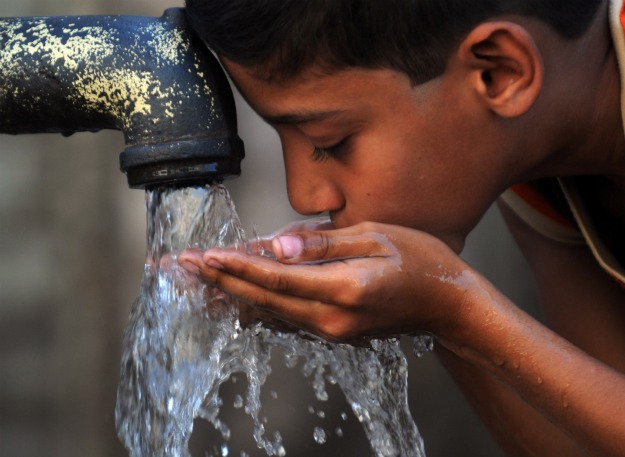
Pakistan is on the dry end of the water stress spectrum. About a third of Pakistanis do not have access to safe drinking water, while a further 46% lack access to proper sanitation. However, this deficiency is not uniformly distributed. Pakistan is populated to a large extent around the Indus River that runs the length of the country. The Indus plains cover about a quarter of the country’s landmass and host two thirds of its people, meaning that people living outside this region are particularly water stressed. Furthermore, according to a World Bank report, Pakistan’s per capita water availability has diminished five-fold from 5000 cubic meters in 1951 to 1100 cubic meters in 2006 due to rising consumption by a growing population coupled with rising water waste.

What is even more worrisome is that of the water that is actually available, very little is safe for consumption. A study of 14,000 water sources in 24 major Pakistani districts conducted by the Pakistan Council of Research in Water Resources (PCRWR) over a five-year period found that 82% of sources in Pakistan were unfit for human consumption. The major contaminants noted were bacteria, dissolved solids, nitrates and fluoride.
By Haider Warraich for Foreign Policy

This worsening water crisis is having a drastic impact on public health in Pakistan. According to a UNICEF report, 20-40 percent of hospitalized patients in Pakistan suffer from water-borne infections. Several disease epidemics in Pakistan have been traced back to water contamination, including several outbreaks of the potentially fatal Hepatitis E, rotavirus diarrhea, typhoid fever and dysentery. Polio is also a water-borne infection, and Pakistan is one of the last countries on earth to continue to suffer major problems from the disease.

The sustained high levels of chemical compounds in Pakistan’s drinking water supply have also caused the outbreak of population-wide poisonings. Fluoride toxicity, known to cause bone pain and deformation, has been reported from several areas of Punjab province, with a high occurrence in children. Arsenic poisoning, which causes a wide array of dangerous complications, has been reported to be present in up to 73% of the residents of Sindh province’s Manchar Lake, the largest freshwater lake in Pakistan and one of the largest in Asia. Pesticide poisoning, also linked to infiltration into the water supply, has been reported in Pakistani farmers.

Pesticide poisoning, among other problems, stems from the endemic misuse of water in Pakistan. About 97 percent of Pakistan’s freshwater resources are expended in irrigation and agriculture, yet Pakistan has one of the lowest productivities per unit of water and unit of land in the world. Waste is incurred at several stages: Canal heads, water courses and farms themselves all are the sites of considerable leakage. Furthermore, with Pakistan’s major hydroelectric dams losing storage capacity, there is little reserve during times of famine. Pakistan is in dire need of major hydroelectric projects to increase power generation, protect against seasonal flooding, and to have greater control over the water supply. However, provincial politics has stifled this debate, halting any progress in this direction. Concerns abound about the fate and compensation for displaced people, fears of downstream provinces of a reduction in water supply. Another important issue is that most Pakistani rivers originate from Indian-occupied Jammu and Kashmir. Pakistan and India in 1960 signed the Indus Water Treaty, in which both countries agreed to abstain from any activity that would jeopardize water supply of the other. However, according to a recent U.S. Senate report, India has made several dams in Jammu and Kashmir, which “could give India the ability to store enough water to limit the supply to Pakistan at crucial moments in the growing season.” Pakistani officials have argued that in doing so, India has violated the treaty, worsening the water situation in Pakistan.

The lack of access to water in Pakistan only exacerbates the country’s already dire public health situation. Hand washing, for instance, is the most effective step against infection in both homes and hospitals, but hand washing practices prescribed by public health organizations are impractical in water stressed areas, with one study concluding that an extra 20 liters per person per year would be required in order to follow handwashing recommendations. Another review of medical literature found that access to potable water sources has far more of an impact on reduced infections than water quality. With a deficit in both water quality and quantity, then, public health in Pakistan faces an immense burden frrom water-related illness.

Several measures need to be taken to ward off this crisis. Water policy, currently a minor issue in Pakistan, needs to be brought to the center stage of national debate. It will remain easy for politicians to defer the contentious issue of building dams unless the masses realize the extent to which they are needed. The good work conducted by the PCRWR should be better-funded and -promoted in order to highlight problems as well as evaluate possible solutions. Water waste in agriculture and irrigation also needs to be addressed; the government must make more of an effort to line canals to prevent leakage, and further promote water efficiency on farms. To increase access of rural populations to potable water, India has developed a successful project to provide piped water and hand pumps, with a particular emphasis on improving child health — Pakistan needs to develop a similar program. Pakistan should also make the most of the post-Cricket World Cup diplomatic thaw with India, insofar as it still exists, and ensure equitable implementation of the Indus Water Treaty. Access in arid areas such as desert regions of Sindh and practically all of Baluchistan need to be particularly improved. Promotion of hygienic practices such as boiling water to kill bacteria and appropriate sanitary practices needs to be increased to reduce water-borne infections. This can be conducted on both a national level using television programs, and on a grass root level using community health workers and prominent locals. Finally, the most long-lasting solution to improving water supply will be to slow Pakistan’s population growth, which will only put further strain on reduced water supplies. Unless measures are taken now, this bubbling crisis might reach the point of overflowing.

Haider Warraich, MD, is a research fellow at Harvard Medical School. He is a graduate of the Aga Khan University in Karachi, Pakistan, and the author of the forthcoming novel, Auras of the Jinn.

Dying to Tell the Story

By Umar Cheema for The New York Times

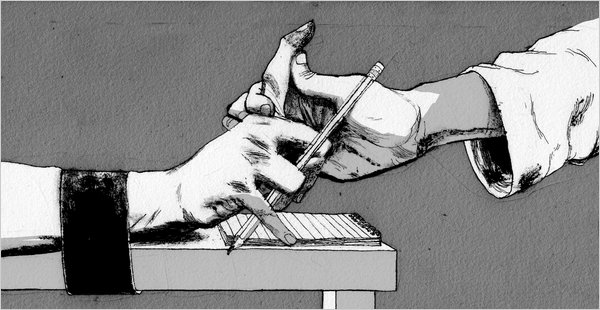
WE have buried another journalist. Syed Saleem Shahzad, an investigative reporter for Asia Times Online, has paid the ultimate price for telling truths that the authorities didn’t want people to hear. He disappeared a few days after writing an article alleging that Al Qaeda elements had penetrated Pakistan’s navy and that a military crackdown on them had precipitated the May 22 terrorist attack on a Karachi naval base. His death has left Pakistani journalists shaken and filled with despair.

I couldn’t sleep the night that Saleem’s death was confirmed. The fact that he was tortured sent me back to a chilly night last September, when I was abducted by government agents. During Saleem’s funeral service, a thought kept haunting me: “It could have been me.”

Mourning journalists lined up after the service to console me, saying I was lucky to get a lease on life that Saleem was denied. But luck is a relative term.

Adil, my 2-year-old son, was the first person in my thoughts after I was abducted. Journalists in Pakistan don’t have any institutionalized social security system; those killed in the line of duty leave their families at the mercy of a weak economy.

When my attackers came, impersonating policemen arresting me on a fabricated charge of murder, I felt helpless. My mouth muzzled and hands cuffed, I couldn’t inform anybody of my whereabouts, not even the friends I’d dropped off just 15 minutes before. My cellphone was taken away and switched off. Despite the many threats I’d received, I never expected this to happen to me.

Sure, I had written many stories exposing the corrupt practices of high-ranking officials and pieces criticizing the army and the intelligence agencies. After they were published, Inter-Services Intelligence, Pakistan’s prime security agency, always contacted me. I was first advised not to write too much about them and later sent messages laced with subtle threats. But I never imagined action was imminent.

On Sept. 4, I was driven to an abandoned house instead of a police station, where I was stripped naked and tortured with a whip and a wooden rod. While a man flogged me, I asked what crime had brought me this punishment. Another man told me: “Your reporting has upset the government.” It was not a crime, and therefore I did not apologize.

Instead, I kept praying, “Oh God, why am I being punished?” The answer came from the ringleader: “If you can’t avoid rape, enjoy it.” He would employ abusive language whenever he addressed me.

“Have you ever been tortured before?” he asked.

“No,” I said.

“These marks will stay with you forever, offering you a reminder never to defy the authorities,” he replied.

They tortured me for 25 minutes, shaved my head, eyebrows and moustache and then filmed and photographed my naked body. I was dumped nearly 100 miles outside Islamabad with a warning not to speak up or face the consequences.

The following months were dreadful. I suffered from a sleep disorder. I would wake up fearing that someone was beating my back. I wouldn’t go jogging, afraid that somebody would pick me up again and I’d never return. Self-imposed house arrest is the life I live today; I don’t go outside unless I have serious business. I have been chased a number of times after the incident. Now my son asks me questions about my attackers that I don’t answer. I don’t want to sow the seeds of hatred in his heart.

When Saleem disappeared, I wondered if he had been thinking about his children, as I had. He had left Karachi, his hometown, after receiving death threats, and settled with his wife and three children in Islamabad. From there, he often went on reporting trips to the tribal areas along the Afghan border. Tahir Ali, a mutual friend, would ask him: “Don’t you feel scared in the tribal areas?” Saleem would smile and say: “Death could come even in Islamabad.” His words were chilling, and prescient.

The killing of Syed Saleem Shahzad is yet another terrifying reminder to Pakistani journalists. He is the fifth to die in the first five months of 2011. Journalists are shot like stray dogs in Pakistan — easily killed because their assassins sit at the pinnacle of power.

When Daniel Pearl was brutally murdered by militants in Karachi in 2002, his case was prosecuted and four accomplices to the crime were sentenced. This happened only because Mr. Pearl was an American journalist. Had he been a Pakistani, there would have been no justice.

Today, impunity reigns and no organization is powerful enough to pressure the government to bring Saleem’s killers to justice. Journalists have shown resilience, but it is hard to persevere when the state itself becomes complicit in the crime. Now those speaking up for Saleem are doing so at a price: they are being intimidated and harassed.

Pakistan is at a crossroads and so is its news media. In a situation of doom and gloom, Pakistani journalists offer a ray of hope to their fellow citizens and they have earned the people’s trust. Even the former prime minister Chaudhry Shujaat Hussain has admitted that people who once went to the police with complaints now go to the press.

But this trust will be eroded if journalists continue to be bullied into walking away from the truth. News organizations throughout the world must join hands in seeking justice for Saleem and ending the intelligence agencies’ culture of impunity. An award for investigative journalists should be created in his honor, as was done for Daniel Pearl. No stronger message could be delivered to his killers than making him immortal.

Umar Cheema is an investigative reporter at The News International, Pakistan’s largest English-language daily. He was a Daniel Pearl Fellow at The Times in 2008.

Pakistan Orders an Inquiry After Troops Kill a Teenager

By Salman Masood for The New York Times

President Asif Ali Zardari of Pakistan ordered an investigation on Thursday into the shooting death of an apparently unarmed teenager by paramilitary troops in the southern port city of Karachi. The shooting, which was captured on video and broadcast on national television, has led to protests and has been condemned by political parties and human rights groups.

It was the second time in recent weeks that a video has shown paramilitary troops using extreme force against civilians. Last month, five Chechens were gunned down in Quetta, Pakistan.

The shootings are sure to feed complaints that Pakistan’s security forces are too aggressive and sometimes bypass the sluggish and corrupt judicial system. Pakistan’s military leaders are also still embarrassed by the American raid on Osama bin Laden’s compound in Abbottabad, which the armed forces did not detect.

The victim of the Karachi shooting, Sarfraz Shah, whose age was given as 18 or 19, was stopped by paramilitary troops on Wednesday and accused of being involved in an attempted robbery in a nearby park.

A spokesman for the troops said a gun had been taken from him, but in the video, Mr. Shah does not appear to be armed when he is shot.

The recording shows the young man begging for mercy before being led toward a group of troops. One points his gun at Mr. Shah before firing several shots. Mr. Shah crouches, asking forgiveness while bleeding profusely.

“My hand is gone,” Mr. Shah shouts. “Take me to the hospital.” The troops step back, out of the video frame. A government official said five of the troops had been arrested.

Mr. Shah was buried on Thursday in Karachi, accompanied by protests from family members.

The shootings in Quetta last month were also recorded. The police and paramilitary troops initially reported that the victims, three women and two men, were suicide bombers. They were killed near a checkpoint on the outskirts of Quetta, the capital of Baluchistan Province in southwestern Pakistan, in a volley of fire as police officers stood by.

Video from local television networks showed one young woman raising her arm, as if to try to stop the gunfire. No weapons were recovered on the victims. An investigation of that shooting is under way.

The Pakistani security forces have repeatedly been accused of misusing their power. The army was accused of extrajudicial killings during a military operation to drive out militants that began in the Swat Valley in 2009. The army denied the allegations.

The country’s powerful intelligence agencies have also been accused of illegally detaining hundreds of terrorism suspects. And military intelligence has been accused of gross human rights violations in Baluchistan, where a separatist insurgency by Baluch nationalists has long simmered.

Pakistani Rangers, the group involved in Mr. Shah’s death, are controlled by the Interior Ministry. Rehman Malik, the country’s interior minister, announced the arrests in the case on Thursday evening, but he also accused Mr. Shah of being part of a gang involved in robberies, according to the local news media.

Mr. Malik said Mr. Shah had tried to steal a woman’s purse and was caught by guards in the park before being handed over to the Rangers.

The Rangers have been deployed in Karachi for several years and help the local law enforcement authorities in maintaining peace in the city, which is riven by political, ethnic and sectarian tensions.

Pakistan’s Secular Martyrs

By Beena Sarwar for The News International

The murder of professor Saba Dashtiyari in Quetta last week, coming on the heels of the killing of investigative journalist Saleem Shahzad, is yet another sign of an ongoing ‘genocide’ of progressive Pakistani intellectuals and activists. ‘Genocide’ generally means the deliberate destruction of an ethnic group or tribe. In this context, it applies to the tribe of Pakistanis who have publically proclaimed or implicitly practiced the enlightenment agenda of freedom of conscience. They may have very different, even opposing, political views but they are people who are engaged knowingly or unknowingly in spreading ‘enlightenment’ values. Perceived to be out to undermine or eliminate members of this tribe are sections of state long engaged in establishing Pakistan’s “Islamic” identity and determining the “national interest”. They decide who is a patriot or a Muslim. Most of those killed in mysterious circumstances over the years were critics of this sate of affairs.

Let’s list some of them (a complete list is not possible here), starting with the former governor of Punjab Salmaan Taseer, murdered by an official bodyguard. Contrary to standard operating procedures, the other guards did not open fire on the assailant – who had been assigned to this duty despite his “extremist views” due to which the Special Branch had earlier dismissed him. Barely two months later, two human rights defenders were gunned down — former federal minister for minority affairs Shahbaz Bhatti in Islamabad, and Naeem Sabir, the Human Rights Commission of Pakistan’s former coordinator in Khuzdar, Balochistan.

The assassins “may perhaps belong to different groups,” said the HRCP, but the murders were “the work of militants out to eliminate anyone who raises his voice against persecution of the vulnerable people”. Naeem Sabir, associated with the HRCP since 1997, had been targeted off and on “by minions of the state” for his coverage of human rights abuses. A shadowy group calling itself the ‘Baloch Musala Defai Tanzeem’ (Armed Baloch Defence Committee) claimed responsibility.

Saba Dashtiyari was not exposing human rights abuses but he was doing something more dangerous – opening young minds to progressive thought. Although he received his basic education in the slums of Lyari he shared a wealth of knowledge, running “kind of a (liberal) university within the (strictly controlled) university,” writes his former student Malik Siraj Akbar. The disparate group of students around him often comprised “progressive and liberals”; they clutched books by “freethinkers like Bertrand Russell, Russian fiction by Leo Tolstoy and Maxim Gorky,” and writings of Pakistani progressive intelletuals like the late Syed Sibte Hasan and Dr Mubarak Ali. Their discussions revolved around “politics, religion, revolutions, nationalism” and also included social taboos like sex and homosexuality. He contributed his salary “to impart cultural awareness and secular education”.

The state, on the other hand, is “constructing more and more religious schools to counter the liberal nationalist movement” which only accelerates the process of right-wing radicalisation (Obituary: The Martyred Professor, June 2, 2011, Baloch Hal).

Prof Dashtiyari had lately become “a staunch backer of the Baloch armed resistance for national liberation” (‘The Baloch Noam Chomsky Is Dead’, Baloch Hal, Jun 2, 2011). Although he himself had not taken up arms, his views were anathema to the ‘establishment’ as defined above.

In April last year, another professor at the University of Balochistan, Nazima Talib was murdered — the first time a woman was target-killed in the province. The Baloch Liberation Army (BLA) said it had killed her in response to the security forces’ killing of “two Baloch women in Quetta and Pasni and torture of women political workers in Mand and Tump”. Security forces routinely pick up Baloch youth for questioning. Far too often, mutilated bodies are found in what Amnesty International has termed as “kill and dump” operations. Since July 2010, the rights body has documented “the disappearances and killing of at least 100 activists, journalists, lawyers and teachers in Balochistan, with victims’ relatives often blaming the security and intelligence services”.

One can empathise with the anger of the Baloch. But revenge killings cannot be justified or condoned. When victims become oppressors, it becomes even harder to emerge from the downward spiral.

The murder of Nawab Akbar Bugti in Gen Musharraf’s military operation of August 2006 contributed to this downward spiral, sparking off a wave of target killings of non-Balochis, particularly educationists and civil servants. Those killed since include former education minister Shafique Ahmed and Hamid Mehmood, former secretary of the Board of Intermediate and Secondary Education.

Although shadowy groups with long names sometimes claim responsibility, it is usually “unidentified assailants” who are said to be behind the murders, like those who gunned down former senator Habib Jalib of the Balochistan National Party (BNP-Mengal) last July.

Journalists remain vulnerable, walking a tightrope between the military and the militants, as Saleem Shahzad did. At least half-a-dozen Baloch journalists have been target-killed over the past nine months alone: Rehmatullah Shaeen, Ejaz Raisani, Lala Hameed Hayatan, Ilyas Nazar, Mohammad Khan Sasoil, Siddiq Eido and Abdus Rind. These murders have not been investigated, nor has the mainstream media taken any notice of them.

Many compare the situation to 1971. Just before Bangladesh’s liberation (albeit with foreign intervention), extremists trying to kill progressive ideas in the new country massacred progressive intellectuals. Is a similar mindset at work in what’s left of Pakistan? Extremists know they cannot win the argument so they silence the voices that make the argument.

Musharraf’s “moderate enlightenment” led to an escalation of violence against those who are genuinely enlightenment partisans from all shades of political opinion. This is not just a series of “incidents” but a tacitly agreed upon plan operating under a culture of impunity for both the state and the insurgents, fostered, it must be noted, by non-elected arms of the state. All demands for accountability, and for these acts to be tried and punished as criminal offences have so far come to naught.

There are signs of hope in the unprecedented number of people speaking out, in the Supreme Court’s seeking of the past three-year record of targeted killings in Balochistan, and in the Aghaz Huqooq-i-Balochistan (“the Beginning of Rights of Balochistan”) introduced by the government in November 2009. It is essential to build on these moves and urgently address Balochistan’s long-standing grievances about economic and political disenfranchisement, and human rights abuses.

As mentioned above, the genocide of Pakistan’s progressives is not limited to Balochistan. After educationist Latifullah Khan was murdered in Dir in November last year the Communist Party of Pakistan noted that since the start of the Taliban insurgency in Khyber-Pukhtunkhwa, systematic elimination of the enlightened and educated people had been underway. Terming it ‘rampant ‘intellecticide’, the CPP urged the international community to take note as not a day passed without a university professor, chancellor, doctor, enlightened teacher or a progressive political worker being target-killed or kidnapped.

Saba Dashtiyari is the latest in a long line of such ‘enlightenment martyrs’ in Pakistan. They include those fighting the land mafia – like Nisar Baloch (of Gutter Bagheecha fame, Karachi), and the fisherfolk Haji Ghani and Abu Bakar who spearheaded a movement against the destruction of the mangrove forests along the coast.

Let this blood not have been spilt in vain.

The writer is a journalist working with the Jang Group

Pakistan Aid Depends on Security Cooperation, Panetta Says

By Roxana Tiron for Bloomberg News

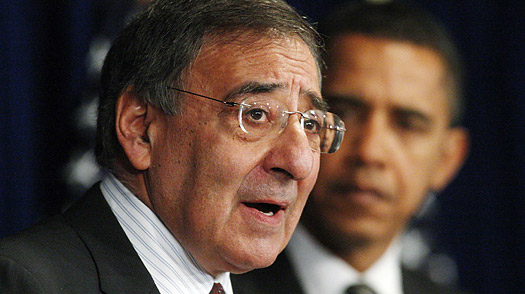
An accelerated counterterrorism campaign in the border region between Afghanistan and Pakistan is “vital” for the U.S. to defeat al-Qaeda there and prevent its return, according to CIA Director Leon Panetta, who is nominated to succeed Defense Secretary Robert Gates.

Any decisions on future U.S. security assistance “will be informed” by Pakistan’s response to the “concrete steps” the U.S. has set for counterterrorism cooperation, Panetta said in a 79-page set of answers to questions from the Senate Armed Services Committee in advance of his confirmation hearing scheduled for June 9.

Last month, the U.S. found and killed al-Qaeda leader Osama bin Laden who was hiding in a compound in the city of Abbottabad, 30 miles (50 kilometers) north of the capital, Islamabad.

The U.S. “train-advise-equip” programs with Pakistani military and paramilitary forces have been important in eliminating terrorist sanctuaries and disrupting the al-Qaeda network, Panetta said.

“It is vital, however, that Pakistan live up to its end of the bargain, cooperating more fully in counterterrorism matters and ceasing to provide sanctuary to Afghan Taliban and other insurgent groups,” he said.

Pakistan continues to lack the necessary military and civilian capacities to “hold” and “build” in areas along the border region that have been cleared of al-Qaeda forces, Panetta said.

Seeking Results

“If confirmed, I will work the Congress to ensure that the support we provide is yielding the results we seek,” he said.
Since 2009, Pakistan has undertaken counterinsurgency operations against extremist organizations in the northwest, including in Swat, South Waziristan, Mohmand and Bajaur “with varying levels of success,” said Panetta.

“Pakistan’s level of commitment is reflected in the enormous casualties it has suffered as a result of terrorism in the last few years, including more than 11,000 military personnel killed or wounded in action and more than 30,000 civilian causalities in recent years,” he said.
Panetta said that while, bin Laden’s death is a “significant blow” to al-Qaeda, the core group and its offshoots “remain a vary dangerous threat” in the region and to the U.S. homeland.

“There is a risk that decentralized affiliates may pose an increased threat to the United States,” he said
Panetta said that President Barack Obama’s Afghanistan strategy is “sound” and the U.S. has made “the progress necessary to give the President meaningful options for his decision,” on how many U.S. forces to withdraw beginning in July.
The military gains in Afghanistan are “helping to create the conditions for reconciliation,” between Afghanistan’s government and the Taliban insurgents.

Anthony Weiner: Sex, Lies, and the Pakistan Connection

By Manzer Munir for Pakistanis for Peace

On Monday night’s Daily Show with Jon Stewart, the host, a former roommate of the congressman, confessed that Weinergate and the entire episode involving pictures of his friend Rep. Anthony Weiner of NY, was “killing” him.

Jon Stewart was clearly not sure how to react to his friend’s confession that he had indeed himself been responsible for sending sexually suggestive photos of himself via Twitter.“I don’t know what to do anymore! It’s killing me, “he said on last night’s “Daily Show”, which was taped in New York after the congressman had already given his press conference earlier in the day admitting to the indiscretions after having denied them for a week.

I must admit, I am also deeply saddened by this story as it too is killing me. No I didn’t room with Anthony Weiner in a summer house in Delaware in the 1980s as did Stewart. However I was a fan of the representative from New York who was the first Democrat in a long time that seemed to have balls in Congress when it came to speaking his mind and standing up to the other guys across the aisle. He didn’t have to go and practically show them to prove it though.

Sending salacious pictures of yourself to strange women across the country while being married, in itself, is not a crime. But had he fessed up to his martial indiscretions and not gone about for a whole week giving interviews to the national media denying everything and claiming to have had his twitter account hacked, might have been enough for him to be forgiven by many of his constituents. Perhaps he would not have been so easily forgiven by his American born Pakistani wife, Huma Abedin. Needless to say, the congressman would surely have saved himself a great amount of grief and further humiliation.

Instead after a week of denials, and as new pictures and allegations surfaced regarding other women, Rep. Weiner finally came clean and called a press conference on Monday afternoon and confessed to having sent the pictures himself.

Congressman Weiner is not the first politician to have been involved in a sex scandal and God knows he certainly will not be the last. And yet, of all the politicians I have followed over the years, Anthony Weiner of New York seemed like the only Democrat who had the wits to match the guts when it came to fighting for his party’s principles in Washington. A few months ago when he showed great anger on the House floor arguing for healthcare benefits and a fund for the 911 First Responders, he further cemented my belief in him as an outstanding up and coming member of the House of Representatives.

Weiner’s chutzpah and boldness in many interviews and House sessions had indeed endeared many Democrats across the country of all faiths and backgrounds who have been clamoring for a Democrat with a backbone. Rep. Weiner seemed to fit the bill. His recent marriage to long time top aide to Secretary of State Hillary Clinton, Huma Abedin, a Muslim American of Pakistani decent, only further solidified him in my eyes as one of “our own”. The marriage of an up and coming Jewish Congressman from NY and a Muslim American top aid to, arguably one of the most powerful women in the world, in Hillary Clinton, certainly seemed like an odd pairing.

By all accounts the couple was in love and a long happy union seemed destined for them as President Bill Clinton officiated their wedding almost a year ago last July. Now one of the brightest stars of the Democratic party is facing a House investigation into ethical violations as well as a tremendous fallout from his lies and infidelity.

To many people, including myself, I am not only upset that we have lost one of the stars of the Democratic party to this scandal, but I am also upset for Huma, as she is the one who is suffering the worst end of the entire situation. For her to be dragged into this mess like this will surely test their nascent marriage. As a one time supporter of Rep Weiner, I hope that his career, and more importantly, his marriage survive this entire ordeal.

However, as has been the case with other scandals, there is usually more information that will come out that will be damning to Rep. Weiner. I only hope that at some point the representative from the great state of New York realizes that it is foolish to further humiliate his spouse and all his former supporters by resigning from his office immediately.

–Manzer Munir, a proud American of Pakistani descent, is the founder of Pakistanis for Peace and blogs at www.PakistanisforPeace.com as well at other websites as a freelance journalist and writer.

Pakistan Leaders Must Make Choice After Clinton’s Warning

By The Bloomberg News Editorial Board

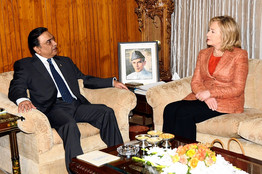
When U.S. Secretary of State Hillary Clinton visited Pakistan last week, she noted that U.S.- Pakistani relations were at a turning point after the killing of Osama bin Laden. It was up to the Pakistanis, she said, to decide “what kind of country they wish to live in.”

The brutalized body of investigative journalist Syed Saleem Shahzad, which turned up outside of Islamabad on May 31, may provide a clue to the answer.
Shahzad disappeared after publishing the first of two promised articles linking elements of the Pakistan navy to al- Qaeda following a deadly May 22 attack on a Karachi naval station. Last fall, after being questioned about a different story by Pakistan’s Directorate for Inter-Services Intelligence (ISI), Shahzad wrote that he was threatened by the spy agency.

Alternatively, it could be that foul play like Shahzad’s murder will become a thing of the past in Pakistan. While in Islamabad May 27, Clinton and Chairman of the Joint Chiefs of Staff Admiral Mike Mullen demanded authorities take “decisive steps” to crush the violent extremists the government has long supported, which would end the need to intimidate journalists who expose that support. Whichever way the Pakistan government goes, the May warnings by the U.S. ought to be the last.

The U.S. administration has continued to insist, as President Barack Obama did in a May 22 interview with the BBC, that the Pakistanis have “generally been significant and serious partners against the terrorist threat to the West.” This simply isn’t the case.

Victim, Sponsor

For much of the past decade, Pakistan has been both a victim and a sponsor of Islamic militants. Its soldiers are fighting bravely against homegrown terrorists seeking to install an Islamic government. In 20 attacks in May, these radicals killed some 150 people.

At the same time, the Pakistani army, led by General Ashfaq Parvez Kayani, is a longstanding patron of violent groups targeting Afghanistan and India.
Guided by excessive fear bordering on paranoia about India, Pakistan’s military and intelligence services believe that nurturing those extremists is an effective way to frustrate India’s regional ambitions. The ISI largely created and continues to support the Taliban and the Haqqani Network, the principal groups battling U.S. forces in Afghanistan and the fledgling government in Kabul. It also backs Lashkar-e-Taiba, the group responsible for the 2008 attacks in Mumbai that killed more than 160 people.

Double-Dealing

President George W. Bush’s administration tried to end this double-dealing by giving Pakistan billions in economic and military assistance. Yet Bush didn’t make the aid contingent on a crackdown on extremists. The Pakistanis cooperated somewhat with U.S. efforts to dismantle al-Qaeda but refused to act against other groups, including the Afghan Taliban, which was given refuge inside Pakistan’s borders.

The Obama administration accelerated the failed Bush policy, substantially increasing military and economic assistance, again without imposing rigorous conditions. And Pakistan continued to ignore administration warnings about continued support for extremists.
In one incident reported by the Washington Post, Obama’s first national security adviser, James Jones, warned officials in Islamabad that there would be “consequences” if a terrorist attack directed at the U.S. was traced to Pakistan. Yet when a man who had trained at a terrorist camp in that country attempted to detonate a car bomb in Times Square in May 2010, the U.S. administration did nothing. Shortly thereafter, Obama watered down Jones’s words, telling Kayani that a “successful” attack would have consequences.

Meaning Business

So when U.S. authorities learned that Osama bin Laden might be housed in a villa in a Pakistani garrison town, they dispatched Navy Seals to capture or kill him without so much as notifying the Pakistanis in advance. The raid provoked great outrage from officials in Pakistan. Since then, emotions have cooled. Clinton and Mullen have delivered their warnings, public and private. And this time, the Americans may mean business.

Will the Pakistanis respond?

Shahzad’s murder is a bad sign. On the other hand, reports from Pakistani tribal leaders suggest that the Pakistani army may be preparing a serious campaign in North Waziristan, where the leaders of the Haqqani Network and other extremist groups live.
It will soon be clear whether Clinton’s latest message got through. If not, the administration must consider new ways to persuade Pakistan to change course, recognizing that the country is behaving more like an adversary than a partner.

Al Qaeda’s Latest Loss

By Bruce Riedel for The Daily Beast

The reported death of Muhammad Ilyas Kashmiri deals a huge hit to the terror cell, still reeling from bin Laden’s killing. Ex-CIA analyst Bruce Riedel on the impact on U.S.-Pakistan relations.

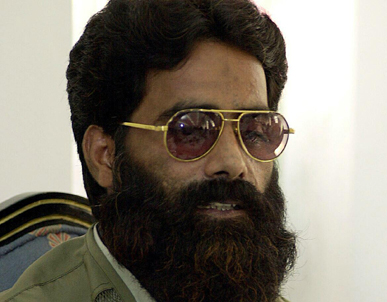
Pakistani sources are reporting the death in a drone strike this weekend of Muhammad Ilyas Kashmiri. If true, it is a big setback for al Qaeda and could help ease tensions between Pakistan and the U.S. a bit.

Kashmiri is al Qaeda’s top Pakistani operative. He was born in Pakistani-controlled Kashmir on February 10, 1964. Trained in the camps of the Pakistani Inter Services Intelligence directorate (ISI) and then the elite Pakistani commando group, the Special Services Group (SSG), he was the darling of the Pakistani army for years. He fought in the war against the Soviets in Afghanistan where he lost an eye and a finger. Then he took the war to India both in Kashmir and in New Delhi itself.

He formed his own militant group called the 313 Brigade, after the 313 fighters who joined the prophet Muhammad in an early Islamic victory. His exploits in India were legendary. He was personally decorated and thanked by the then head of Inter-services Intelligence (ISI), Mahmud Ahmad and Pakistani’s dictator, Pervez Musharraf, in 2000. But Kashmiri broke with his ISI and army friends in 2002 when Musharraf decided to give the Americans at least some help against al Qaeda.

Kashmiri took his 313 Brigade into al Qaeda’s camp and assisted in training Taliban fighters in Afghanistan and began targeting his former friends in the ISI. His teams killed at least one senior ISI officer. He was involved in an attempt to assassinate Musharraf in 2004. The United Nations credits him as a key player in the plot to murder former Prime Minister Benazir Bhutto in December 2007.

The Pakistani American David Headley, who has confessed to plotting the Mumbai terror attack in November 2008, says Kashmiri was his key contact in al Qaeda. The two worked on a plot to attack a Danish newspaper office in Copenhagen in 2009. That was foiled when the FBI arrested Headley, but Kashmiri continued planning to carry out Mumbai-style attacks in Europe. Another was foiled in Denmark at the end of 2010. Kashmiri would have played an important role in helping al Qaeda recover from bin Laden’s demise. He had key connections inside the Pakistani syndicate of terror groups.

Just last week one of Pakistan’s best investigative reporters Syed Salam Shahzad was murdered after finishing a new book on al Qaeda in Pakistan. According to excerpts published in India and Pakistan, Shahzad had evidence Kashmiri may have been the real brains behind the Mumbai plot and hoped it would precipitate an Indo-Pakistani war that al Qaeda could exploit.

This is not the first time Kashmiri has been reported killed by a drone attack; he has reappeared after claims of his demise. But if this time he is dead, it is a significant setback for al Qaeda just a month after American commandos killed Osama bin Laden. Kashmiri would have played an important role in helping al Qaeda recover from bin Laden’s demise. He had key connections inside the Pakistani syndicate of terror groups with both the Afghan and Pakistani Taliban and Lashkar-e-Taiba, and with al Qaeda operatives in Europe and fund raisers in the Persian Gulf. And he had penetrations deep inside the Pakistani army and ISI.

So both Washington and Islamabad will be glad to see him gone. Kashmiri’s demise won’t solve all the problems in the tortured American relationship with Pakistan by any means but it will help.

Of course, if Kashmiri is not dead and reappears yet again unscathed, it will only add to his credentials. Bin Laden benefited enormously from surviving the cruise missile attack that targeted him in 1998. Recriminations could damage the Pakistani-American relationship further. Nonetheless those are risks worth taking. In either case we will know soon. Al Qaeda is quick to eulogize its martyrs. If Kashmiri’s dead, they will say so.

-Pakistanis for Peace Editor’s Note– Good Riddance!!!

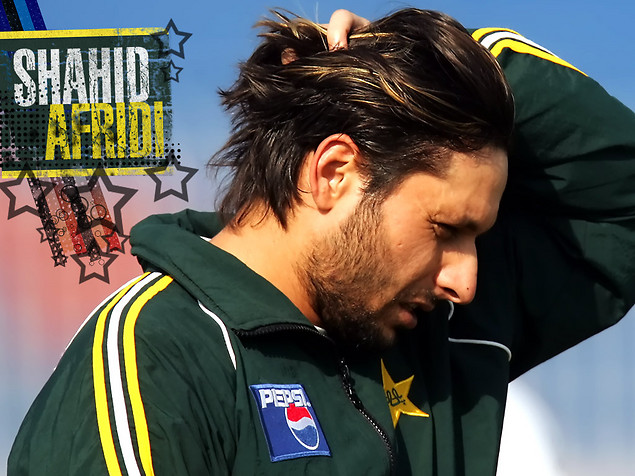
Afridi Asks Zardari For Help

As Reported by The AFP

Former captain Shahid Afridi appealed to President Asif Ali Zardari for help on Wednesday after his central contract was suspended when he announced his retirement from international cricket. “I have appealed to the president to intervene urgently, also deal with other issues and save the game from getting into more crises,” Afridi told AFP by telephone from Southampton.

Afridi confirmed that the England and Wales Cricket Board stopped him from playing after the PCB revoked its permission.
“The captaincy was not an issue as I have already played under senior players, but it was a matter of self respect and honour which was hurt,” said Afridi who refused to speak about the PCB sanctions.

The opposition Pakistan Muslim League-N party has already submitted an adjournment motion in the national assembly against Afridi’s punishment.
Former Pakistan captain Imran Khan, who now heads his own opposition party, said the PCB was not run professionally.
“The board is not run like an institution,” Khan told a television channel. “Afridi feels injustice is done so he has taken a decision and you don’t change four-five captains in a year.”

“Just recently everyone was praising Afridi after he led Pakistan to the semi-final of the World Cup and then suddenly this happened,” said Khan. “The board is also run on ad-hoc basis like the country,” he added.
The Muttahida Qaumi Movement (MQM), which belongs to the coalition government headed by Zardari’s Pakistan People’s Party, also objected to the sanctions on Afridi. “President Zardari should take notice of the biased attitude of the board,” said MQM leader Farooq Sattar. “You don’t treat national heroes like this.”

Sports Minister Shaukatullah Khan lashed out at PCB chairman Ijaz Butt over the “injustice” and said he would discuss the matter with Prime Minister Yousuf Raza Gilani.

Abdul Ghaffar Qureshi, who heads the sports committee in the upper house of parliament, demanded Butt’s sacking.
“A change in the PCB is imperative,” said Qureshi. “Butt has not allowed any captain to settle so it will be better to sack him.”

The 31-year-old all-rounder, dumped as one-day captain following a row with coach Waqar Younis last month, quit international cricket in protest at his treatment by the Pakistan Cricket Board (PCB).
In response, the PCB suspended his central contract and revoked all his no-objection certificates, meaning he will not be officially permitted to play overseas.

The move will stop him from playing for Hampshire in England’s Twenty20 league and in next month’s Sri Lankan Premier League.
Afridi said that he came to know about his removal from the team’s captaincy through media and the board did not bother to inform him about that decision.

Pakistani Journalists Defiant at Reporter’s Burial

As Reported by The Associated Press

A Pakistani reporter who investigated terrorism and was found slain after telling a rights activist he’d been threatened by intelligence agents was buried Wednesday. Fellow journalists vowed his killing would not silence them.

Syed Saleem Shahzad wrote for the Asia Times Online and other publications. He delved into topics that were often sensitive in Pakistan, where journalists face threats from insurgents as well as a security establishment that operates largely outside the law.

“We will not shut our voices down,” said Azhar Abbas, a prominent Pakistani journalist. “The journalist community is united on this. We will not stop ”

Pakistan was the deadliest country for journalists in 2010, with at least eight killed in the line of duty, according to the New York-based Committee to Protect Journalists. Six died in suicide attacks, the group said in a report late last year.

Despite the dangers, the media establishment in Pakistan has expanded rapidly over the past decade, and reporters here operate with tremendous freedom compared with many other developing countries.

In recent weeks, the media have carried unusually scathing coverage about the security establishment after it was caught unawares by the May 2 U.S. raid that killed al-Qaida chief Osama bin Laden in a garrison city in Pakistan’s northwest.

Shahzad’s death could heighten the criticism, though commentators are being careful about how they discuss the alleged link to spy agencies.

After disappearing Sunday from Islamabad, Shahzad’s body was found dozens of miles outside the capital on Tuesday, bearing signs of torture, police said. His death drew numerous condemnations, including from U.S. Secretary of State Hillary Rodham Clinton.

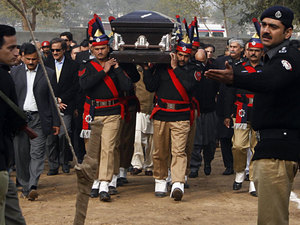
The 40-year-old was buried in his hometown, Karachi, as hundreds of friends, relatives, political figures and fellow journalists mourned.

Sindh province Information Minister Sharjeel Memon called the killing a “cowardly act” and promised that those responsible would be brought to justice. But it’s unclear how much the weak civilian government can do if, as some suspect, Pakistani security agencies played a role.

A spokesman for Pakistan’s premier spy agency, Inter-Services Intelligence, called the allegations “absurd.” He spoke on condition of anonymity because he was not authorized to speak to media on the record.

However, Ali Dayan Hasan, a researcher with Human Rights Watch, said Shahzad had told him that he feared Pakistani intelligence agents were after him.

The agencies pressured him to reveal his sources in October after he wrote a story about Pakistan allegedly freeing a detained Afghan Taliban commander, according to an email Shahzad sent Hasan. Hasan said Shahzad was still worried in recent weeks, but kept up his reporting.

Just last week, Shahzad wrote a story about alleged al-Qaida infiltration of the navy. The report came after a 17-hour insurgent siege of a naval base in Pakistan’s south added to the recent humiliations suffered by security agencies.

Within days, Shahzad vanished, and his wife contacted Hasan as her husband had instructed in case he disappeared.

In a statement, Clinton said Shahzad’s reporting “brought to light the troubles extremism poses to Pakistan’s stability,” and said the U.S. supports the “Pakistani government’s investigation into the circumstances surrounding his death.”

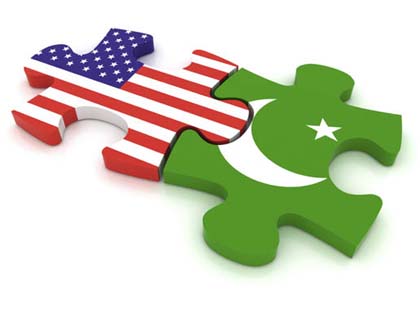
U.S., Pakistan, Through Thick and Thin

By Gerald F Seib for The Wall Street Journal

One diplomat long involved in the tempestuous U.S.-Pakistan relationship likens it to a Catholic marriage: There may be problems, but divorce isn’t an option.

And so it is that, almost a month after U.S. Navy SEALs entered Pakistan to kill Osama bin Laden, the two troubled partners find themselves not in divorce court but in an awkward but unmistakable process of reconciliation.

Signs of healing are popping up. Despite its anger and embarrassment at being left in the dark about the bin Laden raid, Pakistan’s intelligence service has begun cooperating again on a series of sensitive matters. Meanwhile, Secretary of State Hillary Clinton and Joint Chiefs of Staff Chairman Mike Mullen have just held the obligatory kiss-and-make-up talks in Pakistan, which U.S. officials describe as blunt but useful in moving forward.

And despite widespread anger in Congress over Pakistan’s harboring, either willfully or unknowingly, the world’s leading terrorist, Obama administration officials seem to be squelching the desire to extract revenge by cutting Pakistan’s aid.

There remains the danger of a rupture, and there still could be long-term damage. Street-level anger on both sides means the relationship can’t stand too many more shocks just now.

In particular, it seems likely that one result of the trauma will be a scaling back of the drone wars—America’s use of armed drones to launch strikes inside Pakistan to attack operatives of the Taliban movement fighting U.S. forces next door in Afghanistan.

The drones likely will continue to be used against top Taliban leaders when found, but less often against lower-priority targets, and probably under new and clearer rules of cooperation with the Pakistanis, say those familiar with the effort.

Still, the reality is that the two countries don’t have much choice but to move on. Regardless of how much love is flowing at any moment, they simply need each other.

The American war against al Qaeda globally and against Taliban insurgents in Afghanistan simply can’t be won without the cooperation of Pakistan. Much as Americans are infuriated by the way elements of Pakistan’s government and intelligence service hedge their bets by playing both sides in the struggle against extremism, there’s no doubt that Pakistani intelligence has been crucial in the fight.

For its part, Pakistan has, in its fit of pique over the bin Laden raid, made its best show of playing the China card to demonstrate to the U.S. that Pakistanis can find good, powerful friends in Beijing if Americans don’t treat them better. By coincidence, this has been proclaimed, officially by the two countries, the year of China-Pakistan friendship, which is a useful card for Pakistan to play right now.

But Pakistan’s post-raid overture showed the limits of the China option as much as anything else. Pakistani Prime Minister Yousuf Raza Gilani made a four-day trip to China soon after the bin Laden operation, and came away with a Chinese pledge to speed up delivery of some previously promised fighter jets.

Mr. Gilani’s other takeaway from his visit promptly proved dubious. His defense minister announced that Pakistan had invited China to take over management of a big Pakistani port at Gwadar, and to build a new naval base there. In response, the Chinese said, essentially, “We have no idea what you’re talking about.” Whatever was discussed, it appears to be less than originally advertised.

Pakistanis as well as Americans know China has its limits as an alternative big-power friend for Islamabad. American aid can’t easily be replaced, and China doesn’t tend to dole out assistance easily. Meanwhile, the U.S. is the top market for Pakistani exports, while China ranks fifth. China’s big textile industry actually is a key international competitor to Pakistan’s own textile sector.

Ultimately, the Chinese are less likely to be helpful to Pakistan in the war against extremism than will the U.S. China tends to use partnerships abroad to solve its problems, not to help friends solve theirs.

In the meantime, real and meaningful steps have resumed in the U.S.-Pakistani intelligence relationship. Pakistan has allowed American officials to speak with the bin Laden wives found in his compound. It has returned the tail section of a U.S. helicopter lost in the raid; there was stealth technology embedded in it—technology the U.S. feared an angry Pakistan might instead share with China.

And Pakistan has agreed to allow American officials into the bin Laden compound to search for more intelligence on al Qaeda operations run from there.

The U.S. now seeks more help in fighting the Taliban inside Pakistan, and there will be a three-way American-Afghan-Pakistani meeting to discuss Afghanistan next month.

All isn’t bliss between Washington and Islamabad—not by a long shot—but those aren’t the actions of partners headed their separate ways.

Gaddafi Stadium Name Must Go

By Manzer Munir for Pakistanis for Peace

It has been over three months since the Arab Spring arrived on Libyan shores. The Libyan Civil War started there in February of 2011 after Ben Ali of Tunisia and Hosni Mubarak of Egypt begrudgingly relinquished power in the neighboring North African nations. At first it had appeared that Mubarak would resort to thuggery and despotic abuse of his powers. But due to the brave people in Tharir Square in Cairo, he eventually was forced out by the Egyptian army and under American pressure once the Obama administration calibrated their stance to not support a long time ally in Mubarak and instead follow the popular opinion of the people of Egypt against his autocratic rule.

Unfortunately for the people of Libya, Muammar Gaddafi is not ready to step down from over 40 years at the helm of Libyan society. His army brutally quashed a rebellion against his rule and when it appeared that many thousands more would be killed by his troops, the US and NATO forces intervened and bombed Libyan government forces. The standoff between the Libya forces of Gaddafi and the US and NATO bombings have left Libyans in the middle as their nation continues to suffer several months into the fighting.

A brutal dictator like that who cares more about holding onto power than the fate of his nation does not deserve any honors. Instead he deserves to be tried for murdering many innocent people and if found guilty he should be hanged.

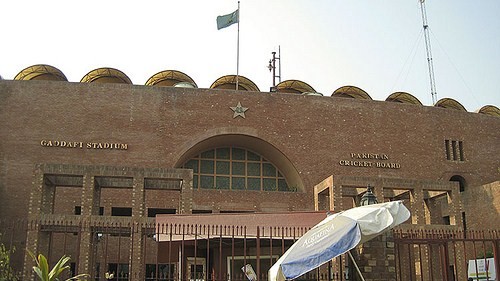
Therefore it is a shame that in Pakistan, one of the country’s most important stadium continues to bare the name of the Butcher of Tripoli. Yes, Gaddafi stadium in Lahore, a venue for many Pakistan Cricket Board sanctioned domestic and international cricket matches, is named after the Libyan dictator.

The stadium was built in 1959 and was originally named Lahore Stadium. However it was renamed in 1974 to Gaddafi stadium in honor of the Libyan ruler who had given a speech in favor of Pakistan’s right to pursue nuclear weapons at a meeting of the Organization of Islamic States Conference (OIC). The stadium also houses the headquarters of the Pakistan Cricket Board (PCB).

But now, as Qaddafi continues to kill his own people in the most brutal of ways, it is time that Pakistan’s Cricket Board changes the name of the country’s premier stadium back to Lahore stadium since honoring this man responsible for indiscriminately killing his fellow citizens unnecessarily further looks negatively upon Pakistan.

A country that already has a grave public relations image problem can surely give itself a break by doing something as simple as changing the name of this stadium. Afterall, what does it say of Pakistan if it continues to honor a man like Gaddafi? Do Pakistanis not care that this man is responsible for killing thousands of his own people?

It is time to put pressure on the Pakistan Cricket Board and on the government to immediately change the name of the stadium. I know that Pakistan has many other problems inside this fractured and unstable nation to think that changing the name of Gaddafi stadium can fix all that ails the country. Nay, it is merely a drop in the bucket. There are countless other problems facing the country that are too many and too complex to list here. But one easy fix the country can do to help improve its image is to change the name of this stadium.

There is absolutely no reason that the stadium should be associated with a lunatic such as Qaddafi. The name should never have been changed to begin with no matter what support he gave to Pakistan’s nuclear aspirations. He has never been a good or stable leader. In fact, the man is thought to have been directly responsible for numerous acts of terrorism in the 1970’s and ’80’s including the Pan Am Lockerbie bombing. And this was BEFORE he started killing his own people in order to quash a rebellion against his rule!

In light of the many recent embarrassments for the nation such as Osama Bin Laden’s hiding in their country, the continued imprisonment of Asia Bibi, the killings of Salmaan Taseer and Shahbaz Bhatti, Pakistanis must decide whether or not they want to join the community of nations or become a pariah state much like North Korea, Libya and Iran. Changing the name of the stadium is a small step, but it is indeed a step in the right direction.

–Manzer Munir, a proud Pakistani American and peace activist, is the founder of Pakistanis for Peace and blogs at http://www.PakistanisforPeace.com as well at other websites as a freelance journalist and writer.

India and Pakistan Discuss Demilitarisation of Siachen

As Reported by The Economic Times

India and Pakistan today discussed demilitarisation of Siachen, a mountainous region where borderline is not demarcated, in a “constructive framework”, picking up the threads of the issue after a gap of three years.

The issue came up for discussion during the 12th round of two-day Defence Secretary level talks between the two sides.

“The talks were held in a constructive framework. Both sides apprised each other of their perception about the Siachen issue and also discussed the surrounding issues,” Defence Ministry officials said.

Defence Secretary Pradeep Kumar led the Indian delegation at the talks with his Pakistani counterpart Lt General (Retd) Syed Ather Ali.

The decision to resume the talks between the two countries was taken last year during the meeting of Prime Minister Manmohan Singh and his Pakistani counterpart Yousuf Raza Gilani in Thimpu when they decided to take forward the dialogue process.

While the Pakistani delegation has two civilian officials and four military officers, the Indian side includes Special Secretary R K Mathur, Director General of Military Operations (DGMO) Lt General A M Verma and Surveyor General S Subha Rao.

The Pakistani Defence Secretary met Defence Minister A K Antony in the afternoon for over 20 minutes.

The two sides may come up with a joint statement tomorrow after the talks, the officials said.

Pakistan has been asking for demilitarisation of the Siachen glacier and raised the issue of climate change there due to presence of troops from both sides and its effects on the environment.

Siachen, with an area of over 2500 sq km, the world’s highest militarised zone, has been a long pending issue between India and Pakistan over differences on the location of the 110-km long Actual Ground Position Line (AGPL) which passes through the Soltoro Ridge and Siachen Glacier.

U.S.-Pakistan Ties And The Curse of Secrecy

By Myra MacDonald for Reuters

When President Barack Obama telephoned Pakistan’s president to say U.S. forces had found and killed bin Laden, he offered him a choice. He could say Pakistan helped find bin Laden, or that it knew nothing, according to a senior western official. Pakistan initially chose to stress the former – that it had helped – but later shifted to condemning what it called the U.S. violation of its sovereignty.

The story illustrates the complicity between the United States and Pakistan in their deliberately ambiguous relationship. This ambiguity has its uses. It allows Washington to keep working with Pakistan in the face of angry questions at home about why Osama bin Laden was living there. And it lets Pakistan cooperate with the United States, for example on drone attacks, while trying — not particularly successfully — to minimize the domestic backlash.

But the result of that ambiguity has been a disconnect between the leadership of both the United States and Pakistan and their own people, who have little knowledge of the understandings being reached in the many high-level meetings between the two countries (and which will continue despite the deep distrust on both sides.)

As Christine Fair says in her interview with NBR, ”the Obama administration has had no illusions about Pakistan.” When it took office, it had full knowledge of Pakistan’s reluctance to eradicate militant groups, and indeed of the rapid expansion of its nuclear programme. But she added, “the Obama administration, like past administrations, has been willing to look the other way when it deems necessary.”

And for all the furious debate in both countries about the state of U.S.-Pakistan relations, “the leaderships of both countries know that they need each other in ways that are both humiliating and difficult to explain to publics that are ever more outraged and appalled by the perfidy of the other.”

The problem with this pattern of public fury and private reconciliation is that it leaves very little room to build trust between the two countries and almost no scope for properly informed public debate. Some secrecy is of course needed in war and diplomacy. But with the United States and Pakistan, it has become the automatic default position.

This secrecy and complicity did not just start with bin Laden and drone strikes. It goes way back to U-2 spy planes flying over the Soviet Union – Gary Powers, shot down in Russia in 1960, took off from Peshawar. It goes back to the jihad against the Soviet occupation of Afghanistan from 1979-1989, when Washington knew Pakistan would be forced to lie to the Soviet Union about its involvement for fear of inviting Russian retaliation on its own soil. It goes back to the United States turning a blind eye to Pakistan’s expanding nuclear weapons programme in the 1980s.

The United States is now talking about establishing new ground rules for the U.S.-Pakistan relationship. So how about introducing some openness into those new ground rules?

Consider one example where transparency just might be less damaging than secrecy.

The United States, which has begun tentative direct talks with representatives of the Taliban, wants Pakistan to facilitate the process of reconciliation. So does Pakistan (though they may not see eye-to-eye on how it should work.) As far as I understand from conversations with officials from various countries, including from Pakistan, these talks are not about reaching a straight-forward power-sharing agreement with the Taliban that would allow U.S. troops to leave Afghanistan. Rather they are one part of a wider and complex process meant eventually to bring all Afghan parties into a broad political settlement.

Yet such is the secrecy around the talks that there is a serious risk that if enough people believe the Taliban are about to return to power, their opponents will prepare for civil war, building up arms and funding in a way that makes this a self-fulfilling prophecy.

As Ronald Neumann, a former U.S. ambassador to Afghanistan, writes here about his visit to the country in March, “there is a desperate need to clarify U.S. intentions. From President Hamid Karzai to his opponents to non-political Afghans, I found everyone asking what our long-term goals are. Afghanistan is a traumatized nation after 30 years of conflict. Doubts about American intentions lead to conspiracy theories, hedging strategies and even talk of civil war if too much haste to reach a political settlement means the Taliban could be returned to power — something that many Afghans who suffered under the Taliban’s savage rule are determined to resist at all costs. ”

I have written before that there is rather greater strategic convergence between the United States and Pakistan than appears on the surface. Both want stability in Afghanistan. Pakistan – rather than wanting to reinstall a Taliban government in Kabul – has been insisting for a while it wants a stable and neutral Afghanistan. Both the United States and Pakistan want stability in Pakistan- such a statement of the obvious that it is often overlooked.

Meanwhile, India – always the elephant in the room in discussions about Pakistan – has begun a slow but steady attempt at peace-making – its focus nowadays being very much on doing what it takes to build its economy. Pakistan desperately needs to salvage its own economy – a view, analysts say, also promoted by army chief General Ashfaq Pervez Kayani, who sees the country’s security as coming from its economic strength. If a political settlement in Afghanistan and an India-Pakistan thaw were to open up trade across the region, all three countries would benefit and the gain of one would not necessarily be at the expense of the other (this idea at the moment is largely aspirational – but the fact that it is on the table at all shows how much times have changed.)

So arguably, both the United States and Pakistan are roughly on the same page on what needs to happen. Yet their relations are a tactical and emotional disaster. Those long decades of secrecy have not helped. As Najam Sethi wrote in his column, the “carefully contrived and mutually agreed ambiguity has now run aground.”

If something needs to change in the U.S.-Pakistan relationship, there is one approach that has not been tried yet. Try breaking that habit of confining neary everything to secret understandings between military and political leaderships, and instead trusting the people of the countries affected — and that includes Afghanistan — to have a properly informed debate about what is the best way to bring stability to the region.