Posts Tagged ‘ Pakistan ’

In Pakistan, Justifying Murder for Those Who Blaspheme

By Aryn Baker for Time
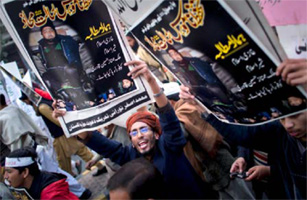
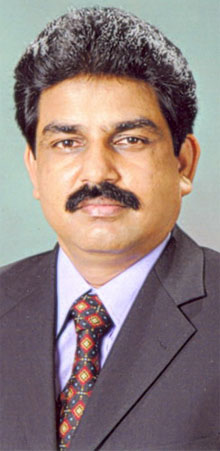
“I believe in Jesus Christ who has given his own life for us,” the doomed man said, staring straight into the video camera. “And I am ready to die for a cause.” Shahbaz Bhatti had no hesitation in his voice as he responded to a question about threats from the Taliban and al-Qaeda. “I’m living for my community … and I will die to defend their rights.” It was his last answer in a four-month-old self-produced video that was to be broadcast in the event of his death. But the radicals had the final say. On March 2, Bhatti, Pakistan’s Minister for Minority Affairs, was shot dead in Islamabad. Pamphlets scattered on the ground claimed the act for a new alliance of “the organization of al-Qaeda and the Punjabi Taliban” and asserted that other infidels and apostates would meet the same fate.

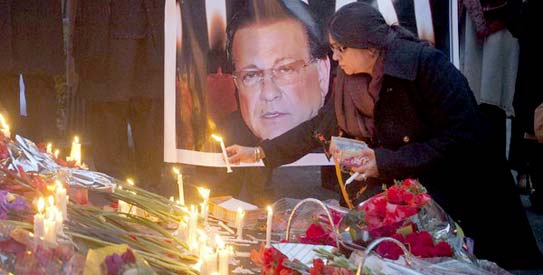
Bhatti’s death had been foretold not just by himself but also in the nation’s response to a previous assassination, that of Punjab governor Salmaan Taseer on Jan. 4. Taseer, a self-made millionaire, had turned his largely ceremonial post into a platform for a campaign to amend Pakistan’s blasphemy laws. Bhatti, the only Christian in the Cabinet, refused to be a token and swore to battle intolerance. Both men supported clemency for Aasia Noreen, a Christian woman who had been accused of blasphemy and sentenced to death. Taseer’s stance on the issue infuriated a large part of the population that, thanks to religious leaders and school curriculums, believes that blasphemy is a sin deserving of execution. In the weeks leading up to his assassination, Taseer had been denounced at Friday prayers, excoriated in the media and largely abandoned by his Pakistan People’s Party (PPP) for fears that his campaign would prove politically toxic. The witch hunt culminated in a bodyguard’s pumping 27 rounds into his head and chest in the parking lot of a popular Islamabad shopping center.

Within hours of Taseer’s death, telephone text messages celebrating his assassination made the rounds. “Justice has been done,” read one. “If you love the Prophet, pass this on.” A Facebook fan page for assassin Malik Mumtaz Hussain Qadri garnered more than 2,000 members before site administrators shut it down. Even the leaders of state-funded mosques refused to say funeral prayers for the slain governor. When Qadri was transferred to a local jail, he was garlanded with roses by hundreds of lawyers — the vanguard of a movement that in 2008 helped unseat a military dictator — offering to take on his case for free.

At his court appearance a few days later, Qadri told the judge that he believed in a Pakistan where loyalty to the Prophet eclipses all other rights. According to Taseer’s daughter Shehrbano, her father “wanted an egalitarian society where open debate is protected and people are not killed for speaking out.” And Bhatti dreamed of a nation true to founder Muhammad Ali Jinnah’s vision, one where “you are free to go to your temples, you are free to go to your mosques or to any other place of worship.” Which vision prevails — Qadri’s or Taseer and Bhatti’s — will decide the future of the country.

The Roots of Extremism

 
It is not news that Pakistan has a lunatic fringe. What is disturbing is that after Taseer’s murder, when the silent majority finally spoke up, it praised Qadri, not his victim. The public reaction exploded the myth of Pakistan’s moderate Islam; Qadri belongs to a mainstream sect that routinely condemns the Taliban. “The Pakistan we saw in the wake of Taseer’s killing is the real Pakistan,” says Amir Muhammad Rana of the Pak Institute for Peace Studies. For the past two years, Rana’s organization has conducted in-depth interviews with a broad spectrum of Pakistani citizens. “They might dress Western and eat at McDonald’s, but when it comes to religion, most Pakistanis have a very conservative mind-set.”

Pakistan’s religious parties rarely do well at the polls — a fact often cited by those countering concerns that the country is going fundamentalist — but their street power is considerable. The furor over blasphemy appears to be partly in response to significant losses for the religious right in the 2008 elections. With the current government on the verge of collapse and popular sentiment against the PPP mounting, the religious parties are betting on significant gains if fresh elections are called. The case of Raymond Davis, a CIA contractor accused of killing two Pakistanis during what appears to have been a botched attempt to rob him, demonstrates the state of Pakistan’s politics. It has gone virtually unremarked in Pakistan that Qadri, a confessed murderer, has been hailed as a national hero, while Davis — who, whatever his background, seems to have been acting in self-defense — is considered worthy of the death penalty. Over the past few weeks, street rallies led by the religious right have simultaneously called for the release of Qadri and the hanging of Davis. (Read: “Pakistan’s Christians Mourn, and Fear for Their Future.”)

Using religion to shore up political support is nothing new in Pakistan. Founded as a Muslim nation carved from a newly independent India in 1947, Pakistan has long struggled to unite a diverse population divided by language, culture and ethnicity. Islam was the common denominator, but Jinnah was famously enigmatic about its role in government.

Then, in 1977, Muhammad Zia-ul-Haq, an Islamist military general, overthrew the democratically elected government of Zulfikar Ali Bhutto, who was already retrenching his secular vision of Pakistan in an effort to win religious support. To further appease Muslim religious leaders, Zia-ul-Haq strengthened the colonial-era blasphemy laws, mandating that breaches should be answered by the death penalty. Since then, more than 1,274 cases have been lodged. As repeating blasphemous words could be considered to be perpetuating the crime, many cases are accepted without evidence, a system well primed for the pursuit of vendettas. That nobody has yet been executed by court order is hardly reassuring: 37 of the accused have been killed by vigilantes. (In 1929, Jinnah famously defended an illiterate carpenter who shot to death a Hindu publisher accused of blasphemy. The plea failed, and after the carpenter was hanged, Taseer’s father was one of the pallbearers.)

The Uses of Blasphemy
When a nation rises up in support of a murderer instead of his victim, it’s hard not to believe it is heading down a dangerous path. “What is happening now won’t matter in five years,” says Shehrbano Taseer. “It will matter in 25 years. What we are seeing now is the fruit of what happened 30 years ago. If people had stood up against [Zia-ul-Haq], we would not be here today. Because of that silence we have madrasahs spewing venom, a true Islam threatened by the same people who claim to serve it, and a cowed majority too afraid to speak.”

President Asif Ali Zardari, an old friend of Taseer’s, condemned the murders but didn’t go to either funeral. After paying his respects to Taseer’s family, Interior Minister Rehman Malik gave an impromptu press conference outside Taseer’s house during which he announced that he too would kill any blasphemer “with his own hands.” A few days later, the Prime Minister announced that he would drop the issue of the blasphemy laws altogether. Meanwhile, the government is under pressure to go through with Aasia’s sentence, and now her two champions are dead.

Reaction to Bhatti’s murder has been muted, characterized mostly by denial. What little newspaper coverage there was focused on security lapses or the role of the country’s Christian community rather than on the motives of the killer. On television talk shows, members of the religious parties and right-wing commentators spun a conspiracy theory that alleged that Bhatti’s murder had been “a plot” hatched by “outside forces” to “divert attention from the Raymond Davis affair.” There was no mention of the fact that Bhatti was campaigning alongside Taseer on the issue of blasphemy.

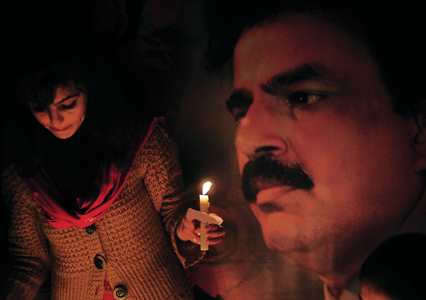
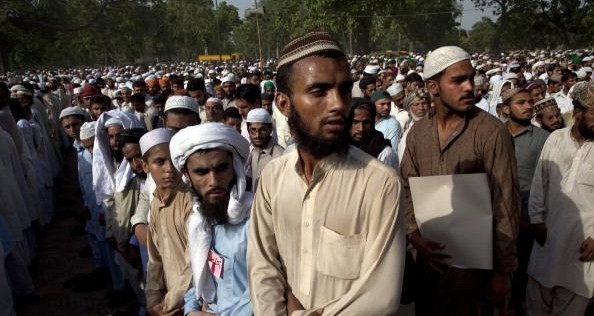
The PPP was founded in 1967 with the goal of bringing secular democracy to a nation under military rule. It vowed to give power to the people and promised to protect the nation’s downtrodden. That Pakistan’s most progressive party — one that has already endured the assassination of former Prime Minister Benazir Bhutto — should cave in the face of religious fundamentalism speaks volumes about the strength of the religious right. A candlelight vigil promoting a progressive Pakistan a few days after Taseer’s assassination drew nearly 1,000 supporters; a religious rally in Karachi the same day had 40,000 in the street chanting Qadri’s name. “Taseer’s murderer was tried in the court of public opinion, and he has emerged a hero,” says a woman shopping for vegetables in the same market where the governor was killed. “If someone kills me because I criticize Qadri, will he too be called a hero?” She declined to give her name. (Read: “Murder in Islamabad: Pakistan’s Deepening Religious Divide.”)

Of course, few Pakistanis would ever go as far as Taseer’s or Bhatti’s killers. But their ambivalence can easily be manipulated. “Just because we are religious does not mean we will all be reaching for guns the next time someone says something wrong,” says Malik Khan, a university student who spent a recent afternoon at a shrine in Lahore dedicated to a revered Islamic saint. “But Salmaan Taseer was an extremist as well. He should not have touched the blasphemy law.” Khan received a text message praising Qadri and exhorting him to pass it along. It posed a moral quandary: “I don’t agree with the message,” he says. “But I love the Prophet. My thumb hesitated a long time over the delete button.” In the end, he passed the hate along.

Qadri himself was the religious-minded youngest son of a family just stepping into the middle class. Like his brother, he joined the special-forces branch of the Punjab police in 2002. He had been flagged as a security risk because of his strong religious leanings but was nevertheless appointed to Taseer’s security detail when he visited Islamabad. In his confession, Qadri said he had been inspired by the teachings of his local mullah, Hanif Qureshi. At a rally a few days later, Qureshi claimed credit for motivating Qadri. “He would come to my Friday prayers and listen to my sermons,” he said. Then he repeated his point: “The punishment for a blasphemer is death.”

But is it? Two weeks after Taseer’s murder, I visited Qari Muhammad Zawar Bahadur, the head of one of Pakistan’s mainstream religious groups and a co-signer of a statement that advised Muslims not to show “grief or sympathy on the death of the governor, as those who support blasphemy of the Prophet are themselves indulging in blasphemy.” For more than an hour, he justified his group’s stance, telling me that the Koran was clear on the issue. I asked Bahadur to show me the exact verse that detailed the punishments for blasphemy. He mumbled that “there are several passages,” as if there were so many, he couldn’t decide which one to quote. When pressed further, he consulted a Koran and read aloud a passage that spoke of killing a man who had once harmed the Prophet.

That verse has routinely been dismissed by leading Islamic scholars as referring to a specific case and having nothing to do with blasphemy. They say there is no definition of blasphemy in the Koran, nor any prescription for its punishment. “Nobody challenges these mullahs, and that is our problem,” says Omar Fazal Jamil, who runs a p.r. firm in Lahore. “We can’t invoke liberal secular values anymore. I have to have the knowledge to contradict these men who distort our religion for their own political gain. I have to be able to say, ‘No, this did not happen, this is not right, and show me where it says in the Koran that blasphemers should be shot on sight.’ ”

The Sin of Silence
In the absence of such challenges, those favoring religious intolerance will continue to have things go their way. In late 2007, Benazir Bhutto released an updated manifesto for her father’s party. “The statutes that discriminate against religious minorities and are sources of communal disharmony will be reviewed,” it said. Less than a month later she was dead, killed in a bomb attack just 13 km from where both Taseer and Bhatti were murdered. Her death was an opportunity to rally the nation against the forces of extremism. Instead the party focused on consolidating power. The manifesto remains an empty promise, and two more voices of tolerance have been silenced. For evil to prevail, goes the old aphorism, all that is required is for good men to do nothing.

— With reporting by Ershad Mahmud / Lahore and Omar Waraich / Rawalpindi
The Myth of ‘Moderate Pakistan’

By Sadanand Dhume for The Wall Street Journal

It’s time to bury the myth of moderate Pakistan. You know the one: the notion, repeated ad nauseam in magazine articles, think-tank reports and congressional testimony—as though saying it often enough will make it true—that Pakistan is an essentially tolerant country threatened by a rising tide of fundamentalism. Here’s a news flash: The tide has risen.

The most recent reminder of this came last Wednesday in Islamabad, when suspected Taliban militants shot dead Shahbaz Bhatti, Pakistan’s 42-year-old minister for minority affairs and the only Christian in the overwhelmingly Muslim nation’s cabinet. His crime? Supporting the repeal of a barbaric blasphemy law that makes insulting the prophet Muhammad punishable by death.

The law is often used to settle scores with hapless religious minorities, especially Christians such as Asia Bibi, an illiterate peasant sentenced to hang last year after she allegedly badmouthed the prophet during a row with Muslim coworkers. Bhatti’s assassination comes two months after a bodyguard murdered Punjab Gov. Salmaan Taseer for visiting Ms. Bibi in jail and speaking out against abuse of the law.

To be fair, Pakistan’s claim to relative moderation has been kept alive thus far by more than just wishful thinking. Overtly Islamist parties such as the Jamaat-e-Islami have rarely commanded more than a fraction of the national vote. Women enjoy freedoms in the public square that their counterparts in Saudi Arabia and Iran could only dream of. At great personal risk, a small but courageous group of activists, intellectuals and politicians speak out publicly against bigotry and religious intolerance.

Scratch the surface, however, and a bleaker picture emerges. Islamist parties may not garner large-scale electoral support, but Islamist ideas are widely tolerated by mainstream political parties. The major opposition party, former Prime Minister Nawaz Sharif’s Pakistan Muslim League, flaunts its closeness to sundry Islamists, including Jamaat-ud-Dawa, the parent organization of the international terrorist group Lashkar-e-Taiba.

Ostensibly secular, the ruling Pakistan Peoples Party supported both Kashmiri militancy and the Afghan Taliban in the past. In its current incarnation it appears permanently cowed by the country’s legion of vocal fundamentalists. President Asif Ali Zardari failed to attend the funerals of either Taseer or Bhatti. His government has made it clear that it will not touch the controversial blasphemy law. Interior Minister Rehman Malik declared that he would personally kill anyone who dared blaspheme Muhammad’s name.

As for Pakistan’s undeniably brave activists and intellectuals, unfortunately they appear to have more admirers overseas than among their compatriots. Hand-wringing in the pages of Dawn and the Friday Times, two of the country’s leading English-language newspapers, has not prevented Mumtaz Qadri, Taseer’s murderer, from becoming a national hero.

Not surprisingly, anti-American sentiment—often a reliable shorthand for a society’s paranoia and self-loathing—is rampant. According to the Pew Global Attitudes Project, American favorability ratings stood at 17% last year, the lowest of all countries surveyed. On the streets, bloodcurdling yells for the execution of alleged Central Intelligence Agency operative Raymond Davis, accused of killing two Pakistanis in January, have prevented the government from granting Mr. Davis the diplomatic immunity that the U.S. claims he is entitled to. This despite personal pleas by President Barack Obama and Sen. John Kerry.

By now the reasons for Pakistan’s predicament are well known. They include the intolerance embedded in the nation’s founding idea of a separate “land of the pure” for Indian Muslims, the malign shadow of Saudi Arabia on religious life, blowback from the anti-Soviet jihad of the 1980s, and the overwhelming influence that the army and its thuggish intelligence wing, the Inter-Services Intelligence, wield on national life. The army’s very motto, Jihad-fi-Sabilillah, or jihad in the path of Allah, is an exhortation to holy war.

For the international community, the long road to fixing Pakistan begins with the simple recognition that the country’s true face is not the urbane intellectual making reasoned arguments, but the frenzied mob showering rose petals on a murderer for his services to the faith. Over time, Pakistan can only be saved by re- arranging the basic building blocks of the country.

This means backing provincial autonomy and linguistic identity as an alternative to the centralized pan-Islamism used by the military and its supporters to weld the country together. It means deploying social networks and satellite television to open the door to reasonable discourse about religion. It means channeling aid to ensure that children are no longer taught to glorify Islamic conquest and reflexively mistrust the West and India. It means accepting that the most poisonous madrassas—such as Jamia Binoria in Karachi and Darul Uloom Haqqania outside Peshawar—must be shuttered if they can’t be reformed.

Needless to say, none of this will be easy. But the consequences of the alternative—pandering to fundamentalists while blaming outsiders for all the country’s ills—can be seen in the freshly turned soil of Bhatti’s grave.

-Sadanand Dhume is a resident fellow at the American Enterprise Institute and a columnist for WSJ.com.

Our Noblest Selves

By Marvi Sirmed for Newsweek Pakistan

Be careful. After the assassination of Shahbaz Bhatti, federal minister for minorities, on March 2 and of Salmaan Taseer, governor of the Punjab, two months before that, friends and family put out the same, simple message. Be careful. But with two brave men slain so violently and so publicly, can we afford to be careful?

Everything changed after the governor’s assassination. For Taseer’s killer, there are shrines on Facebook and rose petals. For those of us who, accurately, refer to Taseer as a martyr, there is concern from well-wishers—and death threats from others. Lawyers lined up in the hundreds to defend and garland Taseer’s self-confessed killer, while cleric after another refused to lead his funeral services. The right’s pundits called Qadri a ghazi or holy warrior, while state-owned Pakistan Television dropped shaheed or martyr for Taseer within hours of his death. Qadri supporters brandished their bloody hands at rallies that pulled in tens of thousands, while those who mourn Taseer and what he represented struggled to manage mere hundreds at vigils. The polarization and plight of Pakistan have never before been so painfully obvious.

Like Taseer, Bhatti, too, gave his life up for a cause that must be owned by those who run our country. But people everywhere are being careful. And this just won’t do.

Bhatti was one of those rare public figures who never sought the spotlight, who spoke softly, who had no skeletons in his closet. Bhatti could have played it safe. He began receiving death threats after the Gojra massacre. These picked up after he championed the cause of Aasia Noreen, a Christian mother convicted under the blasphemy laws, which the Pakistan Peoples Party had committed to review in order to prevent their misuse. After Taseer’s death, Bhatti could have played it safe and gone quiet. He did not. He was not “careful.” He was laid to rest in Faisalabad on March 4 with thousands turning out to honor him.

What can we do? We need to be honest with ourselves. Bhatti was killed by a group that calls itself the Punjabi Taliban. Punjab Chief Minister Shahbaz Sharif has taken exception to interior minister Rehman Malik highlighting this fact. Terrorists are a national problem, they are not Punjabis or Sindhis, says Sharif, who is also the home minister of his province. What more has to happen before the chief minister, a compassionate man by most accounts, finally acknowledges that we have a problem in the Punjab?

Second, we need to stop passing the buck and offering contrition practiced for television. Prime Minister Yousaf Raza Gilani reportedly offered his resignation to the cabinet the day Bhatti was assassinated. There have been two shocking high-profile murders in Islamabad in as many months and not a single soul has been sacked. There’s no shortage of candidates who deserve the ax. Let’s start with the state-employed clerics who refused to perform Taseer’s last rites.

Third, name and shame the members of Parliament who refused to raise their hands in prayer for Taseer and Bhatti. There was a prayer for Taseer in the National Assembly, but, infamously, not in the Senate. Bhatti got two minutes of silence in the National Assembly on March 3 and a walkout from all parties—including, oddly, the ruling party—against the government’s failure to protect Bhatti, but no prayers. What have we come to when we cannot bring ourselves to pray for the departed and their devastated families? This is not coldhearted or remotely Islamic, but pure evil.

Fourth, we need to enforce a strict ban on hate speech. Incitement to murder, character assassination and hate words cannot be provided mainstream platforms—whether print or electronic—under the pretense of free speech. Some channels promoted the false impression that Taseer had blasphemed, and they publicized fatwas against him. They also hyped up pro-Qadri rallies. It never came to light that these processions, while big, were limited to three cities. Responsibility will not suddenly dawn on our lawless media. To keep television honest and to counter the state’s halfhearted ban on militant groups, corporations need to step up and withhold ad spend from channels providing support to the jihadists. Consumers can then hold these corporations accountable by buying or boycotting their products.

The brave among us refuse to be careful when they see the rapid undoing of their motherland, and whose faith in man’s goodness speaks to our noblest selves. We are not a nation of murderers and monsters, but we sure are close.

Sirmed is a rights activist in Islamabad.

Bombing kills 25 Near Intelligence Office in Eastern Pakistan

By Karen Brulliard for The Washington Post

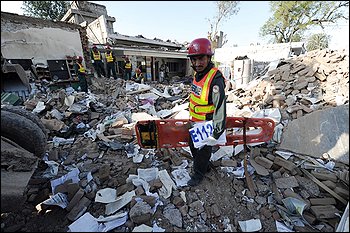
ISLAMABAD, PAKISTAN – A car bomb exploded near an office of Pakistan’s main intelligence agency in the eastern city of Faisalabad on Tuesday, killing 25 people in the type of militant attack that is growing more common in the country’s populous heartland.

A spokesman for the Pakistani Taliban asserted responsibility for the attack and said it was aimed at the intelligence office, the Associated Press reported.

Police said the bomb, which was detonated at a gas station, sparked additional explosions of natural gas cylinders, compounding the damage. The blast destroyed parts of several businesses, including an office of the national airline, and wounded at least 100 people.

Sectarian violence is common in Faisalabad, Pakistan’s third-largest city and a textile-producing hub, but Tuesday’s blast was the first major militant attack there. Militants have often carried out bombings in other large cities, including Lahore, about 80 miles to the east. The attacks regularly target Pakistan’s security forces, who in recent years have mounted counterterrorism offensives against insurgent hideouts in the mountainous northwest.

Now, Pakistani authorities and analysts say, violent extremist organizations are spreading across Punjab province, of which Lahore is the capital.

Southern Punjab is home to militant groups that traditionally focused attacks on Indian targets but are now thought to be deepening ties to Taliban factions in Pakistan and Afghanistan.

The car bombing occurred nearly a week after the assassination of federal cabinet minister Shahbaz Bhatti, which a group calling itself the Punjabi Taliban said it had carried out.

Bhatti, a Christian, had spoken out against Pakistan’s anti-blasphemy laws, which are enforced most stringently in Punjab. The laws are defended by religious groups, which say that violators of the statutes – and supporters of the violators – deserve death.

Life in India on International Women’s Day

Amruta Mehta for The Guardian

A child of the late 80s and 90s, I was a young girl when satellite television was introduced in India.

It brought along an overdose of Bollywood, soaps and reality TV, which I feel has been brutal on India’s girls. In response to youth culture prompted by these changes, the moral police has been raising its head, targeting young girls.

Perhaps it is due to the ubiquity of information and dramatisation of the news media, but I feel that violence against women in India has increased greatly during my lifetime. While it has become increasingly easier for urban Indian women to work even after marriage, the expectations on them remain cripplingly unrealistic.

As I sought out strong Indian female role models while growing up, I found that phenomenally powerful women abound. India’s first female police officer, Kiran Bedi, has influenced tens of thousands through radical prison reforms, daring to question the practices of generations of men before her. She is bringing India’s women centre-stage in the fight against corruption. Women are CEOs of large companies, philanthropists, and icons of style and grace.

We’re a country of over a billion people, with a large young population, deep socioeconomic disparities, and an ancient democratic tradition. It should come as no surprise that youth movements working for equality are everywhere. The promise that India’s girls hold can be felt in the electrifying energy around young female doctors and IT workers, and girls who ferociously compete for the best grades with their male classmates.

I was the first girl in my extended family to travel abroad alone for study. For this, my mother faced much character assassination. I have been lucky to have had parents who responded by trusting me unconditionally.

These are the people we must celebrate on International Women’s Day: apparently ordinary men and women who blaze trails at the risk of violence and ostracism. Development progresses due to them, inch by inch, from one generation to another.

I do believe that our time has come. I believe in my generation – and I hope you will too.

–Amruta Mehta, a respected group member of Pakistanis for Peace, is from Mumbai, India, and lives in the Netherlands, where she works in scientific media.

Dialogue Key to Peace with Pakistan, Says India

By Anjana Pasricha for The Voice of America

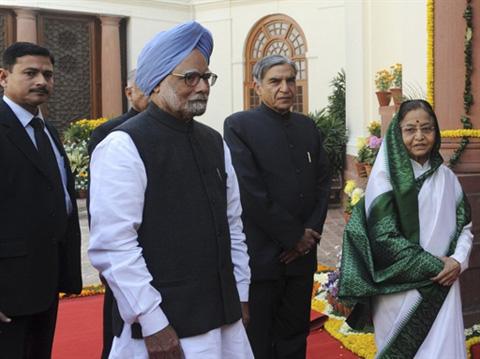
As India and Pakistan get ready to restart peace talks after more than two years, Prime Minister Manmohan Singh says dialogue is the only way to resolve their differences.  The embattled Indian leader is also vowing to tackle inflation and punish those guilty of corruption — two issues which have put his government on the ropes at home.

Speaking to parliament Thursday, Prime Minister Singh said South Asia will not realize its potential unless India-Pakistan relations are normalized. India is willing to discuss all outstanding issues with Pakistan, he said.

But, striking a cautious note, he expressed hope that Islamabad will give up allowing its territory to be used for terrorist activity directed at India.

“I sincerely hope and believe that the new ruling classes of Pakistan would grasp the hands of our friendship and recognize that whatever our differences, terror as an instrument of state policy, is something no civilized society ought to be using,” he said. “I am not saying that we have today an atmosphere in which negotiations can go forward, but there are hopeful signs.”

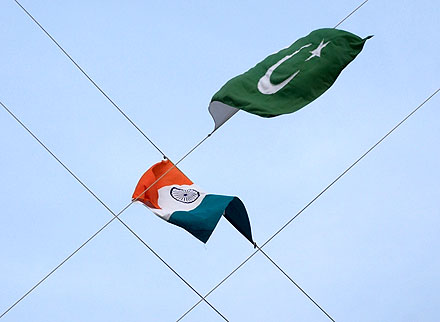
Earlier this month, both countries decided to restart a peace process, which New Delhi had put on hold after blaming Pakistan-based Islamic militants for mounting the 2008 terror attacks in Mumbai. The foreign secretaries of the two countries will meet in the Indian capital in March. Their foreign ministers are to meet by July.

Singh’s comments on the peace talks with Pakistan came during an address to parliament, in which he outlined the priorities facing his government.

He pledged to lower inflation from 10 percent to seven percent by the end of the year. Food inflation is even higher and has emerged as a major worry in a country with millions of poor people.

Singh has promised to bring a new food security bill in parliament to ensure that poor people are protected from rising food prices.

Inflation has to be tackled in a manner that it does not hurt the economy, which the prime minister says is growing well.

“If we had a ham-handed [heavy] approach, we could have killed the growth process which is the only source of providing jobs for our youth. So, this delicate balance has to be preserved between control of inflation and protection of employment,” he said.

The Indian leader also vowed to crack down on those guilty of corruption in connection with sale of telecom spectrum, in 2008, and the organization of the Commonwealth Games in New Delhi, last year. Allegations that officials siphoned off billions of dollars have put the spotlight on corrupt practices in government contracts.

With the two corruption scandals dominating headlines in recent months, Singh expressed fears that the wrong impression may be going out.

“The message should not go out that India is adrift, that India has lost its way, that the enthusiasm for getting this country moving forward is something that is no longer in evidence,” he said.

The Congress-led government was voted back to power in 2009, but is facing a rising wave of discontent both becauseof high food prices and the high-profile graft scandals.

Obama Condemns Assassination in Pakistan

As reported by The Associated Press

President Barack Obama on Wednesday condemned the assassination of the only Christian member of Pakistan’s government, calling the slaying of Shabaz Bhatti a “horrific act of violence.”

Republicans and Democrats in Congress echoed Obama’s outrage, hours after Bhatti was gunned down outside his mother’s home. His slaying came just weeks after the killing of liberal politician Salman Taseer. The two men had pushed to change laws that impose the death penalty for insulting Islam.

“He is literally a modern-day martyr,” said Rep. Frank Wolf, R-Va., at a Capitol Hill news conference.

Bhatti, a campaigner for human rights causes, had been aware of threats to his life. Obama said Bhatti “fought for and sacrificed his life for the universal values that Pakistanis, Americans and people around the world hold dear” — including rights to free speech and religious freedom.

Assailants from al-Qaida and the Pakistani Taliban Movement in Punjab province claimed responsibility, calling Bhatti an “infidel Christian.”

Obama said that whoever committed the crime should be brought to justice, and people who share Bhatti’s vision of tolerance and religious freedom should live free of fear.

Secretary of State Hillary Rodham Clinton, who recently met Bhatti, called him “a patriot and a man of courage and conviction.” She said in a statement that the United States remains committed to working with the government and people of Pakistan “to build a more stable and prosperous future for all — a future in which violent extremists are no longer able to silence the voices of tolerance and peace.”

More than half a dozen lawmakers, many of whom knew Bhatti, called on the Pakistan government to change the laws. Rep. Chris Smith, R-N.J., who said he prayed with Bhatti, said the events need to be a “game-changing moment.”

“No matter what your religion, his murder is an affront to God,” said Rep. Jim McGovern, D-Mass.

They showed a videotaped message from Bhatti in which he said he received death threats and was “ready to die” for the country’s often persecuted Christian and other non-Muslim minorities.

Rep. Howard Berman, D-Calif., said Bhatti’s death reflects the growing climate of intolerance in Pakistan and urged all Pakistanis to stand united against violence and intolerance.

What motives led to Shahbaz Bhatti’s murder in Pakistan?

By Aamer Ahmed Khan for BBC

It is hard to find an immediate motive behind the murder of Pakistan’s Minorities Affairs Minister Shahbaz Bhatti.

The courageous battle he had vowed to fight against the country’s draconian blasphemy laws had already been abandoned by the government in the wake of Punjab governor Salman Taseer’s murder.

In fact, the final surrender had come from no less a person than Pakistan’s prime minister who had only last month pleaded with a large gathering of religious personalities to believe him when he said that his government had no intention of reviewing the blasphemy laws.

And unlike the slain governor – a veteran politician, a high profile socialite and one of the president’s many billionaire friends – Mr Bhatti neither had the status nor the political clout to influence the state’s agenda.

Some evidence of that also comes from the eerie silence on social media, from the extremists’ side.

All that one sees are some anguished rants from some of Pakistan’s best known liberals, many of whom are not even resident in the country.

Even hours after the assassination, we have seen none of the fierce onslaught against free speech that erupted on social media within minutes after Mr Taseer’s murder.

Nor have we seen eulogies of his killers mushrooming on Facebook as they did after Mr Taseer’s murder. It is a silence smug in the knowledge that their agenda is not at risk.

So why kill a man who considered himself – and was indeed considered by the world around him – to be so ineffective that he had not even bothered to seek proper security for himself, despite being constantly threatened by Pakistan’s millions of faceless fanatics?

The answer perhaps lies in the difference between the commitment of the government and the extremists to their respective agendas.

Politics v ideology

The government had unambiguously decided to lay off the blasphemy laws after Mr Taseer’s murder, its ministers hinting privately that it was a hornets’ nest best left untouched.

The country’s liberal political and social leadership had meekly followed suit and perhaps understandably so.

In their silence had rested a hope that by abandoning their agenda to rationalise any legislation-feeding extremism, they would perhaps be able to keep the extremists quiet.

It was never about any ideological commitment, just hard, cold politics that made tactical sense.

For the extremists though, it is all about ideology. It didn’t matter if Mr Bhatti’s battle had proved to be a non-starter or if he was an ineffective and powerless minister.

What mattered was that he had spoken against blasphemy laws in the past and was likely to do so again if a situation arose. That made him a legitimate target, not to be tolerated, not to be ignored.

Mr Taseer had said that he would continue to fight against blasphemy laws even if he was the last man standing. He could not stand for long.

And the ideology that led to his assassination has now sent another determined and deadly message to the state – that it will continue to fight till the last liberal falls.

This is how different the two commitments are. And for the liberals in Pakistan, this is how hopeless the situation seems to be.

Peace In One Pakistani Tribal Valley Offers Hope

Reported by Abubakar Siddique for Radio Free Europe Radio Liberty
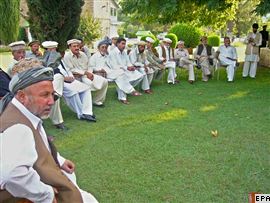
A fragile peace is taking root in Pakistan’s western Kurram tribal region after nearly four years of sectarian warfare between Shi’ite and Sunni Muslims.

Some have criticized a recent peace pact by saying that it is less about forging a lasting peace than about facilitating insurgents’ infiltration into neighboring Afghanistan. But the local population appears committed to making it work.

Success could have far-reaching implications. If peace is possible in a hotbed like Kurram, then it could serve as a model for millions suffering from war in other tribal areas.

‘Many People Were Injured’

Resident Noor Janan’s situation is typical. He lost his budding business in 2007 when clashes broke out between Shi’a and Sunnis in Parachinar. Rioting in the small border city, which serves as the headquarters of Kurram, soon devolved into sectarian war.

As the Sunni population of Parachinar was forced out, the city’s mostly Shi’a population was hemmed in — trapped by retreating Sunnis who blocked the main road to the outside and set siege on the city.

Janan’s priorities changed remarkably. For the past four years his main obligation has not been to look after his wife and four children, but to man frontline trenches and care for the sick and the injured.

Children displaced by fighting stand in line and wait for handouts in 2010.

“Many people were injured and many houses were destroyed,” he said. “I did all in my power to help my people.”

Janan is Turi — a tribe of 500,000 whose adherence to Shi’ite Islam makes it unique among Pashtuns. The Turis occupy a sliver of tribal territory known as the Parrot’s Beak that extends westward across Afghanistan’s eastern border. On the Pakistani side, Parachinar is positioned within striking distance of Kabul, which is just 100 kilometers to its east.

For the most part, the Turis lived in harmony with neighboring Sunni tribes for centuries, with a handful of exceptions. In the 1980s, predominantly Sunni Afghan Islamist guerillas attempted to overrun the strategically important region.

In 2007, a fierce sectarian war broke out when the Sunni Taliban attempted to conquer the Parachinar. More than 3,000 people have died and thousands more injured in the ensuing fighting. Some Sunnis blame Iran for the development, claiming the clerical regime supported and radicalized their Shi’a neighbors.

Both Sides Committed

Animosity remains high, but a cease-fire worked out in early February and backed by Islamabad offers proof that Shi’a and Sunni alike are committed to peace.

Middle-aged businessman Munir Khan Orakzai, who represents the Sunni population of the lower half of Kurram in Pakistan’s parliament, said that both sects realize that they have fought a useless cause that killed many innocent people. “There can be no logical end to this [sectarian violence],” he said. “That’s why people concluded this agreement.”

Tribal elders and government representatives attend a peace conference in Parachinar in 2008.

A peace agreement was signed before, in 2008, but it lacked government support and rival factions had one eye on possible military gains.

Under the new agreement, Islamabad is promising rehabilitation for the thousands of displaced families, and the deployment of additional troops to guard key routes.

Work Of The Haqqanis?

Skeptics abound. Pakistani pundits suggested that the deal was worked out by the Haqqanis — a large Pashtun family from Afghanistan whose elderly patriarch Jalaluddin Haqqani emerged as one of the most effective guerilla commanders in the 1980s.

His son, Sirajuddin Haqqani, now controls thousands of fighters and facilitates relations between Al-Qaeda Arabs, extremist Afghans, Pakistanis, and Central Asians out of his sanctuary in North Waziristan, which adjoins Kurram to the south. Considering the Haqqanis anti-Shi’ite bent and outsider status, any role in an agreement would be rejected by Kurram’s Shi’a.

Sajid Hussain Turi, a young lawmaker representing the region’s Shi’ite population in the Pakistani parliament, adamantly rejected any Haqqani role. “We, the Turis, have lost 1,200 people and more than 5,000 of our people were injured in this,” he said. “There is no question of involving people in this process that would ultimately harm us.”

Turi said that the weakened position of the Taliban, in disarray after years of military operations, opened the door to peace. He said that even local Sunni allies of the Taliban now see the futility of their military campaign.

Key intermediaries have high hopes for sustainable peace in Kurram. Waris Khan Afridi, a respected tribal leader from the neighboring Khyber tribal district, was among the mediators who put in countless hours bringing the two sides together.

Unforgettable Scene

On February 5, Afridi led the first civilian convoy of hundreds of vehicles to mark the break of Parachinar’s siege. He described an unforgettable scene of thousands of Sunni and Shi’ite villagers welcoming his entourage. “It was like they all were freed from prison that day,” he said.

Now, Afridi said, Pashtun tribes in neighboring tribal valleys are poised to follow the Kurram example. “We have always said that force is not a solution for anything and that the military operations will not solve our problems,” he said.

“Peace in Kurram,” Afridi said, “will positively affect all the tribal areas, the [neighboring] province of Khyber Pakhtunkhwa, and the whole country.”

Perfect Pitch

By Sonal Srivastava for The Times of India

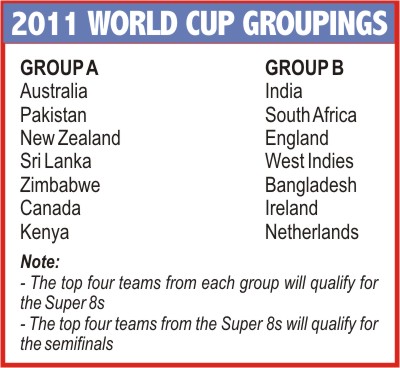
Tickets to most India matches have been sold out,” Priyanka Saxena informed her colleagues. Her co-workers were huddled at her work station, eyes fixed on the monitor, hoping to get premium tickets for the India Vs Netherlands Cricket World Cup 2011 match in Delhi. “We were disappointed, but then we decided to go for the South Africa Vs West Indies tie, instead. I’m going to cheer for the South Africans as they haven’t won the World Cup yet,” she says. Cricket is an amazing game; it originated in Great Britain, but Commonwealth countries have adopted it as their own. The game has not only transcended international borders, it has also managed to cut across fault lines, transcending race, colour, caste, community, class and faith.

The 2011 Cricket World Cup is being hosted by three South Asian cricketing nations: India, Sri Lanka and Bangladesh. Teams from 14 countries are participating in the 10th edition of the World Cup. The event will be spread over two months and will be played in three different countries, starting off at the Sher-e-Bangla National Stadium in Mirpur, Dhaka, and ending in April at the Wankhede Stadium, Mumbai.

So much good cheer
“Sport brings communities together and helps release a lot of pent-up emotions,” says Ian Botham, former English cricketer. When you cheer for your country or any other favourite team of another country, you forget all your worries. If your team wins, it’s time to celebrate. Every time India or the team that’s being backed wins a crucial match, fans light crackers and distribute sweets; some dance to the beat of dhols. As a cricket-crazy country, we celebrate the success of Zaheer Khan and Yusuf Pathan, Harbhajan Singh and Dhoni, irrespective of their religious leanings. “People like to cheer for something; it’s a feel-good thing. If you are stressed, then watching a cricket match can bring relief; when your team wins, you feel on top of the world,” says former India cricketer Atul Wassan.

World Cup is the time for bonhomie: It’s when you can start a conversation with strangers without inhibition, exchange notes and discuss the outcome of the match. When a batsman hits sixes, you might spontaneously hug a complete stranger standing next to you — your passion for the game takes precedence over age, gender, and community. “You can play cricket even in a remote village with just a bat and a tree stump for wickets. That’s what makes cricket popular,” explains Wassan.

Ties that bind
Devoted fans of the game cheer for their favourite cricketers irrespective of the country they represent. Interestingly, even if India is knocked out, people like to see their neighbours — Pakistan and Sri Lanka — do well and bring the World Cup back to the subcontinent. The result? Fans get to see ‘some good cricket.’ During the 1996 World Cup Quarter Final, in Bangalore, Aamir Sohail hit a delivery from bowler Venkatesh Prasad for four runs. He looked at Prasad and pointed his bat towards the boundary where the ball had gone. In the very next delivery, Prasad bowled out Sohail and pointed the finger towards the pavilion. “There is traditional rivalry between India and Pakistan. The armed forces of our respective countries may have to defend borders, but cricket is something that helps people-to-people bonding. During matches, the atmosphere on the field is electric, but after the match, the cricketers hang out together like old buddies,” says former India captain, Ajit Wadekar. And so do fans!

Gentleman’s game
A one-day match is played over six hours and sometimes players do get carried away and tempers run high. But cricket is a gentleman’s game and players have to abide by the umpire’s decisions. Often there is friendly banter on the cricket field and humourous one-liners are exchanged to help lighten the mood. For instance, Inzamam-ul-Haq reportedly told Brett Lee, a fast bowler, to “stop bowling offspinners”. In another instance, when Indian all-rounder Irfan Pathan came to bat, Afridi shouted twice: “O mera shehzada aaya!” — Oh! My prince has come.

Gods of cricket
Fans adore cricketers. Those for whom cricket is religion, Sachin Tendulkar and VVS Laxman, are gods personified. The little master has such charisma and skills that Australian cricketer Matthew Hayden exclaimed: “I have seen God; he bats at no 4 for India in Tests,” referring to Sachin’s position in the Indian batting line up. “When people watch their favourite cricketers do well, it gives them self-belief. They think that if Kapil Dev or Dhoni can make it, they can also do well,” says former spin bowler Maninder Singh. Fans also manage websites dedicated to their favourite cricketers. A site called ‘Sachinism’ runs forum discussions based on Sachin’s knocks, and fans post their views on the master blaster’s innings.

Playing field
A game of cricket is a lot like life. Just like a batsman faces googlies from the bowler, we too have to deal with what life throws at us. The batsman stands alone on the field, faced with 11 opponents; but with training, discipline and good reflexes, he does the best he can. However, in the game of life we are rarely alone. We have family, friends and others willing to lend a hand. Moreover, we have the benefit of access to ancient and modern wisdom that helps us train and discipline ourselves to deal better with life’s challenges and help each other.

India and Pakistan Officials Discuss Bilateral Water Treaty

As reported by Daily India

India and Pakistan officials attended a high-level meeting of the Indus Water Treaty Commission in Jammu to discuss a proposal by India to erect a dam on the river Indus.

A three-member delegation from Pakistan led by Sheraj Jameel, Commissioner, Indus Water Treaty, visited the Nikki Tawi area to examine the site and the design of the proposed artificial lake. The lake is being constructed at a cost of rupees 1.1 billion.

“We are here to inspect the project. We will see whether it is within the limitation of the treaty or not and after the visit we will talk to our counterpart,” said Jameel.
The Indian counterpart S.Ranganathan, Commissioner, Indus Water Treaty, said that the lake project is still in conception.

“In our opinion it does not violate the treaty. When we will get the information from the project authorities, we will analyse it and if it doesn’t violate the provisions, then we will give the go ahead for the project” said Ranganathan.

The team of delegates would be in the region for three days to examine all the records and plans vis-à-vis water distribution for the lake project.

The World Bank had brokered the Indus Water Treaty between India and Pakistan and was signed by the then Indian Prime Minister Jawaharlal Nehru and the then Pakistan President Mohammad Ayub Khan in Karachi in 1960 giving powers to the latter for monitoring the usage of three rivers-Indus, Jehlum and Chenab from Jammu and Kashmir to Pakistan.

Cricket World Cup: England Breeze Past Pakistan

By Will Turner for The Sport Review

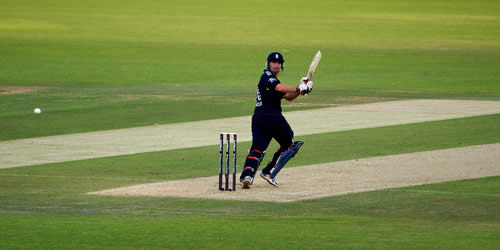
England cruised to a 67-run win in their final ICC World Cup warm-up match against Pakistan in Fatullah. Stuart Broad sparkled again, taking five wickets after Paul Collingwood and Kevin Pietersen struck half centuries as England set Pakistan 274 for victory.

Collingwood also contributed with the ball with his three wickets helping dismiss for Pakistan for just 206.

Pakistan, who opted to rest Abdul Razzaq and Shahid Afridi, elected to field and once again England captain Andrew Strauss fell cheaply, this time to the pace of Shoaib Akhtar.

Jonathan Trott was also dismissed in single figures however Pietersen looked solid alongside Bell.

Pietersen raced to his half century before Bell eventually departed for 39 which brought the out-of-form Collingwood to the crease.

But the Durham man appeared to find his touch, playing his way towards his half century despite the loss of Pietersen for 66.

Ravi Bopara offered good support to Collingwood with a quick-fire 35 before Matt Prior contributed with a late 24 before the tail folded with Wahab Riaz claiming three wickets.

Just as he did against Canada, Broad tore through the Pakistan top order with only Younis Khan offering any resistance.

The middle order all got starts but failed to kick on with Collingwood’s change of pace stalling a fightback.

Broad retuned to remove Khan for 80 and with his exit went Pakistan’s chance of victory, falling 67 runs short.

Collingwood admitted it was a relief to be back among the runs following his first 50 in any form of cricket for three months after the victory.

“On a personal note, it was nice to get some runs,” he afterwards. “It’s been quite a frustrating few months for me, not being able to contribute as much as I would have liked.

“Even though it was a warm-up game, I thought it was important I spent some time in the middle and tried to get that confidence going again – and thankfully, it worked out well.”

England now begin the preparations for their group opener against the Netherlands on Tuesday.

India and Pakistan Are United by Language and History, Divided by Commerce

By Karin Brulliard for The Washington Post

In India, where it is made, Fair and Handsome men’s skin lightening cream sells for $1.25 a tube.

But by the time it hits the shelf at Sajid Khan’s shop in this city’s old marketplace, it has traversed 2,000 miles of sea and land, been smuggled over the Hindu Kush and marked up 25 percent.

Pakistan and India share language, culture, history and an 1,800-mile border; they are South Asia’s largest economies. What they barely share is trade – officially at least, because of a quasi-blockade that dates from partition in 1947, and all but chokes off commerce under a dizzying web of rules.

The hurdles have spurred off-the-books trade, much of it shipped through third parties in such places as Dubai, where products are re-labeled as imports from other lands – journeys that result in 40-to-70-percent markups. Only recently did Pakistan make its first export to India by truck: a load of gypsum rock.

But economists, business groups and U.S. officials are pushing to loosen at least the most maddening restrictions, and they are hopeful that the two nations’ decision two weeks ago to resume peace talks might help. Free trade, they say, would benefit both India and Pakistan and might help to ease tensions whose gravity is reflected in rival nuclear arsenals.

“Economics 101 dictates that countries’ major trading partners should be their neighbors,” said Shuja Nawaz, director of the South Asia Center at the Washington-based Atlantic Council. “To change the dialogue from a zero-sum game to a positive, win-win outcome for both India and Pakistan, you need to start with the low-hanging fruit of opening trade and tourism.”

For a Pakistani economy in tatters, experts say, a freer flow of goods from India would allow cheaper access to products and raw materials, and could open up India, with its enormous population, to exports of Pakistan products such as cement.

Some research indicates that bilateral trade – currently at about $2 billion a year, less than 1 percent of each country’s total trade – could swell 20 to 50 times under more liberal policies. Estimates of illicit trade range from $2 billion to $10 billion a year.

But for now, progress creeps. India admits all Pakistani products, but Pakistani firms complain that stringent standards and paperwork make many exports unviable. Pakistan, for its part, allows a slowly expanding list of Indian products that now includes artificial kidneys, camphor, parachutes and 1,931 other items – but not Fair and Handsome cream, which is instead legally exported from Kolkata to landlocked Afghanistan, via the Pakistani port of Karachi, then smuggled back into Pakistan.

Travel restrictions are another barrier. Businessmen in both countries say they wait months for visas that allow travel only within major cities in the other country – preventing visits to rural factories or farms – where they are often tailed by intelligence agents.

Then there is the logistic muddle of land trade at the one border crossing, midway between Lahore and the Indian city of Amritsar. The twice daily cargo train involves an engine switch: A train carrying Pakistani exports, for example, can enter mere miles into India, at which point the Pakistani engine and conductors are replaced by an Indian ones before continuing inland. With so few trains, exporters wait months for cargo space.

Trucks have only eight hours each day to cross, because each afternoon the two-lane road is overtaken by Indian and Pakistani border guards’ theatrical gate-closing ceremony. Even then, trucks must stop just past the frontier, where porters transfer the goods to local trucks. That is an advancement: Before 2007, trucks were barred from crossing at all, and laborers lugged all cargo across the boundary on their heads.

The little existing trade often falls victim to what look like political whims. In December, cargo trains sat idle for three weeks while Indian conductors awaited the visas that allow them to park just inside Pakistan.

That same month, spiraling onion prices prompted India to drop import tariffs and standards for the staple, triggering a surge in Pakistani onion exports. But Pakistan abruptly halted overland sales amid concerns about a domestic shortage.

“I had 400 trucks stuck on the other side,” said Rajdeep Uppal, a trader who is vice president of the Amritsar Exporters Council. “For a week these onions were standing there, and eventually they had to be sold within Pakistan for half the price. Who loses? Both the countries.”

Tensions aside, scenes of goodwill abound along the border. Pakistani and Indian train conductors sip tea and gripe about red tape together. Satanam Singh, a turbaned Indian driver – wearing a regulation yellow vest stamped “Indian Driver” – beamed as laborers unloaded his ginger on the Pakistani side. Coming to Pakistan, he gushed, was delightful compared with Mumbai, where the language is different and people hostile.

“It is a strange feeling, like I am going to a strange land,” said a smiling Mohammed Zafar, a Pakistani whose vibrantly painted truck, brimming with dates, was about to make its virgin voyage across the Indian frontier. “I am very happy.”

Here in Lahore, just 20 miles from the Indian border, Khan’s shop was the pioneer in a winding lane of stores now crammed with Indian silk and cosmetics – all smuggled into Pakistan illegally.

He said he would welcome friendlier business relations, even if they lessened the luxury value of his stock. Even his Afghan smuggler, who stopped by on a recent evening, agreed, on grounds that it would lessen the need to bribe border officials.

Among some merchants, skepticism about trade prospects remains, with Pakistanis fearing that open trade would lead to a glut of cheap Indian imports. S.M. Akhter, a top Indian customs official at the border, said national security concerns must trump market demands.

But despite the tangle of rules, some trade is quietly rising. Tahir Habib Cheema, the top Pakistani customs official at the border, said he realized last year that truck exports from Pakistan were allowed, but that “status quo” and “fear” had prevented them. He decided to change that – without notifying his bosses.

A comedy of errors ensued. By Oct. 7, Cheema had found one willing exporter and one importer. After hiccups on each side, a meeting at the frontline was arranged.

All parties agreed, Cheema said – and then the truck would not start. Someone proposed pushing it into India, an idea that was nixed by border guards who said the pushers would need visas. Finally, another vehicle nudged the truck over the line.

“This was something for the national cause,” Cheema said proudly. Since then, he added, Pakistani trucks have exported $2.5 million worth of products to India. He expects that to escalate this spring, when the two nations open a dedicated truck passage.

Correspondent Rama Lakshmi contributed to this article from New Delhi.


A Reality Check on India, Pakistan

By Ahmad Majidyar & Apoorva Shah for The Diplomat

On February 10, India and Pakistan announced that they would resume peace talks that were suspended after Pakistan-based terrorists attacked multiple sites in Mumbai in November 2008, killing 170 people. Washington welcomed the announcement, no doubt hoping that détente between the two nuclear neighbours might lead them to end their proxy war in Afghanistan, and leave Pakistan better able to fight the Taliban and al-Qaeda on its own soil.

But it’s much too early to get carried away. After all, diplomacy conducted under terrorism’s shadow can backfire, and should there be another attack on Indian soil, Indian policymakers—even those in favour of reconciliation—may well conclude they have no partner in Pakistan, bringing the prospect of conflict closer.

It’s also not at all clear that Pakistan really is sincere in its desire for rapprochement. The country has reportedly doubled its nuclear arsenal over the last four years, and is believed to be building its fourth plutonium reactor. Western nations should be troubled that a country that professes to be committed to fighting Islamic militants at home has decided to focus so much attention on developing its nuclear prowess instead. 

Indians should also be concerned.  On July 15, 2010,India and Pakistan’s foreign ministers met in Islamabad supposedly in order to ‘restore trust.’ But the talks collapsed in acrimony, with the Indian side claiming that Pakistan had failed to move to resolve differences over the prosecution of anti-India terrorist groups operating from its territory. Just ahead of these talks, Indian Home Secretary G. K. Pillai had claimed that Pakistan’s Inter-Services Intelligence (ISI) had played a ‘much more significant’ role in the Mumbai attacks than was initially thought, adding that he believed Pakistan was ‘coordinating it from the beginning till the end.’

Testimony by captured alleged Pakistani-American terrorist David Headley appeared to support Pillai’s claims, with Headley reportedly telling FBI interrogators that the ISI went so far as ‘choosing the weapons to be used in the attack.’

If all this is true, then there can be no serious diplomacy until Pakistan stops seeking to leverage Islamist militancy as a weapon in Kashmir and against India. Lashkar-e-Taiba (LeT) and similar groups continue to operate freely in Pakistan. Last February, for example, LeT’s leader Hafiz Saeed led a 10,000-strong procession in Lahore to mark ‘Kashmir Solidarity Day’ and warned India to ‘liberate’ Kashmir or face jihad. Indeed, he also signalled a possible expansion of conflict, suggesting that the group might broaden its operations to the southern Indian—and largely Muslim—district of Hyderabad.

But it isn’t just militant leaders who are troubling Indian policymakers. Former Pakistani Prime Minister Nawaz Sharif’s political party, currently in control of Pakistan’s Punjab provincial government, appears to be promoting militancy, at least judging by its official budget last year. As the BBC reported at the time, the government allocated $1 million to Jamaat-ud-Dawa, a charity on the UN terrorism watch list and a Lashkar-e-Taiba front group.

The reality is that many Pakistani political leaders don’t seem to want to move forward on talks. Former Foreign Minister Shah Mahmood Qureshi, President Asif Ali Zardari, and Prime Minister Yusuf Raza Gilani have all appeared sincere, but they seem to lack even the limited control that former President and army chief Pervez Musharraf wielded over the military and intelligence apparatus during his tenure. Meanwhile, the man currently in charge of Pakistan’s military—Gen. Ashfaq Kayani—appears to show no interest in détente, conceding in his own words that he has an ‘India-centric’ bias to his military strategy. 

In theory, Indo-Pakistani diplomatic engagement is a must for regional security. In 2007, talks came close to reaching an agreement on the Kashmir dispute before being derailed by terrorism and domestic political unrest in Pakistan. But Indian diplomats shouldn’t succumb to the exuberance of rapid-fire talks so long as a disconnect remains between Pakistani civilian leaders and their military and intelligence establishment.

The same goes for the White House and State Department—hopes should not be placed on regional security talks without proper conditions for lasting progress being in place first. And the most important of these conditions? Ensuring a complete and no-nonsense end to any proxy support for terrorism at all levels of the Pakistani government.

Ahmad Majidyar and Apoorva Shah are researchers in South Asia studies at the American Enterprise Institute.

It is The Women Who Have the Guts in Pakistan”

By Bina Shah for Dawn

In Pakistan, Salman Taseer’s assassination in early January has blown the lid off the seething cauldron that has been bubbling in Pakistan for the last several years: the divide between Pakistan’s extremist forces and its minority liberal community is now so wide that it seems nothing can bridge the gap anymore. Worse, the extremists greatly outnumber the liberals, endangering whatever advances have been made in the Pakistani society.

But the women intelligentsia of Pakistan is determined not to let the religious right gain any more ground in the struggle for Pakistan’s soul. They have responded to the onslaught of the right wing with such ferocity that a Pakistani man said on Twitter: “I definitely see more women out on the streets after Salman Taseer’s killing. Does this mean that it is the women that have the guts in this country?”

It all started with a woman: Aasia Bibi, the hapless Pakistani-Christian mother of five who made the mistake of getting on the wrong side of a group of malicious village women. One moment Aasia Bibi was offering her coworkers a cup of water; the next, she was facing the death penalty for having supposedly committed “blasphemy”. 

Activists and women’s rights groups, aghast at the blatant abuse of human rights that Aasia Bibi’s case represented, agitated for the country’s leaders to have her acquitted. Pakistan’s progressives, especially women, got in touch with the Governor of Punjab Salman Taseer through his Twitter account – one which he used mostly to tweak rival politicians’ noses, share his favorite Urdu poetry, and communicate with his daughters. They besieged him with 140-character-long appeals to save Aasia Bibi’s life, hoping against hope that he would listen.

Taseer not only took Aasia Bibi under his protection, but he widened his scope to take aim at the blasphemy law itself. But Taseer’s strong voice was silenced on January 4, when his own bodyguard, Mumtaz Qadri, shot him 27 times with his state-issued Kalashnikov.

After the initial shock of the assassination, women activists vowed to use it as a rallying point: not just because they feel for Aasia Bibi, the first woman in Pakistan to face the death penalty for blasphemy, but because they know that women are the first to lose their freedoms when extremism takes over a nation. They are organising candlelight vigils, rallies, and media campaigns to defend their hard-won rights, despite knowing they are outnumbered by the other side.

One of the bravest women in today’s Pakistan is Shehrbano Taseer, daughter of the slain Governor, who wrote several pieces for the newspapers protesting the death of her father and the way in which his killer was showered with rose petals by lawyers who vowed to defend him in court. For this, she received threats from extremists: “She should remember the fate of her father and refrain from issuing statements.”

Taseer, a graduate of Smith College in the US, draws inspiration from other brave women in Pakistan who came up against the same forces: Asma Jehangir, Benazir Bhutto, Jugnu Mohsin, Sherry Rehman (who is now living under virtual house arrest in Karachi because of death threats she has received for her stance against the blasphemy law), Sharmeen Obaid Chinoy, Beena Sarwar, and Marvi Sirmed are some of the women whose struggles against injustice in Pakistani society have inspired her.

And of course, there is her father’s legacy: “My father’s fire has come inside me … I don’t wish for any other family to have suffered what mine has had to.”  Her father’s violent death has illustrated most vividly to her how both men and women in Pakistan have worked together for generations in the name of social activism. “Men and women have marched on the streets together and sacrificed a lot, so I don’t feel one sex is more dominant than the other in this regard.”

But it is not enough. The men in Pakistan need to step it up greatly when it comes to supporting women in social activism. Nuzhat Kidvai, a human rights activist in Karachi, says, “In general, men are more active in the left and labour movements – they will march for economic or political reasons. But when it comes to supporting women’s issues, they just aren’t there.” Her husband, Zaheer Kidvai, a long-time proponent of social activism in Pakistan, agrees that “women are certainly more engaged in this battle and despite bad attacks – lathis, jail, beating, and even rapes by the police! – they have moved this forward against all these odds. If there is any way for this society to evolve further, it’ll have to have even more women come out.”

So, back to the original question: is it really the women in Pakistan who have the guts? When it comes to fighting for their rights, definitely. Life in Pakistan is hard for women, but they don’t give up easily. Perhaps this is why they haven’t yet suffered the fates of their compatriots in Saudi Arabia, Afghanistan, and other supremely conservative Muslim countries in the region.