Posts Tagged ‘ Pakistan ’

Allama Iqbal: The Great philosopher Poet of Pakistan

By G. Sabir for Iqbal Academy Scandinavia
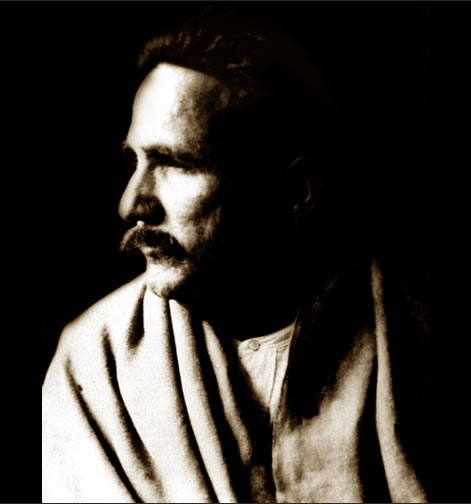
Nature gives birth to great philosophers and poets when the need arises. Natural calamities, wars, epidemics, storms and earthquakes etc causing human sufferings have always given birth to creative minds. Plato was born in 420 BC when his country had almost been ruined as a result of Peloponnesian war. Iqbal was born in 1877 AD when the inhabitants of India were suffering from miseries and deaths while struggling for the Independence of their country from British rule.

The people of Muslim community of India were the worst hit. They were being crushed ruthlessly. At that time Iqbal’s poetry played miraculous role. It awakened the people from slumbering hopelessness, made them stood on their own feet. They were united and then fought courageously for Independence with the result that they achieved a free homeland for them within a few years time.

Creative thinker

This means that despite being a creative thinker, Iqbal was addressing the situation at hand. The ideas he enunciated, though intrinsically creative in themselves and abiding in appeal beyond a particular time and place, were yet primarily meant to salvage the bleak Muslim situation in India and the world at large. This makes Iqbal, in a sense, oriented towards the Indian Muslim psyche and situation.

This framework makes his periodic forays into discussing and suggesting solutions to the problems of the Muslim world at large and his consuming concern with the ‘Reconstruction of Religious Thought in Islam’ (1930) – a logical extension of his role as a modern Muslim ideologue, attempting to analyze and, see Muslim India’s problems and predicament on a wider canvas and in a total context. After all, Iqbal regarded India, if only because of the Muslim numerical strength, as ‘the greatest Muslim country in the world’, to quote his own words. These tasks, both critical and onerous as they were, he fulfilled squarely.

Effective medium

His emotion-leaden and soul-lifting poetry was the medium Iqbal chose to bring his people a new awareness of the depths of degradation to which they had fallen, to diagnose their ailments, their predicament and the prime cause of their decline and to warn them of the dire consequences if they failed to mend themselves in good time. A more effective medium he could not have possibly chosen.

For one thing, poetry is the most powerful medium for touching the deepest emotions of people and for driving a message into their subconscious. For another, the Indian Muslims had been among the most poetry-oriented people in the wold, with a long tradition of readily taking to heart what was written in verse. Political orations may stir and audience into action, but their impact is bound to be restricted to a particular audience and dissipate with time and events. In contrast, a poetic message seeps through the ethos of a nation, working on its psyche all the while.

Political leaders

Hence Iqbal achieved through his poems what a thousand speeches could not. But for the silence mental preparation that had gone on for long decades, the people would not have responded to the call of political leaders – in this case, especially of Jinnah during the 1937-47 epochal decade. No wonder, the pandals of the League sessions from Lucknow (1937) onwards were plastered with Iqbal’s couplets, calling on Muslims to rise and take their destiny in their own. Iqbal was quoted oft and on to rouse Muslims to a new awareness of their destiny. All this had an electrifying effect on the audience since Iqbal, though generally complex and couched in an appropriate idiom, was, straightforward and yielded clear guidelines.

Besides being a poet of extraordinary merit, Iqbal was a thinker of a high order. Thus, while Syed Ahmed Khan, Maulana Mohammed Ali and Jinnah provided political leadership to Muslims, Iqbal took upon himself the task of setting the intellectual tone for Muslim thought and action. (Previously, this was done by Sir Syed’s, writing and the Aligarh school). In addressing himself to this task, Iqbal brought a revolution in Muslim thinking at various levels, he also made a significant contribution to keeping them stolidly anchored to their pristine ideology and historical legacy.

New consciousness

His role in awakening the Muslims to a new consciousness began in 1899 when he recited a poem at the annual session of the Anjuman-i-Islam, Lahore. His moving ‘Nala-i-Yatim’ was symbolic of the echoing cry of the faceless masses of the Indian Muslims, who had long felt themselves sidelined neglected.

What pained him most was the impact of nationalism on various Muslim countries, eroding the pan-Islamic concept, enfeebling the Muslim world and laying it open to European aggression and exploitation.

To the ailments the Muslim world was afflicted with, Iqbal found the solution in Islam and its message. In order to reach the innermost recesses of their consciousness, he invoked the past glory of Islam, telling Muslims of the accomplishments of their ancestors. In so doing, he tried to fight off the prevalent slough of despondency, raising drooping spirit of Muslims and replacing it with a sense of soaring confidence.

Message of hope

Next, he gave them a message of hope. He told them that they could still redeem themselves if they could only recapture their soul and regain their pristine moral and spiritual values.

He emphasized the imperative need to develop human qualities and the right type of character. He attributed their degeneration to their taking to a life of passivity and resignation for several generations. That debilitating trend could be reversed by opting for initiative and endeavour which, he believed, Islam stood for. To him, an active, struggling non-believer was preferable to a sleeping Muslim.

But if Muslims were to be beckoned to a new destiny, they must first be confirmed as Muslims and they must own up their pristine values. This was all he more necessary in the context of the rise of positivism and skepticism, which posed a serious challenge to the modern Muslim.

Modern Muslim

To Iqbal, the task before the modern Muslim is to re-think the whole system of Islam without completely breaking with the past. And this crucial task he undertook in a series of lectures since compiled as ‘The Reconstruction of Religious Thought in Islam’ (1930). In these he argued that Islam represented a philosophy of action, for faith without action was a life bereft of any significance. Seldom does a poet exert such profound influence on the course of history and in changing the destiny of a nation. But Iqbal did because his accomplishments extended far beyond the realm of mere imagination and into the sphere of objective realities, because in the final years of his eventful life he donned the mantle of an ideologue, besides being a national poet. And, to be sure, all of Iqbal’s efforts throughout the whole span of his active life were directed towards the regeneration of Muslims and the resurgence of Islam.

Human rights

The question, ‘do we need Iqbal today?’ The reply is a clear ‘Yes’. It is a need of the time, because the honour of humanity is at stake. The preachers of human rights are abusing humanity. Masses of men are being trampled ruthlessly under the heavy feet of the powerful. There is dearth of love in the world these days. Iqbal is a messenger of love. His message of love is universal… the humanity needs him.. we do need him without any doubt.
How to Win Back Pakistan

By Michael O’Hanlon for Foreign Policy

Nine years into the war in Afghanistan, the United States should have a clear idea of Pakistan’s interests there. It’s time to take these lessons to heart — and start applying the right incentives. As recent intelligence findings reported in late October confirm, Pakistan remains at the heart of the U.S.-led coalition’s problems in Afghanistan — where the war is hardly lost, yet hardly headed for clear victory either. Indeed, Pakistan arguably remains the most complex ally the United States has ever had in wartime, making President Franklin D. Roosevelt’s challenges in dealing with Stalin (a far worse leader, but at least one who knew the outcome he wanted) seem simple by comparison.

Nine years into the campaign, we still can’t clearly answer the question of whether Pakistan is with us or against us. America needs bold new policy measures to help Islamabad — in all its many dimensions and factions — make up its mind.

The crux of the problem is this: Despite allowing massive NATO logistics operations through its territory and helping the United States pursue al Qaeda operatives, Pakistan tolerates sanctuaries on its soil for the major insurgencies fighting in Afghanistan. These include the Afghan Taliban (otherwise known as the Quetta Shura Taliban because its principle base remains in Quetta in the Pakistani province of Baluchistan) as well as the Haqqani and Hezb-i-Islami Gulbuddin (HiG) networks. The Haqqanis straddle the border between the Afghan provinces of Khost, Paktia, and Paktika as well as North Waziristan and other tribal areas within Pakistan; HiG is further north, operating in and around the Khyber Pass connecting Kabul and Jalalabad in Afghanistan with Peshawar and points east in Pakistan. Thus, all three major Afghan insurgent groups have home bases in Pakistan, and despite the occasional drone strike are generally beyond NATO’s reach as a result.

Pakistan has done some worthy things against extremists in its remote northern and western areas in recent years. Specifically, it has recognized the so-called Pakistani Taliban (the Tehrik-i-Taliban Pakistan, or TTP) as a mortal threat to the Pakistani state and responded accordingly. After suffering hundreds of bombings and assassination attacks by the TTP, including the killing of former Prime Minister Benazir Bhutto in 2007 and several thousand casualties a year to its troops and citizens since roughly that time, it has responded in force, particularly over the last year and a half or so. It has swung about 100,000 troops previously guarding the border with Pakistan’s nemesis India to the northwestern tribal regions and cleared several major areas including South Waziristan, Bajaur, and the Swat Valley. This is all to the good.

Pakistanis argue, however, that limited numbers of ground troops combined with the past year’s admittedly devastating floods prevent them from doing more. Quetta, North Waziristan, and other key places remain dens of iniquity, havens for extremists who continue to attack NATO and Afghan troops across the border and then return home for rest, regrouping, and fresh recruiting. Major command-and-control hubs are permanently located within Pakistan as well, and key insurgent leaders like Mullah Omar (to say nothing of Osama bin Laden) probably remain safely ensconced on Pakistani territory where U.S. forces cannot get at them.

But even if limited Pakistani capacity is part of the problem, there’s more at stake. Pakistan worries that President Barack Obama’s promise to start reducing U.S. troops in Afghanistan come July will lead to anarchy and civil conflict next door, and it is retaining proxies that it can use to ensure that its top goal in Afghanistan — keeping India out — can be accomplished come what may. Pakistan would rather have the Taliban and the Haqqanis back in power, especially in the country’s south and east, than any group like the former Northern Alliance, which it views as too close to New Delhi. It is this strategic calculation, more than constrained Pakistani resources, that constitutes Obama’s main challenge in Afghanistan. And it could cost him the war.

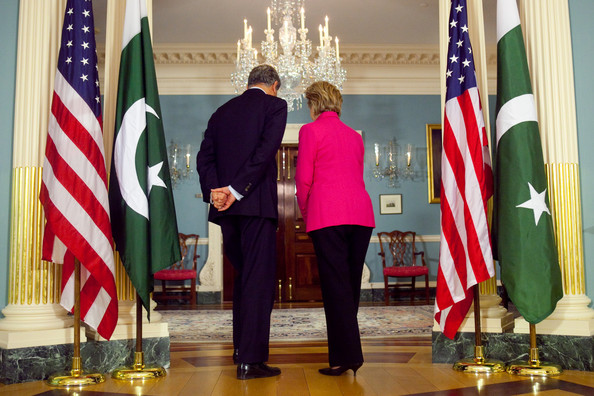
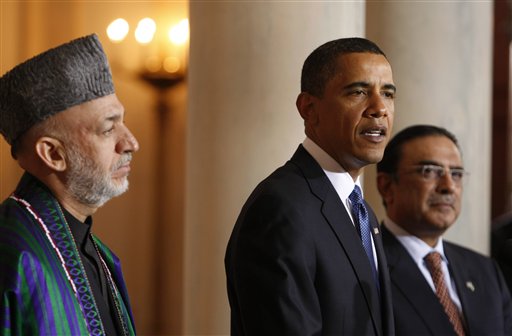
Under these circumstances, part of the right policy is to keep doing more of what the Obama administration has been doing with Pakistan — building trust, as with last month’s strategic dialogue in Washington; increasing aid incrementally, as with the new five-year $2 billion aid package announced during that dialogue; and coordinating militarily across the border region. But Obama also needs to think bigger.

First, he needs to make clear America’s commitment to South Asia, to wean Pakistan away from its current hedging strategy. Obama has frequently used general language to try to reassure listeners in the region that there will be no precipitous U.S. withdrawal next summer. But few fully believe him. Hearing stories like Bob Woodward’s accounts of how the vice president and White House advisors have generally opposed a robust counterinsurgency strategy in favor of a counterterrorism-oriented operation with far fewer U.S. troops, they worry that next summer’s withdrawal will be fast. Obama needs to explain that he will not revert to such a minimalist “Plan B” approach under any imaginable circumstances. More appropriate would be a “Plan A-minus” that involves a gradual NATO troop drawdown as Afghan forces grow in number and capability, without necessarily first stabilizing the entire south and east, should the current strategy not turn around the violence by next summer or so. This would represent a modification to the current plan rather than a radical departure. The president can find a way to signal that this is in fact his own thinking, sooner rather than later — ideally before the year is out.

Second, Obama should offer Islamabad a much more expansive U.S.-Pakistani relationship if it helps win this war. Two major incentives would have particular appeal to Pakistan. One is a civilian nuclear energy deal like that being provided to India; Pakistan’s progress on export controls in the wake of the A.Q. Khan debacle has been good enough so far to allow a provisional approval of such a deal if other things fall into place as well. Second is a free trade accord. Struggling economically, Pakistan needs such a shot in the arm, and a trade deal could arguably do even more than aid at this point.

But the key point is this: Pakistan should be told that these deals will only be possible if the United States and its allies prevail in Afghanistan. Small gestures of greater helpfulness are not adequate; bottom-line results are what count and what are needed. If Afghanistan turns around in a year or two, the deals can be set in motion and implemented over a longer period that will allow the United States to continually monitor subsequent Pakistani cooperation in the war.

It may seem harsh to Pakistan that America would put things in such stark terms — but in fact, it is not realistic that any U.S. president or Congress would carry out such deals if the United States loses the war in Afghanistan partly due to Pakistani perfidy. As such, these terms are really just common sense, and they are based on political realism about America’s domestic politics as well as its strategic interests.

America’s current strategy for the war in Afghanistan is much improved. But it is not yet sound enough to point clearly toward victory. The most crucial problem is the role of Pakistan in the war, and so far, the Obama administration is not thinking creatively enough about how to fix it.

The Nexus of US-India-Pakistan Relations

By Manzer Munir for Pakistanis for Peace

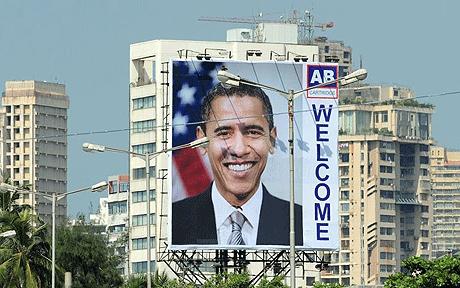
As President Obama wraps up his visit to India in the next day, a couple of things are important to point out about relations between the United States and India as well as how Pakistan fits into the equation.

The balance of power between India and the US still lies with the United States, however, India is set to make more and more gains in becoming more influential as its economy grows and as the United States looks to it to counter China in Asia.

The strategic partnership between the two countries and the importance of India for the United States is going to become vital as America uses India to contain China’s influence in the region and around the world.

We do believe that President Obama is correct in stating that relations between the two countries warrant being called the defining relationship of the century as there is no other country that compliments the United States presently in the world as does India. Not only do both countries share democratic ideals and a multiethnic population, but both countries are also increasingly dependent on each other’s economies. Add to this the nuclear cooperation as well as America’s support for India to get a permanent seat on the UN Security Council, and it becomes evident that this relationship will continue to grow over time.

President Obama has offered criticism on Pakistan already but is careful in trying to walk the tight rope act that is India-Pakistan relations. There are certainly more behind the scene steps taking place that will chide Pakistan into doing more. But in our view, the single most important thing that the US and the Obama administration can do is to help India and Pakistan come back to the table to get the peace process moving along. There is widespread agreement with the President’s assessment that a prosperous and stable Pakistan is in the best interests of India, Afghanistan and the region. In this effort, we believe there needs to be done more by all parties involved.

India’s argument has always been that the terrorist infrastructure and support for some anti-India militant groups needs to end before New Delhi will resume the peace process with Pakistan.

India should not refuse extensive trade relationships with the US due to American support of Pakistan as it does not do anything to help India. India realizes the situation both inside Pakistan and America’s dependency of the Pakistan Army’s support in flushing out the Taliban. It would go against India’s interests if it put its relationship and advancement with the United States as being dependent on American support for Pakistan and its vital assistance in the war in Afghanistan and on terror.

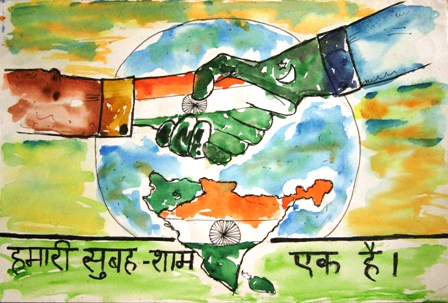
Peace between India and Pakistan and in the Kashmir valley is the only solution to both the conflict between the two nations as well as it is in America’s interests for both countries and the region. Furthermore, peace between the two countries will allow both Pakistan’s full focus on the Afghan border in helping American troops against the Taliban as well as the elimination of anti-India militant groups within Pakistan, many of whom are alleged to still be receiving support from elements within Pakistan’s ISI spy agency, much to India’s chagrin.

Obama Calls for India – Pakistan Peace

By Andrew Buncombe for NZ Hearald

Barack Obama has called on India and Pakistan to renew their efforts to find peace, even as he said Islamabad was not moving quickly enough to counter militants operating from inside its borders.

In comments that appeared to underscore the high-wire act of diplomacy the US president is trying to pull off while on the three-day visit to India, Mr Obama said Washington would not act as an intermediary between the two countries.

However, he told a group of students in Mumbai: “My hope is that over time, trust develops between the two countries, that dialogue begins, perhaps on less controversial issues, building up to more controversial issues. There are more Pakistanis who’ve been killed by terrorists inside Pakistan than probably anywhere else.”

The president has received criticism from some opposition parties in India after he failed to directly mention Pakistan when he arrived in India on Saturday and spoke of the 2008 attacks at the Taj Hotel and other locations in Mumbai, that left more than 160 people dead.

In the aftermath of the attacks, the so-called “composite dialogue” peace process between India and Pakistan was put on hold and while there have been a series of high-level meetings, the relationship between the two remains tense.

The president, who stayed at the seafront hotel in what aides said was a clear sign of solidarity, had talked about the militants and the terror they wrought, but was criticised by the right-wing Bharatiya Janata Party (BJP) for failing to attribute the blame to Pakistan.

Asked why he had not done so, Mr Obama reflected a reality in which the US is paying billions of dollars to Pakistan in aid as it pushes it to do more against militants responsible for cross-border strikes in Afghanistan.

“Pakistan is a strategically important country, not just for America, but for the world,” he said. “India and Pakistan can prosper and live side by side. This can happen and this should be the ultimate goal. The US can be a partner but cannot impose this process. India and Pakistan have to arrive at an understanding.”

Mr Obama started his visit to India, one of four countries he is including on a tour through Asia, by announcing more than 20 deals he said were worth up to $10bn and would help support 50,000 US jobs.

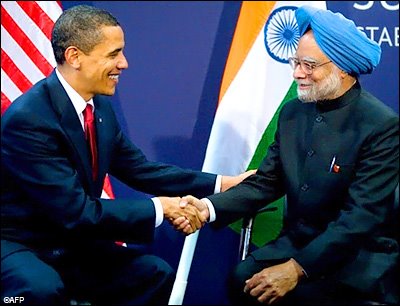
He also said the US was to relax export controls over sensitive technology, a demand of India’s that will help deepen ties between the two countries. The president is to hold formal talks today with India’s prime minister, Manmohan Singh.

On a domestic level, Mr Obama also recognised he needed to make “midcourse corrections” in the aftermath of last week’s mid-term elections if he is going to win over a frustrated and divided electorate.

India Urged to Revive Pakistan Talks

By James Lamont and Edward Luce for The Financial Times

Barack Obama, the US president, has urged India to step up its dialogue with Pakistan to help to secure the region’s stability, warning that efforts to combat extremism in India’s nuclear-armed neighbour have not progressed as quickly as Washington had hoped.

Mr Obama, on a three-day visit to India, called on Sunday for New Delhi to revive a dialogue with Islamabad badly set back by the 2008 terror attacks on Mumbai by Pakistani militants.

His comments at a town hall event with students in Mumbai were a sharp break from his initial emphasis on creating jobs in the US and gaining more access to the fast-growing Indian economy for US companies.

“My hope is that over time trust develops between the two countries, that dialogue begins,” he told students at St Xavier’s College. “Ultimately India and Pakistan have to arrive at their own understandings”.

Mr Obama cautioned that the economic success that India was enjoying would be imperilled by an unstable region where militant insurgencies raged in Pakistan and Afghanistan, where US troops are fighting the Taliban.

“The country that has the biggest stake in Pakistan’s success is India. I think that if Pakistan is unstable that is bad for India. If Pakistan is stable and prosperous that’s good,” he said.

Mr Obama recommended the two rivals start talking about the “less controversial issues” and then build up to tougher issues, such as the disputed territory of Kashmir, over which the two have fought three wars over the past 63 years.

Manmohan Singh, India’s prime minister, believes the two countries have shared destinies, and has stressed that India poses no threat to Pakistan in an effort to scale down military forces on the border.

Yet Mr Obama’s emphasis of linkages between Pakistan and India, which were separated at the end of British rule in 1947, is highly sensitive. Many Indian leaders gauge the growing maturity of New Delhi’s relationship with Washington by what they call the “de-hyphenation” of India and Pakistan in recognition of India as a global power and vibrant economy.

New Delhi is suspicious of US military assistance to Pakistan and is uneasy about Washington identifying any role for Islamabad in bringing stability to Afghanistan and brokering talks with the Taliban.

Mr Obama warned that Pakistan was confronted by a “profound problem” and that its progress towards eradicating extremism was “not as quick as we would like”. He said that his administration was “engaging aggressively” with the Pakistani government to bring peace and stability.

“There’s a need to look for practical steps . . . Living in the past simply won’t work,” said Stephen Cohen, a senior fellow at the Brookings Institution, in Washington.

“I see a 100 years of conflict between India and Pakistan looking ahead.”

America and India: The Almost-Special Relationship

By Jim Yardley for The New York Times

At a panel discussion last week on relations between India and the United States, Strobe Talbott, the former American diplomat, told an audience of Indian business leaders that he had learned a valuable lesson about India: Do not hyphenate it. As in Indo-Pak. (Or, in a close cousin of a hyphen, as in Chindia.) The audience smiled at his epiphany: India matters because it is India.

In a nutshell, President Obama is trying to deliver the same message during his three-day visit to India, the first stop on a broader Asian tour. Both countries are eager to build on their improved ties and set up a unique, special relationship, given that together they represent the world’s richest and largest democracies. Faced with a rising authoritarian China, and an economically wounded Europe, a weakened United States is casting about for global partners. India would seem a nice fit.

“This is the time to be ambitious about this relationship,” said Shivshankar Menon, India’s national security adviser, speaking on the panel with Mr. Talbott.

And yet eliminating the hyphen is not easy, especially given India’s fraught relations with its neighbors in what is perhaps the most politically complicated region on earth, one in which American lives and treasure are at stake in Pakistan and Afghanistan. And India’s evolving relationship with another neighbor, China, is also a prime concern for America. Indeed, the decision to focus Mr. Obama’s India trip on India was itself not easily achieved; some senior administration officials lobbied the president to put pressure on Indian leaders for a conciliatory gesture toward Pakistan, in hope that such a carrot might entice the Pakistanis to do more to help America against the Taliban.

These sorts of political equations have long tangled the U.S.-India relationship: The Americans, at different times, have pushed the Indians to cut a deal with Pakistan over the disputed region of Kashmir, but the Indians have bristled at any interference. The Indians still want the Americans to sponsor India for a permanent seat on the United Nations Security Council. Not such an easy thing, the Americans reply, since America alone can’t do this and it creates issues between America and China. It has sometimes seemed like a relationship built around one country asking the other to do something it considers against its self-interest.

Moreover, the economic relationship between the two countries often has been a source of friction. High unemployment in America has renewed complaints that outsourcing to India hurts American workers. Indians complain that American protectionism is hurting Indian companies and that American export restrictions on technologies that can have both military and civil uses are outdated and unnecessary in a relationship between putative allies.

Mr. Obama’s trip is an attempt to reboot or refocus the relationship away from these disputes and de-emphasize the tangible goodies (for example, contracts) that politicians call “deliverables.” Instead, the two sides are discussing how they can partner on education, clean energy, agriculture, technological development and military cooperation. The thematic emphasis of the visit is on shared democratic values — a pointed dig at China — and what the two countries say are shared opportunities. American officials say that an expected $4 billion deal for India to buy military transport aircraft — yes, a goodie — will provide thousands of American jobs. Indian officials emphasize that trade between the two countries is basically balanced — unlike with China — and that the anger over outsourcing is misplaced, especially since some Indian companies are investing and creating jobs in the United States.

Some Indian commentators have groused that all the diplospeak about shared opportunities obscures the fact that the trip lacks a “big idea” to excite or elevate the relationship, even as big, unavoidable problems are seemingly being avoided. In 2000, former President Bill Clinton spent five days in India on a door-opening visit that was credited with righting what had been a stalled relationship. Then former President George W. Bush made the most dramatic gesture by pushing through an agreement to cooperate on civilian nuclear projects; the move effectively legitimized India as a nuclear power and lifted a 30-year moratorium on nuclear trade with India even though India had not signed the Nuclear Nonproliferation Treaty. By comparison, Mr. Obama seems not to be offering much.

“The jury is out,” said Shekhar Gupta, editor of The Indian Express, speaking of how India’s political establishment views Mr. Obama.

But Ronen Sen, who recently retired from India’s diplomatic corps after serving as ambassador to the United States, says the focus on a “big idea” is misplaced. Given the litany of difficult problems between the two countries, Mr. Sen said, Mr. Obama’s approach was a reasonable way to build trust and broaden a bilateral relationship that, while greatly improved, had not yet fully matured.

“It has not yet reached a critical mass where it can be self sustaining,” Mr. Sen said.

Indeed, even the landmark civil nuclear deal remains a subject of dispute as the two sides still squabble over fine details of how American suppliers could begin doing business in the lucrative Indian market. The Americans say that rules recently approved by India are inconsistent with accepted global practice, which exempts foreign suppliers from liability in cases of accidents, leaving it solely with local operators. A senior American official said “intense discussions” were underway to find a solution. If one is found, Mr. Obama may get a nice “deliverable” — an open door through which American firms, as originally expected, can sell nuclear equipment to India and provide jobs at home.

There is less talk of the chances of solving bigger problems, like differences between America and India in global negotiations on global warming climate change and trade. And the uncertainty over the most problematic hyphens — Afghanistan and Pakistan — looms over the visit. Even as Mr. Obama seeks a way to stabilize Afghanistan and get out, Indian officials dread the day America leaves. They worry about what will be left behind, since India cannot leave the neighborhood.

“Quite obviously, we have strategic stakes there,” said Brig. Gurmeet Kanwal, director of the Center for Land Warfare Studies, a military research institute. “We do not wish to have a government in Afghanistan or a government in Kabul that is inimical to Indian interests.”

He added: “We see the United States as a stabilizing influence in Asia.”

And so a political courtship will continue, problems and all. Governmental ties already lag far behind the people-to-people relationships. America remains the premier destination for Indian students studying abroad, and Indian immigrants in America have achieved disproportionate success in business, medicine and many other fields. It is this backchannel closeness that serves as a cattle prod nudging the governments to become closer, too.

K. Subrahmanyam, a leading Indian defense analyst, believes that India and the United States represent the inevitable and necessary partnership of the 21st century because China’s rise represents a threat to a global order based on democratic principles. He said that demographic trends, too, should bind the two countries together.

“If America needs a partner, Europe is aging, Japan is aging and China is going to age,” he said. “The only two major nations in the world who will not be aging, at least for the next 30 years, are the United States and India.”

Deadly Bombings in Pakistan Target Mosques, Killing More Than 70 Worshippers

By Owais Tohid for The Christian Science Monitor

Two deadly bombings today in Pakistan targeted mosques and killed more than 70 worshipers, following an increasingly deadly pattern of Pakistani Taliban attacks on tribes that dare to defy its influence.

In the town of Dara Adam Khel, in Pakistan’s northwest territory, a young suicide bomber detonated his load amid 300 worshipers during Friday prayers. He killed at least 67 people and injured more than 100.

On Friday evening, four grenades were hurled inside a mosque in the Suleman Khel village, which is on the outskirts of Khyber tribal region. The blasts killed at least four people.

The bombing in Dara Adam Khel appeared to be targeting the Akhoorwaal tribe because it has been resisting Taliban expansion. Pakistani Taliban claimed the responsibility.

“There is no right for traitors of mujahids and Islam to live,” read a message from the Taliban, quoting notorious leader Tariq Afridi. Mr. Afridi is the commander of Tehrik-e-Taliban Pakistan (TTP), which is commonly known as the Pakistani Taliban and is linked with Al Qaeda.

The attack was seemingly designed for maximum impact, as the bomb was detonated in the middle of Friday prayers, and combined two increasingly common Taliban targets: the mosque and the jirga (council of tribal elders). The targeted mosque was inside the hujra, or congregation spot, of the tribal council leader.

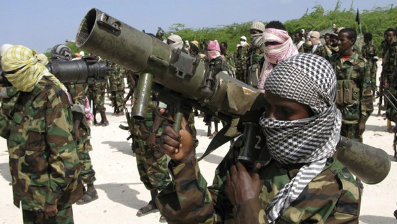
The suicide attack was one of the deadliest in series of attacks by Al Qaeda and Taliban across Pakistan in which hundreds of people have lost their lives this year.

Taliban commanders are trying desperately to strengthen their hold across the region, say analysts. The US continues drone attacks on the semi-autonomous tribal region of North Waziristan along Pakistan-Afghanistan border while pressuring Pakistan to increase operations there. What’s more, Pakistani security forces are ramping up operations in other tribal regions.

The bombing was meant to “terrorize tribesmen,” says Brig. Mehmood Shah (ret.), a Peshawar-based analyst. “Taliban want to control the region so they are targeting locals who have raised voice against them. They want to eliminate the dissent,” he says.

“It is the worst revenge tactic and showing that they are desperate and weakened,” says Mr. Shah.

Dara Adam Khel lies about 31 miles south of Peshawar and links Orakzai and Khyber tribal region in the west through a hilly terrain. Pakistan’s security forces have been pounding the area with bombs in a bid to rout militants in the ongoing operation. The forces have also been going after them in Khyber region where the militants attack NATO supply convoys.


Eyewitnesses of the mosque attack described the moments before the blast occurred.

“I saw a young boy walking toward the worshipers. The moment he raised his arms, he exploded,” says Mohammad Nasir.

The attack triggered terror alerts and warnings for additional attacks by Taliban across the country, especially in the northwest.

“It’s a cowardly act. The terrorists might try to carry out more attacks but we are not afraid,” says Provincial Minister Mian Iftikhar, whose only son was assassinated by the Taliban three months ago. “It’s a long battle against terrorists and extremists. They can be defeated once we remain united.”

“The US, Afghanistan, and Pakistan should have to continue to wage war to eliminate terrorism,” he says.

In Dara Adam Khel, members of the Akhoorwaal tribe vowed to continue fighting the Taliban.

“We will not let the sacrifices of our tribesmen be in vain. We won’t let them convert our future generation into terrorists and destabilize the country. We will start mobilizing other tribes in our war against terrorists,” says tribesman Javed Ur Rehman Akhoorwaal.

Atif Aslam, Todd Shea & Lanny- We Will Rise Again

Please watch this video and donate to help the people suffering as result of the Pakistan Floods of 2010.

To donate please visit link below:
https://secure.unicefusa.org/site/Donation2?df_id=8320&8320.donation=form1

Pakistan Looks Ahead to End of Afghan War

By Olivia Ward for The Toronto Star

As NATO forces prepare to pull out of Afghanistan, worries about the country falling back to Taliban control are paramount. But in neighbouring Pakistan, where suicide bombings and brazen attacks on security forces have become regular occurrences, the stakes are also high.

“What happens in Afghanistan affects us and vice-versa,” says Akbar Zeb, Pakistan’s High Commissioner to Canada. “We have four million Afghan refugees still living in Pakistan, and it’s in our interest to have a stable country where we can send them back. A Taliban takeover won’t be just detrimental to Afghanistan. It would harm Pakistan and the whole region.”

Zeb said that under the civilian government of President Asif Ali Zardari, relations have improved with Afghanistan, and contrary to reports of friction, there are “frequent contacts” between the two countries that would be helpful in creating stability.

But he added that Canada, and other Western countries, should not repeat the mistakes of the post-Soviet era, when the West lost interest in Afghanistan and Pakistan as soon as the Soviet troops withdrew.

During the rule of Pakistan’s military leader, President Pervez Musharraf, groups of Taliban-linked militants got a foothold in Pakistan, but were not seen as a danger to the country until internal attacks began to spread. Former prime minister Benazir Bhutto was assassinated, and suicide bombings took the lives of hundreds of civilians. Under pressure from the U.S., the Pakistani military began a massive campaign against the Taliban along the Afghan border.

“We have managed to clear a lot of areas from the Taliban,” said Zeb. “Military campaigns are the only language they understand. But they alone won’t help to win the war. We have border regions with a lot of poverty, and backward elements that have been ignored for a long time.”

Canada has announced support for road and rail projects linking Afghanistan and Pakistan to speed trade between the two countries.

“It’s a very good initiative, but scope is limited,” said Zeb.”We wish the projects were larger and not just (confined to) those that involve both Afghanistan and Pakistan.”

Talks with Islamabad are also ongoing on the use of ports in Karachi for shipping out Canadian troops and military supplies from Afghanistan.

But as the war continues, Pakistan has also been urged to be tougher on the Taliban. In the past two years it has carried out attacks against the militants in its border regions with some success, while American-launched drone strikes have killed high-ranking Taliban. The catastrophic floods that wiped out some of the most important agricultural areas of Pakistan brought a temporary truce, but militant attacks have resumed since the waters receded.

Last week, talk of a peace deal between the notorious Taliban-linked Haqqani network, and an opposing tribe in the remote northwest raised fears that it could open the way for Taliban access to strategic border areas. But the U.S. has also urged a Pakistani offensive against the network in North Waziristan, a volatile region where 400,000 civilians are vulnerable to displacement.

According to Pakistani officials, the country has lost some 7,000 security forces in a decade of fighting the militants — more than three times the coalition deaths in Afghanistan. Meanwhile 30,000 Pakistani civilians have died. The border region, a tangle of mutually hostile tribes, remains a haven for militants.

“It’s a difficult balance for Pakistan,” said Zeb. “Foreign troops may leave, and for them Afghanistan is a distant land. We’re Afghanistan’s neighbours. We helped with the fighting in the decade-long war against the Soviets. And we have to live with the outcome of this war.”

Staying Nimble to Fight Al-Qaeda’s Shifting Threat

By David Ignatius for The Washington Post

Behind the latest terrorism plots is an al-Qaeda leadership that is getting battered in Pakistan but that is determined to strike back wherever it can – using a dispersed network and new tactics that are harder to detect.

The package bombs sent last week from Yemen are one face of al-Qaeda’s continuing campaign. The Yemeni operatives are nimble, adaptive and “frustratingly clever,” says a U.S. counterterrorism official. “They have one main goal, which is to mess with us.”

The Yemen-based operations came as intelligence officials were struggling to disrupt another al-Qaeda plot to launch Mumbai-style attacks in European cities. Officials say that plan involved roughly 25 al-Qaeda terrorists, organized into cells of perhaps three to five members who would stage roving assaults in one or more European cities. Of the 25, about 10 have been captured or killed, according to a second U.S. official.

While these operations are tactically separate, officials say they both reflect a secret mid-2009 directive from an embattled Osama bin Laden to his followers to demonstrate that al-Qaeda could still do damage.

For U.S. officials, these latest terror plots have been a grim reminder that there’s a long fight ahead against al-Qaeda, with no “quick fixes” available. Defense isn’t enough: The explosives sent from Yemen can’t be detected by conventional X-ray screening or sniffer dogs, so stopping these plots requires good intelligence, as was the case last week when Saudi Arabia tipped the United States about the package bombs.

Nobody wants to say so publicly, but the lesson of the past few weeks, for me at least, is that one of these days the terrorists will succeed – and people should be prepared for that likelihood. The greatest damage won’t be the attack itself but the public response. The Yemeni plotters saw the frenzy produced by their failed Christmas Day bombing attempt on a flight to Detroit. They must be hoping now, with the package bombs, to disrupt cargo-handling around the world and damage a fragile global economy.

As the CIA has stalked al-Qaeda over the past two years, this has been a story of punch and counterpunch, of escalating U.S. drone attacks over Pakistan’s tribal areas and defiant al-Qaeda responses. As the senior U.S. official says, this is a “learning enemy” that adapts its tools and tactics as the West alters its defenses.

To understand the latest news, it helps to scroll back to early 2008. The CIA gathered intelligence that al-Qaeda leaders were regrouping, forming new alliances and planning new operations in the West. At that time, the CIA’s attacks from Predator drones were sporadic, and Pakistan was consulted before each attack.

So the Bush administration escalated the drone attacks in mid-2008. Now, Pakistan was given only “concurrent” notification, which in practice meant it was informed after the drone had launched its missile. Moreover, the CIA was authorized to strike targets that had a “signature” of terrorist activity, rather than a precise identification. President Obama has increased the tempo of Predator attacks even more.

The drone attacks have pounded al-Qaeda and killed key members of its leadership. Bin Laden reacted with his mid-2009 directive, which the U.S. official summarizes this way: “Undertake operations however and wherever you can. We need to prove ourselves again.” Specifically, bin Laden directed operatives to plan assaults in Europe similar to the November 2008 attacks that killed about 175 people and terrified Mumbai.

The United States and its European allies have been working hard to disrupt the Mumbai copycat operations. Since the third week of August, the CIA has conducted more than 40 drone attacks on the tribal areas, more than in all of 2008. A British national was killed in Pakistan in September, and two Germans in October. Other plotters have been arrested in Europe and Pakistan. Officials say they can’t be sure yet whether the terror plans have been shelved.

A similar escalation is likely in Yemen, with soldiers from the U.S. Joint Special Operations Command working with Yemeni government forces. The JSOC sums up its lethal approach with the phrase “find, fix, finish,” but a U.S. official says it has been hard to keep track of al-Qaeda targets in Yemen’s tribal villages and cities.

The reality is that the adversary that declared war on the United States in 1996 is still active – morphing and mobilizing even as it is hunted by America and its allies. It’s a nasty fight, and it’s far from over.

New U.S. Ambassador to Pakistan Delivers Flood Relief

By Gunnery Sgt Bryce Piper for The Defense Video & Imagery Distribution Sysem

 U.S. Ambassador to Pakistan Cameron P. Munter distributed flood relief supplies today at a World Food Program distribution point at Hassan Khan Jamali, Pakistan.

As the newly-appointed ambassador, Munter participated in the operation to see and participate in the Pakistan and U.S. military flood relief efforts conducted in Sindh province.

“It is an honor to have the chance to work with the Pakistani military and the American military together, who are working to help the Pakistani people,” said Munter. “This is a place that I think all of us will remember as a symbol and as a reality of our cooperation, what we can do when we work together, when we face problems together. And I’m very, very grateful to the Pakistanis and Americans who’ve done all this work.”

Munter arrived at the Pakistan military’s Pano Aqil Cantonment in the afternoon and then flew to the Hassan Khan Jamali relief site where he and a team of Pakistani and U.S. military members unloaded approximately four tons of food aid from two helicopters. Pakistanis waiting at the site collected the humanitarian supplies for distribution in the surrounding area.

This was the ambassador’s first trip to flood-affected areas of Sindh since arriving in Pakistan Oct. 27.

In addition to delivering food aid, Munter and his wife Marilyn Wyatt had an opportunity to meet with local flood victims. The couple flew to Hassan Khan Jamali aboard a U.S. CH-53E Super Stallion helicopter of the 26th Marine Expeditionary Unit. 26th and 15th MEUs have been conducting humanitarian relief efforts from Pano Aqil Cantonment since Sept. 3, 2010.

The Marines there have delivered more than 3.7 million pounds (over 1.6 kilograms) of food and other supplies to more than 150 locations throughout Sindh Province, flying more than 450 heavy-lift helicopter sorties.

Since Aug. 5, 2010, U.S. military aircraft and personnel, working shoulder-to-shoulder with the Pakistan military, have provided humanitarian airlift for the delivery of more than 20 million pounds (over 9 million kilograms) of relief supplies and the transport of more than 27,000 displaced persons throughout Pakistan.

In addition to humanitarian airlift, the U.S. Government is providing more than $398 million to assist Pakistan with relief and recovery efforts, while USAID and other U.S. civilian agencies continue to provide assistance to flood victims.

U.S. efforts are part of a multi-national humanitarian assistance and support effort lead by the Pakistani government to bring aid to flood victims.

Obama Will Try to Avoid the K Word

By Paul Beckett for The Wall Street Journal

To some U.S. officials, it is known simply as the “K-word.” Kashmir. It’s a topic we expect U.S. President Barack Obama to try his level best to avoid during his three-day trip to India that starts next week.

The issue got the former British foreign secretary in hot water when he was here last year. And when Richard Holbrooke, Mr. Obama’s special representative on Afghanistan and Pakistan at one point suggested he tackle Kashmir too, the idea received a furious rebuff from the Indians.

If the topic does come up, Mr. Obama will likely follow the same tack taken by his advisers earlier this week in a briefing with reporters. When asked, “Will the President talk publicly or privately about Kashmir and the tensions between India and Pakistan?” this was the response from Ben Rhodes, deputy national security advisor for strategic communication.

“The President believes that the U.S. relationship with India and the U.S. relationship with Pakistan does not take place within any kind of zero-sum dynamic.  It’s often been viewed that way in the past, that if we become closer to one it’s at the expense of the other. And we’ve tried to send the signal that it’s the opposite with this administration; that, in fact, actually you see that borne out in the fact that we had a very successful strategic dialogue here, with the Pakistanis in town last week, discussing greater security cooperation in governance and economic issues.

And as a part of that, the President met with the Pakistani delegation and ended up speaking to President Zardari yesterday to discuss that strategic dialogue and said that he’d very much like to visit Pakistan next year and is planning to visit Pakistan next year.”

If you’re counting, that almost 150 words – and not one of them is “Kashmir.”

William Burns, undersecretary of state for political affairs, added his own non-Kashmir Kashmir response. “We have always welcomed dialogue between India and Pakistan and certainly encouraged efforts to improve relations between those two very important countries.  Obviously, the pace, scope and character of that dialogue is something that Indians and Pakistanis have to shape.  But we’ll continue to both welcome and encourage it.”

White House reporters being an intrepid bunch, another questioner brought up the topic again, using the K-word specifically.

“Just to follow Steven’s question on Kashmir. Will the President be making some public remarks explaining the U.S. position on Kashmir?  And will he also be addressing — explaining the U.S. relationship with Pakistan publicly?”

This time Mr. Rhodes was even more eloquent, going for a full 286 words, not a single one of them Kashmir.

Accused DC Bomb Plotter Farooque Ahmed’s Goal Was ‘Killing as Many Metro Riders as Possible’

By Kerry Wills, James Gordon Meek, and Helen Kennedy for The NY Daily News

A former Staten Island man was busted in Washington on Wednesday for helping what he thought were Al Qaeda terrorists plotting to bomb the capital’s subways.

It was really the FBI stringing him along, the feds say.

Farooque Ahmed, 34, a computer engineer who lives with his wife and baby in suburban Virginia, was accused of making sketches and surveillance videos of busy subway stops near the Pentagon and tourist-packed Arlington Cemetery.

The stations Ahmed helped case are popular with Defense Department workers. He thought the stations would be blown up sometime next year, the indictment says.

His goal was “killing as many Metro riders as possible through simultaneous bomb attacks,” U.S. Attorney Neil MacBride said. “It’s chilling.”

The feds said straphangers were never in any danger.

Much like the four men convicted this month of plotting to attack a Bronx synagogue, Ahmed was stung by an undercover FBI operation and never met any real terrorists.

His face hidden by a long beard, mustache and glasses, Ahmed appeared briefly in federal court and will be held until a detention hearing tomorrow. He said he could not afford a lawyer.

A Pakistani who became a naturalized citizen in New York 17 years ago, Ahmed worked for Ericsson telecommunications in Virginia setting up routers for the Sprint network, his LinkedIn profile says.

He received a bachelor’s degree in computer science from the College of Staten Island in 2003 and studied mechanical engineering at City College, but did not receive the graduate degree, college officials said.

Ahmed’s online profile blamed that on “a political issue between computer science and (engineering) departments.” Officials said the dispute was over academic credits, not geopolitics.

He registered as a Republican in the borough in 2002.

Neighbors in Ashburn, Va., said he moved there a year ago with his British wife, Sahar Mirza, and toddler son.

Sahar Mirza is co-organizer of a Meetup.com group for mothers of new babies called Hip Muslim Moms.

He wore casual clothes – he appeared in court in jeans – but she wore more traditional garb and covered her hair.
“He was out back mowing the lawn over the weekend. He just seemed like a normal guy. He never talked about politics,” said neighbor Barbi Shires, 43. “I’m just glad it was the FBI he did it for, not al Qaeda.”

Next door neighbor, Tanya Minor, 32, who works in a doctor’s office, said Ahmed “came to look at the house with a man who spoke his language, who said he helped people from New York find apartments here. They were very quiet. They always had the blinds closed.”


Pakistanis for Peace Editor’s Note–The arrest of Faisal Shahzad and now Farooque Ahmed illustrates that unfortunately there are some within the large Pakistani and Muslim American community in the United States who mean to do us harm and they need to be caught and brought to justice. We urge all Pakistani and Muslim Americans to be vigilant and proactive in reporting anyone to the authorities who they believe have become radicalized and deemed a threat to the safety of others.

Alleged Would Be Terrorist Thwarted At Every Turn

By Richard Serrano for The Los Angeles Times

Abdel Hameed Shehadeh, according to the FBI, traveled the world in search of jihad. But Pakistan turned him away, and Jordan did too. He tried to get into Somalia, but U.S. authorities placed him on the no-fly list. An American citizen, he visited an army recruiting station in New York’s Times Square hoping to be sent to Iraq; they did not want him either.

So, the FBI said, the 21-year-old born and raised in New York created websites and posted threats of radical Islamic violence, including one from another American expatriate, Anwar al Awlaki. Then Shehadeh flew to Hawaii and allegedly started taking target practice.

FBI agents said he wanted to join a jihadist group to learn “guerilla warfare and bomb-making.” Had he been welcomed into the U.S. army, they said, his plan was to defect in Iraq and turn against his comrades.

Shehadeh’s journeys ended last Friday. He was arrested in Honolulu and accused in a federal criminal complaint, unsealed Monday, of making false statements in an international terrorism case.

For two and a half years federal officials followed his travels, tracked his websites and enlisted help from his grade school friends. On Tuesday they singled him out as someone much like Awlaki — eager to forfeit his U.S. citizenship for a life of jihad.

Florence T. Nakakuni, the U.S. attorney in Hawaii, said the investigation covered “a six-hour time difference and 5,000 miles.” In New York, FBI assistant director Janice K. Fedarcyk said “stopping one prospective terrorist can prevent untold numbers of casualties.”

Shehadeh faces up to eight years in prison. His Hawaiian attorney, Matthew Winter, said he “wants to return as soon as possible to New York and face the charges there.”

He is slightly built, thin and clean-shaven. He does not evoke the image of an angry Islamic radical. But his arrest comes during a heightened alert over threats from homegrown terrorists.

“My brothers of revolutionary Islam, I am with you as long as you keep struggling,” Shehadeh allegedly posted on his website. “Trust me there are many brothers and sisters in America that are ready to speak up. They just need a push.”

He first drew the eye of FBI agents in June 2008 for signing into the online Expedia travel agency and purchasing a one-way ticket to Pakistan. A New York detective interviewed him at the airport; Shehadeh said he was going to Pakistan to attend an Islamic school there.

Customs and Border Patrol searched his checked baggage. They found a sleeping bag, toiletries, three books and two changes of clothes. When the plane landed at Islamabad, he was not allowed in.

According to the FBI, he created his own websites. One highlighted the “Benefits of Jihad in Our Times.” Another ran speeches from al Awlaki. A third, titled “civiljihad,” included warnings dripping in blood.

He visited the recruiting station at Times Square in October 2008, according to the complaint. The army turned him away because he failed to disclose his trip to Pakistan. Two weeks later he flew to Jordan, but the authorities would not let him in.

The FBI developed two confidential informants who were boyhood classmates of Shehadeh. The agents said they learned Shehadeh wanted American Muslims to travel to Muslim countries and fight against the U.S. He allegedly told them he wanted to die a martyr, that there were “no more excuses” for avoiding jihad. He spoke of an afterlife with 72 virgins.

In June 2009 he purchased a ticket to Dubai. Again FBI agents said they interviewed him; he told them his destination was Somalia. But now he was on the no-fly list; he could not even leave the U.S.

He went to Hawaii. In October 2009, he visited the SWAT Gun Club, and practiced firing an M-16 assault rifle, .45 caliber and 9 mm semi automatic pistols, and a .44 caliber Magnum revolver. Last April, he again spoke to the FBI. The conversation turned to why U.S. muslims become radicalized. The agents said Shehadeh told them, “take my story for example.”

Pakistanis for Peace Editor’s Note– Deranged individuals such as Abdel Hameed Shehadeh, Faisal Shahzad, and Nidal Malik Hasan do not deserve American citizenship and all the freedoms and privileges it entails. The US government must remain vigilant and suspicious of anyone who espouses treasonous acts against the republic and its interests regardless of their race, ethnicity, citizenship, religion or any other identifying characteristic. It is our hope that the Obama administration will continue to remain proactive and alert in apprehending and stopping all individuals who pose danger to the country and patriotic Muslim Americans must continue to do more to assist the nation in keeping safe.

Arundhati’s Statement From Srinagar: Full Text

By Arundhati Roy
October 26, 2010
Noted Indian Hindu writer Arundhati Roy Tuesday said her speeches supporting the call for azadi were what “millions” in Kashmir say every day and were “fundamentally a call for justice”. Following is the full text of the statement that she has issued.
 
“I write this from Srinagar, Kashmir. This morning’s papers say that I may be arrested on charges of sedition for what I have said at recent public meetings on Kashmir. I said what millions of people here say every day. I said what I, as well as other commentators have written and said for years. Anybody who cares to read the transcripts of my speeches will see that they were fundamentally a call for justice. I spoke about justice for the people of Kashmir who live under one of the most brutal military occupations in the world; for Kashmiri Pandits who live out the tragedy of having been driven out of their homeland; for Dalit soldiers killed in Kashmir whose graves I visited on garbage heaps in their villags in Cuddalore; for the Indian poor who pay the price of this occupation in material ways and who are now learning to live in the terror of what is becoming a police state.  

“Yesterday I traveled to Shopian, the apple-town in South Kashmir which had remained closed for 47 days last year in protest against the brutal rape and murder of Asiya and Nilofer, the young women whose bodies were found in a shallow stream near their homes and whose murderers have still not been brought to justice. I met Shakeel, who is Nilofer’s husband and Asiya’s brother. We sat in a circle of people crazed with grief and anger who had lost hope that they would ever get ‘insaf’—justice—from India, and now believed that Azadi—freedom— was their only hope. I met young stone pelters who had been shot through their eyes. I traveled with a young man who told me how three of his friends, teenagers in Anantnag district, had been taken into custody and had their finger-nails pulled out as punishment for throwing stones.

“In the papers some have accused me of giving ‘hate-speeches’, of wanting India to break up. On the contrary, what I say comes from love and pride. It comes from not wanting people to be killed, raped, imprisoned or have their finger-nails pulled out in order to force them to say they are Indians. It comes from wanting to live in a society that is striving to be a just one. Pity the nation that has to silence its writers for speaking their minds. Pity the nation that needs to jail those who ask for justice, while communal killers, mass murderers, corporate scamsters, looters, rapists, and those who prey on the poorest of the poor, roam free.”

Arundhati Roy is a novelist, essayist and human rights activist. She won a Booker Prize in 1997 for her novel, The God of Small Things. For more on her read http://en.wikipedia.org/wiki/Arundhati_Roy

Pakistanis for Peace Editor’s Note– Arundhati Roy’s courageous plea to her country is to be lauded. Although branded a traitor by many in India and within the government, she knows that she stands for peace, justice and fairness for all humanity. She wants self determination for all Kashmiris, be they Muslim, Hindu, Buddhist or Christian.

We at Pakistanis for Peace want nothing more than peace between India and Pakistan and therefore understand that Kashmir is the one and single most important issue between the two countries. Solve it and you do not have the threat of cross border attacks, friction, animosity, perpetual war and a tense border between two neighbors of nearly 2,000 miles. If we continue to ignore it then it will eventually be the crisis that starts a 4th and possibly nuclear war between the two neighbors. A war that neither the neighborhood nor the world can afford.