Posts Tagged ‘ Pakistan ’

Teen Held in Alleged Portland Bomb Plot

By Bob Drogin and April Choi for The Los Angeles Times

Reporting from Washington and Corvallis, Ore. — In August, the FBI says, 19-year-old Mohamed Osman Mohamud told two men who claimed to be Al Qaeda operatives that he had considered violent jihad since he was 15, and that he now was ready to commit mass slaughter.

Mohamud, a naturalized U.S. citizen from Somalia, said he wanted to set off a bomb during the lighting of a giant Christmas tree the day after Thanksgiving in an outdoor plaza in downtown Portland, Ore. The festive ceremony on the busiest shopping day of the year normally draws thousands of people.

“You know, the streets are packed,” said Mohamud, at the time a student at Oregon State University in Corvallis. When one of the men responded that “a lot of children” would attend, according to an FBI affidavit, he replied, “Yeah, I mean, that’s what I’m looking for.”

Mohamud — tall, thin and known for enjoying rap music and pickup basketball — reportedly shrugged off concerns about security at the event, explaining: “They don’t see it as a place where anything will happen…. It’s on the West Coast, it’s in Oregon, and Oregon’s like you know, nobody ever thinks about it.”

But the two men were undercover FBI agents, and audio and video recorders captured that conversation and many others like it. Mohamud now sits in federal custody — the latest alleged domestic terrorist to fall for an elaborate FBI sting — after months of secret surveillance and a grisly plot worthy of Jack Bauer.

A 38-page FBI affidavit released Saturday paints Mohamud as highly determined and deadly serious. He is charged with attempted use of a weapon of mass destruction, which carries a maximum sentence of life in prison. He is due in court Monday.

“The threat was very real,” said Arthur Balizan, special agent in charge of the FBI in Oregon. “Our investigation shows that Mohamud was absolutely committed to carrying out an attack on a very grand scale.”

According to the FBI, they arrested Mohamud after he dialed a cellphone that he thought would detonate a huge bomb — six 55-gallon drums, diesel fuel and a large box of screws — in a large white van parked near the tree lighting.

But the bomb was a fake built by the FBI, and the packed crowds who enjoyed a youth choir and a symphony orchestra at Friday’s holiday celebration at Pioneer Courthouse Square were never in danger, authorities said.

Mohamud appears to have joined a growing list of amateurs who have shown more fervor than smarts in their apparent plots against America. His alleged operation unfolded under the careful supervision, and with the direct assistance, of undercover FBI agents.

Aided by good luck and good intelligence, U.S. authorities have disrupted or uncovered at least 15 homegrown terrorist conspiracies over the last two years, often by penetrating the scheme at an early stage and carefully orchestrating the results.

Two domestic attacks have produced casualties — the shooting deaths of 13 people at Ft. Hood, Texas, and the slaying of an Army recruiter in Little Rock, Ark., both last year. Another plot, involving a failed car bomb in New York’s Times Square in May, was traced to a Pakistani-born U.S. citizen, who was arrested and pleaded guilty.

The alleged plot in Portland also would have carried the potential for mass slaughter.

According to the affidavit:

The FBI began tracking Mohamud in August 2009 when they discovered he was e-mailing a former Oregon student who was living in Pakistan’s lawless northwest region, where Al Qaeda has a stronghold. The Associated Press reported that the bureau was led to Mohamud by a tip from someone concerned about him.

By December, Mohamud was trying to visit the area. His friend, who was not named in court documents, urged him to contact an associate named Abdulhadi to arrange the trip. But Mohamud repeatedly mixed up the Hotmail address with the password, and the e-mails bounced back.

Apparently frustrated, Mohamud tried to fly to Kodiak, Alaska, on June 10. He already was on a no-fly list, however, and was stopped from boarding at Portland International Airport. He told the FBI that he had hoped to go to Yemen, but couldn’t obtain a visa or ticket, so had gotten a summer fishing job in Alaska instead.

Two weeks later, an FBI undercover agent contacted Mohamud and pretended to be Abdulhadi, providing an e-mail address that the FBI controlled. Mohamud and the agent met for the first time on July 30 in downtown Portland.

Mohamud boasted that he had written in support of violent jihad for an online, English-language propaganda magazine called Jihad Recollections, using the pen name Ibnul Mubarak.

The FBI later recovered the three articles, including one titled “Getting in shape without weights.” It seeks to introduce Pilates training to those preparing “physically for jihad.”

Mohamud also submitted an article to Inspire, an extremist magazine published by the media arm of the Al Qaeda affiliate in Yemen. Samir Khan, a Pakistani-American, allegedly ran Jihad Recollections from his parents’ home in Charlotte, N.C. He moved to Yemen last year and now is believed to edit Inspire.

Mohamud told “Abdulhadi” that he “initially wanted to wage war in the U.S.” The FBI agent told Mohamud he could not tell him what to do, but suggested several options, including going “operational” or becoming a shaheed, or martyr. Mohamud said he wanted to build a car bomb, but would need help.

At Oregon State, about 80 miles south of Portland, Mohamud had a benign profile. “He wasn’t the most social person, but he wasn’t anti-social,” said Omar Mohamed, president of the Muslim Student Assn. “He seemed like a pretty normal guy.”

Mohamud also was not known for being particularly pious. “From what I understand, he wasn’t the most religious person,” Mohamed said. “He didn’t regularly go to mosque.”

And unlike some Muslim students, he was known to attend college parties where alcohol was served, though it was unclear whether Mohamud actually drank.

On Aug. 19, Mohamud and “Abdulhadi” met again — in a bugged hotel room — and “Abdulhadi” brought another undercover FBI agent, who claimed to be an expert in explosives. Mohamud told them that he had begun thinking of jihad when he was 15.

The FBI affidavit then goes on to say how he described his plan to bomb the Nov. 26 event.

“They have a Christmas lighting and some 25,000 people that come,” he said. They should “be attacked in their own element with their families celebrating the holidays,” he added, quoting Osama bin Laden.

He said he had scouted where Black Friday shoppers streaming from nearby stores would likely gather in the busy outdoor square. The tree lighting was scheduled for 5:30 p.m., “so I was thinking that would be the perfect time.”

The trio met again Sept. 7. This time, the undercover agents asked Mohamud to buy the bomb components. They gave him $2,700 in cash to rent an apartment where they could all hide, and $110 to cover the cost of the bomb parts.

Over the next few weeks, the affidavit says, Mohamud mailed them a Utiliteck programmable timer, two Nokia cellphones, stereo phone jacks, a toggle switch and other gear, mostly from Radio Shack. One package also had a pack of gum and a scrawled note: “Good Luck with ur stereo system Sweetie. Enjoy the Gum.”

They held more meetings in early October in Corvallis, and Mohamud gave them a computer thumb drive with Google street-view photographs of his preferred parking spot, the attack site and escape routes. And he enthused again about his plan.

“It’s going to be a fireworks show… a spectacular show… New York Times will give it two thumbs up.”

According to the university, Mohamud stopped attending the school that month.

On Nov. 4, Mohamud and the two agents drove to a remote location near the coast west of Corvallis, supposedly to test the homemade bomb design. In reality, federal agents remotely detonated a device.

On the way home, he recalled the Sept. 11 attacks. “Do you remember when 9/11 happened, when those people were jumping from skyscrapers? … I thought that was awesome.” He said he hoped people attending the tree lighting would “leave either dead or injured.”

That afternoon, the undercover agents helped Mohamud record a video statement. Explaining that he wanted to dress “Sheik Osama style,” he donned a white robe and camouflage jacket. He then read a lengthy testimonial to jihad on camera. According to an FBI transcript of the statement, Mohamud, who was born in Mogadishu, briefly mentions his parents and suggests they had tried to steer him on another path in life. Arabic phrases are set off in brackets:

“To my parents, who held me back from jihad in the cause of Allah. I say to them [by Allah] if you — if you make allies with the enemy, then Allah’s power [the glorified and exalted] will ask you about that on the day of judgment, and nothing you can do can hold me back.”

In a follow-up meeting, their seventh, he gave the FBI agents hard hats, safety glasses, and reflective vests and gloves. He said they would wear the gear before the attack as a disguise, and put traffic markers around the parked van.

Abdulhadi, the first FBI agent, picked up Mohamud at about noon Friday, and they went to inspect the bomb. Built by FBI technicians, it appeared impressive. But the explosives, the detonation cord and the blasting caps all were inert.

“Beautiful,” Mohamud said.

At 4:45 p.m., they drove the van to Yamhill and Sixth Street and parked. Police had secretly kept the space open. Mohamud attached the blasting cap and flipped the toggle switch to arm the bomb, then put on his hard hat.

They walked several blocks, got in another car and drove to a pre-selected parking lot. Mohamud quickly dialed the number to detonate the bomb. When they didn’t hear anything, he got out of the car to look for a better signal, and FBI agents swarmed in for the arrest.

An Oregon State student directory listed an apartment address for Mohamud in the Portland suburb of Beaverton. A woman who answered the apartment door declined to speak with a reporter. Hanging to the right of the door was a heart-shaped sign with the words “Bless this home.”

When Mohamud attended Oregon State, he was not a member of the Muslim Student Assn. and rarely attended events held by the group. But Mohamed, the association president, recalls that Mohamud had recently attended “Night of the Crescent: Understanding Muslims,” a program aimed at showing that “Muslims in general are not scary people. They are neighbors, your best friends. We’re not all scary men with beards.”

That was Nov. 17. The next day, Mohamud met with the undercover agents to continue planning the attack.

Pakistanis for Peace Editor’s Note– We are thankful on this Thanksgiving Day weekend that the FBI folied this terror attack in Oregon and averted the loss of countless innocent lives. Both the authorities and Muslim Americans as a whole must keep vigilant about others like Mohamud in their midst who have extremist views and want to do us harm.
Afghan Coach Says He Used India Example To Inspire Team

As Reprted by ESPN CricInfo

Afghanistan coach Rashid Latif has said he inspired his team for the Asian Games final against Bangladesh by narrating how underdogs India beat the all-conquering West Indies to win the 1983 World Cup. “The Indians were not as fit as their rivals, nor was their skill superior to the West Indies, yet on that day they played better and won,” Latif told AFP. “My team here was the fittest and they had good skills too, but I warned the boys not to take Bangladesh lightly.”

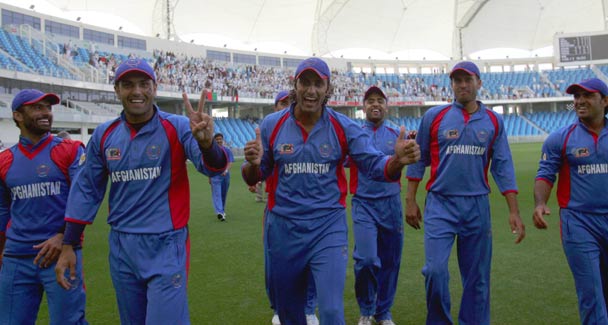
Having stunned favourites Pakistan in the semi-final yesterday, Afghanistan proved worthy opponents against Bangladesh, taking the final to the last over before losing by five wickets.

Latif, the former Pakistan wicketkeeper, said Afghanistan’s ultimate aim was to play Test cricket. “The result proved me right, but I am happy we are on the right path. We will improve further if we play the big teams regularly. The aim is to be a Test nation soon and play against the best. I want to bring youngsters into the game so the sport continues to grow in Afghanistan.”

Afghanistan have made rapid strides, rising through the ranks from the lower divisions of the World Cricket League. They played in the World Twenty20 in the Caribbean earlier this year and narrowly missed qualifying for the 2011 World Cup.

Mohammad Nabi, the Afghanistan captain, said passion for the game kept the players going. “The war has been going on for three decades, but we have been playing cricket there for the last 10 years despite the lack of proper facilities or grounds. Cricket has caught on back home. More people are playing the game or following it on radio and TV.”

Nabi was disappointed to lose the final, but said the silver medal had buoyed his team for the five-day Intercontinental Cup final against Scotland in Dubai from December 2. “We want to play as much as possible, wherever possible. The aim is to join the big league.”

Afghanistan received backing from Bangladesh, who won their country’s first ever Asian Games gold medal. “We are celebrating, but I hope Afghanistan will celebrate too because they deserve the silver medal,” Imran Sarwar, the Bangladesh coach, said. “They are a very good side and I am sure they will become a top team in the near future. Their rise has been remarkable.

“This was not an easy win at all. We expected them to make around 100 or 110, but they went to 118 and then kept us under pressure till the end.”

Pakistanis for Peace Editor’s Note– Congratulations to the Afghan Cricket team for winning the Silver medal at the Asian Games in China. Along the way, they beat traditional cricket playing teams such as Pakistan and Sri Lanka and proved to be worthy competitors. In a country ravaged by over 30 years of war and conflict, the Afghani people should be proud of the accomplishments of their team and build upon this success in uniting their fractured nation.

Wave of Joy Sweeps the Nation

As Reported by Dawn

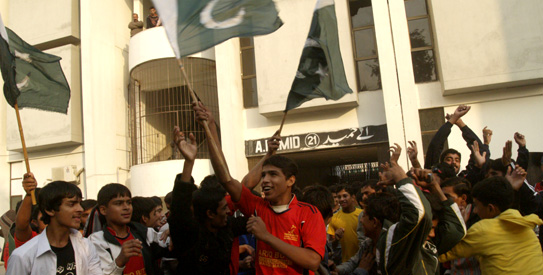
A wave of joy swept across Pakistan as it overcame a lackluster Malaysia in the final of the 16th Asian Games hockey. The win secured for Pakistan its first gold at the Games in 20 years and in the process an automatic berth at the 2012 Olympics in London.

The historic moment was witnessed by a large group of supporters that had thronged the various hockey centers across Pakistan to watch the final on the large screens that had been set up for the day. And the fans weren’t disappointed as their team put up a clinical performance to record a 2-0 win over Malaysia.

“It’s really a huge success for us and it’s extremely good news for the entire nation,” said Nawaz Ali as he waved national flag at a busy intersection of the capital Islamabad with scores of other Green Shirts supporters.

“It is good to see our team winning. We are happy because this is our national game,” said another man waving hockey sticks in joy. He said the victory would boost players’ morale and help them get more victories in future.

In Peshawar, people came out from their homes after the win and performed traditional dance moves to celebrate the moment.

“Hats off to Pakistan hockey players for their memorable win by giving joy and pleasure to 170million people,” a young hockey fan and resident of Qisakhwani, Abdur Rahim said. “The moment when our national anthem was played in China was historic and it would be remembered for a long time.

There were similar scenes in Lahore and Karachi where people even crowded the small TV screens at the international airports to catch a glimpse of the final.

There were also reports that many people at various workplaces extended their lunch to fit in the game that ended around 15:30 pst. The people in question, however, chose to remain anonymous.

Also brimming with delight was the Sports Minister of Pakistan Mir Ejaz Hussain Jakhrani who announced a cash award of Rs 5 million for the gold medal winning hockey team. He also paid glowing tributes to the squash team which also won gold in the team event beating their highly touted Malaysian opponents.

11/26/2008: How India Debated a War With Pakistan that November

By Pranab Dhal Samantha for Express India

The last of the 26/11 terrorists had been killed only a few hours back when Prime Minister Manmohan Singh presided over an urgently called meeting of the country’s security top brass. Present at that meeting on November 29, 2008, were Defence Minister A K Antony, the then National Security Advisor M K Narayanan, heads of both intelligence agencies and the three service chiefs — the Army was represented by its Vice-Chief Lt Gen M L Naidu as Army Chief Gen Deepak Kapoor was overseas — among other high-ranking officials. The key issue on the agenda — India’s response.

By then, there was no doubt among any of those present at this meeting, which lasted for over two hours at the PM’s residence, that the entire attack had been controlled, coordinated and plotted by the Lashkar-e-Toiba and its handlers in Pakistan. An undeniable body of evidence had already piled up from the calls monitored between the terrorists and their handlers in the course of the attack. More evidence was pouring in by the hour. There was no way any government in New Delhi could drag its feet — the Prime Minister knew he had to ask the dreaded question to all those responsible for the defence of India.

He started with the words that the people of India “will not forgive us” for what had happened and that the government had indeed failed them. This was not an empty comment. About 10 days before, US intelligence had intercepted a phone call from “somewhere in the Arabian Sea” to Pakistan-occupied-Kashmir. The input with coordinates of the boat’s position had been passed on to Indian agencies and then disseminated but not with the immediacy and urgency it deserved. Coast Guard authorities carried out reconnaissance sorties but by then it was too late. They found nothing on those coordinates except for scores of fishing boats that looked alike. The boat had obviously moved on. The Coast Guard filed a report that it needed the latest coordinates. And that’s where matters lay until the night of November 26 when the 10 terrorists surfaced in the heart of Mumbai.

Yet, the Prime Minister kept his calm and turned to the three service chiefs. He asked them whether they had any options in mind. In the same breath, he preemptively made it clear that he did not favour another Operation Parakram. That option was off the table from day one, recall sources. The then Navy Chief Admiral Sureesh Mehta chose to remain quiet. After all, the Navy was carrying out exercises in the area when the 10 terrorists slipped in without raising an alarm. The Army Vice-Chief wanted to wait for Gen Kapoor to return before they could crystallise their thoughts.

It was Air Chief Marshal Fali Major who eventually spoke up and suggested striking terror camps in PoK. The Air Chief was sure that his planes and pilots could do the job but the intelligence agencies would have to provide the coordinates. There was no further discussion on the subject that day, but it was also not the last conversation.

So, how close did India and Pakistan come to war? The views range from “very close” to “fleetingly close” but the fact which all key players confirm is that the military option was indeed on the table. It was subsumed by only a larger question of how would Pakistan react?

IN the days that followed, the military top brass went aboutnworking on the options. The Air Force, in particular, did go into the finer aspects of conducting a limited air strike in PoK but the political decision-making never moved any further.

However, the Defence Minister did hold a meeting with the three service chiefs after the PM’s first meet. At that point, the Army Chief was asked whether limited ground strikes could be carried out. Gen Kapoor is said to have responded that an operation was possible but he would need a week’s notice and that it would be a “highly risky” affair. He is said to have added that any political approval on this must include flexibility for the Army to respond anywhere along the LoC or for that matter, even the international border. In the Army’s assessment, any strike would definitely lead to an escalated military conflict and the government ought to prepared for it. The Air Force agreed that a strong Pakistani reaction was certain but was not willing to predict the levels of escalation.

While this continued, the Army proposed that it would like to prolong the stay of two of its brigades involved in a scheduled peacetime military exercise on the Rajasthan border. The go-ahead was given and the two brigades overstayed for about two weeks.

Much later, in early January, when then Foreign Secretary Shivshankar Menon, who is now the National Security Advisor, visited the US, his eloquent assertion in all his meetings about how India had not provoked Pakistan was only once challenged. Gen David Petraeus is learnt to have told him that this was not true because Indian troops had overstayed after finishing their military exercise. To Pakistan, he felt, this was a provocation to which it gave a disproportionate response by placing troops on alert and moving its fighters closer to the border.

There was also another incident about an Indian plane violating Pakistan airspace which apparently led to a F-16 scramble on the Pakistan side. Islamabad lodged a strong diplomatic protest. India denied with equal conviction. But at the same time the Air Force was asked to carry out an investigation.

The result was that there was indeed some violation by a reconnaissance plane of the Aviation Research Centre, RAW’s air wing, that was conducting a sortie along the LoC. This aircraft, perhaps, went too close to the LoC, violating the rule that both sides will not send their aircraft that near.

A few days later, a meeting was held in the nuclear bunker where the top leadership of the government is to be rushed in case of a nuclear strike. This was not provoked by 26/11. It was scheduled much before the attacks with the objective of familiarising the PM and other ministers of the emergency drill. But in the backdrop of the Mumbai attacks, the meeting could not have ignored the security environment of the day.

The PM is believed to have asked how would one distinguish a nuclear strike from any other non-nuclear, yet devastating attack. This was important because like many in the bunker, he too wanted to be sure that sufficient safeguards were in place to prevent a mistaken response. A long explanation was given. The PM then wanted to know if there was a chance Pakistan could misjudge a conventional strike by India and trigger a nuclear response.

There was near silence. Pakistan, by then, had already created “war hysteria” which many felt was unprovoked. The larger consensus was that you could not be sure about Pakistan’s response. It’s reliably learnt that it was this uncertainty which halted Indian strategists from fully backing any military response.

Under considerable pressure to show some response, the Prime Minister had independently tasked Menon to draw up a list of India’s options. Menon did carry out the exercise like a professional and gave an unsigned note that started with extreme measures like a limited military strike to less effective but dramatic steps like scaling down diplomatic relations, stopping cricketing ties, visa restrictions among others. He and Narayanan met regularly, at the PM’s instructions, to discuss the question of options in the days and weeks after the attacks.

In the wake of all the uncertainty over how Pakistan would respond, there was also talk about the “deniable option”. One which would involve covert operatives carrying out a sensational strike in Pakistan or in PoK. It’s learnt that RAW and the Army were specifically asked this question. RAW’s response to the NSA stunned all except, perhaps, Narayanan himself who is among the doyens of Indian intelligence. India’s premier external intelligence agency admitted that it had no assets in Pakistan to carry out such an action. It was explained that India lost all the meagre local support it had in pockets of Pakistan after the Babri Masjid attack and what little was left, was shut down by a prime ministerial diktat during I K Gujral’s tenure.

The Army said it had the ability to carry out commando operations but the government had to be clear what would be the approach if anyone was apprehended. Also, the Army let it be known that it was not sure how Pakistan would react if it found out.

This discussion headed nowhere after this because the ground realities were clear that India had consciously not cultivated this option. Some others felt it was pointless to discuss the “deniable option” because the whole idea of a response should be that the “other side” should know who did it.

Just as Singh deliberated these issues here, on November 29 itself, then US President George W Bush held a meeting with his security advisors and also on the video link with his missions in India and Pakistan. He told them that the last time something like this happened in the United States, “we went to war”. Prime Minister Singh, he added, was also under immense pressure and that the United States must do all it can to help him so that he does not go to war.

That eased matters a bit as Bush made it clear to Pakistan that it needed to “roll up and crush” the terror outfit behind the attack. US assistance was unprecedented, forcing Pakistan to accept that the attack was carried out from its soil.

But when the dust settled, all agreed that the unpredictability on the Pakistan side and the fear that its decision makers could opt for a disproportionate response, including the nuclear option, stymied any possible chance of military action on India’s behalf after 26/11.

After the first two weeks following the attack, the question that overtook everyone’s mind was what if there is another terror strike? Would India be able to hold back then?

Two years later, when asked if that phase is now over, a high-ranking security official remarked: “I can’t say, but I think that the question is still as serious. Can we keep quiet if there is another Mumbai? No, this question is still relevant.”

Thanksgiving: An American Eid

By Carmela Conroy for The Daily Times

Last week, some Pakistani friends welcomed me to their homes for Eidul Azha. As someone living far away from loved ones, it was wonderful to enjoy their hospitality and witness the warmth of family and food during this special time in Pakistan. It reminded me of our American Thanksgiving holiday, which is celebrated on the fourth Thursday of November.

Americans of all ethnicities, religions and national backgrounds celebrate Thanksgiving Day at home or in larger group settings. Traditional Thanksgiving foods, such as turkey with stuffing, mashed potatoes and gravy, sweet potatoes, cranberry sauce and pumpkin and pecan pies, harken back to the first Thanksgiving almost 400 years ago.

The first Thanksgiving was a feast shared by English pilgrims who founded the Plymouth Colony in what is now Massachusetts, with Native Americans of the Wampanoag tribe. In 1620, the pilgrims crossed the Atlantic Ocean in search of religious freedom. Arriving too late to plant many crops, and without fresh food, half of the pilgrims died of illness that first winter. The following spring, the Wampanoag people taught the English how to grow local crops, like corn, barley, beans and pumpkins, and helped them master hunting and fishing in the untamed wilderness.

The following fall, the pilgrims and the Wampanoags celebrated God’s blessings together at the new harvest. Very few pilgrims would have survived to celebrate that first Thanksgiving, but for the Wampanoag people’s charity towards them, helping them to adjust to their new home.

That spirit of giving thanks to God for our blessings, and sharing those blessings with others, lives on. I have observed that Pakistanis share a portion of their sacrificed bakra with their poorer neighbours during Eid. Similarly, many Americans spend part of their Thanksgiving serving meals to the needy or donating food or money to soup kitchens and homeless shelters. Families often participate together in charity fundraisers or donate to food drives. Thousands of charitable organisations serve hot dinners to the needy and many thousands of turkeys are donated to underprivileged families each year.

This year, the Thanksgiving and Eid traditions of charity and sharing are more important than ever here. The severe flooding this summer was the largest natural disaster that Pakistan has ever experienced, and I am proud to say that the American people contributed over one-third of the total relief provided by the international community to help people whose livelihoods and homes had been destroyed. American charities predict that more Americans will seek help during the holiday season than did last year, due to the ongoing economic downturn. As we count our blessings, we must recognise that although floodwaters have receded, many affected people still lack adequate shelter and livelihoods.

Today, Thanksgiving Day, I take time to reflect on my blessings, including the warm Eid hospitality so recently offered by Pakistani friends. Inshallah, I hope that the spirit of generosity and support from our “two Eids”, both American and Pakistani, can continue through the holiday season and into coming new year.

–Carmela Conroy is the US Counsel General in Lahore, Pakistan.

Christian Woman Sentenced to Death in Pakistan Not Yet Pardoned

By Reza Sayah for CNN

A Christian woman sentenced to death for blasphemy has not yet been pardoned by Pakistan’s president, representatives for the president said Wednesday, a day after a provincial governor told CNN that the president is expected to pardon the woman.

Asia Bibi, who has been jailed for nearly 15 months, was convicted in a Pakistani court earlier this month of breaking the country’s controversial blasphemy law by insulting Islam’s Prophet Mohammed, a crime punishable with death or life imprisonment, according to Pakistan’s penal code. She was sentenced to death.

Two representatives of President Asif Ali Zardari said Wednesday that no action has been taken, but the president will pardon if necessary.

“No decision has been taken,” spokesman Farhatullah Babar said. “Under the constitution, the president has to act under the advise of the prime minister. He will advise the president to take whatever action he proposes.”

On Tuesday, the governor of Punjab province said Zardari will pardon Bibi.

“What basically he’s made it clear is that she’s not going to be a victim of this law,” Gov. Salman Taseer told CNN International’s “Connect the World” program.

“I mean, he’s a liberal, modern-minded president and he’s not going to see a poor woman like this targeted and executed. … It’s just not going to happen,” Taseer said.

She has filed a petition for mercy with the high court, Taseer said.

“If the high court suspends the sentence and gives her bail then that is fine. We’ll see that, and if that doesn’t happen, then the president will pardon her,” he said.

Babar said jurists and legal experts have debated about whether the president has absolute power under the constitution to grant a pardon.

But he said Bibi is not in danger of being executed.

“Asia cannot be executed now,” Babar said. “Under the law, a death sentenced issued by a session court can not be carried out until it has been endorsed by the high court.”

Farahnaz Ispahani, a spokeswoman for the president, said Pakistan remains committed to protecting religious minorities.

“Pakistan is a nation of many faiths and religions, and all Pakistanis, no matter what their religion, are equal under the law,” Ispahani said in a written statement. “President Zardari has followed the case of Asia Bibi closely and will take appropriate action, if necessary, to issue a pardon or grant clemency to insure that Asia Bibi is neither incarcerated or harmed.”

A preliminary investigation showed Bibi was falsely accused, a government official said Monday.

“The president asked me to investigate her case, and my preliminary findings show she is innocent and the charges against her are baseless,” Pakistani Minister for Minority Affairs Shahbaz Bhatti told CNN.

Bhatti has said he will submit a final report Wednesday to Zardari’s office.

Prosecutors say Bibi, a 45-year-old field worker, insulted the Prophet Mohammed after she got into a heated argument with Muslim co-workers who refused to drink from a bucket of water she had touched.

In a brief news conference at the prison where she’s being held, Bibi said last weekend that the allegations against her are lies fabricated by a group of women who don’t like her.

“We had some differences and this was their way of taking revenge,” she said.

Bibi’s death sentence sparked outrage among human rights groups, who condemned Pakistan’s blasphemy law as a source of violence and persecution against religious minorities.

But Babar said the president’s party lacks the power in parliament to repeal Pakistan’s blasphemy laws.

“The manifesto of the Pakistan Peoples Party calls for the law to be repealed, but the party has not been able to repeal it because we lack the majority in parliament,” Babar said. “We don’t have the numbers to do it.”

More Military Aid to Pakistan?

By Aaron Mannes, Rennie Silva and V.S. Subrahmanian for The Huffington Post

As part of the U.S.-Pakistan Strategic Dialogue, the United States has granted Pakistan over $2 billion in military equipment over the next five years. This aid is intended to support American policy objectives and help stabilize Pakistan, but it may be achieving the opposite.

Military aid for Pakistan has a clear, if narrow, logic: to ensure the supply lines for the 100,000 American and NATO ally troops deployed to landlocked Afghanistan. The United States has few viable alternatives to the Pakistani-controlled routes into Afghanistan. When Pakistan recently shut down the Torkham crossing into Afghanistan (after an accidental border clash with a NATO helicopter that left two Pakistani soldiers dead and four wounded), supply trucks backed-up and Pakistani Taliban set fire to over 100 vehicles. Though there was no immediate danger of shortages, the event signaled how difficult US-led operations in Afghanistan could become without support from Pakistan’s military.

Despite its indispensable role in the war in Afghanistan, Pakistan’s own stability is in doubt and military aid has been of limited utility. Since 9/11 the United States has delivered over $18 billion in aid to Pakistan, about two-thirds of which has been military. In that period, violence by Pakistan-based terrorists both within Pakistan and without has increased substantially. According to the National Counter Terror Center’s World Incidents Tracking System, 110 Pakistanis were killed in terror attacks in 2004. By 2007 that number had jumped to 400, and in 2008 the casualty figure more than doubled to nearly 900.

As illustrated by the recent bombing of the Criminal Investigation Building in Karachi which killed 20, American aid has not enabled Pakistan’s security forces to control the violence. Instead, Pakistan has become a base for terrorism not only targeting the Pakistani state but also India, as demonstrated by the 2008 Mumbai massacre and a deadly series of 2006 commuter train bombings in Mumbai which killed over 200 people. India’s response to these attacks has been muted, but its restraint is finite. Open hostilities with its neighbor to the east would be devastating for Pakistan, and could even trigger a nuclear exchange.

Although several thousand Pakistani soldiers have died fighting Islamist extremists, the Pakistani security establishment has been slow to adopt counter-insurgency methods of war fighting. Instead, it has preferred to continue its India-centric focus. Investigations of U.S. military aid intended to help Pakistan fight the Taliban find that it is often re-purposed to counter India. “I’ll be the first to admit, I’m India-centric” Pakistani army chief of staff Gen. Ashfaq Parvez Kayani told Bob Woodward in his latest book, revealing a long-term strategy that is at odds with US interests.

Pakistan’s ongoing use of Islamist terrorists as proxies against India is especially troubling. President Zardari, who has stated “the undeclared policy of running with the hare and hunting with the hound was abandoned,” claims that Pakistan has turned against Islamist militants. But Pakistan’s generals have not received the memo, as investigations into the Mumbai attack show that links between at least some elements of the ISI and Lashkar-e-Taiba continue.

Pakistan has pursued some Taliban forces in its tribal areas, while leaving others alone to support future Pakistani interests in neighboring Afghanistan. Under such circumstances, America’s military aid is at best fueling Pakistan’s longstanding rivalry with India, and at worst enabling its enemies.

Pakistan’s high defense spending has robbed critical social programs of necessary resources. Pakistan continues lag behind comparable countries in general development indicators such as literacy and infant mortality, while its infrastructure is stretched to keep up with the needs of its fast-growing population. Under-funded and corrupt government institutions compound the situation. As Pakistan’s civilian and military leaders cynically seek to distract the public from these shortcomings, it is little surprise that Islamist groups often fill the vacuum by providing critical services or that the Pakistani people increasingly fall under their spell.

The long-term development shortfalls of Pakistan’s government have been exacerbated by a series of disasters including the 2005 Kashmir earthquake, the 2008 economic crisis, and last summer’s massive flooding. The latter, which caused nearly $10 billion in damage, has created millions of refugees and devastated an irrigation system that was strained to meet the demands of Pakistan’s agricultural sector before the flooding. Today, its failure threatens to cripple a vital sector of the Pakistani economy for years to come.

American development aid cannot counter decades of Pakistani neglect, but it can play a productive role in addressing critical needs. Providing Pakistan with more military capability-capability that could contribute to regional instability if it is used on American allies-is unlikely to achieve either.

Pakistani Women Break Taboos in Winning Asiad Gold

As reported by Reuters

Sana Mir, captain of the Pakistan women’s cricket team that won a gold medal at the Asian Games in Guangzhou, had other ideas.

“I belong to Abbotabad where girls are not encouraged to take up sports leave alone cricket but my family was supportive and made it possible for me to play cricket and study as well,” Mir said after a triumphant return home on Sunday.

“I hope our victory will serve as a catalyst for women’s sports in Pakistan.”

The women’s team, wearing their green team blazers, were garlanded and showered with rose petals in a rousing welcome at Karachi airport after winning the gold medal in a one-sided final against Bangladesh on Saturday.

“This welcome is like icing on the cake after our victory,” Mir said.

Pakistani media greeted the gold medal as a victory for women in the country.  “Looking for positive faces to show the world, Pakistan need go no further than its sportswomen,” the Dawn English daily newspaper said in an editorial.

“Despite the many restrictions they face, Pakistani women have done well in the field of sports from time to time.”  “Unfortunately too little has been done to encourage these brave young women,” the News daily paper said.

“We never dreamt one day women’s cricket would be acknowledged this way,” said Mir. “The day we won the medal I called up my family to thank them for their support.”

In a country where cricket remains a passion despite the spot-fixing allegations surrounding the men’s team, the Pakistan Cricket Board (PCB) has been giving steady exposure to the women’s team.

“The fact that we have played regularly since last year in International Cricket Council (ICC) tournaments and against better opposition has helped these girls gain confidence,” said Bushra Aitzaz who heads the women’s wing in the PCB.

Pakistan Rejects U.S. Drone Expansion

By Alex Rodriguez for The LA Times

Pakistan has rejected a request from the U.S. to expand a drone missile campaign against Al Qaeda and Taliban militants, a decision that limits Washington’s use of one of its most effective tools against insurgents hiding in the nation.

Pakistani Foreign Ministry spokesman Abdul Basit said Islamabad would not allow the U.S. to carry out drone strikes outside the tribal belt along the Afghan border and repeated the government’s request that Washington abandon its use of drones in Pakistan on the grounds that the program violates the country’s sovereignty.

Basit did not say which additional areas the U.S. wanted to target. However, the Washington Post reported Saturday that the request focused on areas outside the southern city of Quetta, where Afghan Taliban leaders have hideouts.

“We are allies of the United States in the war against terror,” Basit said. “However, Pakistan will not compromise on sovereignty.”

Islamabad’s refusal comes as little surprise, given the animosity that the drone campaign has stirred among Pakistanis for years, but even as the government publicly condemns the drone program, it tacitly allows the missile strikes to take place. Pakistan even provides intelligence to facilitate the targeting of the strikes.

The drone missions are deeply unpopular in Pakistan, where they are viewed as an illustration of President Asif Ali Zardari’s willingness to acquiesce to most demands that Washington makes. Allowing an expansion of the drone program could further aggravate the vulnerability of Zardari’s government, already weakened by its mishandling of this summer’s catastrophic floods and the country’s ongoing economic troubles.

Any expansion of the drone campaign into Baluchistan, the province where Quetta is located, would also represent a dramatic departure in policy for Islamabad because it is not part of the semi-autonomous tribal region where the drones are permitted now.

In addition, the Quetta region is a heavily populated area; the city itself has a population of 900,000. The core leadership of the Afghan Taliban insurgency, known as the Quetta Shura and headed by Mullah Muhammad Omar, has used Quetta and its outlying regions as a sanctuary for years.

In recent months, the U.S. has dramatically stepped up its use of drone strikes in the tribal areas. So far this year, the U.S. has carried out 101 drone missile strikes in northwest Pakistan, compared to 53 in 2009.

The attacks have focused largely on North Waziristan, a primary stronghold of militants and commanders belonging to the Haqqani network, an Afghan Taliban wing regarded by the U.S. as one of the biggest threats facing coalition forces in Afghanistan.

According to the Long War Journal website, which keeps track of drone missile strike statistics, 92 of the attacks this year occurred in North Waziristan.

American Promotes Global Peace by Building Schools

By Samreen Hooda for The Bayor Lariat

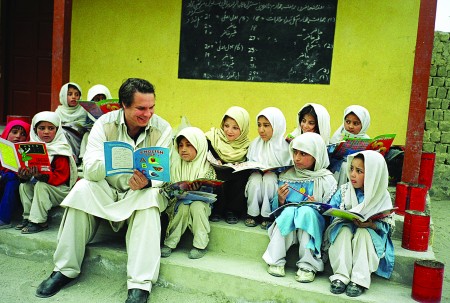
He is well known for his best-selling novel “Three Cups of Tea” and as the American who builds schools in Afghanistan and Pakistan, yet his story began with an accident that changed his life.

Greg Mortenson first went to Pakistan on an attempt to climb the mountain K2. After getting lost twice, cold, sick and hurt, Mortenson stumbled upon the small village of Korphe where the locals nursed him back to health. It was here, Mortenson said during his recent visit to Dallas, that he first encountered what would become his new life.

“I saw 84 children sitting in the dirt doing their school lessons,” Mortenson said. “Most of them were writing with sticks in the sand. When I saw those 84 children sitting in the dirt and they asked for help to build a school, I made a promise that day that I would help them.”

Mortenson didn’t realize then that the climb ahead was still steep. He came back to the states and wrote letters to 580 celebrities asking them to donate to the cause. He got one response: a check for $100. But he did not give up, speaking at schools and appealing to people’s desire that all children have a right to an education. Mortenson eventually got the funds he needed to begin the school he had promised.

“I built that school and then 78 more and I’m still doing it today,” Mortenson said.

This is his life’s purpose and he constantly strives to fulfill it, said Sadia Ashraf, outreach coordinator for the Central Asia Institute, a nonprofit Mortenson started to promote education in remote regions of Northern Pakistan and Afghanistan. It is his passion for the cause that has made him so remarkable at what he does, she added.

It is this ability to mix passion with a unique perspective that many say makes him a revolutionary.

“I think philosophically speaking he’s looking at an issue that’s been there for many years, looking at it through completely fresh eyes and also looking at it through the perspective of an American, which is a little bit unique,” said Amir Omar, city councilman for Richardson. “And his ability to come back to the States and explain those needs in terms that other Americans would understand, I think that has a really compelling message to it. It not only impacts children in Pakistan but also it impacts the perceptions of Americans.”

Yet Mortenson’s vision is not just designed to change perspectives, but to alter future generations by educating today’s youth, especially women.

“When a girl learns how to read and write, one of the first things she does is teach her own mother,” Mortenson said. “The girls will bring home meat and veggies, wrapped in newspapers, and the mother will ask the girl to read the newspaper to her and the mothers will learn about politics and about women who are exploited.”

Teaching women, Mortenson says, is the way to changing the world.

“When someone goes on jihad, they first should get permission and blessings from their mother,” he said. “And if they don’t, it’s very shameful or disgraceful. And I saw that happen after 9/11. They were primarily targeting illiterate, impoverished society because many educated women were refusing to allow their sons to join the Taliban.”

But education of this sort can only take place when you don’t walk in as strangers to try and change the world, but first become family, Mortenson said.

That happens with three cups of tea.

“The first cup you’re a stranger, second cup a friend and the third cup you become family. That doesn’t mean you just go around drinking tea, having peace in the world,” he said. “But what it means is that first we have to build relationships and get to know each other.”  That’s how Mortenson believes in promoting peace: one school at a time.

Pakistanis for Peace Editor’s Note– Greg Mortenson’s humanitarian work in Afghanistan and Pakistan shows that one man can make a difference and leave a lasting mark in the lives of many. He is a great unofficial ambassador of the United States much like aid worker Todd Shea of Shine Humanity. We commend both individuals and many others for their honorable work on behalf of the people of these two neighboring nations.

‘Pak Must Acknowledge Terrorism is “Home Grown”, Not Indian, Jewish or US conspiracy’

As Reported by ANI

The Tehrik-e-Taliban Pakistan (TTP) attack on Karachi’s Crime Investigation Department compound should serve as an ultimate wake up call for Pakistan to swiftly act against home grown terrorism rather than blaming some Indian or US conspiracy for terror strikes on its soil.

“The assault on the CID centre must be seen for truly what it tells us in plain words: that home grown terrorism is no Indian, Jewish or American conspiracy against Pakistan or Islam,” Pakistan’s leading newspaper Dawn said.

“It also tells us that there are many misguided Pakistanis in our midst, who may even have sympathy for these zealots targeting largely Muslims that would not endorse their narrow minded view of the faith under whose banner they kill and maim innocent citizens,” it noted.

“How else does one explain the transportation of a van full of explosives along with a firing squad armed with latest weapons that came to attack the CID building during the evening rush hour no less?” the paper questioned.

It is high time that Pakistan woke up to the increasing threat posed by terror organisations and took stringent steps to tackle it.

“Much of Islam as we know it in this country today, isn’t exactly in very safe hands; it’s time we woke up to the threat and did something about it instead of issuing token mere condemnations that follow such ghastly acts of sheer murder and mayhem, from Islamabad to the provincial capitals and the other Pakistani capital of sorts, in exile, the faraway London,” the paper said.

It argued over a possibility that Thursday’s bombing took place “because no concrete action was taken after last month’s bombing at the Abdullah Shah Ghazi shrine; nor indeed the ghastly attacks before that on two Muharram processions in December and February.”

Ruing the state of Pakistan’s preparedness in combating terrorism, it expressed the hope that the latest bombing incident- at CID building in Karachi- “given its precision and intensity as well as the target hit, should serve as a final wake up call to law enforcement agencies and the authorities concerned in Karachi.”

India, Pak Almost Agreed on K-deal: Musharraf

 As Reported by The Press Trust of India

Former military ruler Pervez Musharraf on Friday said India and Pakistan were “moving forward towards drafting an agreement” on Kashmir during his tenure and that Prime Minister Manmohan Singh was genuinely committed to peace in the region. “I was certainly trying for it (peace).

And we were reaching success. I have always praised Prime Minister (of India) for his sincerity to reach peace,” said Musharraf, in an interview with NPR. Manmohan Singh and we almost reached peace on all the three issues…the third one, Kashmir, we had made some certain parameters and we were moving forward towards drafting an agreement,” he added. “Unfortunately, that was not to be, but I tried my best.”

Noting that peace is the only way forward, Musharraf noted that the deadlock on Kashmir was rendering the South Asian Association for Regional Cooperation (SAARC) useless.

“And I think the way forward is peace for the sake of world, which thinks that this is a nuclear flash point; for the sake of SAARC, which is impotent because of the conflict because of India and Pakistan,” said the former president.

“And for the sake of bilateral Pakistan-India advantages socio-economic advantages which will flow from peace between the two countries,” he noted.

Musharraf is in the US to drum up support for his comeback, which he announced earlier this year by launching a new political party — the All Pakistan Muslim League that would contest elections in 2013. Earlier this week, he accused India of trying to create an “anti-Pakistan Afghanistan.” “If I’m allowed to be very, very frank, India’s role in Afghanistan is to create an anti-Pakistan Afghanistan, said Musharraf, speaking at the Council on Foreign Relations on Tuesday.

Today, he characterised the narrative of the Indo-Pak dispute as “impartial”. “So, unfortunate reality, why I have to be so emotional about it, is every time it is Pakistan who is a rogue,” he said.

“Indian bomb is not a Hindu bomb. Pakistan bomb is a Islamic bomb. I think we are being very impartial, we are being very unfair to Pakistan…”

What if Zulqarnain Haider Was Right About Corruption in Pakistan?

By Paul Hayward for The Guardian

The curse of the whistleblower is to be denounced as a fraud, a fantasist or a weirdo. In America, where they have an organisation for everything, the National Whistleblowers Center in Washington helps people wanting to expose iniquity, much like our own Public Concern at Work. Either may hear soon from a 24-year-old Pakistani wicketkeeper.

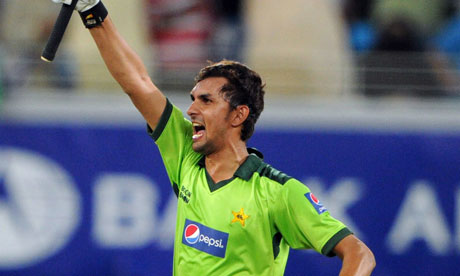
Let’s imagine this as a short movie, a study in motivation. Zulqarnain Haider approaches passport control at Heathrow one day and asks for sanctuary. Behind him he has left a wife and two daughters in Pakistan and the national team in Dubai, who learn of his disappearance when they find his hotel room empty.

The immediate cause of Haider’s flight is a conversation he says he had near the team hotel. An unknown man approaches him to say: “If you work with us, we will give you a lot of money. If not, we will not select you again in cricket and, if you go back home, we will kill you and your family.”

Notice the “we” in “we will not select you again in cricket”. One largely ignored facet of this drama is that if Haider’s interlocutor existed he boasted of his power to pick the Pakistan XI. All three layers are present: potential reward, intermediary punishment, and death, not just for him but his family. If Haider is for real, the offer he was made and the warning he was given imply a connection between match- and spot-fixing, team selection and serious organised crime.

In other words they suggest corruption runs through many tiers of Pakistan cricket. In a recent editorial, the country’s Daily Times speculated: “The elephant in the room is the link between people wielding power and the bookmakers. It is alleged that a top bookmaker and mafia don have connections with a powerful intelligence agency in Pakistan.”

This is as far as conjecture can be pushed in the strange tale of Haider’s dash to Britain, which featured a chaotic press conference in the backroom of a curry house in Southall. To summarise, he claims he was approached before the fourth one-day international against South Africa, in which he hit 19 winning runs, and then fled before the fifth, the second target for the alleged match-fixers.

Here in England he has said players’ phones should be tapped to assist evidence gathering and that “a lot of people” are involved in the scam. He has said, too, that he does not want any aid from the British government beyond temporary asylum and has promised to co-operate with the International Cricket Council’s Anti‑Corruption and Security Unit.

To gain a sense of Haider’s motivation it is tempting to imagine him on that flight to London, knowing what was ahead of him and what lay behind: most poignantly, grave danger for his wife and daughters. No conclusion can be drawn from such a filmic and intuitive form of analysis, but most of us would think something fairly big must have spooked him in Dubai to cause him to run away from his family and his livelihood.

We would suspect also that a professional cricketer had to break in the end, and that Haider simply looks like the first to buckle. Heroic status eludes him, so far. No senior Pakistan cricketer, either serving or retired, has praised his actions. Some asked why he waited at least four days after the threat to his life to board a flight to London.

Denunciations fly in from those who say he ought to have “reported his concerns” to the Pakistan team management and the ICC’s detectives, which protocol required him to do.

And from Pakistan’s sports minister, Ijaz Hussain Jakhrani, came the most brutal condemnation: “If he is such a weak and scared person he should not have played cricket in the first place, particularly not for the national team.” Asif Iqbal weighed in: “He has let the motherland down. There wasn’t even a reserve wicketkeeper to replace him. He just flew off.”

This censorious tone obscures the dark realities of the past year. The current cycle of trouble began with the dubious tour of Australia, with its suspicious Sydney Test and nine straight defeats for Pakistan in all formats. After the News of the World’s spot-fixing exposé, Mohammad Amir, Mohammad Asif and Salman Butt are under an ICC provisional suspension and have had their central contracts cancelled by the Pakistan Cricket Board.

As pressure builds in India, the hub of cricket betting, to legalise and therefore regulate the wild east of gambling on the country’s national sport, you wonder why more punters are not put off by all the evidence suggesting choreography on the field of play. It’s an odd kink of human nature that people will go on betting in an apparently bent casino, as if to beat a crooked system confers more pleasure than winning against an honest house.

At the centre of this vast global issue is one man who stepped off a flight in London and told the BBC on Friday: “I want to be a good citizen.”

Pakistan Bomb Shows Militant Reach

By Shakil Adil for The Associated Press

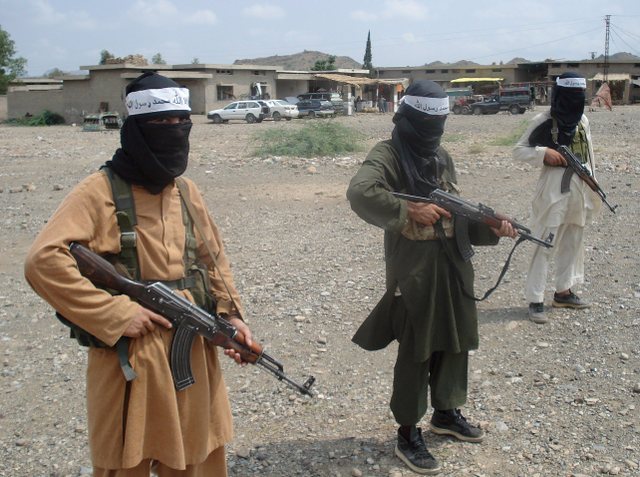
A coordinated assault on a police compound far from Taliban and al-Qaida heartlands along the Afghan border showed the ability of militants to strike back despite being hit by U.S. drone strikes and Pakistani army operations.

The Pakistani Taliban claimed responsibility for Thursday night’s attack in downtown Karachi, the country’s largest city and commercial hub, according to media reports. Fifteen people were killed and more than 100 were injured in one of the first coordinated strikes against a state target in the city.

The Pakistani Taliban is allied with al-Qaida and has emerged as the most potent threat to the stability of the nuclear-armed country since 2007. Its suicide squads have killed thousands of people in attacks on government, security force and Western targets, most of them civilians, shaking faith in the civilian government.

“These attacks which are happening around the country, they are carried out by enemies of the nation,” said Faisal Mehmood, a resident of Karachi, said Friday. “It is not in Islam that you kill your brothers.”

The gang of around six gunmen managed to penetrate a high-security area of Karachi that is home to the U.S Consulate, two luxury hotels and the offices of regional leaders. They opened fire on the offices of the Crime Investigation Department before detonating a huge car bomb that leveled the building and others nearby.

The police offices housed a detention facility that was believed to be holding criminals. There were conflicting accounts over whether militants were also being held there.

The CID takes the lead in hunting down terrorists in Karachi. Earlier this week, the agency arrested six members of Lashkar-e-Jhangvi, an al-Qaida linked group blamed for several high profile attacks in recent years. The suspects were presented before a court earlier Thursday.

Islamist militants are known to have found shelter among Karachi’s 14 million people, and their have been occasional attacks on Shiite Muslims, whom al-Qaida and the Taliban believe to be infidels, as well a blast last month at a Sufi shrines.

But it had largely escaped a wave of violence last year that saw many attacks in Lahore, Pesahwar and other cities.

The government has declared war on the militants, and the army has moved into several areas in the northwest close to Afghanistan. The United States has increased the tempo of missile strikes in the region over the last two months, with close to 100 this year alone.

But the Pakistani state still distinguishes between militants who attack inside Pakistan and those who focus on fighting U.S. troops in Afghanistan or Indian rule in the disputed Kashmir region, believing the latter to be “good” militants. Critics say this policy is shortsighted, noting that groups are increasingly coalescing and support each other.

Christian Woman Sentenced to Death in Pakistan

By Waqar Hussain for The AFP

 A Pakistani court has sentenced to death a Christian mother of five for blasphemy, the first such conviction of a woman and sparking protests from rights groups Thursday.

Asia Bibi, 45, was sentenced Monday by a local court in Nankana district in Pakistan’s central province Punjab, about 75 kilometres (47 miles) west of the country’s cultural capital of Lahore.

Pakistan has yet to execute anyone for blasphemy, but the case spotlights the Muslim country’s controversial laws on the subject which rights activists say encourages Islamist extremism in a nation wracked by Taliban attacks.

Asia’s case dates back to June 2009 when she was asked to fetch water while out working in the fields. But a group of Muslim women labourers objected, saying that as a non-Muslim, she should not touch the water bowl.

A few days later the women went to a local cleric and alleged that Asia made made derogatory remarks about the Prophet Mohammed. The cleric went to local police, who opened an investigation.

She was arrested in Ittanwalai village and prosecuted under Section 295 C of the Pakistan Penal Code, which carries the death penalty.

Sentencing her to hang, Judge Naveed Iqbal “totally ruled out” any chance that Asia was falsely implicated and said there were “no mitigating circumstances”, according to a copy of the verdict seen by AFP.

Husband Ashiq Masih, 51, told AFP that he would appeal her death sentence, which needs to be upheld by the Lahore high court, the highest tribunal in Punjab, before it can be carried out.

“The case is baseless and we will file an appeal,” he said.

The couple have two sons and three daughters.

Rights activists and minority pressure groups said it was the first time that a woman had been sentenced to hang in Pakistan for blasphemy, although a Muslim couple were jailed for life last year.

Human rights activists want the controversial legislation repealed, saying it is exploited for personal enmity and encourages Islamist extremism. “The blasphemy law is absolutely obscene and it needs to be repealed in totality,” Human Rights Watch spokesman Ali Dayan Hasan told AFP.

“It is primarily used against vulnerable groups that face social and political discrimination. Heading that category are religious minorities and heterodox Muslim sects,” he said.

Asked about Asia’s case at a press conference in Islamabad on Thursday, visiting Italian Foreign Minister Franco Frattini said he was unaware of the details but would raise the matter with Pakistan’s minorities minister.

“The Italian position has always been against the death penalty,” he told reporters. He said he raised the problems faced by Christian minorities during his talks with his Pakistani counterpart Shah Mehmood Qureshi.

“I believe they should not misuse the law of blasphemy to discriminate against religious minorities and this is a point I share with my colleague — this is a key point for me.”

Around three percent of Pakistan’s population of 167 million is estimated to be non-Muslim. Last July, two Christian brothers accused of writing a blasphemous pamphlet critical of the Prophet Mohammed were shot dead outside a court in Punjab.

Pastor Rashid Emmanuel, 32, and his brother Sajjad, were killed as they left a court hearing in Faisalabad city, where hundreds of Muslim protesters had demanded they be sentenced to death.

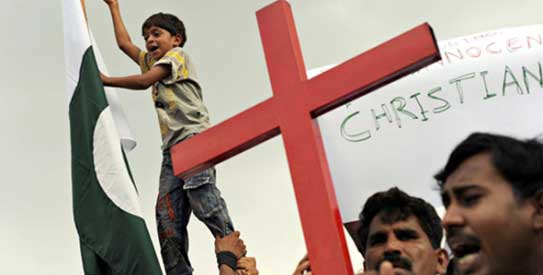
Pakistanis for Peace Editor’s Note– Pakistan’s blasphemy laws are absolutely egregious and need to be repealed. Not only are minorities such as Christians and Hindus in Pakistan subjected to these outrageously unjust laws, but Muslim minorities such as the Ahmadis and Ismailis are also time and time again subjected to and singled out for unfair treatment under the guise of these BS laws. The white color in Pakistan’s flag is supposed to represent the minorities within this Islamic republic. Until and unless these blasphemy laws are repealed and Pakistan’s constitution is amended, the religious minorities within Pakistan will never get a fair shake, regardless of how much they are represented in the flag.