Posts Tagged ‘ Pakistan ’

The Pakistan Paradox

By Bret Stephens for The Wall Street Journal
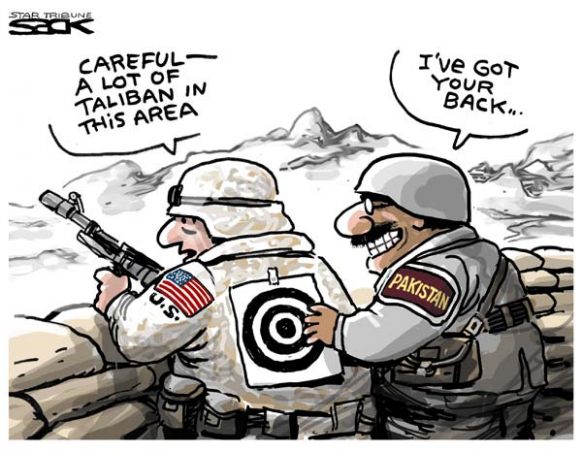
Any serious observer of the war in Afghanistan will tell you that we can’t win without striking hard at the safe havens the Taliban and its allies enjoy in Pakistan. That means going beyond drone strikes and deploying ground forces in places like North Waziristan.

Any serious observer of Pakistan will also tell you that such strikes would complicate, and perhaps fatally compromise, our relations with the country whose cooperation we require to win in Afghanistan.

Both observations are on the mark. Isolating the battlefield is a cardinal rule of warfare. So long as the Taliban can shrink away to Pakistan to lick their wounds and plot their return—as they have in the wake of their recent reversals in Kandahar—then we have failed to isolate them. Yet if Pakistan should begin to turn against us—as they briefly did earlier this month following the accidental killing of Pakistani border guards in a NATO strike—then we are the ones who will be isolated.

So how do we finesse the Pakistan paradox?

It helps to see the country for what it is. Pakistan suffers from an abandonment complex rooted in historical facts, especially the Pressler Amendment that cut off Pakistan-U.S. military ties throughout the 1990s. Those fears are compounded by a national paranoia that is the product of conspiracy theory, misplaced indignation and jingoism. The country’s elites typically divide between secularists, mainly feudal aristocrats or corrupt parvenus like President Asif Ali Zardari, and Islamists of either conservative or radical bent.

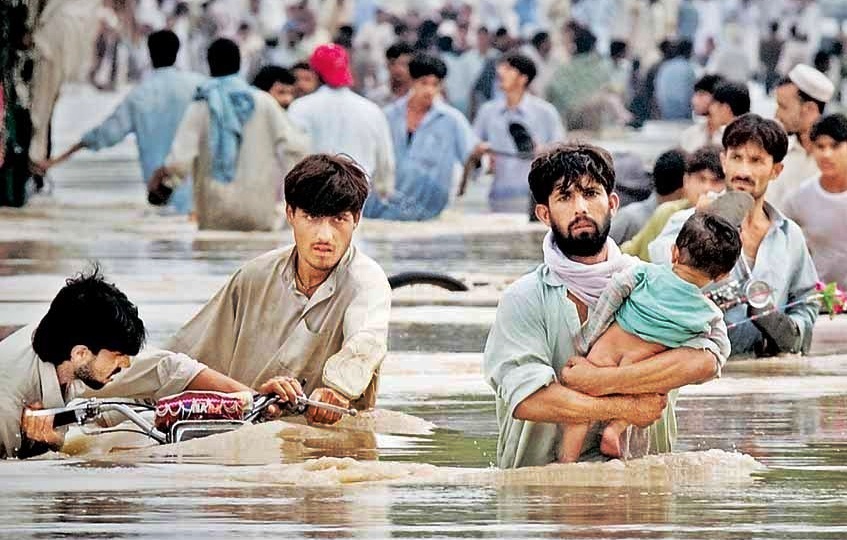
Standing astride the Islamist-secular divide is the military, which profits from cultivating both connections and is Pakistan’s most competent—and least accountable—institution. Down below is an ethnically fractious and largely destitute population of 170 million people, just emerging from a flood that swamped 20% of the country.

From this unsavory stew it’s unrealistic to expect a high degree of clarity or consistency in Pakistani policy. At best it leans one way or the other, never very far and rarely for very long. Mr. Zardari’s government has deployed the army against the Taliban, or parts of it, and consented to a dramatic increase in Predator strikes. But that’s happening concurrently with the intelligence service, or ISI, providing material aid to the al Qaeda-linked Haqqani network, and failing (or more likely refusing) to break up the so-called Quetta Shura of Mullah Mohammed Omar.

If there’s an overarching logic here it’s that Islamabad wants to preserve its options. Uncertainty about U.S. staying power in Afghanistan helps explain why Pakistan will not entirely forsake its erstwhile clients in the Taliban and the mujahedeen. Pakistani fears are further exacerbated by America’s recent tilt toward India. And while the Obama administration has made much of its aid packages for Pakistan—$1.5 billion a year on the civilian side, followed last week by the announcement of another $2 billion for the military—Pakistani officials complain that only a small fraction of the funds have been disbursed.

What, then, to do? First, instead of publicly lecturing Pakistanis on how they need to get tough with the Taliban, the administration would do better to make good on its existing commitments. Say what you will about Mr. Zardari’s abilities, he has aided the U.S. military effort in a way his predecessor Pervez Musharraf, supposedly a pro-American strongman, never did.

That’s a relationship to build on, quietly and incrementally, not to tear down. So it would be helpful if the administration doesn’t repeat the mistake of blabbing to Bob Woodward, whose book may have helped Mr. Obama seem more presidential but didn’t do any favors to his presidency.

Equally helpful would be to stop mindlessly demanding that military assistance to Pakistan go toward fighting the Taliban instead of arming against India. The missing ingredient in Pakistan’s counterinsurgency effort isn’t the right military tool kit, such as night-vision goggles or Apache helicopters. It’s the will of the Pakistani general staff to cooperate more fully in the fight. If that cooperation can be secured by selling conventional weapons such as F-15s and M-1 tanks to Pakistan, so much the better.

(As for India, it has less to fear from a reasonably well-armed, confident Pakistani army that has strong ties to the U.S. than it does from a poorly armed Pakistan that mistrusts the U.S. and continues to consort with jihadists as a way of compensating for its weakness.)

Finally, the administration ought to understand that Pakistan’s reluctance to defeat the Taliban at any price is a mirror image of our own reluctance. The July 2011 “deadline” to begin withdrawing troops was bound to affect Islamabad’s calculations, and not for the better. The sooner we junk it, the better the cooperation we’ll get.

It’s an old American habit to lament the incompetence and duplicity of our wartime allies, and Pakistan abounds in both qualities. But unless we are prepared to deal with Pakistan as an adversary, we must make do with it as a friend.

Pakistan Urges US to Intervene in Kashmir Dispute

As Reported by The Associated Press

Pakistan called Friday for President Barack Obama to intervene in its longstanding dispute with India over the Himalayan region of Kashmir, the cause of two of the three wars the nuclear-armed rivals have fought.

Pakistani Foreign Minister Shah Mahmood Qureshi made the unusually blunt appeal for Obama to seek a resolution of the dispute when he visits India next month, saying he should “redeem the pledge” he made as a candidate.

The conflict over Kashmir has been the main source of friction between India and Pakistan since they won independence from Britain in 1947. Pakistan has frequently sought outside intervention to resolve it but India vehemently opposes such involvement and the United States has traditionally stayed above the fray.

Qureshi, speaking next to Secretary of State Hillary Rodham Clinton at the closing day of three days of U.S.-Pakistan talks, said Obama must get involved because a crackdown against suspected Muslim militants in Indian-controlled Kashmir threatens the entire region.

“It is in the U.S. strategic interest to work for peace, stability and resolution of the disputes in South Asia,” he said. “The starting point in this quest is justice for the Kashmiri people.”

“President Obama has always understood the importance of a Kashmir solution,” Qureshi said. “His coming visit to the region is the time to begin to redeem the pledge that he made earlier.”

As a presidential candidate in 2008, Obama suggested that the U.S. should encourage India and Pakistan to resolve the Kashmir dispute so Pakistan could better focus on fighting extremists on its own territory and Afghanistan. Although he did not advocate direct mediation, his comments were met with disdain in India.

Obama will not visit Pakistan on his upcoming trip but he plans to spend several days in India, which has cracked down on violent anti-Indian protests in Kashmir since June. The violence has killed at least 111 people, mostly teenage boys and young men in their 20s. Authorities have imposed off-and-on curfews in an attempt to halt the unrest.

Quershi expressed astonishment that the U.S. and other major powers had said little about India’s response to the protests.

“People of conscience have protested the use of force against the defenseless people of Kashmir, in particular the targeting of the Kashmiri youth,” he said. “But the Kashmiri mothers are baffled by the deafening silence of the world’s leadership. History has proved that the force of arms cannot suppress the legitimate aspirations of the Kashmiri people.”

India and Pakistan fought two wars for control of Muslim-majority Kashmir, where rebels have sought independence from India or incorportation with neighboring Pakistan.

More than 68,000 people, most of them civilians, have been killed in Kashmir since fighting began in earnest in 1989.

Flood Relief: A US Helicopter Pilot’s Tale

By John Bockmann for The Express Tribune

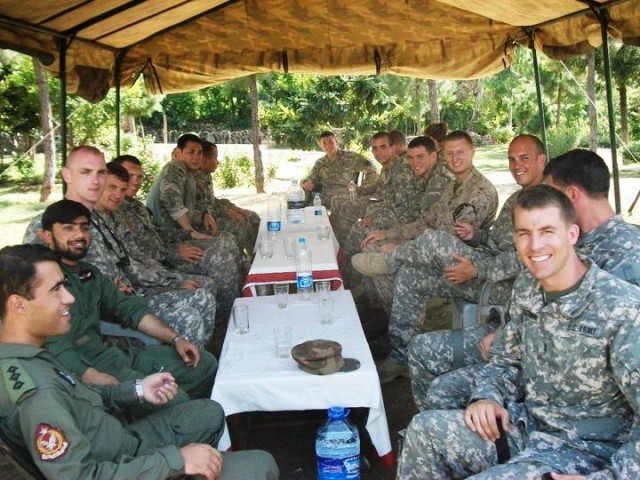
I am an American helicopter pilot in Pakistan.  My colleagues and I came because Pakistan and its people are enduring the aftermath of a devastating flood.  We were ordered to be here, and we miss our homes, but most of us are glad to help because we believe it’s the right thing to do.

I did not know much about Pakistan before I arrived here.  I knew of the food.  I knew of monsoons and Mohenjo Daro, Karachi and the Khyber Pass, but I had no concept of what Pakistan looked, felt, or sounded like. I even thought many Pakistanis would want us to leave.

I had no idea what the people would be like in person.  I wondered if they would resemble the images I’d seen on TV – would they protest our presence in the streets?  Would they tolerate us?  Or would they simply ignore us and go about their business?

After a few weeks of packing and planning, we were ready to deploy.  Full of excitement and some anxiety, I kissed my wife, took one last picture and was gone. We flew on a cargo jet from Alaska to Islamabad and the flight took so long I hardly knew whether it was day or night when we finally arrived.  Shouldering my gear, I headed to the terminal, weaving among Pakistani military and civilians on the tarmac.  A US Marine captain guided my group inside where we filled out information cards and relaxed in the cool quietness, surveying our area; smooth stone floors, low-slung furniture, and ceiling fans spinning high above.  The captain was talking to a Pakistani man who had been helping us.  Before we left, the man shook my hand and looked me in the eyes. “Thank you for coming to my poor country,” he said quietly.

I wanted to convey the depth of my feelings toward him and his homeland, but all I said was, “You would probably do the same for us” as I walked away.

That was my first interaction with a Pakistani here.

The days since arriving have passed quickly.  Every day we take rice, flour, blankets, housing materials, cooking oil – anything – up and down the Swat and Indus River Valleys.  We also bring sick, injured, and displaced people to hospitals and hometowns.

My first mission took us up the Indus river valley, and I embarrassed myself by constantly exclaiming its beauty.  Below me was the Karakorum Highway – the old Silk Road into China – and the valley itself, with terraced farmland overshadowed by majestic, snow-capped mountains.

Along with the beauty, though, I see reminders of the flood, bridges that are broken or missing and roads and fields that have been washed away.  I am beginning to see widespread reconstruction now as well and feel hope for the people in these villages.  They will soon have another way to get help.

I realize that some who read this will question our intentions and some may even wish us ill.  I certainly did not imagine that cheering throngs would greet us at each village though – we are always welcomed.  I did not expect our goodwill to be taken at face value by all of Pakistan, but we have received immense support.

I have learned in my time here that Pakistani people are truly gracious.  Strangers have invited me for chai and conversation.  Almost anyone will shake my hand and ask my name, inquire about my health and how I am getting along.  Instead of a handshake at our first meeting, I have sometimes been embraced.  “Strangers shake hands,” my new friend Mahmood explained, “but brothers hug each other.”

This warms my heart.  My mission, our mission, is straightforward, noble, and good.  I am deeply grateful to those who support us here, for we need all the help we can get in order to help those in need.   I am honored to do this work. I feel at home here beyond anything I could have expected.

Ah, home!  I miss my home, my wife and family; each day I wonder when I will see them again. But we have a humanitarian mission to accomplish.  Since I must be away, I’m glad that I am here, doing work that’s needed and good.

When I do return home, I will bring with me hundreds of pictures, dozens of journal entries, six duffel bags, and several recipes for local dishes that I have enjoyed, but I will also bring innumerable memories that I will treasure for life — memories of Pakistan and its people.  They have surprised me with friendship.  I hope that through our work of compassion we may surprise them with friendship as well.

Pakistan’s Musharraf is Launching a Long-Shot, Long-Distance Bid to be President Again

By Zain Shauk for The Houston Chronicle

Former Pakistani President Pervez Musharraf hopes to retake the leadership of his country, and he is actively campaigning — in Texas.

Musharraf, who relinquished his presidency in 2008, has a set of Houston meetings planned this week with wealthy Pakistani-Americans and corporate leaders.

He is scheduled to meet today with former President George H.W. Bush and Joanne King Herring, a longtime advocate for development in Afghanistan and Pakistan who was played by actress Julia Roberts in the film Charlie Wilson’s War.

Musharraf, a London resident, announced this month the creation of a new political party and a plan to run in Pakistan’s 2013 parliamentary elections.

But he has kicked off his campaign in the U.S., a decision that could say more about the perceived influence of the Pakistani-American community in cities such as Houston than Musharraf’s chances for success, experts say.

Musharraf said he believes connecting with Pakistanis in America will give him enough backing — financially and politically — to carry him to victory in Pakistan.

“I do need financial support, and I would ask the American Pakistani diaspora to support me … because I see darkness in Pakistan,” Musharraf said. “Because I don’t see a political party or a leader in Pakistan to be able to tackle the problems that Pakistan is facing.”

While Musharraf enjoys backing from the Pakistani-American elite, experts say he will be hard-pressed to develop a political base within his country and likely does not stand a chance against more established parties.

He is also in no position to campaign within Pakistan. Safety is a concern after multiple assassination attempts during his presidency, and he would likely face prosecution in connection with several criminal cases currently pending in Pakistani courts, experts said.

Still, Musharraf’s interest in wooing deep-pocketed Pakistani-Americans is revealing, said Walter Andersen, associate director of the South Asia program at Johns Hopkins University.

Not only do Pakistani-Americans play a role in financially supporting candidates, but their meetings in America are covered by Pakistani news media and seem to give politicians the idea that they are gaining traction, Andersen said.

Former Prime Ministers Benazir Bhutto and Nawaz Sharif also visited U.S. communities while campaigning, he said.

“Whether it works is not important,” Andersen said. “The perception among them (politicians) is that it works.”

Wide-ranging itinerary
U.S. communities don’t play a visible role in Pakistani elections, but Musharraf could stand to gain from his current North America tour, said Jamal Elias, an expert on contemporary Pakistan and chairman of the religious studies department at the University of Pennsylvania.

Musharraf’s itinerary will include stops in Chicago, New York, San Francisco and Toronto. He visited Dallas last week.

“Appearing statesman-like is going to help him in Pakistan,” Elias said. “It’s not going to build a constituency, but it may help him.”

There are more than 75,000 people of Pakistani origin in the Houston area, which includes more than 800 doctors, executives in the energy and information technology industries and scores of business owners, according to the Consulate of Pakistan in Houston.

Many of them have in the past contributed financially to political parties in Pakistan and will likely do so again, said M.J. Khan, a former Houston city councilman and member of the Pakistani community.

Khan said he does not send money to Pakistani political candidates, but knows U.S. residents in Houston and elsewhere who do. “They’re an educated community, and they send a lot of resources to Pakistan,” Khan said. “So I think every politician in Pakistan feels the Pakistani-American community is an important group to reach out to.”

Tactics questioned
Some community members – including Sajjad Burki, president of a Houston chapter for a political party headed by Pakistani cricket star Imran Khan – were not sure of the former president’s legitimacy as a candidate. Burki questioned Musharraf’s campaign tactics and priorities.

“It doesn’t make sense for him to be creating a political party and campaigning abroad rather than campaigning in Pakistan,” he said.

Herring, who is hoping to build support for Musharraf’s candidacy, said she planned to back him because of his support for her development efforts in Afghanistan.

“I think that Musharraf is interested in my plan,” Herring said. “I know he is. He supports it.”

Seeks ‘legitimacy’
Musharraf, a retired general, said he hopes a possible election to office will give him “the legitimacy that maybe I didn’t have in the past” as someone who had seized control of the government in a 1999 military coup.

He spent much of a luncheon Tuesday discussing the threats to Pakistan created by instability and lack of development in Afghanistan. Asked how he would solve that and a host of other challenges, Musharraf paused and smiled at his audience.

“First of all, get me elected,” he said.

Top of the Agenda at US-Pakistan Meetings: Mending Relations

By Howard LaFranchi for The Christian Science Monitor

If Osama bin Laden is really living comfortably in a house in northwest Pakistan, can we finally get him?

One might assume that the question would come up during this week’s three-day “strategic dialogue” between the United States and Pakistan – given the news out of NATO earlier this week that the Al Qaeda leader is no longer believed to be roughing it in a remote, no-man’s-land cave.

But instead, topic No. 1 at the three days of Washington meetings that begin Wednesday is likely to be relations-mending.

US-Pakistan ties, already roiled by frequent US drone attacks in Pakistani territory, suffered an abrupt setback over a NATO helicopter attack on the Pakistan-Afghanistan border late last month that killed several Pakistani soldiers. The US apologized for the incident, but not before the Khyber pass border crossing was closed and dozens of bottled-up trucks transporting fuel and supplies to NATO troops in Afghanistan were torched.

It is in the still-touchy aftermath of the border incident that the US is expected to offer Pakistan a multiyear, multibillion-dollar security package aimed at enhancing the ability of Pakistani security forces to take on domestic Islamist militants.

The US already offers Pakistan about $1.5 billion a year in military assistance through what is now a year-to-year program. The proposal to be presented at this week’s meetings is for a package of military hardware, training, and counterinsurgency materials stretching over several years – something the Pakistanis have been seeking for a while. Secretary of State Hillary Rodham Clinton had said at the last session of the US-Pakistan strategic dialogue in Islamabad in July that the US was “working on a multiyear package.”

Such a package for security assistance would presumably mirror a five-year, $7.5 billion development assistance package for Pakistan that the US approved last year.

US officials acknowledge that Pakistani security forces are stretched thin – especially after the summer’s devastating floods – and could use more supplies and training if they are to go after militants in their havens. But at the same time, US officials continue to harbor suspicions that some of the Taliban and other militant groups, in particular those involved in fighting in neighboring Afghanistan, continue to enjoy protection from certain elements of the Pakistani security structure.

The claim from a NATO official about Mr. bin Laden, reported by CNN, included the widely held contention that the Al Qaeda leadership is protected by elements within the Pakistani intelligence services.

Earlier this month, the White House submitted an assessment of Pakistan to Congress that is critical of the country’s antimilitancy campaign and suggests its existing capacities would allow it to do much more to confront the Taliban and Al Qaeda. A softer version of that assessment was offered at the State Department this week, when spokesman P.J. Crowley commended Pakistan for “aggressive action within its borders” before adding, “Clearly, this is an ongoing threat, and more needs to be done.”

At a State Department briefing Tuesday, the deputy US special representative for Afghanistan and Pakistan, Frank Ruggiero, said that while the Pakistanis have taken “some substantial steps” against organizations threatening the security of both countries, the US will call on Pakistan to do more – such as taking its campaign into North Waziristan.

Confronted with America’s you-can-do-more attitude, the Pakistanis are responding with requests of their own. Pakistan’s foreign minister, Shah Mehmood Qureshi, has a list of things he says the US could do to build his country’s confidence in the US partnership. Among them are a civilian nuclear energy deal like the one the US has signed with India, a wider door for Pakistani products to enter the US, and more US pressure on India to resolve issues of interest to both India and Pakistan, such as Kashmir.

Mr. Qureshi, who is to meet with Secretary Clinton on Friday, has already previewed the proudly independent tone he is likely to employ when meeting with senior Obama administration officials.

“We are an ally, not a satellite,” Qureshi said Monday in comments at Harvard University’s Institute of Politics in Cambridge, Mass. “We have to protect our borders. You have to respect our sovereignty,” he said, alluding to the recent helicopter border shooting.

Qureshi said the “trust deficit” affecting relations between the two countries has been furthered by such interventions in Pakistani territory, although he acknowledged that the outpouring of US relief assistance after the summer flooding was viewed much more positively.

U.S. Had Warnings on Plotter of Mumbai Attack

By Jane Perlez, Eric Schmitt and Ginger Thompson for The New York Times

Less than a year before terrorists killed at least 163 people in Mumbai, India, a young Moroccan woman went to American authorities in Pakistan to warn them that she believed her husband, David C. Headley, was plotting an attack.

It was not the first time American law enforcement authorities were warned about Mr. Headley, a longtime informer in Pakistan for the United States Drug Enforcement Administration whose roots in Pakistan and the United States allowed him to move easily in both worlds.

Two years earlier, in 2005, an American woman who was also married to the 50-year-old Mr. Headley told federal investigators in New York that she believed he was a member of the militant group Lashkar-e-Taiba created and sponsored by Pakistan’s powerful intelligence agency.

Despite those warnings by two of his three wives, Mr. Headley roamed far and wide on Lashkar’s behalf between 2002 and 2009, receiving training in small-caliber weapons and countersurveillance, scouting targets for attacks, and building a network of connections that extended from Chicago to Pakistan’s lawless northwestern frontier.

Then in 2008, it was his handiwork as chief reconnaissance scout that set the stage for Lashkar’s strike against Mumbai, an assault intended to provoke a conflict between nuclear-armed adversaries, Pakistan and India.

An examination of Mr. Headley’s movements in the years before the bombing, based on interviews in Washington, Pakistan, India and Morocco, shows that he had overlapping, even baffling, contacts among seemingly disparate groups — Pakistani intelligence, terrorists, and American drug investigators.

Those ties are rekindling concerns that the Mumbai bombings represent another communications breakdown in the fight against terrorism, and are raising the question of whether United States officials were reluctant to dig deeper into Mr. Headley’s movements because he had been an informant for the D.E.A.

More significantly, they may indicate American wariness to pursue evidence that some officials in Pakistan, its major ally in the war against Al Qaeda, were involved in planning an attack that killed six Americans.

The Pakistani government has insisted that its spy agency, the Inter-Services Intelligence Directorate, a close partner of the C.I.A., did not know of the attack. The United States says it has no evidence to counter this, though officials acknowledge that some current or retired ISI officers probably played some role.

It is unclear what United States officials did with the warnings they had gotten about Mr. Headley, who has pleaded guilty to the crimes and is cooperating with authorities, or whether they saw them as complaints from wives whose motives might be colored by strained relations with their husband.

Federal officials say that the State Department and the F.B.I. investigated the warnings they received about Mr. Headley at the time, but that they could not confirm any connections between him and Lashkar-e-Taiba. D.E.A. officials have said they ended their association with him at the end of 2001, at least two months before Mr. Headley reportedly attended his first terrorist training. But some Indian officials say they suspect that Mr. Headley’s contacts with the American drug agency lasted much longer.

The investigative news organization ProPublica reported the 2005 warning from Mr. Headley’s American former wife on its Web site and in the Saturday issue of The Washington Post. By ProPublica’s account, she told the authorities that Mr. Headley boasted about working as an American informant while he trained with Lashkar.

On Saturday, Mike Hammer, a spokesman for the National Security Council, said in a statement, “The United States regularly provided threat information to Indian officials in 2008 before the attacks in Mumbai.” He also said, “Had we known about the timing and other specifics related to the Mumbai attacks, we would have immediately shared those details with the government of India.”

Mr. Headley’s American wife was not the only one to come forward. The Moroccan wife described her separate warnings in an interview with The New York Times. Interviews with United States and allied intelligence and security officials illustrate his longstanding connections to American law enforcement and the ISI:

¶ An officer of the Pakistani spy agency handed Mr. Headley $25,000 in early 2006 to open an office and set up a house in Mumbai to be used as a front during his scouting trips, according to Mr. Headley’s testimony to Indian investigators in Chicago in June. As part of Mr. Headley’s plea agreement, Indian investigators were allowed to interview him in Chicago, where he was arrested in October 2009. ¶ The ISI officer who gave Mr. Headley the cash, known as Major Iqbal, served as the supervisor of Lashkar’s planning, helping to arrange a communications system for the attack, and overseeing a model of the Taj Mahal Hotel, according to Mr. Headley’s testimony to the Indians.

¶ While working for Lashkar, which has close ties to the ISI, Mr. Headley was also enlisted by the Pakistani spy agency to recruit Indian agents to monitor Indian troop levels and movements, an American official said.

Besides Mr. Headley’s guilty plea in a United States court, seven Pakistani suspects have been charged there. American investigators say a critical figure who has not been charged is Sajid Mir, a Lashkar operative who became close to Mr. Headley as the plans for the Mumbai operation unfolded. The investigators fear he is still working on other plots.

Mr. Headley was known both to Pakistani and American security officials long before his arrest as a terrorist. He went to an elite military high school in Pakistan. After arrests in 1988 and 1997 on drug-trafficking charges, Mr. Headley became such a valued D.E.A. informant that the drug agency sent him back and forth between Pakistan and the United States. In several interviews in her home, Mr. Headley’s Moroccan wife, Faiza Outalha, described the warnings she gave to American officials less than a year before gunmen attacked several popular tourist attractions in Mumbai. She claims she even showed the embassy officials a photo of Mr. Headley and herself in the Taj Mahal Hotel, where they stayed twice in April and May 2007. Hotel records confirm their stay.

Ms. Outalha, 27, said that in two meetings with American officials at the United States Embassy in Islamabad, she told the authorities that her husband had many friends who were known members of Lashkar-e-Taiba. She said she told them that he was passionately anti-Indian, but that he traveled to India all the time for business deals that never seemed to amount to much.

And she said she told them Mr. Headley assumed different identities: as a devout Muslim who went by the name Daood when he was in Pakistan, and as an American playboy named David, when he was in India.

“I told them, he’s either a terrorist, or he’s working for you,” she recalled saying to American officials at the United States Embassy in Islamabad. “Indirectly, they told me to get lost.”

Though there are lots of gaping holes left in Mr. Headley’s public profile, the one thing that is clear is he assumed multiple personas.

He was born in the United States, the son of a Pakistani diplomat and a socialite from Philadelphia’s Main Line. When he was about a year old, his parents took him to Pakistan, where he attended the Hasan Abdal Cadet College, the country’s oldest military boarding school, just outside of Islamabad.

Mr. Headley’s parents divorced. And before he finished high school, he moved to Philadelphia to help his American mother run a bar, called the Khyber Pass. Later he opened a couple of video rental stores.

But at the same time he was involved in a life of crime. Each time he was arrested on drug trafficking charges, he used his roots in the United States and Pakistan to make himself as valuable an asset to law enforcement as he was to the traffickers; one with the looks and passports to move easily across borders, and the charisma to penetrate secretive organizations.

He was married at least three times. For one period he was married to all three wives — Ms. Outalha, who is a medical student half his age, a New York makeup artist, and a conservative Pakistani Muslim — at the same time.

Those relationships, however, caused him trouble. In 2005, his American wife filed domestic abuse charges against Mr. Headley, according to federal investigators in New York, and reported his ties to Lashkar-e-Taiba. The investigators said the tip was passed on to the F.B.I.’s Joint Terrorism Task Force.

Then in December 2007, Ms. Outalha talked her way into the heavily guarded American Embassy in Islamabad. She went back a month later with more information. A senior administration official acknowledged that Ms. Outalha met twice with an assistant regional security officer and an Immigration and Customs Enforcement officer at the embassy. However, the administration official said Ms. Outalha offered almost no details to give credibility to her warnings.

“The texture of the meeting was that her husband was involved with bad people, and they were planning jihad,” the official said. “But she gave no details about who was involved, or what they planned to target.”

Given that she had been jilted, Ms. Outalha acknowledged she may not have been composed. “I wanted him in Guantánamo,” she said. More than that, however, Ms. Outalha says, she went to American authorities looking for answers to questions about Mr. Headley’s real identity. In public he criticized the United States for the war in Iraq and Afghanistan. But at night he loved watching “Seinfeld” and Jay Leno.

Sipping tea in a cafe overlooking a plaza in Morocco, Ms. Outalha said that in hindsight, she is convinced that he is both men. She claims to be puzzled that American officials did not heed her warning.

“I told them anything I could to get their attention,” she said of the American authorities at the embassy in Islamabad. “It was as if I was shouting, ‘This guy was a terrorist! You have to do something.’ ”

Police: Plot to Kill Pakistan PM Uncovered

By Frederik Pleitgen for CNN

Several people have been seized in a plot to kill Pakistan’s prime minister, and the suspects claim they were getting orders from a militant in the country’s volatile tribal region, police said.

Police official Babar Bakhat Qureshi told CNN that officers arrested several suspects who were plotting to attack the compound of Pakistani Prime Minister Yousaf Raza Gilani.

Shabir Anwar, Gilani’s press secretary, had no comment on the alleged plot because it is a security matter.

The plot to strike the compound, located in the Punjab provincial city of Multan, was in its “final planning stages,” Qureshi said. The location is about 395 kilometers, or 245 miles, southeast of the nation’s capital, Islamabad.

The suspects were planning to use a car bomb for the attack, and that they had acquired large amounts of fertilizer to manufacture an improvised explosive device, since confiscated by police, he said.

A vehicle for the attack had not been acquired yet.

The police confiscated one kilogram of gold and and two and a half kilograms of silver, which the men were going to sell to fund the plot, the official said.

Qureshi said the suspects have confessed that they were getting their orders and instructions from Kari Imram, a leader of a Taliban offshoot group from Miran Shah in North Waziristan. Drone strikes said to be conducted by the United States have targeted militants in North Waziristan, one of seven of the county’s tribal districts.

The arrests were made after police stopped three suspects traveling on two motorcycles near Multan in the town of Ahmed Pur Sharkia on a check during a police patrol. Questioning led police to other suspects.

Muslim-Jewish Evening Raises $$ For Pakistanis

By Cristina Costantini for The New Haven Independent

Farhan and Shahida Soomro became American citizens on Friday. Originally from the Sindh Province in Pakistan, they have lived in the U.S. for ten years. Two days after becoming Americans, they held an event with their friends Ron Miller and his wife Cathie Miller to raise money and awareness about the floods which have ravaged their province in Pakistan. “It’s been a busy weekend!” said Shahida Soomro.

The event—“An Evening to Support Pakistani Flood Relief at the Community Foundation for Greater New Haven”—was held Sunday night at the Community Foundation for Greater New Haven on Audubon.

The Soomro family is Muslim; the Miller family, of Westville, is Jewish. The idea for the event, a “Jewish-Muslim collaboration,” came about over a dinner with old friends, Cathie Miller said. The Millers then sought the support of the Social Action Committees of the Temple Emanuel of Greater New Haven and the Congregation Mishkan Israel of Hamden, which were instrumental in the organization of the event.

After guests Sunday night enjoyed a wide spread of ethnic foods, Farhan Soomro opened the presentation by relaying the severity of the crisis. While the Soomro family was not present during the flooding, they have stayed in constant contact with their relatives in the region. With a fifth of Pakistan underwater, 20 million people displaced, and two million homes destroyed, Soomro explained, farmers have lost two seasons of crops and the Pakistani government cannot meet the food and shelter demands the disaster has triggered.

The event raised about $3,000.

Timothy Rogers, the director of charitable gifts for Save the Children in Westport described to guests where their donations would go. “We have been in Pakistan for 31 years now,” said Rogers. “What are we doing in Pakistan now? We’re providing emergency medical care, we’re distributing tents, shelter kits, food, and other supplies, we’re distributing water purification tablets, and bed nets.”

According to Cathie Miller, Save the Children was chosen as the charity for the event because over 90 percent of money donated goes to direct relief, and the Soomros have heard anecdotal evidence from their relatives and friends in the Sindh province that Save the Children has been effective in the region.

Rogers raised questions about the lack of American response and media coverage to the tragedy. Americans have given disproportionally less than other developed nations in the world. Although Save the Children has sent about $46 million to help alleviate suffering in Pakistan, the American public’s contribution makes up only $2.3 million of this total. Norwegian citizens, a country with a much smaller population, has already donated over $4 million in assistance funds through Save the Children. Rogers posited that donations might be down because of “donor fatigue due to recent tragedies” or because of a lack of media coverage. Ron Miller linked the trend to Islamophobia.

“I think even though we don’t want to say it, Americans have a hard time understanding and appreciating Muslims,” Miller said. “And one of the reasons that, myself as a Jew, and I’ve talked with various synagogues which they are present here today, is the importance for both Jews and Muslims and Muslims and Americans to come to grips with who we are, what our cultures are and what our values are. One of our reasons for doing this, was in our small way, a Muslim family, and a Jewish family, over dinner decided to try to do something to show that that gulf doesn’t exist between us and our Muslim colleagues.”

One audience member admitted her initial hesitations about donating to the cause. “My knee-jerk reaction, when I heard about this event, was how do I know my money isn’t going to go to the Taliban? Of course this was ignorant, and I really think the reason we don’t talk about this flood is that our government is struggling with Pakistan,” she said.

A Pakistani member of the audience responded to her comments, suggesting that crisis alleviation in the area is one of the best ways to win a war of ideas: “The Pakistani people realize that Save the Children is coming from the American people. Winning the hearts and minds is the key thing, our policy makers have allocated $30 million to public diplomacy work in Pakistan. It should be a no-brainer that if we use our resources to help get their homes together that this will be much more effective.”

“This is a great opportunity for us to change and affect the hearts and the minds of the Pakistani people,” he concluded.

The event drew around 50 guests.

Donations are still being accepted. Checks can be made out to “Save the Children” with a memo note: “Pakistani Flood.” In order to count as a part of the Greater New Haven response to this disaster the check must be sent to The Community Foundation for Greater New Haven, 70 Audubon Str., New Haven 06510 Attn: Lee Cruz. All donations will be sent to Save the Children within the week.

Moving Forward From the Flood – II

By Arif Belgaumi for The Express Tribune

The Indus, like the other rivers that originate in the Himalayas, carries an enormous sediment load — something in the order of 300 tons per square kilometre per year. The Himalayas, a relatively young mountain range, is comprised of soft rocks which are highly susceptible to erosion by the monsoon rains. In the past – every spring and summer – the Indus would bring the waters of melted snow and rains from the mountains, as well as millions of tons of sediment to the plains and eventually to its delta at the Arabian Sea. The sediment would be deposited along the river banks as the river flooded, and in the delta, in a vast fan that stretches several hundred kilometres out into the Arabian Sea.

In the last 150 years, with the construction of numerous levees, barrages and dams on the Indus and its tributaries, the natural flow of the river has been dramatically altered. To bring more land under cultivation, the course of the Indus has been restricted within its banks. Huge quantities of water – nearly 75 per cent of the total – are drawn off from the Indus for crop irrigation. Unfortunately, water management projects are engineered to control the flow of water and are rarely designed to address the enormous sediment load. Large amounts of water, drawn from the Indus for irrigation, limit the river’s ability to carry the sediment which settles in the river bed. Over the years this has resulted in raising the river bed well above the surrounding land. Even higher levees are then built to contain the river within its banks.

In its constrained state, the Indus is incapable of handling flood surges. Once the flood waters breach the levees there is no way for the flood waters to drain back into the river. This year, the flood itself was a short event; we have spent most of the last several weeks moving the water from one area to another, trying to spread it out and minimise its damage. The Indus and its tributaries naturally drain a vast area of this country. Our water management infrastructure has rendered them incapable of performing that function. In trying to convert the Indus into the equivalent of a vast domestic water system, whereby with the turn of a switch water can be tapped off as and when needed, we have severely compromised its ability to drain its watershed.

Similarly, dams will do little in the long run to control floods or even store extensive amounts of water for irrigation. Again, the sediment in the river is the determining factor. The Tarbela Dam, which was completed in the mid 70s and was a major engineering achievement for Pakistan, has already lost about 28 per cent of its reservoir capacity due to silting. In another generation, it is quite likely that the Tarbela’s water storage capacity will be reduced to nothing and it will simply function as a run-of-the-river hydroelectric power generator. That seems like an extremely short lifespan for a major infrastructure project which, during its construction, was responsible for an enormous socio-cultural and environmental impact on the surrounding region.

The Kalabagh Dam, or any other dam on the Indus, will likely face the same choice of a very high initial cost in terms of financial investment, population displacement and environmental cost, for diminishing returns over a relatively short lifespan. This is not to say that dams do not have their utility. The Tarbela Dam has been instrumental in revolutionising agriculture in Pakistan. But the benefits of large dams need to be weighed against the huge costs paid by the affected people and by the environment.

A balance needs to be struck between the needs for agriculture and domestic use and the need for the river system to sustain itself and its delta. New thinking on water management strategies must be introduced in Pakistan. More thought and effort must be expended on water conservation, reduction of wastage, and careful selection of low-water-consuming crops. This public discourse is sorely missing in Pakistan and needs to be initiated at the earliest so that we move forward from this calamity and establish a more productive relationship with the river that sustains our country.

Pakistan is Not America’s Enemy

 By Ryan Crocker for The Wall Street Journal

 The news from Pakistan is grim. NATO helicopters engage suspected militants inside Pakistan, killing three, only to discover they are Pakistani soldiers. The angry Pakistani government blocks NATO fuel shipments at the Khyber Pass, and militants attack the stalled trucks. An Obama administration report to Congress charges that the Pakistanis aren’t doing enough against the Taliban and al Qaeda. Press accounts quote unnamed officials asserting that elements in Pakistani intelligence are encouraging the Taliban to step up attacks on NATO forces. And Bob Woodward cites President Obama as saying “the cancer is in Pakistan.”

One could easily conclude that we are describing an enemy, not an ally. Many in Pakistan feel the same way. And yet the prospects for stabilizing Afghanistan, defeating al Qaeda and preventing further attacks on the United States are a direct function of that strained alliance. It is time for a collective deep breath.

Pakistan’s historical narrative focuses on how the U.S. worked with Pakistanis and Afghans to drive the Soviets from Afghanistan in the 1980s: We succeeded—and then we left. And on our way out, we slapped sanctions on Pakistan, ending all security and economic assistance because of the country’s nuclear program, which we had known about since 1974 when Pakistan’s prime minister announced it publicly. We left Pakistan alone to deal with a destabilizing civil war in Afghanistan, and when the Taliban emerged as a dominant force in the mid-1990s, Islamabad supported them as a means of ending the conflict.

Then came 9/11 and the U.S. was back. Pakistanis welcomed the renewed assistance. But a constant question I heard while serving as ambassador to Pakistan from 2004-2007 was “How long will you stay this time, and what mess will you leave us with when you go?” For a fragile state with innumerable problems, including a vicious internal insurgency, these are existential questions.

Never in Pakistan’s six decades of existence has the U.S. sustained a long-term, strategic commitment in the country. The Bush administration recognized this and enacted security and economic assistance programs designed to make a long-term difference in education, health care and governance. In 2006, I argued successfully for a five-year assistance package for Pakistan’s Federally Administered Tribal Areas (FATA), which are notable both for chronic underdevelopment and extremism. The Obama administration has built on this, and last year’s Kerry-Lugar bill provided $7.5 billion in assistance over five years. So we have the architecture in place to build a strategic relationship.

Still, short-term pressures risk undermining long-term strategy. When I was ambassador, voices in Congress, the media and even the administration were constantly calling for the U.S. to get tough on Pakistan, make Pakistanis do more, threaten them with consequences. Such exhortations were—and remain—generally counterproductive, as they fuel fears that the U.S. will again abandon Pakistan.

The U.S. can better work with Pakistan if we improve our understanding of history: Given its rivalry with India and its organic disunity, which dates back to its founding, Pakistan fears for its basic survival. The country has always had a difficult relationship with Afghanistan, not least because in the 19th century the British deliberately drew the Pakistani-Afghan border, the so-called Durand Line, in order to divide the Pashtun people. Today Pashtuns make up Afghanistan’s largest community, but there are more Pashtuns in Pakistan.

The Durand Line also set the groundwork for the tribal areas, which are legally distinct from the rest of Pakistan because the British could never exert direct control over them. No central authority ever has. Winston Churchill’s first published work, “The Story of the Malakand Field Force,” is about fierce tribesmen declaring jihad against a Western army. It could be a contemporary account.

So what does this mean in concrete terms?

First, the U.S. should appreciate Pakistan’s challenges and support its government in dealing with them. This summer’s devastating floods have disappeared from the U.S. media but will continue to wreak havoc in Pakistan for a long time to come. In 2005 and 2006, after an earthquake in Kashmir killed almost 80,000 Pakistanis, the U.S. organized the largest relief operation since the Berlin Airlift. The floods’ death toll is lower, but their long-term damage will be far greater. U.S. support should be commensurate.

Second, the U.S. should not carry out cross-border military actions, which I strongly resisted as ambassador. They are clearly counterproductive, and not just because we hit the wrong target. If NATO can carry out military actions in Pakistan from the west, Pakistanis wonder, what stops India from doing the same from the east? There are other options, including drone strikes, which the U.S. is now coordinating more closely with Pakistanis.

Third, with Pakistan’s government (as with Afghanistan’s), we must be private in our criticism and public in our support

Private talks should deepen regarding challenges like the insurgent Haqqani network in North Waziristan, and we need to listen at least as much as we lecture.Fourth, any talks between the U.S. or Afghanistan and the Taliban must be transparent to the Pakistanis. A nightmare for Islamabad is the prospect that the Americans and Afghans come to some accommodation with Taliban elements that would leave them hostile to Pakistan. If Pakistan is not part of the process, we will be working at cross-purposes and only the Taliban will benefit.

Pakistan’s arrest of Taliban leader Abdul Ghani Baradar—at a time when he had begun reconciliation talks with Afghan authorities—underscored the risks of leaving Islamabad out of the loop. Going forward, the timing and nature of talks with the Taliban should be set by Afghans, Pakistanis and Americans working together.

None of this will be easy, but it is essential. A sustained U.S.-Pakistani partnership after the Soviet withdrawal from Afghanistan could have produced a very different history than the one we wrestle with today. Writing a different future requires making long-term commitments—on both sides of the Durand Line.

Mr. Crocker, the dean of Texas A&M’s George Bush School of Government and Public Service, was U.S. ambassador to Pakistan from 2004 to 2007 and U.S. ambassador to Iraq from 2007 to 2009.

China and India: Contest of the Century

As reported by The Economist

A HUNDRED years ago it was perhaps already possible to discern the rising powers whose interaction and competition would shape the 20th century. The sun that shone on the British empire had passed midday. Vigorous new forces were flexing their muscles on the global stage, notably America, Japan and Germany. Their emergence brought undreamed-of prosperity; but also carnage on a scale hitherto unimaginable.

Now digest the main historical event of this week: China has officially become the world’s second-biggest economy, overtaking Japan. In the West this has prompted concerns about China overtaking the United States sooner than previously thought. But stand back a little farther, apply a more Asian perspective, and China’s longer-term contest is with that other recovering economic behemoth: India. These two Asian giants, which until 1800 used to make up half the world economy, are not, like Japan and Germany, mere nation states. In terms of size and population, each is a continent—and for all the glittering growth rates, a poor one.

Not destiny, but still pretty important

This is uncharted territory that should be seen in terms of decades, not years. Demography is not destiny. Nor for that matter are long-range economic forecasts from investment banks. Two decades ago Japan was seen as the main rival to America. Countries as huge and complicated as China can underachieve or collapse under their own contradictions. In the short term its other foreign relationships may matter more, even in Asia: there may, for instance, be a greater risk of conflict between rising China and an ageing but still powerful Japan. Western powers still wield considerable influence.

So caveats abound. Yet as the years roll forward, the chances are that it will increasingly come down once again to the two Asian giants facing each other over a disputed border (see article). How China and India manage their own relationship will determine whether similar mistakes to those that scarred the 20th century disfigure this one.

Neither is exactly comfortable in its skin. China’s leaders like to portray Western hype about their country’s rise as a conspiracy—a pretext either to offload expensive global burdens onto the Middle Kingdom or to encircle it. Witness America’s alliances with Japan and South Korea, its legal obligation to help Taiwan defend itself and its burgeoning friendships with China’s rivals, notably India but also now Vietnam.

This paranoia is overdone. Why shouldn’t more be asked from a place that, as well as being the world’s most-populous country, is already its biggest exporter, its biggest car market, its biggest carbon-emitter and its biggest consumer of energy (a rank China itself, typically, contests)? As for changing the balance of power, the People’s Liberation Army’s steady upgrading of its technological capacity, its building of a blue-water navy and its fast-developing skills in outer space and cyberspace do not yet threaten American supremacy, despite alarm expressed this week about the opacity of the PLA’s plans in a Pentagon report. But China’s military advances do unnerve neighbours and regional rivals. Recent weeks have seen China fall out with South Korea (as well as the West) over how to respond to the sinking in March, apparently by a North Korean torpedo, of a South Korean navy ship. And the Beijing regime has been at odds with South-East Asian countries over its greedy claim to almost all of the South China Sea.

India, too, is unnerved. Its humiliation at Chinese hands in a brief war nearly 50 years ago still rankles. A tradition of strategic mistrust of China is deeply ingrained. India sees China as working to undermine it at every level: by pre-empting it in securing supplies of the energy both must import; through manoeuvres to block a permanent seat for India on the United Nations Security Council; and, above all, through friendships with its smaller South Asian neighbours, notably Pakistan. India also notes that China, after decades of setting their border quarrels to one side in the interests of the broader relationship, has in recent years hardened its position on the disputes in Tibet and Kashmir that in 1962 led to war. This unease has pushed India strategically closer to America—most notably in a controversial deal on nuclear co-operation.

Autocrats in Beijing are contemptuous of India for its messy, indecisive democracy. But they must see it as a serious long-term rival—especially if it continues to tilt towards America. As recently as the early 1990s, India was as rich, in terms of national income per head. China then hurtled so far ahead that it seemed India could never catch up. But India’s long-term prospects now look stronger. While China is about to see its working-age population shrink (see article), India is enjoying the sort of bulge in manpower which brought sustained booms elsewhere in Asia. It is no longer inconceivable that its growth could outpace China’s for a considerable time. It has the advantage of democracy—at least as a pressure valve for discontent. And India’s army is, in numbers, second only to China’s and America’s: it has 100,000 soldiers in disputed Arunachal Pradesh (twice as many as America will soon have in Iraq). And because India does not threaten the West, it has powerful friends both on its own merits and as a counterweight to China.

A settlement in time

The prospect of renewed war between India and China is, for now, something that disturbs the sleep only of virulent nationalists in the Chinese press and retired colonels in Indian think-tanks. Optimists prefer to hail the $60 billion in trade the two are expected to do with each other this year (230 times the total in 1990). But the 20th century taught the world that blatantly foreseeable conflicts of interest can become increasingly foreseeable wars with unforeseeably dreadful consequences. Relying on prosperity and more democracy in China to sort things out thus seems unwise. Two things need to be done.

First, the slow progress towards a border settlement needs to resume. The main onus here is on China. It has the territory it really wants and has maintained its claim to Arunachal Pradesh only as a bargaining chip. It has, after all, solved intractable boundary quarrels with Russia, Mongolia, Myanmar and Vietnam. Surely it cannot be so difficult to treat with India?

That points to a second, deeper need, one that it took Europe two world wars to come close to solving: emerging Asia’s lack of serious institutions to bolster such deals. A regional forum run by the Association of South-East Asian Nations is rendered toothless by China’s aversion to multilateral diplomacy. Like any bully, it prefers to pick off its antagonists one by one. It would be better if China and India—and Japan—could start building regional forums to channel their inevitable rivalries into collaboration and healthy competition.

Globally, the rules-based system that the West set up in the second half of the 20th century brought huge benefits to emerging powers. But it reflects an out-of-date world order, not the current global balance, let alone a future one. China and India should be playing a bigger role in shaping the rules that will govern the 21st century. That requires concessions from the West. But it also requires commitment to a rules-based international order from China and India. A serious effort to solve their own disagreements is a good place to start.

Indian Hockey Fans in Seventh Heaven

By Richie Verma for The Times of India

NEW DELHI: Cricket is no longer the only sport that brings out the patriotic fervour of Indian fans. India’s victory against neighbouring country Pakistan in the hockey match at the Major Dhyan Chand National Stadium on Sunday brought out a frenzy in the crowd with spectators going wild cheering for the country, dancing in the stalls and waving the Tricolour.

Hardly surprising, given that the India-Pakistan hockey match had been billed as the highest point of the Commonwealth Games and it lived up to that tag every bit. Tickets had been sold out days in advance and even after the match had begun, a few hopefuls were still walking around the stadium hoping to get inside by some miracle.

The celebrations spilled onto the streets and continued much after the match was over, with thrilled fans cheering loudly and screaming on top of their voice. Kids with their faces painted white, saffron and green, women with flags and loud men wearing team India shirts were all that could be seen in the streets around the National Stadium. Traffic cops had a tough time trying to ensure the crowd didn’t affect vehicular movement as crazy fans went dancing right on the middle of the road. The cheers could be heard from quite a distance away.

Nilesh, Samar, Ajay, Pradeep and Varun — a group of five friends from an engineering college in Ghaziabad — were too busy screaming about India’s victory to notice the glares of passersby. “It’s a great day for us and this match was worth every effort it took us to get here, the wait in the queue and going with the mob inside the stadium. We all feel so proud to be Indian,” said Samar. Sakshi Mittal from Rajouri Garden added: “It’s an ego massage for India. The applause every time India made a goal was mindblowing.” Her husband, Akhil, added: “Of course, this has a lot to do with this being an India-Pakistan match. Everyone wanted to be a part of it.”

The almost deafening silence in the field every time Pakistan scored, was a sharp contrast to the lusty cheering the contingent had received during the opening ceremony. In fact, the number of spectators who rooted for Pakistan were minimal and included mostly journalists and some Pakistani dignitaries though the last of the four goals that the subcontinental neighbours notched up was classified by many as “brilliant”. “I personally feel that the other team should have received more support from the audience. When India made a goal, the crowd would go mad but when it was Pakistan’s goal, there was silence,” said B R Pandey, a resident of Rohini, who had come to watch the match.

Sufi Shrine in Pakistan Is Hit by a Lethal Double Bombing

By Huma Imtiaz for The New York Times

KARACHI, Pakistan — A nearly simultaneous double explosion that may have been the work of suicide bombers struck a crowded Sufi shrine in Pakistan’s main port city of Karachi on Thursday evening, killing at least 7 people and wounding 65, officials and rescue workers said. Pakistani women mourn the death of a child killed in an attack on the shrine Sufi Saint Abdullah Shah Ghazi.

It was the first attack on the shrine, the grave of the Sufi saint Abdullah Shah Ghazi, and it appeared to be an effort by hard-line militants in Pakistan to strike at the heart of Sufism, the moderate, more flexible blend of Islam practiced by most Pakistanis.

The attack came three months after militants struck one of the country’s most important Sufi shrines in the city of Lahore, which left at least 42 people dead.

The first blast at the Karachi shrine occurred at the main gate. Police officials said that within 25 seconds, the second blast hit the steps leading up to the saint’s grave.

Rescuers said three children were among the dead.

Dr. Seemi Jamali, deputy director of the emergency ward at Jinnah Hospital in Karachi, where the wounded were taken, said “many of them have severe injuries, trauma to the head and neck.”

Television channels showed body parts strewn at the site and chaotic scenes of unnerved, sobbing survivors.

The home minister of Sindh Province, Zulfiqar Mirza, told reporters that the severed heads of two suspected suicide bombers had been recovered from the site. Police officials were more circumspect, saying it was premature to conclude that the attack was by suicide bombers.

Local TV channels reported later that Tehreek-e-Taliban, or Movement of Taliban, an umbrella group of militants, had claimed responsibility for the attack. The group is known to have trained cohorts of suicide bombers for attacks in Pakistan and Afghanistan.

The attackers apparently chose Thursday night because it is one of the most crowded times of the week at the shrine, when hundreds throng to seek blessings from the saint and to receive free food.

The government closed all shrines in the city after the bombings.

The Media Turns a Blind Eye to Pakistan

By Maryam Jameel for North by Northwestern

U.S. media coverage of Pakistan’s flood disaster remains low while apathy and misinformation run high.

Throughout the summer, while politicians and news correspondents debated endlessly over the precise coordinates of New York’s Park 51 community center, an immense disaster struck the nation of Pakistan. Floods covered much of the country, leaving an area roughly the size of England underwater, and inflicting more damage than South-East Asia’s tsunami, and Haiti and Kashmir’s recent earthquakes combined.

The U.S. media, however, has scarcely reported on the flooding. In the two weeks following Haiti’s earthquakes, The New York Times published 88 articles on the topic. About the flooding? 15. And only one of these was front page – one discussing “hard-line Islam” in flooded Pakistan.

In an effort to raise awareness of Pakistan’s situation and contribute donations for flood relief, Northwestern students have launched a campaign called NU Stands with Pakistan. Weinberg junior and SASA co-president Sahil Mehta is one of the students leading the initiative. “I think it’s a unique opportunity to push a world view of saying we’re all in this together, these people are the same people who are suffering in the United States, the people who are suffering in Pakistan are the same people who were suffering in New Orleans during Katrina, the same people who are suffering in Haiti,” he says.

Members of Northwestern’s community were personally affected; Northwestern has a large number of Pakistani international students and students of Pakistani descent. “NU Stands with Pakistan is about what stance our community takes when something like this happens. Whether its in Haiti, whether it’s a tsunami, whether it’s in Pakistan,” Mehta says.

Alongside the underreporting of Pakistan’s floods, there has been a low response in aid donated for Pakistani flood relief compared with other recent natural disasters. “I think at the end of the day our information controls our action, we are reactions to what we see, and if we’re not seeing anything, I think it’s going to de-motivate people to act,“ Mehta says.

Weinberg senior Sana Rahim is also at the head of NU Stands with Pakistan. “There is mass Islamophobia in this country, and I don’t want to say it, and I don’t want to believe it, but I do think that has to have some kind of hand in why so many people are not paying attention,” says Rahim. “When they see images of Pakistan, and when the media talks about the terrorist activities in Pakistan, it’s not going to really call people to respond.”

Professor Loren Ghiglione says that while U.S. media is a large influence upon its audience, it is also a reflection of its audience. “There’s good coverage [available], but it’s probably in a limited number of places, and the question is also who bothers to look at it? Partly, it’s the public’s response too,” he says.

McCormick sophomore Khalid Aziz lives in Lahore, Pakistan. Lahore, alongside Pakistan’s other major cities, was not directly affected by the flooding; however, most of Pakistan is experiencing the economic effects of the disaster and the pain of watching so much of its population displaced. “Whenever we tried going out, you just couldn’t have fun in Pakistan because you were feeling so guilty, because one fifth of the population was directly affected by these floods, and the rest were indirectly effected by the rising food prices, and it’s only going to get worse because so much of agrarian life is underwater,” Aziz says.

Though the majority of Pakistanis have zero connection to the so-called terrorist groups that the media frequently covers, the constant news reports affiliating Pakistan with terror creates quite the opposite impression. “I think that the media needs to have a bit more of a conscience in this regard. [When] the only thing [the average American] sees about Pakistan is about terrorism, he might not send in the 10 dollars or 20 dollars he could have otherwise sent to the flood victims,” Aziz says.

Aziz reflects that to expect Americans to express nothing but kindness and generosity towards Pakistanis after years of negative, often sensationalized reports, would be unrealistic. On articles depicting Pakistanis’ current situation, he saw many individuals write comments saying that they would not want to spend their hard-earned money to help a “terrorist country.”

With the limited media coverage of Pakistan, most of which talks of violence and some of which now speaks of suffering, displaced human beings, deciding how to feel towards Pakistan remains a challenge for many. “There may be a sense of ‘is Pakistan our friend or our enemy or what?’” Ghiglione says.

“Pakistanis are people who Americans’ fear is instinctively telling them not to feel bad for, but their human side is saying that these are just regular people, these are average people who are trying to lead lives and earn honest livings just like myself and my neighbor,” Mehta says.

NU Stands with Pakistan is raising funds throughout this week at Norris and Scott Hall. Funds will go to Oxfam to assist with flood relief efforts.

“We’re hoping to motivate a dialogue that continues past this campaign, that continues into the year and continues in classes and discussions an other events,” Mehta says.

Loud Cheers for Pakistan, British Team Sports Indian Look

By Shivani Kala for The Indian Express

The loudest applause, predictably, was reserved for the Indian contingent. But what surprised many, perhaps even the participating athletes, was that the 60,000-plus crowd chose Pakistan for the second-loudest cheer.

If sheer crowd applause was any measure of the popularity of the participating countries, the 54-member Pakistani delegation, distinct in their green coats, was by far the most loved after India. Of course, the Indian delegation, led by flag-bearer Abhinav Bindra, was received with a standing ovation across the stadium, with even President Pratibha Patil and Prince Charles standing up to welcome the participants. UPA chairperson Sonia Gandhi was the last to sit down after the resounding applause that lasted several minutes.

In contrast, to the embarrassment of the Organising Committee (OC), as soon as its chairman Suresh Kalmadi stepped on stage to make the opening remarks, a rather cold silence descended, following by distinct booing. The only exception was when he mentioned Delhi Chief Minister Sheila Dikshit, whose name was greeted with loud cheers.

Besides Pakistan, other cricket-playing countries also received loud cheers. In fact, the British participants struck a chord with the host country with their choice of outfit — white kurta with the signature Nehru collar and a red jacket. The marching members of the 371-strong contingent turned out in the best of fashion inspired by India.