Posts Tagged ‘ Pakistanis ’

Pakistan Vows to Arrest Musharraf for Bhutto Assassination

By Reza Sayah for CNN
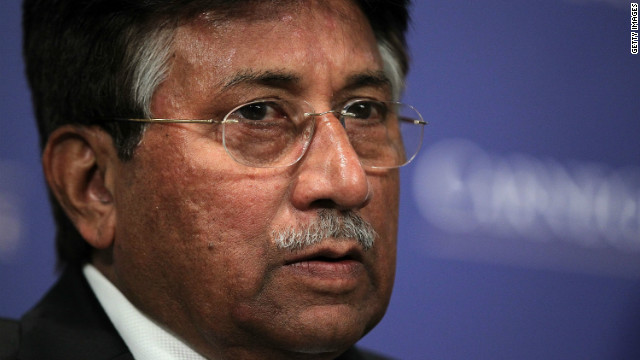
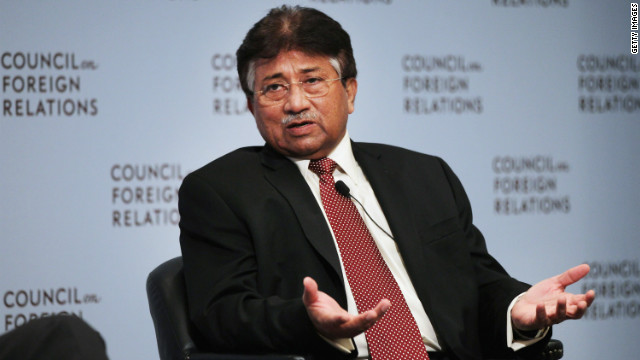
Pakistani authorities vowed Tuesday to use the international police agency Interpol to arrest former Pakistani President Pervez Musharraf in connection with the assassination of former Prime Minister Benazir Bhutto.

“The government is moving for his (Musharraf’s) red notice,” Interior Minister Rehman Malik said, referring to the Interpol’s international arrest warrant.

“We will get him through Interpol to Pakistan.”

Malik made the announcement as part of a progress report of the four-year-long assassination probe that was presented to provincial lawmakers Tuesday in Bhutto’s home province of Sindh. The briefing lasted several hours and was broadcast live on Pakistani TV.

Bhutto was assassinated in a gun-suicide attack in December 2007, shortly after she came back to Pakistan from self imposed exile to take part in the 2008 general elections.

Malik and the head of the investigation team said former Pakistani Taliban leader Baitullah Mehsud plotted the assassination and paid the equivalent of about $4,500 to a network of Islamist militants to carry out the killing.

Using a Power Point presentation, pictures and video to outline the evidence they had gathered, authorities said Mehsud had Bhutto killed because she supported the west’s war against Islamist militants. Investigators said they collected much of their evidence from the accused plotters’ cell phone records before and after the killing.

Last November a Pakistani court charged five alleged Islamist militants with aiding the suicide attacker and two senior police officers for failing to provide adequate security.

Musharraf has also been accused of failing to protect Bhutto. In February 2011 a judge issued an arrest warrant for Musharraf after he didn’t show up to court for questioning.

Musharraf has been in self-imposed exile ever since he left Paksitan in 2008. Last August authorities confiscated his property in Pakistan and froze his bank account. The former military ruler has denied having anything to do with Bhutto’s killing.

In Tuesday’s briefing Malik and investigators said Musharraf rejected Bhutto’s request to use a western private security contractor for protection when she returned to Pakistan. They suggested Musharraf intentionally left Bhutto vulnerable because he felt politically threatened by her return.

“It was the duty of the government to provide the prime minister with protection,” Malik yelled at one point. “Why did you not give security? What was the problem?”
Punishing Pakistan Is Not The Way To Go

By Nancy Birdall for Foreign Policy

In the January/February 2012 issue of Foreign Affairs, Stanford political scientist Stephen Krasner claims that “current U.S. policy toward Pakistan has failed” and recommends that the United States take a radically different approach: credibly threaten to sever all forms of cooperation, including all U.S. aid – military and civilian – to force Pakistan into cooperating with the United States on security matters. Center for Global Development President Nancy Birdsall responds.

Stephen Krasner (“Talk Tough to Pakistan: How to End Islamabad’s Defiance,” Jan/Feb 2012) wants to change the Pakistani government’s behavior. He argues that its failure to cooperate with the United States on Afghanistan and on terrorism is not due to its weakness as a state. Instead, it is a rational response of Pakistan’s military leadership, whose priority is to defend itself against India – with a nuclear deterrent and support for terrorists and the Afghan Taliban. Therefore, the only way the United States can win cooperation from Pakistan is to threaten “malign neglect”- cut off military and civilian assistance, sever intelligence cooperation, maintain and possibly escalate drone strikes and initiate unilateral cross-border raids. If that isn’t enough, then the U.S. could move on to “active isolation” — declare Pakistan a state sponsor of terrorism, making it a pariah, and impose sanctions.

If only it were this easy. Krasner fails to mention that the U.S. has tried this approach before. In the 1990s it cut off military and civilian assistance to Pakistan and imposed sanctions in an effort to dissuade Pakistan from developing a nuclear capability. We all know how that story ended. But let’s suppose this time the threats or the follow-through worked and brought the military and intelligence establishment to heel in Pakistan. Let’s suppose the United States got what it wanted on the security front – helping assure a timely U.S and NATO withdrawal from Afghanistan. Would that solve the problem Pakistan poses for America’s security in the long run? No.

What Krasner doesn’t say is that the U.S. wants something more than compliance from Pakistan’s military and intelligence communities with its immediate security needs. The U.S. wants a capable and stable civilian government that plays by the rules of the international community. It wants a democratic state that would not abuse and misuse its nuclear capability and that would find its way to peaceful relations with India.

In other words the U.S. has a long-run vision for Pakistan, very much in its own interests, as well as a set of short-term demands. In the 2009 Enhanced Partnership with Pakistan Act (known as Kerry-Lugar Berman, or KLB) Congress recognized the resulting need for a two-track approach. That legislation made U.S. security assistance (not actually authorized in the legislation) conditional on Pakistani cooperation on security matters. But its fundamental purpose, and the money it authorized for civilian aid, was the rebuilding of a serious partnership with the civilian government and the people of Pakistan. With KLB as the framework, since 2009 the Obama Administration has engaged fully with the civilian government and with civil society and private sector leaders in Pakistan on a range of issues — energy, water, agriculture, macroeconomic issues, private investment and trade.

In short, the purpose of U.S. civilian aid to Pakistan is to help build a better state. It is not to bribe or reward the “government” (neither the military nor the civilian leadership). Withholding military aid would likely not punish the military anyway. It would, however, reduce the resources available to the civilian government, since the evidence is that the military can get what it wants from the government’s overall available resources. And withholding civilian aid obviously would not punish the military. It would, however, take away a modest tool of America – investing to educate kids, create jobs, and strengthen civil society and representative institutions and thus give Pakistan a better shot at becoming a stable, prosperous and democratic country in the long term.

There are of course real questions about the effectiveness of U.S engagement with the civilian government – with aid and dialogue – given the prevailing suspicion there of U.S. motives, the inherent difficulties of operating in a complex and insecure environment, and the bureaucratic shortcomings of the U.S. aid system itself. But then those are reasons to put relatively more emphasis on other forms of engagement: trade, investment, and encouraging the normalization of relations with India. They do not warrant bullying the weak civilian government that the U.S. wants to strengthen.

Krasner begins and ends his article by invoking the testimony of former chairman of the Joint Chiefs of Staff Admiral Mike Mullen during his last appearance before the Senate Armed Services Committee. Krasner is right in pointing out that Mullen was critical of Pakistan’s role in supporting extremist organizations and the need to get tough with Pakistan. Yet, Krasner fails to mention the conclusion Mullen reached in his statement. Mullen recognized that the U.S. has a variety of objectives in Pakistan and the region, and that by focusing too intensely on short term interests, the U.S. will end up short-changing itself over the long haul: “We must also move beyond counter-terrorism to address long-term foundations of Pakistan’s success – to help the Pakistanis find realistic and productive ways to achieve their aspirations of prosperity and security.” Mullen concludes, “Isolating the people of Pakistan from the world right now would be counter-productive.”

Nancy Birdsall is the founding president of the Center for Global Development, a Washington, DC based think tank.

Pakistani Doctor Helped U.S. Track Bin Laden, Panetta says

By Saeed Shah for McClatchy Newspapers

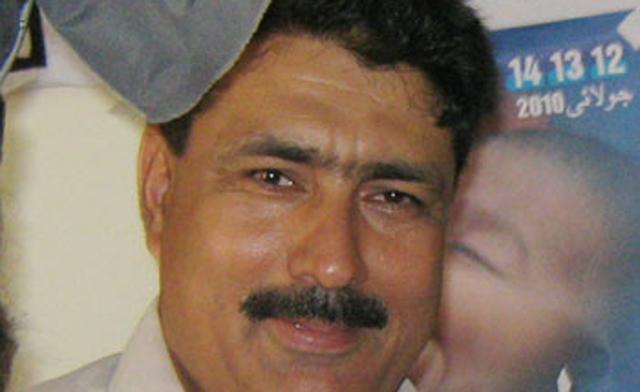
A senior American official has for the first time admitted that a Pakistani doctor played a key role in tracking Osama bin Laden to his hideout in northern Pakistan, and called for his release.

The comments by U.S. Defense Secretary Leon Panetta were the first public confirmation of a part of the bin Laden operation reported by McClatchy Newspapers in July, about how the CIA used Shakil Afridi to try to establish whether the al-Qaida leader was really living in a large house in Abbottabad, northern Pakistan.

This morning in Islamabad, Pakistan’s Inquiry Commission on the Abbottabad Operation issued an order to charge Afridi with treason, local media reported. The timing makes it appear that Pakistan is rebuking Panetta for his public acknowledgement of Afridi’s role. Afridi has been in Pakistani custody since the country’s own spy agency, Inter Services Intelligence (ISI), learned of the secret task performed by the doctor, who set up a fake vaccination program in Abbottabad to get DNA samples from those staying at the compound.

The CIA was never certain that bin Laden was present in the house. Afridi worked for the American intelligence agency in the weeks leading up to the Navy SEALs raid on May 2, setting up an elaborate scheme that was supposedly going house to house to vaccinate residents in Abbottabad.

Panetta told CBS’ “60 Minutes” “I am very concerned about what the Pakistanis did with this individual (Afridi). This was an individual who, in fact, helped provide intelligence that was very helpful with regard to this operation.” Panetta also voiced his belief that elements within Pakistan must have known that bin Laden, or at least someone significant, was present inside the compound. The interview was posted on the “60 Minutes” website. However, it was not included in the segment telecast on Sunday night. The McClatchy investigation discovered that Afridi was arrested by the ISI in late May and was tortured. It is believed that he remains in the custody of the intelligence agency, which is part of the military.

The whereabouts of Afridi’s family, including his American wife of Pakistani origin, is still unknown. The fate of the doctor has become another source of tension between Islamabad and Washington, with American officials pressing Pakistan to free him so he and his family can be resettled in the United States.

The military, which will decide what happens to Afridi, is furious that the CIA recruited Pakistani citizens for clandestine operations inside the country. Privately, officials point out that it is a crime to work for a foreign intelligence agency.
The doctor has turned into a bargaining chip in the failing U.S-Pakistan alliance. It is thought that Pakistan will let him go after public attention on the case wanes and it gets something in return from the U.S. “He was not in any way treasonous towards Pakistan. He was not in any way doing anything that would have undermined Pakistan,” Panetta told “60 Minutes.”

“Pakistan and the U.S. have a common cause here against terrorism,” he said. “And for them to take this kind of action against somebody who was helping to go after terrorism, I just think it is a real mistake on their part.”
Panetta, who was in charge of the CIA at the time of the bin Laden raid, also said that while there was no evidence of Pakistani complicity in keeping the al-Qaida chief, suspicions must have been raised about his hideout. “I personally have always felt that somebody must have had some sense of what was happening at this compound. Don’t forget, this compound had 18-foot walls. … It was the largest compound in the area.

“So you would have thought that somebody would have asked the question, ‘What the hell’s going on there?'” Panetta said.
But asked whether he knew for sure that Pakistan was aware of bin Laden’s presence, he said: “I don’t have any hard evidence, so I can’t say it for a fact.”

Boxer Amir Khan and Faryal Makhdoom getting engaged on January 29th, 2012

By Ahmed Babar for News Pakistan

Amir Iqbal Khan is undoubtedly one of the top sports face of the current decade. The lightweight division champ although represents Britain in the ring but his Pakistani ethnicity is the main reason behind his immense popularity in this region.

The former unified WBA and IBF light welterweight champion has finally decided to settle down with his to be fiancee, Faryal Makhdoom. The couple are planning to get engaged on January 29th, 2012 as the boxer revealed that he has spent an amount
of £100,000 on a diamond-studded ring for Faryal.

The 25-year-old who is quite active through his twitter page has also briefed that almost a thousand guests are expected on the wedding. Some of the top names on the guest lists read, Wayne Rooney, Rio Ferdinand, Ricky Hatton and David Haye.

Khan commented on Faryal “A lot of girls back home have said to me, ‘Your girl is beautiful’ — and that’s great because people can be so jealous. But Faryal is so humble. Anybody who meets her is going to fall in love with her. She’s
got no edge; she’s just a terrific person”.

Faryal, 20, on the other hand also holds high traditional values, ” I’m very family oriented even though I was born and raised in New York but my grandparents are in Pakistan – and a lot of my dad’s family are there”, she briefed.

She will be flying to England on Friday for the engagement party and will also spend a week with her husband-to-be and Amir will be more than happy to show her around Bolton.

He quoted, “I’m going to introduce her to a pasty barm, fish and chips – maybe even an ice cream if she’s lucky! I might also try to squeeze in a Bolton match just so that she cans see the venue before the big day – and make sure she likes it”.

Faryal revealed that the relationship went through the toughest phase in the beginning as she found it very hard to understand Amir’s Bolton accent.

She cited, “In the beginning I really couldn’t understand him. I was used to London accents and thought that’s how everyone spoke in Britain. But when Amir opened his mouth it was as if he was speaking a foreign tongue – so I just used to nod, agree with
whatever he was talking about and say, ‘Yeah’. “

She also briefed that Amir used the words like ‘daft’ and ‘innit’ and she had no idea what they meant. The gap between the two broke when Faryal visited Amir’s family in Bolton and spent time with his cousins.

One little difficulty that Khan might face is that Faryal does not like him inside the ring, “I never want to watch him fight live. I just couldn’t because I wouldn’t want to see him get hurt. After his last fight I started crying when I saw him. I just
can’t bear to see him like that and I don’t think I ever will”, she explained.

The couple are planning to settle down in Bolton and Faryal has no problem in leaving New York to spend the rest of her life with the youngest British World Champion ever.

By Ahmed Babar for News Pakistan

Pakistanis for Peace Editor’s Note– Marriage is a huge undertaking that requires a lifelong commitment and bond. When the love and understanding between two people is such that they become one, then it is truly one of the most rewarding relationships that a person can have with another human being. We wish Amir and Faryal much happiness in this new journey as a soon to be married couple and joined together as husband and wife in sacred matrimony.

World’s Youngest Microsoft Prodigy Arfa Laid to Rest

By Tariq Butt for The Gulf Today

Funeral prayers of the world’s youngest Microsoft Certified Professional (MCP) Arfa Karim Randhawa, who passed away on Saturday night after protracted illness, were held in Lahore on Sunday.

The prayers, held in Cavalry Ground, were attended by Punjab Chief Minister Shahbaz Sharif and her close family members. Her coffin was draped in the national flag. She was 16. The teenage genius suffered an attack.

She got recognition and became her a source of inspiration for young and old across Pakistan. Arfa had an epileptic attack on Dec.22 and had been in a coma since.

Well-wishers prayed and watched her progress closely.

On Dec.29, doctors said there was no hope for her survival, and that her life support could be switched off any time. However, she had then miraculously responded to certain stimuli, as recently as Jan.13.

Two more funeral prayers will be held for Arfa, one in Faislabad and another in her ancestral village where she is to be buried.

As Pakistanis mourned the loss of the child prodigy, President Asif Ali Zardari and Prime Minister Yousuf Raza Gilani also expressed their grief and sorrow over the sad demise of Arfa. They prayed to Allah Almighty to rest the departed soul in eternal peace and grant courage to the bereaved family to bear the loss with fortitude.

Jamaat-e-Islami head Syed Munawar Hasan expressed grief at the death.

Muttahida Qaumi Movement chief Altaf Hussain said that Pakistan has lost “precious talent” in Arfa. He expressed grief at Arfa’s demise and has sympathised with the bereaved family members and prayed for Arfa’s soul.

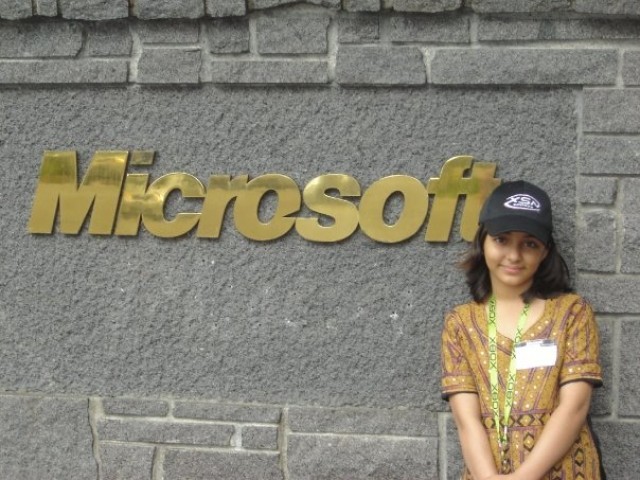
Arfa became the world’s youngest Microsoft certified professional in 2004 at the age of nine. She was also invited to the Microsoft headquarters in the US by Bill Gates for being the world’s youngest MCP.

Gates had also offered to conduct the child legend’s treatment in the US, but the doctors advised against transporting her to the US due to the risk involved. However, the doctors continued her treatment in consultation with specialists in the United States.

Arfa had earned the Fatima Jinnah Gold Medal in the field of science and technology and the Salam Pakistan Youth Award in 2005 for her achievements. She is also the youngest recipient of the President’s Award for Pride of Performance.

She earned her first flight certificate by flying a plane at a flying club in Dubai at the age of 10, and was invited by Microsoft in 2006 to be a keynote speaker at the Tech-Ed Developers Conference, where she was the only Pakistani among over 5,000 developers.

Arfa represented her country Pakistan on a variety of international forum. She was also included as the honourable guest by IT Professionals of Dubai for two weeks stay in Dubai. During that trip, Arfa was awarded by a number of medals and awards from various tech societies and computer companies working in Dubai.

Arfa was a genius who had left an indelible mark on the international IT scene, winning millions of hearts in Pakistan and abroad for her excellence. The death of the child sensation had left millions of people, along with her family, relatives and friends, grieved over this national tragedy.

Musharraf Announces He Will Return to Pakistan Late This Month

By Nasir Habib for CNN

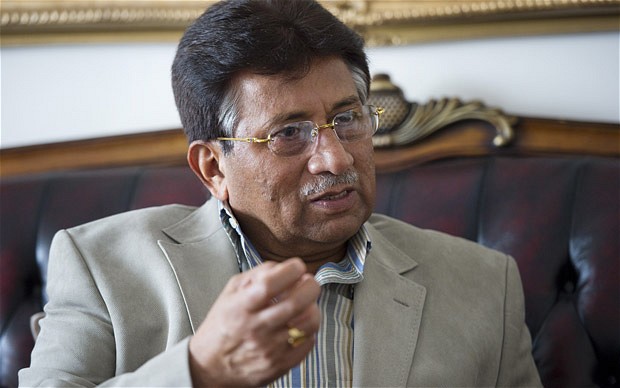
Former Pakistani President Pervez Musharraf pledged in a speech Sunday to return to his country later this month, despite word from authorities that he will be arrested when he does so.

“I am coming, Pakistan,” Musharraf told thousands of supporters via video link in the southern city of Karachi. “Attempts have been made to scare me, but I am not afraid of anything.”
He pledged to return between January 27 and 30.

When he does, Pakistani officials said, Musharraf will be arrested in connection with the assassination of former Prime Minister Benazir Bhutto in 2007. Chaudhry Zulfiqar Ali, a special public prosecutor in the assassination case, said a Rawalpindi court has already issued an arrest warrant for Musharraf.

“They are bound to execute the order unless a higher court sets aside the orders,” Ali said, adding that Musharraf is accused of conspiring in the assassination.

Musharraf’s attorney, Chaudry Faisal, said the threat of arrest is politically motivated and has no legal bearing. The warrant is being challenged in court, the attorney said.

He described the claim that Musharraf could be arrested at any time upon return as “absurd.” The former president said Sunday that he will return even at the risk of his life.

Musharraf, who resigned in 2008, is expected to fly into Pakistan from the United Arab Emirates later this month, accompanied by up to 500 supporters, said Jawed Siddiqi, spokesman for the former president’s All Pakistan Muslim League party.

“President Musharraf told me that although the possibility of arrest is there — there is no way of knowing what will happen, and how dangerous the situation is, until one jumps into the situation head first,” he said. Elections are set to take place in Pakistan next year; Musharraf intends to run.

On Sunday, he told Pakistanis that other politicians have failed leading the country, but “I succeeded 100%.”

“When I took charge of the country, it was surrounded in huge problems,” he said. “… Today, we have to decide whether we need change or we need the same faces.”

Terrorism in Pakistan, he said, “is at its peak. We are alone in the world.” He said he restored Pakistan’s economic development, increased its global standing and strengthened the armed forces.

Musharraf resigned in 2008 as the country’s ruling coalition began taking steps to impeach him. He was succeeded by Asif Zardari, Bhutto’s widower.
In 2010, the United Nations released a report that said Musharraf’s government had failed to protect Bhutto before her 2007 assassination. Musharraf has rejected such accusations, saying that Bhutto had police protection and took unnecessary risks.

Bhutto’s assassination turned public opinion strongly against Musharraf in 2008 and led to his resignation and self-exile in London. In 2010, Musharraf said the timing of his return to Pakistan would depend on the environment there.

“My going back is dependent, certainly, on an environment to be created in Pakistan and also, I would say, with certainty, that whenever the signs of the next election comes up, I will be there in Pakistan,” he said.

Pervez Musharraf to Announce Date for Return to Pakistan

By Duncan Gardham for The Telegraph

Mr Musharraf will announce his intention to return from London where has been living in exile despite facing arrest on treason charges. “His return will be announced by video link at a rally in Karachi on Sunday,” a source close to the former president told the Daily Telegraph.

He is planning to fly back to Pakistan by the end of January, plunging himself into a political crisis amid reports of an early general election and rumors the military is on the brink of mounting a coup.

The government and army are at loggerhead trading allegations over a memo allegedly sent to US military chiefs by senior officials asking for support to reduce military influence. Yusuf Gilani, the country’s prime minister, has said publicly Pakistan’s generals are behaving as though they were a “state within a state”.

As rumours of a coup gathered speed, Asif Zardari, the country’s president, has been forced to fly back to Pakistan from Dubai where he was receiving treatment for “stroke-like symptoms”.

General Ashfaq Kayani, the head of the Pakistan army, rejected coup claims, insisting the army would “continue to support the democratic process”.
However the military distrusts both Mr Zardari and the rival Pakistan Muslim League-N, headed by Nawaz Sharif, the prime minister deposed by Mr Musharraf.

Political analysts believe the army command want to back an outside campaign in the elections but it is unclear if Mr Musharraf fits the bill.
While there has been some support to “bring back the general,” Mr Musharraf was deeply unpopular by the time he was forced out of power four years ago.

In order to stage a return he would need political support from Middle Eastern countries to help persuade the government to drop the charges against
him.

However, there have been reports that the army is backing Imran Khan, the former Pakistan cricket captain who leads Tehreek-e-Insaf [the Movement for Justice] and has staged a series of popular rallies.

Mr Khan is a former supporter of Mr Musharraf who has since become one of his fiercest critics. Ahmed Rashid, a political commentator, said the country was facing a “multi-faceted crisis”, particularly with the economy, but he doubted Mr Musharraf could make a comeback. “I don’t think he has enough people supporting him and he would probably be arrested,” he said.

Mr Musharraf launched his own political party, the All Pakistan Muslim League, in London in June 2010 and told the Daily Telegraph last year: “Pakistan is suffering. The people are extremely alive now that something has to be done in Pakistan. The youth is alive, the educated middle class is alive, they are in a state of shock and dismay over the governance in Pakistan.”

He promised a party that was “capable, viable, honest and deliverable internationally.” “I am a person who believes if I try and if I’m failing, I will quit,” he added. “I have no qualms and no ego. I have governed Pakistan for nine years, very successfully and I have no further ambitions, personal ambitions, my ambition is Pakistan.” But it is unlikely that Mr Musharraf would be able to claim victory on his own and he admitted: “I am trying to create an entity which can be the third political alternative, whether alone or in coalition with some other like-minded parties.” Mr Zardari took over from Mr Musharraf as the country’s first elected leader in nine years following the assassination of his wife, Benazir Bhutto in December 2007.

However his party, the Pakistan People’s Party, has become increasingly unpopular as Pakistan faces a economic depression and copes with one crisis after another. The next government is likely to be decided by smaller parties and Mr Musharraf could play a crucial role in that decision.

Pakistan’s alleged ‘Washington lackey’ fears for life

By Aamir Qureshi for MSNBC

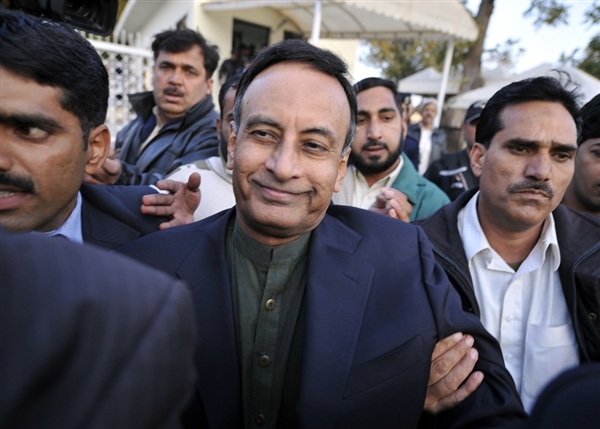
Pakistan’s former ambassador to the United States fears he will be murdered if he leaves the sanctuary of the prime minister’s official residence after he was branded a “Washington lackey” and a “traitor,” according to a new interview.

Speaking to The Daily Telegraph newspaper, Husain Haqqani said that “certain powerful quarters” in Pakistan — the paper said this was a reference to the country’s ISI intelligence agency — were behind the claims against him.

Haqqani is at the center of a scandal that threatens to topple Pakistan’s government over an alleged request to the U.S. to help stop a coup by the army, following the American raid that killed Osama bin Laden.

In October, a U.S. businessman of Pakistani origin, Mansoor Ijaz, wrote an article for the Financial Times newspaper claiming Haqqani had written a memo to U.S. Admiral Mike Mullen, who was then chairman of the joint chiefs of staff, supposedly promising to replace Pakistan’s national security hierarchy with people favorable to the U.S. in exchange for help in reining in the military.

Ijaz, who claimed he had been asked to convey the message to Mullen, further alleged that Pakistani President Asif Ali Zardari supported the move. The Financial Times operates behind a paywall, but Ijaz also wrote an article for Pakistan’s The News in November describing his allegations.

‘Hysteria’
Both Zardari and Haqqani denied Ijaz’s claims, but Haqqani subsequently resigned.

“I’m a guest of the prime minister (Yousuf Raza Gilani) with whom I have had a long-standing political association. There are clear security concerns given the hysteria generated against me. Staying at the prime minister’s house is the safest option,” Haqqani told the Telegraph in an interview published Wednesday.

“My good friend Salman Taseer (the late governor of Punjab) was killed by a security guard because he heard in the media that the governor had blasphemed. I’m being called a traitor and an American lackey in the media with the clear encouragement of certain powerful quarters even though I’ve not been charged legally with anything,” he added.

He said that he had left the prime minister’s house twice, once to go to court and another time to visit the dentist because he had toothache.

“The president and prime minister are firmly standing behind me and the government is not going anywhere. This is psychological warfare against the government,” he told the Telegraph.

In December, Zardari, who was married to former Prime Minister Benazir Bhutto, who was assassinated in 2007, said people should pay tribute to her memory by guarding against anti-democratic conspiracies, an apparent reference to tensions over the memo scandal.

He said his wife’s death was also a conspiracy against Pakistani democracy.

“I therefore urge all the democratic forces and the patriotic Pakistanis to foil all conspiracies against democracy and democratic institutions,” said Zardari in a statement sent to reporters.

Defining Terror: Better Late Than Never?

By Ahad Khan for EthanCasey.com

In his recent article “Home Free: Waging War on Ourselves,” Ethan Casey writes about what I know as “the American dream” or, as he calls it, “the ugly truth buried beneath the manicured lawns of the American suburbs.”

As a person of Pakistani heritage, I didn’t need help to notice the near exact parallel between the history of black people in America on one hand, and the plight of the U.S. government’s ghosts somewhere in “Afpakistan” on the other. I am talking about the victims of America’s drone war in the “Af-Pak” border region, home to the folks who supposedly hate the American way of life (courtesy U.S. presidents of the past decade). If we are to believe their advocates, Predator drones are so advanced that they even have their own conscience. You don’t have to worry about them mistakenly firing on women and children alike.

Our world’s affairs have arrived at a confusing point. Wars between different countries, overt and covert, increasingly appear to be conflicts between civilizations. I should not say that we can’t tell where it may lead us during the course of our own generation. History has clearly taught us time and again that struggles for freedom become inevitable wherever people are forced to live with a feeling of being suppressed. It was just such a struggle that gave birth to an America that dreamt of liberty and justice for all. It was such a struggle that solemnized the rights of the black people of America, through the brilliance of heroes like Martin Luther King and Malcolm X.

It was that same struggle that led to the creation of Pakistan, by a nation of people that – like black Americans – had grown sick and tired of being denied equal treatment in their own society. It is this freedom that we, as human beings, have shown to hold so dear, that it has served to justify our restless campaigns for the rights we demanded to live in honour and dignity.

It is no less amazing what man would do to defend what he perceives to be his freedom, or any symbol that represents it. While it still holds true that the horrific events of 9/11 raised more questions than answers (technically speaking), who would dare to challenge the notion that the USA was dealt a devastating blow to its core beliefs? To repair America’s presumably unshakeable spirit of justice, someone was going to have to pay. A determined U.S. military thus engaged in a worldwide war on ‘terror’. Over a decade later, we find the same forces holed up in Afghanistan, unwelcome and surrounded from all directions. Their enemies (those that were meant to be paid back) are stronger than they were at any point during the course of the war and easily project effective control over most of the country. The lack of a clearly defined war strategy is just one rampant example out of many to show how American leadership is completely clueless about what it’s doing there. But at least bin Laden’s dead. Mission accomplished, whatever it’s been.

As the world looks at its old ally today – they who slammed the lid on Hitler’s coffin – it’s been curious to know what the USA really aims to achieve. As America’s government continues to pursue ‘the terrorists’, it has made that country itself into the biggest victim of terror. Before anyone jumps me for contradicting other countries’ body counts: terror succeeds where people allow themselves to be terrorized; you can’t terrorize the dead. Thus, in my humble opinion, the primary victims of terror are not those that are now laid to rest in their graves; they’re the people amongst us who are ready to sacrifice their freedom for the sake of the mirage that’s presented as “threats to national security.” Those who refused to come to terms with their defeat once, failing to learn from it, are thereby damned to fail in future.

In my humble opinion the Obama administration does know that it had failed, long before the latest breakdown in relations with Pakistan after Pakistani soldiers were attacked without reason. When was the last time you heard any U.S. government official tell the world that they’re trying to “win the hearts of minds” of people on the other side of the world? They never intended to bomb their hearts and minds out, it depends on the means chosen to aim at the target. The tendencies that champion the death sentence as a means for the sake of internal security, favor the use of drones when it comes to external security.

As much as we’ve suffered as Pakistanis under America’s misleading wars, I can’t help but feel sorry for America. As this great nation’s ideology is its biggest victim of war, the defeat couldn’t be greater. The rampant paranoia at present about hunting “terrorists” does not represent the example America gave to the rest of the world in the course of the previous century. Sadly, most of our generation will remember it by the images of a shoe-throwing Iraqi journalist. Pakistan and the emerging Arab nations will learn what democracy is on their own. They’ll take an example in future of what happened in America when people allowed themselves to be governed by fear instead of by a determined leadership. Justice will be sought and found, even by some of those people that the knights of freedom would describe as terrorists.

Ahad Khan is a Dutch Pakistani whose parents hail from Karachi. A health management student from Erasmus University in Rotterdam, he’s a dental practice manager in everyday life.

Imran Khan’s rally defies Pak’s ruling party

As Reported by IBN Live

Pakistan’s former cricketer-turned-politician Imran Khan brought at least 100,000 people into the streets of Karachi on Sunday in a massive rally that increases pressure on the civilian government and cements his standing as a political force.

Khan, 59, is riding a wave of dissatisfaction with the government of President Asif Ali Zardari, who co-chairs the ruling Pakistan People’s Party, and is facing challenges from the military, the Supreme Court and political opponents after a year of cascading crises.

Police estimated the rally had been attended by between 100,000 and 150,000 people. Khan’s Pakistan Tehreek-i-Insaaf, or Pakistan Movement for Justice, estimated the crowd at more than 500,000.

Even at the lower estimate, it is among the largest political rallies held in Karachi in recent years.

Khan, in a rousing speech punctuated with patriotic musical refrains, pledged, if elected, to curb Pakistan’s endemic corruption.

“We need a government that changes the system and ends corruption, so we need the PTI to come to power,” Khan told the crowd. “The first thing we need to do is end corruption.”

“I promise we will end big corruption in 90 days,” he added.

Khan’s massive rally comes at a time of crisis in Pakistani politics. Tensions are rising between Pakistan’s civilian leaders and its generals over a memo that accused the Army of plotting a coup after the US raid that killed Osama bin Laden in May.

There are signs that Pakistan’s powerful Army is fed up with Zardari and wants the Supreme Court or early elections to force him from office. The Army chief dismissed any rumours of a coup, however, as “speculation”.

“It’s time for a change and only PTI and Imran Khan can bring about that change,” said Sabina Saifi, 28, a school teacher. She was wearing a PTI cap and had come with her two brothers.

Several recent polls have shown Khan is Pakistan’s most popular politician. He is especially favoured in urban areas.

“He is riding a wave of popular politics right now,” said Mutahir Ahmed, a professor of International Relations at the University of Karachi. “There is a lot of frustration among ordinary people, as well as political workers right now, which he is cashing on.”

On October 30, Khan staged a similar rally in Lahore that observers said pulled between 100,000 and 200,000 people, then one of the largest political rallies ever in Pakistan.

“He has… managed to bring people out on the roads, and this is a big achievement, especially in Karachi, where three months back people were not ready to come out of their houses because of rampant violence and killings,” Ahmed said.

But popularity doesn’t always translate into political power. The majority of Pakistan’s voters are rural, where feudal relationships determine generations of political loyalty.

Khan, for all the enthusiasm shown for him among young people and the urban middle class, has yet to demonstrate the party machinery that the PPP and the Pakistan Muslim League-N faction have had decades to perfect.

In the last 15 years, the PTI has only briefly held one seat in Parliament – Khan’s. Most analysts say Khan could score an upset of 20 to 30 seats in Parliament, but that’s not enough to give him the premiership. It is enough to make him a major political player, however – or even a kingmaker.

“It’s too premature to get into speculation of whether he becomes prime minister or not but the chances of his party getting into Parliament look very good,” said security analyst Imtiaz Gul.

He also has a touchy relationship with the United States, Pakistan’s ally and aid donor.

He says that if elected prime minister, he would end cooperation in the fight against militants based in tribal areas, end the covert campaign of bombings by US drones and refuse all US aid, which totals some $20 billion since 2001.

Relations with the United States have reached a crisis point because of a November 26 cross-border incident in which NATO aircraft killed 24 Pakistani troops. Pakistan has since shut down NATO supply routes into Afghanistan and demanded an apology.

NATO’s full report on the incident, which Pakistan has already rejected based on media leaks, is expected to be released on Monday. It reportedly faults both sides in the incident.

Khan’s anti-American stance is often thought to reflect the views of the security establishment, which includes the powerful Army and its Directorate of Inter-Services Intelligence.

The US ambassador to Pakistan, Cameron Munter, however, said in November that he didn’t see Khan as anti-American.

“Imran Khan is, as far as he tells me, for the same kind of values that we think are important,” Munter said on a popular talk show on November 22. “He says he’s for democracy, he’s for governance that’s clean, he’s for economic growth. We’re all for those things.”

Pakistan Military Denies Conspiracy to Seize Power

By Salman Masood for The New York Times

The military command in Pakistan issued an unusual refutation on Friday of rumors that it was planning to take power, publicizing a pledge by the top general that it is committed to democracy a day after the prime minister warned of conspiracies to subvert the civilian government.

But the pledge, by Gen. Ashfaq Parvez Kayani, did little to assuage anxieties about a possible coup in a country with a history of military interventions. The anxieties were reinforced on Thursday by an extraordinary outburst about just such a possibility from the normally soft-spoken prime minister, Yusuf Raza Gilani, who also said the military generals in Pakistan behaved as though they were “a state within a state” and that they should be accountable to Parliament.

“The army will continue to support democratic process in the country,” General Kayani was quoted as saying in a statement issued by the military command. It said General Kayani had made that pledge on Thursday as he visited troops stationed in the northwestern regions of Mohmand and Kurram.

General Kayani “dispelled the speculations of any military takeover and said that these are misleading and are being used as a bogey to divert the focus from the real issues,” according to the statement by the military.

However, General Kayani stressed that “there can be no compromise on national security,” alluding to the differences with the civilian government over investigations into a contentious memo that suggested the civilian government had sought help from the United States in trying to constrain the Pakistani military.

The public back-and-forth came as the Pakistan military’s relations with the United States, already aggravated by the memo issue, have plunged to new lows over a deadly American-led airstrike on the Afghanistan-Pakistan border last month that killed 26 Pakistani soldiers. Pakistan’s military has rejected results of a Pentagon inquiry that said both sides were at fault but that Pakistani forces opened fire first. In a new sign of the Pakistani military’s anger, a senior official said Friday it had canceled a planned visit by the head of the United States Central Command, Gen. James Mattis, to brief his counterparts on the Pentagon inquiry.

The tensions over the memo began after Mansoor Ijaz, an American businessman of Pakistani origin, wrote an op-ed article for The Financial Times in October saying that a Pakistani diplomat had asked him to deliver a memo to Adm. Mike Mullen, who was chairman of the Joint Chiefs of Staff at the time, after American commandos killed Osama bin Laden in a May raid on a Pakistan safe house. That raid, which deeply embarrassed Pakistan, raised questions about whether Bin Laden, the most-wanted fugitive Al Qaeda plotter of the Sept. 11 attacks, had been protected by elements of Pakistan’s military and intelligence service. Mr. Ijaz described the memo as saying that the civilian government sought help in preventing a possible coup, offering in exchange to dismantle part of the intelligence service.

Since then, the ruling Pakistan Peoples Party and the powerful military have been arguing over the veracity of the memo , which is seen as authentic by the military and as a conspiracy by the civilian government.

Husain Haqqani, the former ambassador to the United States, was forced to resign in November after allegations that he had orchestrated the memo, a charge he denies. Mr. Haqqani returned to the country and is barred from traveling abroad, a step seen as a violation of his fundamental rights, according to his lawyer.

The top generals have urged the country’s Supreme Court to investigate the origins of the memo. Chief Justice Iftikhar Muhammad Chaudhry said Friday that the court is pursuing those investigations but that it would not validate any army coup.

The statements by both Mr. Gilani and General Kayani signified that deep mistrust and tensions exist between the two sides.

“Things don’t look stable at all,” said Enver Baig, a former senator, who predicted that the “civil-military relations will not settle down peacefully.”

Pakistan Most-Deadly Nation for Journalists

As Reported by The Wall Street Journal

Seven journalists died in Pakistan during the year in direct relation to their work, out of a total of 43 journalist killed worldwide in the year, the report said.

There were no deaths in India, after one killing in 2010. In 2008, four Indian journalists died either while covering the conflict in Kashmir or through target killings due to their investigations of criminal activities.

In combat zones such as Libya, where five journalists died in 2011 — the joint second-highest number with Iraq – the killings tend to be random, with reporters caught in the broader fighting. But Pakistan continues to suffer largely from target killings.

These deaths occur when a reporter has unearthed details about militancy or a business deal and is targeted to stop this information getting out. Five of the seven deaths in Pakistan were targeted killings and all remain unsolved, the CPJ said.

In the past five years, 29 journalists have died carrying out their work in Pakistan. Five journalists died in India during the same period.

The best-known case in Pakistan this year involved Saleem Shahzad, a reporter for Asia Times Online, who died in May after writing a report which alleged al Qaeda had infiltrated Pakistan’s navy.

Human Rights Watch, the New York-based advocacy group, said Mr. Shahzad before his death had complained of receiving threats from Pakistan’s Inter-Services Intelligence Directorate military spy agency. ISI officials deny the threats and any involvement in his killing. The case is unsolved.

“Long-term CPJ research shows Pakistan to be among the worst countries in the world in bringing the killers of journalists to justice,” the report said.

Five journalists also died in Iraq from both insurgent attacks and targeted killings, illustrating an entrenched level of violence there as the last U.S. forces pulled out the country at the weekend.

Three journalists died in Mexico, including the first case of a reporter killed for work on social media, the report said. Many of the dead had taken on Mexico’s powerful drug traffickers in their reports.

The Arab Spring revolutions across the Middle East and North Africa led to the first cases of journalist deaths in Syria and Tunisia since the CPJ began recording fatalities in 1992, the report said. The committee independently confirms that journalists died while covering their beats.

Pakistan PM Seeks to Dispel Rumors of Army Rift

By Chris Brummitt for Boston.com

Pakistan’s prime minister dismissed speculation of a rift between the government and the military over a secret memo sent to Washington seeking its help in averting a supposed military coup, saying the country was committed to democracy.

Political tensions have soared in recent days as the Supreme Court begins a hearing into the circumstance surrounding the memo. The absence of President Asif Ali Zardari, recovering from a likely “mini stroke” in his Dubai home with no word on his return, has only added to rumors that the current civilian administration is in possible fatal trouble.

Zardari’s plentiful critics are hoping the scandal will lead to his ouster, and delighted in portraying his trip to Dubai on Dec. 6 as a flight from the fallout from the memo. The president’s aides have denied that, and most independent analysts believe the veteran politician, who has outlasted numerous predictions of his demise since taking office in 2008, will ride it out.

Late Friday, Prime Minister Yousuf Raza Gilani met with army chief Gen. Ashfaq Pervez Kayani to discuss the memo.

Gilani said in a statement he rejected the nation of a “standoff” between the army and the government.

“The government of Pakistan and its institutions remain committed to their constitutional roles and obligations to a democratic and prosperous future for Pakistan,” he said.

Tensions between the army and the government could complicate American attempts to rebuild ties with a country seen by many U.S. officials as key to shepherding peace in Afghanistan. A raid by the U.S.-led coalition in Afghanistan in late November killed 24 Pakistani soldiers, hammering relations already strained by American suspicions that Islamabad is playing both sides in the Afghan war and virulent anti-U.S. sentiments inside Pakistan.

Pakistan has a long history of army coups or behind the scenes meddling by the generals to engineer pliant regimes, often with the support of the judiciary. That has left the country’s 180 million people specially receptive to the idea that the collapse of the government is just around the corner.

Are Pakistan’s Nuclear Weapons Secure?

Qaiser Farooq Gondal for The Washington Times

Pakistan is again facing the possibility of instability, raising concerns that its nuclear weapons are not in safe hands. Once again the ability of Pakistan’s army to secure the weapons is in doubt. The big powers of the world often ask whether Pakistan will be able to overcome this new danger or not. They also worry that if Pakistan suffers from instability, crisis will bleed over the border to Afghanistan.

After the 1979 Islamic revolution of Iran, the world was very much worried as to the spread of the effects of Iranian revolution to Pakistan. But 32 years after revolution in Iran, Pakistan is still safe and free from the effects of revolution in Iran.

In 1979, after the invasion of Afghanistan by the former USSR, alarmists feared that the Soviets would reach the hot waters of Arabian Sea. In fact, USSR did not threaten Pakistan, and it was because of Pakistan’s army that the USSR failed in Afghanistan and retreated back in 1989.

America has been concerned about the safety of Pakistan’s nuclear weapons since 2004, and there have been media reports that America has plans to send special security forces to safeguard the nuclear arsenal in case of instability in Pakistan. But America has denied any such reports and Pakistani authorities ridiculed the idea of US troops coming to the country to help safeguard nuclear weapons. Pakistan argues it can protect its own nuclear weapons, and earlier this month, the Pakistani government stated that it will train 8,000 additional troops to protect its nuclear weapons.

One major priority for the United States is to ensure that Pakistan’s nuclear weapons do not reach the hands of terrorists. Multiple attacks on Pakistani military facilities in recent years heightened those fears. In reality, none of the attacks were of any serious nature and all the culprits were captured and trialed in military courts.

China has played a major role in the development of Pakistani nuclear weapons, as the western countries made it impossible to export nuclear weapons and technology to Pakistan. China is also supporting Pakistan to construct institutes to generate nuclear energy as Pakistan is facing shortages of energy.

The main reason for acquiring nuclear weapons by Pakistan is to prevent any future attack by India. There has been no war between India and Pakistan since both the nations conducted nuclear tests and residents of both countries hope nuclear weapons will continue to deter any attacks.

Since 2001, the US has supplied Pakistan with about 100 million dollars to safeguard its nuclear weapons. Pakistan has developed a weapons release program which requires checks and balances. Pakistan is meeting the international standards in order to fulfill the international pressure over the issue of the security of its nuclear weapons.

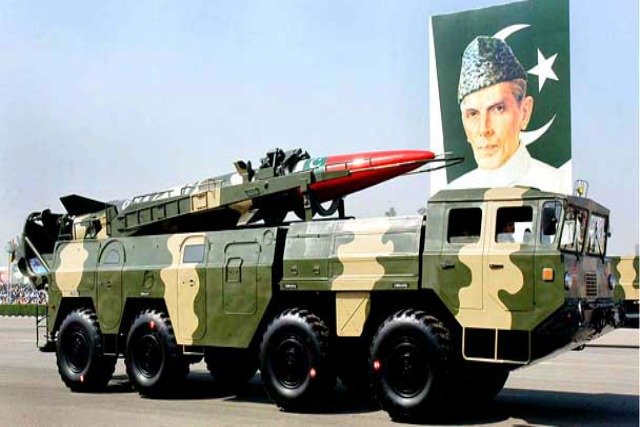
Pakistan has been developing strategies to survive a possible nuclear war, as it has developed hard and deeply buried nuclear launch facilities to retain a nuclear strike capability after a nuclear attack.

Pakistan is increasing its capacity to produce plutonium, a fuel for atomic bombs at its Khushab facility and is believed to have about 200 nuclear weapons.

In other words, despite continued Western fears, Pakistan retains firm control of its nuclear weapons. The country has taken extensive measures to safeguard them, and will continue to keep them out of the hands of terrorists. The US should stop worrying and trust Pakistan to secure its own weapons.

Virginia Man Admits Conspiring With Pakistan Spy Agency

By Tom Schoenberg for Bloomberg Businessweek

A Virginia man admitted to aiding what prosecutors said was a “decades-long” operation by Pakistan’s spy agency to influence U.S. policy on Kashmir through unregistered lobbying and campaign contributions to members of Congress.

Syed Ghulam Nabi Fai, 62, pleaded guilty today in federal court in Alexandria, Virginia, to one count of conspiracy to defraud the U.S. and one count of impeding the administration of tax laws. He faces as long as eight years in prison when he’s sentenced on March 9. U.S. District Judge Liam O’Grady agreed to let Fai remain free until sentencing.

Fai admitted to helping funnel at least $3.5 million from Pakistan’s government through the Washington-based Kashmiri American Council to sway the attitudes of U.S. lawmakers on the disputed territory with campaign contributions and other lobbying activities.

The council, which was headed by Fai at the time of his arrest in July, is “actually run” by elements of the Pakistani government, including Pakistan’s military intelligence service, the Inter-Services Intelligence Agency, or ISI, prosecutors said.

Pakistan and India, which have split control of the territory since 1948, fought wars over Kashmir in 1965 and 1999.

‘Paid Operative’

“For the last 20 years, Mr. Fai secretly took millions of dollars from Pakistani intelligence and lied about it to the U.S. government,” U.S. Attorney Neil MacBride said in a statement. “As a paid operative of ISI, he did the bidding of his handlers in Pakistan while he met with U.S. elected officials, funded high-profile conferences, and promoted the Kashmiri cause to decision-makers in Washington.”

Fai, a Pakistani immigrant and U.S. citizen living in Fairfax, Virginia, was charged in July with conspiracy to violate the Foreign Agents Registration Act and lying to federal agents. He was charged along with Zaheer Ahmad, 63, a U.S. citizen who remains at large, according to prosecutors. The pair failed to disclose their affiliation with Pakistan’s government as required by law, prosecutors said.

On Nov. 23, the government separated Fai’s case from Ahmad’s and added the charge of impeding the Internal Revenue Service.

As part of his plea, Fai agreed to pay about $200,000 to the IRS and forfeit about $143,000 the government seized from five bank accounts in Virginia and Washington, according to court papers. Fai also agreed to cooperate with any federal investigation.

Fai’s Admission

Fai said little during today’s plea hearing. He answered “No sir” when O’Grady asked if he disagreed with any of the information contained in the statement of facts submitted by the government outlining the conspiracy and his ties to the ISI.

Fai admitted that during an interview with Federal Bureau of Investigation agents in July, he “falsely denied” that he or the council received money from the ISI or the government of Pakistan, according to the statement of facts.

A search of Fai’s home, office and a storage facility turned up documents detailing the council’s Washington strategies, including budget requirements for contributions to members of Congress and trips to Kashmir for lawmakers, money for opinion pieces distributed to the media, as well as money for seminars and conferences, prosecutors said in a court filing. One document found in the search called for $100,000 for contributions to members of Congress in 2009, prosecutors said.

Annual Budget

Fai, who admitted the conspiracy took place from 1990 until July 18, said he submitted annual budget requests of about $500,000 to $700,000 to officials of the government of Pakistan, including the ISI.

Since the mid-1990s, Ahmad, an American living in Pakistan, has moved government funds through a network he ran to Fai and the council, which also has offices in London and Brussels, prosecutors said.

The council’s goal is to build support for Pakistani interests in Kashmir and offset lobbying by India over the disputed territory, the U.S. said in court papers.

Fai has donated more than $10,000 to federal politicians in the past five years, according to data compiled by the Washington-based Center for Responsive Politics.

Among his political contributions, Fai, in 2008 and again in 2010, gave $2,000 to U.S. Representative Dan Burton, an Indiana Republican, according to the center. He also gave $5,000 to the National Republican Senatorial Committee in 2006, followed by a $1,000 contribution in 2008. He gave $250 to President Barack Obama’s campaign in 2008 and $250 to the Democratic Senatorial Campaign Committee in 2009.

The case is U.S. v. Fai, 11-00561, U.S. District Court, Eastern District of Virginia (Alexandria).