Posts Tagged ‘ PPP ’

Pakistani Judges Press Premier to Defy President

By Salman Masood and Ismail Khan for The New York Times
The political and legal crisis in Pakistan took a new turn on Tuesday when the Supreme Court threatened to dismiss Prime Minister Yousaf Raza Gilani for failing to comply with court orders to reopen corruption cases against his political boss: President Asif Ali Zardari.

The latest pressure from the court compounds the problems of the governing Pakistan Peoples Party, already facing a political crisis over a controversial memo that sought United States support in thwarting a feared military coup.

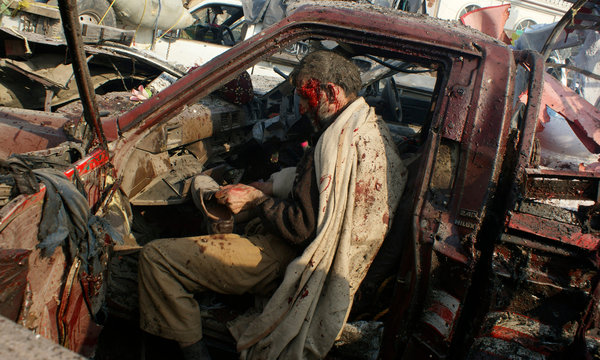
Adding to the government’s troubles is a steep increase in terrorist attacks. Another attack occurred early Tuesday, a truck bombing that the authorities said killed more than 25 people, including women and children, in northwestern Pakistan. A senior government official said the bombing appeared to be in retaliation for the recent killing of a militant leader.

Since December 2009, when the Supreme Court struck down an amnesty that nullified corruption charges against thousands of politicians, the court has insisted that the government reopen corruption cases against Mr. Zardari.

But the government has resisted court orders, and Mr. Zardari said last week that, “come what may,” officials from his party would not reopen the graft cases filed against him and his wife, Benazir Bhutto, in Switzerland. Ms. Bhutto was assassinated in 2007.

On Tuesday, a five-member panel of the Supreme Court, led by Justice Asif Saeed Khosa, ruled that the government was guilty of “willful disobedience” and said that Mr. Gilani was “dishonest” for failing to carry out the earlier court orders.

The judges laid out six options — including initiating contempt of court charges, dismissing the prime minister, forming a judicial commission and taking action against the president for violating his constitutional oath — and ordered the attorney general to explain the government’s position in court on Monday.

A three-member judicial commission that is investigating the controversial memo is scheduled to resume its hearing the same day. Apart from having an acrimonious relationship with the judiciary, the government has an uneasy relationship with the country’s top generals.

Mr. Zardari, who spent 11 years in prison on unproved corruption charges, says the corruption cases against him and Ms. Bhutto that date to the 1990s were politically motivated.

In an interview last week with GEO TV, a news network, Mr. Zardari said reopening those cases would be tantamount to “a trial of the grave” of his wife.

Mr. Zardari also claims immunity as president, but the judiciary, led by Chief Justice Iftikhar Muhammad Chaudhry, has resisted that claim and has aggressively pursued cases against Mr. Zardari’s party, leading many government officials to speculate that the judiciary was being used by the country’s powerful military to dismiss the government before the March elections for the Senate, in which the Pakistan Peoples Party is expected to win a majority.

Political analysts said the fate of Mr. Gilani, the prime minister, was in peril.

Mr. Zardari called a meeting of his party officials and coalition partners on Tuesday evening to chart strategy, and he was expected to get a statement of support from his allies.

“The situation is fast moving towards a head-on confrontation,” said Hasan Askari Rizvi, a political and military analyst based in Lahore. “It depends on what options are exercised by the Supreme Court.”

According to the Pakistani Constitution, a prime minister can be removed only by the Parliament, and the Supreme Court can disqualify the prime minister only indirectly, Mr. Rizvi said.

“If the court disqualifies the prime minister and the prime minister continues to enjoy the support of the Parliament, then the stage is set for a very dangerous confrontation,” he said.

The legal standoff is forcing the government to defer issues of greater importance, like rescuing a failing economy and fighting Taliban insurgents, as it focuses on its political survival, Mr. Rizvi said.

“The court, the military and the executive are trying to assert themselves,” he said. “It has become a free-for-all.”

There were no immediate claims of responsibility for the bombing on Tuesday, but it appeared to have been carried out by Tehrik-i-Taliban, an umbrella organization of Pakistani militant groups, against the Zakhakhel tribe, which has formed a militia in support of the government, said Mutahir Zeb, administrator for the Khyber tribal region.

Mr. Zeb said the Tehrik-i-Taliban sought to avenge the killing of Qari Kamran, a local Taliban commander, by security forces last week in an area occupied by the Zakhakhel.

Mr. Zeb said a pickup truck exploded in the middle of a bus terminal used by the Zakhakhel in the town of Jamrud.

The bomb destroyed several vehicles, damaged a nearby gasoline pump and shattered windows in the area. In addition to those killed, 27 people were reported wounded in the bombing and were taken to hospitals in Peshawar.

“I was on duty at the nearby checkpoint when I heard a big bang,” said Mir Gul, a security guard. “I rushed toward the spot and saw bodies lying around while the injured cried for help. It was devastating. There was blood everywhere.”

Pakistanis for Peace Editor’s Note-
The Pakistani people deserve better than this. The only solution to EVERYTHING that ails Pakistan is a true and long lasting peace with India. The sooner this dream becomes a reality, the sooner grim news of extremism and its grip on Pakistan will go away~
Pervez Musharraf to Announce Date for Return to Pakistan

By Duncan Gardham for The Telegraph

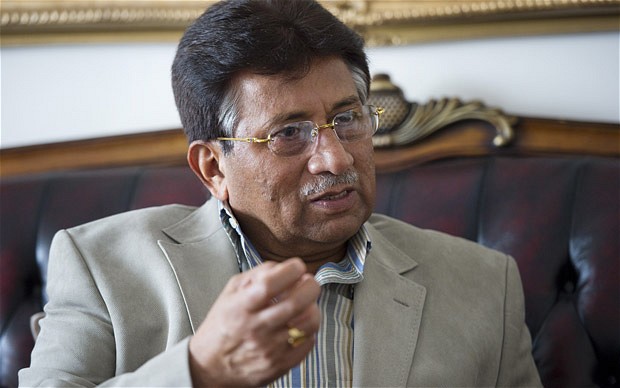
Mr Musharraf will announce his intention to return from London where has been living in exile despite facing arrest on treason charges. “His return will be announced by video link at a rally in Karachi on Sunday,” a source close to the former president told the Daily Telegraph.

He is planning to fly back to Pakistan by the end of January, plunging himself into a political crisis amid reports of an early general election and rumors the military is on the brink of mounting a coup.

The government and army are at loggerhead trading allegations over a memo allegedly sent to US military chiefs by senior officials asking for support to reduce military influence. Yusuf Gilani, the country’s prime minister, has said publicly Pakistan’s generals are behaving as though they were a “state within a state”.

As rumours of a coup gathered speed, Asif Zardari, the country’s president, has been forced to fly back to Pakistan from Dubai where he was receiving treatment for “stroke-like symptoms”.

General Ashfaq Kayani, the head of the Pakistan army, rejected coup claims, insisting the army would “continue to support the democratic process”.
However the military distrusts both Mr Zardari and the rival Pakistan Muslim League-N, headed by Nawaz Sharif, the prime minister deposed by Mr Musharraf.

Political analysts believe the army command want to back an outside campaign in the elections but it is unclear if Mr Musharraf fits the bill.
While there has been some support to “bring back the general,” Mr Musharraf was deeply unpopular by the time he was forced out of power four years ago.

In order to stage a return he would need political support from Middle Eastern countries to help persuade the government to drop the charges against
him.

However, there have been reports that the army is backing Imran Khan, the former Pakistan cricket captain who leads Tehreek-e-Insaf [the Movement for Justice] and has staged a series of popular rallies.

Mr Khan is a former supporter of Mr Musharraf who has since become one of his fiercest critics. Ahmed Rashid, a political commentator, said the country was facing a “multi-faceted crisis”, particularly with the economy, but he doubted Mr Musharraf could make a comeback. “I don’t think he has enough people supporting him and he would probably be arrested,” he said.

Mr Musharraf launched his own political party, the All Pakistan Muslim League, in London in June 2010 and told the Daily Telegraph last year: “Pakistan is suffering. The people are extremely alive now that something has to be done in Pakistan. The youth is alive, the educated middle class is alive, they are in a state of shock and dismay over the governance in Pakistan.”

He promised a party that was “capable, viable, honest and deliverable internationally.” “I am a person who believes if I try and if I’m failing, I will quit,” he added. “I have no qualms and no ego. I have governed Pakistan for nine years, very successfully and I have no further ambitions, personal ambitions, my ambition is Pakistan.” But it is unlikely that Mr Musharraf would be able to claim victory on his own and he admitted: “I am trying to create an entity which can be the third political alternative, whether alone or in coalition with some other like-minded parties.” Mr Zardari took over from Mr Musharraf as the country’s first elected leader in nine years following the assassination of his wife, Benazir Bhutto in December 2007.

However his party, the Pakistan People’s Party, has become increasingly unpopular as Pakistan faces a economic depression and copes with one crisis after another. The next government is likely to be decided by smaller parties and Mr Musharraf could play a crucial role in that decision.

Pakistan’s alleged ‘Washington lackey’ fears for life

By Aamir Qureshi for MSNBC

Pakistan’s former ambassador to the United States fears he will be murdered if he leaves the sanctuary of the prime minister’s official residence after he was branded a “Washington lackey” and a “traitor,” according to a new interview.

Speaking to The Daily Telegraph newspaper, Husain Haqqani said that “certain powerful quarters” in Pakistan — the paper said this was a reference to the country’s ISI intelligence agency — were behind the claims against him.

Haqqani is at the center of a scandal that threatens to topple Pakistan’s government over an alleged request to the U.S. to help stop a coup by the army, following the American raid that killed Osama bin Laden.

In October, a U.S. businessman of Pakistani origin, Mansoor Ijaz, wrote an article for the Financial Times newspaper claiming Haqqani had written a memo to U.S. Admiral Mike Mullen, who was then chairman of the joint chiefs of staff, supposedly promising to replace Pakistan’s national security hierarchy with people favorable to the U.S. in exchange for help in reining in the military.

Ijaz, who claimed he had been asked to convey the message to Mullen, further alleged that Pakistani President Asif Ali Zardari supported the move. The Financial Times operates behind a paywall, but Ijaz also wrote an article for Pakistan’s The News in November describing his allegations.

‘Hysteria’
Both Zardari and Haqqani denied Ijaz’s claims, but Haqqani subsequently resigned.

“I’m a guest of the prime minister (Yousuf Raza Gilani) with whom I have had a long-standing political association. There are clear security concerns given the hysteria generated against me. Staying at the prime minister’s house is the safest option,” Haqqani told the Telegraph in an interview published Wednesday.

“My good friend Salman Taseer (the late governor of Punjab) was killed by a security guard because he heard in the media that the governor had blasphemed. I’m being called a traitor and an American lackey in the media with the clear encouragement of certain powerful quarters even though I’ve not been charged legally with anything,” he added.

He said that he had left the prime minister’s house twice, once to go to court and another time to visit the dentist because he had toothache.

“The president and prime minister are firmly standing behind me and the government is not going anywhere. This is psychological warfare against the government,” he told the Telegraph.

In December, Zardari, who was married to former Prime Minister Benazir Bhutto, who was assassinated in 2007, said people should pay tribute to her memory by guarding against anti-democratic conspiracies, an apparent reference to tensions over the memo scandal.

He said his wife’s death was also a conspiracy against Pakistani democracy.

“I therefore urge all the democratic forces and the patriotic Pakistanis to foil all conspiracies against democracy and democratic institutions,” said Zardari in a statement sent to reporters.

Imran Khan’s rally defies Pak’s ruling party

As Reported by IBN Live

Pakistan’s former cricketer-turned-politician Imran Khan brought at least 100,000 people into the streets of Karachi on Sunday in a massive rally that increases pressure on the civilian government and cements his standing as a political force.

Khan, 59, is riding a wave of dissatisfaction with the government of President Asif Ali Zardari, who co-chairs the ruling Pakistan People’s Party, and is facing challenges from the military, the Supreme Court and political opponents after a year of cascading crises.

Police estimated the rally had been attended by between 100,000 and 150,000 people. Khan’s Pakistan Tehreek-i-Insaaf, or Pakistan Movement for Justice, estimated the crowd at more than 500,000.

Even at the lower estimate, it is among the largest political rallies held in Karachi in recent years.

Khan, in a rousing speech punctuated with patriotic musical refrains, pledged, if elected, to curb Pakistan’s endemic corruption.

“We need a government that changes the system and ends corruption, so we need the PTI to come to power,” Khan told the crowd. “The first thing we need to do is end corruption.”

“I promise we will end big corruption in 90 days,” he added.

Khan’s massive rally comes at a time of crisis in Pakistani politics. Tensions are rising between Pakistan’s civilian leaders and its generals over a memo that accused the Army of plotting a coup after the US raid that killed Osama bin Laden in May.

There are signs that Pakistan’s powerful Army is fed up with Zardari and wants the Supreme Court or early elections to force him from office. The Army chief dismissed any rumours of a coup, however, as “speculation”.

“It’s time for a change and only PTI and Imran Khan can bring about that change,” said Sabina Saifi, 28, a school teacher. She was wearing a PTI cap and had come with her two brothers.

Several recent polls have shown Khan is Pakistan’s most popular politician. He is especially favoured in urban areas.

“He is riding a wave of popular politics right now,” said Mutahir Ahmed, a professor of International Relations at the University of Karachi. “There is a lot of frustration among ordinary people, as well as political workers right now, which he is cashing on.”

On October 30, Khan staged a similar rally in Lahore that observers said pulled between 100,000 and 200,000 people, then one of the largest political rallies ever in Pakistan.

“He has… managed to bring people out on the roads, and this is a big achievement, especially in Karachi, where three months back people were not ready to come out of their houses because of rampant violence and killings,” Ahmed said.

But popularity doesn’t always translate into political power. The majority of Pakistan’s voters are rural, where feudal relationships determine generations of political loyalty.

Khan, for all the enthusiasm shown for him among young people and the urban middle class, has yet to demonstrate the party machinery that the PPP and the Pakistan Muslim League-N faction have had decades to perfect.

In the last 15 years, the PTI has only briefly held one seat in Parliament – Khan’s. Most analysts say Khan could score an upset of 20 to 30 seats in Parliament, but that’s not enough to give him the premiership. It is enough to make him a major political player, however – or even a kingmaker.

“It’s too premature to get into speculation of whether he becomes prime minister or not but the chances of his party getting into Parliament look very good,” said security analyst Imtiaz Gul.

He also has a touchy relationship with the United States, Pakistan’s ally and aid donor.

He says that if elected prime minister, he would end cooperation in the fight against militants based in tribal areas, end the covert campaign of bombings by US drones and refuse all US aid, which totals some $20 billion since 2001.

Relations with the United States have reached a crisis point because of a November 26 cross-border incident in which NATO aircraft killed 24 Pakistani troops. Pakistan has since shut down NATO supply routes into Afghanistan and demanded an apology.

NATO’s full report on the incident, which Pakistan has already rejected based on media leaks, is expected to be released on Monday. It reportedly faults both sides in the incident.

Khan’s anti-American stance is often thought to reflect the views of the security establishment, which includes the powerful Army and its Directorate of Inter-Services Intelligence.

The US ambassador to Pakistan, Cameron Munter, however, said in November that he didn’t see Khan as anti-American.

“Imran Khan is, as far as he tells me, for the same kind of values that we think are important,” Munter said on a popular talk show on November 22. “He says he’s for democracy, he’s for governance that’s clean, he’s for economic growth. We’re all for those things.”

Pakistan PM Seeks to Dispel Rumors of Army Rift

By Chris Brummitt for Boston.com

Pakistan’s prime minister dismissed speculation of a rift between the government and the military over a secret memo sent to Washington seeking its help in averting a supposed military coup, saying the country was committed to democracy.

Political tensions have soared in recent days as the Supreme Court begins a hearing into the circumstance surrounding the memo. The absence of President Asif Ali Zardari, recovering from a likely “mini stroke” in his Dubai home with no word on his return, has only added to rumors that the current civilian administration is in possible fatal trouble.

Zardari’s plentiful critics are hoping the scandal will lead to his ouster, and delighted in portraying his trip to Dubai on Dec. 6 as a flight from the fallout from the memo. The president’s aides have denied that, and most independent analysts believe the veteran politician, who has outlasted numerous predictions of his demise since taking office in 2008, will ride it out.

Late Friday, Prime Minister Yousuf Raza Gilani met with army chief Gen. Ashfaq Pervez Kayani to discuss the memo.

Gilani said in a statement he rejected the nation of a “standoff” between the army and the government.

“The government of Pakistan and its institutions remain committed to their constitutional roles and obligations to a democratic and prosperous future for Pakistan,” he said.

Tensions between the army and the government could complicate American attempts to rebuild ties with a country seen by many U.S. officials as key to shepherding peace in Afghanistan. A raid by the U.S.-led coalition in Afghanistan in late November killed 24 Pakistani soldiers, hammering relations already strained by American suspicions that Islamabad is playing both sides in the Afghan war and virulent anti-U.S. sentiments inside Pakistan.

Pakistan has a long history of army coups or behind the scenes meddling by the generals to engineer pliant regimes, often with the support of the judiciary. That has left the country’s 180 million people specially receptive to the idea that the collapse of the government is just around the corner.

Pakistan’s Power Woes

By Huma Imtiaz for Foreign Policy

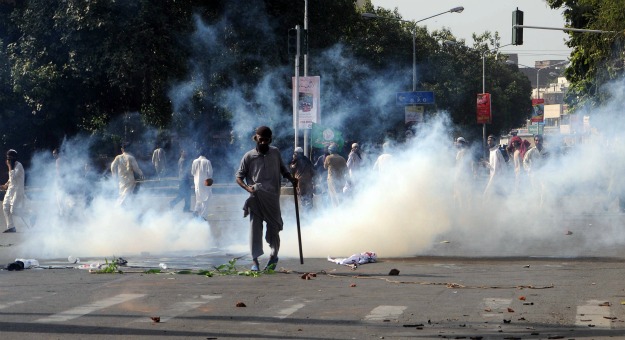
Pakistan’s power crisis has become a catastrophe. Power cuts of up to 14 hours a day have become the norm in Pakistan. In Karachi, four patients admitted in the largest public hospital died when the hospital’s backup generator failed after prolonged cuts. Riots have engulfed Punjab, and other major cities across the country, as the government wrings its hands and tries to get the situation under control. Allegations have flown between the leaders of the two major political parties — the Pakistan Muslim League (Nawaz) and the ruling Pakistan People’s Party (PPP). The PML (N) — has accused the PPP of being responsible for the crisis. In turn, the PPP has accused the PML-N of instigating the violence.

Riots over power cuts in the country, known as “load shedding,” have now become a matter of routine. In neighborhoods and cities across Pakistan, hundreds have taken to the streets to vent their anger at the frequent load shedding. This time around though, the PML-N, perhaps to apply more pressure as a political tactic against its rival PPP, has stepped in, and is supporting the protestors.

But as the flurry of allegations continues, the problem at hand grows more serious. Dubbed the circular debt issue, power companies have racked up billions in unpaid dues to petroleum companies, which supply them oil to run their powerhouses. On Sunday, Pakistan State Oil (PSO), tired of waiting for the dues long promised to them, decided to stop the petroleum supply to the power companies, leading to an increase in the already inhumane cuts.

While the Government of Pakistan (GoP) has now released some funds to appease PSO, this is not a long-term solution. The Federal Minister for Water and Power Naveed Qamar responded to the most recent protests by saying that there were no quick fixes, and then turned around and announced that the situation would improve in 24-36 hours. Last week in Washington DC, the Finance Minister of Pakistan Hafeez Sheikh solemnly announced that the government understood the severity of the circular debt issue, and would resolve it in the weeks to come. But with a growing fiscal deficit, and a refusal of the Asian Development Bank to fund programs in Pakistan after the GoP decided to end their International Monetary Fund (IMF) loan program, how Pakistan plans to resolve the circular debt issue is anyone’s guess.

One solution, according to Prime Minister Yousaf Raza Gilani, was that the United States “should help Pakistan solve its energy crisis if it wanted better ties.” The United States has previously said that it is investing in dams in Pakistan to help add to the power grid, and has helped in the reconstruction of existing dams in the country.

However, Pakistan needs to stop looking towards the West for a solution (or a scapegoat), and perhaps redirect its attention to how to fix its problems internally first — perhaps by collecting payment of unpaid bills, or cracking down against those stealing electricity. First, though, it has to deal with the political ramifications of these protests. The PML-N has played its cards right; by blaming the political center of which it is no longer part, it has easily scored political points while the PPP becomes the fall guy — and to an extent, perhaps deservedly so. Pakistan’s government, in turn, can only do so much. Strapped for cash, it barely has the funds to invest in power generation, and in cases where it has, such investments have barely led to a meaningful increase in the electricity grid.

Additionally, in the face of all of these problems, if Pakistan raises power tariffs on those that have been suffering for the last many years, the law and order situation could become even more perilous.

Meanwhile, the Pakistani population continue to take to the streets, hoping that it might eventually lead to the light bulbs burning bright again.

Huma Imtiaz works as a correspondent for Express News and is based in Washington, DC.

Pakistan must stop treating India as ‘biggest enemy’: Nawaz Sharif

As Reported by The Economic Times

As Pakistan’s powerful military held out threats to India, former Prime Minister Nawaz Sharif has called for reappraisal of ties with its neighbour to move forward and progress, saying Islamabad must stop treating New Delhi as its “biggest enemy”.

Sharif, who was earlier involved in talks with India when the Kargil crisis erupted, also sought a probe into the 1999 conflict with India.

The former Prime Minister, who is the chief of main opposition PML-N party, is currently on a three-day visit to southern Sindh province where he made the remarks during an interaction with the media in Karachi yesterday.

He called on the government to also conduct an inquiry into the 2006 killing of Baloch leader Nawab Akbar Bugti in a military operation and the carnage in Karachi on May 12, 2007 that killed over 40 people who tried to rally in support of then-deposed Supreme Court Chief Justice Iftikhar Chaudhry.

Sharif, whose government was deposed in a military coup led by former President Pervez Musharraf in 1999, reiterated his demand for the budgets of the military and the ISI to be placed before Parliament for scrutiny in line with the practice in other democracies.

He said one of his biggest regrets was not taming the powerful military when he was Prime Minister in the 1990s.

The Parliamentary resolution calling for an independent commission to investigate the killing of al-Qaeda leader Osama bin Laden in a US raid on May 2 was the first step towards making Parliament a sovereign body, Sharif said.

“We need structural changes and this inquiry has provided an opportunity to move forward and put the country on the right track, correct its direction by putting our house in order, establish the rule of law and bring all institutions under civilian control,” Sharif said.

If the government fixes responsibility for the Abbottabad incident and punishes those found guilty, a message will go out to the world that the people of Pakistan will not brook another embarrassment like the US raid, he said.

Sharif spoke out against the recent alliance forged by the ruling PPP and the PML-Q, both of which are rivals of his PML-N in Punjab and at the centre.

The Tragic Case of Mukhtaran Mai

As Reported by The Express Tribune

The decision by the deputy speaker of the National Assembly on April 22 to disallow any discussion on the Supreme Court’s verdict on Mukhtaran Mai is most unfortunate, especially given that it was PPP MNA Sherry Rehman who wanted to speak on the matter.
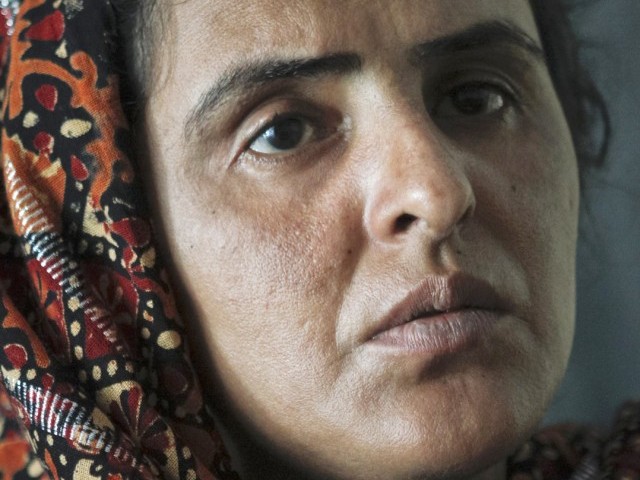
The Supreme Court decided earlier this week to uphold a Lahore High Court verdict that had acquitted all the accused in Mukhataran Mai’s gang rape in 2002, except one.

The gang rape was ordered by an illegal panchayat of Meerwala in Muzaffargarh, Punjab, after which an anti-terrorism court in Dera Ghazi Khan sentenced five of the six accused to death. The fact is that a powerful local tribe has been able to prevent its men from being punished by the justice system. The powerful in our society can first cause a delay in justice — nine years in this case — and then cause a miscarriage of justice through manipulation of the lower ranks of the police.
Mukhtaran Mai is one of many women who have to put up with violence at the hands of men and are forced to keep quiet because the investigative-judicial system is biased against them. Because of ‘anticipated injustice’ in Pakistan’s judicial system, Mukhtaran Mai was made into a global symbol of an abused woman, a challenge which she accepted. Unfortunately, the state became defensive about the publicity and support she got from all over the world; it also manifested a clear conservative bias against the women’s rights movement in Pakistan, which is demonised by powerful religious lobbies.

There was more than ‘anticipated injustice’ in the Mukhtaran Mai case. This was the impunity of the powerful, seen in relation to the terrorist elements in Pakistan which are supported by sections of the state. According to official statements, no terrorist caught after horrendous acts of killing has been punished. Those who view our judiciary politically say that the kind of out-of-the-box jurisprudence applied by the courts to matters such as the NRO will never be applied to Lal Masjid and Mukhtaran Mai. This view holds that the judiciary has always been drawn from a largely conservative legal community and it tends to agree with religious constraints to justice when it comes to women, while tacitly accepting the reign of the powerful in society.

The Supreme Court had intervened after the Federal Shariat Court in 2005 contested the jurisdiction of the Multan Bench. It heard the case and, agreeing with the Multan Bench verdict, ordered the release of the accused. Mukhtaran Mai went in appeal and the latest decision has come after over five years of hearings. Now, in 2011, two of the three judges on the bench have decided to go along with the earlier findings while one judge thought the Court could have taken a more pro-reform view and focused more closely on the notorious methodology of registering an FIR in areas where feudal power trumps justice all the time. The Musharraf government — illegal in the eyes of the Court — pitted itself against this wronged woman and put a ban on her travel abroad. If the liberal elements in Pakistan had stood behind the so-called ‘liberal reforms’ of Musharraf, this was one case that they did not support his government on. Alas, the Supreme Court’s latest decision will be seen as being supportive of Musharraf’s policy of hiding the truth of women’s disabilities in Pakistan from the world.

The judiciary takes the position that its power is not only derived from the Constitution but also from civil society, which stood up for the judges dismissed by Musharraf and finally got rid of the military ruler through street agitation. But civil society also includes women and their rights must equally be defended; more so because Pakistani society needs reform before it learns to treat women as desired by the Constitution. And the Court remains the guardian of the Constitution. If the Honourable Court is today dubbed as being ‘activist’ in favour of the people, let it be clear that it is not the Court of the conservative elements simply because they are powerful.

Salman Taseer Assassination Points to Pakistani Extremists’ Mounting Power

By Karin Brulliard for The Washington Post

One of Pakistan’s most openly progressive politicians was gunned down Tuesday in an act that violently highlighted extremists’ tightening grip on the country even as the beleaguered government struggled to stay in power.

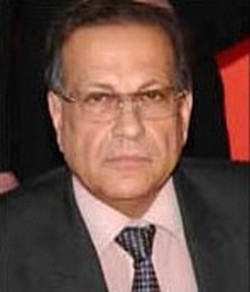
The killing of Salman Taseer, apparently at the hands of one of his own guards, marked the most prominent political assassination in Pakistan since former prime minister Benazir Bhutto’s death three years ago.

The razor-tongued governor of Pakistan’s most populous province was known for speaking out on behalf of women and religious minorities, and his slaying stunned the nation and alarmed U.S. officials. It also further rocked Taseer’s ruling Pakistan People’s Party, which is desperately trying to keep its government afloat following a key ally’s defection to the opposition Sunday.

The secular PPP condemned the killing and promised a swift investigation, but its weakened position undermines its ability to crack down on religious extremists.

In timing that underscored those limitations, Taseer was shot in an upscale area of Islamabad as Pakistan’s main opposition party was across town demanding that the government agree within three days to implement a list of reforms, or risk collapse.

After the killing, the party of former prime minister Nawaz Sharif said it would allow three additional days for the changes, including a slash in government spending and the reversal of unpopular fuel price increases.

Taseer was a chief ally of President Asif Ali Zardari, who in 2008 appointed him governor of Punjab, Pakistan’s wealthiest province. But Sharif’s party rules the province, making Taseer’s assassination a blow to the federal government’s influence there.

Secretary of State Hillary Rodham Clinton condemned the killing in a statement Tuesday, saying she had met Taseer and “admired his work to promote tolerance and the education of Pakistan’s future generations.”

Taseer’s apparent killer cited his boss’s stance against a controversial anti-blasphemy law in justifying his actions. As the embattled, pro-U.S. PPP sought in recent days to win back defecting allies that also include a small Islamic party, it had already said it would not support a proposal to change the blasphemy statutes. That left Taseer one of the few vocal champions of the move, which hard-line religious organizations had labeled a Western conspiracy.

The laws have drawn scrutiny since a Christian woman was sentenced to death in November for allegedly criticizing the Muslim prophet Muhammad. Taseer had called for her pardon, leading religious groups to denounce him as an “apostate” and burn effigies of him during a nationwide strike last week in support of the law. One Muslim cleric has offered $6,000 to anyone who kills the woman, who remains in jail.

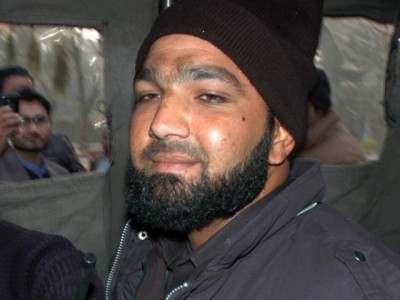
Even as Pakistani television stations were dominated Tuesday by commentators condemning rising religious intolerance, supporters of Taseer’s arrested guard, Mumtaz Qadri, 26, created a page for him on Facebook. Page visitors called him a “hero” and praised his “awesome job.” No major unrest over the killing was reported, but authorities said they were on high alert.

“This shows how the religious extremists want to impose their agenda to terrorize the society,” Shahbaz Bhatti, the federal minister for minorities affairs and also a proponent of changing the laws, said in an interview. “This cowardly act cannot stop us who are raising our voice.”

Yet in a country where Taliban militants increasingly flex their muscles through bombings, religious hard-liners have great power to intimidate even though polls show that their views are not widely shared. Last week’s strike by Islamic organizations drew few supporters to the streets, but shops in major cities closed – and many merchants said they did so under threat.

Human rights activists say the blasphemy laws are also abused by extremists, who use them as a tool to persecute minorities or opponents by bullying police and courts into arrests and convictions. The laws were strengthened during the 1980s rule of Islamist military dictator Gen. Zia ul-Haq.

Taseer lamented the power of the religious mob in an interview last summer following bombings of mosques belonging to the Ahmadi sect, whose members identify themselves as Muslims but are barred by the constitution from “posing” as such. Taseer – whose appointed position gave him little direct power in Punjab – condemned the provincial government of Sharif’s center-right PML-N for what he called its tolerance of radical religious groups.

“Extremist people are not in the majority,” Taseer said at the time. “This is a very narrow minority, but . . . they are always prepared to do and die. That is their strength.”

On Dec. 24, he had posted on his Twitter account: “My observation on minorities: A man/nation is judged by how they support those weaker than them not how they lean on those stronger.”

Authorities said Taseer’s guard, a member of an elite Punjab provincial police force that provides VIP security, shot the governor multiple times outside the Kohsar market in Islamabad, a small shopping plaza near his residence that is frequented by foreigners. The guard proudly surrendered to police afterward, according to local news reports.

Most political parties condemned the killing, and the government announced a three-day mourning period, during which political activity would be suspended. Zardari, to whom Taseer was close, called the assassination “ghastly.”

“The governor of Punjab was the bravest person in our government, and the stands he took for women, minorities and on the blasphemy law were incredibly brave and will never be forgotten,” Farahnaz Ispahani, a Zardari spokeswoman, said in an interview.

Taseer, who began his political career as a PPP student activist, was a successful businessman who played polo and smoked heavily. With his flashy sunglasses and frequent Twitter dispatches, Taseer, 66, cut a rather shocking figure in a country dominated by conservative social mores.

Critics assailed him for fathering a child with an Indian journalist while he was still married to the mother of his other children. In 2008, minor scandals broke out when opponents published photos online of him holding wine glasses at parties and of one of his daughters wearing shorts and dancing.

Despite the alleged gunman’s confession, Taseer’s killing was sure to be swept up in the conspiracy theories that permeate Pakistani politics, particularly in times of turmoil. Interior Minister Rehman Malik said investigators would seek to determine whether the suspect acted alone or was “asked” to carry out the attack.

In the hours after the killing, some criticism centered on the PML-N-led Punjab government, which provided Taseer’s police guard. There was no indication Tuesday night that the party played a role.

But the PML-N might yet bring down the PPP, whose government faces growing criticism over corruption, a floundering economy and a ham-handed response to last year’s devastating floods. The ruling party’s coalition partner, the Muttahida Qaumi Movement, withdrew from the government Sunday, weakening its mandate by depriving it of a parliamentary majority.

A united opposition could pass a vote of no confidence in Prime Minister Yousaf Raza Gillani, leading to his ouster and potentially triggering early elections. That has appeared unlikely, because of divisions among opposition parties. But Sharif threatened Tuesday to “ask the opposition parties to come forward and we will give them our full support” if the government does not show progress on reforms within 45 days, according to the Associated Press.

Like many in the PPP, Taseer often criticized opposition parties for stoking political instability in a country that has been ruled by the military for half its 63-year history and where an elected government has never completed its term.

Religious extremism, Taseer said last summer, would be quashed only by the “continuous, functional position of a democratic system.”

A Brave Man Killed

A New York Times Editorial

Some twisted person has created a Facebook page in support of Malik Mumtaz Hussain Qadri, the bodyguard accused of assassinating Salman Taseer, the governor of Pakistan’s Punjab province. Mr. Taseer was a brave man who had called for the repeal of Pakistan’s outrageous anti-blasphemy law.

Whoever killed Mr. Taseer must be condemned and repudiated, not extolled. Otherwise, Pakistan will certainly continue on a downward spiral in which intolerance and self-destruction triumph.

The governor’s death is a tragedy not just for Pakistan but for all who understand that just and stable societies need honest debate and full respect for minorities. Pakistan cannot afford to lose any fair-minded leaders, especially at a time when it is struggling with a virulent insurgency, an unraveling economy and an unraveling central government.

Mr. Taseer — a longtime ally of President Asif Ali Zardari and his wife, Benazir Bhutto, who was assassinated in 2007 — was Pakistan’s most prominent defender of the rights of women and minorities. He had pressed hard for repeal of the blasphemy law, which imposes a mandatory death sentence on anyone convicted of insulting Islam.

The law is popular with the Muslim majority but is routinely manipulated to settle personal rivalries and persecute minorities. And Mr. Taseer had been particularly outspoken, calling for leniency for a Christian mother of four who was sentenced to death under the law, in a case that stemmed from a dispute in her village.

Pakistani officials, who have the bodyguard in custody, say he killed Mr. Taseer because of the governor’s opposition to the blasphemy law. But there are far too many unanswered questions: Did the suspect act alone? Why did the Punjab police assign a religious conservative to protect Mr. Taseer? News reports first said nine bullets were fired into Mr. Taseer, and hospital officials later said he was hit 24 times. Yet other members of the security detail did not shoot to stop Mr. Qadri, who surrendered with his hands up.

Pakistani authorities need to investigate thoroughly and share their full findings with the Pakistani people.

The United States and the international community must make clear their outrage over this killing. So must every Pakistani. The country’s political leaders and the Pakistani media also need to consider whether the way they have shaped the debate on the blasphemy law — some have argued that mentioning reform is blasphemy punishable by death — is further fueling conflict.

Ultimately, only Pakistanis can save their nation, and they must answer the more profound questions: Do they want a country in which Muslims and non-Muslims can peacefully co-exist? Or one in which religious zealots, espousing the most intolerant interpretation of Islam, kill anyone brave enough to defend the defenseless? That would be the true blasphemy.

Pakistan’s Political Crisis

Reported by Farhana Bokhari for CBS News

Pakistan’s pro-U.S. ruling coalition on Sunday night battled to restore calm across the country’s political landscape after a regional political party allied to president Asif Ali Zardari’s Pakistan People’s Party (PPP) quit at short notice, leaving the PPP in minority in the lower house of parliament, the national assembly.

The Muhajir Qaumi Movement (MQM), a political party mainly representing Pakistanis who migrated from India to Pakistan when the country was created in 1947, withdrew its support to the PPP, reacting to the government’s decision on Saturday to raise gasoline prices.

The move marked the first major upheaval over gasoline prices since they were raised, mainly to be kept in line with global trends. Western diplomats based in Islamabad, reacting to the latest political developments, warned it was still early to tell if Zardari or his handpicked prime minister, Yusuf Raza Gilani, were in danger of being forced out.

There were warnings that the split with the MQM may in the short term completely paralyze the government. Long term consequences are harder to predict. Pakistan has been ruled by its army for more than half the of country’s 63-year existence. Some previous periods of heightened uncertainty have been followed by the military stepping in to fill the void.

General Ashfaq Pervez Kayani, Pakistan’s present military chief, is widely known to be an apolitical figure. A western ambassador based in Islamabad, speaking to CBS News on condition of anonymity, said, “While there are no signs of the military stepping in, you have to remember that previous [military] takeovers have been preceded by fast growing turmoil. Much depends on the way things happen in future.”

For the U.S., mounting political uncertainty in Pakistan is potentially worrying. This has to do with the support that Washington receives from Pakistan in its campaign to defeat Al-Qaeda and the Taliban in the Afghanistan-Pakistan region, as well as periodic worries in the western world over Islamic hardliners making inroads into Pakistan’s politics.

A minister from the PPP who spoke on condition of anonymity to CBS News Sunday said after the split with the MQM was announced, “If a government is weak and struggling for its own survival, how will it be able to pursue interests of other countries, including the U.S.?” The minister added, “Unpopular steps like petroleum prices are forced upon governments through circumstances which are beyond their control.”

A second western diplomat in Islamabad who spoke to CBS News on condition of anonymity said while Islamic politicians have only pockets of support across Pakistan, “You can never rule out the dangerous possibility of a ground swell in their favor, especially if governments from the political mainstream become weak and unpopular.”

Pakistan Police Officers to be Arrested Over Death of Benazir Bhutto

By Delacn Walsh for The Guardian

A Pakistani court has ordered the arrest of two senior police officers in connection with Benazir Bhutto’s assassination, reviving hopes for a breakthrough in Pakistan’s most pressing political mystery.

An anti-terrorism court ordered the arrest of Rawalpindi’s former police chief, Saud Aziz, and his deputy Khurram Shahzad, who ordered the crime scene to be washed down less than two hours after the killing, destroying critical evidence.

“They were responsible for Bhutto’s security,” said special investigator Chaudhry Zulfiqar. “They ordered the crime scene to be hosed down despite resistance from other officials.”

A strongly-worded UN report into Bhutto’s death last April said the decision to wash the crime scene did “irreparable damage” to the subsequent investigation. Investigators speculated that Aziz had been influenced by powerful military intelligence agencies.

Aziz and Khurram, who are now retired from the police, could not be contacted today. They are due to be formally charged on 11 December along with five men already in custody.

The warrants are the latest twist in a torturously slow police investigation. Three years after Bhutto was killed in a suicide blast as she left an election rally in Rawalpindi on 27 December 2007, Pakistanis have little idea of who was behind her death.

Pervez Musharraf, who was president at the time, initially blamed Taliban leader Baitullah Mehsud, but officials from Bhutto’s party, the PPP, have said that other forces, possibly including elements of Pakistan’s powerful military, played a role in her death.

Bhutto’s widower, President Asif Zardari, has vowed to unveil her killers, but made little progress in an investigation bogged down by controversy, recrimination and conspiracy theories – one popular rumour in Pakistan has it that Zardari himself was responsible.

The three-man UN investigation into the killing, headed by Chilean diplomat Heraldo Muñoz, published its report last April in an effort to bring some clarity. It dismissed the allegations against Zardari and blamed Musharraf for failing to protect Bhutto, while accusing police and intelligence officials of hampering the investigation into her death.

The UN team said that Aziz stalled the investigation for two days after Bhutto’s death, deliberately prevented a postmortem on her body, and gave the order to sanitise the crime scene just 100 minutes after Bhutto’s death. As a result crucial DNA evidence was lost and investigators gathered just 23 pieces of evidence instead of the “thousands” that would be expected, Muñoz’s team noted.

The UN focused on the actions of Aziz, who witnesses said was “constantly talking on his mobile phone” as doctors scrambled to save Bhutto’s life in a Rawalpindi hospital.

The UN received “credible information” that the Pakistani intelligence agencies had intervened. But Aziz refused to say who he spoke with, and tried to blame the failure to carry out an autopsy on Zardari – something that was “highly improper”, the UN said. “It suggests a preconceived effort to prevent a thorough examination of Ms Bhutto’s remains.”

The strongly-worded report represented a watershed in moribund efforts to solve the mystery of Bhutto’s death – Pakistan’s greatest political trauma since the dictator General Zia-ul-Haq died in mysterious circumstances in 1988. But it fell short of identifying those behind her death, and government efforts to advance the probe has since floundered.

Bhutto’s own party has been split by divisions. Last week Zardari suspended the membership of Naheed Khan, Bhutto’s confidante, following simmering tensions that included criticism of his failure to find Bhutto’s killers. Critics have also raised questions about the role of Rehman Malik, Bhutto’s security chief and now Pakistan’s interior minister.

The main suspect in custody remains a teenager from the tribal belt accused of helping the Bhutto assassins. His case, and those of the police officers, will be heard in camera at Adiala jail outside Rawalpindi.

But the government has not probed the role of the other parties mentioned in the UN report – former president Pervez Musharraf, currently in exile in London, and the intelligence services that are considered beyond the control of the civilian authorities.

Sectarianism Infects Hospital Wards

As Reported by IrinNews.org

Religious, political and ethnic divisions have claimed hundreds of lives in Karachi, Pakistan’s largest city, but also influence the chances of survival for the injured.

A doctor in the emergency ward of Civil Hospital Karachi, one of the city’s largest public hospitals, told IRIN: “After a terrorism incident, we are under intense pressure. Earlier, we had the activists of various political parties threatening us in the emergency department to not treat the patients of their rival groups. They use all sorts of delay tactics, be it blocking the entrance to pounding on the doors and abusing the staff. Now, we also get calls [from the militants].”

The doctor, who asked not to be identified, added: “One ethnic-based party is so strong that it makes sure that the duty doctors are unable to carry out their work once the injured start arriving. We have doctors and other staff who are from that party within the premises. Time and again we have been told not to treat Pushtun injured, who are very easy to identify due to their language and beards. We already face a shortage of staff, medicines and medical equipment… It’s just a mess here. [But] all professionalism and ethics aside, how can you expect me to save someone when my life is in danger?”

According to a Human Rights Commission of Pakistan report released in July, 260 people have been killed in targeted killings since January 2010. The number continues to rise with 50 people killed so far in the latest wave of violence following a shooting rampage in Shershah Market on 19 October.

Turf war

The nub of the problem in Karachi is the ongoing turf war between the Muttahida Quami Movement (MQM) and the Awami National Party (ANP) for control of the coastal city. Both parties draw support from rival ethnic groups; the MQM’s vote bank is among largely Urdu speakers who migrated to Karachi after partition from India in 1947, while the ANP mainly represents Pushtuns.

Habib ur Rehman Soomro, secretary-general of the Pakistan Medical Association, acknowledged that sectarianism was rife in the health services. “I will not deny this occurrence. I live in this city and I know how things work. Refusing and delaying treatment in cases of emergency, especially after incidents of ethnic violence and terrorism, is a crime but all this is happening… Now the situation is such that all public hospitals in the city have the offices of MQM, PPP [the ruling Pakistan Peoples Party] and if it’s a Pashtun-dominated area, ANP.”

Shams Khan was injured on 3 August in the violence that erupted after the killing of MQM leader Raza Haider, which claimed 45 lives.

“I was shot in the leg by these boys near Lalo Khait. I made my way to Abassi Shaheed Hospital but they refused to treat me. I was practically thrown out of the facility by my beard as one of the doctors called me a Taliban. Bleeding, I made my way to JPMC [Jinnah Postgraduate Medical Centre]. I lost so much blood by the time the doctors attended to me. I now limp around and need a crutch to walk. The doctor told me that had I been treated earlier, it would not have happened.”

Soomro told IRIN that doctors were under constant threat. “Since the 1990s, there have been plenty of incidents of targeted killings of doctors killed on the basis of sect and ethnicity. Over 85 doctors have been murdered. First it was the Shia-Sunni issue, then the Pushtun-Mohajir issue, now it’s about sects. It’s just insane. Political affiliations need to be removed.”

A doctor at the JPMC, who asked not to be named, said: “We have seen days where doctors were beaten by angry political activists as well as the family members of the victims after a bomb blast… This cycle of madness will not end.”

Pakistanis for Peace Editor’s Note– We are unsure which is sadder, the inability of doctors in Pakistan’s biggest city to save lives without threat and or intimidation and violence against them, or that the very people giving these threats to the doctors are in fact linked to members of the two ruling political parties, who have been charged with being “leaders” of the country.

$11-Million Monument to Benazir Bhutto: APPROVED

By Shirin Sadeghi for The Huffington Post

This week, as flood waters ravage Pakistan’s land and 20 million of its people, and after Pakistan’s own president, Asif Ali Zardari, managed to muster only $58,000 of his own vast wealth to the flood relief (a donation nearly doubled by Angelina Jolie), yet another devastating blow has hit Pakistan: news that the government has now approved an $11-million statue of the President’s assassinated wife, Benazir Bhutto.

And yes, this is Pakistani taxpayer money.

The statue itself will cost 4.7 million dollars, and it will be built on land that is worth another 5.9 million dollars. Apparently, Mr. Zardari, whose personal wealth is estimated to be more than 1 billion dollars, just couldn’t afford to donate the land or the statue in honor of the mother of his children.

His government decided the people of Pakistan could afford it, though. People who, according to the World Bank, have an average per capita income of $870 annually.

Admirably, the people of Pakistan have taken it upon themselves to try and stop this misguided use of funds in the midst of a national disaster. A legal action failed, but now a petition is available online.

Another day, another battle in the Pakistani people’s war for a representative government.