Posts Tagged ‘ United States ’

Florida Men Accused of Aiding Pakistani Taliban

By Gardiner Harris for The New York Times

The F.B.I. on Saturday arrested three Pakistani-Americans, including father and son imams from South Florida mosques, charging them with providing financing and other material support to the Pakistani Taliban.
Related

Three people living in Pakistan were also charged in the indictment, which was made public by Wilfredo A. Ferrer, the United States attorney for the Southern District of Florida. The F.B.I. said that the indictment grew out of a review of suspicious financial transactions and other evidence and not from an undercover sting operation. The arrests seem to be unrelated to the raid that killed Osama bin Laden a week ago.

The four-count indictment charges that the six sought to aid the Pakistani Taliban’s fight against the Pakistani government and its allies, including the United States, by supporting acts of murder, kidnapping and maiming in Pakistan and elsewhere in order to displace the government and establish strict Islamic law known as Shariah.

“Today, terrorists have lost another funding source to use against innocent people and U.S. interests,” said John V. Gillies, the special agent in charge of the F.B.I.’s Miami office.

Five of the six people charged are related. Arrested in the United States were Hafiz Muhammed Sher Ali Khan, 76, of Miami; and two of his sons, Izhar Khan, 24, of Miami; and Irfan Khan, 37, of North Lauderdale.

Hafiz Khan is the imam at the Miami Mosque, also known as the Flagler Mosque. Izhar Khan is an imam at the Jamaat Al-Mu’mineen Mosque in Margate, Fla. Hafiz and Izhar Khan were arrested Saturday in South Florida, while Irfan Khan was arrested in Los Angeles. All three are originally from Pakistan.

The three people residing in Pakistan who were charged were Amina Khan, Hafiz Khan’s daughter, and Alam Zeb, her son, as well as Ali Rehman, also known as Faisal Ali Rehman. A statement from prosecutors said that the defendants were assisted “by others in the United States and Pakistan.”

The indictment said that the six transferred money to the Pakistani Taliban that was intended to buy guns and sustain militants and their families. Hafiz Khan is also accused of supporting the Pakistani Taliban through a madrasa, or Islamic school, that he founded and controlled in the Swat Valley region of Pakistan. He was charged with using the madrasa to provide shelter and other support for the Pakistani Taliban and sending children from his madrasa to learn to kill Americans in Afghanistan.

The indictment does not charge the mosques with any wrongdoing. The Muslim Communities Association of South Florida announced that that Hafiz Khan had been suspended indefinitely from his mosque.

“Our organizations, together through the Coalition of South Florida Muslim Organizations, has been working with the U.S. Attorney’s Office and the Miami F.B.I. office,” the association said in a statement released Saturday afternoon, “and appreciate the efforts of law enforcement to root out potential sources and supporters of terrorism.”

“We stand together with the U.S. attorney, Wilfredo Ferrer, and the men and women of the F.B.I., and have been and will be cooperating with law enforcement to our fullest ability,” it added.

The F.B.I. news release took pains to describe the charges as reflecting only the actions of the defendants, not of their mosques or Islam. “Let me be clear that this is not an indictment against a particular community or religion,” Mr. Ferrer said. “Instead, today’s indictment charges six individuals for promoting terror and violence through their financial and other support of the Pakistani Taliban. Radical extremists know no boundaries; they come in all shapes and sizes and are not limited by religion, age or geography.”

“The indictment does not charge the mosques themselves with any wrongdoing,” it continued, “and the individual defendants are charged based on their provision of material support to terrorism, not on their religious beliefs or teachings.”

The inclusion of those statements were “well appreciated” by the Muslim community in South Florida, said Asad Ba-Yunus, who is a legal adviser to the Muslim Communities Association of South Florida.

“We have been working with the U.S. attorney’s office over last few months” to improve relations, Mr. Ba-Yunus said, adding that he had spoken with the office Saturday morning before the indictment was announced.

The charges against the Florida men accusing them of supporting the Pakistani Taliban but not actually carrying out operations themselves are the most common types of terrorism prosecutions that United States authorities have pursued since the attacks of Sept. 11, 2001. Of the 50 leading terrorism cases since those attacks, about 70 percent have involved financing or other support to terrorist groups, according to the Center on Law and Security at the New York University School of Law.

The Pakistani Taliban were officially designated as a terrorist organization by the State Department on Aug. 12, 2010.

The Pakistani Taliban are closely allied with Al Qaeda, and is responsible for a series of attacks against Pakistani police and military targets in recent years. Pakistani authorities believe a splinter group of the Pakistani Taliban was responsible for the suicide attack in northwestern Pakistan on Friday that killed more than 80 cadets from a government paramilitary force. According to American officials, the Pakistani Taliban have been involved in or claimed responsibility for attacks on United States interests, including an attack on a military base in Khost, Afghanistan, along the border with Pakistan, and a suicide bombing against the consulate in Peshawar, Pakistan.

American officials say the failed attempt to detonate a car bomb in Times Square last May was developed and financed by the Pakistani Taliban. The convicted bomb plotter, Faisal Shahzad, contacted the Pakistani Taliban via computer to confer with handlers over what he had done, the government wrote in court papers in September.

Pakistanis for Peace Editor’s Note– As peace loving Americans of Pakistani descent, we are upset to hear that some members of the US Muslim community would want to do the great nation of the Unites States harm. If found guilty, we hope that they are severly punished and a message is sent to anyone else intending to do us harm. We commend the FBI and the Department of Justice in these arrests and in keeping the American homeland safe.

The Power of Pakistani Conspiracy Theories

By Ahmed Rashid for The New Republic

Pakistan is not a failed state, or as yet a failing one, even though it may be in a state of chaos or meltdown. Unlike really failed states, it has a powerful army and a corrupt, run-down, but still functioning bureaucracy, judiciary, and police force. Pakistanis perform outstandingly well in the realm of culture: in the arts, television, fashion design, pop music, and of course cricket. What is missing are adequate social services, such as health care, education, population-control programs, and jobs for a population that is nearing 200 million people. Like many Arab countries, Pakistan faces a youth bulge, with an estimated 60 percent of its people under twenty-five years old.

For these young people without adequate education and employment, who have to deal with a corrupt system that offers no panacea to the poor, joining an Islamic extremist group is not at all unusual. It is the norm. For this reason, a replay of an “Arab awakening” in Pakistan would not lead to the dawn of true democracy, but rather to a mass movement whose leadership would swiftly fall into the hands of Islamic extremists, who would then try to overthrow the state.

What Pakistanis desperately need is a new narrative by their leaders—a narrative that does not blame the evergreen troika of India, the United States, and Israel for all of the country’s ills, that breaks the old habit of blaming outsiders and instead looks at itself more honestly and more transparently. Pakistanis as a nation seem incapable of self-analysis, of apportioning blame according to logic and reason rather than emotion.

Along with the causes that I listed above, the wave of intolerance sweeping the country is also due substantially to the conspiracy theories put about by the ruling establishment and their allies in the media. These various hallucinations paint Pakistan as the victim, maligned and wronged at the hands of foreign powers—especially the United States and India. In the imagination of many Pakistanis, the country is regularly used for some geopolitical aim by the Americans and then discarded in favor of India. These sinister outsiders want to subvert, destroy, and undermine Pakistan—but no logical reason is offered as to why. And few will publicly argue that in fact it is the selective state sponsorship of extremism that is destroying the country.

The narrative that has been peddled by the state for much of the past decade is that Pakistan is being undermined by the presence of American forces in Afghanistan, and that if they were to leave the Pakistani Taliban would go home, the suicide bombings would cease, and everything would go back to normal. The ultimate aim of the United States in Afghanistan—so the narrative continues—is to capture Pakistan’s nuclear weapons, even as India is busily dismembering Pakistan by funding Baloch separatists and the Pakistani Taliban. But if that is so, why on earth did the state allow the revival of the Afghan Taliban in 2003, which has only delayed the American withdrawal from Afghanistan? And for those demanding higher military budgets, the most self-serving conspiracy theory is that Pakistan is locked in an interminable conflict with India, which cannot be resolved.

After Bin Laden Raid, Might US-Pakistan Cooperation Get Better?

By Howard LaFranchi for The Christian Science Monitor

The United States launched a drone strike targeting militants in the North Waziristan region of Pakistan Friday, raising tantalizing questions in the aftermath of Osama bin Laden’s death.

And does the drone strike suggest, despite official Pakistani protests to the contrary, that cooperation between the two countries not only continues but may in fact end up enhanced by Sunday’s operation, which was an embarrassment for Pakistan?

It was impossible to know if the strike, which reportedly killed at least eight suspected militants gathered in a house in North Waziristan, resulted from any information seized Sunday, since word of the strike came from Pakistani military officials.

But the drone attack appeared to bolster the argument, voiced by a wide range of regional and intelligence experts, that the US would be able to use Sunday’s raid to pressure Pakistani officials to side more unequivocally with the US in battling Islamist extremists.

Also on Friday, Yemeni officials reported that a drone strike there killed two Al Qaeda operatives.

Drone strikes have been a contentious issue in US-Pakistan relations. But it is also true that a considerable increase over the past year in US strikes inside Pakistan by the unmanned aircraft has not led to a breach in the bilateral relationship.

“It was proper for Obama not to publicly rub Pakistan’s nose in” the embarrassment of having bin Laden discovered in the country, says Paul Pillar, who now directs security studies at Georgetown University in Washington after a long career in US intelligence. “But in private, they owe us something…. We do expect more cooperation.”

That perspective is riding high in Washington – especially among those security analysts and former officials who consider the relationship with Pakistan, difficult as it is, too vital for the US to simply throw up its hands and leave.

If anything, the bin Laden operation should pave the way for the US to develop closer intelligence and military ties to Pakistan, says Pete Hoekstra, a former Republican congressman from Michigan and former chairman of the House Permanent Select Committee on Intelligence.

An advantage for the US coming out of the successful raid, he says, is that America looks competent and like it may be a good friend to have in the battle with extremism.

“For the people sitting on the fence, it’s like, ‘They [the US] may be really getting good at this, and maybe now is the time to make a decision to get closer,’” said Mr. Hoekstra, speaking Thursday at a discussion on Pakistan at the American Enterprise Institute in Washington.

Dov Zakheim, a former deputy Defense secretary under President George W. Bush, agrees that the enhanced US stature after the raid should be leveraged to win stronger cooperation from countries like Pakistan that have hedged their bets about America’s staying power.

The successful operation against bin Laden “tells the world we’re not a spent power, we’re not a declining power,” said Mr. Zakheim, speaking Tuesday at a Center for the National Interest forum in Washington. “There’s a message there about US military power that is terribly important.”

Few experts in the bilateral relationship believe that Pakistan knew absolutely nothing about bin Laden’s whereabouts. But Mr. Pillar of Georgetown guesses that in the end, it may be learned that Pakistani officials simply didn’t want to know about something that existed right under their noses.

“My guess is … there was no effort to try to find things out,” said Pillar, speaking at the National Interest forum. “My guess would be, it’s not a matter of [Pakistani Army Chief] Gen. [Ashfaq Parvez] Kayani or the head of the ISI [Pakistani intelligence agency] knowing who was in that compound – but more the inquiries to find out just never having taken place.”

Kayani this week warned the US that Pakistan would not tolerate another raid like Sunday’s. But similar categorical statements have been made before about US drone attacks, some officials and experts have noted – and the attacks continue, if Friday’s strike is any indication.

Despite the bluster at both ends about the US-Pakistan relationship, a difficult but essential partnership will continue because, with Al Qaeda still in Pakistan and the US still next door in Afghanistan, there is no alternative, some say.

“What’s the alternative strategy in regards to Pakistan? We can’t overreact; we can’t back off the relationship if you don’t have a new strategy,” says Hoekstra, addressing in particular members of Congress who are calling for reduced foreign aid and cooperation. “We’ve got enough relations in the world to worry about right now, rather than adding to the list.”

With Friends Like Pakistan…

By Manzer Munir for Pakistanis for Peace

Many people in Pakistan these days are wondering why their nation often finds itself on the wrong side of recent history. First, there is the continued and unjust imprisonment of a Christian Pakistani woman named Asia Bibi who has been languishing in jail for nearly two years. She has been given a death sentence for allegedly making derogatory remarks about the prophet Muhammad.

Then there was the killing of Salman Taseer, who was the then sitting governor of Punjab, Pakistan’s most populous province, by one of his own bodyguards for his outspoken support for Asia’s rights and her freedom. Instead of swift punishment and public outcry at his actions, the killer, Malik Mumtaz Hussain Qadri, was showered with rose petals by some cheering members of the bar association of Lahore when he came to the courthouse for formal charges of murder. Yes, members of the judiciary were cheering his unilateral action of murdering another human being simply for his support towards a condemned non Muslim woman’s rights.

You can only imagine the warped sense of logic and justice in a country where lawyers cheer the cold blooded murder of an innocent man whose only crime was to come at the aid of a condemned Christian mother of two children.

Fast forward to a few months later, the extremists managed to assassinate the only Christian member of President Asif Ali Zardari’s government when the Minister for Minority Affairs, Shahbaz Bhatti, was killed in a hail of bullets by unknown gunmen who then managed to escape on their motorcycle. Bhatti being a Christian as well as a minister in the government, had campaigned for the release of Asia as well as for the repeal of the blasphemy laws in Pakistan that at help promote a culture of state sanctioned hatred against religious minorities in Pakistan.

The culture of fear and hatred as well as violence against the religious minorities has progressively gotten worse along with the security situation inside the country in the last ten years. If there is anything that has been proven by some of these recent events in Pakistan, it is only that the country has become the undisputed global hotbed of extremism, fanaticism, and Islamic militancy in the Muslim world. It has now morphed into a country where the Wahhabi and Salafi fanatics have successfully used fear and hate to silence the majority moderate Barelvi and Sufi Muslims of Pakistan.

When powerful moderate voices like those of Bhatti and Taseer are silenced despite having heavy protection, how safe can the common man feel about his life if he chooses to speak up against the radicals within Islam? To kill someone is against Islamic belief at its core, unless it is done in self defense but you would be hard pressed to hear that view from the religious fanatics in Pakistan. They have justified killing others over many insane reasons such as making derogatory remarks about Islam or the prophet Muhammad. They also rationalize the killing of someone over a family’s honor, thus honor killings where often young women are killed if they are deemed to have brought dishonor to their family. These radical Islamists will even want someone dead for simply uttering disparaging remarks against Islam or its prophet. It is both ironic and hypocritical to see that the same derogatory remarks towards other figures such as Jesus, Moses, Abraham or other prophets of the Quran do not meet the same outcry nor receive the same impassioned response from the masses as when Islam or its prophet Muhammad are criticized.

The seeds of this current fanaticism fanning the flames of hatred were planted during an earlier conflict, this one involving the Soviets against an under matched adversary in Afghanistan. It was during this time in the ‘80’s when the Pakistani dictator, General Zia ul Haq, was in power and he accepted American aid from the Reagan administration in thwarting the threat from the 1979 Soviet invasion of neighboring Afghanistan. At the time, Pakistan’s ISI worked very closely with these “freedom fighters” waging what many thought was a just jihad against a communist foe who disallowed all religious worship. In fact, a good movie to rent right now to put some of these current events in perspective would be Charlie Wilson’s War starring Tom Hanks which details this era of Pakistan-US relations and cooperation against a common enemy in the Soviets.

The trouble now however is that in this current uneasy alliance between Pakistan and the US, there is not a common enemy, at least not as how it is viewed by many in Pakistan, which recently was polled to be the most anti-American nation in the world. Even though radical Islam and fanaticism is as much a threat to Pakistan’s sovereignty and prosperity as it is to the United States, India has always been seen as the big threat by its army and rulers. Pakistan has long seen Afghanistan as a country offering it strategic depth in any future wars with India. Thus, its interests in Afghanistan do not coincide with those of the United States.

The Pakistani media also constantly feeds a steady news diet of bombings by the Taliban/Haqqani network as well as any one of the other fill-in-the-blank militants groups seemingly operating freely from within its borders. There is also the regular news reports of US drone attacks and NATO actions in the AfPak region, as well as the all ubiquitous and constant threat faced from India, who is still seething from the Mumbai bombings in 2008, which were blamed on Pakistani trained terrorists. To further add insult to their injury, not a single leader of the Lashkar E Taiba has been convicted in Pakistan for the attacks in Mumbai that claimed 174 deaths and seriously injured several hundred others.

To the Indians, the perpetrator of their version of 9/11 is not an Arab from Yemen named Osama, but rather a whole nation state with whom it has fought three wars in 60 years and who is a long time sworn enemy with which it shares a long border. Too often it is rightly assumed by many that Pakistan will not act against Lashkar E Taiba and other openly anti-Indian militant groups because these groups are seen as a strategic asset for use against India. Only the fear of an all out nuclear war between the two nations by a trigger happy Pakistan placated India enough so that New Delhi did not immediately take military action against Pakistan after the Mumbai attacks.

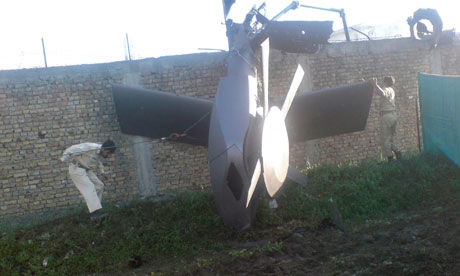
So this culture of fear from all enemies both foreign and domestic to Pakistan’s sovereignty is now at an all time high within the nation. With a several decade long war on its western border in Afghanistan as well as the constant threat from its arch enemy to the east in India, Pakistan has never felt more threatened or squeezed. This pressure is now only going to get ratcheted higher since last week’s killing of Osama Bin Laden at a compound in a suburb of Islamabad, Pakistan. Living for five years undetected in the compound, Bin Laden was less than a mile away from the Kakul Military Academy in Abbottabad, Pakistan’s version of the famed American military college of West Point, when he was killed by a US Navy Seal team.

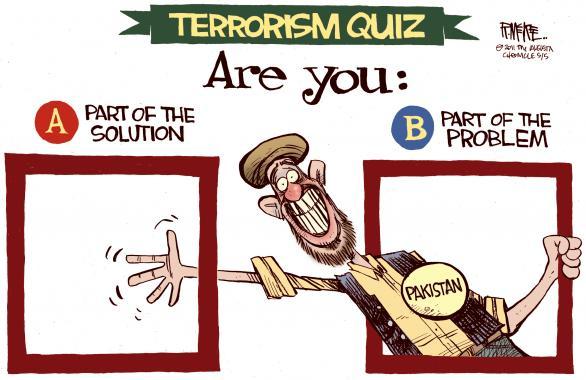
For the world’s most wanted terrorist to hide in plain sight in such a manner and for so many years, rightly points a lot of suspicion on Pakistan. Long suspected by many intelligence analysts, elements within Pakistan’s spy agency, the ISI, naturally now attracts a lot of suspicion in their possible involvement in the whole affair. There are strong voices and calls within the US Congress to halt all aid to Pakistan in light of Bin Laden’s death. We certainly can assume that any other country in the world found to be harboring terrorists would already have been labeled a state sponsor of terrorism and would be facing immediate sanctions from the international community. “You are either with us or against us” were the words so famously uttered by then President Bush to Pakistan specifically after 9/11. But due to Pakistan’s importance for a successful pullout from Afghanistan of US troops, as well as its strategic position within the Islamic world, neither side can afford to cut off relations with each other.

Although the Obama administration stopped short of claiming that the corrupt civilian government of Zardari was directly involved in protecting and sheltering Bin Laden, all signs point to complicity to some extent by some segments within Pakistan’s hierarchy. There is near unanimous agreement among many in Washington, and this is true on both sides of the aisle, that there are many sympathizers of the Taliban and Al Qaeda within the ranks of the army and the intelligence agencies of Pakistan.

Having driven the Soviets out of the region with the help of militant jihadi groups like the Taliban, no doubt a cadre of army and intelligence officers must have come to espouse the belief that it is in Pakistan’s best interests to have a religiously frenzied force available to use as a weapon against India in a future conflict also. In fact, Pakistan has always had this policy of seeking strategic depth in Afghanistan against India.

The death of Osama Bin Laden in Pakistan by Special Forces of the American military illustrates just what a duplicitous game the country has been playing with the United States and more importantly with itself. In the war on terror America lost nearly 3,000 citizens in the attacks on 9/11. In that same period stretching the last ten years, Pakistan has lost nearly 31,000 citizens to terrorist attacks by the Taliban, Al Qaeda and other militant groups. So it has always been in Pakistan’s best interests to fight the militant threat brewing in its borders the last two decades that has claimed so many lives and caused so much instability.

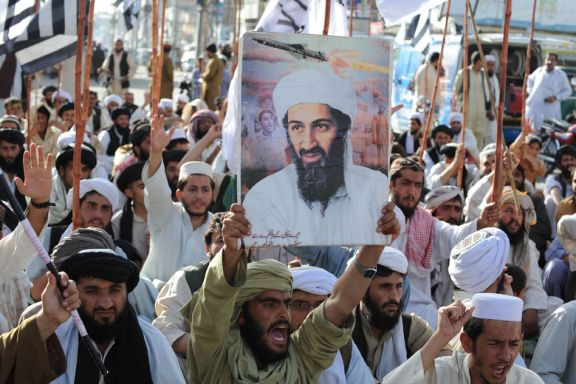
The murders of Salman Taseer and Shahbaz Bhatti illustrates the dire situation within Pakistani society where many young underprivileged men gravitate towards Osama Bin Laden’s ideology of hate against the US, which is seen by many, as the aggressor in an already very anti-American country. Also western ideas, religious and political liberties, and freedoms, such as those for women in western society, are all seen by the Islamic clergy and religious establishment as being against Islamic doctrine and clashing with the Muslim way of life. Therefore, the madrassahs and the masjids continue to espouse rhetoric against the American and European way of life which is seen as contradicting the teachings of the Quran. Even moderate Muslims and their sites of worship have come under heavy attack by the militants as witnessed by a new strategy of attacking Sufi Muslim shrines and mosques. Pakistan may not want to admit it, but there is a raging war going on within itself for the control of Islam and the attack on moderate Islam by the extremists within the religion.

The Bin Laden killing makes Pakistan seem either highly incompetent about knowledge his whereabouts or at the very least appear to be deeply complicit in sheltering and keeping him hidden while the United States launched the biggest manhunt in US history. At this point, the United States justly feels betrayed and distrustful towards anyone in the Pakistani establishment. After all, how are they to know who now to trust in the army or the civilian government?

It is imperative that Pakistan mount an immediate and urgent investigation that has the full cooperation and assistance of the US so that both countries can discover the source of this support system that Bin Laden has had from within Pakistan. Certainly, some heads do need to roll in Islamabad over this. Whether those resignations be of the current ISI chief, Ahmad Shuja Pasha, head of the army, General Ashfaq Parvez Kayani, or Zardari and Gilani themselves, as some accountability needs to occur. This is important not just for the sake of American-Pakistani relations, but just as importantly for the benefit of the Pakistani populace who is both deeply embarrassed by breach of Pakistan’s sovereignty, but also for the intelligence failure by the government of Pakistan at Osama’s whereabouts. Until and unless Pakistan makes this investigation a top priority, USA and Pakistan relations will continue to slide downhill and will mire further in distrust.

Pakistan must realize that in this global war against religious Islamic fanaticism, it cannot continue to speak from both sides of its mouth. Not when everything, including its very existence is at stake. It cannot at once be both a front line ally in the war against terror and receive billions of dollars in US aid, and at the same time, be found to shelter or allow terrorists and militant organizations safe havens and allow them to operate within its territory.

It is up to Pakistan to salvage a quickly deteriorating situation. However at the time of publication of this article, it seems that President Asif Ali Zardari’s government is off to a horrible start in mending fences with the US. First the name and identity of the CIA station chief in Pakistan was leaked by someone in the ISI to members of the local press. This leak compromised his mission and even poses a danger to his life as the anonymity of all operatives is a necessary requirement in intelligence work.

Then later in the day, in remarks given by Pakistan’s Prime Minister Yousuf Raza Gilani to its Parliament, he defiantly stated that neither Pakistan’s army nor its intelligence agency should be suspected by the Obama administration for providing support to Bin Laden. Gilani also went as far as to say that any future unilateral action by the US or any other nation inside Pakistan’s territory will be met with like force. I thought to myself, did he really just that? Did Pakistan just threaten the United States? It is appalling to see the political posturing now being done by the Pakistani government and the long term negative consequences they will have on the nation.

For a country that is receiving nearly $3.5 billion in US aid yearly, these are very tough words that will undoubtedly only make the strained relations between the two countries worse. Pakistan should realize that United States wants to feel that it can trust it to be a full partner in the fight against militancy and extremism. And unless this distrustful and at times, very adversarial relationship changes, the United States cannot help but feel that with friends like Pakistan, it does not need enemies!

-Manzer Munir, a proud Pakistani American and peace activist, is the founder of Pakistanis for Peace and blogs at http://www.PakistanisforPeace.com as well at other websites as a freelance journalist and writer. 

Pakistan Questions Legality of U.S. operation that killed bin Laden

By Karen Bulliard for The Washington Post

Pakistan’s foreign minister on Thursday appeared to question the legality of the U.S. operation that killed Osama bin Laden, and again denied that his country had knowingly sheltered the world’s most-wanted terrorist.

The comments by Foreign Secretary Salman Bashir came as Pakistani officials faced rising domestic backlash about the helicopter-borne assault in a sleepy neighborhood of a military garrison city, which they have acknowledged they did not know about in advance and — once they became aware of it — could not prevent.

The preservation of national sovereignty, particularly against incursions by U.S. troops, is a highly sensitive issue in nuclear-armed Pakistan, and both the presence of bin Laden and the dramatic American raid that killed him have greatly embarrassed the military here.

Bashir, citing United Nations Security Council resolutions on counter-terror operations, told reporters that the “modalities for combating terrorism raises certain legal and moral issues” and said that “everyone concerned ought to be mindful of their international obligations.”

On Tuesday, the foreign ministry in a statement expressed “deep concerns and reservations” that the U.S. carried out the mission in the city of Abbottabad unilaterally, without Pakistan’s knowledge or permission.

Such comments differ considerably from Pakistan’s measured statements in the hours after the killing, when Prime Minister Yousaf Raza Gillani called bin Laden’s death a “great victory.”

But though clearly directed at the United States, the suggestions that the operation might have breached international law also appeared to be a warning to Pakistan’s archenemy, India, which has been targeted in terror bombings and attacks by Pakistani militants.

On Wednesday, India’s army chief said his forces were capable of carrying out a similar raid — a notion Bashir called “bravado.”

“We feel that sort of misadventure or miscalculation could result in a terrible catastrophe,” Bashir told reporters here, while also vowing that Pakistan’s nuclear arsenal is safe. Pakistan and India, which also possesses nuclear weapons, have fought three wars.

Bashir indicated that there would be little introspection inside Pakistan about how and why bin Laden was able to reside here, under the nose of the military. Some Pakistani officials in recent days have said there would be an inquiry into intelligence failures, but Bashir played down that, saying questions about bin Laden were “for historians.”

“I would call it a ‘view,’ ” rather than an inquiry, Bashir said. “I think we are in a constant process of viewing at every level. … This is a routine. So I think we should not try to give it a slant in terms of an inquiry. There’s no such thing as an inquiry.”

Bashir provided additional details about Pakistan’s role in the years-long search for bin Laden, and about its actions the morning of the raid, when he said two Pakistani F-16 fighter jets were deployed in response to the U.S. operation. By the time the jets reached the compound, the raid was over.

He said a cellphone number for bin Laden’s trusted courier was discovered by Pakistan’s top spy agency and provided to the CIA, which used it to locate bin Laden’s compound.

U.S. officials have said they were monitoring the courier’s phone and e-mail communications and found him when he contacted a family member.

Bashir contradicted previous Pakistani statements that Abbottabad was under “sharp focus” since 2003 — a year when, a Pakistani intelligence official said earlier this week, the construction site for what would become the bin Laden compound was first raided.

Satellite images provided by U.S. officials, however, show there was no building happening on the property at that time.

On Thursday, Bashir said Abbottabad first surfaced on Pakistan’s radar as an al-Qaeda hideout in 2004, when the driver of Faraj al-Libbi, an al-Qaeda operative who would be arrested by Pakistan in 2005, was traced to the garrison city.

Raid Sparks Question: Is Pakistan Doing Enough?

As Reported By CNN

The United States wants answers from Pakistan about how Osama Bin Laden could have lived in that country — near a major military base not far from the capital — without the government knowing.

The United States is asking Pakistan for information on who built and owned the compound where bin Laden lived, two senior U.S. officials said Wednesday. The United States also wants to know about security at the compound, in the city of Abbottabad.

Pakistani government officials have insisted that they did not know Bin Laden’s whereabouts. They reacted angrily to news that CIA Director Leon Panetta told U.S. legislators in a closed-door hearing that “either they (the Pakistanis) were involved or incompetent. Neither place is a good place to be.”

“What worse statement can come than that we heard from Panetta?” a senior Pakistani intelligence official said. “I am afraid this statement is totally regrettable. (Panetta) of all people knows how much we have been doing.”

The official, who did not want to be named, said his country had been generously sharing intelligence with their American counterparts.

“We have been sharing everything with them, but they have been selectively sharing with us,” the official said. “They are entirely dependent on what we provided them. Why were details (of the operation to kill bin Laden) not shared with us?”

Pakistan has argued that it has provided valuable intelligence information and worked with the United States to capture or kill numerous al Qaeda members and other Islamic extremists.

Yet the questions around bin Laden’s presence in Pakistan has exacerbated an already rocky relationship between the two nations.

Many Obama administration officials, lawmakers and observers from across the political spectrum want to know how bin Laden — based at a compound in the military garrison city of Abbottabad — could have eluded Pakistani capture, or whether the government or elements of it harbored bin Laden.

They want to know whether Pakistan is firmly backing the fight against terror or is supportive of militants fighting against troops in Afghanistan.

In Islamabad Tuesday, Marc Grossman, the special U.S. representative on Afghanistan and Pakistan, met with Pakistan’s president Asif Ali Zardari, the head of the ISI military intelligence Gen. Ahmed Pasha, and military chief Gen. Ashfaq Kayani. During that visit, which was scheduled before the killing of bin Laden, Grossman discussed the operation with the officials, the State Department confirms.

Those officials say the Pakistani officials expressed surprise that bin Laden was living at the compound and the U.S. officials tell CNN they are taking that at face value until more information is available.

The United States has a “complicated but important relationship” with Pakistan, White House press secretary Jay Carney said Tuesday.

Carney told reporters that U.S. officials need to learn more about the “support network” that sustained bin Laden in Pakistan. But he also warned against “tarring” everyone in Pakistan’s government because of the revelation that bin Laden had been living so close to Islamabad.

There has also been “a great deal of important cooperation” in the fight against Islamic extremism, he said. “The idea that these kinds of complications exist is not new.”

But Rep. Peter King, the New York Republican who is chairman of the Committee on Homeland Security, said “this can’t be allowed to go on.”

In comments Tuesday at a House subcommittee hearing on Pakistan, King noted that bin Laden’s compound was near a headquarters for the Pakistani intelligence services.

“There are two possibilities and one answer,” King said. “One is that it was a direct facilitation by elements of the Pakistani government, or Pakistani intelligence is entirely inept, and that has not proven to be the case over the years.”

According to two sources who were in the closed-door briefing with Panetta Tuesday on Capitol Hill, the CIA director echoed King’s concerns.

Panetta made clear, the sources said, that he and other administration officials are trying to get to the bottom of which it was — involvement or incompetence — on the part of the Pakistanis.

In an interview with TIME magazine, Panetta explained why the Pakistanis were not told of the bin Laden mission “It was decided that any effort to work with the Pakistanis could jeopardize the mission,” he said. “They might alert the targets.”

At King’s hearing, Seth Jones of the Rand Corporation told the panel that bin Laden’s presence in Pakistan showed that “at the very least, there has not been a high priority in targeting senior al Qaeda leaders” in the country.

“Based on the threat streams coming from this area, those interests have to change in my view,” Jones said. Another terrorism expert, Frederick Kagan of the American Enterprise Institute, said mistrust between the United States and Pakistan runs both ways, with Pakistani officials fearful that the United States will abandon the region after eliminating bin Laden.

“It is essential that we find ways not only to communicate our frustration to Pakistan,” Kagan said, but also to say “we’re not leaving.”

The United States has regarded Pakistan as a top ally in the fight against the Taliban, al Qaeda, the Haqqani Network and other Pakistan-based militants who have launched attacks against international and Afghan troops in Afghanistan. At Tuesday’s hearing, experts also identified Lashkar-e-Taiba as a major emerging threat from Pakistan to the Indian subcontinent and beyond.

According to the U.S. Government Accountability Office, the United States has provided $18 billion in foreign assistance and reimbursements to Pakistan, two-thirds of which are security-related.

The administration and lawmakers have praised the Pakistanis for their anti-terrorism efforts, but at the same time some lawmakers suspect the country hasn’t been robust enough in going after terrorists. Some say elements of Pakistan’s intelligence services — the Inter-Services Intelligence or ISI — have close ties with militants.

Sen. Dianne Feinstein, the California Democrat and chairwoman of the Senate Intelligence Committee, agrees that they have been “good at going after some terrorists” but have “very subtly walked both sides of the street.”

“That’s of concern to many of us, I think, because you have to declare yourself,” she told reporters, noting that the issue of Pakistan will be addressed by her committee.

Denis McDonough, who is President Barack Obama’s deputy national security adviser, told CNN that despite legitimate questions about what Pakistani authorities knew, the United States needed to maintain the relationship.

“We obviously recognize that nobody has sacrificed more in this war against al Qaeda than the Pakistanis,” McDonough said. “Al Qaeda had declared war, in fact, on the Pakistani government, have threatened and continues to threaten to try to get their hands on nuclear material in that country. … So they obviously have a lot at stake in this fight. So we’re going to continue to work with them and continue to try to partner with them against al Qaeda, because we recognize that it’s not only in our interests, but in their interests.”

Asked if the U.S. funding to Pakistan should continue, McDonough said such investments bolster U.S. security.

“We’ll continue to try to work with them to train, to try to target the common threat that we face from al Qaeda,” McDonough said, adding: “Nobody has greater concern about our ability to … carry out the fight against al Qaeda than the president. We’re going to continue to do that, either with our Pakistani friends or alone. But this is too big a fight for us to give it up.”

McDonough also said he agreed with the reported quote by Panetta that the United States decided not to share intelligence with Pakistan in the run-up to the Monday raid that led to bin Laden’s death because of fears of a leak. Sen. Richard Lugar, the top Republican on the Senate Foreign Relations Committee, also cited concern that some Pakistani officials might alert bin Laden.

“This is one reason we did not inform the Pakistanis of our actions,” Lugar said, while noting “there were probably many who were very uncomfortable about the presence likewise.”

The Pakistani government on Tuesday “categorically” denied reports that its leadership “had any prior knowledge” of the U.S. operation against bin Laden

One ISI official denied any complicity in hiding bin Laden, saying one failure and embarrassment doesn’t negate its “track record” of capturing more al Qaeda members than anyone else.

“Yes, we did fail to locate him. Yes, we are embarrassed. But that does not mean we are incompetent and straddling the fence,” the official said. “Had we known that OBL was there we would have raided it and handed him over to the U.S. to silence the critics talking about the complicity of the ISI.”

The United States is reviewing intelligence seized in the compound to determine whether bin Laden received support inside Pakistan, a senior U.S. official told CNN. This comes amid discussions in Washington over the extent of the Pakistani intelligence service’s knowledge of his whereabouts and whether it provided him sanctuary.

Lugar was asked in Washington why taxpayers should support money for Pakistan.

“It’s a very complex country. A very complex set of officials,” the Indiana senator said. “To try to obtain perfection in terms of who the recipients ought to be is out of the question. It’s a question of if there are goals we can achieve if we have some accountability of the money.”

Former Secretary of State Condoleezza Rice told CNN on Tuesday that Pakistan has been an “important partner in counterterrorism cooperation and we’ve had very important cooperation from them.”

But she questions how bin Laden could “hide in plain sight in that kind of compound without the knowledge of high-ranking officials.”

“We have captured many, many al Qaeda operatives in Pakistan, including Khalid Sheikh Mohammed, so Pakistan has been a cooperating counterterrorism partner,” Rice said, making reference to the mastermind of the 9/11 attacks. “But everyone knows that there are elements within Pakistan that are still tied to extremism, that has been a concern, and it is very important now that the Pakistanis take a hard look at how this possibly could have happened,”

Mark Quarterman, director of the Program on Crisis, Conflict, and Cooperation at the Center for Strategic and International Studies and an expert on Pakistan, said there have been strong differences between Washington and Islamabad over U.S. drone strikes in the tribal region and calls to remove CIA operatives in the country. The bin Laden operation and the issues surrounding it add to the tension, he said.

“I would not be surprised if there are questions on Capitol Hill about continued level of support to Pakistan, about the U.S. relationship with Pakistan and the consideration of the nature of that relationship and how we handle it going forward,” he said.

The Pakistan government and the ISI supported the Taliban when it controlled Afghanistan during the 1990s, but the government broke ties with the Taliban after the 9/11 attacks. American officials have consistently indicated that there are rogue ISI elements supportive of militants.

One reason Pakistanis also have supported militants in the tribal region is that the fighters are seen as serving as a bulwark for Pakistani interests. That includes a focus against the influence of longtime rival India in Afghanistan, Quarterman said.

“The Pakistanis are hedging their bets,” he said. “They know the United States isn’t there to stay.”

Jamie Metzl, executive vice president of the Asia Society, said the onus will be on Pakistan to do a thorough investigation to assess what happened with bin Laden.

“If Pakistan denies any official involvement with bin Laden, it will be difficult to prevent a backlash among members of the U.S. Congress who will believe that Pakistan is playing a double game,” Metzl said.

Metzl also says Pakistan’s fear is that India will increase influence in Afghanistan and surround Pakistan, and that calculation has led Pakistan to keep militants under its sway.

Mike Rogers, a Michigan Republican who is chairman of the House Select Intelligence Committee, said Pakistan and the United States have “a very funny relationship.”

Pakistan dispatched “troops into the tribal areas at our request” and “took thousands and thousands of casualties trying to fight Taliban and al Qaeda elements,” Rogers said on CNN’s “American Morning.”

“There are some concerns about their ISI being penetrated, their intelligence services being penetrated, but at the same time,” he said, “we’ve got to have them.”


-CNN’s Joe Sterling, Jill Dougherty, Elise Labott, Zain Verjee, Ted Barrett, Elise Labott, Alan Silverleib, Tom Cohen and Nick Paton Walsh contributed to this report

Pakistan’s Hypocrisy Has Run Its Course; It Needs A New Relationship With U.S.

By Ahmed Humayun
Best Defense department of frenemy relations

The U.S.-Pakistan relationship has long been volatile, but recent weeks have witnessed an unprecedented level of open discord between the two countries. On April 11, Lt. Gen. Ahmad Pasha, the head of Pakistan’s ISI, met with American officials and demanded that the United States sharply limit its counterterrorism efforts inside Pakistan. Just two days later the CIA launched drone strikes in Pakistan’s tribal areas, provoking angry protests from Pakistani officials. And in a sign that Washington is determined not to back down, last week Admiral Mullen, chairman of the Joint Chiefs, publicly chastised the ISI for its “longstanding relationship” with the Haqqani network, one of the prime targets of the drone campaign.

Pakistan’s recent criticisms are partially a response to the rising public backlash against America’s counterterrorism operations. Till now, Pakistan has tacitly cooperated with the drone campaign while reluctantly permitting a few CIA agents and special operations forces to enter the country. At the same time, Islamabad has publicly denied cooperating with Washington due to domestic political sensitivities. In the aftermath of the Raymond Davis incident, however, this always-fragile pretence has become untenable. (Raymond Davis, a CIA contractor, killed two Pakistanis with possible links to the ISI in broad daylight in January. Three months later, the subsequent media frenzy has not diminished. )

No state wants its territory to be a hunting ground for covert foreign operatives. Still, the fulminations of some in Pakistan omit critical context. The Pakistani state’s ambivalent attitude towards extremist groups — acting against some while tolerating or supporting others — has forced the United States to take proactive action. The rights of sovereignty also come with duties: if Pakistan is indulgent of or incapable of acting against anti-American terrorist groups, then foreign preventive counterterrorism should be assessed more soberly by Pakistanis.

To complicate matters further, elements in Pakistan’s security establishment have deliberately stoked public sentiment. Extensive leaks to the Pakistani press about the government’s demands to the United States hint at a desire to exert pressure on Washington through exploiting populist anger. For the ISI, this diplomatic crisis is a unique opportunity to obtain long desired strategic concessions from the United States. Among other things, the ISI does not want militant groups favored by Islamabad under America’s microscope — especially those perceived to defend Pakistani interests in Afghanistan.

This is a dangerous strategy. It is premised on the mistaken assumption that the United States is unwilling to increase pressure on Pakistan. If the Pakistani government faces domestic political constraints, this is no less true of the United States. Sentiment in the U.S. Congress is already heavily tilted against Pakistan. If reports about Pakistan’s entanglement with extremist groups persist, or in the worst case scenario, an attack on the United States by a Pakistan-based terror group succeeds, Washington will find it difficult to avoid taking harsh actions. Loose talk by some Pakistani politicians about cutting off supply routes to U.S. forces in Afghanistan is similarly self-defeating. It is in Pakistan’s long-term interests to prevent an irrevocable rupture with the United States.

At the same time, Washington should appraise the scope of its direct counterterrorism drive within the broader effort to stabilize Pakistan. According to U.S. officials, the drone campaign has been remarkably successful in weakening militant networks; in private, some Pakistani military and political leaders also acknowledge the program’s efficacy. That may be the case, but displays of U.S. coercive force on Pakistani soil — especially those involving U.S. personnel on the ground — have also accentuated the most extreme tendencies in that country’s public discourse. They have empowered those in Pakistan who maintain that the war on terror is America’s war, not Pakistan’s struggle, and that the United States has fundamentally hostile aims towards Pakistan.

Policymakers might shrug their shoulders at conspiracy theories. That would be short-sighted. The fact is that the United States cannot directly extinguish the threat posed by Pakistan-based terrorism. U.S. forces can certainly kill a few extremists through drone strikes or ground operations. But the militant threat is geographically dispersed: not only do insurgent sanctuaries infest the isolated border regions, terrorist networks are also embedded in the heavily populated areas of the Punjabi heartland. Some of these groups have deep roots stretching back decades and enjoy local political cover. Kinetic action by a deeply unpopular foreign power will not uproot them.

The single most decisive factor in disrupting Pakistani militancy will be the willingness of the state and society to commit to a long-term struggle. Only Pakistan can overcome the jihadi Frankenstein it has spawned through a combination of stepped up military force, political dialogue, and local governance. The impact of U.S. policies on the internal Pakistani debate about militancy should therefore be factored heavily into Washington’s policymaking calculus.

Pakistan is making progress — however halting or incomplete — in adopting a more robust anti-militant posture. Since 2009, its military offensives in the tribal areas have degraded insurgent sanctuaries at a heavy price in blood and treasure. Pakistani intelligence has also helped the United States capture numerous high-level al Qaeda operatives. The Obama administration’s economic assistance to Pakistan and its diplomatic efforts to stabilize the country’s fractious politics have contributed to these advances. Going forward, the core policy challenge is to generate the political will inside Pakistan that will expand these activities. Right now, Washington’s ability to do so is vitiated by Pakistani paranoia.

In the short term, Islamabad and Washington need to negotiate a new counterterrorism relationship. The old strategy of ambiguous private compromise veiled by public dissembling has run its course. Pakistan’s legitimate concerns should be weighed against the immediate threat to the American homeland and to U.S. forces in Afghanistan. This is a herculean task given the underlying strategic differences, but the alternative is likely to be much starker.

Ahmed Humayun is a fellow at the Institute for Social Policy and Understanding (ISPU) and senior analyst at Georgetown University’s Emerging Threats Project. He can be reached at ahmed.a.humayun@gmail.com .

US Envoy Upbeat Over Relations With Pakistan

By Phil Ittner for The Voice of America

Relations between the United States and Pakistan in the last few months have been severely strained by a series of events and ongoing disagreements. The U.S. ambassador to Pakistan spoke to Voice of America about how he feels things are improving.

U.S. Ambassador to Pakistan Cameron Munter said ties between Pakistan and the United States have been far from the best recently, and while there are still differences, there also is room for improvement.

“The issues are still on the plate. We still have to have discussions, but there was a period in February and some parts of March where we just didn’t have good ties. We’ve established a process,” said Munter.

Pakistan is seen by Washington and London as a vital ally in the “war on terror,” and the Pakistani government and army say they remain committed partners 10 years after the Afghan conflict began.

But, relations have been increasingly strained between the two countries.

Bitter disputes over covert CIA activities and drone attacks inside Pakistan, the security situation in neighboring Afghanistan and rising Islamist-led opposition to the presence of foreign forces in the region are fueling the discourse.

Relations also have been frayed since a CIA contractor fatally shot two Pakistani men in the city of Lahore earlier this year. The U.S. said Raymond Davis had diplomatic immunity and acted in self-defense. He was released after victims’ families accepted compensation.

Furthermore, a recent White House report criticized Pakistan’s counterterrorism campaign, accusing Islamabad of not doing enough to counter militants in North Waziristan. Pakistan rejected that report.

Munter said that while America may have some advice for their ally, at the end of the day, it is up to the Pakistanis to decide how to proceed.

“Ultimately the decision to bring peace, to bring the authority of the Pakistani leadership to bear in North Waziristan, that’s a decision for Pakistan. We’ve given our advice. Sometimes we may not have been diplomatic about it, but the fact is that’s going to be their decision and we do accept that.”

This diplomatic approach means having confidence that Pakistan will step up its efforts to rout out insurgents in safe havens in the tribal regions. Ultimately the U.S. hopes this will put pressure on certain groups there who plan their attacks on international forces in neighboring Afghanistan.

Pakistan Rejects US Taliban Report

As Reported by The BBC

The Pakistani military has dismissed the findings of a US report that says it has no clear plans to defeat the Taliban insurgency.

The report assessing the war against militants in Pakistan and Afghanistan has been submitted by the Obama administration to the US congress.

But a senior Pakistan security official told the BBC that operations against militants have been a great success.

The official said that Pakistan should be proud of the progress it had made.

The White House report said that Pakistan still has no “clear path” to defeat militants on its soil.

But the senior official – who wished to remain anonymous – said that Pakistan’s plate was full enough already.

“Instead of pushing us to do more, the other side should carry out an introspection of its own operations,” he said.

“We are quite satisfied with our counter-insurgency campaign in the Swat and Malayan regions and parts of the tribal areas. We can safely say this has been a great success story.”

The BBC’s Shoaib Hasan in Pakistan says that the White House report has been released at a time when relations between the security establishments of the two countries have been strained.

Our correspondent says that the report is likely to raise the ire of the Pakistan military – which says it has lost more men than any other country in the fight against militancy in the region.

‘Vexing’

The White House report said that in spite of “tremendous human sacrifices” made by Pakistani security forces and increased military co-operation between Pakistan and US in the last three months, the fight against militancy was making little progress.

Pakistan claims to have lost more men than any other country in the fight against militancy It cited the example of the this January’s third operation in two years to clear insurgents from Mohmand and Bajaur tribal agencies.

The Pakistani military’s efforts have been hobbled by resistance from the militants, bad weather and the need to settle internally displaced people.

“What remains vexing is the lack of any indication of ‘hold’ and ‘build’ planning or staging efforts to complement ongoing clearing operations,” the White House report said.

“As such there remains no clear path to defeating the insurgency in Pakistan, despite the unprecedented and sustained deployment of over 147,000 forces.”

The report said that Pakistan and Afghanistan needed to co-operate more to destroy insurgent havens on both sides of the border.

The US has long expressed frustration about Pakistan’s reluctance to take on militants in the tribal areas.

Books Not Bombs at Pakistan Literature Festival

As Reported by The AFP

Pakistan is hosting one of the world’s youngest and fastest-growing literary festivals, a showcase of new talent where writers urge citizens to reverse the tide of Islamist extremism and global isolation.

Now into a second year and determined to become an annual fixture on the international circuit, the Karachi Literature Festival portrays the softer face of a country more often associated with terrorism than award-winning prose.

Students, authors, budding writers and avid readers have descended on a hotel in an exclusive neighbourhood near the Arabian Sea for two days of book launches, workshops, dance, music and theatrical exhibits ending Sunday.

“It’s to promote our authors, who are underrated and do not get the credit they’re due, and also to interest people in reading and buying books,” organiser and Oxford University Press managing director Ameena Saiyid told AFP.

Women in T-shirts and skinny jeans rub shoulders with religious girls cloaked in Islamic veils at events with standing room only, as pensioners on crutches fold themselves into chairs and children race up the aisles.

Gathering nearly 100 authors and moderators, a handful from Britain, France, Germany and the United States give the event a veneer of the cosmopolitan, but the government denied visas to three of six Indians invited, organisers said.

Peace efforts between nuclear rivals India and Pakistan have been stagnant since Islamist gunmen killed 166 people in Mumbai in 2008. India and the United States blamed the attack on Pakistani militants.

Pakistan denies it is not doing enough to shut down Islamist terror groups, in a country where more than 4,000 people have been killed in Taliban-related bomb attacks in three years.

At the festival, where up to 5,000 people devoted their weekend to listen to their favourite authors — about twice the number of visitors compared with last year — some felt there was a duty to confront growing extremism.

“It’s the most fabulous development for Karachi,” said Aliya Naqvi, a doctorate student in Islamic history and wife of author H.M. Naqvi, whose debut novel “Home Boy” recently won an Indian prize for South Asian literature.

“Life goes on. You take a risk every time you step outside… But to ignore the rise of extremism would be disingenuous. It has to be acknowledged,” she told AFP between sessions.

The September 11, 2001 attacks put Pakistani writers on the international map as inquisitive Westerners searched for insight into the Taliban and Islam, at the same time as throwing the country into war and chaos.

Ahmed Rashid, whose book “Taliban” became a US bestseller, delivered a thundering address, saying it was time Pakistan faced up to its own mistakes rather than blame the United States.

“We have to do something to save ourselves,” he said, accusing Pakistan of meddling in Afghanistan, obsessing about India at the expense of national interest, failing the economy, sheltering Al-Qaeda and sponsoring the Taliban.

Nuclear physicist and social activist Pervez Hoodbhoy went further, warning a packed session on “Taking Stock: Where is Pakistan Now?” that the country is on “a knife-edge” and at risk of being overrun by a “clerical tsunami”.

Mohsin Hamid, best-selling author of novels “Moth Smoke” and “The Reluctant Fundamentalist”, said he did his best to look for the positive but conceded: “Fear is fundamental to what it’s like to live in Pakistan right now.”

The revolts in Egypt and Tunisia have resonated widely in Pakistan and were touched upon in questions from the audience. In response to one man, Hamid said it was not for him to lead a social movement onto the streets.

Inevitably in a country where mastery of English remains the preserve of the elite, who often live more luxuriously than the middle classes in the West and where the poor struggle on less than a dollar a day, there were cries of elitism.

While the event was free to all, sponsored by the British Council, Oxford University Press and USAID, some complained it was not on the public bus route.

US-educated novelist Bina Shah, whose new book “Slum Child” was snapped up like hotcakes, was asked how difficult she found it to write about a slum when she herself did not use public transport or go out to work.

“I’ve been in a rickshaw!” she hit back.

“My experience of a slum is obviously going to be different. It should convince you enough that a slum person could have told the story,” she said.

Egypt Protests Continue as Government Resigns

By David Kirkpatrick for The New York Times

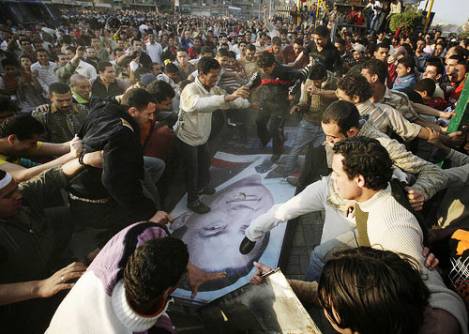
CAIRO — Egypt was engulfed in a fifth day of protests on Saturday but an attempt by President Hosni Mubarak to salvage his 30-year rule by firing his cabinet and calling out the army appeared to backfire as troops and demonstrators fraternized and called for the president himself to resign.

While some protesters clashed with police, army tanks expected to disperse the crowds in central Cairo and in the northern city of Alexandria instead became rest points and even, on occasion, part of the protests as anti-Mubarak graffiti were scrawled on them without interference from soldiers.

“Leave Hosni, you, your son and your corrupted party!” declared the graffiti on one tank as soldiers invited demonstrators to climb aboard and have their photographs taken with them.

“This is the revolution of all the people,” declared the side of a second tank in downtown Cairo. Egyptian men all serve in the army, giving it a very different relationship to the people from that of the police.

The feared security police had largely withdrawn from central Cairo to take up positions around the presidential palace, with their places taken up by the army.

Following Mr. Mubarak’s demand in his late-night speech, the Egyptian cabinet officially resigned on Saturday. But there was no sign of letup in the tumult. Reports from morgues and hospitals suggested that at least 50 people had been killed so far.

In Ramses Square in central Cairo Saturday midday, protesters commandeered a flatbed army truck. One protester was driving the truck around the square while a dozen others on the back were chanting for President Mubarak to leave office. Nearby, soldiers relaxed around their tanks and armored vehicles and chatted with protestors. There were no policemen in sight.

In another sign that the army was showing sympathy for the demonstrations, in a different central Cairo square on Saturday a soldier in camouflage addressed a crowd through a bullhorn declaring that the army would stand with the people.

“I don’t care what happens,” the soldier said. “You are the ones who are going to make the change.” The crowd responded, “The army and the people will purify the country.”

Workers at the Alexandria morgue said they had counted more than 20 bodies from the last 24 hours of violence. Meanwhile, protests had started up again in the city. But there too, the demonstrators and the soldiers showed sympathy for one another. Demonstrators brought tea to the troops and had their pictures taken with them. Protesters walked by armored carriers unmolested with few signs of animosity. People gathered outside the morgue looking for their relatives. In the main hospital, there were a number of people lying wounded from live fire.

Cell phone service, cut off by the government on Friday, was partially restored although other elements of the communication shut down remained in force. On Friday, with much of the nation in open revolt, Mr. Mubarak deployed the nation’s military and imposed a near-total blackout on communications to save his authoritarian government of nearly 30 years.

In the early hours of Saturday, protesters continued to defy a nationwide curfew as Mr. Mubarak, 82, breaking days of silence, appeared on national television, promising to replace the ministers in his government, but calling popular protests “part of bigger plot to shake the stability” of Egypt. He refused calls, shouted by huge, angry crowds on Friday in the central squares of Cairo, the northern port of Alexandria and the canal city of Suez, for him to resign.

“I will not shy away from taking any decision that maintains the security of every Egyptian,” he vowed.

Whether his infamously efficient security apparatus and well-financed but politicized military could enforce that order — and whether it would stay loyal to him even if it came to shedding blood — was the main question for many Egyptians.

It was also a pressing concern for the White House, where President Obama called Mr. Mubarak and then, in his own Friday television appearance, urged him to take “concrete steps” toward the political and economic reform that the stalwart American ally had repeatedly failed to deliver.

Whatever the fallout from the protests — be it change that comes suddenly or unfolds over years — the upheaval at the heart of the Arab world has vast repercussions for the status quo in the region, including tolerance for secular dictators by a new generation of frustrated youth, the viability of opposition that had been kept mute or locked up for years and the orientation of regional governments toward the United States and Israel, which had long counted Egypt as its most important friend in the region.

Many regional experts were still predicting that the wily Mr. Mubarak, who has outmaneuvered domestic political rivals and Egypt’s Islamic movement, the Muslim Brotherhood, for decades, would find a way to suppress dissent and restore control. But the apparently spontaneous, nonideological and youthful protesters also posed a new kind of challenge to a state security system focused on more traditional threats from organized religious groups and terrorists.

Friday’s protests were the largest and most diverse yet, including young and old, women with Louis Vuitton bags and men in galabeyas, factory workers and film stars. All came surging out of mosques after midday prayers headed for Tahrir Square, and their clashes with the police left clouds of tear gas wafting through empty streets.

For the first time since the 1980s, Mr. Mubarak felt compelled to call the military into the streets of the major cities to restore order and enforce a national 6 p.m. curfew. He also ordered that Egypt be essentially severed from the global Internet and telecommunications systems. Even so, videos from Cairo and other major cities showed protesters openly defying the curfew and few efforts being made to enforce it.

Street battles unfolded throughout the day Friday, as hundreds of thousands of people streamed out of mosques after noon prayers on Friday in Cairo, Alexandria, Suez and other cities around the country.

By nightfall, the protesters had burned down the ruling party’s headquarters in Cairo, and looters marched away with computers, briefcases and other equipment emblazoned with the party’s logo. Other groups assaulted the Interior Ministry and the state television headquarters, until after dark when the military occupied both buildings and regained control. At one point, the American Embassy came under attack.

Six Cairo police stations and several police cars were in flames, and stations in Suez and other cities were burning as well. Office equipment and police vehicles burned, and the police seemed to have retreated from Cairo’s main streets. Brigades of riot police officers deployed at mosques, bridges and intersections, and they battered the protesters with tear gas, water, rubber-coated bullets and, by day’s end, live ammunition.

With the help of five armored trucks and at least two fire trucks, more than a thousand riot police officers fought most of the day to hold the central Kasr al-Nil bridge. But, after hours of advances and retreats, by nightfall a crowd of at least twice as many protesters broke through. The Interior Ministry said nearly 900 were injured there and in the neighboring Giza area, with more than 400 hospitalized with critical injuries. State television said 13 were killed in Suez and 75 injured; a total of at least six were dead in Cairo and Giza.

The uprising here was also the biggest outbreak yet in a wave of youth-led revolts around the region since the Jan. 14 ouster of President Zine el-Abidine Ben Ali of Tunisia — a country with just half Cairo’s population of 20 million. “Tunis, Tunis, Tunis,” protesters chanted outside the Tunisian Embassy here.

“Egyptians right now are not afraid at all,” said Walid Rachid, a student taking refuge from tear gas inside a Giza mosque. “It may take time, but our goal will come, an end to this regime. I want to say to this regime: 30 years is more than enough. Our country is going down and down because of your policies.”

Mr. Mubarak, in his televised address, said he was working to open up democracy and to fight “corruption,” and he said he understood the hardships facing the Egyptian people. But, he said, “a very thin line separates freedom from chaos.”

David Kirkpatrick talks about the close call he had while with Nobel laureate, Mohamed ElBaradei, the kinds of police on the streets in Egypt and the possible prospects for the Mubarak government.
 

His offer to replace his cabinet is unlikely to be viewed as a major concession; Mr. Mubarak often changes ministers without undertaking fundamental reforms.

A crowd of young men who had gathered around car radios on a bridge in downtown Cairo to listen to the speech said they were enraged by it, saying that they had heard it before and wanted him to go. “Leave, leave,” they chanted, vowing to return to the streets the next day. “Down, down with Mubarak.”

A bonfire of office furniture from the ruling party headquarters was burning nearby, and the carcasses of police vehicles were still smoldering. The police appeared to have retreated from large parts of the city.

Protesters throughout the day on Friday spoke of the military’s eventual deployment as a foregone conclusion, given the scale of the uprising and Egyptian history. The military remains one of Egypt’s most esteemed institutions, a source of nationalist pride.

It was military officers who led the coup that toppled the British-backed monarch here in 1952, and all three Egypt’s presidents, including Mr. Mubarak, a former air force commander, have risen to power through the ranks of the military. It has historically been a decisive factor in Egyptian politics and has become a major player — a business owner — in the economy as well.

Some protesters seemed to welcome the soldiers, even expressing hopes that the military would somehow take over and potentially oust Mr. Mubarak. Others said they despaired that, unlike the relatively small and apolitical army in Tunisia, the Egyptian military was loyal first of all to its own institutions and alumni, including Mr. Mubarak.

“Will they stage a coup?” asked Hosam Sowilan, a retired general and a former director of a military research center here. “This will never happen.” He added: “The army in Tunisia put pressure on Ben Ali to leave. We are not going to do that here. The army here is loyal to this country and to the regime.”

One of the protesters leaving a mosque near Cairo was Mohamed ElBaradei, an Egyptian who won the Nobel Peace Prize for his work with the International Atomic Energy Agency and has since emerged as a leading critic of the government.

“This is the work of a barbaric regime that is in my view doomed,” he said after being sprayed by a water cannon.

Now, he said, “it is the people versus the thugs.”

Key Party Rejoins Pakistan’s Coalition

By J David Goodman for The New York Times

A day after Prime Minister Yusuf Raza Gilani announced a rollback of fuel price increases that were deeply unpopular in Pakistan, a major political party said on Friday that it would rejoin the ruling coalition, defusing a tense political standoff and saving Mr. Gilani’s government from potential collapse, news reports said.

The party, the Muttahida Qaumi Movement, broke with the ruling Pakistan Peoples Party over the weekend in part to protest the price increases and other reforms proposed by the government, causing a political crisis for the prime minister and President Asif Ali Zardari. Opposition parties echoed the call to reverse the increases as well as recent cuts in spending and threatened the government with a three-day deadline before a no-confidence vote.

Political tension deepened on Tuesday with the assassination of Salman Taseer, the governor of Pakistan’s most populous region and an ally of Mr. Zardari, because of his support for changes to the country’s blasphemy law.

Raza Haroon, a senior leader in the Muttahida Qaumi Movement, said on Friday that his party had decided to rejoin the ruling coalition for the sake of democracy and the country, The Associated Press reported.

While the government appears to have survived for the moment, it does so at the expense of political and economic reforms encouraged by the United States.

In a meeting with Muttahida Qaumi Movement party officials on Friday, Mr. Gilani said that he would also put off proposed changes promoted by the State Department and the International Monetary Fund to increase tax collection, Reuters reported.

Pakistan, an important American ally, still faces a widening rift between secular and religious forces within the government, even as its army battles Taliban insurgents around the country’s mountainous northwestern border with Afghanistan.

The killing of Mr. Taseer, by a religiously motivated member of his own security staff, raised concerns for the United States and exposed the deep divisions in Pakistan. His killer, who proudly confessed the crime to the police, has been celebrated by many and was greeted by affectionate crowds throwing rose petals both times he appeared in court this week.

But Adm. Mike Mullen, chairman of the Joint Chiefs of Staff, said earlier this week that Pakistan’s security relations with the United States would survive the crisis.

Will India Win Coveted UN Seat?

By Sunil Sharan for The Huffington Post

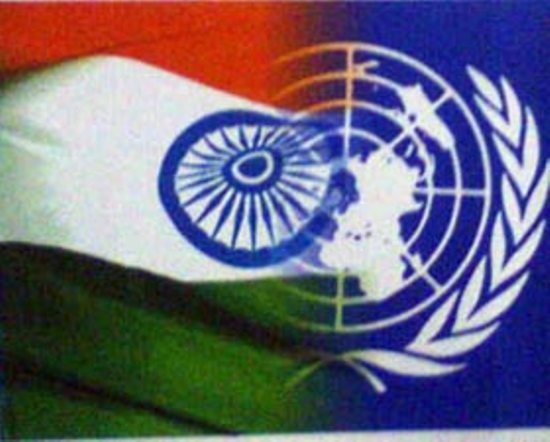
Indian foreign secretary Nirupama Rao says Pakistan is hypnotically obsessed with India but she and her bosses too are fixated on a coveted prize, a permanent seat at the United Nations Security Council. The mandarins of New Delhi must be pleased as punch to have had over to visit leaders of all five permanent member countries in quick succession. Inexorable appears the march but will India find the pot of gold at the end of the rainbow? And, if it does, what are the implications for itself as well as for Pakistan?

First in was David Cameron of Britain, who arrived during the summer and offered unstinting support, whetting local appetite for the main American course. And, did he fail to disappoint? No sir, Barack Obama set the cat amongst the pigeons by endorsing India for the seat, the first time ever by the US. India rejoiced while Pakistan recoiled.

But a careful examination shows him adhering closely to what he told Bob Woodward in the book, Obama’s Wars. In lieu of the seat, he expects India to resolve Kashmir. At a press conference with Manmohan Singh, Obama characterized Kashmir as a long-standing dispute making the latter stutter that the K-word was not scary. Only then did Obama hand over the endorsement in India’s Parliament but couched in such diplomatese that countless local hair were split over when “the years ahead” would dawn.

Next waltzed in Nicolas Sarkozy of France. The French, like the British, have consistently seen merit in India’s case. Sarkozy though, true to type, proved an enigma. He first tagged on the applications of Africa, the Arabs and pretty much the rest of the world onto India’s, befuddling his hosts, who are willing to concede as equal aspirants only “self-appointed frontrunners” Germany, Japan and Brazil. Just as they were about to give up on him, Sarkozy warmed the cockles of India’s heart by throwing in 2011 as early as when it could make it.

But soon came the caveat. Sarkozy, just like Obama before him, cautioned that with great power status came great responsibilities. Whereas Obama wanted India to be more mindful of human rights violations of countries such as Iran and Myanmar, Sarkozy wanted India to send military forces to keep world peace. With India already being one of the foremost contributors to UN peacekeeping missions throughout the world, the mandarins of New Delhi must have been left wondering what more was being asked of them.

No matter, three down, two to go. By now the state jets were landing at Delhi airport almost on top of one another. Wen Jiabao, the leader India was least looking forward to, came with the master key to entry. Shortly before his visit, WikiLeaks revealed China’s opposition to any council expansion. Indian hopes were up nevertheless but Wen remained inscrutable, willing only to acknowledge an understanding of India’s aspirations. No one in India knew quite what to make of him and since Wen was off to Pakistan next, all the country could do was wait with clenched teeth to hear what he would say there.

Rounding off the passage to India was Dmitry Medvedev. Relations between Russia and India have frayed considerably since the heady days of the cold war, so much so that Russia has waffled on India’s bid. Medvedev signaled that the waffle still needed baking, voicing support for India while reiterating that reforming the council was tough and required consensus.

All the while Pakistan protested vociferously against what it deemed an indulgence of Indian hegemonism. But what will India gain with a permanent UN seat? Could it block Pakistani claims on Kashmir? True a permanent member wielding veto power can stonewall but the veto seems unattainable for seekers since they themselves have forsaken it. And, while India sees red when the K-word is uttered in the UN by Pakistan, no ascension to permanency can make it strangle the latter. Nor can it efface any past security council resolutions.

So then, what is it? Nothing comes to mind but the obvious, the acceptance that any arriviste craves. Even that appears a false hankering because ever since its early years, Gandhi’s legacy and Nehru’s charisma burnished the country with global influence disproportionate to its economic and military capabilities. A bee once in one’s bonnet is hard to get rid of though. And, as every journey must have a fitting end, India has found a destination to its liking.

Flush with cash, New Delhi wants to beef up its military. All of the recent visitors bar China are major suppliers of defence equipment to India. As bees flock to honey, they arrived armed with catalogues of the most terrifying stuff. Inherent was a delicate diplomatic quid-pro-quo. The more arms you buy from us, the more we will push your candidacy. As Islamabad keeps raising the bar for India’s seat, so too will India have to up its arms binge.

Lost in Pakistan’s current rhetoric was its vote in October to put India in the security council for two years beginning January 1, 2011. Once on, we will never get off is the new mantra of India’s brave. India seemingly returned the favor by taking in stride the sale of Chinese nuclear reactors to Pakistan. Is there more afoot than meets the eye?

Every country is entitled to its obsession. Pakistan’s is obvious. By continually thumbing its nose at a NATO mired in Afghanistan, it has put the K-word in spotlight, albeit on the backstage. A deal has been blessed by the powers that be. Both the seat and Srinagar are not far away.

The writer edits a website on India: http://www.scooptime.com.

Chinese Premier Visits Pakistan to Reinforce Ties

By Salman Masood for The New York Times

ISLAMABAD, Pakistan — Chinese Prime Minister Wen Jiabao arrived in Islamabad on Friday for a three-day visit that Pakistani officials said was aimed at strengthening the strategic partnership and economic cooperation between the two neighboring countries.

Prime Minister Yusuf Raza Gilani and members of his cabinet welcomed Mr. Wen at Chaklala Air Base in neighboring Rawalpindi on Friday afternoon. A red carpet was rolled out and elaborate ceremonies were held to signify the importance Pakistan attaches to China, which is considered a close ally.

“Friendship with China is a matter of pride for our nation,” Mr. Gilani was quoted as saying by local media as he welcomed his Chinese counterpart.

Apart from holding meetings with Mr. Gilani and President Asif Ali Zardari, Mr. Wen was scheduled to address a special joint session of the Parliament on Sunday.

Pakistan’s military ties with China are strong and China has assisted Pakistan in tank production, fighter aircraft manufacturing and naval technology. But since the late 1990s, economic concerns have gained increased importance. Trade and energy have taken precedence in Pakistan’s relations with China.

Mr. Wen was accompanied by 260 business executives.

Pakistani officials say there is a need to enhance trade between the countries that stands around $7 billion a year. But there also are concerns here that the trade deficit is growing heavily in favor of China.

“The relationship is undergoing a qualitative change,” said Mansoor Ahmad, an independent security analyst based in Islamabad. “This change is manifested in China’s relationship with emerging markets and developing countries, which is essentially based on forging and enhancing trade linkages and securing new markets for Chinese investment.”

The Chinese are also cooperating with Pakistan in developing its civil nuclear energy program despite discontent from Washington and New Delhi.

Mr. Wen, the Chinese prime minister, arrived here after completing a two-day tour of India, the estranged neighbor of Pakistan.

China would have to undertake a fine balancing act regarding enhancing its cooperation with both India and Pakistan, said Mr. Ahmad. China and India would forge economic ties despite their continuing territorial disputes, given India’s huge market, he said. Tensions between India and Pakistan worsened after the terrorist attacks in Mumbai in 2008, which India and the United States blamed on Lashkar-e-Taiba, a militant Islamic group based in Pakistan.

The Pakistan government sees China as a counterweight to India, and officials said that closer Chinese cooperation with India would not affect Pakistani ties with China.

Nonetheless, Mr. Wen’s visit to India this week yielded greater immiediate progress on the economic front than toward resolving the more complicated geostrategic issues.

“In Pakistan’s case, we have already had a longstanding strategic partnership which is now being supplemented by increasing Chinese investment in infrastructural development, civil nuclear cooperation and establishing rail and road linkages between the two countries,” Mr. Ahmad said.

The Nexus of US-India-Pakistan Relations

By Manzer Munir for Pakistanis for Peace

As President Obama wraps up his visit to India in the next day, a couple of things are important to point out about relations between the United States and India as well as how Pakistan fits into the equation.

The balance of power between India and the US still lies with the United States, however, India is set to make more and more gains in becoming more influential as its economy grows and as the United States looks to it to counter China in Asia.

The strategic partnership between the two countries and the importance of India for the United States is going to become vital as America uses India to contain China’s influence in the region and around the world.

We do believe that President Obama is correct in stating that relations between the two countries warrant being called the defining relationship of the century as there is no other country that compliments the United States presently in the world as does India. Not only do both countries share democratic ideals and a multiethnic population, but both countries are also increasingly dependent on each other’s economies. Add to this the nuclear cooperation as well as America’s support for India to get a permanent seat on the UN Security Council, and it becomes evident that this relationship will continue to grow over time.

President Obama has offered criticism on Pakistan already but is careful in trying to walk the tight rope act that is India-Pakistan relations. There are certainly more behind the scene steps taking place that will chide Pakistan into doing more. But in our view, the single most important thing that the US and the Obama administration can do is to help India and Pakistan come back to the table to get the peace process moving along. There is widespread agreement with the President’s assessment that a prosperous and stable Pakistan is in the best interests of India, Afghanistan and the region. In this effort, we believe there needs to be done more by all parties involved.

India’s argument has always been that the terrorist infrastructure and support for some anti-India militant groups needs to end before New Delhi will resume the peace process with Pakistan.

India should not refuse extensive trade relationships with the US due to American support of Pakistan as it does not do anything to help India. India realizes the situation both inside Pakistan and America’s dependency of the Pakistan Army’s support in flushing out the Taliban. It would go against India’s interests if it put its relationship and advancement with the United States as being dependent on American support for Pakistan and its vital assistance in the war in Afghanistan and on terror.

Peace between India and Pakistan and in the Kashmir valley is the only solution to both the conflict between the two nations as well as it is in America’s interests for both countries and the region. Furthermore, peace between the two countries will allow both Pakistan’s full focus on the Afghan border in helping American troops against the Taliban as well as the elimination of anti-India militant groups within Pakistan, many of whom are alleged to still be receiving support from elements within Pakistan’s ISI spy agency, much to India’s chagrin.