Archive for the ‘ Islam ’ Category

Keith Olbermann – Special Comment, Muslim Community Center

“THEY CAME FIRST for the Communists,
and I didn’t speak up because I wasn’t a Communist.

THEN THEY CAME for the trade unionists,
and I didn’t speak up because I wasn’t a trade unionist.

THEN THEY CAME for the Jews,
and I didn’t speak up because I wasn’t a Jew.

THEN THEY CAME for me
and by that time no one was left to speak up.”
-Martin Niemöller

“This is America damn it! And in America when somebody comes for your neighbor, or his Bible, or his Torah, or his Athiest Manifesto, or his Koran, you and I do what our fathers did and our grandmothers did, and our founders did, you and I SPEAK UP!”
– Keith Olbermann

NYC Mosque Should Be Seen As a Reconciliation Not a Provocation

By Manzer Munir for Pakistanis for Peace

A New York City panel cleared the way Tuesday for an Islamic Center and mosque to be built several blocks from Ground Zero and the tragedy of September 11, 2001. The New York City Landmarks Preservation Commission voted unanimously to deny historic status to a 19th century building near Ground Zero. By doing so, it paves the way for the old building’s demolition and the construction of a 15 story Muslim community center, a mere two blocks from the World Trade Center site. The controversy has brewed for months over the creation of a mosque and an Islamic center so close to the site of the World Trade Centers where nearly 3,000 Americans died in terrorist attacks blamed on Muslim terrorists affiliated with the terrorist group Al-Qaeda.

Opponents of the mosque have argued that the creation of it so close to the site of the 9/11 terrorist attacks disrespects the memory of those killed. They also question who is behind the funding and bankrolling of the proposed structure, Cordoba House, which is estimated to cost nearly $100 million. Many prominent members of the Republican Party such as Newt Gingrich and Sarah Palin have come out strongly against the building of the mosque and Muslim center so close to the site of the attacks. Gingrich argued that “that the Ground Zero mosque is all about conquest and thus an assertion of Islamist triumphalism which we should not tolerate.”

Seemingly directed at peace seekers such as myself, Sarah Palin posted the following message on her Twitter page “Peace-seeking Muslims, please understand. Ground Zero Mosque is UNNECESSARY provocation; it stabs hearts. Please reject it in the interest of healing.”

Some of the relatives of the victims of the 9/11 attacks have come out and said that the mosque and Islamic center would amount to a monument for terrorists as the extremists would see it as a celebration of their destruction of an American monument and lives lost. According to them, the building of the Muslim structure gives an impression that the Islamic extremists won and we Americans lost, not just in terms of lives lost but also in terms of lost and lowered morale.

The proponents of the Cordoba House have advocated the building of the structure especially since they see the center as an organization that promoted tolerance and inter faith dialogue, reflecting the rich diversity of New York City. They say that the “center will be community-driven, serving as a platform for inter-community gatherings and cooperation at all levels, providing a space for all New Yorkers to enjoy.”

Their website further states that the Cordoba House project is “about promoting integration, tolerance of difference and community cohesion through arts and culture. Cordoba House will provide a place where individuals, regardless of their backgrounds, will find a center of learning, art and culture; and most importantly, a center guided by Islamic values in their truest form – compassion, generosity, and respect for all.”

In fact the name Cordoba House, takes its name from the medieval Spanish city where Christians, Jews and Muslims lived in peace and harmony under the Moors of Spain for over 800 years. Mayor Michael Bloomberg was right in supporting the construction of the Cordoba House not just on the basis that religious freedom is enshrined in our constitution, but because it was the right thing to do. Denying the building of this structure would have been a blatant admission on the part of the city and indeed the entire country that there is absolutely no difference in the twisted misinterpretation of Islam practiced by the hijackers and the Taliban and the one practiced by the rest of the 1.5 billion Muslims worldwide. As if a mere 19 deranged, misguided, yet determined adolescent men could change the fact that the vast majority of the adherents of Islam are peaceful, hardworking, average people like you and me who want nothing more than to live a good life, raise their kids, and worship their creator.

No, the opponents of the Cordoba House and their hate wagering backers and right wing politicians like Palin and Gingrich want nothing more than to incite people into believing that Islam in general is bad and evil and to suspect anything that goes on in a mosque. Oddly enough, it seems that much like their enemy, the Taliban and Muslim fundamentalists, the right wing politicians in the GOP want nothing more than “Clash of Civilizations” to come about between Islam and the West. Preachers like the Pastor Terry Jones in Gainesville, Florida who is organizing an “Everybody burn a Quran Day” as well as mainstream evangelicals like Pat Robertson also condone this view and treatment of Islam and Muslims.

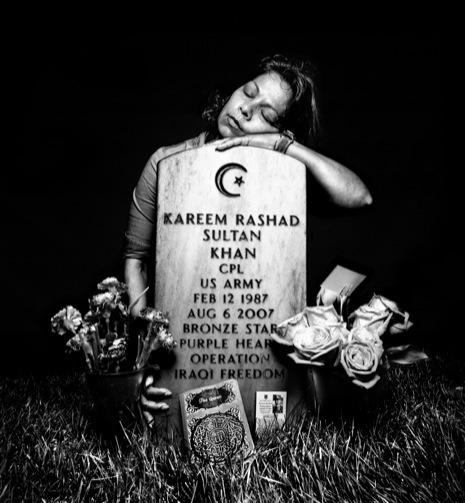
Little do these so called “leaders” realize that scores of Muslim Americans also perished that day on September 11, 2001. The hate and fear mongers will not want you to know the story of Salman Hamdani, a NYPD police cadet, who was a part time ambulance driver, an incoming medical student, and devout Muslim whose remains were found at the North Tower, with his EMT medical bag beside him, presumably trying his best to help those at the site of the attacks. Or the Muslim waiter at the Windows of the World restaurant, who never got to see his wife give birth to their son two days after the attacks. I wonder if Gingrich, Palin or any of the others could look US Army Specialist Kareem Rashad Sultan Khan’s mother in the eye and tell her that although her son died in an American uniform fighting in Iraq under the American flag, his religion and his beliefs system are evil and have no place in American life. The deceased Purple Heart and Bronze Star recipient would turn in his grave at Arlington National Cemetery if he knew how his faith was being disrespected and marginalized by politicians and right wing blowhards like Rush Limbaugh and Glenn Beck, individuals who never served this country or risked their life as had Specialist Khan.

It is heartening to see that good sense prevailed by the New York City panel that had the tough job of deciding on this issue and this heavily watched story. Although there promises to be a further fight and appeal by the opponents of the Islamic center, one hopes that the ruling would stand as denying it would clearly violate the freedom of religion that all faiths should get in America, regardless of the actions of some of their members. After all, one should not punish and ostracize the many for the actions of a few.

-Manzer Munir, founder of Pakistanis for Peace, is a freelance journalist who writes for PakistanisforPeace.com and other online journals.

Church Plans Quran-Burning Event

By Lauren Russell for CNN

In protest of what it calls a religion “of the devil,” a nondenominational church in Gainesville, Florida, plans to host an “International Burn a Quran Day” on the ninth anniversary of the September 11, 2001, attacks. 

The Dove World Outreach Center says it is hosting the event to remember 9/11 victims and take a stand against Islam. With promotions on its website and Facebook page, it invites Christians to burn the Muslim holy book at the church from 6 p.m. to 9 p.m.

“We believe that Islam is of the devil, that it’s causing billions of people to go to hell, it is a deceptive religion, it is a violent religion and that is proven many, many times,” Pastor Terry Jones told CNN’s Rick Sanchez earlier this week.

Jones wrote a book titled “Islam is of the Devil,” and the church sells coffee mugs and shirts featuring the phrase.  Muslims and many other Christians — including some evangelicals — are fighting the initiative. The church launched a YouTube channel to disseminate its messages.

“I mean ask yourself, have you ever really seen a really happy Muslim? As they’re on the way to Mecca? As they gather together in the mosque on the floor? Does it look like a real religion of joy?” Jones asks in one of his YouTube posts.

“No, to me it looks like a religion of the devil.”

The Islamic advocacy group Council on American-Islamic Relations called on Muslims and others to host “Share the Quran” dinners to educate the public during the month long fast of Ramadan beginning in August. In a news release, the group announced a campaign to give out 100,000 copies of the Quran to local, state and national leaders. “American Muslims and other people of conscience should support positive educational efforts to prevent the spread of Islamophobia,” said CAIR spokesman Ibrahim Hooper in the release.

The National Association of Evangelicals, the nation’s largest umbrella evangelical group, issued a statement urging the church to cancel the event, warning it could cause worldwide tension between the two religions. “The NAE calls on its members to cultivate relationships of trust and respect with our neighbors of other faiths. God created human beings in his image, and therefore all should be treated with dignity and respect,” it said in the statement. Dove’s Facebook page, set up for the September event, has more than 1,600 fans. “Eternal fire is the only destination the Quran can lead people to, so we want to put the Quran in it’s [sic] place — the fire!” the page says.

But another Facebook group with more than 3,100 fans says it stands “against the disrespect and intolerance that these people have for the Muslim people” and encourages people to report Dove’s page to Facebook. Targeting another group it calls “godless,” the Dove center is also hosting a protest against Gainesville Mayor Craig Lowe, who is openly gay, on Monday at Gainesville’s City Hall. The group previously fought — unsuccessfully — to derail Lowe’s election campaign.

“We protest sexual perversion because the Bible protests it. What is acceptable to today’s leadership becomes acceptable to tomorrow’s society,” the church says in its blog entry about the event. Lowe and other government figures and media outlets received e-mails from the church about the event, The Gainesville Sun reported. Lowe isn’t concerned with Monday’s event.

“I’ve got other things to do,” he said, The Sun reports.

On the outreach center’s front lawn, alongside a sign reading “Aug. 2 Protest, No Homo Mayor, City Hall,” stands not just one, but three signs bearing the slogan “Islam is of the Devil.”  One of the signs — one reading “Islam” on one side, “Devil” on the other — was vandalized. On its blog last week, the church said the sign will be replaced. “This is private property and vandalism is a crime here in America,” the blog says. “In Islam, many actions that we consider to be crimes are encouraged, condoned or sheltered under Islamic teaching and practice, though. Another reason to burn a Quran.”

Cross-Border Unions: How Indo-Pakistani Marriages Prosper

By Vinita Bharadwaj for The National-UAE
While relations between their countries may be at an all-time low, Indians and Pakistanis who marry each other often find extended family ties confound their nations’ mutual hostility.

It is a truth universally acknowledged, that when two South Asians wed, they not only marry each other, they also marry into each other’s family.

And family matters between Indians and Pakistanis might be expected to be highly charged, given those two countries’ mutual antipathy for more than 60 years.

“When an Indian marries a Pakistani, it’s a loaded event that can only be matched by the energy of a cricket match between the two countries,” says Amra Hyder, a Pakistani.

The partition of British India into Pakistan and India is historically recorded as the largest human migration ever. It displaced millions and forced people of a common culture to choose a new geography and subscribe overnight to the idea of previously non-existent nations.

Most tragically, it split families. The ghosts of the 1947 partition loom large in the psyches of both countries’ modern histories that include three wars, a continuing dispute over Kashmir and terrorism.

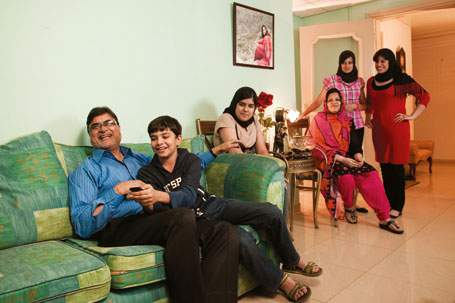
Amra is originally from Pakistan and is married to Zulfiqar Hyder, who hails from India. Amra and Zulfiqar, now Canadian citizens, have lived in Sharjah with their four children since 2006.

In 1992, when the gregarious, romantic 23-year-old Amra married the 33-year old Zulfiqar, a studious man from India, she did not quite know what to expect – from married life, her in-laws and most importantly, her husband’s country. “I also never would have imagined I would be apologetic for both countries’ ridiculous obsession with ‘Shonia’,” she says of the media brouhaha over the recent nuptials of the Pakistani cricketer Shoaib Malik and the Indian tennis player Sania Mirza.

For long before the Malik-Mirza marriage, thousands of Indians and Pakistanis, mostly from families divided by the 1947 partition, have been marrying each other.

The difference is that now these marital alliances are formed outside the extended family circuit. Amra and Zulfiqar did not have an arranged marriage, and neither of them had any intention of settling in either India or Pakistan. They opted to overcome predictable visa hassles by initially residing in the UAE soon after their wedding, and migrated to Canada in 1996 to obtain citizenship, in the hope that it would ease their trips between India and Pakistan.

 
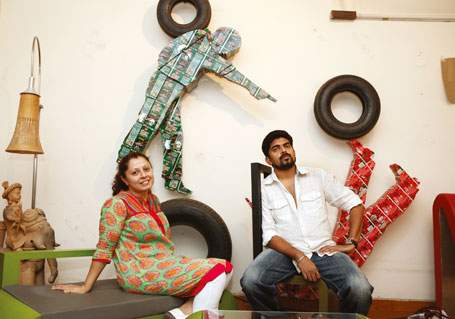
Masooma Syed, from Lahore, met her Keralan husband Sumedh Rajendran at an artists’ residency programme in Delhi. ‘I knew he understood me perfectly.’ Charla Jones

The couple first met in Abu Dhabi at a mutual friend’s party, and married within a year. The wedding took place in Karachi, with Zulfiqar’s entire family flying in from the northern Indian city of Lucknow. “It was a lovely wedding,” Amra recalls, adding that the questioning – albeit, in jest – began soon after they were married. “It was like, ‘Now you’re an Indian daughter-in-law’ and ‘Who will you support in cricket’ or even ‘Who will you support in war’?”

Her response was simple. “I married an Indian, not India. Having said that, I have been welcomed so warmly and given unbelievable respect by Indians, whenever I visit. My relationship with the people, I cherish. The politics, I don’t care for.”

Amra grew up in Abu Dhabi and returned to Lahore for university. Her childhood perception of Indians was to lump them all as people from the Southern Indian state of Kerala. “It was so wrong,” she says regretfully admitting to an error of judgment on her part, “but I honestly never really gave it any thought.” Although her grandfather was an active political leader – initially in the Indian independence struggle and later in the Muslim League, which pressed for Pakistan’s creation – she was uninterested in matters of politics.

On numerous trips to Northern India in the last 18 years, Amra has returned amazed by the cultural similarities she has observed between Indians – including non-Muslims – and her community in Pakistan. “We speak the same kind of language, we appreciate the same food, we like the same clothes, we place the same importance on family values. We even share similar pre-wedding festivities. It’s hardly an alien experience,” she says.

The differences were more to do with class and little do with the country. “Compared to my husband’s childhood, mine was very privileged. He is a self-made man and has single-handedly contributed to his family’s success. If I had to get used to anything, it was holidaying in a home that would experience power cuts and water shortages.”

Amra and Zulfiqar’s children – Hira (17), Anum (13), Zahra (11) and Ali (10) – describe themselves as desi, a generic, originally sanskrit, term used by South Asian immigrants that loosely denotes their origins. They are an animated group and debate the definition of desi among themselves, as their parents look on proudly. The conclusion: among younger generations in urban settings, desi communities have spawned a culture bound by a fondness for Bollywood, cricket, South Asian food and fused elements of their upbringing at home with the globalised, western outlook they are exposed to outside.

Having said that, India and Pakistan enjoy enormous cultural riches – largely attributable to their ethnic, regional and linguistic diversity. Both countries together are akin to the European Union – with each of their provinces having their own quirks, tastes and sensibilities. These subtleties within communities are apparent when embedded among the people in their own land.

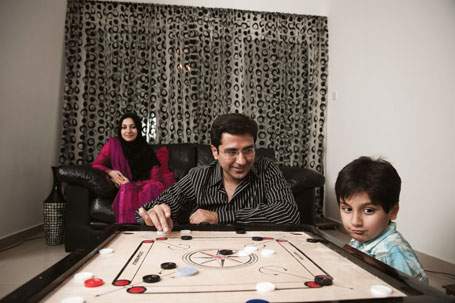
Shadab Raza, from Lucknow, India, his Pakistani wife Sana Zehri and their six-year-old son Ali have relatives on both sides of the border. ‘There’s never been this India-Pakistan mentality in our families,’ Shadab said. Siddharth Siva / Arabian Eye

Masooma Syed, an artist from Lahore, lives in Delhi with her husband Sumedh Rajendran, also an artist, but from the south of India. They were introduced to each other at an artists’ residency programme in the Indian capital Delhi in 2003. Following that, they would arrange to meet in Manchester, Sri Lanka and New York before finally geting married in July 2008.

Their cultural backgrounds could not be more different, as are their temperaments and artistic styles. “And yet, I knew he understood me perfectly,” says Masooma of the decision to marry across the border and step into the cumbersome world of visas, soon after exchanging wedding vows in Sri Lanka.

“We never thought about a third country [to live in]. Sumedh has lived in Delhi for the last 15 years and I’ve had absolutely no problem in adjusting to living here. It’s just like Lahore. Ironically, I find Sumedh is more of a foreigner in his own country’s capital than I am. We have discussed moving to a neutral country, especially if visa regulations became tighter, but then as artists all our inspirations stem from this region. Relocating would uproot those emotions and we wonder what impact that would have on our work.”

Kerala, where Sumedh is from, however, is an altogether different milieu. “The first time Masooma visited, she was stunned,” says Sumedh.

“I thought to myself, how lucky am I to be able to see and discover these different facets of India,” she says recalling her reaction to the abundant greenery, the aromatic spices, the swaying coconut palms and the simple people.

But since marrying Sumedh, Masooma has found herself saddled with the unexpected baggage of acting as an ambassador of sorts for both countries. “It’s annoying at times,” she says. “And really it’s all because of immature media reportage in one country about the other. So I end up having to either justify, explain or make excuses for India when in Pakistan or vice versa. I’m not used to being accountable to anyone and this new role is quite tiring, even if it does come with special treatment in some instances.”
The challenges within an Indo-Pak marriage, according to Masooma, seem to be similar to any mixed-culture marriage. Except that among South Asian communities, tradition dictates the wife follows the husband to his home, or homeland. In the specific India-Pakistan context of the 21st century, the complications of visas and work permits make it harder for educated women to carve out an identity for themselves in their new environment. “It’s definitely much easier to be in a third country – either resident or citizen – when in an Indo-Pak marriage. Also, in today’s world, the younger generations of Indians and Pakistanis are meeting and interacting abroad, first as students and then as professionals. Marriages between different faiths among this demographic is on the rise and logistics is no longer a deterrent to falling in love.”

Masooma has been visiting India since 2003 and as an artist she has travelled, exhibited and worked in both countries. “I go through the same motions as all Pakistani nationals applying for an Indian visa. It’s a process and is easy or difficult depending entirely on how you want to look at it,” she says. In early June, the Indian government announced it was relaxing the requirements for granting the extension of long-term visas to four categories of Pakistani nationals, including Pakistani women married to Indian nationals and staying in India. The announcement was welcomed by individuals in her situation.

Her current visa is a ‘visit visa’ valid for nine months that is split into three visits of 90 days each. She has to exit India after each ‘visit’, but says it suits her work commitments that require her to travel abroad. “And I can visit my family in Lahore,” she adds.

Pakistani nationals issued visas to India are typically allowed to visit a maximum of three cities and must report to a police station on arrival and before leaving for their next destination. Masooma is now exempted from the police reporting, as she is a regular traveller between India and Pakistan and is also now married to an Indian national. “I’m allowed to visit more than three cities each time, but it will be a while before I am given complete freedom to travel like any other foreigner,” she says.

She could apply for a residence permit, but would be compelled to stay in India until the paperwork is completed, but it’s diffiuclt to predict how long that would take. Nationality, however, remains a touchy issue, particularly among the educated and liberal women of either country, who see no reason in giving up the passport of the country they originally belong to.

“Unfortunately, political relations keep changing and this spills over into visas and affects people-to-people relationships,” says Zulfiqar Hyder, a staunch believer in encouraging contact between the two countries. The Hyder family hold Canadian passports, but they still have to apply for visas to visit India and Pakistan.

In the wake of the David Headley arrest – a US citizen of Pakistani origin – over his alleged terrorist connections and involvement in the 2008 Mumbai attack, Zulfiqar says having the Canadian passport makes little difference towards easing the process. “I’m trying to get a PIO (Person of Indian Origin) card for the children,” he says of the document issued by the Indian government that functions as a long-term multiple entry visa. As things stand, the foreign spouse of an Indian national is eligible for the PIO card, but the spouses from Pakistan are not, effectively ruling out Amra and her two elder daughters, as they were previously travelling on her passport. “I don’t understand the logic that my children cannot get the PIO card, because their mother is Pakistani,” says Zulfiqar.

The national security argument does not resonate with him as much as it does with Amra. “Frankly, if my family can be assured of safe travel, I don’t mind a little more waiting or dealing with a bit more bureaucracy,” she says. He shakes his head furiously, looks at me and asks: “Did the 26/11 terrorists enter India with passports? Did they? How did they enter India?”

They arrived by night. Across the Arabian Sea, first on a small boat, then a hijacked fishing trawler and finally entered Mumbai’s waters on a rubber dinghy.

Visa-related policies in both countries are updated depending on the warmth or frostiness of the political relationship. Shadab Raza, a 35-year old Indian also from Lucknow, married Pakistani national Sana Zehri, who grew up in the UAE. They have a six-year-old son who has an Indian passport. The families arranged their marriage, as Shadab’s maternal aunts live in Pakistan. “There’s never been this India-Pakistan mentality in our families, because we have relatives on both sides of the border,” says Shadab.

Sana’s ancestry can be traced back to Lucknow, as her grandparents migrated to Pakistan at the time of the partition. On her first visit to the city after her marriage, she visited the ancestral home of her grandparents and filmed it to share with them. “I filmed the house, the neighbourhood and some of the people recorded messages for them. When they watched the video they were consumed by nostalgic sadness. I think partition hurt their generation the most. Our parents to a lesser extent, but they still feel the impact of it as they grew up hearing about it from their parents and visiting immediate relatives in the other country. For my generation, the degree of the trauma is even more reduced, because we haven’t experienced much of the consequences of it directly,” she says.

Shadab and Sana’s son, Ali, however, is quite clear about where he is from. “India,” he says firmly.

Sana laughs and recalls an incident of him wanting a carrom board specifically ‘made in India’. “My father-in-law had to get the lettering customised because the shop, where they bought it didn’t sell carrom boards with a ‘made in India’ label,” she says. In the meantime, Ali brings out his carrom board and empties out the coins from their container. He then calls out to Shadab to come and play with him.

“There’s never been this India-Pakistan mentality in our families, because we have relatives on both sides of the border,” says Shadab sitting down at the board, across from Ali, who flicks the large striker coin towards the arrangement of smaller black and white coins stacked by colour in the centre of the board. The two towers collapse, some of the coins disperse in four directions, but none of them is pocketed.

“What a mess,” exclaims Ali.
Religious Freedom in America Includes Everyone

By Alex Howard for The Pueblo Chieftain

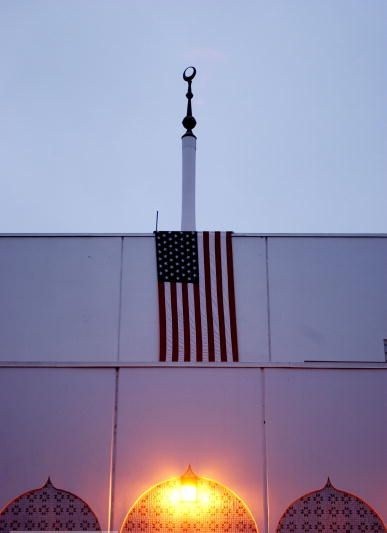
One of the fundamental freedoms we enjoy as citizens is to worship in whatever manner we want to and wherever we want to.

There are virtually no restrictions on this freedom, even when a particular exercise of a belief might be illegal for the general public. Within the scope of religious expression, even the use of drugs can be legitimate. For example, the use of peyote, a hallucinogenic cactus, is legit for members of Native American communities but illegal for the rest of us.

Moreover, the freedom of religion principle extends well beyond what most people think of as acceptable.

While all the mainstream religions are represented within the military services, we also find niches carved out for not-so-common expressions.

Wicca, also known as witchcraft, druidism, paganism and other names, is officially recognized by the United States military as a legitimate form of religious expression.

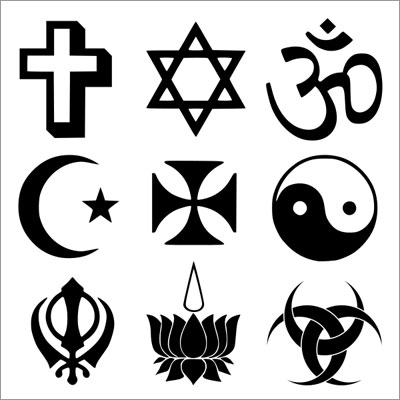
So, what I’m saying is that the freedom of religious expression is wide-ranging and as diverse as the citizenry in America. Christians, Jews, Hindus, Muslims, Buddhists, Rastafarians, Sikhs, Scientologists, Baha’i and all the others have their places in the worldwide religious worship palette, including here in America.

And I’ve named just a few religions. There are many more, some with which our culture has no familiarity despite a large number of adherents.

So, what should we think when a group of citizens objects to the construction of a place of worship by a religious group? We’d have to wonder whether that basic freedom of religion has some kind of limits, wouldn’t we?

Yet, this is exactly a discussion that’s taking place in New York City right now. A group of Muslims that has been using a building not too far from the site of the former World Trade Center for religious and cultural purposes wants to demolish it and build a new mosque and cultural center.

Survivors and family members of victims of the terrorist attack are not happy. The general feelings they express are of anger and unresolved emotional pain over the death of family members, friends and co-workers.

They blame (accurately of course) the attack on those who flew the airplanes and their co-conspirators. Sadly, however, the anger at the attackers has been enlarged to include Muslims in general.

That being acknowledged, prejudicial and misguided as it is, the discussion is taking on the aura of denial of the freedom of religious expression. What those objecting to the construction of the mosque seem to have ignored is that the Muslims who want to build it are American citizens, some of them second- or third-generation Americans.

These are not people who are trying to establish a radical, wacko religious cult on foreign soil. They’re Americans exercising their freedoms, just as you and I are free to do.

Should the pain of those who lost loved ones in the villainous attack on the WTC hold sway over the decision to build the mosque near that site? I don’t think so. Otherwise, any group with an emotional connection to an event could claim the right to object to some other religious building. American Muslims have just as much right to freedom of worship as other Americans. To think otherwise is, well, un-American.

-Alex Howard is a retired Episcopal priest.

Breaking Pakistan’s Sufi Heart

By Mira Sethi for The Wall Street Journal

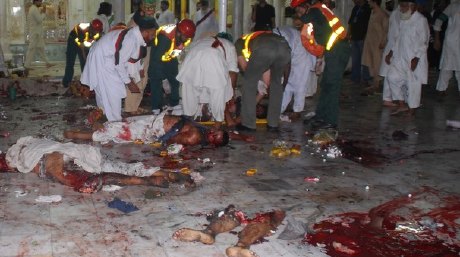
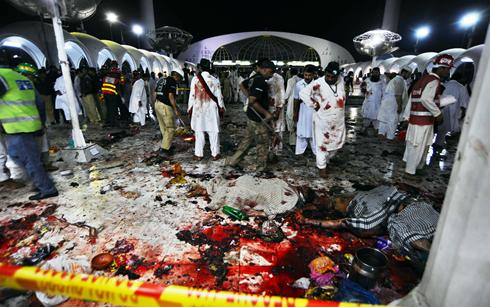
The two suicide bombers chose midnight on July 1, when the throng of worshipers in the ancient Data Darbar shrine in Lahore, Pakistan, was at its peak, to blow themselves up. Forty-five people were killed and 175 were injured. The attack on the 1,000-year-old center of Sufi Islam—the religion’s mystical, unorthodox face—was the first Taliban attack of its kind in Punjab province, the heartland of the country’s moderate, majority Barelvi sect.

The day after the attack on the shrine, Lahore’s students, politicians, traders and housewives took to the streets in loud, visceral protest. Major commercial centers were shut down, and in a rare show of sympathy, students from religious seminaries blocked roads and burned a few tires.

Pakistanis are now asking themselves: Is this America’s war or is it ours too? How can we fight it? Why did our military nurture these warriors for three decades and why has it turned against them now? How and when are we going to be at peace with our neighbors, especially India with which the military is obsessed and for whom these non-state actors were originally spawned?

To understand why this attack is so shocking, one must first look at Pakistan’s religious history. The majority of Pakistanis are Barelvis, who respect the inclusive traditions of the Sufis who brought Islam to the Indian Subcontinent. This is completely unlike the harsh version of Islam imported from Wahabi Saudi Arabia after the petro-dollar boom in the Middle East in the 1970s.

So the bombing of the Sufi shrine has symbolic resonance: Sufism has always thrived as a reaction to the politics of the state. In modern Turkey Sufism grew as a response to Ataturk’s secularism; in the Soviet Union, it grew as resistance to the state’s official policy of promoting atheism; in Algeria, it was a reaction to French colonialism. In Pakistan, Sufism has thrived as an alternative to the state-sponsored Wahabi Islam of the Deobandi jihadi sect.

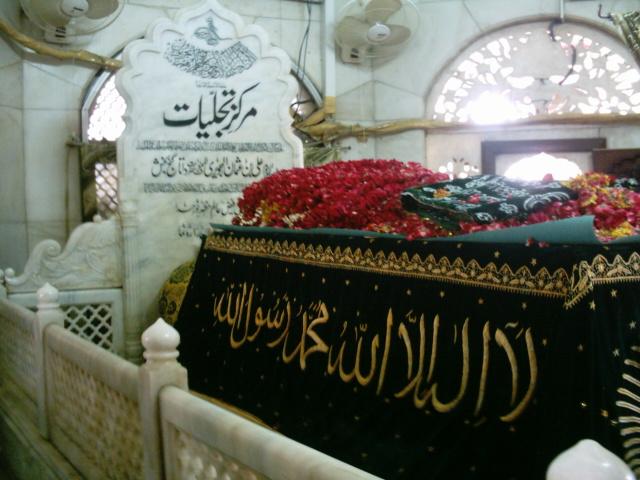
If there’s one thing that Pakistanis are proud of, it’s their Sufi heritage. The shrine attacked in Lahore housed the tomb of one of the most famous Sufis to have ever lived, Ali Hajwiri, affectionately known by Lahoris as Data—one who facilitates the fulfillment of aspirations. Hajwiri wrote a seminal text in Sufi thought, the Kashf-al-Mahjub or “Unveiling of the Hidden.” An early example of Sufi doctrine, the book’s importance has grown over the centuries.

Although not a native of Lahore, Hajwiri decided to settle in the city for the last 34 years of his life at the end of the 11th century. Even then, Lahore’s fame as a center of culture was widespread. It was known for its old fortified city, a nourishing river, and a collection of free-spirited artists, artisans, and musicians. During his 34 years of residence, Hajwiri became a revered dervish, offering an inclusive mystical path to Lahore’s non-Muslim population, many of whom were subject to a punishing caste hierarchy.

Hajwiri’s shrine remained protected through centuries of rising and falling empires in the Punjab. Even the Sikh marauder Maharaja Ranjit Singh left the shrine untouched as he plundered many of Lahore’s riches.

In attacking Hajwiri’s shrine, the Taliban have grossly miscalculated. They had hoped to provoke anger at the Pakistani government for fighting America’s war. Instead they have managed to convince more and more Pakistanis that this is now their war, not just America’s.

Pakistan Suicide Bombing Death Toll Jumps to 102

By Riaz Khan and Nahal Toosi for The Associated Press

The death toll from twin suicide bombings in Pakistan jumped to 102 with 115 people wounded on Saturday, making it the deadliest attack this year in the country.

Authorities continued to remove debris from the site of the attack in the village of Yakaghund in a northwest tribal region, after two bombers struck seconds apart Friday near a government office.

One of the bombs appeared fairly small but the other was huge, officials said. At least one bomber was on a motorcycle.

The attackers detonated their explosives near the office of Rasool Khan, a deputy Mohmand administrator who escaped unharmed. Tribal elders, including those involved in setting up militias to fight the Taliban, were in the building, but none was hurt, according to Mohmand chief administrator Amjad Ali Khan.

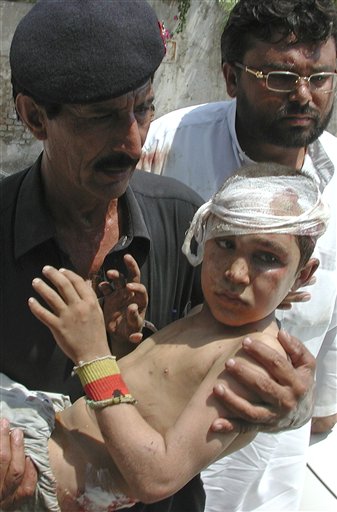
Video footage showed dozens of men searching through piles of yellow brick and mud rubble for survivors. Women and children were among the victims.

Mohmand is one of several areas in Pakistan’s lawless tribal belt where Taliban and al-Qaida members are believed to be hiding.

Abdul Wadood, 19, was sitting in a vehicle at the time of the bombings.

“I only heard the deafening blast and lost consciousness,” said Wadood, who was being treated for head and arm wounds in Peshawar, the main city in the northwest, about 15 miles (25 kilometers) away. “I found myself on a hospital bed after opening my eyes. I think those who planned or carried out this attack are not humans.”

Some 70 to 80 shops were damaged or destroyed, while damage to a prison building allowed 28 prisoners — ordinary criminals, not militants — to flee, said Rasool Khan, who gave the casualty figures.

Friday’s was the deadliest attack this year in Pakistan. On New Year’s Day, a suicide car bomber struck a sports event near a meeting of tribesmen who supervise an anti-Taliban militia near the South Waziristan tribal area, killing 96 people.

Near the attack site, officials had been distributing wheelchairs Friday to disabled people and equipment to poor farmers, Amjad Ali Khan said. It was unclear how many participants in that event were among the victims.

Pakistani Taliban spokesmen could not be immediately reached after the attack. There were scattered reports the militant group’s branch in Mohmand had claimed responsibility and said it was targeting the elders.

The Pakistani army has carried out operations in Mohmand, but it has been unable to extirpate the militants. Its efforts to rely on citizen militias to take on the militants have had limited success there.

Nevertheless, there have been fewer attacks in Pakistan this year than in previous years — most notably in the northwest. In the last three months of 2009, more than 500 people were killed in a surge of attacks in the country.

“This Passport is valid for all the countries of the World, except Israel”

By Junaid Ghumman for Mideast Youth

The world Zionist movement should not be neglectful of the dangers of Pakistan to it. And Pakistan now should be its first target, for this ideological State is a threat to our existence. And Pakistan, the whole of it, hates the Jews and loves the Arabs. This lover of the Arabs is more dangerous to us than the Arabs themselves. For that matter, it is most essential for the world Zionism that it should now take immediate steps against Pakistan.” Ben-Gurion, the Prime Minister of Israel.

This speech was first published in Jewish Chronicles on 9th August 1967. This statement risen many controversies bloggers like me have quoted it many times; various explanations were also given to disprove this statement, but still we read it on every article related to Pakistan and Israel.

Pakistan and Israel do share some history and ideology. These are only two countries in the world created in the name of Religion; Pakistan for Islam, Israel for Judaism and both countries have taken independence from same British Empire after World War II.

Then why my passport still says, “This Passport is valid for all the countries of the World, except Israel”?

Pakistan claimed its independence from foreign invaders after two centuries of struggle. In 1757 after Battle of Plessey, East India Company started ruling Indian Sub-continent. The first armed resistance was Battle of Independence in 1857 after which the power was transferred to British government. In 1885 the political movement of independence started as Indian National Congress. Some of the Muslim leaders soon separated and launched new movement in 1906 as All India Muslim League for separate Muslim state which led to the creation of independent Islamic state Pakistan on 14th August 1947, which then became Islamic Republic of Pakistan in 1973.

For Israel the timings was same and the rulers were also same as of Indian sub-continents, but events and circumstances were totally different. Israel declared its independence on 14th May 1948 from British Mandate of Palestine. But Israel independence movement was not against British Occupation; rather it was a movement of creating a Jewish State by silently invading the markets, trades and areas to make Jewish settlements. Hovevei Zion or Hibbat Zion refers to organizations that are considered the foundations of the modern Zionist movement. These movements led to creation of Rishon LeZion in 1882 which is the first Jewish settlement in Palestine; which was at that time under Ottoman Empire. First Zionist Congress held in 1897 started the unified Zionist Movement which was converted to World Zionist Organization in 1960. This movement was successful in legalizing its demand of separate Jewish state in Palestine after Balfour Declaration 1917, in which British Mandate of Palestine’s (1917 – 1948) foreign Secretary Arthur James Balfour wrote letter to the leader of British Jewish Community Baron Rothschild, pledging British Empire support of creation of Jewish State in Palestinian Land.

So what kind of relationship does Pakistan and Israel has over period of 60 years?

While writing this blog I also tried to ask couple Pakistanis; their view points about Pakistan-Israel Relationship. Yousaf is Pakistani Engineer living and working in Saudi Arabia. Being in the region, Pakistanis here are emotionally and regionally attached to Middle East crisis. I asked him what kind of relationship both countries have. “Relationship between Pakistan and Israel are tied to the fact that how Israel government treats the Palestinians. In general, as Jerusalem is considered as one of the holiest places in Islam; this fact serves as a thorn in the eyes of Pakistanis.” Yousaf said.

Pakistan is among those 20 UN member nations which do not recognize Israel as an independent state. These 20 countries also include Afghanistan, Algeria, Bahrain, Bangladesh, Chad, Cuba, Indonesia, Iran, Iraq, Kuwait, Lebanon, Libya, Malaysia, North Korea, Saudi Arabia, Sudan, Syria, United Arab Emirates and Yemen. Unofficial media reports say that first Prime Minister of Israel David Ben-Gurion send secret message to Muhammad Ali Jinnah to formally accept its existence, but no response was given back to him. At the time of independence of Pakistan, it was reported that some 2,000 Jews remained in Pakistan, mostly Bene Yisrale Jews. Many left to Israel after its declaration of independence. Jews from Karachi, Pakistan, now live in Ramla, Israel, and they also built a synagogue they named Magen Shalome after the Pakistani Synagogue which was demolished in 1980.

60s, 70s and beginning of 80s were the decades when for the first time both countries came face to face when Arab-Israel war started. In “Six-day Arab Israeli War” of 1967; Royal Jordanian Air Force (RJAF) and Pakistan Air Force (PAF) were flying under a joint command. PAF pilot Flt. Lt. Saiful Azam became the only pilot from the Arab side to have shot down 3 IDF/AF aircraft within 72 hours.

In 1973 Arab-Israeli Yom Kippur War, 16 PAF pilots volunteered to support Syria and Egypt. On 23 October 1973 Flt. Lt. M. Hatif shot down the Israeli Phantom. On 26 April 1974, PAF pilot Flt. Lt. A. Sattar Alvi became the first Pakistani pilot, during the Yom Kippur War; to shoot down an Israeli Mirage in air combat. He was honoured by the Syrian government. Nur Khan, who was the Wing Commander received praised from Israeli President Ezer Weizman who wrote in his autobiography that: “He was a formidable fellow and I was glad that he was Pakistani and not Egyptian”. Pakistan also sent medical ambulances to Egypt and Syria.

After the Israeli attack on Iraq’s under-construction French-built nuclear Osirak-type reactor, Tammuz-I, south of Baghdad on 7 June 1981, Pakistan’s then President President Zia-ul-Haq directed PAF Air Headquarters (AHQ) to make contingency plans for a possible Israeli attack on Kahuta. Kahuta is noted for its nuclear research studies and nuclear development technologies in Kahuta Research Laboratories. On 10 July 1982, a special contingency plan was issued. In the event of an Israeli attack on Pakistan’s strategic installations, plans were drawn up for a retaliatory Pakistani strike on Negev Nuclear Research Centre. The Negev Nuclear Research Centre is an Israeli nuclear installation located in the Negev desert, about thirteen kilometres to the south-east of the city of Dimona.

On political level many statements were given. As chair of the Second Islamic Summit in 1974, then Pakistan’s Prime Minister Zulfiqar Ali Bhutto said: “To Jews as Jews we bear no malice; to Jews as Zionists, intoxicated with their militarism and reeking with technological arrogance, we refuse to be hospitable.”

In of his speeches in National Assembly of Pakistan, before Zulfiqar Ali Bhutto was hanged in 1979, he said, “Mr. Speaker Sir! This is not Desi (local) conspiracy, it’s an international conspiracy. Let me make it quite clear for the history, whatever the future and fate of this individual will be; that doesn’t matter, but let me tell you again this is not a desi (local) conspiracy, this is not PNA conspiracy, this is massive, huge and colossal international conspiracy against the Islamic State of Pakistan.” (PNA was Pakistan National Alliance against the ruling Pakistan Peoples Party). Nowadays people like to refer this international controversy as Zionist or Israeli Conspiracy.

A controversial book was published in 2003, named Charlie’s Wilson war which conspire about use of Israeli weapons supplied to General Zia ul Haq to fight Soviets in Afghanistan (1979 – 1989). Famous Hollywood movie Charlie’s Wilson War was also released in 2007. After that the back door politics started between Pakistan and Israel.

The President of Pakistan General Zia ul Haq was assassinated in plane crash on 17 August 1988. Among the conspiracy theories; Mossad (Israeli Intelligence Agency) involvement is also believed to exist. In the fall 2005 World Policy Journal, John Gunther Dean, a former US ambassador to India, blamed the Mossad for orchestrating Zia’s assassination in retaliation for Pakistan developing a nuclear weapon to counteract India and Israel.

Ali is my friend living in Middle East. I asked him, can there ever be any friendship or peace between Pakistan and Israel, to which he replied, “Yes there can be, Israel is a small country with a group of people belonging to a group of faith. And also it is in its interest that it should be at peace with every country, and especially those countries that it feels can threaten its existence.”

It is believed that, at the time of Benazir Bhutto’s Government both countries had very strong relationship especially in countering terrorism. In 1993 Benazir Bhutto, along with her then-Director-General of Military Operations, Pervez Musharraf, intensified the ISI’s liaison with Mossad in 1993, and she too began to cultivate the American Jewish lobby. Bhutto is said to have had a secret meeting in New York with a senior Israeli diplomat, who flew to the U.S. during her visit to Washington, D.C. in 1995.

In 1996, Pakistan’s Intelligence Agency, FIA, started a secret war against Extremist in Pakistan under Rehman Malik. According to sources, FIA also contacted Israeli intelligence agency Mossad to help and send its officers to investigate the extremism. Even after these strong ties, controversies never left the scenario. Benazir Bhutto was assassinated on 27 December 2007 in one political rally. This was considered to be typical Mossad Assassination style. It is believed that she was the one knowing the reality of 9/11 being inside job and death of Osama Bin Laden, which she also publicly stated in David Frost TV program. That program was edited before telecasting. But Jewish Journals and Media still believed in the opposite way. According to Jewish media, Miss Bhutto asked for Mossad help to protect her on her return to Pakistan as she was afraid she will be killed.

In 1998 Pakistan and Israel were again on the verge of war. On 27 May 1998, day before Pakistan conducted its nuclear test in Chaghi, Southern Province of Baluchistan, Pakistan; unidentified F-16 was found hovering around skies on border areas of Pakistan. Pakistan Air Force; taking is as repetition of Israeli Conspiracy similar to 1981, Air Bourne its fighters to foil any attack. But Pakistan and Israeli UN delegation met in UN soon after Pakistan Nuclear tests in 1998 to give assurance that Pakistan will not transfer its technologies to Iran, the arch enemy of Israel.

Musharraf’s nine years of rule was also golden times for both countries. In 2003, General Pervaiz Musharraf said on television interview, “Mainly Muslim Pakistan must seriously take up the issue of recognizing Israel and avoid dealing with it on emotional grounds”. This statement gave birth to local opposition, esp. among Religious Parties in Pakistan. “Jerusalem is not just an Arab issue, it is linked to the faith of every Muslim” said Qazi Hussain Ahmed, chief of Jamaat-i-Islami Pakistan, the largest and oldest religious political party. “Presenting Palestine as a sole Arab issue is a heinous conspiracy of the imperialists and colonists aimed at disintegrating the Muslims and shattering the concept of Muslim unity. It is for the same reason the colonist forces are trying to portray every Muslim issue as regional or bilateral” said Qazi.

In 2005 Pakistani Foreign Minister Khurshid Kasuri and his Israeli counterpart Silvan Shalom met in Istanbul after Israel withdrew its forces from Gaza, Palestine hoping to start peace talks. However, following the meeting Musharraf said, “Pakistan will not recognize the state of Israel until an independent Palestinian state is established”.

An unofficial Pakistan-Israel Peace Forum was created the next day of the meeting. It was created by 3 friends Waleed Ziad (Pakistan), Dror Topf (Israel), and Michael Berenhaus (US), all currently based in Washington, DC. This forum was an unsuccessful attempt to lobby in UN, US, Israel and Pakistani political establishments, hoping that Pakistani might accept Israel as independent legal state.

Pakistan and Israel are also secretly involved in Weapons and Arms Development Race. Close ties between India and Israel, and arms business between them forces Pakistan to keep an eye on Israel’s weapons industry. Like for example; Pakistan Ordinance Factory (POF) developed POF Eye Gun and exhibited in 2008 to counter the Israeli made Cornershot Rifle which is also known as Jews Gun in Arab World.

Shall Pakistan recognize Israel as an independent state to which Yousaf and Ali shared the same answer, “Pakistan should only consider recognizing Israel if it gives an independent state to the Palestinians with Jerusalem at its capital. And completely cut off itself from the internal affairs of that state, only then Pakistan should even start to consider recognizing them.”

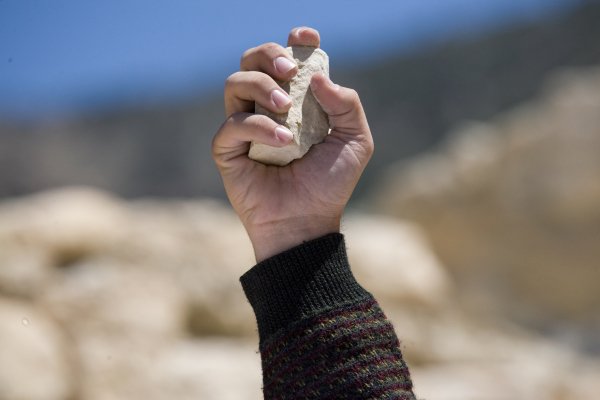
I thought why not to ask some of Palestinians who have been living in exile for almost six decades. Abdul-Rahman is originally from Nabulus, West Bank and Qasim is from Gaza. I asked them what role Pakistan can play any role in solving Middle East Crisis, to which Abdul Rahman replied, “May be or may be not. Pakistan has its own problems with India, in Kashmir and in Afghanistan.” And Qasim said, “Pakistan cannot play any role especially with the current government which is only thinking of business but not Islam or Muslims.” Which actually hit me hard but truth is truth. On inquiring the Pakistan’s nuclear threat to Israel, Abdul Rahman said, “Israelis are even scared of stones so obviously Israel want end to Pakistan’s Nuclear technology, the Islamic Bomb.” But Qasim stuck to his same point, “If Pakistani government wants it can use nuclear technology against Israel, not in war or something but also to play politics.” Then in the end I asked, shall Pakistan Recognize Israel as independent country. Both of them came up with different and interesting answers. Abdul Rahman said, “There is should be a procedure of acceptance. Israel should balance the power and control of every city between themselves and Palestinians, then Pakistan can recognize Israel.” Whereas Qasim said, “Pakistan should recognize Israel. Sitting outside and ending any communication will not resolve the Middle East problem. We need to enter the region to solve the problem and if Pakistan wants it can do that by taking first step of recognizing Israel.”

It was interesting journey going through all the historic events which Pakistan and Israel share and knowing different ideas and opinions. All these events which I have mentioned above, cannot be confirmed from any credible or authentic source as all this happened back stage, behind the camera. But whatever governments’ relationship may be it is true that people of Pakistan still want to call every conspiracy as Zionist conspiracy and this will keep on going until some peaceful solution is devised to Middle East crisis between Muslim Palestinians and Jewish Israelis

Son Pleads for Help as Mother Awaits Stoning in Iran

By Gena Somra for CNN

Sajjad Mohammedie Ashtiani travels to a Tabriz jail in Iran every Monday to see his mother. And for 15 minutes each week, he speaks to his mother, Sakine Mohammedie Ashtiani, through the prison glass that divides them. Neither mother nor son ever know if the visit will be their last

Convicted of adultery in 2006, Ashtiani has been sentenced to be stoned to death for her alleged crime. Originally sentenced to 99 lashes for her alleged “illicit relationship outside of marriage,” Ashtiani endured that punishment in front of her then 17-year-old son. “The authorities asked if I wanted to wait outside. I said no. I could not leave my mother alone.”

Sajjad says it is a day he will never forget. But, he says, that day he thought the worst was over. “I was thinking, OK, they hit her, now it’s finished. They told me this process was finished. She’s done. She’s free to go. “But then a judges’ panel in Tabriz suspected Ashtiani of being involved in her husband’s murder and re-opened her case. She was cleared of the murder charges, but the panel re-examined Ashtiani’s adultery sentence, and based on unspecified “judges’ knowledge,” decided she should be put to death for the alleged affair.

“At that time it should have been finished. They should have punished her only once,” says her son. “Her documents say she is innocent. She paid for the crime five years ago.” Human rights activist Mina Ahadi, herself forced to flee a death sentence in Iran almost 30 years ago, has also taken up Ashtiani’s cause, working with Sajjad and his sister Farideh to get their message out. She says pressure from outside Iran can make a difference.

“Legally, it’s all over, and we have no chance. It’s a done deal. Sakine can be stoned at any minute. But we have experienced again and again that when we organize events world-wide, when we protest world-wide, and in particular when we contact European governments and these governments put pressure on the Islamic regime in Iran, sometimes we have a chance.” So far, there has been no response from Iranian officials about the Ashtiani case.

And with all legal appeals virtually exhausted, Sajjad says the Tabriz court has told him there is only one thing that can stop his mother’s imminent execution. “They told me if supreme leader Ayatollah Khamenei … or Judiciary Chairman Sadegh Larijani grant my mother a letter of pardon, she will go free.”

Sajjad says he traveled to Tehran six times to obtain that letter, but has been unable to gain an audience with either man.  But he refuses to give up. He is turning to the international community in hopes the Iranian government will hear his voice. “It is crucial I tell these men what I have to say. “Dear Mr. Khamenei, Mister Ahmadinejad, and Mister Larijani:

“All I ask for is a letter. I want a letter for my dear mother. Please write this letter of pardon because she is innocent, 100 percent innocent. If you do not have respect for what I am saying, just take look at her file. You will see she is innocent.

“To the people of the world, I want to say, for this situation we are in: Help us. Whoever can tell the government to stop this, please do. If you can pressure Ayatollah Khamenei or Sadegh Larijani to give my family a letter, please get them to send it to us.” Sajjad knows he is taking a risk by speaking out so publicly, but says he is not afraid for his own safety.  “I am just fighting for what is right,” he says. “My mother is a housewife, a good person, a caring mother,” Sajjad says. And she has grown weary of what seems to be a punishment without end. On his last visit with her she told him, “I can’t stay in this prison any longer.”

And so Sajjad and his sister Farideh are reaching out in any way they can to try and save their mother’s life. In their open letter to the international community circulated on websites, Facebook pages and through human rights organizations late last week their anguish is clear. “Today we stretch out our hands to the people of the whole world,” the letter reads. “It is now five years that we have lived in fear and in horror, deprived of motherly love. Is the world so cruel that it can watch this catastrophe and do nothing about it? “We resort to the people of the world, no matter who you are and where in the world you live. Help to prevent this nightmare from becoming reality. Save our mother.”We are unable to explain the anguish of every moment, every second of our lives. Words are unable to articulate our fear.”

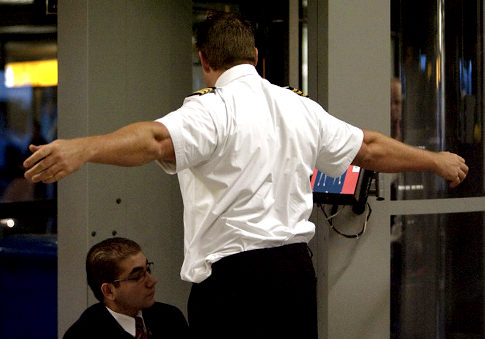
Full-Body Security Scanners Scrapped at Dubai Airports, Officials Say the Device “Contradicts Islam”

By Aliyah Shahid for The NY Daily News

Forget about London and France — in Dubai, airport screeners won’t be able to see your underpants.

Dubai police said full-body security scanners will not be used at the airports because the devices do not correspond with national customs and ethics, according to local press reports on Tuesday.

The scanners “contradict Islam,” said Ahmad Mohammad Bin Thani, head of airport security. He said the idea was scrapped”out of respect for the privacy of individuals and their personal freedom.”

The scanners will be replaced with other inspection systems that protect passengers’ privacy, Thani said. He told the Gulf News that police are considering the use of face-recognition cameras.

Recently, American officials have been encouraging use of the full-body scanners.

Authorities say the scanners could have stopped a Nigerian man who planted explosives in his underwear in an attempt to bring down a plane bound for the U.S. last Christmas.

Several European countries have tested the technology, including the Netherlands, Britain and France. South Korea and Japan have begun test programs.

But the machines have remained controversial. Critics have argued the scanners violate passenger privacy by producing”naked” pictures and liken the procedure to”virtual strip searches.”

Sectarianism Has Poisoned Pakistan

By Basim Usmani for The Guardian

The recent attacks on a prominent shrine in Lahore demonstrate how the unrest in Pakistan is caused by a minority of few who cannot tolerate the plurality of beliefs in Pakistan. The Tehrik-e-Taliban are lying through their teeth when they claim that they do not attack public places. It’s becoming more and more apparent that these militants aren’t resisting American hegemony; this a war to determine Pakistan’s future and, by proxy, the future of Islam.

Whether the Tehrik-e-Taliban actually arranged the bombers’ suicide belts is irrelevant; they have created a domino effect that’s likely to spread from commercial capitals such as Lahore to cities with historic shrines and Pakistani historical sites, such as Multan, or Taxila.

Unlike Baghdad, where violence between Islamic sects is a product of the war America is waging, the onus of last Thursday’s blasts falls squarely on us, the citizens of Pakistan. We have been complacent about sectarianism for too long.

A good friend who works for a transportation company told me in 2007 that in villages along the highways to Waziristan where the Taliban had seized control were the bodies of butchered Shia Muslims. That year, Lahore’s public was too busy mobilising about the judiciary and President Musharraf to pay the violence any mind.

Sectarianism has a brutal history in Pakistan that existed long before militants in Afghanistan began calling themselves the Taliban. I remember as a child in Lahore the broadcasts of gun violence outside Shia houses of worship during the early 1990s.

Many Pakistanis feel that the attacks on two Ahmadiyya mosques last May, where gunmen unloaded bullets and grenades on Friday prayer-goers, were unprecedented. Certainly the Ahmadiyya community doesn’t think they are.

To have a Pakistani passport requires citizens to assert that they are not part of the Ahmadiyya community. In a sense, holding that passport also makes you complicit in the blasts that killed dozens in Lahore’s most famous Sufi shrine last week. Our inability to understand that this war is about national identity is rooted in the same complacency.

We are OK with the state deciding for us who is or isn’t Muslim. In this regard, the Pakistani government has the weakest moral fibre in taking on this growing strand of extremism. It is hypocritical to fight the Taliban in Waziristan if we are okay about denying citizenship to millions of Muslims born in Pakistan.

It may sound extreme of me, but we should be jailing clerics in Pakistan that give edicts declaring believers to be non-Muslim or anti-Pakistani. It may seem extreme to an American that writers who deny the Holocaust are imprisoned in Europe, but extreme contexts call for extreme measures.

Pakistanis must stress how being born or raised in their country is enough to be Pakistani; laws preventing Ahmadis from referring to themselves as Muslims were amended to the constitution by Zulfikar Ali Bhutto in the 1970s.

I remember being uneasy at my desk in middle school when I was studying at Aitchison College in Lahore, and some of my classmates were getting bullied for having marks on them after returning from Shia processions during Muharram. Pakistanis themselves are the only ones capable of stamping out this discriminatory culture.

Some proactiveness is necessary on our part to make it clear that mystics, Shias, Ahmadis and Christians are all fellow Pakistanis. When you are pulled over by street police in any major Pakistani city, the first bit of information the police ask for is your family name. From one name your caste, religious beliefs and affluence is determined.

This came as a shock to all of my family who have emigrated away: that collectively our stock in our own nationhood has plummeted so. In a sense, these problems are all accrued debt we’ve accumulated for being so complacent. In the light of our bigoted constitution and deterministic culture we have to – for ourselves – decide that being Pakistani is enough to make us all countrymen. Otherwise, we might as well just refer to ourselves as Taliban, Muslim extremists, Islamic militants, and so forth.

A Pakistani American Celebrates July 4

By Manzer Munir for Pakistanis for Peace

Thousands of Pakistani Americans celebrate the July 4 Independence Day holiday with their friends and families across the United States today. As different as Pakistan and the United States may be as countries and societies, one thing they both have in common is that both countries were founded on religious reasons. Unfortunately, that is where their similiarites end as the religious freedom experience in these present day countries varies greatly.

The earliest settlers of these United States were in fact Europeans who felt persecuted in the old countries of Europe for their religious beliefs. Many of these Puritans came to America in search of religious freedom.  Their hope was to escape the religious persecution they were facing in their countries and so the United States was founded on religious grounds.

Pakistan too is a country that sees the basis of its founding for a religious purpose. The nationalist movement for an independent India from British rule also caused communal conflicts between the Hindus and Muslims as there were calls by many Muslim leaders for a separate country for the Muslims of India since many felt being a minority in a Hindu dominated country would come at the expense of their rights. So a separate country for the Muslims of India and for their right to practice their religion gained momentum and indeed on August 14, 1947, the Islamic Republic of Pakistan became independent, a country founded on religious freedom for the Muslims of India.

This is not to deny the fact that Muslims still exist in India and are free to practice their religion under a Hindu dominated country. In fact, there are more Muslims in India than there are in present day Pakistan. However, many Muslims at the time of partition felt that they would be freer to practice Islam in a Muslim country rather than a Hindu one. It is an open debate whether people in Pakistan today have more freedom to practice their religion. If you are a member of either a minority Muslim group as Shiite or if you happen to be a Christian, Hindu, Sikh or Jew In Pakistan today, you have far less freedom of religion than a comparable religious group in present day India. There is absolutely a very low level of tolerance in Pakistan today for other religions or ways of life different than the majority group.

The promise of religious freedom that saw the founding of both Pakistan and the United States has seen the two countries go separate ways in realizing the dream of each countries forefathers. While the American Founding Fathers dream of a nation that respects freedom of religion and honors a separation between church and state held true, Pakistan unfortunately  has become a country that has become intolerant of other religions. Many religious minorities such as Christians, Hindus, and even Muslim Ahmadis are routinely persecuted or attacked by Muslims who see these groups as infidels and heathens and not merely as human beings with different religious beliefs. The influx of Taliban and religious extremists inside Pakistan has further made life difficult for anyone who is not a devout Sunni Muslim. On many occasions, the police does not investigate or prosecute attacks on religious minorities by various extremist groups leading to a constant fear of their lives and properties.

As Pakistani as well as Muslim Americans across the United States today celebrate the the July 4 holiday, they are keenly aware  that their brethren back in their original countries are not as free to practice their religion, speak their minds, and or protest peacefully as they are able to do in the United States. For this nation indeed guarantees freedom and liberty for all and not just a certain religious or ethnic group.

That is why Pakistani Americans such as myself and Muslim Americans across the US are appreciative of the fact that in this, our adopted country, our religious and civic freedoms are safe guarded in that greatest of living documents, the US Constitution. I have long felt that after the three great religious books of the Torah, the Bible, and the Koran, the US Constitution is the next best thing that man ever wrote down on paper. The Founding Fathers of America were indeed some of the greatest minds in history for crafting a document that continues to make the United States the freest country in the world and one that stayed true to its founding of liberty and freedom for all. Happy Birthday America, May you have many more!

–Manzer Munir, a proud Pakistani American plans to celebrate the July 4 Independence Day with family and friends at a picnic with fireworks and by watching a parade.

Deadly blasts hit Sufi shrine in Lahore

By Syed Shoaib Hasan for The BBC

Suicide bombers have launched a deadly attack on a Sufi shrine in the eastern Pakistani city of Lahore. At least 35 people died in the blasts at the popular Data Darbar shrine late on Thursday evening, officials say. At least 175 other people were hurt in the blasts, believed to be the first targeting a shrine in Lahore. Thousands of people were visiting the shrine at the time, officials say. It holds the remains of a Persian Sufi saint, Abul Hassan Ali Hajvery.

Although no-one has yet said they carried out the attack, Taliban militants and their Punjabi jihadi allies have been involved in several such bombings in the northern Khyber Pakhtoonkhwa province. The shrine is largely frequented by members of the majority Barelvi sect, who are seen as heretics by the Taliban. Most of the Taliban belong to the rival Deoband Sunni sect, which strongly disapproves of worship at shrines. Many are also allied to the Sipah-e-Sahaba, and its armed splinter group, Lashkar-e-Jhangvi, which seeks to turn Pakistan into a Deoband Sunni state.

The shrine is visited by hundreds of thousands of people each year from both Sunni and Shia traditions of Islam. At least two attackers were involved, although police initially said three explosions had been heard.  The impact of the blasts ripped open the courtyard of the shrine. Rescue workers could be seen clambering over the rubble as they carried out the victims. Khusro Pervez, commissioner of Lahore, said two of the attacks took place in the main courtyard and one in the lower level of the shrine.

The first attacker struck in the underground area where visitors sleep and prepare themselves for prayer, he said. As people fled, a second bomber detonated his explosives in the upstairs area. Officials say they believe the bombers used devices packed with ball-bearings to maximise the impact of their attack.  A volunteer security guard at the shrine described scenes of devastation.

“It was a horrible scene,” said Mohammed Nasir. “There were dead bodies all around with blood and people were crying.” The attack is the biggest on a Sufi shrine in Pakistan since militant attacks began in 2001.  No group has said it carried out the attack, but correspondents say the attacks continue a growing trend among militants to target members of other sects as well as minorities.

Lahore has been hit by a series of bomb attacks, including a suicide blast at anti-terrorist offices in March, when at least 13 people died. In May, more than 90 people were killed in a double attack on the minority Ahmadi sect in the city.

Earlier, security chiefs had been congratulating themselves after what was the first month in two years in which there had been no suicide bombings in Pakistan, the BBC’s Aleem Maqbool reports from Islamabad.

They said it was proof the militant networks had been disrupted. Most Pakistanis knew the battle against militancy in this country was far from over, he adds. Last year Pakistan launched a major military offensive against militant strongholds in South Waziristan.  In December the military said they had achieved victory, but subsequent reports have suggested the militants remain active in the region.

Pakistan Set to Ban More Web Blasphemy and Monitor Yahoo!, Google, Amazon, Bing…

By Rik Myslewski for The Register

Pakistan announced Friday that it will monitor Yahoo, Google, MSN, Hotmail, YouTube, Amazon, and Bing, and will block links and content that it deems anti-Islamic.

“If any particular link with offensive content appears on these websites, the [link] shall be blocked immediately without disturbing the main website,” Pakistan Telecommunication Authority spokesman Khurram Mehran told the Associated Press.

In addition to the link-blockage of the seven named high-traffic sites, Pakistan web-watchers have also completely blocked 17 lesser sites, including, for example, Islam Exposed, which includes links to blaspheming articles such as “Muhammad, A Symbol Of Terrorism” along with over-the-top posts such as “Joe Lieberman Spews Excrement!”.

The monitoring and blockage comes in response to a court order, as did Pakistan’s recent ban on Facebook due to its hosting of an “Everybody Draw Mohammed Day” page — a page that was subsequently taken down, although Facebook officials claimed to have had no part in its removal.

The complete banning of Facebook was lifted after censorship official Najibullah Malik was satisfied that the site had lifted all all “sacrilegious material”.

In addition to the Facebook ban, Pakistan last month blocked, then unblocked YouTube for depictions of the prophet Muhammad, a practice that many Muslims find blasphemous.

“We decided that this kind of information was going to hurt people’s feelings. We have directed the [Pakistan Telecommunications Authority] to block all and any sites that display those caricatures,” Malik told The Guardian at the time of the YouTube ban.

The Guardian, reporting on internal controversy surrounding the YouTube ban, quoted one Pakistani tweeter as tweeting: “Way to go assholes. Why don’t you just cut us off from the internet and get it over and done with.”

Despite lifting the Facebook and YouTube bans, Pakistan hasn’t given up its censorship efforts. “At least 800 individual web pages and URLs have been blocked since the government’s orders to shut Facebook and YouTube,” Wahaj us Siraj, a spokesman for the Internet Service Providers Association of Pakistan (ISPAK), told AFP.

In perhaps the most bizarre development in the country’s campaign to remove blasphemy from its interwebs, Pakistan’s Deputy Attorney General recently launched a criminal investigation against Facebook founder and CEO Mark Zuckerberg for his role in the “Everybody Draw Mohammed Day” dust-up.

Although no charges have been filed in the case, the Pakistani newspaper The News International reports that the law that prompted the Zuckerberg investigation, Section 295-C of the penal code, carries with it penalties of “death, or imprisonment for life”.

Not all Pakistanis, of course, are in support of their government’s draconian crackdown on what Section 295-C refers to as “Use of derogatory remark etc, in respect of the Holy Prophet … either spoken or written, or by visible representation, or by any imputation, innuendo, or insinuation, directly or indirectly.”

“It’s absurd,” journalist and filmmaker Hasan Zaidi told The Guardian. “They haven’t thought this through. The logical conclusion is that we should shut our eyes, stick our fingers in our ears and ban the entire internet, even email.”

Nadeem Paracha of Pakistan’s Dawn news service wrote in his “Smokers’ Corner” column: “By continuing to tolerate a psychotic faith-based fringe for so long, we have actually helped it metamorphose into an unrestrained monster that has zero tolerance for what we think or do.” The problem, Paracha told The Guardian, is that “Anything to do with Allah, or the prophet, and everyone keeps quiet.”

And it must also be noted that the more extreme members of the Muslim world aren’t alone in taking angry offense at what they perceive as “blasphemy”. Remember, for example, the hue-and-cry that resulted from artist Chris Ofili’s elephant dung–encrusted The Holy Virgin Mary, or the attacks on the US National Endowment for the Arts over works such as Andres Serrano’s photograph, Piss Christ. But, to be fair, we must also note that neither Ofili nor Serrano were subject to a possible government-sanctioned death sentence.

–Editor’s note for Pakistanis for Peace- A true  democracy should  protect freedom of speech, no matter how hateful and unpleasant. Banning and censoring content on the interent is the action of communist states, dictatorships, monarchies or theocratic nations like Iran, not a democracy that Pakistan aims to be. There are certainly bigger problems in Pakistan than people visiting websites that are disparaging to Islam.  This is a clear indication of the power in the society still held by the mullahs~

At Talks, Pakistan, India Close the Gap

By Anita Joshua for The Hindu

Conscious of the historical baggage, but unwilling to be burdened by it, India and Pakistan on Thursday inched closer to each other during the Foreign Secretary-level talks here and both sides held out the possibility of some tangible outcome after the July 15 ministerial engagement.

However, both Foreign Secretaries refused to be drawn into chalking out a road map or identifying goal posts. “There is a constituency for peace in both countries, and we should avoid stock phrases like road map,” Foreign Secretary Nirupama Rao said at a “joint press stakeout” here, shortly after spending a greater part of the morning with her Pakistan counterpart Salman Bashir.

The talks, according to Mr. Bashir, began as an exploratory venture, but “after this round, we are much more optimistic of good prospects at the Foreign Ministers meeting.” He summed up the talks as a “good essay in mutual comprehension,” a phrase he admitted to have borrowed from Ms. Rao.

Optimism apart, both conceded that this would be a protracted process that may not yield quick results, but decided to work on the doables in the interim. As to how they proposed to insulate the process from another freeze in relations in the eventuality of a flashpoint, Ms. Rao said this would also be a subject of discussion.

The first indication of some forward movement came with the announcement of the “joint press stakeout” soon after the talks had wound up, and the Foreign Secretaries were breaking bread in the Foreign Office.

In his opening remarks, Mr. Bashir said the two sides decided to work towards restoring confidence and building trust to make it possible for a comprehensive, sustained and substantial dialogue.

Speaking in a similar vein, Ms. Rao described the talks as forward-looking with both sides trying to understand each other’s position. “We reflected on the modalities for restoring trust and confidence to pave the way for a comprehensive, sustained and meaningful dialogue in all areas. We have agreed that dialogue is the best way forward.”

Asked whether terrorism was discussed, she said both sides agreed that terrorists must be denied the opportunity to derail the process of dialogue while pointing out that Pakistan Prime Minister Yusuf Raza Gilani had made an important commitment when he told his counterpart that efforts would be made to ensure that the Pakistani soil was not used for attacks on India.

Unlike in the past, when the two countries appeared to be speaking at cross purposes, this time the Foreign Secretaries seemed to complement each other.

If Ms. Rao deftly side-stepped a leading question on India’s reluctance to continue with composite dialogue by saying there was no issue over nomenclature, Mr. Bashir returned the favour by echoing this remark and refusing to be drawn into commenting on why Pakistan was not raising the issue of Indian-sponsored terrorism in Balochistan.

Instead, he broad-brushed the issue, stating that terrorism impacted Pakistan and was a concern to the region and the world. “Essentially, we have agreed to move from the rhetoric to the ways and means of addressing these concerns,” he said.