Archive for the ‘ Pakistanis ’ Category

Pakistan President Zardari in Dubai For Treatment as Coup Rumors Intensify

By Saeed Shah for The Guardian

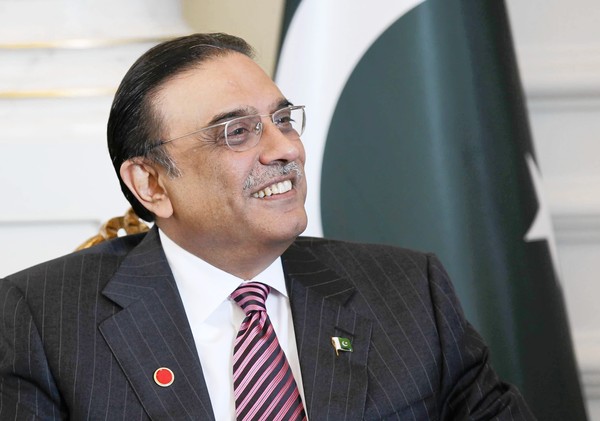
Pakistan’s embattled president, Asif Ali Zardari, has been hospitalised in Dubai with a heart condition, triggering speculation that it could be used as an excuse for him to step down amid growing pressure from the military.

A government adviser said Zardari had suffered a “minor heart attack”, but this was at odds with the official spokesman for the president, who said the president had gone for routine tests for a pre-existing heart condition.

Rumours of a coup or a resignation forced by the military consumed the media and the internet, fuelled by a report in Foreign Policy magazine that said Zardari was “incoherent” on Monday night during a telephone conversation with Barack Obama.

Zardari’s son and political heir-apparent, Bilawal, met prime minister Yousaf Raza Gilani in Islamabad, adding to media hysteria about imminent change. Bilawal is chairman of the ruling Pakistan Peoples party.

The speculation hit a receptive, febrile political atmosphere, rocked by a diplomatic scandal and the recent jolt to relations with the US over the deaths of Pakistani soldiers at a border checkpost.

Pakistan has been ruled for half its existence by the military, and the armed forces have pulled the strings the rest of the time, meaning that the threat of coups are ever present .

Zardari’s aides said he would not resign. The president is deeply unpopular with Pakistan’s military establishment, which is widely believed to be behind repeated attempts to oust him.

“He had a minor heart attack on Tuesday. He flew to Dubai where he had an angioplasty. He’s in good health now. He will come back tomorrow. There’s no question of any resignation,” Mustafa Khokhar, the government’s adviser on human rights told the AFP news agency.

However, Farhatullah Babar, the president’s spokesman, dismissed media speculation, saying “Zardari is in a Dubai hospital for medical tests and checkup as planned”.

The president is under pressure from the “memogate” scandal in Pakistan, where he is accused of being behind a written offer delivered to the US military leadership in the days after the raid on Osasma bin Laden in May this year.

The anonymous memo offered to rein in the Pakistani military, in return for US support. Pakistan’s former US ambassador and close Zardari aide, Husain Haqqani, has already been forced to resign over the issue and faces possible treason charges.

Ali Dayan Hasan, of Human Rights Watch, the international campaigning group, warned against any military intervention. “Constitutional rule of law must be followed and civilian supremacy must be maintained,” he said. “Governance must be through genuine periodic elections.”

Pakistani Taliban Splintering Into Factions

By Kathy Gannon for The Associated Press

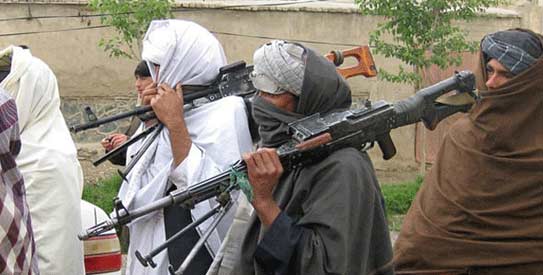
Battered by Pakistani military operations and U.S. drone strikes, the once-formidable Pakistani Taliban has splintered into more than 100 smaller factions, weakened and running short of cash, according to security officials, analysts and tribesmen from the insurgent heartland.

The group, allied with al Qaeda and based in northwest Pakistan close to the Afghan border, has been behind much of the violence tearing apart Pakistan over the last 4½ years. Known as the Tehrik-e-Taliban, or TTP, the Taliban want to oust the U.S.-backed government and install a hard-line Islamist regime. They also have international ambitions and trained the Pakistani-American who tried to detonate a car bomb in New York’s Times Square in 2010.

“Today, the command structure of the TTP is splintered, weak and divided, and they are running out of money,” said Mansur Mahsud, a senior researcher at the FATA (Federally Administered Tribal Area) Research Center. “In the bigger picture, this helps the army and the government because the Taliban are now divided.”

The first signs of cracks within the Pakistani Taliban appeared after its leader, Baitullah Mehsud, was killed in a drone strike in August 2009, Mr. Mahsud said. Since then, the group has deteriorated steadily.

Set up in 2007, the Pakistani Taliban is an umbrella organization created to represent roughly 40 insurgent groups in the tribal belt plus al-Qaeda-linked groups headquartered in Pakistan‘s eastern Punjab province.

“In the different areas, leaders are making their own peace talks with the government,” Mr. Mahsud added. “It could help the Pakistani government and military separate more leaders from the TTP and more foot soldiers from their commanders.”

The two biggest factors hammering away at the Taliban’s unity are U.S. drone strikes and Pakistani army operations in the tribal region.

Turf wars have flared as militants fleeing the Pakistani military operations have moved into territory controlled by other militants, sometimes sparking clashes between groups. And as leaders have been killed either by drones or the Pakistani army, lieutenants have fought among themselves over who will replace them.

“The disintegration … has accelerated with the Pakistan military operation in South Waziristan and the drone attacks by the United States in North Waziristan,” Mr. Mahsud said, referring to the two tribal agencies that are the heartland of the Pakistani Taliban.

Another factor is the divide-and-conquer strategy that Pakistan‘s military long has employed in its dealings with militants. Commanders have broken away from the TTP and set up their own factions, weakening the organization. Battles have broken out among the breakaway factions, and in one particularly remote tribal region the TTP was thrown out. These growing signs of fissures among the disparate groups that make up the Pakistani Taliban indicate the military’s strategy could be paying off.

That would explain the mixed signals this month coming out of the tribal belt, where some militants are mulling the idea of peace talks with the government, others are offering to stop fighting, and still others are disavowing both peace and a cease-fire. It might also explain a steady decline in suicide attacks in Pakistan, according to the privately run Pak Institute for Peace Studies.

The U.S. is eager to see some benefits in neighboring Afghanistan, where its troops have come under attack from militants based across the border in Pakistan. NATO forces in Afghanistan are trying to break the back of the Afghan insurgency before the end of the U.S.-led coalition’s combat mission in 2014.

There is no evidence so far that fissures within the militant structure in Pakistan are helping NATO and U.S. forces.

The deadly Haqqani network, which has bases both in Pakistan and Afghanistan and is affiliated with al Qaeda, is one of the most lethal threats to coalition troops. It long has found safe haven in Pakistan‘s tribal belt and has used the Pakistani Taliban as a source of recruits. Senior U.S. officials say the Haqqanis also receive support from Pakistan‘s army and intelligence agency, a charge Islamabad denies.

Analysts predict that over time, however, the internecine feuding in the Pakistani Taliban will take a toll on militants fighting in Afghanistan, making it increasingly difficult for them to find recruits and restricting territory available to them.

Pakistan‘s military has rebuffed appeals from Washington to take on all of the insurgent groups in the tribal region, saying it has neither the men nor the weapons to do so. Instead, Islamabad has pushed its divide-and-conquer approach, which is gaining some traction in the United States, according to two Western officials in the region.

The officials say the success of this approach will be measured in Washington by its ability to curb Haqqani network attacks in Afghanistan. The officials requested to remain anonymous in order to speak candidly.

Cooperation between the U.S. and Pakistan suffered a serious setback a week ago when NATO aircraft killed 24 Pakistani soldiers at two border posts. The Nov. 26 incident seems certain to blunt any prospect of Pakistan taking direct steps to curb the Haqqani network, analysts say.

In the wake of the attack, intelligence sharing has stopped, military-to-military contact has been suspended, routes supplying nonlethal goods to NATO in Afghanistan have been shut, and Pakistan has withdrawn its offer to bring Taliban and representatives of the Haqqani network to the negotiating table.

Pakistan also announced it will boycott next month’s conference in Bonn, Germany, to find ways to stabilize Afghanistan.

There is no independent figure on how many Taliban fighters operate in the tribal regions, but it is estimated to be in the thousands. Upward of 130 groups are in the area, Mr. Mahsud said, some of them small, violent offshoots of larger groups.

They have varying loyalties to a handful of key commanders such as Hakimullah Mehsud, the current leader of the Pakistani Taliban.

Popular support dwindled for Mr. Mehsud after his group was driven out of South Waziristan by the military and relocated to North Waziristan, according to tribesmen in the area. They spoke to the Associated Press on condition of anonymity because they feared reprisals from militants.

The Pakistani army has brokered agreements with some Taliban factions, according to a senior Pakistani security official who spoke to the Associated Press on condition of anonymity to discuss the sensitive topic. But there are no peace talks under way with Mr. Mehsud, who has declared war on Pakistan, the official said.

A brash and heavy-handed insurgent, Mr. Mehsud has killed former allies, defied orders from the Haqqani network’s chief and developed close links with criminal gangs who kidnap, extort and exploit the local population.

He also has made enemies of former lieutenants in other parts of the tribal region, such as neighboring Kurram Agency, where a deputy, Fazl Saeed Haqqani, split with Mr. Mehsud three months ago and formed his own Islami-Tehrik-e-Taliban group.

In yet another tribal region of Orakzai, where Mr. Mehsud once held sway, members of feuding groups are now killing one another.

We Are Free to Choose Peace

By Ethan Casey for Dawn.com

I was planning to devote this column to Memogate and Ambassador Husain Haqqani’s resignation, then I woke up one morning to learn that the topic had been rendered quaint by a Nato cross-border attack killing two dozen Pakistani soldiers and bringing the already fragile (not to say ostensible or notional) alliance between Pakistan and the United States very close to the breaking point. Then I realised that the two topics are aspects of a larger one, indeed of the twin elephants in both societies’ living rooms: the damage done when a military establishment becomes too powerful and unaccountable.

The only time I’ve ever met Husain Haqqani was at a seminar at Harvard University in 2006, organised by the journalist and activist Beena Sarwar. He wasn’t yet Ambassador to the US; Musharraf was still president. Most of the discussion was, I felt, preaching to the converted among elite-class Pakistani liberals about how the military was the problem and the solution was democracy in the form of elections and civilian rule. I’m not Pakistani, but I was an invited panelist at the seminar, so I took the liberty of challenging that consensus. Recall, I said, the sorry tit-for-tat excuse for democracy that Benazir Bhutto and Nawaz Sharif and their undemocratic parties inflicted on the country throughout the 1990s. That rivalry’s personal vindictiveness and pettiness, I asserted, did a lot of damage to the credibility of civilian leadership. Was it really clear that civilian rule was preferable to military rule under Musharraf?

For my pains I was, as I remember it, ganged up on by Husain Haqqani, the stern and formidable historian Ayesha Jalal, and Ayesha Siddiqa, whose book Military Inc. was about to be published. Haqqani in particular accused me of being “merely anecdotal,” meaning that the foibles of civilian politicians were incidental, whereas the military was a problem institutionally and structurally.

I still believe that my point was well taken, because there’s much that elected leaders can and should do to claim political space and assert their own authority, even – especially – if they’re being besieged or undermined by the military. If you’re elected to lead, you must accept the responsibility to do just that, and you must demonstrate courage and personal character in disdaining consequences to yourself when necessary. And I’m a reporter; merely anecdotal is what I do. But Haqqani was all too right – wasn’t he?

I’m aware that conspiracy theories have been flying about the notorious memo’s provenance. Like most conspiracy theories, they’re beside the point. It doesn’t matter whether Haqqani wrote the memo himself or was framed by the ISI; the result is the same. And the question to ask is Lenin’s: Who benefits?

A.J.P. Taylor (among many others) was right to point out that the armed forces are a fundamental institution of any state. But if the state is going to serve the interests of anyone else, the armed forces must be subject – and obedient – to civilian authority. This is what the authors of the US constitution understood in the 18th century, when they made the president the commander-in-chief of the armed forces. And it’s what President Truman understood when he fired the insubordinate General Douglas MacArthur in 1951, even though MacArthur was more popular with the American public at the time than Truman himself.

But Americans should be anything but self-congratulatory about such things. President Eisenhower, himself a retired general, was not only prescient but brave and patriotic when he took the occasion of his leaving office in 1961 to warn, in a rightly famous nationally televised speech, that a “military-industrial complex” (he coined the phrase) was poised to dominate America’s public life and economy. Half a century later America is hip-deep in the muck of Afghanistan, and – in addition to the death and destruction in Afghanistan itself and in Pakistan – the only Americans who are benefiting are the military itself and the shareholders of the companies that supply the war effort with everything from “contractors” (mercenaries) to drones to cheeseburgers for the troops. Military Inc., indeed.

Which brings us to the cross-border attack. Maybe Nato mistakenly or aggressively attacked over the border; maybe Pakistani troops fired first. Who knows? The New York Times has published a de rigueur, pro forma editorial urging an inquiry. Whatever the truth, it doesn’t matter, because the only people who gain from such an incident are the people who gain from war, and that’s not you or me. It’s also not the soldiers on all sides who are being killed. If I were Pakistani I would be furious, as I know many Pakistanis are, at the contempt for sovereignty that the attack shows. At the same time, we know that the Pakistani establishment is duplicitous. So where does that leave you and me? Does it help anyone if I claim your establishment is more duplicitous than mine, and vice versa?

Our two countries have arrived at a depressing and discouraging pass, both in relation to each other and internally. The exigencies of “defense,” which is a euphemism for war, have brought us here. As individuals, we feel (because we are) largely powerless to affect the course of events. As human communities there’s more we can do, as the Occupy Wall Street movement has been showing in America, and as the lawyers’ movement showed in Pakistan.

We’re in this together – and by “we” I mean Americans and Pakistanis. We’re not on opposing sides; we’re on the same side, against the warmongers of both states. And we are free to choose both our actions and our attitudes. As an American, Ken Williams, commented just this week on my Facebook page: “We can live with generosity and trust OR greed and fear. Each choice has outcomes.”

-Pakistanis for Peace group member Ethan Casey is the author of Alive and Well in Pakistan and Overtaken By Events: A Pakistan Road Trip. He can be reached at www.facebook.com/ethancaseyfansand www.ethancasey.com

Jacksonville Jaguars- Allah’s NFL Team?

By Manzer Munir for Pakistanis for Peace

The last few days have not been easy ones for me. I have had to watch as my adopted homeland, the United States, is accused by Pakistan, the nation of my forefathers, for being responsible for the deaths of 24 Pakistani soldiers by “friendly” fire.

So it wasn’t hard to imagine that once again I would be hurting for being both American and Muslim as I was on 9/11, and now I am once again feeling the pinch of being both Pakistani and American as well. Believe it or not, you can love two countries; just ask Italian or Irish Americans. I am sure you know that this is not the first time and certainly will not be the last time that as a Pakistani American I will be reeling from news concerning Pakistan. Yet the covert attack and neutralization of Osama Bin Laden in May of this year in Pakistan, a country long suspected to be his hiding place, have all but shattered any remaining doubts to the American public regarding which side of the fence Pakistan finds itself. As President Bush so famously said “You’re either with us, or against us” to President Pervez Musharraf immediately following the attacks of September 11, 2011.

At least since Bin Laden’s killing on May 2, 2011, as far as the average American, John Q Public is concerned, it appears that Pakistan was against us all along, and merely only was paying lip service the last 10 years. However staffers at the US State Department, all the way up to Secretary Hillary Clinton and President Obama will rightly admit, that this simply is not the case. Pakistan has been a difficult ally to be sure, but the country has been an ally nonetheless and has proven time and time again to be invaluable not just in this current fight for the strategic direction of Afghanistan, but also was critical in the last great fight involving this land against the former USSR in the ‘80’s.

One can go even further back and talk about the historically strong US and Pakistan relations that go all the way back to at least President Eisenhower and the Southeast Asia Treaty Organization (SEATO), a security pact similar to NATO, but for Asia and parts of the Pacific, it was an organization of which Pakistan and the US comprised membership, along with six other nations namely Australia, France, Great Britain, New Zealand, the Philippines, and Thailand. This was an eclectic bunch of nations to be sure, but a defense pact tying Pakistan and the US, this once brought the two together in a treaty of mutual defense and cooperation going back as early as 1954.

One would also be remiss if we forget that the famous US Air force pilot Gary Powers flew on a U-2 secret mission from Pakistan’s Peshawar airbase at the request of Eisenhower and at Pakistan’s acquiescence. He had been doing a reconnaissance mission against the Soviets at the height of the Cold War when his plane was shot down causing the then famous 1960 U-2 incident. Amazingly, it was less than just a couple generations ago when President Dwight D. Eisenhower famously called Pakistan America’s “most allied ally in Asia. Wow, as the old Virginia Slim’s cigarette ad tagline used to go “ You’ve come a long way baby!” Haven’t you, Pakistan?

I suppose before we get lost on another few paragraphs on US-Pakistan alliances of old and their longstanding history of cooperation and friendship, whether from the days of the Cold War or the far more recent war on terror, let me get back to the original purpose of this article. So, there I was, in my now seemingly regular funk, on account of all the rapidly downward spiraling US-Pak relations, and then, there it was, a glimmer of hope for a bit of positive news. Maybe a chance for something unrelated to terror, bombs, Taliban, Shiite-Sunni violence, blasphemy laws, honor killings or anyone of the myriad of utterly negative topics that so easily and regularly grace the top of the headline news on any cable news channel on any given day regarding Pakistan.

So here finally was some positive news regarding this nation. Initially I wondered if perhaps this feel good story would be along the lines of the usual sports filled beacons of hope for the otherwise unfortunate Pakistani masses such as in the form of when an Amir Khan gains world boxing glory or when an Imran Khan led cricket team of old wins a Cricket World Cup or maybe it was similar to the legend of the Khan boys, Jahanghir and Jansher Khan who were busy conquering the world of squash (racquetball) for decades. Perhaps this news I so eagerly awaited to get me out of this rut was related to a scientific or professional endeavor that highlighted Pakistani achievements and success stories such as that of Pakistani born neurologist Dr Malik M Hasan, the man who single-handedly helped change the medical industry in the US for the better, when over the course of a few years through a process of mergers and acquisitions, he helped eventually form HSI, a multi-billion dollar healthcare provider that in 1993, which was an organization with about 1.4 million members, 40,000 doctors, and nearly 400 member hospitals! His innovative and entrepreneurial management style led to the very first modern Health Management Organization (HMO) in the United States, and thereby brought more affordable healthcare to the vast majority of Americans in the 1980’s. Dr Hasan eventually grew the business to be worth more than $10 billion dollars and countless thousands jobs for professionals through many midwestern and western states.

Maybe a boldly similar idea or solution in today’s rapidly increasing costs of healthcare and lack of insurance for over 40 million Americans can come, if not from a Pakistani American like Dr Hasan, then perhaps from another of the world’s brightest who still yearn to come to these shores with their dreams and aspirations for success and achieving a piece of the American Dream that millions of their countryman from Europe had done years before them. Along the way, people like Dr Hasan employed hundreds and thousands of Americans and become a mega job creator, kind of like the ones that Republicans say they love.

It could be that the Pakistani American feel good story bringing much needed good news to the Pakistani global diaspora, and indeed by that realization, at the very least, to a Pakistani American like myself was going to be similar to a fellow Lahore born compatriot like Tariq Farid, the founder of the wildly popular Edible Arrangements, a US based international franchise that specializes in fresh fruit arrangements for special occasions and gifts. With nearly a 1000 locations in the US and a few countries abroad, I am sure many a Congressman from both Red and Blue states would love to attract job creators like him to their state and lure his growing and profitable company, during these economically depressed times, to their state from their Headquarters in Connecticut.

I suppose I could go on and on at the long list of distinguished Pakistani Americans from the renowned NASA physicist, Dr Bashir A Syed, to Gibran Latif Hamdan, the first person of Pakistani descent to play in the NFL. Other major contributions not in the field of science, sports or business, yet still as inspirational to Pakistani Americans could have been the story of the American hero of Pakistani descent, Sgt. Wasim Khan, the first Purple Heart winner from that nation who won the award for valor during Operation Iraqi Freedom, costing him numerous injuries while fighting for our freedoms.

Certainly no one to date has better demonstrated a greater sacrifice to this nation than the story of Cpl. Kareem R Khan, another Pakistani American, one who gave the ultimate sacrifice for his beloved country, the United States, when he gave his life for American freedom, liberty and ideals dying on Iraqi soil during combat there. He also earned the Purple Heart and has the honor of being buried at the resting place of fallen American heroes, the venerated Arlington National Cemetery. One can do their own Google search for a list of Pakistani Americans to find out that this list comprises far more accomplished and good citizens of Pakistani descent than the occasional delusional individual like Faisal Shahzad, of the Times Square bomb fame.

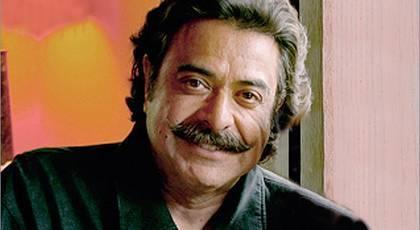
So you bet it was good news for me to hear a few days ago that a successful and hard working American businessman and multi-millionaire from the midwest, Shahid Khan, a Pakistani American owner of a large automobile parts manufacturer, Flex-N-Gate, had just bought an NFL team, the Jacksonville Jaguars! My rare good optimism however seems to perhaps been ill placed though because it seems that even a positive and notable news story like this can quickly turn into something far more twisted and sinister as witnessed by the scores of Islamophobic and racial comments being left on the Jacksonville Jaguars Facebook page and other sports blogs and boards, hours since the sale and the origins and national background of the new owner became public. The deal which still has to go to an NFL owner’s vote would only then be complete and final. Whether the NFL owner’s vote affirmatively on the deal or not, the rancid and clearly Un-American comments on the team’s fan page demonstrate that a majority of the local fans of this NFL team seem only to care about his Pakistani background and not of the fact that he is committed to staying and keeping the team in the small Jacksonville market and that he is a genuine fan of football and by all accounts would make a great manager/owner of the franchise.

The sad fact remains that there is a possibility that despite all the countless contributions to this great nation made by Pakistani Americans, many of these die hard football fans have no problem with risking losing their team to a different owner who would take the team out possibly west to the vacant Los Angeles market than to have a “Paki” keep the team in Florida’s small Jacksonville market and try and build a contender there.

Maybe its his IRS troubles that Shahid had a few years ago that prevented him from buying the St Louis Ram’s majority ownership stake last year or maybe it really is his very interesting moustache that scares people away. Regardless, I will gladly take either reason for his bid not being approved than anything that points to his national origin or racial makeup. Afterall, us Americans should never forget the words of the late great Rev. Dr. Martin Luther King, Jr when he said that we should ”not judge a man by the color of his skin, but rather by the content of his character.” All I know is that this Pakistani American still keeps alive Dr King’s dream. So no amount of paranoia should let the die-hard Jaguar fans fear that Muslims and Allah are on their way to taking over their beloved NFL franchise. Now gentlemen, let’s play ball!

–Manzer Munir, a proud American of Pakistani descent, is a former US State Department Foreign Service Officer Management Selectee, and the founder of Pakistanis for Peace. He is also an often tormented fan of the Kansas City Chiefs of the NFL as well as having the good fortune of being a lifelong fan of Kansas Jayhawk Basketball.

What Happened on the Border?

As Reported by The New York Times

It’s not clear what led to NATO strikes on two Pakistani border posts this weekend, but there can be no dispute that the loss of lives is tragic. At least 24 Pakistani troops were killed. We regret those deaths, as we do those of all American, NATO and Afghan troops and Pakistani and Afghan civilians killed by extremists.

Washington and Islamabad need to work together, urgently, to ensure that this incident does not destroy their deeply troubled relationship. The United States needs Pakistan’s cooperation — as grudging as it is — to pursue the fight against the Taliban. And without American support, Pakistan’s fragile government will be even more vulnerable to extremist attacks.

So far, Pakistan’s leaders seem most interested in fanning popular anger. The Obama administration and NATO have wasted precious time, allowing the crisis to escalate.

On Saturday, after the first reports, Secretary of State Hillary Rodham Clinton and Defense Secretary Leon Panetta issued a statement offering their “deepest condolences for the loss of life.” We’re not sure why President Obama waited until Monday to add his voice.

We are also puzzled, and concerned, by the delay in opening a full and transparent inquiry. On Saturday, the top American commander in Afghanistan, Gen. John Allen, said he would “thoroughly” investigate the incident. But that was never going to be enough.

It took until Monday for Gen. James Mattis, leader of the Pentagon’s Central Command, to announce a more formal investigation and to name Brig. Gen. Stephen Clark to lead it. The inquiry will include representatives of NATO and General Allen’s team. Significantly, Central Command said Pakistan and Afghanistan would be invited to participate. Islamabad and Kabul should both agree. The panel needs to move ahead quickly and credibly, with full disclosure no matter what it finds.

Pakistan’s leaders, as ever, are playing a very dangerous game. On Monday, Prime Minister Yousaf Raza Gilani vowed in an interview on CNN, that “business as usual will not be there.” His government has already shut down NATO supply routes to Afghanistan, ordered a base used for drone strikes evacuated and threatened to boycott a conference on Afghanistan’s security and development. Some news reports are also quoting ordinary Pakistanis demanding that their government retaliate militarily against American forces across the border.

Before things get out of control, Pakistan’s leaders need to lower their rhetoric and make clear that it is in their country’s interest to work with the Americans to find out what happened and ensure it will not happen again.

There are many questions that need to be answered. Who first fired on the American-Afghan force? Pakistan’s army is far too cozy with the Taliban. Were fighters sheltering near the Pakistani outposts? What about Pakistan’s claim that the NATO strikes continued for two hours even after Pakistan alerted allied officials? What needs to be done differently going forward?

The two sides need answers if there is any hope of finding a way back from the brink.

U.S.-Pakistan Ties Further Strained by Air Strike

By Saeed Shah and Nancy A. Youssef for McClatchy Newspapers

Tension between Pakistan and the United States rose Sunday over a U.S. air strike that killed 24 Pakistani soldiers, as the two sides offered widely disparate accounts of what might have happened.

NATO officials said Afghan and U.S. troops operating inside Afghanistan early Saturday had been fired on from the Pakistani side of the border and had requested close air support to help defend themselves. What happened next is still under investigation, officials said.

But Pakistan’s chief military spokesman said he did not believe that there had been any fire directed at the Americans from Pakistan, and said he did not believe the attack could have been inadvertent.

Major Gen. Athar Abbas said the military outpost on a mountain top at Salala in the Mohmand part of Pakistan near the Afghan border was well-marked on maps that both Pakistan and NATO have, and that the U.S. air assault lasted for more than an hour.

“I cannot rule out the possibility that this was a deliberate attack by ISAF,” Abbas said, referring to NATO’s International Security Assistance Force. “This was a visible, well-made post, on top of ridges, made of concrete. Militants don’t operate from mountaintops, from concrete structures.”

The incident sent U.S.-Pakistani relations to their lowest point since the May raid on Osama bin Laden’s hideout, when U.S. troops entered Pakistan without notifying Pakistani officials and killed the al Qaeda leader. U.S. officials believe bin Laden had lived for years in Abbottabod, the site of Pakistan’s premier military academy.

NATO Secretary General Anders Fogh Rasmussen said in a prepared statement that Saturday’s events were a “tragic unintended incident.” But NATO provided no details on what happened. U.S. Army Col. Greg Julian, a NATO spokesman, said officials are still investigating.

The Pakistan positions hit are about 300 yards inside Pakistan, Abbas said, and ISAF troops made “no attempt” to contact the Pakistani side using the established border coordination system. He said that the map references to the Pakistani positions had been previously passed to ISAF.

Taliban fighters often use Pakistan’s tribal area as a sanctuary, from which to launch artillery or rockets, or as a place to retreat under fire from NATO.

Pakistan announced Saturday that it would “review” all military, intelligence and diplomatic cooperation with the United States and ISAF forces in response to the incident.

Pakistan also closed its border with Afghanistan to trucks carrying supplies for ISAF, and announced that American forces would be expelled from Shamsi, a remote air base in Pakistan that was turned over to U.S. forces after the Sept. 11, 2001, attacks and used as a launching point for the U.S.’ controversial drone program.

On Sunday, Pakistan raised the possibility that it would also boycott a conference next month in Bonn, Germany, on Afghanistan’s future. Pakistan’s cooperation is considered vital for stabilizing Afghanistan and bringing the Taliban into negotiations.

Pakistan Stops NATO Supplies After Deadly Raid

By Shams Momand for Reuters

NATO helicopters and fighter jets attacked two military outposts in northwest Pakistan Saturday, killing as many as 28 troops and plunging U.S.-Pakistan relations deeper into crisis.

Pakistan shut down NATO supply routes into Afghanistan – used for sending in nearly half of the alliance’s land shipments – in retaliation for the worst such incident since Islamabad uneasily allied itself with Washington following the September 11, 2001 attacks on the United States.

Islamabad also said it had ordered the United States to vacate a drone base in the country, but a senior U.S. official said Washington had received no such request and noted that Pakistan had made similar eviction threats in the past, without following through.

NATO and U.S. officials expressed regret about the deaths of the Pakistani soldiers, indicating the attack may have been an error; but the exact circumstances remained unclear.

“Senior U.S. civilian and military officials have been in touch with their Pakistani counterparts from Islamabad, Kabul and Washington to express our condolences, our desire to work together to determine what took place, and our commitment to the U.S.-Pakistan partnership which advances our shared interests, including fighting terrorism in the region,” said White House national security council spokesman Tommy Vieter.

U.S. Secretary of State Hillary Clinton and Pakistani Foreign Minister Hina Rabbani Khar spoke by telephone, as did General Martin Dempsey, the chairman of the Joint Chiefs of Staff, and Pakistani Chief of Army Staff General Ashfaq Parvez Kayani.

The NATO-led force in Afghanistan confirmed that NATO aircraft had probably killed Pakistani soldiers in an area close to the Afghan-Pakistani border.

“Close air support was called in, in the development of the tactical situation, and it is what highly likely caused the Pakistan casualties,” said General Carsten Jacobson, spokesman for the International Security Assistance Force (ISAF).

He added he could not confirm the number of casualties, but ISAF was investigating. “We are aware that Pakistani soldiers perished. We don’t know the size, the magnitude,” he said.

Pakistan’s Prime Minister Yusuf Raza Gilani said the killings were “an attack on Pakistan’s sovereignty,” adding: “We will not let any harm come to Pakistan’s sovereignty and solidarity.”

Pakistan’s Foreign Office said it would take up the matter “in the strongest terms” with NATO and the United States, while army chief Kayani said steps would be taken to respond “to this irresponsible act.”

“A strong protest has been launched with NATO/ISAF in which it has been demanded that strong and urgent action be taken against those responsible for this aggression.”

Two military officials said up to 28 troops had been killed and 11 wounded in the attack on the outposts, about 2.5 km (1.5 miles) from the Afghan border. The Pakistani military said 24 troops were killed and 13 wounded.

The attack took place around 2 a.m. (2100 GMT) in the Baizai area of Mohmand, where Pakistani troops are fighting Taliban militants. Across the border is Afghanistan’s Kunar province, which has seen years of heavy fighting.

“Pakistani troops effectively responded immediately in self-defense to NATO/ISAF’s aggression with all available weapons,” the Pakistani military statement said.

The commander of NATO-led forces in Afghanistan, General John R. Allen, offered his condolences to the families of Pakistani soldiers who “may have been killed or injured.”

Dempsey’s spokesman, Colonel David Lapan, could not confirm the closure of the Pakistani border crossing to trucks carrying supplies for ISAF forces. However, he noted that “if true, we have alternate routes we can use, as we have in the past.”

POORLY MARKED

Around 40 troops were stationed at the outposts, military sources said. Two officers were reported among the dead. “They without any reasons attacked on our post and killed soldiers asleep,” said a senior Pakistani officer, requesting anonymity.

The border is often poorly marked, and Afghan and Pakistani maps have differences of several kilometres in some places, military officials have said.

However, Pakistani military spokesman Major-General Athar Abbas said NATO had been given maps of the area, with Pakistani military posts identified.

“When the other side is saying there is a doubt about this, there is no doubt about it. These posts have been marked and handed over to the other side for marking on their maps and are clearly inside Pakistani territory.”

The incident occurred a day after Allen met Kayani to discuss border control and enhanced cooperation.

A senior military source told Reuters that after the meeting that set out “to build confidence and trust, these kind of attacks should not have taken place.”

BLOCKED SUPPLIES

Pakistan is a vital land route for nearly half of NATO supplies shipped overland to its troops in Afghanistan, a NATO spokesman said. Land shipments account for about two thirds of the alliance’s cargo shipments into Afghanistan.

Hours after the raid, NATO supply trucks and fuel tankers bound for Afghanistan were stopped at Jamrud town in the Khyber tribal region near the city of Peshawar, officials said.

The border crossing at Chaman in southwestern Baluchistan province was also closed, Frontier Corps officials said.

A meeting of the cabinet’s defense committee convened by Gilani “decided to close with immediate effect NATO/ISAF logistics supply lines,” according to a statement issued by Gilani’s office.

The committee decided to ask the United States to vacate, within 15 days, the Shamsi Air Base, a remote installation in Baluchistan used by U.S. forces for drone strikes which has long been at the center of a dispute between Islamabad and Washington.

The meeting also decided the government would “revisit and undertake a complete review of all programs, activities and cooperative arrangements with US/NATO/ISAF, including diplomatic, political, military and intelligence.”

A similar incident on Sept 30, 2010, which killed two Pakistani service personnel, led to the closure of one of NATO’s supply routes through Pakistan for 10 days. NATO apologised for that incident, which it said happened when NATO gunships mistook warning shots by Pakistani forces for a militant attack.

Relations between the United States and Pakistan were strained by the killing of al Qaeda leader Osama bin Laden by U.S. special forces in Pakistan in May, which Pakistan called a flagrant violation of sovereignty.

Pakistan’s jailing of a CIA contractor and U.S. accusations that Pakistan backed a militant attack on the U.S. embassy in Kabul have added to the tensions.

“This will have a catastrophic effect on Pakistan-U.S. relations. The public in Pakistan are going to go berserk on this,” said Charles Heyman, senior defense analyst at British military website Armedforces.co.uk.

Other analysts, including Rustam Shah Mohmand, a former ambassador to Afghanistan, predicted Pakistan would protest and close the supply lines for some time, but that ultimately “things will get back to normal.”
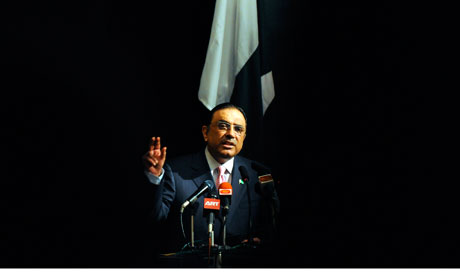
Pakistan’s New U.S. Envoy Faces Tough Task Ahead

As Reported by Xinhuanet

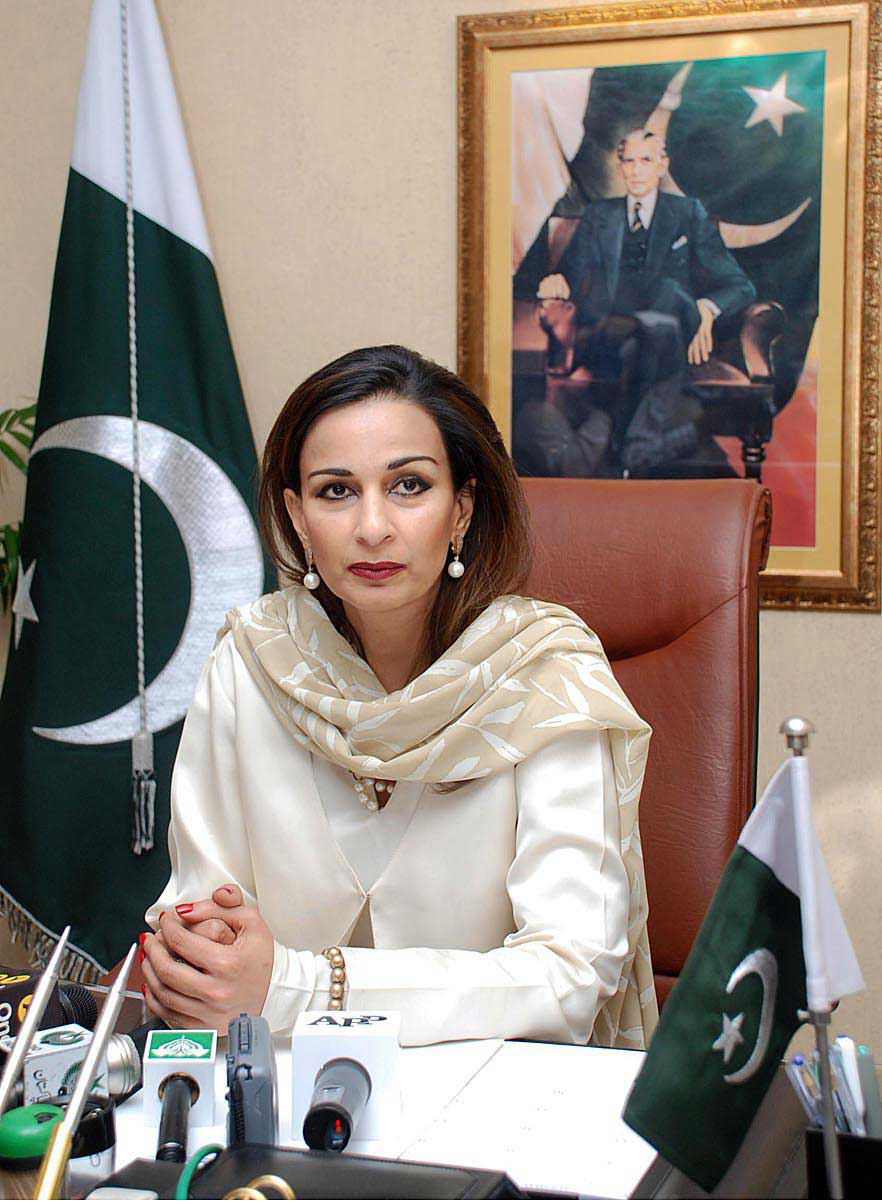
A journalist-turned politician, Ms. Sherry Rehman, will soon proceed to Washington to assume responsibility as Pakistan’s new ambassador where she would face tough task as how to bridge the trust gap with the United States.

Prime Minister Yusuf Raza Gilani appointed Sherry Rehman as Pakistan’s new ambassador in Washington a day after her predecessor Hussain Haqqani resigned over a recent claim by a Pakistani-American business tycoon that he had been asked by Haqqani to deliver the alleged President Asif Ali Zardari’s memo to the former U.S. Chairman of the Joint Chiefs of Staff Mike Mullen, seeking Washington’s help to rein in the powerful army.

Haqqani, who was summoned to Pakistan this week after the memo controversy dragged the country into crisis, was asked by the Prime Minister to quit during a meeting attended by the President, the Army Chief General Ashaq Pervaiz Kayani and Intelligence Chief, Lt. Gen. Ahmad Shuja Pasha in Islamabad on Tuesday.

Sherry Rehman, a former Information Minister and current member of the National Assembly or Lower House of the parliament, is also a central leader of the ruling Pakistan Peoples Party. She was chosen for the key post only because of her association with the ruling party as she has no diplomatic career. Islamabad routinely appoints ambassadors to the United States on a political basis. Several retired military men have also served as the country’s ambassadors to the U.S..

The Pakistani government has designated a political loyalist and the woman ambassador to the U.S at a time when mistrust between the two key allies in the so-called war on terror is at peak. Pakistan and the U.S. cooperation is considered a key to stability in Afghanistan as Washington is mounting pressure on Islamabad to take measures in “days and weeks” to encourage the Taliban, the dreaded Haqqani network and other Afghan armed groups to join the peace and reconciliation process in the war-ravaged Afghanistan.

“It’s like that old story – you can’t keep snakes in your backyard and expect them only to bite your neighbors. Eventually those snakes are going to turn on whoever has them in the backyard, ” US Secretary of State Hillary Clinton said while standing along with her Pakistani counterpart in Islamabad last month in a blunt message to Pakistan.

The first major challenge the Pakistan new ambassador will have to face is how to address to the U.S. concern about the Afghan Taliban and Haqqani network, which the U.S. officials say are operating from Pakistan’s tribal region. Washington seemed to be in haste on the Afghan peace process in view of its troops’ withdrawal, which already began in July and will be completed by 2014.

The Pakistani Taliban is also an issue for the U.S. as the CIA says that they are sheltering Afghan armed militants in the country’s lawless tribal regions bordering Afghanistan. In view of its frustration, the U.S. routinely uses its spy aircraft to hit targets in Pakistan tribal regions, which is also a source of tension in bilateral relationship and the U.S. is in no mood to stop drone strikes despite Pakistan’s criticism.

The new Pakistani ambassador will also have to convince the U.S. administration to unblock the suspended military aid to Pakistan. The U.S. withheld some 800 million US dollars in assistance to the country’s armed forces in July just two months after Osama bin Laden was killed in a U.S. military raid, the U.S. unilateral action had itself worsened relationship. The U.S. has also attached tough conditions with the civilian aid for Pakistan.

Pakistan is nowadays under fire during the Presidential nomination campaign in the U.S. and even on Tuesday Republican presidential candidates attacked Pakistan in their foreign policy debate. The Republican presidential hopefuls ganged up on Pakistan and questioned whether the United States could trust it. Texas Governor Rick Perry called Pakistan unworthy of U.S. aid because it had not done enough to help fight al-Qaida.

Criticism at Pakistan by the Republican hopefuls shows how much tough environment she would face after she assumes the office of ambassador in the coming days. She vowed on Wednesday, a day when she was designated as ambassador, to work for improvement of ties with the U.S..

The United States on Wednesday acknowledged the impending change of guard at the Pakistani embassy in Washington as they praised deposed Ambassador Husain Haqqani for his services and announced their anticipation of working with Pakistan’s new Ambassador Sherry Rehman to continue strengthening bilateral ties between the two countries. In Washington too, the State Department spokesman on Wednesday said the U.S. looks forward to working together with her as both countries “continue to build a strong, cooperative relationship between our two countries.”

The former Pakistani ambassador to the U.S. had also good ties with the U.S. administration and his role was praised by the State Department spokesman, Mark Toner, but even then the relationship had been worst during his tenure. Now Sherry Rehman will not only have to address to the U.S. concern but also to serve the interests of Pakistan where a majority of the people are against the U.S. policies.

This is not Prophet Muhammad’s Islam

By Manzer Munir for Pakistanis for Peace

The steady stream of negative news about the twisted way Islam is being practiced around the world seems to never end. In my view, it is not how the Prophet would have wanted his followers to behave.

Just when I thought I was beginning to get used to the ridiculousness of the news coming out of Saudi Arabia, where a religious edict is trying to force women there with beautiful eyes to  completely cover up their face in order to stop the temptation of the men, along comes the grim news of Gulnaz  from Afghanistan. If you are not familiar with Gulnaz’s story, let me give you the facts.

Two years ago, in 2009, Gulnaz, a 19 year old single girl who lived with her elderly mother in Afghanistan, was brutally raped by her cousin’s husband. To describe the events, she recalls that on this day, the rapist came into her house when her mother left for a brief visit to the hospital. “He had filthy clothes on as he does metal and construction work. When my mother went out, he came into my house and he closed doors and windows. I started screaming, but he shut me up by putting his hands on my mouth,” she said.

Afterwards, she hid what had happened out of shame and fear, as shockingly there is no difference seen between women who are raped and women who commit actual adultery.  In Afghanistan and in many conservative Muslim countries, any sex outside marriage, whether the guilty party is single or married is considered adultery by the society and the justice system.

A few weeks after her rape, she began to vomit and started showing signs of pregnancy with her attacker’s child. Instead of sympathy and proof of her ordeal, she was charged and found guilty of adultery by the courts and for having sex outside marriage and was sentenced to twelve years in prison. She has already served two years and even gave birth to her rapist’s child, a little girl, in Kabul’s Badam Bagh jail where sadly, her innocent daughter is being raised in captivity alongside the unfortunate mother.

Rather than being freed from jail and given justice for her painful ordeal, the only way out of the dishonor of rape or adultery for her is incredibly only by marrying her attacker. In Afghan culture, and indeed in most Muslim communities, this is believed to be the only way to restore a woman’s honor, by marrying the man who she had sex with, damned be the fact whether it was willingly or unwillingly!

Sadly in many Muslim countries, rape remains a common form of violence against women. In addition, women are often blamed for being the victim of rape. Islam however, views rape as a violent crime against the victim, against society, and against God. The perpetrator who commits a crime is morally and legally responsible for that crime and should be held accountable. The victim, who is an unwilling partner in the sex act and so should bear neither blame nor stigma associated with the unfortunate act. To either ostracize or condemn the victim because she was compelled to engage in sexual intercourse is against the laws of Islam since the victim was an unwilling, and therefore a blameless, participant.

As common as her story and circumstances are for a woman in Afghanistan, the world has only learned of it due to a chance foreign documentary.  Gulnaz’s ordeal came to light because of a dispute between filmmakers and the European Union who hired the crew to film a documentary on the improving situation of women’s rights in Afghanistan and the assistance that the EU has been providing in the better treatment of women in the country. It was only when the documentarians came across her story and the grave injustice being done to Gulnaz and indeed by some accounts, hundreds of women across Afghanistan in similar circumstances, that the EU decided to cancel the project out of fear of harming their relations with Afghan government and institutions. Officially the EU states that it fears for the safety of the women in the film as they could be identified and face reprisals but many human rights organizations believe it is due to the fact that the film shows Afghan justice system in a poor light and the EU is concerned about the Afghan government’s sensitivities to the situation. It is despicable that the EU is more concerned with the sensitivities of the Afghan government rather than fighting for justice for Gulnaz.

Customs such as these in Afghanistan or the recent religious ruling in Saudi Arabia warning women to cover their attractive eyes, or the continued religious persecution of Christians and other minorities in Pakistan through the egregious blasphemy laws as seen in the case of Aasia Bibi, only serve to illustrate to many within and outside Islam the tremendous challenges that exist in what is right and what is logically very wrong and goes against all sense of justice and common sense, not to mention the very essence of Islam.

I am certainly not arguing for making any changes in the Quran or interpretations of religious text or any wholesale revisions whatsoever. That would not only be blasphemous but also counterproductive and unnecessary. Furthermore,  a big part of the beauty of our religion stems from the fact that it has remained unchanged as we Muslims believe that mutations and changes in both the Bible and the Torah necessitated the need for a third Abrahamic religion, Islam,  to arrive some 1400+ years ago to “set the record straight” after all the changes over the years in the two earlier Holy Books. Instead, I believe the only thing that needs to occur is the realization amongst the leaders and countries of the Organization of Islamic Conference (OIC) that in this day and age, there are certain rights and freedoms that should be guaranteed to citizens of all countries of the world and this does not require any changes in the great religion but rather some simple changes in the current laws.

Aristotle once said that “You can judge a nation by the way it treats its most vulnerable citizens”. You could be a Hindu or a Christian in Pakistan, a woman in Afghanistan or Saudi Arabia or a homosexual or transgendered person in Iran, you do not deserve to lose your life or liberty under the guise of religious laws. Allah almighty is a just and fair God in Islam, just as he is in the Christian and Jewish faiths. He most certainly would never condone the treatment of Gulnaz, Aasia Bibi and countless other poor souls who are being mistreated under the banner of Islam.

I am not a religious scholar and nor do I profess to know everything I need to know about Islam, Christianity and many other religions. Some may even question my faith and belief in calling myself Muslim simply because I am asking these tough questions, and in their version of Islam, you never question, you simply obey. Lest they forget, Islam also clearly states to seek knowledge and to be just and fair and respectful of other religions.  “Surely those who believe and those who are Jews and the Sabians and the Christians whoever believes in Allah and the last day and does good — they shall have no fear nor shall they grieve.” (Quran 5:69)

I am however certain that the Prophet Muhammad (peace be upon him) would indeed be very upset with the current state of affairs of most Muslim countries when it comes to morality, religious freedoms,  respect for other religions and the treatment of women. Sadly, I do not see the changes necessary coming into being voluntarily by these nations, I believe it is incumbent of the benefactors of these nations, such as the United Nations, United States, the European Union, China and other trading partners, to push for better treatment of women and religious minorities in many Muslim countries of the world.  It is high time that they pressure these nations into enacting basic rights and freedoms for all people, regardless of their race, religion, gender, and sexual orientation. It must become a precursor to being a part of the civilized nations of the world and in being a member of the world community of nations. Freedom after all is what the Arab Spring is all about!

-Manzer Munir, a proud American of Pakistani descent, is a practicing Sufi Muslim and member of Muslims for Progressive Values, he is also the founder of Pakistanis for Peace and blogs at www.PakistanisforPeace.com as well at other websites as a freelance journalist and writer.

Pakistan Spy Agency Picks the Wrong Fight

By Jeffrey Goldberg for Bloomberg News

The Pakistani military and its spy agency, the Directorate for Inter-Services Intelligence, have an expansive menu of options before them in their endless campaign to subvert democracy.

And subverting democracy (as opposed to, say, winning wars against India, or helping the U.S. defeat the Haqqani terrorist network in Afghanistan) is the real specialty of Pakistan’s military.

On many occasions, the intelligence service, known as the ISI, achieves its goals through sheer brutality. Such was the case in the beating death of Saleem Shahzad, a Pakistani investigative journalist, in May. His murder was sanctioned by the ISI, according to Admiral Mike Mullen, the just-retired chairman of the U.S. Joint Chiefs of Staff. In a recent article in the Atlantic, Marc Ambinder and I reported that U.S. officials saw intelligence showing that officials in the office of General Ashfaq Kayani, the head of Pakistan’s army (and the most powerful man in a country ostensibly led by a civilian president), ordered the head of the ISI to “take care of the problem” posed by Shahzad. His body was soon found on the bank of a canal.

On other occasions, the ISI executes its mission with slightly more politesse. Such is the case in a controversy now raging around the alleged activities of the Pakistani ambassador to the U.S., Husain Haqqani. He stands accused of something akin to treason for allegedly trying to enlist American help to undermine the Pakistani military’s hold on the country’s elected government.

An Absurd Campaign

Haqqani (no relation to the Haqqanis of terrorism fame) has long been known as a pro-democracy activist and a critic of the army’s meddling in Pakistan’s civilian affairs. As a scholar (he was a professor at Boston University before taking his current post), he wrote the definitive book on the Pakistani military’s unholy alliance with jihadists, “Pakistan: Between Mosque and Military.” Haqqani was appointed ambassador to the U.S. in 2008 over the objections of the ISI, which has been gunning for him ever since. This is an absurd campaign for the ISI to wage: Haqqani is one of the few Pakistani officials who have any credibility in Washington, and he has carried water for the ISI numerous times. Self-destructive behavior, however, is also an ISI specialty.

Last month, the Financial Times published an op-ed article by Mansoor Ijaz, a Pakistani-American businessman. In it, Ijaz claimed that he had helped deliver a memo, ostensibly on behalf of partisans of President Asif Ali Zardari, to Mullen, asking the chairman to help curtail the Pakistani military’s power in politics. (Mullen later said he ignored it.) The article intimated that Haqqani was behind the memo.
Ijaz keeps turning up in the most unlikely places. In the 1990s, he has said, he was involved in discussions in which the Sudanese government offered to deliver Osama bin Laden to justice, a claim denied by Clinton administration officials. In 2006, he suggested that he knew of evidence that Iran had already produced a nuclear weapon.

But the ISI apparently sees him as very credible. And they found in his op-ed a chance to move against Haqqani. The spy agency quickly fomented an anti-Haqqani campaign among the more pliant of Pakistan’s newspapers (the ISI is also known to keep journalists directly on its payroll, which is a timesaver for its media-manipulation department), and Zardari was forced to recall Haqqani to Islamabad. Haqqani denies drafting the memo, and has already offered to resign, in order to protect Pakistan’s civilian president.

Some Obvious Questions

Like many people who know Haqqani, I feared that he would be met at the airport by a Benigno Aquino-type arrival ceremony, or at the very least by ISI officers more interested in interrogation than explanation. But Haqqani, with whom I e- mailed several times in the past few days, seemed to be handling the pressure coolly: At one point this weekend he wrote, “Someone’s game plan was to scare me and my President into submission without a fight.”

He also raised some obvious questions about Ijaz and his motivations. Ijaz says he is a critic of the ISI and claims to be opposed to military rule in Pakistan. Yet, according to reports in the Pakistani press, he recently met with General Ahmed Shuja Pasha, the head of the ISI, and turned over his BlackBerry.

Ijaz’s behavior suggests that he is either an epically erratic operator or someone who from the outset was attempting to subvert Haqqani.
It’s not at all clear how this scandal (known as “Memogate” in the obsessed Pakistani press) will end, but if it results in Haqqani’s removal as ambassador, it would be a minor tragedy for an already tragic country. Military rule has brought Pakistan nothing but violence, stagnation and political repression. Many Pakistanis see the Haqqani network — the pro-Taliban terrorists who are killing American troops — as a more serious threat than a pro-democracy academic. But as long as the military and the ISI are in charge of Pakistan, the wrong Haqqanis will be ascendant.

US Hip Hop Troupe Praises Pakistan’s Rich Music

As Reported by Dawn.com

Pakistan has very rich music and through concerts we can open up conversations about different cultures and can make real relationships. The people we have met and worked with in Pakistan are amazing.

These were some of the views members of a United States hip hop troupe ‘FEW Collective’ that is currently visiting Pakistan as part of US cultural diplomacy programme shared with Dawn. The troupe is expected to perform in Lahore on Monday (tomorrow).

The troupe consists of six people — DJ Asad Jafri, Alsarah, a Sudanese-born singer and songwriter, Aquil Charlton, writer and performer, Manal Farhan, a performing artiste, Braveonk Daniel Haywood, dancer, and Jonathan St. Clair, aka Super Inlight, a multidisciplinary performing and teaching artiste.Throwing light on hip hop music and dance, Charlton said this genre of performing arts like rapping emerged in the United States at house parties in the late 1970s and early 1980s.

Charlton said The band ‘FEW Collective’ was formed in 2005 and its objectives included to convey positive message through the hip hop forum, to become the voice of the young and voice of the marginalised wanted to stand as an example for types of positive things that could happen and could bring young people from different backgrounds together and fuse their thoughts.
He said hip hop had four elements i.e. DJ, graffiti, break dance and know yourself, but ‘FEW Collective’ stood for ‘Fifth Element
Warriors’ since we are fighting for the knowledge.

St. Clair said the group had performed in Algeria, Morocco and China while Pakistan was their fourth destination.

Farhan said that Asad Jaffri, also her husband, had visited Pakistan a couple of times since his family belongs to Karachi. She said it’s been great here in Pakistan.

Asad Jaffri is also running a community-based non-profit charity organisation – Inner-city Muslim Action Network (IMAN).

Based in Chicago, IMAN organises works for social justice, provides direct services, and cultivates arts in urban communities.

Since 1997, IMAN has utilised arts as a vehicle for social change and to build bridges among communities and cultures. It also works closely with an international network of over 400 artists. This work includes artistic retreats, developmental workshops, and cultural exchanges. Through national and international efforts, IMAN stresses the importance of arts in creating mutual understanding, connecting cultures, and building community. Delivering a vast array of stories, music, movement and visual arts from rich cultures, IMAN highlights the work of Muslim artists and powerful artistic movements around the world.

The group members told Dawn that they had listened to Pakistani music which was very rich and they had also prepared a song ‘Dam Mast Qalandar’ in fusion with Pakistani instrumentalists.

During their stay in Lahore, they also worked and interacted with students of the BNU and LACAS.

The FEW is an artistic collective that believes in the power of art to engage, educate and inspire. It combines traditional forms of music, dance, and art with the elements of hip hop and theatre to address contemporary issues.

As representatives of hip hop culture, its members acknowledge the evolution of music, visual art, the spoken word, and dance as basic elements of the culture and knowledge as a master element.

Some know them as the Fifth Element Warriors, others relate them as From Every Walk, but they know themselves as always Finding Eternal Wisdom. The FEW specialises in hip hop theatre, concerts, arts workshops, team-building sessions and
leadership development.

Pakistanis for Peace Editor’s Note– This is a great initiative by the US State Department to help foster better understanding between the two countries who have hit a rough stretch after 60+ years of a close friendship and mutual regard between the people of the two nations.

Fate of Pakistan’s Zardari May Hinge on Scandal of Purported Memo

By Alex Rodriguez for The Los Angeles Times

Did he, or didn’t he?

All over Pakistan, people are asking whether Pakistani President Asif Ali Zardari approved a memo asking for Washington’s help in reining in the country’s powerful military.

The answer could play a role in whether Zardari, already deeply unpopular with both the public and the military, stays in power.

The scandal scorching the airwaves in Pakistani cities and towns now has a name — Memogate — and it is sparking talk of early elections. At the center of it all is Pakistani American businessman Mansoor Ijaz, who says a senior Pakistani diplomat asked him to convey a letter to Washington seeking its help in preventing a military takeover of Zardari’s administration.

In return, the letter stated, the Zardari government would eliminate a wing of the Inter-Services Intelligence spy agency, or ISI, that maintains links with Afghan insurgent groups, and would give U.S. troops “a green light” to root out Afghan militants hiding out in Pakistan’s tribal areas.

Ijaz says Pakistan’s ambassador to the United States, Husain Haqqani, asked him to be the intermediary and that Zardari had endorsed the memo. The explosive allegations prompted Haqqani to offer his resignation as a way of defusing the controversy, though he denies either writing the memo or asking Ijaz to pass it on to Washington.

Unless Haqqani can show that the memo was fabricated, he could be ousted from his post. But analysts say the crisis also casts a shadow on Zardari, who has been criticized by many Pakistanis for his closeness to the American government, which they mistrust, as well as his failure to solve the country’s myriad economic and infrastructure ills.

“It might be a game-changer in the political arena, with the military concluding there’s no way it can trust the Zardari government,” said Pakistani columnist and legal expert Babar Sattar. “If the military isn’t willing to let this go, it could reduce the term of this government. That might be the only resolution: to hold early elections.”

If genuine, the memo sheds a harsh light on the deep rifts between Pakistan’s civilian and military leaders. Although Zardari is president, the military, led by army chief Gen. Ashfaq Kayani, holds ultimate power in Pakistan, as it has for most of the country’s 64-year history. The military thinks Zardari is too acquiescent to Washington’s demands.

The memo purportedly was drafted a week after U.S. commandos killed Al Qaeda leader Osama bin Laden during a secret nighttime raid on his compound in the Pakistani military city of Abbottabad, about a two-hour drive from the capital. It portrays a civilian government convinced that the country’s military leaders were planning a coup against Zardari.

The rationale, Ijaz said in an Oct. 10 op-ed piece in the Financial Times newspaper, was that the military was being heavily criticized by the public and the media for allowing the raid to occur, and needed to make Zardari a scapegoat to deflect blame.

“Request your direct intervention in conveying a strong, urgent and direct message to Gen. Kayani that delivers Washington’s demand for him and [ISI chief Lt. Gen. Ahmed Shuja] Pasha to end their brinkmanship aimed at bringing down the civilian apparatus,” stated the memo, which was delivered to the then-chairman of the U.S. Joint Chiefs of Staff, Adm. Michael G. Mullen. The memo was published on the website of Foreign Policy magazine and by the Pakistani newspaper the News.

“If true, it shows that the civilian government really panicked,” said security analyst Talat Masood, a retired Pakistani general. “It’s extraordinary that they would get so nervous that they would write all this. It shows the deep divide between the civilian leadership and the military.

“If it’s a phony memo, it would recoil back at the [military].”

If the military was behind such a move, it could be aimed at discrediting or weakening Zardari’s government.

“The more likely, but far from certain, scenario? The boys are up to their tricks again,” Cyril Almeida, a columnist for Dawn, an English-language Pakistani newspaper, wrote Friday, referring to the military.

To back up his claims, Ijaz gave the News email that he says he and Haqqani exchanged at the time the memo was drafted and later conveyed to Mullen. On May 10, after the memo was delivered to Mullen, Ijaz allegedly emailed Haqqani, saying, “Ball is in play now — make sure you have protected your flanks.”

Pakistani Envoy Offers to Resign Over Memo

By Salmaan Masood for The New York Times

Pakistan’s ambassador to the United States, Husain Haqqani, has offered to resign amid a political and diplomatic storm in Pakistan over a mysterious memo, which asks for American help in dealing with the Pakistani military and Mr. Haqqani is accused of orchestrating.

Mr. Haqqani denies any involvement with the memo, but he said he offered to resign to end the continuing controversy.

The claims that Mr. Haqqani wrote the memo were made by Mansoor Ijaz, an American citizen of Pakistani origin, who said he was asked to ensure the delivery of the document to Adm. Mike Mullen, who was chairman of the Joint Chiefs of Staff at the time.

Mr. Ijaz described the memo, which he has not made public, as saying that the civilian government in Pakistan was seeking help in preventing a possible military coup in May. The military had just suffered humiliation over the American raid into Pakistan that killed Osama bin Laden.

Mr. Ijaz said that the memo indicated that Pakistan promised, in return, to dismantle a part of its premier intelligence agency — which some American officials have come to distrust.

On Wednesday, Admiral Mullen’s former spokesman, Capt. John Kirby, said that the memo was delivered, but that Admiral Mullen “did not find the memo at all credible.”

“Therefore,” Captain Kirby said, “he addressed it with no one.”

Captain Kirby added that the memo was unsigned and was delivered by someone other than Mr. Ijaz.

Supporters of Mr. Haqqani say that he maintains close contacts with American officials, including Admiral Mullen, and did not need an intermediary to deliver a message, especially one as explosive and diplomatically delicate as what was said to be included in the memo.

The controversy over the memo threatens to further aggravate the differences between Pakistan’s civilian government and the powerful military.

Many people in Pakistan view Mr. Haqqani as too close to the United States because he often pushes for closer cooperation between the countries. Before becoming ambassador, Mr. Haqqani was also a vocal critic of the military, but since taking his job he has sometimes been supportive of the military in speaking with American officials. Many in the Pakistani military view him with suspicion.

The prime minister announced this week that Mr. Haqqani had been told that he needed to return to Pakistan to answer questions about the memo.

Mr. Haqqani said the decision of whether he continued at his job or not rested with President Asif Ali Zardari.

“I do not want this nonissue of an insignificant memo written by a private individual and not considered credible by its lone recipient to undermine democracy,” Mr. Haqqani said in an e-mail.

The news of the memo first surfaced last month when Mr. Ijaz wrote an op-ed article for The Financial Times. At the time, he did not name the diplomat he said he was behind the memo. He only recently said it was Mr. Haqqani.

Thom Shanker contributed reporting from Washington, and Matthew Rosenberg from New York.

New Neurological Test By a Pakistani

By Suhail Yusuf for Dawn.com

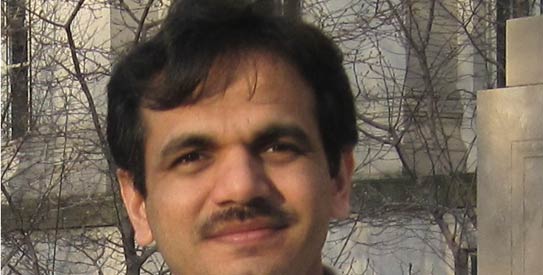
A Pakistani scholar has devised a non-invasive way to sense brain pressure which could significantly change the current paradigm of neurological care of those suffering from brain injury or disease.

Monitoring intracranial pressure (ICP) is the most important thing to assess brain injury, hemorrhage (internal blood flow), tumors and other neurological problems. But current methods to measure this pressure are highly invasive – requiring a neurosurgeon to drill a hole in the skull to place a pressure sensor or catheter inside the brain – and are thus restricted to the very severe cases.

Pakistani scientist, Faisal Kashif has devised a non-invasive technology for ICP monitoring in his PhD thesis at the Massachusetts Institute of Technology, US. The method is based on processing available clinical signals using a mathematical model of relevant physiology. It provides real time estimates of ICP and cerebrovascular impedance, the latter is an indicator of brain’s ability to maintain its blood supply.

“ICP is a key neurological vital sign and is affected in several brain pathologies – even in concussions and migranes – and this non-invasive method could help in monitoring a vastly larger pool of patients,” said Kashif. He further added that unlike the invasive approaches which require a neurosurgical facility, the non-invasive method can also be applied in emergency-care settings where most trauma patients are first brought. Having access to ICP in a timely manner can guide doctors to provide life-saving interventions.

The initial validation studies show that the new method is equally precise as compared to other painful surgery based procedures. Now Kashif and his colleagues are setting up their prototype device for real time monitoring by the doctors, and to run relevant clinical trials. He is also hopeful that the device could be easily developed in Pakistan as well.

The Helen Carr Peake research prize

In April this year, Dr. Faisal Kashif won MIT’s Helen Carr Peake research prize for his doctoral thesis contributions to the field of bioengineering. He has also presented his findings at two major international conferences, American Heart Association’s Stroke 2010 in US, and ICP 2010 in Germany.

His research work was also declared as “Most Innovative Research” at the Innovation Congress 2009, Boston, US. In 2000, he was awarded two Gold Medals at Ghulam Ishaq Khan Institute of Technology (GIKI) and won four years HEC’s overseas scholarships as he was accepted for the doctorate program at MIT, though he only partially used these funds as support became available from MIT’s research, teaching and a medical engineering fellowship, which he was awarded for his proposed research.

A Thesis dedicated to Pakistan

His doctoral thesis entitled “Modeling and estimation for non-invasive monitoring of intracranial pressure and cerebrovascular autoregulation” was a milestone in Kashif’s career. Four years ago, in his Masters thesis, he developed a method for efficient communication through a nonlinear channel, such as the one encountered in satellite and optical fiber links. He dedicated this thesis to his parents and to all the martyrs of independence, which shows his dedication to Pakistan.

“I am proud to be a Pakistani because I know the reasons for its creation. I am very happy to associate my honours to the ideology behind it. I want to do a lot more Insha-Allah, and contribute in all ways I can,” he told to Dawn.com.

Pak Bans Dirty Texting: Just Say No To Monkey Crotch

By Shivam Vij for FirstPost

You cannot SMS ullu chod in Pakistan anymore. Nor can you SMS monkey crotch if you had any reason to do so.

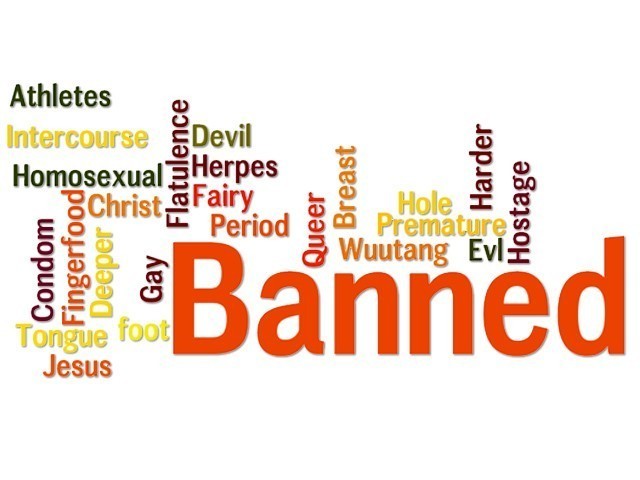
The Pakistan Telecommunication Authority (PTA) has banned 1,795 expletives on SMS, ordering telecom companies to filter out SMS-es containing these offending words with effect from 21 November 2011. The letter includes a list of 1,109 English words, more pornographic terms than expletives, and another 586 Urdu words which are more colourful sexual expletives of the standard South Asian kind rather than the plain garden variety pornography.

A letter from the PTA, dated 14 November and signed by its Director General (Services), Muhammed Talib Doger invokes the “Protection from Spam, Unsolicited, Fraudulent and Obnoxious Communication Regulations, 2009″ to pass the order.

The Pakistan Telecommunication Authority (PTA) has banned 1,795 expletives on SMS, ordering telecom companies to filter out SMS-es containing these offending words with effect from 21 November 2011. Vivek Prakash/Reuters
The Pakistani Twitterverse was on fire last night as the two lists make for hilarious reading. The English list begins with A.S.S. and ends with yellowman. Some words sound harmless (crap and crappy), others bizarre (Jesus Christ, flatulence, murder, monkey crotch). Many are commonly used obscene words (“FUCK YOU”) and care has been taken to account for alternative spellings (biatch, muthafucka). While many spelling variations of ‘masturbation’ are on it, the correct spelling is not. Most words seem to be designed to prevent ‘sexting’ or sending sexually explicit texts (sexy, lick me, do me, S&M, lotion and porn). The list comes down on anal sex as much as vaginal sex. But it isn’t just sex. By banning drunken they perhaps hope to reduce alcoholism.

The Express Tribune points out, “While much of the list contains expletives, a number of words to be banned include medical terms, terms used by particular minority groups, common words from the English language and rap group, Wu Tang Clan.” The ‘medical terms’ include athelete’s foot, breast, intercourse, condom and period. The ‘daily use’ terms include hole, hostage and harder. Words like gay and homosexual don’t surprise but it’s curious why wuutang raised the censor’s hackles.

In fact, thanks to this helpful compendium many Pakistanis are finding their expletive vocabulary enhanced. @UroojZia asked what bumblefuck and ladyboog meant.

@Zakoota said the lists should be required reading in schools to give children the vocabulary to describe politicians and cricketers. With the amount of phrases that include the word “BUTT”, @KhaLeak wondered if Aijaz Butt was banned as well.

The Urdu list has standard gaalis also popular in north India, but many of them may not be familiar to Indians (such as “dani mani fudi chus“). Some are unfamiliar even to Pakistanis. @FurhanHussain said the presence of Punjabi gaalis in the Urdu list amounted to cheating, but others noted that there is no list of Sindhi and Punjabi language expletives, a grievous omission given that the Punjabi language is particularly full of colourful expletives.

“Padosi ki aulaad” doesn’t sound very obscene. There are some 15 spelling and gender variations of ‘kanjar’, a popular Pakistani expletive meaning dancing girls, often also used to describe cross-dressing or men dancing like women. Some of the Urdu ones are quite creative. There are four variations of “Chipkali ke gaand ke pasine” and some are inexplicable (“Nimbu sharbat“, “carrom board”) and some are zoologically bizarre (“ullu chod” or owl fucker). Some are rather vanilla everyday terms like “Buckwaas” (nonsense) and “Bewakoof” (foolish).

There were so many oddball terms in there at first people though it was a spoof. However, Shahzad Ahmad, an internet rights activist who tweets as @bytesforall, said he confirmed with a source at the PTA that the list was real. The Express Tribune story referred to above has been updated to quote a PTA spokesperson who denied knowledge of any letter and said that the PTA “does not take such decisions and only passes on the instructions to licensees once a decision is taken by a ministerial committee.” The PTA, which is also in the news for directing ISPs to block access to 1,71,261 pornographic sites, is said to have convened a meeting this morning to discuss the uproar.

It’s unclear how telecom companies who cannot even filter out commercial spam will be able to handle this new morality burden. But Pakistanis, used to growing online censorship administered by the PTA, took little time to come up with the obvious workaround to the SMS censorship. The offending words are numbered on the blacklist. Many including @SamadK came up with the idea, “Now instead of typing the whole gaali you just need to send the number. Thank you PTA for making is even lazier.”

Many have already started testing it: @KhanDanish tweeted “I hope Imran Farhat 143 doesn’t do 471 in Friday’s match. #Urdu.”

The Urdu list is here and the English list here.