Posts Tagged ‘ Pakistan ’

A Brave Man Killed

A New York Times Editorial

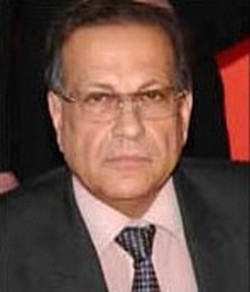
Some twisted person has created a Facebook page in support of Malik Mumtaz Hussain Qadri, the bodyguard accused of assassinating Salman Taseer, the governor of Pakistan’s Punjab province. Mr. Taseer was a brave man who had called for the repeal of Pakistan’s outrageous anti-blasphemy law.

Whoever killed Mr. Taseer must be condemned and repudiated, not extolled. Otherwise, Pakistan will certainly continue on a downward spiral in which intolerance and self-destruction triumph.

The governor’s death is a tragedy not just for Pakistan but for all who understand that just and stable societies need honest debate and full respect for minorities. Pakistan cannot afford to lose any fair-minded leaders, especially at a time when it is struggling with a virulent insurgency, an unraveling economy and an unraveling central government.

Mr. Taseer — a longtime ally of President Asif Ali Zardari and his wife, Benazir Bhutto, who was assassinated in 2007 — was Pakistan’s most prominent defender of the rights of women and minorities. He had pressed hard for repeal of the blasphemy law, which imposes a mandatory death sentence on anyone convicted of insulting Islam.

The law is popular with the Muslim majority but is routinely manipulated to settle personal rivalries and persecute minorities. And Mr. Taseer had been particularly outspoken, calling for leniency for a Christian mother of four who was sentenced to death under the law, in a case that stemmed from a dispute in her village.

Pakistani officials, who have the bodyguard in custody, say he killed Mr. Taseer because of the governor’s opposition to the blasphemy law. But there are far too many unanswered questions: Did the suspect act alone? Why did the Punjab police assign a religious conservative to protect Mr. Taseer? News reports first said nine bullets were fired into Mr. Taseer, and hospital officials later said he was hit 24 times. Yet other members of the security detail did not shoot to stop Mr. Qadri, who surrendered with his hands up.

Pakistani authorities need to investigate thoroughly and share their full findings with the Pakistani people.

The United States and the international community must make clear their outrage over this killing. So must every Pakistani. The country’s political leaders and the Pakistani media also need to consider whether the way they have shaped the debate on the blasphemy law — some have argued that mentioning reform is blasphemy punishable by death — is further fueling conflict.

Ultimately, only Pakistanis can save their nation, and they must answer the more profound questions: Do they want a country in which Muslims and non-Muslims can peacefully co-exist? Or one in which religious zealots, espousing the most intolerant interpretation of Islam, kill anyone brave enough to defend the defenseless? That would be the true blasphemy.

China Ramps Up Pressure Over Kashmir

By Sudha Ramachandran The Asia Times

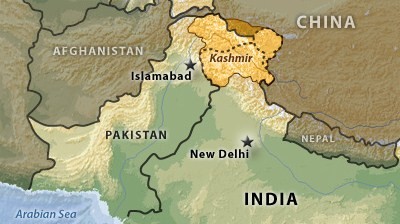
BANGALORE – A recent report in the Chinese media describing the Sino-Indian border as being 2,000 kilometers long, roughly 1,500 km shorter than that defined by India, has evoked an alarmed response among sections of the Indian strategic community.

The “missing 1,500 km” from the definition of the Sino-Indian border is seen to be a clear pointer to Beijing’s hardening position, not only on its long-standing boundary dispute with India but also on Jammu and Kashmir (J&K). While India holds about 45% of J&K territory and Pakistan controls 35%, China occupies about 20% (including Aksai Chin and the Shaksgam Valley, ceded by Pakistan to China in 1963).

A Beijing-datelined Xinhua news agency report of an official briefing by China’s Assistant Foreign Minister Hu Zhengyue on the eve of Prime Minister Wen Jiabao’s recent visit to India triggered the flap. “China and India share a 2,000-km-long border that has never been formally demarcated,” the report said. India describes the border as being 3,488 km.

The different positions were made even more explicit by the Global Times, an English-language newspaper published by the People’s Daily, the official mouthpiece of the ruling Chinese Communist Party. In an interview with Global Times, India’s ambassador to China, Subrahmanyam Jaishankar, spoke of the “long common border of 3,488 kilometers” between the two countries. But a comment by the editors of Global Times in parentheses said: “There is no settled length of the common border. The Chinese government often refers to the border length as being ‘about 2,000 kilometers’.”

Reports in state-owned media have been describing the border as being 2,000 km for at least a year now.

The roughly 1,500 km-long shortfall in the Chinese perception is believed to refer to the Sino-Indian boundary in J&K. “China apparently no longer treats the line of nearly 1,600 km separating Jammu and Kashmir on the one hand and Xinjiang and Tibet on the other as a border with India,” strategic affairs expert C Raja Mohan wrote in the Indian Express. That is, it does not recognize Kashmir to be part of India.

Beijing is questioning India’s locus standi to discuss J&K’s border with China, observes B Raman, a retired director in India’s external intelligence agency, the Research and Analysis Wing (RAW). In essence, it is seeking to exclude discussion of the western sector of the disputed Sino-Indian boundary with India. The western sector includes the large chunk of Indian territory, Aksai Chin, in the Ladakh region of Jammu and Kashmir that China occupied in 1962.

Besides, China “wants to change the format of the border talks in order to keep it confined bilaterally to the eastern and middle sectors and expand it to a trilateral issue involving India, China and Pakistan in the western sector,” Raman wrote recently.

China has become increasingly assertive in its questioning of India’s sovereignty over J&K. Since 2008, it has been issuing visas on a separate sheet of paper to residents of Jammu and Kashmir rather than stamping the visa in their passports, as is the norm with other Indian citizens. In August last year, China also denied a visa to Lieutenant General B S Jaswal – commander of the Indian army’s Northern Command, which includes Kashmir – for an official visit to China, on the grounds that he “controlled” a “disputed area”.

Besides, over the past year, Beijing has been reaching out to the Hurriyat Conference, an umbrella organization of Kashmiri separatist outfits. In March 2010, for instance, Chinese Foreign Affairs director Ying Gang met with Hurriyat leader Mirwaiz Umar Farooq in Geneva on the sidelines of the 13th session of the UN Human Rights Council. Besides questioning India’s sovereignty over Kashmir, China has been endorsing Islamabad’s control over the part of Kashmir it has administered since 1947.

It was with India that the Maharajah of Jammu and Kashmir, Hari Singh, signed an Instrument of Accession in October 1947. However, only 45% of the territory of the former princely state is in India’s hands today, roughly 35% remaining under Pakistani administration and another 20% under Chinese control. The territory under Chinese occupation includes Aksai Chin and the Shaksgam Valley that Pakistan gifted to China in 1963.

In the Northern Areas of Pakistan-administered Kashmir, China is involved in the construction of several infrastructure projects, including roads, hydroelectric power projects, dams, expressways, bridges and telecommunication facilities. During Wen’s recent visit to Pakistan, the two countries signed a US$275 million agreement for repair and expansion of the Karakoram Highway. Earlier in September, Beijing underlined its support to Islamabad’s territorial claims over parts of Pakistan-administered Kashmir when it described the Northern Areas as “a northern part of Pakistan”.

The India-Pakistan dispute over Kashmir predates the People’s Republic of China (PRC). India and Pakistan had already fought their first war over Kashmir when the PRC came into being. Initially, China took its cues from the Soviet Union on the issue. It described the conflict as a Western creation and maintained that the US and Britain were hoping to make Kashmir a Western base.
China took a “neutral position” in the 1950s. It opposed foreign arbitration on the Kashmir issue, which pleased India. At the same time, it did not endorse Delhi’s claims over Kashmir. Fraying Sino-Soviet relations and Moscow’s overt support to Jammu and Kashmir as “an inalienable part of the Republic of India”, as well as concerns that its backing of India would push Pakistan into a closer embrace of the US, seem to have prompted it to adopt a more “neutral position” between India and Pakistan on Kashmir.

With Sino-Indian relations deteriorating from 1959 onwards, China began tilting towards Pakistan. It signed a border agreement with Pakistan. Since this dealt with areas that constituted Pakistan-administered Kashmir, the agreement amounted to a de facto Chinese recognition of Pakistan’s control over this area. Although it subsequently denied such recognition, describing this as “provisional” and “pending settlement of the Kashmir dispute”, a joint communique issued at the end of prime minister Zhou Enlai’s visit to Pakistan in February 1964 was a strong endorsement of the Pakistani position. It urged a solution of the dispute “in accordance with the wishes of the people of Kashmir”. India is opposed to a plebiscite in Kashmir.

By the mid/late 1970s, China began advocating a status quo on Kashmir. Support for the Kashmiris’ right to self-determination was toned down. In 1976, in his speech before the UN General Assembly, Chinese foreign minister Chia Kuan-Hua omitted naming Kashmir in a list of territories where the right to self-determination had not been exercised. It is believed that China’s own troubles with separatism and improving ties with India prompted its shrinking support on self-determination.

With Sino-Indian rapprochement gathering momentum in the 1990s, China began describing Kashmir as a bilateral matter to be resolved by India and Pakistan through peaceful means. On his visit to India in 1996, president Ziang Zemin called on India and Pakistan to set aside contentious issues and build a cooperative relationship. During the brief Kargil conflict in 1999, China called on India and Pakistan to respect the Line of Control that separates Pakistani- and Indian-administered Kashmir. These were seen as signs of Beijing taking a neutral position on Kashmir again.

China has never accepted India’s sovereignty over Jammu and Kashmir, even over the part that is under its control. After all, if it did it would mean giving up the roughly 43,180 square kilometers of territory that is currently under its control. However, it had avoided provoking India on the matter publicly. This has changed in recent years, with Beijing being “deliberately provocative” on Kashmir.

India is not letting the repeated provocations go unchallenged. After all, the territorial integrity of the country is a core concern of the Indian state. A couple of months ago, in his talks with Chinese Foreign Minister Yang Jiechi, India’s External Affairs Minister S M Krishna did some tough talking. According to officials quoted by the Hindu, for the first time India drew a parallel between “the territorial red lines” of the two countries.

Krishna reportedly told Yang that just as India had been sensitive to its concerns over Tibet and Taiwan, Beijing too should be mindful of Indian sensitivities on Jammu and Kashmir. The message that India is sending is that if China questions India’s sovereignty over Kashmir, India will question Beijing’s sovereignty over Tibet and Taiwan.

Delhi has indicated that Krishna’s warning was to be taken seriously. The joint communique issued at the end of Wen’s visit to India made no reference to India’s commitment to a “one china policy”. This is the first time since 1988 that a summit-level joint communique has made no mention of the policy. Instead, both sides agreed to show “mutual respect and sensitivity for each other’s concerns and aspirations”.

-Sudha Ramachandran is an independent journalist/researcher based in Bangalore.
Pakistan’s Political Crisis

Reported by Farhana Bokhari for CBS News

Pakistan’s pro-U.S. ruling coalition on Sunday night battled to restore calm across the country’s political landscape after a regional political party allied to president Asif Ali Zardari’s Pakistan People’s Party (PPP) quit at short notice, leaving the PPP in minority in the lower house of parliament, the national assembly.

The Muhajir Qaumi Movement (MQM), a political party mainly representing Pakistanis who migrated from India to Pakistan when the country was created in 1947, withdrew its support to the PPP, reacting to the government’s decision on Saturday to raise gasoline prices.

The move marked the first major upheaval over gasoline prices since they were raised, mainly to be kept in line with global trends. Western diplomats based in Islamabad, reacting to the latest political developments, warned it was still early to tell if Zardari or his handpicked prime minister, Yusuf Raza Gilani, were in danger of being forced out.

There were warnings that the split with the MQM may in the short term completely paralyze the government. Long term consequences are harder to predict. Pakistan has been ruled by its army for more than half the of country’s 63-year existence. Some previous periods of heightened uncertainty have been followed by the military stepping in to fill the void.

General Ashfaq Pervez Kayani, Pakistan’s present military chief, is widely known to be an apolitical figure. A western ambassador based in Islamabad, speaking to CBS News on condition of anonymity, said, “While there are no signs of the military stepping in, you have to remember that previous [military] takeovers have been preceded by fast growing turmoil. Much depends on the way things happen in future.”

For the U.S., mounting political uncertainty in Pakistan is potentially worrying. This has to do with the support that Washington receives from Pakistan in its campaign to defeat Al-Qaeda and the Taliban in the Afghanistan-Pakistan region, as well as periodic worries in the western world over Islamic hardliners making inroads into Pakistan’s politics.

A minister from the PPP who spoke on condition of anonymity to CBS News Sunday said after the split with the MQM was announced, “If a government is weak and struggling for its own survival, how will it be able to pursue interests of other countries, including the U.S.?” The minister added, “Unpopular steps like petroleum prices are forced upon governments through circumstances which are beyond their control.”

A second western diplomat in Islamabad who spoke to CBS News on condition of anonymity said while Islamic politicians have only pockets of support across Pakistan, “You can never rule out the dangerous possibility of a ground swell in their favor, especially if governments from the political mainstream become weak and unpopular.”

A Prayer for Peace

Reported by Ghazi Salahuddin for The News International

We, in Pakistan, have rang out 2010 with a general strike and noisy rallies by religious elements in defence of the blasphemy law. We also rang out the year with a massive increase in petroleum products. And these spiritually and economically debilitating influences were certainly a distraction in our celebration of the biggest night of the year.

Today, on Sunday, the New Year is more than a day old. After spending the last few days of the departed year in taking stock of 2010, we are more inclined to look ahead and wonder what the coming year is going to be like. The general mood, certainly, is depressing. The past year was the year of floods, and Wikileaks, and drone attacks and social as well as political disarray. At the same time, it was also a year of hope – of Aman ki Asha – and of some intimations of how we, as a nation, still possess a conspicuous potential for survival.

In a sense, the attempt that so many ordinary citizens desperately made to celebrate the New Year in a communal spirit of joy was a genuine reflection of the life-force of a society that yearns for peace and happiness. In Karachi, the authorities made a concerted effort to subvert the inherent desire of the people to have a good time, as they always do. Roads leading to the Sea View promenade were blocked and eating places in the area were not allowed to do business.

It is besides the point that the young were still able to put up their show and the New Year was greeted with song and dance. Yes, the more privileged were able to celebrate the occasion in their private premises. But the point here is that public expression of any social or cultural vitality is increasingly being suppressed at the same time that the obscurantist elements are openly able to project their narrow outlook. What makes this dereliction more ominous is the government’s policy of appeasement and, even, surrender when it comes to dealing with the rise of intolerance and prejudice in our society.

It would be instructive to compare the rallies that were taken out in the late afternoon on Friday and the celebrations that were held a few hours later. I had an occasion to see the main procession that was taken out in Karachi and let me confess that it left me in a depressed state of mind. I simply could not identify with that crowd and the slogans it was raising. When I returned home at six, Sydney was greeting the New Year with its spectacular fireworks.

So, where do we, as a nation, belong in this world that is forever changing and embracing new technologies and new ideas? And it is in this context that I would like to return to the inspiration that we may draw from Aman ki Asha, the campaign launched by The Times of India Group and the Jang Group one year ago to promote peace between India and Pakistan.

Since yesterday was the first anniversary of this remarkable initiative, this newspaper has already underlined its main features and the success that it has achieved in the face of the raw winds of suspicion and animosity that have for long been blowing across this region. There was an editorial on this subject and a special edition. It was very encouraging to see the piece especially written for Aman ki Asha by Karen Armstrong, the celebrated religious historian.

Hence, I would not want to replicate the points that have been made. Still, I think that the public opinion poll conducted on the first anniversary of the project deserves to be carefully analysed. Here is a message that should not be overlooked when we interpret the social and political character of our society. It is true that the results of the survey are not at all surprising for those of us who have always believed in the overwhelming imperative of peace in not just our relations with India but also in a domestic context.

Now, the survey that was independently conducted by credible professionals, has certified that 70 per cent of Pakistanis and 74 per cent of Indians want peaceful relations between the two countries. What is crucial and meaningful here is that there has been a marked increase in the popular support for peace during the year that the largest media groups in India and Pakistan had conducted their varied and well-designed programmes under the umbrella of Aman ki Asha.

At a time when there is so much confusion about the role and the impact of the media, particularly the broadcast media, here is evidence that it can make a positive difference in shaping popular opinion when its message is in harmony with the natural aspirations of the people. This should make us realise that the media also has the power to sabotage the interests of the people when it is allowed to be manipulated by vested interests and when its expression is suppressed through intolerance and mindless chauvinism.

In many ways, the rise of extremism and militancy can be attributed to conflicts that are allowed to fester, distracting the attention and the resources of the nation from attending to the economic, social, and cultural needs of the people. Nothing undermines our national security more than rampant poverty and injustice and other deprivations of our people.

Indeed, the logic for normalisation of relations between India and Pakistan is rooted in the immortal desire of the people of both countries for social justice and for progress. In fact, Aman ki Asha should be seen in a larger context. Our need for peace transcends the otherwise fundamental issue of how our national security policies have remained India-centric.

Take, for instance, the official response to the rise of religious extremism in the country. Even when there is growing awareness that the threats we confront internally are very severe and could even jeopardise the very survival of the nation, the rulers do not seem to have the time or the intellectual ability to rethink and revise their national security formulations.

Meanwhile, of course, the people are ready and eager for what may be described as a paradigm shift. Initiatives like Aman ki Asha are necessary to set the stage for change and promote an environment in which an honorable and durable peace is possible.

When Aman ki Asha was launched one year ago, it affirmed that “peace between Pakistan and India is an idea whose time has come”. It also said that “it is daybreak for the people of the two countries who have languished in the twilight of mutual animosity and distrust for over six decades”. How long would it take for the rulers in the two countries to accept this self-evident truth?

The writer is a staff member. Email: ghazi_salahuddin@hotmail .com

Pakistan, India Swap Nuclear Sites Lists

By Zhang Xiang for Xinhua News

Pakistan and India exchanged lists of nuclear installations and facilities on Saturday in spite of a tension over the 2008 Mumbai attacks that has disrupted the dialogue process between the two countries, the Foreign Ministry said.

The two countries exchange the lists of nuclear sites on the first day of the new year under an agreement signed in 1988 and came into force in January 1991.

“The government of Pakistan and India today exchanged lists of their respective nuclear installations and facilities in accordance with Article-II of the Agreement on Prohibition of Attacks against Nuclear Installations and Facilities between Pakistan and India of Dec. 31, 1988,” a Foreign Ministry statement said.

The statement said the Ministry of Foreign Affairs handed over the list of Pakistan’s nuclear installations and facilities to an officer of the Indian High Commission in Islamabad at the Foreign Office on Saturday morning.

The Indian side also handed over their list to an officer of the Pakistan High Commission at the Ministry of External Affairs in New Delhi, it said.

After the agreement was signed the first exchange took place Jan. 1, 1992.

Sources said it is the 20th consecutive list exchange between the two countries.

Pakistan and India conducted tit-for-tat nuclear tests in 1998. India conducted its first nuclear test in 1974, followed by five more in 1998. Pakistan conducted its six nuclear tests in 1998. Neither India nor Pakistan is a signatory to the Nuclear Non- Proliferation Treaty (NPT).

India considers the NPT discriminatory, while Pakistan has indicated that it won’t join the international agreement till its neighbor does so.

Neither of the two rival neighbors have signed the Comprehensive Test Ban Treaty.

In 2004 they launched a peace process, but that is now on hold following the Mumbai attacks, with New Delhi pressuring Islamabad to do more to punish those responsible for the carnage and to crack down on anti-India groups.

Meanwhile, both countries also exchanged Lists of Prisoners in the two countries, the Foreign Ministry said.

According to the Agreement on Consular Access signed between Pakistan and India on May 21, 2008, both countries are required to exchange lists of prisoners in each other’s custody on Jan. 1 and July 1 every year, the statement said.

“Consistent with the provisions of this Agreement, the Ministry of Foreign Affairs handed over the list of Indian prisoners in Pakistan to the Indian High Commission in Islamabad today,” it said.

Will India Win Coveted UN Seat?

By Sunil Sharan for The Huffington Post

Indian foreign secretary Nirupama Rao says Pakistan is hypnotically obsessed with India but she and her bosses too are fixated on a coveted prize, a permanent seat at the United Nations Security Council. The mandarins of New Delhi must be pleased as punch to have had over to visit leaders of all five permanent member countries in quick succession. Inexorable appears the march but will India find the pot of gold at the end of the rainbow? And, if it does, what are the implications for itself as well as for Pakistan?

First in was David Cameron of Britain, who arrived during the summer and offered unstinting support, whetting local appetite for the main American course. And, did he fail to disappoint? No sir, Barack Obama set the cat amongst the pigeons by endorsing India for the seat, the first time ever by the US. India rejoiced while Pakistan recoiled.

But a careful examination shows him adhering closely to what he told Bob Woodward in the book, Obama’s Wars. In lieu of the seat, he expects India to resolve Kashmir. At a press conference with Manmohan Singh, Obama characterized Kashmir as a long-standing dispute making the latter stutter that the K-word was not scary. Only then did Obama hand over the endorsement in India’s Parliament but couched in such diplomatese that countless local hair were split over when “the years ahead” would dawn.

Next waltzed in Nicolas Sarkozy of France. The French, like the British, have consistently seen merit in India’s case. Sarkozy though, true to type, proved an enigma. He first tagged on the applications of Africa, the Arabs and pretty much the rest of the world onto India’s, befuddling his hosts, who are willing to concede as equal aspirants only “self-appointed frontrunners” Germany, Japan and Brazil. Just as they were about to give up on him, Sarkozy warmed the cockles of India’s heart by throwing in 2011 as early as when it could make it.

But soon came the caveat. Sarkozy, just like Obama before him, cautioned that with great power status came great responsibilities. Whereas Obama wanted India to be more mindful of human rights violations of countries such as Iran and Myanmar, Sarkozy wanted India to send military forces to keep world peace. With India already being one of the foremost contributors to UN peacekeeping missions throughout the world, the mandarins of New Delhi must have been left wondering what more was being asked of them.

No matter, three down, two to go. By now the state jets were landing at Delhi airport almost on top of one another. Wen Jiabao, the leader India was least looking forward to, came with the master key to entry. Shortly before his visit, WikiLeaks revealed China’s opposition to any council expansion. Indian hopes were up nevertheless but Wen remained inscrutable, willing only to acknowledge an understanding of India’s aspirations. No one in India knew quite what to make of him and since Wen was off to Pakistan next, all the country could do was wait with clenched teeth to hear what he would say there.

Rounding off the passage to India was Dmitry Medvedev. Relations between Russia and India have frayed considerably since the heady days of the cold war, so much so that Russia has waffled on India’s bid. Medvedev signaled that the waffle still needed baking, voicing support for India while reiterating that reforming the council was tough and required consensus.

All the while Pakistan protested vociferously against what it deemed an indulgence of Indian hegemonism. But what will India gain with a permanent UN seat? Could it block Pakistani claims on Kashmir? True a permanent member wielding veto power can stonewall but the veto seems unattainable for seekers since they themselves have forsaken it. And, while India sees red when the K-word is uttered in the UN by Pakistan, no ascension to permanency can make it strangle the latter. Nor can it efface any past security council resolutions.

So then, what is it? Nothing comes to mind but the obvious, the acceptance that any arriviste craves. Even that appears a false hankering because ever since its early years, Gandhi’s legacy and Nehru’s charisma burnished the country with global influence disproportionate to its economic and military capabilities. A bee once in one’s bonnet is hard to get rid of though. And, as every journey must have a fitting end, India has found a destination to its liking.

Flush with cash, New Delhi wants to beef up its military. All of the recent visitors bar China are major suppliers of defence equipment to India. As bees flock to honey, they arrived armed with catalogues of the most terrifying stuff. Inherent was a delicate diplomatic quid-pro-quo. The more arms you buy from us, the more we will push your candidacy. As Islamabad keeps raising the bar for India’s seat, so too will India have to up its arms binge.

Lost in Pakistan’s current rhetoric was its vote in October to put India in the security council for two years beginning January 1, 2011. Once on, we will never get off is the new mantra of India’s brave. India seemingly returned the favor by taking in stride the sale of Chinese nuclear reactors to Pakistan. Is there more afoot than meets the eye?

Every country is entitled to its obsession. Pakistan’s is obvious. By continually thumbing its nose at a NATO mired in Afghanistan, it has put the K-word in spotlight, albeit on the backstage. A deal has been blessed by the powers that be. Both the seat and Srinagar are not far away.

The writer edits a website on India: http://www.scooptime.com.

UN Halts Aid After Female Suicide Bomber Kills 46 in Pakistan

By Anwar Shaikh for Businessweek

A female suicide bomber carried out a Christmas Day attack in northwest Pakistan that killed 46 people, a local official said, as the UN food agency caught up in the blast closed centers that had fed 41,000 families.

The burqa-clad woman aged between 18 and 22 lobbed grenades and detonated an explosive vest near a World Food Programme distribution center after being stopped by security personnel, Mustaqeem Khan, a government official in the tribal region of Bajaur, said by phone today. At least 96 people were injured in what Dawn newspaper said was Pakistan’s first suicide bombing known to have been carried out by a woman.

The device was detonated at about 8:30 a.m. local time on Dec. 25 as officials were handing out food to victims of this year’s floods, said Gull Rehman, a spokesman for the government of the area. Khan said officials had collected body parts of the female attacker, who had attempted to join a line of men queuing for aid.

Prime Minister Yousuf Raza Gilani condemned the attack and said his government’s fight against militants will “continue till their complete elimination,” according to an e-mailed statement issued by the Information Ministry in the capital, Islamabad. Operations at four WFP centers in the region will likely restart this week once security improves, program spokesman Amjad Jamal said by phone from Islamabad.

The death toll eclipsed the 43 people killed Dec. 6 in a suicide bombing outside a government office in the northwest tribal region of Mohmand. Four days later, 25 people died in a similar attack in the town of Hangu.

U.S. President Barack Obama condemned what he called the “outrageous attack” in Bajaur. “Killing innocent civilians outside a World Food Program distribution point is an affront to the people of Pakistan, and to all humanity,” Obama said in a written statement. “The United States stands with the people of Pakistan in this difficult time, and will strongly support Pakistan’s efforts to ensure greater peace, security and justice for its people.”

UN Secretary General Ban Ki-moon condemned an “abhorrent act of terrorism aimed at innocent people.”

Pakistan’s government blames Taliban militants based in the country’s tribal region for terrorist attacks in the country. The army last year began offensives in the Taliban stronghold of South Waziristan, after a similar operation against guerrillas in the Swat Valley.

Militants have stepped up attacks as the government is struggling to rehabilitate 17 million people who lost homes and livelihoods during floods in August. The deluge threatened to cripple Pakistan’s economy with a surge in unemployment, an increase in inflation and damage to billions

The Illiteracy of Hate

A News and Opinion Special Report by Manzer Munir for Paksitanis for Peace

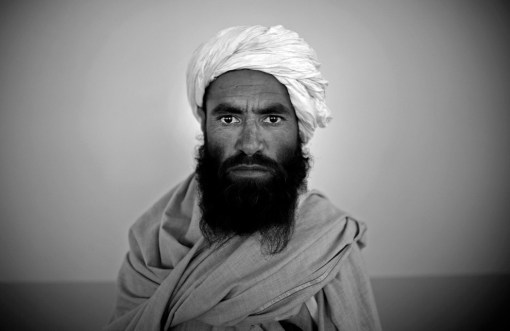
Alleged Taliban Member pic courtsey of Boston Globe

The Taliban are not just simply a bunch of illiterate thugs and bullies for they too often prove to be even worse than animals and barbarians.

Nowhere else in the world has a country experienced a more tragic and callous attack as the one on Christmas day, the birth day of Jesus, the Prince of Peace, than the one Pakistan experienced. In an attack described by President Obama as an “affront on humanity”, the cowards attacked helpless women, children and men while they queued up in food and aid distribution site such as the WFP depot, people who mind you are already suffering from the ongoing war, once in a lifetime floods, and the poverty and radicalism of a generation of desperate, hopeless and increasingly uneducated young men brainwashed by the Taliban and other radical Muslim extremists.

I am still disturbed by the disdain for basic human life that this new attack proves about this radical and extreme enemy. I imagine another one of their brain washed ‘walking zombies’, this time purportedly a woman suicide bomber, a first, even for Pakistan, killed in excess of 43 people in Bajur Pakistan at a World Food Program rations and aid storage and distribution center.

The Pakistani authorities and several domestic and foreign NGO’s who provide food aid at various centers in the area are temporarily closing these centers in order to have increased security. This means that aid distribution will come to a crawl and up to several hundred thousand people will now have to suffer at the hands of the attacker and their backers, the Taliban who have claimed responsibility. The authorities will have to ensure the safety of aid organizations and their personnel for both Pakistani and non Pakistanis relief workers involved in getting food, water and medicine to many people who are either suffering from the war or from the floods.

This catastrophe, although not of near Biblical proportions, does present both a security and humanitarian problem to both the government of Pakistan as well the suffering citizens in the northwest areas of the country where; Taliban fighters take sanctuary from the war in Afghanistan to regroup and return to the fight in warmer weather after the winter months as we have seen in years past. In fact, the reach of the Taliban in Pakistan is now not only reputed to be in the headquartered areas such as in Quetta Pakistan among the restive Baluchi population, now they are so often found to be in major cities like Karachi, Lahore, Rawalpindi, Peshawar and many points in between as they use their religious cover to endear themselves to certain impressionable, weakened or illiterate individuals that are so commonly found in throughout the country. 

Here are the some of the depressing facts. Pakistan, a nation approaching 180 million people at current estimates, perhaps only boasts to having about 60-65% of the male population at a literate level and at best, the females to be only at 40-45% of the total female population. Sadly, what this means is that 4 out of 10 Pakistani males are completely illiterate while up to as many as 6 out of 10 women are not able to read or write. Poverty breeds extremism since there is no support from any government programs or hope for any solution.

Time and time again throughout history and not just of Pakistan’s, we can see that the role of the church, synagogue or mosque in building the community is deeper than that of any government initiatives or other measures. The poverty for these young men along with the lack of jobs like for those individuals who are either very poorly paid construction site workers, household labor or servants, or beggars and sewer workers, a job sadly almost seems to have been reserved for Pakistan’s Christian community members as many can attest in Pakistan of their unfortunate and depressing state. One does not need to remind the reader of the plight of Asia Bibi (also Aasia and Ayesa), the Christian Pakistani woman who is still awaiting her fate in Pakistani courts after more than a year and a half since first being accused of a BS blasphemy charge and being in jail ever since. 

The medieval mentality of these radical extremists is not something that needs to be described as the evidence is here in this latest attack . Certainly anyone alive in any part of the world outside Pakistan and Afghanistan with eyes, TV, radio or newspaper within their reach can see plenty of near daily reminders of the carnage that many natives of these lands see, and to what they have painfully become accustomed.

 The Pakistani and Afghani Talibans have by all the various reports in newspapers and media sources over the last several years have pointed out to the fact that these groups all have too often similar goals. Not only that, these groups all share the same characteristics. The anti-Americanism, the pro-Wahaabi or Orthodox version of Islam, the need for justice for the ‘suffering of the Palestinian people’ , and the anti-colonial and often times anti western sentiment amongst these groups. The radicalization of certain Muslim groups be they Hamas and Hezbollah in the Mideast or Lashkar e taiba, or any other militant outfit operating in this part of the world as mentioned in this quote a few days before he passed, the late Richard Holbrooke of the US State department said that there are a range of militant groups such as the Afghan Taliban, the Pakistani Taliban, the Haqqani Network, Lashkar-e-Taiba, and that “an expert could add another 30.” His exact words are in quotations. 

The radical Muslim groups who take prey of the weaker, cannot think for themselves because they are scions of those abjectly illiterate segments of the society who are only educated in the madrassahs of Pakistan. This is the de facto way of educating Pakistan’s poorer children in little mosque schools which consist of nothing but Qu’ranic surahs and words of ‘wisdom’ or ‘interpretation’ by the local mullah of the said mosque/school. Most probably these children in many Pakistani madrassahs, especially the ones who live near the border areas within the NWFP or North West Frontier Province of Pakistan as this is the part of the country most affected by its close proximity to Afghanistan.

The people in this area of Pakistan, as well as their cousins in Afghanistan have been fighting one enemy or another for the better part of 100 years now. Whether to them the enemy be the British, during the height of the British Raj rule in India, or to the Soviets and the Red army and the Cold War, then in chronological order came the infighting after the Russian withdrawal as various Tajik, Afghani, Uzbek, Pakistani warlords came in to try and consolidate power to now us Americans and the Pakistanis who are our allies in this war.

Granted we do often hear that the Pakistanis can be doing more. By all accounts, the Pakistani government can do more in terms of fighting this war on terror. Numerous western reports and articles in respected dailies have alleged that small elements within both Pakistan’s Army as well as the spy agency, the ISI, have sympathizers to either the Taliban’s cause or they want to be on favorable terms with a powerful entity that most in Pakistan’s establishment believes that Pakistan will be dealing with and not a weakened Karzai once the US begins to draw down troops and end the war by 2014. If this is indeed true, then these ‘officers’ and supposed ‘leaders’ of Pakistan should realize that the colluding with the enemy, which in this case is the Taliban, is tantamount to treason, and the members of the armed forces of Pakistan as well as the intelligence community should not be assisting the enemies of all concerned: Afghanistan, Pakistan and the United States. 

Of course we must not kid ourselves and assume that only alleviating the illiteracy and poverty of the Pakistani youth will and bettering the education system of the Pakistani poor, particularly that of the refugees and residents of the northwest areas near the Afghan border. No there needs to be a study and introspection by the people of these two countries where this hatred breeds. To to get out of this darkness, the population needs be provided not only safety when delivering food aid and or medicine but aldo most importantly give them a book, a pen, and a paper. And teach them how to fish for knowledge with basic comprehension and deductive reasoning skills that can reject a radical and violent view of Islam too often manipulated by the clergy. This is the only way we can come to end this illiteracy of hate.

–Manzer Munir, is a proud and patriotic Pakistani American, an author, who plans to write a book on Pakistan, who is also a blogger and journalist, and as the Founder of Pakistanis for Peace  can be found at www.PakistanisforPeace.com, www.DigitalJournal.com ,www.Open.Salon.com, www.Examiner.com, as well at other websites as a freelance journalist and writer.

‘Attack in Pakistan Affront to Humanity’ says President Obama

As Reported by Hindustan Times from the Indo-Asian News Service

US President Barack Obama condemned a suicide bombing in Pakistan that left at least 44 people dead at a UN World Food Programme distribution point on Saturday. “Killing innocent civilians outside a World Food Programme distribution point is an affront to the people of Pakistan, and to all

humanity,” Obama said that in a statement issued from Hawaii, where he is spending Christmas with his family.
“The United States stands with the people of Pakistan in this difficult time, and will strongly support Pakistan’s efforts to ensure greater peace, security and justice for its people.”

A female suicide bomber targeted the crowd collecting food at the distribution centre in Khar. Seventy others were injured in the attack in the Bajaur tribal district, where government forces are fighting Taliban and Al Qaeda militants.

Saturday’s bombing targeted the Salarzai tribe, which has joined forces with the government against the Taliban and raised a tribal militia to drive them out of their area. The Taliban took responsibility for the attack in a message sent to various news organizations.

Sufi Islam: Reclaiming Muslim Spirituality

By Fahad Faruqui for The Huffington Post

After two bombs recently claimed dozens of innocent lives at the shrine of esteemed Sufi Ali Hajviri, fingers were pointed at the al-Qaeda-linked militants who see Sufism as the work of heretics. The New York Sufi Music Festival was brought to U.S. to showcase the spiritual dimension of Islam and the rich heritage of Pakistan, counteracting a view that Pakistan is predominantly a country known for its terror factories. Sadly, the image of militants waging war is overwhelming and hard to supersede.

Hearing Abida Parveen sing Bulleh Shah’s ecstatic poetry, which enriched the centuries-old Sufi tradition of the Indus valley, made me realize how the Islamists have stripped away spirituality from the religion and left believers with rituals, sketchy interpretations of the divine laws and fear of God’s wrath. Sufi Muslims of the subcontinent, who converted to Islam in the pre-partition era, were drawn to the Sufi path of knowledge that has been hijacked by the al-Qaeda ideology of violence.

The rapturous quality of Sufi poetry continues to fascinate me, but the very idea of loving and seeking God while listening to radical mullahs (like the clerics of Red Mosque) is deeply troubling. Prostration to God devoid of spirituality is no different from doing sit-ups. Surely, the label Sufi is not necessary. What’s important is the sentiment. It helps the cause of clarity to call those on the path “Sufis” rather than “mystics,” which will more likely conjure images of Aladdin on his flying carpet.

Islam is the fastest-growing religion but has too few religious scholars with requisite understanding to link rituals and divine laws to creative spiritual ascension. I reached a level of comfort with my faith through good guidance from prominent Muslim thinkers such as Hamza Yusuf, Faraz Rabbani and Zaid Shakir, who drink deeply of the Quran’s spring of wisdom.

Faith is ineffable; so is our search for God. Ecstatic poetry and Sufi treatises speaking of “annihilation of self” and “Oneness with the Creator” are merely tools to evoke the Sufi sentiment, which is not peculiar to Islam. Teresa of Avila’s “Libro de la Vida,” Bulleh Shah’s ecstatic poetry, Allama Iqbal’s intimate conversation with God in “Shikwa” (complaint) and Mansoor Al-Hallaj’s proclamation “Anal-Haq” (I am the Truth) are all expressions of the acquired wisdom gleaned from deep introspection.

Though unsuccessful, Iqbal tried to revive the true spirit of Islam. He was quick in identifying that the hardline mullah was a hopeless case. But the Sufis were either consumed in “other worldliness” or digressing from the core of Sufism. For Iqbal, a profound religious experience is one that benefits humanity, which is most unlikely if the seeker retreats to constant seclusion.

Saudi Arabia’s government is often accused of demolishing tombs of the companions of the prophet, fearing veneration of graves, and of discouraging Muslims from praying at prominent sites like the Cave of Hira (where Muhammed received his first revelation). Why they discourage is another column, but one thing is certain: visiting graves and sites mentioned in the Quran will not miraculously lead to divine illumination. The essence of Sufism is to dig into the depths of your soul to seek the One. In the shrines of Sufi masters in the subcontinent, one can expect to find numerous vagabonds pretending to be Sufis, who earn a living by giving false hopes to troubled wives, jobless men and childless couples. This defeats the premise of Sufism — absolute reliance on Almighty.

In a phone conversation, a prominent Sufi scholar, William Chittick, said, “The core of Sufism is to strive for nearness to God.” Even though God is absolutely Other, he presupposes a direct relationship with the seeker. No doubt. Allah says in the Quran (50:16): “I am closer to you than your jugular vein.”

It is our egos that have created boundaries between sects within Islam and ensuring rivalries with non-Muslims. Reviving the spiritual dimension of Islam may be the only way to fight intolerant radical elements internally.

What Sufi Festivals Mean to the People

By Sohail Abid at http://sohailabid.com/

It is the beginning of the Hijri year. A time that matters to me for two reasons: remembering Hussain’s determination and the Sufi festivals that will be held throughout the year across Pakistan. And this year I want to do something special: to attend all the Sufi festivals and document each of them! Wish I had undertaken this project earlier in my life when the festivals were held without any fear but I wasn’t mature enough to see what they mean to the people. I, like others, considered them ‘stupid’ and ‘superstitious’ but that’s so untre. Let’s see how:

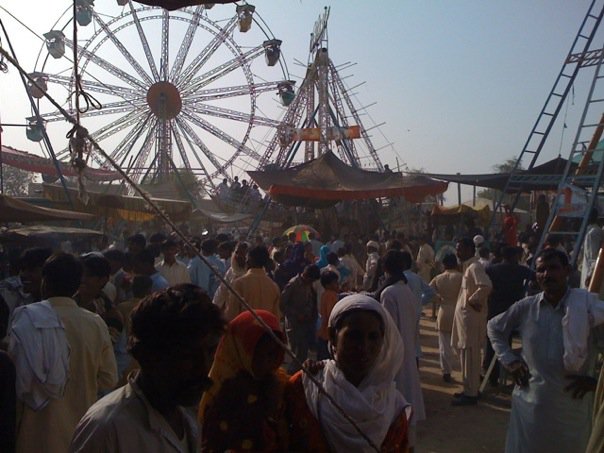
The people who actually go to the Sufi festivals don’t really call them by their urban name, Urs. They call them “mela” and it includes all kinds of activities, not just paying salam to the dead Sufi. They are *festivals* for the people, occasions to rejoice.

Last weekend, when I was on a field trip in a remote Punjabi village, a girl told me, “If you were here a couple of weeks ago, you could see our dance, Sammi; there was a wedding. We are the best in Punjab in Sammi dance! Oh, you can come to the mela next month.” Now this place, Danabad, is a small village. They remember the Sufi festival as the time they will have dance, musical concert, and what not.

On a similar visit to Chakwal, when I asked a young boy about their activities, he was so excited about this race and kabbadi they have each year. When: “during the mela”!

You see, to the people the Sufi festivals do not mean “worshipping the graves”, as some conservatives would like to put it. It is the time people await to shop, play, dance, and attend live concerts. And that’s what I would like to document because they are the events that matter to the people and keep them going. Wish me luck!

Sohail Abid is a writer, an entrepreneur, a software engineer, a cultural analyst, and a lover of all things folk. He lives in Islamabad Pakistan and manages several websites and businesses as a freelance software developer. We at Pakistanis for Peace are proud to call him a friend of the site.

Sami Yusuf – Hear Your Call (Pakistan Flood Relief)

A Charity Single Released By Sami Yusuf where all profits go to help the Flood victims of Pakistan

British singer-songwriter Sami Yusuf, dubbed “Islam’s biggest rock star”, is donating profits from his latest single to help flood victims in Pakistan. Born in Iran, but raised in the UK, the singer is urging fans to recognize the ongoing plight of those affected by the floods. Profits from Hear Your Call will go to Save the Children, which is working in the four provinces hit by the disaster.

Sami has sold more than seven million albums worldwide. He said: “This is an enormous disaster and I personally feel we all, as fellow humans, have a responsibility to help the victims in any way we can.

“The floods have completely changed many people’s lives and through our actions, we can offer hope. “In such times we have to align ourselves with the right organizations to reach out to the affected areas as effectively and urgently as possible.”

The track can be download from iTunes and the artist’s official website.
http://www.itunes.com
http://www.samiyusufofficial.com/

China’s Growing Influence on Pakistan Worries U.S.

By Farhan Bokhari for CBS news

China’s premier Wen Jiabao concluded a high profile visit to Pakistan on Sunday, promising to lay the foundation for a “deeper” relationship to a country which is central to U.S. efforts for stabilizing Afghanistan.

Wen sought to broaden a relationship which has traditionally been driven by Beijing’s role as a key supplier of military hardware to Islamabad. Pakistan’s government officials said that during Wen’s visit, China signed business deals between the governments and private businesses of the two countries worth at least $29 billion, with a possibility of another $6 billion worth of contracts. These contracts were the largest ever signed during a visit by a foreign leader to Pakistan, underlining the growing importance of the country to China.

The Chinese premier also used a speech to a joint session of Pakistan’s upper and lower houses of parliament to commend the country for its efforts against terrorism. It was an apparent effort to negate criticism from the western world, including the U.S., which has urged Islamabad to take further steps against Al-Qaeda and the Taliban.

“Pakistan has given great sacrifices and made great efforts in the fight against terrorism. It is a reality and the international community should respect Pakistan’s efforts,” Wen said.

While the U.S. has poured billions of dollars into Pakistan to assist in combating terrorist groups, Pakistan’s military and civilian leaders remain committed to retaining a close alliance with China. “Let’s stand together, with a new confidence, and begin a new era of progress and prosperity, by jointly confronting all challenges,” Wen said in his speech on Sunday. To the applause of Pakistan’s ruling and opposition politicians, the Chinese continued that “China and Pakistan are all-weather strategic partners and share the sorrows and joys of each other as close brothers.”

A senior Pakistani official told CBS News that the deals signed during Wen’s visit included contracts for the development of a road and train network linking the two countries, for mineral resources, for gas and oil fields and for facilities to produce electronics.

“China is beginning to launch an important new phase to help Pakistan transform itself economically,” said the official, who spoke anonymously because he was not authorized to talk to journalists. “Unlike our western friends such as the U.S., China remains a true friend of Pakistan,” he added.

Western diplomats in Islamabad who spoke to CBS News, also on condition of anonymity, said Pakistan’s relations with China remain of concern to Washington in some areas, notably China’s continued support for Pakistan’s nuclear energy program and signs that China is stepping up its supply of conventional military hardware to Pakistan.

In the past decade, the two countries have jointly developed their first fighter plane for the Pakistan Air Force (PAF), known as the JF-17, or “Thunder.” The PAF plans to buy up to 250 of the JF-17s, making it the largest-ever purchase by the PAF of a single type of aircraft. On the other hand, Pakistani leaders frequently speak of the trust factor in their country’s relations with China, an oblique reference to the lack thereof in the country’s ties with the U.S.

In the 1990s, the U.S. sanctioned Pakistan on suspicions that the country was preparing to produce nuclear weapons, which reversed the two sides’ close cooperation when they confronted the occupation of Afghanistan by the former Soviet Union. While those sanctions were lifted after 9/11, which prompted a new partnership against terrorism, many Pakistanis remain skeptical of ties to the U.S. But a Pakistani foreign ministry official who spoke to CBS News said a growing economic relationship with China “will not come at the expense of our relations with the U.S. We want to establish and maintain a close partnership with the U.S. Our relations with China must never be seen as a replacement for our relations with the U.S.”

Chinese Premier Visits Pakistan to Reinforce Ties

By Salman Masood for The New York Times

ISLAMABAD, Pakistan — Chinese Prime Minister Wen Jiabao arrived in Islamabad on Friday for a three-day visit that Pakistani officials said was aimed at strengthening the strategic partnership and economic cooperation between the two neighboring countries.

Prime Minister Yusuf Raza Gilani and members of his cabinet welcomed Mr. Wen at Chaklala Air Base in neighboring Rawalpindi on Friday afternoon. A red carpet was rolled out and elaborate ceremonies were held to signify the importance Pakistan attaches to China, which is considered a close ally.

“Friendship with China is a matter of pride for our nation,” Mr. Gilani was quoted as saying by local media as he welcomed his Chinese counterpart.

Apart from holding meetings with Mr. Gilani and President Asif Ali Zardari, Mr. Wen was scheduled to address a special joint session of the Parliament on Sunday.

Pakistan’s military ties with China are strong and China has assisted Pakistan in tank production, fighter aircraft manufacturing and naval technology. But since the late 1990s, economic concerns have gained increased importance. Trade and energy have taken precedence in Pakistan’s relations with China.

Mr. Wen was accompanied by 260 business executives.

Pakistani officials say there is a need to enhance trade between the countries that stands around $7 billion a year. But there also are concerns here that the trade deficit is growing heavily in favor of China.

“The relationship is undergoing a qualitative change,” said Mansoor Ahmad, an independent security analyst based in Islamabad. “This change is manifested in China’s relationship with emerging markets and developing countries, which is essentially based on forging and enhancing trade linkages and securing new markets for Chinese investment.”

The Chinese are also cooperating with Pakistan in developing its civil nuclear energy program despite discontent from Washington and New Delhi.

Mr. Wen, the Chinese prime minister, arrived here after completing a two-day tour of India, the estranged neighbor of Pakistan.

China would have to undertake a fine balancing act regarding enhancing its cooperation with both India and Pakistan, said Mr. Ahmad. China and India would forge economic ties despite their continuing territorial disputes, given India’s huge market, he said. Tensions between India and Pakistan worsened after the terrorist attacks in Mumbai in 2008, which India and the United States blamed on Lashkar-e-Taiba, a militant Islamic group based in Pakistan.

The Pakistan government sees China as a counterweight to India, and officials said that closer Chinese cooperation with India would not affect Pakistani ties with China.

Nonetheless, Mr. Wen’s visit to India this week yielded greater immiediate progress on the economic front than toward resolving the more complicated geostrategic issues.

“In Pakistan’s case, we have already had a longstanding strategic partnership which is now being supplemented by increasing Chinese investment in infrastructural development, civil nuclear cooperation and establishing rail and road linkages between the two countries,” Mr. Ahmad said.

Pakistan Shifted Emphasis Away From India Border, says US

As reported by The Economic Times

WASHINGTON: Pakistan was shifting its emphasis away from its eastern border with India, a decision it had taken on its own because of a “definite shift” in Islamabad’s military posture brought about by fundamental changes within the country, the US has said.

It said while it does want Islamabad to act more aggressively against extremists within Pakistan it played little role in Islamabad’s decision to move its troops away from the border with India.

“First of all, how Pakistan decides to deploy its military forces is a decision for Pakistan,” State Department spokesman P. J. Crowley told reporters Friday what role the US had played in the movement of 140,000 troops away from the Pakistani-Indian border as mentioned by Secretary of State Hillary Clinton.

“We’ve made no secret of our desire to see Pakistan take more aggressive action against extremist elements within its own borders,” he said. “That is a threat to Pakistan itself.”

“And as the Secretary said, we have seen Pakistan shift its emphasis away from the Pakistani-Indian border and more aggressively to the Swat Valley and other areas where these extremists operate.”

“And no military has suffered more significant casualties in undertaking these operations than Pakistan. But these were obviously decisions for Pakistan to make,” Crowley said.

“But the context of increasing dialogue and reducing tensions between Pakistan and India is something that we have stressed in our dialogue with both countries,” he said.

Asked if Clinton was making an announcement, Crowley said: “Yeah, we’ve seen a definite shift in the Pakistani military’s posture. (But), it wasn’t an announcement.”

“I think it was a reflection of fundamental changes that have occurred in Pakistan as part of our strategic dialogue and our cooperation on dealing with the threat on both sides of the Afghan-Pakistan border.”

Asked about India’s role in Afghanistan after the recent review of the US Af-Pak strategy, Crowley said: “Well, we do have a regional strategy. India has legitimate interest in helping with the future of Pakistan.

“It has contributed significantly to development and reconstruction projects within Afghanistan. And we encourage that activity, even as we stress the importance of dialogue between India, Pakistan, Afghanistan, other countries. So no efforts like this are misunderstood,” he said.