Posts Tagged ‘ Pakistan ’

Qureshi Uses U.S. Open Platform to Call For Understanding

By Matt Majendie for Reuters

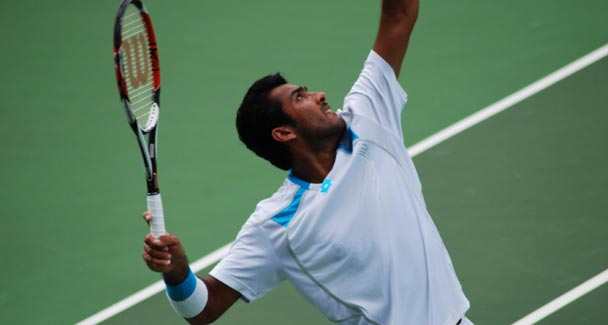
Pakistan’s Aisam-ul-Haq Qureshi used the platform of the U.S. Open to deliver a message of peace on the eve of the ninth anniversary of the September 11 attacks in New York and Washington.

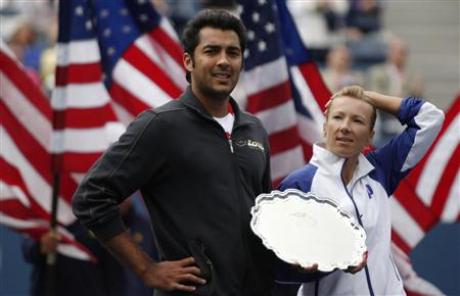
Qureshi lost in Friday’s men’s doubles final alongside India’s Rohan Bopanna, the other half of a unique partnership nicknamed the “Indo-Pak Express.”

In his on-court after-match speech, Qureshi said: “I feel there’s a very wrong perception of Pakistan as a terrorist country.

“We are a very peace-loving country and we want peace as much as you.”

Peace has very much been the message of Bopanna and Qureshi since their doubles partnership began with them sporting “Stop War, Start Tennis” sweatshirts in a bid to improve relations between their two countries.

Qureshi delved further into the message he was trying to get across at Arthur Ashe Stadium after the 7-6 7-6 defeat to Americans Bob and Mike Bryan.

“Since September 11, every time I come to the States or Western countries, I feel people have the wrong impression about Pakistan as a terrorist nation,” he said.

“There are extremists I think in every religion but, just because of them, you can’t judge the whole country as a terrorist nation.

“I just want to get this message across as a Pakistani.”

Qureshi said he vividly recalled the moment of the 2001 attacks in New York, which resulted in the deaths of nearly 3,000 people.

An up-and-coming tennis player at the time, he had been at a training camp in Holland when he saw events unfold at the World Trade Center in lower Manhattan.

“It was strange but I was going through the channels and I actually thought it was a movie or something,” he recalled. “I switched the channel again and then felt like it was the same movie on a different channel.

“I was kind of confused. Everything was mostly in Dutch so I couldn’t really understand. Then I actually realized what had happened. It was a very shocking moment.”

Why The Mosque Needs To Be Built At Ground Zero

By Manzer Munir for Pakistanis for Peace

This is already my third article on the NYC Mosque controversy. When I started my Facebook group and website Pakistanis for Peace by the same name nearly two years ago, I did it in response to the tragic and callous terrorist attacks in Mumbai India in 2008 and my desire to see peace in that region and beyond. As a firm believer in God, but not a particularly religious person, I never would have imagined that I would end up making a big part of my focus not just peace between India and Pakistan, but also peace and understanding between the Muslim and non-Muslim worlds as well. Heaven knows I have my own questions and issues with certain Muslim laws and practices and I of all people am the least suitable to be one of its defenders. However, I am a strict constitutionalist and as mentioned in my previous articles on this subject, I have advocated the building of the mosque simply on First Amendment religious freedom grounds.

Now here I am in less than one month, I find myself already writing a third article on the mosque controversy. Much has been written already by others on this topic also, but I wanted to give a few more opinions from a rational, moderate and patriotic American Muslim perspective, one which is missing in the current dialogue.

We know that many people who are opposed to the building of the mosque in lower Manhattan simply ask “Why there?” “Why would “they” possibly want to build it there of all places? It is seen as an affront by them that Muslims should want to build an inter-faith mosque, community center and a planned outreach ministry in the heart of Manhattan two city blocks from the site of the World Trade Center and the attacks of September 11, nine year ago. In fact, last night, while watching CNN, I saw Rick Sanchez ask former Governor George Pataki of New York about the Ground Zero Mosque controversy and his views on the subject. “Why there of all places would you build a mosque?” asked Gov. Pataki.  Why there?  As if he had fully bought into a favorite point of right wing groups that “Muslims build mosques at places they conquer” and that this is somehow a celebration of their “victory” over us because of the deaths of so many of our fellow countrymen on 9/11. That statement is wrong on so many levels that normally I would not even waste energy answering a clearly misguided assumption, but I will make an exception to clear the air as that is precisely what this article aims to do.

First of all, the 9/11 attacks were not a result of the actions of mainstream Muslims or the collective billion plus adherents of the religion but instead by members of a terror group known as Al-Qaeda, whose leader, Osama Bin Laden, we were very familiar and friendly with during the Soviet Afghan War of the 1980’s as he had assisted us in stopping the Red Army from conquering Afghanistan at the height of the Cold War between the two superpowers. Also a mosque is a place of worship. It is not a place where bombs are made and terrorists are trained either in ideology or practical training. To equate the building of a mosque to a direct link to terrorism or some other nefarious activity is in itself a deeply offensive argument to any Muslim, if one must speak of insensitivities.

So are we at war with Islam? This really is the only question we must ask ourselves to understand the debate over the mosque controversy. Debra Burlingame, the co-founder of 9/11 Families for a Safe and Strong America, issued a statement saying that “Building a 15-story mosque at Ground Zero is a deliberately provocative act.” This is simply not true as it is not exclusively just a mosque, but rather a multi layered structure that will house an auditorium, restaurant, gymnasium, library, conference rooms and multi-faith prayer halls devoted to allowing non-Muslim visitors the chance to come explore the center and at the same time take time to meditate and pray according to their own customs.

The center, as its leader Imam Faisal Abdul Rauf pointed out recently, “will establish this community as the place where the moderate Muslim voice condemns terrorism and works for new, peaceful, and harmonious relationships with all New Yorkers and indeed all Americans.” Just the fact that this center will have a restaurant, conference rooms, a library and multi-faith dialogue and prayer rooms, already makes this proposed building the most uniquely American mosque in the world. Nowhere else will one find a mosque so devoted to understanding and bridge building between Islam and other religions and no other place and location will it be more sorely needed in the years to come than in New York City! Too often, many non-Muslims complain about the self segregation practices of Muslims and indeed a characteristic of all minority communities to be in their own bubble and for not having a lot of interaction between other communities or faiths.

Many times my own non-Muslim friends have been curious and inquired on how Muslims pray and what they believe in and what exactly goes on in a typical mosque. But typically a small, regular mosque does not have the sort of access and resources to satisfy this curiosity and neither the infrastructure nor the logistics to handle curious visitors of other faiths. Primarily mosques in this country have been built with Muslims as its sole audience and occupants. This is the first time a mosque and cultural center is being proposed that will eliminate the barriers that many non-Muslims feel when it comes to understanding Islam and Muslims and actually takes into considerations its non-Muslim visitors when planning the structure. For many years to come, many Americans and indeed tourists from around the world will be coming to the proposed complex now under construction at the site of the World Trade Centers that will house the 9/11 Memorial. What better place  will there be than a few blocks away from the 9/11 Memorial where visitors can be told about the Islam of the great boxer Muhammed Ali and hall of fame basketball player Kareem Abdul Jabbar and not that of evil individuals such as Mohammed Atta and Osama Bin Laden? Where else should they be told of the difference between the Islam that is practiced by comedian Dave Chappelle and Oprah’s Dr Mehemt Oz versus the one practiced by the backward barbarian murderers known as the Taliban in the mountains of Afghanistan? Where else can they come to know of the type of Islam practiced by patriotic Bronze Star and Purple Heart decorated deceased US soldier Kareem Rashad Sultan Khan or the one practiced by the deranged Major Nidal Malik Hasan, the accused perpetrator of the Fort Hood Army base who sadly killed 13 fellow soldiers almost 1 year ago?

Now in order to satisfy the opponents and critics of the center, I also believe that all the funding needs to be transparent, there needs to be a multi-faith board of directors, and the Muslim leadership needs to be cognizant that this is indeed a very special place for all Americans and a place of national mourning. This mosque needs to therefore address the attacks of 9/11 and also needs to be a reminder not just to non-Muslims of the tragedy that was 9/11 but more importantly it needs to  serve as a constant reminder to the rest of the Muslim world of the terrible actions some have committed in the name of Islam.

Why build it here of all places you may still ask? Why not here? What other place in America, nay, what other place in the world did Islam take the biggest blow to its reputation and image? It is Ground Zero and lower Manhattan itself where this religion of over a billion people got literally hijacked and its message of peace and tolerance got forever destroyed in the eyes of the world’s non-Muslims by events of 9/11 and the actions of a handful of radical extremists who were terrorists and part of a network known as Al-Qaeda. So, why not build a monument to tolerance and understanding for the very religion that took the biggest hit to its global credibility by events that happened in this area?  I believe that it is not out of any provocation or insensitivities that Muslims want to build a community center near Ground Zero, but rather because this is the one place in the world where truth about the religion needs to be told and the need to showcase the real Islam of the world’s Muslims rather than allow the story of the hatred and violence perpetrated by the terrorists to be the only story one hears when discussing the religion of Islam. This center needs to be a part of the healing process we must go through as a nation and will be a testament for the rest of the Muslim world outside our shores of the grandeur of our nation and for our acceptance of Muslims and for not allowing the stereotyping of a religion of hundreds of millions of people over the actions of 19 evildoers. 

Trust me, the terrorists will triumph if this mosque does not get built.  We must not forget who we’re fighting against, and what we are indeed fighting for. The Taliban, the terrorists and other radical Islamists do not respect religious freedom or tolerance. Their distorted and narrowly interpreted Wahhabi views of Islam leave no room for dissent, debate or disagreements. These terrorists are responsible for more deaths of dissenting and or differing Muslims than of any other religion at their hands. These terrorists are Islam’s biggest enemy and threat and we must remember that this is not a war between us and the Muslim world. It is a war between us and Al-Qaeda. And to prevent moderate, peace seeking, bridge building, and patriotic American Muslims from building a structure that will help ease the pain and misunderstanding of the events of that dark day 9 years ago in September will only play into the hands of those who hate us for our freedoms. To have Muslim Americans potentially lose these very freedoms due to all the pressure, in this land built on freedom and liberty, will only strengthen the hands of the terrorists and bolster their claims that this is truly a war on Islam and that they are second class citizens who do not even have the fundamental rights to worship that is afforded to all Americans. This is a battle for Islam itself, one where the forces of evil are attempting to commandeer the entire religion towards their narrow minded interpretation of the sacred texts. We must hold steadfast to our principles and ideals and support moderate Islam in taking back the religion from the extremists and allowing this mosque to be built will go a long ways in turning the tide of radicalism, and ensuring that we stand for our time tested principles, no matter how unpopular they may be in the current climate.

-Manzer Munir, founder of Pakistanis for Peace, a proud Pakistani American and peace activist, is a freelance journalist that writes for PakistanisforPeace.com and other publications.

Aisam-ul-Haq Qureshi – An Unlikely Hero For Pakistani Fans

As Reported by Reuters

KARACHI: For a nation devastated by floods, rocked by terrorism and embarrassed over a cricket corruption scandal, Pakistanis are pinning their hopes on an unlikely sporting star to give the country something to cheer.

Pakistani Muslims will celebrate Eid this weekend and also pray that Aisam-ul-Haq Qureshi can add to the festivities by becoming the first tennis player from his country to win a grand slam title.

Tennis tends to slip under the radar in cricket-mad Pakistan but Qureshi has already raised the sport’s profile by breaking new ground for his country after reaching the US Open mixed doubles final and semi-finals of the men’s doubles event.

“I know how important my performances are right now for my countrymen. I am eager to give them something to celebrate about after the floods and cricket scandal,” Qureshi told a local television channel from New York.

“I am really proud to become the first Pakistani to reach the knockout stage of a grand slam event but my job is still not finished as yet,” he said.

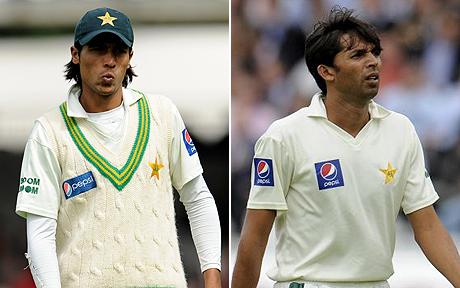
Pakistani cricket fans have been left disheartened by the latest controversy to befall the side, a spot-fixing and betting scandal in England that has led to the suspension of test skipper Salman Butt, and pacemen Mohammad Amir and Mohammad Asif.

CONTROVERSIAL PAST

Qureshi, who is ranked 34th in the ITF men’s doubles rankings, is also no stranger to controversy but has shaken off the problems to flourish as a player.

In 2002, he faced the wrath of his countrymen and national tennis federation for partnering Israel’s Amir Hadad in the doubles event at Wimbledon and the US Open.

He was also criticised when he started his current doubles partnership with India’s Rohan Bopanna three years ago, but Qureshi remains unbowed by any negativity and has always maintained that sport was above caste, creed or politics.

“He has always been a strong character and once he makes up his mind he will not change it,” his mother Nausheen Ehtesham said, adding that her son had the ability to triumph in New York.

“We all need some good news and I am confident my son can do it,” she said.

Pakistan Davis Cup coach Rashid Malik acknowledges that Qureshi’s strong tennis background, his grandfather Khawaja Iftikhar was an all- India champion, and his parents have been a source of great support.

“I think Qureshi always had talent but also had the advantage of parents who supported and financed him. In Pakistan, tennis is not taken seriously as a career although we have talent,” Malik said.

For the last three years, Qureshi has concentrated on a doubles career after attaining a highest ranking of 125th in singles but Malik believes it is still not too late for the 30-year-old to make an impact on his own.

“He just has to work on his fitness and raise its level to do well in singles,” Malik said.

Qureshi is partnering Czech Kveta Peschke in the mixed doubles at Flushing Meadows.

100 fishermen Released From Pak Jails Reach City

As Reported by The Times of India

Another batch of nearly 100 fishermen, who were captured by Pakistan and released a couple of days ago, reached Rajkot on Sunday afternoon from where they departed for their respective towns, officials said.

Senior fisheries official VS Mali said earlier a batch of 100 fishermen had come Saturday and now another batch of 100 fishermen has reached here.

Pakistan has decided to release 442 Indian fishermen of which 200 have already been released. Remaining 241 would be released in next one week in two batches, the official said.

One of the fishermen, Babu Rana, said though he had been in fishing business for last two decade, after spending days in Pakistan jail, he has decided to give up fishing. “I am the only earning person in my family and I cannot afford to be in jail. I have decided to give up fishing,” Babu said, adding he would like to work in a farm.

Another fisherman Shamji Koli said he would choose any other business but never go for fishing in future. Most of the fishermen denied being tortured by Pakistan jail authorities but admitted that the quality of food given to them was not up to the mark.

Angelina Jolie Meets Flood Victims in Pakistan

By Inamur Rehman for The Associated Press

American movie star Angelina Jolie met flood victims in northwestern Pakistan on Tuesday and appealed to the international community to provide aid needed to help the country recover from its worst natural disaster.

The flow of aid money has stalled in recent days, and officials expressed hope the two-day visit by Jolie — who serves as a “goodwill ambassador” for the U.N.’s refugee agency — will convince foreign countries and individuals to open their wallets.

The 35-year-old actress said she met with many people whose lives have been devastated by the floods, including mothers who lost their children and an elderly Pakistani couple who feared they would never be able to rebuild the home they lost.

“I am very moved by them and I hope that I am able to, today and tomorrow, be able to do something to help bring attention to the situation for all of the people in need in Pakistan,” Jolie told reporters after visiting a refugee camp in the Jalozai area.

She toured the area wearing a long black robe and a black headscarf adorned with a thin red stripe — the kind of conservative clothing worn by many Muslim women in Pakistan.

The floods began in the northwest at the end of July after extremely heavy monsoon rains and slowly surged south along the Indus River, swallowing up hundreds of villages and towns and killing more than 1,700 people. Another 17 million have been affected by the floods, and many will need emergency assistance to survive.

The United Nations issued an appeal for $460 million in emergency funds on Aug. 11, but only $294 million, or 64 percent, has been received so far, and donations have more or less dried up in recent days.

Ajay Chhibber, a U.N. assistant secretary general, said he hopes Jolie’s visit will have “a very big impact” on the inflow of aid money and will keep people focused on the crisis.

“We need more … well-known figures who can keep the spotlight and focus because people tend to forget internationally,” said Chhibber, who is also the U.N. development agency’s regional director for Asia. He spoke to reporters during a visit to Islamabad.

Suicide Attack in NW Pakistan Kills 17 People

By Uaz Mohammad for The Associated Press

A Taliban suicide bomber detonated a car in an alley behind a police station in a strategically important town in northwestern Pakistan on Monday, killing at least 17 police and civilians in an explosion that shattered the station and neighboring homes.

About 40 people were wounded in the attack in Lakki Marwat, which sits on the main road between Punjab province, Pakistan’s largest and most prosperous, and the North and South Waziristan tribal regions.

A Pakistani army offensive pushed many militants out of South Waziristan in October. The militants still control much of North Waziristan, where U.S. drone aircraft have been conducting a campaign of targeted killings.

Hours after the attack, officials said a suspected U.S. missile strike had killed three alleged militants in North Waziristan, home to the Haqqani network, a militant group battling U.S. and NATO forces in Afghanistan.

Two Pakistani intelligence officials told The Associated Press that a missile hit a vehicle in the Datta Khel area on the Afghan border Monday evening. The officials spoke on condition of anonymity because they were not authorized to release the information

In Lakki Marwat, rescue workers and police officials were digging through rubble at the station, police official Ghulam Mohammad Khan said. Nine police officers, four adult civilians and four children going to school were slain in the attack.

Police official Liaquat Ali said 45 police were in the building when the bomber struck.

“I said my morning prayers and we went to sleep, then suddenly there was a big bang. All the debris fell on us,” police official Ikramullah Khan told The Associated Press from a bed in a nearby hospital, where many of the wounded lay wailing in pain as relatives comforted each other.

Emergency workers and local residents used cranes to move the rubble of the mostly destroyed police station. Books and a schoolbag could be seen in the wreckage and the twisted frames of a motorcycle and a car sat nearby. A neighborhood shop and mosque also were partly destroyed.

The Pakistani Taliban claimed responsibility for the attack, saying they targeted the police for encouraging residents to set up militias to fight the militants – known locally as lashkars. The group pledged to carry out additional attacks unless the militias disbanded.

“After the police, we will attack those active in forming anti-Taliban lashkars if they have not given up their activities,” Taliban spokesman Ahsanullah Ahsan told The Associated Press by telephone from an undisclosed location.

The police chief of Lakki Marwat district was killed in a suicide bombing several months ago and militants have carried out a string of attacks in the area since then.

In recent days, militants have launched attacks across the nation aimed at destabilizing the country and weakening a civilian government already struggling with a massive flooding that has displaced millions and caused widespread destruction.

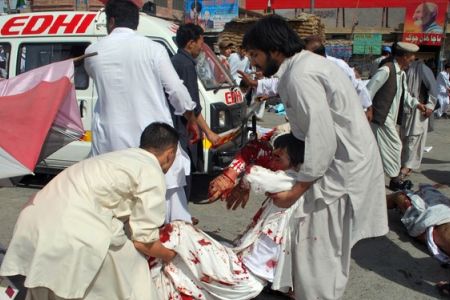
The deadliest have targeted minority Shiite Muslims. A suicide bombing killed at least 43 Shiite Muslims at a procession in the southwestern city of Quetta on Friday. Two days earlier, a triple suicide attack killed 35 people at a Shiite ceremony in the eastern city of Lahore.

Both were claimed by the Pakistani Taliban, whose commander Qari Hussain Mehsud threatened Friday that his group would wage imminent attacks in the U.S. and Europe.

On the same day, Pakistani intelligence officials said two suspected U.S. missile strikes had killed at least seven people in North Waziristan, which is largely controlled by the Haqqani network, one of the main groups battling Americans in neighboring Afghanistan.

How Pakistan’s Floods Have Made Women Dangerously Visible

By Rania Abouzeid for TIME

Nagina drew her modest light-green cotton dupatta, the scarf that Pakistani women drape over their arms, head and chest, up over her face as she cautiously peered out from a muddy white tent to watch her youngest child, a barefoot, trouserless four-year-old boy in a navy blue shirt streaked with mud. The timid Pathan woman has four other children, three older girls and a boy, but her daughters are not with her in this overcrowded cluster of tents known as the Khandar relief camp in Nowshera, a flood-devastated northwestern district some 90 miles west of the capital Islamabad in the insurgency-plagued, religiously conservative Khyber Pakhtunkwa province. “We are trying to keep the girls away,” Nagina says, “because parda is impossible now.”

Parda, which is also spelled “purdah” and means “curtain” in Urdu, is the practice of shielding women from men they are not directly related to, both through physical segregation and through the custom of modesty, that is, with the women wearing clothing to conceal their shape. It is observed by many women in rural areas of Pakistan, including in the majority-Pathan northern belt bordering Afghanistan. In these parts, a family’s honor is often tied to the chastity and obedience of its women — and protecting and defending the honor of women from verbal and physical harm is part of an ancient code of honor and revenge. But the code is all too often taken to extremes. Barely a week goes by without stories appearing in the Pakistani media about an enraged male — from across Pakistan’s multiethnic spectrum — who has killed his female relative or relatives for some perceived infringement of “honor.” For women adhering to Parda, it’s usually easier and safer for them to simply remain secluded in their homes.  

The floods have made that option unavailable in many places. Desperation has driven women to vigorously jostle with men for limited relief goods at distribution points. Overcrowding and densely pitched tents have forced them into close quarters with men they don’t know, the flimsy canvas coverings providing little privacy from prying eyes. In the camp at Nowsherra, Adiba nods in gloomy agreement as her sister-in-law Nagina discusses the limits of parda amid the calamity . Her tribal tattoos — a green dot on her forehead and another on her chin — mark her as a member of a conservative tribe from the Taliban-infested town of Bajaur. Both women say their husbands are understanding of the conditions but they fear that their men’s patience will run out. “My husband is very upset,” says Adiba, a mother of six. “This is why we’re just sitting in our tents during the day and the night, like in a cage.”  

Pakistan’s northwest, the first region to be hit by the floods and the most devastated, “is an extremely conservative society,” says Imtiaz Gul, author of The Most Dangerous Place, a book about the Pakistan’s northwestern tribal belt bordering Afghanistan. “You hardly see women outside and they hardly have any role except for cooking and cleaning the house and that’s about it.”  

Nagina, like many of the women in Nowsherra’s camps and other places the Pathan have sought refuge from the waters, has sent her unmarried daughters away to live with relatives whose homes were not washed away by the deluge. She hasn’t seen them for a month. “We have no choice,” she says sullenly. “This situation is forced on us.”

Gul says that the longer it takes to get people back to their homes, the greater the possibility of social unrest between men from different conservative towns who have been thrown together. The situation “is pregnant with the possibility of social friction,” he says. “Frustrations will start boiling over. People are saying the worst is over, but I would say that the worst has just started.”

Akbar Ali, a 27-year-old driver who has been in the Khandar camp for 18 days now with his wife and two-year-old daughter, is simmering. He is desperately trying to rent a house at any price he says, to get his family indoors, but there’s little left on the market. He has been offered work, but turned it down because he did not want to leave his wife, who used to be in parda, alone in the camp. “We are all Pathan but we are still very different from each other. The men move around the camp. I’m just afraid that one day if they say something to my wife, it will cause a problem, a fight because I will have to respond, it’s my duty.”

As relative newcomers to the camp, Ali and his small family had missed out on securing a tent on the grounds of the Government College of Technology, or a space inside the school’s two-storey brick structure. The classrooms were already brimming with evacuees, packed four or five families per room, by the time he arrived. And so, he has had to make do with a slab of concrete outside the college cafeteria open to the elements. “We have become like dogs,” he says bitterly from behind dark sunglasses. “Wherever we hear that relief supplies have arrived, we just run after them.”

To avoid violence, he and the several other men whose families are also squatting along the cafeteria wall, have banded together to try and prevent strangers from approaching them. “Some people have tried to come around here, but they only try once,” Ali says. “They know not to come around again.”

Who is a Pakistani?

By Saleem H Ali for The Express Tribune

The recent exchange of polarised articles, following the Sialkot tragedy, have left me perplexed. Both sides have exhibited tremendous scorn for each other and questioned the authenticity of the ‘other’s’ commitment to Pakistan. The existential conflict which these articles exhibited remind me of a painting by the famous French artist Paul Gauguin which hangs in the Museum of Fine Arts in Boston titled: D’où Venons Nous? Que Sommes Nous? Où Allons Nous? Which translates as Where Do We Come From? What Are We? Where Are We Going? Gauguin painted this huge canvas in 1897 while living as a French expatriate in Tahiti.  He questioned his own identity in this colonial.

The crises that are befalling Pakistan are also leading the country to ask such similar questions. So what exactly does it mean to be a Pakistani? First, let us be clear that nationalism is an inherently synthetic phenomenon and there is nothing ‘natural’ about any form of nationalism. Those who suggest that somehow a larger Indian subcontinent was “natural nationalism” following colonial departure forget the motley assemblage of bitterly divided princely states that existed during much of the subcontinent’s history.

Human rights laws and international norms are increasingly critical of nationalism along ethnic lines. At a practical level, the most defining “natural” element of nationalism is language — because communication is the most essential element of human relations. We can look different and overcome our prejudices if we can communicate effectively.

Language is clearly a fracturing factor in Pakistani perceptions of their identity. Most of the readers of Pakistan’s English newspapers rarely read an Urdu daily. Gone are the days when poets like Faiz could be professors of English but write poetry in Urdu, allowing for an exchange of ideas across social strata that had been defined by language. A few veteran journalists such as Khaled Ahmed have to translate Urdu articles for the ‘Angraizi-walas’ who stumble through an occasional headline in the vernacular press. We are further divided by supremacist views about provincial languages. The only way out is for more Pakistanis to become multilingual at levels of proficiency that allow us to interact with the popular culture of communities across the nation.

Another fracture that is apparent regarding Pakistani identity is connection to the physical land and residence within the country. Often resident Pakistanis dismiss those of us who live abroad as being unauthentic “sell-outs” and somehow lesser citizens. Yet in a world of structural inequality, diaspora communities are a seminal way of development. Consider the citizens of Lebanon — 70 per cent of whom reside outside their country but share a passion for their homeland. No doubt empathy and connection are important and getting a good dose of load shedding and local angst is often needed for an expatriate’s reality check. However, we should not question each other’s commitment and sincerity in this regard.

Perhaps the most potent fracture in Pakistan’s identity crisis remains religion. Pakistan, Israel, and East Timor are the only three countries to have been formed in modern times on the primary basis of religious nationalism. This is where we need to exert the most effort in peace-building. Such action does not mean we disparage religion, but rather that embrace a more pluralistic understanding of our dominant faith.

Going back to Gauguin’s painting, we should move beyond his first two questions and spend more time in considering his third question: Where are we going? Let’s quell the cynicism, sarcasm and innuendo and work on clear solutions for the problems that will define the future of Pakistan.

-Saleem H Ali is a professor of environmental planning at the University of Vermont, USA

What Are Chinese Troops Doing in Kashmir?

By Randeep Ramesh for The Guardian

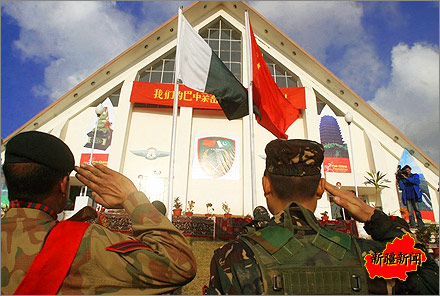
The claim that more than 7,000 Chinese troops have been handed “de facto control” of Gilgit-Baltistan, a northern part of Kashmir, by Islamabad, has set alarm bells ringing in Delhi. India – which, like its nuclear-armed rival Pakistan, claims the entire state – has long been worried that the People’s Liberation Army was working on roads and railway projects in the Karakoram mountains.

What is true is that China plans a massive highway linking western China to the port it is building at Gwadar, Pakistan, on the shore of the Arabian Sea. The benefits are obvious: the journey time from factory gate in, say, China’s wild west, to container ships bound for the Gulf will be cut from weeks to a few days. Eventually it may even become a key energy supply route.

All of this troubles Delhi, which has long asked for China to keep its nose out of Kashmiri affairs. However, the rise of the Middle Kingdom and its need to secure passage through its own troublesome provinces of Xinjiang and Tibet through to Pakistan make this unlikely. But India suspects, too, that China is intent on becoming the hegemon of much of the eastern hemisphere – able to dictate to smaller powers the rules of the game.

In Kashmir this had led to a round of tit-for-tat diplomatic incidents. So when India refuses to allow a Chinese diplomat to visit its troubled north-eastern state of Manipur for a talk, China responds by blocking the visa of a top Indian general because it appears his command includes Kashmir.

The Himalayan state is a piece of real estate whose sovereignty has long been contested. With its demography as varied as its topography, its various peoples have long been imbued with a stubborn streak of independence.

So it may be unsurprising that when heavy rains washed away villages in the Pakistan’s “Northern Areas” and Islamabad’s response was to sit on its hands, the simmering revolt against Pakistani rule flared again. In response Pakistan, so the claim goes, turned to its all-weather friend China, which was more than happy to send boots flying.

All this is dismissed in Beijing but only after referring to Gilgit as a “northern part of Pakistan”, which simply angered Delhi further. While Pakistan’s problem in its part of Kashmir has been of too little government action, India’s rule in its portion of the state has been heavy-handed and self-defeating.

Faced with a largely nonviolent revolt which began in 2008, the Indian authorities have provoked a much larger crisis with a regime of curfews and the killings of teenagers shot dead with nothing but slogans in their mouths and rocks in their hands. It is time for India to admit that its political and military strategy has failed to stabilise Kashmir.

The actions of both Pakistan and India vitiate claims that somehow either could keep the entire state happy. China has little sympathy with separatist claims – and holds sway over large chunks of the former Kashmiri kingdom.

The only way out of this mess is for Islamabad and Delhi to start rebuilding a peace process that will eventually lead to self-governance on both sides of the de facto border and a withdrawal of substantial numbers of Indian, Pakistani and, yes, even Chinese troops from Kashmir.

Grandsons of Mahatma Gandhi and Sir Abdullah Haroon Appeal for Pakistan Flood Relief

As reported by The United Nations

Miseries of millions unleashed by unprecedented floods in Pakistan brought together grandsons of two famous men in the Indian sub-continent to raise money for the sufferers.

Rajmohan Gandhi, grandson of Mahatma Gandhi and Abdullah Hussain Haroon, Pakistani ambassador to the UN, reached across the lines of history to make a joint appeal here to people to open their wallets to help the flood devastated people of Pakistan.

Acknowledging the gesture of Gandhi’s grandson, Hussain Haroon said Mahatma Gandhi was not only the father of nation to Indians, but also for Pakistanis and the people of entire sub-continent.

Appearing in a joint appeal at the UN headquarters, the Pakistani ambassador introduced Rajmohan saying “Mahatma Gandhi had a very special relationship with all of the Indian sub-continent and also the Muslims” and noted that their grandfathers were very personal friends.

Hussain’s grandfather Sir Abdullah Haroon was a close associate of Mohammad Ali Jinnah, whom the founder of Pakistan described as one of the strongest pillars of Muslim League.

But Haroon acknowledged that though Gandhi and his grandfather were on opposite side of the political spectrum, yet they had immense strength and respect for each other.

“My grandfather Sir Abdullah Haroon was a very personal friend of his (Gandhi), and when my grandfather passed away, we still have Gandhi’s letter where he said to my grandmother, I would have trusted your husband with a blank check,” Haroon said, making reference to the history.

And many a time Mahatma Gandhi proved his selflessness, he asserted.

“When I remember the fledgling Pakistani state did not receive its share from the then newly formed Indian government, the Mahatma went on a fast unto death in Delhi, and the Indian government had to buckle down and pay Pakistan its share,” the Pakistani ambassador acknowledged.

“When the Hindu-Muslim riots took place in Calcutta, he not only went there with Huseyn Shaheed Suhrawardy, he brought together both elements, and the rioting stopped in the city because he was fasting until it would stop. And people realised that it had to stop,” he said, adding it was because of one of these very reasons that he was assassinated.

Adding his voice to the appeal for generous support for the people of Pakistan, Rajmohan Gandhi said, “Now, in this catastrophe, as in all wars and conflicts, the poorest are once more the prime sufferers, losing not a portion of what they had, but all they had. Their sorrows are unrecorded, their heroism unsung, their pain unremembered. I pray that this flood will help us in South Asia to reorder our priorities.”

It’s Not Just Cricket

By Alan Black for The Huffington Post

The English in their empire conquests to India and Pakistan brought the game of cricket in their armory, best understood as complicated. With the pavilion hosting tea, the sound of the leather ball on the willow bat soon spread across the verdant lands of the subcontinent. The locals embraced a game played by spectacularly white men with unimpeachable manners, in spectacularly white clothes.

Today, India and Pakistan are as mad for cricket as they are for being at each others nuclear throats. Cricket has helped keep the peace by allowing Indians and Pakistanis to throw cricket balls at each other. But while democratic India has become a stage for Western capital and its values, Pakistan sinks deeper into a sticky wicket of terrorism, biblical style floods and now something disabling and disastrous for the nation’s identity — the Pakistani national cricket team, the pride of the nation, have been caught red handed in a betting scandal that has knocked the tea cups off the saucers, spoiling the cucumber sandwiches.

Currently, Pakistan is playing England at the home of cricket in London, a sporting venue grandly named Lords. Over the last weekend, a national UK newspaper revealed a sting operation conducted by undercover journalists, who paid a man around $250,000 for information on when certain Pakistan players on the field were going to cheat. The operative, it is claimed, is linked to illegal gambling syndicates. Sure enough, the players cheated on cue and the sounds of the London bobbies running to catch the villains came shortly after. Now, the Pakistanis require something slightly stronger than tea — high powered lawyers will be a start, maybe a stolen plane to make their getaway.

For years, Pakistani cricket has been suspect. Investigators in the past were stumped and failed to prove what seemed obvious to any sentient viewer — Pakistan was cheating, throwing games to cash in on payments from gambling crime, the cricket version of baseball’s Black Socks. Pakistan has been on the back foot over the claims denying it as a conspiracy against them. But this scandal has bowled them out. The News of the World has all the evidence on videotape. It’s irrefutable — in flagrante delicto.

The London police and cricket’s governing authority are using much diplomatic nuance at this stage of the criminal investigation, Only recently, the British Prime Minister David Cameron insulted Pakistan while he was visiting their enemy, India. And now this! Cheats at Lords, the home of English cricket. This stain on the linen will provide more ammo for the prejudice merchants loading another flare to fire at poor old Pakistan — how can you trust them?

Should Pakistan be banned from international cricket, somewhat unlikely but possible if the poison goes all the way to the top of their game, the impact back home will be enormous. For millions of Pakistanis, cricket is more important than life or death. It is Pakistan’s rope to the world. A chance to show how great they are at a tremendously demanding and skillful sport. Add one more disaster to a nation seriously down on its luck.

Aging Philanthropist is Pakistan’s Mother Teresa

By Chris Brummit for The Associated Press
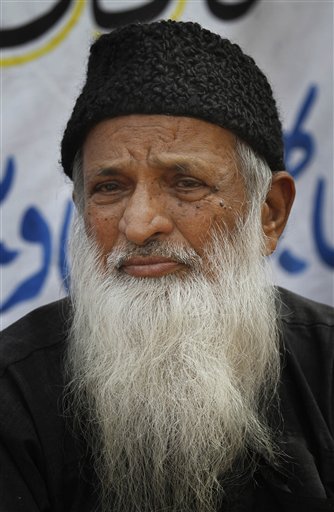
The aging man in mud-splattered, frayed clothes has barely lowered his body onto the sidewalk when the money starts piling up. Heeding his call for donations for flood victims, Pakistanis of all classes rush to hand over cash to Abdul Sattar Edhi, whose years of dedication to the poor have made him a national icon.

He thanks each donor, some of whom ask to have their photo taken next to him. Four hours later, the crowd remains — and the equivalent of $15,000 is overflowing from a pink basket in front of him.

Edhi has been helping the destitute and sick for more than 60 years, filling the hole left by a state that has largely neglected the welfare of its citizens. Part Mother Teresa, part Gandhi, with a touch of Marx, he is the face of humanitarianism in Pakistan.

Funded by donations from fellow citizens, his 250 centers across the country take in orphans, the mentally ill, unwanted newborns, drug addicts, the homeless, the sick and the aged. His fleet of ambulances picks up victims of terrorist bombings, gang shootings, car accidents and natural disasters.

Pakistan’s corruption-riddled government acknowledges Edhi and other charities do the work that in other nations the state performs. The country has no national health service, insurance program or welfare system, and few state-run orphanages or old people’s homes.

The foundation offers an alternative to charitable work performed by hardline Islamist groups in Pakistan, some with alleged links to terrorism. The spread of these organizations has triggered concerns in the West, including their work in the aftermath of this summer’s floods.

Edhi is a devout Muslim, but critical of Islamic clerics in general, not just extremists. He says they focus on ritual, preaching hellfire and defending the faith against imagined enemies, rather than helping the poor — which he says should be the cornerstone of all faiths.

The 80-something Edhi — he and his children disagree on his exact age — lives with his wife, herself a charity worker, in a tiny room in one of his welfare centers in Karachi, a bustling port city. His bed is a one-inch thick mattress on a piece of wood.

“I am a beggar for the poor,” he says, stained teeth showing in a wide smile, eyes sparkling after a week touring flood-hit areas. “Serving humanity is the biggest jihad. It is the real thing.”

___

Edhi deals with birth and death, and almost everything in between.

Just above his bedroom, a maternity ward and an orphanage are home to 18 children, many of them abandoned by their mothers in cradles left outside his centers. They wear hand-me-downs from the city’s rich. Edhi’s wife, Bilquis, tries to get the children adopted, but few Pakistanis want to take girls or older children, she says.

On a recent afternoon, the kids shouted out English nursery rhymes and danced. They then sat cross-legged on the floor, drinking tea from plastic mugs and eating spicy pastries and sticky sweets that an anonymous benefactor had dropped off.

The home was clean and bright, with plenty of toys and loving staff. But there was no place to play outside, and the roar of motorbikes from the lanes below was a constant backdrop.

Across town, workers at the Edhi morgue were dealing with latest influx of bodies. They receive around 25 a day, half of which are never claimed — the city’s unloved and unknown.

Working quickly but carefully, they cut the clothes from the bodies, lather them with a bar of soap from head to toe, rinse them with water from a jug, then wrap them in a white sheet. The bodies are bussed across town, prayed over and buried in unmarked graves.

The body of American journalist Daniel Pearl, killed by al-Qaida terrorists in Karachi in 2002, was picked up by an Edhi ambulance and taken to the morgue, the largest in the city of 14 million people.

The morgue is attached to a hospital for the homeless, a dispensary, a shelter for boys and women and children, even a wedding hall for the marriages arranged for children who have been looked after by the foundation. The smell of baking bread from an oven that churns out 9,000 loaves a day fills the air.

“The poor can come here and get a solution to all their problems,” says Ejal Hassan Zaidi, who had accompanied a neighbor to the morgue to collect the body of his 3-year-old daughter, killed in a hit-and-run incident hours earlier. “From the cradle to the grave.”

___

Born in what is now India, Edhi and his parents moved to Pakistan in 1947 when that country was created as a Muslim state at the end of British colonial rule. The family was quite well off — his father was a traveling salesman — and socially progressive.

In his biography, Edhi credits his mother for setting him on a humanitarian path. She urged him to give half his pocket money to someone poor every day and rebuked him if he didn’t.

“‘You have a selfish heart, one that has nothing to give,'” he remembers her saying. “‘What kind of human being are you? Look at the greed in your eyes. Already you have started robbing the poor. How much more will you rob from them in your lifetime?”

When she was dying, he looked after her, bathing her emaciated body and washing and braiding her hair — experiences that would also shape his life.

“The first night she spent in the grave, I dedicated my life to the service of mankind,” he says.

Edhi started small. In 1951, he bought an eight-foot-square shop in a slum neighborhood in Karachi that he converted into a dispensary. Seven years later he bought a van that he used as an ambulance, writing “Poor Man’s Van” on both sides.

He became intimately involved in the business of caring for the sick and dying. He would drive the ambulance to the scene of an accident to pick up the bodies, administer injections during a flu outbreak and travel across the country to help after earthquakes and other natural disasters.

Edhi’s record of round-the-clock service and frugal lifestyle attracted donations, and he soon had a fleet of 14 ambulances. In the 1980s and 90s, he opened centers and ambulance services throughout the country. He donated $200,000 to releif efforts after Hurricane Katrina, and his workers have also helped out in disasters in Asia and the Middle East.

___

Pakistanis are a generous people, required by their Muslim faith to give away 2.5 percent of their wealth each year. The last nationwide survey done in 1998 showed that Pakistanis gave the then equivalent of $820 million to charity, around the same as the government’s health and education budget at the time. There are no numbers on how rising terrorism and a poor economy have affected this philanthropy.

Edhi does not accept donations from international organizations or governments, including Pakistan’s, saying he doesn’t need outside help and it is important for Pakistanis to help each other. He and his wife live simply of the interest from some savings.

The foundation does not produce detailed financial statements or annual reports. Edhi points to a wall of files in one office in which he says everything is accounted for. Donors do not seem to mind, such is their trust in him.

“You ask any Pakistani on the streets, Edhi is total credible with them,” says Anjum Haque, the executive director of the Pakistan Centre for Philanthropy. “The success of the trust is down to Edhi himself.”

Last year, donations to Edhi-run charities totaled around $5 million, according to Faisal Edhi, the founder’s son and trust member. A significant chunk of the funds comes from overseas Pakistanis, who want to donate to their homeland.

The lack of transparency has caused some concern among others in the charity sector in Pakistan. Faisal Edhi acknowledges that some of their 13,000 employees — who receive very modest salaries — might skim money off donations. There have also been questions raised about the lack of professionalism and efficiency, specially as the foundation has grown.

Edhi Village, a 65-acre complex in the undulating hills beyond the northern slums of Karachi, is home to 300 children, many picked up off the streets, and 900 adults, many elderly or suffering from mental disabilities.

Most wear clean, ironed clothes, and the food is fresh. Yet there are also signs of neglect. One naked youth dragged himself through a puddle. Some had no shoes and begged visitors to buy them a pair.

The adults live in rooms around the size of three tennis courts, bare except for raised sections for sleeping. They are locked inside for part of the day. There are two doctors, four nurses and two ward boys looking after them.

“We do the most we can do with our resources,” says Billal Mohammad, a regional Edhi manager. “They would be living on the pavement under the sky. We give them shelter, food and treatment. You must not see this place throughout Western eyes.”

___

Edhi has made no secret of his dislike of Pakistan’s ruling class. So it was a surprise to see a gaggle of politicians using one of his orphanages in Karachi as a venue to mark the recent birthday of President Asif Ali Zardari.

The visitors spooned cake into the mouths of the children, shouted political slogans for television cameras and asked Edhi to be photographed next to them. He said he only let the politicians in so the children would have a party to enjoy.

“So what if the politicians are using me? They even use God,” said Edhi, who sat by himself for most of the event. “Landowners, clerics, politicians. They are all looters. There is no fear in telling the truth.”

Hardline Islamist groups have criticized Edhi for his progressive views on women and the secular nature of his work. Some have said that by accepting newly-born babies from unmarried mothers, he is promoting premarital sex.

“We meet them and we read their newspapers. They say we are non-Muslims, unbelievers and communists,” says Faisal Edhi. “The jihadi groups don’t like us. They don’t believe in humanity.”

There are questions about what will happen to the foundation when Edhi dies. He says his two sons and three daughters will take over, though without him at the helm, people may not give as generously.

For now, his children appear more concerned about their father’s health. Apart from an afternoon nap, he works just as hard as he did when he was in his 30s, they say.

“We tell him to take it easy, but he doesn’t listen,” says daughter Almas Edhi. “He wants to keep busy.”

On the Net:

  • http://www.edhifoundation.com/
  • http://www.pcp.org.pk/
  •  

    Pakistanis for Peace Editor’s Note– At a time when the Pakistani nation is in turmoil and dismay due to the epic floods, endless bombings and violence, vast corruption amongst the government, the Sialkot killings, and even the match fixing disappointment from the once cherished national cricket team, Abdul Sattar Edhi and his lifelong service to the people of Pakistan is a testament to the awesome goodness found in one Pakistani man. His service to the orphans, the destitute, homeless, and the generally downtrodden of the country make him a shining role model and a beacon of what is good about the Pakistani people. If there is anyone more deserving of a Nobel Peace Prize than Edhi, then we have not found them as of yet. May he continue to inspire not just the Pakistani people, but all people everywhere with his selflessness and humanity.

    Millions of Pakistani Kids Risk Waterborne Disease

    By Asif Shahzad for The Associated Press

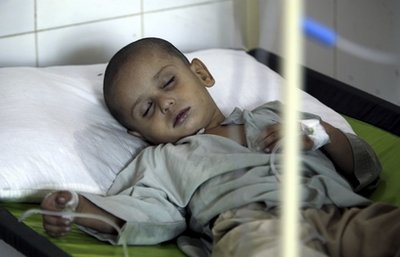
    Five-year-old Shahid Khan struggled to remain conscious in his hospital bed as severe diarrhea threatened to kill him. His father watched helplessly, stricken at the thought of losing his son — one of the only things the floods had not already taken.

    The young boy is one of millions of children who survived the floods that ravaged Pakistan over the last month but are now vulnerable to a second wave of death caused by waterborne disease, according to the United Nations.

    Khan’s father, Ikramullah, fled Pabbi just before floods devastated the northwestern town about a month ago, abandoning his two-room house and all his possessions to save his wife and four children.

    “I saved my kids. That was everything for me,” said Ikramullah, whose 6-year-old son, Waqar, has also battled severe diarrhea in recent days. “Now I see I’m losing them. We’re devastated.”

    Ten other children lay in beds near Khan at the diarrhea treatment center run by the World Health Organization in Pabbi, two of whom were in critical condition.

    Access to clean water has always been a problem in Pakistan, but the floods have worsened the situation significantly by breaking open sewer lines, filling wells with dirty water and displacing millions of people who must use the contaminated water around them.

    Children are more vulnerable to diseases such as diarrhea and dysentery because they are more easily dehydrated. Many children in Pakistan also were malnourished before the floods, weakening their immune systems.

    The Pakistani government and international aid groups have worked to get clean water to millions of people affected by the floods and treat those suffering from waterborne diseases. But they have been overwhelmed by the scale of the disaster, which has displaced a million more people in recent days.

    The floods started in the northwest in late July after extremely heavy monsoon rains and surged south along the Indus River, killing more than 1,600 people, damaging or destroying more than 1.2 million homes and inundating one-fifth of the country — an area larger than England.

    Some 3.5 million children are at imminent risk of waterborne disease and 72,000 are at high risk of death, according to the United Nations.

    The World Health Organization set up the diarrhea treatment center in Pabbi about a week ago with the help of several other aid groups. Workers have already treated more than 500 patients, mostly children, said Asadullah Khan, one of the doctors.

    Some of the patients have been treated multiple times because broken sewer lines have contaminated the water in the town’s wells and pipes, said the doctor. “It is circulating the disease again and again,” he said.

    The aid groups set up a similar treatment facility several days ago in Nowshera, a city adjacent to Pabbi that was also engulfed by the floods. Residents who have begun to return in recent days have encountered a scene of total destruction: caved-in houses and streets covered with mud and debris.

    Most of the population lacks access to clean water, and mosquitoes have proliferated in stagnant floodwater around the city, raising the risk of malaria. Government help is nowhere to be found.

    “It is trash, dirt, germs and odd smells everywhere,” said Zahid Ullah, whose 3-year-old and 10-year-old sons were being treated for gastroenteritis at the facility in Nowshera. “It is a big danger.”

    Even at the hospitals where the diarrhea treatment centers have been set up, mobs of flies hovered around the patients despite attempts by staff to kill them.

    The World Health Organization and the United Nations Children’s Fund appealed to the world on Saturday to provide water purification units, family hygiene kits and other items needed to increase access to clean water in Pakistan.

    Guido Sabatinelli, the head of the World Health Organization in Pakistan, said the international community’s help was critical to help Pakistan avoid a second wave of death from waterborne disease.

    “We are fearing the epidemic of disease,” said Sabatinelli. “Access to safer water, potable water” is critical, he said.

    Asma Bibi couldn’t agree more. The young mother searched in vain for clean water on the outskirts of Nowshera as her feverish 2-month-old son, Ehtesham, sweltered in a tent set up for flood victims. They had run out of water the day before.

    “My son is sick. He hasn’t breast-fed in two days,” she said. “He needs milk. He needs water.”

    Police Question Pakistan Cricket Team Over Newspaper’s Matchfixing Allegations

    By Richard Sydenham for The Canadian Press

    Police have questioned Pakistan’s cricket team over newspaper allegations of matchfixing during the current Test match against England at Lord’s, the team’s manager said on Saturday.

    “I can confirm that we are aware of the allegations and Scotland Yard police are with us now at the hotel and we are helping with their inquiries,” team manager Yawar Saeed told The Associated Press. “This is as much as I can say at the moment.

    ” British newspaper the News of the World alleged in its Sunday edition that Pakistan players were secretly paid to deliberately bowl no-balls during the fourth and final Test against England as part of a betting scam.

    The newspaper says it has secretly-filmed video footage of its undercover reporters, posing as front men for a Far East gambling cartel, in discussion with a man who appears to accept 150,000 pounds (C$244,000) in order to make sure no-balls are bowled at certain times during the match.

    The News of the World says it has passed all its evidence to the police. Scotland Yard police said in a statement: “Following information received from the News of the World, we have today arrested a 35-year-old man on suspicion of conspiracy to defraud bookmakers.

    ” The International Cricket Council said it was aware of the situation and it, along with the England and Wales Cricket Board and the Pakistan Cricket Board, was “fully assisting” police with their inquiries.

    “No players nor team officials have been arrested in relation to this incident and the fourth npower Test match will continue as scheduled on Sunday,” said the ICC’s statement. “As this is now subject to a police investigation neither ICC, ECB, PCB nor the ground authority, the MCC, will make any further comment.”

    Any player found guilty of involvement in matchfixing faces a life ban from the sport. Pakistan needs to win the final Test against England at Lord’s to salvage a draw in the four-match series, but it faces an uphill task after scoring just 74 in reply to England’s first innings total of 446.

    No Change Seen in Pakistan’s View of India Threat

    By Myra MacDonald for Reuters

    The Pakistan army is unlikely to change its assessment of the threat from India despite heavy demands on its troops to provide flood relief while also fighting Islamist militants, a senior security official said.

    The Wall Street Journal said this month Pakistan’s Inter-Services Intelligence (ISI) agency had decided — for the first time in the country’s history — that Islamist militants had overtaken India as the greatest threat to national security.

    But the security official suggested this was a misinterpretation of the stance of the Pakistan army, which views the threat from militants and India in very different ways, rather than comparing them against each other.

    “These are two mutually exclusive threats. The magnitude, the type, is quite different. One is an internal threat which is insidious, difficult to quantify. It is a clear and present danger. This is a very serious threat,” he said. “The other is a conventional threat. What has India done, politically and militarily, for this threat to have been reduced?”

    Another official said the threat from India had if anything increased into both a conventional and unconventional threat, as it used its presence in Afghanistan to support those fighting against the Pakistani state in its western border regions.

    India denies accusations by Islamabad that it backs separatists in Baluchistan province, which borders Afghanistan, saying it is interested only in promoting Afghan development.

    With flooding which has uprooted some 6 million people further destabilizing a country already battling militants, the WSJ report raised the possibility the Pakistan army might revise its assessment of the threat from its much bigger neighbor.

    It keeps the bulk of its troops on the Indian border.

    INDIAN FLOOD RELIEF

    India has promised Pakistan $5 million in flood relief and analysts there see no chance of it exploiting its nuclear rival’s current vulnerability by raising tensions on the border.

    “At this time no one is thinking of anything other than how to help them get over the suffering and the damage,” said retired Brigadier Gurmeet Kanwal at the Center for Land Warfare Studies.

    “The Pakistanis should feel free to pull out their troops for flood relief as and when they want. The Indian Army obviously cannot give any written guarantees but our DGMO (Director General of Military Operations) could reassure his counterpart that we have no intention of attacking them at such a time.”

    The DGMO’s of the two countries talk by phone once a week, mainly to clear up misunderstandings over any ceasefire violations on the Line of Control dividing disputed Kashmir.

    But the security official said that Pakistan’s military deployment was based on its assessment of India’s potential offensive strength. “The configuration of any defense force is based on enemy’s capabilities and not intentions,” he said.

    Pakistan has taken more casualties in its battle with Islamist militants than in all its wars against India combined — the two countries have fought three full-scale wars since independence in 1947 along with other smaller conflicts.

    Yet for Pakistan to drop its guard against India would require progress on political disputes, including over Kashmir, officials say.

    India broke off a peace process with Pakistan after the 2008 attack on Mumbai by Pakistan-based militants and despite several attempts the two countries have been unable to get their talks back on track again.

    And even while Pakistan fights militants on its western border with Afghanistan, it remains wary of sudden Indian retaliation should there be another Mumbai-style attack on India.

    “This enforced attention to the western border has made the Pakistan army reassess its priorities,” said western military analyst Brian Cloughley, an expert on the Pakistan army.

    “But it still does not wish to drop its guard to the east, especially as the there is still the threat of a swift and dramatic attack if a terrorist outrage in India is determined by India to have been planned in Pakistan.”

    Pakistan has said it cannot guarantee there will be no more attacks on India, arguing that it too is a victim of bombings.