Posts Tagged ‘ Pakistan ’

National Interest Equals 180 million

By Sibtayn Naqvi for The Blue Rickshaw

With the calamity struck upon Pakistan, many of our citizens have suffered at the hands of a horrific torrential downpour, a tragic AirBlue accident and a sickening “target killing” environment prevalent in Karachi. One would believe to look for guidance, consolation and leadership in the civilian government. To quote spider-man “with great power comes great responsibility”, but for Asif Zardari, this means pursuing “national interests” abroad, while thousands of lives have been disrupted and lost across the nation.

Now all in fairness, as one politician proudly displayed on his twitter “I cannot understand y a State visit by a President to further Pakistan’s national interests shud be politicised. It’s hard work no holiday”. Do tell me, is it absolutely vital for Mr. Zardari at this time to be pursing “national interests” by sipping tea and munching on biscuits with the very Prime Minister who stated that my country should not be allowed to “promote the export of terror”?

The President has made numerous trips abroad to pursue “national interests” since taking the reins of the Presidency. Even though such trips cost (on average) Rs. 20 million, I have rarely seen a public outcry in regards to such escapades. Being the President of a powerful nation housing 180 million people, Mr. President, some empathy in regards to the timing of your foreign affairs could have been witnessed this time around.

Was it absolutely crucial to use public money (that is already bare minimum) to travel abroad in the current circumstances? Would it not have been possible to formulate a domestic trip to Swat, Peshawar or Nowshera to stand by the unfortunate flood victims? Could the Rs. 20 million not have been used to conduct a memorial service for the tragic victims who lost their lives in the Margalla Hills? Is it too much to ask for Rs. 20 million to be spent on increased security in Karachi so we don’t read headlines on target killings every morning?

Throughout Pakistan’s turbulent history we have constantly heard drawing room chatter in regards to the Establishment not allowing the civilian government to flourish. Let’s put a spotlight over the recent weeks to see why the Pakistan Army has an image of being our savior rather than the civilian government. When target killings are carried out in Karachi, the Rangers step in. When ED202 crashed in the Margalla Hills, the Army came to the rescue (while one Minister exclaimed prematurely that there were a number of survivors), when the monsoonal floods hit the Northern regions, General Kayani surveyed the damage while expediting relief efforts, when the British Prime Minister made scathing remarks towards Pakistan, our ISI chief suspended his foreign trip to the United Kingdom. You of all people should know Mr. President public perception does matter.

Why was there a lack of civilian government presence in all the incidents mentioned above? Is the launch of Bilawal Zardari as a 21-year-old PPP-Chairman more important than the diminished livelihood of thousands across the country? Correct me if I am wrong, but didn’t the young Zardari exclaim “jaan chahyai, jaan deingay hum, khoon chahyai, khoon deingay hum”? I’d like to see some of that passion come to the forefront Mr. President.

Now let’s get to the favorite topic of the day. Fake degrees. For the 2008 general elections, there was a provision requiring all candidates to have an undergraduate degree. Regardless of whether the law is satisfactory, it was penned in ink. Do tell me, who gives the right to 47 sitting members of Parliament to provide the Election Commission of Pakistan with phony documents? Ironically, the majority of these illegal Parliamentarians are not even from the Pakistan Peoples Party. Take the high ground, the moral ground, Mr. President. Allow the report presented by the autonomous Higher Education Commission to run its proper course. Break down the barriers being constructed by the Ministry of Education.

Pakistan is a very resilient nation. Over the last decade, we have experienced the effects of an on-going war being carried out in Afghanistan. We have seen a rise in domestic violence that has cost 3,433 lives in 215 suicide attacks. Pakistan lost nearly 80,000 citizens in the tragic earthquake of 2005. Our military has suffered 8785 casualties of which 2273 soldiers have died. Karachi endured 156 incidents of targeted killings in 2009. 334 were targeted and killed in the first seven months of 2010, while their have been 889 murders in Karachi alone during the same time period. 152 Pakistani’s tragically lost their lives in the Margalla Hills, while the current flood that has swept the country has already taken the lives of more than 1,200 citizens.

But we are still standing strong. We carry out an honest day of living without electricity and ridiculously high prices of domestic commodities. Despite the hardships we have faced, our faith in this country has strengthened our confidence. In less than two weeks we will be out in the streets, waving our flags, saluting our soldiers and standing with our heads high. The globe may assume we are a fractured nation, and some may state that we export terror, but our national interests lay within our own borders. Our morals will carry us forward, but being at the helm of affairs Mr. President it is your duty to lead the way. We have suffered enough to watch Establishment dictate terms, or civilian governments bankrupting the national exchequer. It is high time the 180 million are looked after for they make up the “national interests”.

Sibtayn Naqvi is a freelance journalist and writes for The Blue Rickshaw. He may be contacted at sibtaynnaqvi@gmail.com

Haroon in Pakistan squad for Common Wealth Games

By Fawad Hussain for The Express Tribune

Haroon Shahid Khan, the younger brother of Britain’s light welterweight world champion, Amir Khan will be representing Pakistan in this year’s Commonwealth Games. The Pakistan Boxing Federation decided to include Haroon in the six-member national squad for the event that will be held from October 3 till October 14 in New Delhi.

Haroon won the Amateur Boxing Association (ABA) bantam weight title last year and also has other junior titles under his belt. The PBF secretary Akram Khan felt his inclusion in the side has brightened the team’s chances of winning in the event.

“He is an excellent boxer and has been trained at his brother’s academy – so definitely our chances of winning medals have increased,” Khan told The Express Tribune following the team’s announcement.

Haroon, who is famous in the UK as “Harry Khan”, will join the national training camp next month. “Haroon will be coming in August to join his teammates. It is important for him to train in our conditions which are similar to those in India,” said the secretary.

According to Akram, the PBF are not only relying on Haroon for winning medals at the competition.

“Wasim, Nisar and Mir Waiz also have a lot of experience and have also won accolades for the country- so we are banking on all our boxers,” said Akram while adding that the Cuban coach recommended the names of these boxers after working with them for months.

Officials: Pakistan Flood Deaths Top 1100‎

As Reported By CNN

The devastating floods in Pakistan have killed more 1,100 people, Pakistani government officials told CNN on Sunday. Another 30,000 people were stuck on their rooftops and in higher areas as they tried to escape rushing floodwaters, a United Nations official said Sunday.

“We’ve got the government sending boats and helicopters to try to reach people and bring them to safety at the same time as trying to deliver emergency relief,” said Nicki Bennett, a senior humanitarian affairs officer for the U.N.

Damaged roads and bridges have made rescuing stranded residents difficult, she said, noting that even a U.N. warehouse where the organization stores food, blankets, soaps and bucks is partially underwater. “As we are trying to reach people, we have to battle with the ongoing access problems,” she said. The rescue and recovery efforts of the Pakistan flooding could become more complicated as weather officials predict more monsoon rains starting Monday.

The Pakistan Meteorological Department said Sindh, Punjab, Kashmir, eastern parts of Khyber-Pakhtunkhwa and eastern parts of Balochistan would receive monsoon rains. Areas along the Indus River would be badly affected due to extremely high flood conditions.

The number reflects those killed only in Khyber Pakhtunkhwa province, previously known as the North West Frontier Province, said spokesman Mian Iftikhar Hussain. Flooding has also been reported in Pakistani-controlled Kashmir. Twenty-five deaths were recorded there Friday, Hussain said.

A Pakistani Red Crescent official told CNN that the number of people affected by the floods has risen to nearly 2.5 million people, with infrastructure receiving major damage. Rushing water also has washed away thousands of acres of crops, government buildings, businesses, schools, bridges and homes, officials said.

The United States will assist in relief efforts by bringing in 50,000 meals, rescue boats and helicopters, 12 pre-fabricated steel bridges and water filtration units, the embassy in Islamabad said.

According to Geo TV, 150 people are missing in a northwestern province, and 3,700 homes were swept away. Forty-seven bridges in Swat have been destroyed or damaged.

Geo TV also said 3,000 are in a camp in Nowshera and are without enough water and food. Displaced residents are unhappy with the government response, Geo TV said. Trains have also been delayed, frustrating commuters.

“They have made this a joke,” a commuter told the network. “There are young children here, but there is no water, nor is there any seating. They have taken our ticket money. Yet after every few minutes they change the train timings. They are playing a game of lies and deceit.”

Pakistani Interior Minister Rehman Malik visited Khyber Pakhtunkhwa on Saturday and found tourists and local residents trapped because of the heavy floods, the state-run Associated Press of Pakistan reported.

President Asif Ali Zardari said all available resources would be used to help those stranded by the waters, the APP reported.

Many of the victims died when flood waters swept away hundreds of mud houses in parts of Swat Valley and the districts of Shangla and Tank, according to Bashir Ahmed Bilour, a provincial minister in Khyber Pakhtunkhwa.

Hussain said flooding has cut off the Swat Valley and the districts of Shangla and Peshawar. There is no way to get to these areas by road, he said.

The Pakistani Air Force has been helping with rescue efforts, spokesman Tariq Yazdanie said in an interview on Pakistani TV. The recent torrential rains have broken all previous records of rainfall in the country, he said.

The United Nations said there is a need for help in providing emergency shelter, food, drinking water and sanitation facilities. Its agencies are geared to help with these issues.

The European Commission is providing 30 million euros ($39 million) to help the people affected by the flooding.

U.S. Embassy officials in Pakistan said the United States has committed $10 million to support flood relief priorities, four inflatable rescue boats, two water filtration units that can fulfill the daily water requirements of up to 10,000 people, and 12 pre-fabricated steel bridges to temporarily replace damaged bridges.

U.S. officials have also provided more than 51,000 halal meals (military rations tailored for people of Islamic faith) and another 62,000 will arrive Sunday.

In addition, the U.S. provided helicopters to support the Ministry of Interior’s rescue operations.

The same weather system is also responsible for flooding in bordering Afghanistan, where 65 people have died, and 61 were injured since Thursday, according to Abdul Matin Adrak, head of disaster management for Afghanistan.

The flooding started Thursday and continued for more than six hours. Rescue teams were able to access all the flooded villages using ministry of defense helicopters. Food and equipment was donated and transferred to the affected people by ISAF and Afghan Security forces.

U.S. Air Force Lt. Col. Greg “Boomer” Roberts, adviser to the Afghan Air Force, told CNN Sunday morning that the Afghan air force rescued about 2,000 villagers who were stranded. Roberts accompanied the air force during their rescue mission in the Kunar province — a known insurgent stronghold.

“They knew they could accomplish their mission. When we came into the area and the Taliban made their presence known, they continued … and picked up 2,000 people who were definitely overcome by the floods. And they did it right there in full view of the Taliban.

“There’s not a doubt in my mind that some of the folks we picked up are Taliban,” he said, adding that most were probably looking for employment with the organization. He said the rescue mission is the type of move that could sway people away from the Taliban and toward the Afghan government.

With Friends Like These…

By Ron Moreau for Newsweek

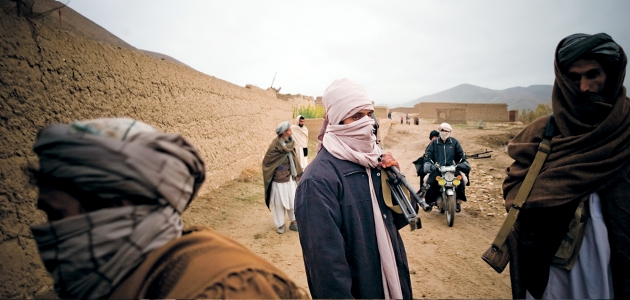
The Afghan Taliban say they have one thing in common with the Americans: they’re both getting played by Pakistan. 

The Afghan Taliban logistics officer laughs about the news he’s been hearing on his radio this past week. The story is that a Web site known as WikiLeaks has obtained and posted thousands of classified field reports from U.S. troops in Afghanistan, and hundreds of those reports mention the Americans’ suspicions that Pakistan is secretly assisting the Taliban—a charge that Pakistan has repeatedly and vehemently denied. “At least we have something in common with America,” the logistics officer says. “The Pakistanis are playing a double game with us, too.”

Pakistan’s ongoing support of the Afghan Taliban is anything but news to insurgents who have spoken to NEWSWEEK. Requesting anonymity for security reasons, many of them readily admit their utter dependence on the country’s Directorate for Inter-Services Intelligence (ISI) not only for sanctuary and safe passage but also, some say, for much of their financial support. The logistics officer, speaking at his mud-brick compound near the border, offers an unverifiable estimate that Pakistan provides roughly 80 percent of the insurgents’ funding, based on his conversations with other senior Taliban. He says the insurgents could barely cover their expenses in Kandahar province alone if not for the ISI. Not that he views them as friends. “They feed us with one hand and arrest and kill us with the other,” he says.

The militants say that most often they’re dealing with middlemen who appear to be merchants, money-changers, or businessmen, although the assumption is that they’re working for Pakistani intelligence. Some provide money, some motorbikes; others supply contacts for sources who can provide weapons. One smuggler who funnels much of his profits to the insurgency claims that Pakistani forces reserve one remote border crossing in Baluchistan for the Taliban and force civilians to divert to far-off posts.

But many insurgents still blame the Pakistani government for its cooperation in the U.S. invasion of Afghanistan after 9/11. “We can’t forget or forgive Pakistan for turning against us nine years ago,” says a senior Taliban intelligence operative, also speaking with NEWSWEEK along the remote border. And the betrayals didn’t stop there. Every Taliban can recite a long list of insurgent leaders who have been arrested in Pakistan or who were killed in Afghanistan with assumed Pakistani complicity. One of the biggest losses was Mullah Akhtar Mohammad Osmani, a driving force in the Taliban’s revival whose hideout near Quetta was raided by Pakistani forces in 2006. He fled across the border, where he was killed in a U.S. airstrike. Another was Mullah Dadullah Akhund, one of the insurgency’s most feared commanders, who died in a coalition raid in Helmand—with the help of the ISI, the Taliban suspects. The insurgents say he was too brazen, too independent, and too close to Al Qaeda for Pakistan’s comfort.

Some leading Taliban even suspect that Mullah Mohammed Omar, the leader and symbol of their jihad, may also be in ISI custody. He has appeared in no videos and issued no verifiable audio messages or written statements since he disappeared into the Kandahar mountains on the back of Baradar’s motorcycle in late 2001. “I wouldn’t be surprised if the ISI arrested us all in one day,” says a former cabinet minister. “We are like sheep the Pakistanis can round up whenever they want.”

On top of the years of grudges, there’s a persistent strain of ethnic animosity between the Taliban’s overwhelmingly Pashtun membership and its mostly Punjabi patrons from Pakistan’s security forces. The insurgents refer contemptuously to the ISI as “blacklegs,” for their supposedly darker skin. “Any commander who is more or less self-sufficient and independent of Pakistan becomes more popular with his fighters,” the intelligence officer says. Nevertheless, the insurgents see little choice about accepting any help they can get from Pakistan.

The Pakistanis, for their part, continue to resist U.S. pressure for strikes against Taliban sanctuaries. “Their aim seems to be to prolong the war in Afghanistan by aiding both the Americans and us,” says the logistics officer. “That way Pakistan continues to receive billions from the U.S., remains a key regional player, and still maintains influence with [the Taliban].” And which side is Pakistan on? “That’s a foolish question,” says Anatol Lieven, a professor in the Department of War Studies at King’s College London. “Pakistan is on Pakistan’s side, just as America is on America’s.” Nobody knows that better than the Taliban.

Karzai Questions Allies’ Willingness to Act on Pakistani Terror Havens

As Reported by the Voice of America

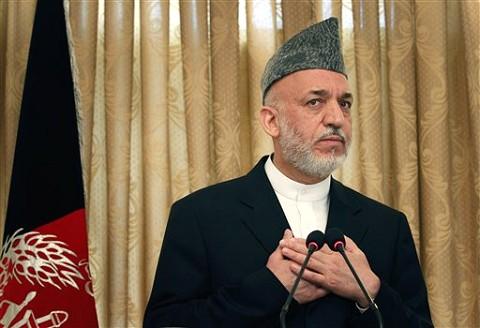
Afghan President Hamid Karzai is questioning the willingness of Western allies to go after terrorist sanctuaries in neighboring Pakistan.

Mr. Karzai said Thursday that the war against terrorism is “not in Afghanistan’s homes and villages” but in the sanctuaries and training centers that lie outside the country.

The Afghan leader told reporters in Kabul that only international forces have the ability to tackle such insurgent forces.

President Karzai’s comments come after the website WikiLeaks released thousands of classified U.S. military documents that allege Pakistan’s intelligence agency was actively collaborating with Afghan Taliban militants.

Pakistan has dismissed the allegations.

Pakistani foreign ministry spokesman Abdul Basit called Mr. Karzai’s remarks “incomprehensible.”  He said Pakistan’s ambassador in Kabul was seeking clarification, noting the neighboring nations have been closely cooperating against terrorism.

President Karzai on Thursday also condemned  WikiLeaks’ release of the military documents and said their leak endangers the lives of Afghans who worked closely with NATO forces.  He said he has ordered a government review of the files.

The 91,000 documents also contain details of civilian casualties allegedly caused by coalition forces.  

U.S. officials have also condemned the documents’ release and launched an investigation into the source of the leak.

Cross-Border Unions: How Indo-Pakistani Marriages Prosper

By Vinita Bharadwaj for The National-UAE

While relations between their countries may be at an all-time low, Indians and Pakistanis who marry each other often find extended family ties confound their nations’ mutual hostility.

It is a truth universally acknowledged, that when two South Asians wed, they not only marry each other, they also marry into each other’s family.

And family matters between Indians and Pakistanis might be expected to be highly charged, given those two countries’ mutual antipathy for more than 60 years.

“When an Indian marries a Pakistani, it’s a loaded event that can only be matched by the energy of a cricket match between the two countries,” says Amra Hyder, a Pakistani.

The partition of British India into Pakistan and India is historically recorded as the largest human migration ever. It displaced millions and forced people of a common culture to choose a new geography and subscribe overnight to the idea of previously non-existent nations.

Most tragically, it split families. The ghosts of the 1947 partition loom large in the psyches of both countries’ modern histories that include three wars, a continuing dispute over Kashmir and terrorism.

Amra is originally from Pakistan and is married to Zulfiqar Hyder, who hails from India. Amra and Zulfiqar, now Canadian citizens, have lived in Sharjah with their four children since 2006.

In 1992, when the gregarious, romantic 23-year-old Amra married the 33-year old Zulfiqar, a studious man from India, she did not quite know what to expect – from married life, her in-laws and most importantly, her husband’s country. “I also never would have imagined I would be apologetic for both countries’ ridiculous obsession with ‘Shonia’,” she says of the media brouhaha over the recent nuptials of the Pakistani cricketer Shoaib Malik and the Indian tennis player Sania Mirza.

For long before the Malik-Mirza marriage, thousands of Indians and Pakistanis, mostly from families divided by the 1947 partition, have been marrying each other.

The difference is that now these marital alliances are formed outside the extended family circuit. Amra and Zulfiqar did not have an arranged marriage, and neither of them had any intention of settling in either India or Pakistan. They opted to overcome predictable visa hassles by initially residing in the UAE soon after their wedding, and migrated to Canada in 1996 to obtain citizenship, in the hope that it would ease their trips between India and Pakistan.

 
Masooma Syed, from Lahore, met her Keralan husband Sumedh Rajendran at an artists’ residency programme in Delhi. ‘I knew he understood me perfectly.’ Charla Jones

The couple first met in Abu Dhabi at a mutual friend’s party, and married within a year. The wedding took place in Karachi, with Zulfiqar’s entire family flying in from the northern Indian city of Lucknow. “It was a lovely wedding,” Amra recalls, adding that the questioning – albeit, in jest – began soon after they were married. “It was like, ‘Now you’re an Indian daughter-in-law’ and ‘Who will you support in cricket’ or even ‘Who will you support in war’?”

Her response was simple. “I married an Indian, not India. Having said that, I have been welcomed so warmly and given unbelievable respect by Indians, whenever I visit. My relationship with the people, I cherish. The politics, I don’t care for.”

Amra grew up in Abu Dhabi and returned to Lahore for university. Her childhood perception of Indians was to lump them all as people from the Southern Indian state of Kerala. “It was so wrong,” she says regretfully admitting to an error of judgment on her part, “but I honestly never really gave it any thought.” Although her grandfather was an active political leader – initially in the Indian independence struggle and later in the Muslim League, which pressed for Pakistan’s creation – she was uninterested in matters of politics.

On numerous trips to Northern India in the last 18 years, Amra has returned amazed by the cultural similarities she has observed between Indians – including non-Muslims – and her community in Pakistan. “We speak the same kind of language, we appreciate the same food, we like the same clothes, we place the same importance on family values. We even share similar pre-wedding festivities. It’s hardly an alien experience,” she says.

The differences were more to do with class and little do with the country. “Compared to my husband’s childhood, mine was very privileged. He is a self-made man and has single-handedly contributed to his family’s success. If I had to get used to anything, it was holidaying in a home that would experience power cuts and water shortages.”

Amra and Zulfiqar’s children – Hira (17), Anum (13), Zahra (11) and Ali (10) – describe themselves as desi, a generic, originally sanskrit, term used by South Asian immigrants that loosely denotes their origins. They are an animated group and debate the definition of desi among themselves, as their parents look on proudly. The conclusion: among younger generations in urban settings, desi communities have spawned a culture bound by a fondness for Bollywood, cricket, South Asian food and fused elements of their upbringing at home with the globalised, western outlook they are exposed to outside.

Having said that, India and Pakistan enjoy enormous cultural riches – largely attributable to their ethnic, regional and linguistic diversity. Both countries together are akin to the European Union – with each of their provinces having their own quirks, tastes and sensibilities. These subtleties within communities are apparent when embedded among the people in their own land.

Shadab Raza, from Lucknow, India, his Pakistani wife Sana Zehri and their six-year-old son Ali have relatives on both sides of the border. ‘There’s never been this India-Pakistan mentality in our families,’ Shadab said. Siddharth Siva / Arabian Eye

Masooma Syed, an artist from Lahore, lives in Delhi with her husband Sumedh Rajendran, also an artist, but from the south of India. They were introduced to each other at an artists’ residency programme in the Indian capital Delhi in 2003. Following that, they would arrange to meet in Manchester, Sri Lanka and New York before finally geting married in July 2008.

Their cultural backgrounds could not be more different, as are their temperaments and artistic styles. “And yet, I knew he understood me perfectly,” says Masooma of the decision to marry across the border and step into the cumbersome world of visas, soon after exchanging wedding vows in Sri Lanka.

“We never thought about a third country [to live in]. Sumedh has lived in Delhi for the last 15 years and I’ve had absolutely no problem in adjusting to living here. It’s just like Lahore. Ironically, I find Sumedh is more of a foreigner in his own country’s capital than I am. We have discussed moving to a neutral country, especially if visa regulations became tighter, but then as artists all our inspirations stem from this region. Relocating would uproot those emotions and we wonder what impact that would have on our work.”

Kerala, where Sumedh is from, however, is an altogether different milieu. “The first time Masooma visited, she was stunned,” says Sumedh.

“I thought to myself, how lucky am I to be able to see and discover these different facets of India,” she says recalling her reaction to the abundant greenery, the aromatic spices, the swaying coconut palms and the simple people.

But since marrying Sumedh, Masooma has found herself saddled with the unexpected baggage of acting as an ambassador of sorts for both countries. “It’s annoying at times,” she says. “And really it’s all because of immature media reportage in one country about the other. So I end up having to either justify, explain or make excuses for India when in Pakistan or vice versa. I’m not used to being accountable to anyone and this new role is quite tiring, even if it does come with special treatment in some instances.”
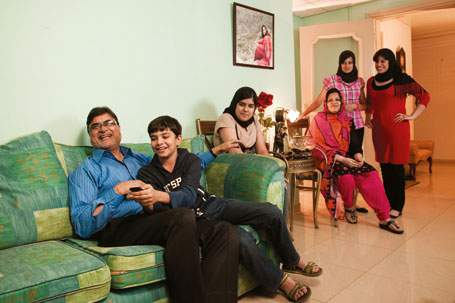
The challenges within an Indo-Pak marriage, according to Masooma, seem to be similar to any mixed-culture marriage. Except that among South Asian communities, tradition dictates the wife follows the husband to his home, or homeland. In the specific India-Pakistan context of the 21st century, the complications of visas and work permits make it harder for educated women to carve out an identity for themselves in their new environment. “It’s definitely much easier to be in a third country – either resident or citizen – when in an Indo-Pak marriage. Also, in today’s world, the younger generations of Indians and Pakistanis are meeting and interacting abroad, first as students and then as professionals. Marriages between different faiths among this demographic is on the rise and logistics is no longer a deterrent to falling in love.”

Masooma has been visiting India since 2003 and as an artist she has travelled, exhibited and worked in both countries. “I go through the same motions as all Pakistani nationals applying for an Indian visa. It’s a process and is easy or difficult depending entirely on how you want to look at it,” she says. In early June, the Indian government announced it was relaxing the requirements for granting the extension of long-term visas to four categories of Pakistani nationals, including Pakistani women married to Indian nationals and staying in India. The announcement was welcomed by individuals in her situation.

Her current visa is a ‘visit visa’ valid for nine months that is split into three visits of 90 days each. She has to exit India after each ‘visit’, but says it suits her work commitments that require her to travel abroad. “And I can visit my family in Lahore,” she adds.

Pakistani nationals issued visas to India are typically allowed to visit a maximum of three cities and must report to a police station on arrival and before leaving for their next destination. Masooma is now exempted from the police reporting, as she is a regular traveller between India and Pakistan and is also now married to an Indian national. “I’m allowed to visit more than three cities each time, but it will be a while before I am given complete freedom to travel like any other foreigner,” she says.

She could apply for a residence permit, but would be compelled to stay in India until the paperwork is completed, but it’s diffiuclt to predict how long that would take. Nationality, however, remains a touchy issue, particularly among the educated and liberal women of either country, who see no reason in giving up the passport of the country they originally belong to.

“Unfortunately, political relations keep changing and this spills over into visas and affects people-to-people relationships,” says Zulfiqar Hyder, a staunch believer in encouraging contact between the two countries. The Hyder family hold Canadian passports, but they still have to apply for visas to visit India and Pakistan.

In the wake of the David Headley arrest – a US citizen of Pakistani origin – over his alleged terrorist connections and involvement in the 2008 Mumbai attack, Zulfiqar says having the Canadian passport makes little difference towards easing the process. “I’m trying to get a PIO (Person of Indian Origin) card for the children,” he says of the document issued by the Indian government that functions as a long-term multiple entry visa. As things stand, the foreign spouse of an Indian national is eligible for the PIO card, but the spouses from Pakistan are not, effectively ruling out Amra and her two elder daughters, as they were previously travelling on her passport. “I don’t understand the logic that my children cannot get the PIO card, because their mother is Pakistani,” says Zulfiqar.

The national security argument does not resonate with him as much as it does with Amra. “Frankly, if my family can be assured of safe travel, I don’t mind a little more waiting or dealing with a bit more bureaucracy,” she says. He shakes his head furiously, looks at me and asks: “Did the 26/11 terrorists enter India with passports? Did they? How did they enter India?”

They arrived by night. Across the Arabian Sea, first on a small boat, then a hijacked fishing trawler and finally entered Mumbai’s waters on a rubber dinghy.

Visa-related policies in both countries are updated depending on the warmth or frostiness of the political relationship. Shadab Raza, a 35-year old Indian also from Lucknow, married Pakistani national Sana Zehri, who grew up in the UAE. They have a six-year-old son who has an Indian passport. The families arranged their marriage, as Shadab’s maternal aunts live in Pakistan. “There’s never been this India-Pakistan mentality in our families, because we have relatives on both sides of the border,” says Shadab.

Sana’s ancestry can be traced back to Lucknow, as her grandparents migrated to Pakistan at the time of the partition. On her first visit to the city after her marriage, she visited the ancestral home of her grandparents and filmed it to share with them. “I filmed the house, the neighbourhood and some of the people recorded messages for them. When they watched the video they were consumed by nostalgic sadness. I think partition hurt their generation the most. Our parents to a lesser extent, but they still feel the impact of it as they grew up hearing about it from their parents and visiting immediate relatives in the other country. For my generation, the degree of the trauma is even more reduced, because we haven’t experienced much of the consequences of it directly,” she says.

Shadab and Sana’s son, Ali, however, is quite clear about where he is from. “India,” he says firmly.

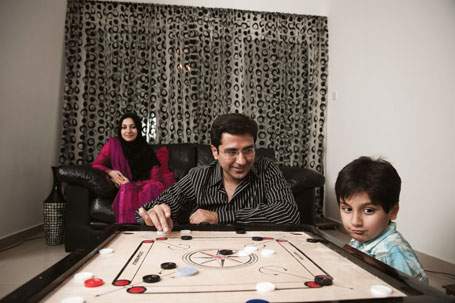
Sana laughs and recalls an incident of him wanting a carrom board specifically ‘made in India’. “My father-in-law had to get the lettering customised because the shop, where they bought it didn’t sell carrom boards with a ‘made in India’ label,” she says. In the meantime, Ali brings out his carrom board and empties out the coins from their container. He then calls out to Shadab to come and play with him.

“There’s never been this India-Pakistan mentality in our families, because we have relatives on both sides of the border,” says Shadab sitting down at the board, across from Ali, who flicks the large striker coin towards the arrangement of smaller black and white coins stacked by colour in the centre of the board. The two towers collapse, some of the coins disperse in four directions, but none of them is pocketed.

“What a mess,” exclaims Ali.
The Pakistan America Peace Through Music Project

A Musical Journey to Peace, Freedom and Understanding
(A Collaboration of The Sonic Peace Makers and SHINE HUMANITY)

The following information in this article is taken from the Peace Through Music webpage on Global Giving at:  http://www.globalgiving.org/projects/peace-through-music/  

Peace Through Music (#5719)

Mention Pakistan today and what comes to the minds of most Americans is terrorism, poverty, and hopelessness. That’s all they see in the news. But Pakistan also has one of the world’s most diverse and rich cultures, equaled only by its spectacular natural beauty as home to part of Kashmir, the Khyber Pass and high mountain peaks like K2. Once upon a time in the not so distant past, Texan gun enthusiasts brought their prized antique revolvers to Peshawar’s gun smiths to make copies, actor Robert DeNiro posed for pictures with restaurant owners while vacationing in Chitral, and Mick Jagger tested his dance skills with Lahore’s most well-known Mujra dancers. And many of Pakistan’s greatest musicians and singers like Nusrat Fateh Ali Khan regularly collaborated with their counterparts in Europe and America such as Peter Gabriel and Pearl Jam’s Eddie Vedder.

Two decades ago, we failed to uphold our principles and fulfill a moral obligation to help rebuild Afghanistan and assist Pakistan with the painful aftermath of the Soviet-Afghan war, which included millions of Afghan refugees who still reside in Pakistan. In stark contrast, we helped rebuild our enemies Germany and Japan after WWII, but inexplicably abandoned our friends after the war in Afghanistan, a key factor in allowing extremists to begin their destructive swarm across Afghanistan and Pakistan’s western frontier and become a grave threat to the security and stability of the entire world. But today, while the wounds are deep and the challenges are great, the forces of light and sonic harmony are again on the ascendance. Pakistan today is home not just to 11 music video channels and has one of the most innovative and vibrant music scenes anywhere in the world. A country that has produced some of the greatest sitar and tabla players is today home of some of the finest singers, guitar shredders and drummers. Music pioneers like Junoon, the godfathers of “Sufi Rock,” are joined by Qawwali rockers like Mekaal Hasan and Aaroh, indie projects like Peshawar’s Sajid and Zeeshan, and Heavy Metal innovators like Akash and Karavan. In recent years Atif Aslam has become the most successful Pop singer in all of South Asia with a growing following world-wide.

The Pakistan America Peace Through Music Project was inspired by the work of Greg Mortenson (author of the bestseller “Three Cups of Tea” and “Stones Into Schools”) and is based, among other things, on world music pioneer Manu Dibango’s declaration that musicians are “all from the same tribe” regardless of their race, nationality or religion and John Coltrane’s belief in the power of music to spread peace and harmony. Building on the millennia-long tradition of musical and cultural exchange in Pakistan and South and Central Asia more broadly, we will bring a group of leading musicians from the U.S. to Pakistan led by guitarist/producer Lanny Cordola (House of Lords, Giuffria, The Beach Boys), drummer/producer Matt Sorum (Guns ‘n’ Roses, Velvet Revolver), singer/guitarist Todd Shea and many others for a month long musical caravan throughout the country, creating and performing with some of Pakistan’s most well known, talented and innovative artists such as Atif Aslam, Shehzad Roy, Strings, Arieb Azhar, Abda Parveen, Ustad Fateh Ali Khan, Rustam Fateh Ali Khan, Beo Rana Zafar and celebrated record producer Rohail Hyatt (Vital Signs, Coke Studio). The inspiring poetry of Allama Iqbal and other revered poets will be prominently featured as an artistic and cultural base for the musical collaboration. Later on in the year, the Pakistani musicians will come to the U.S. for performances and events joined by their American comrades (including members of Guns ‘n’ Roses, Velvet Revolver, Red Hot Chili Peppers, etc.), which will also include time for more song writing and recording. Both the Pakistani and American “legs” of the gathering will be filmed for a documentary. The music and film will then be completed and released for sale on CDs & DVDs.

Goals
The project’s goals will be to bring Americans and Pakistanis closer together by erasing misconceptions and raising awareness of the diversity and beauty of Pakistan and its people, ultimately revealing the commonalities between Pakistani/Muslim and American cultures, to show Americans the Pakistan they never see in the mainstream media and to support Pakistan’s courageous artistic community, as well as raise funds and awareness to help establish and equip music schools and fund innovative health and education projects across Pakistan and Afghanistan. Once the initial project has been released, the music will continue with a series of collaborations with musicians and artists from all over the world to bring people together and help people in need.

Help bring people from all over the world closer together through a musical journey designed to erase misconceptions and build bridges of Peace and understanding between Human Beings.
Go to http://www.globalgiving.org/projects/peace-through-music and donate to the project.

More Information About this Project
Project Needs and Beneficiaries
SHINE Humanity and The Sonic Peacemakers need your support to help raise the funding needed to produce, record, film and document musical collaborations between singers and musicians from all over the world to promote peace and support humanitarian aid projects.

Activities
Musical fusion and celebration of diverse cultures will erase misconceptions and raise funding which will lead to a lasting positive effect on vulnerable children in developing nations, and help create a better, safer world for all Humanity

Funding Information
Total Funding Received to Date: $9,620
Remaining Goal to be Funded: $490,380
Total Funding Goal: $500,000

Why this Project is Important
Potential Long Term Impact

Project Message
“Music has incredible power to inspire and energize Human Beings to bridge divides and create a better world”
– Todd Shea, Chief Operating Officer

Who is Running This Project
Contact
Todd Shea
Executive Director
8020 N. Nob Hill Road
#201
Tamarac, FL 33321
Pakistan
Email: toddshea@cdrspakistan.org

Project Sponsor
GlobalGiving
Organization
Comprehensive Disaster Response Services
Chikar Rural Health Center
Chikar, Dist. Muzaffarabad 131000
Pakistan
011-92-300-502-9705
http://www.ShineHumanity.org

Additional organizations worthy of your donations
http://www.penniesforpeace.org/
http://www.ikat.org/

2 Pakistani Christians Killed At Courthouse

By Chris Brummitt for The Associated Press

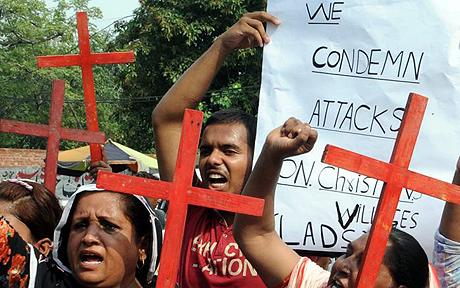
Gunmen killed two Pakistani Christian brothers accused of blasphemy against Islam as they left court on Monday, a government minister and police said.

The men were chained together when the attack took place in the eastern city of Faislabad as they were being taken back into custody after their court appearance.

They were arrested a month ago after leaflets allegedly bearing their names and featuring derogatory remarks against the Prophet Muhammad were found in the town, said Shahbaz Bhatti, the minister for minority affairs. He said mosques in Faislabad had called for the men to be attacked.

Bhatti said he suspected the men were falsely accused of blasphemy by people with a grudge against them. Their families had maintained their innocence, he said.

The brothers were killed by two gunmen as they left court, said police officer Rana Ahmed Hasan. A police officer accompanying the men was wounded, he said, adding the killers escaped.

Pakistan’s blasphemy laws have been often criticized by religious minorities and human rights activists.

In its latest report on religious freedom in Pakistan, the U.S. State Department said the laws are often abused to settle local disputes and discriminate against minorities.

Muslims make up an estimated 97 percent of Pakistan’s 180 million people, most of them Sunni.

Bhatti said he believed the brothers were innocent.

“I personally don’t think that anyone who wrote derogatory things against Muhammad would put their names on the bottom,” he said. “This was just to settle a personal issue.”

Bhatti has long campaigned against the blasphemy laws, which were introduced President Gen. Zia ul-Haq in the 1980s to win the support of hard-line religious groups.

Repealing them now would likely meet opposition from the same groups, something that could cause unrest.

Krishna Arrives in Pakistan, Calls Visit ‘a New Beginning’

By Omer Farooq Khan for The Times of India

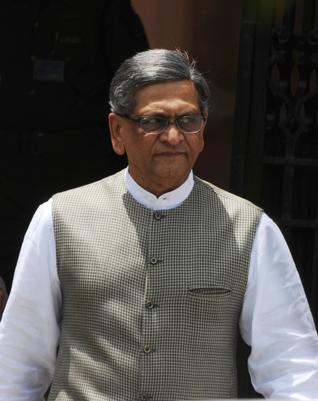
Indian external affairs minister S M Krishna, who arrived in Islamabad on Wednesday, said that he is on a mission to restore trust and increase confidence between the two countries.

“We hope to discuss all issues of mutual interest and concern that can contribute to restoring trust and building confidence in our bilateral relationship,” Krishna told journalists as he arrived here.

During his three-day visit, Krishna will hold talks with his Pakistani counterpart Shah Mahmood Qureshi on Thursday and will also meet President Asif Ali Zardari and PM Yusuf Raza Gillani. S M Krishna looks forward seeking progress on the issue of terrorism being raised by the Indian home minister P Chidambaram with his Pakistani counterpart Rehman Malik last month in Islamabad.

“I also look forward to receiving feedback on the issues raised by our home minister (P Chidambaram) during his visit to Pakistan last month on our core concern of terrorism, particularly in the light of the discussions our home minister had in Pakistan in the context of interrogation of David Headley regarding the Mumbai terrorist attack,” he said.

Krishna described his visit as important as it marks a new beginning of journey to build a prosperous, friendly and cooperative relationship between the two countries.

India is committed to resolving all issues with Pakistan through peaceful dialogue based on mutual trust and confidence, Krishna said.

“I brought a message of peace and friendship from the people of India and we hope to undertake this voyage of peace, however long and arduous, jointly with the government and people of Pakistan,” he said.
Pakistan’s foreign minister Shah Mehmood Qureshi has said that he will raise with Krishna the issue of alleged human rights in Jammu and Kashmir.

“We are approaching the meeting with a positive mindset,” Qureshi said.

The Krishna-Qureshi talks on Thursday will be the third major contact between the two countries in within a month.

Home minister Chidambaram conveyed India’s concerns and expectations on terrorism to Pakistani leadership last month when he visited Islamabad.

The Indian and Pakistani prime ministers met in April on the sidelines of a regional summit in Bhutan, which set in motion the process to revive suspended contacts at different levels of government.

Breaking Pakistan’s Sufi Heart

By Mira Sethi for The Wall Street Journal

The two suicide bombers chose midnight on July 1, when the throng of worshipers in the ancient Data Darbar shrine in Lahore, Pakistan, was at its peak, to blow themselves up. Forty-five people were killed and 175 were injured. The attack on the 1,000-year-old center of Sufi Islam—the religion’s mystical, unorthodox face—was the first Taliban attack of its kind in Punjab province, the heartland of the country’s moderate, majority Barelvi sect.

The day after the attack on the shrine, Lahore’s students, politicians, traders and housewives took to the streets in loud, visceral protest. Major commercial centers were shut down, and in a rare show of sympathy, students from religious seminaries blocked roads and burned a few tires.

Pakistanis are now asking themselves: Is this America’s war or is it ours too? How can we fight it? Why did our military nurture these warriors for three decades and why has it turned against them now? How and when are we going to be at peace with our neighbors, especially India with which the military is obsessed and for whom these non-state actors were originally spawned?

To understand why this attack is so shocking, one must first look at Pakistan’s religious history. The majority of Pakistanis are Barelvis, who respect the inclusive traditions of the Sufis who brought Islam to the Indian Subcontinent. This is completely unlike the harsh version of Islam imported from Wahabi Saudi Arabia after the petro-dollar boom in the Middle East in the 1970s.

So the bombing of the Sufi shrine has symbolic resonance: Sufism has always thrived as a reaction to the politics of the state. In modern Turkey Sufism grew as a response to Ataturk’s secularism; in the Soviet Union, it grew as resistance to the state’s official policy of promoting atheism; in Algeria, it was a reaction to French colonialism. In Pakistan, Sufism has thrived as an alternative to the state-sponsored Wahabi Islam of the Deobandi jihadi sect.

If there’s one thing that Pakistanis are proud of, it’s their Sufi heritage. The shrine attacked in Lahore housed the tomb of one of the most famous Sufis to have ever lived, Ali Hajwiri, affectionately known by Lahoris as Data—one who facilitates the fulfillment of aspirations. Hajwiri wrote a seminal text in Sufi thought, the Kashf-al-Mahjub or “Unveiling of the Hidden.” An early example of Sufi doctrine, the book’s importance has grown over the centuries.

Although not a native of Lahore, Hajwiri decided to settle in the city for the last 34 years of his life at the end of the 11th century. Even then, Lahore’s fame as a center of culture was widespread. It was known for its old fortified city, a nourishing river, and a collection of free-spirited artists, artisans, and musicians. During his 34 years of residence, Hajwiri became a revered dervish, offering an inclusive mystical path to Lahore’s non-Muslim population, many of whom were subject to a punishing caste hierarchy.

Hajwiri’s shrine remained protected through centuries of rising and falling empires in the Punjab. Even the Sikh marauder Maharaja Ranjit Singh left the shrine untouched as he plundered many of Lahore’s riches.

In attacking Hajwiri’s shrine, the Taliban have grossly miscalculated. They had hoped to provoke anger at the Pakistani government for fighting America’s war. Instead they have managed to convince more and more Pakistanis that this is now their war, not just America’s.

Pakistan Are Over Here But Thinking About Home

By Stephen Brenkley for The Independent

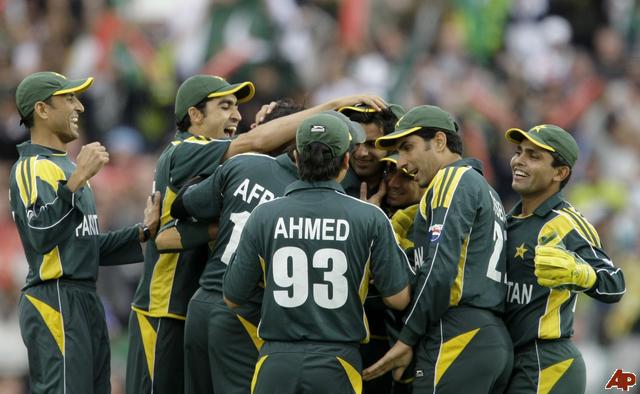
Pakistan are here to win. Anybody who thought that they were in England this summer to make up the numbers, licking their wounds, grateful to be given a temporary home, would be misguided. 

They may indeed be the refugees of world cricket, unable to play in their own country because teams refuse to go there, but they will be nobody’s fools. It is the most bizarre of tours they have embarked on. Starting on Tuesday at Lord’s, they play the first of two Tests against Australia, which will be considered as home matches.

 They then play four Tests against England in which they will be the touring side. Such have been the ramifications of the terrorist activities at home. Pakistan have been forced to play where they can. “It’s a big tour. It’s not easy to get hold of 17 boys, a lot on their first tour here, and I don’t think we have ever played six Test matches in two months,” said Yawar Saeed, their wise, veteran manager.

 “We have a young side here and it was important to keep them together. There is plenty of talent in this team. The one sitting there, Umar Akmal, is just a bundle of talent, God is so kind to him. I have told him, if he doesn’t use his talent I will beat him one of these days. I see him as a future Vivian Richards. Look at his confidence at his age and look at the way he’s playing. He’s a very good kid and I’m trying to help him and the left-arm fast bowler, [Mohammad] Aamer, who’s only 18 and can also do great things.”

There is, of course, no physical intent by Yawar towards the precocious Umar, he merely makes the point to reinforce his desire not to waste his gifts. There has been precious little sign of that so far.

Yawar is on his 26th or 27th tour – he really has lost count – as manager. At 75, he thought he had unpacked for the last time but with the shifting of officials yet again in the Pakistan Cricket Board he has returned as a safe pair of hands. He is an Anglophile who was educated at Millfield, played for Somerset for three seasons in the mid-Fifties and whose father, Mohammad Saeed, was the first captain of Pakistan post-partition and pre-Tests.

At the core of the thinking of those who run cricket in Pakistan is the day when they can play at home again. Somehow, cricket is being sustained despite the lack of international competition but Yawar and the PCB hierarchy know that cannot last while understanding the virtual boycott.

The memory is still raw of the Sri Lanka team being attacked on the way to a Test in Lahore last year. Yawar and the Pakistan team were in a coach 40 yards behind. “The whole thing is dependent on the conditions and security within the country,” he said. “You have to ask: Yawar, if you were an Australian or an Englishman, would you go there? It’s very difficult, I don’t blame any of the people who are hesitant to come there. But all I can say is it’s not as bad as it looks from here. I’m not saying it’s perfect.”

Pakistan have taken a big risk by appointing as captain Shahid Afridi, who has been in regular trouble for ill-discipline. He has not so far shown diplomatic tendencies when they may be needed. In England four years ago, Pakistan’s tour was almost derailed when the Fourth Test was abandoned amid allegations of ball-tampering.

On the tour of Australia last winter, disharmony led to a whitewash and a series of disciplinary actions later on. Shahid himself was penalised for being spotted biting a ball. “We had problems about the captain,” said Yawar. “I can see in Shahid the one who can get them all together, mould them into one team. People who matter have had a chat with Shahid. I am very confident he’s going to be OK. Even this ball-biting thing, it’s just that he’s so keen, he’s keen to win like a lot of people, so he does lose control at times. I don’t think he will as captain.”

So to Australia on Tuesday. “Playing Australia you have got to be mentally tough. That’s where I’m working on them. I have seen Australia play, I have seen these boys play, I know their psyche. I can’t say that overnight we will become X, Y, Z, but you will see a graph going up by the Test match.”

But nobody in Pakistan will rest until the next touring team arrives to play this attractive, gifted young team. “It has to be reintroduced. I can’t put a date on it but I think that something should happen within the next three or four years. I would love to see cricket being played in Pakistan again. Before I say goodbye to this world, I would love to see that.”


Pakistan Suicide Bombing Death Toll Jumps to 102

By Riaz Khan and Nahal Toosi for The Associated Press

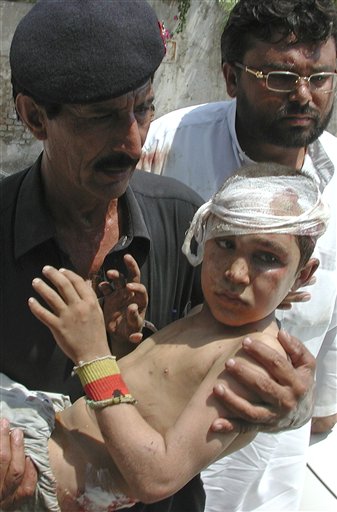
The death toll from twin suicide bombings in Pakistan jumped to 102 with 115 people wounded on Saturday, making it the deadliest attack this year in the country.

Authorities continued to remove debris from the site of the attack in the village of Yakaghund in a northwest tribal region, after two bombers struck seconds apart Friday near a government office.

One of the bombs appeared fairly small but the other was huge, officials said. At least one bomber was on a motorcycle.

The attackers detonated their explosives near the office of Rasool Khan, a deputy Mohmand administrator who escaped unharmed. Tribal elders, including those involved in setting up militias to fight the Taliban, were in the building, but none was hurt, according to Mohmand chief administrator Amjad Ali Khan.

Video footage showed dozens of men searching through piles of yellow brick and mud rubble for survivors. Women and children were among the victims.

Mohmand is one of several areas in Pakistan’s lawless tribal belt where Taliban and al-Qaida members are believed to be hiding.

Abdul Wadood, 19, was sitting in a vehicle at the time of the bombings.

“I only heard the deafening blast and lost consciousness,” said Wadood, who was being treated for head and arm wounds in Peshawar, the main city in the northwest, about 15 miles (25 kilometers) away. “I found myself on a hospital bed after opening my eyes. I think those who planned or carried out this attack are not humans.”

Some 70 to 80 shops were damaged or destroyed, while damage to a prison building allowed 28 prisoners — ordinary criminals, not militants — to flee, said Rasool Khan, who gave the casualty figures.

Friday’s was the deadliest attack this year in Pakistan. On New Year’s Day, a suicide car bomber struck a sports event near a meeting of tribesmen who supervise an anti-Taliban militia near the South Waziristan tribal area, killing 96 people.

Near the attack site, officials had been distributing wheelchairs Friday to disabled people and equipment to poor farmers, Amjad Ali Khan said. It was unclear how many participants in that event were among the victims.

Pakistani Taliban spokesmen could not be immediately reached after the attack. There were scattered reports the militant group’s branch in Mohmand had claimed responsibility and said it was targeting the elders.

The Pakistani army has carried out operations in Mohmand, but it has been unable to extirpate the militants. Its efforts to rely on citizen militias to take on the militants have had limited success there.

Nevertheless, there have been fewer attacks in Pakistan this year than in previous years — most notably in the northwest. In the last three months of 2009, more than 500 people were killed in a surge of attacks in the country.

Pakistani Student Britain Couldn’t Deport was ‘Involved in Planning Attack in US’

By Duncan Gardham for The Daily Telegraph

A suspected terrorist who Britain is unable to deport has been arrested on suspicion of plotting to bomb New York’s underground system. A US warrant was issued for Abid Naseer, who is accused of helping an al-Qaeda cell planning suicide bomb attacks in the city. Naseer was arrested on Wednesday in Middlesbrough, sources said, and the US authorities have requested he is extradited for trial.

He was among a group of 12 men arrested in Manchester last year accused of plotting to blow up shopping centres, but was never charged. Naseer, 24, was subsequently released and is thought to have been put under a control order and electronically tagged. In May the Special Immigration and Appeals Commission ruled that he was connected to al-Qaeda but could not be deported back to Pakistan on human rights grounds.

However, US authorities believe he stockpiled July 7-style bomb making materials for the planned attack in Manchester. The same type of material was to be used in the thwarted bomb attacks on the New York Metro.

He is also believed to have been in touch with the same senior al-Qaeda commanders.

The US Department of Justice (USDoJ) said the American plot was “directly related to a scheme by al-Qaeda plotters in Pakistan to use Western operatives to attack a target in the United Kingdom.”

Naseer is accused of providing material support to al-Qaeda and conspiracy to use a firearm in New York and elsewhere. According to a US statement, “large quantities of flour and oil were found” when Naseer’s address in Cheetham Hill, Manchester was raided by police.

The operation, codenamed Pathway, had to be brought forward 24 hours after Assistant Commissioner Bob Quick was photographed entering Downing Street to brief the Prime Minister with details of the raids visible.

Two members of the US cell, Najibullah Zazi and Zarein Ahmedzay have pleaded guilty to planning to conduct suicide bombings in New York using improvised explosive devices made from supplies such as hydrogen peroxide, acetone, flour and oil – ingredients similar to those used in the July 7 attacks five years ago.

In other addresses, Greater Manchester Police allegedly found surveillance photographs of public areas in Manchester – thought to be the Arndale shopping centre – and maps of Manchester’s city centre posted on the wall with one of the locations from the surveillance photographs highlighted.

Another student called Tariq ur-Rehman who returned to Pakistan after he was released from British custody, was allegedly recruited at the same time. The US Department of Justice said ur-Rehman was not in custody.

A US indictment says Naseer and ur-Rehman were members of a terrorist cell coordinated by Rashid Rauf – a British al-Qaeda commander who was also involved in the July 7 attacks of 2005.

Rauf is thought to have been killed in Pakistan by a missile from a US drone in November 2008 but according to the indictment the plot was also allegedly directed by Adnan el-Shukrijumah, known as “Hamad”, a 34-year-old Saudi citizen with a $5m price on his head from the FBI, and Saleh al-Somali, another al-Qaeda commander.

All three were said by the US to be leaders of al-Qaeda’s “external operations programme”.

The students were allegedly recruited in Peshawar, Pakistan in November 2008 along with the leader of the US plot, Najibullah Zazi.

After returning to Britain, Naseer allegedly sent emails to the same account that a man calling himself Sohaib, but also known as Ahmad and Zahid, was using to communicate with the US cell on behalf of al-Somali.

The Daily Telegraph previously reported that MI5 tipped off the FBI about the US plot and published the emails that used the names of girls as code words for bomb-making ingredients and a wedding to refer to the planned attack between April 15 and 20 last year.

Zazi had agreed a similar code, the Americans say, and emailed Sohaib that the “marriage is ready” just before he left Colorado for New York City in early September last year.

Vengeful New Militant Group Emerges in Pakistan

By Kathy Gannon for The Associated Press

Pakistani authorities now believe a dangerous new militant group, out to avenge a deadly army assault on a mosque in Islamabad three years ago, has carried out several major bombings in the capital previously blamed on the Taliban.

The emergence of the Ghazi Force was part of the outrage among many deeply religious Pakistani Muslims over the July 2007 attack by security forces against the Lal Masjid, or Red Mosque, a stronghold of Islamic militants.

The fierce attack, in which scores of young, heavily armed religious students died, inspired a new generation of militants. These Pakistanis have turned against a government they felt has betrayed them and, to their dismay, backed the U.S. role in neighboring Afghanistan.

The brief but bloody history of the Ghazi Force illustrates the unintended results of Pakistan’s policy of promoting Islamic extremists to fight India in the disputed area of Kashmir. That policy — which Pakistan denies it pursues — now threatens regional stability as the U.S. and Pakistan’s other Western partners pour billions of dollars into the country to stop the rise of Islamic militancy.

The new group is made up of relatives of students who died in the Red Mosque assault. It is named after the students’ leader, Maulana Abdul Rashid Ghazi, who was also killed. The mosque’s religious school, or madrassa, had been a sanctuary for militants opposed to Pakistan’s support of the U.S.-run war in Afghanistan.

Private television stations broadcast vivid scenes of the assault — commandos in black fatigues rapelling down ropes, the crackle of gunfire, bodies of black-shrouded girls carried out through the smoldering gates. Those images stunned the nation, especially families of the students and Pakistanis with deep religious feelings.

“Before the Lal Masjid, militants hadn’t yet declared war on the state of Pakistan. That changed with Lal Masjid,” said Zahid Hussain, author and terrorism expert who has written extensively about Pakistan.

Islamabad’s inspector general of police, Kalim Imam, told The Associated Press that the Ghazi Force was behind most of the deadliest attacks in the capital during the last three years. The attacks targeted the military, the Inter-Services Intelligence agency or ISI — which had ties to a number of militants — and a five-star hotel frequented by foreigners and the Pakistani elite.

The Ghazi Force helped recruit a security official who blew himself up inside the office of the World Food Program last October, killing five people, according to Imam. The force also sent a suicide bomber in September 2007 into the mess hall of the commando unit that attacked the Red Mosque, killing 22 people, he said.

Ghazi Force members may also have been involved in the audacious June 9 attack north of the capital that killed seven people and destroyed 60 vehicles ferrying supplies to NATO and U.S. soldiers next door in Afghanistan, Imam said.

Many of those attacks had been attributed to the Pakistani Taliban, which operates in the remote tribal areas of the northwest along the border with Afghanistan. There is evidence of close ties between the Ghazi Force and the Pakistani Taliban, which the government has vowed to crush.

The Ghazi Force is believed to be headquartered in the Orakzai region of the border area, where the leader of the Pakistan Taliban, Hakimullah Mehsud, held sway for years. The leader of the Ghazi Force is believed to be Maulana Niaz Raheem, a former student at the Red Mosque.

Anger over the bloodshed at the mosque was all the greater because many of the militants and their supporters felt betrayed by a government that had once supported them. Both Ghazi and his brother Maulana Abdul Aziz Ghazi, who was freed on bail this year after two years in jail, were widely believed to have been on the payrolls of both the government and the ISI intelligence service.

Their father, Maulana Mohammed Abdullah, enjoyed a close relationship with the late President Mohammad Zia ul-Haq, and the mosque was a center for recruiting volunteers to fight against the Soviets in Afghanistan in the 1980s.

As opposition grew to Pakistan’s support of the U.S. role in Afghanistan, the mosque became a center of religious agitation against the government, with armed students taking over the complex and police laying siege.

A former senior official in the Interior Ministry told The Associated Press that the police wanted to storm the mosque and end the siege at its outset, send the students home and shut down the religious school and a neighboring library until tempers cooled.

President Gen. Pervez Musharraf refused, the official said, even though police knew that members of al-Qaida’s affiliate organization Jaish-e-Mohammed, which is banned in Pakistan, were bringing in weapons for the students.

Musharraf relented and ordered the assault after militants kidnapped several Chinese nationals running a massage parlor in Islamabad, accusing them of prostitution. The death toll remains in dispute. Red Mosque officials say hundreds died. The government says fewer than 100 were killed.

In a rare interview, Abdul Aziz Ghazi told AP he warned the government that an assault on the mosque would unleash forces that no one could control.

“I have been in jail. I did not form this force and I don’t condone the violence but they are angry at the injustices done,” he said this week.

Although the assault turned many Islamic hard-liners against the government, Pakistan remains unwilling to break all ties to the militants, instead following a high-risk strategy of coddling “good militants” while fighting those deemed “bad militants,” analysts say.

“The military and the ISI have given importance to these militants as assets. But those who have openly declared war, and there is no chance of them returning back to the state, the army is going after them,” said Manzar Jameel, a terrorism expert and researcher on the growth of extremism in Pakistan. “Yet they still believe that some are still assets and that they can keep control of the assets. It’s a failure of strategy.”

Army spokesman Maj. Gen. Athar Abbas denies any assistance to militant groups, saying past ties have long since been severed. He says the Ghazi Force is among the groups the 120,000 Pakistani soldiers waging war in the tribal regions are fighting.

Yet Anatol Lieven, a terrorism expert with the Department of War Studies at London’s King College, said it’s clear that the ISI continues to protect some militant groups, even if it has broken with others.

In a June report, the Rand Corporation think tank also alleged that Pakistan’s military and intelligence still support some militant groups “as a tool of its foreign and domestic policy.”

“A key objective of U.S. policy must be to alter Pakistan’s strategic calculus and end its support to militant groups,” the report said.

Christine Fair, a co-author of that report and an assistant professor at Georgetown University’s Center for Peace and Security Studies, said the battle against extremists in Pakistan is mired in layers of subterfuge by Pakistani intelligence and a “mystifying” acceptance by the CIA of Pakistan’s “good-militant, bad-militant” policy.

She said U.S. intelligence knows Pakistan protects one group — Lashkar-e-Taiba, which India blames for the 2008 Mumbai assault and Afghanistan accuses of masterminding deadly attacks against the Indian Embassy in Kabul.

“Lashkar-e-Taiba remains intact. I have had conversations with … officials in Washington. It is not their priority. Lashkar-e-Taiba is not an issue,” she said in an interview. “Yet Lashkar-e-Taiba has been attacking us in Afghanistan since 2004.”

Imran Khan Moves Supreme Court Against Drone Attacks

As reported on Despardes.com

Cricketing legend-turned politician Imran Khan has filed a lawsuit in Pakistan’s apex court asking it to declare drone attacks as war crimes.

According to published reports, the Pakistan Tehrik-i-Insaf (PTI) chief on Wednesday filed a petition in the Supreme Court asking it to declare drone attacks as attacks on the sovereignty and defence of Pakistan and a war crime.

The petition, filed by Imran Khan’s lawyer Shaukat Aziz Siddiqui, argues that the provisions of logistics and facilities to any foreign country or alliance for mass destruction through drone strikes inside the territory of Pakistan resulting into killings of Pakistani citizen is illegal, unwarranted, unconstitutional, in violation the United Nations Charter, universal declaration of human rights, international law as well as the international humanitarian law, a war crime and an attack on the sovereignty, solidarity, integrity and defence of Pakistan.

Imran Khan’s petition was filed today after a Lahore court Lahore cort ruled against drone strikes and called on the government to take appropriate measures to halt strikes by unmanned drones in Pakistan if they aren’t approved by Islamabad.

Federal authorities should take measures to stop drone attacks in Pakistan if they are carried out without formal approval, the court said on Wednesday. The court was responding to a petition that said drone strikes were a violation of national sovereignty.

Drone attacks have increased under the authority of U.S. President Barack Obama, notably inside Pakistan. The CIA, a civilian entity, said it is acting according to the code of law in carrying out the strikes.

Pakistan’s government publicly objects to the attacks, saying they violate its sovereignty. But it is widely thought there is a tacit agreement between the U.S. intelligence agency, the CIA, and Islamabad to allow such strikes, reported Voice of America on its website today.(http://www1.voanews.com/english/news/asia/Suspected-US-Missile-Strike-Kills-10-in-Pakistan-97396999.html)

Two missiles believed fired Tuesday by an unmanned drone struck a village in the tribal regions of Pakistan, killing militants including Hamza al-Jufi, an Egyptian allied with al-Qaida.