Pakistanis for Peace
An American Pakistani's Hope For Peace in South Asia & Around the World~
Posts Tagged ‘ Pakistanis ’
Khan Enjoys Early Finish
From Sky Sports
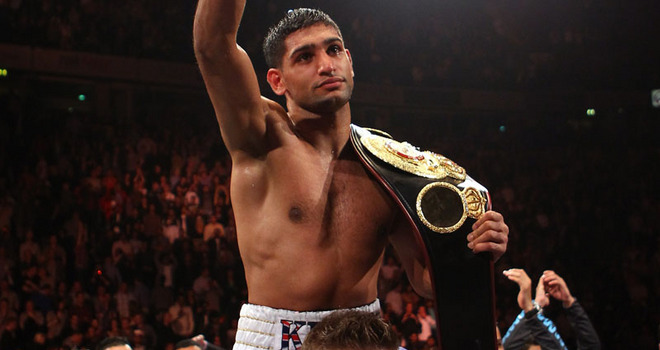
Amir Khan retained his WBA light-welterweight title after a controversial technical points decision over Paul McCloskey in Manchester.
The bout was halted during the sixth round after the challenger was deemed unable to continue due to a cut caused by a clash of heads. Khan was a unanimous victor on the scorecards, with all three judges awarding him a comfortable 60-54 win.
McCloskey’s awkward southpaw style meant the champion did not have it all his own way but there was no doubt who was on top at the time of the fight’s premature end.
But after the contest there was protestations from the McCloskey camp that the cut was not bad enough to warrant the stoppage.
The opening stages of the contest were tentative, with Khan looking to come forward but finding his fast hands matched by the reflexes of the previously unbeaten McCloskey.
Khan looked to be more settled in the second as he landed in bunches, but McCloskey stood firm and landed a left of his own at the end of the round. The challenger even had Khan on the back foot at times and caught him with another winging left hand in the third.
Khan began to fire again in the fourth, landing a sharp right and crisp left before attacking with hooks in the early stages of the fifth. McCloskey’s defences seemed to be weakening in the sixth as Khan landed an impressive flurry but the fight was soon over.
After an accidental clash of heads, referee Luis Pabon called for the doctor, who advised the official to bring an end to the bout.
On the undercard, Leicester binman Rendell Munroe made a winning return to action after his unsuccessful world title challenge by claiming a unanimous points win over Andrei Isaeu.
Craig Watson lost his British welterweight title to Lee Purdy the later claimed a fifth-round stoppage win in their contest.
US Envoy Upbeat Over Relations With Pakistan
By Phil Ittner for The Voice of America

Relations between the United States and Pakistan in the last few months have been severely strained by a series of events and ongoing disagreements. The U.S. ambassador to Pakistan spoke to Voice of America about how he feels things are improving.
U.S. Ambassador to Pakistan Cameron Munter said ties between Pakistan and the United States have been far from the best recently, and while there are still differences, there also is room for improvement.
“The issues are still on the plate. We still have to have discussions, but there was a period in February and some parts of March where we just didn’t have good ties. We’ve established a process,” said Munter.
Pakistan is seen by Washington and London as a vital ally in the “war on terror,” and the Pakistani government and army say they remain committed partners 10 years after the Afghan conflict began.
But, relations have been increasingly strained between the two countries.
Bitter disputes over covert CIA activities and drone attacks inside Pakistan, the security situation in neighboring Afghanistan and rising Islamist-led opposition to the presence of foreign forces in the region are fueling the discourse.
Relations also have been frayed since a CIA contractor fatally shot two Pakistani men in the city of Lahore earlier this year. The U.S. said Raymond Davis had diplomatic immunity and acted in self-defense. He was released after victims’ families accepted compensation.
Furthermore, a recent White House report criticized Pakistan’s counterterrorism campaign, accusing Islamabad of not doing enough to counter militants in North Waziristan. Pakistan rejected that report.
Munter said that while America may have some advice for their ally, at the end of the day, it is up to the Pakistanis to decide how to proceed.
“Ultimately the decision to bring peace, to bring the authority of the Pakistani leadership to bear in North Waziristan, that’s a decision for Pakistan. We’ve given our advice. Sometimes we may not have been diplomatic about it, but the fact is that’s going to be their decision and we do accept that.”
This diplomatic approach means having confidence that Pakistan will step up its efforts to rout out insurgents in safe havens in the tribal regions. Ultimately the U.S. hopes this will put pressure on certain groups there who plan their attacks on international forces in neighboring Afghanistan.
The “Indo-Pak Express” Overthrows No. 2 Seeds to Reach Semis in Monte Carlo
By Erin Frauenhofer for 10SBalls.com
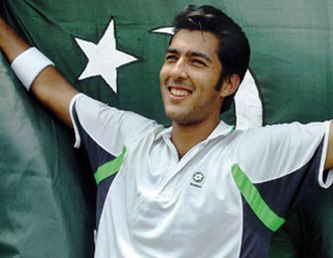
The India/Pakistan pairing of Rohan Bopanna and Aisam-ul-Haq Qureshi made waves at the Monte Carlo Masters with a quarterfinal upset over No. 2 seeds Daniel Nestor of Canada and Max Mirnyi of Belarus. With a 6-1, 7-5 victory on Friday, the sixth-seeded duo advanced to Saturday’s semifinals, where the pair will play Argentina’s Juan Ignacio Chela and Brazil’s Bruno Soares.
Bopanna and Qureshi took command in the first set, breaking Nestor’s serve and holding steady on their own serve to take a 4-1 lead. The “Indo-Pak Express,” as the pair has been dubbed, remained in control for the rest of the set, breaking Mirnyi to give Qureshi the opportunity to serve for the set. Bopanna and Qureshi won the game to wrap up the first set handily, in only 21 minutes.
Nestor and Mirnyi displayed a stronger performance in the second set, after suffering an early break to fall behind 1-2. They rallied back to break Bopanna and Qureshi in the next game, and both pairs held serve for the next four games, until Nestor and Mirnyi were broken once again.
At 5-4, Bopanna and Qureshi had their first chance to serve for the match, but Nestor and Mirnyi battled back to even the score with a break. Bopanna and Qureshi retaliated in the next game with another break to take a 6-5 lead.
Serving for the match for the second time, with victory nearly in sight, Bopanna and Qureshi dropped the first two points of the game but recovered to close out the match. Bopanna and Qureshi broke their opponents a total of five times during the match and lost their serve twice.
Friday’s win was the second victory of the tournament for Bopanna and Qureshi. After receiving a bye in the first round, Bopanna and Qureshi notched a 7-6 (4), 6-3 win over the American/Netherlands Antilles duo of Eric Butorac and Jean-Julien Rojer to reach the quarterfinals.
Chela and Soares have recorded three wins in the tournament thus far. The duo took a straight-set win in the quarterfinals, defeating Ukranian Sergiy Stakhovsky and Russian Mikhail Youzhny, 6-4, 6-3. In the previous round, the pair upset No. 8 seeds Robert Lindstedt of Sweden and Horia Tecau of Russia by a score of 6-2, 6-4. Earlier, Chela and Soares had prevailed in a three-set first-round match, outlasting Michal Mertinak of Slovakia and Dick Norman of Belgium, 6-2, 3-6, 10-7.
Monte Carlo is the first clay-court Masters tournament for the Indo-Pak Express, and the duo has high hopes for the French Open. Bopanna and Qureshi’s strong showings this year and efforts toward peace between their countries have earned them an enthusiastic and steadily growing following.
Bopanna and Qureshi have made recent headlines for their request to play an exhibition match on the India-Pakistan border in an attempt to foster reconciliation efforts between the two nations. As part of a “Stop War, Start Tennis” campaign, the duo plans to string a net across the Wagah border crossing and switch sides during the match.
War in Afghanistan is Destabilising Pakistan, Says President
By Simon Tisdall for The Guardian
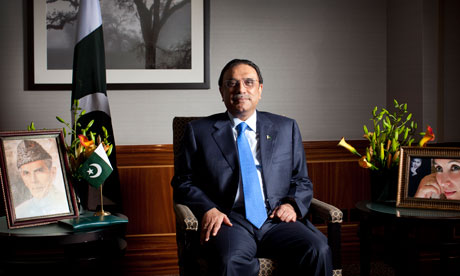
The war in Afghanistan is destabilising Pakistan and seriously undermining efforts to restore its democratic institutions and economic prosperity after a decade of military dictatorship, Pakistan’s president, Asif Ali Zardari, has told the Guardian.
Speaking during an exclusive interview in the imposing presidential residence in Islamabad, Zardari also pointed to widespread concern in Pakistan at the slow pace of efforts to end the Afghan conflict, and said some US politicians showed limited understanding of the impact of American policies.
“Just as the Mexican drug war on US borders makes a difference to Texas and American society, we are talking about a war on our border which is obviously having a huge effect. Only today a suicide bomber has attacked a police compound in Baluchistan. I think it [the Afghan war] has an effect on the entire region, and specially our country,” Zardari said.
Asked about harsh criticism of Pakistan’s co-operation in the “war on terror” published in a White House report last week, Zardari said Pakistan always listened to Washington’s views. But he suggested some members of Congress and the US media did not know what they were talking about when it came to Pakistan.
“The United States has been an ally of Pakistan for the last 60 years. We respect and appreciate their political system. So every time a new parliament comes in, new boys come in, new representatives come in, it takes them time to understand the international situation. Not Obama, but the Congress, interest groups and the media get affected by ‘deadline-itis’ [over ending the Afghan war],” Zardari said.
“I think it is maybe 12 years since America has become engaged in Afghanistan and obviously everybody’s patience is on edge, especially the American public, which is looking for answers. There are no short-term answers and it is very difficult to make the American taxpayer understand.”
With less than three months left before Barack Obama has promised to begin withdrawing US troops from Afghanistan, the White House recriminations reflected the growing pressures on all three governments to agree a workable, long-term strategy. The report complained bitterly that after years of US funding of the Pakistani military, “there remains no clear path towards defeating the insurgency” inside Pakistan.
It criticised as ineffectual Pakistani army operations in some areas of the western tribal belt bordering Afghanistan, which are believed to be used as safe havens by Afghan Taliban and al-Qaida elements.
A congressional panel also weighed in this week, urging the Obama administration to abandon Pakistan in favour of India. “Pakistan is about to go broke or collapse,” said Gary Ackerman, a New York Democrat.
Zardari suggested that if that assertion were true, the interventionist policies of the US and other foreign governments in south Asia would be a significant contributory factor. Pakistan had been in a state of “security alert” for several decades, he said.
“Our emphasis has been on security rather than our commerce and we need commerce for our survival.
“We have all the gas in the world waiting to go through to markets in India and the Red Sea but it cannot be brought in until Afghanistan is settled. So Afghanistan is a growth issue for us. I think most of the time, the quantification of the effect of the war is not calculated [by the US].
“Prices are going up, obviously we are a high fuel-importing country, and fuel prices are going up. Because of the war situation, the industry in one of our provinces has practically closed down … When one whole sector is not working, there is an effect on the other sectors.”
According to senior intelligence officials, the “war on terror” has cost the Pakistani economy approximately $68bn (£42bn) since 2001.
More than 33,300 Pakistani civilians and military personnel have been killed or seriously injured. Last year’s record-breaking floods added to the strain on the economy.
Zardari said the security situation was also undercutting efforts to strengthen democratic institutions bypassed or overturned during the military rule of his predecessor, General Pervez Musharraf. “Democracy is evolving. It’s a new democracy. It takes time to bring institutions back. Destroying institutions during a decade of dictatorial regime is easy … So there is a political impact as well as an economic impact.”
Pakistani officials say relations with the US reached a “low ebb” following the recent row over Raymond Davis, a CIA contractor who shot dead two Pakistanis; a CIA drone attack in Pakistan’s tribal areas last month that accidentally killed dozens of civilian elders meeting in a jirga (council), and Pakistan’s suspicions that it is being excluded from discussions about an Afghan peace deal.
Zardari, who is expected to visit Washington next month, said he would ask Obama to share drone technology with Pakistan so future attacks could be planned and directed under a “Pakistani flag”. Although this request had been turned down in the past, he said he was hopeful the Americans would be more receptive this time, given the huge anger and rising anti-American feeling that the drone attacks were causing.
Zardari and other senior government officials said all parties felt a sense of growing urgency about forging an inclusive peace settlement in Afghanistan, but the process must be “Afghan-led”. Pakistan was ready to play its part, consistent with its national interest, they said.
Salman Bashir, Pakistan’s foreign secretary, said: “Everybody is gradually coming round to our point of view that this requires greater diplomatic pressure. There is no military solution in Afghanistan.”
Why Pakistan’s Taliban Target the Muslim Majority
By Omar Waraich for Time
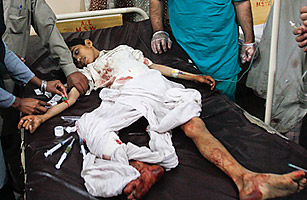
Although Pakistan’s headlines are dominated by the violent excesses of Taliban extremists, the majority of Pakistanis subscribe to the more mystical Sufi tradition of the country’s Barelvi school of Islam. And attacks on their places of worship are becoming depressingly familiar. Last Sunday, two bombers attacked the 13th Century Sakhi Sarwar shrine, near the southern Punjabi town of Dera Ghazi Khan, slaughtering 50 people and injuring twice as many. Mercifully, two other bombers failed to detonate their devices, preventing even higher casualties. Still, it was the deadliest assault yet on a Sufi shrine in Pakistan — and the sixteenth in the last two years.
The Pakistani Taliban swiftly claimed responsibility for the attack, as they have done for each previous one. Pakistan’s Taliban claims the mantle of the hardline Deobandi tradition, with many beliefs in common with the austere Wahabism of Saudi Arabia. They regard the Barelvi, who comprise more than three quarters of Pakistan’s Sunni Muslims, as irredeemable heretics. The Barelvis favor a more tolerant approach to Islam, promoting a cult of the Prophet and incorporate folkloric traditions such as seeking intercession from rural saints. Sakhi Sarwar, a mystic who is also revered by some Hindus and Sikhs, is said to grant women a son — a local legend that rouses anger among Islam’s more literalist adherents, who ascribe such powers only to Allah.
Tensions between Deobandis and Barelvis have punctuated most of Pakistan’s history. But with the arrival of al-Qaeda in the country a decade ago, local militants forged links with the global jihadists, their sectarianism sharpened to accept al-Qaeda’s “takfiri” worldview that deems adherents of other strains of Islam as deviant apostates worthy of death.
One reason for the uptick in sectarian-based terror attacks may be that the militants’ ability to strike the high profile urban targets that once grabbed global headlines has been diminished by Pakistani military offensives in their strongholds over the past two years. “It has become harder for the militants to strike hard targets,” says security analyst Ejaz Haider. “Some lessons have been learned from the previous attacks.”
So, the militants have, over the past two years, more keenly focused on sectarian attacks. Traditional Shi’ite processions are now routinely targeted by suicide bombers. In May 2010, two mosques of the minority Ahmedi sect were targeted in Lahore, killing 93 people. And there’s been an escalation of bombings directed against the majority Barelvis. After attacks on two of their most prominent shrines, Data Darbar in Lahore’s old city and Abdullah Shah Ghazi in Karachi, Barelvis came out on to the streets, wielding weapons and vowing revenge against the Taliban. They did not extend blame to the broader spectrum of Deobandis, perhaps wisely evading the beginnings of a more gruesome sectarian conflict that Pakistan can ill-afford.
Not all Barelvis are the models of peace and tolerance that some have portrayed them to be. It was a Barelvi, Mumtaz Qadri, that assassinated Punjab Governor Salmaan Taseer in January, for his opposition to Pakistan’s prejudicial blasphemy laws. The assassination was applauded by 500 Barelvi scholars in a joint statement. And the Sunni Tehreek, a Barelvi militant outfit, rewarded Qadri’s family and threatened Taseer’s daughter. While they may favor a more permissive vision of Islam, certain Barelvis are quite capable of violence where they feel the Prophet has been dishonored.
The campaign to defend Pakistan’s blasphemy laws from reform has, in fact, united Barelvis and Deobandis since last November. Barelvi anti-Taliban rhetoric was also put on pause. “We had seen the Barelvis getting ready to organize a campaign against the Taliban,” observes analyst Nasim Zehra, “but they got sidetracked by the blasphemy issue and this was forgotten.” Until last month’s assassination of Minorities Minister Shahbaz Bhatti, the religious right was able to frequently draw tens of thousands on to the streets.
Sectarian hatred aside, rural shrines are a far easier terror target than the more heavily guarded state and economic targets in the cities. Suicide bombers, especially the teenage boys favored by militants, can often evade notice before they reach the target. A crowded space helps secure the militants’ aim of causing high casualties. In the case of the Sakhi Sarwar bombers, they only had travel to a relatively short and unimpeded distance from North Waziristan to the edge of Punjab.
The bombings may also be an attempt to relieve pressure from sporadic Army actions against militants in the northern tip of the tribal areas. “Just to remain alive there, the militants have to try and force the government’s hand into diminishing pressure,” says analyst Haider. “To counter that pressure, they mount attacks in the mainland in the hope of securing some deal back in the tribal areas.” By targeting shrines across the country, the militants are able to demonstrate their enduring geographical reach and expose the state’s vulnerabilities.
The bad news is that the state is in a poor position to respond. After the latest bombings, Barelvi leaders denounced the Punjab provincial government for failing to provide security at shrines. The Punjab government dismisses the charge. “It’s happening all over,” says Ahsan Iqbal, a leading politician from the Pakistan Muslim League-N, the ruling party in Punjab. “This is not something that is province-specific.” Iqbal casts blame on the federal government for failing to share intelligence. The federal government reverses the charge, and argues that the law and order is a provincial responsibility. What no one seems to be focusing on is the desperate need to enhance the police’s capacity, with better equipment, counterterrorism training and an intelligence gathering network that reaches deep into Pakistan’s remote areas.
India Continues to Dominate Pakistan’s Strategic Thinking: US
As Reoported By The Times of India
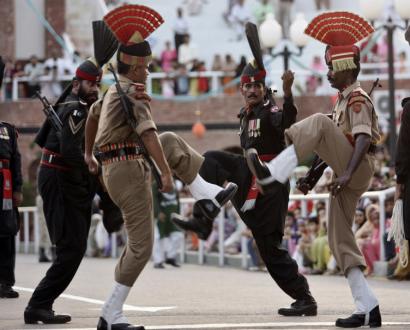
Pakistan’s efforts to launch a comprehensive fight against terrorism are greatly hampered by its perceived threat perception against India, US President Barack Obama has said in a new report to Congress.
“As India continues to dominate their strategic threat perception, large elements of Pakistan’s military remain committed to maintaining a ratio of Pakistani to Indian forces along the eastern border,” Obama said in the third-quarterly report to the Congress on Afghanistan and Pakistan sent yesterday.
“This deprives the Pakistani COIN (counter-insurgency) fight of sufficient forces to achieve its ‘clear’ objectives and support the ‘hold’ efforts and causing available Army forces to be bogged down with ‘hold’ activities because there are insufficient trained civilian law enforcement personnel to assume that responsibility,” Obama said in his 38-page unclassified (rpt) unclassified version of the report.
Due to flood in Pakistan last year the offensive military operations Pakistan had envisioned for KP (Khaibar Pakhtoonwah) and the Federally Administered Tribal Areas (FATA) in the second half of 2010 were overtaken by events, he said.
“Militants were impacted by the floods as well, so we did not observe significant offensive actions on their side, but as Pakistani forces ceased offensive operations, extremists extended their control to areas without sufficient Pakistani central government-provided security and governance,” he wrote.
Between October 1 and December 31, 2010, Obama said Pakistani security forces remained largely static, generally focusing on maintaining the security of previously cleared areas in the FATA and KP and continuing to support flood relief operations.
There were small but notable security operations in November and December in Orakzai Agency and Dir District, but no major operations.
National attention during the reporting period focused on the need for continued flood relief and the start of early recovery efforts, he said.
“The military served as a force of stability during the monsoons, ensuring that Pakistani and international emergency resources were available for rescue and relief operations. The Pakistan Army, Air Force, and Navy committed large numbers of personnel and resources to the flood relief operations throughout October and November,” he said.
The civilian government’s response suffered from a lack of coordination and reflected broader shortcomings in the government’s ability to execute the civilian “hold” and “build” phases of COIN.
The last quarter of 2010 saw no progress on effectively executing the COIN cycle in KP and the FATA.
Pakistan Rejects US Taliban Report
As Reported by The BBC
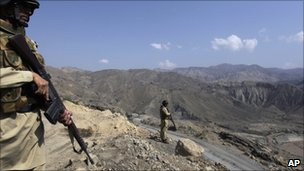
The Pakistani military has dismissed the findings of a US report that says it has no clear plans to defeat the Taliban insurgency.
The report assessing the war against militants in Pakistan and Afghanistan has been submitted by the Obama administration to the US congress.
But a senior Pakistan security official told the BBC that operations against militants have been a great success.
The official said that Pakistan should be proud of the progress it had made.
The White House report said that Pakistan still has no “clear path” to defeat militants on its soil.
But the senior official – who wished to remain anonymous – said that Pakistan’s plate was full enough already.
“Instead of pushing us to do more, the other side should carry out an introspection of its own operations,” he said.
“We are quite satisfied with our counter-insurgency campaign in the Swat and Malayan regions and parts of the tribal areas. We can safely say this has been a great success story.”
The BBC’s Shoaib Hasan in Pakistan says that the White House report has been released at a time when relations between the security establishments of the two countries have been strained.
Our correspondent says that the report is likely to raise the ire of the Pakistan military – which says it has lost more men than any other country in the fight against militancy in the region.
‘Vexing’
The White House report said that in spite of “tremendous human sacrifices” made by Pakistani security forces and increased military co-operation between Pakistan and US in the last three months, the fight against militancy was making little progress.
Pakistan claims to have lost more men than any other country in the fight against militancy It cited the example of the this January’s third operation in two years to clear insurgents from Mohmand and Bajaur tribal agencies.
The Pakistani military’s efforts have been hobbled by resistance from the militants, bad weather and the need to settle internally displaced people.
“What remains vexing is the lack of any indication of ‘hold’ and ‘build’ planning or staging efforts to complement ongoing clearing operations,” the White House report said.
“As such there remains no clear path to defeating the insurgency in Pakistan, despite the unprecedented and sustained deployment of over 147,000 forces.”
The report said that Pakistan and Afghanistan needed to co-operate more to destroy insurgent havens on both sides of the border.
The US has long expressed frustration about Pakistan’s reluctance to take on militants in the tribal areas.
Pakistan Army To Restore “Peace” in Bahrain?
By Aijaz Ahmed for Indus Herald
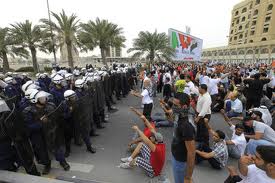
Pakistan and Bahrain are seriously considering ways and means and possible repercussions of Pakistan’s military and intelligence agencies’ help to the later in restoring “peace” in politically disturbed areas. Foreign Minster of Bahrain Sheikh Khalid bin Ahmed Al-Khalifa is to arrive in Pakistan on Tuesday to discuss the matter, highly placed sources have confided to Indus Herald. The Saudi led Gulf Cooperation Council (GCC) has already approved deployment of Peninsula Shield Force in the Kingdom of Bahrain to crush the movement for democracy that is getting stronger with every passing day. Assurances from King Hammad to introduce some reforms with regards to civil liberties and democratic and human rights have not succeeded so far to calm down anger among people demonstrating for a democratic system. Interestingly the reaction of the world community, the United States, Saudi Arabia and Pakistan is totally different on the situation as compared to the reaction demonstrated on the situation in Libya.
Pakistan has already expressed its support for the GCC decision, and that too on Saudi pressure, a source at the foreign office revealed. The economically hard-pressed Pakistan had no other way but to follow the Saudi demands as the holy kingdom has assured a sizable support in meeting the economic challenges ahead, the foreign office source added. However, Pakistan’s nauseating defense of its endorsement to GCC intervention in Bahrain to deploy Peninsula Shield Force isn’t finding any takers. Majority of foreign policy commentators and experts are not ready to buy Pakistani endorsement but people having close relations with PML-N including the likes of Shamshad Ahmed Khan, Tariq Fatmi and Riaz Khokhar are intriguingly silent on the support that Pakistan has diplomatically provided to Bahrain on the behest of Saudi Arabia. The sole reason for the silence of these former ‘babus’ of Foreign Office and some other “well informed experts” lies behind the special relationship that PML-N leader Mian Nawaz Sharif enjoys with the Royal family of the holy land.
Pakistan desired return of peace, security and stability to Middle East that had been hit by political upheaval, the newly designated foreign office spokesperson Ms Tahmina Janjua observed while briefing the media the other day. “As far as Bahrain is concerned, it was an internal decision of the GCC. The GCC decided on the basis of its founding principles that security forces would go to Bahrain,” said Foreign Office Spokesperson in her stammering voice while replying to hard hitting questions on Bahrain though her words did not match the principles of ‘non-intervention and non-interference in domestic affairs of others’ that she had painstakingly learnt during her 27 years long diplomatic career. This was not the first time that Foreign Office stood up for Bahrain’s monarchy. Foreign Secretary Salman Bashir had earlier praised the Bahraini Monarch on March 1. While the protestors were being tear-gassed and shot at, he had said: “We … admire the progress made by Bahrain under the leadership of His Majesty King Hamad bin Isa Al-Khalifa.”
The current political upheaval is a geniune cause of concern for Pakistan as there are some 65,000 Pakistanis in Bahrain, some of whom are working with Bahraini security services, the FO sources maintained adding that the security of King of Bahrain, the major installations, the Royal Family and the state dignitaries is prime responsibility of the Pakistanis employed in the Bahraini security services. Perhaps this was the reason that a number of Pakistanis became vistims of the public anger and some of them were seriously injured earlier this month during the violent protest of people on streets. Reports received from the tiny Gulf Kingdom suggest that the xenophobic attacks against Pakistani expatriates earlier this month were commited as Pakistani policemen had been at frontlines of riot police that attacked demonstrators.
In an atmosphere where common Pakistanis are quite unsafe in the Kingdom, Pakistan has not only quietly endorsed the intervention, but allowed the welfare wings of its military forces – Fauji Foundation and Bahria Foundation – to recruit about 1000 guards to bolster Bahrain’s security apparatus and the recruitment was not made secretly, instead the process was completed in very open way.
The reasons for the uprising in Bahrain are said to be more than just the political, the sources further revealed. The detailed analysis of the situation reflects that the political upheaval is being financed by some external factors and the sources point their fingers towards some hard core religious elements having strong presence in Pakistan and also towards the Iranian Government, thus both Saudi Arabia and Bahrain intend to use good offices of Pakistan Army and its intelligence wings to play their ole in bringing in peace and stability in the Gulf State.
Foreign Office has confirmed that the The Foreign Minister of Bahrain will discuss security cooperation and internal political situation of the country with Pakistani leadership. During his hectic visit, he will meet President Zardari, Prime Minister Yusuf Raza Gillani, State Minister for Foreign Affairs, and the military leadership in a very short span of time. The two sides will discuss further strengthening security cooperation and additional steps, sources revealed. Bahrain may formally furnish a request for Pakistan army contingents to be deployed with the GCC Shield Force in troubled areas as well as a request to ISI and Military Intelligence (MI) for using their good offices to establish contacts and facilitate parlays between the Bahrain Government and the right wing forces as well as in direct talks between Iran and Bahrain, sources confided with confidentiality. ‘Pakistan is the only country that can help Bahrain in bringing in the political stability in the country and thus a request is expected to be made for an active Pakistani role in the greater regional and trans regional interest’, sources said. But any decision will be taken keeping the sensitivities and threats in mind, the sources assured.
Meanwhile some brain storming is being done between Pakistan and Saudi Arabia for revival of an already expired defense agreement between Pakistan and the Kingdom of Saudi Arabia and an initial discussion has been made during the recent visit of Saudi National Security Chief, however few changes will be made in the previous agreement if any progress in this regard is made, sources in the diplomatic circles maintained.
Time For World, ICC To Realise Significance of Pak-India Cricket
By Ramiz Raja for Dawn

The stakes are massive, the pressure unbearable and Mohali is burning with Pak-India fever. As if the contest needed more spice, we now have the small matter of two prime ministers catching up with each other at the ground, looking to de freeze the bilateral dialogue over cricket diplomacy.
The world is seeing the power of India-Pakistan cricket. All those people in positions, who were cold and indifferent towards it, are now queueing up to use the occasion to cash in. The governments, the media and the ICC have been given enough evidence in the past also of the unfathomable strength of Indo-Pak match-up, to know that uncoupling the two can mean a turbulent world and a colorless cricket calendar. Yet, all of them allowed the most passionate cricket duel to get stuck by petty politics.
The game at Mohali can have significant repercussions for the players. A loss will be remembered like a tsunami aftermath. On the other hand, a win can, like a wedding video, linger on the minds for eternity. A performance against India is never forgotten and that’s such a strong point to motivate the players and deflect pressure. This game is all about nerves and who jangles them first. The greater the wait the higher the anxiety and it’s been a long break for both teams.
Listening to cricket pundits on channels, calling home to impress the folks that all is under control and filling the fans with high hopes must be taking a toll on the system. The players would be desperate to go out in the middle to settle the racket in the mind and settle the issue on the field.
People fear the Indian crowd and how their pressure will play up on the players. From playing in India I know that the one sided pro India crowd can in fact give you a high because you are fighting them against the odds, and draw from experience the moments when you have beaten them.
It’s such a great feeling when you box them into dead silence, stroke after stroke! I am sure most of our players have sampled that experience and will be motivated to repeat it for their fans.
Captains, at times, worry in normal situations about lack of effort and skill from the team. Afridi will not have any such issues at Mohali. The game gets raised by the players who tend to play above themselves against India. The captain has to remain cool and, in any eventuality, remain dignified. At the end of the day it’s only a game of cricket.
We may or may not win this but our team has certainly won the hearts of the people. Whether they go to Mumbai or Karachi, we need to give them a heroes welcome for they have bonded us together as one!
— The writer is a former Pakistan captain.
India vs Pakistan – much more than just a game
By Anand Philar for Sify

With one stroke, India banished the ghosts of the 2003 final and the fantastic win at Motera virtually ended an era of Aussie dominance. Earlier this year, Ponting’s men lost the Ashes and now the World Cup, but like all great players, Punter left an indelible mark on the tournament with a century in what probably was his last CWC game.
While we rejoice the Indian win, let us show some grace and salute the Aussies for their achievements on the field that, sadly, has been sullied by the behaviour of some of the players. The sheer outpouring of emotions by Yuvraj and Raina after the winning boundary hit was indicative of the value the Indian team attaches to any win against the Aussies. Yes, it is always special to beat a top side even if it is on its way down.
India vs Australia: Turning point and Top performers
If anybody thought Australia are the favourites to win the Cup, then such presumption was based on the team’s track record of three consecutive triumphs, two of them under Ponting’s captaincy. As it turned out, pace, hitherto Australia’s biggest weapon, was unable to deliver and the absence of a quality spinner, much less a pair of them, eventually hurt them far more than their opponents.
On a Motera pitch that was on the slower side and assisting spin, the Aussies went at the Indians with a bevy of fast bowlers hoping to exploit the well-known weakness against the rising delivery. It was a ploy that boomeranged on the Aussies whose lone specialist spinner Krejza was just about club standard.
The fact that the three Aussie slow bowlers Krejza, Clarke and Hussey, sent down only 17 overs as against 33 by their Indian counterparts accurately reflects the difference in approach of the two teams. I feel that proved to be the decisive factor.
I am sure, Ponting would have given his arm to have a Shane Warne bowling during the Yuvraj-Raina partnership that eventually turned the game around for India or for that matter a Hayden or Gilchrist to light up their fragile batting.
India end Australia`s 12-year reign to reach semis
So, having lost to the two top sub-continental sides, Pakistan (in the league phase) and India, the Aussies return home well and truly beaten, leaving the two neighbours in a face-off at Mohali next week.
Although the Pakistanis also have beaten the Aussies, the Indian win came under far greater pressure and in a knock-out situation that offered no safety net. As such, I would rate the Motera win much higher than the one in Colombo where the Aussies fell for 176 to Pakistani spinners.
Of course, all that is history now that India and Pakistan clash at Mohali in a game that can be equated to a Brazil vs Argentina football game in terms of interest, rivalry and of course, the immense pressure on the teams to deliver.
For all that, I will still back India who I feel are better equipped than Pakistan, be it in batting or bowling with the teams being on par at fielding. The spin quotient virtually gets negated since it is a staple diet for the rival batsmen while it is not as if the two teams have a Lee or a Tait or a Johnson in their ranks to trouble anyone with searing pace. It is India’s superior batting line-up that could well tilt the scales.
Further, it will also boil down to the collective character and resilience to withstand the pressure of expectations. I have covered more than my share of Indo-Pak sporting encounters in some of the major sports to say that the levels of passion and emotions among the rival players defy words. You have to be in it to know it.
Since the rivalry between the two neighbours transcends sports and given the historical political enmity (never mind the diplomatic mumbo-jumbo to the contrary), even a sporting victory or defeat that is a mere pinhead in the big picture of life, triggers mass euphoria as if it were a Kargil.
The players themselves might not admit it in public, but the irrefutable fact is the adrenaline rush is greater and the emotions are on the boil among the contestants. It will never be ”just another game” regardless of at what stage the two teams meet and it being a World Cup semi-final, one can imagine the pressure on the players.
World Cup 2011
Under the circumstances, the saying that cricket is played more in the mind than on the field cannot be any truer in an Indo-Pak contest. We have said this before, but needs to be reiterated that ultimately, the team that blinks first will lose. The cricketing aspects such as team combination, technique, strategy and what have you, are secondary.
In effect, the stakes, like it or not, admit it or not, are much more than cricketing gains or losses. So, tighten your seatbelts and on to Mohali!
Pakistan Destroys the West Indies
By Will Davies for The Wall Street Journal

So much for close contests in the World Cup quarterfinals. In the first knock-out match Wednesday, Pakistan thrashed the West Indies by 10 wickets thanks to an inspirational bowling performance spearheaded by Mohammad Hafeez (2 for 16) and captain Shahid Afridi (4 for 30).
The West Indies batsmen were simply unable to cope with Pakistani spin, slumping to 111 all out – the team’s third-worst batting performance in World Cup history.
In one dramatic spell, the West Indies went from an already troubling 69 for 4 to an utterly disastrous 71 for 8 as Afridi & Co. showed no mercy (much like the dreaded advertisements on television after every wicket).
Afridi’s bowling at this tournament has been phenomenal. He is easily the top bowler with a handsome tally of 21 wickets, and his trademark celebration – arms outstretched with his two index fingers pointing to the heavens – could very well be the lasting image of the 2011 World Cup.
The West Indies team looked out of the game as soon as danger man Chris Gayle was caught by Afridi for eight. Shivnarine Chanderpaul, recalled to the team for the quarterfinal, was the only player to offer any real resistance, but he still couldn’t score fast enough and was left stranded on 44 not out at the end of the innings.
It took Pakistan just under 21 overs to reach the West Indies’ meek total, without the loss of a single wicket. Fresh from his great bowling performance, Hafeez clubbed 61 runs, while much improved wicket-keeper Kamran Akmal notched up 47. The two simply poured buckets of salt in weeping West Indian wounds.
It was humiliating for the West Indies. Not only did it mark the end of the team’s World Cup campaign, the abject performance could also have tragically hammered yet another nail into the coffin of Caribbean cricket. Despite its gloriously rich history, the sport there has been in rapid decline for more than a decade and the team’s latest efforts won’t have helped a bit.
But credit must go to Pakistan. If the team continues to play like this, Pakistan will win the World Cup. These players have to contend with so much more than other sportsmen – from the security situation back home to the involvement of former teammates in betting scandals. So while Wednesday’s match was depressing for the West Indies, for Pakistan, it was truly inspirational. And what better a day for it than March 23 – Pakistan’s Republic Day – which commemorates the signing of the Lahore Resolution back in 1940.
One more thing: If Australia loses tomorrow, we can look forward to the mother of all World Cup semifinals – India vs. Pakistan in Mohali on March 30.
Whisper it, but it’s surely destined to be.
Pakistan Christians Increase Security
As reportd by UCA News.com
 Worried Pakistani Christians have stepped up security following the assassination of minorities minister Shabhaz Bhatti last week, according to Archbishop Lawrence Saldanha of Lahore.
The country’s 2.5 million Christians fear for the future more than ever before and as a result security had been increased so much that his Sacred Heart Cathedral was “like Fort Knox,” he said in an interview with the charity Aid to the Church in Need (ACN).
“The murder means that we have lost a great leader in our community. Our people are quite down. They are fearful of the future – more so than before. People feel like second-class citizens. We cannot speak out. We feel oppressed, repressed and depressed.”
Accusing the government of failing to tackle fundamentalism effectively, he said: “The religious parties have put a lot of pressure on the government which is very weak and cannot make a stand against the menace of extremism.”
However, Archbishop Saldanha told ACN: “Our people are very resilient and determined. For centuries, they have been suffering. This is nothing new for them. They have always been under the thumb. We carry on with God’s grace.”
The archbishop was speaking five days after Bhatti, the only Catholic minister in the federal government, was gunned down on the streets of Islamabad, and less than two months after Salman Taseer, the governor of Punjab province, was killed by his own bodyguard.
In its report of the interview, the London office of ACN pointed out that both men had spoken out against Pakistan’s blasphemy laws. It said their criticism came amid widespread concern that extremists use the laws “as the pretext for acts of violence in response to unproven allegations of disrespect towards Islam.”
43 Dead in Pakistan Mine Blast, No Survivors
As Reported by The Associated Press
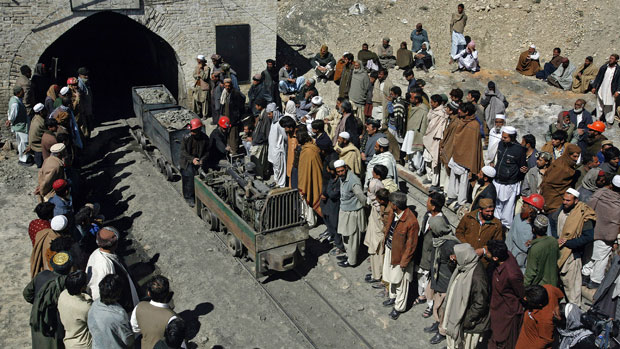
All 43 miners in a colliery in southwest Pakistan that was hit by a blast at the weekend have been confirmed dead, officials said Tuesday, as rescuers ended their search operation.
“All 43 bodies have been recovered,” Iftikhar Ahmed, provincial chief inspector of mines for the insurgency-torn Baluchistan province, told AFP.
“There are no survivors and the mine is being sealed,” Ahmed said.
President of Pakistan Mines Workers Federation Bakht Nawab confirmed the final toll.
The mine in the far-flung Sorange district of the troubled southwestern province was poorly ventilated, allowing poisonous gases to accumulate and trigger blasts that led to a collapse on Sunday, officials said.
The mine is run by the state-owned Pakistan Mineral Development Corporation and officials said they will launch an investigation into why the warnings to stop mining were not heeded.
Rich in mineral wealth, Baluchistan is plagued by an insurgency blamed on nationalist tribesmen demanding more jobs and royalties from the region’s natural resources. Hundreds of people have died in the violence since 2004.
Most coal mines in the impoverished province are notorious for overseeing poor safety standards and similar deadly accidents have occurred in the past.
Pakistan Snaps Australia’s 34-Match Unbeaten Run
By Shihar Aneez for The Los Angeles Times
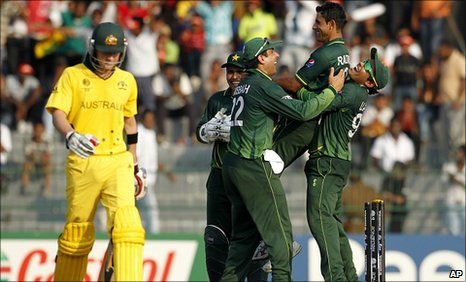
Australia’s 34-match unbeaten run in the Cricket World Cup dating back to 1999 was finally broken by Pakistan on Saturday when Ricky Ponting’s team were beaten by four wickets.
Australia, who have won the last three World Cups during the run and were unbeaten in five matches in Group A in this tournament, were skittled out for 176.
Pace bowler Brett Lee raised hopes of an Australian fightback when he got rid of opener Mohammad Hafeez in the third over but his haul of four for 28 could not prevent Pakistan from cruising to victory with 54 balls to spare.
“We certainly had a tough game today. We didn’t do ourselves any favours. I thought our batting effort was particularly ordinary,” said Ponting, who suffered his first World Cup defeat as captain.
“We stuck at it really well with the ball. I thought the guys bowled really well and gave ourselves a bit of a sniff when we got them six down but not enough runs on the board.”
Saturday’s result threw the tournament wide open as there is no undefeated team left in the competition heading into next week’s knockout stages.
Australia had already qualified for the quarter-finals but will now finish third in the group rather than top, a place now occupied by Pakistan.
“It’s a different sort of enjoyment playing against Australia. They may be World Champions but there was no pressure on us so we pulled it off today,” Umar Akmal said after finishing unbeaten on 44.
Ponting’s men struggled for momentum through out their innings after opting to bat first.
Pakistan’s pace and spin attack, backed up by sharp fielding, never allowed the Australian batting to settle down.
A 63-run second wicket stand between Brad Haddin (42) and Ponting (19), who failed once again with the bat, was the only notable partnership in the Australian innings.
Michael Clarke (34) and Steve Smith (25) were the only other batsmen to make any worthwhile contributions on a difficult surface that offered spin and some uneven bounce which the Australian batsmen failed to cope with.
Paceman Umar Gul (3-30) bowled superbly with both the new and the old ball for the 1992 champions, who were the last team to defeat Australia in a World Cup match in 1999.
Gul made the first breakthrough by bowling Shane Watson for nine and returned to clean up the tail by taking the wickets of Jason Krezja and Lee.
Please Join us on Facebook
Click on the Link Below and Join Our Facebook Page and our Facebook Group to Stand Up for Peace and Speak Up against Violence and Extremism!


Live Traffic

Archives
Share

Join 104 other subscribers
Pages
| M | T | W | T | F | S | S |
|---|---|---|---|---|---|---|
| 1 | ||||||
| 2 | 3 | 4 | 5 | 6 | 7 | 8 |
| 9 | 10 | 11 | 12 | 13 | 14 | 15 |
| 16 | 17 | 18 | 19 | 20 | 21 | 22 |
| 23 | 24 | 25 | 26 | 27 | 28 | 29 |
| 30 | ||||||
Categories
 The Express Tribune
- An error has occurred; the feed is probably down. Try again later.
BBC South Asia News Feed
- An error has occurred; the feed is probably down. Try again later.
The News International
- An error has occurred; the feed is probably down. Try again later.
Blog Stats
- 542,296 hits


You must be logged in to post a comment.