As Reported by Hindustan Times from the Indo-Asian News Service
US President Barack Obama condemned a suicide bombing in Pakistan that left at least 44 people dead at a UN World Food Programme distribution point on Saturday. “Killing innocent civilians outside a World Food Programme distribution point is an affront to the people of Pakistan, and to all
humanity,” Obama said that in a statement issued from Hawaii, where he is spending Christmas with his family.
“The United States stands with the people of Pakistan in this difficult time, and will strongly support Pakistan’s efforts to ensure greater peace, security and justice for its people.”
A female suicide bomber targeted the crowd collecting food at the distribution centre in Khar. Seventy others were injured in the attack in the Bajaur tribal district, where government forces are fighting Taliban and Al Qaeda militants.
Saturday’s bombing targeted the Salarzai tribe, which has joined forces with the government against the Taliban and raised a tribal militia to drive them out of their area. The Taliban took responsibility for the attack in a message sent to various news organizations.
The way Amir Khan sees it, he’s spent a lot of time sparring with the best pound-for-pound boxer in the world, and is trained by arguably the No. 1 trainer in the world.
So anything that Argentine power puncher Marcos Maidana throws his way Saturday night at the MGM Grand, well, Khan, who puts his 140-pound title on the line (HBO, 9:30 p.m. ET), has already seen it, or will know how to deal with it. You want speed? Few fighters are quicker than Manny Pacquiao, whom Khan sparred with in the Philippines when Pacquiao was training to fight Antonio Margarito in November. Khan says Pacquiao told him, “I’m the fastest guy he’s ever sparred with.”
How about power, Maidana’s forte? We know how Pacquiao re-arranged Margarito’s face that night in Cowboys Stadium last month. Khan’s trainer, Freddie Roach, who is also Pacquiao’s cornerman, says Khan more than held his own against Pacquiao, and, in fact, laid some pretty good licks on the eight-division world champion.
“Yeah, Freddie likes us to spar when we’re both 100%, and when we don’t take it easy on each other,” Khan said by phone last week. “It’s better for me to get that experience and see how far I am from being pound-for-pound the best fighter in the world, which is my ambition. So, yeah, I really did well against Manny, and it was a good, controlled spar. I controlled it when I wanted to control it.”
Maidana says he feels his power can overcome Khan’s speed. “The speed doesn’t bother me because I know I have 12 rounds,” says Maidana. “But I know one thing, when I hit him with one of the my hands, the fight is over.” Khan says Roach has brought out the best in him as a fighter.
“There were times when I used to fight with my heart too much, and I have to use my brains a little bit more,” says Khan. “I’ve got the boxing skills to do that, you know, with the background of the amateurs, and going to the Olympics and everything. Freddie’s taught me to use my brain and think about things more.”
Khan (23-1, 17 KOs) respects the punching power of Maidana (29-1, 27 KOs), but says, “(Maidana’s) a lot slower than me, he’s very predictable and I think somebody’s got to punch him at the right time.” They have one common opponent: Andriy Kotelnik, who handed Maidana his only loss in February 2009, while Khan scored a near shutout victory against Kotelnik in July 2009.
As for Maidana, Khan says he and Roach have worked on the 27-year-old Argentine’s weaknesses and they expect to exploit those weaknesses.
“I think with boxers at that level, they’re always going to (have) their habits. You’re not going to change,” says Khan. “He can try to change his tactics and stuff, but I think his habits are always going to be there. We know exactly what (Maidana) does wrong, and we’ve just got to capitalize on that. We’ve also been working on the stuff I do wrong. I’ll be watching fights with Freddie and I’ll make a lot of mistakes in fights so we’ve been correcting them as well. So (Maidana) can think I make this mistake and that mistake, but he’s going to be fighting a different Amir Khan on the 11th.”
Roach says Khan has changed his style since his shocking first-round knockout by Breidis Prescott as a lightweight in 2008, the only loss of his career, a loss that led some to believe that Khan does not have a strong chin. Roach says he’s a completely different fighter now. “The thing is, he knows how to set things up now,” says Roach. “He just doesn’t go in there and look for a one-punch knockout. He knows how to break a person down and he knows how to work behind his jab and … reach for the body. He’s just become a completely different fighter. We haven’t lost a round since we’ve been together (at the beginning of 2009). I mean, we haven’t lost one round.”
Khan says he expects to stay at 140 pounds for another 12-15 months before he moves up to welterweight. But first there are some outstanding junior welterweights out there he’d like to fight. “You’ve got Timothy Bradley and Devon Alexander, there’s a lot of big names in that division,” says Khan, who just turned 24 this week. “Fighting them would be good for boxing, because that’s what people want, people want young fighters to fight (each other). They want explosive fighters instead of fighters past their peak.”
Both Khan and Richard Schaefer, the CEO of Golden Boy Promotions, which has Khan under contract, say his next fight will probably be in his native England. There had been talk that a good opponent for Khan to rebuild his popularity in England would be undefeated Brit lightweight John Murray (30-0, 18 KOs). Khan says that won’t happen because he and Murray are not on the same level. “I would get a lot of criticism for that because I’m a world-class fighter and he’s on a domestic level,” says Khan. “I want to fight world-class fighters, and I don’t think he’s in that category.”
Khan says when he moves up to welterweight, there’s no way he’d fight Pacquiao because they have become such good friends, and they share the same trainer. However, “with the strength and power and technique I have, I could fight a Floyd Mayweather,” he says.
The case of Aasia Noreen aka Aasia Bibi illustrates how far Pakistan has to go to secure freedoms for its religious minorities. Christians and Hindus are not the only minorities who are persecuted for their beliefs but it is also Muslim minorities such as the Ismailis, Ahmadis, and Shiites who are routinely harassed, discriminated and also killed. Sadly, it is the case of Aasia Bibi that has brought some much needed attention to Pakistan’s sad state of affairs towards the treatment of its religious minorities.
Several sections of Pakistan’s Criminal Code consist of its blasphemy laws and of all the Muslim countries of the world that have anti-blasphemy laws, Pakistan’s anti-blasphemy laws are by far the strictest. There is section 295 that forbids damaging or defiling a place of worship or a sacred object. Then there is section 295-A that “forbids outraging religious feelings.” There is also 295-B which prohibits defiling the Qu’ran and was originally punishable by life imprisonment but has since been amended to up to three years imprisonment.
No section of the blasphemy law is more controversial or harder to prove than Article 295-C, the law that Aasia Bibi is allegedly charged with having broken. In respect to prophet Muhammad, this statute states that ” Whoever by words, either spoken or written, or by visible representation, or by any imputation, innuendo, or insinuation, directly or indirectly defiles the sacred name of the Holy Prophet Muhammad shall be punished with death, or imprisonment for life and shall also be liable to a fine.”
Aasia’s case and charges against her started almost a year and a half ago when there was a quarrel over a bowl of water in a dusty village in the heart of Pakistan’s Punjab province. A group of women were working the fields in the heat of the Pakistani sun when one of them, Aasia Bibi, dipped her glass in the communal bucket of drinking water to fetch herself and others a glass of water to drink and immediately was rebuffed by the other women who claimed that the water was now unclean as it had been touched by a non-Muslim. According to witnesses, instead of quietly bowing her head and taking the indignities, Aasia’s crime was that she mounted a strong defense of her faith and remained steadfast in her demeanor that she did nothing wrong. Too often in Pakistan, the blasphemy laws are used against religious minorities to settle personal vendettas and old scores according to Pakistan’s Human Rights Watch, a watchdog group monitoring the case.
The news traveled fast in Aasia’s village of Ittan Wali, in Punjab’s Sheikhupura district that a Christian woman had insulted the prophet. The local mullah got on the mosque loudspeakers, urging the “faithful” to take action against Aasia Bibi. In sad but familiar pattern, her defense of her faith was somehow twisted into an accusation of blasphemy, according to her family and others familiar with the case. Soon as a mob gathered outside her home ready to take the law into their own hands and handing out vigilante justice, the police moved in and took her into custody. But instead of protecting her, they charged her with insulting Islam and its prophet under the blasphemy laws.
And then on Nov. 8, after suffering 18 months in prison, Aasia Bibi was sentenced to death by a district court, making her the first person to be handed the death penalty in Pakistan under the blasphemy laws. Many before her over the years have been charged, but punishment had been commuted to lesser penalties than the death sentence imposed on Aasia Bibi. No concrete evidence was ever presented against Aasia, according to Pakistan’s Human Rights Watch. Instead, the district judge relied on the testimonies of three other women, all of whom were hostile towards her.
Unfortunately this is a common insult hurled at many of Pakistan’s 2 million Christians who make up just 1.59% of the total population. Often, Christians in Pakistan are discriminated and persecuted and many times only get the lowest of the low jobs such as street sweepers, janitorial and sanitation workers. In fact, in Pakistan, the term ‘Chura‘ has become synonym with the Christian community as it relates to an unclean person akin to how the untouchables or Dalit community is seen in India. In India however, the Dalits are not subjected to arcane state blasphemy laws geared towards religious minorities as in Pakistan or are threatened with their lives at the hands of the Hindu majority.
As discussed in a couple of my previous articles, Taliban 1o1, History and Origins and Taliban 201, The Rise of the Pakistani Taliban, the Islamization of Pakistan started under the late General Zia ul Haq of Pakistan who took over the leadership of the country through a military coup in 1977 when he hung the deposed and democratically elected Prime Minister Zulfiqar Ali Bhutto. Earlier in 1973, the 1973 Constitution of Pakistan had declared that “Islam shall be the religion of the Pakistan” and had systematically begun the process of restricting the participation of religious minorities in government and politics.
Before General Zia, there were only two reported cases of blasphemy. Since the death sentence was inserted in 1986 into the Penal Code for the blasphemy laws, this number has now reached 962 — including 340 members of the Ahmadi Muslim community, 119 Christians, and 14 Hindus. A close examination of the cases reveals the blasphemy laws are often invoked to settle personal scores, or they are used by Islamist extremists as cover to persecute religious minorities, sadly with the help of the state under these laws.
General Zia began this policy of Islamization of Pakistan in conjunction with his support for the war against the Russians and assistance to the Afghan Mujahedeen as well as the building of thousands of madrassahs or religious schools across Afghanistan and Pakistan which nurtured the young men into what later became the Taliban. Many of these blasphemy laws fully came into being under his reign, although some were around since as early as more than 100 years prior when the British drew up the Indian Penal Code of 1860 which was initially an ill foreseen aim at keeping the peace among the many fractured faiths of the subcontinent. For instance, section 295-A, which “forbids outraging religious feelings”, could have been applied against a Muslim who insulted a Hindu or a Hindu who taunted a Sikh or Christian or vice versa. However under Zia, the blasphemy laws were expanded and almost exclusively applied against Muslim minorities such as the Ahmadis, Islamilis and Shiites as well as against the Christian and Hindu populations.
Recently, a religious ‘leader’ came out and has offered over $6000 to anyone who can kill Aasia Bibi while she awaits her punishment in police custody. Outrage and denunciations on this case are coming from across the world as many people are appalled at the sad state of rights for religious minorities in Pakistan. The Pope has intervened also asking for clemency for Aasia Bibi from Pakistan’s President Asif Ali Zardari. Against all manner of reason and justice, Lahore’s High Court recently issued an order on November 29, 2o1o, preventing Zardari from exercising his constitutional authority to pardon Aasia Bibi.
In a country rife with violence and chaos and one that has become synonymous with terror the world over, the case of Aasia Bibi is yet another dark stain on the country’s image around the world. The Taliban and the extremist groups ravaging Pakistan can be explained as being a violent minority and do not and should not reflect on the nation as a whole as the majority of people in Pakistan are opposed to them and their views of Islam. But the blasphemy laws, for as long as they have stayed on the books in Pakistan and in the constitution, cannot and should not be excused in any shape or form. These laws need to be repealed and the constitution needs to be amended in an emergency manner so that Aasia Bibi and other religious minority citizens of Pakistan are not subjected to cruel and subjective laws that are almost exclusively used against minorities to settle scores, personal vendettas, and instill terror in less than 3 percent of the country that is not part of the religious majority of Sunni Muslims.
There needs to be international pressure placed on Pakistan from the United Nations, the United States, Europe and others to modify the constitution immediately and to pardon this 45 year old mother of five children. It is ironic that in a country where many people sympathize with Osama’s Al Qaeda and profess to hate the west with one hand, they decry with the other why not enough western aid has came to their country when it recently saw the worst flooding in its history. Can you blame the American citizens, the Europeans or citizens of any other Christian nation from hesitating to give aid to a country that not only plays a duplicitous game when it comes to terrorists and terror havens but also treats Christians and other religious minorities in the manner as in the case of Aasia Bibi?
The name Pakistan literally translates into “The Land of the Pure”. And as a child growing up I was told that the meaning of Pakistan’s flag is this: “The green is a traditional Islamic color and the crescent moon and star are also Islamic symbols. The white stripe represents the non-Muslim minority and religious groups of Pakistan and there place in the country.” In my view, as long as the nation sanctions and tolerates these utterly unjust and biased blasphemy laws, the religious minorities of Pakistan clearly have no place in this land of the ‘pure’.
-Manzer Munir, a proud Pakistani American and peace activist, is the founder of Pakistanis for Peace and blogs atwww.PakistanisforPeace.comas well at other websites as a freelance journalist and writer.
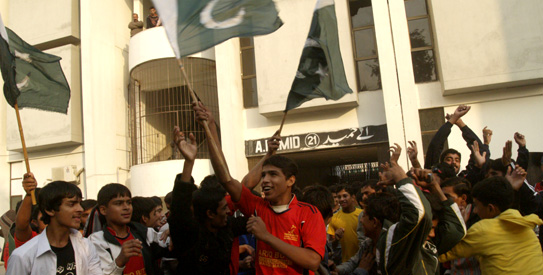
A wave of joy swept across Pakistan as it overcame a lackluster Malaysia in the final of the 16th Asian Games hockey. The win secured for Pakistan its first gold at the Games in 20 years and in the process an automatic berth at the 2012 Olympics in London.
The historic moment was witnessed by a large group of supporters that had thronged the various hockey centers across Pakistan to watch the final on the large screens that had been set up for the day. And the fans weren’t disappointed as their team put up a clinical performance to record a 2-0 win over Malaysia.
“It’s really a huge success for us and it’s extremely good news for the entire nation,” said Nawaz Ali as he waved national flag at a busy intersection of the capital Islamabad with scores of other Green Shirts supporters.
“It is good to see our team winning. We are happy because this is our national game,” said another man waving hockey sticks in joy. He said the victory would boost players’ morale and help them get more victories in future.
In Peshawar, people came out from their homes after the win and performed traditional dance moves to celebrate the moment.
“Hats off to Pakistan hockey players for their memorable win by giving joy and pleasure to 170million people,” a young hockey fan and resident of Qisakhwani, Abdur Rahim said. “The moment when our national anthem was played in China was historic and it would be remembered for a long time.
There were similar scenes in Lahore and Karachi where people even crowded the small TV screens at the international airports to catch a glimpse of the final.
There were also reports that many people at various workplaces extended their lunch to fit in the game that ended around 15:30 pst. The people in question, however, chose to remain anonymous.
Also brimming with delight was the Sports Minister of Pakistan Mir Ejaz Hussain Jakhrani who announced a cash award of Rs 5 million for the gold medal winning hockey team. He also paid glowing tributes to the squash team which also won gold in the team event beating their highly touted Malaysian opponents.
A Christian woman sentenced to death for blasphemy has not yet been pardoned by Pakistan’s president, representatives for the president said Wednesday, a day after a provincial governor told CNN that the president is expected to pardon the woman.
Asia Bibi, who has been jailed for nearly 15 months, was convicted in a Pakistani court earlier this month of breaking the country’s controversial blasphemy law by insulting Islam’s Prophet Mohammed, a crime punishable with death or life imprisonment, according to Pakistan’s penal code. She was sentenced to death.
Two representatives of President Asif Ali Zardari said Wednesday that no action has been taken, but the president will pardon if necessary.
“No decision has been taken,” spokesman Farhatullah Babar said. “Under the constitution, the president has to act under the advise of the prime minister. He will advise the president to take whatever action he proposes.”
On Tuesday, the governor of Punjab province said Zardari will pardon Bibi.
“What basically he’s made it clear is that she’s not going to be a victim of this law,” Gov. Salman Taseer told CNN International’s “Connect the World” program.
“I mean, he’s a liberal, modern-minded president and he’s not going to see a poor woman like this targeted and executed. … It’s just not going to happen,” Taseer said.
She has filed a petition for mercy with the high court, Taseer said.
“If the high court suspends the sentence and gives her bail then that is fine. We’ll see that, and if that doesn’t happen, then the president will pardon her,” he said.
Babar said jurists and legal experts have debated about whether the president has absolute power under the constitution to grant a pardon.
But he said Bibi is not in danger of being executed.
“Asia cannot be executed now,” Babar said. “Under the law, a death sentenced issued by a session court can not be carried out until it has been endorsed by the high court.”
Farahnaz Ispahani, a spokeswoman for the president, said Pakistan remains committed to protecting religious minorities.
“Pakistan is a nation of many faiths and religions, and all Pakistanis, no matter what their religion, are equal under the law,” Ispahani said in a written statement. “President Zardari has followed the case of Asia Bibi closely and will take appropriate action, if necessary, to issue a pardon or grant clemency to insure that Asia Bibi is neither incarcerated or harmed.”
A preliminary investigation showed Bibi was falsely accused, a government official said Monday.
“The president asked me to investigate her case, and my preliminary findings show she is innocent and the charges against her are baseless,” Pakistani Minister for Minority Affairs Shahbaz Bhatti told CNN.
Bhatti has said he will submit a final report Wednesday to Zardari’s office.
Prosecutors say Bibi, a 45-year-old field worker, insulted the Prophet Mohammed after she got into a heated argument with Muslim co-workers who refused to drink from a bucket of water she had touched.
In a brief news conference at the prison where she’s being held, Bibi said last weekend that the allegations against her are lies fabricated by a group of women who don’t like her.
“We had some differences and this was their way of taking revenge,” she said.
Bibi’s death sentence sparked outrage among human rights groups, who condemned Pakistan’s blasphemy law as a source of violence and persecution against religious minorities.
But Babar said the president’s party lacks the power in parliament to repeal Pakistan’s blasphemy laws.
“The manifesto of the Pakistan Peoples Party calls for the law to be repealed, but the party has not been able to repeal it because we lack the majority in parliament,” Babar said. “We don’t have the numbers to do it.”
By Aaron Mannes, Rennie Silva and V.S. Subrahmanian for The Huffington Post
As part of the U.S.-Pakistan Strategic Dialogue, the United States has granted Pakistan over $2 billion in military equipment over the next five years. This aid is intended to support American policy objectives and help stabilize Pakistan, but it may be achieving the opposite.
Military aid for Pakistan has a clear, if narrow, logic: to ensure the supply lines for the 100,000 American and NATO ally troops deployed to landlocked Afghanistan. The United States has few viable alternatives to the Pakistani-controlled routes into Afghanistan. When Pakistan recently shut down the Torkham crossing into Afghanistan (after an accidental border clash with a NATO helicopter that left two Pakistani soldiers dead and four wounded), supply trucks backed-up and Pakistani Taliban set fire to over 100 vehicles. Though there was no immediate danger of shortages, the event signaled how difficult US-led operations in Afghanistan could become without support from Pakistan’s military.
Despite its indispensable role in the war in Afghanistan, Pakistan’s own stability is in doubt and military aid has been of limited utility. Since 9/11 the United States has delivered over $18 billion in aid to Pakistan, about two-thirds of which has been military. In that period, violence by Pakistan-based terrorists both within Pakistan and without has increased substantially. According to the National Counter Terror Center’s World Incidents Tracking System, 110 Pakistanis were killed in terror attacks in 2004. By 2007 that number had jumped to 400, and in 2008 the casualty figure more than doubled to nearly 900.
As illustrated by the recent bombing of the Criminal Investigation Building in Karachi which killed 20, American aid has not enabled Pakistan’s security forces to control the violence. Instead, Pakistan has become a base for terrorism not only targeting the Pakistani state but also India, as demonstrated by the 2008 Mumbai massacre and a deadly series of 2006 commuter train bombings in Mumbai which killed over 200 people. India’s response to these attacks has been muted, but its restraint is finite. Open hostilities with its neighbor to the east would be devastating for Pakistan, and could even trigger a nuclear exchange.
Although several thousand Pakistani soldiers have died fighting Islamist extremists, the Pakistani security establishment has been slow to adopt counter-insurgency methods of war fighting. Instead, it has preferred to continue its India-centric focus. Investigations of U.S. military aid intended to help Pakistan fight the Taliban find that it is often re-purposed to counter India. “I’ll be the first to admit, I’m India-centric” Pakistani army chief of staff Gen. Ashfaq Parvez Kayani told Bob Woodward in his latest book, revealing a long-term strategy that is at odds with US interests.
Pakistan’s ongoing use of Islamist terrorists as proxies against India is especially troubling. President Zardari, who has stated “the undeclared policy of running with the hare and hunting with the hound was abandoned,” claims that Pakistan has turned against Islamist militants. But Pakistan’s generals have not received the memo, as investigations into the Mumbai attack show that links between at least some elements of the ISI and Lashkar-e-Taiba continue.
Pakistan has pursued some Taliban forces in its tribal areas, while leaving others alone to support future Pakistani interests in neighboring Afghanistan. Under such circumstances, America’s military aid is at best fueling Pakistan’s longstanding rivalry with India, and at worst enabling its enemies.
Pakistan’s high defense spending has robbed critical social programs of necessary resources. Pakistan continues lag behind comparable countries in general development indicators such as literacy and infant mortality, while its infrastructure is stretched to keep up with the needs of its fast-growing population. Under-funded and corrupt government institutions compound the situation. As Pakistan’s civilian and military leaders cynically seek to distract the public from these shortcomings, it is little surprise that Islamist groups often fill the vacuum by providing critical services or that the Pakistani people increasingly fall under their spell.
The long-term development shortfalls of Pakistan’s government have been exacerbated by a series of disasters including the 2005 Kashmir earthquake, the 2008 economic crisis, and last summer’s massive flooding. The latter, which caused nearly $10 billion in damage, has created millions of refugees and devastated an irrigation system that was strained to meet the demands of Pakistan’s agricultural sector before the flooding. Today, its failure threatens to cripple a vital sector of the Pakistani economy for years to come.
American development aid cannot counter decades of Pakistani neglect, but it can play a productive role in addressing critical needs. Providing Pakistan with more military capability-capability that could contribute to regional instability if it is used on American allies-is unlikely to achieve either.
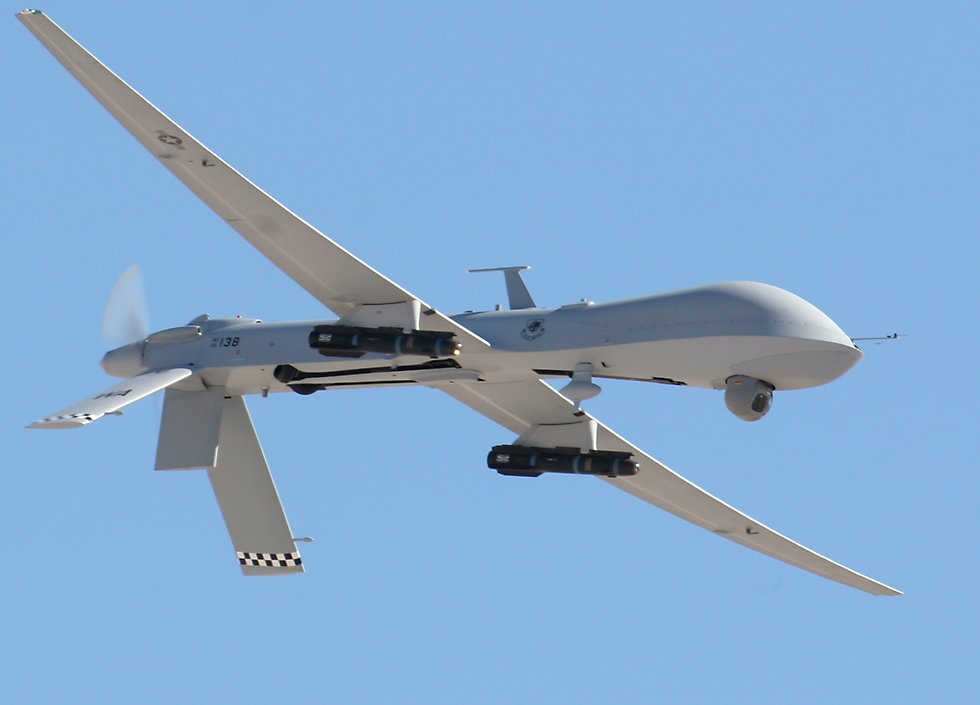
Pakistan has rejected a request from the U.S. to expand a drone missile campaign against Al Qaeda and Taliban militants, a decision that limits Washington’s use of one of its most effective tools against insurgents hiding in the nation.
Pakistani Foreign Ministry spokesman Abdul Basit said Islamabad would not allow the U.S. to carry out drone strikes outside the tribal belt along the Afghan border and repeated the government’s request that Washington abandon its use of drones in Pakistan on the grounds that the program violates the country’s sovereignty.
Basit did not say which additional areas the U.S. wanted to target. However, the Washington Post reported Saturday that the request focused on areas outside the southern city of Quetta, where Afghan Taliban leaders have hideouts.
“We are allies of the United States in the war against terror,” Basit said. “However, Pakistan will not compromise on sovereignty.”
Islamabad’s refusal comes as little surprise, given the animosity that the drone campaign has stirred among Pakistanis for years, but even as the government publicly condemns the drone program, it tacitly allows the missile strikes to take place. Pakistan even provides intelligence to facilitate the targeting of the strikes.
The drone missions are deeply unpopular in Pakistan, where they are viewed as an illustration of President Asif Ali Zardari’s willingness to acquiesce to most demands that Washington makes. Allowing an expansion of the drone program could further aggravate the vulnerability of Zardari’s government, already weakened by its mishandling of this summer’s catastrophic floods and the country’s ongoing economic troubles.
Any expansion of the drone campaign into Baluchistan, the province where Quetta is located, would also represent a dramatic departure in policy for Islamabad because it is not part of the semi-autonomous tribal region where the drones are permitted now.
In addition, the Quetta region is a heavily populated area; the city itself has a population of 900,000. The core leadership of the Afghan Taliban insurgency, known as the Quetta Shura and headed by Mullah Muhammad Omar, has used Quetta and its outlying regions as a sanctuary for years.
In recent months, the U.S. has dramatically stepped up its use of drone strikes in the tribal areas. So far this year, the U.S. has carried out 101 drone missile strikes in northwest Pakistan, compared to 53 in 2009.
The attacks have focused largely on North Waziristan, a primary stronghold of militants and commanders belonging to the Haqqani network, an Afghan Taliban wing regarded by the U.S. as one of the biggest threats facing coalition forces in Afghanistan.
According to the Long War Journal website, which keeps track of drone missile strike statistics, 92 of the attacks this year occurred in North Waziristan.
The Tehrik-e-Taliban Pakistan (TTP) attack on Karachi’s Crime Investigation Department compound should serve as an ultimate wake up call for Pakistan to swiftly act against home grown terrorism rather than blaming some Indian or US conspiracy for terror strikes on its soil.
“The assault on the CID centre must be seen for truly what it tells us in plain words: that home grown terrorism is no Indian, Jewish or American conspiracy against Pakistan or Islam,” Pakistan’s leading newspaper Dawn said.
“It also tells us that there are many misguided Pakistanis in our midst, who may even have sympathy for these zealots targeting largely Muslims that would not endorse their narrow minded view of the faith under whose banner they kill and maim innocent citizens,” it noted.
“How else does one explain the transportation of a van full of explosives along with a firing squad armed with latest weapons that came to attack the CID building during the evening rush hour no less?” the paper questioned.
It is high time that Pakistan woke up to the increasing threat posed by terror organisations and took stringent steps to tackle it.
“Much of Islam as we know it in this country today, isn’t exactly in very safe hands; it’s time we woke up to the threat and did something about it instead of issuing token mere condemnations that follow such ghastly acts of sheer murder and mayhem, from Islamabad to the provincial capitals and the other Pakistani capital of sorts, in exile, the faraway London,” the paper said.
It argued over a possibility that Thursday’s bombing took place “because no concrete action was taken after last month’s bombing at the Abdullah Shah Ghazi shrine; nor indeed the ghastly attacks before that on two Muharram processions in December and February.”
Ruing the state of Pakistan’s preparedness in combating terrorism, it expressed the hope that the latest bombing incident- at CID building in Karachi- “given its precision and intensity as well as the target hit, should serve as a final wake up call to law enforcement agencies and the authorities concerned in Karachi.”
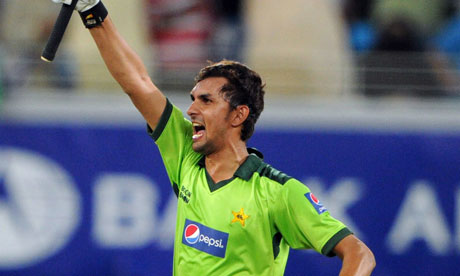
The curse of the whistleblower is to be denounced as a fraud, a fantasist or a weirdo. In America, where they have an organisation for everything, the National Whistleblowers Center in Washington helps people wanting to expose iniquity, much like our own Public Concern at Work. Either may hear soon from a 24-year-old Pakistani wicketkeeper.
Let’s imagine this as a short movie, a study in motivation. Zulqarnain Haider approaches passport control at Heathrow one day and asks for sanctuary. Behind him he has left a wife and two daughters in Pakistan and the national team in Dubai, who learn of his disappearance when they find his hotel room empty.
The immediate cause of Haider’s flight is a conversation he says he had near the team hotel. An unknown man approaches him to say: “If you work with us, we will give you a lot of money. If not, we will not select you again in cricket and, if you go back home, we will kill you and your family.”
Notice the “we” in “we will not select you again in cricket”. One largely ignored facet of this drama is that if Haider’s interlocutor existed he boasted of his power to pick the Pakistan XI. All three layers are present: potential reward, intermediary punishment, and death, not just for him but his family. If Haider is for real, the offer he was made and the warning he was given imply a connection between match- and spot-fixing, team selection and serious organised crime.
In other words they suggest corruption runs through many tiers of Pakistan cricket. In a recent editorial, the country’s Daily Times speculated: “The elephant in the room is the link between people wielding power and the bookmakers. It is alleged that a top bookmaker and mafia don have connections with a powerful intelligence agency in Pakistan.”
This is as far as conjecture can be pushed in the strange tale of Haider’s dash to Britain, which featured a chaotic press conference in the backroom of a curry house in Southall. To summarise, he claims he was approached before the fourth one-day international against South Africa, in which he hit 19 winning runs, and then fled before the fifth, the second target for the alleged match-fixers.
Here in England he has said players’ phones should be tapped to assist evidence gathering and that “a lot of people” are involved in the scam. He has said, too, that he does not want any aid from the British government beyond temporary asylum and has promised to co-operate with the International Cricket Council’s Anti‑Corruption and Security Unit.
To gain a sense of Haider’s motivation it is tempting to imagine him on that flight to London, knowing what was ahead of him and what lay behind: most poignantly, grave danger for his wife and daughters. No conclusion can be drawn from such a filmic and intuitive form of analysis, but most of us would think something fairly big must have spooked him in Dubai to cause him to run away from his family and his livelihood.
We would suspect also that a professional cricketer had to break in the end, and that Haider simply looks like the first to buckle. Heroic status eludes him, so far. No senior Pakistan cricketer, either serving or retired, has praised his actions. Some asked why he waited at least four days after the threat to his life to board a flight to London.
Denunciations fly in from those who say he ought to have “reported his concerns” to the Pakistan team management and the ICC’s detectives, which protocol required him to do.
And from Pakistan’s sports minister, Ijaz Hussain Jakhrani, came the most brutal condemnation: “If he is such a weak and scared person he should not have played cricket in the first place, particularly not for the national team.” Asif Iqbal weighed in: “He has let the motherland down. There wasn’t even a reserve wicketkeeper to replace him. He just flew off.”
This censorious tone obscures the dark realities of the past year. The current cycle of trouble began with the dubious tour of Australia, with its suspicious Sydney Test and nine straight defeats for Pakistan in all formats. After the News of the World’s spot-fixing exposé, Mohammad Amir, Mohammad Asif and Salman Butt are under an ICC provisional suspension and have had their central contracts cancelled by the Pakistan Cricket Board.
As pressure builds in India, the hub of cricket betting, to legalise and therefore regulate the wild east of gambling on the country’s national sport, you wonder why more punters are not put off by all the evidence suggesting choreography on the field of play. It’s an odd kink of human nature that people will go on betting in an apparently bent casino, as if to beat a crooked system confers more pleasure than winning against an honest house.
At the centre of this vast global issue is one man who stepped off a flight in London and told the BBC on Friday: “I want to be a good citizen.”
A coordinated assault on a police compound far from Taliban and al-Qaida heartlands along the Afghan border showed the ability of militants to strike back despite being hit by U.S. drone strikes and Pakistani army operations.
The Pakistani Taliban claimed responsibility for Thursday night’s attack in downtown Karachi, the country’s largest city and commercial hub, according to media reports. Fifteen people were killed and more than 100 were injured in one of the first coordinated strikes against a state target in the city.
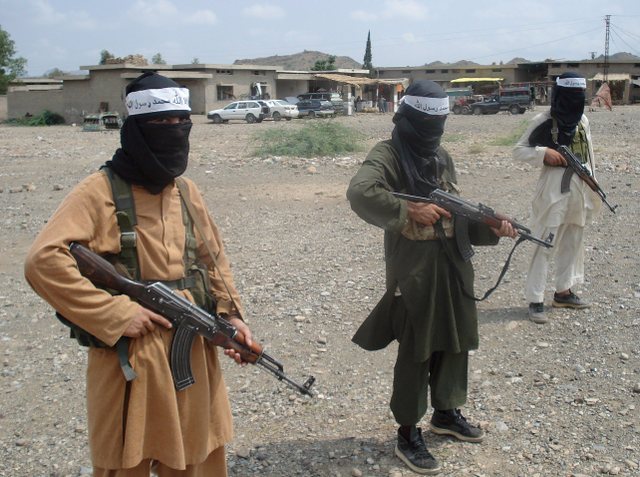
The Pakistani Taliban is allied with al-Qaida and has emerged as the most potent threat to the stability of the nuclear-armed country since 2007. Its suicide squads have killed thousands of people in attacks on government, security force and Western targets, most of them civilians, shaking faith in the civilian government.
“These attacks which are happening around the country, they are carried out by enemies of the nation,” said Faisal Mehmood, a resident of Karachi, said Friday. “It is not in Islam that you kill your brothers.”
The gang of around six gunmen managed to penetrate a high-security area of Karachi that is home to the U.S Consulate, two luxury hotels and the offices of regional leaders. They opened fire on the offices of the Crime Investigation Department before detonating a huge car bomb that leveled the building and others nearby.
The police offices housed a detention facility that was believed to be holding criminals. There were conflicting accounts over whether militants were also being held there.
The CID takes the lead in hunting down terrorists in Karachi. Earlier this week, the agency arrested six members of Lashkar-e-Jhangvi, an al-Qaida linked group blamed for several high profile attacks in recent years. The suspects were presented before a court earlier Thursday.
Islamist militants are known to have found shelter among Karachi’s 14 million people, and their have been occasional attacks on Shiite Muslims, whom al-Qaida and the Taliban believe to be infidels, as well a blast last month at a Sufi shrines.
But it had largely escaped a wave of violence last year that saw many attacks in Lahore, Pesahwar and other cities.
The government has declared war on the militants, and the army has moved into several areas in the northwest close to Afghanistan. The United States has increased the tempo of missile strikes in the region over the last two months, with close to 100 this year alone.
But the Pakistani state still distinguishes between militants who attack inside Pakistan and those who focus on fighting U.S. troops in Afghanistan or Indian rule in the disputed Kashmir region, believing the latter to be “good” militants. Critics say this policy is shortsighted, noting that groups are increasingly coalescing and support each other.
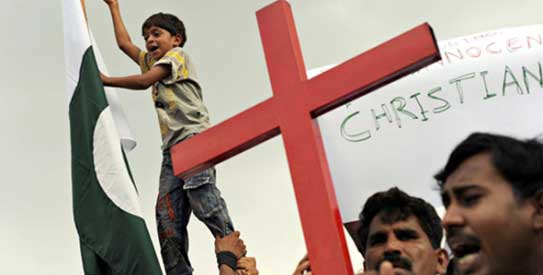
A Pakistani court has sentenced to death a Christian mother of five for blasphemy, the first such conviction of a woman and sparking protests from rights groups Thursday.
Asia Bibi, 45, was sentenced Monday by a local court in Nankana district in Pakistan’s central province Punjab, about 75 kilometres (47 miles) west of the country’s cultural capital of Lahore.
Pakistan has yet to execute anyone for blasphemy, but the case spotlights the Muslim country’s controversial laws on the subject which rights activists say encourages Islamist extremism in a nation wracked by Taliban attacks.
Asia’s case dates back to June 2009 when she was asked to fetch water while out working in the fields. But a group of Muslim women labourers objected, saying that as a non-Muslim, she should not touch the water bowl.
A few days later the women went to a local cleric and alleged that Asia made made derogatory remarks about the Prophet Mohammed. The cleric went to local police, who opened an investigation.
She was arrested in Ittanwalai village and prosecuted under Section 295 C of the Pakistan Penal Code, which carries the death penalty.
Sentencing her to hang, Judge Naveed Iqbal “totally ruled out” any chance that Asia was falsely implicated and said there were “no mitigating circumstances”, according to a copy of the verdict seen by AFP.
Husband Ashiq Masih, 51, told AFP that he would appeal her death sentence, which needs to be upheld by the Lahore high court, the highest tribunal in Punjab, before it can be carried out.
“The case is baseless and we will file an appeal,” he said.
The couple have two sons and three daughters.
Rights activists and minority pressure groups said it was the first time that a woman had been sentenced to hang in Pakistan for blasphemy, although a Muslim couple were jailed for life last year.
Human rights activists want the controversial legislation repealed, saying it is exploited for personal enmity and encourages Islamist extremism. “The blasphemy law is absolutely obscene and it needs to be repealed in totality,” Human Rights Watch spokesman Ali Dayan Hasan told AFP.
“It is primarily used against vulnerable groups that face social and political discrimination. Heading that category are religious minorities and heterodox Muslim sects,” he said.
Asked about Asia’s case at a press conference in Islamabad on Thursday, visiting Italian Foreign Minister Franco Frattini said he was unaware of the details but would raise the matter with Pakistan’s minorities minister.
“The Italian position has always been against the death penalty,” he told reporters. He said he raised the problems faced by Christian minorities during his talks with his Pakistani counterpart Shah Mehmood Qureshi.
“I believe they should not misuse the law of blasphemy to discriminate against religious minorities and this is a point I share with my colleague — this is a key point for me.”
Around three percent of Pakistan’s population of 167 million is estimated to be non-Muslim. Last July, two Christian brothers accused of writing a blasphemous pamphlet critical of the Prophet Mohammed were shot dead outside a court in Punjab.
Pastor Rashid Emmanuel, 32, and his brother Sajjad, were killed as they left a court hearing in Faisalabad city, where hundreds of Muslim protesters had demanded they be sentenced to death.
Pakistanis for Peace Editor’s Note– Pakistan’s blasphemy laws are absolutely egregious and need to be repealed. Not only are minorities such as Christians and Hindus in Pakistan subjected to these outrageously unjust laws, but Muslim minorities such as the Ahmadis and Ismailis are also time and time again subjected to and singled out for unfair treatment under the guise of these BS laws. The white color in Pakistan’s flag is supposed to represent the minorities within this Islamic republic. Until and unless these blasphemy laws are repealed and Pakistan’s constitution is amended, the religious minorities within Pakistan will never get a fair shake, regardless of how much they are represented in the flag.
Nine years into the war in Afghanistan, the United States should have a clear idea of Pakistan’s interests there. It’s time to take these lessons to heart — and start applying the right incentives. As recent intelligence findings reported in late October confirm, Pakistan remains at the heart of the U.S.-led coalition’s problems in Afghanistan — where the war is hardly lost, yet hardly headed for clear victory either. Indeed, Pakistan arguably remains the most complex ally the United States has ever had in wartime, making President Franklin D. Roosevelt’s challenges in dealing with Stalin (a far worse leader, but at least one who knew the outcome he wanted) seem simple by comparison.
Nine years into the campaign, we still can’t clearly answer the question of whether Pakistan is with us or against us. America needs bold new policy measures to help Islamabad — in all its many dimensions and factions — make up its mind.
The crux of the problem is this: Despite allowing massive NATO logistics operations through its territory and helping the United States pursue al Qaeda operatives, Pakistan tolerates sanctuaries on its soil for the major insurgencies fighting in Afghanistan. These include the Afghan Taliban (otherwise known as the Quetta Shura Taliban because its principle base remains in Quetta in the Pakistani province of Baluchistan) as well as the Haqqani and Hezb-i-Islami Gulbuddin (HiG) networks. The Haqqanis straddle the border between the Afghan provinces of Khost, Paktia, and Paktika as well as North Waziristan and other tribal areas within Pakistan; HiG is further north, operating in and around the Khyber Pass connecting Kabul and Jalalabad in Afghanistan with Peshawar and points east in Pakistan. Thus, all three major Afghan insurgent groups have home bases in Pakistan, and despite the occasional drone strike are generally beyond NATO’s reach as a result.
Pakistan has done some worthy things against extremists in its remote northern and western areas in recent years. Specifically, it has recognized the so-called Pakistani Taliban (the Tehrik-i-Taliban Pakistan, or TTP) as a mortal threat to the Pakistani state and responded accordingly. After suffering hundreds of bombings and assassination attacks by the TTP, including the killing of former Prime Minister Benazir Bhutto in 2007 and several thousand casualties a year to its troops and citizens since roughly that time, it has responded in force, particularly over the last year and a half or so. It has swung about 100,000 troops previously guarding the border with Pakistan’s nemesis India to the northwestern tribal regions and cleared several major areas including South Waziristan, Bajaur, and the Swat Valley. This is all to the good.
Pakistanis argue, however, that limited numbers of ground troops combined with the past year’s admittedly devastating floods prevent them from doing more. Quetta, North Waziristan, and other key places remain dens of iniquity, havens for extremists who continue to attack NATO and Afghan troops across the border and then return home for rest, regrouping, and fresh recruiting. Major command-and-control hubs are permanently located within Pakistan as well, and key insurgent leaders like Mullah Omar (to say nothing of Osama bin Laden) probably remain safely ensconced on Pakistani territory where U.S. forces cannot get at them.
But even if limited Pakistani capacity is part of the problem, there’s more at stake. Pakistan worries that President Barack Obama’s promise to start reducing U.S. troops in Afghanistan come July will lead to anarchy and civil conflict next door, and it is retaining proxies that it can use to ensure that its top goal in Afghanistan — keeping India out — can be accomplished come what may. Pakistan would rather have the Taliban and the Haqqanis back in power, especially in the country’s south and east, than any group like the former Northern Alliance, which it views as too close to New Delhi. It is this strategic calculation, more than constrained Pakistani resources, that constitutes Obama’s main challenge in Afghanistan. And it could cost him the war.
Under these circumstances, part of the right policy is to keep doing more of what the Obama administration has been doing with Pakistan — building trust, as with last month’s strategic dialogue in Washington; increasing aid incrementally, as with the new five-year $2 billion aid package announced during that dialogue; and coordinating militarily across the border region. But Obama also needs to think bigger.
First, he needs to make clear America’s commitment to South Asia, to wean Pakistan away from its current hedging strategy. Obama has frequently used general language to try to reassure listeners in the region that there will be no precipitous U.S. withdrawal next summer. But few fully believe him. Hearing stories like Bob Woodward’s accounts of how the vice president and White House advisors have generally opposed a robust counterinsurgency strategy in favor of a counterterrorism-oriented operation with far fewer U.S. troops, they worry that next summer’s withdrawal will be fast. Obama needs to explain that he will not revert to such a minimalist “Plan B” approach under any imaginable circumstances. More appropriate would be a “Plan A-minus” that involves a gradual NATO troop drawdown as Afghan forces grow in number and capability, without necessarily first stabilizing the entire south and east, should the current strategy not turn around the violence by next summer or so. This would represent a modification to the current plan rather than a radical departure. The president can find a way to signal that this is in fact his own thinking, sooner rather than later — ideally before the year is out.
Second, Obama should offer Islamabad a much more expansive U.S.-Pakistani relationship if it helps win this war. Two major incentives would have particular appeal to Pakistan. One is a civilian nuclear energy deal like that being provided to India; Pakistan’s progress on export controls in the wake of the A.Q. Khan debaclehas been good enough so far to allow a provisional approval of such a deal if other things fall into place as well. Second is a free trade accord. Struggling economically, Pakistan needs such a shot in the arm, and a trade deal could arguably do even more than aid at this point.
But the key point is this: Pakistan should be told that these deals will only be possible if the United States and its allies prevail in Afghanistan. Small gestures of greater helpfulness are not adequate; bottom-line results are what count and what are needed. If Afghanistan turns around in a year or two, the deals can be set in motion and implemented over a longer period that will allow the United States to continually monitor subsequent Pakistani cooperation in the war.
It may seem harsh to Pakistan that America would put things in such stark terms — but in fact, it is not realistic that any U.S. president or Congress would carry out such deals if the United States loses the war in Afghanistan partly due to Pakistani perfidy. As such, these terms are really just common sense, and they are based on political realism about America’s domestic politics as well as its strategic interests.
America’s current strategy for the war in Afghanistan is much improved. But it is not yet sound enough to point clearly toward victory. The most crucial problem is the role of Pakistan in the war, and so far, the Obama administration is not thinking creatively enough about how to fix it.
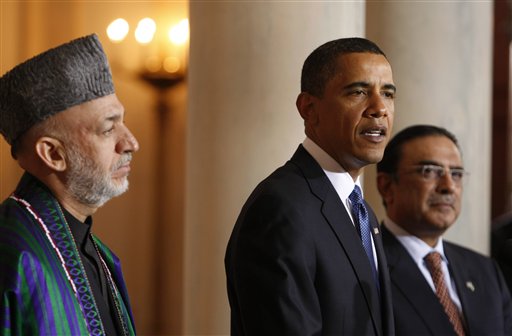
As President Obama wraps up his visit to India in the next day, a couple of things are important to point out about relations between the United States and India as well as how Pakistan fits into the equation.
The balance of power between India and the US still lies with the United States, however, India is set to make more and more gains in becoming more influential as its economy grows and as the United States looks to it to counter China in Asia.
The strategic partnership between the two countries and the importance of India for the United States is going to become vital as America uses India to contain China’s influence in the region and around the world.
We do believe that President Obama is correct in stating that relations between the two countries warrant being called the defining relationship of the century as there is no other country that compliments the United States presently in the world as does India. Not only do both countries share democratic ideals and a multiethnic population, but both countries are also increasingly dependent on each other’s economies. Add to this the nuclear cooperation as well as America’s support for India to get a permanent seat on the UN Security Council, and it becomes evident that this relationship will continue to grow over time.
President Obama has offered criticism on Pakistan already but is careful in trying to walk the tight rope act that is India-Pakistan relations. There are certainly more behind the scene steps taking place that will chide Pakistan into doing more. But in our view, the single most important thing that the US and the Obama administration can do is to help India and Pakistan come back to the table to get the peace process moving along. There is widespread agreement with the President’s assessment that a prosperous and stable Pakistan is in the best interests of India, Afghanistan and the region. In this effort, we believe there needs to be done more by all parties involved.
India’s argument has always been that the terrorist infrastructure and support for some anti-India militant groups needs to end before New Delhi will resume the peace process with Pakistan.
India should not refuse extensive trade relationships with the US due to American support of Pakistan as it does not do anything to help India. India realizes the situation both inside Pakistan and America’s dependency of the Pakistan Army’s support in flushing out the Taliban. It would go against India’s interests if it put its relationship and advancement with the United States as being dependent on American support for Pakistan and its vital assistance in the war in Afghanistan and on terror.
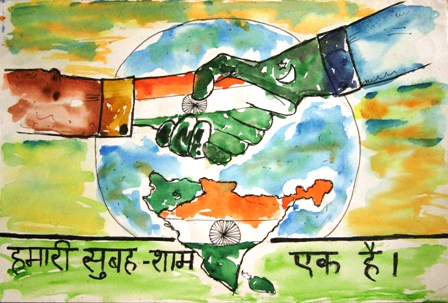
Peace between India and Pakistan and in the Kashmir valley is the only solution to both the conflict between the two nations as well as it is in America’s interests for both countries and the region. Furthermore, peace between the two countries will allow both Pakistan’s full focus on the Afghan border in helping American troops against the Taliban as well as the elimination of anti-India militant groups within Pakistan, many of whom are alleged to still be receiving support from elements within Pakistan’s ISI spy agency, much to India’s chagrin.
Barack Obama has called on India and Pakistan to renew their efforts to find peace, even as he said Islamabad was not moving quickly enough to counter militants operating from inside its borders.
In comments that appeared to underscore the high-wire act of diplomacy the US president is trying to pull off while on the three-day visit to India, Mr Obama said Washington would not act as an intermediary between the two countries.
However, he told a group of students in Mumbai: “My hope is that over time, trust develops between the two countries, that dialogue begins, perhaps on less controversial issues, building up to more controversial issues. There are more Pakistanis who’ve been killed by terrorists inside Pakistan than probably anywhere else.”
The president has received criticism from some opposition parties in India after he failed to directly mention Pakistan when he arrived in India on Saturday and spoke of the 2008 attacks at the Taj Hotel and other locations in Mumbai, that left more than 160 people dead.
In the aftermath of the attacks, the so-called “composite dialogue” peace process between India and Pakistan was put on hold and while there have been a series of high-level meetings, the relationship between the two remains tense.
The president, who stayed at the seafront hotel in what aides said was a clear sign of solidarity, had talked about the militants and the terror they wrought, but was criticised by the right-wing Bharatiya Janata Party (BJP) for failing to attribute the blame to Pakistan.
Asked why he had not done so, Mr Obama reflected a reality in which the US is paying billions of dollars to Pakistan in aid as it pushes it to do more against militants responsible for cross-border strikes in Afghanistan.
“Pakistan is a strategically important country, not just for America, but for the world,” he said. “India and Pakistan can prosper and live side by side. This can happen and this should be the ultimate goal. The US can be a partner but cannot impose this process. India and Pakistan have to arrive at an understanding.”
Mr Obama started his visit to India, one of four countries he is including on a tour through Asia, by announcing more than 20 deals he said were worth up to $10bn and would help support 50,000 US jobs.
He also said the US was to relax export controls over sensitive technology, a demand of India’s that will help deepen ties between the two countries. The president is to hold formal talks today with India’s prime minister, Manmohan Singh.
On a domestic level, Mr Obama also recognised he needed to make “midcourse corrections” in the aftermath of last week’s mid-term elections if he is going to win over a frustrated and divided electorate.
By James Lamont and Edward Luce for The Financial Times
Barack Obama, the US president, has urged India to step up its dialogue with Pakistan to help to secure the region’s stability, warning that efforts to combat extremism in India’s nuclear-armed neighbour have not progressed as quickly as Washington had hoped.
Mr Obama, on a three-day visit to India, called on Sunday for New Delhi to revive a dialogue with Islamabad badly set back by the 2008 terror attacks on Mumbai by Pakistani militants.
His comments at a town hall event with students in Mumbai were a sharp break from his initial emphasis on creating jobs in the US and gaining more access to the fast-growing Indian economy for US companies.
“My hope is that over time trust develops between the two countries, that dialogue begins,” he told students at St Xavier’s College. “Ultimately India and Pakistan have to arrive at their own understandings”.
Mr Obama cautioned that the economic success that India was enjoying would be imperilled by an unstable region where militant insurgencies raged in Pakistan and Afghanistan, where US troops are fighting the Taliban.
“The country that has the biggest stake in Pakistan’s success is India. I think that if Pakistan is unstable that is bad for India. If Pakistan is stable and prosperous that’s good,” he said.
Mr Obama recommended the two rivals start talking about the “less controversial issues” and then build up to tougher issues, such as the disputed territory of Kashmir, over which the two have fought three wars over the past 63 years.
Manmohan Singh, India’s prime minister, believes the two countries have shared destinies, and has stressed that India poses no threat to Pakistan in an effort to scale down military forces on the border.
Yet Mr Obama’s emphasis of linkages between Pakistan and India, which were separated at the end of British rule in 1947, is highly sensitive. Many Indian leaders gauge the growing maturity of New Delhi’s relationship with Washington by what they call the “de-hyphenation” of India and Pakistan in recognition of India as a global power and vibrant economy.
New Delhi is suspicious of US military assistance to Pakistan and is uneasy about Washington identifying any role for Islamabad in bringing stability to Afghanistan and brokering talks with the Taliban.
Mr Obama warned that Pakistan was confronted by a “profound problem” and that its progress towards eradicating extremism was “not as quick as we would like”. He said that his administration was “engaging aggressively” with the Pakistani government to bring peace and stability.
“There’s a need to look for practical steps . . . Living in the past simply won’t work,” said Stephen Cohen, a senior fellow at the Brookings Institution, in Washington.
“I see a 100 years of conflict between India and Pakistan looking ahead.”





You must be logged in to post a comment.