Posts Tagged ‘ Pakistanis ’

Pakistan and the American Learning Curve

By Ethan Casey for Dawn

On June 1, I took part in a TEDx event hosted by the Princeton Public Library in Princeton, New Jersey, USA. The TED people bill what they do as “ideas worth spreading,” and during the weeks I spent preparing my talk I pondered what ideas I wanted to spread to an American audience. I titled my talk “What Does Pakistan Have to Do with Haiti? (the full text is on my website, and I’m told the video will be online soon), but in an important sense it’s really about the United States.

I used the occasion to try to make some sense of the weird coincidence that the two countries I care about most deeply and personally, other than my own, both were devastated in 2010 by horrific natural disasters. I did find a number of things they have in common, believe it or not, but the most salient is that Pakistanis and Haitians both see the United States from the outside. And what they see is often ugly and cruel, because they live on the receiving end of the American power that we Americans usually don’t experience, because we’re the ones wielding it. This is a point that’s very clearly apparent to many people worldwide, but not always easy to get across to Americans.

One way I tried to do it in Princeton was by arguing that both countries are prime examples of what the Nigerian novelist Chimamanda Adichie, in an excellent TED talk in 2009, called “the danger of a single story.” We Americans tell ourselves a single story about Haiti, and a different single story about Pakistan. Dr. Paul Farmer, a celebrated physician who works in the poorest areas of rural Haiti, wrote a book titled The Uses of Haiti. We use Haiti rhetorically and ideologically and, every time there’s a new fitful spasm of American interest in Haiti, our uses for it rear their heads anew. It’s never an edifying thing to see, and it’s maddening to those of us who know Haiti.

America has different uses for Pakistan, and those are not unlike the uses we used to have for the Soviet Union. If Haiti meets Americans’ need to have someone to pity, Pakistan fulfills our need to have someone or something to fear. Fear, pity, and contempt are easy, self-indulgent emotions. But much more demanding, I said, is to cultivate and practice respect. Respect implies distance and difference, and to practice it entails acknowledging that difference is inevitable and even desirable.

Another thing Haitians and Pakistanis have in common is their experience as immigrants and visitors to America. I tried to bring this home by telling the audience about novelist Edwidge Danticat’s 81-year-old uncle, who fled violence in his neighborhood in Haiti’s capital, Port-au-Prince, in 2004 and made the mistake of asking for political asylum at the airport in Miami. US Immigration officials threw him into the infamous Krome Detention Center and denied him his diabetes medication, and he died in detention. Danticat tells the story eloquently in her wonderful nonfiction book Brother, I’m Dying, which is above all a beautifully composed story about family love, immigrant struggle and aspiration, and the tortured and all too intimate relationship between Haiti and the United States, told by a Haitian who is also an American. I often find myself telling Pakistanis the story of Edwidge Danticat’s uncle, and I know that many Pakistanis would recognize its elements.

The idea I tried to leave the American audience with was that, as I put it, our lazy and self-comforting reductionism says nothing about Haiti or Pakistan, and all too much about us Americans — that the earthquake in Haiti and the floods in Pakistan were natural disasters, to be sure, but didn’t happen in a geopolitical vacuum. I gave them a lot to think about, possibly too much.

What I want, by the same token, to offer Pakistani readers is an occasion to reflect on just how big and delicate is the task of influencing American awareness and opinion. The novelist Upton Sinclair famously quipped that it’s difficult to get a man to understand something when his salary depends on his not understanding it. There’s a national analogue that applies to Americans: we are no less innately patriotic than Pakistanis or anyone else, and no one wants to think ill of his or her own country.

So the job of educating and influencing the American public is a long uphill battle, and changing US foreign policy is like turning around an aircraft carrier: it has to be done carefully and very patiently.

Perhaps it can be helped along by American friends of Pakistan like myself and, even more, by leaders and members of the Pakistani-American community. In the meantime I urge Pakistanis to remember the humanity of ordinary Americans, who have been on a steep learning curve since at least September 11, 2001.

Ethan Casey is the author of Alive and Well in Pakistan: A Human Journey in a Dangerous Time (2004) and Overtaken By Events: A Pakistan Road Trip (2010). He is currently writing Bearing the Bruise: A Lifetime in Haiti, to be published in early 2012. Web: http://www.facebook.com/ethancaseyfans or http://www.ethancasey.com.

Follow Ethan Casey on Twitter: http://www.twitter.com/ethan.casey

Pakistan’s Secular Martyrs

By Beena Sarwar for The News International

The murder of professor Saba Dashtiyari in Quetta last week, coming on the heels of the killing of investigative journalist Saleem Shahzad, is yet another sign of an ongoing ‘genocide’ of progressive Pakistani intellectuals and activists. ‘Genocide’ generally means the deliberate destruction of an ethnic group or tribe. In this context, it applies to the tribe of Pakistanis who have publically proclaimed or implicitly practiced the enlightenment agenda of freedom of conscience. They may have very different, even opposing, political views but they are people who are engaged knowingly or unknowingly in spreading ‘enlightenment’ values. Perceived to be out to undermine or eliminate members of this tribe are sections of state long engaged in establishing Pakistan’s “Islamic” identity and determining the “national interest”. They decide who is a patriot or a Muslim. Most of those killed in mysterious circumstances over the years were critics of this sate of affairs.

Let’s list some of them (a complete list is not possible here), starting with the former governor of Punjab Salmaan Taseer, murdered by an official bodyguard. Contrary to standard operating procedures, the other guards did not open fire on the assailant – who had been assigned to this duty despite his “extremist views” due to which the Special Branch had earlier dismissed him. Barely two months later, two human rights defenders were gunned down — former federal minister for minority affairs Shahbaz Bhatti in Islamabad, and Naeem Sabir, the Human Rights Commission of Pakistan’s former coordinator in Khuzdar, Balochistan.

The assassins “may perhaps belong to different groups,” said the HRCP, but the murders were “the work of militants out to eliminate anyone who raises his voice against persecution of the vulnerable people”. Naeem Sabir, associated with the HRCP since 1997, had been targeted off and on “by minions of the state” for his coverage of human rights abuses. A shadowy group calling itself the ‘Baloch Musala Defai Tanzeem’ (Armed Baloch Defence Committee) claimed responsibility.

Saba Dashtiyari was not exposing human rights abuses but he was doing something more dangerous – opening young minds to progressive thought. Although he received his basic education in the slums of Lyari he shared a wealth of knowledge, running “kind of a (liberal) university within the (strictly controlled) university,” writes his former student Malik Siraj Akbar. The disparate group of students around him often comprised “progressive and liberals”; they clutched books by “freethinkers like Bertrand Russell, Russian fiction by Leo Tolstoy and Maxim Gorky,” and writings of Pakistani progressive intelletuals like the late Syed Sibte Hasan and Dr Mubarak Ali. Their discussions revolved around “politics, religion, revolutions, nationalism” and also included social taboos like sex and homosexuality. He contributed his salary “to impart cultural awareness and secular education”.

The state, on the other hand, is “constructing more and more religious schools to counter the liberal nationalist movement” which only accelerates the process of right-wing radicalisation (Obituary: The Martyred Professor, June 2, 2011, Baloch Hal).

Prof Dashtiyari had lately become “a staunch backer of the Baloch armed resistance for national liberation” (‘The Baloch Noam Chomsky Is Dead’, Baloch Hal, Jun 2, 2011). Although he himself had not taken up arms, his views were anathema to the ‘establishment’ as defined above.

In April last year, another professor at the University of Balochistan, Nazima Talib was murdered — the first time a woman was target-killed in the province. The Baloch Liberation Army (BLA) said it had killed her in response to the security forces’ killing of “two Baloch women in Quetta and Pasni and torture of women political workers in Mand and Tump”. Security forces routinely pick up Baloch youth for questioning. Far too often, mutilated bodies are found in what Amnesty International has termed as “kill and dump” operations. Since July 2010, the rights body has documented “the disappearances and killing of at least 100 activists, journalists, lawyers and teachers in Balochistan, with victims’ relatives often blaming the security and intelligence services”.

One can empathise with the anger of the Baloch. But revenge killings cannot be justified or condoned. When victims become oppressors, it becomes even harder to emerge from the downward spiral.

The murder of Nawab Akbar Bugti in Gen Musharraf’s military operation of August 2006 contributed to this downward spiral, sparking off a wave of target killings of non-Balochis, particularly educationists and civil servants. Those killed since include former education minister Shafique Ahmed and Hamid Mehmood, former secretary of the Board of Intermediate and Secondary Education.

Although shadowy groups with long names sometimes claim responsibility, it is usually “unidentified assailants” who are said to be behind the murders, like those who gunned down former senator Habib Jalib of the Balochistan National Party (BNP-Mengal) last July.

Journalists remain vulnerable, walking a tightrope between the military and the militants, as Saleem Shahzad did. At least half-a-dozen Baloch journalists have been target-killed over the past nine months alone: Rehmatullah Shaeen, Ejaz Raisani, Lala Hameed Hayatan, Ilyas Nazar, Mohammad Khan Sasoil, Siddiq Eido and Abdus Rind. These murders have not been investigated, nor has the mainstream media taken any notice of them.

Many compare the situation to 1971. Just before Bangladesh’s liberation (albeit with foreign intervention), extremists trying to kill progressive ideas in the new country massacred progressive intellectuals. Is a similar mindset at work in what’s left of Pakistan? Extremists know they cannot win the argument so they silence the voices that make the argument.

Musharraf’s “moderate enlightenment” led to an escalation of violence against those who are genuinely enlightenment partisans from all shades of political opinion. This is not just a series of “incidents” but a tacitly agreed upon plan operating under a culture of impunity for both the state and the insurgents, fostered, it must be noted, by non-elected arms of the state. All demands for accountability, and for these acts to be tried and punished as criminal offences have so far come to naught.

There are signs of hope in the unprecedented number of people speaking out, in the Supreme Court’s seeking of the past three-year record of targeted killings in Balochistan, and in the Aghaz Huqooq-i-Balochistan (“the Beginning of Rights of Balochistan”) introduced by the government in November 2009. It is essential to build on these moves and urgently address Balochistan’s long-standing grievances about economic and political disenfranchisement, and human rights abuses.

As mentioned above, the genocide of Pakistan’s progressives is not limited to Balochistan. After educationist Latifullah Khan was murdered in Dir in November last year the Communist Party of Pakistan noted that since the start of the Taliban insurgency in Khyber-Pukhtunkhwa, systematic elimination of the enlightened and educated people had been underway. Terming it ‘rampant ‘intellecticide’, the CPP urged the international community to take note as not a day passed without a university professor, chancellor, doctor, enlightened teacher or a progressive political worker being target-killed or kidnapped.

Saba Dashtiyari is the latest in a long line of such ‘enlightenment martyrs’ in Pakistan. They include those fighting the land mafia – like Nisar Baloch (of Gutter Bagheecha fame, Karachi), and the fisherfolk Haji Ghani and Abu Bakar who spearheaded a movement against the destruction of the mangrove forests along the coast.

Let this blood not have been spilt in vain.

The writer is a journalist working with the Jang Group

Pakistan Leaders Must Make Choice After Clinton’s Warning

By The Bloomberg News Editorial Board

When U.S. Secretary of State Hillary Clinton visited Pakistan last week, she noted that U.S.- Pakistani relations were at a turning point after the killing of Osama bin Laden. It was up to the Pakistanis, she said, to decide “what kind of country they wish to live in.”

The brutalized body of investigative journalist Syed Saleem Shahzad, which turned up outside of Islamabad on May 31, may provide a clue to the answer.
Shahzad disappeared after publishing the first of two promised articles linking elements of the Pakistan navy to al- Qaeda following a deadly May 22 attack on a Karachi naval station. Last fall, after being questioned about a different story by Pakistan’s Directorate for Inter-Services Intelligence (ISI), Shahzad wrote that he was threatened by the spy agency.

Alternatively, it could be that foul play like Shahzad’s murder will become a thing of the past in Pakistan. While in Islamabad May 27, Clinton and Chairman of the Joint Chiefs of Staff Admiral Mike Mullen demanded authorities take “decisive steps” to crush the violent extremists the government has long supported, which would end the need to intimidate journalists who expose that support. Whichever way the Pakistan government goes, the May warnings by the U.S. ought to be the last.

The U.S. administration has continued to insist, as President Barack Obama did in a May 22 interview with the BBC, that the Pakistanis have “generally been significant and serious partners against the terrorist threat to the West.” This simply isn’t the case.

Victim, Sponsor

For much of the past decade, Pakistan has been both a victim and a sponsor of Islamic militants. Its soldiers are fighting bravely against homegrown terrorists seeking to install an Islamic government. In 20 attacks in May, these radicals killed some 150 people.

At the same time, the Pakistani army, led by General Ashfaq Parvez Kayani, is a longstanding patron of violent groups targeting Afghanistan and India.
Guided by excessive fear bordering on paranoia about India, Pakistan’s military and intelligence services believe that nurturing those extremists is an effective way to frustrate India’s regional ambitions. The ISI largely created and continues to support the Taliban and the Haqqani Network, the principal groups battling U.S. forces in Afghanistan and the fledgling government in Kabul. It also backs Lashkar-e-Taiba, the group responsible for the 2008 attacks in Mumbai that killed more than 160 people.

Double-Dealing

President George W. Bush’s administration tried to end this double-dealing by giving Pakistan billions in economic and military assistance. Yet Bush didn’t make the aid contingent on a crackdown on extremists. The Pakistanis cooperated somewhat with U.S. efforts to dismantle al-Qaeda but refused to act against other groups, including the Afghan Taliban, which was given refuge inside Pakistan’s borders.

The Obama administration accelerated the failed Bush policy, substantially increasing military and economic assistance, again without imposing rigorous conditions. And Pakistan continued to ignore administration warnings about continued support for extremists.
In one incident reported by the Washington Post, Obama’s first national security adviser, James Jones, warned officials in Islamabad that there would be “consequences” if a terrorist attack directed at the U.S. was traced to Pakistan. Yet when a man who had trained at a terrorist camp in that country attempted to detonate a car bomb in Times Square in May 2010, the U.S. administration did nothing. Shortly thereafter, Obama watered down Jones’s words, telling Kayani that a “successful” attack would have consequences.

Meaning Business

So when U.S. authorities learned that Osama bin Laden might be housed in a villa in a Pakistani garrison town, they dispatched Navy Seals to capture or kill him without so much as notifying the Pakistanis in advance. The raid provoked great outrage from officials in Pakistan. Since then, emotions have cooled. Clinton and Mullen have delivered their warnings, public and private. And this time, the Americans may mean business.

Will the Pakistanis respond?

Shahzad’s murder is a bad sign. On the other hand, reports from Pakistani tribal leaders suggest that the Pakistani army may be preparing a serious campaign in North Waziristan, where the leaders of the Haqqani Network and other extremist groups live.
It will soon be clear whether Clinton’s latest message got through. If not, the administration must consider new ways to persuade Pakistan to change course, recognizing that the country is behaving more like an adversary than a partner.

Al Qaeda’s Latest Loss

By Bruce Riedel for The Daily Beast

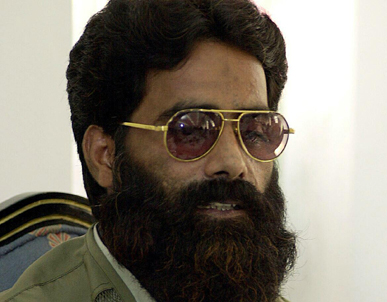
The reported death of Muhammad Ilyas Kashmiri deals a huge hit to the terror cell, still reeling from bin Laden’s killing. Ex-CIA analyst Bruce Riedel on the impact on U.S.-Pakistan relations.

Pakistani sources are reporting the death in a drone strike this weekend of Muhammad Ilyas Kashmiri. If true, it is a big setback for al Qaeda and could help ease tensions between Pakistan and the U.S. a bit.

Kashmiri is al Qaeda’s top Pakistani operative. He was born in Pakistani-controlled Kashmir on February 10, 1964. Trained in the camps of the Pakistani Inter Services Intelligence directorate (ISI) and then the elite Pakistani commando group, the Special Services Group (SSG), he was the darling of the Pakistani army for years. He fought in the war against the Soviets in Afghanistan where he lost an eye and a finger. Then he took the war to India both in Kashmir and in New Delhi itself.

He formed his own militant group called the 313 Brigade, after the 313 fighters who joined the prophet Muhammad in an early Islamic victory. His exploits in India were legendary. He was personally decorated and thanked by the then head of Inter-services Intelligence (ISI), Mahmud Ahmad and Pakistani’s dictator, Pervez Musharraf, in 2000. But Kashmiri broke with his ISI and army friends in 2002 when Musharraf decided to give the Americans at least some help against al Qaeda.

Kashmiri took his 313 Brigade into al Qaeda’s camp and assisted in training Taliban fighters in Afghanistan and began targeting his former friends in the ISI. His teams killed at least one senior ISI officer. He was involved in an attempt to assassinate Musharraf in 2004. The United Nations credits him as a key player in the plot to murder former Prime Minister Benazir Bhutto in December 2007.

The Pakistani American David Headley, who has confessed to plotting the Mumbai terror attack in November 2008, says Kashmiri was his key contact in al Qaeda. The two worked on a plot to attack a Danish newspaper office in Copenhagen in 2009. That was foiled when the FBI arrested Headley, but Kashmiri continued planning to carry out Mumbai-style attacks in Europe. Another was foiled in Denmark at the end of 2010. Kashmiri would have played an important role in helping al Qaeda recover from bin Laden’s demise. He had key connections inside the Pakistani syndicate of terror groups.

Just last week one of Pakistan’s best investigative reporters Syed Salam Shahzad was murdered after finishing a new book on al Qaeda in Pakistan. According to excerpts published in India and Pakistan, Shahzad had evidence Kashmiri may have been the real brains behind the Mumbai plot and hoped it would precipitate an Indo-Pakistani war that al Qaeda could exploit.

This is not the first time Kashmiri has been reported killed by a drone attack; he has reappeared after claims of his demise. But if this time he is dead, it is a significant setback for al Qaeda just a month after American commandos killed Osama bin Laden. Kashmiri would have played an important role in helping al Qaeda recover from bin Laden’s demise. He had key connections inside the Pakistani syndicate of terror groups with both the Afghan and Pakistani Taliban and Lashkar-e-Taiba, and with al Qaeda operatives in Europe and fund raisers in the Persian Gulf. And he had penetrations deep inside the Pakistani army and ISI.

So both Washington and Islamabad will be glad to see him gone. Kashmiri’s demise won’t solve all the problems in the tortured American relationship with Pakistan by any means but it will help.

Of course, if Kashmiri is not dead and reappears yet again unscathed, it will only add to his credentials. Bin Laden benefited enormously from surviving the cruise missile attack that targeted him in 1998. Recriminations could damage the Pakistani-American relationship further. Nonetheless those are risks worth taking. In either case we will know soon. Al Qaeda is quick to eulogize its martyrs. If Kashmiri’s dead, they will say so.

-Pakistanis for Peace Editor’s Note– Good Riddance!!!

Afridi Asks Zardari For Help

As Reported by The AFP

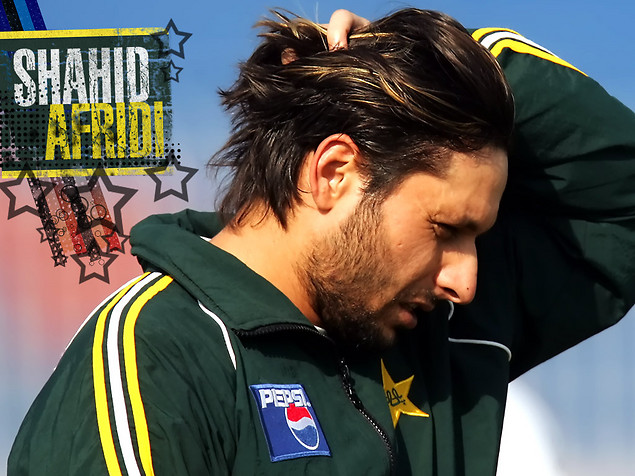
Former captain Shahid Afridi appealed to President Asif Ali Zardari for help on Wednesday after his central contract was suspended when he announced his retirement from international cricket. “I have appealed to the president to intervene urgently, also deal with other issues and save the game from getting into more crises,” Afridi told AFP by telephone from Southampton.

Afridi confirmed that the England and Wales Cricket Board stopped him from playing after the PCB revoked its permission.
“The captaincy was not an issue as I have already played under senior players, but it was a matter of self respect and honour which was hurt,” said Afridi who refused to speak about the PCB sanctions.

The opposition Pakistan Muslim League-N party has already submitted an adjournment motion in the national assembly against Afridi’s punishment.
Former Pakistan captain Imran Khan, who now heads his own opposition party, said the PCB was not run professionally.
“The board is not run like an institution,” Khan told a television channel. “Afridi feels injustice is done so he has taken a decision and you don’t change four-five captains in a year.”

“Just recently everyone was praising Afridi after he led Pakistan to the semi-final of the World Cup and then suddenly this happened,” said Khan. “The board is also run on ad-hoc basis like the country,” he added.
The Muttahida Qaumi Movement (MQM), which belongs to the coalition government headed by Zardari’s Pakistan People’s Party, also objected to the sanctions on Afridi. “President Zardari should take notice of the biased attitude of the board,” said MQM leader Farooq Sattar. “You don’t treat national heroes like this.”

Sports Minister Shaukatullah Khan lashed out at PCB chairman Ijaz Butt over the “injustice” and said he would discuss the matter with Prime Minister Yousuf Raza Gilani.

Abdul Ghaffar Qureshi, who heads the sports committee in the upper house of parliament, demanded Butt’s sacking.
“A change in the PCB is imperative,” said Qureshi. “Butt has not allowed any captain to settle so it will be better to sack him.”

The 31-year-old all-rounder, dumped as one-day captain following a row with coach Waqar Younis last month, quit international cricket in protest at his treatment by the Pakistan Cricket Board (PCB).
In response, the PCB suspended his central contract and revoked all his no-objection certificates, meaning he will not be officially permitted to play overseas.

The move will stop him from playing for Hampshire in England’s Twenty20 league and in next month’s Sri Lankan Premier League.
Afridi said that he came to know about his removal from the team’s captaincy through media and the board did not bother to inform him about that decision.

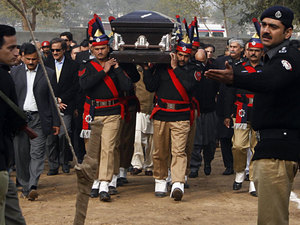
Pakistani Journalists Defiant at Reporter’s Burial

As Reported by The Associated Press

A Pakistani reporter who investigated terrorism and was found slain after telling a rights activist he’d been threatened by intelligence agents was buried Wednesday. Fellow journalists vowed his killing would not silence them.

Syed Saleem Shahzad wrote for the Asia Times Online and other publications. He delved into topics that were often sensitive in Pakistan, where journalists face threats from insurgents as well as a security establishment that operates largely outside the law.

“We will not shut our voices down,” said Azhar Abbas, a prominent Pakistani journalist. “The journalist community is united on this. We will not stop ”

Pakistan was the deadliest country for journalists in 2010, with at least eight killed in the line of duty, according to the New York-based Committee to Protect Journalists. Six died in suicide attacks, the group said in a report late last year.

Despite the dangers, the media establishment in Pakistan has expanded rapidly over the past decade, and reporters here operate with tremendous freedom compared with many other developing countries.

In recent weeks, the media have carried unusually scathing coverage about the security establishment after it was caught unawares by the May 2 U.S. raid that killed al-Qaida chief Osama bin Laden in a garrison city in Pakistan’s northwest.

Shahzad’s death could heighten the criticism, though commentators are being careful about how they discuss the alleged link to spy agencies.

After disappearing Sunday from Islamabad, Shahzad’s body was found dozens of miles outside the capital on Tuesday, bearing signs of torture, police said. His death drew numerous condemnations, including from U.S. Secretary of State Hillary Rodham Clinton.

The 40-year-old was buried in his hometown, Karachi, as hundreds of friends, relatives, political figures and fellow journalists mourned.

Sindh province Information Minister Sharjeel Memon called the killing a “cowardly act” and promised that those responsible would be brought to justice. But it’s unclear how much the weak civilian government can do if, as some suspect, Pakistani security agencies played a role.

A spokesman for Pakistan’s premier spy agency, Inter-Services Intelligence, called the allegations “absurd.” He spoke on condition of anonymity because he was not authorized to speak to media on the record.

However, Ali Dayan Hasan, a researcher with Human Rights Watch, said Shahzad had told him that he feared Pakistani intelligence agents were after him.

The agencies pressured him to reveal his sources in October after he wrote a story about Pakistan allegedly freeing a detained Afghan Taliban commander, according to an email Shahzad sent Hasan. Hasan said Shahzad was still worried in recent weeks, but kept up his reporting.

Just last week, Shahzad wrote a story about alleged al-Qaida infiltration of the navy. The report came after a 17-hour insurgent siege of a naval base in Pakistan’s south added to the recent humiliations suffered by security agencies.

Within days, Shahzad vanished, and his wife contacted Hasan as her husband had instructed in case he disappeared.

In a statement, Clinton said Shahzad’s reporting “brought to light the troubles extremism poses to Pakistan’s stability,” and said the U.S. supports the “Pakistani government’s investigation into the circumstances surrounding his death.”

Gunmen Storm Pakistan’s Naval Aviation Base

By Faisal Aziz for Reuters

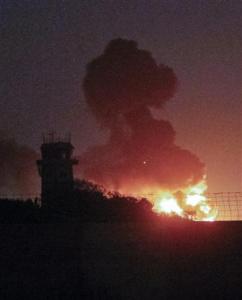
Gunmen attacked Pakistan’s naval aviation base on Sunday, starting fires, setting off explosions and fighting pitched gunbattles inside one of the country’s most heavily guarded military installations.

Officials said at least four people had been killed in the attack on PNS Mehran in the southern city of Karachi. Between 15 to 20 gunmen were inside and had attacked hangars housing aircraft, officials said. Witnesses said they could hear gunshots and see smoke rising from the base.

“They were equipped with sophisticated weapons,” navy spokesman Commodore Irfan ul-Haq told Reuters. Another spokesman said that one P-3C Orion, a maritime partrol aircraft, had been destroyed. “The attackers are still inside and intermittent firing is continuing.”

Interior Minister Rehman Malik said the militants had attacked from the rear of the base. “We have been able to confine them to one building and an operation is underway either to kill or capture them.” The Karachi attack evoked memories of an assault on Pakistan’s army headquarters in the town of Rawalpindi in 2009, and revived concerns that even the most well-guarded installations in the country remain vulnerable to militants.

Taliban militants, who have vowed to avenge the killing of al Qaeda leader Osama bin Laden by U.S. special forces, have carried out several attacks since his death on May 2.

Officials said the gunmen had attacked three hangars housing aircraft. Nine explosions were reported from the base, with jet fuel tanks possibly catching fire and exploding. Almost three hours after the start of the attack, gunbattles between presumed militants and commandos continued.

A least a dozen ambulances were parked outside the base, waiting to take wounded to hospital. Pakistani military and paramilitary reinforcements were pouring in, with four vehicles carrying about 10 troops each moving into the base. An intelligence official said four people had been killed and five wounded in the Karachi raid.

Prime Minister Yusuf Raza Gilani condemned the “terrorist” attack. “Such a cowardly act of terror could not deter the commitment of the government and people of Pakistan to fight terrorism,” Gilani said in statement.

Pakistan has faced a wave of bombings and gun assaults over the last few years, some of them claimed by the Tehrik-e-Taliban Pakistan (TTP), or Pakistani Taliban. Others have been blamed on al Qaeda-linked militant groups once nurtured by the Pakistani military which have since slipped out of control.

The discovery that bin Laden was living in the Pakistani garrison town of Abbottabad, not far from the Pakistan Military Academy, has also revived suspicions that militants may be receiving help from some people within the security establishment.

Pakistan and the United States say the senior leadership in the country did not know bin Laden was in Abbottabad.

On April 28, suspected militants detonated a roadside bomb in Karachi, killing four members of the navy, the third attack on the navy in a week. The attack came two days after two bombs hit buses carrying navy personnel, killing four people and wounding 56. Taliban insurgents took responsibility for the twin attacks.

Florida Men Accused of Aiding Pakistani Taliban

By Gardiner Harris for The New York Times

The F.B.I. on Saturday arrested three Pakistani-Americans, including father and son imams from South Florida mosques, charging them with providing financing and other material support to the Pakistani Taliban.
Related

Three people living in Pakistan were also charged in the indictment, which was made public by Wilfredo A. Ferrer, the United States attorney for the Southern District of Florida. The F.B.I. said that the indictment grew out of a review of suspicious financial transactions and other evidence and not from an undercover sting operation. The arrests seem to be unrelated to the raid that killed Osama bin Laden a week ago.

The four-count indictment charges that the six sought to aid the Pakistani Taliban’s fight against the Pakistani government and its allies, including the United States, by supporting acts of murder, kidnapping and maiming in Pakistan and elsewhere in order to displace the government and establish strict Islamic law known as Shariah.

“Today, terrorists have lost another funding source to use against innocent people and U.S. interests,” said John V. Gillies, the special agent in charge of the F.B.I.’s Miami office.

Five of the six people charged are related. Arrested in the United States were Hafiz Muhammed Sher Ali Khan, 76, of Miami; and two of his sons, Izhar Khan, 24, of Miami; and Irfan Khan, 37, of North Lauderdale.

Hafiz Khan is the imam at the Miami Mosque, also known as the Flagler Mosque. Izhar Khan is an imam at the Jamaat Al-Mu’mineen Mosque in Margate, Fla. Hafiz and Izhar Khan were arrested Saturday in South Florida, while Irfan Khan was arrested in Los Angeles. All three are originally from Pakistan.

The three people residing in Pakistan who were charged were Amina Khan, Hafiz Khan’s daughter, and Alam Zeb, her son, as well as Ali Rehman, also known as Faisal Ali Rehman. A statement from prosecutors said that the defendants were assisted “by others in the United States and Pakistan.”

The indictment said that the six transferred money to the Pakistani Taliban that was intended to buy guns and sustain militants and their families. Hafiz Khan is also accused of supporting the Pakistani Taliban through a madrasa, or Islamic school, that he founded and controlled in the Swat Valley region of Pakistan. He was charged with using the madrasa to provide shelter and other support for the Pakistani Taliban and sending children from his madrasa to learn to kill Americans in Afghanistan.

The indictment does not charge the mosques with any wrongdoing. The Muslim Communities Association of South Florida announced that that Hafiz Khan had been suspended indefinitely from his mosque.

“Our organizations, together through the Coalition of South Florida Muslim Organizations, has been working with the U.S. Attorney’s Office and the Miami F.B.I. office,” the association said in a statement released Saturday afternoon, “and appreciate the efforts of law enforcement to root out potential sources and supporters of terrorism.”

“We stand together with the U.S. attorney, Wilfredo Ferrer, and the men and women of the F.B.I., and have been and will be cooperating with law enforcement to our fullest ability,” it added.

The F.B.I. news release took pains to describe the charges as reflecting only the actions of the defendants, not of their mosques or Islam. “Let me be clear that this is not an indictment against a particular community or religion,” Mr. Ferrer said. “Instead, today’s indictment charges six individuals for promoting terror and violence through their financial and other support of the Pakistani Taliban. Radical extremists know no boundaries; they come in all shapes and sizes and are not limited by religion, age or geography.”

“The indictment does not charge the mosques themselves with any wrongdoing,” it continued, “and the individual defendants are charged based on their provision of material support to terrorism, not on their religious beliefs or teachings.”

The inclusion of those statements were “well appreciated” by the Muslim community in South Florida, said Asad Ba-Yunus, who is a legal adviser to the Muslim Communities Association of South Florida.

“We have been working with the U.S. attorney’s office over last few months” to improve relations, Mr. Ba-Yunus said, adding that he had spoken with the office Saturday morning before the indictment was announced.

The charges against the Florida men accusing them of supporting the Pakistani Taliban but not actually carrying out operations themselves are the most common types of terrorism prosecutions that United States authorities have pursued since the attacks of Sept. 11, 2001. Of the 50 leading terrorism cases since those attacks, about 70 percent have involved financing or other support to terrorist groups, according to the Center on Law and Security at the New York University School of Law.

The Pakistani Taliban were officially designated as a terrorist organization by the State Department on Aug. 12, 2010.

The Pakistani Taliban are closely allied with Al Qaeda, and is responsible for a series of attacks against Pakistani police and military targets in recent years. Pakistani authorities believe a splinter group of the Pakistani Taliban was responsible for the suicide attack in northwestern Pakistan on Friday that killed more than 80 cadets from a government paramilitary force. According to American officials, the Pakistani Taliban have been involved in or claimed responsibility for attacks on United States interests, including an attack on a military base in Khost, Afghanistan, along the border with Pakistan, and a suicide bombing against the consulate in Peshawar, Pakistan.

American officials say the failed attempt to detonate a car bomb in Times Square last May was developed and financed by the Pakistani Taliban. The convicted bomb plotter, Faisal Shahzad, contacted the Pakistani Taliban via computer to confer with handlers over what he had done, the government wrote in court papers in September.

Pakistanis for Peace Editor’s Note– As peace loving Americans of Pakistani descent, we are upset to hear that some members of the US Muslim community would want to do the great nation of the Unites States harm. If found guilty, we hope that they are severly punished and a message is sent to anyone else intending to do us harm. We commend the FBI and the Department of Justice in these arrests and in keeping the American homeland safe.

Liberty Market, Lahore’s Hub

By Nagwa Malik

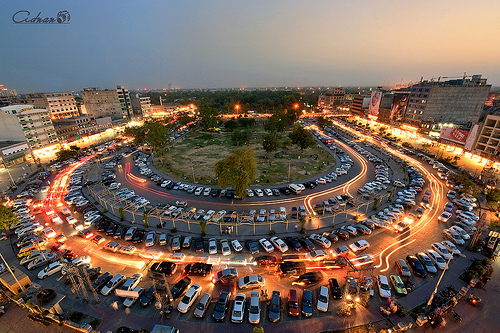
Pakistan is a country of historic and cultural importance. Lahore, the heart of this throbbing culture and history, was referred by Max Robinson as the “Pearl of the Punjab” in his article “Rebranding Lahore”. So what is Lahore to the common foreigner? Unfortunately nobody knows because we have an out-dated website of the Pakistan Tourism Development Corporation which does nothing to attract tourists. Lahore is claimed to have existed 4,000 years ago and history has established records of its existence go back at least 2,000 years. This city of vibrant culture, with its outlandish monuments and its commercial centers has changed over the years whilst still keeping the essence of the city itself. This change is reflected in the changes brought about in Liberty Market, the commercial hub of Lahore, set in the center area of Gulberg (originally the Gul-Bagh).

How does a commercial center signify the importance of any city, or its cultural out-look? Relatively! Any shopping center is designed according to the social and cultural needs of its citizens. Lahore is a modern city steeped in a history of thousands of years. It is the crown of Pakistan, originally the crown of Northern India. This is reflected in the architecture of its bazaars, and its modern shopping centers and malls. Liberty Market fits the bill of reflecting Lahore’s modern society. It is a half-souq/bazaar half mall in structure, where you have a huge plaza dominating the area, and then you have rabbit paths very much like those in Anarkali, those that twine from within the closed structure and out to the back where a bazaar like scenery hits you with food stalls, the embroiders, the tailors, walk back inside and you’re inside a branded shop. Liberty Market is the middle-class chic center, where you can find anything and everything, from clothes and accessories to shoes and restaurants. You can go there in the middle of the night and still find a place to sit and relax with a cup of chai and a shwarma. You can enjoy your shopping, breaking it with cool slushes from anyone of the cafes. You think of any type of food, from the traditional to the westernised or Arabian snacks and you have them, all in one area.

The facelift planned has come in handy. The parking space planned and worked on is made more secure, and with parking meters set rather quaintly, coupled with assistants to put in the “quarter” for you (only in this case it’s not a quarter). You have less bombardment of traffic-well; actually there is still the tiresome bombardment, but more controlled. This has helped induce discipline in our public which was lacking miserably these past years.
The commotion with the Sri-Lankan team also added to the, albeit negative, fame of Liberty Market. The worst part was best described by Max Robinson in the very article, when he said, “when the news broke about the attack on the Sri Lankan cricket team, my heart sank. There was Liberty Chowk, a place full of memories of fun, joyful evenings and feeling ever so slightly too full after gorging on chicken handi at Salt ‘n’ Pepper. If only the people watching that horror knew of the feelings and experiences that I and so many others associate with Liberty, the incident would have felt more like an anomaly or a tragedy. But, alas, the good name of Lahore was to be dragged through the mud and added to the list of dangerous terrorist-ridden holes to be avoided at all costs.”

This calls for an emergency upgrading of Liberty Market and of Lahore. This chic market which is one of the most delightful areas in Lahore is now known to the world as an area unsafe for Lahoris, let alone the tourists. Why? Liberty does not need a physical uplift. It does not need alarming blaring announcements over the speakers as each shop announces its sales, it does not need new plazas- it needs marketing. Yes, our market needs marketing and that even to the outer world. A reflection of its citizens, it should be used in overhauling the image of Lahore in particular and of Pakistan in general.

I mean if the few tourists that come to Lahore feel they have entered the “safest” city in the world, and move around Liberty as the “safest and most colourful” modern epic of Lahore, why shouldn’t it be trumpeted? Apart from those classic monuments of the walled city, what have we for the man of average social tastes? We have Liberty Market, more so due to the negative fame it achieved during the rare terrorist incident. Now people hear of Lahore and they associate it with Liberty Market. That can be propagated positively now, to promote tourism, to promote Lahore’s old name of “one of the most peaceful cities in the world”, to promote the Lahore of today, a modern city with its eons of culture and tradition.
If to one Max Robinson, “Cultural differences mean that a holiday in Pakistan will never be exactly like a vacation to India or Thailand. No boozy full moon dance parties or seedy cruises up and down the beaches here. But there is a market out there for cultural tourism. People who want to enjoy all the sights, sounds and smells of a place totally different to home.” What would it mean to many others once we invite them to come over, to pour in? And once they realize they do not have to go all the way to the walled city to see, in their own words, “wonder after wonder” that “thrills them”, but can enjoy the mundane act of shopping in a center like Liberty and still have a unique experience. Heck, it is a unique experience for our own Pakistanis who come to Lahore just to shop here…imagine what it would be to the foreigners who would greet an up-to-date mall-cum-bazaar well within reach, with products that are also well within reach.

The Power of Pakistani Conspiracy Theories

By Ahmed Rashid for The New Republic

Pakistan is not a failed state, or as yet a failing one, even though it may be in a state of chaos or meltdown. Unlike really failed states, it has a powerful army and a corrupt, run-down, but still functioning bureaucracy, judiciary, and police force. Pakistanis perform outstandingly well in the realm of culture: in the arts, television, fashion design, pop music, and of course cricket. What is missing are adequate social services, such as health care, education, population-control programs, and jobs for a population that is nearing 200 million people. Like many Arab countries, Pakistan faces a youth bulge, with an estimated 60 percent of its people under twenty-five years old.

For these young people without adequate education and employment, who have to deal with a corrupt system that offers no panacea to the poor, joining an Islamic extremist group is not at all unusual. It is the norm. For this reason, a replay of an “Arab awakening” in Pakistan would not lead to the dawn of true democracy, but rather to a mass movement whose leadership would swiftly fall into the hands of Islamic extremists, who would then try to overthrow the state.

What Pakistanis desperately need is a new narrative by their leaders—a narrative that does not blame the evergreen troika of India, the United States, and Israel for all of the country’s ills, that breaks the old habit of blaming outsiders and instead looks at itself more honestly and more transparently. Pakistanis as a nation seem incapable of self-analysis, of apportioning blame according to logic and reason rather than emotion.

Along with the causes that I listed above, the wave of intolerance sweeping the country is also due substantially to the conspiracy theories put about by the ruling establishment and their allies in the media. These various hallucinations paint Pakistan as the victim, maligned and wronged at the hands of foreign powers—especially the United States and India. In the imagination of many Pakistanis, the country is regularly used for some geopolitical aim by the Americans and then discarded in favor of India. These sinister outsiders want to subvert, destroy, and undermine Pakistan—but no logical reason is offered as to why. And few will publicly argue that in fact it is the selective state sponsorship of extremism that is destroying the country.

The narrative that has been peddled by the state for much of the past decade is that Pakistan is being undermined by the presence of American forces in Afghanistan, and that if they were to leave the Pakistani Taliban would go home, the suicide bombings would cease, and everything would go back to normal. The ultimate aim of the United States in Afghanistan—so the narrative continues—is to capture Pakistan’s nuclear weapons, even as India is busily dismembering Pakistan by funding Baloch separatists and the Pakistani Taliban. But if that is so, why on earth did the state allow the revival of the Afghan Taliban in 2003, which has only delayed the American withdrawal from Afghanistan? And for those demanding higher military budgets, the most self-serving conspiracy theory is that Pakistan is locked in an interminable conflict with India, which cannot be resolved.

After Bin Laden Raid, Might US-Pakistan Cooperation Get Better?

By Howard LaFranchi for The Christian Science Monitor

The United States launched a drone strike targeting militants in the North Waziristan region of Pakistan Friday, raising tantalizing questions in the aftermath of Osama bin Laden’s death.

And does the drone strike suggest, despite official Pakistani protests to the contrary, that cooperation between the two countries not only continues but may in fact end up enhanced by Sunday’s operation, which was an embarrassment for Pakistan?

It was impossible to know if the strike, which reportedly killed at least eight suspected militants gathered in a house in North Waziristan, resulted from any information seized Sunday, since word of the strike came from Pakistani military officials.

But the drone attack appeared to bolster the argument, voiced by a wide range of regional and intelligence experts, that the US would be able to use Sunday’s raid to pressure Pakistani officials to side more unequivocally with the US in battling Islamist extremists.

Also on Friday, Yemeni officials reported that a drone strike there killed two Al Qaeda operatives.

Drone strikes have been a contentious issue in US-Pakistan relations. But it is also true that a considerable increase over the past year in US strikes inside Pakistan by the unmanned aircraft has not led to a breach in the bilateral relationship.

“It was proper for Obama not to publicly rub Pakistan’s nose in” the embarrassment of having bin Laden discovered in the country, says Paul Pillar, who now directs security studies at Georgetown University in Washington after a long career in US intelligence. “But in private, they owe us something…. We do expect more cooperation.”

That perspective is riding high in Washington – especially among those security analysts and former officials who consider the relationship with Pakistan, difficult as it is, too vital for the US to simply throw up its hands and leave.

If anything, the bin Laden operation should pave the way for the US to develop closer intelligence and military ties to Pakistan, says Pete Hoekstra, a former Republican congressman from Michigan and former chairman of the House Permanent Select Committee on Intelligence.

An advantage for the US coming out of the successful raid, he says, is that America looks competent and like it may be a good friend to have in the battle with extremism.

“For the people sitting on the fence, it’s like, ‘They [the US] may be really getting good at this, and maybe now is the time to make a decision to get closer,’” said Mr. Hoekstra, speaking Thursday at a discussion on Pakistan at the American Enterprise Institute in Washington.

Dov Zakheim, a former deputy Defense secretary under President George W. Bush, agrees that the enhanced US stature after the raid should be leveraged to win stronger cooperation from countries like Pakistan that have hedged their bets about America’s staying power.

The successful operation against bin Laden “tells the world we’re not a spent power, we’re not a declining power,” said Mr. Zakheim, speaking Tuesday at a Center for the National Interest forum in Washington. “There’s a message there about US military power that is terribly important.”

Few experts in the bilateral relationship believe that Pakistan knew absolutely nothing about bin Laden’s whereabouts. But Mr. Pillar of Georgetown guesses that in the end, it may be learned that Pakistani officials simply didn’t want to know about something that existed right under their noses.

“My guess is … there was no effort to try to find things out,” said Pillar, speaking at the National Interest forum. “My guess would be, it’s not a matter of [Pakistani Army Chief] Gen. [Ashfaq Parvez] Kayani or the head of the ISI [Pakistani intelligence agency] knowing who was in that compound – but more the inquiries to find out just never having taken place.”

Kayani this week warned the US that Pakistan would not tolerate another raid like Sunday’s. But similar categorical statements have been made before about US drone attacks, some officials and experts have noted – and the attacks continue, if Friday’s strike is any indication.

Despite the bluster at both ends about the US-Pakistan relationship, a difficult but essential partnership will continue because, with Al Qaeda still in Pakistan and the US still next door in Afghanistan, there is no alternative, some say.

“What’s the alternative strategy in regards to Pakistan? We can’t overreact; we can’t back off the relationship if you don’t have a new strategy,” says Hoekstra, addressing in particular members of Congress who are calling for reduced foreign aid and cooperation. “We’ve got enough relations in the world to worry about right now, rather than adding to the list.”

With Friends Like Pakistan…

By Manzer Munir for Pakistanis for Peace
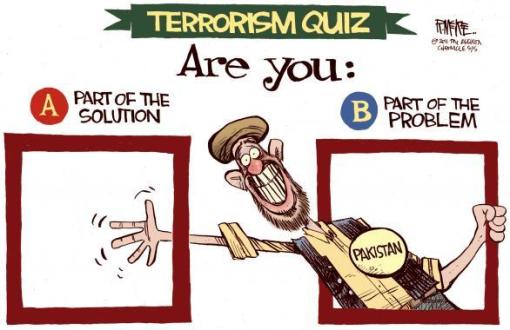
Many people in Pakistan these days are wondering why their nation often finds itself on the wrong side of recent history. First, there is the continued and unjust imprisonment of a Christian Pakistani woman named Asia Bibi who has been languishing in jail for nearly two years. She has been given a death sentence for allegedly making derogatory remarks about the prophet Muhammad.

Then there was the killing of Salman Taseer, who was the then sitting governor of Punjab, Pakistan’s most populous province, by one of his own bodyguards for his outspoken support for Asia’s rights and her freedom. Instead of swift punishment and public outcry at his actions, the killer, Malik Mumtaz Hussain Qadri, was showered with rose petals by some cheering members of the bar association of Lahore when he came to the courthouse for formal charges of murder. Yes, members of the judiciary were cheering his unilateral action of murdering another human being simply for his support towards a condemned non Muslim woman’s rights.

You can only imagine the warped sense of logic and justice in a country where lawyers cheer the cold blooded murder of an innocent man whose only crime was to come at the aid of a condemned Christian mother of two children.

Fast forward to a few months later, the extremists managed to assassinate the only Christian member of President Asif Ali Zardari’s government when the Minister for Minority Affairs, Shahbaz Bhatti, was killed in a hail of bullets by unknown gunmen who then managed to escape on their motorcycle. Bhatti being a Christian as well as a minister in the government, had campaigned for the release of Asia as well as for the repeal of the blasphemy laws in Pakistan that at help promote a culture of state sanctioned hatred against religious minorities in Pakistan.

The culture of fear and hatred as well as violence against the religious minorities has progressively gotten worse along with the security situation inside the country in the last ten years. If there is anything that has been proven by some of these recent events in Pakistan, it is only that the country has become the undisputed global hotbed of extremism, fanaticism, and Islamic militancy in the Muslim world. It has now morphed into a country where the Wahhabi and Salafi fanatics have successfully used fear and hate to silence the majority moderate Barelvi and Sufi Muslims of Pakistan.

When powerful moderate voices like those of Bhatti and Taseer are silenced despite having heavy protection, how safe can the common man feel about his life if he chooses to speak up against the radicals within Islam? To kill someone is against Islamic belief at its core, unless it is done in self defense but you would be hard pressed to hear that view from the religious fanatics in Pakistan. They have justified killing others over many insane reasons such as making derogatory remarks about Islam or the prophet Muhammad. They also rationalize the killing of someone over a family’s honor, thus honor killings where often young women are killed if they are deemed to have brought dishonor to their family. These radical Islamists will even want someone dead for simply uttering disparaging remarks against Islam or its prophet. It is both ironic and hypocritical to see that the same derogatory remarks towards other figures such as Jesus, Moses, Abraham or other prophets of the Quran do not meet the same outcry nor receive the same impassioned response from the masses as when Islam or its prophet Muhammad are criticized.

The seeds of this current fanaticism fanning the flames of hatred were planted during an earlier conflict, this one involving the Soviets against an under matched adversary in Afghanistan. It was during this time in the ‘80’s when the Pakistani dictator, General Zia ul Haq, was in power and he accepted American aid from the Reagan administration in thwarting the threat from the 1979 Soviet invasion of neighboring Afghanistan. At the time, Pakistan’s ISI worked very closely with these “freedom fighters” waging what many thought was a just jihad against a communist foe who disallowed all religious worship. In fact, a good movie to rent right now to put some of these current events in perspective would be Charlie Wilson’s War starring Tom Hanks which details this era of Pakistan-US relations and cooperation against a common enemy in the Soviets.

The trouble now however is that in this current uneasy alliance between Pakistan and the US, there is not a common enemy, at least not as how it is viewed by many in Pakistan, which recently was polled to be the most anti-American nation in the world. Even though radical Islam and fanaticism is as much a threat to Pakistan’s sovereignty and prosperity as it is to the United States, India has always been seen as the big threat by its army and rulers. Pakistan has long seen Afghanistan as a country offering it strategic depth in any future wars with India. Thus, its interests in Afghanistan do not coincide with those of the United States.

The Pakistani media also constantly feeds a steady news diet of bombings by the Taliban/Haqqani network as well as any one of the other fill-in-the-blank militants groups seemingly operating freely from within its borders. There is also the regular news reports of US drone attacks and NATO actions in the AfPak region, as well as the all ubiquitous and constant threat faced from India, who is still seething from the Mumbai bombings in 2008, which were blamed on Pakistani trained terrorists. To further add insult to their injury, not a single leader of the Lashkar E Taiba has been convicted in Pakistan for the attacks in Mumbai that claimed 174 deaths and seriously injured several hundred others.

To the Indians, the perpetrator of their version of 9/11 is not an Arab from Yemen named Osama, but rather a whole nation state with whom it has fought three wars in 60 years and who is a long time sworn enemy with which it shares a long border. Too often it is rightly assumed by many that Pakistan will not act against Lashkar E Taiba and other openly anti-Indian militant groups because these groups are seen as a strategic asset for use against India. Only the fear of an all out nuclear war between the two nations by a trigger happy Pakistan placated India enough so that New Delhi did not immediately take military action against Pakistan after the Mumbai attacks.

So this culture of fear from all enemies both foreign and domestic to Pakistan’s sovereignty is now at an all time high within the nation. With a several decade long war on its western border in Afghanistan as well as the constant threat from its arch enemy to the east in India, Pakistan has never felt more threatened or squeezed. This pressure is now only going to get ratcheted higher since last week’s killing of Osama Bin Laden at a compound in a suburb of Islamabad, Pakistan. Living for five years undetected in the compound, Bin Laden was less than a mile away from the Kakul Military Academy in Abbottabad, Pakistan’s version of the famed American military college of West Point, when he was killed by a US Navy Seal team.

For the world’s most wanted terrorist to hide in plain sight in such a manner and for so many years, rightly points a lot of suspicion on Pakistan. Long suspected by many intelligence analysts, elements within Pakistan’s spy agency, the ISI, naturally now attracts a lot of suspicion in their possible involvement in the whole affair. There are strong voices and calls within the US Congress to halt all aid to Pakistan in light of Bin Laden’s death. We certainly can assume that any other country in the world found to be harboring terrorists would already have been labeled a state sponsor of terrorism and would be facing immediate sanctions from the international community. “You are either with us or against us” were the words so famously uttered by then President Bush to Pakistan specifically after 9/11. But due to Pakistan’s importance for a successful pullout from Afghanistan of US troops, as well as its strategic position within the Islamic world, neither side can afford to cut off relations with each other.

Although the Obama administration stopped short of claiming that the corrupt civilian government of Zardari was directly involved in protecting and sheltering Bin Laden, all signs point to complicity to some extent by some segments within Pakistan’s hierarchy. There is near unanimous agreement among many in Washington, and this is true on both sides of the aisle, that there are many sympathizers of the Taliban and Al Qaeda within the ranks of the army and the intelligence agencies of Pakistan.

Having driven the Soviets out of the region with the help of militant jihadi groups like the Taliban, no doubt a cadre of army and intelligence officers must have come to espouse the belief that it is in Pakistan’s best interests to have a religiously frenzied force available to use as a weapon against India in a future conflict also. In fact, Pakistan has always had this policy of seeking strategic depth in Afghanistan against India.

The death of Osama Bin Laden in Pakistan by Special Forces of the American military illustrates just what a duplicitous game the country has been playing with the United States and more importantly with itself. In the war on terror America lost nearly 3,000 citizens in the attacks on 9/11. In that same period stretching the last ten years, Pakistan has lost nearly 31,000 citizens to terrorist attacks by the Taliban, Al Qaeda and other militant groups. So it has always been in Pakistan’s best interests to fight the militant threat brewing in its borders the last two decades that has claimed so many lives and caused so much instability.

The murders of Salman Taseer and Shahbaz Bhatti illustrates the dire situation within Pakistani society where many young underprivileged men gravitate towards Osama Bin Laden’s ideology of hate against the US, which is seen by many, as the aggressor in an already very anti-American country. Also western ideas, religious and political liberties, and freedoms, such as those for women in western society, are all seen by the Islamic clergy and religious establishment as being against Islamic doctrine and clashing with the Muslim way of life. Therefore, the madrassahs and the masjids continue to espouse rhetoric against the American and European way of life which is seen as contradicting the teachings of the Quran. Even moderate Muslims and their sites of worship have come under heavy attack by the militants as witnessed by a new strategy of attacking Sufi Muslim shrines and mosques. Pakistan may not want to admit it, but there is a raging war going on within itself for the control of Islam and the attack on moderate Islam by the extremists within the religion.

The Bin Laden killing makes Pakistan seem either highly incompetent about knowledge his whereabouts or at the very least appear to be deeply complicit in sheltering and keeping him hidden while the United States launched the biggest manhunt in US history. At this point, the United States justly feels betrayed and distrustful towards anyone in the Pakistani establishment. After all, how are they to know who now to trust in the army or the civilian government?

It is imperative that Pakistan mount an immediate and urgent investigation that has the full cooperation and assistance of the US so that both countries can discover the source of this support system that Bin Laden has had from within Pakistan. Certainly, some heads do need to roll in Islamabad over this. Whether those resignations be of the current ISI chief, Ahmad Shuja Pasha, head of the army, General Ashfaq Parvez Kayani, or Zardari and Gilani themselves, as some accountability needs to occur. This is important not just for the sake of American-Pakistani relations, but just as importantly for the benefit of the Pakistani populace who is both deeply embarrassed by breach of Pakistan’s sovereignty, but also for the intelligence failure by the government of Pakistan at Osama’s whereabouts. Until and unless Pakistan makes this investigation a top priority, USA and Pakistan relations will continue to slide downhill and will mire further in distrust.

Pakistan must realize that in this global war against religious Islamic fanaticism, it cannot continue to speak from both sides of its mouth. Not when everything, including its very existence is at stake. It cannot at once be both a front line ally in the war against terror and receive billions of dollars in US aid, and at the same time, be found to shelter or allow terrorists and militant organizations safe havens and allow them to operate within its territory.

It is up to Pakistan to salvage a quickly deteriorating situation. However at the time of publication of this article, it seems that President Asif Ali Zardari’s government is off to a horrible start in mending fences with the US. First the name and identity of the CIA station chief in Pakistan was leaked by someone in the ISI to members of the local press. This leak compromised his mission and even poses a danger to his life as the anonymity of all operatives is a necessary requirement in intelligence work.

Then later in the day, in remarks given by Pakistan’s Prime Minister Yousuf Raza Gilani to its Parliament, he defiantly stated that neither Pakistan’s army nor its intelligence agency should be suspected by the Obama administration for providing support to Bin Laden. Gilani also went as far as to say that any future unilateral action by the US or any other nation inside Pakistan’s territory will be met with like force. I thought to myself, did he really just that? Did Pakistan just threaten the United States? It is appalling to see the political posturing now being done by the Pakistani government and the long term negative consequences they will have on the nation.

For a country that is receiving nearly $3.5 billion in US aid yearly, these are very tough words that will undoubtedly only make the strained relations between the two countries worse. Pakistan should realize that United States wants to feel that it can trust it to be a full partner in the fight against militancy and extremism. And unless this distrustful and at times, very adversarial relationship changes, the United States cannot help but feel that with friends like Pakistan, it does not need enemies!

-Manzer Munir, a proud Pakistani American and peace activist, is the founder of Pakistanis for Peace and blogs at http://www.PakistanisforPeace.com as well at other websites as a freelance journalist and writer. 
The Tragic Case of Mukhtaran Mai

As Reported by The Express Tribune

The decision by the deputy speaker of the National Assembly on April 22 to disallow any discussion on the Supreme Court’s verdict on Mukhtaran Mai is most unfortunate, especially given that it was PPP MNA Sherry Rehman who wanted to speak on the matter.
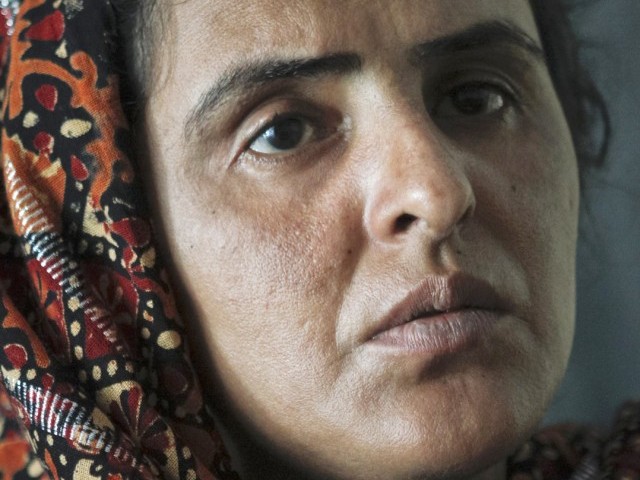
The Supreme Court decided earlier this week to uphold a Lahore High Court verdict that had acquitted all the accused in Mukhataran Mai’s gang rape in 2002, except one.

The gang rape was ordered by an illegal panchayat of Meerwala in Muzaffargarh, Punjab, after which an anti-terrorism court in Dera Ghazi Khan sentenced five of the six accused to death. The fact is that a powerful local tribe has been able to prevent its men from being punished by the justice system. The powerful in our society can first cause a delay in justice — nine years in this case — and then cause a miscarriage of justice through manipulation of the lower ranks of the police.
Mukhtaran Mai is one of many women who have to put up with violence at the hands of men and are forced to keep quiet because the investigative-judicial system is biased against them. Because of ‘anticipated injustice’ in Pakistan’s judicial system, Mukhtaran Mai was made into a global symbol of an abused woman, a challenge which she accepted. Unfortunately, the state became defensive about the publicity and support she got from all over the world; it also manifested a clear conservative bias against the women’s rights movement in Pakistan, which is demonised by powerful religious lobbies.

There was more than ‘anticipated injustice’ in the Mukhtaran Mai case. This was the impunity of the powerful, seen in relation to the terrorist elements in Pakistan which are supported by sections of the state. According to official statements, no terrorist caught after horrendous acts of killing has been punished. Those who view our judiciary politically say that the kind of out-of-the-box jurisprudence applied by the courts to matters such as the NRO will never be applied to Lal Masjid and Mukhtaran Mai. This view holds that the judiciary has always been drawn from a largely conservative legal community and it tends to agree with religious constraints to justice when it comes to women, while tacitly accepting the reign of the powerful in society.

The Supreme Court had intervened after the Federal Shariat Court in 2005 contested the jurisdiction of the Multan Bench. It heard the case and, agreeing with the Multan Bench verdict, ordered the release of the accused. Mukhtaran Mai went in appeal and the latest decision has come after over five years of hearings. Now, in 2011, two of the three judges on the bench have decided to go along with the earlier findings while one judge thought the Court could have taken a more pro-reform view and focused more closely on the notorious methodology of registering an FIR in areas where feudal power trumps justice all the time. The Musharraf government — illegal in the eyes of the Court — pitted itself against this wronged woman and put a ban on her travel abroad. If the liberal elements in Pakistan had stood behind the so-called ‘liberal reforms’ of Musharraf, this was one case that they did not support his government on. Alas, the Supreme Court’s latest decision will be seen as being supportive of Musharraf’s policy of hiding the truth of women’s disabilities in Pakistan from the world.

The judiciary takes the position that its power is not only derived from the Constitution but also from civil society, which stood up for the judges dismissed by Musharraf and finally got rid of the military ruler through street agitation. But civil society also includes women and their rights must equally be defended; more so because Pakistani society needs reform before it learns to treat women as desired by the Constitution. And the Court remains the guardian of the Constitution. If the Honourable Court is today dubbed as being ‘activist’ in favour of the people, let it be clear that it is not the Court of the conservative elements simply because they are powerful.

Ahmed Rashid on Negotiating With the Taliban

By Amar C Bakshi for CNN Global Public Square

Intrepid Pakistani author and journalist Ahmed Rashid wrote an op-ed in the Financial Times describing the Obama administration’s secret decision to ramp up talks with the Afghan Taliban, trying to find a negotiated solution to a decade-long conflict. In a follow-up phone call, Rashid said that the Obama administration ought to announce these talks publicly and pressure Afghanistan’s neighbors to get behind them.

Amar C. Bakshi: What is the shift in U.S. policy toward Afghanistan?
Ahmed Rashid: For a very long time there was a lot of division about whether the U.S.would talk to the Taliban or not. Those divisions have now more or less ended. There is much greater determination to set in motion not just secret talks but everything around it that has to happen.

For example, the Taliban are very keen to open an office somewhere in one of the Gulf countries or maybe Turkey. There is nowU.S.support for that. There would presumably be international support for that also. These are the kinds of steps that are needed to get a political process going.

There is the acknowledgement that an over-dependence on a military strategy is not going to work in the long-term. Secondly, the economic and international situation is really not in favor of a long-term military strategy. What is needed now very much is a political strategy. Secretary of State Hillary Clinton herself has said this several times in the past few weeks.

What would a deal with the Taliban look like?
We are a very, very long way away from that. Many questions are being raised. For example, would there be a power-sharing with the present government? How would it take place? How would the constitution accommodate something like that? There are all sorts of social and legal issues about the constitution and Islamic law.

One of the key steps that the Americans have taken is that for the last two years or so, the Obama administration has been talking about preconditions – that the Taliban has to renounce Al Qaeda, accept the constitution and President Karzai. Now what we’re seeing is that talks are going on without any preconditions. These preconditions, or red lines, are something that everyone assumes will be accepted by the Taliban at the end of the talks rather than at the beginning. That is a very positive thing because I don’t think either side could go into their talks with their preconditions.

There are Taliban preconditions that seem to be watered down too because the Taliban were insisting that they wouldn’t talk until the American forces started to leave. But they seem to be willing to put that aside for the time being.

Why is this shift happening now?
The overall international and economic situation is very, very dire. First of all, the majority of European countries want to pull their troops out of Afghanistan as quickly as possible and that includes some of the leading nations like Britain, Germany and Canada.

Economically they can’t do it. They’re cutting their defense budgets. They are in recession.

And secondly the huge expenditure by the Americans themselves: Something like $108 billion is going to be spent on Afghanistan this year on the war effort. This is clearly not sustainable with all the economic crises that President Obama is facing right now.

What can the U.S. do to help make India and Pakistan see eye-to-eye on Afghanistan?
That is obviously a very crucial part of it. The big tussles going on over Afghanistan right now is between India and Pakistan in a battle for influence there. I think the U.S. needs to play a more upfront role – privately at least – to bring the two countries together if not on the other issues that divide them like Kashmir and larger issues, then certainly on Afghanistan. I think that’s very doable.

The more we get into this endgame and negotiations – the more the world realizes that the Americans are talking to the Taliban – I think it becomes very imperative for both the governments in India and Pakistan to accept the fact that they will have to work with each other if they want to be part of the ultimate equation.

Does Pakistan want to see stability in Afghanistan?
Pakistanis very keen to see stability in Afghanistan. An end to the war in Afghanistan could have a very dramatic effect on containing terrorism inside Pakistan too and containing the Pakistani Taliban. So I think Pakistanis very keen to see stability.

The question at the moment is: If the U.S. is going to take the lead – or the United Nations or whoever we are going to see in the months ahead take the lead on this – they have to bring together all the neighboring countries, of which Pakistan is probably by far the most important, but all of the neighboring countries have to agree to some king of on non-interference in Afghanistan.

Tensions between Iran and Saudi Arabia are being exacerbated by upheavals throughout the Middle East. How might Saudi Arabia and Iran see eye-to-eye in Afghanistan?
For the last 30 years, Saudi Arabia and Iran have been rivals in Afghanistan. For example, the Saudis backed the Taliban regime in the 90s. The Iranians very strongly opposed it.

The point right now is that with the tensions in the Gulf – the Saudis accusing the Iranians of destabilizing Bahrain and Saudi Arabia– they are both searching for allies.

The Saudis have recently been approaching the Afghans and the Pakistanis to ally with them against Iran. That is something that neither country can afford to do – neitherAfghanistannorPakistan. Secondly, you need the compliance of both Saudi Arabia and Iran for any eventual Afghan peace settlement.

So taking sides on this Iran-Saudi dispute in the region is not a good idea. It is not very helpful, especially if you want to bring the two countries into the peace agreement.

So a major diplomatic lift is needed?
Yes, absolutely. We’re talking about a huge diplomatic effort, which the former U.S. Af-Pak Special Envoy, Richard Holbrooke, had started. It needs a very big push by the United States, NATO and the European countries.

It needs some public diplomacy. Things need to be done and said in public so that people around the world can see that there is movement on this. As well, of course, a great deal of private diplomacy is needed such as dealing with this Iran-Saudi Arabia issue, bringing India and Pakistan together. A mixture of private and public diplomacy is needed.

We might see some of that public diplomacy in July when President Obama marks the withdrawal of some U.S. troops from Afghanistan.
The quicker the United States gets on with this, the better it is going to be. One of the big steps it should take in the public realm is admitting that the U.S. is having talks with the Taliban and set out a roadmap as to what the President would like to see. The quicker we see the administration doing this, the faster this process will move.

Fight Against Extremists Stretches Pakistan’s Military

By Jim Garamone for The American Forces Press Service

Just as two wars over the last decade have stretch the U.S. Army thin, the Pakistani military is stretched by its fight against extremist groups along the country’s western border, senior defense officials said here today.

At any given time, roughly one-third of the Pakistani army is deployed along the border region. Another third is along Pakistan’s border with India, and the rest is in garrison training and re-equipping.

“There are units along the border that have been in the fight for two years,” said a senior defense official, speaking on background. “That’s a long time. They are stretched.”

While many in the United States want the Pakistani military to do more against terrorist groups in North Waziristan, the truth is it may not be able to do much more, the official said. Pakistani troops – including members of the Frontier Corps – are in Khyber province, South Waziristan and other areas of Pakistan’s federally administered tribal areas. North Waziristan, specifically, is a safe haven for many senior Taliban leaders launching attacks in Afghanistan.

The military has launched a campaign against terrorists in Mohmond province – an area they cleared once, but where extremists have re-emerged. And that’s the problem, the official said: once the army clears an area – “and they do that quite well,” he said – the soldiers don’t have a force to turn it over to, and they’re forced to police the region. “The civil capacity does not exist in the region to hold the area,” the official said.

The civil capacity also does not exist to rebuild areas, and the army is stepping into the breach. “They are building schools and roads and water projects,” the official said. “This should be the job of civilian agencies, but they are not available.”

If Pakistan’s army could turn over the policing and development duties, troops would be available for further operations against the extremists, the official said, but they cannot.

The Pakistani military could deploy troops from the border with India to step up the fight against extremists, but Pakistan sees India – a nation with which it has fought four wars– as the foe. India and Pakistan have troops facing each other in Kashmir province. A solution to the dispute over Kashmir, which goes back to the founding of the two nations in 1947, could “unlock solutions” for Pakistan, Navy Adm. Mike Mullen, chairman of the Joint Chiefs of Staff, said in an interview with Pakistani reporters.

It was a major move to deploy the Pakistani forces from the Indian border in 2008, and U.S. officials do not expect that to happen again.

Meanwhile, Pakistani officials are worried about the spread of radicalism in the nation. While most incidents still are centered on the western border, many incidents have occurred in Balochistan, Sindh and even the Pakistani heartland of Punjab. “They even use the term Punjabi Taliban,” the official said. “And it concerns them.”

The United States is set to provide roughly $3 billion in aid to the Pakistani military in fiscal 2012, the defense official noted.