Posts Tagged ‘ Pakistanis ’

U.S. Refrains From Declaring Haqqani Terrorist Group on Pakistan Concerns

By John Walcott and Viola Gienger for Bloomberg News

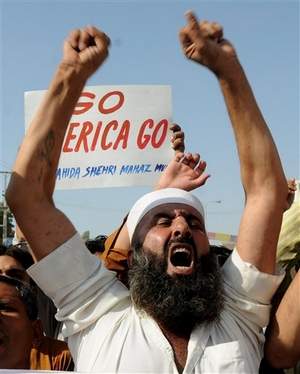
The Obama administration isn’t ready to declare the Haqqani group in Pakistan a “foreign terrorist organization” even after Admiral Mike Mullen, chairman of the Joint Chiefs of Staff, said the group attacked the U.S. embassy and American troops in Afghanistan.

“We are continuing to review whether to designate” the Haqqani organization, State Department spokeswoman Victoria Nuland said yesterday.
Mullen’s declaration in Senate testimony last week that Haqqani operatives acted as a “proxy” for Pakistan’s intelligence service may have further complicated the question.

Taking the first step — adding the Haqqani group to the list of terrorist organizations — would lead to demands that Pakistan be declared a state sponsor of terrorism. That would put at risk Pakistan’s cooperation as the U.S. tries to snuff out al-Qaeda’s core and other militants in the country’s tribal areas.

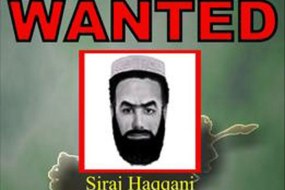
For now, the U.S. has designated the Haqqani network’s founder and other leaders. It has made clear to Pakistan that clamping down on the group “is job one, that we want to do it together, and that’s the conversation that we’re having now,” Nuland said.
Designating Pakistan a state sponsor of terrorism would put it in the company of only four other countries — Cuba, Iran, Sudan and Syria — and might trigger a nationalist backlash in Pakistan. It would require halting U.S. aid to Pakistan, force the U.S. to oppose World Bank loans to Pakistan, and end cooperation between the two countries in fighting terrorism and trying to stabilize Afghanistan.

Pariah State

Naming Pakistan a sponsor of terrorism “would turn it into a pariah state,” Robert Lamb, a senior fellow at the Center for Strategic and International Studies in Washington, said in a telephone interview. “That would complicate a lot of aspects of the relationship, which is complicated enough already. It’s ugly, but it’s not unsalvageable.”

The administration is under new pressure to designate the Haqqanis a terrorist organization alongside 49 others, including al-Qaeda, Lebanon’s Hezbollah, and Hamas, the Palestinian Islamist group that controls the Gaza Strip.

After Mullen testified to the Senate Armed Services Committee, Senator Dianne Feinstein, a California Democrat and chairman of the Senate Intelligence Committee, wrote Secretary of State Hillary Clinton that the Haqqani group “meets the standards for designation” as a terrorist organization. So far, said congressional officials, Clinton hasn’t responded.

Congressional Pressure

“I think there’s going to be increasing congressional pressure on them to list the Haqqani network as a foreign terrorist organization,” said Lisa Curtis, a former CIA analyst and now a senior research fellow at the Heritage Foundation policy group in Washington.
“If we know that the Haqqani network is behind these major attacks on U.S. interests and we fail to confront them, that is a signal of weakness and it simply invites more attacks,” she said.

Nuland and other administration and military officials signaled a reluctance to sanction Pakistan.
Pentagon Press Secretary George Little said yesterday that the U.S. wants to “maintain a relationship with Pakistan that’s grounded in common interests, to include going after terrorists that threaten both countries.”
“There are differences from time to time,” Little told reporters at the Pentagon. “Those differences have been made public, and we continue to discuss those differences in private. We look forward to working with the Pakistanis to try to resolve them.”

Stretched Thin

Pakistani military officials told reporters in Islamabad on Sept. 25 that they had decided not to take action against the Haqqani group because their forces are stretched too thin.

If tensions escalated, Pakistan might again, as it did in a previous diplomatic confrontation, cut supply lines to U.S., NATO and Afghan forces in Afghanistan from its port city of Karachi. Alternative land or air routes are more costly and difficult.
The Pakistanis, said two U.S. intelligence officials, also might abandon secret agreements that permit unmanned U.S. drones to collect intelligence and attack targets in designated areas of Pakistan.

The U.S. already is restricted from operating over the Haqqanis’ suspected base in North Waziristan or the border city of Quetta, home to the main Afghan Taliban group. They also might expel some or all of the classified number of U.S. intelligence officers and special operations forces who are training Pakistani troops and helping target drone attacks, the officials said.

ISI Role

Designating the Haqqani network a terrorist organization would do little to stop the group, said Curtis of the Heritage Foundation. The Haqqanis, she said, probably still would be able to garner financial support from their allies in the Persian Gulf region and backing from the Pakistan spy agency, the Directorate of Inter-Services Intelligence, known as ISI.
A U.S. designation of the Haqqanis isn’t likely to change Pakistani policy either, said Christine Fair, a Pakistan expert at Georgetown University in Washington.

The ISI and the Pakistani military regard the Haqqani network and other militants as allies in their campaign to maintain Pakistani influence in Afghanistan and prevent arch- rival India from getting a toehold on Pakistan’s western border, said Fair and other specialists.
“They believe that the Haqqanis would protect Pakistan’s interest in any future setup in Afghanistan,” Curtis said.
Rejecting the charges that his government uses the Haqqanis as a proxy, Pakistani Prime Minister Yousuf Raza Gilani said in a Sept. 25 statement that U.S. policy on Afghanistan shows “confusion and policy disarray.”

“We may just let this ride,” said Marvin Weinbaum, a former Afghanistan and Pakistan intelligence analyst at the State Department and director of the Center for Pakistan Studies at the Middle East Institute in Washington. “We know what direction the U.S.-Pakistan relationship is going, and now we have no idea what the bottom looks like.”

Pakistan Warns U.S. Against Hot Pursuit On Its Soil

As Reported by The Detroit Free Press

Pakistan’s foreign minister today warned the United States against sending ground troops to her country to fight an Afghan militant group that America alleges is used as a proxy by Pakistan’s top intelligence agency for attacks in neighboring Afghanistan.

The warning came as a top U.S. military commander was in Pakistan for talks with the army chief at a time of intense strain between the two countries. The U.S. Embassy said Gen. James Mattis, head of U.S. Central Command, arrived in Pakistan late Friday, and that he will meet the army chief, Gen Ashfaq Parvez Kayani.

Ties between Islamabad and Washington are in crisis after American officials stepped up accusations that Pakistan’s Inter Services Intelligence was aiding insurgents in neighboring Afghanistan, including those who took part in an attack on the U.S. Embassy last week in Kabul.

Pakistan’s Foreign Minister Hina Rabbani Khar said in an interview today that there are red lines and rules of engagement with America, which should not be broken.

“It opens all kinds of doors and all kinds of options,” she told Pakistan’s private Aaj News TV from New York. The comment was in response to a question about the possibility of U.S. troops coming to Pakistan.

Khar, however, insisted that Pakistan’s policy was to seek a more intensive engagement with the U.S. and that she would like to discourage any blame game.

“If many of your goals are not achieved, you do not make someone a scapegoat,” she said, addressing the U.S.

The U.S. allegations have seen a strong reaction from Pakistan.

Kayani, the Pakistani army chief, said on Friday that the charges were baseless and part of a public “blame game” detrimental to peace in Afghanistan. Other Islamabad officials urged Washington to present evidence for such a serious allegation. Khar warned the United States is risking losing an ally in the war on terror.

The row began when Adm. Mike Mullen, chairman of the Joint Chiefs of Staff, on Thursday accused the ISI agency of supporting Haqqani insurgents in planning and executing last week’s 22-hour assault on the U.S. Embassy and a truck bombing that wounded 77 American soldiers days earlier.

Kayani said the allegations were “very unfortunate and not based on facts.”

The claims were the most serious yet by an American official against nuclear-armed Pakistan, which Washington has given billions in civilian and military aid over the last 10 years to try to secure its cooperation inside Afghanistan and against al-Qaida.

The Haqqani insurgent network is widely believed to be based in Pakistan’s North Waziristan tribal area along the Afghan border. The group has historical ties to Pakistani intelligence, dating back to the war against the Soviets in Afghanistan in the 1980s.

The relationship between the two countries has never been smooth, but it took one of its hardest hits when U.S. commandos slipped into Pakistan on May 2 without informing the Pakistanis of their mission and killed al-Qaida chief Osama bin Laden in a garrison town not far from Islamabad.

Pakistanis for Peace Editorial Note– We hope that the United States and Pakistan can get through this incredibly difficult period in their long and close relationship. The United States should present the concrete evidence that it has that there is collusion on the part of individuals in the Pakistani government with the terrorists and the Pakistanis for their part must do a lot more to end terror networks within their borders, and this certainly includes sending troops into North Waziristan, Quetta and any other city in the country where the terrorists are based. The already unstable and dangerous neighborhood that is South Asia can not afford further deterioration in US-Pakistan relations.

US Links Militant Group to Pakistan Government

As Reported by ABC News

The United States says there is evidence linking the Pakistani government to the militant group that carried out last week’s attack on the US embassy in Kabul.

The US ambassador to Pakistan, Cameron Munter, claims there are links between the Pakistani government and high-profile terrorist group the Haqqani network.

In blunt comments broadcast by state-run Radio Pakistan, Mr Munter said: “Let me tell you that the attack that took place in Kabul a few days ago that was the work of the Haqqani network,” he said, referring to a deadly miltant attack in on Tuesday.

“There is evidence linking the Haqqani network to the Pakistan government. This is something that must stop.

“We have to make sure that we work together to fight terrorism.”

Asked to provide evidence of the link with the Pakistani government, Mr Munter said only “we believe that to be the case”.

The Haqqani network, which is closely allied to the Taliban, has been blamed for several high-profile attacks against Western, Indian and government targets in Afghanistan.

The group is believed to be based in Pakistan but Islamabad has consistently denied links with militant groups.

The US has long urged Pakistan to take action against the Haqqani network and suspected the group had support within the Islamabad administration.

Strained ties
Acknowledging that the past year had been tough, Mr Munter urged joint action against terrorism and said that the United States and Pakistan were “fundamentally on the same side”.

But the public comments are a mark of strained ties between the fragile anti-terrorism allies, with relations fractious since the US raid on Pakistani soil that killed Al Qaeda leader Osama bin Laden in May.

The Haqqani network is thought to have been behind a number of attacks in Afghanistan, where NATO plans a gradual withdrawal of troops after a gruelling 10-year war.

Jalaluddin Haqqani, founder of the network, and his son Sirajuddin, who now runs the group, have both been designated “global terrorists” by Washington.

Mr Munter’s remarks follow a warning by US defence secretary Leon Panetta, who said after the Kabul attack that the US would retaliate against Pakistan-based insurgents.

“Time and again we’ve urged the Pakistanis to exercise their influence over these kinds of attacks from the Haqqanis and we’ve made very little progress in that area,” Mr Panetta said Wednesday, a day after the Kabul siege.

“I’m not going to talk about how we’re going to respond. I’ll just let you know that we’re not going to allow these kinds of attacks to go on,” he said.

Pakistan’s foreign ministry condemned those remarks as “out of line”, saying that “terrorism and militancy is a complex issue”.

Pakistan’s Floods: Deja Vu, All Over Again

By Ishaan Tharoor for Time

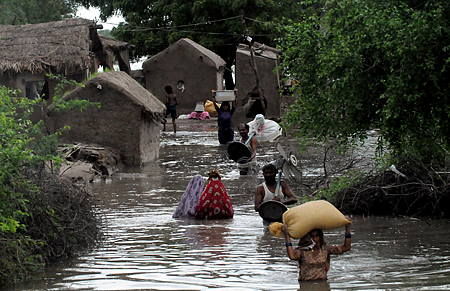
These days when it rains in South Asia, it doesn’t just pour — it floods. A month of monsoon squalls has deluged hundreds of towns and villages in northwest India and Pakistan. The latter has seen the most acute flooding, and, on all evidence, has been the least prepared for it. At least 233 people have already died and 300,000 are now stranded or in makeshift camps — a figure that will surely grow. Officials in Pakistan claim some 5.5 million people so far have been affected by rising waters. That’s still only a fraction of the 20 million hit by last year’s catastrophic rains, but the forecast looks ominous.

Neva Khan, Oxfam’s Pakistan country director, spelled out the dimensions of the crisis on the relief agency’s website:
There is an urgent need to provide immediate and life saving relief to the millions affected. It hasn’t stopped raining in Sindh for the last 10 days. Large swathes of land are underwater and people are desperately awaiting relief. They have lost their crops, homes and livestock for the second time – and been pushed from last year’s disaster to this one.

Sindh, the vast, fertile province abutting the Arabian Sea, appears the worst affected. Across Pakistan, some 900 villages have been wholly submerged and millions of hectares of arable land — some still irrevocably damaged by last year’s floods — are under water.
What’s most depressing about the situation now is how keenly it echoes the 2010 calamity. Omar Waraich, TIME’s Islamabad correspondent, wrote this excellent piece a year ago for the magazine’s international editions. As the waters rise, Pakistan faces a familiar cocktail of maladies from last summer.

Then, the civilian government headed by the unpopular President Asif Zardari was hampered by political infighting and its fundamental subservience to the real power of Pakistan’s influential military. Now, not much has changed (though Zardari is still in his position, a surprise to some). Then, militants and terrorists were exposing the fragility of the Pakistani state with cold-blooded strikes on some of country’s major cities. Now, after a rancorous summer of barb-flinging with the U.S., not much has changed either — not least when suspected al-Qaeda allied militants raided a prominent naval base in Karachi earlier this year. Then, the cash-strapped government pleaded for foreign assistance. Now similar calls are being issued, with similar notes of desperation.

In the weeks to come, inquests will be made into whether enough had been done to shore up riverbanks, provide shelter and food for the hundreds of thousands left destitute for over a year, and prepare for the next season’s rains. Already, there are reports of angry civilians blockading roads — like last year — demanding outside intervention and aid. Cities like Karachi, which this summer has seen a spasm of internecine blood-letting, will be further strained by refugees fleeing the countryside.

On many levels, though, the disaster is not man-made. The floodplain of the great Indus river, home to over 100 million people, birthed one of the world’s first ancient civilizations. But the river likely also swallowed it up. Because of its own particular ecology, the Indus can’t be controlled by similar mechanisms of levees prevalent in the West. And climate change has made weather patterns more unpredictable and volatile. This BBC story from a year ago cites the research of an Indian scientist: Professor Rajiv Sinha, from the Indian Institute of Technology in Kanpur, who has had first hand experience of Asian river floods, takes a more strident position.

“What all the climate models predict is that the distribution of monsoon rains will become more uneven in the future,” he told BBC News.
“Total rainfall stays the same, but it comes in shorter more intense bursts.”

In August 2010, more than half of the normal monsoon rain fell in only one week. Typically it is spread over three months.
Professor Sinha remarked: “Rivers just can’t cope with all that water in such a short time. It was five times, maybe 10 times, more than normal.”
So, if the unusually intense 2010 monsoon is the shape of things to come – and that is uncertain – the future may hold more flood misery for the people of Pakistan.

It’s a closing sentence that has proven sadly prophetic.

Pakistan Struggles to Curb Dengue Fever

As Reported By Reuters

Pakistani authorities, already under pressure to help hundreds of thousands of flood victims, are struggling to contain dengue fever which has killed at least eight people, officials said on Wednesday.

Around 4,400 cases of the mosquito-borne disease have been reported in the central Punjab province over the past two months, forcing the provincial government on Tuesday to close down schools for 10 days.

Most of the cases have been reported in Lahore, the provincial capital, where about 2,950 people tested positive.

“So far, eight people have died of dengue. We are trying our best to control this epidemic,” Jehanzeb Khan, secretary of the provincial health department, told Reuters.

Health experts say the illness is spreading across the Punjab because of poor hygiene conditions, and heavy monsoon rain provides ideal conditions for dengue-carrying mosquitoes to thrive in stagnant waters.

The first case of dengue was reported in Pakistan in 1994.

Those who died included Ataullah Siddiqui, head of the provincial department of minerals and natural resources.

Khan said the government had launched a fumigation drive to kill mosquitoes.

Sri Lanka is sending a team of experts to Pakistan to help fight the disease, the Sri Lankan High Commission said in a statement.

Pakistan’s weak civilian government, struggling to deal with floods that have killed 266 people, has been criticised by the media for dragging its feet on the dengue issue.

“The response to dengue has been adhoc, ex post, and therefore reactionary at best,” The News daily said in its editorial.

The disease is a threat to nearly half of the world’s population. Of the estimated 220 million people infected each year, two million — mostly children in Latin America and Asia — develop a severe form called dengue hemorrhagic fever.

There is currently no cure or vaccine for dengue fever.

Decade After 9/11, Afghans Languish in Pakistan

By Qasim Nauman and Rebecca Conway for Reuters

When Ghulum Nabi’s father heard U.S.-backed troops toppled Afghanistan’s Taliban after the September 11, 2001, attacks, he rushed to their family home in an Afghan refugee camp in Pakistan to spread the news.

Perhaps, one day they could all return to a peaceful and prosperous Afghanistan supported by a Western superpower.

After 10 years of U.S.-led efforts to pacify one of the world’s most turbulent countries, Afghan refugees in Pakistan have little hope for stability in their homeland.

“I grew up here and Pakistan is my country. When my father pushes me to go back to visit, I end up having a fight with him. I’m never going to live there. I want to get Pakistani nationality. This is my home,” said Nabi, 22, who runs a crockery shop.

“It doesn’t matter if it is America or anyone else trying to watch over Afghanistan. I will still be looking around to see if anyone is pointing a gun at me.”

Afghan President Hamid Karzai would welcome a return of the millions of Afghans living in Pakistan.

It would be a vote of confidence in his administration, which faces many problems, from widespread allegations of state corruption, to a resilient Taliban.

SOVIET INVASION TRIGGERED LIFE OF UNCERTAINTY

Many of the refugees are skilled labourers who could boost reconstruction and help revive a weak economy if they return. But it’s unlikely to happen.

Most of the refugees in Pakistan arrived after the Soviet invasion of Afghanistan in 1979. The conflict that followed consumed their homeland. After the mujahideen warriors defeated the Russians, warlords turned on each other and tore Afghanistan apart.

Many refugees fear a repeat of that chaos as a U.S. troop withdrawal looms.

Some would like to go home but feel they can’t. Others regard Pakistan as home despite its many disadvantages. Without proper Pakistani identification cards, Afghans can’t open bank accounts or buy or lease property.

Many are openly mistreated by Pakistanis who have little fear of being held to account.

On August 14, the anniversary of Pakistan’s independence, Saeed Anwar’s landlord showed up with three men armed with AK-47 assault rifles at his clothing shop at a busy bazaar in the city of Haripur, home to 80,000 Afghan refugees who live in camps.

“They threw around my merchandise and said I need to pay them a 300,000 Pakistani rupees ($3,450) advance on the rent. I had already paid the rent,” said Anwar, wearing traditional, loose Pakistani trousers.

“I went to the police to register a case. But when they see a dispute between a Pakistani and an Afghan, they automatically assume the Afghan has done something wrong.”

Still, many Afghans believe its wiser, and safer, to just accept the frequent humiliation than return to a homeland still shattered, despite a long U.S.-led military campaign against militancy and billions of dollars in Western aid.

Afghans — from elders who vividly remember the first Soviet gunship helicopters in Afghanistan, to teenagers who have only visited a few times — work for Pakistanis as welders or carpenters and tailors in Haripur and other cities.

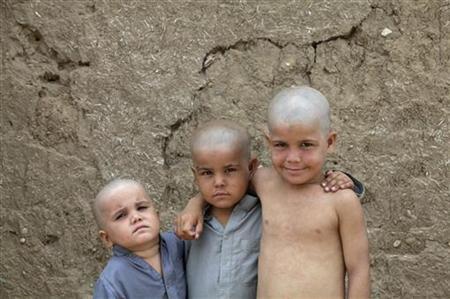
Most of them prefer to run their own small businesses, from food carts to car dealerships. It’s the only sense of independence they have in the camps which consist of small cement and mud housing units near a reservoir.

The elders have set up a jirga, or tribal gathering, to settle internal disputes, as is done in much of Afghanistan. Cricket games are the only form of entertainment and leisure activity for most youths.

Two years ago Pakistan agreed to let displaced Afghans stay until the end of 2012, after a resurgence of militant violence along the Pakistan-Afghanistan border hindered repatriation.

Still, people like Sherullah, whose nine children were born in Pakistan, feel vulnerable. What if Pakistan asks them to leave one day?

“There is a lot of confusion. If there’s one thing I want, it’s for this confusion to go away, for us to know if we will be staying or not,” said Sherullah, who was cutting women’s clothing in his tailor shop.

“There are many people living here that can afford to build a proper house but don’t want to. They think ‘what if next year we are told to leave?’. So they continue to live in mud houses.”

Aside from 1.7 million officially registered Afghans in Pakistan, there are an additional 800,000 with no documentation.

According to the United Nations, Pakistan is home to the world’s largest refugee population, mostly Afghans, who strain the country’s troubled economy.

Pakistan would like to repatriate them.

There are, however, few incentives for refugees to head back to Afghanistan. So life in camps may drag on for many years.

Even though the U.S. disengagement is gradual, it brings back painful memories of what was widely seen as American abandonment of Afghanistan after the Soviet exit in 1989. Warlords soon took over and bloodshed returned.

Haji Aslam, 65, an elder in one of the camps, has seen conflict in Afghanistan over the last 30 years — from the battlefields where he fought the Soviets to what he sees today on his television screen. He is betting on the Taliban to prevail once the Americans leave.

“Even if just 10 Taliban show up, the Afghan government will flee Kabul,” said Aslam, a man with a white beard wearing a traditional flat Afghan cap. “In Pakistan, I am at peace. I know my children are safe.”

A Monster Roaming The World

By Paul Mcgeough for The City Weekly
Search for a firm footing in Pakistan and there is none – all is quicksand … strategically, politically, morally.

Here in south Asia, strategically sandwiched between failing Afghanistan and the China and India powerhouses, is a country in which journalists are abducted in the night by agents of the state and murdered; in which the only advance after a decade in which Washington has tried to buy friendship with cheques for more than $20 billion, is the expansion of Pakistan’s nuclear arsenal – which is on the verge of surpassing Britain’s as the fifth biggest in the world.

In Pakistan, a 50-year-old woman is sentenced to death on a dubious blasphemy charge – and politicians who dare to speak in her defence are gunned down; and a woman is gang-raped and paraded naked through her village on the orders of a local council, over bogus claims that her 12-year-old brother has offended a 20-year-old woman from the clan of the men who defiled her.

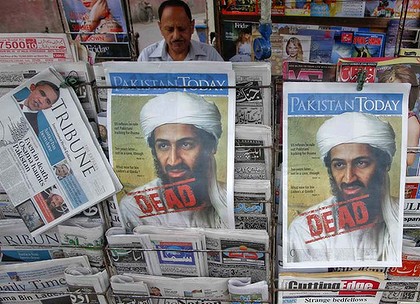
But that’s village life. In the leafy garrison town of Abbottabad, an hour’s drive north of Islamabad, Osama bin Laden, mastermind of the attacks of September 11, 2001, was able to hide in plain sight for years. The location of his fortified bunker, a stone’s throw from a prestigious military academy, made it harder to give any credence to the generals’ repeated denials that significant elements of Pakistan’s extensive security apparatus sheltered the al-Qaeda chief and continue to give succour to the Taliban and other insurgency and terrorist movements.

In the south-west, in the wilds of provincial Baluchistan, there have been 150 ”kill and dump” operations this year. Most of the victims are Baluch nationalist rebels. Their killers are the Inter-Services Intelligence agency (ISI) and other elements of Pakistan’s national security forces – driven to brutality by a belief, which could be correct, that Pakistan’s arch foe, India, stirs the local nationalist pot. In turn, the Baluch nationalists are accused of running their own death squads – their victims are Punjabi ”settlers”, government workers brought in from other parts of the country.

Baluchistan is half Pashtun, which also makes it a sanctuary for the Taliban from adjoining Afghanistan, where Washington and the world still struggle, with little success, to impose a semblance of democracy on the bones of a fracturing, failing state. Here then is another of the ironies that puts a serious question mark over the bona fides of the Pakistani security forces: the leadership of the Afghanistan Taliban sequesters in Quetta, the provincial capital of Baluchistan, but the various Pakistani security services are so busy putting the Baluch nationalists through the mincer they don’t have time to take down the Taliban command-and-control centre. Instead, they reportedly socialise with the Taliban and sit in on their strategy meetings.

West from Baluchistan is the sprawling port city of Karachi, where the spiralling death toll in renewed ethnic turf-wars gives raw meaning to what local novelist Kamila Shamsie broaches obliquely, recounting how the city ”winks” at her. “Yes, the city said, I am a breeding ground for monsters, ” she writes, “but don’t think that is the full measure of what I am.”

This drab, chaotic home to 18 million people who account for 65 per cent of Pakistan’s economy is being carved up by bullets that this year have accounted for as many as 1000 ”wrong place, wrong time” deaths as gunmen randomly select their targets – sending messages to whole communities, not the individuals with whose blood they paint the rough pavements. As the suburbs seethe, police do little, because they are cowed by the systematic elimination of those in their ranks who intervened in the last iteration of these ethnic wars. Provincial and federal governments and the security forces only wring their hands.

In Karachi everyone lies. No one denies turf wars are being waged. They simply blame everyone else – all the political parties deny any links to the militias that prosecute their bloody agendas and to the crime, drug and land-development mafias that prosper in their wake. And the city’s once-dominant Urdu-speaking Mohajirs fight to maintain their control of corrupted city politics, amid an influx of Pashtuns fleeing upheavals along the Afghan border.

“Tension rises, we see killings and then scores must be settled,” an adviser to the provincial governor says. “We are at war – the political parties say they are not involved, but the mafias take shelter from the parties as they exploit the situation.”

In Islamabad, enter any of the city’s newsrooms, and see fear in the eyes of journalists who risk death and torture for going about assignments. Consider the words of their Karachi colleague Madiha Sattar – “a growth of intolerance has forged an extreme, murderous antipathy to freedom of expression.”

Most shocking in this campaign of fear and intimidation against one of the pillars of democracy was the disappearance in late May of Syed Saleem Shahzad, an investigative reporter for the respected, Hong Kong-based Asia Times Online. Two days after his abduction, Shahzad’s battered body was found at Mandi Bahauddin, 130 kilometres south-east of the capital. The reporter left detailed accounts of the threats he had received from the ISI; in Washington, senior officials unflinchingly confirming that Shahzad’s death had been ”sanctioned” by the Pakistani government.

Umar Cheema might just as easily have been their victim. Behind a door marked ”Investigation Cell” off a basement corridor in the Islamabad offices of The News, the 34-year-old father of two explains that the shock in his colleague Saleem Shahzad’s murder was a realisation it might just as easily have been him.

As Cheema drove home from a party in the early hours during Ramadan last year, 12 men who identified themselves as police commandos abducted him, he says. Informing him first that he was a suspect in a killing, they pulled a bag over his head and hauled him away.

“They took me to a building where the leader stripped off my clothes. Then I was ordered to lie on the floor and they beat me on the back and shoulders for 20 or 25 minutes with leather straps and wooden canes.

“I was writing about corruption in the government and the lack of accountability in the military and intelligence agencies – they said they were beating me because of my reporting. Then they shaved my head and eyebrows – that’s what is done to thieves in rural areas to humiliate them.

“Shahzad’s death left me speechless,” he says. “I was the second last victim before they took him. So I felt very much that this was a message for me – it was very, very personal.”

In Islamabad, the government of Prime Minister Yousaf Gillani is as overwhelmed as it is complicit in the nation’s failings. The economy is in crisis and the government has ceded control of more than half the country to the military or to extremist militias. “None of the cogs of state mesh to make it do what must be done,” Human Rights Commission of Pakistan’s Kamran Arif said.

Just south of Islamabad is Rawalpindi, a more typical Asian city than the sanitised and empty boulevards of Islamabad. As home and headquarters to the men and institutions that comprise Pakistan’s military and intelligence establishment, this is the centre of absolute power in Pakistan. And it is here that a deep-fried sense of humiliation over the American raid to kill Osama bin Laden, in May this year, is felt most acutely.

“After the bin Laden raid, it’s a question of the survival of the state,” the defence analyst and director of the South Asian Strategic Stability Institute, Maria Sultan, says. “The problem now is that by this very public humiliation, the US has lost its biggest supporter – it’s not the capability of the Pakistani military that is affected, it’s its credibility.”

A close reading of ”Getting Bin Laden”, The New Yorker’s inside account of the May 2 raid, reveals the mission was not just a single US incursion that managed to evade Pakistan’s air defences. On the night, there were effectively three separate American missions, none of which was detected by a military-security complex that demands indulgence by the people of Pakistan on the grounds that it is their only protection from the Indian hordes.

Pakistan’s generals faced a grim choice – they had to admit to deceiving the world in harbouring bin Laden, or to incompetence by not knowing he was lounging in their backyard. So supine were they in opting to plead incompetence there were fears of a mutiny in the middle ranks of the security services.

The US signal to the world of just how much it could not trust its south Asian ally came hard on the heels of serial embarrassments at the hands of the Taliban and other militant groups in Pakistan.

There have been a series of militant attacks on the most secure and sensitive defence establishments. The latest, which some observers concluded could not have been undertaken without inside help, saw a 10-man assault team storm the Mehran naval aviation base in Karachi. It took hundreds of Pakistani navy commandos, marines and paramilitaries to retake the base, but not before two aircraft were destroyed, hostages taken and the base had been occupied for the best part of a day.

But it takes a discerning Pakistani general to differentiate between militants – some are ”strategic assets” of the security apparatus and the generals refuse to go after them.

Dr Ayesha Agha, whose military and political commentaries appear in Pakistan’s Dawn newspaper, explains: “The military depends on these ‘assets’ – they are a cost-effective means to fighting wars that the Pakistani military wants to fight in India and Afghanistan.” Extrajudicial killings by the military now are counted in the hundreds.

When men in uniform were filmed recently murdering a detainee, the reckoning in human rights circles was that far from being a lapse of judgment, the recording had been allowed in the knowledge that its distribution on the internet would serve as a useful warning to the wider community.

A Karachi taxi driver becomes excited as he ferries us from the airport to a downtown hotel – “Pakistan lovely country,” he bellows. “Terrorism? No, no, no.”

But a single graphic in a 200-page study of Pakistan, published in May by the Washington-based Centre for Strategic and International Studies, reveals an impossible security challenge. Last year alone, 2113 terrorist attacks, 369 clashes between the security services and militants, 260 operational attacks by the security forces, 135 US drone attacks, 69 border clashes, 233 bouts of ethno-political violence and 214 inter-tribal clashes resulted in more than 10,000 dead and as many injured.

The death of bin Laden and the reported death of al-Qaeda’s new No. 2 figure, Atiyah Abd al-Rahman, in an American drone attack last week, are still being factored into a running debate among intelligence specialists on the extent to which al-Qaeda offshoots elsewhere in the world, especially the Yemen-based al-Qaeda in the Arabian Peninsula [AQAP], have taken the baton from the Pakistani organisation.

But a July study by the New America Foundation of 32 ”serious” jihadist terror plots against the West from 2004 to 2011, finds 53 per cent had operational or training links to jihadist groups in Pakistan – compared to just 6 per cent being linked to Yemen. And the rising tempo of the drone attacks has failed to dent the rising frequency of Pakistan-linked plots against the West, the study finds.

Implicit or explicit in any discussion on Pakistan’s volatile mix of militant violence and governmental chaos, is the level of anxiety around the world about the security of its nuclear arsenal. Confronted with claims such as that by bin Laden that acquiring a nuclear weapon was a ”religious duty” and the hope expressed by one of his lieutenants that such a weapon one day might be seized in Pakistan, officials in Islamabad invariably boast that all is tightly locked down.

But when we ask a Pakistani diplomat how secure were the weapons in the aftermath of the US mission to kill Osama bin Laden, he replies: “Less so, now that the Americans have revealed to the world that it is possible to sneak into Pakistan undetected, to take something that you really want.”

President Obama’s public appeal that Pakistan not become the world’s first ”nuclear-armed militant state” gives context to disclosures by The New Yorker’s Seymour Hersh of the existence of a US Special Operations rapid-response team which would be parachuted into Pakistan in the event of a nuclear crisis.

Rolf Mowatt-Larssen, a former director of intelligence and counter intelligence at the US Department of Energy, is boldest in setting out the fears of Washington, London and other capitals – some of which were disclosed without diplomatic varnish by Wikileaks last year.

Writing in Arms Control Today, Mowatt-Larssen, who served 20 years at the CIA, bills Pakistan as the most likely setting for terrorists bent on acquiring a nuclear device to co-opt a nuclear insider – of whom there are estimated to be as many as 70,000 in Pakistan.

“There is a lethal proximity between terrorists, extremists, and nuclear weapons insiders,” he writes. “Insiders have facilitated terrorist attacks. Suicide bombings have occurred at air force bases that reportedly serve as nuclear weapons storage sites. It is difficult to ignore such trends.

”Purely in actuarial terms, there is a strong possibility that bad apples in the nuclear establishment are willing to co-operate with outsiders for personal gain or out of sympathy for their cause.”

“Not possible,” says Maria Sultan. “About eight to 10,000 personnel working at the strategic level on security,” she says, ticking off seven or eight interlocking layers of complex security, the first of which she says would trip most intruders before they came within 80 kilometres of a nuclear facility. “The idea that a terrorist can walk in and get hold of a device is just not possible.”

Such is the bind in which Pakistanis find themselves. But if it is true feeble and corrupt civilian administrations make circumstances ripe for a military takeover, it is hardly surprising the generals have no respect for democratic fundamentals.

As revealed in one of the Wikileaks cables, Army chief General Ashfaq Parvez Kayani was ready to force President Asif Ali Zardari from office – save for the fact the general thought even less of Zardari’s likely civilian replacement. And historically, Washington has opted to connect with Pakistan through the military power of the generals, rather than the people power of the civilian leadership.

Bruce Riedel, a veteran CIA analyst, sets out the connections in Deadly Embrace: Pakistan, America and the Future of the Global Jihad. “…Richard Nixon turned a blind eye to the murder of hundreds of thousands of Bangladeshis to keep his friends in Pakistan’s army in power, a strategy that ultimately failed,” Riedel writes. “Ronald Reagan entertained Zia-ul-Haq even as Zia was giving succour to the Arab jihadists who would become al-Qaeda. George W. Bush allowed Pervez Musharraf to give the Afghan Taliban a sanctuary from which to kill American and NATO soldiers in Afghanistan.”

And in the judgment of Bushra Gohar, an elected MP from Pakistan’s troubled Swat Valley, Washington still prefers to deal with the military rather than the country’s civilian leadership. “That’s not a role that the military has under the constitution,” she says during a break in the business of the National Assembly in Islamabad. “There has been a democratic transition in this country and we expect the international community to support it.”

Power vacuums become ripe for exploitation, as was revealed with frightening clarity earlier this year when two of three elected figures who had dared to speak out against Pakistan’s draconian blasphemy laws were assassinated. In January, Punjab provincial governor Salman Taseer was gunned down by one of his state-provided security men; in March, the Minorities Minister and the only Christian in Gillani’s cabinet, Shahbaz Bhatti, died in a hail of gunfire as his car left his mother’s home in Islamabad.

Taseer’s killer confessed and became a national hero. His home is a shrine, he is garlanded with rose petals and, in the oddest twist of all, the young lawyers’ movement that effectively bundled Pervez Musharraf, the last dictator, from power in 2008, has taken the side of this cold-blooded murderer – not the principle for which his victim died.

A visitor leaves Pakistan wondering if anyone here speaks the truth. The dictators habitually resort to amping up religious parties – either to drown out secular ones that might be interested in the ideals of selfless democracy, or to further marginalise the country’s Shiia Muslim minority.

“And people like Musharraf have two faces,” Kamran Arif of the Human Rights Commission of Pakistan said. “He would say all the right things for the West and do just what he wanted to do at home.”

Some foreign analysts fall back on the seeming failure of Pakistan’s religious parties at the ballot box as a hopeful sign. But a sense of rising radicalisation, particularly in the military and the middle classes, suggests an asymmetric contest for control of a highly unstable society – the non-religious parties fight in the parliament, but the religious parties are street brawlers.

Sherry Rehman, the only elected figure in the country to defend the convicted blasphemer Aasia Bibi, makes the same point in explaining how that debate was lost. “The discourse shifted from the parliament to the street,” she says.

“We have to keep the agenda in the parliament, and not with the gun-toting thugs who make inflammatory speeches outside.”

Like the financial institutions in the 2008 global financial crisis, Pakistan is deemed by Washington to be ”too big to fail”. Between them, however, Washington and Islamabad have been unable in the past decade to make this relationship work – credibly or creditably.

Predictions of imminent collapse in Islamabad are exaggerated, but perhaps not overly so. “The government does not have the capacity to tackle any of the issues,” says the Human Rights Commission of Pakistan’s Arif. “Things will just keep getting bad … and I don’t discount the fact that we can fall into chaos.”

Like many other analysts, Bruce Riedel laboriously sets out the policy options by which Washington and Islamabad might work together to defeat the global jihadist movement – before he concludes that none is easy or guaranteed.

An adviser to several US administrations and now with the Brookings Institution, Riedel sees Pakistan under siege from a syndicate of radical terrorist groups unified by the notion that nuclear-armed Pakistan could be the extremist jihadist state they have never had.

“They want to hijack Pakistan and its weapons,” he says. Alluding to Islamabad’s role in creating a monster, as often as not with Washington’s sponsorship, he writes: “An extremely powerful jihadist Frankenstein is now roaming the world, with equally powerful protectors in Pakistani society, right up to the very top.

“Who cannot fear that the ‘long beards’ will prevail?”
Pakistan Power Shortages Keep Growth Prospects Dim

By Alex Rodriguez The Los Angeles Times

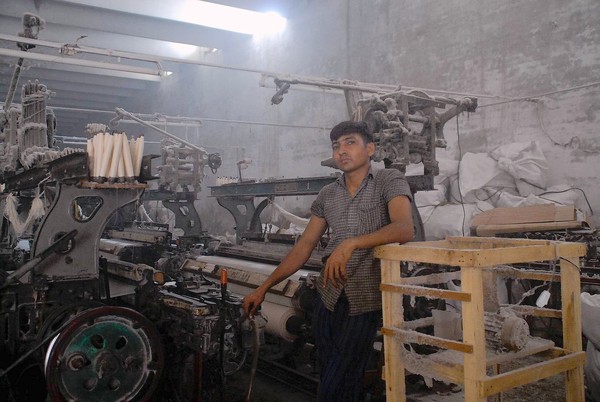
The machine operators lean back lazily on rolls of cotton fabric, shooing flies from their sweat-soaked tunics as their boss, Abdul Latif, paces between rows of silent electric looms covered in lint.

The textile plant owner knows it’s just one of several rolling blackouts that will darken his plant today, as they have every day for four years. Along his street, other textile plants have either closed or begun selling their looms for scrap. Latif scrapes by, but the outages have cut his plant’s output in half.

“The situation is very bad,” Latif says. “We’re losing contracts because of these outages. We can’t deliver on time. If it continues like this, we may have to shut down.”

One of Pakistan’s biggest scourges has nothing to do with suicide bombers or militants wielding Kalashnikov assault rifles. Because the country cannot produce the electricity needed to support a population of 177 million, the government intentionally shuts down power in staggered intervals, often for hours at a time.

The rolling blackouts are most frequent during the summer, when the whir of air conditioners in 100-plus-degree heat boosts demand for power. Apart from districts with top government and military offices, virtually every neighborhood and village suffers.

The stopgap policy prevents the country’s moribund economy from getting off the ground. And as long as the economy sputters, millions of Pakistanis remain mired in poverty and joblessness, leaving the country’s disaffected youth vulnerable to recruitment by Islamist militant groups.

President Asif Ali Zardari’s government has given Pakistanis little reason to hope for a solution anytime soon. This summer, government officials said that it would take at least seven years to build up the electricity generation capacity needed to eliminate the blackouts.

Various factors explain Pakistan’s power woes. During Gen. Pervez Musharraf’s rule from 1999 to 2008, strong economic growth fueled an upsurge in consumer spending that had Pakistanis flocking to stores to buy air conditioners, refrigerators and other appliances. But Musharraf failed to pump money into boosting generation capacity to keep up with demand and the country’s booming population.

Zardari inherited the massive gap between supply and demand, but his cash-strapped administration hasn’t moved fast enough on hydroelectric dam projects and has yet to shore up the country’s aging distribution network.

Other factors make the situation even worse. About 15% of the electricity generated is lost to theft, says Ejaz Qureshi, a spokesman for the state-owned Pakistan Electric Power Co. In addition, the government often fails to pay its bills to private power producers, which means those companies can’t buy sufficient fuel for their plants. At times, they cut off electricity to the offices of government agencies that owe them money.

The havoc wrought by the shortfall is particularly acute in the country’s textile industry, a pillar of Pakistan’s fragile economy.

Faisalabad, Pakistan’s third-largest city and home to its textile sector, has seen 200 of its 4,000 textile plants close in the last three years because of the blackouts, says Wahid Raamay, chairman of the city’s Council of Loom Owners and a plant owner.

During that period, 100,000 workers have been laid off, about 10% of the city’s textile work force, Raamay says.

Plant owners forced out of business face a grim future. In a country where many people distrust banks, many plant owners sell their personal property — gold, jewelry, cars — to buy the machinery needed to start the business. If their plants close, they may find themselves at rock bottom.

“They all used to have good cars, good homes, and now everything has disappeared,” Raamay says. “Now they ride motorcycles to get around.”

Five months ago, Malik Mohammed Kashif was forced to shut down his plant, lay off 80 workers and sell his 66 looms to scrap dealers.

On a sun-baked afternoon, Kashif strolls through his darkened, empty building and winces as he speaks of the future.

“As for me, I’m finished,” says Kashif, a 30-year-old father of four. “With the shutdown, we lost $350,000, nearly everything we had. We’re at the bottom now because of this.”

This summer, public anger over ceaseless power outages boiled over. In Mianwali, in Punjab province, throngs of demonstrators calling for a stop to the outages clashed with baton-wielding police in early July. Two people were killed and 22 were injured. In Karachi, four people were killed during protests and work stoppages in early June that brought sections of Pakistan’s largest city to a standstill.

In Faisalabad, the extent of blackout-induced layoffs in the textile industry has reached the point that plant owners often work the looms alongside their laborers.

At Latif’s plant, workers paid by the hour say the outages cut their already meager wages in half. Machine operator Mehmood Hussain makes $4.65 a day when the blackouts don’t occur and $2.32 when they do. For a family of seven reliant on his income, the difference is huge.

“It’s a critical situation now,” Hussain says. “We can’t buy decent food or buy clothes for ourselves. And there’s no way out. Looms are all we know.”

One group, however, prospers from the textile industry’s misery: the scrap dealers. Their stalls on the edge of the city are filled with grease-covered gears and flywheels stacked next to piles of wooden rollers and spool holders.

Dealer Mohammed Sharif says he sometimes buys up to 100 looms a day, paying just $290 for machines that cost plant owners $1,500.

“When the textile plants suffer, our business booms,” Sharif says. At the same time, he knows the scavenging can’t last indefinitely.

“If looms continue to shut down at this rate, a day will come when we won’t have any business at all. What will we do then?”

Noting that three in four terror suspects are acquitted in Pakistan, the United States has doubts its key ally would make any headway in prosecuting key plotters of 2008 Mumbai terror attacks.

“The accused in numerous high-profile terrorism incidents involving US victims had all been acquitted by the Pakistani legal system,” US State Department noted in its 2010 Country Reports on Terrorism, published last week.

“The Federal Bureau of Investigation has assisted with the respective prosecutions,” the report said. FBI had assisted India in the investigation of the Mumbai terrorist attack as six Americans were among the 166 victims.

The report found that while Pakistan maintained it was committed to prosecuting those accused of terrorism, a study of its Anti-Terrorism Court’s rulings last year disclosed “that Pakistan remained plagued by an acquittal rate of approximately 75 per cent”, and a legal system “almost incapable of prosecuting suspected terrorists”.

It complained that a new anti-terror bill, which would allow its security agencies to hold suspects for 90 days before bringing them to court and give them a freer hand to use electronic surveillance had not progressed in the country’s National Assembly.

Although Islamabad had increased pressure on money-launders and unofficial ‘hawala’ money transfer agents, “deficiencies remained,” the report found.

“Notably, the criminalisation of the financing of terrorist acts committed against foreign governments and international organisations was ambiguous, as was the criminalisation of financing groups that have not been explicitly banned by the government or designated by the UN,” it stated.

Pakistan’s “weak implementation” of a UN Security Council resolution which lists banned terrorist organisations remained a concern.

The report also criticises Islamabad’s failure to outlaw militant Islamic terror groups which escape bans by changing their names.

Edible Arrangements–A Pakistani-American’s Success Story

By Riaz Haq for RiazHaq.com

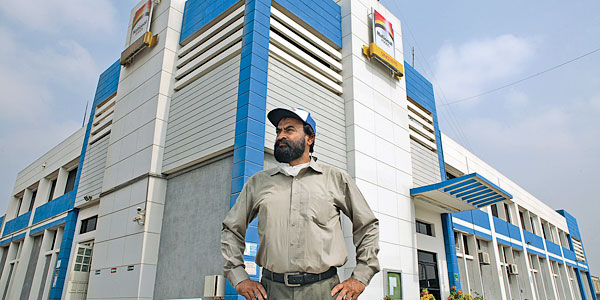
Tariq Farid is the founder and CEO of Edible Arrangements, a successful international franchise business that specializes in delivering gifts of beautifully arranged bouquets of edibles like fruits and candy on holidays and various other special occasions.

Currently in its 11th year of operation, the company boasts 883 franchise locations in the United States, the United Kingdom and Kuwait. The company earned $300 million in revenue last year, according to published reports.

Born near Sahiwal in Pakistan, Tariq Farid has founded several other companies. One is Frutation by Edible Arrangements, which includes salads and fruit drinks. They’re sold in Edible Arrangements stores and stand-alone stores. He also created Netsolace, which provides software for the franchise industry. Another, BerryDirect, offers containers, vases and other products to our Edible Arrangements franchisees and other companies. His latest start-up is Farid Capital Corporation, a financing company that helps franchisees buy equipment.

The key to Farid’s success, he says, has come from paying attention to often overlooked details such as the website, order tracking and follow-up customer service, the logo and branding, and employee training.

The economy may need more entrepreneurs like Farid – according to the International Franchise Association, every $1 million lent to franchise small businesses creates 34 jobs and $3.6 million in annual economic output, cited Reuters.

Here is Farid in his own words describing his journey:

I was born in Pakistan and came to the United States in 1981, when I was 11. My grandfather owned a farm in Pakistan and we had been fairly well-to-do. We started at the bottom when we came here. My father found a job as a machinist during the day and worked at McDonald’s and Burger King at night.

All five of my siblings pitched in. I delivered newspapers to 300 houses. Instead of putting the paper into the mailbox, I’d deliver it to the door. I got great tips. When I was 13, a flower shop hired me to water the flowers. Soon I was taking care of orders. By 16, I had learned a lot.

One day my father found a flower shop for sale in the paper. The owner wanted $6,000. My dad asked me if I could run the shop, and I said sure. We got a cash advance and a loan from a friend. I thought I’d negotiate, and asked the owner what terms he was offering. He looked at me as if to say, “What can this kid possibly know?”

We opened a week before Easter and earned about $50 a day. I stayed open until 7 p.m., seven days a week, because few other flower shops did. I thought $350 a week was wonderful. Soon, sales doubled, and I was shocked. Five years later, we had three shops and were making close to $1 million a year. I said we needed to make more, about $5,000 a day. My mother asked me if I remembered when I was making $50 a day and she suggested that I relax. I told her that it never really ends, and that I could achieve that goal.

It was a lot of work. I didn’t really have a social life. We stayed open on holidays. On my way to high school, I’d drop off my mother at the shop. She spoke no English, so I told her what to do to supervise the two employees. After school I’d make flower arrangements and deliver them myself until I could hire a driver.

I attended college part-time, but I started weighing the benefit against what I was making. I decided to put off school, and I never finished. I was so young when I started a career that I blindly jumped into it.

Edible Arrangements, which I started in 1999 with my brother, Kamran, goes back to our roots. In Pakistan, my father always brought home tons of fruit for us. When we started the company, we created basic fruit arrangements that included fresh pineapple, strawberries, cantaloupe and more, and later added extras like chocolate and cinnamon toppings.

We got 30 orders the first day. We had learned from our flower stores, so this time did everything right. A stranger asked about opening a store, which gave us the idea to franchise them. I knew nothing about the franchise industry, so I contacted an association for the names of experts and found Michael Seid. He gave great advice.

I’ve started several other companies. One is Frutation by Edible Arrangements, which includes salads and fruit drinks. They’re sold in Edible Arrangements stores and stand-alone stores. I also started Netsolace, which provides software for the franchise industry. Another, BerryDirect, offers containers, vases and other products to our Edible Arrangements franchisees and other companies. I just started the Farid Capital Corporation, a financing company that helps franchisees buy equipment.

When I was starting out, I used to give my mother $50 a week. When I wanted to buy a building for our second Edible Arrangements location, I needed $40,000 more than I had. My mother had saved the money I gave her over the years and handed it back to me. She asked only that I do something in her name someday and give her $20,000 for my sister’s wedding.

When my mother passed away in 2000, I started a foundation in her memory. The organization built a hospital in Pakistan for needy people and an Islamic school in the United States.

Originally published in The New York Times as told to Patricia R. Olsen
.

Pakistan Yearns For a ‘Hazare’ Too

By Farhan Bokhati for Gulf News

The crisis unleashed by anti-corruption protests targeting India’s graft-tainted government offers many lessons for Pakistan. While public rallies in India have lifted the credentials of the 74-year-old veteran campaigner, Anna Hazare, Pakistanis have watched the situation across the border with much interest.

Pakistan is no stranger to corruption in high places. Scandal after scandal involving senior politicians, high-ranking officials and other prominent individuals have become public, underlining the nature of the beast. While there have been high-profile arrests in the past, Pakistan tragically has a poor history when it comes to successful prosecution and sentencing.

Across the country, however, there is widespread popular lament over graft being more than just a mere fact of life. Calls for a revolution come frequently from ordinary Pakistanis, notably those who consider themselves disempowered and marginalised.
In recent days, TV coverage in Pakistan of the anti-graft campaign in India appears to have vividly illustrated the way that events in Delhi have struck a chord across the border. For long, Pakistanis have waited for a messiah but to no avail. Today, the yearning for such a deliverer from corruption appears to be much stronger than ever before.

To make matters worse for the country, Pakistan’s ruling class appears to show no signs of responding to the challenge posed by corruption in high places. Unlike India where a veteran campaigner in his 70s has become the lightning rod for popular opinion and has inspired the public at large to take the cue from him, there is no similar individual who has become a comparable figure in Pakistan.

But like India, Pakistan’s ruling politicians including members of the country’s parliament have seldom considered corruption an important enough issue to be vigorously discussed and debated in parliament. Ironically, for a country where politicians are keen to note the importance of strengthening the evolving democratic framework, it is important to recognise the equal if not greater significance of aggressively battling corruption.

Politicians in Pakistan appear to give no heed to corruption as an issue of vital significance. But what is even more disturbing is indeed the fact that questions raised on the conduct of politicians in relation to impropriety are quickly shoved under the carpet as if they were an attack on democratic values.

In this background, the time has now come for Pakistan to recognise the overwhelming significance of fighting corruption, not just for the country’s overall well-being but also for its ability to sustain its still young democratic order.

Abject poverty
If Pakistan continues to become an even more tainted country where values related to clean governance remain subservient to so-called discussions on democracy and civilian rule, sustaining the latter may remain an uphill task. While reverting to military rule as has been the case in Pakistan’s history may not be an option, it can be stated with a significant degree of certainty that chaos will increasingly become a fact of life going forward. The popular yearning for an end to corruption coincides with what appear to be difficult economic times for Pakistan. The country’s elite have neglected the poorest of the poor for too long.

At least a third of Pakistan’s population, or by some accounts even a higher proportion, continues to live below the poverty line. This essentially means that a large segment of the country’s population, which on its own may be larger than the entire population of many countries, lives in extreme and abject poverty, facing conditions that can simply not be imagined by the ruling elite.

The missing element for now may indeed be that Pakistan has yet to discover a prominent individual like India’s Hazare who becomes the hope for the country’s downtrodden and those in need. Given the desperation felt by many Pakistanis, it is possible that such an individual may be found sooner or later, who then leads calls for a long-overdue change.

The consequences of such an eventuality may be difficult to comprehend at the moment. But given the popular yearning for an abrupt change, it is more than likely that such a change could be tumultuous and even possibly bloody. The easier option for Pakistan’s complacency-driven ruling elite which they are unlikely to embrace going by past precedent, is simply that of learning a lesson from events across the border. The ‘Hazare factor’ in India’s landscape is a breath of fresh air.

Farhan Bokhari is a Pakistan-based commentator who writes on political and economic matters.

We Are Not All CIA Agents

By Michael Kugelman for The Express Tribune

Wondering about America’s latest reason for being unhappy with Pakistan? Look no further than the case of aid worker Warren Weinstein, the US citizen recently abducted from his residence in Lahore. I am not suggesting that Americans resent the fact that Pakistanis kidnapped Weinstein. Many of us (though by no means all of us) understand that abductions of Americans in Pakistan are very rare and realise that those Pakistanis who relish the thought of kidnapping Americans constitute a small percentage of the population.

What I am suggesting is that Americans are upset with what Pakistanis are saying about Weinstein. It is striking how quickly some Pakistanis have proclaimed that Weinstein is a CIA agent (and to be fair, a number of Americans are making the same assumption). An American in Pakistan doing aid work in the tribal areas? Wearing the native dress? And spending so much time in the country? Clearly the hallmark traits of a spy, they conclude. Never mind his advanced age (how many near-septuagenarian spooks are prowling around Pakistan?), or the fact that he was living quite conspicuously in a large home in an affluent area of Lahore. Also striking is who is making these accusations. One expects such views from the likes of Shireen Mazari, who famously had an altercation with a western-looking man in a restaurant when he inadvertently bumped into her chair, referring to him as a “bloody CIA agent”. Or from those impressionable masses who fall prey to the anti-American narratives propagated by school textbooks, mullahs and the media.

However, it is quite another matter to see readers of this newspaper — who, by virtue of their English-language aptitude and willingness to read The Express Tribune, are not narrow-minded ideologues — posting good-riddance comments about Weinstein and his presumed CIA bonafides.
Yes, Americans in Pakistan have been and are connected to security contractor firms and intelligence agencies. Yes, many of the alleged conspiracy theories about CIA agents crawling around the country have been proven true; Washington has sometimes emerged with egg on its face after prevaricating about the intelligence affiliations of its citizens stationed in Pakistan.

And, yes, ‘development work’ can be code for spy craft. Nonetheless, to reflexively assume that any American in the country is tied to the CIA is not only unfair, but also insulting — because it sweepingly dismisses the highly beneficial work done by many Americans in the country, such as, presumably, Weinstein himself. Just as there are Pakistanis who admire America (albeit not necessarily its foreign policies), there are Americans — with and without government affiliations — who hold Pakistan in high esteem and who dedicate their lives to making positive contributions there. Some may single out school-building superstar Greg Mortenson; I would cite the likes of the somewhat lesser-known (and therefore more typical) case of Todd Shea — a musician by training who, moved by televised images of suffering in Kashmir after the 2005 earthquake, travelled to Pakistan to provide relief aid. Shea has been there ever since; he now runs a hospital in a remote part of Kashmir.

There are other Todd Sheas in Pakistan. They may not want their stories publicised, but they are there, serving as healthcare trainers, conducting research on drone strikes’ impacts on civilians and helping promote women’s rights. Some work for NGOs, others represent non-intelligence agencies of the US government and others still — perhaps the most honourable of them all — act as volunteers and represent only themselves.

Pakistanis often lament, and rightly so, how so many of their most humanitarian and peace-loving citizens — from Abdul Sattar Edhi to Shehzad Roy — are relative unknowns in the US. Americans are equally justified for being indignant about the lack of recognition accorded to the selfless work of their countrymen in Pakistan — work that has little to do with cloaks and daggers and much more to do with benevolence and social upliftment.

Poetry Soothes the Pain in Pakistan

By Nahal Toosi for The Associated Press

The outrage was swift after Pakistani security forces shot dead an unarmed young man in the southern city of Karachi, an incident caught on videotape and broadcast widely. Editorial writers demanded justice. Television talking heads decried the brutality of the men in uniform.

And then, a few poets got to work.

“No regard of life! No fear of Allah! Animals in jungle are better than you,” one English-language poem posted on YouTube rails at the culprits in the June incident. Another, in Urdu and circulated on Facebook, mourned victim Sarfraz Shah, who had “told his mom he will return home early.”

Pakistan is a country that reveres poetry, gently weaving it into daily life, and the last decade has provided no shortage of material. The rise and fall of a military ruler, the demands of a foreign superpower, the devastation of Taliban bombs — these themes and more have crept into Pakistani poems.

Some of the resulting verses carry overt messages about specific events. Often, though, the approach is more subtle, and occasionally, it’s tinged with humor.

“Of course, everything which is happening around a poet, it has an effect,” said Shahzad Nayyar, a published poet based in the eastern city of Lahore. “Such … events, which are causing destruction, which are causing loss to man, material and property, they are affecting poets a lot.”

Although Pakistan is just 64 years old, its people’s poetic tradition is centuries old and is intertwined with that of the rest of South Asia, while also influenced by the Persians. Urdu is the most widely used language, but even regional languages, such as Pashto and Sindhi, have notable poetic histories.

Today in Pakistan, one can find poetic verses on the back windows of taxis, on the sides of delivery trucks and atop gravestones. Newspapers regularly publish poetry, while Pakistani politicians, such as the country’s ambassador to the U.S., post verses on their Twitter feeds or use them in speeches.

Poetry recitals — known as “mushairas” — can draw thousands of spectators and last deep into the night, with audiences shouting encouragement to the men and women onstage. Sometimes, mushairas are part of larger gatherings, such as weddings or trade conferences; others are intimate affairs.

The country even has a national holiday dedicated to a poet-philosopher, Allama Muhammad Iqbal. Iqbal’s writings were seen as an inspirational force toward the creation of Pakistan as a Muslim homeland in 1947, though he died in 1938.

Of the 1,000 books published each year in Pakistan, there are some 50 books of poetry, said Saleem Malik, vice chairman of the Pakistan Publishers and Booksellers Association. While a handful of poets may earn enough to live on writing alone, at least for a while, most are engaged in other professions.

Many of the poetry books are self-published and distributed for free among friends. Still, that doesn’t account for the poetry that appears in other forums, such as magazines or websites such as Facebook, a popular setting for younger poets who can’t afford to publish their own books.

Perhaps the most popular form of poetry in Pakistan is the ghazal, which is made up of five or more units of two lines each and often sung.

Some of the most well-known Pakistani poets say that despite the material provided by the turmoil of recent years, they are careful about how they word their poems and often prefer to use indirect language and symbolism. This is in part to avoid being labeled a “propagandist.”

“It loses your emotional power when you are direct — it becomes like a slogan,” said Farhat Abbas Shah, a poet especially popular with younger Pakistanis.

Iftikhar Arif — a poet so famed in Pakistan that one section of his many, teeming bookshelves is devoted just to academic tracts written about him — said poets should aspire to write in a universal manner that can be appreciated beyond national borders and withstand the test of time.

There are poems written from other periods of turmoil in Pakistani history that are still relevant today because of this approach. “There is a history, perhaps more honest, more correct, more sincere, written by poets,” Arif said.

The line between direct and indirect is a fine one, however, and over the decades, some of Pakistan’s most popular poets have gone back and forth.

The late Habib Jalib, often described as a “revolutionary” or “the People’s Poet” raged against political tyranny, and even referred specifically to former U.S. president Jimmy Carter in his famed collection called “Ten Poems.”

Kishwar Naheed, a spry 71-year-old who is considered one of Pakistan’s pre-eminent feminist poets, is among those who occasionally embraces the direct approaches. In “A Mourning Poem for Bajaur,” Naheed decries the violence gripping Pakistan’s northwest regions bordering Afghanistan:

“Coffins have become so numerous, That the city is shrinking,” the poem begins.

A later verse: “We have the same court-yards, the same threshers. But bullets jump through them, Riddle holes in my fields, and in the bodies of my children.”

Naheed, who has published more than a dozen books of poetry, says every couple of months she receives threats because of her poems.

“They may say, ‘If you continue like this, you may have an accident in your car,'” she said, with a grin. “But I don’t mind having such reaction. If you don’t have a reaction, that means you have no appeal.”

Pakistani poets insist that their community is largely a peace-loving, liberal bunch — though many point out that they may feel just as much ire for U.S. actions toward Pakistan as they do for religious extremists.

Still, militant movements and their sympathizers also use poetry as a tool. After the U.S. killed Osama bin Laden in a nighttime raid in May, a group at Punjab University in Lahore advertised a poem and essay contest dedicated to glorifying the al-Qaida chief.

Taliban operating on both sides of the Pakistan-Afghan border, where the Pashtun ethnic group dominates, often use poems and chants, shared by way of CDs and cell phone recordings, to reach out to a largely illiterate population and persuade ordinary citizens to resist foreign troops.

Much of the poetry of Pakistan is not high art, but rather street-level verses exchanged by text messages, often with anonymous authors. Much of it is laced with the bitter, resigned humor of a people beset by poverty and downtrodden by corrupt elitists.

One popular Punjabi-language poem chastised former military ruler Pervez Musharraf, who was eventually ousted in 2008.

“You rush to Washington all the time, and please Bush again and again,” it says. “Beg at his feet all the time, and threaten the oppressed. Why don’t you confront the oppressors?”

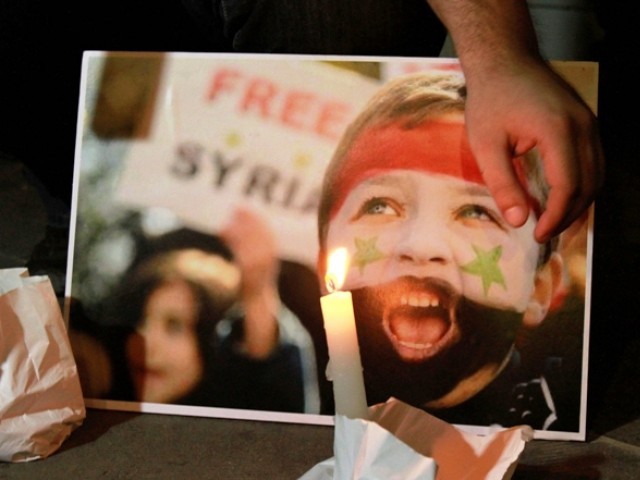
Rights Violations: Pakistan Maintains Discreet Silence Over Syria Protest

By Saba Imtiaz for The Express Tribune

As the chorus against the Syrian government grows louder, Pakistan remains silent on the issue of human rights abuses in Syria. According to Amnesty International, over 1,500 people have been killed since March in the protests against Syrian President Bashar alAssad’s regime. Pressure against Syria appeared to grow over the weekend from Arab states, as the Gulf Cooperation Council asked for an immediate end to bloodshed.

On Monday, Saudi Arabia’s King Abdullah issued a written statement on the situation. “What is happening in Syria is not acceptable for Saudi Arabia. Syria should think wisely before it is too late and issue and enact reforms that are not merely promises but actual reforms. Either it chooses wisdom on its own or it will be pulled down into the depths of turmoil and loss.” Soon enough, Saudi Arabia, Kuwait and Bahrain had recalled their ambassadors from Damascus for ‘consultations’.

In April, Pakistan joined China and Russia in voting against a resolution by the UN Human Rights Council condemning the violence in Syria. Pakistan’s ambassador to the UN Zamir Akram was quoted as saying, “My country has always believed that ‘naming and shaming’ is an approach which is counterproductive.”

Three months and over a thousand dead bodies later, no public statement has yet to be made on the situation in Syria. The Foreign Office spokesperson did not respond to a query till the filing of this report.
According to former foreign minister Khurshid Mahmud Kasuri, Pakistan’s silence is a product of “historical links between the Bhutto and alAssad families”.

President Bashar’s father, the late president Hafez alAssad, was believed to be a close ally of former prime minister Zulfikar Ali Bhutto. Murtaza and Shahnawaz Bhutto travelled to Syria in 1979 to seek support for their campaign to save Bhutto and were offered asylum by the elder alAssad. Murtaza spent several years in Syria before returning to Pakistan in 1993. In 1981, a Pakistan International Airlines flight was hijacked and forced to land in Kabul, and then Damascus. The hijacking is widely believed to be the work of the Al Zulfikar Organisation.
Kasuri said that given the high death toll, “the government of Pakistan needs to make its position clear [and say] that it stands with the people of Syria.”

Pakistan’s silence, according to former foreign secretary Shamshad Ahmad, shows lack of a foreign policy. “Foreign policy is a reflection of a country’s internal state of affairs. If the state is in disorder, it has no foreign policy. Forget Syria or any other Arab country – Pakistan has enough problems at home and has no time to focus on international issues. No one is going to pay any attention to what Pakistan says because it has no credibility. No country is looking to Pakistan for support.”

Pakistanis for Peace Editor’s Note– The writer makes some valid points about Pakistan’s foreign policy or lack thereof. Being complicit also in the suppression of the civilians in Bahrain by providing troops as illustrated in this article shows that the country is often found on the wrong side of terrorism, women and religious minorities rights, and democratic and human rights. Not a good equation and no excuse for any of it any way one looks at it.

India and Pakistan, Talking

As reported by The New York Times

With a relationship as combustible as that between India and Pakistan, it’s progress just to get the two sides in a room. Last week’s meeting was better. Their foreign ministers announced modest, but very welcome, agreements concerning the bitterly disputed region of Kashmir.

They promised to double the number of days when cross-border trade between the two parts of Kashmir — one controlled by India, the other by Pakistan — is allowed and to expand and expedite travel permits for Kashmiris who want to cross the border for family visits, tourism and religious purposes. India and Pakistan have fought three wars since 1947, two over Kashmir. Even these small steps could help chip away at their visceral mistrust.

Three weeks ago, some doubted the meeting would even happen after three explosions ripped through Mumbai, killing 24 people. The Mumbai attacks in 2008 that killed 160 people were blamed on Pakistani terrorists and sent relations with India into the deep freeze. So far, suspicion for the recent attacks has fallen on Indian terrorists.

Prime Minister Manmohan Singh of India deserves huge credit for staying engaged despite Pakistan’s failure to prosecute those responsible for the 2008 horrors. And he deserves credit for not shooting first and asking questions later after the recent attacks.

We wish we could say the same of Pakistan’s leaders. Before there can be a true reconciliation, and stability in the region, Pakistan’s Army must realize that using militants to try to counter Indian influence in Kashmir and Afghanistan is self-destructive — and that homegrown extremism, not India, is the real threat to Pakistan’s survival.

India and Pakistan have more to talk about, including cooperation on water, expanded trade and their joint stake in a stable Afghanistan. President Obama’s drawdown of American troops will go easier if India and Pakistan are part of the solution, not fighting over the spoils. New Delhi insists that it will accept no outside mediation. Washington needs to keep pressing the two to work together.

The United States and its allies are planning a conference in Bonn in December and hope to rally international support for a broad regional strategy that includes a peace deal for Afghanistan, trade agreements and ambitious energy projects. India and Pakistan need to be full participants. The payoff could be huge if their leaders muster the courage to resolve their differences.

How to Succeed in Business in Pakistan

By Naween Mangi for Bloomberg Businessweek

Muhammad Azhar Ali, factory manager for National Foods in Karachi, Pakistan, has a set work routine. At dawn he calls his production managers, who live in different parts of this sprawling city of 18 million on the Arabian Sea, to find out whether outbreaks of violence have rendered any areas dangerous.

If conditions seem especially risky, Ali slips two wallets into his pocket—one real and the other filled with expired credit cards and loose change, ready to hand over if bandits hold him up. He’s been held up once. He checks to make sure he isn’t riding in the same car as the day before, usually shunning his company-provided Toyota Corolla (a favorite vehicle for Pakistan’s upper-middle class) for his own less conspicuous Suzuki Cultus hatchback.

Finally, Ali and his driver head out to meet the 15 buses that have picked up employees at different collection points. Once all the buses have assembled at the rendezvous, Ali leads the convoy 50 kilometers from the city center to National Foods’ main plant. When the convoy arrives at 7:45 a.m. after a 90-minute drive, the workers line up outside a boundary wall topped with barbed wire and go through a body search as guards armed with shotguns look on. Ali monitors the security check on closed-circuit television from his office. The workday is about to begin. He has been up for more than three hours.

“Anyone else in my position in another country would have half the work I do,” says Ali, 49, who has worked at the company, Pakistan’s largest maker of spices and pickles, for over 25 years. “If I didn’t have to spend so much time figuring all this out, I would be looking at ways to enhance productivity.”

Companies across Pakistan’s industrial heartland are struggling to cope with rising insecurity, incessant power outages, and government corruption and inefficiency. Pakistan has lost 35,000 civilians in terrorist attacks since 2006. The war on the Taliban has cost $68 billion in destroyed infrastructure, higher security costs, lost foreign investment, and more.

Karachi has suffered retaliatory attacks from the Taliban such as the 16-hour siege at a naval air base in May that left 10 guards dead. Firefights erupt almost daily between the followers of Pakistan’s numerous political parties. Gunmen killed 664 people in the city between Jan. 1 and June 30, according to the Edhi Foundation, a charitable operator of ambulances. A Karachi resident is almost three times more likely to be killed by a bullet than in a road accident.

Gun battles lead to factory shutdowns in the city almost every month. The government hopes to boost economic growth from 2.4 percent in the last fiscal year to 4.2 percent this year. Growth needs to be 7 percent or more to accommodate all the young people joining the workforce. Large-scale manufacturing contracted 2.3 percent in May, vs. a year ago. Only 1.5 million of 180 million people pay taxes. Many of National Foods’ rivals pay no taxes as they sell unbranded spices bulked up with brick dust. “Working in Pakistan is like always being in a nightmare,” says Abid Muhammad Ganatra, director of finance for the nation’s biggest cement maker, Lucky Cement, in Karachi. “We have to work constantly to mitigate the pressures, to develop strategies to ensure growth. That’s why top management usually has sleeplessness.”

Some companies still manage to grow. At publicly traded National Foods, sales rose 23 percent to 7.4 billion rupees ($81 million) in the fiscal year ended June 30. In the company’s first year, in 1970, revenue was only 5,000 rupees. “Back then, it was a one-room operation where red chili, coriander, and turmeric were manually ground,” says Shakaib Arif, chief operating officer. “Now we make 60 million packets a year with 2,000 employees.”

Political violence is not National Foods’ worst problem. “The biggest challenge by far is energy,” says Arif, 38. Demand for electricity in Pakistan is three times supply. President Asif Ali Zardari is trying to attract independent power producers to Pakistan and has big plans to build hydroelectric plants.

Companies cannot wait. “We have created a mix of power we get from the grid, and what we can generate using our gas and diesel generators,” Ali says. “It costs three times as much to produce the power through generators.” Many factory floor, office, and bathroom lights are kept off to compensate. Ali often visits the powerhouse, a room at the plant that contains huge German-made diesel generators. Scarcity of fuel is a frequent worry. Bigger companies like Lucky Cement don’t rely on the national grid at all. It started generating its own power in 1996 and can produce 150 megawatts from its plants.

Karachi’s residents have taken to the streets this summer, burning tires and disrupting traffic to protest outages lasting days at a time. “In the morning I assess my workers,” says Sajjad Farooqi, who supervises National Foods’ weighing department. “If I find someone is stressed out because he hasn’t slept all night without electricity or that inflationary pressures are causing strain in his family, I have to change his shift and give him easier work.” Inflation averaged 15.5 percent over the last three years because of rising food and energy prices as well as record government borrowing.

National Foods tries to attend to the cultural and economic needs of its workers. A subsidized canteen sells a meal of curry and flatbread for as little as 25 rupees, while a prayer room accommodates 200. Separate working areas exist for women, an unusual perk in a Pakistani factory. Adult literacy classes are available. “We have to provide workers with incentives because they are facing a lot of pressures,” says Khalid Mahmud, who oversees 175 workers in the pickling operation. “Every month I give my most productive worker two T-shirts, 1,000 rupees, and take them to dinner. These prize winners are then keen to help us out when less workers show up and we need to meet production targets.”

The company joined 13 other factories earlier this year to hire a security patrol. A driver, a supervisor, and three armed agents patrol the streets from 7 p.m. to 7 a.m. in an open jeep, stopping at each factory to ensure the guards are not asleep. “We have to plan knowing we are in a war zone,’’ says National Foods Chairman Abdul Majeed. Last year the company was warned by the Karachi police that Taliban fighters had entered the city and were looking for factory jobs to support themselves and their families until they returned to battle. National Foods stepped up its screening and referral process.

The country’s lack of security takes its toll. “Every time I stop at a light, I look around me and think a gunman is about to come,” says Arif, who drives in a small car when visiting the Karachi factory. “I’ve already been held up three or four times.” Ali, the factory manager, has his own way of handling the tension. “When I get into the car in the morning, I close my eyes and rest. I don’t want to know if any gunman is coming. I let my driver take all the stress.”

The bottom line: Violence and energy shortages strain Pakistan’s economy, which is expected to grow 4 percent this year, well below India’s 8 percent rate.