Archive for the ‘ Freedoms ’ Category

Pakistani journalist given U.S. Asylum Tells of Threats, Disappearances in Baluchistan

By Pamela Constable for The Washington Post

Siraj Ahmed Malik, an ambitious young Pakistani journalist, was enjoying a stint last fall on a fellowship at the University of Arizona when he started getting chilling messages from home.

One after another, his friends and colleagues were disappearing, he learned, and their bodies were turning up with bullet holes and burn marks. A doctor’s son from his home town was arrested and vanished. A fellow reporter was kidnapped, and his corpse was found near a river. A student leader was detained, and his bullet-riddled body dumped on a highway. A writer whose stories Malik had edited was shot and killed.

“These were kids I had played cricket with, people I had interviewed, younger reporters I had taught,” Malik, 28, said in an interview last week in Arlington County, where he now lives. The final straw came in early June, when one of his mentors, a poet and scholar, was gunned down in Quetta, the capital of Baluchistan, Malik’s native province.

On Aug. 19, Malik applied for political asylum in the United States. In his petition, he said that his work as a journalist and ethnic activist in Baluchistan, where he had exposed military abuses, made him likely to be arrested, tortured, abducted and “ultimately killed by the government” if he returned.

Two weeks ago, his petition was granted. It was a highly unusual decision by U.S. immigration officials, given Pakistan’s status: a strategic partner in Washington’s war against Islamic terrorism; a longtime recipient of U.S. aid; and a democracy with an elected civilian government and vibrant national news media.

“I never wanted to leave my country, but I don’t want to become a martyr, either,” said Malik, a soft-spoken but steely man who spends his days hunched over a laptop at coffee shops in Clarendon, checking with sources back home to update his online newspaper, whose name means “Baluch Truth.”

“What’s going on in Baluchistan is like the dirty war in Argentina,” he said. “I need to be telling the story, but I can’t afford to become the story.”

Baluchistan is the Wild West of Pakistan — a remote desert province, larger than France, that is home to a mix of radical Islamic groups, rival ethnic and refugee gangs, rebellious armed tribes, and security agencies that have long been reported to kidnap, torture and kill dissidents with impunity.

Living under constant threat

Yet this ongoing violence and skulduggery receives scant international attention. Foreign journalists are banned from visiting the region alone, while headlines about Pakistan are dominated by a separate, high-stakes border conflict in which American drones and Pakistani troops are battling the Taliban and al-Qaeda.

As a result, a handful of local journalists such as Malik have been left to investigate and report the news without big-city patrons or visiting foreign delegations to give them cover.

“The threat of disappearance was always lurking in the back of our minds,” Malik wrote in his asylum petition. “My friends, colleagues and I lived with the knowledge that yesterday it was him that disappeared; today it is someone else; tomorrow it could easily be me.”

As Malik recounted over coffee, pressure and threats from unidentified intelligence agents were a daily hazard. According to his asylum file, agents accosted him in airports and hotels, detained and questioned him, and repeatedly threatened to “teach me a lesson.”

Malik acknowledges that as an advocate for the Baluch nationalist cause, his journalism is hardly neutral. The ethnic minority movement, which seeks autonomy from the central government, includes armed groups. Malik claims that he does not condone them, but he describes their stance as a “defensive” response to official abuse.

Still, his case for protection was bolstered by reports from human rights groups and letters from university officials in Arizona, who called him “nothing short of brave.” In a July report, Human Rights Watch described a “practice of enforced disappearances” of Baluch leaders and intellectuals, often by security agencies, and listed 45 abductions or killings since 2009.

Activists including Malik assert that more than 5,000 Baluch have vanished in the past decade, but the issue has never been seriously addressed, while the government has both co-opted and persecuted Baluch tribal chiefs. In 2007, Pakistan’s military president fired the head of the Supreme Court, who sought to probe the disappearances. In 2008, a civilian government took office and an investigative commission was established, but little action has been taken.

“The authorities have no answers because there is no accountability,” said one Pakistani diplomat, who asked not to be identified because of the sensitivity of the subject. He suggested that Malik had exaggerated his fear of persecution as a “ploy” to remain in the United States, but he also called disappearances “the tip of the iceberg” in a society where security forces hold sway behind the scenes. Even a chief justice, he added, “knows there are lines he cannot cross.”

Driven to speak out

Najam Sethi, a newspaper publisher and titan of Pakistan’s liberal media establishment, was Malik’s boss from 2006 to 2010, when he worked as a correspondent in Quetta. For the past few months, Sethi has been on his own sabbatical at the New America Foundation in Washington, partly to escape the pressure he faces at home.

At a public forum here last week, Sethi described Pakistan’s news media as free to snipe at politicians and expose financial scandals but said it remains cautious about reporting on military and intelligence institutions, partly out of respect and partly out of fear.

“The media are scared, because there is no one to protect them,” Sethi said.

According to the Committee to Protect Journalists, more than 40 Pakistani journalists have been killed since 1992. In May, a well-known investigative reporter, Saleem Shahzad, was abducted and found murdered. Shahzad had received threats after writing about al-Qaeda infiltration of the military, and a senior U.S. military official said his killing had been “sanctioned” by the government.

Asked about Malik, Sethi said he thought his former staffer had been too aggressive and outspoken. As Malik’s editor, he said, he had intervened several times with military authorities to protect him. “I wish he hadn’t gone so far,” Sethi said. “He crossed too many red lines.”

Malik, however, said he felt “betrayed” by such liberal media leaders, saying they have avoided speaking out against oppression in Baluchistan. He recounted how Baluch groups had been galvanized by the 2006 army slaying of the legendary tribal chief Nawab Akbar Bugti.

“For us, the killing of Bugti was Pakistan’s 9/11,” Malik said. After that, he said, he stepped up his exposure of the violence and abuses. His activities drew increasing attention from government agents, who, he said, called him a “traitor” and threatened to kill him if he did not stop.

Instead, Malik persisted. In early 2010, he attended a conference in India and denounced the disappearances. From his fellowship perch in Arizona last winter, and then while working briefly at the Center for Public Integrity in Washington in the spring, he wrote and spoke out at every opportunity.

But as the deaths of other Baluch journalists and friends began to mount, Malik said last week, he began to hesitate about returning.

“Baluchistan needs a messenger to the world,” he said, itching to get back to his reporting. “Here in the United States, I don’t have an office or money, but at least I can stay alive and get the message out.”
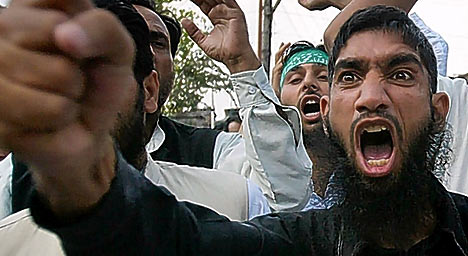
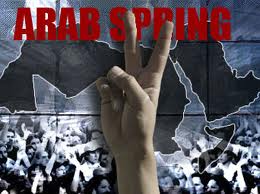
Satirical Song, a YouTube Hit, Challenges Extremism in Pakistan

By Salman Masood for The New York Times


A satirical song that takes a tongue-in-cheek swipe at religious extremism, militancy and contradictions in Pakistani society has become an instant hit here, drawing widespread attention as a rare voice of the country’s embattled liberals.

The song, “Aalu Anday,” which means “Potatoes and Eggs,” comes from a group of three young men who call themselves Beygairat Brigade, or A Brigade Without Honor, openly mocking the military, religious conservatives, nationalist politicians and conspiracy theorists.

Their YouTube video has been viewed more than 350,000 times since it was uploaded in mid-October. The song is getting glowing reviews in the news media here and is widely talked about — and shared — on social networking sites like Twitter and Facebook.

The name of the band is itself a satire of Pakistan’s nationalists and conservatives, who are often described in the local news media as the Ghairat Brigade, or Honor Brigade.

Local musicians have produced work in the past vilifying the West, especially the United States, but rarely do they ridicule the military or religious extremists, and none have had Beygairat Brigade’s kind of success.

Sung in Punjabi, the language of the most populous and prosperous province, the song delivers biting commentary on the current socio-political milieu of the country, in which religious radicalism and militancy have steadily risen over the years and tolerance for religious minorities is waning.

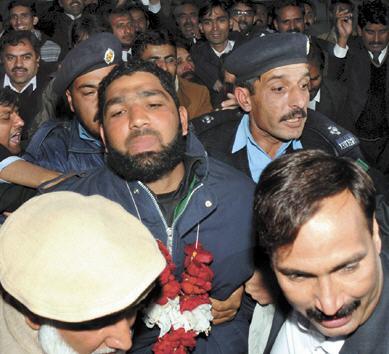
Just this year, a governor who opposed Pakistan’s contentious blasphemy law was killed by one of his guards. The assassin was then celebrated by many in the country, including lawyers who greeted him with rose petals and garlands.

The song rues the fact that killers and religious extremists are hailed as heroes in Pakistan, while someone like Abdus Salam, the nation’s only Nobel Prize-winning scientist, is often ignored because he belonged to the minority Ahmadi sect.

“Qadri is treated like a royal,” wonders the goofy-looking lead vocalist in the song, referring to Malik Mumtaz Qadri, the elite police guard who killed the governor of Punjab, Salman Taseer, in January after he challenged the blasphemy law.

Another line in the song, “where Ajmal Kasab is a hero,” makes a reference to the only surviving Pakistani gunman involved in the 2008 terrorist attacks in Mumbai, India. Still another line, “cleric tried to escape in a veil,” alludes to the head cleric of Islamabad’s Red Mosque — which was the target of a siege in 2007 by the Pakistani government against Islamic militants — who tried unsuccessfully to break the security cordon by wearing a veil.

The song even makes fun of the powerful army chief, Gen. Ashfaq Parvez Kayani, for extending his role for another three years.

Potatoes and eggs “never tasted so good,” wrote Fahd Husain in a commentary on Tuesday in The Daily Times, a newspaper based in Lahore. “They will always be credited for being politically incorrect when most needed, and giving voice to all those Pakistanis who live in fear.”

The popularity of the song on the Internet has made it a sensation across the border in India as well, surprising the band members, who have been incessantly asked whether they feel they have put their lives in danger by ridiculing the mighty.

There are certainly enough provocations to rile nationalists and conservatives. At one point in the music video, the lead singer holds a placard that reads, in English: “This video is sponsored by Zionists.”

The band members chose to upload the song on YouTube instead of handing it to television networks because they said the work was too offbeat and might be censored. Not surprisingly, some have criticized the song and its taunts as pedestrian and in bad taste.

“We were not expecting such a huge response,” said Ali Aftab Saeed, 27, the lead vocalist, who lives in Lahore, a city that is often considered the country’s cultural capital.

He said the assassination of Mr. Taseer was the inspiration for the song and its lyrics.

Resistance poetry and literature are not new to Pakistan, and they raised spirits during the somber years of military dictatorships.

During the protest rallies of the seminal lawyers movement in 2007, when they led the campaign to oust the president, Pervez Musharraf, the lawyers would sing and dance to a poem written by Faiz Ahmad Faiz, considered a giant of Urdu literature. Habib Jalib, another famous Pakistani poet, wrote several poems against Gen. Mohammad Zia ul-Haq, the military dictator in the 1980s.

But “Jalib is irrelevant to the generation of urban, young, middle-class kids that Beygairat Brigade is addressing,” said Nadeem Farooq Paracha, a culture critic based in Karachi.

“This band is offering an alternative narrative to the one this generation has grown up on, and provides a counternarrative to establishmentarian and conservative notions of politics, history and society advocated by televangelists, conspiracy theorists and, of course, the right-wing electronic media,” Mr. Paracha added. “And what better and more effective way to do this than by using satire and pop music.”

The band members, on the other hand, have no pretensions of being revolutionaries, activists or intellectuals, though they do feel that the song represents those who do not believe in extremism and want to live peacefully.

“At the end of the day,” said Mr. Saeed, the lead vocalist, “we are just musicians who raised some questions.”

Pakistan: More To Offer Than Bombs And Beards

By Asim Haneef for Al Jazeera

If you did not know anything about Pakistan and happened to pick up a newspaper or turn on the evening news, you might be forgiven for assuming that it is possibly the most broken, troubled and violent country on the face of the earth – a basket case just moments from imploding.

In the all-important arena of international public perception, Pakistan has taken an unprecedented battering in recent years, accumulating more bad headlines than nearly any other country and making places like Afghanistan and Iraq look relatively stable by comparison.

The list of challenges it faces is seemingly unending: terrorism, corruption, drone attacks, natural disasters, poverty, a deficit in leadership, discrimination against minorities, mistreatment of women, attacks on freedom of speech, mass tax evasion, match fixing, the murder of judges, politicians, union organisers and journalists – and that is just the tip of the iceberg.

So pervasive are the headlines pointing to a crisis in Pakistan that after a while they seem to blur into one another. Whether it is “hostages held in Karachi”, “al-Qaeda hideout discovered in Swat”, “floods bring pain to millions”, “suicide bomber explodes in market square”, “senior judge in blasphemy case shot dead” or “Pakistan’s ISI actively supporting Taliban in Afghan war” the message is uniformly bad news. The result is that for many the image of Pakistan is one of bombers, beards, shaking fists, distressed women and utter hopelessness. It makes for a pretty depressing picture.

I guess that is why the work of Syed Ali Abbas and his Pakistan Youth Alliance (PYA) featured in this week’s Activate, Pakistan: The New Radicals, is so refreshing. A courageous young social activist, Ali founded the PYA together with Maryam Kanwer when he was just 21 years old. It was born in the midst of severe political turmoil, as then-President Pervez Musharraf imposed emergency rule and fired the chief justice on national television, while the security forces brutally cracked down on dissenting lawyers.

Fed up with watching their country’s problems on the television, the PYA initially organised protests and rallies but quickly became more active. Its core premise and mission statement is to take a stand, to get as practically involved on the ground as possible and to exemplify the change they seek through their actions rather than merely proposing it on paper.

Their main goal is to create political and social awareness among the youth of Pakistan and to unite them irrespective of their religion, ethnicity, caste, race or language on an unbiased platform through which they can engage with one another and contribute practically to building a more progressive society in Pakistan – whether through protest, social and relief work or the arts.

Earlier this year, Ali was among a small group instrumental in organising counter protests to the hate filled ones celebrating and glorifying Mumtaz Qadri, the killer of Salman Taseer, the governor of Punjab who was murdered in January over his stance on Pakistan’s blasphemy laws and his ardent defence of religious minorities like Christians and Ahmadis. Ali says he did this because: “This is not what the founder of Pakistan and ‘Father of the Nation’ Quaid-i-Azam Muhammad Ali Jinnah would have wanted for this country today, especially as he repeatedly stressed the importance of inter-faith unity and religious harmony.”

Stories like these and others bring about something much needed in international news these days – a positive, hopeful narrative against the odds, showcasing some of the good news stories coming out of places like Pakistan, which often go unreported and deserve a spotlight too. So although we appear to have an extraordinary capacity to become fixated on negative headlines, there are also good things happening too and though progress and development is not as ‘sexy’ as a suicide bomber or a train-wreck, perhaps a little balance is in order, so that we do not become as, Ali says at the close of the film, “filled with dread, being hopeless about the future”.

So do good stories actually emanate from Pakistan? And, if so, where are they? Well an initiative by brothers and social entrepreneurs Majid and Mahmood Mirza aims to answer this. They set up a website simply titled Good News (www.goodnews.pk) , which focuses solely on positive developments coming out of the country. They describe the idea behind the website via Skype as being “to highlight amazing, awesome and inspirational news stories coming from Pakistan, as opposed to the usual negativities that steal the headlines”.

And they have plenty of examples ready. For instance, did you know that Pakistan has become only the sixth country in the world to map the human genome, joining the ranks of the US, the UK, China, Japan and India, which have all successfully sequenced it. Or, how about the fact that Pakistan has the largest volunteer ambulance organisation in the world started by “living saint” Abdul Sattar Edhi in 1948. Today, the radio-linked network includes 600 ambulances that work in every corner of the country. Or how about the recent news that Dr Umar Saif, an associate professor at the School of Science and Engineering in Lahore, has been recognised by MIT Technology Review as one of the top 35 innovators in the world – joining an elite group of researchers and entrepreneurs selected over the last decade, which includes Larry Page and Sergey Brin, the co-founders of Google, Mark Zuckerberg, the founder of Facebook, and Jonathan Ive, the chief designer at Apple. Now who has heard of those stories?

Then there are serial entrepreneurs like Monis Rahman, who just four years ago set-up Rozee.pk, which is now Pakistan’s largest jobs website, with 500,000 unique visitors a month; or Karachi-born freelance designer Vakas Siddiqui laying to rest the myth that Pakistani students are limited to excellence in science and the humanities by being selected as one of the top 28 designers in the world; or filmmaker Sharmeen Obaid Chinoy who has just been shortlisted for an Oscar in the ‘best documentary short’ category for her film Saving Face. Whether it be in music, fashion, academia, activism, technology, sports or science these are stories that people do not usually associate with Pakistan and which might just show that there is more to the country than just bombs and beards.

Some of these unreported positive stories, along with the courage and creativity shown by people like Syed Ali Abbas and the Pakistan Youth Alliance in challenging these problems, reflect a surprising shift in the country’s growing and increasingly switched-on, globally-minded youth. They are using outlets like social media platforms and blogs to become more aware, educated and informed about their rights and more savvy to the different methods they must perfect in order to stop their country peddling even further backwards than it already has and to lead it to a brighter day, free from the same old headlines we’re all universally tired of reading and hearing about.

Asim Haneef worked extensively on Activate, a new eight part series featuring grass-roots activists from across the globe who are challenging the status quo and bringing about a change in their society. You can follow him on Twitter @asimhaneef

Pakistan, Islam & Radicalism

By Syed Ali Abbas Zaidi for The Huffington Post

I was in Kasur, a small town near Lahore, Pakistan, where the celebrated mystic poet Bulleh Shah is buried. Thousands gathered for the 254th anniversary of his death. Slogans chanted on that occasion would be branded ‘blasphemous’ by extremist organisations in Pakistan.

Neither Hindu nor Muslim,
Sacrificing pride, let us sit together.
Neither Sunni nor Shia,
Let us walk the road of peace.

Bulleh Shah penned these verses challenging religious extremism and orthodoxy that plagued Muslim society hundreds of years ago. He was exiled from his home town and, history has it, he was denied a burial in Muslim cemetery. His advice has clearly gone unheeded as my country is still yet to find peace. Not even the founder of Pakistan, Muhammad Ali Jinnah has been spared being labelled ‘the great infidel’.

Incidentally, the same ilk of religio-political parties who now manipulate public discourse were at the forefront of using religious narrative for political point scoring before Pakistan came into being.

4 January 2011 is a day I cannot forget. Salmaan Taseer, the Governor of Pakistan’s biggest province Punjab, was gunned down by his bodyguard. He was killed for supporting a Christian woman accused of insulting the Prophet Muhammad. He was shot twenty six times.

For the entire week after the killing, I was scared. I don’t remember being in that state of mind since Benazir Bhutto was assassinated. It’s not a very heartening sight to see fellow ‘educated’ countrymen glorifying a murderer and justifying his actions based on ignorant rhetoric. Scores of fan pages popped up on Facebook, many of my friends changed their profile pictures to one of the killer, Mumtaz Qadri, exalting a murderer as hero.

Very few turned out to pay homage to the slain governor in days to come, as ‘liberals’ arranged vigils in his remembrance. Yet thousands poured on to the streets to defend Mumtaz Qadri, his assassin. The media, which has been a primary tool in fanning conspiracy theories in public, had again played a pivotal role in enticing ‘religious’ emotions on this issue.

The killer of Salman Taseer had confessed proudly. The brave judge who sentenced him to death has gone into hiding and will not be re-appearing anytime soon.

7 March 2011. The start of another week of gloom and, if I’m honest, I was ashamed to be a Pakistani. We had arranged a protest to condemn the killing of Shahbaz Bhatti, the Federal Minister for Minorities who was brutally assassinated on 2 March. He was an outspoken critic of Pakistan’s blasphemy laws and the only Christian in the cabinet. Only a few youngsters turned up.

When it comes to numbers, we can gather thousands but the ’cause’ has to be against India, Israel or America. Not many will show up if the demonstration is against radical organisations, or asking for introspection within.

Many who rallied for Gaza in early 2009 were not seen in protests condemning Taliban atrocities in Swat at the same time. Many who burnt down shops in anger at the Danish cartoons of the Prophet Muhammad never stood up for Parachinar, a small town near the border of Afghanistan where thousands have been killed in sectarian violence between Sunni’s and Shia’s.

9 October 2011. I was stuck on the Islamabad Highway, the main road that connects Islamabad with Rawalpindi as it was blocked by flash mobs protesting for the release of Mumtaz Qadri.

Two decades and 40,000 deaths later which includes top politicians, generals and clerics – not many things have changed when it comes to checking radicalism within Islam.

Many attacks on places of worship of minority sects within Islam, recurring violent brawls between followers of different schools of thought, reaction to the murder of Salman Taseer and Shahbaz Bhatti, recent acts of violence in Baluchistan and the tale of Parachinar are chapters in recent history which expose the extent of radicalisation in Pakistani society.

Soon, we as citizens of a country founded because a minority felt discriminated against and followers of the great religion of Islam, need to face up to the challenge of the radical minded and their extremist ideology.

This is a war of ideologies and is inevitably a war that must be fought with opinions and ideas; it must encourage discourse and exchange of reason. It is a war that must form the basic pillar of a new and improved national paradigm for Pakistan

We as a society cannot ignore an emerging threat from radicalism within our ranks, because if it gets too late, there might be no ‘music’ left to face.

The Arab Spring Will Only Flourish if The Young Are Given Cause to Hope

By Henry Porter for The Guardian

Osama bin Laden and Muammar Gaddafi dead; Hosni Mubarak and family behind bars with millions of dollars of assets frozen; President Ben Ali of Tunisia sentenced to 35 years in absentia; the Bosnian war criminal Ratko Mladic awaiting trial in the Hague. We can take a moment to recognise that sometimes things go astonishingly well – the removal of these five characters from the picture is a blessing.

Whatever doubts we have about Gaddafi’s death and the absence of due process (if you can’t even decide where to bury a man, it is a good rule not to kill him), his death is a bracing lesson for the likes of President Bashar al-Assad of Syria, who is torturing young demonstrators to death, and President Saleh of Yemen and King Hamad of Bahrain, both of whom are drenched in the blood of their countrymen.

The knowledge that just 12 months ago Ben Ali, Mubarak and Gaddafi all looked untouchable must cause the goofy-looking butcher of Damascus and his fragrant missus to clutch at each other in the wee small hours.

The Nato intervention was right and I would say that now, even if it had not gone so well for the rebels in the last three months. At the time the decision was taken, I was in Tunisia, in the stunned aftermath of Ben Ali’s departure, looking up the timeline of the Srebrenica massacre in July 1995, when General Mladic separated the men from the women and young children and went on to murder 8,000 people. Benghazi, the eastern city where Gaddafi did his military training, was as vulnerable as the Bosniak enclave. His mercenaries would have created a bloodbath if they had not been driven from the outskirts as the first air strikes began.

I wasn’t optimistic – Libya seemed too vast, Gaddafi too cunning and the rebel forces hopelessly amateur. And there were doubts whether air power alone could achieve the result that it did. But after 26,000 air sorties and 9,600 strike missions, and a lot of blood spilled, the regime is no more and David Cameron and Nicolas Sarkozy can quietly take a bow. Both are nimble politicians, yet it is not unduly naive to believe they were influenced by the memory of what happened in Bosnia.

There is always a basic moral requirement to intervene, but any decision to act must gauge risk and the likelihood of achieving success. The seemingly pragmatic considerations also contain a moral element, because the interventionist obviously has an obligation not to inflame local opinion or create a situation worse than the one he is seeking to alleviate. These conditions were met in Libya, yet there was the additional incentive of the country’s “sweet, light” crude and the reserves of 46.4bn barrels, which have nothing to do with morality or Srebrenica.

Stage two of the Arab Spring begins today with elections in Tunisia for the Constituent Assembly, in which the Islamist party An-Nahda, led by Rachid Ghannouchi, is likely to do well. This is the first big test for the west because we have to allow the people who risked everything on the streets to develop their own politics and democratic processes.

Nor should we allow ourselves to be spooked by what happens in the Egyptian elections on 28 November, when the Muslim Brotherhood’s well-organised political wing, the Freedom and Justice party, is expected to trounce nascent secular parties. Admittedly, this will not be the greatest outcome. Quite apart from the Islamists’ failure to reconcile their declared support for rights and civil liberties with the deeper convictions of religious authoritarianism, the generation of devout men likely to take power is hardly equipped to address, or properly understand, the problems of the young people who took to the streets Tunis and Cairo.

The thing that so few have really absorbed about the revolutions is that they were generational – the young rising against the tyranny and corruption but also the incompetence of their parents’ generation. The first demonstrations in the Arab Spring occurred in the Tunisian provincial city of Sidi Bouzid, where a young man set himself on fire because officials confiscated the fruit and vegetables he was selling without a permit. Like so many of his contemporaries, Mohamed Bouazizi, 26, could not find proper work.

Youth unemployment and the grinding lack of hope are the source of the most serious social and political problems across the Arab world. The unemployment rate among Tunisians under 25 is about 26%. Half of the 60,000 graduates released on to the jobs market every year will not find work. These are the well-educated and highly organised single young people who had nothing to lose during the uprising and have gained very little in material terms since.

To grasp what happened in Tahrir Square, you must know that 54 million of Egypt’s population of 82 million are under 30 years old and this age group makes up 90% of the country’s unemployed. The very highest rates of joblessness are among the well educated.

The UK’s median age is 40. Across the Arab world, it hovers in the mid-20s. In Egypt, it is 24.3, Libya 24.5, Tunisia 30 and Syria 21.9. Factor in regular unemployment rates in the Middle East of 25% among the young – even in the rich Gulf states – and you know that we are only at the beginning of this particular story.

The sophistication of this new generation of Arabs should not be underestimated. They require far more than sermons about prayer and clean living from middle-aged chaps to make lives for themselves in the 21st century. They will need freedom, empathy and technocratic as well as political leadership to create the jobs that will ensure stability and peace. When you talk to these educated young adults, as I did earlier this year in Tunis and Cairo, it is striking how well they appreciate that democratic change depends on job creation. Yes, they declare their faith, but it’s a given – not something they want to go on about.

If the west wants permanent change in North Africa, we have to recognise the potential of this new generation and find ways of providing stimulus and investment, even as we struggle to create jobs for our own young people. That is the only intervention open to us now and in some ways it is much more demanding.

In Libya, the guns need to be put away, a national army and police force set up and proper courts founded. The first test of the new civil society must be to give a scrupulously honest account of how the former dictator met his end. The new republic will not be served by a cover-up and by spokesmen for the National Transitional Council lying through their boots. As the graffiti that appeared in Tripoli this weekend reads: “Clean it up and keep it clean”.

Sharia Law Surprise for Secular-Minded Libyans

By Mary Fitzgerald for The Irish Times

ANALYSIS: The role of Islam could prove to be a contentious issue in the new Libya

LIBYA’S INTERIM authorities formally declared liberation yesterday with soaring speeches that praised their revolution’s victory over tyranny, paid tribute to the fallen and offered clues as to what kind of state might emerge from the ashes of Muammar Gadafy’s idiosyncratic rule.

The long-awaited declaration, made in front of tens of thousands of jubilant Libyans gathered in Benghazi, the eastern city where the uprising against Gadafy began in February, came more than two months after Tripoli fell to revolutionary forces, allowing them to seized control of most of the country.

It ushers in a process agreed by the interim body known as the National Transitional Council which will see the NTC move its headquarters from Benghazi to Tripoli and form a transitional government within 30 days. A 200-member national assembly is to be elected within 240 days, and this will appoint a prime minister a month later who will then nominate a cabinet. The national assembly will also be given deadlines to oversee the drafting of a new constitution – none existed under Gadafy – and the holding of parliamentary and presidential elections.

Already the process of forming a united and representative government promises to be fraught. With Gadafy dead, the fissures that always existed within the revolution, whether along regional or tribal lines or between Islamists and secular liberals, threaten to widen.

Even the fact that liberation was declared in Benghazi, rather than Tripoli, points to friction between leadership figures in the two cities – many of the NTC’s members, especially those from eastern Libya, have remained in Benghazi, the second-biggest city.

The question of who did what, whether during the war of the last eight months or during the four decades Gadafy was in power, will also determine much in the new order.

On Saturday, the de facto prime minister Mahmoud Jibril said progress would hinge on two things. “First what kind of resolve the NTC will show in the next few days, and the other thing depends mainly on the Libyan people – whether they differentiate between the past and the future,” he said. “I am counting on them to look ahead and remember the kind of agony they went through in the last 42 years.” Jibril also warned that Libya needed to swiftly find another source of income because the country had already consumed 62 per cent of its oil under Gadafy.

Those seeking hints as to what the new Libya may look like seized on particular sections of NTC head Mustafa Abdel Jalil’s speech in Benghazi yesterday, in which he went into some detail about the place of Islam in the post-Gadafy scenario.

“This revolution was blessed by God to achieve victory,” Jalil, who is considered devout but moderate, told the crowd. “And we must go on the right path.”

Libya, he said, would be a state where Sharia law would be the “fundamental source” of legislation and any existing legislation that contradicted Islamic principles would be immediately annulled.

It was not the first time Jalil had made such statements, and many other Arab countries have similar constitutional provisions, but Libyans of a more liberal bent may have baulked at what came next.

The new state “will not disallow polygamy” Jalil said, and charging interest will be forbidden. Some Libyans point out that polygamy was practised discreetly under Gadafy, while others interpreted Jalil’s remarks as a practical measure to address the issue of the thousands of women left widowed during the war.

These declarations, though met with cheers from the crowd, will have raised eyebrows among more secular-minded Libyans who would prefer to have such matters decided through a democratic process rather than presented almost as a fait accompli at such an early stage.

The Islamist tint to Jalil’s speech could be interpreted in different ways: it may have been an attempt to undercut the influence of more hardline elements while Libya finds its feet after Gadafy, or a bid to keep the grassroots on board as one of North Africa’s most conservative societies enters what will be a challenging period.

Either way, it shows that questions over what role Islam should play promise to be among the most pressing in the new Libya.

Pakistanis for Peace Editor’s Note– We are happy for the Libyan people for overthrowing a brutal and oppressive dictator. We condemn however his killing and not being brought to justice and the treatment of his corpse to not be treated to Islamic last rites and custom. We are also concerned by the announcement by the revolution’s leadership that Sharia Law will be the new form of law in Libya. This is not acceptable as a secular democracy is the form of government similar to Turkey that must be the model. We urge the US and other NATO benefactors that made the overthrow of Gaddafi possible to insist on a secular democratic government in Libya, otherwise all is for naught.

Beyond Gaddafi, America Turns its Attention to Pakistan

By Peter Hoskin for The Spectator

It’s hard to recall a more grisly complement of newspaper covers than those this morning. Only the FT refrains from showing either Gaddafi’s stumbling last moments or his corpse, whereas the Sun runs with the headline, big and plain: “That’s for Lockerbie”.

The insides of the papers are more uncertain. There are doubts about the details, such as what has happened to Gaddafi’s infamous son Saif. And there are doubts about the general tide of events too. Several commentators, includingPeter Oborne, make the point that the passing of Gaddafi is only the first phase in Libya’s struggle towards democracy — and it is a struggle that might easily be forced off course by various factions, splinter groups and madmen. As the New York Times puts it, “The conflicting accounts about how [Gaddafi] was killed seemed to reflect an instability that could trouble Libya long after the euphoria fades…”

As significant as all this is, however, we should also alight on the news from another area of instability: Afghanistan and Pakistan. Hillary Clinton visited Kabul yesterday, where she not only heard about the Gaddafi’s death in photo montage-friendly fashion, but took some very clear swipes at Pakistan for being the Taliban’s favourite holiday destination. Here are some extracts from the full transcript of her speech and Q&A here:

“We will be looking to the Pakistanis to take the lead, because the terrorists operating outside of Pakistan pose a threat to Pakistanis, as well as to Afghans and others. And we will have ideas to share with the Pakistanis. We will certainly listen carefully to the ideas that they have. But our message is very clear: We’re going to be fighting, we’re going to talking, and we’re going to be building. And they can either be helping or hindering, but we are not going to stop our efforts……So my message will be as it just was to you: We have to deal with the safe havens on both sides of the border. It is not enough to point fingers across the border; we must work together to end the safe havens. We must send a clear, unequivocal message to the government and the people of Pakistan that they must be part of the solution, and that means ridding their own country of terrorists who kill their own people and who cross the border to kill in Afghanistan.I think that how we increase that pressure, how we make that commitment, is the subject of the conversations that President Karzai and I have had, and that I will have in Pakistan. But we’re looking to the Pakistanis to lead on this, because there’s no place to go any longer. The terrorists are on both sides. They are killing both people. No one should be in any way mistaken about allowing this to continue without paying a very big price. So I will deliver the message on behalf of the mothers of Afghanistan andon behalf of my own country.”

Just words, perhaps. But these words are some of the firmest that Obama’s adminstration has directed towards Islamabad since the death of Osama Bin Laden. In a news interview last night (do watch it if you’ve got two minutes), Clinton suggested that “something has changed” in the relationship between the two countries, and that Pakistan needs to “make some some serious choices”. That change could well define much of what lies ahead for Afghanistan and the wider region.

With Gaddafi Dead, The Arab Spring Has Finally Sprung

By Manzer Munir for Pakistanis for Peace

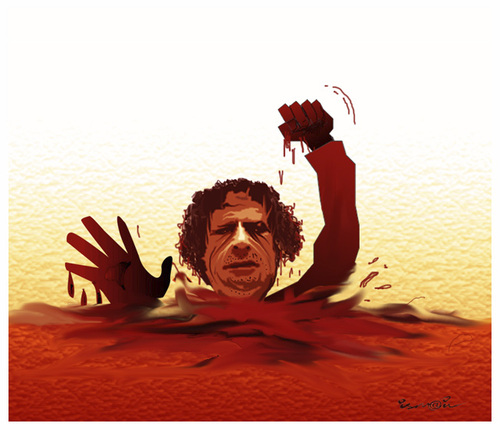
In the end, it does not matter whether Muammar Gaddafi was executed due to an order by members of the Libyan Transitional National Council leadership or whether he was killed at the hands of a vigilante mob in the run up to his capture and death. There is no question that initially there was confusion Thursday when unconfirmed reports out of Libya stated that Gaddafi was captured. However within a few hours news came that he had been killed during a battle between the rebels and forces loyal to Gaddafi . Sure enough, within another hour it was confirmed that Gaddafi was killed as mobile phone videos appeared showing a bloodied Gaddafi dazed and confused as rebels jostled all around him to get a piece of the brutal dictator that they had known for more than 42 years.

Exact details are presently murky in regards to his capture and death but it appears that during a battle in Gaddafi’s hometown of Sirte on Thursday morning, Gaddafi’s convoy was spotted by NATO drone aircraft and surveillance and was reportedly fired upon by French air strike on a road fighter jets killing a few dozen fighters. Gaddafi escaped with a few of his bodyguards and was found hiding in a sewage pipe with a couple of his bodyguards by a huge mob of rebels. Hours later, the world saw footages of a severely wounded Gaddafi being held up and surrounded by rebels begging for mercy. Reports sate that he was shot and killed during the crossfire between rebels and his loyalists. And yet there is a sense that he was executed either by those that captured him or by order of the ruling Transitional National Council.

Regardless of how he was killed, more important questions need to be asked. What happens next in Libya? How will a government be formed for a country that is effectively starting over from scratch? This after all is a country that had been held hostage by a dictator for nearly half a century and it is going to need lots of international assistance in transitioning into having an effective and competent government, one that is far better that what the people of Libya have lived under for so long. And how will the Arab Spring and this momentum affect the tenuous situation in several other Arab capitals dealing with their own unrest and near civil wars.

Gaddafi’s graphic last few days were not unlike those of Saddam Hussein of Iraq. His last few hours being injured and captured hiding in a large sewage pipe must have been a far cry from the life he had led for so long as one of the longest serving heads of state and richest people in the world. Saddam too was found near his hometown of Tikrit as he was hiding like a common criminal in a spiderhole when he was caught. In the last few moments of their capture, neither men could not have believed that their worst fears had been realized and their long reign was coming to an end. More rulers across the Arab and indeed Muslim world today must be cognizant of the consequences of their actions as rulers.

The revolts of the Arab Spring have now succeeded in changing repressive governments in Tunisia, Egypt, and now Libya. Further east still in Syria an even more brutal dictator in Bashar al Assad must know that his time is coming near and his day of reckoning is a day closer when his countrymen stand up to brutality, repression, and mass murder at the hands of those who are supposed to be their leaders.

To be consistent, NATO and Western nations must remain vigilant and oppose the brutality presently happening in Syria, Yemen, Algeria, Bahrain and all other nations of the region and world regardless of strategic and mineral importance simply on the basis of principles and what is right. Only exerting pressure or using force against countries that are either strategically important like Egypt for its Suez canal or oil rich nations like Iraq and Libya for their natural resources will only send the wrong message to many other people in the region who are also yearning to be free. How this change in power happens is not as important as the fact that power changes hands in these long repressive regimes. It does not matter how Gaddafi died, what is important is that he is dead and his death could help gain momentum for the Arab Spring that has now clearly sprung far and wide.

Qaddafi Is Dead, Libyan Officials Say

By Kareem Fahim for The New York Times

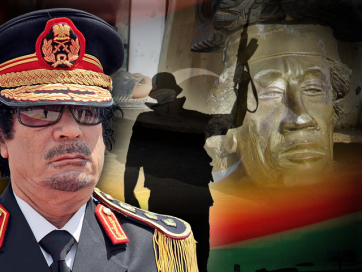
Col. Muammar el-Qaddafi, the former Libyan strongman who fled into hiding after rebels toppled his regime two months ago in the Arab Spring’s most tumultuous uprising, was killed Thursday as fighters battling the vestiges of his loyalist forces wrested control of his hometown of Surt, the interim government announced.

Al Jazeera television showed what it said was Colonel Qaddafi’s corpse as jubilant fighters in Surt fired automatic weapons in the air, punctuating an emphatic and violent ending to his four decades as a ruthless and bombastic autocrat who basked in his reputation as the self-styled king of kings of Africa.

Libyans rejoiced as news of his death spread. Car horns blared in Tripoli as residents poured into the streets to celebrate.

Mahmoud Shammam, the chief spokesman of the Transitional National Council, the interim government that replaced Colonel Qaddafi’s regime after he fled Tripoli in late August, confirmed that Colonel Qaddafi was killed, though he did not provide other details.

“A new Libya is born today,” he said. “This is the day of real liberation. We were serious about giving him a fair trial. It seems God has some other wish.”

Abdul Hakim Belhaj, the leader of the Tripoli military council, said on Al Jazeera that anti-Qaddafi forces had Colonel Qaddafi’s body.

It was not clear precisely how he died. Mohamed Benrasali, a member of the national council’s Tripoli Stabilization Committee, said fighters from Misurata who were deployed in Surt told him that Colonel Qaddafi was captured alive in a car leaving Surt. He was badly injured, with wounds in his head and both legs, Mr. Benrasali said, and died soon after.

Colonel Qaddafi had defied repeated attempts to corner and capture him, taunting his enemies with audio broadcasts denouncing the rebel forces that felled him as stooges of NATO, which conducted a bombing campaign against his military during the uprising under the auspices of a Security Council mandate to protect Libyan civilians.

Libya’s interim leaders had said they believed that some Qaddafi family members including the colonel himself and some of his sons had been hiding in Surt or in Bani Walid, another loyalist bastion that the anti-Qaddafi forces captured earlier this week.

There was no immediate comment on the news of his death from American officials. .

Victoria Nuland, the State Department spokeswoman, traveling with Secretary of State Hillary Rodham Clinton in Afghanistan, said the department was aware of the reports “on the capture or killing of Muammar Qaddafi.”

There was also no immediate comment from Mustafa Abdel-Jalil, the interim government’s top official. But he had said that the death or capture of Colonel Qaddafi would allow him to declare the country liberated and in control of its borders, and to start a process that would lead to a general election for a national council within eight months.

Libyan fighters said earlier on Thursday that they had routed the last remaining forces loyal to Colonel Qaddafi from Surt, ending weeks of fierce fighting in that Mediterranean enclave east of Tripoli.

A military spokesman for the interim government, Abdel Rahman Busin, said, “Surt is fully liberated.”

The battle for Surt was supposed to have been a postscript to the Libyan conflict, but for weeks soldiers loyal to Colonel Qaddafi, fiercely defended the city, first weathering NATO airstrikes and then repeated assaults by anti-Qaddafi fighters. Former rebel leaders were caught off guard by the depth of the divisions in western Libya, where the colonel’s policy of playing favorites and stoking rivalries has resulted in a series of violent confrontations.

Surt emerged as the stage for one of the war’s bloodiest fights, killing and injuring scores on both sides, decimating the city and leading to fears that the weak transitional leaders would not be able to unify the country.

The battle turned nearly two weeks ago, when the anti-Qaddafi fighters laid siege to an enormous convention center that the pro-Qaddafi troops had used as a base.

The interim leaders had claimed that the ongoing fighting had prevented them from focusing on other pressing concerns, including the proliferation of armed militias that answered to no central authority.

Steven Lee Myers contributed reporting from Kabul, Afghanistan, and J. David Goodman and Rick Gladstone from New York.

Pakistan Court Suspends Death Sentence of Governor’s Killer

By Shaan Khan For CNN

A Pakistani court has suspended the death sentence of Mumtaz Qadri, a security guard who killed a liberal politician over the latter’s remarks on the nation’s controversial blasphemy law.

“Qadri was provoked by the governor and should therefore be tried for murder, not an act of terror which is what he was tried for earlier” said his attorney Raja Shuja Ur Rehman in confirming the judge’s decision.

Earlier this month, a terror court in the garrison city of Rawalpindi, near Pakistan’s capital, sentenced Qadri to death. The Islamabad High Court suspended the sentence Tuesday until the appeals process is complete. The court did not say when it will meet again to consider the case.

Police said Qadri, a policeman serving as a security guard for Punjab Gov. Salman Taseer, fatally shot him in a market in Islamabad on January 4 because of Taseer’s remarks on Pakistan’s controversial blasphemy law. Police said Qadri confessed to gunning down the man he was supposed to be protecting. Qadri’s lawyer appealed the sentence imposed by the Anti-Terrorist Court, saying the court did not have the jurisdiction to make the death penalty decision.

Taseer, a successful businessman as well as politician, had said Pakistan’s controversial blasphemy law is too harsh. The law makes it a crime punishable by death to insult Islam, the Quran or the Prophet Mohammed. The legislation has been criticized by some as being used to entrap minorities.

Why Not Free Qadri?

By Ayesha Siddiqa for The Express Tribune

How about freeing Mumtaz Qadri for the simple reason that the state system has lost the capacity to execute punishment? The Anti-Terrorism Court (ATC) judge, who gave him the death sentence, is already on the run. It will be quite a cost to protect Justice Shah and his family or other judges that may be brave enough not to overturn the ATC’s decision.

Why bother with the idea of punishing Qadri when it is no longer in the realm of the possible. An olive branch that is offered to the Tehreek-i-Taliban (TTP) Pakistan and other killers can be extended to Qadri as well. Not to forget that the political leadership in the form of the recent All Parties Conference has surrendered to a peculiar agenda. So, forget about Jinnah’s August 11 speech now as the state has already transformed to a hybrid-theocracy. It has small liberal spaces, equally smaller spaces where Sharia is formally implemented, and larger spaces where the orthodox law is informally enforced. Try standing in front of a Jamaat-i-Islami/Jamaatud Dawa procession in support of Qadri to feel the melting away of the state and its changed character. Sadly, many of our post-modernists scholars will, yet again, call this as part of the secularising process through bringing religion into public sphere. Driven by personal ambitions to establish their scholarship, they won’t even question that the current discourse is not secularising as it condemns all other arguments as being against Islam. Are the protesters even willing to explore other religious arguments that may not save Qadri from the sentence given by the ATC judge?

There are no governments that are willing to stand up to the bullying and to establish the writ of the state. There is no intent to even deradicalise society because, in the words of a senior bureaucrat of the Punjab government, reputed to be close to the chief minister, there is no radicalisation in Punjab and even if there were, why should the state become an ideological warrior. Obviously, this CSS-qualified babu considered deradicalisation as anti-religion or against the tenets of Islam. This bureaucrat was a good example to debunk the argument that radicalisation results from lack of education. Here was a case of a literate man not willing to understand that deradicalisation is about creating sufficient space for all religions and sects to co-exist without fear of persecution, and increasing the state’s capacity to provide justice for all, irrespective of their cast, creed and religion. Thus, he presented the Punjab government’s development priorities as devoid of the goal of deradicalisation.

It was almost unbelievable to think that the bureaucrat’s plan had the sanction of his political bosses, especially someone like Mian Nawaz Sharif who made some bold pronouncements of building ties with regional neighbours and condemned parties with militant wings. Notwithstanding the goodness of Mian Sahib’s heart, one wonders how familiar is he with his own party’s support of militant outfits and if he considers this linkage equally condemnable? The fact of the matter is that no political party can claim to be above board as far as rising radicalism is concerned. The absence of the state in most provinces — Balochistan where people are being picked up and killed, Khyber-Pakhtunkhwa where the provincial government has willingly opted to share space with certain types of militants, Sindh, which is devastated by floods and a government that is almost invisible and Punjab where the government opts to burn down state infrastructure — is visible. Therefore, it is not surprising to see militant outfits becoming the new arbiters even replacing the old feudal class. They have and will exercise greater influence on the electoral process, especially ensuring that no parliamentarian challenges the writ of these militant outfits.

The militants of today are the new feudal lords that will adjudicate and dispense justice not on the basis of any higher religious law but their personal bias for things which are superficially religious. These people, who hold jirgas and dispense justice, are not fully aware or trained to interpret religious text or other sources. Surely, memorising the Holy Book cannot be the sole criterion. For those who believe that voting another party into power will solve the problem of radicalism, they will be disappointed to know that religious radicalism is the only game in town. It is now time to think of ways to grapple with the new reality.

Death Sentence in Slaying of Pakistani Governor

By Salman Masood for The New York Times

A court on Saturday sentenced to death an elite police guard who assassinated a leading secular politician he had been charged with protecting, a slaying that sent shockwaves throughout Pakistan and was seen as a clear marker of the growing religious intolerance and extremism in the country.

The news made international headlines not just because of the prominence of the politician killed, Salman Taseer, but because the killer was celebrated by many in Pakistan, including lawyers who showered him with rose petals and garlands at a court appearance.

Judge Syed Pervez Ali Shah announced the sentence for the guard, Malik Mumtaz Qadri, in an antiterrorism court at Adiala Jail in Rawalpindi. “Nobody can be given a license to kill on any pretext,” the judge was quoted as saying after the conclusion of the trial, which was held under tight security.

The ruling was unusual in Pakistan; frightened justices in recent years have been cowed into releasing Islamic militants or letting them off with light sentences. The judgment was especially noteworthy in such a high-profile case against a man whose popularity only grew with his confession and defense of the killing on religious grounds.

Mr. Taseer was the governor of Punjab Province and one of the country’s most outspoken opponents of the country’s controversial blasphemy laws, which mandate a death sentence for anyone convicted of insulting Islam.

Liberals and rights activists were encouraged by the verdict, but noted that it could be overturned in appeals that can drag on for years.

“Today’s judgment is a positive development whereby norms of justice have prevailed,” said Raza Rumi, a political analyst and columnist in the eastern city of Lahore. “Pakistan cannot be allowed to become a vigilante society, and the state — its judges and prosecutors — need to uphold the law.”

No matter what happens with the case, however, Mr. Taseer’s death cast a pall over discussions of the blasphemy laws — which had become something of a test case for broader debate of how religion and politics mix in Pakistan. That trend continued Saturday. The usually voluble Pakistani press dutifully covered the story, but news broadcasts were mainly devoid of the normal commentary or debate.

“Local media’s muted coverage of the sentence is reflective of the fear factor and the polarization within the society which includes media personnel,” Mr. Rumi said.

Mr. Qadri, 26, was convicted of murder and committing an act of terrorism, and was handed two life sentences.

No date for the execution has been announced, and Mr. Qadri has a right to appeal within seven days. Raja Shuja-ur-Rahman, a lawyer for Mr. Qadri, told the DAWN television channel that an appeal would be filed.

Mr. Qadri killed Mr. Taseer in a hail of bullets on Jan. 4, shooting at close range as Mr. Taseer was getting into his car.

Mr. Taseer, a businessman and a liberal politician, had emerged as a leader in a fight against the blasphemy law, which rights groups say has been used to persecute minorities, especially Christians.

The law was introduced in the 1980s under the military dictatorship of Gen. Mohammad Zia ul-Haq as part of a policy of promoting Islam to unite Pakistan’s deeply fractious society.

Mr. Qadri was hailed as a hero by Islamist lawyers, several mainstream politicians and religious leaders.

On Saturday, dozens of supporters of Mr. Qadri gathered outside the jail and chanted slogans against the sentence, while the judge slipped out a back door.

“We will free you! We will die for you!” 20-year-old Mohamemd Aslam was quoted as saying by The Associated Press. Others yelled: “Long live Qadri, long live Qadri!”

“By punishing one Mumtaz Qadri, you will produce a thousand Mumtaz Qadris!” shouted another man.

The ruling Pakistan Peoples Party, to which Mr. Taseer belonged, has been accused of distancing itself from the cause of repealing the blasphemy law since the assassination.

Bahrain Doctors Tried For Treating Protesters

As Reported By CBS News and PBS

The U.N. condemned Bahrain’s brutal crackdown on anti-government protesters Friday. Human rights groups say that since March, 34 people have been killed and more than 1,400 arrested. And now, Bahrain has put doctors on trial — just for treating injured protesters. CBS News correspondent Mark Phillips spoke with one doctor who faces a long prison term.

The wave of the Arab Spring peoples’ revolutions that had rolled across Tunisia and Egypt, crashed when it hit the tiny Gulf kingdom of Bahrain. The government quashed the demonstrators. And the people who had failed in their challenge to the authorities are still paying the price.

Dr. Nadu Dhaif was one of many health workers who treated the injured in makeshift clinics and supported their cause. Now, as she explained in a Skype interview, a Bahraini court has handed down its judgement.

“I was sentenced for 15 years in prison,” she said. “It was a complete total shock.”

The World Medical Association has called the sentences handed down to 20 doctors “totally unacceptable.” The convictions were based on confessions — some broadcast on TV, and some, as in Dhaif’s case, extracted under duress. “I was given an abundance of papers to sign while I was blindfolded,” she said.

“You were given papers while you blindfolded and told to sign them?” asked Phillips. “Yes, yes.” “Why did you sign those papers if you couldn’t see what you were signing?”

“I was threatened,” said Dhaif. “I had to sign them. They would beat me, torture me if I don’t go ahead and sign those papers.”

Dhaif is out on bail now, but expects to be re-arrested — separated from her children again and sent to prison at any moment. Going public, she said, is her only hope.

Bacha Khan, Anti-Partition Hero Who Can Help Pakistan Today

By Mauro Vaiani for Pakistanis for Peace

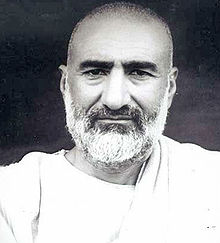
A person once stigmatized as an enemy of Pakistan, has something important to say in the contemporary public discourse in the second Islamic country in the world. His name is Abdul Ghaffar Khan (in the picture), a Pakhtun patriot, social reformer, charismatic leader. He was a lifelong activist in favour of his fellows Pathans living North and South the frontier Durand Line. He became a very close friend of the Mahatma and he himself was called the “Frontier Gandhi”.

Anti-Partition apostle of nonviolence
He was born on 1890 in Utmanzai, a town in Charsadda District, in the North-West Frontier Province, today Khyber Pakhtunkhwa Province in Pakistan. He was an apostle of nonviolence, that he considered a form of spiritual jihad for his time and for the future of his people. He founded a nonviolent movement which arrived to count 100,000 members. As he wrote in his 1969 autobiography, “My life and struggle”, “in 1929 we were able to found the kind of organisation we wanted. We decided to call it the Khudai Khidmatgar movement (Servants of God movement). Our motive for choosing that name was that we wanted to awaken in the Pathans the idea of service and the desire to serve their country and their people in the name of God, an idea and a desire which was sadly lacking among them”. The Khudai Khidmatgars were also known, for the color of their uniforms, “Red Shirts”. The founder was called by his followers, as a mark of esteem, Badshah Khan, also spelled Baacha Khan, or more commonly Bacha Khan, that means “king of our nobles”.

Baacha Khan fostered free education for all, women rights, religious freedom, judicial reform. He also was a pioneer of ecology and sustainable development. He believed in self-government for both the settled and the tribal Pakhtuns. He strongly opposed the Partition of India, proposing autonomous provinces in a unified Indian federal framework. When the Partition became inevitable, he renounce to oppose it with riots or violence. He and his Khidmatgars accepted, reluctantly, Pakistan as their new country and decided to be loyal. They hoped the new regime would have given the Pakhtuns a chance to live united in their territory, free to self-govern their own province. The autonomy of the federal units in Pakistan was instead nipped in the bud and their movement was declared illegal.
For the freedom fighter, a new cycle of imprisonment started. Baacha Khan spent one-third of his life in prison, but, more precisely, he spent more time, about 15 years, in Pakistani prisons than he had spent in the prisons of the British Raj, “only” 12.

He also went in exile in Afghanistan, where he supported local Pashtun cultural, social and economical development, fighting backwardness, clanism, family feuds. He gave in Afghanistan many speeches in favor of “Pakhtunistan”, which were free of every kind of chauvinism, fostering freedom and self-government of his people, within the Pakistani federation, firmly anchored to a commitment for peace in all South Asia, all over the world.
“I am looking forward to the time when free, general elections will be possible again in Pakistan. – he wrote in his 1969’s autobiography – For only then will the world know which way my people are going and whom do they follow. This is the main conflict between me and the rulers of Pakistan.”. This champion of Pakhtun patriotism remained unheeded. He won’t see general and local fair election either under the dictatorship of Ayub Khan, nor under Yahya Khan, nor under the civil but still authoritarian rule of Zulfiqar Ali Bhutto, nor under Zia Ul-Haq.
He couldn’t see the general elections of December 1988, when Benazir Bhutto, daughter of Zulfiqar Ali, became Prime Minister, for he died in Peshawar on January 20.

He had requested to be buried in Jalalabad, Afghanistan. He hoped this way to witness the need of friendship, and mutual understanding, among all Pakhtuns, between Afghanistan and Pakistan. His last wish succeeded in leaving a footprint in the heart of many throughout South Asia. As one can read in Rajmohan Gandhi’s biography of Bacha Khan (New Delhi, 2004) his funeral resulted a mammoth rally: “Though the Afghan struggle was not yet over, the Kabul government and the mujahedin both announced a ceasefire for the event. Tens of thousands of the Frontier’s mourning Pakhtuns accompanied the coffin and crossed the Durand Line. Pakistan’s military ruler, Zia-ul Haq (who would be killed in a plane crash later in the year), and India’s Prime Minister, Rajiv Gandhi (also destined for a violent death), were present for the last rites.” (see Gandhi R., Ghaffar Khan, 2004, p. 263).

Political heritage

After decades of oblivion, his political heritage are now again gaining momentum among Pakhtuns. An important political player in the re-established Pakistani democracy, the Awami National Party (ANP), wrote in its manifesto that it “draws its inspiration from the example and teachings of Khan Abdul Ghaffar Khan, affectionately known to his people as Baacha Khan. He spent his entire life in the struggle for freedom and justice. He and his Khudai Khidmatgars offered great sacrifices in the fight against colonialism, imperialism and all other forms of oppression. In a broader sense, Baacha Khan saw politics as the highest form of public service and often described himself as only a social worker. His objective was to liberate the masses of South Asia and, particularly, his own people, the Pakhtuns, from the shackles of ignorance and poverty, so that they could rise to their full potential.” (cf http://awaminationalparty.org/).
The ANP was led in the past by Bacha Khan’s son, Abdul Wali Khan, and today the most prominent figure is his grandson, Asfandyar Wali Khan. In the 2008 elections, the Awami National Party won the majority in Khyber Pakhtunkhwa and elected its first Chief Minister since the independence, in coalition with the Pakistan People’s Party. ANP is allied with PPP also in other provinces and at the federal level.
The parable of the Taliban regime and the political violence that still sets fire through the area, has been a terrifying experience for everybody but especially for Pakhtuns. Baacha Khan is being rediscovered, as a source of inspiration for a better future. He was a devout Muslim believer, but he refused terror and was also alien from any bigotry. His political action was centered on peace and social reformation. He sacrificed as a satyagrahi in nonviolent campaign of civil disobedience, firstly against the British Raj, but later also against Pakistan authoritarianism and military rule.
His spiritual heritage helped ANP to defeat the Muttahida Majlis-e-Amal, the Islamist coalition, which was in power in Pakhtunkhwa before 2008. It was a highly symbolic victory. In the name of Baacha Khan, the modern ANP defeated the Islamists, as well as the ancient Khudai Khidmatgars had always defeated the Muslim League in both the elections hold in the province, under the British rule, on 1936 and 1946. Many hope that this political change could represent the end of a cycle, dominated by a tangle of Islamist and nationalist ideologies, which have painfully marked the history of the Frontier, of all Pakistan, Afghanistan.

Several notable cultural foundations and charities are working in South Asia to promote peace and human rights through the rediscover of Badshah Khan’s life, thought and action. We must nominate the Baacha Khan Trust (see http://www.baachakhantrust.org/), whose chief aim is propagation of Ghaffar Khan’s philosophy, his vision of renaissance for the oppressed and marginalized Pakhtuns communities, and for peace in Pakistan, Afghanistan, the whole South Asia.
Nowadays efforts to make the public opinion and new generations aware of the figure and the teachings of Baacha Khan would certainly help the stabilization of the so called Afpak area. After 60 years of political authoritarianism and violence in Pakistan and 40 years of civil war in Afghanistan, it’s probably time to know something more about Bacha Khan.

Self-government

His Red Shirts were able to provide “local leadership for education and development, and stood up for the dignity and rights of their community. They balanced affirmations of the rights and dignity of all people with teachings about responsibility and sacrifices needed to serve those same communities.” – Ali Gohar, founder and guide at the Just Peace International center, in Peshawar, recently wrote, adding that the beauty of this kind of nonviolent struggle is again alive in 2011 Arab Spring heroes cf http://www.khyberwatch.com/index.php?mod=article&cat=MediaWatch&article=391).

“You all know that I believe in the principles of non•violence. – he said on August 31, 1966, talking in Afghanistan on the Pakhtunistan Day, as reported in his 1969’s autobiography – I am convinced that there will be no peace in the world till the problem of the Pakhtuns has been solved. I am telling both the Russians and the Americans the same thing: if they really want peace, they should solve the problem of the Pakhtuns. What do we want? We keep on telling Pakistan to consider us their brothers and not to make us their slaves. We were never the slaves of the British and you should not expect us to be your slaves.”. Heared today, these words are somehow prophetic and should encourage a serious reflection.

The Pathans, both in Afghanistan and in Pakistan, still need an accountable local self-government, in order to take on full responsibility of their own territories. They can hardly be governed from Kabul, or from Islamabad. May be they can resolve their own way their problems, included terror-related and security’s ones.

The recent Pakistani devolution can be seen as a historical accomplishment on the way indicated by Baacha Khan. This is what many political leaders, not only ANP’s ones, strongly believe. Federalism was part of the independence struggle and the only way to make the idea of Pakistan into a lasting reality.

Unfortunately, the centralized, bigoted and corrupt, republic chosen by Afghani Pashtun leadership, after the fall of the Taliban regime, is much farer from Baacha Khan’s ideal of decentralized responsible and accountable self-government. The present solution resembles too much like the 1973 republic. It may be not reveal the right solution for the future of such a vast, diverse, and bitterly divided, country.

Don’t let anybody deceive you in the name of Islam

Abdul Ghaffar Khan, along all his existence, advocated for reforms, social justice, change through education, and, last but not least, peaceful coexistence of all communities, without any kind of ethnic, religious, caste, clan, social discrimination.
He strongly demanded his fellow Pakhtuns, to strive against ignorance, bigotry, prejudices, family feud and political violence. His message, which follows the furrow of modern nonviolent revolutions, which have already brought down more than an empire, can drive the Islamist factions and wider Muslim public opinion to a radical rethinking.

His teaching was prescient and it is today more relevant than ever: “And you, misguided Pathans, you do not even stop to think whether this is Islam or not, you just swallow anything you are told… I want you to promise me that you will never let anybody deceive you in the name of Islam.” (from Baacha Khan’s speech in Afghanistan, on Pakhtunistan Day, 31 August 1967, as reported in Baacha Khan’s autobiography, 1969).

-Mauro Vaiani is a Geopolitics PhD Candidate at the University of Pisa in Italy and is a Facebook group member and contributor of Pakistanis for Peace. His page at the university is at http://www.sp.unipi.it/hp/vaiani and he can be reached via email at mauro.vaiani@sp.unipi.it

Saudi Arabia to Allow Women to Vote

By Jeffrey Fleishmam for The Los Angeles Times

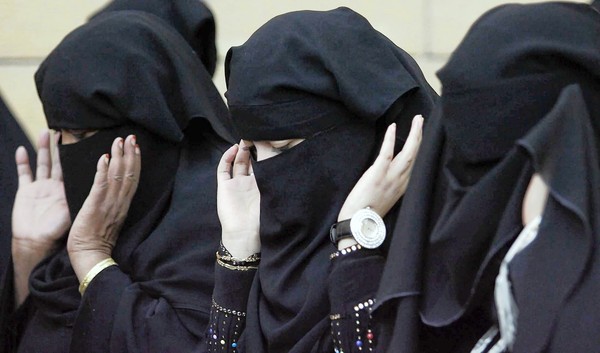
King Abdullah of Saudi Arabia surprised his ultraconservative nation Sunday by announcing bold reforms that for the first time will give women the right to vote, run for local office and serve on the Shura Council, the king’s advisory board.

The measures by an aging monarch who has battled Islamic hard-liners for years will marginally improve the standing of women in a country that still forbids them to drive or leave the house without their faces covered. The moves appear likely to enrage religious conservatives while advancing at least a veneer of change in one of the world’s most repressive states.

“Because we refuse to marginalize women in society in all roles that comply with sharia [Islamic law], we have decided … to involve women in the Shura Council as members, starting from the next term,” the king said in a five-minute speech to his advisors.

He added: “Women will be able to run as candidates” in the 2015 municipal election “and will even have a right to vote.”

The announcement suggests that the ailing 87-year-old king seeks a legacy as a reformer, despite making only modest inroads on human rights. Abdullah built the country’s first coeducational university and has granted 120,000 scholarships to students, many of them women, to study outside the country. Each move was opposed by clerics and religious ultraconservatives in the royal family.

Allowing women to vote is “hugely significant,” said Lubna Hussain, a Saudi writer. “The king is implementing the reform promises he made when he became leader. It shows he is not willing to pander to religious fundamentalists … who are quite weakened and don’t seem to have the voice they used to.”

The new rights for women come as Saudi Arabia has bristled at demands for political freedoms that have sparked spirited rebellions across the Arab world and toppled such longtime allies of the king as Egyptian President Hosni Mubarak. When rumblings of revolt echoed in Saudi Arabia, the government, whose security forces are omnipresent, promised $130 billion in salary raises and spending for social and religious programs.

Such largesse and attempts at modernization have kept Abdullah popular even as challenges to the royal family have been quickly crushed. Saudi dissidents and human rights groups have condemned the government for crackdowns that have occasionally damaged the king’s image and led to criticism that his family’s reliance on religious conservatives to stay in power makes him too cautious a reformer.

The king is the counterbalance to influential anti-reformist forces, including Prince Nayif ibn Abdulaziz, the interior minister, who many believe may succeed Abdullah. Nayif is sympathetic to fundamentalist Wahhabi clerics who uphold the segregation of sexes and have resisted the monarch’s attempts at modest reforms to ease religion’s grip on schools, courts and other institutions.

Yet discriminatory laws, such as those preventing women from driving, have become an international embarrassment for the kingdom, a key U.S. ally that relies on oil wealth to expand its diplomatic stature. A number of women were arrested over the summer for defying the driving ban. Analysts predicted that by allowing women to vote the king has opened the possibility for wider rights debates.

But others said the latest reforms were diversions that did little to change the plight of women in a country where they can be flogged for adultery and cannot travel abroad without the permission of a male guardian.

“It’s a mixed feeling. On one hand he opens the door for her and on the other hand she is still banned from driving,” said Mohammad Fahad Qahtani, a college professor and human rights advocate. “It doesn’t save her from horrible treatment by government agencies and the courts. It’s a symbolic gesture, but it is in no way enough to improve the lives of women.”

He added: “These rights to vote are still, if you see how it’s worded, are contingent on Islamic jurisprudence. So we’ll have to see in coming years what happens. The devil could be in the details. But maybe it’ll get some international praise for the regime.”

Sunday’s announcements “represent an important step forward in expanding the rights of women in Saudi Arabia, and we support King Abdullah and the people of Saudi Arabia as they undertake these and other reforms,” said Tommy Vietor, spokesman for the U.S. National Security Council.

The change will not alter the Saudi power structure. Municipal councils have little authority and only half their members are elected. The Shura Council, a body akin to a parliament but with no legislative power, advises the king on economic, social and international affairs.

But liberals and activists believe that even a little nudge forward in the kingdom is significant.

“It’s almost like a watershed,” said Hussain, who has written eloquently over the years on women’s rights. “You’ll now have women in [the Shura Council] taking up women’s causes. Before it was men talking for us. It’s quite revolutionary and it will open up a Pandora’s box.”