Archive for the ‘ Freedoms ’ Category

Anna’s Trip to Pakistan: Should He Or Shouldn’t He

By Akshaya Mishra for Firstpost

Should he or shouldn’t he?

The supporters of Anna Hazare are in a bind. Two days after the Gandhian accepted the invitation of a human rights delegation from Pakistan to visit that country, the public opinion in India stands divided.

The Shiv Sena was first off the block opposing Anna’s move. Its argument follows the usual political theme. Islamabad must stop sponsoring terrorist activities in India first. The anti-corruption crusader should have taken cognisance of the sentiments of people before even considering such an invitation, it said.

Others are likely follow the Sena’s line soon. The hard line Hindutva followers, who have been silent so far, may erupt in anger, putting a communal spin to the visit.

Anna might just have put his feet in uncharted territory, and a minefield of potential controversies. Pakistan is not an easy proposition even for seasoned politicians to handle. He could be risking his reputation.

So, should he or should not he? There are no easy answers.

Anna is not just an individual, he is a phenomenon. He is an idea that easily transcends boundaries. The massive support to his anti-corruption movement across the social spectrum was a pointer to the fact.

“I will go to Pakistan. In fact, I will go anywhere for the sake of peace and poor people,” he said while meeting the Pakistani delegation, which included former judge of Supreme Court of Pakistan Nasir Aslam Zahid and founder of Pakistan India Forum for Peace and Democracy Karamat Ali.

Anna might just have put his feet in uncharted territory, and a minefield of potential controversies. PTI
“I believe in the religion of humanity, and humanity should begin with your neighbour. Like Indians, Pakistanis too are suffering due to widespread corruption in their country,” he added.

The statements reflect the man as he is — simple, honest and innocent of concerns that bother others so much. It’s possible he would not have given a serious thought to the troubled India-Pakistan equations. It is possible he would be worried about people and their happiness only, not issues or borders.

Isn’t corruption a big issue in Pakistan too? Don’t people suffer because of that? That would be his line of thinking. He would be oblivious to the fact that any movement there guided by him would amount to challenging the rulers in Islamabad and that any intention to help the country would inflame passions in India.

Sena chief Bal Thackeray has sounded the warning note. “Be it Anna or anyone else, they should first speak to kin of those killed in the Mumbai and Delhi blasts, before anointing themselves Nishan-e-Pakistan (Pakistan’s highest civilian award),” he wrote in the party mouthpiece Saamna today.

“Whether Anna goes to Pakistan or not is another matter, but it would have been better had he given a thought to the country’s sentiments on the issue,” he added.

Earlier, the party’s spokesperson Sanjay Raut had made his disapproval clear. “Anna should have told the visiting delegation to go back to Pakistan and create awareness among the people about the Pak-sponsored terrorism in India. The entire world may have praised the anti-corruption movement in India, but Anna cannot ignore sentiments of the people in his own country vis-a vis Pakistan,” he had said.

Anna is likely to lose most of his following in India if he goes ahead with his Pakistan trip, which for all practical purposes would be a symbolic one. Worse, notwithstanding the nature of his visit he would turn a political entity, without intending to be so.

His biggest achievement so far has been that he has managed to stay apolitical despite the desperate efforts from parties to align with him. He represents the common Indian and the other India, which stays out of the power circle that rules the country.

But the other India hates Pakistan too. This is where Anna is likely to run into a problem. Questions could be raised about his intention — the ordinary follower is not expected to understand and appreciate the nuances of his high thinking. The adulation for him is likely to shrink.

Anna should not let that happen. Pakistan can wait.

Rights Violations: Pakistan Maintains Discreet Silence Over Syria Protest

By Saba Imtiaz for The Express Tribune

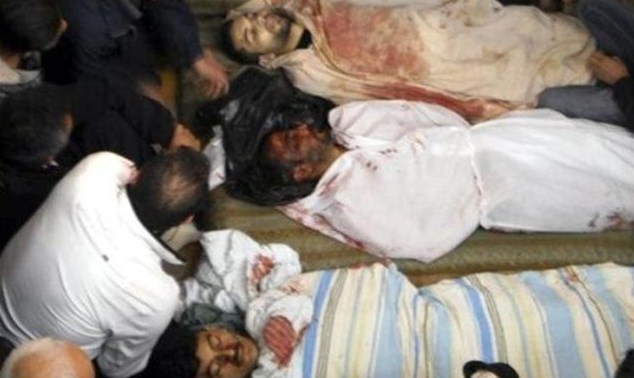
As the chorus against the Syrian government grows louder, Pakistan remains silent on the issue of human rights abuses in Syria. According to Amnesty International, over 1,500 people have been killed since March in the protests against Syrian President Bashar alAssad’s regime. Pressure against Syria appeared to grow over the weekend from Arab states, as the Gulf Cooperation Council asked for an immediate end to bloodshed.

On Monday, Saudi Arabia’s King Abdullah issued a written statement on the situation. “What is happening in Syria is not acceptable for Saudi Arabia. Syria should think wisely before it is too late and issue and enact reforms that are not merely promises but actual reforms. Either it chooses wisdom on its own or it will be pulled down into the depths of turmoil and loss.” Soon enough, Saudi Arabia, Kuwait and Bahrain had recalled their ambassadors from Damascus for ‘consultations’.

In April, Pakistan joined China and Russia in voting against a resolution by the UN Human Rights Council condemning the violence in Syria. Pakistan’s ambassador to the UN Zamir Akram was quoted as saying, “My country has always believed that ‘naming and shaming’ is an approach which is counterproductive.”

Three months and over a thousand dead bodies later, no public statement has yet to be made on the situation in Syria. The Foreign Office spokesperson did not respond to a query till the filing of this report.
According to former foreign minister Khurshid Mahmud Kasuri, Pakistan’s silence is a product of “historical links between the Bhutto and alAssad families”.

President Bashar’s father, the late president Hafez alAssad, was believed to be a close ally of former prime minister Zulfikar Ali Bhutto. Murtaza and Shahnawaz Bhutto travelled to Syria in 1979 to seek support for their campaign to save Bhutto and were offered asylum by the elder alAssad. Murtaza spent several years in Syria before returning to Pakistan in 1993. In 1981, a Pakistan International Airlines flight was hijacked and forced to land in Kabul, and then Damascus. The hijacking is widely believed to be the work of the Al Zulfikar Organisation.
Kasuri said that given the high death toll, “the government of Pakistan needs to make its position clear [and say] that it stands with the people of Syria.”

Pakistan’s silence, according to former foreign secretary Shamshad Ahmad, shows lack of a foreign policy. “Foreign policy is a reflection of a country’s internal state of affairs. If the state is in disorder, it has no foreign policy. Forget Syria or any other Arab country – Pakistan has enough problems at home and has no time to focus on international issues. No one is going to pay any attention to what Pakistan says because it has no credibility. No country is looking to Pakistan for support.”

Pakistanis for Peace Editor’s Note– The writer makes some valid points about Pakistan’s foreign policy or lack thereof. Being complicit also in the suppression of the civilians in Bahrain by providing troops as illustrated in this article shows that the country is often found on the wrong side of terrorism, women and religious minorities rights, and democratic and human rights. Not a good equation and no excuse for any of it any way one looks at it.

The Norway Tragedy

By Farooq Sulehria for The News International

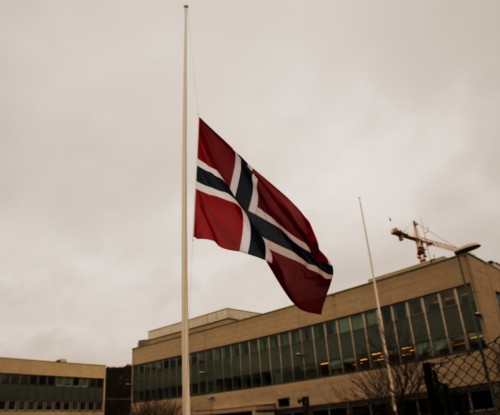
One does not expect funeral processions in paradise. The horrific events in Norway on July 22 – the bomb blast outside the office of Prime Minister Jens Stoltenberg in Oslo, followed by a shooting spree in the holiday island of Utoya, which together claimed 92 lives – were this kind of tragedy, because they happened in a country which is a haven of peace.

The Oslo massacre has taken away its innocence from Norway. In the same way as the murder of Prime Minister Olof Palme in February 1986 marked the end of the fond myth of an eternally peaceful Sweden. He was shot as he walked home with his wife from a cinema in Stockholm.

As Pakistani-born activist Toni Usman notes in an email to his friends, Norwegian democracy is unique in that the prime minister and other ministers can go about their daily lives without security by their side. King Harald V “can travel by public transport without anyone batting an eyelid, and it is this democracy which is under attack.” A successful TV and stage actor, Usman himself is a shining example of tolerance in Norway, a country where royals, elite politicians and celebrities freely mix with commoners. Ordinary citizens live a life unheard-of in much of Europe, without violence or fear of theft. The Norwegian lifestyle may appear naive even to Europeans.

Secret addresses or telephone numbers are rare. Online, Yellow Pages will offer aerial shots of people’s homes, maps of areas where they live, even their email addresses. The press runs details on celebrities’ incomes and fortunes. “To them, living in an open society has been not just a privilege, but also a statement to the rest of the world; a display of how it is possible to live together in peace,” as a BBC correspondent commented.

After another assassination there in September 2003, when Foreign Minister Anna Lindh was stabbed in Stockholm, Sweden drew a security wedge between top politicians and ordinary Swedes. But Norway still resisted calls for greater home security.

Since July 22, all public places such as clubs and restaurants have been closed as these lines are being written on July 24. Parliament House is surrounded by troops. The Oslo city centre looks like a war zone.

Anders Behring Breivik, apparently the lone director and scriptwriter of the tragedy, has confessed to his crime. Norwegian and Swedish media are rife with reports about his extreme Islamophobic and anti-left views. It is not coincidence that Breivik unleashed his terror on activists of the Labour Youth Club, the youth wing of the Norwegian Labour Party.

Both the Labour Party and the AUF have been campaigning against racism. Ever since the 1950s, a summer camp at the island of Utoya has been a regular feature of AUF activities. (Most Scandinavian left parties, big or small, hold summer schools for the political education of their cadres.)

The Norwegian Labour Party, perhaps the most radical wing of social democracy in Europe, has a unique history. Once a member of Lenin’s Third International, the Norwegian Labour Party is staunchly pro-immigrant, in a country that has seen the phenomenal growth of the anti-Muslim Fremskritts Party (Progress Party). Breivik had been a member of the Fremskritts Party between 1999 and 2006.

In Norway, “Muslim” has become synonymous with the word “Pakistanien.” The carnage is therefore extremely significant for Pakistan because Pakistanis constitute Norway’s biggest immigrant community.

Until Breveik’s identity was revealed, Pakistani Norwegians remained behind closed doors, hoping against hope that no Pakistani link was found to the atrocity.

Ironically, when Breveik’s identity had been established, the Pakistani community began to invoke victimhood. Whitewashing even the crimes for which Al-Qaeda & Co. have claimed responsibility, some community leaders were heard saying, “Look! We are always implicated for nothing.”

In terms of proportion, Norway hosts the largest immigrant population of Pakistani origin in any European country. Yet the Pakistani media downplayed the tragedy, out of ignorance perhaps. An Al-Qaeda signature on the tragedy would have proved fatal not merely for Norwegian Pakistanis but also for the sizable Pakistani-Danish and the small Pakistani-Swedish populations.

The Norwegian leadership, as well as the media especially the daily Dagbladet, played a praiseworthy role in the immediate aftermath of twin tragedy. No knee-jerk response.

However, refusing to learn any lessons from the News of the World scandal, the Murdoch press was quick to discover Al-Qaeda footprints in Utoya. The Sun, the flagship of Rupert Murdoch’s media empire in Britain, described the tragedy as “Norway’s 9/11.” The headline screamed: “AL-QAEDA MASSACRE.” (Yes, in capital letters.)

Qatar’s Al-Jazeera, as if in a bid to outdo even the Murdoch media, attributed the tragedy to Mullah Krekar, a Kurd from northern Iraq living in Norway. Mullah Krekar is a controversial character. When his asylum plea was rejected, he appealed to the courts to reconsider his case. However, he keeps declaring that his mission is to annihilate Western civilisation.

But such lucky escapes do not offer any respite from the growing fascism and religious fanaticism in Europe. Norwegian police seems to have been monitoring extremist Muslim outfits too closely to keep an eye on their Christian counterparts. The tragedy demonstrates yet again the dangers inherent in the “othering” of Muslims on the continent.

One hopes that the Norwegian paradise has been lost only temporarily, not forever. Prime Minister Stoltenberg has advised Norwegians to stay optimistic despite the tragedy. “The answer to violence is even more democracy. Even more humanity,” he says.

Arab Spring Hardening Into Summer of Stalemates

As Reported by USA Today

Among the protest banners in Cairo’s Tahrir Square was a hand-drawn map of the Arab Spring with black target symbols covering each country hit by anti-government uprisings since the leaders of Tunisia and Egypt were ousted earlier this year.

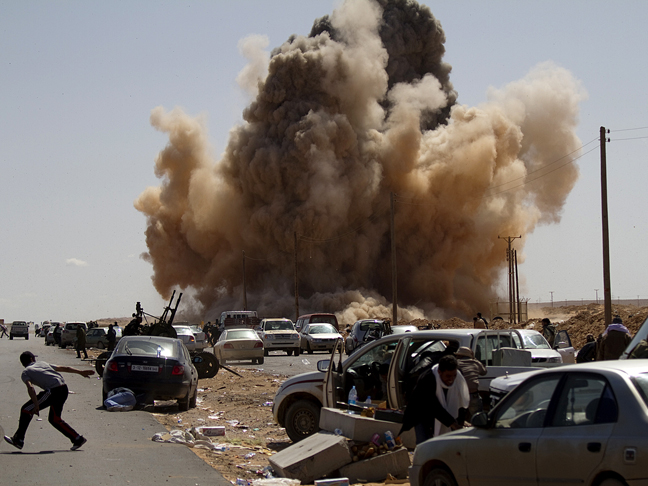
A rebel fighter walks in a old and abandoned Catholic Church used by Gadhafi forces as a military camp near Misrata, Libya, on May 25.
But the bull’s-eyes could easily be replaced with question marks as the groundswell for change has splintered into scattered and indecisive conflicts that have left thousands dead and Western policymakers juggling roles from NATO airstrikes in Libya to worried bystanders in Syria and Yemen.
The stalemates could shift into a deeper holding pattern in August during the Islamic holy month of Ramadan, when the pace of daily life traditionally slows as the Islamic world observes a dawn-to-dusk fast and other customs such as temporary truces.

It’s a huge and traumatic undertaking to shove aside regimes with decades in power — and sway over nearly every decision down to who gets hired as street sweeper. Iran did it with the 1979 Islamic Revolution, and the American-led invasion to topple Saddam Hussein cleaned the slate for Iraq and ushered in years of near civil war.

But no such wholesale change appears in the pipeline with the present revolts. That has raised concern that even if the leaders fall, the pillars of the regimes could survive, as happened when military rulers took temporary control after Egypt’s Hosni Mubarak stepped down.
“Half revolution doesn’t work,” a headline last week in Egypt’s Al-Ahram Al-Massai newspaper said after demonstrators returned to Tahrir Square to press for swifter political reforms and bolder legal action against officials from Mubarak’s regime who were accused of corruption and killing protesters.

But even a halfway mark appears farther along than most of the rebellions against the Mideast’s old guard. Cores of loyal security forces in Yemen and Syria keep the regimes hanging on despite relentless protests. In Libya, Moammar Gadhafi could face a moment of truth as rebels press closer to the capital Tripoli and NATO warplanes hammer military sites, yet the anti-Gadhafi militias have no clear leader to prevent possible power grabs to control the country’s oil riches if he is ousted.

The country where the Arab Spring began, Tunisia, has been shaken by unrest — including a rise in ultraconservative Islamists — ahead of planned elections in October to elect an assembly that will write a new constitution. Some political groups are urging further delays in the election to give new parties a chance to organize.

Egypt, meanwhile, is questioning when — or if — the ruling military council will surrender power. The caretaker rulers effectively announced a delay of the elections on Tuesday when they said preparations for the vote would start Sept. 30.

“Bring down the military junta,” chanted some of the 30,000 protesters Tuesday in Tahrir Square. Hours later, the military made clear its patience was wearing thin — with Maj. Gen. Mohsen el-Fangari wagging his finger and warning protesters against “harming national interests.”

Mubarak is under arrest and faces trial next month over the deaths of nearly 900 protesters in the uprising that ended his 29-year-rule in February. In a transcript of his interrogation published by two newspapers Thursday, he claimed to have had no control over security forces who attacked demonstrators.

“No one would have paid any attention to me or my orders,” he said when asked why he did not stop the violence. He claimed he gave clear orders that no force be used against the protesters, and blamed top aides for keeping him in the dark about the gravity of the protests that led to his downfall.
Only in tiny Bahrain have authorities apparently tipped the scales clearly in their favor. Security forces — aided by Saudi-led reinforcements — smothered an uprising by the kingdom’s majority Shiites seeking greater rights from the Sunni rulers. A so-called “national dialogue” began this month, but it’s unlikely that the 200-year-old ruling dynasty will give up any significant hold on power and may need a heavy hand to keep Shiite-led protests from reigniting.

“It’s not over, but we are in an ugly situation now,” said Christopher Davidson, a lecturer on Middle East and Gulf affairs at Britain’s Durham University.

That’s why the definition of the Arab Spring is increasingly being stretched. It’s both about the current showdowns and the long-term spillover. The upheavals — supercharged by the instant communications of the Web — have given the region a crash course in the clout of the streets. The view from the top is suddenly less comfortable.

Even monarchs have acted swiftly after relatively small-scale clamor. Oman’s Sultan Qaboos bin Said promised 50,000 new civil servant posts and allocated $2.6 billion for job programs. Jordan’s King Abdullah II has set in motion plans for an elected government in coming years.
In the tightly ruled United Arab Emirates, officials have opened the vaults to fund development programs in poorer regions outside Dubai and Abu Dhabi and plan to expand voting rights in September’s balloting for a federal advisory council. It’s been trumpeted as a “great leap” for democracy in a country that jailed five activists just for posting Internet appeals to form a true parliament.

“No matter what happens, countries gripped or just touched by the Arab Spring will never go back to what they were,” said Marina Ottaway, director of the Middle East Program at the Carnegie Endowment for International Peace. That leads to the bigger question: How deep can the changes go?
Syrian protesters, for example, know that even if President Bashar Assad falls, the underpinnings such as the rank-and-file military and public works staff cannot be purged as well without sending the country into a tailspin.

Omar Idilbi, a spokesman for the anti-Assad Local Coordination Committees, which track the protests in Syria, said the opposition has no plans to dissolve the army or even the ruling Baath Party if he is overthrown but will seek to weaken the powers of security agencies. “At the beginning of the uprising when we chanted, ‘the people want to bring down the regime,’ we did not mean President Assad, but the security agencies that interfere in everything from a marriage certificate to the opening of a shop,” said Idilbi, who is based in Beirut.

Yemen’s president isn’t even in the country, yet his regime fights on. A blast last month sent Ali Abdullah Saleh to Saudi Arabia for extensive medical treatment, including more than eight operations. But his son, Ahmed, kept the regime’s crucial Republican Guards forces intact.
Washington believes no credible alternative exists for the current regime as an ally to fight Yemen’s al-Qaida affiliate, which has been declared a major threat to U.S. interests. But President Barack Obama’s counterterrorism chief, John Brennan, has urged Saleh to accept a proposal that would transfer power to his vice president in exchange for immunity from prosecution.

“The current crisis showed that neither side can win,” said Ahmed Obeid bin Dagher, the deputy secretary general of the ruling party. “If there is no national consensus through dialogue, then al-Qaida will be the alternative.” Jordan-based political analyst Labib Khamhawi sees such calls by regime insiders as bids for survival: Protect the system, not necessarily the leader.

“I think it will be very difficult to imagine that the Libyan, Yemeni or Syrian presidents will remain in power,” he said. “The faces will be changed, but the system might continue to exist.” Among the kings and sheiks in the Gulf, however, there’s not even room for those concessions.
The region’s anchor power, Saudi Arabia, which has not seen protests take off, is staking out a role as “sort of the Arab Spring counterrevolution,” said Shadi Hamid, director of research at The Brookings Doha Center in Qatar.

“The Arab Spring revolutions may have their moments of self-doubt or seem stalled at times, but they are authentic expressions for change and, to use an overused phrase, on the right side of history,” said Hamid. “What began in Tunisia and Egypt is a long, long way from being finished.”

In Ahmadis’s Desert City, Pakistan Closes In

By Myra MacDonald for Reuters

At the office of what claims to be one of Pakistan’s oldest newspapers, workers scan copy for words it is not allowed to use — words like Muslim and Islam.

“The government is constantly monitoring this publication to make sure none of these words are published,” explains our guide during a visit to the offices of al Fazl, the newspaper of the Ahmadiyya sect in Pakistan.

This is Rabwah, the town the Ahmadis built when they fled the killings of Muslims in India at Partition in 1947, and believing themselves guided by God, chose a barren stretch of land where they hoped to make the Punjab desert bloom.

Affluent and well-educated, they started out camping in tents and mud huts near the river and the railway line.

Now they have a town of some 60,000 people, a jumble of one- and two-storey buildings, along with an Olympic size swimming pool, a fire service and a world class heart institute.

Yet declared by the state in the 1970s to be non-Muslims, they face increasing threats of violence across Pakistan as the country strained by a weakening economy, an Islamist insurgency and internecine political feuds, fractures down sectarian and ethnic lines.

“The situation is getting worse and worse,” says Mirza Khurshid Ahmed, amir of the Ahmadi community in Pakistan. “The level of religious intolerance has increased considerably during the last 10 years.”

The town, renamed Chenabnagar by the state government since “Rabwah” comes from a verse in the Koran, is now retreating behind high walls and razor wire, awaiting the suicide bombers and fedayeen gunmen who police tell them are plotting attacks.

Last May, 86 people were killed in two Ahmadi mosques in Lahore, capital of Punjab; others were attacked elsewhere in the province. Many fled to Rabwah where the community gives them cheap housing and financial support.

Among them is 15-year-old Iqra from Narewal, whose shopkeeper father was stabbed to death last year as the family slept. “I was sleeping in another room when my father was attacked,” she begins in a small voice, pulling a black scarf across her face to cover her mouth in the style of Ahmadi women.

“The attacker wanted to kill all the Ahmadis in Narewal,” her brother Zeeshan continues. “My elder brother tried to help my father and he was stabbed and wounded too.”

Later police found the attacker hiding in a mosque. He had believed the mullahs when they told him that all Ahmadis were “wajib ul qatl”, or deserving of death.

BATTLEGROUND FOR POWER
The Ahmadis follow the teachings of Mirza Ghulam Ahmad, who in the town of Qadian in late 19th century British India called for a revival of a “true Islam” of peace and justice. His teachings were controversial with Muslims and Christians alike.

He argued that Jesus did not die on the cross but escaped and travelled to India and was buried in Kashmir. And he claimed to be the metaphorical second coming of Jesus, destined to put Muslims back on the true path.

Many Muslims were offended by the suggestion he had come as a prophet, breaching a basic tenet of Islam that there can be no prophet after Mohammad, whose teachings are believed to be based literally on the word of God, perfect and therefore final.

Yet his call for peace, hard work, temperance, education and strong community bonds resonated, and over the years the proselytizing movement acquired millions of followers worldwide.

At home, however, their history has been intimately bound up in Pakistan’s own descent from its relatively optimistic birth.

Lacking a coherent national identity, it has become a battleground for competing political, religious and ethnic groups seeking power by attacking others.

“The mistake of the Ahmadis was that they showed their political strength,” said an Ahmadi businessman in Lahore.

Better education he said, meant they obtained good positions in the army and civil service at first; strong community bonds made them an influential force in politics up to the 1970s.

But they also made an easy target for the religious right who could whip up anti-Ahmadi sentiment for political gain.

Ahmadis follow two different schools of thinking, but will argue, often with detailed references to the Koran in both Arabic and English, that they do not dispute the finality of the Prophet Mohammad. Their erudite theological arguments, however, had little chance against the power of the street.

After anti-Ahmadi violence, they were declared non-Muslims in 1974. In the 1980s, their humiliation was completed when legal provisions barred them from associating themselves with Islam, for example by using the call to prayer or naming their place of worship a “masjid” or mosque.

“You can say you don’t consider me to be a Muslim but you can’t force me to also say I am not a Muslim,” complains Ahmed, the amir, the pain clear in his voice.

Yet in the newspaper office in Rabwah, a white board displays the words they are not allowed to use — they could be accused of blasphemy, which carries the death penalty.

SPREADING TO OTHER SECTS
Many Pakistanis, if you ask about treatment of the Ahmadis, shrug it off — it’s an old story, they say, dredged up by westerners who do not appreciate the importance of the finality of the Prophet.

Yet there are signs the attitudes first directed toward Ahmadis are spreading to other sects. In a country which is majority Sunni, and where insurgents follow Sunni Islam, Shi’ites and even Sufi shrines have been bombed.

A 2010 study by Pakistani analyst Ayesha Siddiqa of students in elite colleges found that while 60 percent said the government was right to declare Ahmadis non-Muslims, a sizeable 18 percent believed Shi’ites were also non-Muslims.

These and other findings led her to conclude that radicalism was growing even among the educated youth — it is often, wrongly, blamed on poverty — which in its extreme form could lead people into violence.

Their tendency, she wrote, to see different groups with an unquestioned bias, she wrote, “especially coated with religious overtones or padded with religious belief prepares the mind to accept the message from militant organizations.”

In the nearest town to Rabwah, the central square as been renamed “Khatme Nubuwwat” Chowk, meaning the finality of the Prophet. Beyond, low jagged hills spike up above the dusty land, the summits of much bigger rock formations below the surface.

Many of the Ahmadis had been active supporters of the movement which created Pakistan and when they first came here they were inspired by a verse in the Koran, describing “an elevated land of green valleys and springs of running water.”

Now they are surrounded by a very different country.

Rabwah itself is open to the outside world — despite the high walls guarding individual houses, it is not a walled town.

“Under the circumstances we try to take the best measures we can to protect ourselves,” says the amir. “But what we can do is very limited. We don’t have a mindset or training for that.

And in any case, he adds, “How many people can leave Pakistan or Rabwah?”

Did Pakistan Have Reporter Killed?

By Jennifer Epstein for Politico

In another possible blow to U.S.-Pakistan relations after the killing of Osama bin Laden, Obama administration officials believe that the country’s intelligence service ordered the “barbaric and unacceptable” killing of a journalist who had written about ties between the country’s military and Al Qaeda militants, according to a report Tuesday.

Intelligence surrounding the late May killing of Pakistani reporter Saleem Shahzad, 40, suggests that senior officials at Pakistan’s Directorate for Inter-Services Intelligence ordered the murder to silence his criticism, The New York Times reported Tuesday, citing two senior US administration officials.

American officials consider the intelligence to be “reliable and conclusive,” the Times said, with one official describing the actions of the spy agency, known as the ISI, as “barbaric and unacceptable.” Shahzad suffered 17 lacerated wounds, a ruptured liver and two broken ribs in the deadly attack.

Relations between the United States and Pakistan have become increasingly frayed since the early May killing of bin Laden in a Pakistani town with a heavy military presence, where he’d been holed up for several years. U.S. officials suspect that some members of the military and the ISI helped harbor him there, even if top Pakistani officials truly were kept in the dark about bin Laden’s presence there.

The Times’s report comes after journalists and others within Pakistan accused the ISI of being behind Shahzad’s death, and since the Pakistani government – under pressure — launched an investigation of the killing.

A Pakistani official, meanwhile, shot down the Times’s report.

“There is an international conspiracy to malign the law enforcement agencies and security forces,” Pakistani information minister Firdous Ashiq Awan said Tuesday, the Hindustan Times reported.

The allegations made by the Obama administration “are part of that conspiracy,” she said.

Awan also said that “good relations are in the interest of both” the United States and Pakistan, though “everybody safeguards their own interests” in a conflict and there have been some “ups and downs.”

In This Country, Religious Freedom Is Real

By Imran Hayee for The StarTribune

My childhood memories of celebrating Independence Day are no different than those of my fellow citizens — except that it was on Aug. 14th instead of July 4th.

I grew up in Pakistan, which obtained its independence from British rule on Aug. 14, 1947.

As a child, I marked Independence Day year after year without having a clue about what independence really meant. As I grew older, I read from a speech of Muhammad Ali Jinnah, Pakistan’s founder, which he had delivered immediately after the nation’s independence was announced.

“You are free; you are free to go to your temples,” he said. “You are free to go to your mosques or to any other places of worship in this State of Pakistan. You may belong to any religion or cast or creed — that has nothing to do with the business of the State.”

This was Jinnah’s dream, the founding principle behind the independence of Pakistan as he himself stated in the same landmark speech: “We are all citizens and equal citizens of one State. We should keep that in front of us as our ideal and you will find that in due course, Hindus would cease to be Hindus and Muslims would cease to be Muslims, not in the religious sense, because that is the personal faith of each individual, but in the political sense as citizens of the State.”

Growing up in Pakistan, as a Muslim, I never saw Jinnah’s dream materializing. The constitution of Pakistan defines who is a Muslim — any “impersonator” is subject to imprisonment or death. Temples, churches and mosques not ascribing to a single distorted version of Islam are routinely attacked.

What caused the secular ideology of Jinnah to take this U-turn?

Soon after the nation’s creation in 1947, and Jinnah’s demise a year later, Pakistan’s rulers succumbed to the demands of religious extremists who wanted to convert Pakistan into a puritanical fundamentalist state.

Gradually, the monster of religious fundamentalism grew large enough to devour Jinnah’s philosophy of spreading freedom and equality.

I never experienced independence until I came to America 18 years ago. For the first time — when Independence Day was being celebrated on July 4th instead of Aug. 14th — I wanted to rejoice once again.

I was unaware of the history behind America’s Independence Day, but still, I saw freedom and equality prevail all around me. I could freely go to my mosque without having to fear the state’s interference.

As I learned more about the history behind July 4th, it reminded me of the same philosophy of freedom and equality that Jinnah dreamed for Pakistan. What made the difference in America was that its rulers never succumbed to extremists’ demands.

Rather, its forefathers risked their wealth and lives to uphold the principles of freedom and equality. Their sacrifices paved the way for a Muslim like me to emigrate from a Muslim country and practice Islam the way I wanted to but could not do in the country of my birth.

More recently, while some European countries have banned building minarets on mosques and the wearing of veils by Muslim women, U.S. courts have struck down any such attempted restrictions as unconstitutional.

Addressing the Muslim world in Cairo, President Obama proudly announced, “Freedom in America is indivisible from the freedom to practice one’s religion. That is why there is a mosque in every state of our union, and over 1,200 mosques within our borders. That is why the U.S. government has gone to court to protect the right of women and girls to wear hijab, and to punish those who would deny it.”

As a Muslim-American, I feel proud and honored to be in America and find many reasons to celebrate Independence Day on July 4th. Among others, let me add that the founding principles of America’s Constitution are in perfect harmony with the Qur’an.

The Qur’an (2:257) proclaims, “There is no compulsion in religion. Surely, the right way has become distinct from error.” It further declares fundamental human equality: “O mankind, We have created you from male and female; and We have made you into tribes and sub-tribes that you may recognize one another” (Qur’an 49:14).

These golden principles of freedom and equality have been implemented — in America. In fact, I find the American Constitution to be more Islamic than the constitution of Pakistan or of any other Muslim country in the world today.

Imran Hayee is a professor of engineering at the University of Minnesota Duluth.

John Lennon- Imagine

Slain Pakistani’s Daughter Takes Up His Cause

By Nahal Toosi for The Associated Press

A day after her father was gunned down by an Islamist extremist, a grieving Shehrbano Taseer wrote on Twitter, “A light has gone out in our home today.” It wasn’t long before the 22-year-old realized something else: Her father’s death had lit a fire in her.

In the months since, the daughter of the late Punjab province Gov. Salmaan Taseer has emerged as one of Pakistan’s most outspoken voices for tolerance. Through her writing and speaking, she warns any audience who will listen of the threat of Islamist extremism, and impatiently waits for her father’s killer to be brought to justice.

And yes, sometimes she gets scared. She’s received threats from militants, who’ve warned her to remember her father’s fate.

“These extremists, they want to tell you how to think, how to feel, how to act,” says Taseer, a slim, elegant young woman with intense brown eyes. “It has made me more resolute that these people should never win.”

Salmaan Taseer was assassinated on Jan. 4 at a market in Islamabad by one of his own bodyguards. The confessed killer, Mumtaz Qadri, boasted that he’d carried out the slaying because the outspoken politician — a liberal in Pakistani terms — wanted to change blasphemy laws that impose the death sentence for insulting Islam.

To the horror of Taseer’s supporters, many Pakistanis praised the assassin. Islamist lawyers showered Qadri with rose petals, and major Muslim groups, even ones considered relatively moderate, said Taseer deserved to die because, in their view, speaking out against the blasphemy laws was tantamount to blasphemy itself.

Two months after Taseer’s killing, gunmen killed Shahbaz Bhatti, the sole Christian minister in the government and another opponent of the blasphemy laws, which have often been used against Pakistan’s Christian minority. Bhatti’s killers left a note promising to target others who pushed to change the laws.

Shehrbano Taseer still has trouble remembering those first moments and days after her father’s death — her brother telling her their father was gone, the rush of grief, the hundreds of people flooding her family’s home in the eastern city of Lahore. Mostly, it’s a blur.

“I’d never lost anyone in my life, not a friend or anyone,” she says. “For everyone else it was the governor and their leader and this man, and it was this big, sexy story and it was so sensationalist. But for me, it was my father.”

Taseer majored in government and film at Smith College in Northampton, Massachusetts, and is by profession a journalist. She spends much of her time now writing columns and traveling in and beyond Pakistan to speak about Islamist extremism.

Salmaan Taseer, a father of seven, was not afraid to be blunt — a trait that attracted both enmity and grudging respect. On Twitter, Salmaan Taseer openly taunted and trashed extremists, once tweeting that he’d never back down on the blasphemy issue, “even if I’m the last man standing.”

His daughter, who tweets under the handle shehrbanotaseer, is more gentle but just as firm. Her more than 9,000 followers on Twitter often receive notes that criticize Pakistan’s discriminatory laws, especially blasphemy claims that have reached the courts since her father’s death.

When she singles out a politically marginalized community, either on Twitter or her other outreach, Taseer recalls how well her father treated that group, how he was often the only public official to visit their homes after an attack or publicly speak on their behalf.

Once, Salmaan Taseer took his daughter along on a visit to meet Mukhtar Mai, a Pakistani woman whose case attracted international attention because of allegations that she was gang-raped on the orders of a village council. The governor asked Mai to put her hand on his daughter’s head, so that Shehrbano Taseer could gain the same courage to stand up for her rights.

Like her father and Bhatti, the Christian leader, Taseer wants the blasphemy laws amended to prevent their misuse.

The laws are vaguely written, and often used to persecute minorities or settle rivalries, rights activists say. The state has not executed anyone under the law, but the accused may spend years in custody. Some defendants have been killed by extremists after being freed by the courts.

But Taseer has found that many Muslims, even moderate, liberal ones, are extremely sensitive about blasphemy.

She recalls giving a speech in England when a woman in the audience suggested that her father deserved what he got because he was so blunt about the topic.

“I said, ‘I don’t care what he said, and I don’t care how he said it. He didn’t deserve to be shot and killed for it,'” Taseer says.

She’s dismayed at the toll extremism is taking on Pakistan by spawning violence or an intolerant mindset. She’s also disappointed at how few Pakistani leaders are willing to take a public stand against extremism or how many find some reason to excuse it.

She bemoans how for decades moderate or liberal leaders in Pakistan have appeased the religious right for short-lived political gains — whether it was by banning alcohol and nightclubs or passing laws that discriminate against certain religious sects.

Unlike many Pakistani politicians, she’s willing to criticize the role Saudi Arabia has played in funding numerous hardline Islamist schools in Pakistan. And she’s quick to note that the United States as well as Pakistan says little about it — after all, it needs Saudi Arabia’s oil.

Pakistan has a tradition of dynastic politics. The most famous political family has been that of the Bhuttos, which spawned former Prime Minister Benazir Bhutto, also assassinated by Islamist extremists. Salmaan Taseer was a member of the Bhutto-led Pakistan People’s Party.

Shehrbano Taseer says she views Pakistan as an enticing challenge akin to a Rubik’s Cube because of its many, convoluted problems. But she says she has no plans to run for office. “It’s such a dirty profession,” she says, laughing.

Sherry Rehman, a People’s Party lawmaker who also has been threatened for speaking out against the blasphemy laws, says Shehrbano Taseer will “chart her own future.”

“She’s found a torch to carry, and she will do it,” Rehman says. “It’s what her father would have wanted.”

Taseer is frustrated with the Pakistani justice system’s delays in processing the case of Qadri, her father’s confessed killer.

Pakistan’s courts have very low conviction rates, even in terrorism cases. Qadri’s confession may not be enough to persuade a court to punish him, considering the threats facing any judge who dares pass such a judgment.

Taseer wants the former bodyguard to spend his life in prison, in solitary confinement. A death sentence is “too easy,” and a conviction would send a warning to other would-be assassins, she says.

“In Pakistan, we have very few brave and honest leaders,” she says. “We need our heroes alive.”

Casualties Mount as Syrian Protests, Crackdown Intensify

By Edward Yeranian  for The Voice of America

Thousands of Syrians turned out in over a dozen towns and cities Friday to protest the government’s ongoing crackdown on the country’s three month old protest movement. The protests come as government security forces continue operations on northern towns and in villages near the Turkish border. More than a dozen protesters are reported dead.

Witnesses say Syrian security forces fired on crowds of protesters Friday in the country’s third largest city of Homs, as they shouted slogans against the government. Video on Arab satellite channels showed demonstrators taking cover on a sidestreet amid heavy gunfire.

News agencies reported casualties after security forces fired on protesters in the coastal city of Banias. Other shootings took place in the desert town of Deir al-Zor and the southern city of Daraa.

Syrian Army tanks also deployed in several small villages close to the Turkish border Friday, while continuing a siege of Maaret al-Numan, which straddles the main highway between Damascus and Aleppo.

Witnesses told Arab satellite channels that residents of many border towns have fled and that government snipers are posted on roof tops.
In the town of Jisr al-Shaghour, witnesses complained to Arab satellite channels that security forces have arrested and beaten young men who returned after government forces retook the town early this week.

Syrian government TV, however, claimed that the army is treating residents well.

Old women and children complained about harsh living conditions as they waited inside Syria, close to the Turkish border. Nearly 10,000 refugees have entered Turkey in recent days and others remain along the border, afraid to return home.

United Nations Secretary General Ban Ki-moon urged President Assad on Thursday to stop his brutal government crackdown:“I again strongly urge President Assad and his authorities – his regime’s authorities – to stop killing people,” said the U.N. chief.

Hilal Khashan, who teaches political science at the American University of Beirut, says that the Syrian protest movement has reached a critical stage, and is unlikely to die down.

“It seems that we have reached the point of no return. There’s nothing that Assad can do that will cause the protest movement to subside,” Khashan said. “The wall of fear has finally been broken and the fears of bloodshed and torture no longer seem to intimidate Syrians and prevent them from protesting.”

Both the United States and world other governments continue to condemn Syria’s crackdown. But it shows no signs of slowing.

The Prime of Ms. Irshad Manji

By Leslie Scrivener for The Toronto Star
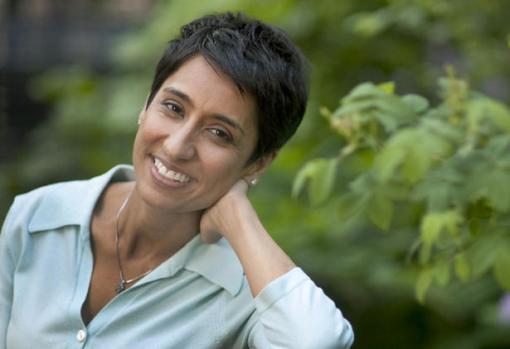
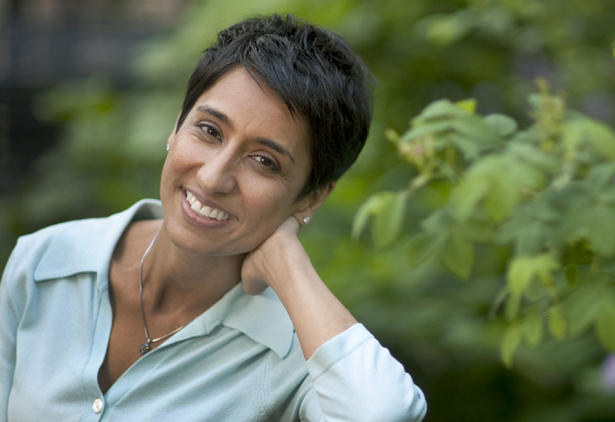
Has Irshad Manji, one of Canada’s most controversial Mulims, mellowed out? So it would seem. The renowned Canadian firebrand writes in her new work, Allah, Liberty & Love, that she has moved from “anger to aspiration.”

A rallying cry to readers to question orthodoxy without fear, the book concludes with the suggestion they get together to trade ideas. Manji even includes a recipe for chai tea to fuel such discussions.

Anger was at the centre of The Trouble with Islam, her 2003 worldwide bestseller decrying her own religion’s entrenched prejudice against Jews and injustice toward women. The book earned her many fans but also hate mail, pinched-face cranks calling her the daughter of Satan, and even a smiling man who leaned in to shake her hand but instead spat in her face.

Manji still gets death threats, but she’s now on a mission of reconciliation.

She has even made up with conservative Michael Coren, with whom she argued weekly — and ferociously — on a TVO current affairs show in the early ’90s. “We absolutely hated each other, very unpleasant,” he says of that time. They were developing their public personalities, he recalls. “She was prickly and very defensive, and I’m sure I was too.”

But when they last met, some years ago, “She hugged me and said, ‘I think we’ve done quite a lot of growing up.’ ”

In Toronto this week promoting her new book, Manji looks less edgy than she used to. Gone are the tinted spikes in her hair. At 42, she’s sleek, polished and very thin.

At the old Citytv building on Queen St. W., Manji greets a crew of cameramen she’d worked with on City’s Queer Television in the late ’90s. They throw their arms around her and burble enthusiastically. They say they loved the way, as producer and host, she’d made stories about gay and lesbian issues provocative and interesting to mainstream viewers.

At another Toronto gathering, in the offices of her publisher, Random House, Manji basks in the affection of adoring booksellers. She quizzes them about what kept them watching her 2007 Emmy-nominated film, Faith without Fear, in which she travels the world exploring how people live within the constraints of Islam.

She seems truly delighted by the booksellers’ engagement with her and her work. “Did I blush?” she asks.

Manji now lives in a book-filled apartment — she calls it her Manji cave — in New York’s Greenwich Village, where she moved in 2008 to launch the Moral Courage Project at New York University’s Robert F. Wagner Graduate School of Public Service. In the course, she encourages students to “challenge intellectual conformity and self-censorship.”

A regular on Bill Maher’s late-night HBO show — the audience cheers when she comes on the set — and on the networks MSNBC, CNN, Al Jazeera, Al Arabyia and, occasionally, FOX, she’s seen all over America and around the world. Manji writes twice monthly for The Globe and Mail, and contributes to The New York Times op-ed page and The Wall Street Journal.

The Trouble with Islam, her second book, was published in more than 30 countries and led to invitations to lecture around the world. Translated on her website into Arabic, Urdu and Farsi, the book has been downloaded two million times.

After its publication she walked around for a few months with a muscular bodyguard and installed bulletproof glass in her Riverdale house.

But Manji realized that by having a bodyguard, she was sending the wrong message to young Muslims. She was encouraging them to be bold and to advocate for change in their religion while giving the impression that they would need protection if they dared to speak out.

Manji still has to be careful. She’s been trained to check under cars for bombs. Not every car and not cabs, just those driven by people she doesn’t know. She won’t use a cellphone for fear of being tracked.

Still, her intensity has not diminished. Conversation with Manji is like being on an express train that careers wildly down the track, but in which everything has been neatly tied up once it has reached its destination.

Bill Maher tried to interrupt her on his talk show a few weeks ago, and her hand went up: she had a bit more to say about the killing of Osama bin Laden.

Her confidence would be unnerving if she weren’t so affable and polite. “I don’t see that as confidence,” she says. “I see that as embracing your freedom so sincerely and seriously, that it’s a natural part of the conversation, to say, ‘Let me finish the thought — I am getting there.’

“It could also be a moral clarity. I know what my values are — individual liberty, freedom of conscience, pluralism, peaceful ideas — and they all combine in me every single day to make for a love of engagement.”

She wants to apply the principles of the U.S. civil rights movement to reform in Islam and, at the same time, to convince people of all walks that they should not be caged by dogma from another era, another culture. She calls for moral courage, a phrase borrowed from Robert F. Kennedy. Ordinary folk can make change, she argues, while people in positions of influence — the well-educated and well-connected, including journalists and politicians — must “develop backbone” and use their privilege for social purpose.

Despite Manji’s wide audience in the U.S., her work has not resonated in parts of Canada’s mainstream Muslim community. “I don’t know why, but there seems to be little mention of Irshad in Muslim circles in Canada,” says Alia Hogben, executive director of the Canadian Council of Muslim Women.

“Most of the people who tell me they love her are not Muslim,” says El-Farouk Khaki, a Toronto lawyer and gay activist. “What crowd is she outreaching to? Moral courage is when you put yourself on the front lines.”

“We give her due credit for having stood up to the bullies in the community, but we feel she is too self-centred,” says Tarek Fatah, author and founder of the progressive Muslim Canadian Congress. “She refuses to be associated with any organization or be accountable to anyone but herself.”

In response, Manji refers to her new “Guidance Council” (at irshadmanji.com). The council is made up of volunteers who address readers’ issues, such as marriage between Muslims and non-Muslims. She encourages these unions. (Manji, who is a lesbian, has never been married.)

“It’s front-line, in-the-trenches work,” she says of the council. “This time, though, it is more than me responding to young people, as I’ve been doing for years; it’s a network of wise and compassionate individuals who are free of organizational agendas and group think.”

Group think has never been her practice. Born of political refugees who fled Idi Amin’s Uganda and settled in Richmond, B.C. when she was four, she displayed a precocious intelligence and self-assuredness early on.

She had a violent father who stayed in the family home until Manji, the middle of three daughters, was 17. Today she has no contact with him.

Her mother, Mumtaz, to whom she is devoted, worked as a cleaner for airline carriers. Mumtaz, still living in Richmond, recalls a classic Irshad-as-outsider moment. “She was a little girl, and we were at a family gathering. She wouldn’t mix with the others, but she’d go on her tricycle, reading her book, riding round and round. She was kind of a loner who liked to do her own thing.”

At 14, Manji was booted out of her Saturday Islamic school for questioning a teacher’s assertion that Jews were the enemy.

In junior high, running for class representative, she was beaten by one vote by a boy who said he “didn’t want a Paki representing” him. The next year, she became student body president. She went on to graduate with scholarships and as class valedictorian.

When speaking of her mother, the well-spoken writer cracks a little. Manji says the situation in her family spurred her activist spirit. She recalls once saying to her mother, “Ma, I saw what you are made of, but I didn’t understand why you couldn’t be more independent as a woman.”

One thing the two do share is a profound faith.

Over the eight years since The Trouble with Islam was published, Manji has had a spiritual awakening. Here’s where a certain vagueness and gentleness creeps into her otherwise crystalline analysis. “By coming to know yourself, you come to know the source that created you,” she says.

It’s easy to picture Manji as an atheist, like the Somali-born intellectual Ayaan Hirsi Ali, author of the autobiographical Infidel. Friends have teased Manji that she is a “closet non-believer.”

“For a while I challenged myself to be still and interrogate myself about whether I truly believed in God,” she says. “With the greatest certitude of belief I cannot shake my love of God. It is the central relationship in my life.”

She points to her gold ring, brought from Mecca by her grandmother and inscribed with the word “Allah.” Manji wears it on her wedding-ring finger, a symbol of mutual devotion. In her mind, it says, “This is my beloved.”

Dying to Tell the Story

By Umar Cheema for The New York Times

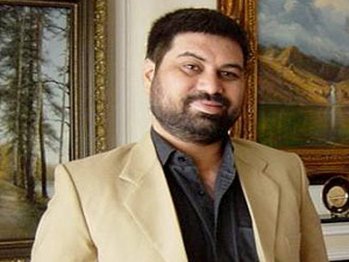
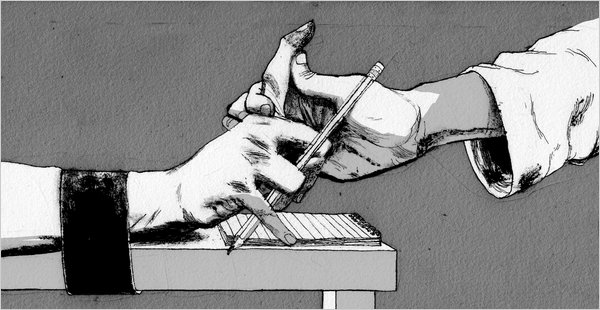
WE have buried another journalist. Syed Saleem Shahzad, an investigative reporter for Asia Times Online, has paid the ultimate price for telling truths that the authorities didn’t want people to hear. He disappeared a few days after writing an article alleging that Al Qaeda elements had penetrated Pakistan’s navy and that a military crackdown on them had precipitated the May 22 terrorist attack on a Karachi naval base. His death has left Pakistani journalists shaken and filled with despair.

I couldn’t sleep the night that Saleem’s death was confirmed. The fact that he was tortured sent me back to a chilly night last September, when I was abducted by government agents. During Saleem’s funeral service, a thought kept haunting me: “It could have been me.”

Mourning journalists lined up after the service to console me, saying I was lucky to get a lease on life that Saleem was denied. But luck is a relative term.

Adil, my 2-year-old son, was the first person in my thoughts after I was abducted. Journalists in Pakistan don’t have any institutionalized social security system; those killed in the line of duty leave their families at the mercy of a weak economy.

When my attackers came, impersonating policemen arresting me on a fabricated charge of murder, I felt helpless. My mouth muzzled and hands cuffed, I couldn’t inform anybody of my whereabouts, not even the friends I’d dropped off just 15 minutes before. My cellphone was taken away and switched off. Despite the many threats I’d received, I never expected this to happen to me.

Sure, I had written many stories exposing the corrupt practices of high-ranking officials and pieces criticizing the army and the intelligence agencies. After they were published, Inter-Services Intelligence, Pakistan’s prime security agency, always contacted me. I was first advised not to write too much about them and later sent messages laced with subtle threats. But I never imagined action was imminent.

On Sept. 4, I was driven to an abandoned house instead of a police station, where I was stripped naked and tortured with a whip and a wooden rod. While a man flogged me, I asked what crime had brought me this punishment. Another man told me: “Your reporting has upset the government.” It was not a crime, and therefore I did not apologize.

Instead, I kept praying, “Oh God, why am I being punished?” The answer came from the ringleader: “If you can’t avoid rape, enjoy it.” He would employ abusive language whenever he addressed me.

“Have you ever been tortured before?” he asked.

“No,” I said.

“These marks will stay with you forever, offering you a reminder never to defy the authorities,” he replied.

They tortured me for 25 minutes, shaved my head, eyebrows and moustache and then filmed and photographed my naked body. I was dumped nearly 100 miles outside Islamabad with a warning not to speak up or face the consequences.

The following months were dreadful. I suffered from a sleep disorder. I would wake up fearing that someone was beating my back. I wouldn’t go jogging, afraid that somebody would pick me up again and I’d never return. Self-imposed house arrest is the life I live today; I don’t go outside unless I have serious business. I have been chased a number of times after the incident. Now my son asks me questions about my attackers that I don’t answer. I don’t want to sow the seeds of hatred in his heart.

When Saleem disappeared, I wondered if he had been thinking about his children, as I had. He had left Karachi, his hometown, after receiving death threats, and settled with his wife and three children in Islamabad. From there, he often went on reporting trips to the tribal areas along the Afghan border. Tahir Ali, a mutual friend, would ask him: “Don’t you feel scared in the tribal areas?” Saleem would smile and say: “Death could come even in Islamabad.” His words were chilling, and prescient.

The killing of Syed Saleem Shahzad is yet another terrifying reminder to Pakistani journalists. He is the fifth to die in the first five months of 2011. Journalists are shot like stray dogs in Pakistan — easily killed because their assassins sit at the pinnacle of power.

When Daniel Pearl was brutally murdered by militants in Karachi in 2002, his case was prosecuted and four accomplices to the crime were sentenced. This happened only because Mr. Pearl was an American journalist. Had he been a Pakistani, there would have been no justice.

Today, impunity reigns and no organization is powerful enough to pressure the government to bring Saleem’s killers to justice. Journalists have shown resilience, but it is hard to persevere when the state itself becomes complicit in the crime. Now those speaking up for Saleem are doing so at a price: they are being intimidated and harassed.

Pakistan is at a crossroads and so is its news media. In a situation of doom and gloom, Pakistani journalists offer a ray of hope to their fellow citizens and they have earned the people’s trust. Even the former prime minister Chaudhry Shujaat Hussain has admitted that people who once went to the police with complaints now go to the press.

But this trust will be eroded if journalists continue to be bullied into walking away from the truth. News organizations throughout the world must join hands in seeking justice for Saleem and ending the intelligence agencies’ culture of impunity. An award for investigative journalists should be created in his honor, as was done for Daniel Pearl. No stronger message could be delivered to his killers than making him immortal.

Umar Cheema is an investigative reporter at The News International, Pakistan’s largest English-language daily. He was a Daniel Pearl Fellow at The Times in 2008.

Pakistan Troops Caught on Film Shooting Unarmed Teenager Dead

By Barry Neild for The Guardian

Pakistan’s security forces are facing criticism after paramilitary troops were caught on camera apparently shooting dead a teenager at point-blank range.

The footage, broadcast repeatedly on local television, is likely to further undermine faith in the country’s powerful security establishment, which is already facing allegations it helped conceal Osama bin Laden.

The video, captured by a cameraman from Pakistan’s Awaz television channel, shows a youth, identified as Sarfaraz Shah, arguing with paramilitary rangers in Karachi. The 18-year-old appears to plead for mercy before being shot at close quarters. He then falls to the ground and screams in pain as blood pools beneath his legs.

Zohra Yusuf, head of Pakistan’s independent Human Rights Commission, condemned the killing as “another indication of law enforcement personnel becoming increasingly trigger happy.”

She said the violence depicted in the video was a trend seen across Pakistan that reflected the impunity of the country’s law enforcers.

Pakistan’s prime minister, Yousuf Raza Gilani, said an inquiry would be launched and the culprits punished. Six members of the paramilitary Rangers, who are controlled by the interior ministry, have since been arrested.

Major general Aijaz Chaudhry, who commands the force, described the incident as “deplorable”. “The Rangers have no authority to kill any unarmed individual and they can fire only in self-defence,” he said. “On completion of the inquiry, all those found responsible will be given strict punishment.”

The incident is likely to further dent public faith in the government’s ability to control its security forces at a time when the US ally is facing questions about how bin Laden could have hidden for so long without the complicity of intelligence officials.

“What we saw on television shows that now there is the law of the jungle in this country and no one is accountable for his action or deeds. This is pathetic,” Mohammad Sultan, a retired soldier, told Reuters.

“What we are seeing is visual records of what we have long documented, which is the culture of impunity in the Pakistani law enforcement agencies,” said Ali Dayan Hasan, a researcher for Human Rights Watch. “What is becoming clear is that the free for all, the culture of wanton abuse and killing, is becoming untenable in the age of new media and cell phone cameras.”

In one media interview, a man identified as Salik Shah, the victim’s brother, said: “My brother was a victim of barbarism, brutality and aggression and everyone has seen it. The innocent young man was begging for his life regardless of whether he had done anything wrong. He was asking to be pardoned by the rangers; despite his repeated requests they did not listen to him, they did not arrest him, instead they were adamant about killing him and in the end they did.”

Hundreds of people showed up at Shah’s funeral a day after his death and denounced the Rangers. Some shouted “Rangers, murderers!” and others carried signs that said “Down with the Karachi Rangers.”

The video’s broadcast comes a few days after a prominent journalist was tortured to death after reporting claims about al-Qaida. Military intelligence officials have rejected claims they played a role in the killing.

Pakistan’s Daily Times newspaper said the military, paramilitary forces, police and intelligence agencies “who confidently violate human rights” should be held accountable for their actions.

“The security and law enforcement forces that do not respect the law themselves are inviting anarchy, which arguably is already under way,” it said in an editorial.

Last year, a video emerged of two teenage brothers being beaten to death before being strung up on a metal pole in broad daylight as police personnel looked on.

Pakistan Orders an Inquiry After Troops Kill a Teenager

By Salman Masood for The New York Times

President Asif Ali Zardari of Pakistan ordered an investigation on Thursday into the shooting death of an apparently unarmed teenager by paramilitary troops in the southern port city of Karachi. The shooting, which was captured on video and broadcast on national television, has led to protests and has been condemned by political parties and human rights groups.

It was the second time in recent weeks that a video has shown paramilitary troops using extreme force against civilians. Last month, five Chechens were gunned down in Quetta, Pakistan.

The shootings are sure to feed complaints that Pakistan’s security forces are too aggressive and sometimes bypass the sluggish and corrupt judicial system. Pakistan’s military leaders are also still embarrassed by the American raid on Osama bin Laden’s compound in Abbottabad, which the armed forces did not detect.

The victim of the Karachi shooting, Sarfraz Shah, whose age was given as 18 or 19, was stopped by paramilitary troops on Wednesday and accused of being involved in an attempted robbery in a nearby park.

A spokesman for the troops said a gun had been taken from him, but in the video, Mr. Shah does not appear to be armed when he is shot.

The recording shows the young man begging for mercy before being led toward a group of troops. One points his gun at Mr. Shah before firing several shots. Mr. Shah crouches, asking forgiveness while bleeding profusely.

“My hand is gone,” Mr. Shah shouts. “Take me to the hospital.” The troops step back, out of the video frame. A government official said five of the troops had been arrested.

Mr. Shah was buried on Thursday in Karachi, accompanied by protests from family members.

The shootings in Quetta last month were also recorded. The police and paramilitary troops initially reported that the victims, three women and two men, were suicide bombers. They were killed near a checkpoint on the outskirts of Quetta, the capital of Baluchistan Province in southwestern Pakistan, in a volley of fire as police officers stood by.

Video from local television networks showed one young woman raising her arm, as if to try to stop the gunfire. No weapons were recovered on the victims. An investigation of that shooting is under way.

The Pakistani security forces have repeatedly been accused of misusing their power. The army was accused of extrajudicial killings during a military operation to drive out militants that began in the Swat Valley in 2009. The army denied the allegations.

The country’s powerful intelligence agencies have also been accused of illegally detaining hundreds of terrorism suspects. And military intelligence has been accused of gross human rights violations in Baluchistan, where a separatist insurgency by Baluch nationalists has long simmered.

Pakistani Rangers, the group involved in Mr. Shah’s death, are controlled by the Interior Ministry. Rehman Malik, the country’s interior minister, announced the arrests in the case on Thursday evening, but he also accused Mr. Shah of being part of a gang involved in robberies, according to the local news media.

Mr. Malik said Mr. Shah had tried to steal a woman’s purse and was caught by guards in the park before being handed over to the Rangers.

The Rangers have been deployed in Karachi for several years and help the local law enforcement authorities in maintaining peace in the city, which is riven by political, ethnic and sectarian tensions.

Syria Steps Up Crackdown; International Outcry Grows

As Reported by Voice of America

Syria has intensified its bloody military crackdown on pro-democracy demonstrators, as international criticism against the government’s action mounts. Gunfire continued Tuesday in the flashpoint city of Daraa, where an armed assault to end anti-government protests was in its second day.

Human rights activists say at least 34 people have been killed and dozens more arrested since Syrian troops and tanks entered the city at dawn Monday to crush the demonstrations.

Residents were said to be too afraid to venture out in Daraa. Electricity, water and telecommunications to the city remain cut.

Also Tuesday, thousands of riot police deployed near the coastal city of Banias and in two areas on the outskirts of the Syrian capital. Activists say clashes have been especially brutal near the town of Douma. Demonstrators who attempted to enter Damascus from there during the last two weeks were met with bullets.

More than 400 people have been killed since pro-democracy protests erupted last month. The Syrian rights organization Sawasiah said Tuesday the government has arrested at least 500 people during the ensuing crackdown.

Also Tuesday, the international response to Syrian President Bashar al-Assad’s brutal crackdown intensified. The U.S. ambassador to the United Nations accused the Syrian leader of “disingenuously blaming outsiders” for the protests.

Susan Rice also reiterated that Washington has evidence of active Iranian support for what she called Syria’s “abhorrent and deplorable” crackdown on peaceful demonstrators. She said the “outrageous use of violence to quell protests” must end now.

U.N. Secretary-General Ban Ki-moon also condemned “the continuing violence against peaceful demonstrators,” including the use of tanks and live fire that have “killed and injured hundreds of people.” The U.N. chief has called for an independent inquiry into the violence.

But Syria’s U.N. envoy said Damascus is capable of undertaking its own transparent investigation into the deaths of anti-government protesters, rejecting outside assistance.

Bashar Ja’afari also said the U.N. Security Council “should not rely on media reports” when making its decisions. Britain, France, Germany and Portugal asked the council to condemn Syria’s crackdown in a draft statement circulated on Tuesday.

Ja’afari told reporters Syria regrets civilian casualties, but said the unrest has “hidden agendas,” adding that some foreign governments are attempting to destabilize the country.

Earlier Tuesday, ltalian Prime Minister Silvio Berlusconi and French President Nicolas Sarkozy urged Syria to “show moderation” and halt the “violent repression” of peaceful demonstrations.

Turkish Prime Minister Recep Tayyip Erdogan telephoned Mr. Assad and urged him to show restraint. British Foreign Secretary William Hague said the European Union is exploring possibilities for action against Syria, including asset freezes and targeted travel bans on the country’s leadership.

While U.S. officials have condemned the violence against Syrian citizens, Defense Secretary Robert Gates and his British counterpart, Liam Fox, played down the likelihood of a Libya-style intervention in Syria.

At a joint news conference in Washington Tuesday, Fox said the world’s response to popular revolts across the Middle East and North Africa must reflect the circumstances in each country. Gates made a similar point, saying that although the U.S. applies its values to all countries in the region, its actions will not always be the same.

A U.S. State Department official said Tuesday that, for now, Washington will limit its response to diplomacy and possible sanctions.