Archive for the ‘ Freedoms ’ Category

America’s Dark Age of Islamophobia

By Tony Norman for Philly.com

Muslims really thought they were doing the world a favor by pulling Europe and its mostly illiterate Christians out of the Dark Ages. But just because they foisted algebra, trigonometry, optics, astronomical charts, the classics, Arabic numerals, advanced surgical techniques, perspective in art, the lute, and artichokes on the world – while the Christian kings of Europe were smothering free inquiry – we’re not about to give them any credit a thousand years later.

Particularly in America, we remain ignorant of Islamic contributions to Western life. We suffer from a profound cultural amnesia when it comes to remembering our millennia-long debt to our Muslim brethren. But as the song goes, what has Averroes done for us lately?

Americans are so used to thinking of Muslims as an exotic “other” that many fail to realize they’re an inextricable part of who we are and have been since the nation’s earliest days. Unfortunately, too many non-Muslims see them as Manchurian candidates crouching in the shadows with explosive vests, waiting for the signal to wage terror on America’s malls. If you ask the average American citizen about Islam’s role as an incubator of Western ideas, expect stares of incomprehension.

If this ignorance were restricted to the margins of society, it wouldn’t be half as embarrassing. But Islamophobia, like its twin brother, anti-Semitism, has a way of injecting itself into the cultural discourse. Contempt for Muslims remains an acceptable prejudice for millions who continue to equate the religion with terrorism.

Recently, TLC began running an innocuous reality show called All-American Muslim. It documents the lives of five Muslim families in a Detroit suburb that boasts the highest concentration of Arabs and Muslims in America. The 99 percent of Americans who don’t share their faith are invited to explore the possibility that these very misunderstood Americans don’t have horns or drink the blood of infant Christians and Jews.

It didn’t take long for a conservative group calling itself the Florida Family Association to complain that the TLC series is “propaganda that riskily [sic] hides the Islamic agenda’s clear and present danger to American liberties and traditional values.”

Of course, there’s nothing on the show to indicate a subversive religious agenda, other than its blatant attempt to portray Muslims as humans.

Lowe’s Home Improvement couldn’t be bothered with such nuances. It pulled its ads from the show and issued the wimpiest justification of corporate cowardice ever: “Individuals and groups have strong political and societal views on this topic, and this program became a lightning rod for many of those views.”

Ted Lieu, a state senator in California, called Lowe’s capitulation to intolerance “un-American” and is considering calling for a boycott of the retailer. Lowe’s isn’t worried about a boycott from America’s Muslims, who number fewer than two million, but a sympathy boycott by fair-minded Americans of all faiths and political persuasions would be a nightmare for the company.

Crawling out of this depressing sequel to the Dark Ages won’t be easy.

Pakistan PM Seeks to Dispel Rumors of Army Rift

By Chris Brummitt for Boston.com

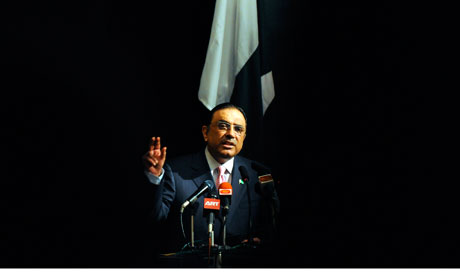
Pakistan’s prime minister dismissed speculation of a rift between the government and the military over a secret memo sent to Washington seeking its help in averting a supposed military coup, saying the country was committed to democracy.

Political tensions have soared in recent days as the Supreme Court begins a hearing into the circumstance surrounding the memo. The absence of President Asif Ali Zardari, recovering from a likely “mini stroke” in his Dubai home with no word on his return, has only added to rumors that the current civilian administration is in possible fatal trouble.

Zardari’s plentiful critics are hoping the scandal will lead to his ouster, and delighted in portraying his trip to Dubai on Dec. 6 as a flight from the fallout from the memo. The president’s aides have denied that, and most independent analysts believe the veteran politician, who has outlasted numerous predictions of his demise since taking office in 2008, will ride it out.

Late Friday, Prime Minister Yousuf Raza Gilani met with army chief Gen. Ashfaq Pervez Kayani to discuss the memo.

Gilani said in a statement he rejected the nation of a “standoff” between the army and the government.

“The government of Pakistan and its institutions remain committed to their constitutional roles and obligations to a democratic and prosperous future for Pakistan,” he said.

Tensions between the army and the government could complicate American attempts to rebuild ties with a country seen by many U.S. officials as key to shepherding peace in Afghanistan. A raid by the U.S.-led coalition in Afghanistan in late November killed 24 Pakistani soldiers, hammering relations already strained by American suspicions that Islamabad is playing both sides in the Afghan war and virulent anti-U.S. sentiments inside Pakistan.

Pakistan has a long history of army coups or behind the scenes meddling by the generals to engineer pliant regimes, often with the support of the judiciary. That has left the country’s 180 million people specially receptive to the idea that the collapse of the government is just around the corner.

Lowe’s Errs in Muslim Ad Uproar

By Laura Berman for The Detroit News

Lowe’s used to be the home supply store for macho do-it-yourselfers who want to pick up a chain saw or a sledge hammer along with a box of garbage bags.

Now it’s steeping in a political mess, the result of acceding to the demands of a “pro-family” group — a warm-and-fuzzy sounding way to describe a group that specializes in email campaigns targeted against TV shows that treat minorities as human beings.

In this case, the target was “All-American Muslim,” The Learning Channel’s new reality show that depicts five Muslim families in Dearborn as they entertain, bicker, laugh and get married. The show’s premise — that Muslims are Americans, too — verges on the silly in its obviousness, or so most would think. But the Florida Family Association branded the show, which premiered a month ago, as “propaganda that riskily hides the Islamic agenda’s clear and present danger to American liberties and traditional values.”

The group launched its email campaign in November, then triumphed when Lowe’s — among dozens of other sponsors — disappeared from the show in subsequent episodes.

Its big beef was the lack of negative portrayals of Muslims on the show: Insufficient underwear bombers and radical clerics. The FFA wants ordinary, tooth-brushing, family-friendly Muslims “balanced” with scary, America-hating radical Muslims, apparently as a way to keep suspicion and prejudice alive.

This strikes me as un-Christian to the max. But Lowe’s bought in or, more likely, tried to gracefully bow out of the political arena by removing itself from the show’s list of sponsors.

Lowe’s next error: releasing paragraphs of corporate mumbo-jumbo, pseudo-apologies that fueled the growing uproar. Now there’s a festive holiday season cultural eruption centered on Dearborn. Dearborn’s Muslim community leaders are denouncing Lowe’s, while the Florida Family Association brags online about its successful campaign to eliminate advertisers for “All-American Muslim.”

In the FFA’s version of All-American, only “God fearing” Christians are real Americans, released from requirements to be portrayed, at least some of the time, as crucial components of the axis of evil.

This xenophobic, self-justifying bigotry is, in fact, just as American as our more widely copied ideas about equality for all and a universal right to pursue happiness. But it’s hard to believe what a persistent undercurrent conspiracy theories are in American culture.

The Pulitzer-Prize winning historian Richard Hofstadter described 50 years ago what he called “the paranoid style” in American politics, giving as an example a 1964 campaign by the John Birch society to boycott Xerox for advertising on a television show about the United Nations.

Just as American Muslims are now subjected to bigotry and suspicion, Masons and Catholics were singled out by 19th century Americans bent on protecting their country through conspiracy theories, and Japanese Americans were forced into 20th century concentration camps.

“American politics has often been an arena for angry minds,” Hofstadter wrote, describing a state of mind that flourishes in America today.

The problem isn’t only anger but, also, how fear so easily drowns out even a chain-saw-wielding corporation’s All-American supply of courage.

Pakistan President Zardari in Dubai For Treatment as Coup Rumors Intensify

By Saeed Shah for The Guardian

Pakistan’s embattled president, Asif Ali Zardari, has been hospitalised in Dubai with a heart condition, triggering speculation that it could be used as an excuse for him to step down amid growing pressure from the military.

A government adviser said Zardari had suffered a “minor heart attack”, but this was at odds with the official spokesman for the president, who said the president had gone for routine tests for a pre-existing heart condition.

Rumours of a coup or a resignation forced by the military consumed the media and the internet, fuelled by a report in Foreign Policy magazine that said Zardari was “incoherent” on Monday night during a telephone conversation with Barack Obama.

Zardari’s son and political heir-apparent, Bilawal, met prime minister Yousaf Raza Gilani in Islamabad, adding to media hysteria about imminent change. Bilawal is chairman of the ruling Pakistan Peoples party.

The speculation hit a receptive, febrile political atmosphere, rocked by a diplomatic scandal and the recent jolt to relations with the US over the deaths of Pakistani soldiers at a border checkpost.

Pakistan has been ruled for half its existence by the military, and the armed forces have pulled the strings the rest of the time, meaning that the threat of coups are ever present .

Zardari’s aides said he would not resign. The president is deeply unpopular with Pakistan’s military establishment, which is widely believed to be behind repeated attempts to oust him.

“He had a minor heart attack on Tuesday. He flew to Dubai where he had an angioplasty. He’s in good health now. He will come back tomorrow. There’s no question of any resignation,” Mustafa Khokhar, the government’s adviser on human rights told the AFP news agency.

However, Farhatullah Babar, the president’s spokesman, dismissed media speculation, saying “Zardari is in a Dubai hospital for medical tests and checkup as planned”.

The president is under pressure from the “memogate” scandal in Pakistan, where he is accused of being behind a written offer delivered to the US military leadership in the days after the raid on Osasma bin Laden in May this year.

The anonymous memo offered to rein in the Pakistani military, in return for US support. Pakistan’s former US ambassador and close Zardari aide, Husain Haqqani, has already been forced to resign over the issue and faces possible treason charges.

Ali Dayan Hasan, of Human Rights Watch, the international campaigning group, warned against any military intervention. “Constitutional rule of law must be followed and civilian supremacy must be maintained,” he said. “Governance must be through genuine periodic elections.”

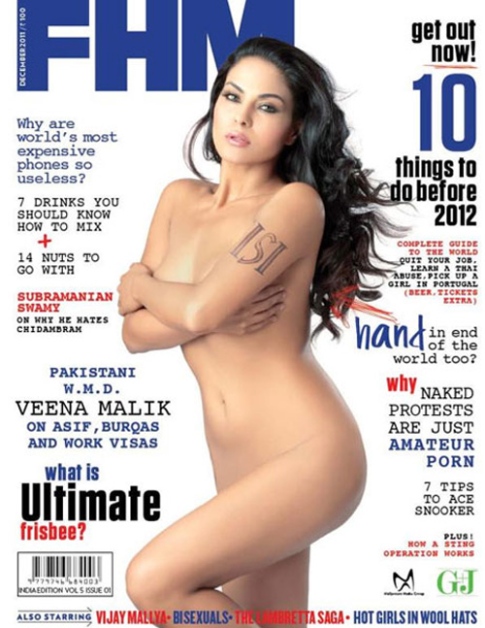
Pakistani Actress Veena Malik Sues FHM Magazine Over Nude Cover Photo

A nude shot of a sultry Pakistani starlet on the cover of an Indian lad mag has sparked an uproar between the two nuclear rivals.

Pakistani actress Veena Malik appears on the cover of FHM India’s December issue wearing nothing but a steamy gaze and the initials of Pakistan’s fearsome intelligence agency, ISI, tattooed across her arm.

Conservative Muslim clerics in her home country slammed the shot as an insult to Islam, while Pakistan’s government has promised to investigate whether the image was doctored, London’s The Telegraph reported.

Malik, meanwhile, has filed a lawsuit against the magazine, saying that she agreed to pose topless — along with a cheeky dig at her home country’s spy service — but the editors digitally altered the shot to make her appear totally nude.

“I agreed to a photo shoot and having an ISI tattoo in a humorous way but I did not have any nude photos. My pictures have been morphed,” she told a Pakistani television station.

The suit is seeking $2 million in damages. FHM India editor Kabeer Sharma insists the cover is legit.

“Maybe she is facing some kind of backlash, so maybe that’s why she is denying it,” Sharma told Agence France-Presse.

“We have not photoshopped or faked the cover. This is what she looks like, she has an amazing body.” Sharma says a video from the cover shoot would prove the photos are real.

An alternate cover that has surfaced online shows Malik clad in a dinky military cargo belt while nibbling on the pin of a grenade.

The 33-year-old Muslim actress and model was best known as a Pakistani TV star before hitting it big in India in 2010 as a contestant on the fourth season of the reality show “Bigg Boss,” a version of “Big Brother.”

In January, she got in a much-publicized verbal spat with a conservative Muslim cleric, who called her an insult to Pakistan and Islam for cozying up with a dashing Indian actor on the show.

We Are Free to Choose Peace

By Ethan Casey for Dawn.com

I was planning to devote this column to Memogate and Ambassador Husain Haqqani’s resignation, then I woke up one morning to learn that the topic had been rendered quaint by a Nato cross-border attack killing two dozen Pakistani soldiers and bringing the already fragile (not to say ostensible or notional) alliance between Pakistan and the United States very close to the breaking point. Then I realised that the two topics are aspects of a larger one, indeed of the twin elephants in both societies’ living rooms: the damage done when a military establishment becomes too powerful and unaccountable.

The only time I’ve ever met Husain Haqqani was at a seminar at Harvard University in 2006, organised by the journalist and activist Beena Sarwar. He wasn’t yet Ambassador to the US; Musharraf was still president. Most of the discussion was, I felt, preaching to the converted among elite-class Pakistani liberals about how the military was the problem and the solution was democracy in the form of elections and civilian rule. I’m not Pakistani, but I was an invited panelist at the seminar, so I took the liberty of challenging that consensus. Recall, I said, the sorry tit-for-tat excuse for democracy that Benazir Bhutto and Nawaz Sharif and their undemocratic parties inflicted on the country throughout the 1990s. That rivalry’s personal vindictiveness and pettiness, I asserted, did a lot of damage to the credibility of civilian leadership. Was it really clear that civilian rule was preferable to military rule under Musharraf?

For my pains I was, as I remember it, ganged up on by Husain Haqqani, the stern and formidable historian Ayesha Jalal, and Ayesha Siddiqa, whose book Military Inc. was about to be published. Haqqani in particular accused me of being “merely anecdotal,” meaning that the foibles of civilian politicians were incidental, whereas the military was a problem institutionally and structurally.

I still believe that my point was well taken, because there’s much that elected leaders can and should do to claim political space and assert their own authority, even – especially – if they’re being besieged or undermined by the military. If you’re elected to lead, you must accept the responsibility to do just that, and you must demonstrate courage and personal character in disdaining consequences to yourself when necessary. And I’m a reporter; merely anecdotal is what I do. But Haqqani was all too right – wasn’t he?

I’m aware that conspiracy theories have been flying about the notorious memo’s provenance. Like most conspiracy theories, they’re beside the point. It doesn’t matter whether Haqqani wrote the memo himself or was framed by the ISI; the result is the same. And the question to ask is Lenin’s: Who benefits?

A.J.P. Taylor (among many others) was right to point out that the armed forces are a fundamental institution of any state. But if the state is going to serve the interests of anyone else, the armed forces must be subject – and obedient – to civilian authority. This is what the authors of the US constitution understood in the 18th century, when they made the president the commander-in-chief of the armed forces. And it’s what President Truman understood when he fired the insubordinate General Douglas MacArthur in 1951, even though MacArthur was more popular with the American public at the time than Truman himself.

But Americans should be anything but self-congratulatory about such things. President Eisenhower, himself a retired general, was not only prescient but brave and patriotic when he took the occasion of his leaving office in 1961 to warn, in a rightly famous nationally televised speech, that a “military-industrial complex” (he coined the phrase) was poised to dominate America’s public life and economy. Half a century later America is hip-deep in the muck of Afghanistan, and – in addition to the death and destruction in Afghanistan itself and in Pakistan – the only Americans who are benefiting are the military itself and the shareholders of the companies that supply the war effort with everything from “contractors” (mercenaries) to drones to cheeseburgers for the troops. Military Inc., indeed.

Which brings us to the cross-border attack. Maybe Nato mistakenly or aggressively attacked over the border; maybe Pakistani troops fired first. Who knows? The New York Times has published a de rigueur, pro forma editorial urging an inquiry. Whatever the truth, it doesn’t matter, because the only people who gain from such an incident are the people who gain from war, and that’s not you or me. It’s also not the soldiers on all sides who are being killed. If I were Pakistani I would be furious, as I know many Pakistanis are, at the contempt for sovereignty that the attack shows. At the same time, we know that the Pakistani establishment is duplicitous. So where does that leave you and me? Does it help anyone if I claim your establishment is more duplicitous than mine, and vice versa?

Our two countries have arrived at a depressing and discouraging pass, both in relation to each other and internally. The exigencies of “defense,” which is a euphemism for war, have brought us here. As individuals, we feel (because we are) largely powerless to affect the course of events. As human communities there’s more we can do, as the Occupy Wall Street movement has been showing in America, and as the lawyers’ movement showed in Pakistan.

We’re in this together – and by “we” I mean Americans and Pakistanis. We’re not on opposing sides; we’re on the same side, against the warmongers of both states. And we are free to choose both our actions and our attitudes. As an American, Ken Williams, commented just this week on my Facebook page: “We can live with generosity and trust OR greed and fear. Each choice has outcomes.”

-Pakistanis for Peace group member Ethan Casey is the author of Alive and Well in Pakistan and Overtaken By Events: A Pakistan Road Trip. He can be reached at www.facebook.com/ethancaseyfansand www.ethancasey.com

Jacksonville Jaguars- Allah’s NFL Team?

By Manzer Munir for Pakistanis for Peace

The last few days have not been easy ones for me. I have had to watch as my adopted homeland, the United States, is accused by Pakistan, the nation of my forefathers, for being responsible for the deaths of 24 Pakistani soldiers by “friendly” fire.

So it wasn’t hard to imagine that once again I would be hurting for being both American and Muslim as I was on 9/11, and now I am once again feeling the pinch of being both Pakistani and American as well. Believe it or not, you can love two countries; just ask Italian or Irish Americans. I am sure you know that this is not the first time and certainly will not be the last time that as a Pakistani American I will be reeling from news concerning Pakistan. Yet the covert attack and neutralization of Osama Bin Laden in May of this year in Pakistan, a country long suspected to be his hiding place, have all but shattered any remaining doubts to the American public regarding which side of the fence Pakistan finds itself. As President Bush so famously said “You’re either with us, or against us” to President Pervez Musharraf immediately following the attacks of September 11, 2011.

At least since Bin Laden’s killing on May 2, 2011, as far as the average American, John Q Public is concerned, it appears that Pakistan was against us all along, and merely only was paying lip service the last 10 years. However staffers at the US State Department, all the way up to Secretary Hillary Clinton and President Obama will rightly admit, that this simply is not the case. Pakistan has been a difficult ally to be sure, but the country has been an ally nonetheless and has proven time and time again to be invaluable not just in this current fight for the strategic direction of Afghanistan, but also was critical in the last great fight involving this land against the former USSR in the ‘80’s.

One can go even further back and talk about the historically strong US and Pakistan relations that go all the way back to at least President Eisenhower and the Southeast Asia Treaty Organization (SEATO), a security pact similar to NATO, but for Asia and parts of the Pacific, it was an organization of which Pakistan and the US comprised membership, along with six other nations namely Australia, France, Great Britain, New Zealand, the Philippines, and Thailand. This was an eclectic bunch of nations to be sure, but a defense pact tying Pakistan and the US, this once brought the two together in a treaty of mutual defense and cooperation going back as early as 1954.

One would also be remiss if we forget that the famous US Air force pilot Gary Powers flew on a U-2 secret mission from Pakistan’s Peshawar airbase at the request of Eisenhower and at Pakistan’s acquiescence. He had been doing a reconnaissance mission against the Soviets at the height of the Cold War when his plane was shot down causing the then famous 1960 U-2 incident. Amazingly, it was less than just a couple generations ago when President Dwight D. Eisenhower famously called Pakistan America’s “most allied ally in Asia. Wow, as the old Virginia Slim’s cigarette ad tagline used to go “ You’ve come a long way baby!” Haven’t you, Pakistan?

I suppose before we get lost on another few paragraphs on US-Pakistan alliances of old and their longstanding history of cooperation and friendship, whether from the days of the Cold War or the far more recent war on terror, let me get back to the original purpose of this article. So, there I was, in my now seemingly regular funk, on account of all the rapidly downward spiraling US-Pak relations, and then, there it was, a glimmer of hope for a bit of positive news. Maybe a chance for something unrelated to terror, bombs, Taliban, Shiite-Sunni violence, blasphemy laws, honor killings or anyone of the myriad of utterly negative topics that so easily and regularly grace the top of the headline news on any cable news channel on any given day regarding Pakistan.

So here finally was some positive news regarding this nation. Initially I wondered if perhaps this feel good story would be along the lines of the usual sports filled beacons of hope for the otherwise unfortunate Pakistani masses such as in the form of when an Amir Khan gains world boxing glory or when an Imran Khan led cricket team of old wins a Cricket World Cup or maybe it was similar to the legend of the Khan boys, Jahanghir and Jansher Khan who were busy conquering the world of squash (racquetball) for decades. Perhaps this news I so eagerly awaited to get me out of this rut was related to a scientific or professional endeavor that highlighted Pakistani achievements and success stories such as that of Pakistani born neurologist Dr Malik M Hasan, the man who single-handedly helped change the medical industry in the US for the better, when over the course of a few years through a process of mergers and acquisitions, he helped eventually form HSI, a multi-billion dollar healthcare provider that in 1993, which was an organization with about 1.4 million members, 40,000 doctors, and nearly 400 member hospitals! His innovative and entrepreneurial management style led to the very first modern Health Management Organization (HMO) in the United States, and thereby brought more affordable healthcare to the vast majority of Americans in the 1980’s. Dr Hasan eventually grew the business to be worth more than $10 billion dollars and countless thousands jobs for professionals through many midwestern and western states.

Maybe a boldly similar idea or solution in today’s rapidly increasing costs of healthcare and lack of insurance for over 40 million Americans can come, if not from a Pakistani American like Dr Hasan, then perhaps from another of the world’s brightest who still yearn to come to these shores with their dreams and aspirations for success and achieving a piece of the American Dream that millions of their countryman from Europe had done years before them. Along the way, people like Dr Hasan employed hundreds and thousands of Americans and become a mega job creator, kind of like the ones that Republicans say they love.

It could be that the Pakistani American feel good story bringing much needed good news to the Pakistani global diaspora, and indeed by that realization, at the very least, to a Pakistani American like myself was going to be similar to a fellow Lahore born compatriot like Tariq Farid, the founder of the wildly popular Edible Arrangements, a US based international franchise that specializes in fresh fruit arrangements for special occasions and gifts. With nearly a 1000 locations in the US and a few countries abroad, I am sure many a Congressman from both Red and Blue states would love to attract job creators like him to their state and lure his growing and profitable company, during these economically depressed times, to their state from their Headquarters in Connecticut.

I suppose I could go on and on at the long list of distinguished Pakistani Americans from the renowned NASA physicist, Dr Bashir A Syed, to Gibran Latif Hamdan, the first person of Pakistani descent to play in the NFL. Other major contributions not in the field of science, sports or business, yet still as inspirational to Pakistani Americans could have been the story of the American hero of Pakistani descent, Sgt. Wasim Khan, the first Purple Heart winner from that nation who won the award for valor during Operation Iraqi Freedom, costing him numerous injuries while fighting for our freedoms.

Certainly no one to date has better demonstrated a greater sacrifice to this nation than the story of Cpl. Kareem R Khan, another Pakistani American, one who gave the ultimate sacrifice for his beloved country, the United States, when he gave his life for American freedom, liberty and ideals dying on Iraqi soil during combat there. He also earned the Purple Heart and has the honor of being buried at the resting place of fallen American heroes, the venerated Arlington National Cemetery. One can do their own Google search for a list of Pakistani Americans to find out that this list comprises far more accomplished and good citizens of Pakistani descent than the occasional delusional individual like Faisal Shahzad, of the Times Square bomb fame.

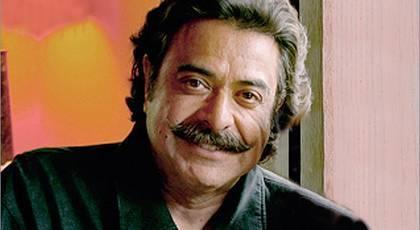
So you bet it was good news for me to hear a few days ago that a successful and hard working American businessman and multi-millionaire from the midwest, Shahid Khan, a Pakistani American owner of a large automobile parts manufacturer, Flex-N-Gate, had just bought an NFL team, the Jacksonville Jaguars! My rare good optimism however seems to perhaps been ill placed though because it seems that even a positive and notable news story like this can quickly turn into something far more twisted and sinister as witnessed by the scores of Islamophobic and racial comments being left on the Jacksonville Jaguars Facebook page and other sports blogs and boards, hours since the sale and the origins and national background of the new owner became public. The deal which still has to go to an NFL owner’s vote would only then be complete and final. Whether the NFL owner’s vote affirmatively on the deal or not, the rancid and clearly Un-American comments on the team’s fan page demonstrate that a majority of the local fans of this NFL team seem only to care about his Pakistani background and not of the fact that he is committed to staying and keeping the team in the small Jacksonville market and that he is a genuine fan of football and by all accounts would make a great manager/owner of the franchise.

The sad fact remains that there is a possibility that despite all the countless contributions to this great nation made by Pakistani Americans, many of these die hard football fans have no problem with risking losing their team to a different owner who would take the team out possibly west to the vacant Los Angeles market than to have a “Paki” keep the team in Florida’s small Jacksonville market and try and build a contender there.

Maybe its his IRS troubles that Shahid had a few years ago that prevented him from buying the St Louis Ram’s majority ownership stake last year or maybe it really is his very interesting moustache that scares people away. Regardless, I will gladly take either reason for his bid not being approved than anything that points to his national origin or racial makeup. Afterall, us Americans should never forget the words of the late great Rev. Dr. Martin Luther King, Jr when he said that we should ”not judge a man by the color of his skin, but rather by the content of his character.” All I know is that this Pakistani American still keeps alive Dr King’s dream. So no amount of paranoia should let the die-hard Jaguar fans fear that Muslims and Allah are on their way to taking over their beloved NFL franchise. Now gentlemen, let’s play ball!

–Manzer Munir, a proud American of Pakistani descent, is a former US State Department Foreign Service Officer Management Selectee, and the founder of Pakistanis for Peace. He is also an often tormented fan of the Kansas City Chiefs of the NFL as well as having the good fortune of being a lifelong fan of Kansas Jayhawk Basketball.

Why They Get Pakistan Wrong

By Mohsin Hamid for The New York Review of Books
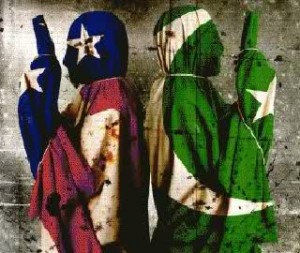
Nearly ten years after the terrorist attacks of September 11, 2001, and the commencement of the US-led war in Afghanistan, the alliance between the US and Pakistan is on shaky ground. The killing of Osama bin Laden by US special forces this May in Abbottabad, Pakistan, has incensed officials on both sides: on the American side because bin Laden’s hiding place appears to suggest Pakistani perfidy; and on the Pakistani side because the US raid humiliatingly violated Pakistan’s sovereignty.

As Ted Poe, a Republican congressman on the House Foreign Affairs Committee, puts it: “Unless the State Department can certify to Congress that Pakistan was not harboring America’s number one enemy, Pakistan should not receive one more cent of American funding.” Dramatic words,1 for Pakistan has been allocated quite a few cents of American funding. Yet this money has bought little love. According to the Pew Global Attitudes Project, only 12 percent of Pakistanis have a favorable opinion of the United States, and only 8 percent would like to see US troops “stay in Afghanistan until the situation has stabilized.” Why might this be the case?

The past decade has been devastating for Pakistan. The country’s annual death toll from terrorist attacks rose from 164 in 2003 to 3,318 in 2009, a level exceeding the number of Americans killed on September 11. Some 35,000 Pakistanis, including 3,500 members of security forces, have died in terror and counterterror violence. Millions more have been displaced by fighting. It is difficult to convey how profoundly the country has been wounded. In 1989, my Lahore American School classmates and I (including children from Pakistan, America, Canada, Sweden, Germany, and Korea) were able to go to the beautiful valley of Swat by bus for a weeklong field trip with no security arrangements whatsoever. In 2009, the battle to retake Swat from Taliban militants involved two full divisions of the Pakistani army and hundreds of casualties among Pakistani soldiers. (Similarly, until a few years ago, there had never been a suicide bombing in Lahore. Now one occurs every three or four months.) The Pakistani government puts direct and indirect economic losses from terrorism over the last ten years at $68 billion.

Of the $20.7 billion in US funding allocated to Pakistan from 2002 to 2010, $14.2 billion was for the Pakistani military. On paper, economic assistance came to $6.5 billion, less than a third of the total. In reality the civilian share was even smaller, probably less than a quarter, for the $6.5 billion figure reflects “commitments” (amounts budgeted by the US), not “disbursements” (amounts actually given to Pakistan). The United States Government Accountability Office reports that only 12 percent of the $1.5 billion in economic assistance to Pakistan authorized for 2010 was actually disbursed that year. Independent calculations by the Center for Global Development suggest that $2.2 billion of civilian aid budgeted for Pakistan is currently undisbursed, meaning that total economic assistance actually received from the US over the past nine years is in the vicinity of $4.3 billion, or $480 million per year. (By comparison, Pakistanis abroad remit $11 billion to their families in Pakistan annually, over twenty times the flow of US economic aid.)

Pakistan is a large country, with a population of 180 million and a GDP of $175 billion. Average annual US economic assistance comes to less than 0.3 percent of Pakistan’s current GDP, or $2.67 per Pakistani citizen. Here in Lahore, that’s the price of a six-inch personal-size pizza with no extra toppings from Pizza Hut.

The alliance between the US and Pakistan is thus predominantly between the US and the Pakistani military. To enter the US as a Pakistani civilian “ally” now (a Herculean task, given ever-tighter visa restrictions) is to be subjected to hours of inane secondary screening upon arrival. (“Have you ever had combat training, sir?”) For a decade, meanwhile, successive civilian Pakistani finance ministers have gone to Washington reciting a mantra of “trade not aid.” They have been rebuffed, despite a WikiLeaked 2010 cable from the US embassy in Islamabad strongly supporting a free trade agreement with Pakistan and citing research showing that such an arrangement would likely create 1.4 million new jobs in Pakistan, increase Pakistani GDP growth by 1.5 percent per year, double inflows of foreign direct investment to Pakistan, and (because Pakistani exports would come largely from textile industries that US-based manufacturers are already exiting) have “no discernible impact” on future US employment.

Perhaps the vast majority of Pakistanis with an unfavorable view of the United States simply believe their annual free pizza is not worth the price of a conflict that claims the lives of thousands of their fellow citizens each year.

Pakistani journalist Zahid Hussain, in The Scorpion’s Tail, his examination of the rise of militants in Pakistan, makes clear that both sides of the alliance between the US and the Pakistani military share blame for the violence currently afflicting Pakistan. A long series of mutual policy missteps led to the present bloodshed.

As Hussain reminds us, the US and the Pakistani military together backed the Afghanistan guerrilla campaign against the Soviet invasion in the 1980s, thereby bequeathing to the world unprecedented international networks of well-trained jihadist militants. For the US, as in its previous alliance with the Pakistani military in the 1950s and 1960s, the primary objective was to counter the Soviets. For the Pakistani military, as ever, the primary objective of the alliance was to lessen India’s superiority in conventional arms. The US gained a proxy fighting force in the form of the Afghan Mujahideen (literally: “people who do jihad”). The Pakistani military gained access to advanced US-made weapons, the most important of which were forty F-16 fighter aircraft: too few, obviously, to resist any full-blown Soviet air assault, but enough to strengthen meaningfully the Pakistan air force against its Indian rival.

With the Soviet withdrawal, America turned abruptly away from the region and washed its hands of its militant cocreations; in the ensuing power vacuum Afghanistan descended into a bloody civil war among former Mujahideen. The US also severed its alliance with the Pakistani military, cutting off supplies of spare parts for Pakistan’s American weapons and withholding delivery of further F-16s that Pakistan had paid for but not yet received.

The outraged Pakistani military was seriously weakened as a conventional fighting force vis-à-vis India. But it now, as Hussain shows, had enormous experience of projecting power through jihadist militants and two opportunities to continue doing so. One was in the Indian-controlled part of Kashmir (the divided Muslim-majority territory at the center of the Indian–Pakistani conflict, claimed in its entirety by both Hindu-majority India and Muslim-majority Pakistan), where an insurgency against Indian troops had broken out in 1989 following a disputed election.

The other was in Afghanistan, where the largely ethnic-Pashtun, Pakistan-backed Taliban were battling the largely non-Pashtun, India-backed Northern Alliance, consisting of Tajiks, Uzbeks, Hazaras, and others. During the 1990s, Hussain writes,

the jihadist movement in Pakistan was focused entirely on supporting the regional strategy of the Pakistani military establishment: to liberate Kashmir from India and install a Pashtun government in Afghanistan.
But following the terrorist attacks of September 11, linked to members of al-Qaeda living under Taliban protection in Afghanistan, the US returned to the region in force and demanded that Pakistan choose sides. President Pervez Musharraf’s subsequent decision to align Pakistan with the US was perceived by many militants as a “betrayal.” Still, Musharraf hoped the Pakistani military’s conflict with its infuriated, jihadist offspring could be circumscribed, that it might be possible “to drive a wedge between the Pakistani militants and the al-Qaeda foreigners.”

This plan, besides denying the extent of the militant threat to Pakistan, was also undermined by US strategy, a strategy that suffered from the outset from what Hussein identifies as two “fundamental flaws.” The first of these was a failure to understand that unless Pashtun grievances were addressed—particularly their demand for a fair share of power—the war in Afghanistan would become “a Pashtun war, and that the Pashtuns in Pakistan would become…strongly allied with both al Qaeda and the Taliban.”

As the US campaign in Afghanistan began, Hussain writes, Musharraf “warned the United States not to allow the [Northern] Alliance forces to enter Kabul before a broad-based Afghan national government was put in place.” But the US ignored this advice, and later, at the Bonn conference of December 2001, Hamid Karzai was installed as chairman (and subsequently president) as Pashtun “window dressing, while the Northern Alliance took over the most powerful sections of the government.”

By backing the Northern Alliance against the Taliban and then failing to include a meaningful representation of Pashtuns in a power-sharing deal in Kabul, the US not only sided with India in the Indian–Pakistani proxy war in Afghanistan, it also elevated a coalition of Afghanistan’s smaller ethnicities above its largest ethnic group, the Pashtuns. Conflict was inevitable, and since twice as many Pashtuns live in Pakistan as in Afghanistan, it was also inevitable that this conflict would spill over the border.

The results for Pakistan were catastrophic. Over the following decade, as Hussain describes in detail, the Pakistani military’s attempts to separate “good” militants from “bad” foundered. Instead, strong networks developed between radical groups in Pakistan’s Punjabi east and those in its Pashtun west. With each move of the Pakistani military against them, the frequency and lethality of counterattacks by terrorists inside Pakistan, on both military and civilian targets, intensified. Pakistani casualties soared.

The only way out of this trap, in which an unwinnable “Pashtun war” threatens to swamp an essential Pakistani program to neutralize militants, Hussain suggests, is to address the second “fundamental flaw” in US strategy: the “failure to appreciate that combating the militant threat required something far more than a military campaign,” namely a “political settlement with the insurgents, requiring direct talks with the Taliban.”

Equally vital, it must be added, is a push toward political settlement between India and Pakistan over Kashmir. This simmering conflict fuels the Indian–Pakistani proxy war between the Northern Alliance and the Taliban in Afghanistan, encourages the Pakistani military’s embrace of militants, and helps subordinate Pakistani civilian governments to the Pakistani military (by allowing a near-perpetual state of security crisis to be maintained in Pakistan). The outlines of a deal on Kashmir were reportedly secretly agreed upon in 2007, but progress has been frozen since Musharraf’s fall from power in 2008 and the terrorist attacks on Mumbai that same year.

As a presidential candidate, Barack Obama acknowledged Kashmir’s central role. “The most important thing we’re going to have to do with respect to Afghanistan is actually deal with Pakistan,” he said in October 2008.

We should probably try to facilitate a better understanding between Pakistan and India, and try to resolve the Kashmir crisis so that they can stay focused not on India but on the situation with those militants.
Once he was elected, however, talk of Kashmir and peace between India and Pakistan receded from President Obama’s official pronouncements, and he embarked upon an Afghanistan policy that might be described as “shoot first, talk later.” US drone strikes in Pakistan’s Pashtun belt intensified, with more—53—in 2009, Obama’s first year in office, than during the entire Bush administration—42—followed by a further sharp increase in 2010, to 118. This unmanned assault was accompanied by a tripling of US military manpower in Afghanistan, which in turn resulted in a fourfold increase in the American fatality rate, with more deaths there of US soldiers in twenty-nine months under Obama (974) than in eighty-seven months under Bush (630).

Obama has now begun to reverse his Afghanistan escalation. His June 22 speech announced that 33,000 US forces (described as those of his “surge,” but more accurately representing the second of his two roughly equal-sized surges) would begin withdrawing this summer and be gone by the end of the next. There will then, he said, be a “steady pace” of further reductions until by 2014 the change of mission “from combat to support…will be complete.” He also stated that “America will join initiatives that reconcile the Afghan people, including the Taliban.”

The following day, in an interview with the Voice of America, Obama acknowledged a US “focus shifted to Pakistan” and declared:

I think what’s happened is that the [US–Pakistan] relationship has become more honest over time and that raises some differences that are real. And obviously the operation to take out Osama bin Laden created additional tensions, but I had always been very clear with Pakistan that if we ever found him and had a shot, that we would take it. We think that if Pakistan recognizes the threat to its sovereignty that comes out of the extremists in its midst, that there’s no reason why we can’t work cooperatively….
The tone of Obama’s underlying message to Pakistan is certainly much improved from that of the US in September 2001, when Deputy Secretary of State Richard Armitage reportedly told Pakistan to cooperate with the imminent US campaign in Afghanistan or be prepared to be bombed “back to the stone age.” But implicit in Obama’s words, and explicit in his actions, is a continued willingness to escalate US armed intervention in Pakistan should Pakistani cooperation prove insufficient. The alliance between the US and the Pakistani military remains, therefore, a relationship between parties viewing one another through gunsights. Each side blames the other for putting its citizens in grave danger, and each is correct to do so.

A gunsight is not, however, the primary lens through which King’s College professor and former London Times journalist Anatol Lieven sees Pakistan. Quite the opposite: his Pakistan: A Hard Country, by far the most insightful survey of Pakistan I have read in recent years, reflects sensitivity and considerable, if clear-eyed, affection. Lieven has traveled extensively through Pakistan (dismayingly atypical for a contemporary foreign commentator), exploring all of its provinces and speaking with Pakistanis from a very broad range of backgrounds. He has also immersed himself in written sources, including pertinent anthropological research produced over a period of some two hundred years.

Pakistan’s is a diverse society, so diverse, in fact, that observers who deal best in generalizations are bound to get the country horribly wrong. Lieven recognizes this diversity and makes it central to his analysis. For him, Pakistan is a place of competing and overlapping clans, sects, tribes, beliefs, and practices. Its society, in order to function, has evolved powerful mechanisms to deal with rivalries inside shared localities. As a result, Lieven argues, Pakistan is characterized by structures—military, bureaucratic, social, political, spiritual, judicial—that are profoundly “Janus-faced,” in the manner of the two-faced Roman deity who gazes and speaks in opposite, contradictory directions. These structures, at once predatory and protective, operate to make the country both (frustratingly for reformers) very difficult to change and (bafflingly for forecasters of its demise) remarkably resilient.2

At the heart of Lieven’s account of Pakistan is kinship, pervasive networks of clans and biradiris (groups of extended kin) that he identifies as “the most important force in society,” usually far stronger than any competing religious, ethnic, or political cause. Several millennia of invasions, occupations, colonizations, and rule by self-interested states resulted in a “collective solidarity for interest and defense” based on kinship becoming paramount in the area that is Pakistan. It now, as Lieven points out, “is a cultural system so strong that it can persuade a father to kill a much-loved daughter, not even for having an affair or becoming pregnant, but for marrying outside her kinship group without permission.” Moreover it is enduring, having survived, for example, “more than half a century of transplantation of Pakistani immigrants to the very different climes of Britain.” It has done much the same in the far less dislocating shift to Pakistan’s cities, sustained, as in Britain, through constant replenishment by newly migrating kin from the countryside.

The effects of kinship on Pakistani politics are profound. Most of Pakistan’s leading political parties are dynastic, including the Bhutto family’s PPP and the Sharif family’s PML-N; even individual members of parliament are often elected on the basis of clan alliances and support. Politics is therefore about patronage far more than ideology. Furthermore, the Pakistani state is relatively weak, collecting taxes that amount to less than 10 percent of GDP.

As a consequence, Lieven notes, Pakistani governments follow a predictable pattern. They are elected (usually as coalitions, Pakistan’s many divisions making absolute majorities exceedingly rare) on general promises of higher living standards for the population and individual promises to particular politicians, families, and districts. The governments lack the resources to keep many of these promises (which are, in any case, often conflicting); their majorities ebb away; they lose power and await another turn.

Yet because of patronage, much of what politicians extract financially from official positions circulates among their kinship groups, which cut across class. Lieven believes this system, while hugely ineffective at driving real change, helps explain “Pakistan’s remarkably low inequality rating according to the Gini Co-efficient, measuring the ratio of the income of the poorest group in society relative to the richest.” By that measure in 2002 “the figure for Pakistan was 30.6, compared with 36.8 for India, 40.8 for the US, and 43.7 for Nigeria.”

The role of religion in Pakistan, a source of much hand-wringing in policy think tanks, is similarly complex. As Lieven points out: “the Islam of the Pakistani masses contains very different traditions.” Moreover, unlike in Saudi Arabia or Iran, where an oil-bankrolled state has tried to impose one monolithic version of Islam, “the Pakistani state is too weak to achieve this even if it wanted to.” Lieven describes the theological divisions among Sunnis sustained by Pakistan’s clan and kinship diversity. The Ahl-e-Hadith, heavily influenced by Wahabism, loathe saintly traditions. The Deobandis may praise saints but object to worshiping them. The Barelvis, Pakistan’s most numerous (and “fissiparous”) school, tend to embrace the intercession of saints with God. Veneration of saints is also central to Pakistan’s Shias. Because saintliness can be inherited, the heads of Pakistan’s powerful landowning “pir families remain of immense political importance.” They can actively create bridges among religious groups and they serve as major bosses in several mainstream political parties, especially the “secular” PPP.

Religiosity thus fuses with kinship networks and politics to reinforce Pakistan’s existing elite. But it also helps marginalize Pakistan’s Islamist parties, drawn primarily from the Ahl-e-Hadith and Deobandi schools, which struggle to capture more than a few percent of the country’s vote. (Away from politics and “hardly noticed outside the country,” Lieven believes Pakistan’s religiosity also softens “the misery of Pakistan’s poor” by contributing to an astounding level of charitable donation, which, “at almost 5 percent of GDP, is one of the highest rates in the world.”)

Throughout his analysis, Lieven rejects the notion that Pakistan fits somehow in a category apart from the rest of the South Asian subcontinent, a sui generis nuclear-armed “failed state” on the verge of collapse. Rather, he writes,

Pakistan is in fact a great deal more like India—or India like Pakistan—than either country would wish to admit. If Pakistan were an Indian state, then in terms of development, order and per capita income it would find itself somewhere in the middle, considerably below Karnataka but considerably above Bihar.

Indeed, even in the violent challenges confronting its state authority, Pakistan is like its subcontinental neighbors: “All of the states of this region have faced insurgencies over the past generation,” Lieven notes, and by comparison to the Taliban conflict in Pakistan, Sri Lanka’s Tamil rebellion “caused proportionally far more casualties” and India’s Naxalite Maoist insurgency controls “a far greater proportion of India.”

Lieven has evident sympathy for the Pakistani military (indeed there are points when, in referring to a uniformed ancestor who served during British rule in what is now Pakistan, one suspects Lieven may have his own feelings of kinship with the Pakistan army). But he is clear about the role the army has played in fomenting militancy, and about the deadly threat militants now pose to Pakistan, especially the potential for far worse bloodshed if the remaining militant groups that have not yet turned on the military and are therefore being kept “in existence ‘on the shelf ‘”—including Pashtun militants focused on Afghanistan and Punjabi militants focused on India—were to do so.

Still, despite the ineffectiveness of much of the Pakistani state, he believes Pakistan’s kinship groups and its stabilizing and antireformist social structures give the country a combination of diversity and toughness that makes successful revolution highly unlikely. He also writes that the Pakistani army, as it demonstrated in the “brutal but in the end brutally effective” operation to liberate Swat from militant control in 2009, is fully capable of routing guerrillas who seize territory when it sets its mind to doing so.

A key question, therefore, is whether the army itself could split. Lieven thinks not (and we must fervently hope that he is right). The army, he explains, is an all-volunteer institution with a strong shared ethos, nationalistic rather than pan-Islamic in outlook, and increasingly vigilant against Taliban sympathizers within—”after all, we are not suicidal idiots,” an officer tells him. The real risk, which Lieven argues must be avoided at all costs, is of “open intervention of US ground forces” in Pakistan. For if ordered by their commanders not to resist, “parts of the Pakistani army would mutiny in order to fight the invaders,” and in such an eventuality “Islamist upheaval and the collapse of the state would indeed be all too likely.”

In passages such as this, Lieven comes close to describing Pakistan as if through a gunsight; but the gunsight belongs to an American decision-maker on the hunt, with Lieven playing the role of preservationist guide. The best Western strategy, he counsels, would “stem from a recognition that Pakistan’s goals in Afghanistan are in part legitimate—even if the means with which they have been sought have not been”—and would “seek a peaceful solution to the Kashmir dispute, despite all the immense obstacles in both India and Pakistan.” For in the end, “not even the greatest imaginable benefits of US–Indian friendship could compensate for the actual collapse of Pakistan, with all the frightful dangers this would create not just for the West but for India too.”

Lieven’s is a vital book, with much wisdom in its advice for the West. But equally importantly, this detailed and nuanced survey offers Pakistanis a mirror in which to look hard at their country and themselves. Pakistan’s resilience is bound up with its resistance to reform, yet reform will be essential for facing the great challenges ahead, including the potentially devastating impacts of climate change on a dry and overpopulated land that is dependent on a single river and its tributaries. Pakistanis, and above all members of Pakistan’s military, would do well finally to reject their country’s disastrous embrace of militants. Pakistan must urgently mend its relationships in its own neighborhood and refocus on taking care of itself. Time is not on its side.

1
Indeed, perhaps more than just words: on July 9 the US announced it was holding back $800 million of military aid for Pakistan. ↩

2
Lieven is careful to point out that his analysis refers only to Pakistan as it has been configured for the past forty years, a territory with “more of a natural unity…[and] a degree of common history and ethnic intertwining stretching back long before British rule,” and not to what he terms 1947–1971’s “freak of history…[with] its two ethnically and culturally very different wings separated by 1,000 miles of hostile India,” a situation from which Bangladesh should have been given a “civilized divorce” but which instead “ended in horrible bloodshed.”

-Mohsin Hamid is the author of the novels Moth Smoke and The Reluctant Fundamentalist. He lives in Lahore, London, and New York. (Article originally appeared late September 2011)

Pakistanis for Peace Editor’s Note– The views expressed in this article are the solely the opinions of the writer and although interesting, do not necessarily reflect nor represent the views of Pakistanis for Peace and or Manzer Munir. 
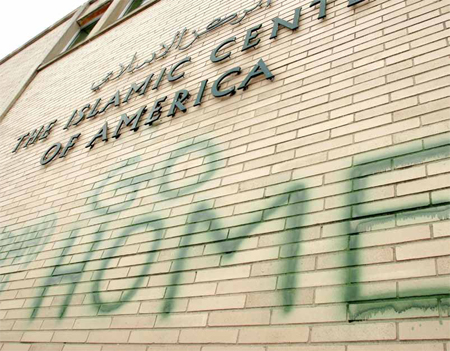
An American Muslim’s Thanksgiving

By Dr. Faheem Younus for The Huffington Post

I know how much I didn’t know 15 years ago.

After landing at the John F. Kennedy Airport in New York as an exchange visitor, I was faced with a culture shock. I knew the word “Manhattan” but I didn’t know what it actually meant. Was it a fruit? A car? A newspaper? I knew the name Michael Jordan but I didn’t know who he actually was. A singer? A scientist? A politician? I knew Thanksgiving was an important holiday in America but I didn’t know what to do on thanksgiving? Eat? Pray? Love?

Don’t forget. This was 1996, when internet was not ubiquitous and search engines meant using a pillow sized book called Yellow Pages. But despite spending a lot of time, the Yellow Pages could not expand my understanding of the above three queries.

So I did what we doctors do best: read a book. It was a book about American cultural literacy.

Reading about the history of thanksgiving, however, opened up a Pandora’s Box of controversies. Is it a Christian holiday? Is it a secular holiday? Is giving thanks to God a good idea or should we be thanking our fellow human beings? Or is it a reminder of the “genocide of the native Americans” and therefore should not be celebrated at all.

This was all too complicated for a medical doctor who was now having second thoughts about learning the history of Manhattan or Michael Jordan. “Who knows … they may turn out to be just as controversial?” I thought.

Which left me with the loaded question: What should I, as a Muslim in America, do on Thanksgiving?

One good thing about medical residency was that sometime a holiday would simply pop-up on your schedule and you literally had to do something with it. So my first reaction to “do something” with my first Thanksgiving was to thank God. Thank Him for giving me peace, security and opportunity in America.

To that end, I found a rainbow of Quranic verses exhorting Muslims to thank God in various ways. Here is one for each color in the rainbow.

Want a promising violet, try: “… If you are grateful, I will, surely, bestow more favors on you;” (14:8); How about an acknowledging indigo: “(Abraham was) thankful for His bounties; God chose him and He guided him unto a straight path” (16:121); Or the true blue thanks of another prophet “Assuredly, he (Noah) was a grateful servant” (17:3); Or a the combination of a green encouragement with a yellow warning: “Remember Me so that I will remember you, and give thanks to Me and do not be ungrateful to Me” (2:152); Or consider the simply orange truth: Surely, Allah is gracious towards mankind, but most of them are not thankful…’ (10:61); and if all fails, here is the red hot chastisement: “If you are thankful I will add more unto you. But if you show ingratitude My punishment is terrible indeed” (14:7).

But God was simply missing from most American Thanksgiving celebrations. Why? Because many atheists claim that giving thanks to our fellow human beings, those who make a true difference in our day to day lives, is more important than thanking a nebulous (in their opinion) entity.

There is much credence, (in my opinion), to the atheist’s point of view of thanking our fellow humans. Prophet Muhammad also reminded Muslims, “The one who does not give thanks for a small blessing will not give thanks for a great blessing, and the one who does not give thanks to people will not give thanks to Allah” (Abu Dawud). By helping the poor, respecting the elders, giving up his seat for a guest, showing unconditional love and exercising fairness in every day affairs, the prophet taught Muslims an important lesson. Thank you is not just a word; it’s an attitude.

Making the thanksgiving holiday a focal point of the Native American controversy is an over simplification. So I will leave it for a separate discussion.

15 years later, as a naturalized US citizen, there is much that I still don’t know about a lot of things. But I do know what an American Muslim should do on Thanksgiving: Give thanks.

Let’s thank our beautiful country, let’s thank our living constitution, and let’s thank the people around us. Only then can we truly thank God.

By the way, adding Turkey with stuffing, cranberry sauce, gravy, and a pumpkin pie to the day would be a fantastic idea too.

Faheem Younus is the Adjunct Faculty for Religion, CCBC; Clinical Associate Professor of Medicine, UMD

This is not Prophet Muhammad’s Islam

By Manzer Munir for Pakistanis for Peace

The steady stream of negative news about the twisted way Islam is being practiced around the world seems to never end. In my view, it is not how the Prophet would have wanted his followers to behave.

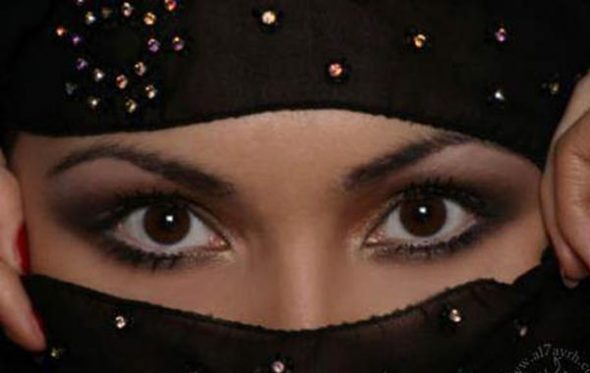
Just when I thought I was beginning to get used to the ridiculousness of the news coming out of Saudi Arabia, where a religious edict is trying to force women there with beautiful eyes to  completely cover up their face in order to stop the temptation of the men, along comes the grim news of Gulnaz  from Afghanistan. If you are not familiar with Gulnaz’s story, let me give you the facts.

Two years ago, in 2009, Gulnaz, a 19 year old single girl who lived with her elderly mother in Afghanistan, was brutally raped by her cousin’s husband. To describe the events, she recalls that on this day, the rapist came into her house when her mother left for a brief visit to the hospital. “He had filthy clothes on as he does metal and construction work. When my mother went out, he came into my house and he closed doors and windows. I started screaming, but he shut me up by putting his hands on my mouth,” she said.

Afterwards, she hid what had happened out of shame and fear, as shockingly there is no difference seen between women who are raped and women who commit actual adultery.  In Afghanistan and in many conservative Muslim countries, any sex outside marriage, whether the guilty party is single or married is considered adultery by the society and the justice system.

A few weeks after her rape, she began to vomit and started showing signs of pregnancy with her attacker’s child. Instead of sympathy and proof of her ordeal, she was charged and found guilty of adultery by the courts and for having sex outside marriage and was sentenced to twelve years in prison. She has already served two years and even gave birth to her rapist’s child, a little girl, in Kabul’s Badam Bagh jail where sadly, her innocent daughter is being raised in captivity alongside the unfortunate mother.

Rather than being freed from jail and given justice for her painful ordeal, the only way out of the dishonor of rape or adultery for her is incredibly only by marrying her attacker. In Afghan culture, and indeed in most Muslim communities, this is believed to be the only way to restore a woman’s honor, by marrying the man who she had sex with, damned be the fact whether it was willingly or unwillingly!

Sadly in many Muslim countries, rape remains a common form of violence against women. In addition, women are often blamed for being the victim of rape. Islam however, views rape as a violent crime against the victim, against society, and against God. The perpetrator who commits a crime is morally and legally responsible for that crime and should be held accountable. The victim, who is an unwilling partner in the sex act and so should bear neither blame nor stigma associated with the unfortunate act. To either ostracize or condemn the victim because she was compelled to engage in sexual intercourse is against the laws of Islam since the victim was an unwilling, and therefore a blameless, participant.

As common as her story and circumstances are for a woman in Afghanistan, the world has only learned of it due to a chance foreign documentary.  Gulnaz’s ordeal came to light because of a dispute between filmmakers and the European Union who hired the crew to film a documentary on the improving situation of women’s rights in Afghanistan and the assistance that the EU has been providing in the better treatment of women in the country. It was only when the documentarians came across her story and the grave injustice being done to Gulnaz and indeed by some accounts, hundreds of women across Afghanistan in similar circumstances, that the EU decided to cancel the project out of fear of harming their relations with Afghan government and institutions. Officially the EU states that it fears for the safety of the women in the film as they could be identified and face reprisals but many human rights organizations believe it is due to the fact that the film shows Afghan justice system in a poor light and the EU is concerned about the Afghan government’s sensitivities to the situation. It is despicable that the EU is more concerned with the sensitivities of the Afghan government rather than fighting for justice for Gulnaz.

Customs such as these in Afghanistan or the recent religious ruling in Saudi Arabia warning women to cover their attractive eyes, or the continued religious persecution of Christians and other minorities in Pakistan through the egregious blasphemy laws as seen in the case of Aasia Bibi, only serve to illustrate to many within and outside Islam the tremendous challenges that exist in what is right and what is logically very wrong and goes against all sense of justice and common sense, not to mention the very essence of Islam.

I am certainly not arguing for making any changes in the Quran or interpretations of religious text or any wholesale revisions whatsoever. That would not only be blasphemous but also counterproductive and unnecessary. Furthermore,  a big part of the beauty of our religion stems from the fact that it has remained unchanged as we Muslims believe that mutations and changes in both the Bible and the Torah necessitated the need for a third Abrahamic religion, Islam,  to arrive some 1400+ years ago to “set the record straight” after all the changes over the years in the two earlier Holy Books. Instead, I believe the only thing that needs to occur is the realization amongst the leaders and countries of the Organization of Islamic Conference (OIC) that in this day and age, there are certain rights and freedoms that should be guaranteed to citizens of all countries of the world and this does not require any changes in the great religion but rather some simple changes in the current laws.

Aristotle once said that “You can judge a nation by the way it treats its most vulnerable citizens”. You could be a Hindu or a Christian in Pakistan, a woman in Afghanistan or Saudi Arabia or a homosexual or transgendered person in Iran, you do not deserve to lose your life or liberty under the guise of religious laws. Allah almighty is a just and fair God in Islam, just as he is in the Christian and Jewish faiths. He most certainly would never condone the treatment of Gulnaz, Aasia Bibi and countless other poor souls who are being mistreated under the banner of Islam.

I am not a religious scholar and nor do I profess to know everything I need to know about Islam, Christianity and many other religions. Some may even question my faith and belief in calling myself Muslim simply because I am asking these tough questions, and in their version of Islam, you never question, you simply obey. Lest they forget, Islam also clearly states to seek knowledge and to be just and fair and respectful of other religions.  “Surely those who believe and those who are Jews and the Sabians and the Christians whoever believes in Allah and the last day and does good — they shall have no fear nor shall they grieve.” (Quran 5:69)

I am however certain that the Prophet Muhammad (peace be upon him) would indeed be very upset with the current state of affairs of most Muslim countries when it comes to morality, religious freedoms,  respect for other religions and the treatment of women. Sadly, I do not see the changes necessary coming into being voluntarily by these nations, I believe it is incumbent of the benefactors of these nations, such as the United Nations, United States, the European Union, China and other trading partners, to push for better treatment of women and religious minorities in many Muslim countries of the world.  It is high time that they pressure these nations into enacting basic rights and freedoms for all people, regardless of their race, religion, gender, and sexual orientation. It must become a precursor to being a part of the civilized nations of the world and in being a member of the world community of nations. Freedom after all is what the Arab Spring is all about!

-Manzer Munir, a proud American of Pakistani descent, is a practicing Sufi Muslim and member of Muslims for Progressive Values, he is also the founder of Pakistanis for Peace and blogs at www.PakistanisforPeace.com as well at other websites as a freelance journalist and writer.

Saudi Women With Beautiful Eyes Should Cover Them up, Says New Sharia Proposal

Reported by Amrutha Gayathri for International Business Times

In yet another sexist and repressive act, a conservative Islamic committee in Saudi Arabia has proposed a law to stop women from revealing their “tempting” eyes to the public.

As of now, Saudi Arabian women are required to cover themselves up from head to toe, with a long black cloak called the “abaya”, except for their eyes and in most cases the eyebrows.  The laws on women covering their bodies are strictly imposed and anyone who doesn’t abide by the codes of conduct faces fines and public floggings.

However, Saudi Arabia’s Committee for the Promotion of Virtue and the Prevention of Vice (CPVPV) found that even women’s eyes could sometimes be too attractive for men and drafted a new proposal.

According to the Daily Mail, a report on the Bikya Masr news site suggested the proposal was made after a member of the committee was attracted by a woman’s eyes as he walked along a street, provoking a fight. The fight culminated in the woman’s husband getting stabbed twice in the hand.

A spokesperson for CPVPV, Sheikh Motlab al Nabet, said a proposal aimed at making it illegal for women to be in public without covering themselves up completely, if they happened to have attractive eyes, had been tabled.

The committee has always been under fire from human rights activists for repressive measures had carried out in the name of Islamic principles. It was widely criticized for its inhuman enforcement of the Sharia law in March 2002, when a public school in Mecca was on fire.

The religious police prevented female students from escaping by locking the doors and barring firemen and emergency services personnel from entering the building because the students had not covered their heads properly. The committee said it didn’t want to invoke the “sexual feelings” of emergency personnel by allowing them see the girls without their head-cover. The CPVPV was held responsible by human rights organizations for a death toll of 14. Though the organization denied the charges, the shocking accounts of witnesses were published by local media.

Incidents of brutal physical torture of women, by religious committees, for not abiding by Islamic laws have regularly appeared in Saudi media. Women are not allowed to drive or travel without male authorization or accompaniment in the country.

Pak Bans Dirty Texting: Just Say No To Monkey Crotch

By Shivam Vij for FirstPost

You cannot SMS ullu chod in Pakistan anymore. Nor can you SMS monkey crotch if you had any reason to do so.

The Pakistan Telecommunication Authority (PTA) has banned 1,795 expletives on SMS, ordering telecom companies to filter out SMS-es containing these offending words with effect from 21 November 2011. The letter includes a list of 1,109 English words, more pornographic terms than expletives, and another 586 Urdu words which are more colourful sexual expletives of the standard South Asian kind rather than the plain garden variety pornography.

A letter from the PTA, dated 14 November and signed by its Director General (Services), Muhammed Talib Doger invokes the “Protection from Spam, Unsolicited, Fraudulent and Obnoxious Communication Regulations, 2009″ to pass the order.

The Pakistan Telecommunication Authority (PTA) has banned 1,795 expletives on SMS, ordering telecom companies to filter out SMS-es containing these offending words with effect from 21 November 2011. Vivek Prakash/Reuters
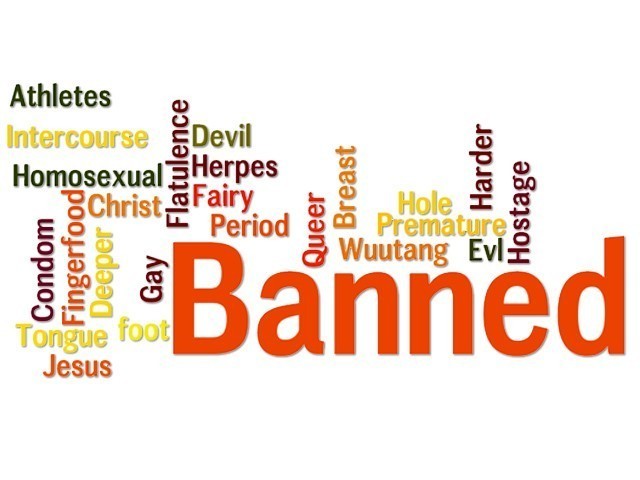
The Pakistani Twitterverse was on fire last night as the two lists make for hilarious reading. The English list begins with A.S.S. and ends with yellowman. Some words sound harmless (crap and crappy), others bizarre (Jesus Christ, flatulence, murder, monkey crotch). Many are commonly used obscene words (“FUCK YOU”) and care has been taken to account for alternative spellings (biatch, muthafucka). While many spelling variations of ‘masturbation’ are on it, the correct spelling is not. Most words seem to be designed to prevent ‘sexting’ or sending sexually explicit texts (sexy, lick me, do me, S&M, lotion and porn). The list comes down on anal sex as much as vaginal sex. But it isn’t just sex. By banning drunken they perhaps hope to reduce alcoholism.

The Express Tribune points out, “While much of the list contains expletives, a number of words to be banned include medical terms, terms used by particular minority groups, common words from the English language and rap group, Wu Tang Clan.” The ‘medical terms’ include athelete’s foot, breast, intercourse, condom and period. The ‘daily use’ terms include hole, hostage and harder. Words like gay and homosexual don’t surprise but it’s curious why wuutang raised the censor’s hackles.

In fact, thanks to this helpful compendium many Pakistanis are finding their expletive vocabulary enhanced. @UroojZia asked what bumblefuck and ladyboog meant.

@Zakoota said the lists should be required reading in schools to give children the vocabulary to describe politicians and cricketers. With the amount of phrases that include the word “BUTT”, @KhaLeak wondered if Aijaz Butt was banned as well.

The Urdu list has standard gaalis also popular in north India, but many of them may not be familiar to Indians (such as “dani mani fudi chus“). Some are unfamiliar even to Pakistanis. @FurhanHussain said the presence of Punjabi gaalis in the Urdu list amounted to cheating, but others noted that there is no list of Sindhi and Punjabi language expletives, a grievous omission given that the Punjabi language is particularly full of colourful expletives.

“Padosi ki aulaad” doesn’t sound very obscene. There are some 15 spelling and gender variations of ‘kanjar’, a popular Pakistani expletive meaning dancing girls, often also used to describe cross-dressing or men dancing like women. Some of the Urdu ones are quite creative. There are four variations of “Chipkali ke gaand ke pasine” and some are inexplicable (“Nimbu sharbat“, “carrom board”) and some are zoologically bizarre (“ullu chod” or owl fucker). Some are rather vanilla everyday terms like “Buckwaas” (nonsense) and “Bewakoof” (foolish).

There were so many oddball terms in there at first people though it was a spoof. However, Shahzad Ahmad, an internet rights activist who tweets as @bytesforall, said he confirmed with a source at the PTA that the list was real. The Express Tribune story referred to above has been updated to quote a PTA spokesperson who denied knowledge of any letter and said that the PTA “does not take such decisions and only passes on the instructions to licensees once a decision is taken by a ministerial committee.” The PTA, which is also in the news for directing ISPs to block access to 1,71,261 pornographic sites, is said to have convened a meeting this morning to discuss the uproar.

It’s unclear how telecom companies who cannot even filter out commercial spam will be able to handle this new morality burden. But Pakistanis, used to growing online censorship administered by the PTA, took little time to come up with the obvious workaround to the SMS censorship. The offending words are numbered on the blacklist. Many including @SamadK came up with the idea, “Now instead of typing the whole gaali you just need to send the number. Thank you PTA for making is even lazier.”

Many have already started testing it: @KhanDanish tweeted “I hope Imran Farhat 143 doesn’t do 471 in Friday’s match. #Urdu.”

The Urdu list is here and the English list here.

Occupy: Out of Zuccotti Park And Into The Streets

By Eugene Robinson for The Washington Post

Occupy Wall Street may not occupy Zuccotti Park anymore, but it refuses to surrender its place in the national discourse. Up close, you get the sense that the movement may have only just begun.

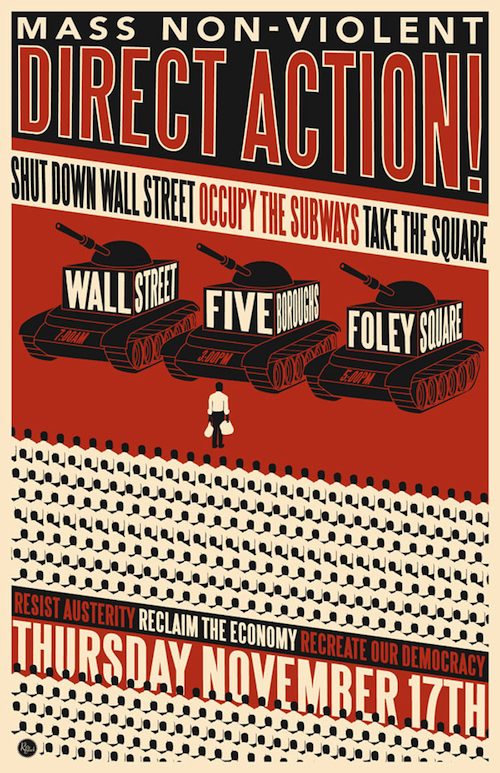
Demonstrators staged a “day of action” Thursday, following the eviction of their two-month-old encampment this week. The idea was, well, to occupy Wall Street in a literal sense — to shut down the financial district, at least during the morning rush hour.

For the most part, it didn’t work. Entrances to some subway stations were blocked for a while, and traffic was more of a mess than usual. But police turned out in force, erecting barricades that kept protesters from getting anywhere near their main target, the New York Stock Exchange. Captains of commerce may have been hassled and inconvenienced, but they weren’t thwarted.

There was some pushing and shoving, resulting in a few dozen arrests. Coordinated “day of action” protests were held in other cities. They did not change the world.

A big failure? No, quite the opposite.

Lower Manhattan was swarming not just with demonstrators and police but with journalists from around the world — and with tourists who wanted to see what all the fuss was about. A small, nonviolent protest had been amplified into something much bigger and more compelling, not by the strength of its numbers but by the power of its central idea.

There is a central idea, by the way: Our financial system has been warped to serve the interests of a privileged few at the expense of everyone else.

Is this true? I believe the evidence suggests that it is. Others might disagree. The important thing is that because of the activism of the Occupy Wall Street protests — however naive, however all-over-the-map — issues of unfairness and inequality are being discussed.

This is a conversation we haven’t been having for the past 30 years. For politicians — and those who pay lavishly to fund their campaigns — the discussion is destabilizing because it does not respect traditional alignments. For example, white working-class voters are supposed to be riled up against Democrats for policies such as affirmative action and gun control. They’re not supposed to get angry with Republicans for voting to bail out the banks and then flatly ruling out the idea of relief on underwater mortgages.

How people feel about fairness — the 1 percent at the top versus the other 99 percent — has nothing to do with how they feel about limiting abortion or banning assault weapons. It has nothing to do with whether people think racism is a thing of the past or a continuing scourge. Fairness can’t be dismissed as some sort of first step toward socialism, unless we’re willing to concede that capitalism and fairness are fundamentally incompatible. I don’t believe this is the case. Maybe some of the Occupy protests’ most vocal opponents would like to disagree.

In Midtown Manhattan, many blocks from Zuccotti Park, famously jaded New Yorkers were eager to talk about Occupy Wall Street. Buttonholing people at random, I found a lot of support for the decision by Mayor Michael R. Bloomberg (I) to clear the park of tents, sleeping bags and other appurtenances of a permanent settlement. But I also found a lot of agreement with the protesters — even if not everyone had the same idea about just what the protesters were saying.

“Yeah, they were talking a lot of crazy stuff, some of them,” said Ramon Henriquez, owner of a limousine company, who was idling on Central Park South behind the wheel of one of his cars. “Some of them, when they’d do that crazy human microphone thing, they would talk about socialism. I didn’t like that at all. But I liked what they said about the banks.”

He remembered one Occupy speaker asking what would happen if every homeowner decided to skip a month on the mortgage, instead putting the money in escrow — just to get the banks’ attention. “You saw what happened with the debit-card fee,” he said, referring to Bank of America’s abandoned attempt to squeeze new revenue out of account holders. “They listened because they had to listen.”

The erstwhile occupiers of Zuccotti Park swear that they aren’t going anywhere — that they’ll get back into the park one way or another. But they’ve done something more important: They’ve gotten into people’s heads.

In the Name of ‘Honour’: Brazen Shikarpur Killings Shake Hindu Community

By Sarfaraz Memon for The Express Tribune

Most shops in Taluka Chak in Shikarpur were open on Wednesday but there was an uneasy calm. Three Hindu men are dead and no one knows the whereabouts of Seema Bhayo, the girl at the centre of the storm. Residents fear that she may also have been killed. The police have no clue.

It is a simple tale of a love affair that turned tragic. The president has ordered an inquiry into the matter. Not to be outdone, the Sindh home minister has suspended the SHO of the area but neither of these moves brought any comfort to the families who lost their loved ones.

The brutal attack took place on Monday, the first day of Eid, when four armed men on two motorcycles barged into the house of one Naresh Kumar, where he and his friends Dr Ajeet Kumar, Dr Satya Pal and Ashok Kumar were present. The intruders opened fire and killed Ashok and Naresh on the spot, injuring  Dr Ajeet Kumar and Dr Satya Pal.

Dr Ajeet Kumar later died of his wounds at a Sukkur Hospital, more so because no one was willing to take him to the hospital. The policemen who were supposed to guard the house were nowhere to be seen. They did not turn up that day, despite the fact that they had been stationed on fear that such an attack was imminent.

The “crime” that these four men apparently committed was that they intervened on behalf of two young men of their community who had been apprehended two weeks earlier and charged with criminally assaulting a Muslim girl. The real story, as told by area residents, was that Seema and Sandeep Kumar fell in love and were caught while they were meeting at the house of Sandeep’s friend, Nakash Kumar.

This correspondent also visited Qazi mohalla where Seema’s home is situated on the right side of the road and the shops of Sandeep and Nakash were on the left side. A neighbour said that Seema and Sandeep used to meet at Nakash’s house. On that fateful day, area residents saw them going in and raided the house and thus the affair was revealed.

It was the promise of a better life which attracted Seema towards Sandeep, said another resident, adding that Seema’s father Nazir Ahmed Bhayo was a mason by profession. When the couple was caught, the Hindu community intervened to settle the matter. President of the Hindu Panchayat in Chak, Prem Kumar, said “We went to the Bhayo elders and told them that we are ready to pay any fine to reconcile the matter.”

Area resident Moulvi Allah Bux confirmed that the Hindu community were trying to reconcile with the Bhayo clansmen and for this they had met Sardar Babul Bhayo, who gave them a positive response and told them that the date of the reconciliatory meeting would be announced on the second day of Eid. But before the meeting could be held, the murders were committed.

While Babul Khan Bhayo was not available, clan chieftan Sardar Wahid Bux Bhayo  said that it was the Hindu community which had resorted to aggression by sexually assaulting a Bhayo girl. According to him, the three Hindus were killed in retaliation for that incident. But he added that he condemned both incidents.

On Tuesday, hundreds participated in the last rites of the three men. The rituals were performed near the Sadhu Bela temple in Sukkur.

Following the notice by the president, the Chak police has swung into action. During raids in different localities, they have apprehended more than 25 people. DIG Larkana Sain Rakhiyo Mirani said that the murder was an act of terrorism. But the Hindu community maintains that the real perpetrators of the crime have so far not been arrested.

Seeking Solace in Sufism

By Renuka Deshpande for Daily News & Analysis

The city’s metamorphosis from a sleepy town to a metropolis has left most of us long for peace and contentment. This is why Punekars are taking to Sufism as a quest for harmony and the need to seek refuge in the promise of hope and love.

Sufism or Tasawwuf, the mystical arm of Islam, which is inwardly directed, deals with the soul’s relationship with god. It advocates oneness with god and urges that everything men do, be driven by one sole motivation — the love of god. The word Sufi means ‘clothed in wool’, reveals Dr Zubair Fattani in his article The Meaning of Tasawwuf, and is metaphoric of the inwardness of Islam wrapped in its exterior expressions.

Over the centuries, it has found expression in the ecstatic and reflective poetry of Jalaluddin Rumi, Baba Bulleh Shah, Hafiz, Rabia and Moinuddin Chisti and others, which is increasingly popular in the city.

Bookshelves laden with books on Sufism and its various expressions in poetry, music and dance are a common sight, as are the collections featuring Sufi music maestros like Nusrat Fateh Ali Khan, Abida Parveen, Kailash Kher and the Sabri brothers, among many illustrious others.

Jyoti Mate, a city Sufi music and dance therapist, uses this mystical dimension to heal all those who seek solace in it. The whirling dervishes, the most iconic symbol of Sufism, are the basic element of Sufi dance and represent the earth rotating around the sun, also symbolic of the universe.

“Sufi dance helps stir pent-up and suppressed emotions within oneself. The hands are outspread while whirling and the head is thrown off-centre. A lot is metaphorical in Sufism, dance being no exception. The raising of the right hand and facing it skyward indicates absorption of knowledge from the heavens and the left hand which is pointed downwards, palm-down, passes it on to others.The head thrown off-centre is an urge to be non-egocentric, so that the ego doesn’t grow further. The cap used by Sufis is made of camel hair and is of a specific height, again symbolising the curtailing of the ego,” she says.

Mate adds that response to her therapy sessions has steadily grown since she first started in June 2008 and people often break into tears after the session is over.

On the music front, there is Ruhaniyat, the all-India Sufi and mystic music festival presented by Banyan Tree, which has been coming to Pune for the past eight years. The seven-city festival brings with it Baul musicians from West Bengal, comprising Sufi Muslims and Vaishnav Hindus, the Manganiars from Rajasthan singing Sufi folk music from the state, qawwals like the Sabri brothers and Turkish Sufi musician Latif Bolat, among others. Nandini Mukesh, director of Banyan Tree, who also emcees Ruhaniyat, says that the festival has elicited phenomenal response in the city.

“Last year, our attendance read around 1,800 people. We found ourselves continually adding chairs,” she says adding that the audience in Pune is very evolved and sophisticated and comes with an understanding of the music played at the festival.

Speaking of the musical response she receives at Ruhaniyat, Nandini says, “Baul songs are incredibly symbolic and metaphorical and touch a chord within people. Qawwalis comprise incredibly powerful musical compositions and progressions, but the Hindi and Urdu lyrics are simple to understand. Beyond a point, however, words cease to matter and the musical experience turns mystical and takes precedence.”

The popularity of Sufi rock bands like Junoon from Pakistan, along with Coke Studio, has also led to the emergence of Sufi rock bands like Chakra in the city, which does a lot of covers of Pakistani Sufi music songs, along with some original compositions featuring dohas of Baba Bulleh Shah and Kabir.

The Osho Meditation Resort in Koregaon Park, has whirling meditation sessions every Wednesday. Ma Amrit Sadhana of the resort, says the eyes are kept open and unfocused while whirling, which forms the first stage of the meditation technique, the second being rest.

“The response to these sessions is great. Watching so many people be a part of the session, and the sight of them totally engrossed in whirling is beautiful,” she adds.

Sheetal Sanghvi of The Urban Ashram, which hosts many Sufi music and dance workshops, is bringing Sheikha Khadija to Pune in November for a whirling meditation workshop. Khadija is a Sheikha in the Mevlevi Order of America.

“Sufism promotes unity and love and the response to our Sufi workshops is really growing. This is because orthodox systems of religious beliefs sometimes don’t narrate to the soul as well as they should. Sufism, with its teachings, gives hope to people,” he adds.

Islamic scholar Anees Chishti, who isn’t a Sufi but has studied it, is skeptical of this current trend of what he feels is pop-Sufism.

“Sufism requires penance and meditation. Sufi rock and dances are nothing but a Western concept. They call the whirling movements dervishes, but the term, is durvesh, dur meaning pearl and vesh meaning hanging, in Persian. So the composite means ‘hanging like a pearl’. In Turkey, during the time of Rumi, the head of the khanqah or mystic hall, was a durvesh. When he played the daf and sang mystical poetry, people listening to him would go in a trance and start whirling. So ‘durvesh’ refers to a person and not a bodily movement. All this pageantry is a marketing tactic,” he says.

Opinions on the topic are many and varied, but most will agree that Sufism in its numerous interpretations in literature, music and dance does feel divine.

Pakistanis for Peace Editor’s Note– Amongst literally hundreds of favorite Rumi quotes, one of our top one sums up life very well when he said: “All day I think about it, then at night I say it. Where did I come from, and what am I supposed to be doing? I have no idea. My soul is from elsewhere, I’m sure of that, and I intend to end up there.”