Archive for the ‘ Pakistanis ’ Category

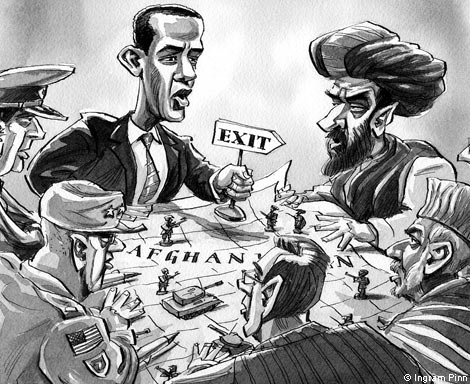
Pakistan’s Hypocrisy Has Run Its Course; It Needs A New Relationship With U.S.

By Ahmed Humayun
Best Defense department of frenemy relations
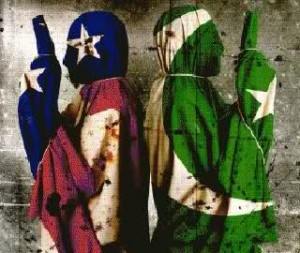
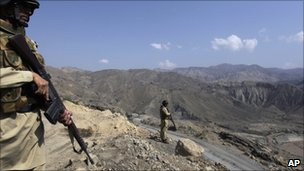
The U.S.-Pakistan relationship has long been volatile, but recent weeks have witnessed an unprecedented level of open discord between the two countries. On April 11, Lt. Gen. Ahmad Pasha, the head of Pakistan’s ISI, met with American officials and demanded that the United States sharply limit its counterterrorism efforts inside Pakistan. Just two days later the CIA launched drone strikes in Pakistan’s tribal areas, provoking angry protests from Pakistani officials. And in a sign that Washington is determined not to back down, last week Admiral Mullen, chairman of the Joint Chiefs, publicly chastised the ISI for its “longstanding relationship” with the Haqqani network, one of the prime targets of the drone campaign.

Pakistan’s recent criticisms are partially a response to the rising public backlash against America’s counterterrorism operations. Till now, Pakistan has tacitly cooperated with the drone campaign while reluctantly permitting a few CIA agents and special operations forces to enter the country. At the same time, Islamabad has publicly denied cooperating with Washington due to domestic political sensitivities. In the aftermath of the Raymond Davis incident, however, this always-fragile pretence has become untenable. (Raymond Davis, a CIA contractor, killed two Pakistanis with possible links to the ISI in broad daylight in January. Three months later, the subsequent media frenzy has not diminished. )

No state wants its territory to be a hunting ground for covert foreign operatives. Still, the fulminations of some in Pakistan omit critical context. The Pakistani state’s ambivalent attitude towards extremist groups — acting against some while tolerating or supporting others — has forced the United States to take proactive action. The rights of sovereignty also come with duties: if Pakistan is indulgent of or incapable of acting against anti-American terrorist groups, then foreign preventive counterterrorism should be assessed more soberly by Pakistanis.

To complicate matters further, elements in Pakistan’s security establishment have deliberately stoked public sentiment. Extensive leaks to the Pakistani press about the government’s demands to the United States hint at a desire to exert pressure on Washington through exploiting populist anger. For the ISI, this diplomatic crisis is a unique opportunity to obtain long desired strategic concessions from the United States. Among other things, the ISI does not want militant groups favored by Islamabad under America’s microscope — especially those perceived to defend Pakistani interests in Afghanistan.

This is a dangerous strategy. It is premised on the mistaken assumption that the United States is unwilling to increase pressure on Pakistan. If the Pakistani government faces domestic political constraints, this is no less true of the United States. Sentiment in the U.S. Congress is already heavily tilted against Pakistan. If reports about Pakistan’s entanglement with extremist groups persist, or in the worst case scenario, an attack on the United States by a Pakistan-based terror group succeeds, Washington will find it difficult to avoid taking harsh actions. Loose talk by some Pakistani politicians about cutting off supply routes to U.S. forces in Afghanistan is similarly self-defeating. It is in Pakistan’s long-term interests to prevent an irrevocable rupture with the United States.

At the same time, Washington should appraise the scope of its direct counterterrorism drive within the broader effort to stabilize Pakistan. According to U.S. officials, the drone campaign has been remarkably successful in weakening militant networks; in private, some Pakistani military and political leaders also acknowledge the program’s efficacy. That may be the case, but displays of U.S. coercive force on Pakistani soil — especially those involving U.S. personnel on the ground — have also accentuated the most extreme tendencies in that country’s public discourse. They have empowered those in Pakistan who maintain that the war on terror is America’s war, not Pakistan’s struggle, and that the United States has fundamentally hostile aims towards Pakistan.

Policymakers might shrug their shoulders at conspiracy theories. That would be short-sighted. The fact is that the United States cannot directly extinguish the threat posed by Pakistan-based terrorism. U.S. forces can certainly kill a few extremists through drone strikes or ground operations. But the militant threat is geographically dispersed: not only do insurgent sanctuaries infest the isolated border regions, terrorist networks are also embedded in the heavily populated areas of the Punjabi heartland. Some of these groups have deep roots stretching back decades and enjoy local political cover. Kinetic action by a deeply unpopular foreign power will not uproot them.

The single most decisive factor in disrupting Pakistani militancy will be the willingness of the state and society to commit to a long-term struggle. Only Pakistan can overcome the jihadi Frankenstein it has spawned through a combination of stepped up military force, political dialogue, and local governance. The impact of U.S. policies on the internal Pakistani debate about militancy should therefore be factored heavily into Washington’s policymaking calculus.

Pakistan is making progress — however halting or incomplete — in adopting a more robust anti-militant posture. Since 2009, its military offensives in the tribal areas have degraded insurgent sanctuaries at a heavy price in blood and treasure. Pakistani intelligence has also helped the United States capture numerous high-level al Qaeda operatives. The Obama administration’s economic assistance to Pakistan and its diplomatic efforts to stabilize the country’s fractious politics have contributed to these advances. Going forward, the core policy challenge is to generate the political will inside Pakistan that will expand these activities. Right now, Washington’s ability to do so is vitiated by Pakistani paranoia.

In the short term, Islamabad and Washington need to negotiate a new counterterrorism relationship. The old strategy of ambiguous private compromise veiled by public dissembling has run its course. Pakistan’s legitimate concerns should be weighed against the immediate threat to the American homeland and to U.S. forces in Afghanistan. This is a herculean task given the underlying strategic differences, but the alternative is likely to be much starker.

Ahmed Humayun is a fellow at the Institute for Social Policy and Understanding (ISPU) and senior analyst at Georgetown University’s Emerging Threats Project. He can be reached at ahmed.a.humayun@gmail.com .
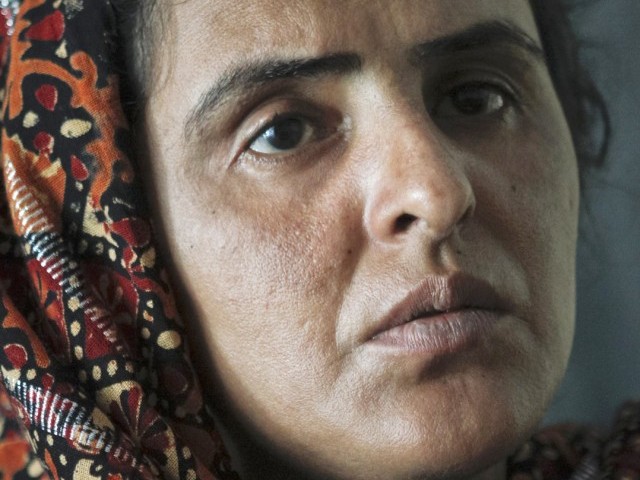
Low-key Easter Preparations for Pakistan’s Christians

By Kamran Haider for Reuters

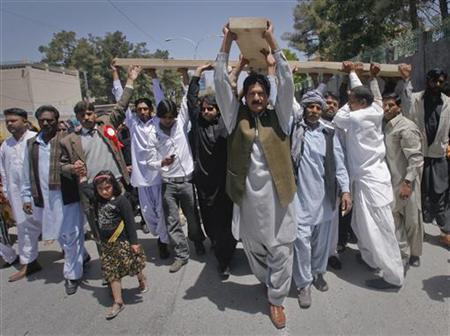
Christians in the small Pakistani town of Gojra are making low-key preparations for Easter this year.

Residents of the neighbourhood, known as Christian Colony, in the town in Punjab province, are haunted by memories of a 2009 attack by a Muslim mob in which seven members of a family were killed and dozens of houses torched.

A few days before Easter, which Christians believe marks the resurrection of Jesus Christ three days after his crucifixion, bare-foot children played cricket in the town’s dusty alleys while some men chatted on a bench under a tree.

“If we celebrate it with a fanfare, we fear somebody might get annoyed and attack us,” said Khalid Anjum, 45, the owner of a small snooker hall. The only sign of the approach of Easter was a few young men rehearsing hymns in St. Mary’s Catholic Church.

“Fear is there but we cannot give up our religion,” said Wilson Rafiq, the leader of the group of singers, who plays a traditional drum set known as a tabla.

Pakistan was founded in 1947 as a home for the Muslims of South Asia at the end of British colonial rule, with the country’s founding father, Mohammad Ali Jinnah, promising that all communities would be able to worship freely.

But today, Jinnah’s pledge of religious tolerance often seems hollow as religious violence increases. Religious minorities account for about 4 percent of Pakistan’s 170 million people, with about three quarters of members of religious minorities Christian.

The independent Human Rights Commission said at least 100 people from minority communities were killed in 2010. The bloodiest attack was on Ahmadis, a sect that mainstream Muslims consider heretical, when 86 people were killed.

This year, the liberal Muslim governor of Punjab province, Salman Taseer, and Christian Minorities Minister Shahbaz Bhatti, were killed in separate shootings for speaking out against a blasphemy law aimed at defending Islam.

Under the law, anyone who speaks ill of Islam and the Prophet Mohammad commits a crime and faces the death penalty but human rights activists say the law’s vague wording has led to its misuse, often against members of minority religions.

Compounding a climate of fear, Islamist militants, angered by Pakistan’s alliance with the United States since 2001, have carried periodic attacks on minorities as part of a campaign to destabilise the state.

“FEAR IN THEIR HEARTS”

In Gojra’s Christian Colony, the level of fear has increased since the sentencing Monday of a Muslim to death for shooting dead two Christians who had been accused of blasphemy.

Rather then welcoming what some people might see as justice, Christians fear that if the sentence is carried out, it will only mean more trouble for them. “Things will only get worse. If one is punished, someone else will stand up to take revenge for him,” said housewife Shahida Kashif.

“My kids still get scared whenever there’s a small disturbance. They says ‘mother, they’ve come. They’ll set fire to our houses again’. They still have fear in their hearts,” she said, referring to memories of the 2009 riot.

A mob of about 1,000 Muslims, incensed by rumours that a Christian had desecrated the Koran, rampaged through the neighborhood, firing guns and throwing petrol bombs.

Hameed Pannum Khan was shot dead and six members of his family, including two women and two children, were burnt to death when their hut was torched.

Authorities blamed militants linked to al Qaeda and the Taliban for the violence. Abdul Khaliq Kashmiri, a Muslim prayer leader, was locked up for 15 months on charges of inciting the attack.

He was recently released after Christians, fearing his continued detention would only make things worse for them, told authorities they had no proof of his involvement. Kashmiri denied any part in it and appealed for tolerance.

“Everybody should follow their own religion and should stop slinging mud at others,” he said. Christian Allah Rakha, a relative of the family killed in 2009 said the hatred had to stop for the sake of future generations.

“We all should get rid of this evil,” said Rakha, 70, sitting on a threadbare sofa in the drawing room of his single story home. “If we talk of revenge we’ll never have peace.”

The Tragic Case of Mukhtaran Mai

As Reported by The Express Tribune

The decision by the deputy speaker of the National Assembly on April 22 to disallow any discussion on the Supreme Court’s verdict on Mukhtaran Mai is most unfortunate, especially given that it was PPP MNA Sherry Rehman who wanted to speak on the matter.
The Supreme Court decided earlier this week to uphold a Lahore High Court verdict that had acquitted all the accused in Mukhataran Mai’s gang rape in 2002, except one.

The gang rape was ordered by an illegal panchayat of Meerwala in Muzaffargarh, Punjab, after which an anti-terrorism court in Dera Ghazi Khan sentenced five of the six accused to death. The fact is that a powerful local tribe has been able to prevent its men from being punished by the justice system. The powerful in our society can first cause a delay in justice — nine years in this case — and then cause a miscarriage of justice through manipulation of the lower ranks of the police.
Mukhtaran Mai is one of many women who have to put up with violence at the hands of men and are forced to keep quiet because the investigative-judicial system is biased against them. Because of ‘anticipated injustice’ in Pakistan’s judicial system, Mukhtaran Mai was made into a global symbol of an abused woman, a challenge which she accepted. Unfortunately, the state became defensive about the publicity and support she got from all over the world; it also manifested a clear conservative bias against the women’s rights movement in Pakistan, which is demonised by powerful religious lobbies.

There was more than ‘anticipated injustice’ in the Mukhtaran Mai case. This was the impunity of the powerful, seen in relation to the terrorist elements in Pakistan which are supported by sections of the state. According to official statements, no terrorist caught after horrendous acts of killing has been punished. Those who view our judiciary politically say that the kind of out-of-the-box jurisprudence applied by the courts to matters such as the NRO will never be applied to Lal Masjid and Mukhtaran Mai. This view holds that the judiciary has always been drawn from a largely conservative legal community and it tends to agree with religious constraints to justice when it comes to women, while tacitly accepting the reign of the powerful in society.

The Supreme Court had intervened after the Federal Shariat Court in 2005 contested the jurisdiction of the Multan Bench. It heard the case and, agreeing with the Multan Bench verdict, ordered the release of the accused. Mukhtaran Mai went in appeal and the latest decision has come after over five years of hearings. Now, in 2011, two of the three judges on the bench have decided to go along with the earlier findings while one judge thought the Court could have taken a more pro-reform view and focused more closely on the notorious methodology of registering an FIR in areas where feudal power trumps justice all the time. The Musharraf government — illegal in the eyes of the Court — pitted itself against this wronged woman and put a ban on her travel abroad. If the liberal elements in Pakistan had stood behind the so-called ‘liberal reforms’ of Musharraf, this was one case that they did not support his government on. Alas, the Supreme Court’s latest decision will be seen as being supportive of Musharraf’s policy of hiding the truth of women’s disabilities in Pakistan from the world.

The judiciary takes the position that its power is not only derived from the Constitution but also from civil society, which stood up for the judges dismissed by Musharraf and finally got rid of the military ruler through street agitation. But civil society also includes women and their rights must equally be defended; more so because Pakistani society needs reform before it learns to treat women as desired by the Constitution. And the Court remains the guardian of the Constitution. If the Honourable Court is today dubbed as being ‘activist’ in favour of the people, let it be clear that it is not the Court of the conservative elements simply because they are powerful.

Ahmed Rashid on Negotiating With the Taliban

By Amar C Bakshi for CNN Global Public Square

Intrepid Pakistani author and journalist Ahmed Rashid wrote an op-ed in the Financial Times describing the Obama administration’s secret decision to ramp up talks with the Afghan Taliban, trying to find a negotiated solution to a decade-long conflict. In a follow-up phone call, Rashid said that the Obama administration ought to announce these talks publicly and pressure Afghanistan’s neighbors to get behind them.

Amar C. Bakshi: What is the shift in U.S. policy toward Afghanistan?
Ahmed Rashid: For a very long time there was a lot of division about whether the U.S.would talk to the Taliban or not. Those divisions have now more or less ended. There is much greater determination to set in motion not just secret talks but everything around it that has to happen.

For example, the Taliban are very keen to open an office somewhere in one of the Gulf countries or maybe Turkey. There is nowU.S.support for that. There would presumably be international support for that also. These are the kinds of steps that are needed to get a political process going.

There is the acknowledgement that an over-dependence on a military strategy is not going to work in the long-term. Secondly, the economic and international situation is really not in favor of a long-term military strategy. What is needed now very much is a political strategy. Secretary of State Hillary Clinton herself has said this several times in the past few weeks.

What would a deal with the Taliban look like?
We are a very, very long way away from that. Many questions are being raised. For example, would there be a power-sharing with the present government? How would it take place? How would the constitution accommodate something like that? There are all sorts of social and legal issues about the constitution and Islamic law.

One of the key steps that the Americans have taken is that for the last two years or so, the Obama administration has been talking about preconditions – that the Taliban has to renounce Al Qaeda, accept the constitution and President Karzai. Now what we’re seeing is that talks are going on without any preconditions. These preconditions, or red lines, are something that everyone assumes will be accepted by the Taliban at the end of the talks rather than at the beginning. That is a very positive thing because I don’t think either side could go into their talks with their preconditions.

There are Taliban preconditions that seem to be watered down too because the Taliban were insisting that they wouldn’t talk until the American forces started to leave. But they seem to be willing to put that aside for the time being.

Why is this shift happening now?
The overall international and economic situation is very, very dire. First of all, the majority of European countries want to pull their troops out of Afghanistan as quickly as possible and that includes some of the leading nations like Britain, Germany and Canada.

Economically they can’t do it. They’re cutting their defense budgets. They are in recession.

And secondly the huge expenditure by the Americans themselves: Something like $108 billion is going to be spent on Afghanistan this year on the war effort. This is clearly not sustainable with all the economic crises that President Obama is facing right now.

What can the U.S. do to help make India and Pakistan see eye-to-eye on Afghanistan?
That is obviously a very crucial part of it. The big tussles going on over Afghanistan right now is between India and Pakistan in a battle for influence there. I think the U.S. needs to play a more upfront role – privately at least – to bring the two countries together if not on the other issues that divide them like Kashmir and larger issues, then certainly on Afghanistan. I think that’s very doable.

The more we get into this endgame and negotiations – the more the world realizes that the Americans are talking to the Taliban – I think it becomes very imperative for both the governments in India and Pakistan to accept the fact that they will have to work with each other if they want to be part of the ultimate equation.

Does Pakistan want to see stability in Afghanistan?
Pakistanis very keen to see stability in Afghanistan. An end to the war in Afghanistan could have a very dramatic effect on containing terrorism inside Pakistan too and containing the Pakistani Taliban. So I think Pakistanis very keen to see stability.

The question at the moment is: If the U.S. is going to take the lead – or the United Nations or whoever we are going to see in the months ahead take the lead on this – they have to bring together all the neighboring countries, of which Pakistan is probably by far the most important, but all of the neighboring countries have to agree to some king of on non-interference in Afghanistan.

Tensions between Iran and Saudi Arabia are being exacerbated by upheavals throughout the Middle East. How might Saudi Arabia and Iran see eye-to-eye in Afghanistan?
For the last 30 years, Saudi Arabia and Iran have been rivals in Afghanistan. For example, the Saudis backed the Taliban regime in the 90s. The Iranians very strongly opposed it.

The point right now is that with the tensions in the Gulf – the Saudis accusing the Iranians of destabilizing Bahrain and Saudi Arabia– they are both searching for allies.

The Saudis have recently been approaching the Afghans and the Pakistanis to ally with them against Iran. That is something that neither country can afford to do – neitherAfghanistannorPakistan. Secondly, you need the compliance of both Saudi Arabia and Iran for any eventual Afghan peace settlement.

So taking sides on this Iran-Saudi dispute in the region is not a good idea. It is not very helpful, especially if you want to bring the two countries into the peace agreement.

So a major diplomatic lift is needed?
Yes, absolutely. We’re talking about a huge diplomatic effort, which the former U.S. Af-Pak Special Envoy, Richard Holbrooke, had started. It needs a very big push by the United States, NATO and the European countries.

It needs some public diplomacy. Things need to be done and said in public so that people around the world can see that there is movement on this. As well, of course, a great deal of private diplomacy is needed such as dealing with this Iran-Saudi Arabia issue, bringing India and Pakistan together. A mixture of private and public diplomacy is needed.

We might see some of that public diplomacy in July when President Obama marks the withdrawal of some U.S. troops from Afghanistan.
The quicker the United States gets on with this, the better it is going to be. One of the big steps it should take in the public realm is admitting that the U.S. is having talks with the Taliban and set out a roadmap as to what the President would like to see. The quicker we see the administration doing this, the faster this process will move.

Fight Against Extremists Stretches Pakistan’s Military

By Jim Garamone for The American Forces Press Service

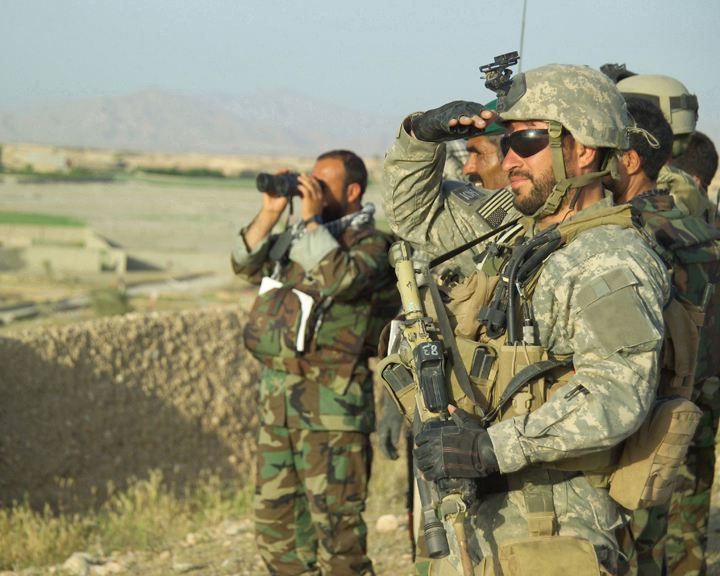
Just as two wars over the last decade have stretch the U.S. Army thin, the Pakistani military is stretched by its fight against extremist groups along the country’s western border, senior defense officials said here today.

At any given time, roughly one-third of the Pakistani army is deployed along the border region. Another third is along Pakistan’s border with India, and the rest is in garrison training and re-equipping.

“There are units along the border that have been in the fight for two years,” said a senior defense official, speaking on background. “That’s a long time. They are stretched.”

While many in the United States want the Pakistani military to do more against terrorist groups in North Waziristan, the truth is it may not be able to do much more, the official said. Pakistani troops – including members of the Frontier Corps – are in Khyber province, South Waziristan and other areas of Pakistan’s federally administered tribal areas. North Waziristan, specifically, is a safe haven for many senior Taliban leaders launching attacks in Afghanistan.

The military has launched a campaign against terrorists in Mohmond province – an area they cleared once, but where extremists have re-emerged. And that’s the problem, the official said: once the army clears an area – “and they do that quite well,” he said – the soldiers don’t have a force to turn it over to, and they’re forced to police the region. “The civil capacity does not exist in the region to hold the area,” the official said.

The civil capacity also does not exist to rebuild areas, and the army is stepping into the breach. “They are building schools and roads and water projects,” the official said. “This should be the job of civilian agencies, but they are not available.”

If Pakistan’s army could turn over the policing and development duties, troops would be available for further operations against the extremists, the official said, but they cannot.

The Pakistani military could deploy troops from the border with India to step up the fight against extremists, but Pakistan sees India – a nation with which it has fought four wars– as the foe. India and Pakistan have troops facing each other in Kashmir province. A solution to the dispute over Kashmir, which goes back to the founding of the two nations in 1947, could “unlock solutions” for Pakistan, Navy Adm. Mike Mullen, chairman of the Joint Chiefs of Staff, said in an interview with Pakistani reporters.

It was a major move to deploy the Pakistani forces from the Indian border in 2008, and U.S. officials do not expect that to happen again.

Meanwhile, Pakistani officials are worried about the spread of radicalism in the nation. While most incidents still are centered on the western border, many incidents have occurred in Balochistan, Sindh and even the Pakistani heartland of Punjab. “They even use the term Punjabi Taliban,” the official said. “And it concerns them.”

The United States is set to provide roughly $3 billion in aid to the Pakistani military in fiscal 2012, the defense official noted.

Pakos- Pakistan Zindabad

US Envoy Upbeat Over Relations With Pakistan

By Phil Ittner for The Voice of America

Relations between the United States and Pakistan in the last few months have been severely strained by a series of events and ongoing disagreements. The U.S. ambassador to Pakistan spoke to Voice of America about how he feels things are improving.

U.S. Ambassador to Pakistan Cameron Munter said ties between Pakistan and the United States have been far from the best recently, and while there are still differences, there also is room for improvement.

“The issues are still on the plate. We still have to have discussions, but there was a period in February and some parts of March where we just didn’t have good ties. We’ve established a process,” said Munter.

Pakistan is seen by Washington and London as a vital ally in the “war on terror,” and the Pakistani government and army say they remain committed partners 10 years after the Afghan conflict began.

But, relations have been increasingly strained between the two countries.

Bitter disputes over covert CIA activities and drone attacks inside Pakistan, the security situation in neighboring Afghanistan and rising Islamist-led opposition to the presence of foreign forces in the region are fueling the discourse.

Relations also have been frayed since a CIA contractor fatally shot two Pakistani men in the city of Lahore earlier this year. The U.S. said Raymond Davis had diplomatic immunity and acted in self-defense. He was released after victims’ families accepted compensation.

Furthermore, a recent White House report criticized Pakistan’s counterterrorism campaign, accusing Islamabad of not doing enough to counter militants in North Waziristan. Pakistan rejected that report.

Munter said that while America may have some advice for their ally, at the end of the day, it is up to the Pakistanis to decide how to proceed.

“Ultimately the decision to bring peace, to bring the authority of the Pakistani leadership to bear in North Waziristan, that’s a decision for Pakistan. We’ve given our advice. Sometimes we may not have been diplomatic about it, but the fact is that’s going to be their decision and we do accept that.”

This diplomatic approach means having confidence that Pakistan will step up its efforts to rout out insurgents in safe havens in the tribal regions. Ultimately the U.S. hopes this will put pressure on certain groups there who plan their attacks on international forces in neighboring Afghanistan.

The “Indo-Pak Express” Overthrows No. 2 Seeds to Reach Semis in Monte Carlo

By Erin Frauenhofer for 10SBalls.com

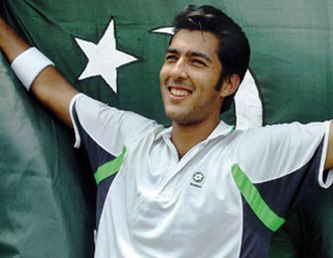
The India/Pakistan pairing of Rohan Bopanna and Aisam-ul-Haq Qureshi made waves at the Monte Carlo Masters with a quarterfinal upset over No. 2 seeds Daniel Nestor of Canada and Max Mirnyi of Belarus. With a 6-1, 7-5 victory on Friday, the sixth-seeded duo advanced to Saturday’s semifinals, where the pair will play Argentina’s Juan Ignacio Chela and Brazil’s Bruno Soares.

Bopanna and Qureshi took command in the first set, breaking Nestor’s serve and holding steady on their own serve to take a 4-1 lead. The “Indo-Pak Express,” as the pair has been dubbed, remained in control for the rest of the set, breaking Mirnyi to give Qureshi the opportunity to serve for the set. Bopanna and Qureshi won the game to wrap up the first set handily, in only 21 minutes.

Nestor and Mirnyi displayed a stronger performance in the second set, after suffering an early break to fall behind 1-2. They rallied back to break Bopanna and Qureshi in the next game, and both pairs held serve for the next four games, until Nestor and Mirnyi were broken once again.

At 5-4, Bopanna and Qureshi had their first chance to serve for the match, but Nestor and Mirnyi battled back to even the score with a break. Bopanna and Qureshi retaliated in the next game with another break to take a 6-5 lead.

Serving for the match for the second time, with victory nearly in sight, Bopanna and Qureshi dropped the first two points of the game but recovered to close out the match. Bopanna and Qureshi broke their opponents a total of five times during the match and lost their serve twice.

Friday’s win was the second victory of the tournament for Bopanna and Qureshi. After receiving a bye in the first round, Bopanna and Qureshi notched a 7-6 (4), 6-3 win over the American/Netherlands Antilles duo of Eric Butorac and Jean-Julien Rojer to reach the quarterfinals.

Chela and Soares have recorded three wins in the tournament thus far. The duo took a straight-set win in the quarterfinals, defeating Ukranian Sergiy Stakhovsky and Russian Mikhail Youzhny, 6-4, 6-3. In the previous round, the pair upset No. 8 seeds Robert Lindstedt of Sweden and Horia Tecau of Russia by a score of 6-2, 6-4. Earlier, Chela and Soares had prevailed in a three-set first-round match, outlasting Michal Mertinak of Slovakia and Dick Norman of Belgium, 6-2, 3-6, 10-7.

Monte Carlo is the first clay-court Masters tournament for the Indo-Pak Express, and the duo has high hopes for the French Open. Bopanna and Qureshi’s strong showings this year and efforts toward peace between their countries have earned them an enthusiastic and steadily growing following.

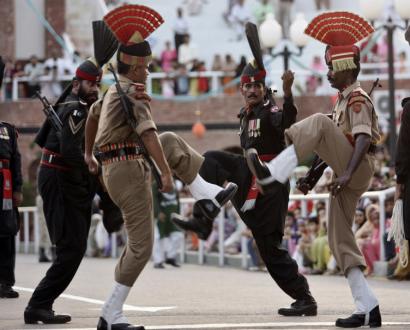
Bopanna and Qureshi have made recent headlines for their request to play an exhibition match on the India-Pakistan border in an attempt to foster reconciliation efforts between the two nations. As part of a “Stop War, Start Tennis” campaign, the duo plans to string a net across the Wagah border crossing and switch sides during the match.

War in Afghanistan is Destabilising Pakistan, Says President

By Simon Tisdall for The Guardian

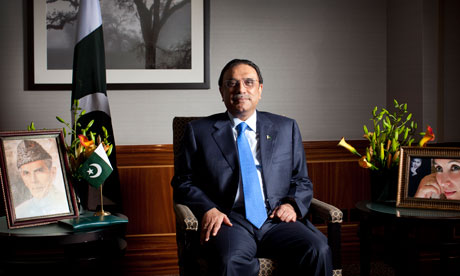
The war in Afghanistan is destabilising Pakistan and seriously undermining efforts to restore its democratic institutions and economic prosperity after a decade of military dictatorship, Pakistan’s president, Asif Ali Zardari, has told the Guardian.

Speaking during an exclusive interview in the imposing presidential residence in Islamabad, Zardari also pointed to widespread concern in Pakistan at the slow pace of efforts to end the Afghan conflict, and said some US politicians showed limited understanding of the impact of American policies.

“Just as the Mexican drug war on US borders makes a difference to Texas and American society, we are talking about a war on our border which is obviously having a huge effect. Only today a suicide bomber has attacked a police compound in Baluchistan. I think it [the Afghan war] has an effect on the entire region, and specially our country,” Zardari said.

Asked about harsh criticism of Pakistan’s co-operation in the “war on terror” published in a White House report last week, Zardari said Pakistan always listened to Washington’s views. But he suggested some members of Congress and the US media did not know what they were talking about when it came to Pakistan.

“The United States has been an ally of Pakistan for the last 60 years. We respect and appreciate their political system. So every time a new parliament comes in, new boys come in, new representatives come in, it takes them time to understand the international situation. Not Obama, but the Congress, interest groups and the media get affected by ‘deadline-itis’ [over ending the Afghan war],” Zardari said.

“I think it is maybe 12 years since America has become engaged in Afghanistan and obviously everybody’s patience is on edge, especially the American public, which is looking for answers. There are no short-term answers and it is very difficult to make the American taxpayer understand.”

With less than three months left before Barack Obama has promised to begin withdrawing US troops from Afghanistan, the White House recriminations reflected the growing pressures on all three governments to agree a workable, long-term strategy. The report complained bitterly that after years of US funding of the Pakistani military, “there remains no clear path towards defeating the insurgency” inside Pakistan.

It criticised as ineffectual Pakistani army operations in some areas of the western tribal belt bordering Afghanistan, which are believed to be used as safe havens by Afghan Taliban and al-Qaida elements.

A congressional panel also weighed in this week, urging the Obama administration to abandon Pakistan in favour of India. “Pakistan is about to go broke or collapse,” said Gary Ackerman, a New York Democrat.

Zardari suggested that if that assertion were true, the interventionist policies of the US and other foreign governments in south Asia would be a significant contributory factor. Pakistan had been in a state of “security alert” for several decades, he said.

“Our emphasis has been on security rather than our commerce and we need commerce for our survival.

“We have all the gas in the world waiting to go through to markets in India and the Red Sea but it cannot be brought in until Afghanistan is settled. So Afghanistan is a growth issue for us. I think most of the time, the quantification of the effect of the war is not calculated [by the US].

“Prices are going up, obviously we are a high fuel-importing country, and fuel prices are going up. Because of the war situation, the industry in one of our provinces has practically closed down … When one whole sector is not working, there is an effect on the other sectors.”

According to senior intelligence officials, the “war on terror” has cost the Pakistani economy approximately $68bn (£42bn) since 2001.

More than 33,300 Pakistani civilians and military personnel have been killed or seriously injured. Last year’s record-breaking floods added to the strain on the economy.

Zardari said the security situation was also undercutting efforts to strengthen democratic institutions bypassed or overturned during the military rule of his predecessor, General Pervez Musharraf. “Democracy is evolving. It’s a new democracy. It takes time to bring institutions back. Destroying institutions during a decade of dictatorial regime is easy … So there is a political impact as well as an economic impact.”

Pakistani officials say relations with the US reached a “low ebb” following the recent row over Raymond Davis, a CIA contractor who shot dead two Pakistanis; a CIA drone attack in Pakistan’s tribal areas last month that accidentally killed dozens of civilian elders meeting in a jirga (council), and Pakistan’s suspicions that it is being excluded from discussions about an Afghan peace deal.

Zardari, who is expected to visit Washington next month, said he would ask Obama to share drone technology with Pakistan so future attacks could be planned and directed under a “Pakistani flag”. Although this request had been turned down in the past, he said he was hopeful the Americans would be more receptive this time, given the huge anger and rising anti-American feeling that the drone attacks were causing.

Zardari and other senior government officials said all parties felt a sense of growing urgency about forging an inclusive peace settlement in Afghanistan, but the process must be “Afghan-led”. Pakistan was ready to play its part, consistent with its national interest, they said.

Salman Bashir, Pakistan’s foreign secretary, said: “Everybody is gradually coming round to our point of view that this requires greater diplomatic pressure. There is no military solution in Afghanistan.”

Afghan Midwives Deliver Life-Saving Birth Education

By Nadene Ghouri for the BBC

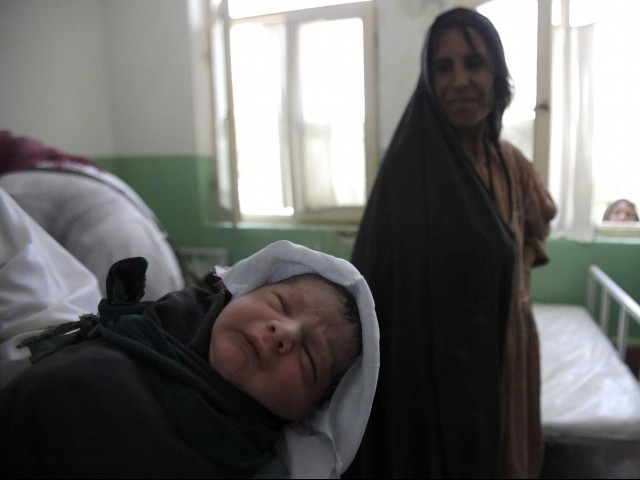
Afghanistan is one of the most dangerous places in the world to have a child. Women face a one-in-11 risk of dying during pregnancy and childbirth, while one in five children dies during or after birth or before the age of five. One initiative is under way to try to make giving birth safer.

Training and education is helping Rogul to save babies’ lives
Rogul wraps a grimy blue scarf around her face and uses the cleanest corner of it to wipe her tears.

She has just told me how nine of her babies died after she gave birth to them at home. Her firstborn, a little boy, was premature. Her mother asked a village mullah for advice. He suggested prayer and a type of holy water. The baby died.

Her second child died from an infection a few hours after birth. And so it went on – nine dead babies in total. I am sitting in an Afghan neonatal clinic in Guldara district, just 20 minutes drive from the capital city Kabul.

Women, some in traditional blue burka, others wearing the brightly coloured scarves and loose pantaloons more typical of the nomadic Kuchi tribe, are here.

Some are clutching roundly pregnant bellies, others are here to have their babies vaccinated. Few would be here at all, if they had not been persuaded to come by a local midwife.

A young girl called Pashtu, with a dirty face and scared eyes, agrees to talk. She does not know how old she is but looks no more than 15. She is eight months pregnant with her second child.

Next month she will give birth in the safety of the clinic. She gave birth to her first child in a filthy hole-in-the-ground toilet at home with only her elderly mother-in-law for help. Her son was born blue and barely breathing. He survived for just under an hour.

I ask her why the baby died? She gives me a nonchalant shrug. Her aunt, a large woman with long braided dark hair is sitting next to her. “Pashtu is too skinny and doesn’t eat enough,” she asserts loudly. “This is why her child died.”

Another woman tells me it is because Pashtu’s husband is an opium addict. Many babies in Afghanistan also die because of traditional cultural practices.

It is common for babies to be washed in freezing cold water immediately after birth – which can cause pneumonia – umbilical cords are cut with unsterile knives, or babies are placed on a dirty floor to ward off evil spirits, which can cause infection.

Few women breastfeed for the first few days because colostrum, the nutritious fluid in early breast milk – something which is vital for a baby’s immune system – is seen here as “dirty”. Instead newborns are often fed melted butter.

Istiqlal Hospital in central Kabul houses the city’s largest maternity ward. Here stories of ignorance prevail. Two teenage girls giggle as they tell me they had no idea how pregnancies happened, even after they were married.

One of them is here because she miscarried at five months. She had not known she was pregnant, because she was not aware of any of the symptoms of pregnancy.

“If we ask any questions about these things, we will be called bad girls,” they explain as their faces flush red with embarrassment. The doctor tells me that their mothers often assume they will work it out for themselves after they marry. But they often do not.

“I see many young girls who have married and still don’t realise sex with their husband equals babies,” he tells me. But change is beginning to happen. The ministry of public health has launched a programme to train and deploy 400 new midwives a year.

What is key is that the women are not outsiders forced on a mistrustful local population, but are local women from the communities they serve. This means religious leaders and conservative husbands do not prevent them from working.

Largely as a result of this, the number of women giving birth who were helped by a trained midwife has more than tripled since 2003. Rogul, who learned the hard way just what giving birth alone can mean has now been given midwifery training by the British charity Save the Children.

This woman who lost nine of her own babies has now saved lives of many others.

She tells me how, the week before, she had locked an angry mother-in-law out of a room where a young woman gave birth, because the mother-in-law had tuberculosis and could have passed the infection to the newborn.

She chuckles with glee as she recounts the tale of the mother-in-law banging on the door trying to get in.

It is clear what Rogul, with a combination of personal tragedy and a solid new education, can achieve in her community. But as yet, there are not enough Roguls to go around.

And for her the story has a happy ending. After her training she realised why her first nine babies had died. When she fell pregnant again, she knew what to do and now has a son and two daughters. “They are living proof of my work,” she says with a big smile.

Why Pakistan’s Taliban Target the Muslim Majority

By Omar Waraich for Time

Although Pakistan’s headlines are dominated by the violent excesses of Taliban extremists, the majority of Pakistanis subscribe to the more mystical Sufi tradition of the country’s Barelvi school of Islam. And attacks on their places of worship are becoming depressingly familiar. Last Sunday, two bombers attacked the 13th Century Sakhi Sarwar shrine, near the southern Punjabi town of Dera Ghazi Khan, slaughtering 50 people and injuring twice as many. Mercifully, two other bombers failed to detonate their devices, preventing even higher casualties. Still, it was the deadliest assault yet on a Sufi shrine in Pakistan — and the sixteenth in the last two years.

The Pakistani Taliban swiftly claimed responsibility for the attack, as they have done for each previous one. Pakistan’s Taliban claims the mantle of the hardline Deobandi tradition, with many beliefs in common with the austere Wahabism of Saudi Arabia. They regard the Barelvi, who comprise more than three quarters of Pakistan’s Sunni Muslims, as irredeemable heretics. The Barelvis favor a more tolerant approach to Islam, promoting a cult of the Prophet and incorporate folkloric traditions such as seeking intercession from rural saints. Sakhi Sarwar, a mystic who is also revered by some Hindus and Sikhs, is said to grant women a son — a local legend that rouses anger among Islam’s more literalist adherents, who ascribe such powers only to Allah.

Tensions between Deobandis and Barelvis have punctuated most of Pakistan’s history. But with the arrival of al-Qaeda in the country a decade ago, local militants forged links with the global jihadists, their sectarianism sharpened to accept al-Qaeda’s “takfiri” worldview that deems adherents of other strains of Islam as deviant apostates worthy of death.

One reason for the uptick in sectarian-based terror attacks may be that the militants’ ability to strike the high profile urban targets that once grabbed global headlines has been diminished by Pakistani military offensives in their strongholds over the past two years. “It has become harder for the militants to strike hard targets,” says security analyst Ejaz Haider. “Some lessons have been learned from the previous attacks.”

So, the militants have, over the past two years, more keenly focused on sectarian attacks. Traditional Shi’ite processions are now routinely targeted by suicide bombers. In May 2010, two mosques of the minority Ahmedi sect were targeted in Lahore, killing 93 people. And there’s been an escalation of bombings directed against the majority Barelvis. After attacks on two of their most prominent shrines, Data Darbar in Lahore’s old city and Abdullah Shah Ghazi in Karachi, Barelvis came out on to the streets, wielding weapons and vowing revenge against the Taliban. They did not extend blame to the broader spectrum of Deobandis, perhaps wisely evading the beginnings of a more gruesome sectarian conflict that Pakistan can ill-afford.

Not all Barelvis are the models of peace and tolerance that some have portrayed them to be. It was a Barelvi, Mumtaz Qadri, that assassinated Punjab Governor Salmaan Taseer in January, for his opposition to Pakistan’s prejudicial blasphemy laws. The assassination was applauded by 500 Barelvi scholars in a joint statement. And the Sunni Tehreek, a Barelvi militant outfit, rewarded Qadri’s family and threatened Taseer’s daughter. While they may favor a more permissive vision of Islam, certain Barelvis are quite capable of violence where they feel the Prophet has been dishonored.

The campaign to defend Pakistan’s blasphemy laws from reform has, in fact, united Barelvis and Deobandis since last November. Barelvi anti-Taliban rhetoric was also put on pause. “We had seen the Barelvis getting ready to organize a campaign against the Taliban,” observes analyst Nasim Zehra, “but they got sidetracked by the blasphemy issue and this was forgotten.” Until last month’s assassination of Minorities Minister Shahbaz Bhatti, the religious right was able to frequently draw tens of thousands on to the streets.

Sectarian hatred aside, rural shrines are a far easier terror target than the more heavily guarded state and economic targets in the cities. Suicide bombers, especially the teenage boys favored by militants, can often evade notice before they reach the target. A crowded space helps secure the militants’ aim of causing high casualties. In the case of the Sakhi Sarwar bombers, they only had travel to a relatively short and unimpeded distance from North Waziristan to the edge of Punjab.

The bombings may also be an attempt to relieve pressure from sporadic Army actions against militants in the northern tip of the tribal areas. “Just to remain alive there, the militants have to try and force the government’s hand into diminishing pressure,” says analyst Haider. “To counter that pressure, they mount attacks in the mainland in the hope of securing some deal back in the tribal areas.” By targeting shrines across the country, the militants are able to demonstrate their enduring geographical reach and expose the state’s vulnerabilities.

The bad news is that the state is in a poor position to respond. After the latest bombings, Barelvi leaders denounced the Punjab provincial government for failing to provide security at shrines. The Punjab government dismisses the charge. “It’s happening all over,” says Ahsan Iqbal, a leading politician from the Pakistan Muslim League-N, the ruling party in Punjab. “This is not something that is province-specific.” Iqbal casts blame on the federal government for failing to share intelligence. The federal government reverses the charge, and argues that the law and order is a provincial responsibility. What no one seems to be focusing on is the desperate need to enhance the police’s capacity, with better equipment, counterterrorism training and an intelligence gathering network that reaches deep into Pakistan’s remote areas.

Teen says 400 Pakistan suicide bombers in training

As Reported by The Deccan Chronicle

A teenager arrested as an accomplice to Pakistan’s deadliest suicide bombing of the year has said that up to 400 suicide bombers are being groomed to wage carnage in the nuclear-armed nation.

Umar Fidayee, 14, said the would-be bombers were being trained in North Waziristan, the premier Al-Qaeda and Taliban fortress in Pakistan’s tribal belt where US officials want Pakistan to flush out militant strongholds.

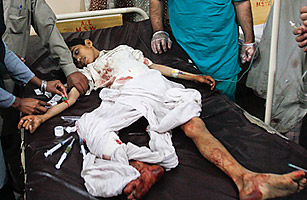
He made the remarks in an interview aired Friday from his hospital bedside, where he is being treated after detonating a hand grenade in the April 4 attack that killed 50 people at a 13th-century Sufi shrine.

It was Pakistan’s deadliest bomb attack since November.

Police arrested Fidayee as an alleged accomplice and said they removed his own suicide vest, which he failed to detonate in a crowd of hundreds in Dera Ghazi Khan just minutes after two other bombers blew themselves up.

Shown covered in tubes and bandages, the teen appeared to express remorse and lifted the lid on harrowing details of his training at the camp in the Mir Ali district of North Waziristan, which lies on the border with Afghanistan.

“Three hundred and fifty to 400 would-be suicide bombers are getting training in Mir Ali in North Waziristan,” he said in the interview broadcast by Pakistani television channels Samaa, Express, ARY and Geo.

“I was trained for two months and saw many boys being trained there,” he said, going on to appeal on Pakistanis to “please forgive me”.

“God has given me a new life but I am sad that we killed innocent people, innocent children,” he said.

Fidayee said he was initially recruited on the understanding that he would be smuggled into Afghanistan to kill non-Muslims.

“But they brought me here to Dera Ghazi Khan. I told them ‘there is no kafir (non-believer) here’,” he said.

“They told me these people are worse than kafirs,” Fidayee said.

Exposing an apparently disturbing recruitment at the gates of an ordinary school in North Waziristan, the teenager claimed a man he identified as Qari Zafar convinced him to begin a life of militancy.

“He told me that all this education is useless and said ‘become a fighter and you will go to heaven’,” Umar told the reporters.

He said he was told to attack the shrine 30 minutes after the other two detonated their bombs, in order to cause maximum carnage among those rushing to aid casualties of the first two blasts.

In a message to other potential suicide bombers he said: “Please refuse to carry suicide attacks. Such attacks are forbidden in Islam.”

Islamist militants have increasingly targeted Sufi worshippers, who follow a mystical strain of Islam, in Muslim-majority Pakistan.

Dera Ghazi Khan is close to Pakistan’s tribal belt which is described by Washington as the most dangerous place on Earth and an Al-Qaeda headquarters.

More than 4,200 people have been killed across Pakistan in attacks blamed on homegrown Taliban and other Islamist extremist networks since government troops stormed a radical mosque in Islamabad in July 2007.

India Continues to Dominate Pakistan’s Strategic Thinking: US

As Reoported By The Times of India

Pakistan’s efforts to launch a comprehensive fight against terrorism are greatly hampered by its perceived threat perception against India, US President Barack Obama has said in a new report to Congress.

“As India continues to dominate their strategic threat perception, large elements of Pakistan’s military remain committed to maintaining a ratio of Pakistani to Indian forces along the eastern border,” Obama said in the third-quarterly report to the Congress on Afghanistan and Pakistan sent yesterday.

“This deprives the Pakistani COIN (counter-insurgency) fight of sufficient forces to achieve its ‘clear’ objectives and support the ‘hold’ efforts and causing available Army forces to be bogged down with ‘hold’ activities because there are insufficient trained civilian law enforcement personnel to assume that responsibility,” Obama said in his 38-page unclassified (rpt) unclassified version of the report.

Due to flood in Pakistan last year the offensive military operations Pakistan had envisioned for KP (Khaibar Pakhtoonwah) and the Federally Administered Tribal Areas (FATA) in the second half of 2010 were overtaken by events, he said.

“Militants were impacted by the floods as well, so we did not observe significant offensive actions on their side, but as Pakistani forces ceased offensive operations, extremists extended their control to areas without sufficient Pakistani central government-provided security and governance,” he wrote.

Between October 1 and December 31, 2010, Obama said Pakistani security forces remained largely static, generally focusing on maintaining the security of previously cleared areas in the FATA and KP and continuing to support flood relief operations.

There were small but notable security operations in November and December in Orakzai Agency and Dir District, but no major operations.

National attention during the reporting period focused on the need for continued flood relief and the start of early recovery efforts, he said.

“The military served as a force of stability during the monsoons, ensuring that Pakistani and international emergency resources were available for rescue and relief operations. The Pakistan Army, Air Force, and Navy committed large numbers of personnel and resources to the flood relief operations throughout October and November,” he said.

The civilian government’s response suffered from a lack of coordination and reflected broader shortcomings in the government’s ability to execute the civilian “hold” and “build” phases of COIN.

The last quarter of 2010 saw no progress on effectively executing the COIN cycle in KP and the FATA.

Pakistan Rejects US Taliban Report

As Reported by The BBC

The Pakistani military has dismissed the findings of a US report that says it has no clear plans to defeat the Taliban insurgency.

The report assessing the war against militants in Pakistan and Afghanistan has been submitted by the Obama administration to the US congress.

But a senior Pakistan security official told the BBC that operations against militants have been a great success.

The official said that Pakistan should be proud of the progress it had made.

The White House report said that Pakistan still has no “clear path” to defeat militants on its soil.

But the senior official – who wished to remain anonymous – said that Pakistan’s plate was full enough already.

“Instead of pushing us to do more, the other side should carry out an introspection of its own operations,” he said.

“We are quite satisfied with our counter-insurgency campaign in the Swat and Malayan regions and parts of the tribal areas. We can safely say this has been a great success story.”

The BBC’s Shoaib Hasan in Pakistan says that the White House report has been released at a time when relations between the security establishments of the two countries have been strained.

Our correspondent says that the report is likely to raise the ire of the Pakistan military – which says it has lost more men than any other country in the fight against militancy in the region.

‘Vexing’

The White House report said that in spite of “tremendous human sacrifices” made by Pakistani security forces and increased military co-operation between Pakistan and US in the last three months, the fight against militancy was making little progress.

Pakistan claims to have lost more men than any other country in the fight against militancy It cited the example of the this January’s third operation in two years to clear insurgents from Mohmand and Bajaur tribal agencies.

The Pakistani military’s efforts have been hobbled by resistance from the militants, bad weather and the need to settle internally displaced people.

“What remains vexing is the lack of any indication of ‘hold’ and ‘build’ planning or staging efforts to complement ongoing clearing operations,” the White House report said.

“As such there remains no clear path to defeating the insurgency in Pakistan, despite the unprecedented and sustained deployment of over 147,000 forces.”

The report said that Pakistan and Afghanistan needed to co-operate more to destroy insurgent havens on both sides of the border.

The US has long expressed frustration about Pakistan’s reluctance to take on militants in the tribal areas.

India, Pakistan back to bickering after Mohali bonhomie

As Reported by IBN Live

India and Pakistan had a brief bout of acrimony with both complaining that a staffer each posted at their diplomatic missions in Islamabad and New Delhi respectively were detained by the host country and later let off.

While Pakistan today claimed that a driver of its mission in New Delhi was “arrested” for unspecified reasons on Wednesday, the Ministry of External Affairs took up the matter of a ‘missing’ Indian High Commission official in Islamabad. “A driver from the High Commission was arrested. (He) has been released. We have protested,” Pakistan Foreign Office spokesperson Tehmina Janjua told PTI in Islamabad, without giving details.

However, sources in New Delhi said that on Wednesday evening a Pakistani High Commission driver was seen near the Chandigarh cantonment area and when confronted, he tried to escape. “In the process, he sustained some bruises/injury on his knee and back. He was questioned and thereafter released.Before being released, a medical check-up was conducted which showed him in good health,” sources told PTI.

Just hours after the incident, an official in Indian High Commission went ‘missing’ in Islamabad, sources said, adding there was no immediate official confirmation on his whereabouts from the Pakistan side. However, the media reported detention of the Indian official, prompting Foreign Secretary Nirupama Rao to take up the matter with her Pakistani counterpart Salman Bashir. “Apart from Indian High Commission raising the issue with Pakistan Foreign Ministry in Islamabad, the Ministry of External Affairs in New Delhi took up the issue with Pakistan High Commission seeking the safety, security and well-being of the Indian official,” sources said.

The official was later handed over to the Indian High Commission in Islamabad, sources said. Though the sources did not divulge the name of the Indian official, some reports identified him as Anand Sharma, working in the consular section of the High Commission.

The incident involving the Pakistani driver occurred at a time when the Prime Ministers of India and Pakistan were in Mohali, holding “extremely positive” conversation on the sidelines of the pulsating cricket World Cup semi-final between the two countries. The incident of the Indian official was being seen as a tit-for-tat to the Chandigarh incident.