Archive for the ‘ Pakistanis ’ Category

Afridi Tells Pakistan to Learn New Zealand Lessons

As Reported by Agence France-Presse

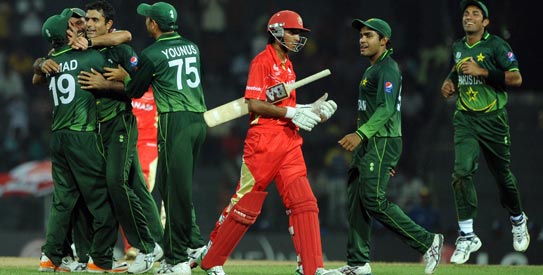
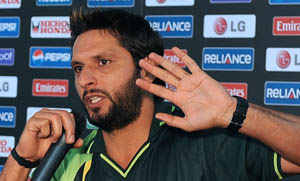
Pakistan captain Shahid Afridi on Wednesday urged his team to learn the lessons of the 110-run defeat against New Zealand.

The Black Caps rode on a brilliant unbeaten 131 by Ross Taylor to post a challenging 302-7 before Tim Southee removed the top order with a burst of three early wickets to bowl Pakistan out for 192.

“There were quite a few lessons to be learned from the defeat, especially those chances we gave to Taylor and when you give such chances to a player like him he makes you pay,” said Afridi.

Wicketkeeper Kamran Akmal let Taylor off twice in the same Shoaib Akhtar over – once when the batsman was on nought and then on eight – allowing two straightforward chances to slip past him.

Afridi said his bowlers were poor in the death overs when New Zealand plundered 139 runs off the last 10 overs.

“I think the way we started with the ball was good, but then the missed chances maybe demoralised the bowlers and they were very poor in the end,” said Afridi.

Afridi hoped his top order batsmen will show improvement in the next game, against Zimbabwe on Monday.

“Our top order did not work well although we have given them the time to settle down and this was the first time we were chasing. We need to learn how to bat while chasing,” said Afridi.

“Taylor took the game away from us although the bowlers had reverse swing. But the way he played was brilliant and he took the game away from us,” said the Pakistan captain.

Pakistan now have six points from four matches, second in Group A behind New Zealand who also have six points but a better net run-rate.

Co-hosts Sri Lanka (five points from four) and Australia (five from three) are third and fourth respectively.

Our Noblest Selves

By Marvi Sirmed for Newsweek Pakistan

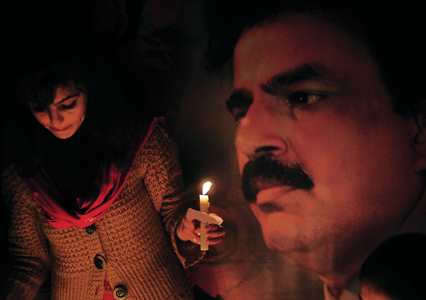
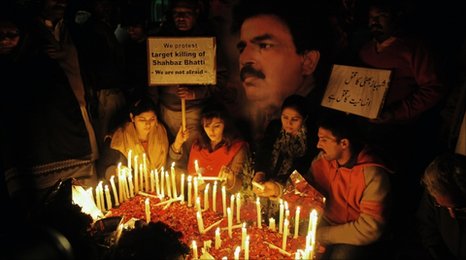
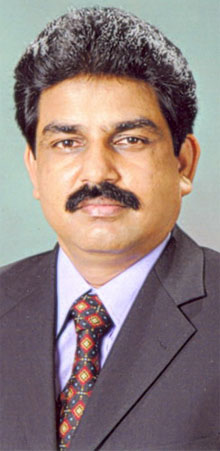
Be careful. After the assassination of Shahbaz Bhatti, federal minister for minorities, on March 2 and of Salmaan Taseer, governor of the Punjab, two months before that, friends and family put out the same, simple message. Be careful. But with two brave men slain so violently and so publicly, can we afford to be careful?

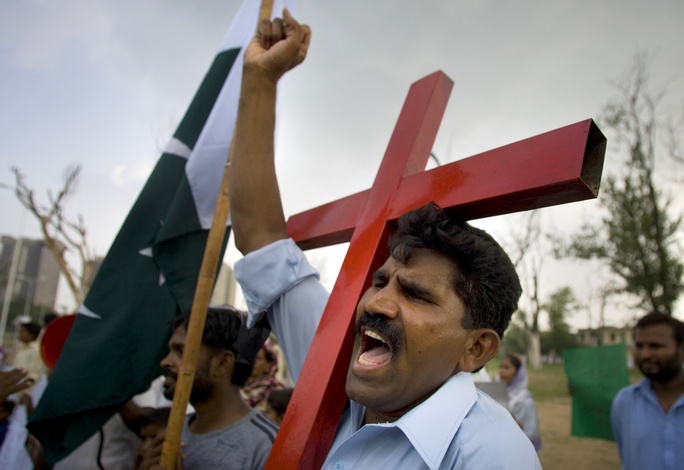
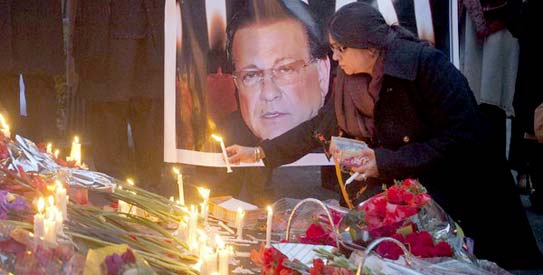
Everything changed after the governor’s assassination. For Taseer’s killer, there are shrines on Facebook and rose petals. For those of us who, accurately, refer to Taseer as a martyr, there is concern from well-wishers—and death threats from others. Lawyers lined up in the hundreds to defend and garland Taseer’s self-confessed killer, while cleric after another refused to lead his funeral services. The right’s pundits called Qadri a ghazi or holy warrior, while state-owned Pakistan Television dropped shaheed or martyr for Taseer within hours of his death. Qadri supporters brandished their bloody hands at rallies that pulled in tens of thousands, while those who mourn Taseer and what he represented struggled to manage mere hundreds at vigils. The polarization and plight of Pakistan have never before been so painfully obvious.

Like Taseer, Bhatti, too, gave his life up for a cause that must be owned by those who run our country. But people everywhere are being careful. And this just won’t do.

Bhatti was one of those rare public figures who never sought the spotlight, who spoke softly, who had no skeletons in his closet. Bhatti could have played it safe. He began receiving death threats after the Gojra massacre. These picked up after he championed the cause of Aasia Noreen, a Christian mother convicted under the blasphemy laws, which the Pakistan Peoples Party had committed to review in order to prevent their misuse. After Taseer’s death, Bhatti could have played it safe and gone quiet. He did not. He was not “careful.” He was laid to rest in Faisalabad on March 4 with thousands turning out to honor him.

What can we do? We need to be honest with ourselves. Bhatti was killed by a group that calls itself the Punjabi Taliban. Punjab Chief Minister Shahbaz Sharif has taken exception to interior minister Rehman Malik highlighting this fact. Terrorists are a national problem, they are not Punjabis or Sindhis, says Sharif, who is also the home minister of his province. What more has to happen before the chief minister, a compassionate man by most accounts, finally acknowledges that we have a problem in the Punjab?

Second, we need to stop passing the buck and offering contrition practiced for television. Prime Minister Yousaf Raza Gilani reportedly offered his resignation to the cabinet the day Bhatti was assassinated. There have been two shocking high-profile murders in Islamabad in as many months and not a single soul has been sacked. There’s no shortage of candidates who deserve the ax. Let’s start with the state-employed clerics who refused to perform Taseer’s last rites.

Third, name and shame the members of Parliament who refused to raise their hands in prayer for Taseer and Bhatti. There was a prayer for Taseer in the National Assembly, but, infamously, not in the Senate. Bhatti got two minutes of silence in the National Assembly on March 3 and a walkout from all parties—including, oddly, the ruling party—against the government’s failure to protect Bhatti, but no prayers. What have we come to when we cannot bring ourselves to pray for the departed and their devastated families? This is not coldhearted or remotely Islamic, but pure evil.

Fourth, we need to enforce a strict ban on hate speech. Incitement to murder, character assassination and hate words cannot be provided mainstream platforms—whether print or electronic—under the pretense of free speech. Some channels promoted the false impression that Taseer had blasphemed, and they publicized fatwas against him. They also hyped up pro-Qadri rallies. It never came to light that these processions, while big, were limited to three cities. Responsibility will not suddenly dawn on our lawless media. To keep television honest and to counter the state’s halfhearted ban on militant groups, corporations need to step up and withhold ad spend from channels providing support to the jihadists. Consumers can then hold these corporations accountable by buying or boycotting their products.

The brave among us refuse to be careful when they see the rapid undoing of their motherland, and whose faith in man’s goodness speaks to our noblest selves. We are not a nation of murderers and monsters, but we sure are close.

Sirmed is a rights activist in Islamabad.

Bombing kills 25 Near Intelligence Office in Eastern Pakistan

By Karen Brulliard for The Washington Post

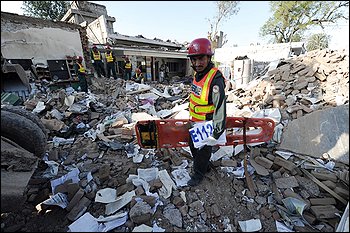
ISLAMABAD, PAKISTAN – A car bomb exploded near an office of Pakistan’s main intelligence agency in the eastern city of Faisalabad on Tuesday, killing 25 people in the type of militant attack that is growing more common in the country’s populous heartland.

A spokesman for the Pakistani Taliban asserted responsibility for the attack and said it was aimed at the intelligence office, the Associated Press reported.

Police said the bomb, which was detonated at a gas station, sparked additional explosions of natural gas cylinders, compounding the damage. The blast destroyed parts of several businesses, including an office of the national airline, and wounded at least 100 people.

Sectarian violence is common in Faisalabad, Pakistan’s third-largest city and a textile-producing hub, but Tuesday’s blast was the first major militant attack there. Militants have often carried out bombings in other large cities, including Lahore, about 80 miles to the east. The attacks regularly target Pakistan’s security forces, who in recent years have mounted counterterrorism offensives against insurgent hideouts in the mountainous northwest.

Now, Pakistani authorities and analysts say, violent extremist organizations are spreading across Punjab province, of which Lahore is the capital.

Southern Punjab is home to militant groups that traditionally focused attacks on Indian targets but are now thought to be deepening ties to Taliban factions in Pakistan and Afghanistan.

The car bombing occurred nearly a week after the assassination of federal cabinet minister Shahbaz Bhatti, which a group calling itself the Punjabi Taliban said it had carried out.

Bhatti, a Christian, had spoken out against Pakistan’s anti-blasphemy laws, which are enforced most stringently in Punjab. The laws are defended by religious groups, which say that violators of the statutes – and supporters of the violators – deserve death.

Not much Islamic about Islamic Pakistan

By Haroon Siddiqui for The Toronto Star

In the failing state of Pakistan, a junior cabinet minister is killed. Shahbaz Bhatti was a member of the Christian minority. He had taken up the cause of a poor Christian woman condemned to death for allegedly defaming Islam. He knew he was a marked man. But on a recent visit to Canada, where his brother lives, he said he was determined to carry on.

Eight weeks ago, a veteran politician was gunned down for the same sin. He, too, had championed the woman’s cause and condemned the blasphemy law that imposes the death penalty for insulting Islam or the Prophet Muhammad. Salman Taseer was the governor of Punjab, the most populous and prosperous province, and an influential billionaire tycoon, a socialite and an unrepentant liberal in a society that’s becoming militantly conservative. He was a Muslim.

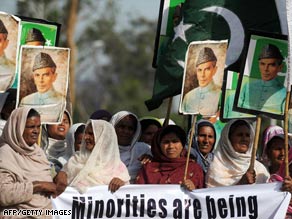
Bhatti was gunned down by unknown assailants. Taseer was assassinated by a member of the elite security unit assigned to guard him. More shockingly, the assassin was hailed a hero. Hundreds turned up at his house, chanting “we salute your bravery.” About 500 clerics signed a statement calling him “a true soldier of Islam.” When he appeared in court, young lawyers showered rose petals and kissed him. At a rally in cosmopolitan Karachi, marchers waved his portrait.

This is a sick society. There’s little Islamic about the Islamic Republic of Pakistan.

The blasphemy law may have been enacted by the British colonials in 1860. But it was toughened by the Muslim rulers of Pakistan in the name of Islam. And both in its wording and implementation, the law violates the most basic principles of Islamic jurisprudence. In allowing hearsay evidence and innuendo, it ignores the necessity of incontrovertible proof for a finding of guilt.

The act is allowed to be abused in personal and property disputes. (A majority of those charged have been Muslims, according to the Human Rights Commission of Pakistan, a voluntary organization). Or it is wielded as a weapon in political and religious vendettas. In one particularly horrific case, two Christian brothers were framed with a handwritten note defaming the Prophet, found in a marketplace with their home address and phone number.

Yet local police and magistrates dare not toss out such trumped-up charges. Cases have to be taken to higher courts to be overturned. Not a single person has been executed under the act. Yet more than 30 people charged or acquitted have been killed.

Under Islamic law, such jungle justice constitutes a greater crime than the alleged original one. It is deemed particularly egregious when the innocents prosecuted are poor and powerless.

The blasphemy law is just one of many flashpoints.

Christian churches have been bombed. So have been mosques belonging to the minority Ahmadi sect, deemed heretic. So also mosques of the minority Shiite Muslim sect. So also Sufi shrines, along with the devotees who turn up for the anniversary festivals of dance and music dedicated to those saints.

Not just that.

Pakistani Taliban and other militants have been killing fellow Muslims who won’t side with them. Such attacks were once restricted to the remote Afghan-Pakistan border but now they are routine in the populated south. Tens of thousands have been killed, including Benazir Bhutto, assassinated in December of 2007.

Yet the government is too weak to provide basic security and too corrupt to care — both egregious Islamic crimes. The politicians and the bureaucrats are not the only ones on the take. Too many clerics are also money-grabbing machines.

Several reasons are proffered for this sad state of affairs.

One is that Pakistan has had too many military dictators, and that the longest-serving one, Zia ul-Haq (1977-88) Islamized Pakistan, which he did. But he did so in tandem with the American-led effort to Islamize the war against the Soviet occupation of Afghanistan. Another inconvenient truth is that while the military used jihadist proxy militias against India and Afghanistan, political parties use them as vote banks and to flex street muscle.

The secular-Islamic divide is also cited. Yet both religious and secular elites have pandered to extremists. It was the wine-sipping prime minister Zulfiqar Ali Bhutto who in the 1970s restricted liquor and declared the Ahmadi sect non-Muslim. It is his People’s Party, once again in power, that abandoned backbencher Sherry Rahman after she proposed amendments to the blasphemy law.

Meanwhile, the economy is in ruins. Inflation is rampant, the currency is losing value and the central bank is printing more rupees.

Don’t be surprised if Pakistanis begin clamouring, yet again, for the return of the military to power.

Haroon Siddiqui is the Star’s editorial page editor emeritus. His column appears on Thursday and Sunday. hsiddiqui@thestar.ca

Assassinations are a blemish on Pakistan’s soul

By Shahina Siddiqui for The Montreal Gazette

The assassination by terrorists of Pakistan’s federal minister for minorities, Shahbaz Bhatti, follows the brutal killing of Punjab Governor Salman Taseer a couple of months ago. Both were targeted by extremists because they called for the reformation of Pakistan’s controversial blasphemy laws. These and other attacks on Christians and Muslims in the name of blasphemy laws is a blemish on the national soul of Pakistan that cannot be washed away by empty rhetoric and the muted cowardly condemnations by the political and religious leadership in Pakistan.

There is no place for laws in Muslim countries that are the very antithesis of the spirit, soul, and letter of Islamic law. Prophet Muhammad in his lifetime was insulted, ridiculed and physically hurt, and yet he never ordered, condoned or recommended the killing or even harming of these individuals. There are documented cases where the prophet intervened to save the perpetrators from the wrath of his companions. We do not honour the prophet by murdering the innocent in his name. We honour him by practising compassion and dealing with mercy toward all of God’s creation, yes, even those who hurt us.

There is no justification for the blasphemy laws in the form they exist in Pakistan. The misuse and abuse of these laws have caused the security of religious minorities to deteriorate and be exploited, and it has become a licence to kill people, to destroy property and to create havoc for personal and political interests.

The terrorists are using this law to paralyze an entire nation into submitting to their whims through fear and trauma. The inept political leaders of Pakistan are more interested in maintaining their power and control on the country’s wealth then in actually working for the betterment of their country. The few who dare to stand up to this injustice find themselves isolated and without support.

The genuine religious leaders, on the other hand, are afraid to be labelled by these pseudo-religious terrorists as supporters of blasphemers, and thereby fear losing their own support base, their lives and their reputations. The socalled religious political parties are supporting these laws unconditionally, manipulating the love the masses have for their faith and their prophet, to ensure their own popularity and political gains.

In such a vacuum of moral, religious and human courage the terrorists thrive, the extremists dance in the streets and the ordinary Pakistanis struggle to survive. This ugly situation in Pakistan calls for an uprising of the silent majority. But the disconnect between rural and urban, rich and poor, and the excruciating poverty and illiteracy are barriers that make this an unlikely scenario.

Pakistanis, unlike their coreligionists in the Middle East, face brutality on many fronts: the war on terror that is consuming the country’s resources, the drone attacks that are killing hundreds of innocent civilians, the Talibanbacked terrorists who kidnap, torture, brainwash and blackmail poor rural youth into becoming suicide bombers who target fellow Pakistanis on an alarmingly frequent basis.

The indifference of the ruling elite – political and feudal – and the tyrannical pseudoreligious extremists seem to have paralyzed this nation into a pathological resignation to its “fate.” There is no credible leadership at the national level that is nurturing national pride, identity and vision. The people are adrift, holding on to any straw, no matter how fragile, that will keep them afloat.

In spite of these many challenges, however, I am confident – having observed firsthand the courage, resilience and moral strength of non-governmental organizations, selfless philanthropy by the affluent, and the development and growth of civil society – that Pakistanis will rise and can defend their nation. They must, however, break the chains of fear that are choking their conscience, and stand up for justice.

My prayer is for Pakistan to realize the vision of its founder, Mohammad Ali Jinnah: a vision in which all Pakistanis are granted freedom and security to practise their religions and maintain their places of worship, and where all Pakistanis thrive together, as equals under the law, regardless of ethnicity, gender and religion.

Pakistan must put their act together before it’s too late

Phew! What a close shave that was for Pakistan. The batsmen were self destructing at will and had done enough to lose the game and open a fresh can of worms. An unexpected loss against the minnows and against heavy odds could have been interpreted as intentional by the rumour mongers and portrayed Pakistan in bad light.

And it wouldn’t have been difficult to convince the cricket world to believe it as true gospel, as unfortunately it has developed a jaundiced view to everything regarding Pakistan cricket.

Canada, who were not only raw with their skills but in an unfamiliar territory to create history, got tensed up and could not close out the game.

Pakistan batting was technically poor. Most of the batsmen were caught on the crease, playing across the line and falling prey to their own mistakes rather than opponents’ craft. In fact the team technicians read the pitch poorly and blindly made the decision to bat first on a moist track. Good teams are not only about bat and ball but about good support staff who can prepare a brief for the captain consisting of healthy options and intelligent analysis. Remember, big thinkers of the game and not big names make for a winning formula in the dressing room.

In seaming conditions, the openers were quickly thrown out of rhythm. Ahmed Shehzad’s brazen aggression at times borders on cockiness.

His pattern of attack on the day was ill suited for the conditions. He takes uncalculated risks and gives the impression of a spoilt millionaire at a roulette table! Nobody wants him to sacrifice his aggression but lot of people want him to curb his urge to be a kamikaze pilot on a suicide mission.

Hafeez is a utility article. Bit like a sofa cum bed he adjusts and adapts to the demands of the game. He has not yet set the world on fire in this World Cup but Pakistan must not panic and think to uncouple the two openers. In the 1992 Cup, in our losses to India, South Africa and West Indies, we made the mistake of trying three different opening combinations which unsettled the entire team.

Afridi as a leader had a mixed outing. While his sleight of hand once again amazed the batsmen, his captaincy spell was rather flat. In a low scoring game with choices curtailed, a constant dose of pressure and aggression could have earned Pakistan an early win. But Afridi, in the middle overs, unwisely chose to sit in and attacked with just four fielders in the circle.

Most captains in ODIs seem to operate with a rigid mind and a set routine to clog up runs and through it suffocate batsmen. They don’t seem to have a plan for unconventional situations that demand for out of box thinking.

Andrew Strauss, the other day against Ireland was caught out because of lack of intent to pick wickets. Afridi needs to be more innovative as a leader, bit like his batting and bowling, and open up to all kinds of plans rather than following a basic dated one. Trying to super impose a particular game plan on all situations cannot work.

Good thing about the win was how Pakistan fought tooth and nail till the end. They were feisty on the field and did not surrender to the pressure of the situation. Umar Gul looked to be at home with the new ball and Saeed Ajmal did not look rusty in his first outing.

Daryl Harper, the umpire, though was completely out of tune and had four reviews turned against him. His time is up as it’s not a one off instance of poor umpiring but a trial of shocking 18 months out in the center.

Umpires are like players and can have good and bad days on the field, but when a lean patch in the late years of a career start to stretch to longer cycles, then it is time to hang up the boots and exit gracefully.

—The writer is a former Pakistan captain.

Uniting Pakistan’s Minority and Majority

By Mohsin Hamid for The Express Tribune
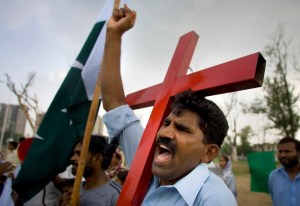
There’s a nurse I know in Lahore. She’s tall and stocky, middle-aged. She is on call 24 hours a day and works six days a week. She’s also a freelance headhunter, placing cooks and drivers and maids. She sleeps little. She has five children she hopes to give better lives. Last year, she donated time and money to flood victims.

She is a Pakistani Christian. And on Wednesday, I saw her weep.

She was staring at a TV set. It was reporting the assassination of Shahbaz Bhatti, Pakistan’s federal minister for minorities, a Roman Catholic. “What’s going to happen to Christians in this country?” she asked me.

I had no answer. But her question is searingly important. A country should be judged by how it treats its minorities. To the extent it protects them, it stands for the ennobling values of empathy and compassion, for justice rooted, not in might, but in human equality, and for civilisation instead of savagery.

Pakistan ought to be exemplary in this regard. After all, ours is a nation of minorities: A patchwork of cultures, ethnicities, languages and sects. Since independence, we’ve tried to use Islam to bind us together, to undo our inherent and pervasive minority-ness. After the country split in 1971, these appeals to religion expanded under ZA Bhutto and reached previously unimaginable extents under Ziaul Haq. They have continued to intensify ever since.

One problem with this approach, of course, has been that our religious minorities, a twentieth of our population, have been left out of our grand national narratives. Five per cent may seem like a small proportion, but in absolute numbers it includes almost 10 million Pakistanis, which equals everyone in Tunisia, or one-and-half times all of Libya. If Pakistan’s religious minorities were a country, they would be more populous than half the members of the UN.

So how have they been treated by Pakistan? Shamefully. They are looked down upon, discriminated against, physically threatened and not infrequently killed. They are second-class citizens in every sense. Nor has our state offered them much support. Indeed, our state has been actively involved in their oppression.

None of this is new, of course. So, for those of us fortunate enough to belong to the religious majority, does it even matter?

Yes. Desperately. Minority relations are a microcosm of society. Each individual human being is, after all, a minority of one. And, as Pakistan becomes a country at war with its minorities, it is becoming a country at war with its individuals, with itself, with you and with me, with the human desire to be allowed to believe what we believe. In this direction lies Orwellian Newspeak, an inability to say what we mean, a condition of external dishonesty that inevitably leads to internal dishonesty. Orwell imagined the result of this to be something he called doublethink: People holding “simultaneously two opinions which cancelled out, knowing them to be contradictory and believing in both of them.”

I find it difficult to imagine a better description of many of our TV talk show hosts — or much of our public discourse — today.

There are three main political positions we hear over and over in Pakistan, and all three are suffused with doublethink. There is the national security position: ‘America is our enemy; America should give us more aid.’ The privileged liberal position: ‘There should be equal rights for all; I should not have to share my riches with the poor.’ And the (remarkably similar) ambitious cleric position: ‘Religion makes us all equal; only I decide what religion says.’

It is unsurprising that the privileged liberal position is the one most often associated with attempts to protect the rights of religious minorities in our country. It is also unsurprising that it has been largely unpersuasive.

The good news, from a religious minority standpoint, is that the other positions are equally incoherent. (The bad news is that they are much more willing to resort to violence in support of their arguments.)

What Pakistan’s religious minorities need, therefore, is a new position, a position that champions equality while, and this is the tricky part, also championing equality. In other words, a position that dispenses with the illusion that equality can be enhanced in a society prostrate before either its rich or its clerics.

Such a position would also be to the benefit of the country’s economic majority, its poor. For they, too, are looked down upon, discriminated against, physically threatened and not infrequently killed. They, too, are second-class citizens. They, too, have been actively oppressed by our state.

At its heart, our country’s toxic treatment of its religious minorities is intertwined with its toxic treatment of its impoverished majority. Both groups suffer from the denial of our common humanity. And that, paradoxically, offers great hope. For we can reject false dichotomies between our clerical and our liberal positions, between our minorities and our majority. We can begin the search for common ground that has eluded us as a nation thus far.

We might, for example, shift from disputes over blasphemy laws to actually delivering due process of law, from arguments over curbing radical madrassas to actually building a high-quality state education system, from alternately buying off and fighting tribal chieftains to actually empowering local tribespeople.

Our problems are not insurmountable. Pakistan is, simply put, a land that mistreats its minorities and its majority. It is ripe for a revolution, except that it already has many trappings of democracy: Elected assemblies, free media, independent judges. A revolution in our thinking and behaviour, brought about by sustained pressure from below, is what is really called for.

Let us be clear: The messy but effective compromises we require can only come about through the dramatically improved functioning of our democracy. But a better-functioning democracy is feared by many with vested interests who benefit from the impaired system we currently have. They must be convinced otherwise.

Above all, we must convince our powerful national security state. Rationally, it is clear that under our current policies, Pakistan is becoming ever less secure. The stability and growth that a well-functioning democracy could bring is our country’s best chance of escaping from its ‘eagerly-dependent-on-enemy-America’ strategic incoherence. Unless, that is, our national security doublethink really boils down to this: ‘I will protect you; you are the threat.’

For the sake of our vulnerable, which is to say, in different ways, just about all of us, I hope this is not the case. Too much Pakistani blood has already been shed and too many Pakistanis have already gone to bed hungry.
What motives led to Shahbaz Bhatti’s murder in Pakistan?

By Aamer Ahmed Khan for BBC

It is hard to find an immediate motive behind the murder of Pakistan’s Minorities Affairs Minister Shahbaz Bhatti.

The courageous battle he had vowed to fight against the country’s draconian blasphemy laws had already been abandoned by the government in the wake of Punjab governor Salman Taseer’s murder.

In fact, the final surrender had come from no less a person than Pakistan’s prime minister who had only last month pleaded with a large gathering of religious personalities to believe him when he said that his government had no intention of reviewing the blasphemy laws.

And unlike the slain governor – a veteran politician, a high profile socialite and one of the president’s many billionaire friends – Mr Bhatti neither had the status nor the political clout to influence the state’s agenda.

Some evidence of that also comes from the eerie silence on social media, from the extremists’ side.

All that one sees are some anguished rants from some of Pakistan’s best known liberals, many of whom are not even resident in the country.

Even hours after the assassination, we have seen none of the fierce onslaught against free speech that erupted on social media within minutes after Mr Taseer’s murder.

Nor have we seen eulogies of his killers mushrooming on Facebook as they did after Mr Taseer’s murder. It is a silence smug in the knowledge that their agenda is not at risk.

So why kill a man who considered himself – and was indeed considered by the world around him – to be so ineffective that he had not even bothered to seek proper security for himself, despite being constantly threatened by Pakistan’s millions of faceless fanatics?

The answer perhaps lies in the difference between the commitment of the government and the extremists to their respective agendas.

Politics v ideology

The government had unambiguously decided to lay off the blasphemy laws after Mr Taseer’s murder, its ministers hinting privately that it was a hornets’ nest best left untouched.

The country’s liberal political and social leadership had meekly followed suit and perhaps understandably so.

In their silence had rested a hope that by abandoning their agenda to rationalise any legislation-feeding extremism, they would perhaps be able to keep the extremists quiet.

It was never about any ideological commitment, just hard, cold politics that made tactical sense.

For the extremists though, it is all about ideology. It didn’t matter if Mr Bhatti’s battle had proved to be a non-starter or if he was an ineffective and powerless minister.

What mattered was that he had spoken against blasphemy laws in the past and was likely to do so again if a situation arose. That made him a legitimate target, not to be tolerated, not to be ignored.

Mr Taseer had said that he would continue to fight against blasphemy laws even if he was the last man standing. He could not stand for long.

And the ideology that led to his assassination has now sent another determined and deadly message to the state – that it will continue to fight till the last liberal falls.

This is how different the two commitments are. And for the liberals in Pakistan, this is how hopeless the situation seems to be.

Pakistan plan to spread the grief

As reported by Agence France-Presse

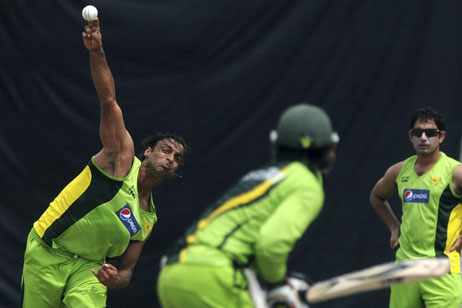
Pakistan are still reeling from the cricket corruption scandal that has dogged the side since last summer, but Shoaib Akhtar has warned that he and his teammates plan to take out their frustrations over the affair on their World Cup opponents.

Salman Butt, Pakistan’s then Test captain, and the bowlers Mohammad Asif and Mohammad Aamer were banned by the International Cricket Council (ICC) last month, after being found guilty of spot-fixing, which depleted Pakistan’s bowling options just two weeks before the start of the World Cup.

But Akhtar said the loss of the trio has helped unite the squad and galvanised them to push for a second World Cup victory to replicate their 1992 success.

“We are a hurt side so we are here to hurt others,” Akhtar said yesterday. “It’s better that it happened to us because every time a controversy happens it gathers us together and what better situation than before a World Cup?”

Pakistan beat co-hosts Sri Lanka by 11 runs in their last match after seeing off Kenya by 205 runs in their opening game.

Akhtar, 35, admitted he was missing Aamer and Asif but said others have stepped up.

“Obviously without Aamer and Asif we have suffered badly, they were the best with the new ball, it’s unfortunate what happened to them. Had they been with us it would have been the most lethal bowling attack,” he said.

“But the way [Umar] Gul and [Abdul] Razzaq have been bowling, the way [Wahab] Riaz is bowling, we can still do a much better job as we have variety in our attack.”

Akhtar, who has taken 246 wickets in 162 one-day internationals, said he had changed his bowling style to maintain his fitness, concentrating on accuracy rather than the pure pace that in the past regularly saw him bowl in excess of 100mph.

“I left this race of bowling at 100mph a long time ago,” he said. “I am nearing 36 now and am more mature, so I am focusing more on getting wickets now than bowling fast. But I crossed 98mph the other day.”

He said he is enjoying the chance to perform on the world stage after injury and discipline problems left him sidelined four years ago.

But he warned his teammates – who next face Canada in Colombo on Thursday – not to be over confident after beating Sri Lanka. “We have to move on and we shouldn’t get complacent,” he said.

Peace In One Pakistani Tribal Valley Offers Hope

Reported by Abubakar Siddique for Radio Free Europe Radio Liberty
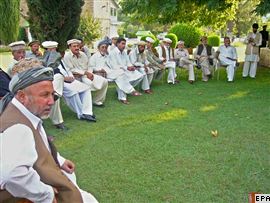
A fragile peace is taking root in Pakistan’s western Kurram tribal region after nearly four years of sectarian warfare between Shi’ite and Sunni Muslims.

Some have criticized a recent peace pact by saying that it is less about forging a lasting peace than about facilitating insurgents’ infiltration into neighboring Afghanistan. But the local population appears committed to making it work.

Success could have far-reaching implications. If peace is possible in a hotbed like Kurram, then it could serve as a model for millions suffering from war in other tribal areas.

‘Many People Were Injured’

Resident Noor Janan’s situation is typical. He lost his budding business in 2007 when clashes broke out between Shi’a and Sunnis in Parachinar. Rioting in the small border city, which serves as the headquarters of Kurram, soon devolved into sectarian war.

As the Sunni population of Parachinar was forced out, the city’s mostly Shi’a population was hemmed in — trapped by retreating Sunnis who blocked the main road to the outside and set siege on the city.

Janan’s priorities changed remarkably. For the past four years his main obligation has not been to look after his wife and four children, but to man frontline trenches and care for the sick and the injured.

Children displaced by fighting stand in line and wait for handouts in 2010.

“Many people were injured and many houses were destroyed,” he said. “I did all in my power to help my people.”

Janan is Turi — a tribe of 500,000 whose adherence to Shi’ite Islam makes it unique among Pashtuns. The Turis occupy a sliver of tribal territory known as the Parrot’s Beak that extends westward across Afghanistan’s eastern border. On the Pakistani side, Parachinar is positioned within striking distance of Kabul, which is just 100 kilometers to its east.

For the most part, the Turis lived in harmony with neighboring Sunni tribes for centuries, with a handful of exceptions. In the 1980s, predominantly Sunni Afghan Islamist guerillas attempted to overrun the strategically important region.

In 2007, a fierce sectarian war broke out when the Sunni Taliban attempted to conquer the Parachinar. More than 3,000 people have died and thousands more injured in the ensuing fighting. Some Sunnis blame Iran for the development, claiming the clerical regime supported and radicalized their Shi’a neighbors.

Both Sides Committed

Animosity remains high, but a cease-fire worked out in early February and backed by Islamabad offers proof that Shi’a and Sunni alike are committed to peace.

Middle-aged businessman Munir Khan Orakzai, who represents the Sunni population of the lower half of Kurram in Pakistan’s parliament, said that both sects realize that they have fought a useless cause that killed many innocent people. “There can be no logical end to this [sectarian violence],” he said. “That’s why people concluded this agreement.”

Tribal elders and government representatives attend a peace conference in Parachinar in 2008.

A peace agreement was signed before, in 2008, but it lacked government support and rival factions had one eye on possible military gains.

Under the new agreement, Islamabad is promising rehabilitation for the thousands of displaced families, and the deployment of additional troops to guard key routes.

Work Of The Haqqanis?

Skeptics abound. Pakistani pundits suggested that the deal was worked out by the Haqqanis — a large Pashtun family from Afghanistan whose elderly patriarch Jalaluddin Haqqani emerged as one of the most effective guerilla commanders in the 1980s.

His son, Sirajuddin Haqqani, now controls thousands of fighters and facilitates relations between Al-Qaeda Arabs, extremist Afghans, Pakistanis, and Central Asians out of his sanctuary in North Waziristan, which adjoins Kurram to the south. Considering the Haqqanis anti-Shi’ite bent and outsider status, any role in an agreement would be rejected by Kurram’s Shi’a.

Sajid Hussain Turi, a young lawmaker representing the region’s Shi’ite population in the Pakistani parliament, adamantly rejected any Haqqani role. “We, the Turis, have lost 1,200 people and more than 5,000 of our people were injured in this,” he said. “There is no question of involving people in this process that would ultimately harm us.”

Turi said that the weakened position of the Taliban, in disarray after years of military operations, opened the door to peace. He said that even local Sunni allies of the Taliban now see the futility of their military campaign.

Key intermediaries have high hopes for sustainable peace in Kurram. Waris Khan Afridi, a respected tribal leader from the neighboring Khyber tribal district, was among the mediators who put in countless hours bringing the two sides together.

Unforgettable Scene

On February 5, Afridi led the first civilian convoy of hundreds of vehicles to mark the break of Parachinar’s siege. He described an unforgettable scene of thousands of Sunni and Shi’ite villagers welcoming his entourage. “It was like they all were freed from prison that day,” he said.

Now, Afridi said, Pashtun tribes in neighboring tribal valleys are poised to follow the Kurram example. “We have always said that force is not a solution for anything and that the military operations will not solve our problems,” he said.

“Peace in Kurram,” Afridi said, “will positively affect all the tribal areas, the [neighboring] province of Khyber Pakhtunkhwa, and the whole country.”

Pakistan: Yet another Christian accused of blasphemy

By Speroforum for Spero News

A Christian woman, Agnes Nuggo, was accused of blasphemy and arrested in the Diocese of Faisalabad, in the Punjab province of Pakistan. The Catholic Church, which is handling the case, expressed “extreme concern”  over the affair.

The Commission for Justice and Peace in the diocese reported that Agnes (50) is married to Bashir Masih, has children and lives in the Christian quarter of Waris Pura. She was accused of blasphemy after a dispute over a piece of land that had already created controversy with his relatives. Some Muslim neighbours accused her of having made insulting statements against the Prophet Mohammed and against Islam. On 16 February, the local police registered a FIR (First Information Report) pursuant to art. 295/a of the Criminal Code and arrested her. Agnes professes her innocence and says the accusations are completely fabricated.

Fr. Nisar Barkat, Director of the Justice and Peace Commission in Faisalabad, reported “Bishop Joseph Coutts has become aware of the case and asked me to follow it closely.” Fr. Nisar was in court and obtained a copy of the complaint against Agnes, who will have her first court hearing in two weeks. The church will find her a lawyer and will take care of her family.

According to some sisters who know Agnes personally “the case is quite complicated: the woman was lured into a trap. Some people wanted to take revenge on her, because in the past Agnes had agreed to testify in court for money.””

Fr. Pascal Paulus, a Dominican priest in the Waris Pura area, said that “the situation is critical for us Christians. We need to be very careful. The Islamic radicals want to exploit these cases to attack the Christian minorities. We are exposed to spurious attacks, which have already been happening.”

Asia Bibi, another Christian woman accused of blasphemy, has been imprisoned for several months and has been condemend to death under Islamic law, Haroon Barket Masih of the Masihi Foundation said of Nuggo, “She is a new Asia Bibi. Agnes’ case is one of many cases of persecution that continue to occur. Most of the episodes don’t leave a trace and do not reach the clamour of the spotlight. Only when the victims’ families trust in the Churches, foundations and NGOs, then the injustices come to light. Families often keep silent for fear of retaliation. And institutions are absent: in this situation, what can Christians do?”

Rosemary Noel, head of the Pakistan Catholic Women’s Organisation said, “Being a Christian woman in Pakistan is a dual challenge. Even the status of women is itself exposed to discrimination, violence and abuse. Women struggle to gain access to education and the world of work. Those Christians are doubly discriminated against. They are considered as objects by Muslims and suffer all sorts of abuse and injustice to general indifference.”

According to data provided by the Justice and Peace Commission of the Pakistani Bishops, including Agnes, there have been 16 Christian women accused and imprisoned between 1987 and 2010 (in addition to a Muslim woman and a Hindu), but many other cases escape inclusion, because they did not end with a formal complaint.

Cricket World Cup: England Breeze Past Pakistan

By Will Turner for The Sport Review

England cruised to a 67-run win in their final ICC World Cup warm-up match against Pakistan in Fatullah. Stuart Broad sparkled again, taking five wickets after Paul Collingwood and Kevin Pietersen struck half centuries as England set Pakistan 274 for victory.

Collingwood also contributed with the ball with his three wickets helping dismiss for Pakistan for just 206.

Pakistan, who opted to rest Abdul Razzaq and Shahid Afridi, elected to field and once again England captain Andrew Strauss fell cheaply, this time to the pace of Shoaib Akhtar.

Jonathan Trott was also dismissed in single figures however Pietersen looked solid alongside Bell.

Pietersen raced to his half century before Bell eventually departed for 39 which brought the out-of-form Collingwood to the crease.

But the Durham man appeared to find his touch, playing his way towards his half century despite the loss of Pietersen for 66.

Ravi Bopara offered good support to Collingwood with a quick-fire 35 before Matt Prior contributed with a late 24 before the tail folded with Wahab Riaz claiming three wickets.

Just as he did against Canada, Broad tore through the Pakistan top order with only Younis Khan offering any resistance.

The middle order all got starts but failed to kick on with Collingwood’s change of pace stalling a fightback.

Broad retuned to remove Khan for 80 and with his exit went Pakistan’s chance of victory, falling 67 runs short.

Collingwood admitted it was a relief to be back among the runs following his first 50 in any form of cricket for three months after the victory.

“On a personal note, it was nice to get some runs,” he afterwards. “It’s been quite a frustrating few months for me, not being able to contribute as much as I would have liked.

“Even though it was a warm-up game, I thought it was important I spent some time in the middle and tried to get that confidence going again – and thankfully, it worked out well.”

England now begin the preparations for their group opener against the Netherlands on Tuesday.

India and Pakistan Are United by Language and History, Divided by Commerce

By Karin Brulliard for The Washington Post

In India, where it is made, Fair and Handsome men’s skin lightening cream sells for $1.25 a tube.

But by the time it hits the shelf at Sajid Khan’s shop in this city’s old marketplace, it has traversed 2,000 miles of sea and land, been smuggled over the Hindu Kush and marked up 25 percent.

Pakistan and India share language, culture, history and an 1,800-mile border; they are South Asia’s largest economies. What they barely share is trade – officially at least, because of a quasi-blockade that dates from partition in 1947, and all but chokes off commerce under a dizzying web of rules.

The hurdles have spurred off-the-books trade, much of it shipped through third parties in such places as Dubai, where products are re-labeled as imports from other lands – journeys that result in 40-to-70-percent markups. Only recently did Pakistan make its first export to India by truck: a load of gypsum rock.

But economists, business groups and U.S. officials are pushing to loosen at least the most maddening restrictions, and they are hopeful that the two nations’ decision two weeks ago to resume peace talks might help. Free trade, they say, would benefit both India and Pakistan and might help to ease tensions whose gravity is reflected in rival nuclear arsenals.

“Economics 101 dictates that countries’ major trading partners should be their neighbors,” said Shuja Nawaz, director of the South Asia Center at the Washington-based Atlantic Council. “To change the dialogue from a zero-sum game to a positive, win-win outcome for both India and Pakistan, you need to start with the low-hanging fruit of opening trade and tourism.”

For a Pakistani economy in tatters, experts say, a freer flow of goods from India would allow cheaper access to products and raw materials, and could open up India, with its enormous population, to exports of Pakistan products such as cement.

Some research indicates that bilateral trade – currently at about $2 billion a year, less than 1 percent of each country’s total trade – could swell 20 to 50 times under more liberal policies. Estimates of illicit trade range from $2 billion to $10 billion a year.

But for now, progress creeps. India admits all Pakistani products, but Pakistani firms complain that stringent standards and paperwork make many exports unviable. Pakistan, for its part, allows a slowly expanding list of Indian products that now includes artificial kidneys, camphor, parachutes and 1,931 other items – but not Fair and Handsome cream, which is instead legally exported from Kolkata to landlocked Afghanistan, via the Pakistani port of Karachi, then smuggled back into Pakistan.

Travel restrictions are another barrier. Businessmen in both countries say they wait months for visas that allow travel only within major cities in the other country – preventing visits to rural factories or farms – where they are often tailed by intelligence agents.

Then there is the logistic muddle of land trade at the one border crossing, midway between Lahore and the Indian city of Amritsar. The twice daily cargo train involves an engine switch: A train carrying Pakistani exports, for example, can enter mere miles into India, at which point the Pakistani engine and conductors are replaced by an Indian ones before continuing inland. With so few trains, exporters wait months for cargo space.

Trucks have only eight hours each day to cross, because each afternoon the two-lane road is overtaken by Indian and Pakistani border guards’ theatrical gate-closing ceremony. Even then, trucks must stop just past the frontier, where porters transfer the goods to local trucks. That is an advancement: Before 2007, trucks were barred from crossing at all, and laborers lugged all cargo across the boundary on their heads.

The little existing trade often falls victim to what look like political whims. In December, cargo trains sat idle for three weeks while Indian conductors awaited the visas that allow them to park just inside Pakistan.

That same month, spiraling onion prices prompted India to drop import tariffs and standards for the staple, triggering a surge in Pakistani onion exports. But Pakistan abruptly halted overland sales amid concerns about a domestic shortage.

“I had 400 trucks stuck on the other side,” said Rajdeep Uppal, a trader who is vice president of the Amritsar Exporters Council. “For a week these onions were standing there, and eventually they had to be sold within Pakistan for half the price. Who loses? Both the countries.”

Tensions aside, scenes of goodwill abound along the border. Pakistani and Indian train conductors sip tea and gripe about red tape together. Satanam Singh, a turbaned Indian driver – wearing a regulation yellow vest stamped “Indian Driver” – beamed as laborers unloaded his ginger on the Pakistani side. Coming to Pakistan, he gushed, was delightful compared with Mumbai, where the language is different and people hostile.

“It is a strange feeling, like I am going to a strange land,” said a smiling Mohammed Zafar, a Pakistani whose vibrantly painted truck, brimming with dates, was about to make its virgin voyage across the Indian frontier. “I am very happy.”

Here in Lahore, just 20 miles from the Indian border, Khan’s shop was the pioneer in a winding lane of stores now crammed with Indian silk and cosmetics – all smuggled into Pakistan illegally.

He said he would welcome friendlier business relations, even if they lessened the luxury value of his stock. Even his Afghan smuggler, who stopped by on a recent evening, agreed, on grounds that it would lessen the need to bribe border officials.

Among some merchants, skepticism about trade prospects remains, with Pakistanis fearing that open trade would lead to a glut of cheap Indian imports. S.M. Akhter, a top Indian customs official at the border, said national security concerns must trump market demands.

But despite the tangle of rules, some trade is quietly rising. Tahir Habib Cheema, the top Pakistani customs official at the border, said he realized last year that truck exports from Pakistan were allowed, but that “status quo” and “fear” had prevented them. He decided to change that – without notifying his bosses.

A comedy of errors ensued. By Oct. 7, Cheema had found one willing exporter and one importer. After hiccups on each side, a meeting at the frontline was arranged.

All parties agreed, Cheema said – and then the truck would not start. Someone proposed pushing it into India, an idea that was nixed by border guards who said the pushers would need visas. Finally, another vehicle nudged the truck over the line.

“This was something for the national cause,” Cheema said proudly. Since then, he added, Pakistani trucks have exported $2.5 million worth of products to India. He expects that to escalate this spring, when the two nations open a dedicated truck passage.

Correspondent Rama Lakshmi contributed to this article from New Delhi.


It is The Women Who Have the Guts in Pakistan”

By Bina Shah for Dawn

In Pakistan, Salman Taseer’s assassination in early January has blown the lid off the seething cauldron that has been bubbling in Pakistan for the last several years: the divide between Pakistan’s extremist forces and its minority liberal community is now so wide that it seems nothing can bridge the gap anymore. Worse, the extremists greatly outnumber the liberals, endangering whatever advances have been made in the Pakistani society.

But the women intelligentsia of Pakistan is determined not to let the religious right gain any more ground in the struggle for Pakistan’s soul. They have responded to the onslaught of the right wing with such ferocity that a Pakistani man said on Twitter: “I definitely see more women out on the streets after Salman Taseer’s killing. Does this mean that it is the women that have the guts in this country?”

It all started with a woman: Aasia Bibi, the hapless Pakistani-Christian mother of five who made the mistake of getting on the wrong side of a group of malicious village women. One moment Aasia Bibi was offering her coworkers a cup of water; the next, she was facing the death penalty for having supposedly committed “blasphemy”. 

Activists and women’s rights groups, aghast at the blatant abuse of human rights that Aasia Bibi’s case represented, agitated for the country’s leaders to have her acquitted. Pakistan’s progressives, especially women, got in touch with the Governor of Punjab Salman Taseer through his Twitter account – one which he used mostly to tweak rival politicians’ noses, share his favorite Urdu poetry, and communicate with his daughters. They besieged him with 140-character-long appeals to save Aasia Bibi’s life, hoping against hope that he would listen.

Taseer not only took Aasia Bibi under his protection, but he widened his scope to take aim at the blasphemy law itself. But Taseer’s strong voice was silenced on January 4, when his own bodyguard, Mumtaz Qadri, shot him 27 times with his state-issued Kalashnikov.

After the initial shock of the assassination, women activists vowed to use it as a rallying point: not just because they feel for Aasia Bibi, the first woman in Pakistan to face the death penalty for blasphemy, but because they know that women are the first to lose their freedoms when extremism takes over a nation. They are organising candlelight vigils, rallies, and media campaigns to defend their hard-won rights, despite knowing they are outnumbered by the other side.

One of the bravest women in today’s Pakistan is Shehrbano Taseer, daughter of the slain Governor, who wrote several pieces for the newspapers protesting the death of her father and the way in which his killer was showered with rose petals by lawyers who vowed to defend him in court. For this, she received threats from extremists: “She should remember the fate of her father and refrain from issuing statements.”

Taseer, a graduate of Smith College in the US, draws inspiration from other brave women in Pakistan who came up against the same forces: Asma Jehangir, Benazir Bhutto, Jugnu Mohsin, Sherry Rehman (who is now living under virtual house arrest in Karachi because of death threats she has received for her stance against the blasphemy law), Sharmeen Obaid Chinoy, Beena Sarwar, and Marvi Sirmed are some of the women whose struggles against injustice in Pakistani society have inspired her.

And of course, there is her father’s legacy: “My father’s fire has come inside me … I don’t wish for any other family to have suffered what mine has had to.”  Her father’s violent death has illustrated most vividly to her how both men and women in Pakistan have worked together for generations in the name of social activism. “Men and women have marched on the streets together and sacrificed a lot, so I don’t feel one sex is more dominant than the other in this regard.”

But it is not enough. The men in Pakistan need to step it up greatly when it comes to supporting women in social activism. Nuzhat Kidvai, a human rights activist in Karachi, says, “In general, men are more active in the left and labour movements – they will march for economic or political reasons. But when it comes to supporting women’s issues, they just aren’t there.” Her husband, Zaheer Kidvai, a long-time proponent of social activism in Pakistan, agrees that “women are certainly more engaged in this battle and despite bad attacks – lathis, jail, beating, and even rapes by the police! – they have moved this forward against all these odds. If there is any way for this society to evolve further, it’ll have to have even more women come out.”

So, back to the original question: is it really the women in Pakistan who have the guts? When it comes to fighting for their rights, definitely. Life in Pakistan is hard for women, but they don’t give up easily. Perhaps this is why they haven’t yet suffered the fates of their compatriots in Saudi Arabia, Afghanistan, and other supremely conservative Muslim countries in the region.

The Cup That May Brighten Up Pakistan

By Nilankur Das for The Hindustan Times
For others winning this World Cup could be a matter of pride and glory for the country. For Pakistan, which has won a World Cup and hosted a final, a lot more is at stake. A terror attack on the Sri Lanka team bus in Lahore in 2009 had put an end to Pakistan playing international matches at home an

d also taken away its rights to host World Cup ties. The country shredded by blasts and violence is now forced to host its international matches in Dubai.

Play to prove
Winning this World Cup, coach Waqar Younis feels, could change all that and pave the way to bring international cricket back to the country.

“It is unfortunate that we are not hosting. Yes, we are missing World Cup matches at home. But if we play as a unit, which we are at the moment and go on to win, I believe it will definitely help get international matches back to Pakistan,” Waqar said after Pakistan began their campaign with a win in a warm-up match against Bangladesh.

“Everyone back home is disappointed that the World Cup is not happening in Pakistan. But we are looking forward. Violence has taken international cricket away from the country but I am sure our cricket will bring cricket back,” Intikhab Alam, Pakistan’s first one-day captain who is the manager of the team here, told HT.

Ccricket Buzz
Back in Pakistan which is celebrating Id-e- Milad-un-Nabi, the birthday of Prophet Mohammad, cricket, it was learnt, is the buzz now.

“I think the people of Pakistan have already come to terms with the World Cup not happening here. Tuesday’s match was not on TV and so very few people could follow it. But people are keeping track and everywhere I went I heard cricket being discussed,” spokesperson of the Pakistan Cricket Board, Nadeem Sarwar told HT from Lahore.

“What Waqar said is right. But it will not happen overnight. Winning the World Cup will surely have a unifying effect on the country and if that means law and order is restored, the other boards too will not have problems sending their teams to Pakistan.

“We are making progress in this regard. The Afghanistan team was here. And now the Nepal women’s team is playing a T20 and one-day series here,” Sarwar said.

It’s still early days but a motto like this can definitely keep the team together. But sport has its share of such instances. When Spain, with a majority of Catalan players led by a man from Real Madrid, went on to win the football World Cup, a month-long euphoria blurred all differences.