Archive for the ‘ Pakistanis ’ Category

Will India Win Coveted UN Seat?

By Sunil Sharan for The Huffington Post
Indian foreign secretary Nirupama Rao says Pakistan is hypnotically obsessed with India but she and her bosses too are fixated on a coveted prize, a permanent seat at the United Nations Security Council. The mandarins of New Delhi must be pleased as punch to have had over to visit leaders of all five permanent member countries in quick succession. Inexorable appears the march but will India find the pot of gold at the end of the rainbow? And, if it does, what are the implications for itself as well as for Pakistan?

First in was David Cameron of Britain, who arrived during the summer and offered unstinting support, whetting local appetite for the main American course. And, did he fail to disappoint? No sir, Barack Obama set the cat amongst the pigeons by endorsing India for the seat, the first time ever by the US. India rejoiced while Pakistan recoiled.

But a careful examination shows him adhering closely to what he told Bob Woodward in the book, Obama’s Wars. In lieu of the seat, he expects India to resolve Kashmir. At a press conference with Manmohan Singh, Obama characterized Kashmir as a long-standing dispute making the latter stutter that the K-word was not scary. Only then did Obama hand over the endorsement in India’s Parliament but couched in such diplomatese that countless local hair were split over when “the years ahead” would dawn.

Next waltzed in Nicolas Sarkozy of France. The French, like the British, have consistently seen merit in India’s case. Sarkozy though, true to type, proved an enigma. He first tagged on the applications of Africa, the Arabs and pretty much the rest of the world onto India’s, befuddling his hosts, who are willing to concede as equal aspirants only “self-appointed frontrunners” Germany, Japan and Brazil. Just as they were about to give up on him, Sarkozy warmed the cockles of India’s heart by throwing in 2011 as early as when it could make it.

But soon came the caveat. Sarkozy, just like Obama before him, cautioned that with great power status came great responsibilities. Whereas Obama wanted India to be more mindful of human rights violations of countries such as Iran and Myanmar, Sarkozy wanted India to send military forces to keep world peace. With India already being one of the foremost contributors to UN peacekeeping missions throughout the world, the mandarins of New Delhi must have been left wondering what more was being asked of them.

No matter, three down, two to go. By now the state jets were landing at Delhi airport almost on top of one another. Wen Jiabao, the leader India was least looking forward to, came with the master key to entry. Shortly before his visit, WikiLeaks revealed China’s opposition to any council expansion. Indian hopes were up nevertheless but Wen remained inscrutable, willing only to acknowledge an understanding of India’s aspirations. No one in India knew quite what to make of him and since Wen was off to Pakistan next, all the country could do was wait with clenched teeth to hear what he would say there.

Rounding off the passage to India was Dmitry Medvedev. Relations between Russia and India have frayed considerably since the heady days of the cold war, so much so that Russia has waffled on India’s bid. Medvedev signaled that the waffle still needed baking, voicing support for India while reiterating that reforming the council was tough and required consensus.

All the while Pakistan protested vociferously against what it deemed an indulgence of Indian hegemonism. But what will India gain with a permanent UN seat? Could it block Pakistani claims on Kashmir? True a permanent member wielding veto power can stonewall but the veto seems unattainable for seekers since they themselves have forsaken it. And, while India sees red when the K-word is uttered in the UN by Pakistan, no ascension to permanency can make it strangle the latter. Nor can it efface any past security council resolutions.

So then, what is it? Nothing comes to mind but the obvious, the acceptance that any arriviste craves. Even that appears a false hankering because ever since its early years, Gandhi’s legacy and Nehru’s charisma burnished the country with global influence disproportionate to its economic and military capabilities. A bee once in one’s bonnet is hard to get rid of though. And, as every journey must have a fitting end, India has found a destination to its liking.

Flush with cash, New Delhi wants to beef up its military. All of the recent visitors bar China are major suppliers of defence equipment to India. As bees flock to honey, they arrived armed with catalogues of the most terrifying stuff. Inherent was a delicate diplomatic quid-pro-quo. The more arms you buy from us, the more we will push your candidacy. As Islamabad keeps raising the bar for India’s seat, so too will India have to up its arms binge.

Lost in Pakistan’s current rhetoric was its vote in October to put India in the security council for two years beginning January 1, 2011. Once on, we will never get off is the new mantra of India’s brave. India seemingly returned the favor by taking in stride the sale of Chinese nuclear reactors to Pakistan. Is there more afoot than meets the eye?

Every country is entitled to its obsession. Pakistan’s is obvious. By continually thumbing its nose at a NATO mired in Afghanistan, it has put the K-word in spotlight, albeit on the backstage. A deal has been blessed by the powers that be. Both the seat and Srinagar are not far away.

The writer edits a website on India: http://www.scooptime.com.
The Illiteracy of Hate

A News and Opinion Special Report by Manzer Munir for Paksitanis for Peace

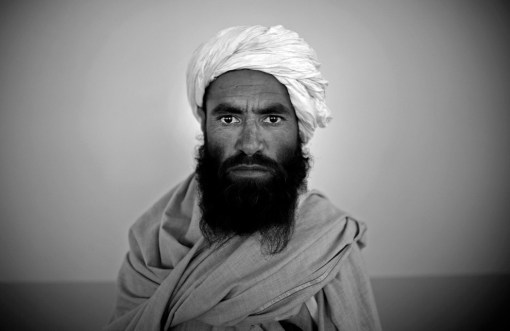
Alleged Taliban Member pic courtsey of Boston Globe

The Taliban are not just simply a bunch of illiterate thugs and bullies for they too often prove to be even worse than animals and barbarians.

Nowhere else in the world has a country experienced a more tragic and callous attack as the one on Christmas day, the birth day of Jesus, the Prince of Peace, than the one Pakistan experienced. In an attack described by President Obama as an “affront on humanity”, the cowards attacked helpless women, children and men while they queued up in food and aid distribution site such as the WFP depot, people who mind you are already suffering from the ongoing war, once in a lifetime floods, and the poverty and radicalism of a generation of desperate, hopeless and increasingly uneducated young men brainwashed by the Taliban and other radical Muslim extremists.

I am still disturbed by the disdain for basic human life that this new attack proves about this radical and extreme enemy. I imagine another one of their brain washed ‘walking zombies’, this time purportedly a woman suicide bomber, a first, even for Pakistan, killed in excess of 43 people in Bajur Pakistan at a World Food Program rations and aid storage and distribution center.

The Pakistani authorities and several domestic and foreign NGO’s who provide food aid at various centers in the area are temporarily closing these centers in order to have increased security. This means that aid distribution will come to a crawl and up to several hundred thousand people will now have to suffer at the hands of the attacker and their backers, the Taliban who have claimed responsibility. The authorities will have to ensure the safety of aid organizations and their personnel for both Pakistani and non Pakistanis relief workers involved in getting food, water and medicine to many people who are either suffering from the war or from the floods.

This catastrophe, although not of near Biblical proportions, does present both a security and humanitarian problem to both the government of Pakistan as well the suffering citizens in the northwest areas of the country where; Taliban fighters take sanctuary from the war in Afghanistan to regroup and return to the fight in warmer weather after the winter months as we have seen in years past. In fact, the reach of the Taliban in Pakistan is now not only reputed to be in the headquartered areas such as in Quetta Pakistan among the restive Baluchi population, now they are so often found to be in major cities like Karachi, Lahore, Rawalpindi, Peshawar and many points in between as they use their religious cover to endear themselves to certain impressionable, weakened or illiterate individuals that are so commonly found in throughout the country. 

Here are the some of the depressing facts. Pakistan, a nation approaching 180 million people at current estimates, perhaps only boasts to having about 60-65% of the male population at a literate level and at best, the females to be only at 40-45% of the total female population. Sadly, what this means is that 4 out of 10 Pakistani males are completely illiterate while up to as many as 6 out of 10 women are not able to read or write. Poverty breeds extremism since there is no support from any government programs or hope for any solution.

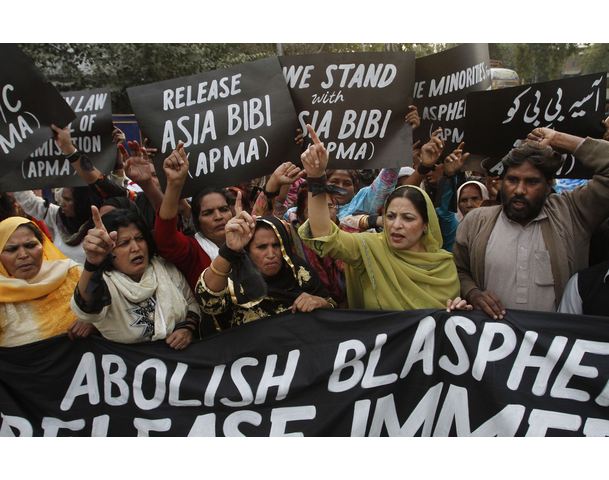
Time and time again throughout history and not just of Pakistan’s, we can see that the role of the church, synagogue or mosque in building the community is deeper than that of any government initiatives or other measures. The poverty for these young men along with the lack of jobs like for those individuals who are either very poorly paid construction site workers, household labor or servants, or beggars and sewer workers, a job sadly almost seems to have been reserved for Pakistan’s Christian community members as many can attest in Pakistan of their unfortunate and depressing state. One does not need to remind the reader of the plight of Asia Bibi (also Aasia and Ayesa), the Christian Pakistani woman who is still awaiting her fate in Pakistani courts after more than a year and a half since first being accused of a BS blasphemy charge and being in jail ever since. 

The medieval mentality of these radical extremists is not something that needs to be described as the evidence is here in this latest attack . Certainly anyone alive in any part of the world outside Pakistan and Afghanistan with eyes, TV, radio or newspaper within their reach can see plenty of near daily reminders of the carnage that many natives of these lands see, and to what they have painfully become accustomed.

 The Pakistani and Afghani Talibans have by all the various reports in newspapers and media sources over the last several years have pointed out to the fact that these groups all have too often similar goals. Not only that, these groups all share the same characteristics. The anti-Americanism, the pro-Wahaabi or Orthodox version of Islam, the need for justice for the ‘suffering of the Palestinian people’ , and the anti-colonial and often times anti western sentiment amongst these groups. The radicalization of certain Muslim groups be they Hamas and Hezbollah in the Mideast or Lashkar e taiba, or any other militant outfit operating in this part of the world as mentioned in this quote a few days before he passed, the late Richard Holbrooke of the US State department said that there are a range of militant groups such as the Afghan Taliban, the Pakistani Taliban, the Haqqani Network, Lashkar-e-Taiba, and that “an expert could add another 30.” His exact words are in quotations. 

The radical Muslim groups who take prey of the weaker, cannot think for themselves because they are scions of those abjectly illiterate segments of the society who are only educated in the madrassahs of Pakistan. This is the de facto way of educating Pakistan’s poorer children in little mosque schools which consist of nothing but Qu’ranic surahs and words of ‘wisdom’ or ‘interpretation’ by the local mullah of the said mosque/school. Most probably these children in many Pakistani madrassahs, especially the ones who live near the border areas within the NWFP or North West Frontier Province of Pakistan as this is the part of the country most affected by its close proximity to Afghanistan.

The people in this area of Pakistan, as well as their cousins in Afghanistan have been fighting one enemy or another for the better part of 100 years now. Whether to them the enemy be the British, during the height of the British Raj rule in India, or to the Soviets and the Red army and the Cold War, then in chronological order came the infighting after the Russian withdrawal as various Tajik, Afghani, Uzbek, Pakistani warlords came in to try and consolidate power to now us Americans and the Pakistanis who are our allies in this war.

Granted we do often hear that the Pakistanis can be doing more. By all accounts, the Pakistani government can do more in terms of fighting this war on terror. Numerous western reports and articles in respected dailies have alleged that small elements within both Pakistan’s Army as well as the spy agency, the ISI, have sympathizers to either the Taliban’s cause or they want to be on favorable terms with a powerful entity that most in Pakistan’s establishment believes that Pakistan will be dealing with and not a weakened Karzai once the US begins to draw down troops and end the war by 2014. If this is indeed true, then these ‘officers’ and supposed ‘leaders’ of Pakistan should realize that the colluding with the enemy, which in this case is the Taliban, is tantamount to treason, and the members of the armed forces of Pakistan as well as the intelligence community should not be assisting the enemies of all concerned: Afghanistan, Pakistan and the United States. 

Of course we must not kid ourselves and assume that only alleviating the illiteracy and poverty of the Pakistani youth will and bettering the education system of the Pakistani poor, particularly that of the refugees and residents of the northwest areas near the Afghan border. No there needs to be a study and introspection by the people of these two countries where this hatred breeds. To to get out of this darkness, the population needs be provided not only safety when delivering food aid and or medicine but aldo most importantly give them a book, a pen, and a paper. And teach them how to fish for knowledge with basic comprehension and deductive reasoning skills that can reject a radical and violent view of Islam too often manipulated by the clergy. This is the only way we can come to end this illiteracy of hate.

–Manzer Munir, is a proud and patriotic Pakistani American, an author, who plans to write a book on Pakistan, who is also a blogger and journalist, and as the Founder of Pakistanis for Peace  can be found at www.PakistanisforPeace.com, www.DigitalJournal.com ,www.Open.Salon.com, www.Examiner.com, as well at other websites as a freelance journalist and writer.

‘Attack in Pakistan Affront to Humanity’ says President Obama

As Reported by Hindustan Times from the Indo-Asian News Service

US President Barack Obama condemned a suicide bombing in Pakistan that left at least 44 people dead at a UN World Food Programme distribution point on Saturday. “Killing innocent civilians outside a World Food Programme distribution point is an affront to the people of Pakistan, and to all

humanity,” Obama said that in a statement issued from Hawaii, where he is spending Christmas with his family.
“The United States stands with the people of Pakistan in this difficult time, and will strongly support Pakistan’s efforts to ensure greater peace, security and justice for its people.”

A female suicide bomber targeted the crowd collecting food at the distribution centre in Khar. Seventy others were injured in the attack in the Bajaur tribal district, where government forces are fighting Taliban and Al Qaeda militants.

Saturday’s bombing targeted the Salarzai tribe, which has joined forces with the government against the Taliban and raised a tribal militia to drive them out of their area. The Taliban took responsibility for the attack in a message sent to various news organizations.

Muslim American Artists Strive to Bridge a Chasm

By Thalia Gigerenzer for The New York Times

When Wajahat Ali, a young Muslim American playwright from Fremont, needed to build an audience for his work, he produced his plays in cramped Pakistani restaurants in the East Bay and used Facebook to get the word out.

His play “The Domestic Crusaders” went on to open at the Berkeley Repertory Theater in 2005, and then moved to Off Broadway. Now, family members who were initially skeptical of Mr. Ali’s decision to pursue writing see great power in his profession.

Mr. Ali said his uncle had told him that he wished he had “made his son into a journalist,” because “after 30 years of living in this country, I turn on the TV and see myself as a terrorist.”

Mr. Ali is one of a growing number of Bay Area artists who are reimagining one of the country’s most complicated compound identities: Muslim American.

At a time when Islam has been heavily politicized, many Muslim artists say they hope the arts can expand understanding of their faith among non-Muslims as well as bridge American and Islamic traditions.

“We’re at a point where Islam is really being defined in this country, and it’s going to be through the arts,” said Javed Ali, founder of Illume, a Muslim online news, arts and culture magazine based in Newark that serves as one of the central nodes of the Bay Area Muslim American network.

Bay Area Islamic organizations, including the much-heralded Zaytuna College in Berkeley, have embraced the shift toward culture. In January, the Islamic Cultural Center of Northern California will open a new gallery in the center to showcase Muslim artists.

The cultural center, in Oakland, decided to increase its arts programs six months ago, said Ali Sheikholeslami, its executive director. The center regularly hosts an event called “Islam and Authors,” which invites authors to discuss topics related to Islam.

“We want to break through common stereotypes and present the whole spectrum of Muslim reality,” said the cultural center’s marketing and development director, Jason van Boom.

Hatem Bazian, one of the Islamic scholars behind Zaytuna College, the first Muslim liberal arts institution in this country, echoed that thought.

“In American society,” Mr. Bazian said, “artistic expression is the way we narrate our story, so Muslims are beginning to draw their own narrative.”

The Bay Area’s Muslim population, estimated to be 250,000, is one of the most diverse in the United States.

Mr. Bazian, who is also a senior lecturer at the departments of Near Eastern and ethnic studies at the University of California, Berkeley, said the wide mix of ethnicities and large number of converts in the Bay Area’s Muslim population “creates synergies” that can be seen in new art forms that break ethnic molds.

Some local artists have taken an online entrepreneurial approach to Islam. Khadija O’Connell, a Hayward resident, started her Web-based arts and craft business, Barakah Life, in 2003 as a way to bring a modern, handcrafted aesthetic to Muslim items most commonly found in gaudy, imported styles.

Ms. O’Connell relies on online tools like blogging and Facebook to promote ideas like her pop-up crescent moon cards that would look at home on the popular crafts site Etsy.

“People used to adapt neutral Christmas ornaments, like stars, and hang them up for Ramadan,” recalled Ms. O’Connell, who converted to Islam in college. “I wanted to bring new traditions to Muslims living in the West.”

For local Muslim American artists whose art has been deemed “radical” by more conservative Muslims, the road has not been an easy one.

Audience members walked out of an early November U.C. Berkeley performance of the play “Hijabi Monologues,” which features the stories of Muslim women and contains sexual references. “I’ve spent more time and energy negotiating with the community whether music is haraam [“forbidden”] than putting out content,” said Anas Canon, a convert and the founder of the record label and Muslim artist collective Remarkable Current, which includes the Bay Area MC/spoken word artist Baraka Blue. The label’s music ranges from soul to hip hop and has collaborated with artists such as Mos Def.

When Remarkable Current, which is based in both Oakland and Los Angeles, recently held a masquerade-themed book-signing with a D.J. in an Oakland home, debate erupted online ostensibly over men and women in costumes interacting together. An impassioned Facebook note condemning the event unleashed heated comments from Muslims across the Bay Area.

In the wake of controversies like the one over a proposed Muslim cultural center near ground zero in New York City, some second-generation Muslims’ art is tinged with a sense of urgency.

“Our narrative has been stolen from us,” Wajahat Ali said, referring to the common depiction of Muslims in the American news media.

The tendency of his parents’ generation to push their children to prestigious professions like medicine and business discouraged creative voices, he said.

But Bay Area Muslim artists are fast creating new narratives. Mr. Ali’s play, which depicts a modern Pakistani-American family, is featured in McSweeney’s literary magazine this month.

For many years, Mr. Ali said, he had described the local arts scene as “latent, with a heartbeat.” But now, he said, “it’s dancing.”

What Sufi Festivals Mean to the People

By Sohail Abid at http://sohailabid.com/

It is the beginning of the Hijri year. A time that matters to me for two reasons: remembering Hussain’s determination and the Sufi festivals that will be held throughout the year across Pakistan. And this year I want to do something special: to attend all the Sufi festivals and document each of them! Wish I had undertaken this project earlier in my life when the festivals were held without any fear but I wasn’t mature enough to see what they mean to the people. I, like others, considered them ‘stupid’ and ‘superstitious’ but that’s so untre. Let’s see how:

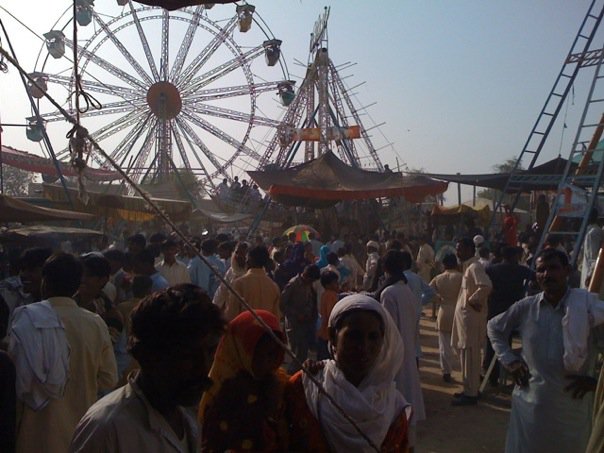
The people who actually go to the Sufi festivals don’t really call them by their urban name, Urs. They call them “mela” and it includes all kinds of activities, not just paying salam to the dead Sufi. They are *festivals* for the people, occasions to rejoice.

Last weekend, when I was on a field trip in a remote Punjabi village, a girl told me, “If you were here a couple of weeks ago, you could see our dance, Sammi; there was a wedding. We are the best in Punjab in Sammi dance! Oh, you can come to the mela next month.” Now this place, Danabad, is a small village. They remember the Sufi festival as the time they will have dance, musical concert, and what not.

On a similar visit to Chakwal, when I asked a young boy about their activities, he was so excited about this race and kabbadi they have each year. When: “during the mela”!

You see, to the people the Sufi festivals do not mean “worshipping the graves”, as some conservatives would like to put it. It is the time people await to shop, play, dance, and attend live concerts. And that’s what I would like to document because they are the events that matter to the people and keep them going. Wish me luck!

Sohail Abid is a writer, an entrepreneur, a software engineer, a cultural analyst, and a lover of all things folk. He lives in Islamabad Pakistan and manages several websites and businesses as a freelance software developer. We at Pakistanis for Peace are proud to call him a friend of the site.

Sami Yusuf – Hear Your Call (Pakistan Flood Relief)

A Charity Single Released By Sami Yusuf where all profits go to help the Flood victims of Pakistan

British singer-songwriter Sami Yusuf, dubbed “Islam’s biggest rock star”, is donating profits from his latest single to help flood victims in Pakistan. Born in Iran, but raised in the UK, the singer is urging fans to recognize the ongoing plight of those affected by the floods. Profits from Hear Your Call will go to Save the Children, which is working in the four provinces hit by the disaster.

Sami has sold more than seven million albums worldwide. He said: “This is an enormous disaster and I personally feel we all, as fellow humans, have a responsibility to help the victims in any way we can.

“The floods have completely changed many people’s lives and through our actions, we can offer hope. “In such times we have to align ourselves with the right organizations to reach out to the affected areas as effectively and urgently as possible.”

The track can be download from iTunes and the artist’s official website.
http://www.itunes.com
http://www.samiyusufofficial.com/

China’s Growing Influence on Pakistan Worries U.S.

By Farhan Bokhari for CBS news

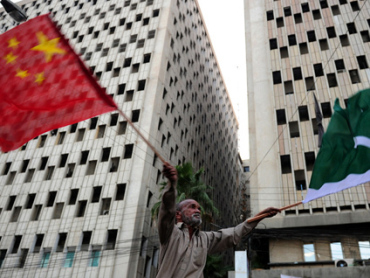
China’s premier Wen Jiabao concluded a high profile visit to Pakistan on Sunday, promising to lay the foundation for a “deeper” relationship to a country which is central to U.S. efforts for stabilizing Afghanistan.

Wen sought to broaden a relationship which has traditionally been driven by Beijing’s role as a key supplier of military hardware to Islamabad. Pakistan’s government officials said that during Wen’s visit, China signed business deals between the governments and private businesses of the two countries worth at least $29 billion, with a possibility of another $6 billion worth of contracts. These contracts were the largest ever signed during a visit by a foreign leader to Pakistan, underlining the growing importance of the country to China.

The Chinese premier also used a speech to a joint session of Pakistan’s upper and lower houses of parliament to commend the country for its efforts against terrorism. It was an apparent effort to negate criticism from the western world, including the U.S., which has urged Islamabad to take further steps against Al-Qaeda and the Taliban.

“Pakistan has given great sacrifices and made great efforts in the fight against terrorism. It is a reality and the international community should respect Pakistan’s efforts,” Wen said.

While the U.S. has poured billions of dollars into Pakistan to assist in combating terrorist groups, Pakistan’s military and civilian leaders remain committed to retaining a close alliance with China. “Let’s stand together, with a new confidence, and begin a new era of progress and prosperity, by jointly confronting all challenges,” Wen said in his speech on Sunday. To the applause of Pakistan’s ruling and opposition politicians, the Chinese continued that “China and Pakistan are all-weather strategic partners and share the sorrows and joys of each other as close brothers.”

A senior Pakistani official told CBS News that the deals signed during Wen’s visit included contracts for the development of a road and train network linking the two countries, for mineral resources, for gas and oil fields and for facilities to produce electronics.

“China is beginning to launch an important new phase to help Pakistan transform itself economically,” said the official, who spoke anonymously because he was not authorized to talk to journalists. “Unlike our western friends such as the U.S., China remains a true friend of Pakistan,” he added.

Western diplomats in Islamabad who spoke to CBS News, also on condition of anonymity, said Pakistan’s relations with China remain of concern to Washington in some areas, notably China’s continued support for Pakistan’s nuclear energy program and signs that China is stepping up its supply of conventional military hardware to Pakistan.

In the past decade, the two countries have jointly developed their first fighter plane for the Pakistan Air Force (PAF), known as the JF-17, or “Thunder.” The PAF plans to buy up to 250 of the JF-17s, making it the largest-ever purchase by the PAF of a single type of aircraft. On the other hand, Pakistani leaders frequently speak of the trust factor in their country’s relations with China, an oblique reference to the lack thereof in the country’s ties with the U.S.

In the 1990s, the U.S. sanctioned Pakistan on suspicions that the country was preparing to produce nuclear weapons, which reversed the two sides’ close cooperation when they confronted the occupation of Afghanistan by the former Soviet Union. While those sanctions were lifted after 9/11, which prompted a new partnership against terrorism, many Pakistanis remain skeptical of ties to the U.S. But a Pakistani foreign ministry official who spoke to CBS News said a growing economic relationship with China “will not come at the expense of our relations with the U.S. We want to establish and maintain a close partnership with the U.S. Our relations with China must never be seen as a replacement for our relations with the U.S.”

Chinese Premier Visits Pakistan to Reinforce Ties

By Salman Masood for The New York Times

ISLAMABAD, Pakistan — Chinese Prime Minister Wen Jiabao arrived in Islamabad on Friday for a three-day visit that Pakistani officials said was aimed at strengthening the strategic partnership and economic cooperation between the two neighboring countries.

Prime Minister Yusuf Raza Gilani and members of his cabinet welcomed Mr. Wen at Chaklala Air Base in neighboring Rawalpindi on Friday afternoon. A red carpet was rolled out and elaborate ceremonies were held to signify the importance Pakistan attaches to China, which is considered a close ally.

“Friendship with China is a matter of pride for our nation,” Mr. Gilani was quoted as saying by local media as he welcomed his Chinese counterpart.

Apart from holding meetings with Mr. Gilani and President Asif Ali Zardari, Mr. Wen was scheduled to address a special joint session of the Parliament on Sunday.

Pakistan’s military ties with China are strong and China has assisted Pakistan in tank production, fighter aircraft manufacturing and naval technology. But since the late 1990s, economic concerns have gained increased importance. Trade and energy have taken precedence in Pakistan’s relations with China.

Mr. Wen was accompanied by 260 business executives.

Pakistani officials say there is a need to enhance trade between the countries that stands around $7 billion a year. But there also are concerns here that the trade deficit is growing heavily in favor of China.

“The relationship is undergoing a qualitative change,” said Mansoor Ahmad, an independent security analyst based in Islamabad. “This change is manifested in China’s relationship with emerging markets and developing countries, which is essentially based on forging and enhancing trade linkages and securing new markets for Chinese investment.”

The Chinese are also cooperating with Pakistan in developing its civil nuclear energy program despite discontent from Washington and New Delhi.

Mr. Wen, the Chinese prime minister, arrived here after completing a two-day tour of India, the estranged neighbor of Pakistan.

China would have to undertake a fine balancing act regarding enhancing its cooperation with both India and Pakistan, said Mr. Ahmad. China and India would forge economic ties despite their continuing territorial disputes, given India’s huge market, he said. Tensions between India and Pakistan worsened after the terrorist attacks in Mumbai in 2008, which India and the United States blamed on Lashkar-e-Taiba, a militant Islamic group based in Pakistan.

The Pakistan government sees China as a counterweight to India, and officials said that closer Chinese cooperation with India would not affect Pakistani ties with China.

Nonetheless, Mr. Wen’s visit to India this week yielded greater immiediate progress on the economic front than toward resolving the more complicated geostrategic issues.

“In Pakistan’s case, we have already had a longstanding strategic partnership which is now being supplemented by increasing Chinese investment in infrastructural development, civil nuclear cooperation and establishing rail and road linkages between the two countries,” Mr. Ahmad said.

Pakistan Shifted Emphasis Away From India Border, says US

As reported by The Economic Times

WASHINGTON: Pakistan was shifting its emphasis away from its eastern border with India, a decision it had taken on its own because of a “definite shift” in Islamabad’s military posture brought about by fundamental changes within the country, the US has said.

It said while it does want Islamabad to act more aggressively against extremists within Pakistan it played little role in Islamabad’s decision to move its troops away from the border with India.

“First of all, how Pakistan decides to deploy its military forces is a decision for Pakistan,” State Department spokesman P. J. Crowley told reporters Friday what role the US had played in the movement of 140,000 troops away from the Pakistani-Indian border as mentioned by Secretary of State Hillary Clinton.

“We’ve made no secret of our desire to see Pakistan take more aggressive action against extremist elements within its own borders,” he said. “That is a threat to Pakistan itself.”

“And as the Secretary said, we have seen Pakistan shift its emphasis away from the Pakistani-Indian border and more aggressively to the Swat Valley and other areas where these extremists operate.”

“And no military has suffered more significant casualties in undertaking these operations than Pakistan. But these were obviously decisions for Pakistan to make,” Crowley said.

“But the context of increasing dialogue and reducing tensions between Pakistan and India is something that we have stressed in our dialogue with both countries,” he said.

Asked if Clinton was making an announcement, Crowley said: “Yeah, we’ve seen a definite shift in the Pakistani military’s posture. (But), it wasn’t an announcement.”

“I think it was a reflection of fundamental changes that have occurred in Pakistan as part of our strategic dialogue and our cooperation on dealing with the threat on both sides of the Afghan-Pakistan border.”

Asked about India’s role in Afghanistan after the recent review of the US Af-Pak strategy, Crowley said: “Well, we do have a regional strategy. India has legitimate interest in helping with the future of Pakistan.

“It has contributed significantly to development and reconstruction projects within Afghanistan. And we encourage that activity, even as we stress the importance of dialogue between India, Pakistan, Afghanistan, other countries. So no efforts like this are misunderstood,” he said.

Obama and the Pakistan Dilemma

By Matthew Kaminski for The Wall Street Journal

Islamabad, Pakistan– America can’t win in Afghanistan as long as assorted Taliban insurgents find safe haven in Pakistan. That’s the no-brainer dressed up as revelation in leaks this week about the latest U.S. National Intelligence Estimate regarding both countries.

The proposed solution is tidy, too: Lean on Pakistan to cut links to extremists in the tribal regions along Afghanistan’s eastern border and in southern Baluchistan, even as the CIA ramps up the number of covert drone strikes on those groups.

The assumption is that Pakistan can bring the extremists to heel at its pleasure. After all, the Pakistani military began nurturing Afghan and other jihadists in the 1980s and has kept them on as “strategic assets” throughout the American long war brought about by 9/11. So, we think, if Islamabad cuts its support and makes life difficult for the jihadists, this unfortunate genie can be put back in the bottle. President Obama might even meet his self-imposed deadlines for drawing down the 98,000 American troops in Afghanistan.

This is all a useful fiction, maybe even a necessary one. American bribes, threats and pleas have prompted Pakistan into its own troop surge in the tribal regions. Over the past 18 months the Pakistanis have more than quadrupled their presence there, to 140,000, and have taken heavy casualties. Last year the Pakistani army cleared Swat Valley and South Waziristan, which had been overrun by militants.

Today’s White House review of the war, which comes a year into the Obama surge, will likely highlight such progress. The president can consider his administration’s spirited engagement with Pakistan a foreign policy success. Credit is also due to “bulldozer” diplomat Richard Holbrooke, who developed close relations with the Pakistani civilian leadership before his untimely death Monday evening.

But Pakistan hasn’t turned. The insurgents who kill American troops in Afghanistan—principally the Taliban, whose leadership is in Baluchistan, and the militants loyal to the legendary fighter Jalaluddin Haqqani in the tribal regions—operate all too freely from Pakistan. President Obama should note that, too, today.

The year ends sourly for U.S.-Pakistani military relations. American frustration with Pakistan’s army chief, Gen. Ashfaq Kayani, has grown over broken Pakistani promises and a perceived lack of urgency. Summer floods diverted Pakistani troops away from the tribal areas, but the military doesn’t have that excuse now. The Pakistanis have also denied American requests to expand drone coverage to the area around Quetta, the city in Baluchistan that is the heaquarters-in-exile of the Taliban.

Pakistani officials say that Gen. Kayani will move his forces into North Waziristan, the tribal region that hosts the Haqqani network, in his own time. Some 50,000 troops are said to be ready to go in. No one wants them to lose, but they could against Haqqani’s respected force. A U.S. official says, “We don’t want them to do it if they’re not ready, but we don’t want them to think it’s not important.”

The Pakistanis may have found a way out. Analysts here say that the military is giving Haqqani time to relocate to a neighboring tribal region, Kurram, before soldiers go in to “clear” North Waziristan. A U.S. defense official here says that he’s seen no evidence to back the claim. But in the past most insurgents have simply melted away in the face of Pakistani advances.

Haqqani also figures as a trusted ally in Islamabad’s plans for a postwar Afghanistan. Afghan President Hamid Karzai and some American officials are open to talks with the Taliban, if they bring peace in exchange for power sharing. Also, who knows, America may get fed up and pull out before it wins. With all that in mind, Pakistani leaders may protect Haqqani, their favorite “asset,” thinking he and his Taliban allies may get power in Kabul one way or another.
Instead of sending drones over Quetta, the CIA this summer was allowed to set up shop on the ground. Across Pakistan, several such “fusion cells” pair CIA operatives with officials from Pakistan’s intelligence agency, the Inter-Services Intelligence. A Pakistani official says that this takes courage, as “ISI officers are murdered for helping Americans.”

Many circles here welcome U.S. pressure on the military and state to act. Islamic extremists are putting down deep roots in society, to the consternation of educated and moderate Pakistanis. This goes well beyond the mountainous regions that are the traditional home to religious warrior tribes. The state is losing its grip on Baluchistan. The country’s largest city, Karachi, is a militant hotbed. Parts of all Pakistani provinces have been radicalized, including the most populous, Punjab. Terrorism now touches all Pakistanis.

Pakistan is becoming more like Afghanistan—only with a more advanced economy and nuclear weapons. The people who cross the porous border between them, an arbitrary line drawn up by the British in the 1890s—already consider them the same country. Pakistan’s military has yet to show that it wants to—or that it can—control the Islamist wave. Many groups have slipped their leash and look at their old patron, the ISI, with distrust.
Gen. David Petraeus, the American commander in Afghanistan, certainly has contingency plans for Pakistan that go beyond extra doses of drones or diplomacy. Putting American boots in Waziristan is an obvious idea. But, like so many options, it is unappealing. The fallout in Pakistan would be hard to predict.

So for the moment, America gets to pretend that Pakistan can do this on its own. A successful terrorist attack on the U.S. with a Pakistani return address might quickly change that.

Pakistanis for Peace Editor’s Note
– As we have noted on several occasions before, Pakistan must do a lot more to hunt down the Taliban, its leaders and other militants on its side of the border. Already the violence and acts of terrorism within Pakistan are at an all time high as noted in this article and have touched every Pakistani and every corner of the country. Not eliminating the Taliban completely only allows them to get stronger.

Pakistan needs to stop playing a double game and stop thinking of the Taliban as a strategic asset as they never were nor ever will be an asset in any way. Pakistan must eliminate the safe havens for the Taliban within its territory, otherwise the United States will be compelled to act, with or without Pakistan’s blessings, and shall be correct in doing so to prevent attacks on its homeland emanating from Pakistan based militants.

Holbrooke Mentioned Afghan War Before Surgery

By Rajiv Chandrasekaran and Karen DeYoung for The Washington Post

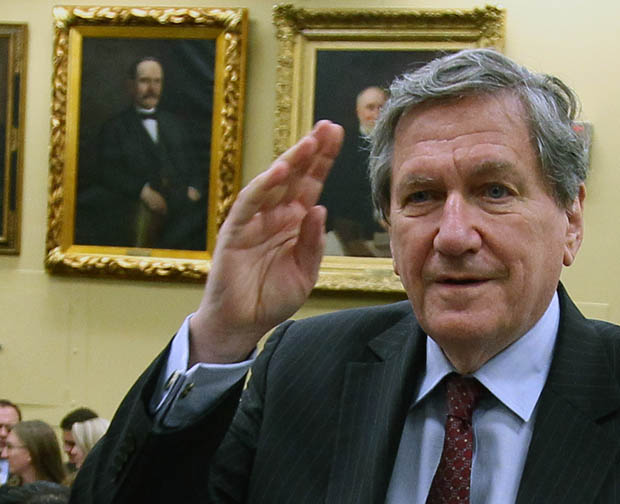
As friends and colleagues from four decades of diplomatic life reflected on the intensity of Richard C. Holbrooke’s dedication, many were not surprised to learn that concerns about the Afghanistan war were apparently among his final thoughts.

After Holbrooke’s death Monday, The Washington Post, citing his family members, reported that the veteran diplomat had told his physician just before surgery Friday to “stop this war.”  But Tuesday, a fuller account of the tone and contents of his remarks emerged.

As physician Jehan El-Bayoumi was attending to Holbrooke in the emergency room at George Washington University Hospital, she told him to relax and asked what she could do to comfort him, according to an aide who was present.

Holbrooke, who was in severe pain, said jokingly that it was hard to relax because he had to worry about the difficult situation in Afghanistan and Pakistan.

El-Bayoumi, an Egyptian American internist who is Secretary of State Hillary Rodham Clinton’s physician, replied that she would worry for him. Holbrooke responded by telling her to end the war, the aide said.

The aide said he could not be sure of Holbrooke’s exact words. He emphasized Tuesday that the comment was made in painful banter, rather than as a serious exhortation about policy. Holbrooke also spoke extensively about his family and friends as he awaited surgery by Farzad Najam, a thoracic surgeon of Pakistani descent.

Holbrooke’s statement was seized upon quickly by critics of the Afghan war debate, some of whom interpreted it as a clarion call to end the conflict. Others viewed his comment as a last-breath disavowal of the Obama administration’s war policy, which has involved a troop surge – which Holbrooke publicly supported – to combat the Taliban. But State Department spokesman P.J. Crowley cast Holbrooke’s words simply as “humorous repartee.”

Crowley said the comment “says two things about Richard Holbrooke in my mind. Number one, he always wanted to make sure he got the last word. And secondly, it just showed how he was singularly focused on pursuing and advancing the process and the policies in Afghanistan and Pakistan to bring them to a successful conclusion.”

Holbrooke’s deputy, Frank Ruggiero, has been named to fill his post as special representative to Afghanistan and Pakistan in an acting capacity, Crowley said, adding that no significant move had been made to select a permanent replacement.

Amir Khan Does Enough to Retain Title

By Lance Pugmire for The LA Times

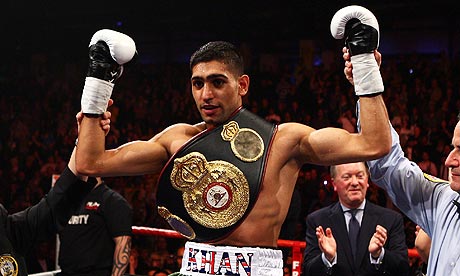
Amir Khan stood on his greatest American stage Saturday, and the fact that he remained standing is why he retained his World Boxing Assn. junior-welterweight world title against Marcos Maidana.

Withstanding a brutal 10th-round assault by the tough, hard-hitting Argentine, England’s Khan convincingly answered allegations that he has no chin and otherwise produced a sensational display of speed and flurry punching to win a unanimous decision by scores of 114-111 (judges Jerry Roth and C.J. Ross) and 113-112 (Glenn Trowbridge).

“I’m a boxer, I know I’m going to get hit.” Khan, 24, said in the Mandalay Bay ring. “He’s a strong puncher. I took everything he gave me.”

Khan (24-1) knocked down Maidana in the opening round, unleashing a quick flurry that closed with a hard left to the body that brought an obvious groan of pain from the challenger.

Maidana (29-2), who had knocked out 27 opponents, couldn’t match Khan’s punching or foot speed, but he did catch the Briton of Pakistani heritage often, like in the second round, when he erupted with uppercuts and rights.

Maidana threw 767 punches to Khan’s 603, but landed only 156 to Khan’s 273. Khan won four of the first five rounds on the judges’ scorecards.

Maidana’s response was pressure that backed up Khan in the sixth and seventh rounds, and dimmed some of the champion’s earlier shine.

The eighth and ninth rounds went Khan’s way and he appeared en route to quieting the critics who still bark about his first-round knockout loss in 2008, producing a resilient, entertaining style that the sport has needed from a young star who previously fought in Europe and first came to the U.S. earlier this year.

This was more than that polite introduction; it was an all-out brawl that produced the epic 10th round in which Maidana appeared poised for a knockout in the first minute.

Maidana staggered the champion to the point he was grasping for support from anywhere — a ring rope, referee Joe Cortez, Maidana — to stay upright.

At one point, it appeared tears were coming from Khan’s eyes as Maidana battered him without abandon. All three judges scored the round 10-8 for Maidana, astounding given that Khan was not knocked down.

The sense afterward was that Khan was more thrilled by his display of toughness than his defensive lapses.

“I’m sure everyone watching my fight knows I’ve made mistakes,” Khan said. “But I worked hard and came back stronger than ever. He’s a strong fighter and punches hard. My chin was tested and I proved today I’ve got a chin.”

Maidana couldn’t get Khan in the 11th round, either, and the champion rallied late in the 12th round with impressive combinations, walking with his arms raised into the embrace of trainer Freddie Roach at the bell.

Obama Prays for Holbrooke’s Recovery

As Reported by The Associated Press

Richard Holbrooke, the Obama administration’s diplomatic point man for Afghanistan and Pakistan, remained in critical condition Saturday night after surgery to repair a tear in his aorta. President Barack Obama Saturday expressed support for Holbrooke’s family in the difficult hour and prayed for his recovery.

“Earlier today, I spoke to Richard Holbrooke’s wife Kati and told her that Michelle and I are praying for Richard. Richard Holbrooke is a towering figure in American foreign policy, a critical member of my Afghanistan and Pakistan team, and a tireless public servant who has won the admiration of the American people and people around the world. I know that Secretary Clinton, Admiral Mullen, Tom Donilon, and other members of our team have been with him at George Washington hospital, and we continue to pray for his recovery, and support his family in this difficult time,” Obama said in the statment.

Holbrooke, 69, was rushed to George Washington University Hospital on Friday morning after he had chest pains during a meeting with Secretary of State Hillary Rodham Clinton, The Washington Post reported. He was almost immediately taken into surgery that extended for 21 hours into Saturday, the paper added.

With Holbrooke in intensive care only blocks away, President Obama’s senior national security advisers met at the White House on Saturday to discuss a major internal assessment of the war in Afghanistan. Obama will review the assessment Monday, with release to the public scheduled for later in the week.

Meanwhile, according to the Post, the U.S. administration officials said that Holbrooke’s condition would not affect the war review, compiled over the past month by the National Security Council staff from assessments made by Holbrooke and his staff and by the military coalition led by Gen Patreaus.

Holbrooke’s long diplomatic experience has given him a unique perspective within the administration and has positioned him perhaps better than anyone to navigate the often messy intersection of diplomacy, counterinsurgency and politics, the newspaper noted. Holbrooke, the newspaper reported, has been a strong advocate of a negotiated settlement of the war and of massive increases in development and governance aid. Under his direction, the number of U.S. civilian officials in Afghanistan has more than tripled, to exceed 1,000. He experienced health problems in August, when he underwent treatment for heart problems.

Blasphemy Trials in Pakistan Reveal a Broken Justice System

By Karin Brulliard and Shaiq Hussain for The Washington Post

With its single dirt road, friendly residents and abundance of drowsing donkeys, this village hardly seems a hotbed of religious radicalism.

Nevertheless, four years ago, dozens of angry townspeople marched and chanted, “Death to the blasphemer!” Their demands were answered. Two years later, court records show, a teenaged Muslim named Muhammad Shafique was sentenced to hang for cursing the Prophet Muhammad and tossing pages of the Koran onto “cow dung and urine.”

Today, an air of regret permeates Kulluwal. Shafique’s accusers fled town, and their relatives now say the allegations were lies. Many residents call the case a setup fueled by political and personal rivalries. But as Shafique waits on death row, his appeal stuck in Pakistan’s glacial courts, no one is quite sure what to do.

“The situation at that time was emotional. It was the responsibility of the police to sift through the facts and find the truth,” said Chaudhry Safraz Ahmed, 42, a community leader whose father was one of Shafique’s accusers. “That did not happen. And Shafique is behind bars.”

Pakistan is in the midst of a heated debate over its ban on blasphemy following the sentencing to death last month of a Christian woman, Asia Bibi. The pope condemned that sentence, which has not yet been carried out. Human rights organizations, meanwhile, have demanded the repeal of a law that they say is used to harass religious and sectarian minorities in this Sunni Muslim-majority nation.

But blasphemy cases, about half of which involve Muslim suspects such as Shafique, also point to a more fundamental problem with grave implications for the nation’s U.S.-backed fight against militancy: Pakistan’s broken justice system, corrupt and lacking in expertise, often rewards vendettas and encourages radicalism.

In this system, religious extremism is less an epidemic than a menacing shadow – just as it is across Pakistan, an unstable democracy where Islamist threats often eclipse the majority’s more peaceful views.

The law against blasphemy – which encompasses vaguely worded prohibitions on insults against Islam – gives radicals a tool with which to bully those who don’t share their hardline religious views. Legal experts say lawyers, witnesses and authorities are frequently intimidated into helping to enforce the law, leading to injustices that bolster militants’ anti-government arguments.

“These are the kind of provisions that allow space for extremists to act with impunity,” Ali Dayan Hasan, a Pakistan-based representative for Human Rights Watch, said of the blasphemy law. “This country is, in that sense, at a crossroads where it is time for people to stand up.”

Just what happened on the evening of March 17, 2006, in this agrarian corner of Punjab province remains in dispute. It took a court in the nearby city of Sialkot 73 hearings over 27 months to gather enough testimony for a verdict. Lawyers’ strikes, witnesses’ absences and a funeral caused delays. In the end, the key evidence against Shafique, now 22, was witness accounts and soiled scraps of pages from a Koran, which the judge deemed impossible to fake.

“The question arises whether . . . a Muslim can think to smear the pages of the Holy Book with cow dung and urine just to create an evidence to involve his opponents,” the judge wrote in 2008. “Not an iota of evidence has been produced by the accused in this regard.”

But Shafique’s family, along with many others in Kulluwal, cite two reasons for such a plot. Shafique, an aspiring electrician, had accused his brother’s wife of adultery. And her alleged paramour had powerful allies, among them a town politician with his own motive: Shafique’s brother was challenging him in a village election.

Whatever the case, word of Shafique’s alleged rampage spread, and a crowd beat him viciously, residents recalled. Qari Qadir, the village imam, said he declined requests to announce the offense over his mosque’s loudspeaker, fearing a “serious situation.” Instead, he led a march the next day at which protesters demanded that police file charges.

“Everybody was against him,” said Ahmed, the community leader. “The police thought it could become a law-and-order situation if they did not take action.”

According to court records, two main accusers – the politician and Ahmed’s father – did not testify. Four young men who did gave nearly identical statements about seeing Shafique curse the prophet and rip the Koran.

Shafique testified that the charges were personal and political, and that he “heatedly” loved Allah.

The court sentenced Shafique to join about 7,600 others in Pakistan on death row, about 60 of whom are convicted blasphemers, according to the Human Rights Commission of Pakistan. The country has not executed anyone since 2008, and blasphemy cases are often overturned on appeal.

But for many, that potential reprieve is little help. Suspects are often murdered in prison or after release, a fact one Pakistani court used to justify the blasphemy law – in prison, it reasoned, suspects are protected from public rage.

Blasphemy was outlawed during British colonial rule but made a capital crime in the 1980s under the Islamist military rule of Mohammed Zia ul-Haq. Now, the law is being scrutinized; a bill in parliament would shorten sentences, require evidence that the crime was committed intentionally and introduce punishment for false accusation.

But while recent international attention has galvanized opponents of the current law, it has also roused defenders. Conservative religious parties have threatened mayhem if the law is changed, an idea they deem a Western conspiracy. One cleric in northwest Pakistan went further, promising $6,000 to anyone who kills Bibi, the Christian woman.

Amid this debate, Mirza Shahid Baig, Shafique’s lawyer, sticks to technical arguments. The wrong police investigated, he said, and there was no serious look at Shafique’s side of the story.

“I am a very true lover of the holy prophet, but this case was totally false,” Baig said one recent afternoon at his dusty basement office in the bustling city of Lahore. “Whether the law is correct or not correct according to the morality, this is not my job.” In Kulluwal, most everyone seems to agree that a blasphemer deserves death. But they are certain Shafique was not one.

The investigators and witnesses who testified against him have all left town, and no one else recalls seeing Shafique’s alleged rampage. Ahmed said his father is ready to recant in court.

“This is a baseless charge,” said Ahmed, calmly sipping tea with Shafique’s parents on a recent day. “The issue is religious, so it had an influence on the police. It interfered with the investigation.”

Another resident, Mohammed Ibrahim, is the brother of the politician who accused Shafique and the father of one youth who testified. Ibrahim said his son has since told him he was pressured to lie, and that his brother forced police to file charges.

“He thought of himself as important, as someone who could not be challenged politically,” Ibrahim said of his brother, who, he added, has moved to Canada. To some Kulluwal residents, the whole affair proves elders should resolve disputes, not courts.

Shafique, meanwhile, writes letters to his family from solitary confinement. In one recent missive, he said that prison guards avoid touching him. He understands, he wrote, for he reserves no sympathy for blasphemers.

“My heart weeps for the innocent ones,” he wrote. “But I have no words of sympathy for the sinners . . . I would have killed them myself if I could.”

Trained by the Best, Amir Khan puts 140-pound Title on the Line

By Bob Velin for Usa Today

The way Amir Khan sees it, he’s spent a lot of time sparring with the best pound-for-pound boxer in the world, and is trained by arguably the No. 1 trainer in the world.

So anything that Argentine power puncher Marcos Maidana throws his way Saturday night at the MGM Grand, well, Khan, who puts his 140-pound title on the line (HBO, 9:30 p.m. ET), has already seen it, or will know how to deal with it. You want speed? Few fighters are quicker than Manny Pacquiao, whom Khan sparred with in the Philippines when Pacquiao was training to fight Antonio Margarito in November. Khan says Pacquiao told him, “I’m the fastest guy he’s ever sparred with.”

How about power, Maidana’s forte? We know how Pacquiao re-arranged Margarito’s face that night in Cowboys Stadium last month. Khan’s trainer, Freddie Roach, who is also Pacquiao’s cornerman, says Khan more than held his own against Pacquiao, and, in fact, laid some pretty good licks on the eight-division world champion.

“Yeah, Freddie likes us to spar when we’re both 100%, and when we don’t take it easy on each other,” Khan said by phone last week. “It’s better for me to get that experience and see how far I am from being pound-for-pound the best fighter in the world, which is my ambition. So, yeah, I really did well against Manny, and it was a good, controlled spar. I controlled it when I wanted to control it.”

Maidana says he feels his power can overcome Khan’s speed. “The speed doesn’t bother me because I know I have 12 rounds,” says Maidana. “But I know one thing, when I hit him with one of the my hands, the fight is over.” Khan says Roach has brought out the best in him as a fighter.
“There were times when I used to fight with my heart too much, and I have to use my brains a little bit more,” says Khan. “I’ve got the boxing skills to do that, you know, with the background of the amateurs, and going to the Olympics and everything. Freddie’s taught me to use my brain and think about things more.”

Khan (23-1, 17 KOs) respects the punching power of Maidana (29-1, 27 KOs), but says, “(Maidana’s) a lot slower than me, he’s very predictable and I think somebody’s got to punch him at the right time.” They have one common opponent: Andriy Kotelnik, who handed Maidana his only loss in February 2009, while Khan scored a near shutout victory against Kotelnik in July 2009.

As for Maidana, Khan says he and Roach have worked on the 27-year-old Argentine’s weaknesses and they expect to exploit those weaknesses.
“I think with boxers at that level, they’re always going to (have) their habits. You’re not going to change,” says Khan. “He can try to change his tactics and stuff, but I think his habits are always going to be there. We know exactly what (Maidana) does wrong, and we’ve just got to capitalize on that. We’ve also been working on the stuff I do wrong. I’ll be watching fights with Freddie and I’ll make a lot of mistakes in fights so we’ve been correcting them as well. So (Maidana) can think I make this mistake and that mistake, but he’s going to be fighting a different Amir Khan on the 11th.”

Roach says Khan has changed his style since his shocking first-round knockout by Breidis Prescott as a lightweight in 2008, the only loss of his career, a loss that led some to believe that Khan does not have a strong chin. Roach says he’s a completely different fighter now. “The thing is, he knows how to set things up now,” says Roach. “He just doesn’t go in there and look for a one-punch knockout. He knows how to break a person down and he knows how to work behind his jab and … reach for the body. He’s just become a completely different fighter. We haven’t lost a round since we’ve been together (at the beginning of 2009). I mean, we haven’t lost one round.”

Khan says he expects to stay at 140 pounds for another 12-15 months before he moves up to welterweight. But first there are some outstanding junior welterweights out there he’d like to fight. “You’ve got Timothy Bradley and Devon Alexander, there’s a lot of big names in that division,” says Khan, who just turned 24 this week. “Fighting them would be good for boxing, because that’s what people want, people want young fighters to fight (each other). They want explosive fighters instead of fighters past their peak.”

Both Khan and Richard Schaefer, the CEO of Golden Boy Promotions, which has Khan under contract, say his next fight will probably be in his native England. There had been talk that a good opponent for Khan to rebuild his popularity in England would be undefeated Brit lightweight John Murray (30-0, 18 KOs). Khan says that won’t happen because he and Murray are not on the same level. “I would get a lot of criticism for that because I’m a world-class fighter and he’s on a domestic level,” says Khan. “I want to fight world-class fighters, and I don’t think he’s in that category.”

Khan says when he moves up to welterweight, there’s no way he’d fight Pacquiao because they have become such good friends, and they share the same trainer. However, “with the strength and power and technique I have, I could fight a Floyd Mayweather,” he says.