Archive for the ‘ Pakistanis ’ Category

Pakistan Rejects U.S. Drone Expansion

By Alex Rodriguez for The LA Times

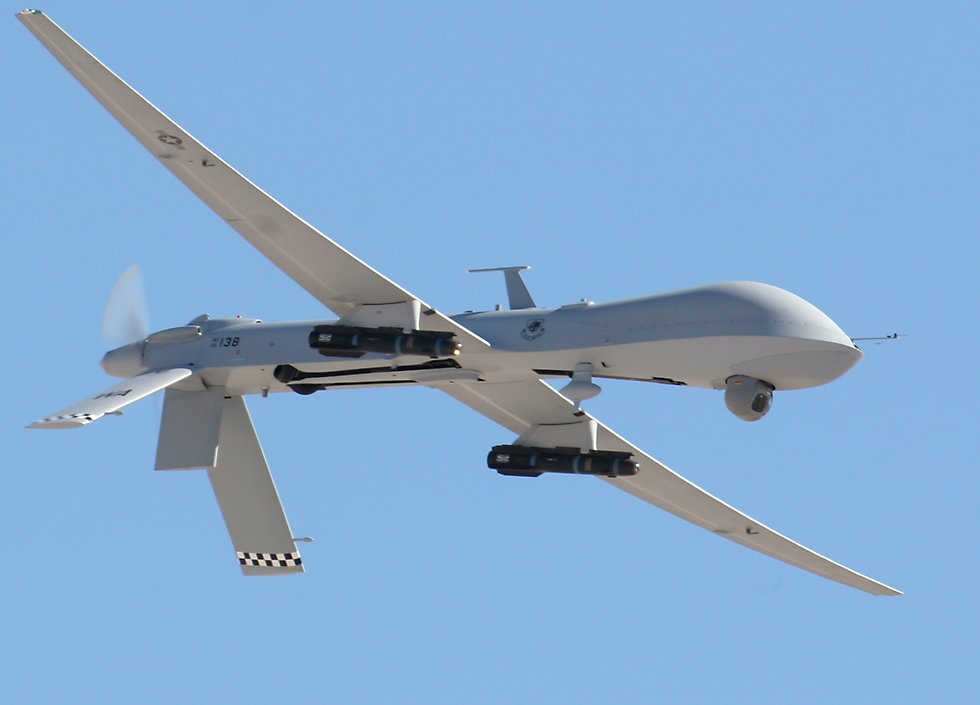
Pakistan has rejected a request from the U.S. to expand a drone missile campaign against Al Qaeda and Taliban militants, a decision that limits Washington’s use of one of its most effective tools against insurgents hiding in the nation.

Pakistani Foreign Ministry spokesman Abdul Basit said Islamabad would not allow the U.S. to carry out drone strikes outside the tribal belt along the Afghan border and repeated the government’s request that Washington abandon its use of drones in Pakistan on the grounds that the program violates the country’s sovereignty.

Basit did not say which additional areas the U.S. wanted to target. However, the Washington Post reported Saturday that the request focused on areas outside the southern city of Quetta, where Afghan Taliban leaders have hideouts.

“We are allies of the United States in the war against terror,” Basit said. “However, Pakistan will not compromise on sovereignty.”

Islamabad’s refusal comes as little surprise, given the animosity that the drone campaign has stirred among Pakistanis for years, but even as the government publicly condemns the drone program, it tacitly allows the missile strikes to take place. Pakistan even provides intelligence to facilitate the targeting of the strikes.

The drone missions are deeply unpopular in Pakistan, where they are viewed as an illustration of President Asif Ali Zardari’s willingness to acquiesce to most demands that Washington makes. Allowing an expansion of the drone program could further aggravate the vulnerability of Zardari’s government, already weakened by its mishandling of this summer’s catastrophic floods and the country’s ongoing economic troubles.

Any expansion of the drone campaign into Baluchistan, the province where Quetta is located, would also represent a dramatic departure in policy for Islamabad because it is not part of the semi-autonomous tribal region where the drones are permitted now.

In addition, the Quetta region is a heavily populated area; the city itself has a population of 900,000. The core leadership of the Afghan Taliban insurgency, known as the Quetta Shura and headed by Mullah Muhammad Omar, has used Quetta and its outlying regions as a sanctuary for years.

In recent months, the U.S. has dramatically stepped up its use of drone strikes in the tribal areas. So far this year, the U.S. has carried out 101 drone missile strikes in northwest Pakistan, compared to 53 in 2009.

The attacks have focused largely on North Waziristan, a primary stronghold of militants and commanders belonging to the Haqqani network, an Afghan Taliban wing regarded by the U.S. as one of the biggest threats facing coalition forces in Afghanistan.

According to the Long War Journal website, which keeps track of drone missile strike statistics, 92 of the attacks this year occurred in North Waziristan.

American Promotes Global Peace by Building Schools

By Samreen Hooda for The Bayor Lariat

He is well known for his best-selling novel “Three Cups of Tea” and as the American who builds schools in Afghanistan and Pakistan, yet his story began with an accident that changed his life.

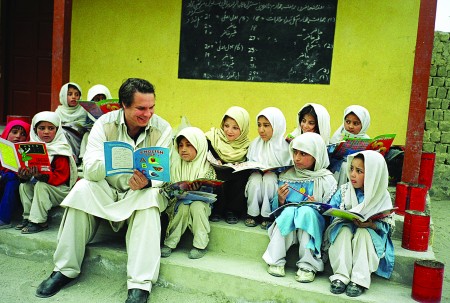
Greg Mortenson first went to Pakistan on an attempt to climb the mountain K2. After getting lost twice, cold, sick and hurt, Mortenson stumbled upon the small village of Korphe where the locals nursed him back to health. It was here, Mortenson said during his recent visit to Dallas, that he first encountered what would become his new life.

“I saw 84 children sitting in the dirt doing their school lessons,” Mortenson said. “Most of them were writing with sticks in the sand. When I saw those 84 children sitting in the dirt and they asked for help to build a school, I made a promise that day that I would help them.”

Mortenson didn’t realize then that the climb ahead was still steep. He came back to the states and wrote letters to 580 celebrities asking them to donate to the cause. He got one response: a check for $100. But he did not give up, speaking at schools and appealing to people’s desire that all children have a right to an education. Mortenson eventually got the funds he needed to begin the school he had promised.

“I built that school and then 78 more and I’m still doing it today,” Mortenson said.

This is his life’s purpose and he constantly strives to fulfill it, said Sadia Ashraf, outreach coordinator for the Central Asia Institute, a nonprofit Mortenson started to promote education in remote regions of Northern Pakistan and Afghanistan. It is his passion for the cause that has made him so remarkable at what he does, she added.

It is this ability to mix passion with a unique perspective that many say makes him a revolutionary.

“I think philosophically speaking he’s looking at an issue that’s been there for many years, looking at it through completely fresh eyes and also looking at it through the perspective of an American, which is a little bit unique,” said Amir Omar, city councilman for Richardson. “And his ability to come back to the States and explain those needs in terms that other Americans would understand, I think that has a really compelling message to it. It not only impacts children in Pakistan but also it impacts the perceptions of Americans.”

Yet Mortenson’s vision is not just designed to change perspectives, but to alter future generations by educating today’s youth, especially women.

“When a girl learns how to read and write, one of the first things she does is teach her own mother,” Mortenson said. “The girls will bring home meat and veggies, wrapped in newspapers, and the mother will ask the girl to read the newspaper to her and the mothers will learn about politics and about women who are exploited.”

Teaching women, Mortenson says, is the way to changing the world.

“When someone goes on jihad, they first should get permission and blessings from their mother,” he said. “And if they don’t, it’s very shameful or disgraceful. And I saw that happen after 9/11. They were primarily targeting illiterate, impoverished society because many educated women were refusing to allow their sons to join the Taliban.”

But education of this sort can only take place when you don’t walk in as strangers to try and change the world, but first become family, Mortenson said.

That happens with three cups of tea.

“The first cup you’re a stranger, second cup a friend and the third cup you become family. That doesn’t mean you just go around drinking tea, having peace in the world,” he said. “But what it means is that first we have to build relationships and get to know each other.”  That’s how Mortenson believes in promoting peace: one school at a time.

Pakistanis for Peace Editor’s Note– Greg Mortenson’s humanitarian work in Afghanistan and Pakistan shows that one man can make a difference and leave a lasting mark in the lives of many. He is a great unofficial ambassador of the United States much like aid worker Todd Shea of Shine Humanity. We commend both individuals and many others for their honorable work on behalf of the people of these two neighboring nations.

Time to Repeal the Blasphemy Law

By Nasim Zehra for The Express Tribune

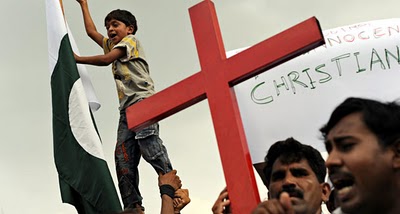
In June 2008, Asiya Bibi, a Pakistani farm worker and mother of five, fetched water for others working on the farm. Many refused the water because Asiya was Christian. The situation got ugly. Reports indicate Asiya was harassed because of her religion and the matter turned violent. Asiya, alone in a hostile environment, naturally would have attempted to defend herself but was put in police custody for her protection against a crowd that was harming her.

However, that protection move turned into one that was to earn Asiya a death sentence. A case was filed against her under sections 295-B and C of the Pakistan Penal Code, claiming that Asiya was a blasphemer. Her family will appeal against the judgment in the Lahore High Court.

The Asiya case raises the fundamental question of how Pakistan’s minorities have been left unprotected since the passage of the blasphemy law. There may have been no hangings on account of the law but it has facilitated the spread of intolerance and populist rage against minorities, often leading to deaths. There is also a direct link between the Zia-ist state’s intolerance against minorities and the rise of criminal treatment of Ahmadis.

Cases have ranged from the Kasur case to the more recent Gojra case, from the mind-boggling row of cases between 1988-1992 against 80-year-old development guru Dr Akhtar Hameed Khan, to the case of the son of an alleged blasphemer, an illiterate brick kiln worker who was beaten to death by a frenzied mob.

Although doctor sahib faced prolonged mental torture, he was saved from the maddening rage that has sent to prison, and in some cases devoured, many innocent, poor and hence unprotected Pakistanis.

There is a long list, prepared by the Human Rights Commission of Pakistan, of unjust punishments handed down to Pakistani citizens whose fundamental rights the state is obliged to protect. Beyond punishments, minorities live in constant fear of being lethally blackmailed by those who want to settle other scores.

Yet most political parties have refrained from calling for the law’s repeal or improvement in its implementation mechanism. When, in the early 90s, I asked Nawaz Sharif sahib to criticise the hounding of Dr Khan, his response was a detailed recall of the story in which Prophet Muhammad (pbuh) went to ask after the health of a non-Muslim woman who repeatedly threw garbage over him. He condemned what was happening but said politics prevented him from doing so publicly. Later, General Musharraf, advised by other generals, reversed his announcement of changing the law’s implementation mechanism. Small crowds protested against it. Among politicians, very few exceptions include the PPP parliamentarian Sherry Rehman and, more recently, the ANP’s Bushra Gohar, who asked for its amendment and repeal.

Already sections of the judiciary have been critical of flawed judgements passed by lower courts in alleged blasphemy cases. Recently in July, Lahore High Court Chief Justice Khawaja Sharif quashed a blasphemy case against 60-year-old Zaibunnisa and ordered her release after almost 14 years in custody. According to the judgment, the “treatment meted out to the woman was an insult to humanity and the government and the civil organisations should be vigilant enough to help such people.” Surely the Bench should know the plethora of abuses that Pakistan’s minorities have suffered because of an evidently flawed law.

A message more appropriate, perhaps, would be to repeal the black law that grossly undermines the Constitution of Pakistan and indeed the teachings of Prophet Muhammad, one of the most tolerant and humane law-givers humankind has known. This environment of populist rage, fed by the distorted yet self-serving interpretation of religion principally by Zia and a populist mixing of religion and politics by a politically besieged Zulfikar Ali Bhutto, must be emphatically challenged. A collective effort to roll back these laws must come from parliament, the lawyers’ forums, the judiciary, civil society groups and the media.

Pakistan Women’s Cricket Team Relishes Spotlight in Guangzhou

As Reported by The China Daily

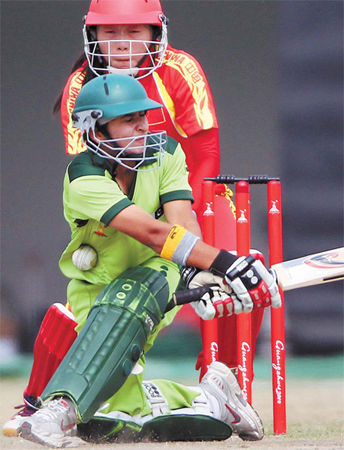
The Guangzhou Asian Games have made Sana Mir, Captain of the Pakistan Women’s Cricket Team, feel like a big-screen star.

Pakistan, the tournament’s No 1 seed, easily won its game against newcomer China by nine wickets on Monday, but that sparkling effort was not what truly impressed Mir.

“We never get this kind of media coverage back at home. I am just so glad the sport made it to the Asian Games,” said the 26-year-old. “There is always TV coverage when the Men’s Cricket Team plays in Pakistan because it is huge, but you never see us playing on big screens or TVs,” she said.

Although Pakistan has 500 to 600 professional women players under the age of 19, and about 1,000 to 1,200 playing at the senior level, they are overshadowed by the men’s game, said Ayesha Ashhar, Manager of the Women’s Team.

“Our earnings can’t compare with what the men make. It’s the love of the sport that keeps us going,” said Mir. “We would like to be treated and rewarded just like the Men’s Team.”

Unlike some of the women players whose families are against them playing due to strict traditions, Mir’s family is happy for her to play the game. “I have to thank my parents and brother for their support, otherwise I couldn’t have made it this far.”

Meanwhile, Ashhar said women’s cricket in Pakistan has improved rapidly over the past two to three years, thanks to an effective domestic structure which helps players to train and progress at a young age.

“The team’s performance at the international level wouldn’t be as good as it is now without that.”

She also said China definitely gave the No 1 seed a surprise in Monday’s match – the first between the two countries.

“For a young team that only has three years’ of history, what China did on the field was excellent – especially the bowling,” the manager said.

Currently all of the Chinese players are converts from other sports, including Rugby, Softball, Volleyball and Athletics.

“Cricket needs many years to become established in a country. For China, the challenge is to attract enough talented players and coaches. But I believe when China chooses to develop a sport, it succeeds,” Ashhar said.

“All we need now is time,” said Liu Rongyao, Manager of China Women’s Team. “In ten years’ time, China will be among the top three women’s teams in Asia.”

‘Pak Must Acknowledge Terrorism is “Home Grown”, Not Indian, Jewish or US conspiracy’

As Reported by ANI

The Tehrik-e-Taliban Pakistan (TTP) attack on Karachi’s Crime Investigation Department compound should serve as an ultimate wake up call for Pakistan to swiftly act against home grown terrorism rather than blaming some Indian or US conspiracy for terror strikes on its soil.

“The assault on the CID centre must be seen for truly what it tells us in plain words: that home grown terrorism is no Indian, Jewish or American conspiracy against Pakistan or Islam,” Pakistan’s leading newspaper Dawn said.

“It also tells us that there are many misguided Pakistanis in our midst, who may even have sympathy for these zealots targeting largely Muslims that would not endorse their narrow minded view of the faith under whose banner they kill and maim innocent citizens,” it noted.

“How else does one explain the transportation of a van full of explosives along with a firing squad armed with latest weapons that came to attack the CID building during the evening rush hour no less?” the paper questioned.

It is high time that Pakistan woke up to the increasing threat posed by terror organisations and took stringent steps to tackle it.

“Much of Islam as we know it in this country today, isn’t exactly in very safe hands; it’s time we woke up to the threat and did something about it instead of issuing token mere condemnations that follow such ghastly acts of sheer murder and mayhem, from Islamabad to the provincial capitals and the other Pakistani capital of sorts, in exile, the faraway London,” the paper said.

It argued over a possibility that Thursday’s bombing took place “because no concrete action was taken after last month’s bombing at the Abdullah Shah Ghazi shrine; nor indeed the ghastly attacks before that on two Muharram processions in December and February.”

Ruing the state of Pakistan’s preparedness in combating terrorism, it expressed the hope that the latest bombing incident- at CID building in Karachi- “given its precision and intensity as well as the target hit, should serve as a final wake up call to law enforcement agencies and the authorities concerned in Karachi.”

India, Pak Almost Agreed on K-deal: Musharraf

 As Reported by The Press Trust of India

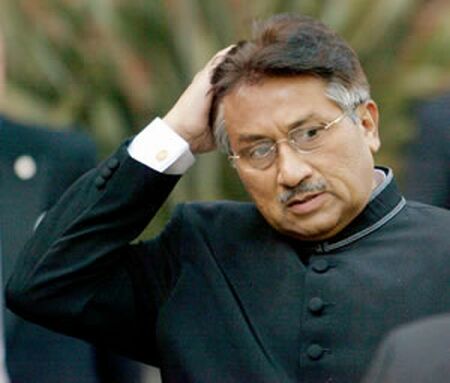
Former military ruler Pervez Musharraf on Friday said India and Pakistan were “moving forward towards drafting an agreement” on Kashmir during his tenure and that Prime Minister Manmohan Singh was genuinely committed to peace in the region. “I was certainly trying for it (peace).

And we were reaching success. I have always praised Prime Minister (of India) for his sincerity to reach peace,” said Musharraf, in an interview with NPR. Manmohan Singh and we almost reached peace on all the three issues…the third one, Kashmir, we had made some certain parameters and we were moving forward towards drafting an agreement,” he added. “Unfortunately, that was not to be, but I tried my best.”

Noting that peace is the only way forward, Musharraf noted that the deadlock on Kashmir was rendering the South Asian Association for Regional Cooperation (SAARC) useless.

“And I think the way forward is peace for the sake of world, which thinks that this is a nuclear flash point; for the sake of SAARC, which is impotent because of the conflict because of India and Pakistan,” said the former president.

“And for the sake of bilateral Pakistan-India advantages socio-economic advantages which will flow from peace between the two countries,” he noted.

Musharraf is in the US to drum up support for his comeback, which he announced earlier this year by launching a new political party — the All Pakistan Muslim League that would contest elections in 2013. Earlier this week, he accused India of trying to create an “anti-Pakistan Afghanistan.” “If I’m allowed to be very, very frank, India’s role in Afghanistan is to create an anti-Pakistan Afghanistan, said Musharraf, speaking at the Council on Foreign Relations on Tuesday.

Today, he characterised the narrative of the Indo-Pak dispute as “impartial”. “So, unfortunate reality, why I have to be so emotional about it, is every time it is Pakistan who is a rogue,” he said.

“Indian bomb is not a Hindu bomb. Pakistan bomb is a Islamic bomb. I think we are being very impartial, we are being very unfair to Pakistan…”

What if Zulqarnain Haider Was Right About Corruption in Pakistan?

By Paul Hayward for The Guardian

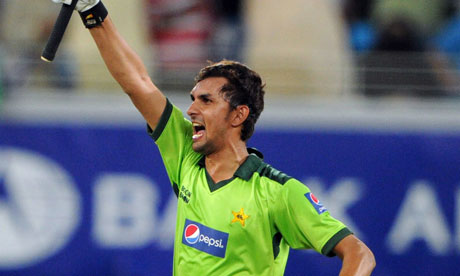
The curse of the whistleblower is to be denounced as a fraud, a fantasist or a weirdo. In America, where they have an organisation for everything, the National Whistleblowers Center in Washington helps people wanting to expose iniquity, much like our own Public Concern at Work. Either may hear soon from a 24-year-old Pakistani wicketkeeper.

Let’s imagine this as a short movie, a study in motivation. Zulqarnain Haider approaches passport control at Heathrow one day and asks for sanctuary. Behind him he has left a wife and two daughters in Pakistan and the national team in Dubai, who learn of his disappearance when they find his hotel room empty.

The immediate cause of Haider’s flight is a conversation he says he had near the team hotel. An unknown man approaches him to say: “If you work with us, we will give you a lot of money. If not, we will not select you again in cricket and, if you go back home, we will kill you and your family.”

Notice the “we” in “we will not select you again in cricket”. One largely ignored facet of this drama is that if Haider’s interlocutor existed he boasted of his power to pick the Pakistan XI. All three layers are present: potential reward, intermediary punishment, and death, not just for him but his family. If Haider is for real, the offer he was made and the warning he was given imply a connection between match- and spot-fixing, team selection and serious organised crime.

In other words they suggest corruption runs through many tiers of Pakistan cricket. In a recent editorial, the country’s Daily Times speculated: “The elephant in the room is the link between people wielding power and the bookmakers. It is alleged that a top bookmaker and mafia don have connections with a powerful intelligence agency in Pakistan.”

This is as far as conjecture can be pushed in the strange tale of Haider’s dash to Britain, which featured a chaotic press conference in the backroom of a curry house in Southall. To summarise, he claims he was approached before the fourth one-day international against South Africa, in which he hit 19 winning runs, and then fled before the fifth, the second target for the alleged match-fixers.

Here in England he has said players’ phones should be tapped to assist evidence gathering and that “a lot of people” are involved in the scam. He has said, too, that he does not want any aid from the British government beyond temporary asylum and has promised to co-operate with the International Cricket Council’s Anti‑Corruption and Security Unit.

To gain a sense of Haider’s motivation it is tempting to imagine him on that flight to London, knowing what was ahead of him and what lay behind: most poignantly, grave danger for his wife and daughters. No conclusion can be drawn from such a filmic and intuitive form of analysis, but most of us would think something fairly big must have spooked him in Dubai to cause him to run away from his family and his livelihood.

We would suspect also that a professional cricketer had to break in the end, and that Haider simply looks like the first to buckle. Heroic status eludes him, so far. No senior Pakistan cricketer, either serving or retired, has praised his actions. Some asked why he waited at least four days after the threat to his life to board a flight to London.

Denunciations fly in from those who say he ought to have “reported his concerns” to the Pakistan team management and the ICC’s detectives, which protocol required him to do.

And from Pakistan’s sports minister, Ijaz Hussain Jakhrani, came the most brutal condemnation: “If he is such a weak and scared person he should not have played cricket in the first place, particularly not for the national team.” Asif Iqbal weighed in: “He has let the motherland down. There wasn’t even a reserve wicketkeeper to replace him. He just flew off.”

This censorious tone obscures the dark realities of the past year. The current cycle of trouble began with the dubious tour of Australia, with its suspicious Sydney Test and nine straight defeats for Pakistan in all formats. After the News of the World’s spot-fixing exposé, Mohammad Amir, Mohammad Asif and Salman Butt are under an ICC provisional suspension and have had their central contracts cancelled by the Pakistan Cricket Board.

As pressure builds in India, the hub of cricket betting, to legalise and therefore regulate the wild east of gambling on the country’s national sport, you wonder why more punters are not put off by all the evidence suggesting choreography on the field of play. It’s an odd kink of human nature that people will go on betting in an apparently bent casino, as if to beat a crooked system confers more pleasure than winning against an honest house.

At the centre of this vast global issue is one man who stepped off a flight in London and told the BBC on Friday: “I want to be a good citizen.”

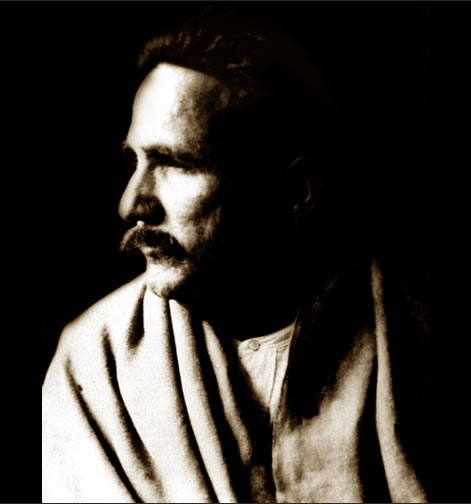
Allama Iqbal: The Great philosopher Poet of Pakistan

By G. Sabir for Iqbal Academy Scandinavia
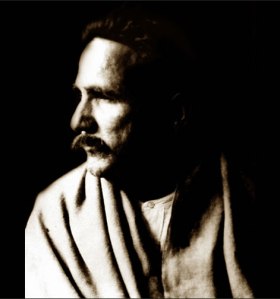
Nature gives birth to great philosophers and poets when the need arises. Natural calamities, wars, epidemics, storms and earthquakes etc causing human sufferings have always given birth to creative minds. Plato was born in 420 BC when his country had almost been ruined as a result of Peloponnesian war. Iqbal was born in 1877 AD when the inhabitants of India were suffering from miseries and deaths while struggling for the Independence of their country from British rule.

The people of Muslim community of India were the worst hit. They were being crushed ruthlessly. At that time Iqbal’s poetry played miraculous role. It awakened the people from slumbering hopelessness, made them stood on their own feet. They were united and then fought courageously for Independence with the result that they achieved a free homeland for them within a few years time.

Creative thinker

This means that despite being a creative thinker, Iqbal was addressing the situation at hand. The ideas he enunciated, though intrinsically creative in themselves and abiding in appeal beyond a particular time and place, were yet primarily meant to salvage the bleak Muslim situation in India and the world at large. This makes Iqbal, in a sense, oriented towards the Indian Muslim psyche and situation.

This framework makes his periodic forays into discussing and suggesting solutions to the problems of the Muslim world at large and his consuming concern with the ‘Reconstruction of Religious Thought in Islam’ (1930) – a logical extension of his role as a modern Muslim ideologue, attempting to analyze and, see Muslim India’s problems and predicament on a wider canvas and in a total context. After all, Iqbal regarded India, if only because of the Muslim numerical strength, as ‘the greatest Muslim country in the world’, to quote his own words. These tasks, both critical and onerous as they were, he fulfilled squarely.

Effective medium

His emotion-leaden and soul-lifting poetry was the medium Iqbal chose to bring his people a new awareness of the depths of degradation to which they had fallen, to diagnose their ailments, their predicament and the prime cause of their decline and to warn them of the dire consequences if they failed to mend themselves in good time. A more effective medium he could not have possibly chosen.

For one thing, poetry is the most powerful medium for touching the deepest emotions of people and for driving a message into their subconscious. For another, the Indian Muslims had been among the most poetry-oriented people in the wold, with a long tradition of readily taking to heart what was written in verse. Political orations may stir and audience into action, but their impact is bound to be restricted to a particular audience and dissipate with time and events. In contrast, a poetic message seeps through the ethos of a nation, working on its psyche all the while.

Political leaders

Hence Iqbal achieved through his poems what a thousand speeches could not. But for the silence mental preparation that had gone on for long decades, the people would not have responded to the call of political leaders – in this case, especially of Jinnah during the 1937-47 epochal decade. No wonder, the pandals of the League sessions from Lucknow (1937) onwards were plastered with Iqbal’s couplets, calling on Muslims to rise and take their destiny in their own. Iqbal was quoted oft and on to rouse Muslims to a new awareness of their destiny. All this had an electrifying effect on the audience since Iqbal, though generally complex and couched in an appropriate idiom, was, straightforward and yielded clear guidelines.

Besides being a poet of extraordinary merit, Iqbal was a thinker of a high order. Thus, while Syed Ahmed Khan, Maulana Mohammed Ali and Jinnah provided political leadership to Muslims, Iqbal took upon himself the task of setting the intellectual tone for Muslim thought and action. (Previously, this was done by Sir Syed’s, writing and the Aligarh school). In addressing himself to this task, Iqbal brought a revolution in Muslim thinking at various levels, he also made a significant contribution to keeping them stolidly anchored to their pristine ideology and historical legacy.

New consciousness

His role in awakening the Muslims to a new consciousness began in 1899 when he recited a poem at the annual session of the Anjuman-i-Islam, Lahore. His moving ‘Nala-i-Yatim’ was symbolic of the echoing cry of the faceless masses of the Indian Muslims, who had long felt themselves sidelined neglected.

What pained him most was the impact of nationalism on various Muslim countries, eroding the pan-Islamic concept, enfeebling the Muslim world and laying it open to European aggression and exploitation.

To the ailments the Muslim world was afflicted with, Iqbal found the solution in Islam and its message. In order to reach the innermost recesses of their consciousness, he invoked the past glory of Islam, telling Muslims of the accomplishments of their ancestors. In so doing, he tried to fight off the prevalent slough of despondency, raising drooping spirit of Muslims and replacing it with a sense of soaring confidence.

Message of hope

Next, he gave them a message of hope. He told them that they could still redeem themselves if they could only recapture their soul and regain their pristine moral and spiritual values.

He emphasized the imperative need to develop human qualities and the right type of character. He attributed their degeneration to their taking to a life of passivity and resignation for several generations. That debilitating trend could be reversed by opting for initiative and endeavour which, he believed, Islam stood for. To him, an active, struggling non-believer was preferable to a sleeping Muslim.

But if Muslims were to be beckoned to a new destiny, they must first be confirmed as Muslims and they must own up their pristine values. This was all he more necessary in the context of the rise of positivism and skepticism, which posed a serious challenge to the modern Muslim.

Modern Muslim

To Iqbal, the task before the modern Muslim is to re-think the whole system of Islam without completely breaking with the past. And this crucial task he undertook in a series of lectures since compiled as ‘The Reconstruction of Religious Thought in Islam’ (1930). In these he argued that Islam represented a philosophy of action, for faith without action was a life bereft of any significance. Seldom does a poet exert such profound influence on the course of history and in changing the destiny of a nation. But Iqbal did because his accomplishments extended far beyond the realm of mere imagination and into the sphere of objective realities, because in the final years of his eventful life he donned the mantle of an ideologue, besides being a national poet. And, to be sure, all of Iqbal’s efforts throughout the whole span of his active life were directed towards the regeneration of Muslims and the resurgence of Islam.

Human rights

The question, ‘do we need Iqbal today?’ The reply is a clear ‘Yes’. It is a need of the time, because the honour of humanity is at stake. The preachers of human rights are abusing humanity. Masses of men are being trampled ruthlessly under the heavy feet of the powerful. There is dearth of love in the world these days. Iqbal is a messenger of love. His message of love is universal… the humanity needs him.. we do need him without any doubt.
How to Win Back Pakistan

By Michael O’Hanlon for Foreign Policy

Nine years into the war in Afghanistan, the United States should have a clear idea of Pakistan’s interests there. It’s time to take these lessons to heart — and start applying the right incentives. As recent intelligence findings reported in late October confirm, Pakistan remains at the heart of the U.S.-led coalition’s problems in Afghanistan — where the war is hardly lost, yet hardly headed for clear victory either. Indeed, Pakistan arguably remains the most complex ally the United States has ever had in wartime, making President Franklin D. Roosevelt’s challenges in dealing with Stalin (a far worse leader, but at least one who knew the outcome he wanted) seem simple by comparison.

Nine years into the campaign, we still can’t clearly answer the question of whether Pakistan is with us or against us. America needs bold new policy measures to help Islamabad — in all its many dimensions and factions — make up its mind.

The crux of the problem is this: Despite allowing massive NATO logistics operations through its territory and helping the United States pursue al Qaeda operatives, Pakistan tolerates sanctuaries on its soil for the major insurgencies fighting in Afghanistan. These include the Afghan Taliban (otherwise known as the Quetta Shura Taliban because its principle base remains in Quetta in the Pakistani province of Baluchistan) as well as the Haqqani and Hezb-i-Islami Gulbuddin (HiG) networks. The Haqqanis straddle the border between the Afghan provinces of Khost, Paktia, and Paktika as well as North Waziristan and other tribal areas within Pakistan; HiG is further north, operating in and around the Khyber Pass connecting Kabul and Jalalabad in Afghanistan with Peshawar and points east in Pakistan. Thus, all three major Afghan insurgent groups have home bases in Pakistan, and despite the occasional drone strike are generally beyond NATO’s reach as a result.

Pakistan has done some worthy things against extremists in its remote northern and western areas in recent years. Specifically, it has recognized the so-called Pakistani Taliban (the Tehrik-i-Taliban Pakistan, or TTP) as a mortal threat to the Pakistani state and responded accordingly. After suffering hundreds of bombings and assassination attacks by the TTP, including the killing of former Prime Minister Benazir Bhutto in 2007 and several thousand casualties a year to its troops and citizens since roughly that time, it has responded in force, particularly over the last year and a half or so. It has swung about 100,000 troops previously guarding the border with Pakistan’s nemesis India to the northwestern tribal regions and cleared several major areas including South Waziristan, Bajaur, and the Swat Valley. This is all to the good.

Pakistanis argue, however, that limited numbers of ground troops combined with the past year’s admittedly devastating floods prevent them from doing more. Quetta, North Waziristan, and other key places remain dens of iniquity, havens for extremists who continue to attack NATO and Afghan troops across the border and then return home for rest, regrouping, and fresh recruiting. Major command-and-control hubs are permanently located within Pakistan as well, and key insurgent leaders like Mullah Omar (to say nothing of Osama bin Laden) probably remain safely ensconced on Pakistani territory where U.S. forces cannot get at them.

But even if limited Pakistani capacity is part of the problem, there’s more at stake. Pakistan worries that President Barack Obama’s promise to start reducing U.S. troops in Afghanistan come July will lead to anarchy and civil conflict next door, and it is retaining proxies that it can use to ensure that its top goal in Afghanistan — keeping India out — can be accomplished come what may. Pakistan would rather have the Taliban and the Haqqanis back in power, especially in the country’s south and east, than any group like the former Northern Alliance, which it views as too close to New Delhi. It is this strategic calculation, more than constrained Pakistani resources, that constitutes Obama’s main challenge in Afghanistan. And it could cost him the war.

Under these circumstances, part of the right policy is to keep doing more of what the Obama administration has been doing with Pakistan — building trust, as with last month’s strategic dialogue in Washington; increasing aid incrementally, as with the new five-year $2 billion aid package announced during that dialogue; and coordinating militarily across the border region. But Obama also needs to think bigger.

First, he needs to make clear America’s commitment to South Asia, to wean Pakistan away from its current hedging strategy. Obama has frequently used general language to try to reassure listeners in the region that there will be no precipitous U.S. withdrawal next summer. But few fully believe him. Hearing stories like Bob Woodward’s accounts of how the vice president and White House advisors have generally opposed a robust counterinsurgency strategy in favor of a counterterrorism-oriented operation with far fewer U.S. troops, they worry that next summer’s withdrawal will be fast. Obama needs to explain that he will not revert to such a minimalist “Plan B” approach under any imaginable circumstances. More appropriate would be a “Plan A-minus” that involves a gradual NATO troop drawdown as Afghan forces grow in number and capability, without necessarily first stabilizing the entire south and east, should the current strategy not turn around the violence by next summer or so. This would represent a modification to the current plan rather than a radical departure. The president can find a way to signal that this is in fact his own thinking, sooner rather than later — ideally before the year is out.

Second, Obama should offer Islamabad a much more expansive U.S.-Pakistani relationship if it helps win this war. Two major incentives would have particular appeal to Pakistan. One is a civilian nuclear energy deal like that being provided to India; Pakistan’s progress on export controls in the wake of the A.Q. Khan debacle has been good enough so far to allow a provisional approval of such a deal if other things fall into place as well. Second is a free trade accord. Struggling economically, Pakistan needs such a shot in the arm, and a trade deal could arguably do even more than aid at this point.

But the key point is this: Pakistan should be told that these deals will only be possible if the United States and its allies prevail in Afghanistan. Small gestures of greater helpfulness are not adequate; bottom-line results are what count and what are needed. If Afghanistan turns around in a year or two, the deals can be set in motion and implemented over a longer period that will allow the United States to continually monitor subsequent Pakistani cooperation in the war.

It may seem harsh to Pakistan that America would put things in such stark terms — but in fact, it is not realistic that any U.S. president or Congress would carry out such deals if the United States loses the war in Afghanistan partly due to Pakistani perfidy. As such, these terms are really just common sense, and they are based on political realism about America’s domestic politics as well as its strategic interests.

America’s current strategy for the war in Afghanistan is much improved. But it is not yet sound enough to point clearly toward victory. The most crucial problem is the role of Pakistan in the war, and so far, the Obama administration is not thinking creatively enough about how to fix it.

The Nexus of US-India-Pakistan Relations

By Manzer Munir for Pakistanis for Peace

As President Obama wraps up his visit to India in the next day, a couple of things are important to point out about relations between the United States and India as well as how Pakistan fits into the equation.

The balance of power between India and the US still lies with the United States, however, India is set to make more and more gains in becoming more influential as its economy grows and as the United States looks to it to counter China in Asia.

The strategic partnership between the two countries and the importance of India for the United States is going to become vital as America uses India to contain China’s influence in the region and around the world.

We do believe that President Obama is correct in stating that relations between the two countries warrant being called the defining relationship of the century as there is no other country that compliments the United States presently in the world as does India. Not only do both countries share democratic ideals and a multiethnic population, but both countries are also increasingly dependent on each other’s economies. Add to this the nuclear cooperation as well as America’s support for India to get a permanent seat on the UN Security Council, and it becomes evident that this relationship will continue to grow over time.

President Obama has offered criticism on Pakistan already but is careful in trying to walk the tight rope act that is India-Pakistan relations. There are certainly more behind the scene steps taking place that will chide Pakistan into doing more. But in our view, the single most important thing that the US and the Obama administration can do is to help India and Pakistan come back to the table to get the peace process moving along. There is widespread agreement with the President’s assessment that a prosperous and stable Pakistan is in the best interests of India, Afghanistan and the region. In this effort, we believe there needs to be done more by all parties involved.

India’s argument has always been that the terrorist infrastructure and support for some anti-India militant groups needs to end before New Delhi will resume the peace process with Pakistan.

India should not refuse extensive trade relationships with the US due to American support of Pakistan as it does not do anything to help India. India realizes the situation both inside Pakistan and America’s dependency of the Pakistan Army’s support in flushing out the Taliban. It would go against India’s interests if it put its relationship and advancement with the United States as being dependent on American support for Pakistan and its vital assistance in the war in Afghanistan and on terror.

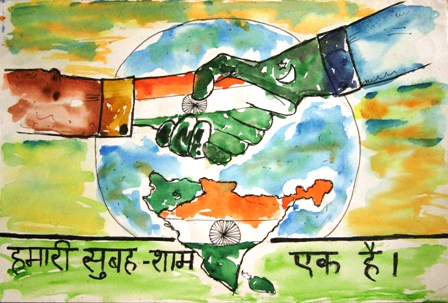
Peace between India and Pakistan and in the Kashmir valley is the only solution to both the conflict between the two nations as well as it is in America’s interests for both countries and the region. Furthermore, peace between the two countries will allow both Pakistan’s full focus on the Afghan border in helping American troops against the Taliban as well as the elimination of anti-India militant groups within Pakistan, many of whom are alleged to still be receiving support from elements within Pakistan’s ISI spy agency, much to India’s chagrin.

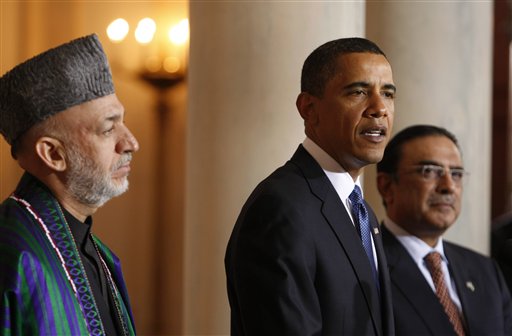
Obama Calls for India – Pakistan Peace

By Andrew Buncombe for NZ Hearald

Barack Obama has called on India and Pakistan to renew their efforts to find peace, even as he said Islamabad was not moving quickly enough to counter militants operating from inside its borders.

In comments that appeared to underscore the high-wire act of diplomacy the US president is trying to pull off while on the three-day visit to India, Mr Obama said Washington would not act as an intermediary between the two countries.

However, he told a group of students in Mumbai: “My hope is that over time, trust develops between the two countries, that dialogue begins, perhaps on less controversial issues, building up to more controversial issues. There are more Pakistanis who’ve been killed by terrorists inside Pakistan than probably anywhere else.”

The president has received criticism from some opposition parties in India after he failed to directly mention Pakistan when he arrived in India on Saturday and spoke of the 2008 attacks at the Taj Hotel and other locations in Mumbai, that left more than 160 people dead.

In the aftermath of the attacks, the so-called “composite dialogue” peace process between India and Pakistan was put on hold and while there have been a series of high-level meetings, the relationship between the two remains tense.

The president, who stayed at the seafront hotel in what aides said was a clear sign of solidarity, had talked about the militants and the terror they wrought, but was criticised by the right-wing Bharatiya Janata Party (BJP) for failing to attribute the blame to Pakistan.

Asked why he had not done so, Mr Obama reflected a reality in which the US is paying billions of dollars to Pakistan in aid as it pushes it to do more against militants responsible for cross-border strikes in Afghanistan.

“Pakistan is a strategically important country, not just for America, but for the world,” he said. “India and Pakistan can prosper and live side by side. This can happen and this should be the ultimate goal. The US can be a partner but cannot impose this process. India and Pakistan have to arrive at an understanding.”

Mr Obama started his visit to India, one of four countries he is including on a tour through Asia, by announcing more than 20 deals he said were worth up to $10bn and would help support 50,000 US jobs.

He also said the US was to relax export controls over sensitive technology, a demand of India’s that will help deepen ties between the two countries. The president is to hold formal talks today with India’s prime minister, Manmohan Singh.

On a domestic level, Mr Obama also recognised he needed to make “midcourse corrections” in the aftermath of last week’s mid-term elections if he is going to win over a frustrated and divided electorate.

India Urged to Revive Pakistan Talks

By James Lamont and Edward Luce for The Financial Times

Barack Obama, the US president, has urged India to step up its dialogue with Pakistan to help to secure the region’s stability, warning that efforts to combat extremism in India’s nuclear-armed neighbour have not progressed as quickly as Washington had hoped.

Mr Obama, on a three-day visit to India, called on Sunday for New Delhi to revive a dialogue with Islamabad badly set back by the 2008 terror attacks on Mumbai by Pakistani militants.

His comments at a town hall event with students in Mumbai were a sharp break from his initial emphasis on creating jobs in the US and gaining more access to the fast-growing Indian economy for US companies.

“My hope is that over time trust develops between the two countries, that dialogue begins,” he told students at St Xavier’s College. “Ultimately India and Pakistan have to arrive at their own understandings”.

Mr Obama cautioned that the economic success that India was enjoying would be imperilled by an unstable region where militant insurgencies raged in Pakistan and Afghanistan, where US troops are fighting the Taliban.

“The country that has the biggest stake in Pakistan’s success is India. I think that if Pakistan is unstable that is bad for India. If Pakistan is stable and prosperous that’s good,” he said.

Mr Obama recommended the two rivals start talking about the “less controversial issues” and then build up to tougher issues, such as the disputed territory of Kashmir, over which the two have fought three wars over the past 63 years.

Manmohan Singh, India’s prime minister, believes the two countries have shared destinies, and has stressed that India poses no threat to Pakistan in an effort to scale down military forces on the border.

Yet Mr Obama’s emphasis of linkages between Pakistan and India, which were separated at the end of British rule in 1947, is highly sensitive. Many Indian leaders gauge the growing maturity of New Delhi’s relationship with Washington by what they call the “de-hyphenation” of India and Pakistan in recognition of India as a global power and vibrant economy.

New Delhi is suspicious of US military assistance to Pakistan and is uneasy about Washington identifying any role for Islamabad in bringing stability to Afghanistan and brokering talks with the Taliban.

Mr Obama warned that Pakistan was confronted by a “profound problem” and that its progress towards eradicating extremism was “not as quick as we would like”. He said that his administration was “engaging aggressively” with the Pakistani government to bring peace and stability.

“There’s a need to look for practical steps . . . Living in the past simply won’t work,” said Stephen Cohen, a senior fellow at the Brookings Institution, in Washington.

“I see a 100 years of conflict between India and Pakistan looking ahead.”

Deadly Bombings in Pakistan Target Mosques, Killing More Than 70 Worshippers

By Owais Tohid for The Christian Science Monitor

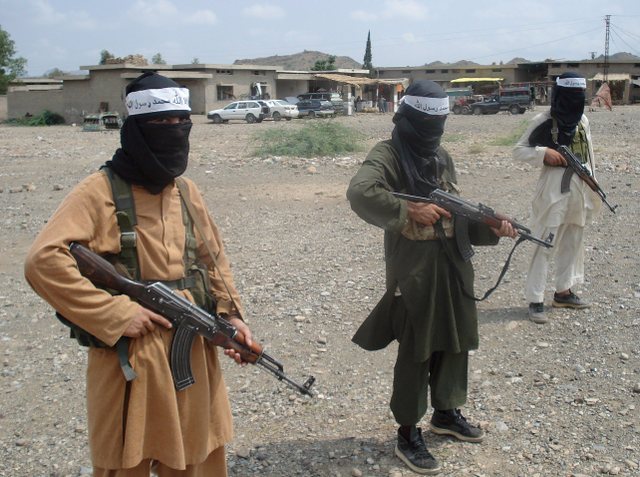
Two deadly bombings today in Pakistan targeted mosques and killed more than 70 worshipers, following an increasingly deadly pattern of Pakistani Taliban attacks on tribes that dare to defy its influence.

In the town of Dara Adam Khel, in Pakistan’s northwest territory, a young suicide bomber detonated his load amid 300 worshipers during Friday prayers. He killed at least 67 people and injured more than 100.

On Friday evening, four grenades were hurled inside a mosque in the Suleman Khel village, which is on the outskirts of Khyber tribal region. The blasts killed at least four people.

The bombing in Dara Adam Khel appeared to be targeting the Akhoorwaal tribe because it has been resisting Taliban expansion. Pakistani Taliban claimed the responsibility.

“There is no right for traitors of mujahids and Islam to live,” read a message from the Taliban, quoting notorious leader Tariq Afridi. Mr. Afridi is the commander of Tehrik-e-Taliban Pakistan (TTP), which is commonly known as the Pakistani Taliban and is linked with Al Qaeda.

The attack was seemingly designed for maximum impact, as the bomb was detonated in the middle of Friday prayers, and combined two increasingly common Taliban targets: the mosque and the jirga (council of tribal elders). The targeted mosque was inside the hujra, or congregation spot, of the tribal council leader.

The suicide attack was one of the deadliest in series of attacks by Al Qaeda and Taliban across Pakistan in which hundreds of people have lost their lives this year.

Taliban commanders are trying desperately to strengthen their hold across the region, say analysts. The US continues drone attacks on the semi-autonomous tribal region of North Waziristan along Pakistan-Afghanistan border while pressuring Pakistan to increase operations there. What’s more, Pakistani security forces are ramping up operations in other tribal regions.

The bombing was meant to “terrorize tribesmen,” says Brig. Mehmood Shah (ret.), a Peshawar-based analyst. “Taliban want to control the region so they are targeting locals who have raised voice against them. They want to eliminate the dissent,” he says.

“It is the worst revenge tactic and showing that they are desperate and weakened,” says Mr. Shah.

Dara Adam Khel lies about 31 miles south of Peshawar and links Orakzai and Khyber tribal region in the west through a hilly terrain. Pakistan’s security forces have been pounding the area with bombs in a bid to rout militants in the ongoing operation. The forces have also been going after them in Khyber region where the militants attack NATO supply convoys.


Eyewitnesses of the mosque attack described the moments before the blast occurred.

“I saw a young boy walking toward the worshipers. The moment he raised his arms, he exploded,” says Mohammad Nasir.

The attack triggered terror alerts and warnings for additional attacks by Taliban across the country, especially in the northwest.

“It’s a cowardly act. The terrorists might try to carry out more attacks but we are not afraid,” says Provincial Minister Mian Iftikhar, whose only son was assassinated by the Taliban three months ago. “It’s a long battle against terrorists and extremists. They can be defeated once we remain united.”

“The US, Afghanistan, and Pakistan should have to continue to wage war to eliminate terrorism,” he says.

In Dara Adam Khel, members of the Akhoorwaal tribe vowed to continue fighting the Taliban.

“We will not let the sacrifices of our tribesmen be in vain. We won’t let them convert our future generation into terrorists and destabilize the country. We will start mobilizing other tribes in our war against terrorists,” says tribesman Javed Ur Rehman Akhoorwaal.

Atif Aslam, Todd Shea & Lanny- We Will Rise Again

Please watch this video and donate to help the people suffering as result of the Pakistan Floods of 2010.

To donate please visit link below:
https://secure.unicefusa.org/site/Donation2?df_id=8320&8320.donation=form1

Pakistan Looks Ahead to End of Afghan War

By Olivia Ward for The Toronto Star

As NATO forces prepare to pull out of Afghanistan, worries about the country falling back to Taliban control are paramount. But in neighbouring Pakistan, where suicide bombings and brazen attacks on security forces have become regular occurrences, the stakes are also high.

“What happens in Afghanistan affects us and vice-versa,” says Akbar Zeb, Pakistan’s High Commissioner to Canada. “We have four million Afghan refugees still living in Pakistan, and it’s in our interest to have a stable country where we can send them back. A Taliban takeover won’t be just detrimental to Afghanistan. It would harm Pakistan and the whole region.”

Zeb said that under the civilian government of President Asif Ali Zardari, relations have improved with Afghanistan, and contrary to reports of friction, there are “frequent contacts” between the two countries that would be helpful in creating stability.

But he added that Canada, and other Western countries, should not repeat the mistakes of the post-Soviet era, when the West lost interest in Afghanistan and Pakistan as soon as the Soviet troops withdrew.

During the rule of Pakistan’s military leader, President Pervez Musharraf, groups of Taliban-linked militants got a foothold in Pakistan, but were not seen as a danger to the country until internal attacks began to spread. Former prime minister Benazir Bhutto was assassinated, and suicide bombings took the lives of hundreds of civilians. Under pressure from the U.S., the Pakistani military began a massive campaign against the Taliban along the Afghan border.

“We have managed to clear a lot of areas from the Taliban,” said Zeb. “Military campaigns are the only language they understand. But they alone won’t help to win the war. We have border regions with a lot of poverty, and backward elements that have been ignored for a long time.”

Canada has announced support for road and rail projects linking Afghanistan and Pakistan to speed trade between the two countries.

“It’s a very good initiative, but scope is limited,” said Zeb.”We wish the projects were larger and not just (confined to) those that involve both Afghanistan and Pakistan.”

Talks with Islamabad are also ongoing on the use of ports in Karachi for shipping out Canadian troops and military supplies from Afghanistan.

But as the war continues, Pakistan has also been urged to be tougher on the Taliban. In the past two years it has carried out attacks against the militants in its border regions with some success, while American-launched drone strikes have killed high-ranking Taliban. The catastrophic floods that wiped out some of the most important agricultural areas of Pakistan brought a temporary truce, but militant attacks have resumed since the waters receded.

Last week, talk of a peace deal between the notorious Taliban-linked Haqqani network, and an opposing tribe in the remote northwest raised fears that it could open the way for Taliban access to strategic border areas. But the U.S. has also urged a Pakistani offensive against the network in North Waziristan, a volatile region where 400,000 civilians are vulnerable to displacement.

According to Pakistani officials, the country has lost some 7,000 security forces in a decade of fighting the militants — more than three times the coalition deaths in Afghanistan. Meanwhile 30,000 Pakistani civilians have died. The border region, a tangle of mutually hostile tribes, remains a haven for militants.

“It’s a difficult balance for Pakistan,” said Zeb. “Foreign troops may leave, and for them Afghanistan is a distant land. We’re Afghanistan’s neighbours. We helped with the fighting in the decade-long war against the Soviets. And we have to live with the outcome of this war.”