Posts Tagged ‘ Karachi ’

Pakistan Offers Mega Projects

By Muzaffar Rizvi for Khaleej Times
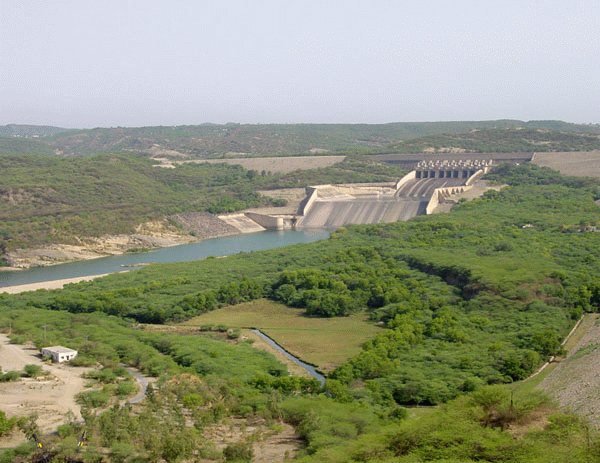
Pakistan is confident to secure UAE and Gulf investments in mega projects especially in the energy- and agro-based industries, its delegates at the Annual Investment Meeting, or AIM, said.

Top officials from the Trade Development and Authority of Pakistan, or TDAP, Abu Dhabi Group and Sindh Board of Investment on Wednesday gave presentations on key investment projects in renewable energy, power generation, agriculture, coal mining and infrastructure developments.

“Pakistan offers various investment opportunities in energy and power sectors as well as in agro-based industries to international and Gulf investors at AIM,” Tariq Puri, chief executive of TDAP, told on the sidelines of the conference.

He said discussions and meetings with government and private levels are being held on the sidelines of AIM and the Pakistan delegation is expected positive results in coming days.

Pakistan’s 80-member trade delegation, led by Federal Minister Makhdoom Amin Fahim, participated in the second-day activities of investment forum and gave presentations on various key projects especially in Sindh province.

Amin Fahim said Pakistan has huge potential for investment in key sectors and the government will go all-out to facilitate the foreign investors especially from the Gulf countries.

Sindh chief minister Syed Qaim Ali Shah said the agricultural economy of Sindh province contributes about 23 per cent to Pakistan’s gross domestic production.

“Keeping in view global food security concerns, the province vast agriculture expanse has capacity to become region’s food basket,” he said.

Shah said agro-related investment projects are ready for investment and introduction to value-addition through use of technology, efficient irrigation system and modern implements can help attain true potential of province agriculture. The Sindh Board of Investment, the primary investment promotion agency of the province, invited Gulf investors and UAE companies in particular to avail the benefits of conducive-investment policies.

“We are offering investment opportunities in agriculture farming, livestock, grain-storage project as well as in infrastructure development projects,” Muhammed Zubair Motiwala, chairman of the Sindh Board of Investment, told

Elaborating, he said the government of Sindh is looking to offer land for establishment of Meat Park in Sukkur and Thatta near Karachi. He said the Rs500 million project will pay back the cost in three to five years and offers a 20-22 per cent IRR to investors.

Motiwala said the provincial government has strived to facilitate and create investor-friendly environment to attract more investment especially in Thar Coalfield, which is declared as a special economic zone. Investors can avail 30-year tax holiday, zero per cent customs duties on import of coal mining equipment and machinery. “We are offering up to 22 per cent IRR to investors on the their investment in Sindh along with other benefits which include repatriation of 100 per cent capital, profits, royalty and zero import duties on capital goods, plant and machinery and equipment not manufactured locally,” he said.

He said that the province has also an estimated hydropower potential of 153 megawatts based on various sites identified along the Sindh canal network.

He said the UAE has showed interest in Thar coal mining and power plant projects. “Al Manhal has shown interest in developing block 2 of the Thar Coalfield. We may discuss the project this weekend and if talks go positively, the UAE firm may invest up to $6 billion in the Thar coal project,” he said.

Motiwala said Thar coal reserves have an estimated potential of generating 100,000 megawatts of electricity for a period of 300 years. “It provides an opportunity for large-scale mining and power-generation over a longer period of time,” he said.

He said Pakistan has been facing an acute shortage of electricity and direly need investments in power-generation projects. According to a delegate, about 700 main industries in Punjab and Sindh are directly affected by electricity shortages in the country.

“About 400 industries in Punjab and 300 factories in Sindh have shut down their operations due to load-shedding and shortage of electricity,” he said.

Motiwala further said Sindh government also offers investment opportunities in renewable energy like solar street light initiative and wind power projects worth around $5.3 billion.

“International investors are in queue to invest in wind power projects because the province has potential to generate 50,000 megawatts electricity through wind turbines across its coastal belt,” he said.

To a question about potential investors in wind energy, he said Hydro China, China Three and NBT/Malakoff, among others, showed interest in 26 projects in the province with installed capacity of 1,800 megawatts.

“We also have offered some renewable energy projects to Masdar. We will discuss some investment opportunities with Masdar officials in Abu Dhabi and expect positive results,” he said.

“The annual radiation of 3,000 hours in Sindh has an endless potential for solar energy,” he said adding that the government is keen to encourage public-private partnerships in energy, power, agriculture and infrastructure development projects.”

India and Pakistan: The Truth of the One Nation Theory

By Aakar Patel for FirstPost

The first time I came to Pakistan, I was taken aback at how good some of the infrastructure was. The airports at Karachi and Lahore were small, but they were efficient and well designed. I think my host told me the Japanese had built one or both of them, and those airports were a very different thing from the ones I had just taken off from in India.

This was when the government made the airports and as with all things the Indian government takes up, our airports were clumsy and barely functional. But a few years later this changed. Today the airports at Mumbai, Delhi and Bangalore are pretty good. They’re not world class (nothing in India can ever be), but they are not embarrassing as the earlier ones were.

The differences that I had thought were significant turned out not to be so.

This led me to think of how similar we were as nations. Not in the sense that Mohd Ali Jinnah meant. I think it is fairly obvious that the character of India and of Pakistan is different when we observe their constitutions. India’s secularism is fundamentally Hindu in its nature. Pakistans constitution is Islamic by design and in appearance.

Though this is an important aspect of nationhood, however, it is only one aspect.

What I mean is how we are one nation in all the negative aspects. Our neighbourhoods and streets are among the most shameful in the world, because we are selfish and blind to the concern of others. Delhi’s drivers are as terrible as those in Lahore (and the women of Delhi and Lahore would concur on the behaviour of the loutish men of those cities). Half of us are illiterate and the half who are literate don’t really read much. The comments sections of Indian and Pakistani websites are the most dreadful in the world, without qualification. Hateful and pedantic, the product of minds who are only functionally literate. We think time will bring some big change in our society but it isn’t easy to see where this change is going to come from.

I know of few other nations where people would not be embarrassed at the thought of keeping servants. Few cultures would be so unaffected, so uncaring of privacy to not mind the constant presence of the servant in the house. I am not even talking about the bestial manner in which we treat them, because every reader of this piece, whether Indian or Pakistani already knows what I mean.

We divide ourselves into nations based on things like which animal the other eats or does not eat. The outsider probably sees no difference between us, and rightly.

We produce very little of meaning to the outside world, and it is tough to think of what our contribution is to the nations from whom we take so much. In science and technology we have nothing to offer the West, despite the boasts of Indians that we gave the world Arabic numerals and zero (I agree with that; we have given the world zero).

Pakistanis stake claim to Islams golden age. Daily Jang columnist Hassan Nisar often takes up this point. He says that the Arabs laugh when Pakistanis owns Islams achievements. What aspect of the conquest of Spain or the scientific revolution in Baghdad did Punjabis and Sindhis participate in?
To the world we are one people in that sense.

My friend Col Iftikhar, from Musharrafs batch in the Pakistan Military Academy, said he discovered this horrifying fact when he went to Mecca a few decades ago for Haj. He met some Saudis, one of whom asked him where he was from. Lahore, said Ifti. Where’s that, the Saudi asked (this was in the 70s). Pakistan, said Ifti proudly. Where’s that, the puzzled Saudi asked. Ifti took out a map and pointed. Ah, said the Saudi to his friends, he’s Hindi.

Our problems are so primitive that they should make us stop and repair ourselves immediately. But they don’t seem to affect us at all. Our media carry on like we are normal people. Reading the militant bombast of the strategic affairs experts in the newspapers of these two nations, the outsider would never suspect that these were two nations unable to even keep their public toilets clean.

Weeping Relatives Demand Pakistan Crash Answers

As Reported by Agence France Presse

Dozens of coffins lined a hallway at Islamabad’s main hospital on Saturday as weeping relatives of the victims of the Bhoja Air plane crash slammed the authorities for the disaster.

All 127 people on board perished when the Boeing 737 from Karachi crashed and burst into flames as it attempted to land at Islamabad airport in bad weather on Friday evening.

The plane was smashed to pieces by the impact of the crash, with wreckage and human limbs strewn over a wide area of farmland on the outskirts of the Pakistani capital.

Staff at the Pakistan Institute of Medical Sciences (PIMS), their faces covered with masks, sprayed air freshener to mask the smell of burnt flesh in the room where the remains lay.

Some remains were no more than body parts, kept on stretchers and covered by white sheets.

The disaster is the city’s second major plane crash in less than two years — an Airblue plane came down in bad weather in July 2010, killing 152 — and victims’ families voiced fury at the authorities.

A visibly dejected woman identifying herself as Mrs Hassan, 45, said she had come to collect the body of her 45-year old cousin Mohammad Yunus, a Muslim scholar who had been running a madrassa (Islamic seminary) in Karachi.

“We could not get the full body. We recognized his hand and hair along with his jacket,” she said.

“It’s sheer incompetence of the government. This is the second major accident here in less than two years but the president and the prime minister remain unmoved.

“If the weather was bad why they did not warn the pilot. Why did they allow the plane to land?”

Abdul Raoof, 55, said he had come for the body of his cousin Ghulam Farooq, 45, who worked for the State Life Insurance Corporation in Islamabad.

“We have been roaming here since early morning. We go inside the mortuary and return in depression after seeing body parts and severed limbs lying there.

“We wait, get impatient and then go inside again only to return disappointed. We are traumatized. We want to get the body and leave this place as early as possible.”

Raoof blamed the airport control tower for negligence.

“If the weather was bad the plane should have been turned away,” he said.

“It is also a mistake of the airline. They sacrificed 127 lives just to save some fuel.”

Many of the family members flown from Karachi on a special Pakistan International Airlines (PIA) flight were inconsolable, too overwhelmed with grief to speak.

One young man wept bitterly for the cousin and aunt he lost in the crash, who were returning from pilgrimage in Saudi Arabia.

“I don’t want to talk, please leave us alone,” he told journalists.

Hospital staff sprinkled rose petals on some of the coffins as a gesture of compassion, while police and soldiers consoled relatives.

At the scene of the crash, sniffer dogs joined rescue workers as they resumed the operation to recover bodies.

Debris was scattered over a two-kilometer (one-mile) area, with torn fragments of the fuselage, including a large section bearing the Bhoja Air logo, littering the fields around the village of Hussain Abad.

Prime Minister Yousuf Raza Gilani told reporters a judicial commission would investigate the crash

A touch of Inspiration Runs Both Ways as Sean Penn Visits Shrine and Edhi Home

By Saba Imtiaz for The Express Tribune

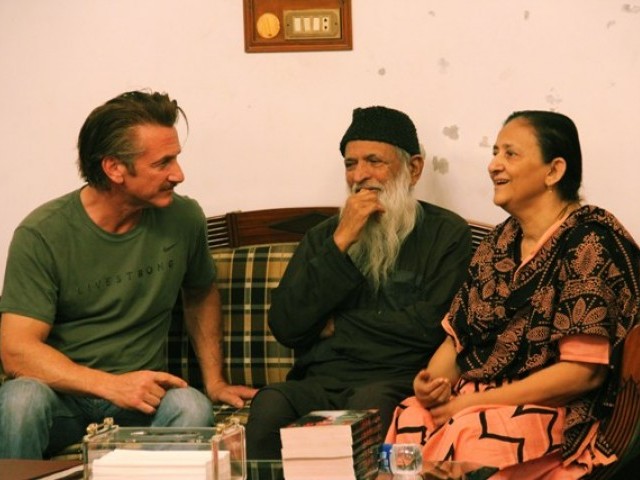
In a t-shirt, jeans and sneakers, the rather unassuming actor Sean Penn stepped out of his car to meet Pakistan’s iconic humanitarian worker Abdul Sattar Edhi and his wife, Bilquis Edhi, at their home for children on Saturday morning.

While the Academy Award-winning star of Dead Man Walking is instantly recognisable to film buffs, the Edhis were unaware of who their visitor was.
Penn, who was accompanied by US Consul General William J Martin and a slew of consular staff, told Edhi that it was a “great honour” to meet him. “Your name is brought up with reverential appreciation,” Penn said. In return, the Edhis were told about Penn’s philanthropic efforts to help the survivors of the earthquake in Haiti in 2010.

Penn toured the Bilquis Edhi Female Child Home in Clifton, dipping into classrooms where Montessori students sang the nursery rhyme ‘Are you Sleeping, Brother John?’ eliciting smiles from him and Martin. The school at the home has 250 students and offers classes till Matric or tenth grade.

“What are they working on?” he asked Ali Edhi, who was showing him around the eighth graders in the computer lab. “Word, PowerPoint, Excel,” a teacher responded. Penn was also told about the number of Edhi centres nationwide and how the organisation is open for ‘everyone – regardless of faith, class, identity.’

As the aroma of food being prepared for lunch wafted in from the kitchen, Penn stepped into a separate room to chat with the Edhis. Bilquis later told the media that Penn said he had wanted to meet them, and there had been no talk of donations or offers of help. “We get enough from Pakistanis, we do not take money from abroad,” Bilquis said. She said Penn had told them that he was happy to be there and that Pakistan was not as bad as people had made it out to be.

Consul General Martin explained: “On the Pakistan Day weekend, we brought Penn to meet Edhi, a great Pakistani who can inspire us all with his big heart and generosity.”

Penn’s first visit to Pakistan included travel to Badin and Karachi and he was expected to leave on Saturday. Before arriving at the Edhi centre, he also visited the nearby Abdullah Shah Ghazi shrine where he paid his respects.

A Nobel Prize for Edhi

Pakistanis for Peace and Manzer Munir cordially and humbly request you to please sign this petition to nominate Abdul Sattar Edhi for the Nobel Peace Prize.

The Nobel Peace prize is an annual prize awarded to individuals who have made formidable contributions to the pursuit of peace and have, through their work, changed the world for the better.

As the founder of Pakistan’s largest welfare organization, the Edhi Foundation and trust, Mr Abdul Sattar Edhi embodies the spirit of this prize, and is a deserving candidate for this honour. He has single-handedly served countless Pakistani’s and has left a lasting impact on his fellow countrymen and the world.

Quite simply, there has never been anyone more deserving of the Nobel Peace prize in its entire history than Mr Abdul Sattar Edhi. Please help us get him his dues by having him finally nominated this year.

Please sign this petition to show your support for the nomination of Mr.Edhi for the 2012 Nobel Peace Prize.


Pakistan’s Hindu Girls Forced into Muslim Marriages

As Reported by IRIN

Sixteen-year-old Ameena Ahmed*, now living in the town of Rahim Yar Khan in Pakistan’s Punjab Province, does not always respond when her mother-in-law calls out to her. 


“Even after a year of `marriage’ I am not used to my new name. I was called Radha before,” she told IRIN on a rare occasion when she was allowed to go to the corner shop on her own to buy vegetables. 


Ameena, or Radha as she still calls herself, was abducted from Karachi about 13 months ago by a group of young men who offered her ice-cream and a ride in their car. Before she knew what was happening, she was dragged into a larger van, and driven to an area she did not know. 


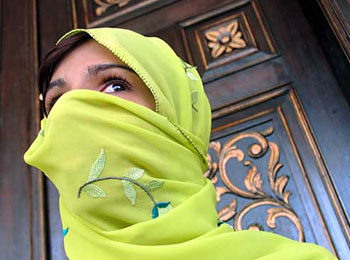
She was then pressured into signing forms which she later found meant she was married to Ahmed Salim, 25; she was converted to a Muslim after being asked to recite some verses in front of a cleric. She was obliged to wear a veil. Seven months ago, Ameena, who has not seen her parents or three siblings since then and “misses them a lot”, moved with her new family to southern Punjab. 


“The abduction and kidnapping of Hindu girls is becoming more and more common,” Amarnath Motumal, a lawyer and leader of Karachi’s Hindu community, told IRIN. “This trend has been growing over the past four or five years, and it is getting worse day by day.

Pakistan is one of several nations across Asia suffering from a shortage of females as sex-selective abortion has played growing role in the deficit. Portable ultrasound machines have made gender selection much easier. A 2005 study quoted by Wiki estimated that more than 90 million females were “missing” from the expected populations in Afghanistan, Bangladesh, China, India, Pakistan, South Korea and Taiwan alone.

He said there were at least 15-20 forced abductions and conversions of young girls from Karachi each month, mainly from the multi-ethnic Lyari area. The fact that more and more people were moving to Karachi from the interior of Sindh Province added to the dangers, as there were now more Hindus in Karachi, he said. 


“They come to search for better schooling, for work and to escape growing extremism,” said Motumal who believes Muslim religious schools are involved in the conversion business. 


“Hindus are non-believers. They believe in many gods, not one, and are heretics. So they should be converted,” said Abdul Mannan, 20, a Muslim student. He said he would be willing to marry a Hindu girl, if asked to by his teachers, “because conversions brought big rewards from Allah [God]. But later I will marry a `real’ Muslim girl as my second wife,” he said. 


According to local law, a Muslim man can take more than one wife, but rights activists argue that the law infringes the rights of women and needs to be altered. 


Motumal says Hindu organizations are concerned only with the “forced conversion” of girls under 18. “Adult women are of course free to choose,” he said. 


“Lured away”

Sunil Sushmt, 40, who lives in a village close to the city of Mirpurkhas in central Sindh Province, said his 14-year-old daughter was “lured away” by an older neighbour and, her parents believe, forcibly converted after marriage to a Muslim. “She was a child. What choice did she have?” her father asked. He said her mother still cries for her “almost daily” a year after the event. 


Sushmat is also concerned about how his daughter is being treated. “We know many converts are treated like slaves, not wives,” he said. 


According to official figures, Hindus based mainly in Sindh make up 2 percent of Pakistan’s total population of 165 million. “We believe this figure could be higher,” Motumal said. 


According to media reports, a growing number of Hindus have been fleeing Pakistan, mainly for neighbouring India. The kidnapping of girls and other forms of persecution is a factor in this, according to those who have decided not to stay in the country any longer. 


“My family has lived in Sindh for generations,” Parvati Devi, 70, told IRIN. “But now I worry for the future of my granddaughters and their children. Maybe we too should leave,” she said. “The entire family is seriously considering this.” 


Pakistanis for Peace Editor’s Note– This is an absolutely despicable practice that the Pakistani government needs to put an end to just like the blasphemy laws of the nation. The religious minorities of Pakistan deserve equal rights, protections and freedoms.

Saving Pakistan’s Face?

By Huma Yusuf for The New York Times

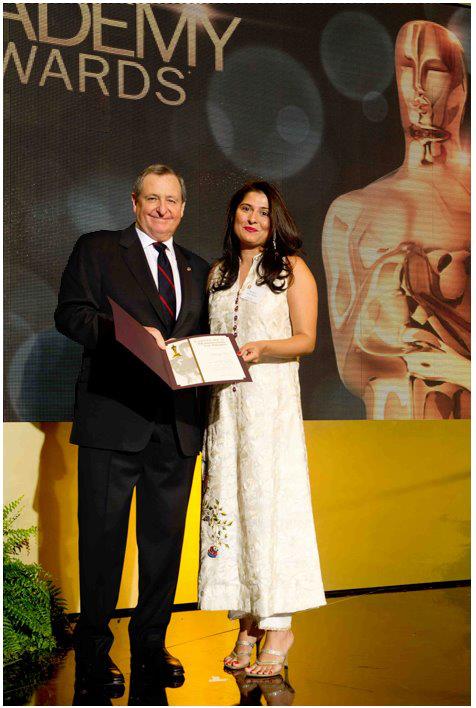
On Monday morning, Pakistanis awoke to news that their country had just won its first Oscar. Sharmeen Obaid-Chinoy and her co-director Daniel Junge received the award for best documentary in the short-subject category for “Saving Face.” The film chronicles the work of the British-Pakistani plastic surgeon Mohammad Jawad, who performs reconstructive surgery on women who were attacked with acid.

The media in Pakistan couldn’t get enough of the story. Television channels repeatedly broadcast footage of Obaid-Chinoy receiving her award. Fans posted on their Facebook pages pictures of the filmmaker on the red carpet. Her acceptance speech was tweeted and retweeted: “To all the women in Pakistan who are working for change, don’t give up on your dreams — this is for you.”

Politicians tried to share the limelight. Altaf Hussain, the head of the Karachi-based M.Q.M. party, congratulated Obaid-Chinoy publicly. Prime Minister Yousaf Raza Gilani announced that she would be given a civilian award for making Pakistan proud and catalyzing social change.

The chain restaurant Nando’s, which specializes in grilled chicken, even designed an advertising campaign riffing on the documentary’s name: “From one hot chick to another: Thanks for Saving our Face.”

But Obaid-Chinoy’s triumph, a rare piece of good news out of Pakistan, also reveals the extent to which Pakistanis have become accustomed to feeling dejected.

For once, Pakistan is making headlines for a positive achievement, not another terrorist attack, political squabble or natural disaster. For Pakistanis who have been struggling to restore their country’s flailing image, it’s a relief to see a talented, young Pakistani woman receiving a coveted international award — and hobnobbing with George Clooney. As the cultural critic Nadeem F. Paracha put it in a tweet, “Viva la @sharmeenochiony! The pride of Pakistan is in their artistes & intellectuals. Not in bombs and bans!”

But what does it say about a country that it would rejoice at attracting global attention for rampant violations of women’s rights?

Pakistan is the world’s third-most dangerous country for women. Over 150 Pakistani women are the victims of acid attacks each year. Activists for women’s rights claim that only 30 percent of acid cases are reported and that this form of violence is extremely widespread because acid is easily available and inexpensive. Last year, the government passed the Acid Control and Acid Crime Prevention Bill, which imposes on attackers prison terms from 14 years to life and fines of up to one million rupees (about $11,000). But the new law has yet to be rigorously implemented, and attitudes toward women’s rights are far from reformed.

Obaid-Chinoy’s film highlights these problems — hardly a point of pride for Pakistanis.

Once the Oscar high subsides, Pakistanis will have to contend with the fact that their nation remains notorious for its challenges, violence against women included. Then the question will be, can the hundreds of thousands of Pakistanis who rooted for Obaid-Chinoy at the Academy Awards muster the same enthusiasm to tackle the problems that her work exposes?

Huma Yusuf is a columnist for the Pakistani newspaper Dawn and was the 2010-11 Pakistan Scholar at the Woodrow Wilson International Center for Scholars in Washington.

Pakistan is a Nation at Odds With Itself, U.S.

By Stephen Magagnini for The Sacremento Bee

KARACHI, Pakistan — On a moonlit Thursday night in February, a television network executive hosted an elegant affair for journalists and diplomats at his villa above the Arabian Sea.

Karachi’s privileged dined on lamb, shrimp, chicken, mutton and fettuccine in mushroom sauce, and were surprised by a quartet of wandering minstrels, soulful Sufi poets who serenade for their supper, uncorking ballads about love.

On the south side of this city of 18 million, a group of Afghan refugees, who scrape out a living collecting cardboard and other recyclables in a slum straddling a swamp of open sewage, were mopping up gravy with roti – Pakistani bread.

About 900 Afghans live in this fetid slum, down the street from poor Pakistanis and water buffalo. They earn about $60 a month and survive on bottled water, chewing tobacco and roti.

“We’re happy in Pakistan,” said 33-year-old Shaezhad, leader of a cardboard collection station. “We get food and respect.”

At the party across town, talk-show hosts and other Pakistani elites blew cigarette smoke into the faces of U.S. journalists, criticizing U.S. foreign policy and the toll the war in Afghanistan has taken on their country.

Many Pakistanis resent American aggression in the region and want more respect from U.S. policymakers, but they don’t hold individual Americans responsible. Yet everywhere we went, we were held to answer for U.S. wars and Americans’ deep misunderstanding of Pakistan.

“You are arrogant, playing video games with our lives,” Abdul Moiz Jaferii, political analyst for CNBC Pakistan, said over lunch one day in Karachi. He was referring to U.S. drone attacks that have killed Pakistani and Afghan civilians.

“And we hate America because the U.S. has always been the biggest, closest ally of the military dictators. You have done nothing to help democracy.”

The impact of the war in Afghanistan has permeated nearly every pore of this country of 180 million. More than 2 million Afghan refugees have fled to Pakistan, and some have brought a culture of violence. Since 9/11, 35,000 Pakistanis have been killed in terrorist attacks by suicide bombers and other war-related violence, according to Pakistan’s intelligence agency. The victims include 6,000 soldiers and 29,000 civilians.

The unpredictable violence and the kidnapping of foreign workers have created a climate of fear in this country. We weren’t allowed to visit villages outside urban areas, where 40 percent of Pakistanis live. Two shotgun-wielding security guards protected our buses in Islamabad, Lahore and Karachi. We entered our hotels through metal detectors and were rarely allowed to interact with average citizens in public places.

Pakistan – strategically located between Afghanistan, India, China and Iran and influenced by Saudi Arabia – remains an enigma to many Americans, who aren’t sure whether it’s friend or foe, democracy or military dictatorship.

Pakistan has provided critical support to NATO troops in the Afghan war – drones are launched from here, NATO supplies are sent through this country, and Pakistani troops have helped recapture terrorist strongholds along the volatile Afghan border.

But distrust of the United States in the wake of deadly drone attacks and the deaths of 24 Pakistani soldiers in a cross-border battle in November is such that rather than calling for more U.S. aid to build needed power plants, schools and hospitals, a growing number of Pakistanis want nothing to do with the United States. The government of Punjab – Pakistan’s most powerful state with about 90 million people – has decided to reject U.S. aid.

The killing of Osama bin Laden by U.S. Navy SEALs in Abbottabad in the heart of this country embarrassed and angered the Pakistan military and made Americans question why bin Laden was allowed to live in essentially a resort town. Some U.S. politicians have called for an end to the $18 billion in financial aid pledged since 9/11.

An Islamic republic?

Some of the world’s largest, most beautiful mosques are here, and to celebrate the Prophet Muhammad’s birthday on Feb. 4, 10,000 people named Muhammad gathered in prayer in Karachi.

We saw few women wearing hijabs, or head coverings, except those at Islamabad’s Faisal Mosque, which can hold 10,000 people for Juma, or Friday prayer.

Professional women drive cars, dress like their counterparts in U.S. cities and run government ministries, clinics and newsrooms. Women, who constitute 52 percent of the population, are increasingly getting advanced degrees. There’s a Pakistani proverb: “Every girl who goes to university gets a husband.”

Despite Islam’s ban on liquor, at a party in Islamabad guests of both sexes repaired to a speakeasy in the basement to drink wine or Johnny Walker Black and smoke cigars.

Though most marriages are still arranged, as many as 20 percent are “love marriages,” said Samina Parvez, director general of the government’s external publicity agency. “The divorce rate is also increasing – it’s about 10 or 15 percent,” Parvez said. “The majority of us are not practicing Muslims.”

Kamoran Sani, sales and marketing director for the Sheraton Hotel in Karachi, declared, “What you’ve heard about the Islamic Republic of Pakistan’s a big farce. There are orgies, voyeurs’ lounges, raves.”

A diverse nation

Pakistan didn’t become a nation until the British sliced India into Muslim and Hindu majority states in 1947. Pakistan – an Urdu acronym for Punjab, Afghania, Kashmir, Sindh province and Baluchistan (“stan” means nation) – varies wildly from region to region.

“There is no such thing as Pakistan,” Jaferii said. “First comes your family, then your clan, third your region, fourth your province – the nation comes a distant fifth.”

Much of rural Pakistan is a feudal society dating back to the 13th century. Mullahs, or religious leaders, still invoke blasphemy laws exacting punishment against those accused of insulting Islam. Last year, the governor of Punjab was killed by his bodyguard for criticizing the law as he sought a pardon for a Christian woman sentenced to death.

But Pakistan has tremendous religious and ethnic diversity. Muslims include Sunnis, Shiites, Ismaelis, Ahmadis and Sufis – each practicing their own brand of Islam. At Lahore University of Management Sciences, I chatted with Muslims, Hindus and Christians who were all friends.

From the Sufi love poems to Pashtun folk songs about social justice, music plays a key role in Pakistani identity.

In the center of Karachi there’s a Catholic church – St. Patrick’s Cathedral, built by the Jesuits in 1931. There’s a Jewish cemetery. Sikhs worship throughout Pakistan. The ancient city of Taxila was occupied by Alexander the Great and reflects Persian, Moghul, Buddhist and Christian traditions.

Pakistan’s future

Sixty percent of Pakistan’s population is under age 30; half is under age 20. Half the kids haven’t been to school, and fifth-grade students are reading at a second-grade level, said Nadeem ul-Haq, deputy chairman of the government’s planning commission.

“We have 2 million kids a year entering the labor force. What are these kids going to do?” ul-Haq said. There is no building boom to provide jobs, and foreign investments have been scared away by terrorism.

“Entrepreneurship is the key thing we need to focus on,” he said. “Overseas Pakistanis have been very entrepreneurial, sending back $13 billion a year to their poorer relatives.”

From 7-Elevens to Silicon Valley firms and venture capital funds, ex-pat Pakistanis are thriving in the United States. The 500,000 Pakistanis in the United States, including 100,000 in California, send $100 million a year to charities in Pakistan, said Ahson Rabbani, CEO of I-Care, which connects donors with 30 nonprofits.

In Northern California, Pakistanis raised more than $100,000 for Pakistani flood relief efforts spearheaded by cricket star Imran Khan, who may lead the country if his party wins the next election. Khan has gained credibility by building a cancer hospital for the poor in honor of his late mother. His party includes a women’s wing that has direct access to him.

Philanthropy is playing a growing role in Pakistan, financing schools in poor villages and slums. The Citizens Foundation is educating 100,000 students.

“I mentored six girls,” said Karachi journalist Samia Saleem. “One was 13 and said she didn’t want to get married – she wants to be a teacher.”

Ali Shah Haider, 17, wants to be a commercial pilot. “I sleep from 2 p.m. until 4:30 p.m., then go to work at the textile factory from 8 p.m. to 5 a.m. to support my family – there are 12 of us. I do my homework between shifts.”

A nation’s dreams

Though life seems cheap in Pakistan, the people are upbeat survivors who often describe life as bo hat acha, which means “great!” in Urdu, their main language.

Last year 1,575 people were killed in Karachi, where 2 million weapons are in circulation, said Francisco Quinones of Arcis International Security. A doctor was killed in Karachi the day before we landed. Violence has been blamed on the Taliban, rival political gangs, Sunni and Shia militants, rogue security forces, and Afghan refugees.

Some refugees have been recruited by the Taliban. Others like Shaezhad, who collects recyclables in the slums of Karachi, are glad to be alive under the green and white crescent flag of this country.

Still, he wants to go home to Afghanistan. “We want our land back, we want to live with respect and we want employment.”

Azhar Abbas, the managing director of Geo TV news who hosted the party in Karachi, said that “democracy is taking hold” in his Pakistan despite the violence many here believe followed the U.S. war on terror.

The business editor of daily newspaper the News, Amir Zia, said the United States can still play a positive role in Pakistan. “If Americans pull out without getting the job done, the Islamic extremists will say it’s a victory and will become much more organized.”

But at the National Defense University, business and technology expert Bilal Munshi called Pakistan “a psychologically scarred nation suffering from a mass form of PTSD (post-traumatic stress disorder).”

If the 4 million young people entering the workforce each year get jobs, “we will be a power … but if they don’t see a future they’re going to pick up the gun, and you’re going to be in real trouble.”

The U.S. can help develop Pakistani schools, Bilal said, “but don’t interfere in our internal affairs – let us do things our way.”

Made in India’ Show in Pakistan as Both Talk to Boost Trade

By Surojit Gupta for The Times of India

Trade ties between India and Pakistan are expected to get a boost as New Delhi reaches out to the business community across the border, starting Monday to assure them about the positive impact of normal trade ties. Commerce minister Anand Sharma will undertake a rare journey to Pakistan, leading a large delegation of senior officials and top businessmen as the two hostile neighbours take baby steps to normalise trade and economic relations.

The private sector led by industry chambers has put up an “India show”, in Lahore and Karachi – the first ever trade exhibitions from India where over 100 exhibitors are participating. Firms representing pharmaceuticals, textile, gems and jewellery, chemicals and petro-chemicals are showcasing products.

The move is a follow up to the efforts to normalise trade ties. The Pakistan government announced granting of Most Favoured Nation (MFN) status to India in November last year. But, criticism from a section of industry in Pakistan has forced Islamabad to take measured steps on the issue. But, officials said they were optimistic that by the end of 2012, the transition to full MFN status would be complete.

Officials said they will launch outreach programme to assure businessmen in Pakistan that Indian goods will not swamp the Pakistan market if trade is normalised. “We will tell them that there are enough trade safeguards measures to ensure that Indian goods do not flood the Pakistani market. Let us first liberalise trade and see the impact,” said a senior government official.

Pakistan allows exports to India but has a positive list of 1,938 items which are officially allowed to be imported from India. Latest data shows that formal trade between India and Pakistan rose to $2.7 billion in 2010-11 from $144 million in 2001, while informal trade including third country trade is estimated at $10 billion, according to a Ficci status paper. “I have no doubt in my mind that bilateral trade, which currently stands at $3 billion, can be raised to $10 billion if trade through third countries (Dubai, Singapore and Central Asian countries) is channelised into direct exchange between the two countries,” said R V Kanoria, president, Ficci.

The government has undertaken a series of measures to increase bilateral trade. There is a move to open a second gate at the Attari-Wagah border, which is expected to increase the number of trucks crossing the border to 500-600 daily from 150-200 at present. Pakistan has agreed to remove restrictions on the number of commodities traded by the land route once the infrastructure in Wagah is ready, while both countries have agreed to avoid arbitrary stoppage of goods at ports. Suggestions have been made for opening up of an additional land route at Monabao-Khokhara Par on the Sindh border for faster movement of goods.

“We are taking significant steps to improve the border infrastructure. India has invested nearly Rs 150 crore to develop infrastructure at the Integrated Check post near Attari,” said a senior government official. He said the visa regime for business travel is also expected to be liberalised soon with multiple entry visas for 10 Indian cities, along with exemptions for police reporting. The formal announcement is expected to be made soon. Talks to expand trade in petroleum products are progressing, while efforts are also on to start negotiations for trade in electricity between the two nuclear-armed neighbours. Both sides have agreed on grid-connectivity between Amritsar and Lahore, which would pave the way for trade of up to 500 MW of power.

Trade experts said they were optimistic about the latest moves and said the effort will go a long way in helping faster regional integration. “The positive spin off for normalisation of trade is enormous. Pakistan has given signals and India now needs to take the initiative. Normalisation of bilateral trade relations will help in putting much of the political bickering on the backburner,” said Biswajit Dhar, director-general at Research and Information System for Developing Countries, an economic and trade thinktank. Experts said there was huge potential for forging joint ventures between Indian and Pakistani companies in sectors such as information technology, fish-processing, drugs and pharmaceuticals, agro chemicals, chemicals, automobile ancillary and light engineering.

Pakistanis for Peace Editor’s Note– The best chance of peace between India and Pakistan can only be achieved through trade and normalization of ties. The India Show at the Lahore International Expo Centre Feb 11-13 will go a long ways to bridging the gap and move us closer to achieving peace one day, which is the best scenario for both nations long term.

For Many in Pakistan, a Television Show Goes Too Far

By Declan Walsh for The New York Times

One morning last week, television viewers in Pakistan were treated to a darkly comic sight: a posse of middle-class women roaming through a public park in Karachi, on the hunt for dating couples engaged in “immoral” behavior.

Panting breathlessly and trailed by a cameraman, the group of about 15 women chased after — sometimes at jogging pace — girls and boys sitting quietly on benches overlooking the Arabian Sea or strolling under the trees. The women peppered them with questions: What were they doing? Did their parents know? Were they engaged?

Some couples reacted with alarm, and tried to scuttle away. A few gave awkward answers. One couple claimed to be married. The show’s host, Maya Khan, 31, demanded to see proof. “So where is your marriage certificate?” she asked sternly.

This hourlong spectacle, broadcast live on Samaa TV on Jan. 17, set off a furious reaction in parts of Pakistan. Outrage sprang from the Internet and percolated into the national newspapers, where writers slammed Ms. Khan’s tactics as a “witch hunt.”

“Vigil-aunties,” read one headline, referring to the South Asian term “aunty” for older, bossy and often judgmental women.

Now, the protests are headed to court. On Friday, four local nongovernment organizations will file a civil suit against Samaa TV in Pakistan’s Supreme Court, hoping to galvanize the country’s top judges into action.

“Journalists don’t have the right to become moral police,” said Adnan Rehmat of Intermedia, a media development organization that is among the petitioners. “We need to draw a line.”

Images of moral vigilantes prowling the streets have an ominous resonance in Pakistan, where many still recall the dark days of the Islamist dictator Gen. Mohammad Zia ul-Haq in the 1980s, when the police could demand to see a couple’s nikkahnama — wedding papers — under threat of imprisonment.

But the strong reaction is also drawn from a pressing contemporary worry: that the budding television media, seen as a force for democracy and greater social freedom for much of the past decade, have lost their way as part of a cutthroat battle for ratings.

“It really aggravates me that the media is using their power to intrude and invade our privacy, often with no good reason,” said Mehreen Kasana, a 22-year-old American-educated blogger from Lahore, who wrote a widely circulated protest against the Samaa TV show.

The controversy has rekindled a debate about the direction of Pakistan’s TV industry. Since liberalization in 2000, the sector has exploded from one channel — the state-controlled one — to more than 80 today, 37 of which carry national or local current affairs.

The media revolution has transformed social and political boundaries: in 2007, feisty coverage played a central role in pushing Pervez Musharraf toward the exit; in recent weeks it helped guard against a possible military coup.

But television is also a lucrative business controlled by powerful, largely unaccountable tycoons. Last year Pakistan’s television stations had advertising revenues of more than $200 million, according to Aurora, an industry journal — 28 percent more than the previous year.

Amid stiff competition for viewers, channels have relied on populist measures — rowdy political talks shows and, in recent times, vigilante-style “investigative” shows modeled on programs in neighboring India.

Some have a noble objective: holding to account crooked public servants, police officers and even fellow journalists. But others have veered into territory that could be described as Pakistan’s answer to Jerry Springer — voyeuristic, mawkish and intrusive.

In recent months, one reporter screamed at a man accused of child rape as he awaited trial outside a courthouse; another hectored a man said to be a self-confessed necrophile inside a jail cell; and a TV reporter “raided” a gathering of whisky drinkers, even though alcohol flows freely at many media parties.

Abbas Nasir, a former head of Dawn News television, said he was “nauseated” by some coverage.

“Hosts are under pressure to bring in ratings, and there is carte blanche to do the most bizarre things,” he said.

Another critic derided such reporters as “pussycat vigilantes” because they avoided challenging rich or powerful Pakistanis, whose Western-style lifestyles go unexamined.

“They only go after the people they know will not bite back,” said Nadeem Farooq Paracha, a culture writer.

Ms. Khan’s show touched a raw nerve because it combined simmering concern over media ethics with wider fears about society’s conservative tilt. Even General Zia’s son was appalled. In answer to a question on Twitter, Ijaz ul-Haq, a politician from Punjab Province, said he was “still in shock by what I’ve heard about her show.”

In a telephone interview on Tuesday, Ms. Khan rejected her critics, calling them “an elite class that don’t even watch my show,” and said the show merely intended to highlight the dangers that unaccompanied youths face in Karachi.

She also denied that there was anything unusual about asking couples for their wedding certificate — even though she does not carry one. All of “Pakistan knows me and my wedding pictures,” she said. “So I don’t have to.”

But on Wednesday, Samaa TV issued a formal apology for her show, followed by a short clip of Ms. Khan, sitting on a bed, offering an apology of sorts. “I never intended to make you teary-eyed or hurt you,” she said.

The furor has renewed long-standing demands for media regulation. With the state-run Pakistan Media Regulatory Authority seen as ineffective, the organizations approaching the Supreme Court on Friday hope the judiciary can help. “We need to hold the media to account,” Mr. Rehmat said.

But others argue that involving the courts, with their history of heavy-handed interventions, could open the door to state licensing of free speech. “It could backfire,” said Beena Sarwar, a journalist who helped rally protests against Ms. Khan’s show. “The media needs to do this themselves.”

Amid the polemic, there is one bright spot: the use of Twitter and Facebook to stoke debate has shown how, even as social space contracts in a turbulent society, the virtual space is opening up new possibilities.

But so far, the use of social media has been largely confined to the country’s English-speaking minority. It was striking how little attention Ms. Khan’s show received in the Urdu media, which is read or watched by the vast majority of Pakistanis.

“My real worry is that Pakistan is moving rightwards, and this time the face won’t have a beard,” said Mr. Nasir, the former head of Dawn News television. “And before people know it, they won’t know what’s hit them.”

Pakistanis for Peace Editor’s Note- Samaa Tv and host Maya Khan ought to be ashamed of themselves for calling this program journalism. Vulture reporting is more appropriate. Highly intrusive and showing a complete disregard for private citizens who are meeting in a public place is no place for a TV channel.  This certainly strengthens the religious extremists in Pakistan, shoving their brand of austere Wahaabi Islam down the throats of the majority Barelvi/Sufi population of Pakistan.

Meanwhile the Pakistani Telecom Authority is curtailing freedom of speech by mandating mobile phone operators to ban certain ‘dirty’ words, as the Pakistan Electronic Media Regulatory Authority lacks the moral and legal mindset to stop a television channel on trampling citizen’s privacy and freedoms. They should shut this show immediately and get this so called ‘reporter’ off the air.

Imran Khan’s rally defies Pak’s ruling party

As Reported by IBN Live

Pakistan’s former cricketer-turned-politician Imran Khan brought at least 100,000 people into the streets of Karachi on Sunday in a massive rally that increases pressure on the civilian government and cements his standing as a political force.

Khan, 59, is riding a wave of dissatisfaction with the government of President Asif Ali Zardari, who co-chairs the ruling Pakistan People’s Party, and is facing challenges from the military, the Supreme Court and political opponents after a year of cascading crises.

Police estimated the rally had been attended by between 100,000 and 150,000 people. Khan’s Pakistan Tehreek-i-Insaaf, or Pakistan Movement for Justice, estimated the crowd at more than 500,000.

Even at the lower estimate, it is among the largest political rallies held in Karachi in recent years.

Khan, in a rousing speech punctuated with patriotic musical refrains, pledged, if elected, to curb Pakistan’s endemic corruption.

“We need a government that changes the system and ends corruption, so we need the PTI to come to power,” Khan told the crowd. “The first thing we need to do is end corruption.”

“I promise we will end big corruption in 90 days,” he added.

Khan’s massive rally comes at a time of crisis in Pakistani politics. Tensions are rising between Pakistan’s civilian leaders and its generals over a memo that accused the Army of plotting a coup after the US raid that killed Osama bin Laden in May.

There are signs that Pakistan’s powerful Army is fed up with Zardari and wants the Supreme Court or early elections to force him from office. The Army chief dismissed any rumours of a coup, however, as “speculation”.

“It’s time for a change and only PTI and Imran Khan can bring about that change,” said Sabina Saifi, 28, a school teacher. She was wearing a PTI cap and had come with her two brothers.

Several recent polls have shown Khan is Pakistan’s most popular politician. He is especially favoured in urban areas.

“He is riding a wave of popular politics right now,” said Mutahir Ahmed, a professor of International Relations at the University of Karachi. “There is a lot of frustration among ordinary people, as well as political workers right now, which he is cashing on.”

On October 30, Khan staged a similar rally in Lahore that observers said pulled between 100,000 and 200,000 people, then one of the largest political rallies ever in Pakistan.

“He has… managed to bring people out on the roads, and this is a big achievement, especially in Karachi, where three months back people were not ready to come out of their houses because of rampant violence and killings,” Ahmed said.

But popularity doesn’t always translate into political power. The majority of Pakistan’s voters are rural, where feudal relationships determine generations of political loyalty.

Khan, for all the enthusiasm shown for him among young people and the urban middle class, has yet to demonstrate the party machinery that the PPP and the Pakistan Muslim League-N faction have had decades to perfect.

In the last 15 years, the PTI has only briefly held one seat in Parliament – Khan’s. Most analysts say Khan could score an upset of 20 to 30 seats in Parliament, but that’s not enough to give him the premiership. It is enough to make him a major political player, however – or even a kingmaker.

“It’s too premature to get into speculation of whether he becomes prime minister or not but the chances of his party getting into Parliament look very good,” said security analyst Imtiaz Gul.

He also has a touchy relationship with the United States, Pakistan’s ally and aid donor.

He says that if elected prime minister, he would end cooperation in the fight against militants based in tribal areas, end the covert campaign of bombings by US drones and refuse all US aid, which totals some $20 billion since 2001.

Relations with the United States have reached a crisis point because of a November 26 cross-border incident in which NATO aircraft killed 24 Pakistani troops. Pakistan has since shut down NATO supply routes into Afghanistan and demanded an apology.

NATO’s full report on the incident, which Pakistan has already rejected based on media leaks, is expected to be released on Monday. It reportedly faults both sides in the incident.

Khan’s anti-American stance is often thought to reflect the views of the security establishment, which includes the powerful Army and its Directorate of Inter-Services Intelligence.

The US ambassador to Pakistan, Cameron Munter, however, said in November that he didn’t see Khan as anti-American.

“Imran Khan is, as far as he tells me, for the same kind of values that we think are important,” Munter said on a popular talk show on November 22. “He says he’s for democracy, he’s for governance that’s clean, he’s for economic growth. We’re all for those things.”

Pakistan’s Floods: Deja Vu, All Over Again

By Ishaan Tharoor for Time

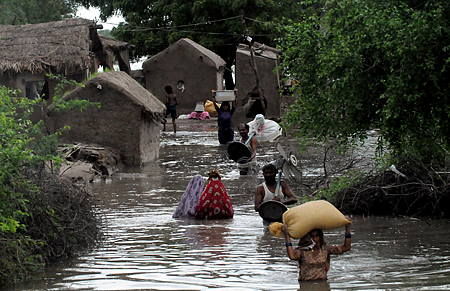
These days when it rains in South Asia, it doesn’t just pour — it floods. A month of monsoon squalls has deluged hundreds of towns and villages in northwest India and Pakistan. The latter has seen the most acute flooding, and, on all evidence, has been the least prepared for it. At least 233 people have already died and 300,000 are now stranded or in makeshift camps — a figure that will surely grow. Officials in Pakistan claim some 5.5 million people so far have been affected by rising waters. That’s still only a fraction of the 20 million hit by last year’s catastrophic rains, but the forecast looks ominous.

Neva Khan, Oxfam’s Pakistan country director, spelled out the dimensions of the crisis on the relief agency’s website:
There is an urgent need to provide immediate and life saving relief to the millions affected. It hasn’t stopped raining in Sindh for the last 10 days. Large swathes of land are underwater and people are desperately awaiting relief. They have lost their crops, homes and livestock for the second time – and been pushed from last year’s disaster to this one.

Sindh, the vast, fertile province abutting the Arabian Sea, appears the worst affected. Across Pakistan, some 900 villages have been wholly submerged and millions of hectares of arable land — some still irrevocably damaged by last year’s floods — are under water.
What’s most depressing about the situation now is how keenly it echoes the 2010 calamity. Omar Waraich, TIME’s Islamabad correspondent, wrote this excellent piece a year ago for the magazine’s international editions. As the waters rise, Pakistan faces a familiar cocktail of maladies from last summer.

Then, the civilian government headed by the unpopular President Asif Zardari was hampered by political infighting and its fundamental subservience to the real power of Pakistan’s influential military. Now, not much has changed (though Zardari is still in his position, a surprise to some). Then, militants and terrorists were exposing the fragility of the Pakistani state with cold-blooded strikes on some of country’s major cities. Now, after a rancorous summer of barb-flinging with the U.S., not much has changed either — not least when suspected al-Qaeda allied militants raided a prominent naval base in Karachi earlier this year. Then, the cash-strapped government pleaded for foreign assistance. Now similar calls are being issued, with similar notes of desperation.

In the weeks to come, inquests will be made into whether enough had been done to shore up riverbanks, provide shelter and food for the hundreds of thousands left destitute for over a year, and prepare for the next season’s rains. Already, there are reports of angry civilians blockading roads — like last year — demanding outside intervention and aid. Cities like Karachi, which this summer has seen a spasm of internecine blood-letting, will be further strained by refugees fleeing the countryside.

On many levels, though, the disaster is not man-made. The floodplain of the great Indus river, home to over 100 million people, birthed one of the world’s first ancient civilizations. But the river likely also swallowed it up. Because of its own particular ecology, the Indus can’t be controlled by similar mechanisms of levees prevalent in the West. And climate change has made weather patterns more unpredictable and volatile. This BBC story from a year ago cites the research of an Indian scientist: Professor Rajiv Sinha, from the Indian Institute of Technology in Kanpur, who has had first hand experience of Asian river floods, takes a more strident position.

“What all the climate models predict is that the distribution of monsoon rains will become more uneven in the future,” he told BBC News.
“Total rainfall stays the same, but it comes in shorter more intense bursts.”

In August 2010, more than half of the normal monsoon rain fell in only one week. Typically it is spread over three months.
Professor Sinha remarked: “Rivers just can’t cope with all that water in such a short time. It was five times, maybe 10 times, more than normal.”
So, if the unusually intense 2010 monsoon is the shape of things to come – and that is uncertain – the future may hold more flood misery for the people of Pakistan.

It’s a closing sentence that has proven sadly prophetic.

Poetry Soothes the Pain in Pakistan

By Nahal Toosi for The Associated Press

The outrage was swift after Pakistani security forces shot dead an unarmed young man in the southern city of Karachi, an incident caught on videotape and broadcast widely. Editorial writers demanded justice. Television talking heads decried the brutality of the men in uniform.

And then, a few poets got to work.

“No regard of life! No fear of Allah! Animals in jungle are better than you,” one English-language poem posted on YouTube rails at the culprits in the June incident. Another, in Urdu and circulated on Facebook, mourned victim Sarfraz Shah, who had “told his mom he will return home early.”

Pakistan is a country that reveres poetry, gently weaving it into daily life, and the last decade has provided no shortage of material. The rise and fall of a military ruler, the demands of a foreign superpower, the devastation of Taliban bombs — these themes and more have crept into Pakistani poems.

Some of the resulting verses carry overt messages about specific events. Often, though, the approach is more subtle, and occasionally, it’s tinged with humor.

“Of course, everything which is happening around a poet, it has an effect,” said Shahzad Nayyar, a published poet based in the eastern city of Lahore. “Such … events, which are causing destruction, which are causing loss to man, material and property, they are affecting poets a lot.”

Although Pakistan is just 64 years old, its people’s poetic tradition is centuries old and is intertwined with that of the rest of South Asia, while also influenced by the Persians. Urdu is the most widely used language, but even regional languages, such as Pashto and Sindhi, have notable poetic histories.

Today in Pakistan, one can find poetic verses on the back windows of taxis, on the sides of delivery trucks and atop gravestones. Newspapers regularly publish poetry, while Pakistani politicians, such as the country’s ambassador to the U.S., post verses on their Twitter feeds or use them in speeches.

Poetry recitals — known as “mushairas” — can draw thousands of spectators and last deep into the night, with audiences shouting encouragement to the men and women onstage. Sometimes, mushairas are part of larger gatherings, such as weddings or trade conferences; others are intimate affairs.

The country even has a national holiday dedicated to a poet-philosopher, Allama Muhammad Iqbal. Iqbal’s writings were seen as an inspirational force toward the creation of Pakistan as a Muslim homeland in 1947, though he died in 1938.

Of the 1,000 books published each year in Pakistan, there are some 50 books of poetry, said Saleem Malik, vice chairman of the Pakistan Publishers and Booksellers Association. While a handful of poets may earn enough to live on writing alone, at least for a while, most are engaged in other professions.

Many of the poetry books are self-published and distributed for free among friends. Still, that doesn’t account for the poetry that appears in other forums, such as magazines or websites such as Facebook, a popular setting for younger poets who can’t afford to publish their own books.

Perhaps the most popular form of poetry in Pakistan is the ghazal, which is made up of five or more units of two lines each and often sung.

Some of the most well-known Pakistani poets say that despite the material provided by the turmoil of recent years, they are careful about how they word their poems and often prefer to use indirect language and symbolism. This is in part to avoid being labeled a “propagandist.”

“It loses your emotional power when you are direct — it becomes like a slogan,” said Farhat Abbas Shah, a poet especially popular with younger Pakistanis.

Iftikhar Arif — a poet so famed in Pakistan that one section of his many, teeming bookshelves is devoted just to academic tracts written about him — said poets should aspire to write in a universal manner that can be appreciated beyond national borders and withstand the test of time.

There are poems written from other periods of turmoil in Pakistani history that are still relevant today because of this approach. “There is a history, perhaps more honest, more correct, more sincere, written by poets,” Arif said.

The line between direct and indirect is a fine one, however, and over the decades, some of Pakistan’s most popular poets have gone back and forth.

The late Habib Jalib, often described as a “revolutionary” or “the People’s Poet” raged against political tyranny, and even referred specifically to former U.S. president Jimmy Carter in his famed collection called “Ten Poems.”

Kishwar Naheed, a spry 71-year-old who is considered one of Pakistan’s pre-eminent feminist poets, is among those who occasionally embraces the direct approaches. In “A Mourning Poem for Bajaur,” Naheed decries the violence gripping Pakistan’s northwest regions bordering Afghanistan:

“Coffins have become so numerous, That the city is shrinking,” the poem begins.

A later verse: “We have the same court-yards, the same threshers. But bullets jump through them, Riddle holes in my fields, and in the bodies of my children.”

Naheed, who has published more than a dozen books of poetry, says every couple of months she receives threats because of her poems.

“They may say, ‘If you continue like this, you may have an accident in your car,'” she said, with a grin. “But I don’t mind having such reaction. If you don’t have a reaction, that means you have no appeal.”

Pakistani poets insist that their community is largely a peace-loving, liberal bunch — though many point out that they may feel just as much ire for U.S. actions toward Pakistan as they do for religious extremists.

Still, militant movements and their sympathizers also use poetry as a tool. After the U.S. killed Osama bin Laden in a nighttime raid in May, a group at Punjab University in Lahore advertised a poem and essay contest dedicated to glorifying the al-Qaida chief.

Taliban operating on both sides of the Pakistan-Afghan border, where the Pashtun ethnic group dominates, often use poems and chants, shared by way of CDs and cell phone recordings, to reach out to a largely illiterate population and persuade ordinary citizens to resist foreign troops.

Much of the poetry of Pakistan is not high art, but rather street-level verses exchanged by text messages, often with anonymous authors. Much of it is laced with the bitter, resigned humor of a people beset by poverty and downtrodden by corrupt elitists.

One popular Punjabi-language poem chastised former military ruler Pervez Musharraf, who was eventually ousted in 2008.

“You rush to Washington all the time, and please Bush again and again,” it says. “Beg at his feet all the time, and threaten the oppressed. Why don’t you confront the oppressors?”

Pakistan Attractive as Growth Outweighs Violence, Atlas Says

By Naween A Mangi for Bloomberg

Atlas Asset Management Ltd., manager of Pakistan’s best-performing equity fund, said Asia’s cheapest stock market offers “attractive returns” as the economy grows even with mounting terrorist attacks and political violence.

“I really don’t spend any time worrying about law and order,” said Muhammad Abdul Samad, 40, who oversees $77 million in Pakistani stocks and bonds as chief investment officer at Atlas Asset in Karachi. “If you want to make returns, you have to look at the positives: we have a huge market of 180 million people and the economy is still growing.”

Gains in National Refinery Ltd. (NRL), the second-biggest oil processor, and Attock Petroleum Ltd. (APL), a fuel retailer, boosted Atlas’s top fund in the year ended June, Samad said. For the fiscal year starting July, it’s seeking investments in banks, oil and gas, and fertilizer industries, he said.

Pakistan’s benchmark stock index, which trades at 6.4 times estimated earnings, the lowest in Asia, has fallen 9 percent since the end of June as escalating violence hurt business confidence. Prime Minister Yousuf Raza Gilani’s government aims to boost economic growth to 4.2 percent in the year to June 30, 2012, from 2.4 percent in the previous 12 months.

Turmoil on global stock markets may prompt the fund to change its asset allocation, increasing cash holdings or preferring defensive stocks with higher dividend yields, Samad said on Aug. 5, when the MSCI Asia Pacific Index tumbled more than 4 percent to cap its worst week since October 2008.

“Selling from foreign portfolio investors is affecting the local market,” Samad said.
Last year, global funds bought $344 million worth of Pakistani stocks compared with net sales of $65 million, according to central bank data. More than 35,000 Pakistanis have been killed in terrorist attacks since 2006 as Taliban militants retaliate against military offensives in the northwest, according to the government.

Samad’s 650 million rupee ($7.5 million) Atlas Stock Market Fund outperformed all Pakistan’s 30 equity funds, according to Invest Capital Markets Ltd. The fund returned 40 percent in the 12 months ended June 30 and beat the 29 percent return of the benchmark Karachi Stock Exchange 100 Index.
His top five holdings as of June 30 were Nishat Mills Ltd., MCB Bank Ltd., Pakistan Oilfields Ltd., United Bank Ltd. and Allied Bank Ltd.

“Banks are going to post attractive earnings because if interest rates come down, they will lend more to the private sector and if they don’t, they will invest in high-yielding government securities,” said Samad, adding that the three banks are among his top picks this fiscal year. “Banks are in a comfortable position either way.” Pakistan’s central bank unexpectedly cut the benchmark interest rate to 13.5 percent on July 30, after holding it at 14 percent, one of the world’s highest, for four straight reviews.

In the oil and gas sector, Samad likes Pakistan Oilfields, Pakistan Petroleum Ltd., and Attock Petroleum. Pakistan, which imports 80 percent of its fuel needs, is increasing production to reduce reliance on shipments from overseas. He also favors Fauji Fertilizer Ltd., the biggest urea maker, and Fauji Fertilizer Bin Qasim Ltd. (FFBL), a fertilizer producer.

Samad said investors who “select carefully” can make a return of as much as 30 percent this year because Pakistani stocks are “heavily undervalued.” Samad said he keeps about 4 percent of his fund “active” and may sell if a stock rises by 10 percent to 15 percent.
“We don’t go for speculation or price momentum and we don’t churn the mix too much,” said Samad, who has an MBA from Southeastern University in London and has been at the fund management firm since 2005. “If the company is fundamentally strong, it will definitely outperform the market.”

There are 137 funds in Pakistan overseeing 250 billion rupees as of June 30, up 25 percent from a year ago, according to Invest Capital, equivalent to 4 percent of the 5.9 trillion rupees sitting in the nation’s bank deposits.
“Active fund management, timely investment and divestment, as well as the performance of some stocks like Attock Petroleum were main reasons for Atlas’s outperformance,” said Mazhar Sabir, an analyst at Invest Capital Markets in Karachi.
Samad said Atlas may introduce a government bond fund this year targeting investments of three to five years and is considering a dividend-yield equity fund and a sector-specific stock fund next year.
“In the short run, law and order problems definitely hurt investors,” Samad said. “But in the long run, there’s no impact. And we’re here for the long run.”

Karachi Attack: Pakistan Officers Face Court-Martial

As reported by the BBC

Three Pakistani naval officers are to face a court martial on charges of negligence after a militant attack on a naval air base in Karachi in May.

Ten soldiers died and 15 were wounded in the attack which took place at the Mehran naval aviation base on 22 May. It took the security forces some 17 hours to secure the base.

A naval official said the three officers were facing trial because they held positions of responsibility, not because of a connection to the attack.

The accused are Cmdr Raja Tahir, base commander at the time of the attack, and two officials beneath him, at the rank of captain and commander, according to naval sources quoted by several news agencies.

Daring attack

Cmdr Tahir was replaced two days after the attack during which several foreigners were taken hostage before being rescued.

“They face charges of negligence during the attack on PNS Mehran in May,” an unnamed official told Agence France Presse.

No date was given for the start of the court martial.

“They are being tried because they were at a responsible position, and were responsible for the security and other affairs of the base,” an unnamed official was quoted as telling Reuters.

The Pakistan Taliban said the raid was to avenge Osama Bin Laden’s killing by US special forces in the Pakistani town of Abbottabad on 2 May.

The attack at the heart of Karachi, the country’s economic hub and Pakistan’s largest city, underlined the military’s vulnerability.

Two attackers were killed and a third blew himself up during the attack when militants disguised as naval officials stormed three hangars housing aircraft at the naval base.

During the daring raid, they used rocket-propelled grenades to damage and destroy several warplanes, including two multi-million dollar anti-submarine and marine surveillance aircraft – the US-made P-3C Orion.

The planes were believed to be crucial for Pakistan’s maritime surveillance capabilities. A former Pakistani navy commando, Kamran Ahmed, has been detained along with his brother in connection with the attack.