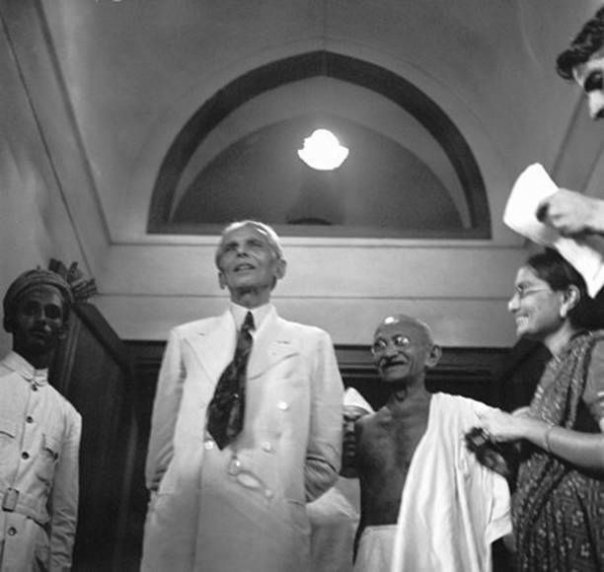
Posts Tagged ‘ Pakistanis ’

Envoy Insists Pakistan Will Tackle Terrorists As Attack Kills 3

By Nasir Habib for Cnn

Islamabad, Pakistan (CNN) — Gunmen in Pakistan opened fire on oil trucks bound for NATO forces in Afghanistan, setting some 20 vehicles on fire and killing three, police said Monday. The attack came shortly after Pakistan’s ambassador to the United States vowed his country would go after terrorists on its soil.

Naeem Iqbal, a police spokesman, said five people were wounded in the attack on tankers parked on a main road outside a housing complex near the capital city of Islamabad. Efforts to put out the blaze are ongoing, he said.

Bin Yamin, a deputy police chief, said eight gunmen entered the area on Monday around 12:15 a.m. local time. He said they told people near the trucks to run away and that most did. Then they opened fire.

The tankers were parked in the vicinity of an oil refinery where they were going to go to pick up fuel for NATO forces in Afghanistan, Yamin said. Video images of the scene showed firefighters working to put out flames that stood out in the night against the overturned trucks.

On Sunday, Pakistan’s ambassador to the United States insisted his country would go after terrorists on its soil and needed only “technical” help from Washington, not U.S. troops on the ground.

Husain Haqqani, told CNN’s “State of the Union” that Pakistan would reopen a NATO supply route into Afghanistan “relatively quickly,” probably in less than a week.

Pakistan halted the convoys Thursday after officials blamed cross-border NATO helicopter fire for the deaths of three Pakistani soldiers. Haqqani said the United States and Pakistan were investigating the killings together. He said Pakistan will move against militants on its own schedule, not Washington’s.

“Pakistan is saying we will take care of all terrorists on the Pakistani side of the border, but we will do it on our timeline,” Haqqani said Sunday. “We cannot always follow a timeline that our allies set for us, because we are allies, not a satellite.”

Pakistan has lodged protests against NATO helicopter incursions into its territory — which the International Security Assistance Force says its rules of engagement permit — and is very sensitive about reported U.S. drone strikes in Pakistan.

There were a record number of drone strikes last month, according to a CNN count. On Saturday, three suspected drone strikes killed 18 people.

Pakistani intelligence officials said 10 people died in one drone strike targeting a militant hideout, four people died when a vehicle was struck, and four others were killed when another hideout was targeted.

All three occurred in the Data Khel area of North Waziristan. The intelligence officials did not want to be named because they are not authorized to speak to the media.

Security analysts have described North Waziristan as a haven for various factions of Afghan and Pakistani Taliban and al Qaeda militants. The majority of reported strikes this year have hit targets in the district, a mountainous tribal area on Pakistan’s border with Afghanistan, analysts said.

The United States does not officially acknowledge that it has unmanned aircraft firing missiles at suspected militants in Pakistan, but it is the only country operating in the area that is known to have the ability to do so.

Ambassador Haqqani also said Pakistan couldn’t do everything Washington wants “because sometimes we don’t have the capacity and sometimes we don’t have the means.” He said Pakistan’s geography makes it hard to hit militants.

“Sometimes people in the U.S. think … that it’s all flat land with everything visible. Not even the drones can identify everyone in North Waziristan because of the complexity of terrain,” Haqqani said.

Haqqani also argued that Pakistani politicians, just like U.S. counterparts, are constrained by public opinion. “All politics is local and the local situation in Pakistan is that the United States is not very popular amongst our public,” he said. “The fact remains that an elected democratic government in Pakistan is limited by public opinion to the extent of what it can do,” he said.

Pakistan Should Celebrate Gandhi’s Life, Legacy and Contributions

By Manzer Munir for Pakistanis for Peace

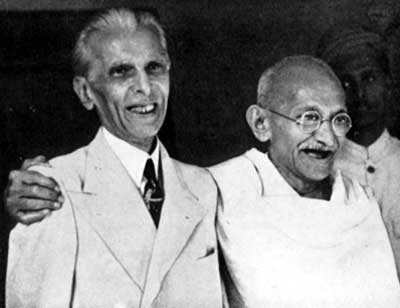
Mohandas Karamchand Gandhi, who was born 141 years ago today on October 2, 1869, is a revered figure in India as well as in many countries around the world for his peaceful civil disobedience techniques that succeeded in granting India its independence from Britain. He is also credited by Martin Luther King Jr., the American civil rights leader, as an inspiration in using similar peaceful protests to change unjust laws against blacks and other minorities in the United States. These protests and opposition eventually led to the Civil Rights Act of 1965 being passed granting all Americans of every ethnicity equal freedoms and protection in the eyes of the law.

Gandhi’s birthday, October 2nd, is celebrated by the United Nations as International Day of Non-Violence. He is an admired figure in India where his contributions for the freedom of his countrymen is celebrated on stamps, currency, and folklore. Gandhi is also appreciated in many other countries outside the Indian subcontinent. Statues of him are found in such disparate places like New York’s Union Square, Gandhi Square in Moscow, the Johannesburg city center in South Africa, and even as far away as Waikiki Hawaii where a statue to the leader stands in Kapiolani Park in Honolulu.  

Yet in Pakistan, a country that also benefitted from Gandhi’s movement for independence, he is vilified and not thought of highly. Many in Pakistan blame Gandhi for his failing to prevent the deaths of thousands of Muslims during the religious violence the precipitated the independence of both countries. In many Pakistani books he is depicted as a villain; however few people know that he died because of his great favour for Pakistan and that he was seen by right wing Hindu groups as someone who was concerned with the appeasement of the Muslims of India.

India’s first prime minister, Jawaharlal Nehru, had refused to give Pakistan their share of the money that was due to them after partition. But Gandhi went on a fast till death to protest against this injustice against the newly created Pakistani state and this pressure led to Nehru’s agreeing to pay the money so direly needed by the new Muslim nation.

He was assassinated by a young Hindu fanatical, Nathuram Godse, who felt that M.K. Gandhi was more of a hindrance to India than an asset. Godse, like many fanatical right wing Hindus felt that Gandhi was solely responsible for the partition of India into a country for Hindus and one country for the Muslims and he felt that he was a traitor to other Hindus.

Sadly, this man who ultimately gave his life in the cause of others is not very appreciated in Pakistan and neither are his contributions for freedom and independence from the British colonizers taught to today’s school children. In a country rife with violence, intolerance and instability, many Pakistanis can learn a great deal in the lessons of brotherhood and peaceful co-existence preached by Mahatma, the great soul. He would be the perfect anti-Taliban in today’s Pakistan, a country inflamed by animosity and hatred between all ethnic and religious groups. His ideas of tolerance and harmony with others would go a long way against the barbaric views of the Taliban, the enemies of man.

His belief that violence was not a solution towards any objective would benefit today’s Pakistani society if his message was given importance and taught at an early age. His reasoning towards peace and nonviolence lead him to once say that “An eye for an eye leaves the whole world blind.”  In today’s chaotic and violent Pakistan, there is a lot that my fellow Pakistanis can learn from this man and how he lived his life with humility, simplicity and non-violence as well as towards his service of others. More people inside Pakistan should be taught about Gandhi as he is as much responsible for Pakistan’s independence from Britain as was Jinnah, the founder of the country.

-Manzer Munir, a proud Pakistani American and peace activist, is the founder of Pakistanis for Peace and blogs at www.PakistanisforPeace.com as well at other websites as a freelance journalist and writer.

EU Backs Deal to Deport Illegal Pakistanis

As reported by The Voice of America

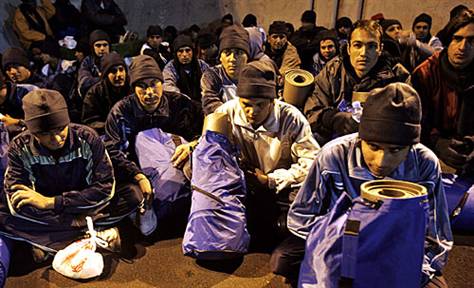
The European Parliament has approved a controversial agreement that will make it easier for EU nations to return illegal immigrants from Pakistan back to their homeland.

The European Parliament backed the readmission accord Tuesday with a vote of 382 to 250. Twenty-three members opted not to vote.

Under the accord, any EU readmission request not answered by Pakistan within 60 days will be considered accepted.  Pakistan also will have to justify any refusal for readmission.

Some members of the European Parliament strongly opposed the agreement on human rights grounds. Opponents argued that Pakistan does not comply with relevant human rights standards and has not signed the Geneva Convention on Refugees, which prevents governments from deporting people at risk of torture.

Once ratified, the new rules will apply only to those who enter the EU illegally after the accord goes into effect.

The European Commission estimates that about 13,000 Pakistani citizens have been arrested in EU nations without proper documentation.

The measure calls for the EU and Pakistan to engage in dialogue on legal immigration and visa policy. The European Parliament’s approval of the agreement follows eight years of negotiation with Pakistan.

U.S., Procter & Gamble send water purifiers to Pakistan

By joseph Picard for The International Business Times

Procter & Gamble is teaming up with the U.S. government to provide 28 million water purification kits to help flood victims in Pakistan.

“P&G is eager to bring clean drinking water to the people of Pakistan by partnering with USAID and the U.S. State Department’s Pakistan Relief Fund so that our many partners in Pakistan can provide more than a quarter of a billion liters of clean drinking water,” said Bob McDonald, P&G chairman of the board, president and CEO.

The purchase and distribution of water purification supplies marks the first disbursement of the State Department’s Pakistan Relief Fund. Created in the aftermath of the horrific floods that have devastated the country since July, the fund serves as a mechanism for the public to contribute money to the ongoing relief efforts.

According to the State Department, approximately $500,000 in private American and other contributions, including significant support from the Pakistani-American Diaspora community, will be matched by $500,000 from Procter & Gamble.

An additional $1 million will be provided by the United States Agency for International Development, or USAID, a State Department agency.

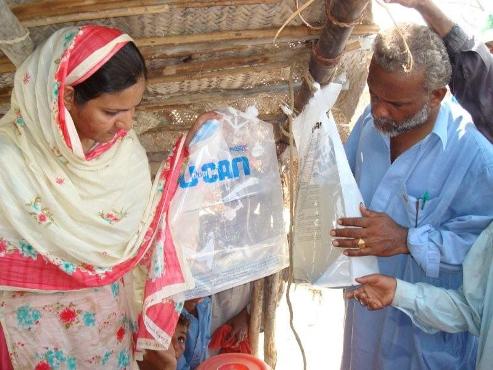
The $2 million will purchase the 28 million water purification kits and deliver them to Pakistani flood victims. These kits include buckets and filtering cloths, which will generate 280 million liters of clean drinking water for 1.5 million people in desperate need.

The P&G kits utilize PUR packets, a water purifying technology developed by P&G and the U.S. Centers for Disease Control and Prevention to help reduce sickness and death resulting from drinking contaminated water.

One small PUR packet quickly turns 10 liters of dirty, potentially deadly water into clean, drinkable water, P&G said.

McDonald said that P&G is well positioned to respond to this crisis with the PUR packets because they are manufactured in Pakistan. The company and its partners in Pakistan will work with local humanitarian groups to provide PUR packets as well as training to ensure proper use.

“The floods that have devastated Pakistan have taken weeks and have caused terrible damage, but the recovery will take much longer than that,” said U.S. Secretary of State Hillary Clinton. “As the waters recede, the people of Pakistan must know that they will not be alone. They can count on the U.S. and the international community to stand with them.”

Millions are without safe drinking water and water-borne diseases are spreading, the State Department said.

Approximately 2,000 people have died in the floods, which began in July and are considered the worst natural disaster in the nation’s history. The UN estimates that close to two million homes have been destroyed and as many as 21 million people have been injured and or left homeless by the catastrophe.

The UN, trying to feed 6 million Pakistanis, sent out another call for assistance to the world’s nations this weekend – the largest disaster appeal in UN history – asking for $2 billion in aid.

In response, the United Kingdom more than doubled its pledge to Pakistani relief, bringing the total to $209 million. The U.S. raised its commitment to $345 million.

Prominent Pakistani Politician Murdered Outside His London Home

By Laura Roberts and Heidi Blake for The Telegraph

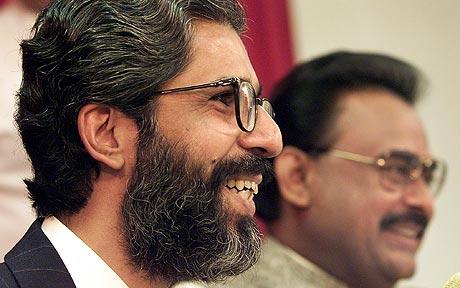
Imran Farooq, a prominent Pakistani politician, has been murdered outside his home in London. Dr Farooq, 50, was repeatedly stabbed in the head and neck during the assault in Edgware, north London.

He was a leading member of the Muttahida Quami Movement (MQM) party, which is one of the largest in Pakistan.

There were suggestions from Pakistan that he may have known his killer. When police arrived at the scene, they found Dr Farooq’s body outside his house.

A spokesman for the Metropolitan Police said officers attended an address in Green Lane, Edgware, shortly before 5.30pm after reports of a serious assault. “On arrival, officers found a single Asian man aged 50 with multiple stab wounds and head injuries,” the spokesman said.

“Paramedics attended the man but he was pronounced dead at the scene.”

Next of kin have been informed and no arrests have been made.

Dr Farooq was expected to attend a birthday celebration at the MQM headquarters on London’s Edgware Road on Thursday night but the event was cancelled at the last minute. Police said it was too early to know if the murder was politically motivated.

The politician claimed asylum in Britain after spending seven years on the run as one of Pakistan’s most wanted fugitives. He was accused of a range of charges, including murder and torture.

He has not returned to Pakistan since his arrival in England in 1992.

He claimed that year that he was wanted “dead or alive”.

“This gave licence and impunity to every individual in Pakistan to assassinate me,” he said.

Dr Farooq said he spent more than seven years in hiding in Karachi, southern Pakistan. He continued: “It was impossible for me to remain in Pakistan due to the continued threat on my life and liberty.”

He insisted the claims against him in Pakistan were politically motivated and continued his involvement with the party from Britain.

Last month Raza Haider, another MQM member, was gunned down with his guard as he attended a funeral near the centre of Karachi. The killing triggered violence in which dozens of people were killed and at least 100 wounded.

Azeem Tariq, the former chairman, was murdered in Karachi 13 years ago. Intruders entered his home and shot him as he slept.

MQM, based in Karachi, is the fourth largest party in Pakistan and is part of the ruling coalition government. It has a strong anti-Taliban stance, although rivals accuse it of exaggerating the threat of the Taliban.

The party represents mainly descendants of Urdu-speaking migrants from India who settled in Pakistan when it was created in 1947.

A statement on the MQM website said the party had declared a ten-day period of mourning in Pakistan and around the world.

London has played host to many of Pakistan’s exiled politicians. Gen Pervez Musharraf, the former president, lives in self-imposed exile in London.

Qureshi Uses U.S. Open Platform to Call For Understanding

By Matt Majendie for Reuters

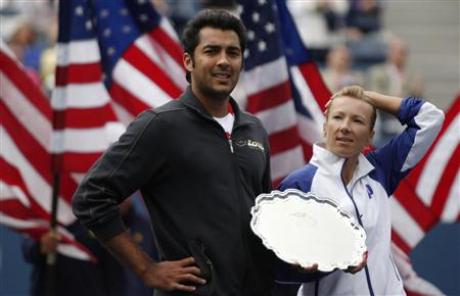
Pakistan’s Aisam-ul-Haq Qureshi used the platform of the U.S. Open to deliver a message of peace on the eve of the ninth anniversary of the September 11 attacks in New York and Washington.

Qureshi lost in Friday’s men’s doubles final alongside India’s Rohan Bopanna, the other half of a unique partnership nicknamed the “Indo-Pak Express.”

In his on-court after-match speech, Qureshi said: “I feel there’s a very wrong perception of Pakistan as a terrorist country.

“We are a very peace-loving country and we want peace as much as you.”

Peace has very much been the message of Bopanna and Qureshi since their doubles partnership began with them sporting “Stop War, Start Tennis” sweatshirts in a bid to improve relations between their two countries.

Qureshi delved further into the message he was trying to get across at Arthur Ashe Stadium after the 7-6 7-6 defeat to Americans Bob and Mike Bryan.

“Since September 11, every time I come to the States or Western countries, I feel people have the wrong impression about Pakistan as a terrorist nation,” he said.

“There are extremists I think in every religion but, just because of them, you can’t judge the whole country as a terrorist nation.

“I just want to get this message across as a Pakistani.”

Qureshi said he vividly recalled the moment of the 2001 attacks in New York, which resulted in the deaths of nearly 3,000 people.

An up-and-coming tennis player at the time, he had been at a training camp in Holland when he saw events unfold at the World Trade Center in lower Manhattan.

“It was strange but I was going through the channels and I actually thought it was a movie or something,” he recalled. “I switched the channel again and then felt like it was the same movie on a different channel.

“I was kind of confused. Everything was mostly in Dutch so I couldn’t really understand. Then I actually realized what had happened. It was a very shocking moment.”

Aisam-ul-Haq Qureshi – An Unlikely Hero For Pakistani Fans

As Reported by Reuters

KARACHI: For a nation devastated by floods, rocked by terrorism and embarrassed over a cricket corruption scandal, Pakistanis are pinning their hopes on an unlikely sporting star to give the country something to cheer.

Pakistani Muslims will celebrate Eid this weekend and also pray that Aisam-ul-Haq Qureshi can add to the festivities by becoming the first tennis player from his country to win a grand slam title.

Tennis tends to slip under the radar in cricket-mad Pakistan but Qureshi has already raised the sport’s profile by breaking new ground for his country after reaching the US Open mixed doubles final and semi-finals of the men’s doubles event.

“I know how important my performances are right now for my countrymen. I am eager to give them something to celebrate about after the floods and cricket scandal,” Qureshi told a local television channel from New York.

“I am really proud to become the first Pakistani to reach the knockout stage of a grand slam event but my job is still not finished as yet,” he said.

Pakistani cricket fans have been left disheartened by the latest controversy to befall the side, a spot-fixing and betting scandal in England that has led to the suspension of test skipper Salman Butt, and pacemen Mohammad Amir and Mohammad Asif.

CONTROVERSIAL PAST

Qureshi, who is ranked 34th in the ITF men’s doubles rankings, is also no stranger to controversy but has shaken off the problems to flourish as a player.

In 2002, he faced the wrath of his countrymen and national tennis federation for partnering Israel’s Amir Hadad in the doubles event at Wimbledon and the US Open.

He was also criticised when he started his current doubles partnership with India’s Rohan Bopanna three years ago, but Qureshi remains unbowed by any negativity and has always maintained that sport was above caste, creed or politics.

“He has always been a strong character and once he makes up his mind he will not change it,” his mother Nausheen Ehtesham said, adding that her son had the ability to triumph in New York.

“We all need some good news and I am confident my son can do it,” she said.

Pakistan Davis Cup coach Rashid Malik acknowledges that Qureshi’s strong tennis background, his grandfather Khawaja Iftikhar was an all- India champion, and his parents have been a source of great support.

“I think Qureshi always had talent but also had the advantage of parents who supported and financed him. In Pakistan, tennis is not taken seriously as a career although we have talent,” Malik said.

For the last three years, Qureshi has concentrated on a doubles career after attaining a highest ranking of 125th in singles but Malik believes it is still not too late for the 30-year-old to make an impact on his own.

“He just has to work on his fitness and raise its level to do well in singles,” Malik said.

Qureshi is partnering Czech Kveta Peschke in the mixed doubles at Flushing Meadows.

Angelina Jolie Meets Flood Victims in Pakistan

By Inamur Rehman for The Associated Press

American movie star Angelina Jolie met flood victims in northwestern Pakistan on Tuesday and appealed to the international community to provide aid needed to help the country recover from its worst natural disaster.

The flow of aid money has stalled in recent days, and officials expressed hope the two-day visit by Jolie — who serves as a “goodwill ambassador” for the U.N.’s refugee agency — will convince foreign countries and individuals to open their wallets.

The 35-year-old actress said she met with many people whose lives have been devastated by the floods, including mothers who lost their children and an elderly Pakistani couple who feared they would never be able to rebuild the home they lost.

“I am very moved by them and I hope that I am able to, today and tomorrow, be able to do something to help bring attention to the situation for all of the people in need in Pakistan,” Jolie told reporters after visiting a refugee camp in the Jalozai area.

She toured the area wearing a long black robe and a black headscarf adorned with a thin red stripe — the kind of conservative clothing worn by many Muslim women in Pakistan.

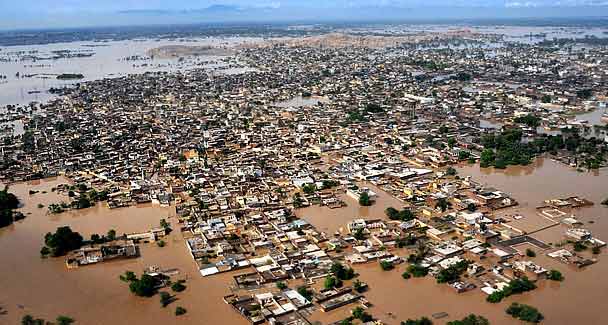
The floods began in the northwest at the end of July after extremely heavy monsoon rains and slowly surged south along the Indus River, swallowing up hundreds of villages and towns and killing more than 1,700 people. Another 17 million have been affected by the floods, and many will need emergency assistance to survive.

The United Nations issued an appeal for $460 million in emergency funds on Aug. 11, but only $294 million, or 64 percent, has been received so far, and donations have more or less dried up in recent days.

Ajay Chhibber, a U.N. assistant secretary general, said he hopes Jolie’s visit will have “a very big impact” on the inflow of aid money and will keep people focused on the crisis.

“We need more … well-known figures who can keep the spotlight and focus because people tend to forget internationally,” said Chhibber, who is also the U.N. development agency’s regional director for Asia. He spoke to reporters during a visit to Islamabad.

How Pakistan’s Floods Have Made Women Dangerously Visible

By Rania Abouzeid for TIME

Nagina drew her modest light-green cotton dupatta, the scarf that Pakistani women drape over their arms, head and chest, up over her face as she cautiously peered out from a muddy white tent to watch her youngest child, a barefoot, trouserless four-year-old boy in a navy blue shirt streaked with mud. The timid Pathan woman has four other children, three older girls and a boy, but her daughters are not with her in this overcrowded cluster of tents known as the Khandar relief camp in Nowshera, a flood-devastated northwestern district some 90 miles west of the capital Islamabad in the insurgency-plagued, religiously conservative Khyber Pakhtunkwa province. “We are trying to keep the girls away,” Nagina says, “because parda is impossible now.”

Parda, which is also spelled “purdah” and means “curtain” in Urdu, is the practice of shielding women from men they are not directly related to, both through physical segregation and through the custom of modesty, that is, with the women wearing clothing to conceal their shape. It is observed by many women in rural areas of Pakistan, including in the majority-Pathan northern belt bordering Afghanistan. In these parts, a family’s honor is often tied to the chastity and obedience of its women — and protecting and defending the honor of women from verbal and physical harm is part of an ancient code of honor and revenge. But the code is all too often taken to extremes. Barely a week goes by without stories appearing in the Pakistani media about an enraged male — from across Pakistan’s multiethnic spectrum — who has killed his female relative or relatives for some perceived infringement of “honor.” For women adhering to Parda, it’s usually easier and safer for them to simply remain secluded in their homes.  

The floods have made that option unavailable in many places. Desperation has driven women to vigorously jostle with men for limited relief goods at distribution points. Overcrowding and densely pitched tents have forced them into close quarters with men they don’t know, the flimsy canvas coverings providing little privacy from prying eyes. In the camp at Nowsherra, Adiba nods in gloomy agreement as her sister-in-law Nagina discusses the limits of parda amid the calamity . Her tribal tattoos — a green dot on her forehead and another on her chin — mark her as a member of a conservative tribe from the Taliban-infested town of Bajaur. Both women say their husbands are understanding of the conditions but they fear that their men’s patience will run out. “My husband is very upset,” says Adiba, a mother of six. “This is why we’re just sitting in our tents during the day and the night, like in a cage.”  

Pakistan’s northwest, the first region to be hit by the floods and the most devastated, “is an extremely conservative society,” says Imtiaz Gul, author of The Most Dangerous Place, a book about the Pakistan’s northwestern tribal belt bordering Afghanistan. “You hardly see women outside and they hardly have any role except for cooking and cleaning the house and that’s about it.”  

Nagina, like many of the women in Nowsherra’s camps and other places the Pathan have sought refuge from the waters, has sent her unmarried daughters away to live with relatives whose homes were not washed away by the deluge. She hasn’t seen them for a month. “We have no choice,” she says sullenly. “This situation is forced on us.”

Gul says that the longer it takes to get people back to their homes, the greater the possibility of social unrest between men from different conservative towns who have been thrown together. The situation “is pregnant with the possibility of social friction,” he says. “Frustrations will start boiling over. People are saying the worst is over, but I would say that the worst has just started.”

Akbar Ali, a 27-year-old driver who has been in the Khandar camp for 18 days now with his wife and two-year-old daughter, is simmering. He is desperately trying to rent a house at any price he says, to get his family indoors, but there’s little left on the market. He has been offered work, but turned it down because he did not want to leave his wife, who used to be in parda, alone in the camp. “We are all Pathan but we are still very different from each other. The men move around the camp. I’m just afraid that one day if they say something to my wife, it will cause a problem, a fight because I will have to respond, it’s my duty.”

As relative newcomers to the camp, Ali and his small family had missed out on securing a tent on the grounds of the Government College of Technology, or a space inside the school’s two-storey brick structure. The classrooms were already brimming with evacuees, packed four or five families per room, by the time he arrived. And so, he has had to make do with a slab of concrete outside the college cafeteria open to the elements. “We have become like dogs,” he says bitterly from behind dark sunglasses. “Wherever we hear that relief supplies have arrived, we just run after them.”

To avoid violence, he and the several other men whose families are also squatting along the cafeteria wall, have banded together to try and prevent strangers from approaching them. “Some people have tried to come around here, but they only try once,” Ali says. “They know not to come around again.”

It’s Not Just Cricket

By Alan Black for The Huffington Post

The English in their empire conquests to India and Pakistan brought the game of cricket in their armory, best understood as complicated. With the pavilion hosting tea, the sound of the leather ball on the willow bat soon spread across the verdant lands of the subcontinent. The locals embraced a game played by spectacularly white men with unimpeachable manners, in spectacularly white clothes.

Today, India and Pakistan are as mad for cricket as they are for being at each others nuclear throats. Cricket has helped keep the peace by allowing Indians and Pakistanis to throw cricket balls at each other. But while democratic India has become a stage for Western capital and its values, Pakistan sinks deeper into a sticky wicket of terrorism, biblical style floods and now something disabling and disastrous for the nation’s identity — the Pakistani national cricket team, the pride of the nation, have been caught red handed in a betting scandal that has knocked the tea cups off the saucers, spoiling the cucumber sandwiches.

Currently, Pakistan is playing England at the home of cricket in London, a sporting venue grandly named Lords. Over the last weekend, a national UK newspaper revealed a sting operation conducted by undercover journalists, who paid a man around $250,000 for information on when certain Pakistan players on the field were going to cheat. The operative, it is claimed, is linked to illegal gambling syndicates. Sure enough, the players cheated on cue and the sounds of the London bobbies running to catch the villains came shortly after. Now, the Pakistanis require something slightly stronger than tea — high powered lawyers will be a start, maybe a stolen plane to make their getaway.

For years, Pakistani cricket has been suspect. Investigators in the past were stumped and failed to prove what seemed obvious to any sentient viewer — Pakistan was cheating, throwing games to cash in on payments from gambling crime, the cricket version of baseball’s Black Socks. Pakistan has been on the back foot over the claims denying it as a conspiracy against them. But this scandal has bowled them out. The News of the World has all the evidence on videotape. It’s irrefutable — in flagrante delicto.

The London police and cricket’s governing authority are using much diplomatic nuance at this stage of the criminal investigation, Only recently, the British Prime Minister David Cameron insulted Pakistan while he was visiting their enemy, India. And now this! Cheats at Lords, the home of English cricket. This stain on the linen will provide more ammo for the prejudice merchants loading another flare to fire at poor old Pakistan — how can you trust them?

Should Pakistan be banned from international cricket, somewhat unlikely but possible if the poison goes all the way to the top of their game, the impact back home will be enormous. For millions of Pakistanis, cricket is more important than life or death. It is Pakistan’s rope to the world. A chance to show how great they are at a tremendously demanding and skillful sport. Add one more disaster to a nation seriously down on its luck.

Aging Philanthropist is Pakistan’s Mother Teresa

By Chris Brummit for The Associated Press

The aging man in mud-splattered, frayed clothes has barely lowered his body onto the sidewalk when the money starts piling up. Heeding his call for donations for flood victims, Pakistanis of all classes rush to hand over cash to Abdul Sattar Edhi, whose years of dedication to the poor have made him a national icon.

He thanks each donor, some of whom ask to have their photo taken next to him. Four hours later, the crowd remains — and the equivalent of $15,000 is overflowing from a pink basket in front of him.

Edhi has been helping the destitute and sick for more than 60 years, filling the hole left by a state that has largely neglected the welfare of its citizens. Part Mother Teresa, part Gandhi, with a touch of Marx, he is the face of humanitarianism in Pakistan.

Funded by donations from fellow citizens, his 250 centers across the country take in orphans, the mentally ill, unwanted newborns, drug addicts, the homeless, the sick and the aged. His fleet of ambulances picks up victims of terrorist bombings, gang shootings, car accidents and natural disasters.

Pakistan’s corruption-riddled government acknowledges Edhi and other charities do the work that in other nations the state performs. The country has no national health service, insurance program or welfare system, and few state-run orphanages or old people’s homes.

The foundation offers an alternative to charitable work performed by hardline Islamist groups in Pakistan, some with alleged links to terrorism. The spread of these organizations has triggered concerns in the West, including their work in the aftermath of this summer’s floods.

Edhi is a devout Muslim, but critical of Islamic clerics in general, not just extremists. He says they focus on ritual, preaching hellfire and defending the faith against imagined enemies, rather than helping the poor — which he says should be the cornerstone of all faiths.

The 80-something Edhi — he and his children disagree on his exact age — lives with his wife, herself a charity worker, in a tiny room in one of his welfare centers in Karachi, a bustling port city. His bed is a one-inch thick mattress on a piece of wood.

“I am a beggar for the poor,” he says, stained teeth showing in a wide smile, eyes sparkling after a week touring flood-hit areas. “Serving humanity is the biggest jihad. It is the real thing.”

___

Edhi deals with birth and death, and almost everything in between.

Just above his bedroom, a maternity ward and an orphanage are home to 18 children, many of them abandoned by their mothers in cradles left outside his centers. They wear hand-me-downs from the city’s rich. Edhi’s wife, Bilquis, tries to get the children adopted, but few Pakistanis want to take girls or older children, she says.

On a recent afternoon, the kids shouted out English nursery rhymes and danced. They then sat cross-legged on the floor, drinking tea from plastic mugs and eating spicy pastries and sticky sweets that an anonymous benefactor had dropped off.

The home was clean and bright, with plenty of toys and loving staff. But there was no place to play outside, and the roar of motorbikes from the lanes below was a constant backdrop.

Across town, workers at the Edhi morgue were dealing with latest influx of bodies. They receive around 25 a day, half of which are never claimed — the city’s unloved and unknown.

Working quickly but carefully, they cut the clothes from the bodies, lather them with a bar of soap from head to toe, rinse them with water from a jug, then wrap them in a white sheet. The bodies are bussed across town, prayed over and buried in unmarked graves.

The body of American journalist Daniel Pearl, killed by al-Qaida terrorists in Karachi in 2002, was picked up by an Edhi ambulance and taken to the morgue, the largest in the city of 14 million people.

The morgue is attached to a hospital for the homeless, a dispensary, a shelter for boys and women and children, even a wedding hall for the marriages arranged for children who have been looked after by the foundation. The smell of baking bread from an oven that churns out 9,000 loaves a day fills the air.

“The poor can come here and get a solution to all their problems,” says Ejal Hassan Zaidi, who had accompanied a neighbor to the morgue to collect the body of his 3-year-old daughter, killed in a hit-and-run incident hours earlier. “From the cradle to the grave.”

___

Born in what is now India, Edhi and his parents moved to Pakistan in 1947 when that country was created as a Muslim state at the end of British colonial rule. The family was quite well off — his father was a traveling salesman — and socially progressive.

In his biography, Edhi credits his mother for setting him on a humanitarian path. She urged him to give half his pocket money to someone poor every day and rebuked him if he didn’t.

“‘You have a selfish heart, one that has nothing to give,'” he remembers her saying. “‘What kind of human being are you? Look at the greed in your eyes. Already you have started robbing the poor. How much more will you rob from them in your lifetime?”

When she was dying, he looked after her, bathing her emaciated body and washing and braiding her hair — experiences that would also shape his life.

“The first night she spent in the grave, I dedicated my life to the service of mankind,” he says.

Edhi started small. In 1951, he bought an eight-foot-square shop in a slum neighborhood in Karachi that he converted into a dispensary. Seven years later he bought a van that he used as an ambulance, writing “Poor Man’s Van” on both sides.

He became intimately involved in the business of caring for the sick and dying. He would drive the ambulance to the scene of an accident to pick up the bodies, administer injections during a flu outbreak and travel across the country to help after earthquakes and other natural disasters.

Edhi’s record of round-the-clock service and frugal lifestyle attracted donations, and he soon had a fleet of 14 ambulances. In the 1980s and 90s, he opened centers and ambulance services throughout the country. He donated $200,000 to releif efforts after Hurricane Katrina, and his workers have also helped out in disasters in Asia and the Middle East.

___

Pakistanis are a generous people, required by their Muslim faith to give away 2.5 percent of their wealth each year. The last nationwide survey done in 1998 showed that Pakistanis gave the then equivalent of $820 million to charity, around the same as the government’s health and education budget at the time. There are no numbers on how rising terrorism and a poor economy have affected this philanthropy.

Edhi does not accept donations from international organizations or governments, including Pakistan’s, saying he doesn’t need outside help and it is important for Pakistanis to help each other. He and his wife live simply of the interest from some savings.

The foundation does not produce detailed financial statements or annual reports. Edhi points to a wall of files in one office in which he says everything is accounted for. Donors do not seem to mind, such is their trust in him.

“You ask any Pakistani on the streets, Edhi is total credible with them,” says Anjum Haque, the executive director of the Pakistan Centre for Philanthropy. “The success of the trust is down to Edhi himself.”

Last year, donations to Edhi-run charities totaled around $5 million, according to Faisal Edhi, the founder’s son and trust member. A significant chunk of the funds comes from overseas Pakistanis, who want to donate to their homeland.

The lack of transparency has caused some concern among others in the charity sector in Pakistan. Faisal Edhi acknowledges that some of their 13,000 employees — who receive very modest salaries — might skim money off donations. There have also been questions raised about the lack of professionalism and efficiency, specially as the foundation has grown.

Edhi Village, a 65-acre complex in the undulating hills beyond the northern slums of Karachi, is home to 300 children, many picked up off the streets, and 900 adults, many elderly or suffering from mental disabilities.

Most wear clean, ironed clothes, and the food is fresh. Yet there are also signs of neglect. One naked youth dragged himself through a puddle. Some had no shoes and begged visitors to buy them a pair.

The adults live in rooms around the size of three tennis courts, bare except for raised sections for sleeping. They are locked inside for part of the day. There are two doctors, four nurses and two ward boys looking after them.

“We do the most we can do with our resources,” says Billal Mohammad, a regional Edhi manager. “They would be living on the pavement under the sky. We give them shelter, food and treatment. You must not see this place throughout Western eyes.”

___

Edhi has made no secret of his dislike of Pakistan’s ruling class. So it was a surprise to see a gaggle of politicians using one of his orphanages in Karachi as a venue to mark the recent birthday of President Asif Ali Zardari.

The visitors spooned cake into the mouths of the children, shouted political slogans for television cameras and asked Edhi to be photographed next to them. He said he only let the politicians in so the children would have a party to enjoy.

“So what if the politicians are using me? They even use God,” said Edhi, who sat by himself for most of the event. “Landowners, clerics, politicians. They are all looters. There is no fear in telling the truth.”

Hardline Islamist groups have criticized Edhi for his progressive views on women and the secular nature of his work. Some have said that by accepting newly-born babies from unmarried mothers, he is promoting premarital sex.

“We meet them and we read their newspapers. They say we are non-Muslims, unbelievers and communists,” says Faisal Edhi. “The jihadi groups don’t like us. They don’t believe in humanity.”

There are questions about what will happen to the foundation when Edhi dies. He says his two sons and three daughters will take over, though without him at the helm, people may not give as generously.

For now, his children appear more concerned about their father’s health. Apart from an afternoon nap, he works just as hard as he did when he was in his 30s, they say.

“We tell him to take it easy, but he doesn’t listen,” says daughter Almas Edhi. “He wants to keep busy.”

On the Net:

  • http://www.edhifoundation.com/
  • http://www.pcp.org.pk/
  •  

    Pakistanis for Peace Editor’s Note– At a time when the Pakistani nation is in turmoil and dismay due to the epic floods, endless bombings and violence, vast corruption amongst the government, the Sialkot killings, and even the match fixing disappointment from the once cherished national cricket team, Abdul Sattar Edhi and his lifelong service to the people of Pakistan is a testament to the awesome goodness found in one Pakistani man. His service to the orphans, the destitute, homeless, and the generally downtrodden of the country make him a shining role model and a beacon of what is good about the Pakistani people. If there is anyone more deserving of a Nobel Peace Prize than Edhi, then we have not found them as of yet. May he continue to inspire not just the Pakistani people, but all people everywhere with his selflessness and humanity.

    Millions of Pakistani Kids Risk Waterborne Disease

    By Asif Shahzad for The Associated Press

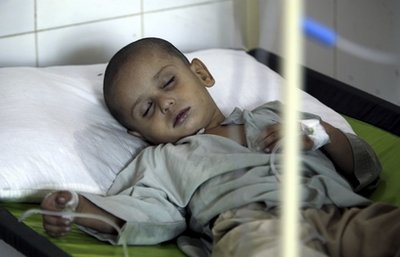
    Five-year-old Shahid Khan struggled to remain conscious in his hospital bed as severe diarrhea threatened to kill him. His father watched helplessly, stricken at the thought of losing his son — one of the only things the floods had not already taken.

    The young boy is one of millions of children who survived the floods that ravaged Pakistan over the last month but are now vulnerable to a second wave of death caused by waterborne disease, according to the United Nations.

    Khan’s father, Ikramullah, fled Pabbi just before floods devastated the northwestern town about a month ago, abandoning his two-room house and all his possessions to save his wife and four children.

    “I saved my kids. That was everything for me,” said Ikramullah, whose 6-year-old son, Waqar, has also battled severe diarrhea in recent days. “Now I see I’m losing them. We’re devastated.”

    Ten other children lay in beds near Khan at the diarrhea treatment center run by the World Health Organization in Pabbi, two of whom were in critical condition.

    Access to clean water has always been a problem in Pakistan, but the floods have worsened the situation significantly by breaking open sewer lines, filling wells with dirty water and displacing millions of people who must use the contaminated water around them.

    Children are more vulnerable to diseases such as diarrhea and dysentery because they are more easily dehydrated. Many children in Pakistan also were malnourished before the floods, weakening their immune systems.

    The Pakistani government and international aid groups have worked to get clean water to millions of people affected by the floods and treat those suffering from waterborne diseases. But they have been overwhelmed by the scale of the disaster, which has displaced a million more people in recent days.

    The floods started in the northwest in late July after extremely heavy monsoon rains and surged south along the Indus River, killing more than 1,600 people, damaging or destroying more than 1.2 million homes and inundating one-fifth of the country — an area larger than England.

    Some 3.5 million children are at imminent risk of waterborne disease and 72,000 are at high risk of death, according to the United Nations.

    The World Health Organization set up the diarrhea treatment center in Pabbi about a week ago with the help of several other aid groups. Workers have already treated more than 500 patients, mostly children, said Asadullah Khan, one of the doctors.

    Some of the patients have been treated multiple times because broken sewer lines have contaminated the water in the town’s wells and pipes, said the doctor. “It is circulating the disease again and again,” he said.

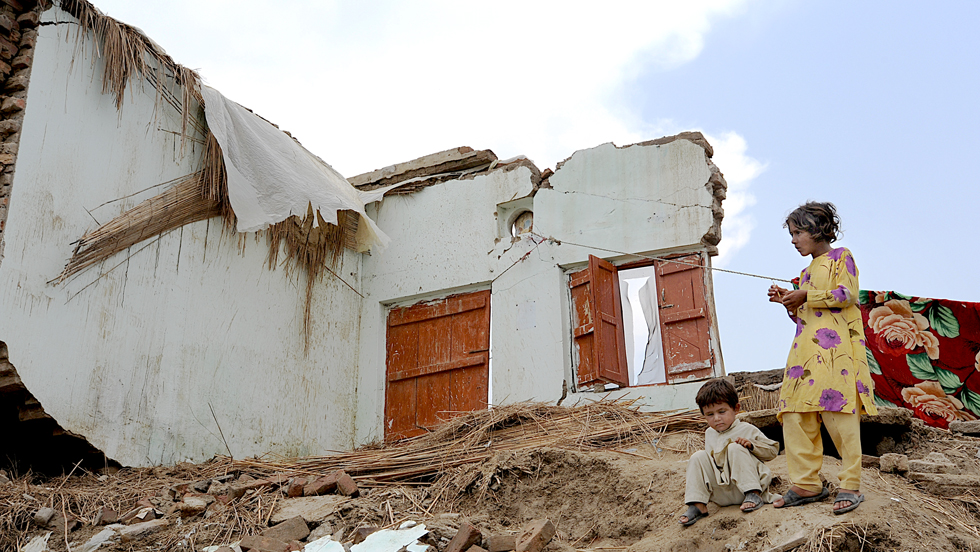
    The aid groups set up a similar treatment facility several days ago in Nowshera, a city adjacent to Pabbi that was also engulfed by the floods. Residents who have begun to return in recent days have encountered a scene of total destruction: caved-in houses and streets covered with mud and debris.

    Most of the population lacks access to clean water, and mosquitoes have proliferated in stagnant floodwater around the city, raising the risk of malaria. Government help is nowhere to be found.

    “It is trash, dirt, germs and odd smells everywhere,” said Zahid Ullah, whose 3-year-old and 10-year-old sons were being treated for gastroenteritis at the facility in Nowshera. “It is a big danger.”

    Even at the hospitals where the diarrhea treatment centers have been set up, mobs of flies hovered around the patients despite attempts by staff to kill them.

    The World Health Organization and the United Nations Children’s Fund appealed to the world on Saturday to provide water purification units, family hygiene kits and other items needed to increase access to clean water in Pakistan.

    Guido Sabatinelli, the head of the World Health Organization in Pakistan, said the international community’s help was critical to help Pakistan avoid a second wave of death from waterborne disease.

    “We are fearing the epidemic of disease,” said Sabatinelli. “Access to safer water, potable water” is critical, he said.

    Asma Bibi couldn’t agree more. The young mother searched in vain for clean water on the outskirts of Nowshera as her feverish 2-month-old son, Ehtesham, sweltered in a tent set up for flood victims. They had run out of water the day before.

    “My son is sick. He hasn’t breast-fed in two days,” she said. “He needs milk. He needs water.”

    Pakistan Floods: Why Should We Care?

    By Ethan Casey for EthanCasey.com

    Yesterday a non-Pakistani friend here in Seattle emailed me: “I wanted to ask you which you think would be the best organization to make a donation to for the current crisis in Pakistan. We usually give to MSF, but their website doesn’t seem to offer the opportunity to give specifically for Pakistan. Can you offer advice?”

    This friend is British and greatly prefers British media outlets, but I need to believe that there are many Americans who also want to help flood victims in Pakistan – or who would want to, if they knew the scale and severity of the disaster.

    Why don’t they know? We can, and I do, blame “the media,” but that’s unhelpful and ultimately a cop-out. Each of us individually has the opportunity and responsibility to be aware of every tragedy in our world, and we should be willing to exert ourselves to redress them. We’re all in this together. But the real problem is that there’s too much tragedy, and it’s happening too fast, and these days Americans are distracted and confused and worried about serious problems close to home, like our own jobs and mortgages.

    This is understandable. But you need to know that all indicators are pointing toward an enormous, long-term human tragedy unfolding in Pakistan, and we need to do something about it, for several good reasons. The New York Times acknowledged one of these when – belatedly, in its first significant coverage of the floods that I noticed – it headlined an August 6 article “Hard-Line Islam Fills Void in Flooded Pakistan.”

    A related point is that we Americans owe Pakistanis a measure of basic human respect and compassion, as well as gratitude specifically for the sacrifices they’ve made at our behest in several wars in Afghanistan. When we repay this debt, it will also redound to our benefit. “It’s high time we showed Pakistanis the best of America,” disaster relief specialist Todd Shea told me last year. “If you’re a true friend, you don’t run out on somebody when you don’t need them anymore. … Pakistanis don’t trust America anymore. We need to show Pakistanis who we really are.”

    Todd Shea runs a charity hospital in the Pakistan-administered portion of the disputed region of Kashmir, where he has been working since the October 2005 earthquake that killed 80,000 people. He also responded urgently and effectively to the World Trade Center attack, the Asian tsunami, Hurricane Katrina, and the earthquake this January in Haiti. He’s currently on the ground in Pakistan, running medical camps and providing drinking water, food, and other relief. An August 11 update on his organization’s website suggests the scale of the challenge:

    In a recent statement appealing for more aid to Pakistan, UN humanitarian chief John Holmes said: “While the death toll may be much lower than in some major disasters, taking together the vast geographical area affected, the numbers of people requiring assistance and the access difficulties currently affecting operations in many parts of the country, it is clear that this disaster is one of the most challenging that any country has faced in recent years.”

    Thousands of people are camped out on roads, bridges and railway tracks – any dry ground they could find – often with nothing more than the clothes on their backs and perhaps a plastic sheet to keep off the rain. “I have no utensils. I have no food for my children. I have no money,” said one survivor, sitting on a rain-soaked road in Sukkur along with hundreds of other people. “We were able to escape the floodwaters, but hunger may kill us.” …

    There is a desperate need to send more well-equipped medical teams to the flood-hit areas to prevent the further spread of disease. The victims of the flood have lost everything and cannot cope with potential epidemics on their own.

    I’m writing this article because I live and work between two worlds: the mainstream North America that I come from, and the Pakistani immigrant community. My job is to help bridge the gulf in awareness and sympathy between those worlds. What I’m seeing right now is that Pakistani-Americans and their admirable and effective nonprofit groups are jumping once more into the breach, as they always do. And, as always, they’re confined – and confining themselves – to soliciting funds from each other.

    The flooding is “well timed” in the sense that the fasting month of Ramadan has just begun, and many Muslims will be directing their annual zakat charity contributions toward flood relief. Pakistani-Americans are generally an affluent community, but there’s a limit to what they can do. Wealthy Pakistanis in Pakistan also need to help, and surely are helping. Just as important, we non-Pakistani Americans and Canadians must help. We also must somehow self-raise our own awareness, given the paucity of decent media coverage. This is important both for obvious-enough political reasons, and simply because it’s the right thing to do.

    I see troubling contrasts between the outpouring of generosity and attention that followed the earthquake in Haiti and the averting of eyes from the flooding in Pakistan. I see several reasons for this: Haiti is nearby; the earthquake killed 200,000 or more people all at once. In addition, though, there’s the fact that Haiti is not a Muslim country. The earthquake fit right in with the story we were already telling ourselves about Haiti, which is all about poverty and tragedy. Dr. Paul Farmer sums it up pithily in the title of his book The Uses of Haiti. The uses of Pakistan are different. We need to move beyond the uses of both countries and toward understanding them accurately and respectfully, in their own terms. Our awareness of Haiti should be more political and of Pakistan less so, or differently so.

    Anyway, back to my friend’s question. The short answer is that, as always, grassroots groups are more nimble and effective, and your money will be put to better use if you give it to groups that are nearer the ground. This is why the nonprofit groups founded and run by Pakistani-Americans are crucially important. I’m including links to several of these below, and I recommend them all.

    I was jolted the other day when another friend suggested that being asked to donate to the excellent Islamic Medical Association of North America “could possibly turn some people off.” He’s probably right, but we goras need to get over our knee-jerk aversion to the word “Islamic.” Your doctor might be a member of IMANA. As a Haitian woman told Paul Farmer years ago, “Tout moun se moun” – all people are people. We’re all in this together.

    Please contribute to flood relief in Pakistan through one of these organizations (listed in alphabetical order):

    APPNA    www.appna.org/

    The Citizens Foundation   www.thecitizensfoundation.org/

    Developments in Literacy   www.dil.org/

    Edhi Foundation    www.edhifoundation.com

    Human Development Foundation     www.hdf.com/

    IMANA    www.imana.org/

    Islamic Relief USA    www.islamicreliefusa.org/ 

    Relief International   www.ri.org/

    SHINE Humanity   www.shinehumanity.org/

    UNICEF    www.unicef.org/

    With Friends Like These…

    By Ron Moreau for Newsweek

    The Afghan Taliban say they have one thing in common with the Americans: they’re both getting played by Pakistan. 

    The Afghan Taliban logistics officer laughs about the news he’s been hearing on his radio this past week. The story is that a Web site known as WikiLeaks has obtained and posted thousands of classified field reports from U.S. troops in Afghanistan, and hundreds of those reports mention the Americans’ suspicions that Pakistan is secretly assisting the Taliban—a charge that Pakistan has repeatedly and vehemently denied. “At least we have something in common with America,” the logistics officer says. “The Pakistanis are playing a double game with us, too.”

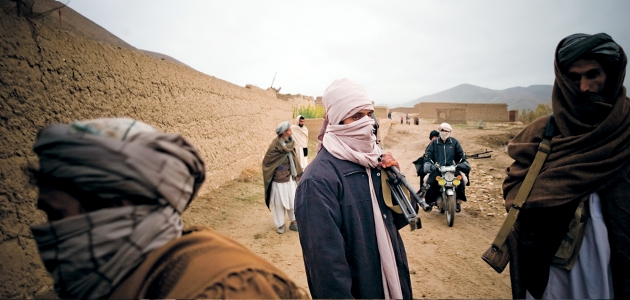
    Pakistan’s ongoing support of the Afghan Taliban is anything but news to insurgents who have spoken to NEWSWEEK. Requesting anonymity for security reasons, many of them readily admit their utter dependence on the country’s Directorate for Inter-Services Intelligence (ISI) not only for sanctuary and safe passage but also, some say, for much of their financial support. The logistics officer, speaking at his mud-brick compound near the border, offers an unverifiable estimate that Pakistan provides roughly 80 percent of the insurgents’ funding, based on his conversations with other senior Taliban. He says the insurgents could barely cover their expenses in Kandahar province alone if not for the ISI. Not that he views them as friends. “They feed us with one hand and arrest and kill us with the other,” he says.

    The militants say that most often they’re dealing with middlemen who appear to be merchants, money-changers, or businessmen, although the assumption is that they’re working for Pakistani intelligence. Some provide money, some motorbikes; others supply contacts for sources who can provide weapons. One smuggler who funnels much of his profits to the insurgency claims that Pakistani forces reserve one remote border crossing in Baluchistan for the Taliban and force civilians to divert to far-off posts.

    But many insurgents still blame the Pakistani government for its cooperation in the U.S. invasion of Afghanistan after 9/11. “We can’t forget or forgive Pakistan for turning against us nine years ago,” says a senior Taliban intelligence operative, also speaking with NEWSWEEK along the remote border. And the betrayals didn’t stop there. Every Taliban can recite a long list of insurgent leaders who have been arrested in Pakistan or who were killed in Afghanistan with assumed Pakistani complicity. One of the biggest losses was Mullah Akhtar Mohammad Osmani, a driving force in the Taliban’s revival whose hideout near Quetta was raided by Pakistani forces in 2006. He fled across the border, where he was killed in a U.S. airstrike. Another was Mullah Dadullah Akhund, one of the insurgency’s most feared commanders, who died in a coalition raid in Helmand—with the help of the ISI, the Taliban suspects. The insurgents say he was too brazen, too independent, and too close to Al Qaeda for Pakistan’s comfort.

    Some leading Taliban even suspect that Mullah Mohammed Omar, the leader and symbol of their jihad, may also be in ISI custody. He has appeared in no videos and issued no verifiable audio messages or written statements since he disappeared into the Kandahar mountains on the back of Baradar’s motorcycle in late 2001. “I wouldn’t be surprised if the ISI arrested us all in one day,” says a former cabinet minister. “We are like sheep the Pakistanis can round up whenever they want.”

    On top of the years of grudges, there’s a persistent strain of ethnic animosity between the Taliban’s overwhelmingly Pashtun membership and its mostly Punjabi patrons from Pakistan’s security forces. The insurgents refer contemptuously to the ISI as “blacklegs,” for their supposedly darker skin. “Any commander who is more or less self-sufficient and independent of Pakistan becomes more popular with his fighters,” the intelligence officer says. Nevertheless, the insurgents see little choice about accepting any help they can get from Pakistan.

    The Pakistanis, for their part, continue to resist U.S. pressure for strikes against Taliban sanctuaries. “Their aim seems to be to prolong the war in Afghanistan by aiding both the Americans and us,” says the logistics officer. “That way Pakistan continues to receive billions from the U.S., remains a key regional player, and still maintains influence with [the Taliban].” And which side is Pakistan on? “That’s a foolish question,” says Anatol Lieven, a professor in the Department of War Studies at King’s College London. “Pakistan is on Pakistan’s side, just as America is on America’s.” Nobody knows that better than the Taliban.

    Cross-Border Unions: How Indo-Pakistani Marriages Prosper

    By Vinita Bharadwaj for The National-UAE
    While relations between their countries may be at an all-time low, Indians and Pakistanis who marry each other often find extended family ties confound their nations’ mutual hostility.

    It is a truth universally acknowledged, that when two South Asians wed, they not only marry each other, they also marry into each other’s family.

    And family matters between Indians and Pakistanis might be expected to be highly charged, given those two countries’ mutual antipathy for more than 60 years.

    “When an Indian marries a Pakistani, it’s a loaded event that can only be matched by the energy of a cricket match between the two countries,” says Amra Hyder, a Pakistani.

    The partition of British India into Pakistan and India is historically recorded as the largest human migration ever. It displaced millions and forced people of a common culture to choose a new geography and subscribe overnight to the idea of previously non-existent nations.

    Most tragically, it split families. The ghosts of the 1947 partition loom large in the psyches of both countries’ modern histories that include three wars, a continuing dispute over Kashmir and terrorism.

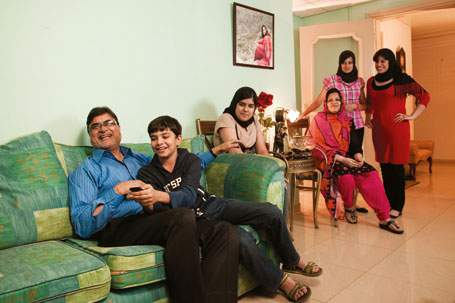
    Amra is originally from Pakistan and is married to Zulfiqar Hyder, who hails from India. Amra and Zulfiqar, now Canadian citizens, have lived in Sharjah with their four children since 2006.

    In 1992, when the gregarious, romantic 23-year-old Amra married the 33-year old Zulfiqar, a studious man from India, she did not quite know what to expect – from married life, her in-laws and most importantly, her husband’s country. “I also never would have imagined I would be apologetic for both countries’ ridiculous obsession with ‘Shonia’,” she says of the media brouhaha over the recent nuptials of the Pakistani cricketer Shoaib Malik and the Indian tennis player Sania Mirza.

    For long before the Malik-Mirza marriage, thousands of Indians and Pakistanis, mostly from families divided by the 1947 partition, have been marrying each other.

    The difference is that now these marital alliances are formed outside the extended family circuit. Amra and Zulfiqar did not have an arranged marriage, and neither of them had any intention of settling in either India or Pakistan. They opted to overcome predictable visa hassles by initially residing in the UAE soon after their wedding, and migrated to Canada in 1996 to obtain citizenship, in the hope that it would ease their trips between India and Pakistan.

     
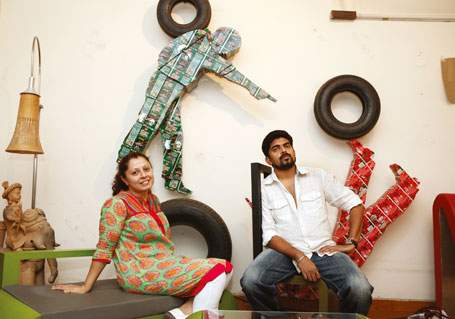
    Masooma Syed, from Lahore, met her Keralan husband Sumedh Rajendran at an artists’ residency programme in Delhi. ‘I knew he understood me perfectly.’ Charla Jones

    The couple first met in Abu Dhabi at a mutual friend’s party, and married within a year. The wedding took place in Karachi, with Zulfiqar’s entire family flying in from the northern Indian city of Lucknow. “It was a lovely wedding,” Amra recalls, adding that the questioning – albeit, in jest – began soon after they were married. “It was like, ‘Now you’re an Indian daughter-in-law’ and ‘Who will you support in cricket’ or even ‘Who will you support in war’?”

    Her response was simple. “I married an Indian, not India. Having said that, I have been welcomed so warmly and given unbelievable respect by Indians, whenever I visit. My relationship with the people, I cherish. The politics, I don’t care for.”

    Amra grew up in Abu Dhabi and returned to Lahore for university. Her childhood perception of Indians was to lump them all as people from the Southern Indian state of Kerala. “It was so wrong,” she says regretfully admitting to an error of judgment on her part, “but I honestly never really gave it any thought.” Although her grandfather was an active political leader – initially in the Indian independence struggle and later in the Muslim League, which pressed for Pakistan’s creation – she was uninterested in matters of politics.

    On numerous trips to Northern India in the last 18 years, Amra has returned amazed by the cultural similarities she has observed between Indians – including non-Muslims – and her community in Pakistan. “We speak the same kind of language, we appreciate the same food, we like the same clothes, we place the same importance on family values. We even share similar pre-wedding festivities. It’s hardly an alien experience,” she says.

    The differences were more to do with class and little do with the country. “Compared to my husband’s childhood, mine was very privileged. He is a self-made man and has single-handedly contributed to his family’s success. If I had to get used to anything, it was holidaying in a home that would experience power cuts and water shortages.”

    Amra and Zulfiqar’s children – Hira (17), Anum (13), Zahra (11) and Ali (10) – describe themselves as desi, a generic, originally sanskrit, term used by South Asian immigrants that loosely denotes their origins. They are an animated group and debate the definition of desi among themselves, as their parents look on proudly. The conclusion: among younger generations in urban settings, desi communities have spawned a culture bound by a fondness for Bollywood, cricket, South Asian food and fused elements of their upbringing at home with the globalised, western outlook they are exposed to outside.

    Having said that, India and Pakistan enjoy enormous cultural riches – largely attributable to their ethnic, regional and linguistic diversity. Both countries together are akin to the European Union – with each of their provinces having their own quirks, tastes and sensibilities. These subtleties within communities are apparent when embedded among the people in their own land.

    Shadab Raza, from Lucknow, India, his Pakistani wife Sana Zehri and their six-year-old son Ali have relatives on both sides of the border. ‘There’s never been this India-Pakistan mentality in our families,’ Shadab said. Siddharth Siva / Arabian Eye

    Masooma Syed, an artist from Lahore, lives in Delhi with her husband Sumedh Rajendran, also an artist, but from the south of India. They were introduced to each other at an artists’ residency programme in the Indian capital Delhi in 2003. Following that, they would arrange to meet in Manchester, Sri Lanka and New York before finally geting married in July 2008.

    Their cultural backgrounds could not be more different, as are their temperaments and artistic styles. “And yet, I knew he understood me perfectly,” says Masooma of the decision to marry across the border and step into the cumbersome world of visas, soon after exchanging wedding vows in Sri Lanka.

    “We never thought about a third country [to live in]. Sumedh has lived in Delhi for the last 15 years and I’ve had absolutely no problem in adjusting to living here. It’s just like Lahore. Ironically, I find Sumedh is more of a foreigner in his own country’s capital than I am. We have discussed moving to a neutral country, especially if visa regulations became tighter, but then as artists all our inspirations stem from this region. Relocating would uproot those emotions and we wonder what impact that would have on our work.”

    Kerala, where Sumedh is from, however, is an altogether different milieu. “The first time Masooma visited, she was stunned,” says Sumedh.

    “I thought to myself, how lucky am I to be able to see and discover these different facets of India,” she says recalling her reaction to the abundant greenery, the aromatic spices, the swaying coconut palms and the simple people.

    But since marrying Sumedh, Masooma has found herself saddled with the unexpected baggage of acting as an ambassador of sorts for both countries. “It’s annoying at times,” she says. “And really it’s all because of immature media reportage in one country about the other. So I end up having to either justify, explain or make excuses for India when in Pakistan or vice versa. I’m not used to being accountable to anyone and this new role is quite tiring, even if it does come with special treatment in some instances.”
    The challenges within an Indo-Pak marriage, according to Masooma, seem to be similar to any mixed-culture marriage. Except that among South Asian communities, tradition dictates the wife follows the husband to his home, or homeland. In the specific India-Pakistan context of the 21st century, the complications of visas and work permits make it harder for educated women to carve out an identity for themselves in their new environment. “It’s definitely much easier to be in a third country – either resident or citizen – when in an Indo-Pak marriage. Also, in today’s world, the younger generations of Indians and Pakistanis are meeting and interacting abroad, first as students and then as professionals. Marriages between different faiths among this demographic is on the rise and logistics is no longer a deterrent to falling in love.”

    Masooma has been visiting India since 2003 and as an artist she has travelled, exhibited and worked in both countries. “I go through the same motions as all Pakistani nationals applying for an Indian visa. It’s a process and is easy or difficult depending entirely on how you want to look at it,” she says. In early June, the Indian government announced it was relaxing the requirements for granting the extension of long-term visas to four categories of Pakistani nationals, including Pakistani women married to Indian nationals and staying in India. The announcement was welcomed by individuals in her situation.

    Her current visa is a ‘visit visa’ valid for nine months that is split into three visits of 90 days each. She has to exit India after each ‘visit’, but says it suits her work commitments that require her to travel abroad. “And I can visit my family in Lahore,” she adds.

    Pakistani nationals issued visas to India are typically allowed to visit a maximum of three cities and must report to a police station on arrival and before leaving for their next destination. Masooma is now exempted from the police reporting, as she is a regular traveller between India and Pakistan and is also now married to an Indian national. “I’m allowed to visit more than three cities each time, but it will be a while before I am given complete freedom to travel like any other foreigner,” she says.

    She could apply for a residence permit, but would be compelled to stay in India until the paperwork is completed, but it’s diffiuclt to predict how long that would take. Nationality, however, remains a touchy issue, particularly among the educated and liberal women of either country, who see no reason in giving up the passport of the country they originally belong to.

    “Unfortunately, political relations keep changing and this spills over into visas and affects people-to-people relationships,” says Zulfiqar Hyder, a staunch believer in encouraging contact between the two countries. The Hyder family hold Canadian passports, but they still have to apply for visas to visit India and Pakistan.

    In the wake of the David Headley arrest – a US citizen of Pakistani origin – over his alleged terrorist connections and involvement in the 2008 Mumbai attack, Zulfiqar says having the Canadian passport makes little difference towards easing the process. “I’m trying to get a PIO (Person of Indian Origin) card for the children,” he says of the document issued by the Indian government that functions as a long-term multiple entry visa. As things stand, the foreign spouse of an Indian national is eligible for the PIO card, but the spouses from Pakistan are not, effectively ruling out Amra and her two elder daughters, as they were previously travelling on her passport. “I don’t understand the logic that my children cannot get the PIO card, because their mother is Pakistani,” says Zulfiqar.

    The national security argument does not resonate with him as much as it does with Amra. “Frankly, if my family can be assured of safe travel, I don’t mind a little more waiting or dealing with a bit more bureaucracy,” she says. He shakes his head furiously, looks at me and asks: “Did the 26/11 terrorists enter India with passports? Did they? How did they enter India?”

    They arrived by night. Across the Arabian Sea, first on a small boat, then a hijacked fishing trawler and finally entered Mumbai’s waters on a rubber dinghy.

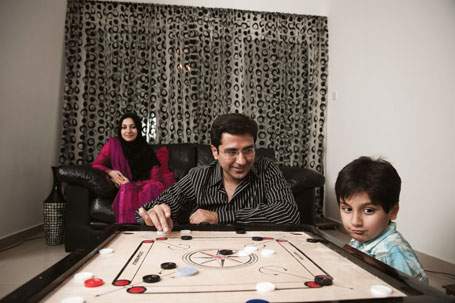
    Visa-related policies in both countries are updated depending on the warmth or frostiness of the political relationship. Shadab Raza, a 35-year old Indian also from Lucknow, married Pakistani national Sana Zehri, who grew up in the UAE. They have a six-year-old son who has an Indian passport. The families arranged their marriage, as Shadab’s maternal aunts live in Pakistan. “There’s never been this India-Pakistan mentality in our families, because we have relatives on both sides of the border,” says Shadab.

    Sana’s ancestry can be traced back to Lucknow, as her grandparents migrated to Pakistan at the time of the partition. On her first visit to the city after her marriage, she visited the ancestral home of her grandparents and filmed it to share with them. “I filmed the house, the neighbourhood and some of the people recorded messages for them. When they watched the video they were consumed by nostalgic sadness. I think partition hurt their generation the most. Our parents to a lesser extent, but they still feel the impact of it as they grew up hearing about it from their parents and visiting immediate relatives in the other country. For my generation, the degree of the trauma is even more reduced, because we haven’t experienced much of the consequences of it directly,” she says.

    Shadab and Sana’s son, Ali, however, is quite clear about where he is from. “India,” he says firmly.

    Sana laughs and recalls an incident of him wanting a carrom board specifically ‘made in India’. “My father-in-law had to get the lettering customised because the shop, where they bought it didn’t sell carrom boards with a ‘made in India’ label,” she says. In the meantime, Ali brings out his carrom board and empties out the coins from their container. He then calls out to Shadab to come and play with him.

    “There’s never been this India-Pakistan mentality in our families, because we have relatives on both sides of the border,” says Shadab sitting down at the board, across from Ali, who flicks the large striker coin towards the arrangement of smaller black and white coins stacked by colour in the centre of the board. The two towers collapse, some of the coins disperse in four directions, but none of them is pocketed.

    “What a mess,” exclaims Ali.