Archive for the ‘ Pakistan Army ’ Category

India Continues to Dominate Pakistan’s Strategic Thinking: US

As Reoported By The Times of India

Pakistan’s efforts to launch a comprehensive fight against terrorism are greatly hampered by its perceived threat perception against India, US President Barack Obama has said in a new report to Congress.

“As India continues to dominate their strategic threat perception, large elements of Pakistan’s military remain committed to maintaining a ratio of Pakistani to Indian forces along the eastern border,” Obama said in the third-quarterly report to the Congress on Afghanistan and Pakistan sent yesterday.

“This deprives the Pakistani COIN (counter-insurgency) fight of sufficient forces to achieve its ‘clear’ objectives and support the ‘hold’ efforts and causing available Army forces to be bogged down with ‘hold’ activities because there are insufficient trained civilian law enforcement personnel to assume that responsibility,” Obama said in his 38-page unclassified (rpt) unclassified version of the report.

Due to flood in Pakistan last year the offensive military operations Pakistan had envisioned for KP (Khaibar Pakhtoonwah) and the Federally Administered Tribal Areas (FATA) in the second half of 2010 were overtaken by events, he said.

“Militants were impacted by the floods as well, so we did not observe significant offensive actions on their side, but as Pakistani forces ceased offensive operations, extremists extended their control to areas without sufficient Pakistani central government-provided security and governance,” he wrote.

Between October 1 and December 31, 2010, Obama said Pakistani security forces remained largely static, generally focusing on maintaining the security of previously cleared areas in the FATA and KP and continuing to support flood relief operations.

There were small but notable security operations in November and December in Orakzai Agency and Dir District, but no major operations.

National attention during the reporting period focused on the need for continued flood relief and the start of early recovery efforts, he said.

“The military served as a force of stability during the monsoons, ensuring that Pakistani and international emergency resources were available for rescue and relief operations. The Pakistan Army, Air Force, and Navy committed large numbers of personnel and resources to the flood relief operations throughout October and November,” he said.

The civilian government’s response suffered from a lack of coordination and reflected broader shortcomings in the government’s ability to execute the civilian “hold” and “build” phases of COIN.

The last quarter of 2010 saw no progress on effectively executing the COIN cycle in KP and the FATA.

Pakistan Rejects US Taliban Report

As Reported by The BBC

The Pakistani military has dismissed the findings of a US report that says it has no clear plans to defeat the Taliban insurgency.

The report assessing the war against militants in Pakistan and Afghanistan has been submitted by the Obama administration to the US congress.

But a senior Pakistan security official told the BBC that operations against militants have been a great success.

The official said that Pakistan should be proud of the progress it had made.

The White House report said that Pakistan still has no “clear path” to defeat militants on its soil.

But the senior official – who wished to remain anonymous – said that Pakistan’s plate was full enough already.

“Instead of pushing us to do more, the other side should carry out an introspection of its own operations,” he said.

“We are quite satisfied with our counter-insurgency campaign in the Swat and Malayan regions and parts of the tribal areas. We can safely say this has been a great success story.”

The BBC’s Shoaib Hasan in Pakistan says that the White House report has been released at a time when relations between the security establishments of the two countries have been strained.

Our correspondent says that the report is likely to raise the ire of the Pakistan military – which says it has lost more men than any other country in the fight against militancy in the region.

‘Vexing’

The White House report said that in spite of “tremendous human sacrifices” made by Pakistani security forces and increased military co-operation between Pakistan and US in the last three months, the fight against militancy was making little progress.

Pakistan claims to have lost more men than any other country in the fight against militancy It cited the example of the this January’s third operation in two years to clear insurgents from Mohmand and Bajaur tribal agencies.

The Pakistani military’s efforts have been hobbled by resistance from the militants, bad weather and the need to settle internally displaced people.

“What remains vexing is the lack of any indication of ‘hold’ and ‘build’ planning or staging efforts to complement ongoing clearing operations,” the White House report said.

“As such there remains no clear path to defeating the insurgency in Pakistan, despite the unprecedented and sustained deployment of over 147,000 forces.”

The report said that Pakistan and Afghanistan needed to co-operate more to destroy insurgent havens on both sides of the border.

The US has long expressed frustration about Pakistan’s reluctance to take on militants in the tribal areas.

Pakistan Army To Restore “Peace” in Bahrain?

By Aijaz Ahmed for Indus Herald

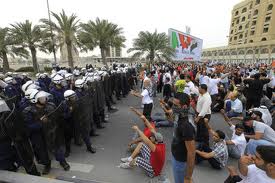
Pakistan and Bahrain are seriously considering ways and means and possible repercussions of Pakistan’s military and intelligence agencies’ help to the later in restoring “peace” in politically disturbed areas. Foreign Minster of Bahrain Sheikh Khalid bin Ahmed Al-Khalifa is to arrive in Pakistan on Tuesday to discuss the matter, highly placed sources have confided to Indus Herald. The Saudi led Gulf Cooperation Council (GCC) has already approved deployment of Peninsula Shield Force in the Kingdom of Bahrain to crush the movement for democracy that is getting stronger with every passing day. Assurances from King Hammad to introduce some reforms with regards to civil liberties and democratic and human rights have not succeeded so far to calm down anger among people demonstrating for a democratic system. Interestingly the reaction of the world community, the United States, Saudi Arabia and Pakistan is totally different on the situation as compared to the reaction demonstrated on the situation in Libya.

Pakistan has already expressed its support for the GCC decision, and that too on Saudi pressure, a source at the foreign office revealed. The economically hard-pressed Pakistan had no other way but to follow the Saudi demands as the holy kingdom has assured a sizable support in meeting the economic challenges ahead, the foreign office source added. However, Pakistan’s nauseating defense of its endorsement to GCC intervention in Bahrain to deploy Peninsula Shield Force isn’t finding any takers. Majority of foreign policy commentators and experts are not ready to buy Pakistani endorsement but people having close relations with PML-N including the likes of Shamshad Ahmed Khan, Tariq Fatmi and Riaz Khokhar are intriguingly silent on the support that Pakistan has diplomatically provided to Bahrain on the behest of Saudi Arabia. The sole reason for the silence of these former ‘babus’ of Foreign Office and some other “well informed experts” lies behind the special relationship that PML-N leader Mian Nawaz Sharif enjoys with the Royal family of the holy land.

Pakistan desired return of peace, security and stability to Middle East that had been hit by political upheaval, the newly designated foreign office spokesperson Ms Tahmina Janjua observed while briefing the media the other day. “As far as Bahrain is concerned, it was an internal decision of the GCC. The GCC decided on the basis of its founding principles that security forces would go to Bahrain,” said Foreign Office Spokesperson in her stammering voice while replying to hard hitting questions on Bahrain though her words did not match the principles of ‘non-intervention and non-interference in domestic affairs of others’ that she had painstakingly learnt during her 27 years long diplomatic career. This was not the first time that Foreign Office stood up for Bahrain’s monarchy. Foreign Secretary Salman Bashir had earlier praised the Bahraini Monarch on March 1. While the protestors were being tear-gassed and shot at, he had said: “We … admire the progress made by Bahrain under the leadership of His Majesty King Hamad bin Isa Al-Khalifa.”

The current political upheaval is a geniune cause of concern for Pakistan as there are some 65,000 Pakistanis in Bahrain, some of whom are working with Bahraini security services, the FO sources maintained adding that the security of King of Bahrain, the major installations, the Royal Family and the state dignitaries is prime responsibility of the Pakistanis employed in the Bahraini security services. Perhaps this was the reason that a number of Pakistanis became vistims of the public anger and some of them were seriously injured earlier this month during the violent protest of people on streets. Reports received from the tiny Gulf Kingdom suggest that the xenophobic attacks against Pakistani expatriates earlier this month were commited as Pakistani policemen had been at frontlines of riot police that attacked demonstrators.

In an atmosphere where common Pakistanis are quite unsafe in the Kingdom, Pakistan has not only quietly endorsed the intervention, but allowed the welfare wings of its military forces – Fauji Foundation and Bahria Foundation – to recruit about 1000 guards to bolster Bahrain’s security apparatus and the recruitment was not made secretly, instead the process was completed in very open way.

The reasons for the uprising in Bahrain are said to be more than just the political, the sources further revealed. The detailed analysis of the situation reflects that the political upheaval is being financed by some external factors and the sources point their fingers towards some hard core religious elements having strong presence in Pakistan and also towards the Iranian Government, thus both Saudi Arabia and Bahrain intend to use good offices of Pakistan Army and its intelligence wings to play their ole in bringing in peace and stability in the Gulf State.

Foreign Office has confirmed that the The Foreign Minister of Bahrain will discuss security cooperation and internal political situation of the country with Pakistani leadership. During his hectic visit, he will meet President Zardari, Prime Minister Yusuf Raza Gillani, State Minister for Foreign Affairs, and the military leadership in a very short span of time. The two sides will discuss further strengthening security cooperation and additional steps, sources revealed. Bahrain may formally furnish a request for Pakistan army contingents to be deployed with the GCC Shield Force in troubled areas as well as a request to ISI and Military Intelligence (MI) for using their good offices to establish contacts and facilitate parlays between the Bahrain Government and the right wing forces as well as in direct talks between Iran and Bahrain, sources confided with confidentiality. ‘Pakistan is the only country that can help Bahrain in bringing in the political stability in the country and thus a request is expected to be made for an active Pakistani role in the greater regional and trans regional interest’, sources said. But any decision will be taken keeping the sensitivities and threats in mind, the sources assured.

Meanwhile some brain storming is being done between Pakistan and Saudi Arabia for revival of an already expired defense agreement between Pakistan and the Kingdom of Saudi Arabia and an initial discussion has been made during the recent visit of Saudi National Security Chief, however few changes will be made in the previous agreement if any progress in this regard is made, sources in the diplomatic circles maintained.

Dialogue Key to Peace with Pakistan, Says India

By Anjana Pasricha for The Voice of America

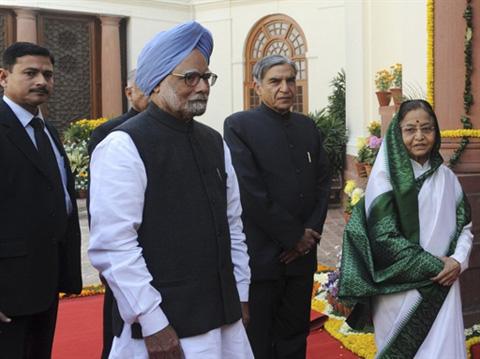
As India and Pakistan get ready to restart peace talks after more than two years, Prime Minister Manmohan Singh says dialogue is the only way to resolve their differences.  The embattled Indian leader is also vowing to tackle inflation and punish those guilty of corruption — two issues which have put his government on the ropes at home.

Speaking to parliament Thursday, Prime Minister Singh said South Asia will not realize its potential unless India-Pakistan relations are normalized. India is willing to discuss all outstanding issues with Pakistan, he said.

But, striking a cautious note, he expressed hope that Islamabad will give up allowing its territory to be used for terrorist activity directed at India.

“I sincerely hope and believe that the new ruling classes of Pakistan would grasp the hands of our friendship and recognize that whatever our differences, terror as an instrument of state policy, is something no civilized society ought to be using,” he said. “I am not saying that we have today an atmosphere in which negotiations can go forward, but there are hopeful signs.”

Earlier this month, both countries decided to restart a peace process, which New Delhi had put on hold after blaming Pakistan-based Islamic militants for mounting the 2008 terror attacks in Mumbai. The foreign secretaries of the two countries will meet in the Indian capital in March. Their foreign ministers are to meet by July.

Singh’s comments on the peace talks with Pakistan came during an address to parliament, in which he outlined the priorities facing his government.

He pledged to lower inflation from 10 percent to seven percent by the end of the year. Food inflation is even higher and has emerged as a major worry in a country with millions of poor people.

Singh has promised to bring a new food security bill in parliament to ensure that poor people are protected from rising food prices.

Inflation has to be tackled in a manner that it does not hurt the economy, which the prime minister says is growing well.

“If we had a ham-handed [heavy] approach, we could have killed the growth process which is the only source of providing jobs for our youth. So, this delicate balance has to be preserved between control of inflation and protection of employment,” he said.

The Indian leader also vowed to crack down on those guilty of corruption in connection with sale of telecom spectrum, in 2008, and the organization of the Commonwealth Games in New Delhi, last year. Allegations that officials siphoned off billions of dollars have put the spotlight on corrupt practices in government contracts.

With the two corruption scandals dominating headlines in recent months, Singh expressed fears that the wrong impression may be going out.

“The message should not go out that India is adrift, that India has lost its way, that the enthusiasm for getting this country moving forward is something that is no longer in evidence,” he said.

The Congress-led government was voted back to power in 2009, but is facing a rising wave of discontent both becauseof high food prices and the high-profile graft scandals.

Peace In One Pakistani Tribal Valley Offers Hope

Reported by Abubakar Siddique for Radio Free Europe Radio Liberty
A fragile peace is taking root in Pakistan’s western Kurram tribal region after nearly four years of sectarian warfare between Shi’ite and Sunni Muslims.

Some have criticized a recent peace pact by saying that it is less about forging a lasting peace than about facilitating insurgents’ infiltration into neighboring Afghanistan. But the local population appears committed to making it work.

Success could have far-reaching implications. If peace is possible in a hotbed like Kurram, then it could serve as a model for millions suffering from war in other tribal areas.

‘Many People Were Injured’

Resident Noor Janan’s situation is typical. He lost his budding business in 2007 when clashes broke out between Shi’a and Sunnis in Parachinar. Rioting in the small border city, which serves as the headquarters of Kurram, soon devolved into sectarian war.

As the Sunni population of Parachinar was forced out, the city’s mostly Shi’a population was hemmed in — trapped by retreating Sunnis who blocked the main road to the outside and set siege on the city.

Janan’s priorities changed remarkably. For the past four years his main obligation has not been to look after his wife and four children, but to man frontline trenches and care for the sick and the injured.

Children displaced by fighting stand in line and wait for handouts in 2010.

“Many people were injured and many houses were destroyed,” he said. “I did all in my power to help my people.”

Janan is Turi — a tribe of 500,000 whose adherence to Shi’ite Islam makes it unique among Pashtuns. The Turis occupy a sliver of tribal territory known as the Parrot’s Beak that extends westward across Afghanistan’s eastern border. On the Pakistani side, Parachinar is positioned within striking distance of Kabul, which is just 100 kilometers to its east.

For the most part, the Turis lived in harmony with neighboring Sunni tribes for centuries, with a handful of exceptions. In the 1980s, predominantly Sunni Afghan Islamist guerillas attempted to overrun the strategically important region.

In 2007, a fierce sectarian war broke out when the Sunni Taliban attempted to conquer the Parachinar. More than 3,000 people have died and thousands more injured in the ensuing fighting. Some Sunnis blame Iran for the development, claiming the clerical regime supported and radicalized their Shi’a neighbors.

Both Sides Committed

Animosity remains high, but a cease-fire worked out in early February and backed by Islamabad offers proof that Shi’a and Sunni alike are committed to peace.

Middle-aged businessman Munir Khan Orakzai, who represents the Sunni population of the lower half of Kurram in Pakistan’s parliament, said that both sects realize that they have fought a useless cause that killed many innocent people. “There can be no logical end to this [sectarian violence],” he said. “That’s why people concluded this agreement.”

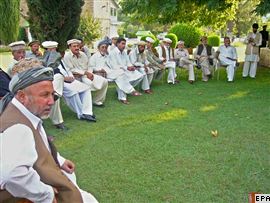
Tribal elders and government representatives attend a peace conference in Parachinar in 2008.

A peace agreement was signed before, in 2008, but it lacked government support and rival factions had one eye on possible military gains.

Under the new agreement, Islamabad is promising rehabilitation for the thousands of displaced families, and the deployment of additional troops to guard key routes.

Work Of The Haqqanis?

Skeptics abound. Pakistani pundits suggested that the deal was worked out by the Haqqanis — a large Pashtun family from Afghanistan whose elderly patriarch Jalaluddin Haqqani emerged as one of the most effective guerilla commanders in the 1980s.

His son, Sirajuddin Haqqani, now controls thousands of fighters and facilitates relations between Al-Qaeda Arabs, extremist Afghans, Pakistanis, and Central Asians out of his sanctuary in North Waziristan, which adjoins Kurram to the south. Considering the Haqqanis anti-Shi’ite bent and outsider status, any role in an agreement would be rejected by Kurram’s Shi’a.

Sajid Hussain Turi, a young lawmaker representing the region’s Shi’ite population in the Pakistani parliament, adamantly rejected any Haqqani role. “We, the Turis, have lost 1,200 people and more than 5,000 of our people were injured in this,” he said. “There is no question of involving people in this process that would ultimately harm us.”

Turi said that the weakened position of the Taliban, in disarray after years of military operations, opened the door to peace. He said that even local Sunni allies of the Taliban now see the futility of their military campaign.

Key intermediaries have high hopes for sustainable peace in Kurram. Waris Khan Afridi, a respected tribal leader from the neighboring Khyber tribal district, was among the mediators who put in countless hours bringing the two sides together.

Unforgettable Scene

On February 5, Afridi led the first civilian convoy of hundreds of vehicles to mark the break of Parachinar’s siege. He described an unforgettable scene of thousands of Sunni and Shi’ite villagers welcoming his entourage. “It was like they all were freed from prison that day,” he said.

Now, Afridi said, Pashtun tribes in neighboring tribal valleys are poised to follow the Kurram example. “We have always said that force is not a solution for anything and that the military operations will not solve our problems,” he said.

“Peace in Kurram,” Afridi said, “will positively affect all the tribal areas, the [neighboring] province of Khyber Pakhtunkhwa, and the whole country.”

A Reality Check on India, Pakistan

By Ahmad Majidyar & Apoorva Shah for The Diplomat

On February 10, India and Pakistan announced that they would resume peace talks that were suspended after Pakistan-based terrorists attacked multiple sites in Mumbai in November 2008, killing 170 people. Washington welcomed the announcement, no doubt hoping that détente between the two nuclear neighbours might lead them to end their proxy war in Afghanistan, and leave Pakistan better able to fight the Taliban and al-Qaeda on its own soil.

But it’s much too early to get carried away. After all, diplomacy conducted under terrorism’s shadow can backfire, and should there be another attack on Indian soil, Indian policymakers—even those in favour of reconciliation—may well conclude they have no partner in Pakistan, bringing the prospect of conflict closer.

It’s also not at all clear that Pakistan really is sincere in its desire for rapprochement. The country has reportedly doubled its nuclear arsenal over the last four years, and is believed to be building its fourth plutonium reactor. Western nations should be troubled that a country that professes to be committed to fighting Islamic militants at home has decided to focus so much attention on developing its nuclear prowess instead. 

Indians should also be concerned.  On July 15, 2010,India and Pakistan’s foreign ministers met in Islamabad supposedly in order to ‘restore trust.’ But the talks collapsed in acrimony, with the Indian side claiming that Pakistan had failed to move to resolve differences over the prosecution of anti-India terrorist groups operating from its territory. Just ahead of these talks, Indian Home Secretary G. K. Pillai had claimed that Pakistan’s Inter-Services Intelligence (ISI) had played a ‘much more significant’ role in the Mumbai attacks than was initially thought, adding that he believed Pakistan was ‘coordinating it from the beginning till the end.’

Testimony by captured alleged Pakistani-American terrorist David Headley appeared to support Pillai’s claims, with Headley reportedly telling FBI interrogators that the ISI went so far as ‘choosing the weapons to be used in the attack.’

If all this is true, then there can be no serious diplomacy until Pakistan stops seeking to leverage Islamist militancy as a weapon in Kashmir and against India. Lashkar-e-Taiba (LeT) and similar groups continue to operate freely in Pakistan. Last February, for example, LeT’s leader Hafiz Saeed led a 10,000-strong procession in Lahore to mark ‘Kashmir Solidarity Day’ and warned India to ‘liberate’ Kashmir or face jihad. Indeed, he also signalled a possible expansion of conflict, suggesting that the group might broaden its operations to the southern Indian—and largely Muslim—district of Hyderabad.

But it isn’t just militant leaders who are troubling Indian policymakers. Former Pakistani Prime Minister Nawaz Sharif’s political party, currently in control of Pakistan’s Punjab provincial government, appears to be promoting militancy, at least judging by its official budget last year. As the BBC reported at the time, the government allocated $1 million to Jamaat-ud-Dawa, a charity on the UN terrorism watch list and a Lashkar-e-Taiba front group.

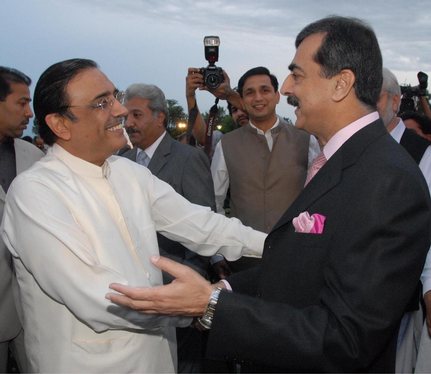
The reality is that many Pakistani political leaders don’t seem to want to move forward on talks. Former Foreign Minister Shah Mahmood Qureshi, President Asif Ali Zardari, and Prime Minister Yusuf Raza Gilani have all appeared sincere, but they seem to lack even the limited control that former President and army chief Pervez Musharraf wielded over the military and intelligence apparatus during his tenure. Meanwhile, the man currently in charge of Pakistan’s military—Gen. Ashfaq Kayani—appears to show no interest in détente, conceding in his own words that he has an ‘India-centric’ bias to his military strategy. 

In theory, Indo-Pakistani diplomatic engagement is a must for regional security. In 2007, talks came close to reaching an agreement on the Kashmir dispute before being derailed by terrorism and domestic political unrest in Pakistan. But Indian diplomats shouldn’t succumb to the exuberance of rapid-fire talks so long as a disconnect remains between Pakistani civilian leaders and their military and intelligence establishment.

The same goes for the White House and State Department—hopes should not be placed on regional security talks without proper conditions for lasting progress being in place first. And the most important of these conditions? Ensuring a complete and no-nonsense end to any proxy support for terrorism at all levels of the Pakistani government.

Ahmad Majidyar and Apoorva Shah are researchers in South Asia studies at the American Enterprise Institute.

Thou Shalt not Mock or It May Cost You Your Life!

By Manzer Munir for Pakistanis for Peace

In the wake of the murder of Salmaan Taseer, the Governor of Punjab a couple weeks back, I did a great deal of contemplation about the situation in Pakistan and the current state of affairs of Pakistan and indeed in much of the Muslim world.

The current situation, especially in Pakistan and when it concerns the rights of the non-Muslims, is apparently the worst of anywhere in the Muslim world. Indeed, the plight of Asia Bibi, (also known as Aasia, Ayesa Noreen) Islam and Islamic Blasphemy laws have come under rightful scrutiny as of late.

One question that tugs at the heart of the debate for me is why is it that Muslims seem to get so very offended to the point they want to KILL you over a remark or something that comes out of your mouth? As Americans, we wonder to ourselves, “Haven’t they ever heard of sticks and stones may break my bones, but words don’t hurt me?!

Sadly, what the fundamentalist preachers at all the podiums of their Friday sermon or khutbah, nor any of their brethren on the run and in caves like the Taliban and Al Qaeda fail to realize that we are all God’s children. And God, Allah, Yahweh, Jesus, or whatever name you assign him, he is One and the same God of all religions. He is too big to fit into just one religion, concept, version or story of him.

And we all are his creations. Not one of us is superior over the other in his eyes and he judges us all equally. To him, the children of these three religions and its offspring’s are all related to each other. Adam being the first man, then Eve, and then all the Biblical figures and names such as Noah, Abraham, Moses, Jesus, yes especially Jesus. He is their Messiah too!

Jesus, in fact is mentioned some 28 times in the Muslim holy book, Qu’ran whereas their own prophet Muhammad is mentioned only 4 times. And the fact that Jesus is also considered by Muslims to be the Messiah, it is sad that his followers should get such abject treatment in Pakistan and sadly, many Muslim countries.

If only the bad guys realized the connections between Christians and Jesus only then would a Pakistani Christian woman, suffering needlessly in a cell tonight going on 2 years away from her children in solitude, and constantly fearful for her life, would see her horrific ordeal come to an end.

These people are incapable of understanding basic rights, freedoms and even the unhindered concept of free will. No, they are primitive minded in their their spiritual and daily lives. They fail to see that a Christian’s God and a Muslim’s God are the one and the same. And he never would agree to laws like Pakistan’s Blasphemy laws at all. Why? Well because the Muslim God is known first and foremost as a Gracious, Merciful, Compassionate God.

In fact, the Arabic phrase Bismillah ir-Rahman ir-Rahim is a beautifully poetic phrase which offers both deep insight and brilliant inspiration to the average Muslim who says it countless times as he or she starts each day and till they rest their head to sleep. “ It has often been said that the phrase Bismillah ir-Rahman ir-Rahim contains the true essence of the entire Qur’an, as well as the true essence of all religions. Muslims often say this phrase when embarking on any significant endeavor and the phrase is considered by some to be a major pillar of Islam. This expression is so magnificent and so concise that all except one chapter of the Qur’an begins with the words Bismillah ir-Rahman ir-Rahim.”

The common translation:”In the name of God, most Gracious, most Compassionate” essentially is saying that God is compassionate, and full of grace. So how would this God punish Asia Bibi? What would he do if he is so full of compassion and mercy? Would he even punish her? And if he is such a gracious and a compassionate God, then wouldn’t he feel that nearly a two year jail sentence in solitary is already far more than her crime not to mention being away from husband and children and being worried about mob vengeance on her or the death penalty?

That God may act in a multitude of ways and we cannot ever know till said Judgment Day. That is what Judgment Day is all about after all. In fact, this is probably one day when the man upstairs works overtime judging all of us mankind, from the beginning with Adam to the last standing comes till Tribulation and the End of Days. It is only he, the Creator who will do the judging and this is something that the men with the loudspeakers who climb to the top of the minaret five times a day to call the faithful to prayers, just do not really understand, in my opinion. They apparently constantly seem to forget and pass judgment from the pulpit and this in turn helps set the “popular” opinion amongst the ultra-religious faithful of Pakistan’s society.

My only prayer to this Creator is that may he keep Asia Bibi safe tonight and continue to give her strength. And if God should call her home and have her die a death at the hands of the real savages those that not only kill but shockingly, in your name, then please Allah grant her heaven just as you should governor Salmaan Taseer, a man who was only defending the rights of all your children, including those of other faiths. He was being compassionate and gracious towards a fellow human being God, as he was only trying to emulate his creator, You Lord. Ameen.

And while you are at it Lord, will you also please let the imam at the microphone know that “Thou shall not mock, should not cost you your life.” Afterall, “Thou shall not kill is one of your top 10 commandments, whereas mocking prophets or religious figures does not make the list!

Manzer Munir, a proud Pakistani American and peace activist, is a Sufi Muslim who is also the founder of Pakistanis for Peace and blogs at www.PakistanisforPeace.com and at other websites such as www.DigitalJournal.com, www.Allvoices.com, www.Examiner.com and www.open.salon.com as a freelance journalist and writer. He asks that you like the Official Facebook Page of Pakistanis for Peace to get the latest articles as they publish here: http://www.facebook.com/home.php#!/pages/Pakistanis-for-Peace/141071882613054

Difficult Outlook for India-Pakistan Talks

By Tom Wright for The Wall Street Journal 

The Times of India reported today that India and Pakistan may try to rekindle peace talks in early February.

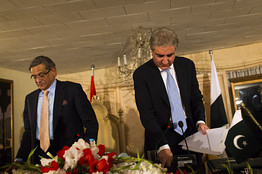
The paper says Pakistan Foreign Minister Shah Mehmood Qureshi could meet his Indian counterpart, S.M. Krishna, informally after a regional meeting in Bhutan on Feb. 8.

The report suggests that the idea is to set the ground rules for an official visit to India by Mr. Qureshi sometime later this year in a bid to normalize relations that have soured since a major terror attack in Mumbai in 2008.

Given the disastrous outcome of Mr. Krishna’s last formal visit to Pakistan – in July of last year – those ground rules will be important.

At that meeting, Mr. Qureshi became incensed during a press conference over India’s claims that Pakistan’s military intelligence services had orchestrated the Mumbai attacks in November 2008, during which 10 Pakistani gunmen killed more than 160 people over three days.

Mr. Krishna arrived back in India to criticism of being made to look a fool by Mr. Qureshi and a peace talks process begun in 2004 was put on hold amid mutual recriminations. The slow-moving (and now stalled) dialogue is an attempt to normalize relations that have been rocky ever since the two nations were created out of British India in 1947.

India has stuck to its claims of official Pakistan involvement in the Mumbai attacks and says Islamabad is not doing enough to prosecute the perpetrators and rein in India-focused militants in general.

Pakistan retorts that it is committed to fighting terrorism. It also has called on India to broaden the agenda for peace talks to include other topics, such as the disputed Himalayan territory of Kashmir, which both countries claim in its entirety.

It is uncertain whether talks at this stage can produce anything meaningful

India is set against any wider peace talks until Pakistan sentences seven militants that it has charged for involvement in the Mumbai attacks.

But the atmosphere in Pakistan right now means it is unlikely that any politician will want to be seen vigorously cracking down on Islamist groups.

The killing earlier this month of Salmaan Taseer, governor of Pakistan’s Punjab province, by one of his own police guards has uncovered the extent to which hardline religious views have permeated many layers of society.

The police guard admitted he was angered by Mr. Taseer’s defense of a Christian woman sentenced to death by a Pakistani court in November for blasphemy.

In recent days, scores of Pakistanis, including lawyers and clerics, have publicly rallied in support of the police officer.

Pakistan Army Propaganda Drama Set for TV

By Khurram hahzad for The Associated Press

Pakistan’s Taliban-fighting soldiers are set for celebrity status with the launch of a multi-million-dollar glossy television drama hailing army victories over militants.

Emotive tales of 11 “brave Pakistanis” battling an Islamist insurgency that is plaguing Pakistan and neighbouring Afghanistan, will air on the small screen in an army-funded drama that casts the anti-terror fight in a positive light.

Focused on the heroism of soldiers fighting a key air and ground offensive in the northwestern Swat valley in 2009, one tale looks at the deeds of soldier Hawaldar Naeem Asghar who died fighting an insurgent checkpoint.

Asghar, portrayed as a hardworking soldier from peasant roots, sacrifices his life to overcome Taliban dug in to a hilltop, during operations in the town of Mingora to flush militants from the picturesque valley.

Throwing grenades from his bunker without success, Asghar is depicted abandoning cover and climbing the hill, tossing more explosives on his way as bullets rain down from the rebels’ post.

The checkpoint is destroyed, but Asghar is killed.

“Hawaldar Asghar’s story is a common man’s story. It’s a message to the public that everybody can play a role in the fight against extremism,” says Sajjad Saji, one of the drama serial’s writers.

“It is filmed to encourage the common people in this war,” he adds.

Urged by its key but critical ally the United States to launch further operations in the lawless tribal areas bordering Afghanistan, the army wants to show the sacrifices it has already endured in the war on terror.

“The basic purpose is to reveal the deeds of bravery of our soldiers, officers and civilians who are at the front of this war…. This drama shows the human face of the war,” says Major General Athar Abbas, head of the army’s publicity wing.

“The nation should own these stories of bravery and sacrifice, they should be proud of our sons and daughters of the land who created these true stories with their blood and defended the motherland.”

One of the filmmakers, who would not be named, said the high-end production was a “multi-million-dollar” effort, but refused to put a precise figure on costs.

The production, peppered with special effects, was filmed amid rugged verdant hills and forests close to the Swat valley — scene of major operations by Pakistan’s military in 2009 to rid the area of rampant militancy.

“We travelled extensively to film this serial. A crew of more than 35 people with trucks of luggage roamed in the forests and hills for months to show the reality,” said Khawar Azhar, the show’s executive producer.

The former tourism hotspot of Swat slipped out of government control after a radical cleric led an uprising in July 2007, beheading opponents, burning schools and fighting to enforce a harsh brand of Islamic law.

Pakistan launched a blistering air and ground offensive in the valley after militants marched out of Swat and advanced to within 100 kilometres (60 miles) of the capital Islamabad in April 2009.

After heavy fighting that displaced an estimated two million people, the military declared the region back under army control last summer and efforts have begun to revive the local economy amid sporadic outbreaks of violence.

Television productions are one of the tools adopted by the military’s publicity wing to polish its image and boost recruitment and morale at a key juncture in anti-Taliban efforts and with religious conservatism on the rise.

Accused by US-based Human Rights Watch of carrying out collective punishments on relatives of militants since it re-established control over the Swat valley, the army knows the importance of securing local hearts and minds.

More than 4,000 people have been killed in Taliban and Al Qaeda-linked attacks since government forces launched an attack against militants in a mosque in Islamabad in 2007.

The television drama depicts the bitter divide between Pakistan’s opposing cultures as the moderate middle class fights religious extremism in a country fractured by deep regional political divided.

In other episodes the film makers show the victims of Taliban power — one girl is subject to brutal gang rape by militants, while in another a young boy is brain-washed into becoming a suicide bomber.

Pakistan’s Political Crisis

Reported by Farhana Bokhari for CBS News

Pakistan’s pro-U.S. ruling coalition on Sunday night battled to restore calm across the country’s political landscape after a regional political party allied to president Asif Ali Zardari’s Pakistan People’s Party (PPP) quit at short notice, leaving the PPP in minority in the lower house of parliament, the national assembly.

The Muhajir Qaumi Movement (MQM), a political party mainly representing Pakistanis who migrated from India to Pakistan when the country was created in 1947, withdrew its support to the PPP, reacting to the government’s decision on Saturday to raise gasoline prices.

The move marked the first major upheaval over gasoline prices since they were raised, mainly to be kept in line with global trends. Western diplomats based in Islamabad, reacting to the latest political developments, warned it was still early to tell if Zardari or his handpicked prime minister, Yusuf Raza Gilani, were in danger of being forced out.

There were warnings that the split with the MQM may in the short term completely paralyze the government. Long term consequences are harder to predict. Pakistan has been ruled by its army for more than half the of country’s 63-year existence. Some previous periods of heightened uncertainty have been followed by the military stepping in to fill the void.

General Ashfaq Pervez Kayani, Pakistan’s present military chief, is widely known to be an apolitical figure. A western ambassador based in Islamabad, speaking to CBS News on condition of anonymity, said, “While there are no signs of the military stepping in, you have to remember that previous [military] takeovers have been preceded by fast growing turmoil. Much depends on the way things happen in future.”

For the U.S., mounting political uncertainty in Pakistan is potentially worrying. This has to do with the support that Washington receives from Pakistan in its campaign to defeat Al-Qaeda and the Taliban in the Afghanistan-Pakistan region, as well as periodic worries in the western world over Islamic hardliners making inroads into Pakistan’s politics.

A minister from the PPP who spoke on condition of anonymity to CBS News Sunday said after the split with the MQM was announced, “If a government is weak and struggling for its own survival, how will it be able to pursue interests of other countries, including the U.S.?” The minister added, “Unpopular steps like petroleum prices are forced upon governments through circumstances which are beyond their control.”

A second western diplomat in Islamabad who spoke to CBS News on condition of anonymity said while Islamic politicians have only pockets of support across Pakistan, “You can never rule out the dangerous possibility of a ground swell in their favor, especially if governments from the political mainstream become weak and unpopular.”

Pakistan, India Swap Nuclear Sites Lists

By Zhang Xiang for Xinhua News

Pakistan and India exchanged lists of nuclear installations and facilities on Saturday in spite of a tension over the 2008 Mumbai attacks that has disrupted the dialogue process between the two countries, the Foreign Ministry said.

The two countries exchange the lists of nuclear sites on the first day of the new year under an agreement signed in 1988 and came into force in January 1991.

“The government of Pakistan and India today exchanged lists of their respective nuclear installations and facilities in accordance with Article-II of the Agreement on Prohibition of Attacks against Nuclear Installations and Facilities between Pakistan and India of Dec. 31, 1988,” a Foreign Ministry statement said.

The statement said the Ministry of Foreign Affairs handed over the list of Pakistan’s nuclear installations and facilities to an officer of the Indian High Commission in Islamabad at the Foreign Office on Saturday morning.

The Indian side also handed over their list to an officer of the Pakistan High Commission at the Ministry of External Affairs in New Delhi, it said.

After the agreement was signed the first exchange took place Jan. 1, 1992.

Sources said it is the 20th consecutive list exchange between the two countries.

Pakistan and India conducted tit-for-tat nuclear tests in 1998. India conducted its first nuclear test in 1974, followed by five more in 1998. Pakistan conducted its six nuclear tests in 1998. Neither India nor Pakistan is a signatory to the Nuclear Non- Proliferation Treaty (NPT).

India considers the NPT discriminatory, while Pakistan has indicated that it won’t join the international agreement till its neighbor does so.

Neither of the two rival neighbors have signed the Comprehensive Test Ban Treaty.

In 2004 they launched a peace process, but that is now on hold following the Mumbai attacks, with New Delhi pressuring Islamabad to do more to punish those responsible for the carnage and to crack down on anti-India groups.

Meanwhile, both countries also exchanged Lists of Prisoners in the two countries, the Foreign Ministry said.

According to the Agreement on Consular Access signed between Pakistan and India on May 21, 2008, both countries are required to exchange lists of prisoners in each other’s custody on Jan. 1 and July 1 every year, the statement said.

“Consistent with the provisions of this Agreement, the Ministry of Foreign Affairs handed over the list of Indian prisoners in Pakistan to the Indian High Commission in Islamabad today,” it said.

The Illiteracy of Hate

A News and Opinion Special Report by Manzer Munir for Paksitanis for Peace

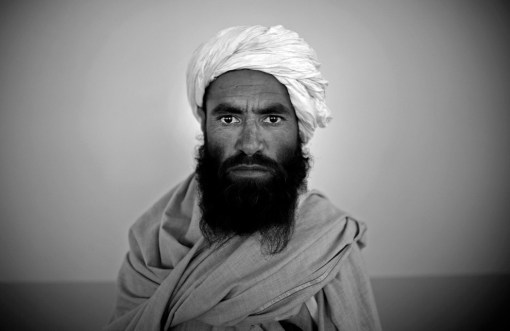
Alleged Taliban Member pic courtsey of Boston Globe

The Taliban are not just simply a bunch of illiterate thugs and bullies for they too often prove to be even worse than animals and barbarians.

Nowhere else in the world has a country experienced a more tragic and callous attack as the one on Christmas day, the birth day of Jesus, the Prince of Peace, than the one Pakistan experienced. In an attack described by President Obama as an “affront on humanity”, the cowards attacked helpless women, children and men while they queued up in food and aid distribution site such as the WFP depot, people who mind you are already suffering from the ongoing war, once in a lifetime floods, and the poverty and radicalism of a generation of desperate, hopeless and increasingly uneducated young men brainwashed by the Taliban and other radical Muslim extremists.

I am still disturbed by the disdain for basic human life that this new attack proves about this radical and extreme enemy. I imagine another one of their brain washed ‘walking zombies’, this time purportedly a woman suicide bomber, a first, even for Pakistan, killed in excess of 43 people in Bajur Pakistan at a World Food Program rations and aid storage and distribution center.

The Pakistani authorities and several domestic and foreign NGO’s who provide food aid at various centers in the area are temporarily closing these centers in order to have increased security. This means that aid distribution will come to a crawl and up to several hundred thousand people will now have to suffer at the hands of the attacker and their backers, the Taliban who have claimed responsibility. The authorities will have to ensure the safety of aid organizations and their personnel for both Pakistani and non Pakistanis relief workers involved in getting food, water and medicine to many people who are either suffering from the war or from the floods.

This catastrophe, although not of near Biblical proportions, does present both a security and humanitarian problem to both the government of Pakistan as well the suffering citizens in the northwest areas of the country where; Taliban fighters take sanctuary from the war in Afghanistan to regroup and return to the fight in warmer weather after the winter months as we have seen in years past. In fact, the reach of the Taliban in Pakistan is now not only reputed to be in the headquartered areas such as in Quetta Pakistan among the restive Baluchi population, now they are so often found to be in major cities like Karachi, Lahore, Rawalpindi, Peshawar and many points in between as they use their religious cover to endear themselves to certain impressionable, weakened or illiterate individuals that are so commonly found in throughout the country. 

Here are the some of the depressing facts. Pakistan, a nation approaching 180 million people at current estimates, perhaps only boasts to having about 60-65% of the male population at a literate level and at best, the females to be only at 40-45% of the total female population. Sadly, what this means is that 4 out of 10 Pakistani males are completely illiterate while up to as many as 6 out of 10 women are not able to read or write. Poverty breeds extremism since there is no support from any government programs or hope for any solution.

Time and time again throughout history and not just of Pakistan’s, we can see that the role of the church, synagogue or mosque in building the community is deeper than that of any government initiatives or other measures. The poverty for these young men along with the lack of jobs like for those individuals who are either very poorly paid construction site workers, household labor or servants, or beggars and sewer workers, a job sadly almost seems to have been reserved for Pakistan’s Christian community members as many can attest in Pakistan of their unfortunate and depressing state. One does not need to remind the reader of the plight of Asia Bibi (also Aasia and Ayesa), the Christian Pakistani woman who is still awaiting her fate in Pakistani courts after more than a year and a half since first being accused of a BS blasphemy charge and being in jail ever since. 

The medieval mentality of these radical extremists is not something that needs to be described as the evidence is here in this latest attack . Certainly anyone alive in any part of the world outside Pakistan and Afghanistan with eyes, TV, radio or newspaper within their reach can see plenty of near daily reminders of the carnage that many natives of these lands see, and to what they have painfully become accustomed.

 The Pakistani and Afghani Talibans have by all the various reports in newspapers and media sources over the last several years have pointed out to the fact that these groups all have too often similar goals. Not only that, these groups all share the same characteristics. The anti-Americanism, the pro-Wahaabi or Orthodox version of Islam, the need for justice for the ‘suffering of the Palestinian people’ , and the anti-colonial and often times anti western sentiment amongst these groups. The radicalization of certain Muslim groups be they Hamas and Hezbollah in the Mideast or Lashkar e taiba, or any other militant outfit operating in this part of the world as mentioned in this quote a few days before he passed, the late Richard Holbrooke of the US State department said that there are a range of militant groups such as the Afghan Taliban, the Pakistani Taliban, the Haqqani Network, Lashkar-e-Taiba, and that “an expert could add another 30.” His exact words are in quotations. 

The radical Muslim groups who take prey of the weaker, cannot think for themselves because they are scions of those abjectly illiterate segments of the society who are only educated in the madrassahs of Pakistan. This is the de facto way of educating Pakistan’s poorer children in little mosque schools which consist of nothing but Qu’ranic surahs and words of ‘wisdom’ or ‘interpretation’ by the local mullah of the said mosque/school. Most probably these children in many Pakistani madrassahs, especially the ones who live near the border areas within the NWFP or North West Frontier Province of Pakistan as this is the part of the country most affected by its close proximity to Afghanistan.

The people in this area of Pakistan, as well as their cousins in Afghanistan have been fighting one enemy or another for the better part of 100 years now. Whether to them the enemy be the British, during the height of the British Raj rule in India, or to the Soviets and the Red army and the Cold War, then in chronological order came the infighting after the Russian withdrawal as various Tajik, Afghani, Uzbek, Pakistani warlords came in to try and consolidate power to now us Americans and the Pakistanis who are our allies in this war.

Granted we do often hear that the Pakistanis can be doing more. By all accounts, the Pakistani government can do more in terms of fighting this war on terror. Numerous western reports and articles in respected dailies have alleged that small elements within both Pakistan’s Army as well as the spy agency, the ISI, have sympathizers to either the Taliban’s cause or they want to be on favorable terms with a powerful entity that most in Pakistan’s establishment believes that Pakistan will be dealing with and not a weakened Karzai once the US begins to draw down troops and end the war by 2014. If this is indeed true, then these ‘officers’ and supposed ‘leaders’ of Pakistan should realize that the colluding with the enemy, which in this case is the Taliban, is tantamount to treason, and the members of the armed forces of Pakistan as well as the intelligence community should not be assisting the enemies of all concerned: Afghanistan, Pakistan and the United States. 

Of course we must not kid ourselves and assume that only alleviating the illiteracy and poverty of the Pakistani youth will and bettering the education system of the Pakistani poor, particularly that of the refugees and residents of the northwest areas near the Afghan border. No there needs to be a study and introspection by the people of these two countries where this hatred breeds. To to get out of this darkness, the population needs be provided not only safety when delivering food aid and or medicine but aldo most importantly give them a book, a pen, and a paper. And teach them how to fish for knowledge with basic comprehension and deductive reasoning skills that can reject a radical and violent view of Islam too often manipulated by the clergy. This is the only way we can come to end this illiteracy of hate.

–Manzer Munir, is a proud and patriotic Pakistani American, an author, who plans to write a book on Pakistan, who is also a blogger and journalist, and as the Founder of Pakistanis for Peace  can be found at www.PakistanisforPeace.com, www.DigitalJournal.com ,www.Open.Salon.com, www.Examiner.com, as well at other websites as a freelance journalist and writer.
China’s Growing Influence on Pakistan Worries U.S.

By Farhan Bokhari for CBS news

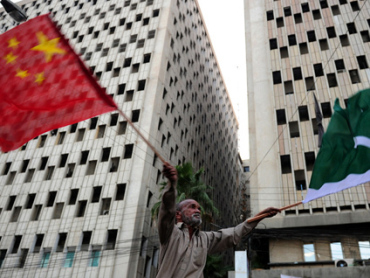
China’s premier Wen Jiabao concluded a high profile visit to Pakistan on Sunday, promising to lay the foundation for a “deeper” relationship to a country which is central to U.S. efforts for stabilizing Afghanistan.

Wen sought to broaden a relationship which has traditionally been driven by Beijing’s role as a key supplier of military hardware to Islamabad. Pakistan’s government officials said that during Wen’s visit, China signed business deals between the governments and private businesses of the two countries worth at least $29 billion, with a possibility of another $6 billion worth of contracts. These contracts were the largest ever signed during a visit by a foreign leader to Pakistan, underlining the growing importance of the country to China.

The Chinese premier also used a speech to a joint session of Pakistan’s upper and lower houses of parliament to commend the country for its efforts against terrorism. It was an apparent effort to negate criticism from the western world, including the U.S., which has urged Islamabad to take further steps against Al-Qaeda and the Taliban.

“Pakistan has given great sacrifices and made great efforts in the fight against terrorism. It is a reality and the international community should respect Pakistan’s efforts,” Wen said.

While the U.S. has poured billions of dollars into Pakistan to assist in combating terrorist groups, Pakistan’s military and civilian leaders remain committed to retaining a close alliance with China. “Let’s stand together, with a new confidence, and begin a new era of progress and prosperity, by jointly confronting all challenges,” Wen said in his speech on Sunday. To the applause of Pakistan’s ruling and opposition politicians, the Chinese continued that “China and Pakistan are all-weather strategic partners and share the sorrows and joys of each other as close brothers.”

A senior Pakistani official told CBS News that the deals signed during Wen’s visit included contracts for the development of a road and train network linking the two countries, for mineral resources, for gas and oil fields and for facilities to produce electronics.

“China is beginning to launch an important new phase to help Pakistan transform itself economically,” said the official, who spoke anonymously because he was not authorized to talk to journalists. “Unlike our western friends such as the U.S., China remains a true friend of Pakistan,” he added.

Western diplomats in Islamabad who spoke to CBS News, also on condition of anonymity, said Pakistan’s relations with China remain of concern to Washington in some areas, notably China’s continued support for Pakistan’s nuclear energy program and signs that China is stepping up its supply of conventional military hardware to Pakistan.

In the past decade, the two countries have jointly developed their first fighter plane for the Pakistan Air Force (PAF), known as the JF-17, or “Thunder.” The PAF plans to buy up to 250 of the JF-17s, making it the largest-ever purchase by the PAF of a single type of aircraft. On the other hand, Pakistani leaders frequently speak of the trust factor in their country’s relations with China, an oblique reference to the lack thereof in the country’s ties with the U.S.

In the 1990s, the U.S. sanctioned Pakistan on suspicions that the country was preparing to produce nuclear weapons, which reversed the two sides’ close cooperation when they confronted the occupation of Afghanistan by the former Soviet Union. While those sanctions were lifted after 9/11, which prompted a new partnership against terrorism, many Pakistanis remain skeptical of ties to the U.S. But a Pakistani foreign ministry official who spoke to CBS News said a growing economic relationship with China “will not come at the expense of our relations with the U.S. We want to establish and maintain a close partnership with the U.S. Our relations with China must never be seen as a replacement for our relations with the U.S.”

Pakistan Shifted Emphasis Away From India Border, says US

As reported by The Economic Times

WASHINGTON: Pakistan was shifting its emphasis away from its eastern border with India, a decision it had taken on its own because of a “definite shift” in Islamabad’s military posture brought about by fundamental changes within the country, the US has said.

It said while it does want Islamabad to act more aggressively against extremists within Pakistan it played little role in Islamabad’s decision to move its troops away from the border with India.

“First of all, how Pakistan decides to deploy its military forces is a decision for Pakistan,” State Department spokesman P. J. Crowley told reporters Friday what role the US had played in the movement of 140,000 troops away from the Pakistani-Indian border as mentioned by Secretary of State Hillary Clinton.

“We’ve made no secret of our desire to see Pakistan take more aggressive action against extremist elements within its own borders,” he said. “That is a threat to Pakistan itself.”

“And as the Secretary said, we have seen Pakistan shift its emphasis away from the Pakistani-Indian border and more aggressively to the Swat Valley and other areas where these extremists operate.”

“And no military has suffered more significant casualties in undertaking these operations than Pakistan. But these were obviously decisions for Pakistan to make,” Crowley said.

“But the context of increasing dialogue and reducing tensions between Pakistan and India is something that we have stressed in our dialogue with both countries,” he said.

Asked if Clinton was making an announcement, Crowley said: “Yeah, we’ve seen a definite shift in the Pakistani military’s posture. (But), it wasn’t an announcement.”

“I think it was a reflection of fundamental changes that have occurred in Pakistan as part of our strategic dialogue and our cooperation on dealing with the threat on both sides of the Afghan-Pakistan border.”

Asked about India’s role in Afghanistan after the recent review of the US Af-Pak strategy, Crowley said: “Well, we do have a regional strategy. India has legitimate interest in helping with the future of Pakistan.

“It has contributed significantly to development and reconstruction projects within Afghanistan. And we encourage that activity, even as we stress the importance of dialogue between India, Pakistan, Afghanistan, other countries. So no efforts like this are misunderstood,” he said.

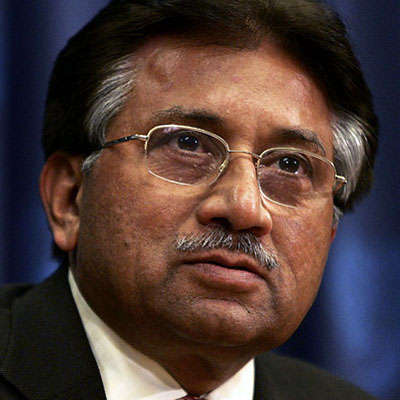
India Denies Visa to Former Pakistan President Musharraf

By Anjana Pasricha for The Voice of America

Indian officials have confirmed that former Pakistani President Pervez Musharraf has been denied a visa. They did not give a reason.

Mr. Musharraf had been invited to speak at a seminar organized by business professionals in New Delhi.

Several of Mr. Musharraf’s supporters, who were planning to visit India with him, were also denied a visa. The former Pakistani military ruler, who lives in Britain, is attempting a political comeback and launched a political party in October.

Foreign affairs observers say that India wants to avoid providing a platform for Mr. Musharraf’s political ambitions, which they believe would be sending a wrong message to the civilian government in Islamabad.

“With Mr. Musharraf threatening to go back to Pakistan to start a political career, the Indian government is not very comfortable with helping him enlarge his political portfolio or image,” said Bharat Karnad, a strategic affairs analyst with the independent Center for Policy Research in New Delhi.

New Delhi has also been irked by Mr. Musharraf’s recent comments that India is responsible for creating unrest in Pakistan’s south-western Balochistan province, and that India is trying to create an anti-Pakistan Afghanistan.

Mr. Musharraf was army chief when India and Pakistan came close to a fourth war in 1999. Later, when he became Pakistan’s military ruler, the South Asian rivals embarked on a peace process which lowered tensions and led to a ceasefire along their tense Kashmir border.

That ceasefire is still holding. But the peace process remains stalled since the November 2008 terror attacks in Mumbai, which India says were planned by the Pakistan-based Lashkar-e-Taiba.

Karnad says New Delhi is unlikely to resume a full-fledged peace dialogue with its rival until its repeated calls to clamp down on groups directing terror at India are heeded.

“There has to be something on the ground is what Delhi wants by way of reassurance before it gets into thinking of resuming the composite dialogue,” added Karnad. “There is no give on Pakistan’s part, so there is unlikely to be any movement in Delhi.”

The top Indian demand is that Islamabad speed up the trial of the Lashkar-e-Taiba operatives it accuses of planning the Mumbai attacks.