Archive for the ‘ Pakistan ’ Category

Crisis in Kashmir

By Ashok K Metha for The Wall Street Journal
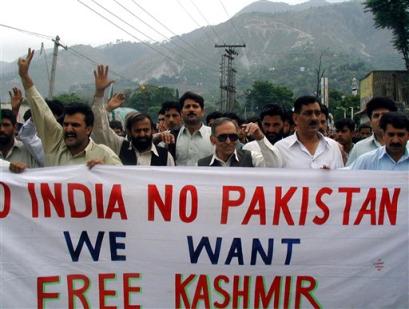
A few months ago, Pakistan was virtually begging India to restart the dialogue process between the two governments, suspended after the 2008 Mumbai terrorist attack. Now Pakistani spokesman Abdul Basit asserts that Pakistan will not agree to “any preconditions for resuming the dialogue process.” Why did Islamabad’s attitude change?

The answer lies in two cities: Srinagar and Kabul.

With 62 civilian deaths in the ongoing rioting in the capital city Srinagar and two districts, over the past couple months Kashmir has witnessed a fresh uprising against the symbols of the state. Kashmiris are using every avenue they have—from stones to the Internet—to demand azaadi, or freedom. The mostly spontaneous upheaval involves young men, women and even children. Kashmiris want freedom from corruption, bad governance and the overbearing presence of soldiers.

For decades Pakistan has been trying to wrest Kashmir away from India by sponsoring insurgency. But today, thanks to the ineffective administration in Srinagar, Pakistan doesn’t have to try very hard. After the security forces managed to restore law and order three years ago, India failed to take the political initiative, and frittered away its gains. The result is widespread disillusionment. At a ceremony commemorating India’s Independence Day this month, a local policeman threw a shoe at Omar Abdullah, chief minister of Jammu and Kashmir, whose grandfather Sheikh Abdullah ratified the state’s accession to India.

Up until 2008, the state had a lot going for it: several round-table meetings for self rule and confidence-building measures, periodic release of economic packages, annual visits by Prime Minister Manmohan Singh, conferences connecting the people and quiet dialogue with moderate and hardline separatist leaders. The ceasefire on the Line of Control was holding, and a four-point formula for resolving the Kashmir dispute hammered out with Pakistan through back channels seemed as good as done.

Indian security personnel beat detained Kashmiri Muslim protesters in Srinagar, India.
Mysteriously, the peace process then ground to a halt. The India-Pakistan dialogue began unraveling soon after Gen. Pervez Musharraf left the scene. The new Pakistani Army Chief, Gen. Ashfaq Kayani, a Fort Leavenworth graduate and favorite of the U.S. establishment, reversed the process of reconciliation. The ceasefire has become shaky, and the Pakistani government’s rhetoric on Kashmir has returned to the rights of the people to self determination and “diplomatic and moral support to Kashmir in their legitimate struggle no matter how brutally Indian forces try to suppress it.”

The reason Gen. Kayani feels emboldened to take a harder line is easy to discern. Tensions deepened after the U.S. elevated Pakistan from “major non-NATO ally” to the linchpin of its Afghan exit strategy, and excluded India from a political solution in Afghanistan. Despite the denials of U.S. Af-Pak point man Richard Holbrooke, the Afghanistan-Pakistan free trade agreement has only underscored India’s irrelevance to Kabul.

Civilian strife in the Kashmir Valley will only strengthen Pakistan’s case that resumption of a dialogue on Kashmir alone will enable a more focused fight against the Taliban on the Western frontier. This is not entirely true, as the Pakistan Army has already redeployed to the west 52% of its offensive and 45% of its defensive forces previously devoted to facing down India.

The priority for Delhi is to stop the stone-throwing in Kashmir. Every death—one recent fatality was a child of eight years old—is fresh cause for protests. On an hour’s notice, 10,000 people will come out on the streets to join the funeral procession of someone they don’t know. Further, Kashmir’s moderate Islam is being radicalized by the hardline Jamaat-e-Islami, which has made even separatist leaders irrelevant. No one is willing to talk unconditionally anymore.

Delhi will have to start from scratch in rolling back alienation by reaching out to youth. Yet Rahul Gandhi, India’s prime-minister-in-waiting and supposedly its youth leader, has not reached out to his favorite constituency in Kashmir. Neither has Congress President Sonia Gandhi or Prime Minister Manmohan Singh visited Srinagar since the troubles began in June. Until a few months back, Kashmir was the most violence-free state in India, as security forces had significantly marginalized insurgent and terrorist groups over the last three years.

Islamabad is not about to take over Kashmir—according to a survey by London-based think tank Chatham House last month, just 2% of the population favors joining Pakistan. But as the cry for azaadi grows louder, no one has a clue when this uprising is going to stop. Even as the faithful observe Ramadan, Delhi needs to do something before U.S. President Barack Obama’s scheduled visit in November.

Clinton Invokes Climate Change Debate to Explain Pakistan Floods

As Reported by Fox News

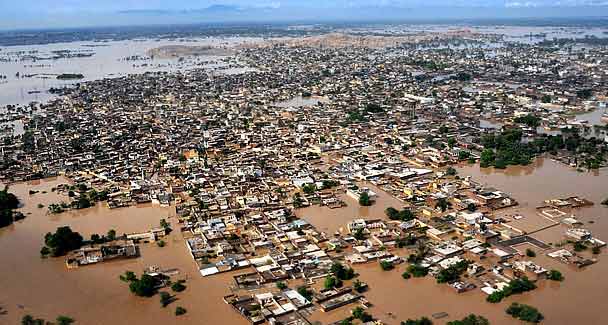
Secretary of State Hillary Clinton and other officials are pointing to the devastating floods in Pakistan and other extreme weather events as signs that climate change is getting worse.

Clinton, in an interview with Pakistan’s Dawn TV, said “there is a linkage” between the recent spate of deadly natural disasters and climate change.

“You can’t point to any particular disaster and say, ‘it was caused by,’ but we are changing the climate of the world,” she said.

Clinton said that on top of the Pakistan floods, which have forced millions out of their homes, the forest fires in Russia stand as another example. She said there’s no “direct link” between the disasters in Pakistan and Russia but that “when you have the changes in climate that affect weather that we’re now seeing, I think the predictions of more natural disasters are unfortunately being played out.”

Climate change skeptics say the planet is going through natural phases — the kind it’s gone through for eons. Pakistan, in particular, is prone to flooding and is routinely drenched by the monsoon rains. Some officials have partially blamed deforestation and inferior levee systems for the historic flooding which has affected one-fifth of the country’s landmass and triggered nearly a half-billion dollars in international aid commitments.

Scientists who study climate change tend to offer more nuance in their explanations of the possible link to a rise in greenhouse gas emissions. They generally say that no one natural disaster can be chalked up to man-caused climate change, but that it can contribute to those disasters happening more frequently and more intensely.

Both the U.N. International Panel on Climate Change and the World Meteorological Organization reiterated that point in light of the Pakistan floods. WMO climate data chief Omar Baddour was quoted saying it’s “too early to point to a human fingerprint” behind the recent disasters but climate change may be “exacerbating the intensity” of them.

But some government officials have shown little equivocation in directly linking the Pakistan disaster with climate change.

Shah Mehmood Qureshi, Pakistan’s foreign minister, said Thursday that his country’s flooding “reconfirms our extreme vulnerability to the adverse impacts of climate change.”

The flooding and Russian forest fires, which were sparked following a severe drought, coincide with record heat elsewhere in addition to downpours and landslides in China.

The renewed concerns over climate change come after international talks on a new treaty to reduce greenhouse gas emissions fell short at a summit last December in Copenhagen. Talks over climate change legislation have also stalled in the U.S. Congress.

India, Pakistan Can’t Break the Ice, Even in Hour of Tragedy

Reported by Sanjeev Miglani for Reuters

Pakistan’s catastrophic flood continues to boggle the mind, both in terms of the human tragedy and the scale of the damage it has wrought, and even more so over the longer term. One official has likened the disaster to the cyclone that devastated what was once East Pakistan, setting off a chain of events that eventually led to its secession and the birth of Bangladesh.

Not even that spectre, raised by Pakistan’s ambassador to Britain, can however dent the steadfast hostility between India and Pakistan. For a full three weeks as the floods worked their way through the spine of Pakistan from the turbulent northwest to Sindh in the south, Islamabad made frantic appeals to the international community not ignore the slow-moving disaster, and help it with emergency aid, funds. But next-door India, best-placed to mount a relief effort probably more because of the geography than any special skill at emergency relief, was kept at arm’s length. An Indian aid offer of $5 million, which itself came after some hesitation and is at best modest,was lying on the table for days before Pakistan accepted it. ”There are a lot of sensitivities between India and Pakistan … but we are considering it very seriously,” a Pakistani embassy spokesman told our reporter in New Delhi earlier this week. Things appeared to have moved faster only after Indian Prime Minister Manmohan Singh called his Pakistani counterpart Yusuf Raza Gilani expressing sympathy and reminding him of the offer of aid. Millions of Pakistans meanwhile continued to struggle for food.

To some extent, Pakistan’s hesitation in accepting aid from India is understandable. India is the traditional enemy. It is also the bigger country of the two. And over the last two decades it has become easily the more prosperous entity, courted by the world’s industrialists while Pakistan is “haunted by the world’s terrorists”, as columnist Vir Sanghvi writes in the Hindustan Times. A Pew poll that we wrote about a few weeks ago showed how deep-seated these Pakistani fears are: a majority of those polled said they considered India to be the bigger threat than al Qaeda or the Taliban, despite the violence they have suffered at the hands of the militant groups over the past few years.

As Sanghvi writes:

But, to be fair to the Pakistanis, let us accept the position that decades of hostility between our two countries have led to a situation where the Pakistanis simply do not trust us. Let us also accept that they are so resentful of India that even in their hour of greatest crisis when thousands of people have died and millions are homeless, they will still spurn India’s hand of friendship. And let us grant them their claim that given our history, they are justified in being suspicious of India.

But then, you have to wonder, if the two nations cannot even keep up basic neighbourly ties such as offering aid and commiseration at times of natural crises, what chances they can ever come to a peace deal that will demand much more from them ?

It was pretty much the same in 2005 when the earthquake struck Pakistani Kashmir and the authorities struggled to provide aid to the affected. And Indian aid offer was initially ignored, later blankets from India were accepted. But even then Pakistan had people cut out the label that read ‘made in India’ on each blanket.

Indeed, some Pakistani writers are already criticising the government of bringing dishonour to the country by accepting Indian assistance. Commentator Shireen M. Mazari in a piece entitled “What Have We Become” says the Pakistani government accepted the Indian offer for help under pressure from the United States and that it was a matter of shame. By taking Indian aid, Pakistan had let the people of Kashmiri down just when they had risen in revolt against Indian forces.

“This money has the blood of Kashmiris on it and one wonders how our Kashmiri brethren must be feeling as they face the bullets of Indian forces every day and see us taking Indian “aid”,” Mazari wrote.

Kashmir, then, can’t be far from any discourse relating to India and Pakistan. It is the core dispute at the heart of 60 years of difficult ties, says Pakistan and must be resolved before any normalcy can take place. India doesn’t even consider the territory to be disputed, so the argument, at least in public, hasn’t changed much in over half a century.

For the 20 million affected by the flooding in Pakistan, and facing a future that would daunt any of us, Kashmir must, at the moment, be a distant thought.

Who Cares About Pakistan?

By Jude Sheerin for The BBC News

Donations have been sluggish to the Pakistan floods appeals, as they were back in 2005 when the part of Kashmir the country administers was torn apart by an earthquake. The BBC News website asked some experts to comment on possible reasons why.

Donor Fatigue

Dr Marie Lall, Pakistan expert at the Royal Institute of International Affairs (Chatham House) and senior lecturer at the Institute of Education, says: “I think there is donor fatigue all around. The [2004] Indian Ocean tsunami, the Burmese Cyclone [Nargis, 2008], the [2005] Pakistan earthquake, and [this year’s] Haiti earthquake. It is getting too much; we are in a recession and people are short of money.”

Rebecca Wynn, Pakistan specialist for UK-based aid agency Oxfam, says: “Many donors have made substantial contributions in humanitarian assistance to Pakistan over the years, particularly in response to the conflict-related displacements over the last two years. Of course, the fact that the people of Pakistan have been hit time and again by disaster is even more reason to give.”

Dr Elizabeth Ferris, senior fellow at the US-based Brookings Institution, a foreign policy think tank, says: “It should also be noted that the international humanitarian system isn’t set up to deal with more than one major crisis a year. USAID, for example, committed one-third of its annual budget to the Haitian earthquake response. And among the general public there may be a feeling of, ‘Well, I donated to the victims of the Haitian earthquake and Haiti is a far needier country than Pakistan.'”

Corruption

Yale University economics professor Dean Karlan, an expert on charitable giving, says: “Corruption concerns may explain why giving is lower to developing countries than many would like it to be, but it does not explain why there is less money pouring into Pakistan now than does to disaster relief causes in other developing countries with similar governance issues.”

Dr Marie Lall says: “People in Pakistan are sceptical the government will be transparent. But they are giving to philanthropic organisations. In the UK, I think people are sceptical of [non-governmental organisations’] overheads and costs. They don’t know which ones are transparent and reliable, even though local organisations such as TCF [The Citizens’ Foundation] are doing an incredible job.”

Dr Elizabeth Ferris says: “People are always sceptical about their money reaching flood victims, particularly in countries with reputations for corruption. But Haiti didn’t have a very good reputation in this regard. [Pakistan] President [Asif Ali] Zardari trip to Europe [during the floods] was not a good move. For a few days, that was the ‘story’ of the Pakistani floods, which doesn’t inspire people to be generous, particularly in this economic climate.”

Terrorism

Dr Marie Lall says: “British Prime Minister David Cameron’s comments in India [when he said Islamabad promoted the export of terror] did not help.”

Dr Elizabeth Ferris says: “People are less likely to donate to any country seen as a haven for terrorism. And more generally, the fact that so much Western news coverage in recent years about Pakistan has been negative, stressing its links with the conflict in Afghanistan. I think this is the major reason for the slow public response – the image of Pakistan in our media. There may also be a feeling, particularly in the US, that Islamic governments and charities should be stepping up to the plate to donate.”

Timing

Rebecca Wynn says: “This disaster has come at a bad time, following the financial crisis and the Haiti earthquake. Many donors made huge commitments to Haiti, so may find it hard to fund another major disaster, particularly in the same year.”

Dr Marie Lall says: “Timing may be a factor, but I think it’s more to do with not realising the scale of the disaster, and the attitude by the British government; the UK should be leading the aid effort, given the Pakistani diaspora here and the fact that we need Pakistan for the war in Afghanistan.”

Wrong Disaster

Professor Dean Karlan says: “Sudden events seem to generate more funds. A flood (and droughts) happen gradually and build. There isn’t any one single day in which news is huge. For the same reason, this pushes the story away from the media spotlight. But massive and sudden earthquakes or tsunamis draw our immediate attention and shock us.”

Dr Elizabeth Ferris says: “It’s important to note that in general people are likely to give more to emergencies occurring in countries geographically closer to them – although this didn’t hold true for the tsunami. But when you trace contributions over time, you find that Americans and Canadians are more likely to respond to disasters in the Western hemisphere while Europeans tend to be more responsive to African countries (and their former colonies, in particular).”

Dr Marie Lall says: “This was not one cataclysmic event, but one which grew over three weeks. The fact that 25% of the country was or is under water is not understood. The low numbers of dead, relatively speaking, mask the disaster on the ground. The crisis has destroyed crops, dead livestock and damaged homes and infrastructure. Food prices are through the roof and there won’t be a normal harvest. It will get worse. Farmers will starve.”

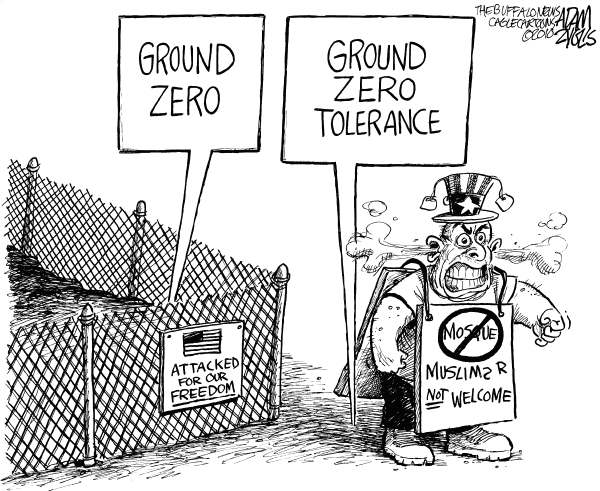
Mosque Near Ground Zero Divides Sept. 11 Relatives

By Samantha Gross for The Associated Press

Talat Hamdani traveled to Mecca to pray that her missing son, an EMT, was safe in the days after 9/11. She held out hope that his Muslim background had led to his detention as a suspect, considering it better than the alternative.

When part of his body was returned to her — his lower half shattered into 34 pieces — it was final proof he had indeed been killed when Islamic extremists brought down the World Trade Center. As Americans take sides over plans to build an Islamic cultural center and mosque blocks away, Hamdani says it feels personal.

“Why are we paying the price? Why are we being ostracized? Our loved ones died,” she said at her Lake Grove, N.Y., home. “America was founded on the grounds of religious freedom,” and opposition to the cultural center “is un-American. It’s unethical. And it is wrong.”

The thousands of relatives of the 2,976 victims have no single representative and no unified voice, even as another 9/11 anniversary approaches. The conflict is dividing a group that in many ways has never been united, with some saying the cultural center would reopen old wounds too close to hallowed ground and others saying that opposing it is tantamount to bigotry.
And some, like Vandna Jain, walk a middle ground.

“It is unfair to persecute the group, however, in turn, there should be some respect for the feelings of the people that are forever attached to this site due to their losses,” the New City, N.Y., resident, whose father, Yudh, died in the north tower, wrote in an e-mail. “I think people have a right to be upset about it, just as much as people have a right to build a mosque.” Jim Riches, a former New York Fire Department deputy chief whose son, Jimmy, was killed at the trade center, believes the dispute has nothing to do with religious freedom.

“We’re not telling them not to practice their religion. … It’s about location, location, location,” he said, asking why the mosque couldn’t be built farther away from the land that he still considers a cemetery. “It’s disrespectful. You wouldn’t put a Japanese cultural center at Pearl Harbor.”

Liza Murphy feels differently. Her brother, Charlie, died at ground zero, but she says she doesn’t lay claim to the sprawling, 16-acre site. “It’s a place where a terrible tragedy took place, but I don’t see what makes it sacred,” said the Brooklyn resident. “Nine years later, that now belongs to the public. And my brother and his death are private and belong to me.” Murphy says she has no objection to the planned mosque and wouldn’t want to judge one group of Muslims based on the actions of another.

But Peter Gadiel says he owes no apologies for singling one group out. Since his son, James, was killed at the trade center, Gadiel has argued publicly that all Muslims should share some collective guilt for what happened on 9/11.

“The fact is that Islam does not coexist well with other religions, and you can’t separate that from Islam,” the Kent, Conn., resident said, explaining his stand against the mosque. “If that sounds intolerant on my part, that’s too bad.” The families’ impassioned responses to the prospect of the mosque have influenced the public debate.

Gov. David Paterson has suggested moving the project further away from the trade center site out of respect for opponents’ feelings, while Mayor Michael Bloomberg came out in support of the mosque, calling it a test of the separation of church and state.
President Barack Obama has said he believes Muslims have the right to build the Islamic center as a matter of religious freedom, though he’s also said he won’t take a position on whether they should actually build it.

The imam leading plans for the center on Friday called extremism a security threat in both the West and the Muslim world. Feisal Abdul Rauf made his comments to Associated Press Television News in Bahrain during a Mideast tour funded by the U.S. State Department, but he wouldn’t discuss the uproar over the Islamic center.

Relatives of those slain on Sept. 11 have made their diverging voices heard on a number of issues over the years — from whether to try the suspects in a civilian court to the location of a proposed freedom museum at ground zero that is no longer planned for the site.

Charles Wolf, who lost his wife, Katherine, at the trade center, says emotions among family members are especially raw right now.
“This is anniversary season. It’s really, really hard,” the Manhattanite said. “Passions are up and this is bringing up a lot of hurt in people.”

He says he worries that any decision to respond to public pressure and move the mosque would be used by extremists to paint Americans as intolerant.

“The powers of evil were piloting those airplanes,” he said of the Sept. 11 attackers. Now, with the mosque dispute, “here is where we’re falling into the terrorists’ trap … trying to tear each other apart. Good people fighting other good people — does that sound like evil at work?”

Pakistan Accepts Flood Aid Money From Rival India

By Issam Ahmed for The Christian Science Monitor

Pakistan has accepted an offer of $5 million of flood aid from neighbor and longtime rival India, in a move that could spark a political backlash at home.

In an interview with Indian news channel NDTV, Pakistani Foreign Minister Shah Mehmood Qureshi described the offer of aid, made last week, as a “very welcome initiative” which the government of Pakistan has agreed to accept, after taking some time to decide.

But it would have been better to say “thanks, but no thanks,” according to Liaqat Baloch, secretary general of Pakistan’s second-largest religious party, the Jamaat-e-Islami.

“Pakistan has many disputes with India, with reference to Kashmir, and the Indian Army engaging in brutality in occupied Kashmir,” he says. “In the past, when Pakistan tried to support India after their natural disasters, India never accepted. Therefore it would be better if our government refused the aid with a big thank you.”

Al Khidmet foundation, Jamaat-e-Islami’s charitable wing, has been one of the most visible aid organizations in the flood-affected areas.

The two countries have made efforts in recent months to repair bilateral relations, which took a plunge following the 2008 Mumbai attacks. India blames those attacks on Pakistan-backed militants. The two countries have fought three full-scale wars, most recently in 1999.

The United States had urged Pakistan to accept India’s offer of aid earlier this week. When Indian Prime Minister Manmohan Singh called his Pakistani counterpart to offer his condolences following the worst natural disaster in Pakistan’s history, it was an event widely reported in the Pakistan media.

“In such times of natural disasters, all of South Asia should rise to the occasion and extend every possible help to the people of Pakistan affected by the tragedy,” Mr. Singh said, according to a statement released by his office.

According to Badar Alam, editor of Pakistan’s Herald magazine, the amount of aid pledged is “symbolic, but its effect is immense. It’s a good confidence building measure between the two countries.”

But, he warns, Pakistan’s religious parties will try to spin the move “as a sign of weakness.”

“They will see it as a capitulation to India, that our own government is so weak we have been forced to accept help from the historic enemy,” says Mr. Alam.

Mosharraf Zaidi, a columnist for Pakistan’s The News, termed the decision brave: “It’s a tremendous gesture, very mature. India should be commended for donating it and Pakistan should be commended for accepting it.”

“The whole idea in an emergency is you’ll have the Jamat ud Dawas [the charitable wing of banned militant outfit Lashkar-e-Taiba] and you’ll have competing powers working almost in tandem to support people. It shows that no matter what our value systems, we have to work together right now,” he adds.

Some 20 million people are affected by Pakistan’s worst flooding in recent memory; Pakistan’s government estimates around 1,600 deaths and millions homeless or displaced. The United Nations appealed to the international community to donate $460 million in emergency assistance last week, and has met half of that goal. Yesterday the US increased its flood aid to Pakistan from $80 million to $150 million.

-Pakistanis for Peace Editor’s Note- It is a good decision by the Pakistani government to accept the aid offer from India. Not only will this be a confidence building measure between the two nations, it will save countless lives, and no nation is too proud to save the lives of its citizens.

Keith Olbermann – Special Comment, Muslim Community Center

“THEY CAME FIRST for the Communists,
and I didn’t speak up because I wasn’t a Communist.

THEN THEY CAME for the trade unionists,
and I didn’t speak up because I wasn’t a trade unionist.

THEN THEY CAME for the Jews,
and I didn’t speak up because I wasn’t a Jew.

THEN THEY CAME for me
and by that time no one was left to speak up.”
-Martin Niemöller

“This is America damn it! And in America when somebody comes for your neighbor, or his Bible, or his Torah, or his Athiest Manifesto, or his Koran, you and I do what our fathers did and our grandmothers did, and our founders did, you and I SPEAK UP!”
– Keith Olbermann

U.S. Strategy in Pakistan Is Upended by Floods

By Mark Landler for The New York Times

WASHINGTON — The floods in Pakistan have upended the Obama administration’s carefully honed strategy there, confronting the United States with a vast humanitarian crisis and militant groups determined to exploit the misery, in a country that was already one of its thorniest problems.

While the administration has kept its public emphasis on the relief effort, senior officials are busy assessing the longer-term strategic impact. One official said the disaster would affect virtually every aspect of the relationship between the United States and Pakistan, and could have ripple effects on the war in Afghanistan and the broader American battle against Al Qaeda.

With Pakistan’s economy suffering a grievous blow, the administration could be forced to redirect parts of its $7.5 billion economic aid package for Pakistan to urgent needs like rebuilding bridges, rather than more ambitious goals like upgrading the rickety electricity grid.

Beyond that, the United States will be dealing with a crippled Pakistani government and a military that, for now, has switched its focus from rooting out insurgents to plucking people from the floodwaters. The Pakistani authorities, a senior American official said, have been “stretched to the breaking point” by the crisis. Their ragged response has fueled fears that the Taliban will make gains by stepping in to provide emergency meals and shelter.

“It certainly has security implications,” said another official who, like others interviewed for this article, spoke on the condition of anonymity because he was not authorized to discuss internal policy deliberations. “An army that is consumed by flood relief is not conducting counterinsurgency operations.”

On Thursday, the United Nations will convene a special meeting devoted to the floods, hoping to galvanize what has been a lackluster global response. Secretary of State Hillary Rodham Clinton is expected to announce that American public aid has surpassed $100 million, an official said.

“We’re obviously not oblivious to the political and strategic implications of this catastrophe, but right now, we are fully focused on the emergency relief effort and trying to get a good assessment of the needs,” said the administration’s special representative to the region, Richard C. Holbrooke.

Noting that several weeks remain in the monsoon season, Mr. Holbrooke said, “Worse may be yet to come.”

The disaster comes after a period in which the administration seemed to have made strides in repairing the American relationship with Pakistan. Mrs. Clinton visited Islamabad in July with a long list of pledges, including the upgrading of several power plants and a plan to promote Pakistani mangoes. Now, these projects seem almost beside the point.

“Before, there were power plants in need of refurbishment,” said Daniel S. Markey, senior fellow for India, Pakistan and South Asia at the Council on Foreign Relations. “Now there are power plants underwater.”

In recent days, the United States has sent 15 helicopters, rescuing nearly 6,000 people. On Wednesday, military cargo planes delivered 60,000 pounds of food and other relief supplies, bringing total deliveries to 717,000 pounds. The speed and scale of the effort, officials in both countries said, have helped bolster the checkered American image in Pakistan.

In another hopeful sign, officials said Pakistan and India had been in close touch about the floodwaters, some of which are flowing into Pakistan from India. Such communication, between historic archenemies, could augur reduced tension in other areas, one of the officials said.

Against that, however, are the staggering dimensions of the disaster. A senior Pakistani official told the administration on Tuesday that the next flood surge was likely to inundate much of Punjab, the densely populated region that borders India and produces much of Pakistan’s food.

So far, this official said, the greatest damage has been in regions that are also hotbeds for Islamic insurgents, which has set back the army’s fight against extremist groups. Local governments in those places have largely collapsed, leaving the army as the only source of authority.

With 20 million people displaced from their homes, the Pakistani authorities are girding themselves for an immense migration to the major cities, which they fear could sow further instability.

“Americans have not yet registered the enormity of the crisis,” Pakistan’s ambassador to the United States, Husain Haqqani, said in a telephone interview from Islamabad, the capital.

Pakistani and American officials said reports of hard-line Islamic charities providing relief were exaggerated. One pointed out that the floods had hurt the insurgents as well: there was a report of small arms and ammunition belonging to a militant group floating in the water.

Still, people in both countries warned that if rebuilding and rehabilitation efforts bogged down, the Taliban and other militant groups would try to take advantage of it. “The real test is, can their government provide the most fundamental services?” said an administration official.

Parallels to this crisis are hard to find. One official cited the example of the Indonesian province of Aceh, which had been racked by a three-decade insurgency fought by the separatist Free Aceh Movement. After the tsunami swept through in 2004, killing 170,000 people, the separatists and the Indonesian government quickly signed a peace treaty, in August 2005.

There are, however, big differences between a localized separatist group and an international jihadist movement.

“If the flood proves to tilt the balance of power in Pakistan, it’s more likely to tilt toward the militants than toward the government,” said Bruce Riedel, a former intelligence official who helped the administration formulate its initial policy for Pakistan and Afghanistan.

Already, Pakistan’s president, Asif Ali Zardari, has been exposed to withering criticism at home for going on a trip to Europe during the early days of the flood. American officials said they were determined not to get drawn into the dispute, noting that in any event, Mr. Zardari had been stripped of many of his powers in a recent constitutional change.

Decisions on how the flood will affect American economic aid may be influenced by a trip to Pakistan by Senator John Kerry, the Massachusetts Democrat who co-sponsored the five-year nonmilitary assistance package with Senator Richard G. Lugar, Republican of Indiana.

Senator Kerry, accompanied by Dan Feldman, a deputy to Mr. Holbrooke, is scheduled to tour the flooded areas on Thursday. Mr. Kerry has said he is open to redirecting aid money, though some analysts said they were skeptical that Congress would approve additional financing. Military aid may also come under scrutiny, according to administration officials.

“Every dimension of our relationship — politics, economics, security — is going to see major shifts as a result of this historic disaster,” said Lt. Gen. Douglas Lute, the White House coordinator for Afghanistan and Pakistan. “All the tools of diplomacy have to be examined in light of this new reality.”

What They Said: Pakistan Spies Downgrade India Threat

By Vibhuti Agarwal for The Wall Street Journal

The Wall Street Journal reportedTuesday that a report from the Pakistan’s chief spy agency, the Inter-Services Intelligence, said domestic militancy had overtaken the Indian army as the greatest threat to Pakistan’s national security. This is the first time since the ISI was founded in 1948 that the ISI has found a bigger threat than its neighbor. India Real Time presents a roundup of comments from readers and others below:

The Times of India newspaper reported Wednesday that Pakistan’s acknowledgment of its internal problems comes as the country is struggling with an image problem which may be affecting the flow of international aid to help the victims of the devastating floods there. “The unexpected downgrading of the threat perception from New Delhi and waking up to the scourge of home-grown terrorism comes even as foreign aid for the thousands affected in floods in Pakistan is yet to pick up,” wrote Chidanand Rajghatta for the Times of India.

The Hindustan Times newspaper quoted analysts saying the change of mindset makes sense. “I am not surprised that the ISI has changed its strategic thinking,” Talat Masood, a retired general and analyst on defense and security issues told the newspaper. Another analyst, Imtiaz Gul, was also quoted in the article. “The ground realities have changed and have forced allies into becoming enemies,” he said.

“At this point, the Pakistan government will say just about anything the world community wants it to,” wrote H. Jere. “After seeing the response to the aid request has been disappointing, it will agree to almost anything.”

Other readers called Pakistan’s latest admission “hogwash,” adding that it may be a trick to get more funds from the United States.

“It is sheer naiveté to consider Pakistan’s ISI and Islamic terrorists as two separate entities,” said Shri K. “ISI is the quintessence of rabid Islamic fascism and has been mercilessly exporting Islamic terror all over the world.”

Some readers said Pakistan’s admission came as a ray of hope for improving the long-estranged India-Pakistan relationship.

“I hope India take this opportunity to offer real assistance to the victims of the floods,” wrote Phillip Hwee. “It’s time for India and Pakistan to reconcile with one another. A détente is very necessary so that each of the two rivals can reallocate their resources to improve the standard of living of their respective citizens.”

David Almeida agreed, adding that “one can only hope that the military establishment in Pakistan is truly serious about abjuring terrorism, regardless of whether it is targeted at Indian or Pakistani state.”

Pakistan Floods: Why Should We Care?

By Ethan Casey for EthanCasey.com

Yesterday a non-Pakistani friend here in Seattle emailed me: “I wanted to ask you which you think would be the best organization to make a donation to for the current crisis in Pakistan. We usually give to MSF, but their website doesn’t seem to offer the opportunity to give specifically for Pakistan. Can you offer advice?”

This friend is British and greatly prefers British media outlets, but I need to believe that there are many Americans who also want to help flood victims in Pakistan – or who would want to, if they knew the scale and severity of the disaster.

Why don’t they know? We can, and I do, blame “the media,” but that’s unhelpful and ultimately a cop-out. Each of us individually has the opportunity and responsibility to be aware of every tragedy in our world, and we should be willing to exert ourselves to redress them. We’re all in this together. But the real problem is that there’s too much tragedy, and it’s happening too fast, and these days Americans are distracted and confused and worried about serious problems close to home, like our own jobs and mortgages.

This is understandable. But you need to know that all indicators are pointing toward an enormous, long-term human tragedy unfolding in Pakistan, and we need to do something about it, for several good reasons. The New York Times acknowledged one of these when – belatedly, in its first significant coverage of the floods that I noticed – it headlined an August 6 article “Hard-Line Islam Fills Void in Flooded Pakistan.”

A related point is that we Americans owe Pakistanis a measure of basic human respect and compassion, as well as gratitude specifically for the sacrifices they’ve made at our behest in several wars in Afghanistan. When we repay this debt, it will also redound to our benefit. “It’s high time we showed Pakistanis the best of America,” disaster relief specialist Todd Shea told me last year. “If you’re a true friend, you don’t run out on somebody when you don’t need them anymore. … Pakistanis don’t trust America anymore. We need to show Pakistanis who we really are.”

Todd Shea runs a charity hospital in the Pakistan-administered portion of the disputed region of Kashmir, where he has been working since the October 2005 earthquake that killed 80,000 people. He also responded urgently and effectively to the World Trade Center attack, the Asian tsunami, Hurricane Katrina, and the earthquake this January in Haiti. He’s currently on the ground in Pakistan, running medical camps and providing drinking water, food, and other relief. An August 11 update on his organization’s website suggests the scale of the challenge:

In a recent statement appealing for more aid to Pakistan, UN humanitarian chief John Holmes said: “While the death toll may be much lower than in some major disasters, taking together the vast geographical area affected, the numbers of people requiring assistance and the access difficulties currently affecting operations in many parts of the country, it is clear that this disaster is one of the most challenging that any country has faced in recent years.”

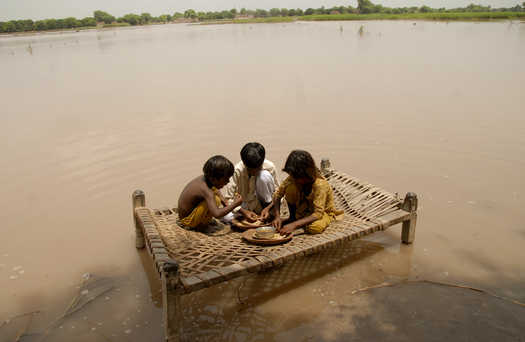
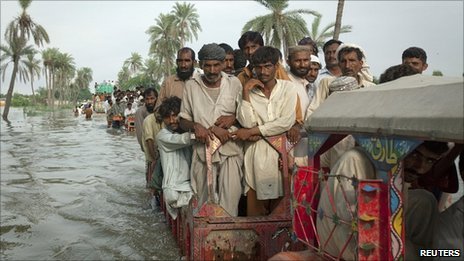
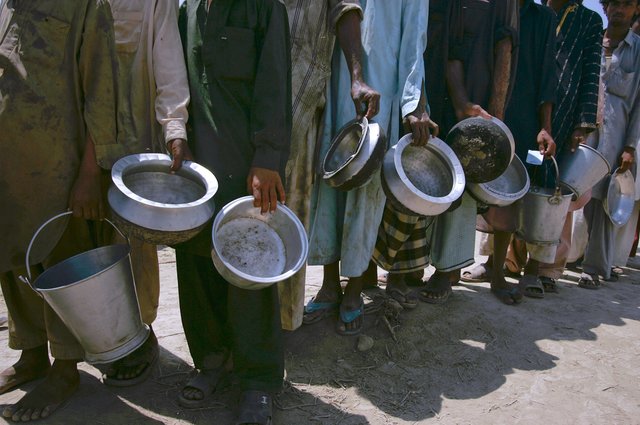
Thousands of people are camped out on roads, bridges and railway tracks – any dry ground they could find – often with nothing more than the clothes on their backs and perhaps a plastic sheet to keep off the rain. “I have no utensils. I have no food for my children. I have no money,” said one survivor, sitting on a rain-soaked road in Sukkur along with hundreds of other people. “We were able to escape the floodwaters, but hunger may kill us.” …

There is a desperate need to send more well-equipped medical teams to the flood-hit areas to prevent the further spread of disease. The victims of the flood have lost everything and cannot cope with potential epidemics on their own.

I’m writing this article because I live and work between two worlds: the mainstream North America that I come from, and the Pakistani immigrant community. My job is to help bridge the gulf in awareness and sympathy between those worlds. What I’m seeing right now is that Pakistani-Americans and their admirable and effective nonprofit groups are jumping once more into the breach, as they always do. And, as always, they’re confined – and confining themselves – to soliciting funds from each other.

The flooding is “well timed” in the sense that the fasting month of Ramadan has just begun, and many Muslims will be directing their annual zakat charity contributions toward flood relief. Pakistani-Americans are generally an affluent community, but there’s a limit to what they can do. Wealthy Pakistanis in Pakistan also need to help, and surely are helping. Just as important, we non-Pakistani Americans and Canadians must help. We also must somehow self-raise our own awareness, given the paucity of decent media coverage. This is important both for obvious-enough political reasons, and simply because it’s the right thing to do.

I see troubling contrasts between the outpouring of generosity and attention that followed the earthquake in Haiti and the averting of eyes from the flooding in Pakistan. I see several reasons for this: Haiti is nearby; the earthquake killed 200,000 or more people all at once. In addition, though, there’s the fact that Haiti is not a Muslim country. The earthquake fit right in with the story we were already telling ourselves about Haiti, which is all about poverty and tragedy. Dr. Paul Farmer sums it up pithily in the title of his book The Uses of Haiti. The uses of Pakistan are different. We need to move beyond the uses of both countries and toward understanding them accurately and respectfully, in their own terms. Our awareness of Haiti should be more political and of Pakistan less so, or differently so.

Anyway, back to my friend’s question. The short answer is that, as always, grassroots groups are more nimble and effective, and your money will be put to better use if you give it to groups that are nearer the ground. This is why the nonprofit groups founded and run by Pakistani-Americans are crucially important. I’m including links to several of these below, and I recommend them all.

I was jolted the other day when another friend suggested that being asked to donate to the excellent Islamic Medical Association of North America “could possibly turn some people off.” He’s probably right, but we goras need to get over our knee-jerk aversion to the word “Islamic.” Your doctor might be a member of IMANA. As a Haitian woman told Paul Farmer years ago, “Tout moun se moun” – all people are people. We’re all in this together.

Please contribute to flood relief in Pakistan through one of these organizations (listed in alphabetical order):

APPNA    www.appna.org/

The Citizens Foundation   www.thecitizensfoundation.org/

Developments in Literacy   www.dil.org/

Edhi Foundation    www.edhifoundation.com

Human Development Foundation     www.hdf.com/

IMANA    www.imana.org/

Islamic Relief USA    www.islamicreliefusa.org/ 

Relief International   www.ri.org/

SHINE Humanity   www.shinehumanity.org/

UNICEF    www.unicef.org/

Rescuing Pakistan’s Flood Survivors

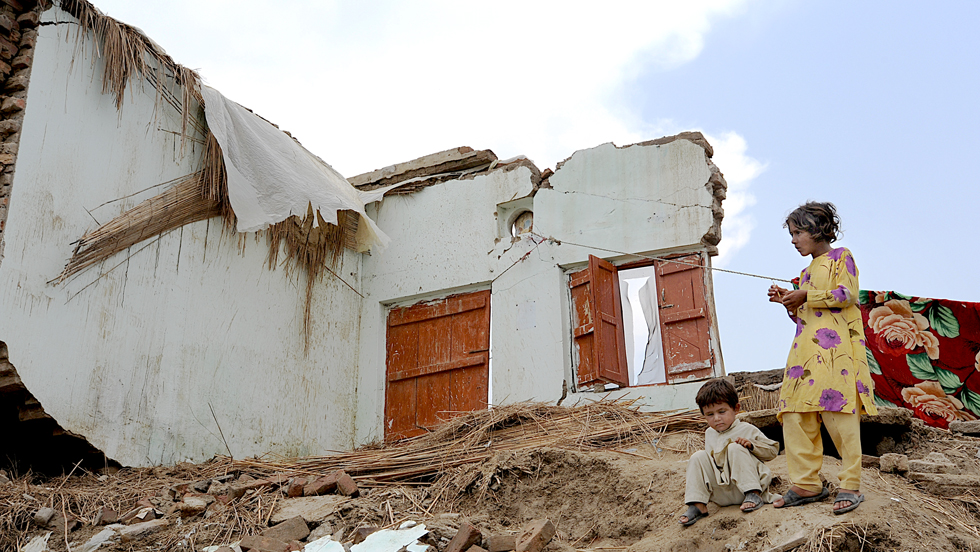
Recovery efforts are underway in Pakistan where monsoon rains and severe flooding washed away tens of thousands of homes, killing thousands and leaving millions homeless.

How you can help? A number of charities are mobilizing medical, shelter and humanitarian aid, responding to the great need for flood survivors’ immediate needs.

AmeriCares emergency relief experts are working to send medical assistance and other aid to the flood-affected region in Pakistan. They are accepting online donations as well as phone donations at  1-800-486-HELP (4357)

British Red Cross is accepting donations of goods to the Pakistan Flood Appeal. Monetary donations in pounds can also be made online or by calling 0845 054 7206 in England.

CARE is supporting the distribution of emergency supplies and providing aid to health teams and mobile clinics in the affected communities in Pakistan. You can help by making an online donation.

Catholic Relief Services is currently organizing shipments of humanitarian aid to Balochistan, one of the affected areas. They are also sending emergency shelter kits and hygiene supplies to other flood-affected regions in Pakistan. Donations to their Emergency Relief fund are being accepted online and by phone at   1-800-736-3467.       

Concern Worldwide US is responding by sending emergency teams to the region, and they have launched their Pakistan Emergency Flood Appeal. They are working to provide about 9,000 families with kitchen sets and hygiene kits, clean water, temporary sanitation, and dry rations of food. Online donations can be made dollars, euros and pounds.

Church World Service is distributing food packages and shelter material for flood-affected families in Balochistan, Khan and Khyber Pakhtunkhwa, as well as mobilizing a health unit to offer emergency medical assistance in Mansehra. Your donation can be made online and by phone at  1-800.297-1516        

Direct Relief International is providing emergency medical aid to healthcare partners responding to disaster in Pakistan. Donations to their Emergency Response fund can me made online and by calling  1-800-676-1638    

Doctor’s Without Borders is supporting basic health units in the flood-affected areas of Pakistan. The organization is also helping with water distribution to health structures, as well as hygiene products, cooking sets and other supplies. They are planning to send additional personnel and mobilizing resources to assist relief efforts. Contributions can be made online and by phone at 1-888-392-0392      

International Committee of the Red Cross continues to distribute relief supplies to over 7,000 flood victims in Balochistan. The ICRC and its partners are finalizing medical contingency plans for flood-affected areas, and for repairing critical water infrastructure. You contribute by making a donation in numerous currencies online.

International Federation of Red Cross and Red Crescent Societies are performing rapid needs assessments in affected areas and distributing food coupons and other relief items including tents, hygiene kits, tarpaulin sheets and kerosene stoves. They have also set up a medical camp in Sultan to offer immediate medical aid to affected families. You can help now by making an online donation.

Islamic Relief USA is providing food and water for 700 families In Noshara, distributing emergency supplies and working with the United Nations World Food Program to distribute food to 2,000 families in Bakhtiarabad. Islamic Relief has launched a campaign to aid the victims of the floods, which you can support by making an online donation.

Mercy Corps is accepting donations to provide flood victims in the hard-hit Swat Valley with water, food and tools to clean up and rebuild. You can donate online.

Oxfam Great Britain is looking to provide the needed temporary shelter, clean drinking water and toilets to help avert a public health catastrophe. They are accepting online donations in pounds, euros and dollars, and can be reached by telephone internationally at  +44 (0) 1865 47 2602. In England, you can text ‘DONATE’ to 70066 to make a donation of 5 pounds to their Pakistan Floods Appeal.

ShelterBox distributed hundreds of ShelterBoxes to families rescued from the flood in the Punjab and Khyber Pukhtunkhwa (KPK) regions. Find out how to become part of the ShelterBox Team or help the efforts by making an online donation in the UK and the US.

SOS Children’s Villages supports the children of Pakistan through different programs across the country and offers care of lone children following the disaster, as they did after the Kashmir Earthquake. You can make a direct donation in dollars or pounds and you can sponsor a child in Pakistan here.

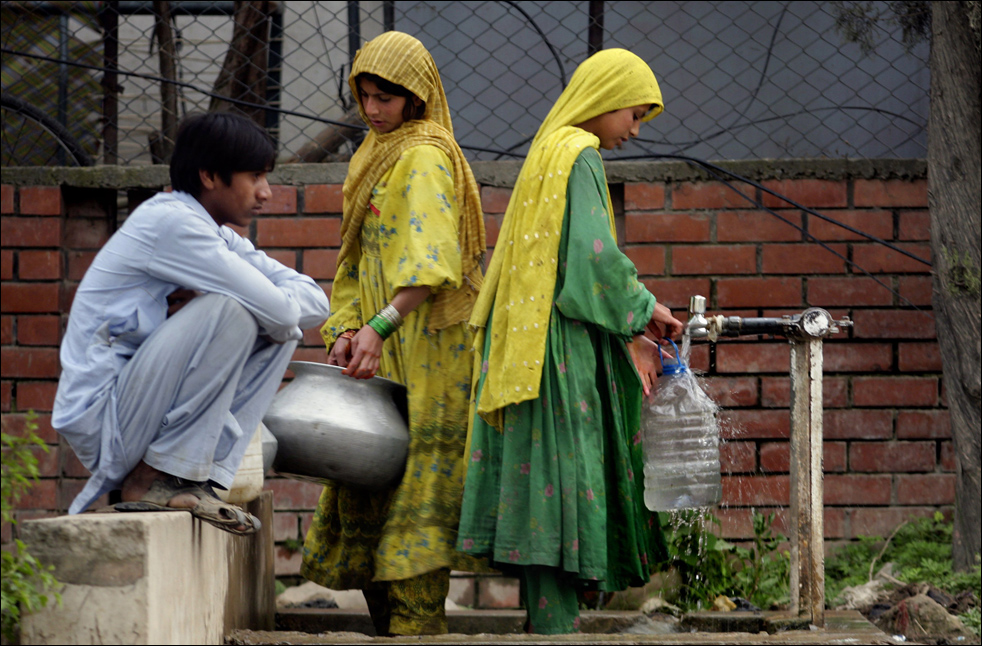
UNICEF‘s Pakistan office is providing assistance for water and sanitation, health, and nutrition. They are distributing clean water and water purification tablets to prevent water-borne diseases and will continue to asses the situation to determine if further fundraising appeal is needed. If you are interested in becoming a UNICEF volunteer click here or support flood-relief efforts by making an online donation.

World Food Programme is making food distributions to 35,000 families affected by the flooding in Northwestern Pakistan. WFP Pakistan plans to assist up to 150,000 families over the next few months as access to the affected areas improves. You can help by making an online donation in either euros, dollars, pounds or yens.

World Vision is working to distribute food and clean water to the affected communities in Pakistan. They have created the World Vision’s Flood Relief Fund which you can support it by making an online donation.

Operation Blessing International is sending emergency medical relief teams to Peshawar, Pakistan. Working with their disaster relief partner charity Humedica, OBI will offer medical treatment and distribute food, clean drinking water and emergency building supplies to thousands in need from this flood. Support for OBI’s disaster relief efforts can be made online or by calling 1-800-730-2537  

Save the Children is providing food and water, shelter, sanitation and other immediate needs for the families and communities affected by this disaster. They are accepting donations to their Pakistan Children in Emergency Fund online as well as by phone by calling in the US    1-800-728-3843

Pakistan Floods: World Bank to Lend $900m For Recovery

As Reported by the BBC

The World Bank is to loan $900m (£574m) to Pakistan to help it recover from its worst ever flooding. The devastating floods have affected up to 20 million people and left some 2,000 dead, say officials.

But the UN says international aid has been slow and that it has raised only a third of the $460m (£294m) needed for emergency relief.

Pakistan’s High Commissioner to Britain said it could take five years and $15bn (£9.6bn) for the country to recover. The World Bank funds will come through the reprogramming of planned projects and the reallocation of money, a World Bank spokesman said.

“We are reprioritising to make the funds immediately available,” he told Reuters news agency.

Health officials have warned that disease could spread quickly among the millions of displaced people and that 3.5m children are at risk.

Maurizio Giuliano, of the UN Office for the Coordination of Humanitarian Affairs (OCHA), warned that Pakistan would face “a second wave of deaths” from water-borne diseases and food shortages unless more aid arrived soon.

He estimated the number of people at risk from such diseases was six million.

Meanwhile, rival political groups in Sindh province have been accusing each other of creating breaches in embankments and dykes to save their own towns and property.

Many of the breaches were reportedly made to divert flood waters away from military garrisons in the area.

Jacobabad city, for example, has been saved, but low-lying areas around it, including Dera Allahyar and some other towns in Balochistan province, have been inundated.

In India, Prime Minister Manmohan Singh has promised more funds to help areas affected by the recent devastating floods in Ladakh, a remote mountain region in Indian-administered Kashmir.

During a visit to the heavily damaged town of Leh, he said all the destroyed homes would be rebuilt within the next two-and-a-half months with money from a government relief fund.

The flash floods over 10 days ago killed more than 80 people and caused heavy damage to property. Many people are still missing.

‘Marshall Plan’

Pakistan’s High Commissioner to Britain Wajid Shamsul Hasan told the AFP news agency that 2,000 people had now been killed by the floods – previous estimates have put the number of dead at around 1,500. He said it would take at least five years for the country to recover, and put the reconstruction bill at “more than $10 to $15bn”.

He warned that a failure to provide sufficient relief and rebuilding assistance could lead to an increase in extremism and instability in the wider region.

He called for a new Marshall Plan, referring to the extensive US development programme in Europe after World War II.

Not only have the floods affected around one-fifth of the country, they have also caused considerable damage to roads, bridges and communications, says the BBC’s Mike Wooldridge in Islamabad.

Thousands of homes and other buildings including schools and hospitals have been swept away, and crops for domestic food consumption and for export have been lost.

One of the key questions is whether farmers will be able to use their land to plant their winter wheat crop in September, our correspondent adds.

‘Image deficit’

The UN has so far only received about a third of its appeal amount – the US has made the biggest contribution so far, followed by the UK.

Aid agencies have blamed Pakistan’s “image deficit” for the shortfall, as potential donors fear the funds would be diverted into extremism in the country.

A spokeswoman for Care International told AFP the UN had to do more to convince donors that the money was “not going to go to the hands of the Taliban”.

“The victims are the mothers, the farmers, children. But in the past, information linked to Pakistan has always been linked to Taliban and terrorism,” said Melanie Brooks.

Bill Berger, USAID’s principal regional adviser for South Asia, told the BBC it had been difficult to communicate the scale of the disaster to the rest of the world:

“Remember that this flood has built up over time… I just don’t think the world has realised the magnitude of this now, because this story has just been slowly increasing. It doesn’t have the drama of an earthquake that impacts a huge number of people all at once.”

The floods began more than two weeks ago in the mountainous north-west and has swept south across a quarter of the country, including its agricultural heartland.

Drowning Today, Parched Tomorrow

By Steven Solomon for The New York Times

Hard as it may be to believe when you see the images of the monsoon floods that are now devastating Pakistan, the country is actually on the verge of a critical shortage of fresh water. And water scarcity is not only a worry for Pakistan’s population — it is a threat to America’s national security as well.

Given the rapid melting of the Himalayan glaciers that feed the Indus River — a possible contributor to the current floods — and growing tensions with upriver archenemy India about use of the river’s tributaries, it’s unlikely that Pakistani food production will long keep pace with the growing population.

It’s no surprise, then, that Secretary of State Hillary Clinton made Pakistani headlines a few weeks before the flooding by unveiling major water projects aimed at bolstering national storage capacity, irrigation, safe drinking water and faltering electrical power service under America’s new $7.5 billion assistance program. In March, the State Department announced that water scarcity had been upgraded to “a central U.S. foreign policy concern.” Pakistan is at the center of it.

This is because a widespread water shortage in Pakistan would further destabilize the fractious country, hurting its efforts to root out its resident international terrorists. The struggle for water could also become a tipping point for renewed war with India. The jihadists know how important the issue is: in April 2009, Taliban forces launched an offensive that got within 35 miles of the giant Tarbela Dam, the linchpin of Pakistan’s hydroelectric and irrigation system.

Pakistan needs to rebuild and overhaul the administration of the world’s largest contiguous irrigation network. For decades, Islamabad has spent far too little on basic maintenance, drainage and distribution canals, new water storage and hydropower plants.

To some extent, these deficiencies have been masked since the 1970s by farmers drilling hundreds of thousands of little tube wells, which now provide half of the country’s irrigation. But in many of these places the groundwater is running dry and becoming too salty for use. The result is an agricultural crisis of wasted water, inefficient production and incipient crop shortfalls.

Like Egypt on the Nile, arid Pakistan is totally reliant on the Indus and its tributaries. Yet the river’s water is already so overdrawn that it no longer reaches the sea, dribbling to a meager end near the Indian Ocean port of Karachi. Its once-fertile delta of rice paddies and fisheries has shriveled up.

Chronic water shortages in the southern province of Sindh breed suspicions that politically connected landowners in upriver Punjab are siphoning more than their allotted share. There have been repeated riots over lack of water and electricity in Karachi, and across the country people suffer from contaminated drinking water, poor sanitation and pollution.

The future looks grim. Pakistan’s population is expected to rise to 220 million over the next decade, up from around 170 million today. Yet, eventually, flows of the Indus are expected to decrease as global warming causes the Himalayan glaciers to retreat, while monsoons will get more intense. Terrifyingly, Pakistan only has the capacity to hold a 30-day reserve storage of water as a buffer against drought.

India, meanwhile, is straining the limits of the Indus Waters Treaty, a 1960 agreement on sharing the river system. To cope with its own severe electricity shortages, it is building a series of hydropower dams on Indus tributaries in Jammu and Kashmir State, where the rivers emerge from the Himalayas.

While technically permissible under the treaty provided the overall volumes flowing downstream aren’t diminished, untimely dam-filling by India during planting season could destroy Pakistan’s harvest. Pakistan, downriver and militarily weaker than India, understandably regards the dams’ cumulative one-month storage capacity as a potentially lethal new water weapon in India’s arsenal.

Now, on top of all this, come the monsoon floods, which have obliterated countless canals, diversion weirs and huge swaths of cropland. Pakistan needs help, and projects like those heralded by Secretary Clinton, while valuable, are not on the scale needed to turn things around.

The best first step is a huge one: for Washington to kick-start progress on the Diamer-Bhasha dam, an agricultural and hydroelectric project on the Indus that’s been on the drawing board for decades. The project, likely to cost more than $12 billion, has languished for want of financing. It has also has run afoul of the developed world’s knee-jerk disfavor of giant dams.

But there is simply no other project that can add so much desperately needed water storage and hydroelectricity — Pakistan is tapping just 12 percent of its hydropower potential. Giant dams, moreover, can be inspiring, iconic projects — the Hoover Dam was a statement of American fortitude at the height of the Depression. Beleaguered Pakistan could use a symbol of progress.

There are other projects, already shown to be successful, that on a larger scale could save more water than building half a dozen giant dams. Managers at one Punjabi canal branch, for example, are working with international experts to replace the traditional supply system called warabandi — in which farmers draw water on a simple rotational basis — with one that requires less overall water but delivers it on a reliable, as-needed basis.

Finally, President Obama should take a lesson from John F. Kennedy. In 1961 President Kennedy and President Ayub Khan of Pakistan established a technical collaboration between American experts and a young generation of Pakistani engineers who, together, largely ameliorated Pakistan’s seemingly intractable problem of waterlogging and soil salinization. Yes, Washington’s interest may have been more related to the cold war than to helping the Pakistani people, but we’ve again reached the point where national security and benevolence align.

The Pakistanis may never come to love us. But as the current spectacle of Islamic jihadists bringing emergency aid to flooded areas warns us, we can’t afford to ignore Pakistan’s looming freshwater crisis.

Steven Solomon is the author of “Water: The Epic Struggle for Wealth, Power, and Civilization.”

How The Rest of the World Has So Far Responded To Pakistan Crisis

By James Burton and David Randall for The Independent

The world is now beginning to respond in a significant way to the almost bottomless pit of need in Pakistan. Whether – with some 20 million affected and the nation’s ability to feed itself ruined for years to come – it will be enough is very doubtful.

So far, according to the UN, some $93m (unofficial reports say $150m) has been given or promised, in cash or kind; with a further $366m needed immediately. That number is likely to increase, and the UN estimates that billions will be required to rebuild once waters have receded.

But criticisms of the British response (one newspaper called it “tight-fisted”) are ill-judged. The Government has already allocated £17m (out of £31.3m earmarked), and the public has donated £12m to the Disasters Emergency Committee appeal. In terms of money given, as opposed to pledged, Britain is one of the world’s most generous givers.

All kinds of comparisons have been made between the response to this disaster and those to the Haiti earthquake, the Boxing Day tsunami, and the 2005 Pakistan earthquake, all of which raised far more from the public. But appeals for single cataclysms, such as earthquakes and tsunamis, always do better than the more creeping – but often more serious in terms of need – disasters such as food crises and floods. One aid agency source said: “What stirs people to give are high death tolls – even though nothing can help the dead – and arresting images of people amid destruction.”

By the standards of previous “creeping disaster” appeals, the DEC’s for Pakistan 2010 is doing well – £12m in only a week. And a lot of British giving is not being logged. Members of our large Pakistan-origin diaspora are sending money, with money transfers from Britain to Pakistan up 36 per cent in the past seven days. And many mosques and community groups are organising aid. Overall, using figures supplied by the UN, international wire services and London’s Pakistan High Commission, these are the aid donations so far:

Australia: $9m plus $30m pledged; two C-17 freight aircraft.

Azerbaijan: $1m; embassy staff in Pakistan gave two days’ salary.

Belgium: $655,000.

Brazil: $700,000.

Canada: $2m; $30m pledged.

China: $1.5m; $7.4m pledged.

Denmark: $10m; $50m pledged; $771,000 provided for immediate aid.

Estonia: $84,000 for food assistance.

Finland: $1.5m.

France: $1.4m; money for water sanitisation.

Germany: $2.4m; pledged $13m for improving water, sanitation and hygiene.

Greece: $131,000.

India: Offered $5m; Pakistan considering response.

Italy: $1.8m; $3.3m pledged. Silvio Berlusconi gave $7m of own money.

Ireland: $260,000; $1.1m pledged.

Japan: $230,000 for emergency relief; $3m for aftermath.

Kuwait: $5m; plus aid flights.

Luxembourg: $327,000.

Malaysia: $1m; plus private donations.

Netherlands: $1.3m; $2.6m pledged.

New Zealand: $1.5m pledged.

Nigeria: $1m.

Norway: $16m.

Saudi Arabia: pledged $100m, plus air transport.

Spain: $855,000; plus relief plane.

Sri Lanka: $26,709.

Sweden: $3m; plus water purification.

Switzerland: $1.6m; plus relief workers.

Thailand: $75,000.

Turkey: $5m; 115 tons of aid.

UAE: $1.5m; Sheikha Fatima bint Mubarak personally donated $1.4m.

UK: £17m ($26m); provided RAF C-17 heavy freight aircraft, which has already delivered 2,500 tents; the Queen donated an undisclosed amount through the British Red Cross; DEC total reached £12m ($19m) last Friday.

USA: $22m; pledged $40m; provided 56,000 ready meals, 12 temporary bridges and two water filtration plants; 1,000 US marines; 25 Chinook helicopters.

India, Pakistan Peaceniks Hold Candlelight Vigil on Wagah Border

By Sawinder Singh for ANI

Several intellectuals and peace activists from India and Pakistan held a candlelight vigil at Wagah border crossing in on the eve of Independence Day.

The objective of this annual event is to spread the message of peace and brotherhood on the occasion of the Independence Day celebrations of the two neighbouring countries-India and Pakistan.

The midnight vigil on August 14-15 was held on the 63rd Independence Day celebrations of both the countries.

Bollywood Film Producer-Director Mahesh Bhatt, veteran Indian journalist-writer Kuldeep Nayar, Aitzaz Ahsan, former Pakistan Supreme Court Bar Association President and many social activists participated in the midnight vigil.

The participants carrying candlelights and torches marched to the Wagah Border raising slogans of Long Live India-Pakistan Friendship.

“Borders should be open and it should be soft and let people meet from both the countries. Because when people of both the countries will meet then governments will come under pressure and the situation will improve,” said Kuldeep Nayyar.

“Both countries can prosper only if there is a good relationship between them, we have to remove the poverty. Both countries are stricken with acute poverty, unemployment and hunger. Both the countries need to reduce their expenditure on weapons and then only we can reduce poverty and for that it is necessary to have peace, friendship and brotherhood,” added Aitzaz Ahsan, former Pakistan Supreme Court Bar Association President.

On this occasion, a music concert was also held.

India and Pakistan achieved independence from Britain on the midnight of August 14, 1947. While Pakistan celebrates its Independence Day on August 14, India marks its Independence Day on August 15.

This year Pakistan did not celebrate its independence day as a tribut to victims of recent floods in the country.