Archive for the ‘ Pakistanis ’ Category

New U.S. Ambassador to Pakistan Delivers Flood Relief

By Gunnery Sgt Bryce Piper for The Defense Video & Imagery Distribution Sysem

 U.S. Ambassador to Pakistan Cameron P. Munter distributed flood relief supplies today at a World Food Program distribution point at Hassan Khan Jamali, Pakistan.

As the newly-appointed ambassador, Munter participated in the operation to see and participate in the Pakistan and U.S. military flood relief efforts conducted in Sindh province.

“It is an honor to have the chance to work with the Pakistani military and the American military together, who are working to help the Pakistani people,” said Munter. “This is a place that I think all of us will remember as a symbol and as a reality of our cooperation, what we can do when we work together, when we face problems together. And I’m very, very grateful to the Pakistanis and Americans who’ve done all this work.”

Munter arrived at the Pakistan military’s Pano Aqil Cantonment in the afternoon and then flew to the Hassan Khan Jamali relief site where he and a team of Pakistani and U.S. military members unloaded approximately four tons of food aid from two helicopters. Pakistanis waiting at the site collected the humanitarian supplies for distribution in the surrounding area.

This was the ambassador’s first trip to flood-affected areas of Sindh since arriving in Pakistan Oct. 27.

In addition to delivering food aid, Munter and his wife Marilyn Wyatt had an opportunity to meet with local flood victims. The couple flew to Hassan Khan Jamali aboard a U.S. CH-53E Super Stallion helicopter of the 26th Marine Expeditionary Unit. 26th and 15th MEUs have been conducting humanitarian relief efforts from Pano Aqil Cantonment since Sept. 3, 2010.

The Marines there have delivered more than 3.7 million pounds (over 1.6 kilograms) of food and other supplies to more than 150 locations throughout Sindh Province, flying more than 450 heavy-lift helicopter sorties.

Since Aug. 5, 2010, U.S. military aircraft and personnel, working shoulder-to-shoulder with the Pakistan military, have provided humanitarian airlift for the delivery of more than 20 million pounds (over 9 million kilograms) of relief supplies and the transport of more than 27,000 displaced persons throughout Pakistan.

In addition to humanitarian airlift, the U.S. Government is providing more than $398 million to assist Pakistan with relief and recovery efforts, while USAID and other U.S. civilian agencies continue to provide assistance to flood victims.

U.S. efforts are part of a multi-national humanitarian assistance and support effort lead by the Pakistani government to bring aid to flood victims.

Obama Will Try to Avoid the K Word

By Paul Beckett for The Wall Street Journal

To some U.S. officials, it is known simply as the “K-word.” Kashmir. It’s a topic we expect U.S. President Barack Obama to try his level best to avoid during his three-day trip to India that starts next week.

The issue got the former British foreign secretary in hot water when he was here last year. And when Richard Holbrooke, Mr. Obama’s special representative on Afghanistan and Pakistan at one point suggested he tackle Kashmir too, the idea received a furious rebuff from the Indians.

If the topic does come up, Mr. Obama will likely follow the same tack taken by his advisers earlier this week in a briefing with reporters. When asked, “Will the President talk publicly or privately about Kashmir and the tensions between India and Pakistan?” this was the response from Ben Rhodes, deputy national security advisor for strategic communication.

“The President believes that the U.S. relationship with India and the U.S. relationship with Pakistan does not take place within any kind of zero-sum dynamic.  It’s often been viewed that way in the past, that if we become closer to one it’s at the expense of the other. And we’ve tried to send the signal that it’s the opposite with this administration; that, in fact, actually you see that borne out in the fact that we had a very successful strategic dialogue here, with the Pakistanis in town last week, discussing greater security cooperation in governance and economic issues.

And as a part of that, the President met with the Pakistani delegation and ended up speaking to President Zardari yesterday to discuss that strategic dialogue and said that he’d very much like to visit Pakistan next year and is planning to visit Pakistan next year.”

If you’re counting, that almost 150 words – and not one of them is “Kashmir.”

William Burns, undersecretary of state for political affairs, added his own non-Kashmir Kashmir response. “We have always welcomed dialogue between India and Pakistan and certainly encouraged efforts to improve relations between those two very important countries.  Obviously, the pace, scope and character of that dialogue is something that Indians and Pakistanis have to shape.  But we’ll continue to both welcome and encourage it.”

White House reporters being an intrepid bunch, another questioner brought up the topic again, using the K-word specifically.

“Just to follow Steven’s question on Kashmir. Will the President be making some public remarks explaining the U.S. position on Kashmir?  And will he also be addressing — explaining the U.S. relationship with Pakistan publicly?”

This time Mr. Rhodes was even more eloquent, going for a full 286 words, not a single one of them Kashmir.

Accused DC Bomb Plotter Farooque Ahmed’s Goal Was ‘Killing as Many Metro Riders as Possible’

By Kerry Wills, James Gordon Meek, and Helen Kennedy for The NY Daily News

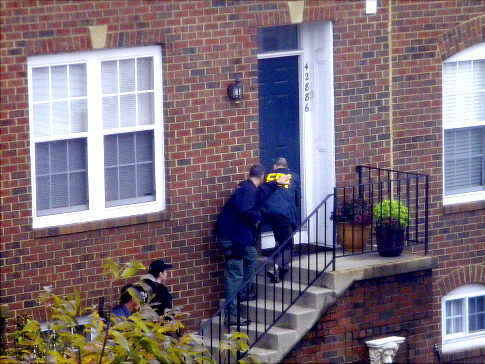
A former Staten Island man was busted in Washington on Wednesday for helping what he thought were Al Qaeda terrorists plotting to bomb the capital’s subways.

It was really the FBI stringing him along, the feds say.

Farooque Ahmed, 34, a computer engineer who lives with his wife and baby in suburban Virginia, was accused of making sketches and surveillance videos of busy subway stops near the Pentagon and tourist-packed Arlington Cemetery.

The stations Ahmed helped case are popular with Defense Department workers. He thought the stations would be blown up sometime next year, the indictment says.

His goal was “killing as many Metro riders as possible through simultaneous bomb attacks,” U.S. Attorney Neil MacBride said. “It’s chilling.”

The feds said straphangers were never in any danger.

Much like the four men convicted this month of plotting to attack a Bronx synagogue, Ahmed was stung by an undercover FBI operation and never met any real terrorists.

His face hidden by a long beard, mustache and glasses, Ahmed appeared briefly in federal court and will be held until a detention hearing tomorrow. He said he could not afford a lawyer.

A Pakistani who became a naturalized citizen in New York 17 years ago, Ahmed worked for Ericsson telecommunications in Virginia setting up routers for the Sprint network, his LinkedIn profile says.

He received a bachelor’s degree in computer science from the College of Staten Island in 2003 and studied mechanical engineering at City College, but did not receive the graduate degree, college officials said.

Ahmed’s online profile blamed that on “a political issue between computer science and (engineering) departments.” Officials said the dispute was over academic credits, not geopolitics.

He registered as a Republican in the borough in 2002.

Neighbors in Ashburn, Va., said he moved there a year ago with his British wife, Sahar Mirza, and toddler son.

Sahar Mirza is co-organizer of a Meetup.com group for mothers of new babies called Hip Muslim Moms.

He wore casual clothes – he appeared in court in jeans – but she wore more traditional garb and covered her hair.
“He was out back mowing the lawn over the weekend. He just seemed like a normal guy. He never talked about politics,” said neighbor Barbi Shires, 43. “I’m just glad it was the FBI he did it for, not al Qaeda.”

Next door neighbor, Tanya Minor, 32, who works in a doctor’s office, said Ahmed “came to look at the house with a man who spoke his language, who said he helped people from New York find apartments here. They were very quiet. They always had the blinds closed.”


Pakistanis for Peace Editor’s Note–The arrest of Faisal Shahzad and now Farooque Ahmed illustrates that unfortunately there are some within the large Pakistani and Muslim American community in the United States who mean to do us harm and they need to be caught and brought to justice. We urge all Pakistani and Muslim Americans to be vigilant and proactive in reporting anyone to the authorities who they believe have become radicalized and deemed a threat to the safety of others.

Arundhati’s Statement From Srinagar: Full Text

By Arundhati Roy
October 26, 2010
Noted Indian Hindu writer Arundhati Roy Tuesday said her speeches supporting the call for azadi were what “millions” in Kashmir say every day and were “fundamentally a call for justice”. Following is the full text of the statement that she has issued.
 
“I write this from Srinagar, Kashmir. This morning’s papers say that I may be arrested on charges of sedition for what I have said at recent public meetings on Kashmir. I said what millions of people here say every day. I said what I, as well as other commentators have written and said for years. Anybody who cares to read the transcripts of my speeches will see that they were fundamentally a call for justice. I spoke about justice for the people of Kashmir who live under one of the most brutal military occupations in the world; for Kashmiri Pandits who live out the tragedy of having been driven out of their homeland; for Dalit soldiers killed in Kashmir whose graves I visited on garbage heaps in their villags in Cuddalore; for the Indian poor who pay the price of this occupation in material ways and who are now learning to live in the terror of what is becoming a police state.  

“Yesterday I traveled to Shopian, the apple-town in South Kashmir which had remained closed for 47 days last year in protest against the brutal rape and murder of Asiya and Nilofer, the young women whose bodies were found in a shallow stream near their homes and whose murderers have still not been brought to justice. I met Shakeel, who is Nilofer’s husband and Asiya’s brother. We sat in a circle of people crazed with grief and anger who had lost hope that they would ever get ‘insaf’—justice—from India, and now believed that Azadi—freedom— was their only hope. I met young stone pelters who had been shot through their eyes. I traveled with a young man who told me how three of his friends, teenagers in Anantnag district, had been taken into custody and had their finger-nails pulled out as punishment for throwing stones.

“In the papers some have accused me of giving ‘hate-speeches’, of wanting India to break up. On the contrary, what I say comes from love and pride. It comes from not wanting people to be killed, raped, imprisoned or have their finger-nails pulled out in order to force them to say they are Indians. It comes from wanting to live in a society that is striving to be a just one. Pity the nation that has to silence its writers for speaking their minds. Pity the nation that needs to jail those who ask for justice, while communal killers, mass murderers, corporate scamsters, looters, rapists, and those who prey on the poorest of the poor, roam free.”

Arundhati Roy is a novelist, essayist and human rights activist. She won a Booker Prize in 1997 for her novel, The God of Small Things. For more on her read http://en.wikipedia.org/wiki/Arundhati_Roy

Pakistanis for Peace Editor’s Note– Arundhati Roy’s courageous plea to her country is to be lauded. Although branded a traitor by many in India and within the government, she knows that she stands for peace, justice and fairness for all humanity. She wants self determination for all Kashmiris, be they Muslim, Hindu, Buddhist or Christian.

We at Pakistanis for Peace want nothing more than peace between India and Pakistan and therefore understand that Kashmir is the one and single most important issue between the two countries. Solve it and you do not have the threat of cross border attacks, friction, animosity, perpetual war and a tense border between two neighbors of nearly 2,000 miles. If we continue to ignore it then it will eventually be the crisis that starts a 4th and possibly nuclear war between the two neighbors. A war that neither the neighborhood nor the world can afford.

Sectarianism Infects Hospital Wards

As Reported by IrinNews.org

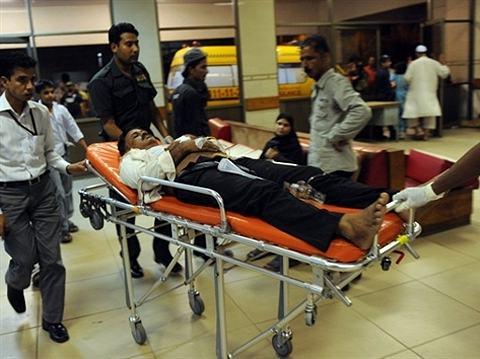
Religious, political and ethnic divisions have claimed hundreds of lives in Karachi, Pakistan’s largest city, but also influence the chances of survival for the injured.

A doctor in the emergency ward of Civil Hospital Karachi, one of the city’s largest public hospitals, told IRIN: “After a terrorism incident, we are under intense pressure. Earlier, we had the activists of various political parties threatening us in the emergency department to not treat the patients of their rival groups. They use all sorts of delay tactics, be it blocking the entrance to pounding on the doors and abusing the staff. Now, we also get calls [from the militants].”

The doctor, who asked not to be identified, added: “One ethnic-based party is so strong that it makes sure that the duty doctors are unable to carry out their work once the injured start arriving. We have doctors and other staff who are from that party within the premises. Time and again we have been told not to treat Pushtun injured, who are very easy to identify due to their language and beards. We already face a shortage of staff, medicines and medical equipment… It’s just a mess here. [But] all professionalism and ethics aside, how can you expect me to save someone when my life is in danger?”

According to a Human Rights Commission of Pakistan report released in July, 260 people have been killed in targeted killings since January 2010. The number continues to rise with 50 people killed so far in the latest wave of violence following a shooting rampage in Shershah Market on 19 October.

Turf war

The nub of the problem in Karachi is the ongoing turf war between the Muttahida Quami Movement (MQM) and the Awami National Party (ANP) for control of the coastal city. Both parties draw support from rival ethnic groups; the MQM’s vote bank is among largely Urdu speakers who migrated to Karachi after partition from India in 1947, while the ANP mainly represents Pushtuns.

Habib ur Rehman Soomro, secretary-general of the Pakistan Medical Association, acknowledged that sectarianism was rife in the health services. “I will not deny this occurrence. I live in this city and I know how things work. Refusing and delaying treatment in cases of emergency, especially after incidents of ethnic violence and terrorism, is a crime but all this is happening… Now the situation is such that all public hospitals in the city have the offices of MQM, PPP [the ruling Pakistan Peoples Party] and if it’s a Pashtun-dominated area, ANP.”

Shams Khan was injured on 3 August in the violence that erupted after the killing of MQM leader Raza Haider, which claimed 45 lives.

“I was shot in the leg by these boys near Lalo Khait. I made my way to Abassi Shaheed Hospital but they refused to treat me. I was practically thrown out of the facility by my beard as one of the doctors called me a Taliban. Bleeding, I made my way to JPMC [Jinnah Postgraduate Medical Centre]. I lost so much blood by the time the doctors attended to me. I now limp around and need a crutch to walk. The doctor told me that had I been treated earlier, it would not have happened.”

Soomro told IRIN that doctors were under constant threat. “Since the 1990s, there have been plenty of incidents of targeted killings of doctors killed on the basis of sect and ethnicity. Over 85 doctors have been murdered. First it was the Shia-Sunni issue, then the Pushtun-Mohajir issue, now it’s about sects. It’s just insane. Political affiliations need to be removed.”

A doctor at the JPMC, who asked not to be named, said: “We have seen days where doctors were beaten by angry political activists as well as the family members of the victims after a bomb blast… This cycle of madness will not end.”

Pakistanis for Peace Editor’s Note– We are unsure which is sadder, the inability of doctors in Pakistan’s biggest city to save lives without threat and or intimidation and violence against them, or that the very people giving these threats to the doctors are in fact linked to members of the two ruling political parties, who have been charged with being “leaders” of the country.

Pakistan Urges US to Intervene in Kashmir Dispute

As Reported by The Associated Press

Pakistan called Friday for President Barack Obama to intervene in its longstanding dispute with India over the Himalayan region of Kashmir, the cause of two of the three wars the nuclear-armed rivals have fought.

Pakistani Foreign Minister Shah Mahmood Qureshi made the unusually blunt appeal for Obama to seek a resolution of the dispute when he visits India next month, saying he should “redeem the pledge” he made as a candidate.

The conflict over Kashmir has been the main source of friction between India and Pakistan since they won independence from Britain in 1947. Pakistan has frequently sought outside intervention to resolve it but India vehemently opposes such involvement and the United States has traditionally stayed above the fray.

Qureshi, speaking next to Secretary of State Hillary Rodham Clinton at the closing day of three days of U.S.-Pakistan talks, said Obama must get involved because a crackdown against suspected Muslim militants in Indian-controlled Kashmir threatens the entire region.

“It is in the U.S. strategic interest to work for peace, stability and resolution of the disputes in South Asia,” he said. “The starting point in this quest is justice for the Kashmiri people.”

“President Obama has always understood the importance of a Kashmir solution,” Qureshi said. “His coming visit to the region is the time to begin to redeem the pledge that he made earlier.”

As a presidential candidate in 2008, Obama suggested that the U.S. should encourage India and Pakistan to resolve the Kashmir dispute so Pakistan could better focus on fighting extremists on its own territory and Afghanistan. Although he did not advocate direct mediation, his comments were met with disdain in India.

Obama will not visit Pakistan on his upcoming trip but he plans to spend several days in India, which has cracked down on violent anti-Indian protests in Kashmir since June. The violence has killed at least 111 people, mostly teenage boys and young men in their 20s. Authorities have imposed off-and-on curfews in an attempt to halt the unrest.

Quershi expressed astonishment that the U.S. and other major powers had said little about India’s response to the protests.

“People of conscience have protested the use of force against the defenseless people of Kashmir, in particular the targeting of the Kashmiri youth,” he said. “But the Kashmiri mothers are baffled by the deafening silence of the world’s leadership. History has proved that the force of arms cannot suppress the legitimate aspirations of the Kashmiri people.”

India and Pakistan fought two wars for control of Muslim-majority Kashmir, where rebels have sought independence from India or incorportation with neighboring Pakistan.

More than 68,000 people, most of them civilians, have been killed in Kashmir since fighting began in earnest in 1989.

Flood Relief: A US Helicopter Pilot’s Tale

By John Bockmann for The Express Tribune

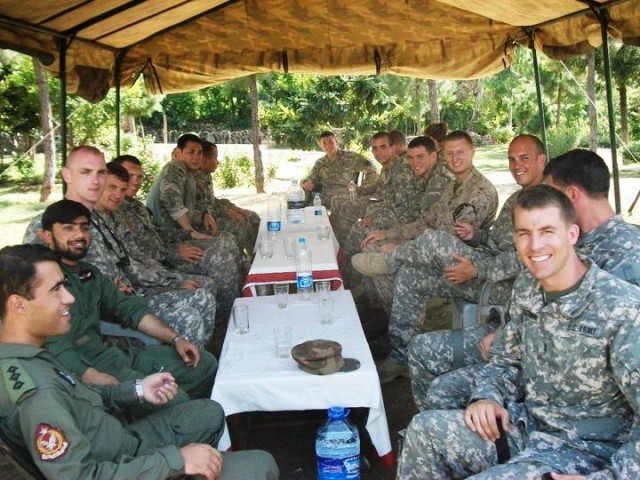
I am an American helicopter pilot in Pakistan.  My colleagues and I came because Pakistan and its people are enduring the aftermath of a devastating flood.  We were ordered to be here, and we miss our homes, but most of us are glad to help because we believe it’s the right thing to do.

I did not know much about Pakistan before I arrived here.  I knew of the food.  I knew of monsoons and Mohenjo Daro, Karachi and the Khyber Pass, but I had no concept of what Pakistan looked, felt, or sounded like. I even thought many Pakistanis would want us to leave.

I had no idea what the people would be like in person.  I wondered if they would resemble the images I’d seen on TV – would they protest our presence in the streets?  Would they tolerate us?  Or would they simply ignore us and go about their business?

After a few weeks of packing and planning, we were ready to deploy.  Full of excitement and some anxiety, I kissed my wife, took one last picture and was gone. We flew on a cargo jet from Alaska to Islamabad and the flight took so long I hardly knew whether it was day or night when we finally arrived.  Shouldering my gear, I headed to the terminal, weaving among Pakistani military and civilians on the tarmac.  A US Marine captain guided my group inside where we filled out information cards and relaxed in the cool quietness, surveying our area; smooth stone floors, low-slung furniture, and ceiling fans spinning high above.  The captain was talking to a Pakistani man who had been helping us.  Before we left, the man shook my hand and looked me in the eyes. “Thank you for coming to my poor country,” he said quietly.

I wanted to convey the depth of my feelings toward him and his homeland, but all I said was, “You would probably do the same for us” as I walked away.

That was my first interaction with a Pakistani here.

The days since arriving have passed quickly.  Every day we take rice, flour, blankets, housing materials, cooking oil – anything – up and down the Swat and Indus River Valleys.  We also bring sick, injured, and displaced people to hospitals and hometowns.

My first mission took us up the Indus river valley, and I embarrassed myself by constantly exclaiming its beauty.  Below me was the Karakorum Highway – the old Silk Road into China – and the valley itself, with terraced farmland overshadowed by majestic, snow-capped mountains.

Along with the beauty, though, I see reminders of the flood, bridges that are broken or missing and roads and fields that have been washed away.  I am beginning to see widespread reconstruction now as well and feel hope for the people in these villages.  They will soon have another way to get help.

I realize that some who read this will question our intentions and some may even wish us ill.  I certainly did not imagine that cheering throngs would greet us at each village though – we are always welcomed.  I did not expect our goodwill to be taken at face value by all of Pakistan, but we have received immense support.

I have learned in my time here that Pakistani people are truly gracious.  Strangers have invited me for chai and conversation.  Almost anyone will shake my hand and ask my name, inquire about my health and how I am getting along.  Instead of a handshake at our first meeting, I have sometimes been embraced.  “Strangers shake hands,” my new friend Mahmood explained, “but brothers hug each other.”

This warms my heart.  My mission, our mission, is straightforward, noble, and good.  I am deeply grateful to those who support us here, for we need all the help we can get in order to help those in need.   I am honored to do this work. I feel at home here beyond anything I could have expected.

Ah, home!  I miss my home, my wife and family; each day I wonder when I will see them again. But we have a humanitarian mission to accomplish.  Since I must be away, I’m glad that I am here, doing work that’s needed and good.

When I do return home, I will bring with me hundreds of pictures, dozens of journal entries, six duffel bags, and several recipes for local dishes that I have enjoyed, but I will also bring innumerable memories that I will treasure for life — memories of Pakistan and its people.  They have surprised me with friendship.  I hope that through our work of compassion we may surprise them with friendship as well.

Top of the Agenda at US-Pakistan Meetings: Mending Relations

By Howard LaFranchi for The Christian Science Monitor

If Osama bin Laden is really living comfortably in a house in northwest Pakistan, can we finally get him?

One might assume that the question would come up during this week’s three-day “strategic dialogue” between the United States and Pakistan – given the news out of NATO earlier this week that the Al Qaeda leader is no longer believed to be roughing it in a remote, no-man’s-land cave.

But instead, topic No. 1 at the three days of Washington meetings that begin Wednesday is likely to be relations-mending.

US-Pakistan ties, already roiled by frequent US drone attacks in Pakistani territory, suffered an abrupt setback over a NATO helicopter attack on the Pakistan-Afghanistan border late last month that killed several Pakistani soldiers. The US apologized for the incident, but not before the Khyber pass border crossing was closed and dozens of bottled-up trucks transporting fuel and supplies to NATO troops in Afghanistan were torched.

It is in the still-touchy aftermath of the border incident that the US is expected to offer Pakistan a multiyear, multibillion-dollar security package aimed at enhancing the ability of Pakistani security forces to take on domestic Islamist militants.

The US already offers Pakistan about $1.5 billion a year in military assistance through what is now a year-to-year program. The proposal to be presented at this week’s meetings is for a package of military hardware, training, and counterinsurgency materials stretching over several years – something the Pakistanis have been seeking for a while. Secretary of State Hillary Rodham Clinton had said at the last session of the US-Pakistan strategic dialogue in Islamabad in July that the US was “working on a multiyear package.”

Such a package for security assistance would presumably mirror a five-year, $7.5 billion development assistance package for Pakistan that the US approved last year.

US officials acknowledge that Pakistani security forces are stretched thin – especially after the summer’s devastating floods – and could use more supplies and training if they are to go after militants in their havens. But at the same time, US officials continue to harbor suspicions that some of the Taliban and other militant groups, in particular those involved in fighting in neighboring Afghanistan, continue to enjoy protection from certain elements of the Pakistani security structure.

The claim from a NATO official about Mr. bin Laden, reported by CNN, included the widely held contention that the Al Qaeda leadership is protected by elements within the Pakistani intelligence services.

Earlier this month, the White House submitted an assessment of Pakistan to Congress that is critical of the country’s antimilitancy campaign and suggests its existing capacities would allow it to do much more to confront the Taliban and Al Qaeda. A softer version of that assessment was offered at the State Department this week, when spokesman P.J. Crowley commended Pakistan for “aggressive action within its borders” before adding, “Clearly, this is an ongoing threat, and more needs to be done.”

At a State Department briefing Tuesday, the deputy US special representative for Afghanistan and Pakistan, Frank Ruggiero, said that while the Pakistanis have taken “some substantial steps” against organizations threatening the security of both countries, the US will call on Pakistan to do more – such as taking its campaign into North Waziristan.

Confronted with America’s you-can-do-more attitude, the Pakistanis are responding with requests of their own. Pakistan’s foreign minister, Shah Mehmood Qureshi, has a list of things he says the US could do to build his country’s confidence in the US partnership. Among them are a civilian nuclear energy deal like the one the US has signed with India, a wider door for Pakistani products to enter the US, and more US pressure on India to resolve issues of interest to both India and Pakistan, such as Kashmir.

Mr. Qureshi, who is to meet with Secretary Clinton on Friday, has already previewed the proudly independent tone he is likely to employ when meeting with senior Obama administration officials.

“We are an ally, not a satellite,” Qureshi said Monday in comments at Harvard University’s Institute of Politics in Cambridge, Mass. “We have to protect our borders. You have to respect our sovereignty,” he said, alluding to the recent helicopter border shooting.

Qureshi said the “trust deficit” affecting relations between the two countries has been furthered by such interventions in Pakistani territory, although he acknowledged that the outpouring of US relief assistance after the summer flooding was viewed much more positively.

Meeting Pakistanis, U.S. Will Try to Fix Relations

By Mark Landler and Eric Schmitt for The New York Times

WASHINGTON — As Pakistani civilian and military leaders arrive here this week for high-level meetings, the Obama administration will begin trying to mend a relationship badly damaged by the American military’s tough new stance in the region.

Among the sweeteners on the table will be a multiyear security pact with Pakistan, complete with more reliable military aid — something the Pakistani military has long sought to complement the five-year, $7.5 billion package of nonmilitary aid approved by Congress last year. The administration will also discuss how to channel money to help Pakistan rebuild after its ruinous flood.

But the American gestures come at a time of fraying patience on the part of the Obama administration, and they will carry a familiar warning, a senior American official said: if Pakistan does not intensify its efforts to crack down on militants hiding out in the tribal areas of North Waziristan, or if another terrorist plot against the United States were to emanate from Pakistani soil, the administration would find it hard to persuade Congress or the American public to keep supporting the country.

“Pakistan has taken aggressive action within its own borders. But clearly, this is an ongoing threat and more needs to be done,” the State Department spokesman, Philip J. Crowley, said Monday. “That will be among the issues talked about.”

The Pakistanis will come with a similarly mixed message. While Pakistan is grateful for the strong American support after the flood, Pakistani officials said, it remains frustrated by what it perceives as the slow pace of economic aid, the lack of access to American markets for Pakistani goods and the administration’s continued lack of sympathy for the country’s confrontation with India.

Other potentially divisive topics are likely to come up, too, including NATO’s role in reconciliation talks between President Hamid Karzai of Afghanistan and the Taliban. Pakistani officials say they are nervous about being left out of any political settlement involving the Taliban.

Still, in a relationship suffused by tension and flare-ups — most recently over a NATO helicopter gunship that accidentally killed three Pakistani soldiers and Pakistan’s subsequent decision to close a supply route into Afghanistan — this regular meeting, known here as the strategic dialogue, serves as a lubricant to keep both countries talking.

At this meeting, Secretary of State Hillary Rodham Clinton will formally introduce the new American ambassador to Pakistan, Cameron Munter. Mr. Munter, who recently served in Iraq, replaces Anne W. Patterson, who just wrapped up her tour of duty in Islamabad.

“No country has gotten more attention from Secretary Clinton than Pakistan,” said Richard C. Holbrooke, the administration’s special representative for Afghanistan and Pakistan. Pakistan’s delegation will be led by its foreign minister, Shah Mahmood Qureshi, but much of the attention will be on another official, the military chief, Gen. Ashfaq Parvez Kayani, who is viewed by many as the most powerful man in Pakistan.

White House and Pentagon officials said one immediate goal of this meeting was to ease the tensions that led Pakistan to close the border crossing at Torkham, halting NATO supplies into Afghanistan. Officials on both sides said that acrimony from the border flare-up had already receded, soothed by the multiple apologies that American officials made to Pakistan last week.

Last week, Adm. Mike Mullen, the chairman of the Joint Chiefs of Staff, said that General Kayani had assured him that Pakistan’s army would tackle the North Waziristan haven, but on Pakistan’s timetable. In an interview, Pakistan’s ambassador to the United States, Husain Haqqani, said, “Our American partners understand that we have 34,000 troops in North Waziristan. Our soldiers have been engaged in flood relief after history’s worst floods. It is not a question of lack of will.”

The new security pact would have three parts: the sale of American military equipment to Pakistan, a program to allow Pakistani military officers to study at American war colleges and counterinsurgency assistance to Pakistani troops.

Currently, the United States spends about $1.5 billion a year to provide this same assistance, but it is doled out year by year. The new agreement, if endorsed by Congress, would approve a multiyear plan assuring stability and continuity in the programs, although Congress would continue to appropriate the financing on a yearly basis. “This is designed to make our military and security assistance to Pakistan predictable and to signal to them that they can count on us,” said a senior official.

At the last dialogue in Islamabad in July, Mrs. Clinton presented more than $500 million in economic aid, including plans to renovate hospitals, upgrade hydroelectric dams, improve water distribution and help farmers export mangoes. But the floods upended those plans, and officials said they now planned to redirect funds to more urgent needs.

This week’s meeting will also be shadowed by a new eruption of political instability in Pakistan: the government of President Asif Ali Zardari is locked in a confrontation with the Supreme Court over the court’s demand that senior ministers be fired on corruption charges. Analysts said they were less worried about the atmospherics than the underlying differences in perspective. The administration’s public contrition for the cross-border attack has largely resolved that issue, said Daniel S. Markey, senior fellow for India, Pakistan and South Asia at the Council on Foreign Relations.

But Mr. Markey said he saw potential friction stemming from the American openness to reconciliation with the Taliban. With the United States facilitating rather than guiding the talks, he said, there could be poor coordination between the Afghans, NATO and others — all of which would rattle the Pakistanis.

“Washington is opening the door to a range of negotiations with groups that it has discouraged Pakistan against working with in the past,” he said. “This sends a mixed signal, and cannot help but encourage hedging on Islamabad’s part.”

Another potential bone of contention is one of President Obama’s nuclear objectives: a global accord to end the production of new nuclear fuel. Pakistan has led the opposition to the accord. And without its agreement, the treaty would be basically useless.

Mr. Qureshi blamed the United States for the situation, saying Washington signed a civilian nuclear accord with India that discriminated against Pakistan. “You have disturbed the nuclear balance,” he said in a recent interview in New York, “and we have been forced to develop a new strategy.”

Off-Court Honour for IndoPak Express

As Reported by Dawn

The two South Asian players who paired up to form a formidable force in men’s doubles tennis have been rewarded for their efforts by the Peace and Sport Organization.

Aisam-ul-Haq Qureshi and Rohan Bopanna were announced as the winners of ‘Peace and Sport Image of the Year’ award by the World Peace and Sport Forum on Friday.

The award is given to the best image of fraternity through sport or a symbolic moment showing the ability of sport to advance peace in the world and to encourage reconciliation among peoples.

“The Peace and Sport Image of the Year Award will be given to India’s Rohan Bopanna and Pakistan’s Aisam-ul-Haq Qureshi – two tennis players who managed to bring the political authorities in their respective countries closer, through their own history of personal friendship and commitment,” a statement issued by Peace and Sport said.

The duo’s ‘Stop War, Start Tennis’ campaign made a breakthrough achievement this year, when they managed to bring together the Pakistani and Indian ambassadors to the United Nations.

Hardeep Singh Puri (India) and Abdullah Hussain Haroon (Pakistan) watched from the stands as the IndoPak Express contested in the men’s doubles semi-finals and final of the US Open 2010 in New York last month.

The winning image, taken by Jay Mandal for the ATP World Tour, shows the two players chatting with the two ambassadors after their semi-final win at the Billie Jean King National Tennis Center in New York.

Based on worldwide open voting competition and jury’s decision the image was declared the winner, having received 60 per cent of the votes cast globally.

Rohan (Hindu) and Aisam (Muslim) have played in a doubles team for three years and are building their careers together, despite historical hostilities that divide India and Pakistan. Motivated by their friendship, they decided to actively campaign for peace between their two nations.

During several events on the ATP World Tour 2010, they wore warm-up gear displaying the slogan “Stop War, Start Tennis”, thus affirming their belief that friendship between India and Pakistan is possible.

“The message of peace given by Rohan and Aisam is a unique source of inspiration for young people in their respective countries, but its significance does not stop there. They use their charisma and their sporting success to raise awareness amongst the entire international community, their fellow athletes and political authorities in their countries, as we saw at the US Open. I hope that their appeal will lead the way to new rapprochement initiatives,” Joel Bouzou, President and Founder of Peace and Sport said.

“Sport’s greatest victory is not measured in terms of medals. It is measured by its ability to positively change people’s lives and bring them hope. And that’s exactly what Rohan and Aisam succeed in doing. They demonstrate what champions can achieve when they use their celebrity for a good cause.”

The players’ next humanistic goal is to organize a friendly tennis match at the Wagah border, the only checkpoint that exists between India and Pakistan. This symbolic event, supported by Peace and Sport, will incarnate the wish of Indian and Pakistani young people to live in peace.

Other contestants for this year’s award were, “Young Pentathletes bridge the gap between the USA and Cuba,” “Nelson Mandela, hero of the anti-apartheid struggle and symbol of the 2010 World Cup,” and “Iran and the USA forget their differences on a basketball pitch.”

The award will be presented to the duo by Prince Albert II of Monaco at a grand gala ceremony on December 2.

Suspected Political Violence Kills 25 in Pakistan

By Ashraf Khan for the Associated Press

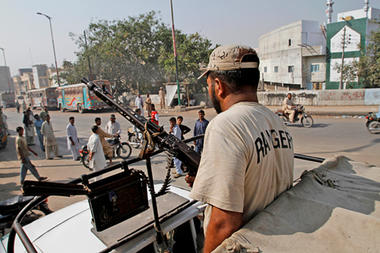
KARACHI, Pakistan – Gunmen have killed at least 25 people in Karachi in the past 24 hours, raising tensions in Pakistan’s largest city as voters cast ballots Sunday to replace a provincial lawmaker murdered in August.

Police said they were still investigating the motives behind the shootings, but many so-called “target killings” in Karachi have been linked to gangs controlled by the city’s main political parties, which have been feuding for much of the last 20 years.

“We cannot say whether all the killings were politically motivated or some gangs were involved because the killings took place in different parts of the city and were not confined to the area where the elections were being held,” Karachi police Chief Fayyza Leghari said.

The two parties most linked to violence in Karachi — the Muttahida Quami Movement and the Awami National Party_ have their electoral bases in different ethnic groups that make up a large chunk of the city’s population.

The MQM claims to represent the Urdu-speaking descendants of those people who came to Karachi from India soon after the birth of Pakistan in 1947. It is secular and likes to speak out against the so-called Talibanization of the city, a jab at the Awami National Party, which represents the ethnic Pashtuns from the Taliban heartland in the northwest.

Raza Haider, the member of the provincial assembly who was gunned down in August, was a senior member of the MQM. In the wake of the shooting, the MQM accused the ANP of supporting Islamist militants suspected of being behind the murder — an allegation denied by the ANP.

Both parties were competing for Haider’s vacant seat, but the ANP announced Saturday evening that it would boycott the election, saying the MQM would rig the vote. The shootings began around the time the ANP made its announcement.

At least 25 people have been gunned down in Karachi since Saturday evening, said Zulfiqar Mirza, the home minister of Sindh province, where Karachi is the capital. He called on party leaders to come forward to “help us turn Karachi back into the city of light and peace.”

“If someone has a complaint, it should not be settled on the street,” Mirza told a news conference. “It is disappointing that we are shedding our priceless blood with our own hands.”

The dead include members of a broad range of ethnic groups in the city, he said.

Haider Abbas Rizvi, a senior MQM leader and member of Parliament, accused the ANP of being behind the shootings, saying “19 of our workers and supporters have been killed so far.”

Senior ANP member Amin Khattak denied the accusation, saying, “we are not involved in killings, and I think that this blame game should be stopped.”

Leghari, the police chief, said at least three of the killings did not seem to be politically motivated and were carried out during “other criminal offenses.”

The killings were reminiscent of the violence that followed Haider’s murder. At least 45 people died in the days following his killing.

Police have arrested at least 60 people in connection with the most recent shootings, Mirza said. But few killers in such cases have ever been brought to justice, and motives for the attacks have not been revealed.

The rising tension between the MQM and the ANP represents a serious danger to stability in Karachi, a city of some 16 million people and Pakistan’s commercial hub.

Pashtuns have been arriving in the city in greater numbers in recent years, fleeing Pakistan army offensives against the Taliban. An estimated 4 million Pashtuns are now in Karachi and many live in sprawling slums on the outskirts that are “no-go” areas for authorities.

Violence has surged in Karachi this year with hundreds of people slain in target killings. This increase has echoes of the city’s bloody past.

In the 1980s and 1990s, Karachi was regularly convulsed by violence in which hundreds were killed. MQM leader Altaf Hussain fled to London in 1992 as a result of that bloodshed and was granted asylum. He regularly addresses large gatherings of supporters by telephone link.

U.S. Had Warnings on Plotter of Mumbai Attack

By Jane Perlez, Eric Schmitt and Ginger Thompson for The New York Times
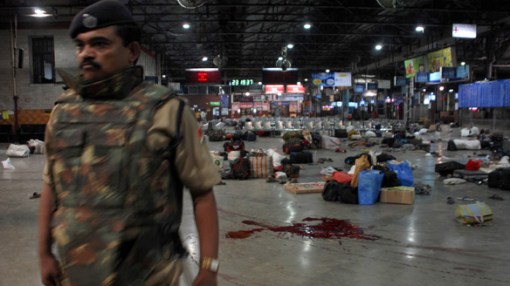
Less than a year before terrorists killed at least 163 people in Mumbai, India, a young Moroccan woman went to American authorities in Pakistan to warn them that she believed her husband, David C. Headley, was plotting an attack.

It was not the first time American law enforcement authorities were warned about Mr. Headley, a longtime informer in Pakistan for the United States Drug Enforcement Administration whose roots in Pakistan and the United States allowed him to move easily in both worlds.

Two years earlier, in 2005, an American woman who was also married to the 50-year-old Mr. Headley told federal investigators in New York that she believed he was a member of the militant group Lashkar-e-Taiba created and sponsored by Pakistan’s powerful intelligence agency.

Despite those warnings by two of his three wives, Mr. Headley roamed far and wide on Lashkar’s behalf between 2002 and 2009, receiving training in small-caliber weapons and countersurveillance, scouting targets for attacks, and building a network of connections that extended from Chicago to Pakistan’s lawless northwestern frontier.

Then in 2008, it was his handiwork as chief reconnaissance scout that set the stage for Lashkar’s strike against Mumbai, an assault intended to provoke a conflict between nuclear-armed adversaries, Pakistan and India.

An examination of Mr. Headley’s movements in the years before the bombing, based on interviews in Washington, Pakistan, India and Morocco, shows that he had overlapping, even baffling, contacts among seemingly disparate groups — Pakistani intelligence, terrorists, and American drug investigators.

Those ties are rekindling concerns that the Mumbai bombings represent another communications breakdown in the fight against terrorism, and are raising the question of whether United States officials were reluctant to dig deeper into Mr. Headley’s movements because he had been an informant for the D.E.A.

More significantly, they may indicate American wariness to pursue evidence that some officials in Pakistan, its major ally in the war against Al Qaeda, were involved in planning an attack that killed six Americans.

The Pakistani government has insisted that its spy agency, the Inter-Services Intelligence Directorate, a close partner of the C.I.A., did not know of the attack. The United States says it has no evidence to counter this, though officials acknowledge that some current or retired ISI officers probably played some role.

It is unclear what United States officials did with the warnings they had gotten about Mr. Headley, who has pleaded guilty to the crimes and is cooperating with authorities, or whether they saw them as complaints from wives whose motives might be colored by strained relations with their husband.

Federal officials say that the State Department and the F.B.I. investigated the warnings they received about Mr. Headley at the time, but that they could not confirm any connections between him and Lashkar-e-Taiba. D.E.A. officials have said they ended their association with him at the end of 2001, at least two months before Mr. Headley reportedly attended his first terrorist training. But some Indian officials say they suspect that Mr. Headley’s contacts with the American drug agency lasted much longer.

The investigative news organization ProPublica reported the 2005 warning from Mr. Headley’s American former wife on its Web site and in the Saturday issue of The Washington Post. By ProPublica’s account, she told the authorities that Mr. Headley boasted about working as an American informant while he trained with Lashkar.

On Saturday, Mike Hammer, a spokesman for the National Security Council, said in a statement, “The United States regularly provided threat information to Indian officials in 2008 before the attacks in Mumbai.” He also said, “Had we known about the timing and other specifics related to the Mumbai attacks, we would have immediately shared those details with the government of India.”

Mr. Headley’s American wife was not the only one to come forward. The Moroccan wife described her separate warnings in an interview with The New York Times. Interviews with United States and allied intelligence and security officials illustrate his longstanding connections to American law enforcement and the ISI:

¶ An officer of the Pakistani spy agency handed Mr. Headley $25,000 in early 2006 to open an office and set up a house in Mumbai to be used as a front during his scouting trips, according to Mr. Headley’s testimony to Indian investigators in Chicago in June. As part of Mr. Headley’s plea agreement, Indian investigators were allowed to interview him in Chicago, where he was arrested in October 2009. ¶ The ISI officer who gave Mr. Headley the cash, known as Major Iqbal, served as the supervisor of Lashkar’s planning, helping to arrange a communications system for the attack, and overseeing a model of the Taj Mahal Hotel, according to Mr. Headley’s testimony to the Indians.

¶ While working for Lashkar, which has close ties to the ISI, Mr. Headley was also enlisted by the Pakistani spy agency to recruit Indian agents to monitor Indian troop levels and movements, an American official said.

Besides Mr. Headley’s guilty plea in a United States court, seven Pakistani suspects have been charged there. American investigators say a critical figure who has not been charged is Sajid Mir, a Lashkar operative who became close to Mr. Headley as the plans for the Mumbai operation unfolded. The investigators fear he is still working on other plots.

Mr. Headley was known both to Pakistani and American security officials long before his arrest as a terrorist. He went to an elite military high school in Pakistan. After arrests in 1988 and 1997 on drug-trafficking charges, Mr. Headley became such a valued D.E.A. informant that the drug agency sent him back and forth between Pakistan and the United States. In several interviews in her home, Mr. Headley’s Moroccan wife, Faiza Outalha, described the warnings she gave to American officials less than a year before gunmen attacked several popular tourist attractions in Mumbai. She claims she even showed the embassy officials a photo of Mr. Headley and herself in the Taj Mahal Hotel, where they stayed twice in April and May 2007. Hotel records confirm their stay.

Ms. Outalha, 27, said that in two meetings with American officials at the United States Embassy in Islamabad, she told the authorities that her husband had many friends who were known members of Lashkar-e-Taiba. She said she told them that he was passionately anti-Indian, but that he traveled to India all the time for business deals that never seemed to amount to much.

And she said she told them Mr. Headley assumed different identities: as a devout Muslim who went by the name Daood when he was in Pakistan, and as an American playboy named David, when he was in India.

“I told them, he’s either a terrorist, or he’s working for you,” she recalled saying to American officials at the United States Embassy in Islamabad. “Indirectly, they told me to get lost.”

Though there are lots of gaping holes left in Mr. Headley’s public profile, the one thing that is clear is he assumed multiple personas.

He was born in the United States, the son of a Pakistani diplomat and a socialite from Philadelphia’s Main Line. When he was about a year old, his parents took him to Pakistan, where he attended the Hasan Abdal Cadet College, the country’s oldest military boarding school, just outside of Islamabad.

Mr. Headley’s parents divorced. And before he finished high school, he moved to Philadelphia to help his American mother run a bar, called the Khyber Pass. Later he opened a couple of video rental stores.

But at the same time he was involved in a life of crime. Each time he was arrested on drug trafficking charges, he used his roots in the United States and Pakistan to make himself as valuable an asset to law enforcement as he was to the traffickers; one with the looks and passports to move easily across borders, and the charisma to penetrate secretive organizations.

He was married at least three times. For one period he was married to all three wives — Ms. Outalha, who is a medical student half his age, a New York makeup artist, and a conservative Pakistani Muslim — at the same time.

Those relationships, however, caused him trouble. In 2005, his American wife filed domestic abuse charges against Mr. Headley, according to federal investigators in New York, and reported his ties to Lashkar-e-Taiba. The investigators said the tip was passed on to the F.B.I.’s Joint Terrorism Task Force.

Then in December 2007, Ms. Outalha talked her way into the heavily guarded American Embassy in Islamabad. She went back a month later with more information. A senior administration official acknowledged that Ms. Outalha met twice with an assistant regional security officer and an Immigration and Customs Enforcement officer at the embassy. However, the administration official said Ms. Outalha offered almost no details to give credibility to her warnings.

“The texture of the meeting was that her husband was involved with bad people, and they were planning jihad,” the official said. “But she gave no details about who was involved, or what they planned to target.”

Given that she had been jilted, Ms. Outalha acknowledged she may not have been composed. “I wanted him in Guantánamo,” she said. More than that, however, Ms. Outalha says, she went to American authorities looking for answers to questions about Mr. Headley’s real identity. In public he criticized the United States for the war in Iraq and Afghanistan. But at night he loved watching “Seinfeld” and Jay Leno.

Sipping tea in a cafe overlooking a plaza in Morocco, Ms. Outalha said that in hindsight, she is convinced that he is both men. She claims to be puzzled that American officials did not heed her warning.

“I told them anything I could to get their attention,” she said of the American authorities at the embassy in Islamabad. “It was as if I was shouting, ‘This guy was a terrorist! You have to do something.’ ”

Muslim-Jewish Evening Raises $$ For Pakistanis

By Cristina Costantini for The New Haven Independent

Farhan and Shahida Soomro became American citizens on Friday. Originally from the Sindh Province in Pakistan, they have lived in the U.S. for ten years. Two days after becoming Americans, they held an event with their friends Ron Miller and his wife Cathie Miller to raise money and awareness about the floods which have ravaged their province in Pakistan. “It’s been a busy weekend!” said Shahida Soomro.

The event—“An Evening to Support Pakistani Flood Relief at the Community Foundation for Greater New Haven”—was held Sunday night at the Community Foundation for Greater New Haven on Audubon.

The Soomro family is Muslim; the Miller family, of Westville, is Jewish. The idea for the event, a “Jewish-Muslim collaboration,” came about over a dinner with old friends, Cathie Miller said. The Millers then sought the support of the Social Action Committees of the Temple Emanuel of Greater New Haven and the Congregation Mishkan Israel of Hamden, which were instrumental in the organization of the event.

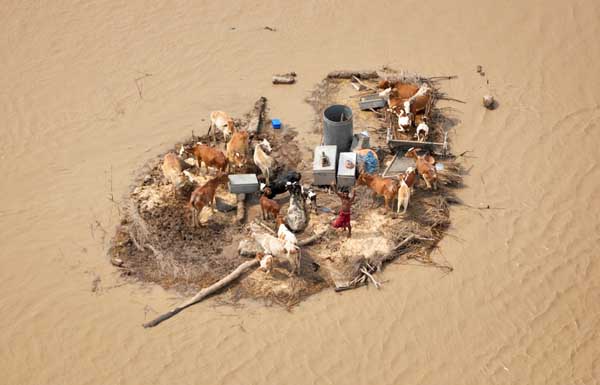
After guests Sunday night enjoyed a wide spread of ethnic foods, Farhan Soomro opened the presentation by relaying the severity of the crisis. While the Soomro family was not present during the flooding, they have stayed in constant contact with their relatives in the region. With a fifth of Pakistan underwater, 20 million people displaced, and two million homes destroyed, Soomro explained, farmers have lost two seasons of crops and the Pakistani government cannot meet the food and shelter demands the disaster has triggered.

The event raised about $3,000.

Timothy Rogers, the director of charitable gifts for Save the Children in Westport described to guests where their donations would go. “We have been in Pakistan for 31 years now,” said Rogers. “What are we doing in Pakistan now? We’re providing emergency medical care, we’re distributing tents, shelter kits, food, and other supplies, we’re distributing water purification tablets, and bed nets.”

According to Cathie Miller, Save the Children was chosen as the charity for the event because over 90 percent of money donated goes to direct relief, and the Soomros have heard anecdotal evidence from their relatives and friends in the Sindh province that Save the Children has been effective in the region.

Rogers raised questions about the lack of American response and media coverage to the tragedy. Americans have given disproportionally less than other developed nations in the world. Although Save the Children has sent about $46 million to help alleviate suffering in Pakistan, the American public’s contribution makes up only $2.3 million of this total. Norwegian citizens, a country with a much smaller population, has already donated over $4 million in assistance funds through Save the Children. Rogers posited that donations might be down because of “donor fatigue due to recent tragedies” or because of a lack of media coverage. Ron Miller linked the trend to Islamophobia.

“I think even though we don’t want to say it, Americans have a hard time understanding and appreciating Muslims,” Miller said. “And one of the reasons that, myself as a Jew, and I’ve talked with various synagogues which they are present here today, is the importance for both Jews and Muslims and Muslims and Americans to come to grips with who we are, what our cultures are and what our values are. One of our reasons for doing this, was in our small way, a Muslim family, and a Jewish family, over dinner decided to try to do something to show that that gulf doesn’t exist between us and our Muslim colleagues.”

One audience member admitted her initial hesitations about donating to the cause. “My knee-jerk reaction, when I heard about this event, was how do I know my money isn’t going to go to the Taliban? Of course this was ignorant, and I really think the reason we don’t talk about this flood is that our government is struggling with Pakistan,” she said.

A Pakistani member of the audience responded to her comments, suggesting that crisis alleviation in the area is one of the best ways to win a war of ideas: “The Pakistani people realize that Save the Children is coming from the American people. Winning the hearts and minds is the key thing, our policy makers have allocated $30 million to public diplomacy work in Pakistan. It should be a no-brainer that if we use our resources to help get their homes together that this will be much more effective.”

“This is a great opportunity for us to change and affect the hearts and the minds of the Pakistani people,” he concluded.

The event drew around 50 guests.

Donations are still being accepted. Checks can be made out to “Save the Children” with a memo note: “Pakistani Flood.” In order to count as a part of the Greater New Haven response to this disaster the check must be sent to The Community Foundation for Greater New Haven, 70 Audubon Str., New Haven 06510 Attn: Lee Cruz. All donations will be sent to Save the Children within the week.

Moving Forward From the Flood – II

By Arif Belgaumi for The Express Tribune

The Indus, like the other rivers that originate in the Himalayas, carries an enormous sediment load — something in the order of 300 tons per square kilometre per year. The Himalayas, a relatively young mountain range, is comprised of soft rocks which are highly susceptible to erosion by the monsoon rains. In the past – every spring and summer – the Indus would bring the waters of melted snow and rains from the mountains, as well as millions of tons of sediment to the plains and eventually to its delta at the Arabian Sea. The sediment would be deposited along the river banks as the river flooded, and in the delta, in a vast fan that stretches several hundred kilometres out into the Arabian Sea.

In the last 150 years, with the construction of numerous levees, barrages and dams on the Indus and its tributaries, the natural flow of the river has been dramatically altered. To bring more land under cultivation, the course of the Indus has been restricted within its banks. Huge quantities of water – nearly 75 per cent of the total – are drawn off from the Indus for crop irrigation. Unfortunately, water management projects are engineered to control the flow of water and are rarely designed to address the enormous sediment load. Large amounts of water, drawn from the Indus for irrigation, limit the river’s ability to carry the sediment which settles in the river bed. Over the years this has resulted in raising the river bed well above the surrounding land. Even higher levees are then built to contain the river within its banks.

In its constrained state, the Indus is incapable of handling flood surges. Once the flood waters breach the levees there is no way for the flood waters to drain back into the river. This year, the flood itself was a short event; we have spent most of the last several weeks moving the water from one area to another, trying to spread it out and minimise its damage. The Indus and its tributaries naturally drain a vast area of this country. Our water management infrastructure has rendered them incapable of performing that function. In trying to convert the Indus into the equivalent of a vast domestic water system, whereby with the turn of a switch water can be tapped off as and when needed, we have severely compromised its ability to drain its watershed.

Similarly, dams will do little in the long run to control floods or even store extensive amounts of water for irrigation. Again, the sediment in the river is the determining factor. The Tarbela Dam, which was completed in the mid 70s and was a major engineering achievement for Pakistan, has already lost about 28 per cent of its reservoir capacity due to silting. In another generation, it is quite likely that the Tarbela’s water storage capacity will be reduced to nothing and it will simply function as a run-of-the-river hydroelectric power generator. That seems like an extremely short lifespan for a major infrastructure project which, during its construction, was responsible for an enormous socio-cultural and environmental impact on the surrounding region.

The Kalabagh Dam, or any other dam on the Indus, will likely face the same choice of a very high initial cost in terms of financial investment, population displacement and environmental cost, for diminishing returns over a relatively short lifespan. This is not to say that dams do not have their utility. The Tarbela Dam has been instrumental in revolutionising agriculture in Pakistan. But the benefits of large dams need to be weighed against the huge costs paid by the affected people and by the environment.

A balance needs to be struck between the needs for agriculture and domestic use and the need for the river system to sustain itself and its delta. New thinking on water management strategies must be introduced in Pakistan. More thought and effort must be expended on water conservation, reduction of wastage, and careful selection of low-water-consuming crops. This public discourse is sorely missing in Pakistan and needs to be initiated at the earliest so that we move forward from this calamity and establish a more productive relationship with the river that sustains our country.

Pakistan is Not America’s Enemy

 By Ryan Crocker for The Wall Street Journal

 The news from Pakistan is grim. NATO helicopters engage suspected militants inside Pakistan, killing three, only to discover they are Pakistani soldiers. The angry Pakistani government blocks NATO fuel shipments at the Khyber Pass, and militants attack the stalled trucks. An Obama administration report to Congress charges that the Pakistanis aren’t doing enough against the Taliban and al Qaeda. Press accounts quote unnamed officials asserting that elements in Pakistani intelligence are encouraging the Taliban to step up attacks on NATO forces. And Bob Woodward cites President Obama as saying “the cancer is in Pakistan.”

One could easily conclude that we are describing an enemy, not an ally. Many in Pakistan feel the same way. And yet the prospects for stabilizing Afghanistan, defeating al Qaeda and preventing further attacks on the United States are a direct function of that strained alliance. It is time for a collective deep breath.

Pakistan’s historical narrative focuses on how the U.S. worked with Pakistanis and Afghans to drive the Soviets from Afghanistan in the 1980s: We succeeded—and then we left. And on our way out, we slapped sanctions on Pakistan, ending all security and economic assistance because of the country’s nuclear program, which we had known about since 1974 when Pakistan’s prime minister announced it publicly. We left Pakistan alone to deal with a destabilizing civil war in Afghanistan, and when the Taliban emerged as a dominant force in the mid-1990s, Islamabad supported them as a means of ending the conflict.

Then came 9/11 and the U.S. was back. Pakistanis welcomed the renewed assistance. But a constant question I heard while serving as ambassador to Pakistan from 2004-2007 was “How long will you stay this time, and what mess will you leave us with when you go?” For a fragile state with innumerable problems, including a vicious internal insurgency, these are existential questions.

Never in Pakistan’s six decades of existence has the U.S. sustained a long-term, strategic commitment in the country. The Bush administration recognized this and enacted security and economic assistance programs designed to make a long-term difference in education, health care and governance. In 2006, I argued successfully for a five-year assistance package for Pakistan’s Federally Administered Tribal Areas (FATA), which are notable both for chronic underdevelopment and extremism. The Obama administration has built on this, and last year’s Kerry-Lugar bill provided $7.5 billion in assistance over five years. So we have the architecture in place to build a strategic relationship.

Still, short-term pressures risk undermining long-term strategy. When I was ambassador, voices in Congress, the media and even the administration were constantly calling for the U.S. to get tough on Pakistan, make Pakistanis do more, threaten them with consequences. Such exhortations were—and remain—generally counterproductive, as they fuel fears that the U.S. will again abandon Pakistan.

The U.S. can better work with Pakistan if we improve our understanding of history: Given its rivalry with India and its organic disunity, which dates back to its founding, Pakistan fears for its basic survival. The country has always had a difficult relationship with Afghanistan, not least because in the 19th century the British deliberately drew the Pakistani-Afghan border, the so-called Durand Line, in order to divide the Pashtun people. Today Pashtuns make up Afghanistan’s largest community, but there are more Pashtuns in Pakistan.

The Durand Line also set the groundwork for the tribal areas, which are legally distinct from the rest of Pakistan because the British could never exert direct control over them. No central authority ever has. Winston Churchill’s first published work, “The Story of the Malakand Field Force,” is about fierce tribesmen declaring jihad against a Western army. It could be a contemporary account.

So what does this mean in concrete terms?

First, the U.S. should appreciate Pakistan’s challenges and support its government in dealing with them. This summer’s devastating floods have disappeared from the U.S. media but will continue to wreak havoc in Pakistan for a long time to come. In 2005 and 2006, after an earthquake in Kashmir killed almost 80,000 Pakistanis, the U.S. organized the largest relief operation since the Berlin Airlift. The floods’ death toll is lower, but their long-term damage will be far greater. U.S. support should be commensurate.

Second, the U.S. should not carry out cross-border military actions, which I strongly resisted as ambassador. They are clearly counterproductive, and not just because we hit the wrong target. If NATO can carry out military actions in Pakistan from the west, Pakistanis wonder, what stops India from doing the same from the east? There are other options, including drone strikes, which the U.S. is now coordinating more closely with Pakistanis.

Third, with Pakistan’s government (as with Afghanistan’s), we must be private in our criticism and public in our support

Private talks should deepen regarding challenges like the insurgent Haqqani network in North Waziristan, and we need to listen at least as much as we lecture.Fourth, any talks between the U.S. or Afghanistan and the Taliban must be transparent to the Pakistanis. A nightmare for Islamabad is the prospect that the Americans and Afghans come to some accommodation with Taliban elements that would leave them hostile to Pakistan. If Pakistan is not part of the process, we will be working at cross-purposes and only the Taliban will benefit.

Pakistan’s arrest of Taliban leader Abdul Ghani Baradar—at a time when he had begun reconciliation talks with Afghan authorities—underscored the risks of leaving Islamabad out of the loop. Going forward, the timing and nature of talks with the Taliban should be set by Afghans, Pakistanis and Americans working together.

None of this will be easy, but it is essential. A sustained U.S.-Pakistani partnership after the Soviet withdrawal from Afghanistan could have produced a very different history than the one we wrestle with today. Writing a different future requires making long-term commitments—on both sides of the Durand Line.

Mr. Crocker, the dean of Texas A&M’s George Bush School of Government and Public Service, was U.S. ambassador to Pakistan from 2004 to 2007 and U.S. ambassador to Iraq from 2007 to 2009.