Posts Tagged ‘ Pakistan floods ’

How Pakistanโ€™s Floods Have Made Women Dangerously Visible

By Rania Abouzeid for TIME
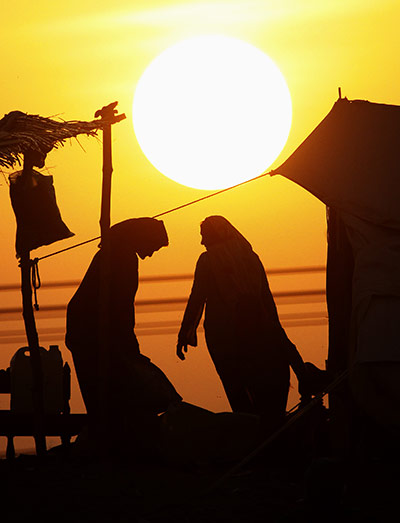
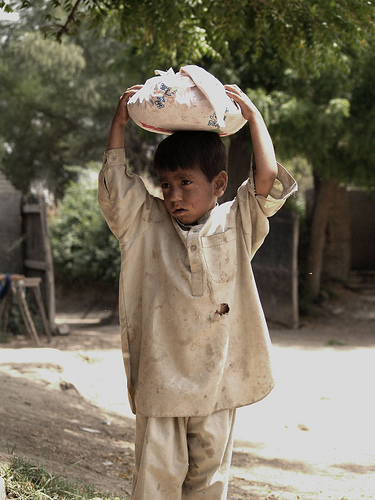
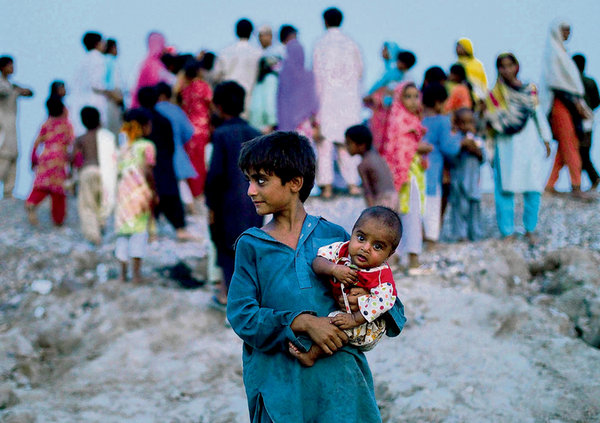
Nagina drew her modest light-green cotton dupatta, the scarf that Pakistani women drape over their arms, head and chest, up over her face as she cautiously peered out from a muddy white tent to watch her youngest child, a barefoot, trouserless four-year-old boy in a navy blue shirt streaked with mud. The timid Pathan woman has four other children, three older girls and a boy, but her daughters are not with her in this overcrowded cluster of tents known as the Khandar relief camp in Nowshera, a flood-devastated northwestern district some 90 miles west of the capital Islamabad in the insurgency-plagued, religiously conservative Khyber Pakhtunkwa province. “We are trying to keep the girls away,” Nagina says, “because parda is impossible now.”

Parda, which is also spelled “purdah” and means “curtain” in Urdu, is the practice of shielding women from men they are not directly related to, both through physical segregation and through the custom of modesty, that is, with the women wearing clothing to conceal their shape. It is observed by many women in rural areas of Pakistan, including in the majority-Pathan northern belt bordering Afghanistan. In these parts, a family’s honor is often tied to the chastity and obedience of its women โ€” and protecting and defending the honor of women from verbal and physical harm is part of an ancient code of honor and revenge. But the code is all too often taken to extremes. Barely a week goes by without stories appearing in the Pakistani media about an enraged male โ€” from across Pakistan’s multiethnic spectrum โ€” who has killed his female relative or relatives for some perceived infringement of “honor.” For women adhering to Parda, it’s usually easier and safer for them to simply remain secluded in their homes. ย 

The floods have made that option unavailable in many places. Desperation has driven women to vigorously jostle with men for limited relief goods at distribution points. Overcrowding and densely pitched tents have forced them into close quarters with men they don’t know, the flimsy canvas coverings providing little privacy from prying eyes. In the camp at Nowsherra, Adiba nods in gloomy agreement as her sister-in-law Nagina discusses the limits of parda amid the calamity . Her tribal tattoos โ€” a green dot on her forehead and another on her chin โ€” mark her as a member of a conservative tribe from the Taliban-infested town of Bajaur. Both women say their husbands are understanding of the conditions but they fear that their men’s patience will run out. “My husband is very upset,” says Adiba, a mother of six. “This is why we’re just sitting in our tents during the day and the night, like in a cage.” ย 

Pakistan’s northwest, the first region to be hit by the floods and the most devastated, “is an extremely conservative society,” says Imtiaz Gul, author of The Most Dangerous Place, a book about the Pakistan’s northwestern tribal belt bordering Afghanistan. “You hardly see women outside and they hardly have any role except for cooking and cleaning the house and that’s about it.” ย 

Nagina, like many of the women in Nowsherra’s camps and other places the Pathan have sought refuge from the waters, has sent her unmarried daughters away to live with relatives whose homes were not washed away by the deluge. She hasn’t seen them for a month. “We have no choice,” she says sullenly. “This situation is forced on us.”

Gul says that the longer it takes to get people back to their homes, the greater the possibility of social unrest between men from different conservative towns who have been thrown together. The situation “is pregnant with the possibility of social friction,” he says. “Frustrations will start boiling over. People are saying the worst is over, but I would say that the worst has just started.”

Akbar Ali, a 27-year-old driver who has been in the Khandar camp for 18 days now with his wife and two-year-old daughter, is simmering. He is desperately trying to rent a house at any price he says, to get his family indoors, but there’s little left on the market. He has been offered work, but turned it down because he did not want to leave his wife, who used to be in parda, alone in the camp. “We are all Pathan but we are still very different from each other. The men move around the camp. I’m just afraid that one day if they say something to my wife, it will cause a problem, a fight because I will have to respond, it’s my duty.”

As relative newcomers to the camp, Ali and his small family had missed out on securing a tent on the grounds of the Government College of Technology, or a space inside the school’s two-storey brick structure. The classrooms were already brimming with evacuees, packed four or five families per room, by the time he arrived. And so, he has had to make do with a slab of concrete outside the college cafeteria open to the elements. “We have become like dogs,” he says bitterly from behind dark sunglasses. “Wherever we hear that relief supplies have arrived, we just run after them.”

To avoid violence, he and the several other men whose families are also squatting along the cafeteria wall, have banded together to try and prevent strangers from approaching them. “Some people have tried to come around here, but they only try once,” Ali says. “They know not to come around again.”
Millions of Pakistani Kids Risk Waterborne Disease

By Asif Shahzad for The Associated Press

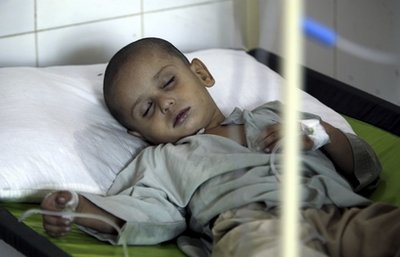
Five-year-old Shahid Khan struggled to remain conscious in his hospital bed as severe diarrhea threatened to kill him. His father watched helplessly, stricken at the thought of losing his son โ€” one of the only things the floods had not already taken.

The young boy is one of millions of children who survived the floods that ravaged Pakistan over the last month but are now vulnerable to a second wave of death caused by waterborne disease, according to the United Nations.

Khan’s father, Ikramullah, fled Pabbi just before floods devastated the northwestern town about a month ago, abandoning his two-room house and all his possessions to save his wife and four children.

“I saved my kids. That was everything for me,” said Ikramullah, whose 6-year-old son, Waqar, has also battled severe diarrhea in recent days. “Now I see I’m losing them. We’re devastated.”

Ten other children lay in beds near Khan at the diarrhea treatment center run by the World Health Organization in Pabbi, two of whom were in critical condition.

Access to clean water has always been a problem in Pakistan, but the floods have worsened the situation significantly by breaking open sewer lines, filling wells with dirty water and displacing millions of people who must use the contaminated water around them.

Children are more vulnerable to diseases such as diarrhea and dysentery because they are more easily dehydrated. Many children in Pakistan also were malnourished before the floods, weakening their immune systems.

The Pakistani government and international aid groups have worked to get clean water to millions of people affected by the floods and treat those suffering from waterborne diseases. But they have been overwhelmed by the scale of the disaster, which has displaced a million more people in recent days.

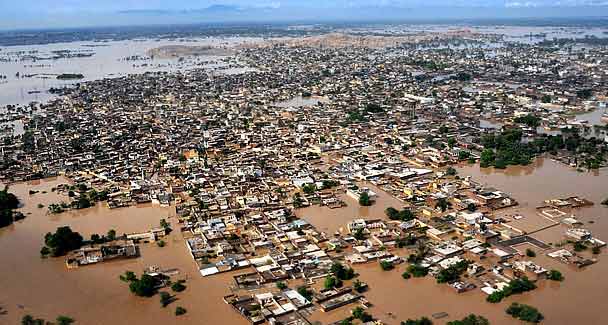
The floods started in the northwest in late July after extremely heavy monsoon rains and surged south along the Indus River, killing more than 1,600 people, damaging or destroying more than 1.2 million homes and inundating one-fifth of the country โ€” an area larger than England.

Some 3.5 million children are at imminent risk of waterborne disease and 72,000 are at high risk of death, according to the United Nations.

The World Health Organization set up the diarrhea treatment center in Pabbi about a week ago with the help of several other aid groups. Workers have already treated more than 500 patients, mostly children, said Asadullah Khan, one of the doctors.

Some of the patients have been treated multiple times because broken sewer lines have contaminated the water in the town’s wells and pipes, said the doctor. “It is circulating the disease again and again,” he said.

The aid groups set up a similar treatment facility several days ago in Nowshera, a city adjacent to Pabbi that was also engulfed by the floods. Residents who have begun to return in recent days have encountered a scene of total destruction: caved-in houses and streets covered with mud and debris.

Most of the population lacks access to clean water, and mosquitoes have proliferated in stagnant floodwater around the city, raising the risk of malaria. Government help is nowhere to be found.

“It is trash, dirt, germs and odd smells everywhere,” said Zahid Ullah, whose 3-year-old and 10-year-old sons were being treated for gastroenteritis at the facility in Nowshera. “It is a big danger.”

Even at the hospitals where the diarrhea treatment centers have been set up, mobs of flies hovered around the patients despite attempts by staff to kill them.

The World Health Organization and the United Nations Children’s Fund appealed to the world on Saturday to provide water purification units, family hygiene kits and other items needed to increase access to clean water in Pakistan.

Guido Sabatinelli, the head of the World Health Organization in Pakistan, said the international community’s help was critical to help Pakistan avoid a second wave of death from waterborne disease.

“We are fearing the epidemic of disease,” said Sabatinelli. “Access to safer water, potable water” is critical, he said.

Asma Bibi couldn’t agree more. The young mother searched in vain for clean water on the outskirts of Nowshera as her feverish 2-month-old son, Ehtesham, sweltered in a tent set up for flood victims. They had run out of water the day before.

“My son is sick. He hasn’t breast-fed in two days,” she said. “He needs milk. He needs water.”

Aid Flooded Pak by Withdrawing Army

By Swaminathan S Anklesaria Aiyar for The Times of India

Pakistan is suffering its greatest human tragedy since Partition. The floodwaters of the Indus are an incredible 20 miles wide, sweeping away entire towns, villages and farms. Over 20 million people have been displaced, far more than the nine million displaced by Partition in 1947. The immediate death count of 1,500 will soon increase hugely through disease and deprivation. Rehabilitation could cost $100 billion.

Some Indians might be perverse enough to rejoice that an enemy has been hit by a natural disaster โ€” an act of God, as it were โ€” and will be crippled economically for years. But most Indians will surely want to help their neighbours. In these traumatic times, we need to think of Pakistanis as humans in distress, not foes.

Even those who cannot think beyond realpolitik should see that the floods are potentially a strategic disaster for India too. Flood damage will create a fertile breeding ground for Islamist militancy. Islamist NGOs with links to terrorist groups like the Lashkar-e-Taiba and Jaish-e-Mohammed are at the very forefront of flood relief efforts and hence are gaining popularity. Meanwhile, the civil administration is seen as corrupt and ineffective. President Asif Zardari has further ruined his low reputation by going on foreign junkets.

The Pakistani army has in the last year battled some, though by no means all, militant groups in Swat and FATA (federally administered tribal areas). But much of the infrastructure built to reach the remote tribal areas has been destroyed by the floods. Besides, the Pakistani army is redirecting its efforts in the region, from combating militants to combating flood damage. The militants are re-occupying the resultant political vacuum.

The ISI recently came out with a study suggesting that Islamist militants had become a greater threat to the country than India. Flood damage can only deepen that perception. True, the army wants to back the Afghan Taliban even while battling the Pakistani Taliban, and this results in muddled thinking and sabotage of peace initiatives. The resolution of these contradictions is not in sight.

One day, the Pakistani army and the ISI will have no choice but to confront the reality that Islamist militants are Frankensteins that threaten their own creator. The ISIโ€™s assessment should bring that day somewhat closer.
In the light of both human and strategic considerations, how can India help Pakistan? Individual contributions from Indian citizens must be encouraged, and red tape thwarting contributions in cash and kind must be cut. But the Indian government should not offer more than a modest amount of food and financial aid. Pakistan requires billions of dollars for relief and rehabilitation, so anything India offers will be a drop in the ocean.

Besides, recipients are rarely grateful for alms: they resent being supplicants, and suspect the motives of the donors. The US saved India from mass starvation after the twin droughts of 1965 and 1966 by giving record food aid. But this won the US very few friends and stoked resentment from many who felt Indiaโ€™s independence was being compromised. The US will once again be the chief donor to Pakistan, but will gain virtually no popularity or gratitude.

If food and financial aid will not help much, how can India best help Pakistan? The best way will be for the Indian Army to unilaterally withdraw from the border in Punjab, Rajasthan and Gujarat. This will pose no military risk whatsoever: flood-stricken Pakistan cannot possibly embark on military adventures against India. But the withdrawal of Indian troops will mean that the Pakistan army loses all excuses to avoid diverting manpower and financial resources from the border to flood relief and rehabilitation. This will cost India nothing, yet will release very large resources within Pakistan. Its impact on the Pakistani psyche will be significant. Even analysts who distrust Pakistan agree widely that India has no alternative to diplomatic engagement: cutting off ties will not win any minds and hearts there. Unilateral withdrawal will itself be a form of engagement, and will encourage other forms.

The wrong strategy will be to try to negotiate a mutual withdrawal of troops. Withdrawal must be unilateral and immediate. Defence hawks will express dismay that India is so soft on an enemy that encourages terrorism. But unilateral withdrawal will be a flood relief measure, not a military surrender. In the bargain, it will oblige Pakistan to withdraw its own troops and redeploy them for flood relief: its public opinion will be outraged otherwise.

Dr Manmohan Singh, you say we must be proactive in the peace process with Pakistan. The tragic floods there have given you an opportunity to be proactive in a way that will not come again. Go for it.

Pakistan Faces Economic Hit from Flood

By David Roman for The Wall Street Journal

The flooding in Pakistan will inflict serious damage on its economy, posing another major challenge for a cash-strapped government struggling to keep a recovery on track in the face of high inflation and a relentless Islamist insurgency.

Assistance from the International Monetary Fund and Western countries will likely help Pakistan avoid another brush with bankruptcy as it tries to cope with the damage, which by some estimates may reach $43 billion. But the floods will weigh heavily on economic growth this year and leave a long-term mark on the economy.

“It’s a very serious tragedy,” said Philip Wyatt, a senior economist at UBS. “The hit on the growth rate is going to be very severe โ€ฆ We can see a loss of one or two points of economic growth, depending on the damage.” In the last fiscal year ended June 30, Pakistan’s economy grew 4.1%.

Moody’s Investors Service, which had expected Pakistan’s economic growth to pick up to 4.5% this fiscal year, may lower its estimate to 3% to 3.5%, said analyst Aninda Mitra.

The flood began in July and at one point covered a fifth of the South Asian nation, or land roughly equivalent to the size of Uruguay. According to the United Nations, the disaster has affected close to 20 million people, killing 1,500 and leaving 1.2 million homes damaged or destroyed.

Coping with the social and economic costs of the catastrophe will strain the government’s finances. The budget deficit was already on track to reach 4.5% of gross domestic product in the fiscal year ending June 30 before the crisis but now could widen to as much as 6% to 7% of GDP, said Mr. Mitra. That’s a grim prospect for a country, which had external debt totaling $55.63 billion as of June 30.

President Asif Ali Zardari’s government has been reaching out to other countries for help. A delegation met with IMF officials Monday in Washington. Donors including the U.K. and the European Union have so far pledged almost $500 million in additional help.

Moody’s is unlikely to upgrade Pakistan’s credit rating in coming months due to the devastation from the floods and other challenges, but the country’s current B3 rating “adequately captures the risk” of the likely economic slowdown and is unlikely to be downgraded further, said Mr. Mitra. A B3 rating is just one notch above the C level, which applies to countries in effective sovereign default, and makes it hard for a country to issue bonds in the international market.

The natural disaster is the latest setback for the Pakistan economy, which after several years of strong growth almost ground to a halt in 2008, hurt by budget overruns, a loss in export competitiveness due to high inflation, and an insurgency that continues unabated. On Monday, while emergency workers worked to shore up levees in two southern cities, at least 36 people were killed in three separate bomb attacks across the country, and 12 suspected militants were killed in U.S. drone attacks near the Afghan border.

Concerns about the economic fallout have kept pressure on Pakistan’s financial markets, though the impact has been moderate.

The cost of insuring against a default or restructuring of Pakistan’s bonds remains at very elevated levels, but has been relatively steady in recent weeks, a sign that investors anticipate IMF and U.S. support to prevent any fiscal crisis. The spread on Pakistan five-year credit default swaps was quoted at 1,099 basis points Tuesday, roughly on par with those of other high-risk sovereign bond issuers like Venezuela, but well below early-2009 highs of over 2,100 basis points during the global financial crisis.

Pakistan’s benchmark stock index, KSE-100, has fallen 7% so far in August, but is up 4% so far this year, roughly in line with other emerging market indexes.

The Pakistan rupee, one of Asia’s weakest currencies in recent years, has fallen in recent days, but has found support above its record low against the dollar of 85.84 rupees hit on Aug. 2, helped by expectations that remittances from overseas Pakistanis, which have averaged around 10% of GDP in recent years, may rise to help families at home cope with the floods.

But analysts expect the rupee to remain under pressure in coming months due to Pakistan’s current account deficit and high inflation rate, which ran at 12.3% in July. The floods are likely to push up food prices and transportation costs for other goods, likely eliminating any chance that inflation might fall below 10% this year, said Mr. Wyatt at UBS.

Clinton Invokes Climate Change Debate to Explain Pakistan Floods

As Reported by Fox News

Secretary of State Hillary Clinton and other officials are pointing to the devastating floods in Pakistan and other extreme weather events as signs that climate change is getting worse.

Clinton, in an interview with Pakistan’s Dawn TV, said “there is a linkage” between the recent spate of deadly natural disasters and climate change.

“You can’t point to any particular disaster and say, ‘it was caused by,’ but we are changing the climate of the world,” she said.

Clinton said that on top of the Pakistan floods, which have forced millions out of their homes, the forest fires in Russia stand as another example. She said there’s no “direct link” between the disasters in Pakistan and Russia but that “when you have the changes in climate that affect weather that we’re now seeing, I think the predictions of more natural disasters are unfortunately being played out.”

Climate change skeptics say the planet is going through natural phases — the kind it’s gone through for eons. Pakistan, in particular, is prone to flooding and is routinely drenched by the monsoon rains. Some officials have partially blamed deforestation and inferior levee systems for the historic flooding which has affected one-fifth of the country’s landmass and triggered nearly a half-billion dollars in international aid commitments.

Scientists who study climate change tend to offer more nuance in their explanations of the possible link to a rise in greenhouse gas emissions. They generally say that no one natural disaster can be chalked up to man-caused climate change, but that it can contribute to those disasters happening more frequently and more intensely.

Both the U.N. International Panel on Climate Change and the World Meteorological Organization reiterated that point in light of the Pakistan floods. WMO climate data chief Omar Baddour was quoted saying it’s “too early to point to a human fingerprint” behind the recent disasters but climate change may be “exacerbating the intensity” of them.

But some government officials have shown little equivocation in directly linking the Pakistan disaster with climate change.

Shah Mehmood Qureshi, Pakistan’s foreign minister, said Thursday that his country’s flooding “reconfirms our extreme vulnerability to the adverse impacts of climate change.”

The flooding and Russian forest fires, which were sparked following a severe drought, coincide with record heat elsewhere in addition to downpours and landslides in China.

The renewed concerns over climate change come after international talks on a new treaty to reduce greenhouse gas emissions fell short at a summit last December in Copenhagen. Talks over climate change legislation have also stalled in the U.S. Congress.

India, Pakistan Canโ€™t Break the Ice, Even in Hour of Tragedy

Reported by Sanjeev Miglani for Reuters

Pakistanโ€™s catastrophic flood continues to boggle the mind, both in terms of the human tragedy and the scale of the damage it has wrought, and even more so over the longer term. One official has likened the disaster to the cyclone that devastated what was once East Pakistan, setting off a chain of events that eventually led to its secession and the birth of Bangladesh.

Not even that spectre, raised by Pakistanโ€™s ambassador to Britain, can however dent the steadfast hostility between India and Pakistan. For a full three weeks as the floods worked their way through the spine of Pakistan from the turbulent northwest to Sindh in the south, Islamabad made frantic appeals to the international community not ignore the slow-moving disaster, and help it with emergency aid, funds. But next-door India, best-placed to mount a relief effort probably more because of the geography than any special skill at emergency relief, was kept at armโ€™s length. An Indian aid offer of $5 million, which itself came after some hesitation and is at best modest,was lying on the table for days before Pakistan accepted it. โ€There are a lot of sensitivities between India and Pakistan โ€ฆ but we are considering it very seriously,โ€ a Pakistani embassy spokesman told our reporter in New Delhi earlier this week. Things appeared to have moved faster only after Indian Prime Minister Manmohan Singh called his Pakistani counterpart Yusuf Raza Gilani expressing sympathy and reminding him of the offer of aid. Millions of Pakistans meanwhile continued to struggle for food.

To some extent, Pakistanโ€™s hesitation in accepting aid from India is understandable. India is the traditional enemy. It is also the bigger country of the two. And over the last two decades it has become easily the more prosperous entity, courted by the worldโ€™s industrialists while Pakistan is โ€œhaunted by the worldโ€™s terroristsโ€, as columnist Vir Sanghvi writes in the Hindustan Times. A Pew poll that we wrote about a few weeks ago showed how deep-seated these Pakistani fears are: a majority of those polled said they considered India to be the bigger threat than al Qaeda or the Taliban, despite the violence they have suffered at the hands of the militant groups over the past few years.

As Sanghvi writes:

But, to be fair to the Pakistanis, let us accept the position that decades of hostility between our two countries have led to a situation where the Pakistanis simply do not trust us. Let us also accept that they are so resentful of India that even in their hour of greatest crisis when thousands of people have died and millions are homeless, they will still spurn Indiaโ€™s hand of friendship. And let us grant them their claim that given our history, they are justified in being suspicious of India.

But then, you have to wonder, if the two nations cannot even keep up basic neighbourly ties such as offering aid and commiseration at times of natural crises, what chances they can ever come to a peace deal that will demand much more from them ?

It was pretty much the same in 2005 when the earthquake struck Pakistani Kashmir and the authorities struggled to provide aid to the affected. And Indian aid offer was initially ignored, later blankets from India were accepted. But even then Pakistan had people cut out the label that read โ€˜made in Indiaโ€™ on each blanket.

Indeed, some Pakistani writers are already criticising the government of bringing dishonour to the country by accepting Indian assistance. Commentator Shireen M. Mazari in a piece entitled โ€œWhat Have We Becomeโ€ says the Pakistani government accepted the Indian offer for help under pressure from the United States and that it was a matter of shame. By taking Indian aid, Pakistan had let the people of Kashmiri down just when they had risen in revolt against Indian forces.

โ€œThis money has the blood of Kashmiris on it and one wonders how our Kashmiri brethren must be feeling as they face the bullets of Indian forces every day and see us taking Indian โ€œaidโ€,โ€ Mazari wrote.

Kashmir, then, canโ€™t be far from any discourse relating to India and Pakistan. It is the core dispute at the heart of 60 years of difficult ties, says Pakistan and must be resolved before any normalcy can take place. India doesnโ€™t even consider the territory to be disputed, so the argument, at least in public, hasnโ€™t changed much in over half a century.

For the 20 million affected by the flooding in Pakistan, and facing a future that would daunt any of us, Kashmir must, at the moment, be a distant thought.

Who Cares About Pakistan?

By Jude Sheerin for The BBC News

Donations have been sluggish to the Pakistan floods appeals, as they were back in 2005 when the part of Kashmir the country administers was torn apart by an earthquake. The BBC News website asked some experts to comment on possible reasons why.

Donor Fatigue

Dr Marie Lall, Pakistan expert at the Royal Institute of International Affairs (Chatham House) and senior lecturer at the Institute of Education, says: “I think there is donor fatigue all around. The [2004] Indian Ocean tsunami, the Burmese Cyclone [Nargis, 2008], the [2005] Pakistan earthquake, and [this year’s] Haiti earthquake. It is getting too much; we are in a recession and people are short of money.”

Rebecca Wynn, Pakistan specialist for UK-based aid agency Oxfam, says: “Many donors have made substantial contributions in humanitarian assistance to Pakistan over the years, particularly in response to the conflict-related displacements over the last two years. Of course, the fact that the people of Pakistan have been hit time and again by disaster is even more reason to give.”

Dr Elizabeth Ferris, senior fellow at the US-based Brookings Institution, a foreign policy think tank, says: “It should also be noted that the international humanitarian system isn’t set up to deal with more than one major crisis a year. USAID, for example, committed one-third of its annual budget to the Haitian earthquake response. And among the general public there may be a feeling of, ‘Well, I donated to the victims of the Haitian earthquake and Haiti is a far needier country than Pakistan.'”

Corruption

Yale University economics professor Dean Karlan, an expert on charitable giving, says: “Corruption concerns may explain why giving is lower to developing countries than many would like it to be, but it does not explain why there is less money pouring into Pakistan now than does to disaster relief causes in other developing countries with similar governance issues.”

Dr Marie Lall says: “People in Pakistan are sceptical the government will be transparent. But they are giving to philanthropic organisations. In the UK, I think people are sceptical of [non-governmental organisations’] overheads and costs. They don’t know which ones are transparent and reliable, even though local organisations such as TCF [The Citizens’ Foundation] are doing an incredible job.”

Dr Elizabeth Ferris says: “People are always sceptical about their money reaching flood victims, particularly in countries with reputations for corruption. But Haiti didn’t have a very good reputation in this regard. [Pakistan] President [Asif Ali] Zardari trip to Europe [during the floods] was not a good move. For a few days, that was the ‘story’ of the Pakistani floods, which doesn’t inspire people to be generous, particularly in this economic climate.”

Terrorism

Dr Marie Lall says: “British Prime Minister David Cameron’s comments in India [when he said Islamabad promoted the export of terror] did not help.”

Dr Elizabeth Ferris says: “People are less likely to donate to any country seen as a haven for terrorism. And more generally, the fact that so much Western news coverage in recent years about Pakistan has been negative, stressing its links with the conflict in Afghanistan. I think this is the major reason for the slow public response – the image of Pakistan in our media. There may also be a feeling, particularly in the US, that Islamic governments and charities should be stepping up to the plate to donate.”

Timing

Rebecca Wynn says: “This disaster has come at a bad time, following the financial crisis and the Haiti earthquake. Many donors made huge commitments to Haiti, so may find it hard to fund another major disaster, particularly in the same year.”

Dr Marie Lall says: “Timing may be a factor, but I think it’s more to do with not realising the scale of the disaster, and the attitude by the British government; the UK should be leading the aid effort, given the Pakistani diaspora here and the fact that we need Pakistan for the war in Afghanistan.”

Wrong Disaster

Professor Dean Karlan says: “Sudden events seem to generate more funds. A flood (and droughts) happen gradually and build. There isn’t any one single day in which news is huge. For the same reason, this pushes the story away from the media spotlight. But massive and sudden earthquakes or tsunamis draw our immediate attention and shock us.”

Dr Elizabeth Ferris says: “It’s important to note that in general people are likely to give more to emergencies occurring in countries geographically closer to them – although this didn’t hold true for the tsunami. But when you trace contributions over time, you find that Americans and Canadians are more likely to respond to disasters in the Western hemisphere while Europeans tend to be more responsive to African countries (and their former colonies, in particular).”

Dr Marie Lall says: “This was not one cataclysmic event, but one which grew over three weeks. The fact that 25% of the country was or is under water is not understood. The low numbers of dead, relatively speaking, mask the disaster on the ground. The crisis has destroyed crops, dead livestock and damaged homes and infrastructure. Food prices are through the roof and there won’t be a normal harvest. It will get worse. Farmers will starve.”

Pakistan Accepts Flood Aid Money From Rival India

By Issam Ahmed for The Christian Science Monitor

Pakistan has accepted an offer of $5 million of flood aid from neighbor and longtime rival India, in a move that could spark a political backlash at home.

In an interview with Indian news channel NDTV, Pakistani Foreign Minister Shah Mehmood Qureshi described the offer of aid, made last week, as a โ€œvery welcome initiativeโ€ which the government of Pakistan has agreed to accept, after taking some time to decide.

But it would have been better to say “thanks, but no thanks,” according to Liaqat Baloch, secretary general of Pakistanโ€™s second-largest religious party, the Jamaat-e-Islami.

โ€œPakistan has many disputes with India, with reference to Kashmir, and the Indian Army engaging in brutality in occupied Kashmir,โ€ he says. โ€œIn the past, when Pakistan tried to support India after their natural disasters, India never accepted. Therefore it would be better if our government refused the aid with a big thank you.โ€

Al Khidmet foundation, Jamaat-e-Islamiโ€™s charitable wing, has been one of the most visible aid organizations in the flood-affected areas.

The two countries have made efforts in recent months to repair bilateral relations, which took a plunge following the 2008 Mumbai attacks. India blames those attacks on Pakistan-backed militants. The two countries have fought three full-scale wars, most recently in 1999.

The United States had urged Pakistan to accept Indiaโ€™s offer of aid earlier this week. When Indian Prime Minister Manmohan Singh called his Pakistani counterpart to offer his condolences following the worst natural disaster in Pakistanโ€™s history, it was an event widely reported in the Pakistan media.

โ€œIn such times of natural disasters, all of South Asia should rise to the occasion and extend every possible help to the people of Pakistan affected by the tragedy,โ€ Mr. Singh said, according to a statement released by his office.

According to Badar Alam, editor of Pakistanโ€™s Herald magazine, the amount of aid pledged is โ€œsymbolic, but its effect is immense. Itโ€™s a good confidence building measure between the two countries.โ€

But, he warns, Pakistanโ€™s religious parties will try to spin the move โ€œas a sign of weakness.โ€

โ€œThey will see it as a capitulation to India, that our own government is so weak we have been forced to accept help from the historic enemy,โ€ says Mr. Alam.

Mosharraf Zaidi, a columnist for Pakistanโ€™s The News, termed the decision brave: โ€œItโ€™s a tremendous gesture, very mature. India should be commended for donating it and Pakistan should be commended for accepting it.โ€

โ€œThe whole idea in an emergency is youโ€™ll have the Jamat ud Dawas [the charitable wing of banned militant outfit Lashkar-e-Taiba] and youโ€™ll have competing powers working almost in tandem to support people. It shows that no matter what our value systems, we have to work together right now,โ€ he adds.

Some 20 million people are affected by Pakistanโ€™s worst flooding in recent memory; Pakistan’s government estimates around 1,600 deaths and millions homeless or displaced. The United Nations appealed to the international community to donate $460 million in emergency assistance last week, and has met half of that goal. Yesterday the US increased its flood aid to Pakistan from $80 million to $150 million.

-Pakistanis for Peace Editor’s Note- It is a good decision by the Pakistani government to accept the aid offer from India. Not only will this be a confidence building measure between the two nations, it will save countless lives, and no nation is too proud to save the lives of its citizens.

Pakistan Floods: Why Should We Care?

By Ethan Casey for EthanCasey.com

Yesterday a non-Pakistani friend here in Seattle emailed me: “I wanted to ask you which you think would be the best organization to make a donation to for the current crisis in Pakistan. We usually give to MSF, but their website doesn’t seem to offer the opportunity to give specifically for Pakistan. Can you offer advice?”

This friend is British and greatly prefers British media outlets, but I need to believe that there are many Americans who also want to help flood victims in Pakistan – or who would want to, if they knew the scale and severity of the disaster.

Why don’t they know? We can, and I do, blame “the media,” but that’s unhelpful and ultimately a cop-out. Each of us individually has the opportunity and responsibility to be aware of every tragedy in our world, and we should be willing to exert ourselves to redress them. We’re all in this together. But the real problem is that there’s too much tragedy, and it’s happening too fast, and these days Americans are distracted and confused and worried about serious problems close to home, like our own jobs and mortgages.

This is understandable. But you need to know that all indicators are pointing toward an enormous, long-term human tragedy unfolding in Pakistan, and we need to do something about it, for several good reasons. The New York Times acknowledged one of these when – belatedly, in its first significant coverage of the floods that I noticed – it headlined an August 6 article “Hard-Line Islam Fills Void in Flooded Pakistan.”

A related point is that we Americans owe Pakistanis a measure of basic human respect and compassion, as well as gratitude specifically for the sacrifices they’ve made at our behest in several wars in Afghanistan. When we repay this debt, it will also redound to our benefit. “It’s high time we showed Pakistanis the best of America,” disaster relief specialist Todd Shea told me last year. “If you’re a true friend, you don’t run out on somebody when you don’t need them anymore. … Pakistanis don’t trust America anymore. We need to show Pakistanis who we really are.”

Todd Shea runs a charity hospital in the Pakistan-administered portion of the disputed region of Kashmir, where he has been working since the October 2005 earthquake that killed 80,000 people. He also responded urgently and effectively to the World Trade Center attack, the Asian tsunami, Hurricane Katrina, and the earthquake this January in Haiti. He’s currently on the ground in Pakistan, running medical camps and providing drinking water, food, and other relief. An August 11 update on his organization’s website suggests the scale of the challenge:

In a recent statement appealing for more aid to Pakistan, UN humanitarian chief John Holmes said: “While the death toll may be much lower than in some major disasters, taking together the vast geographical area affected, the numbers of people requiring assistance and the access difficulties currently affecting operations in many parts of the country, it is clear that this disaster is one of the most challenging that any country has faced in recent years.”

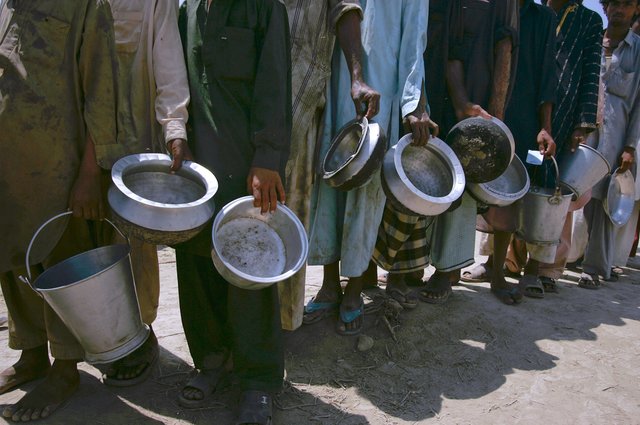
Thousands of people are camped out on roads, bridges and railway tracks – any dry ground they could find – often with nothing more than the clothes on their backs and perhaps a plastic sheet to keep off the rain. “I have no utensils. I have no food for my children. I have no money,” said one survivor, sitting on a rain-soaked road in Sukkur along with hundreds of other people. “We were able to escape the floodwaters, but hunger may kill us.” …

There is a desperate need to send more well-equipped medical teams to the flood-hit areas to prevent the further spread of disease. The victims of the flood have lost everything and cannot cope with potential epidemics on their own.

I’m writing this article because I live and work between two worlds: the mainstream North America that I come from, and the Pakistani immigrant community. My job is to help bridge the gulf in awareness and sympathy between those worlds. What I’m seeing right now is that Pakistani-Americans and their admirable and effective nonprofit groups are jumping once more into the breach, as they always do. And, as always, they’re confined – and confining themselves – to soliciting funds from each other.

The flooding is “well timed” in the sense that the fasting month of Ramadan has just begun, and many Muslims will be directing their annual zakat charity contributions toward flood relief. Pakistani-Americans are generally an affluent community, but there’s a limit to what they can do. Wealthy Pakistanis in Pakistan also need to help, and surely are helping. Just as important, we non-Pakistani Americans and Canadians must help. We also must somehow self-raise our own awareness, given the paucity of decent media coverage. This is important both for obvious-enough political reasons, and simply because it’s the right thing to do.

I see troubling contrasts between the outpouring of generosity and attention that followed the earthquake in Haiti and the averting of eyes from the flooding in Pakistan. I see several reasons for this: Haiti is nearby; the earthquake killed 200,000 or more people all at once. In addition, though, there’s the fact that Haiti is not a Muslim country. The earthquake fit right in with the story we were already telling ourselves about Haiti, which is all about poverty and tragedy. Dr. Paul Farmer sums it up pithily in the title of his book The Uses of Haiti. The uses of Pakistan are different. We need to move beyond the uses of both countries and toward understanding them accurately and respectfully, in their own terms. Our awareness of Haiti should be more political and of Pakistan less so, or differently so.

Anyway, back to my friend’s question. The short answer is that, as always, grassroots groups are more nimble and effective, and your money will be put to better use if you give it to groups that are nearer the ground. This is why the nonprofit groups founded and run by Pakistani-Americans are crucially important. I’m including links to several of these below, and I recommend them all.

I was jolted the other day when another friend suggested that being asked to donate to the excellent Islamic Medical Association of North America “could possibly turn some people off.” He’s probably right, but we goras need to get over our knee-jerk aversion to the word “Islamic.” Your doctor might be a member of IMANA. As a Haitian woman told Paul Farmer years ago, “Tout moun se moun” – all people are people. We’re all in this together.

Please contribute to flood relief in Pakistan through one of these organizations (listed in alphabetical order):

APPNAย ย ย  www.appna.org/

The Citizens Foundationย ย  www.thecitizensfoundation.org/

Developments in Literacyย ย  www.dil.org/

Edhi Foundationย ย ย  www.edhifoundation.com

Human Development Foundationย ย ย ย  www.hdf.com/

IMANAย ย ย  www.imana.org/

Islamic Relief USAย ย ย  www.islamicreliefusa.org/ย 

Relief Internationalย ย  www.ri.org/

SHINE Humanityย ย  www.shinehumanity.org/

UNICEFย ย ย  www.unicef.org/

Pakistan Floods: World Bank to Lend $900m For Recovery

As Reported by the BBC

The World Bank is to loan $900m (ยฃ574m) to Pakistan to help it recover from its worst ever flooding. The devastating floods have affected up to 20 million people and left some 2,000 dead, say officials.

But the UN says international aid has been slow and that it has raised only a third of the $460m (ยฃ294m) needed for emergency relief.

Pakistan’s High Commissioner to Britain said it could take five years and $15bn (ยฃ9.6bn) for the country to recover. The World Bank funds will come through the reprogramming of planned projects and the reallocation of money, a World Bank spokesman said.

“We are reprioritising to make the funds immediately available,” he told Reuters news agency.

Health officials have warned that disease could spread quickly among the millions of displaced people and that 3.5m children are at risk.

Maurizio Giuliano, of the UN Office for the Coordination of Humanitarian Affairs (OCHA), warned that Pakistan would face “a second wave of deaths” from water-borne diseases and food shortages unless more aid arrived soon.

He estimated the number of people at risk from such diseases was six million.

Meanwhile, rival political groups in Sindh province have been accusing each other of creating breaches in embankments and dykes to save their own towns and property.

Many of the breaches were reportedly made to divert flood waters away from military garrisons in the area.

Jacobabad city, for example, has been saved, but low-lying areas around it, including Dera Allahyar and some other towns in Balochistan province, have been inundated.

In India, Prime Minister Manmohan Singh has promised more funds to help areas affected by the recent devastating floods in Ladakh, a remote mountain region in Indian-administered Kashmir.

During a visit to the heavily damaged town of Leh, he said all the destroyed homes would be rebuilt within the next two-and-a-half months with money from a government relief fund.

The flash floods over 10 days ago killed more than 80 people and caused heavy damage to property. Many people are still missing.

‘Marshall Plan’

Pakistan’s High Commissioner to Britain Wajid Shamsul Hasan told the AFP news agency that 2,000 people had now been killed by the floods – previous estimates have put the number of dead at around 1,500. He said it would take at least five years for the country to recover, and put the reconstruction bill at “more than $10 to $15bn”.

He warned that a failure to provide sufficient relief and rebuilding assistance could lead to an increase in extremism and instability in the wider region.

He called for a new Marshall Plan, referring to the extensive US development programme in Europe after World War II.

Not only have the floods affected around one-fifth of the country, they have also caused considerable damage to roads, bridges and communications, says the BBC’s Mike Wooldridge in Islamabad.

Thousands of homes and other buildings including schools and hospitals have been swept away, and crops for domestic food consumption and for export have been lost.

One of the key questions is whether farmers will be able to use their land to plant their winter wheat crop in September, our correspondent adds.

‘Image deficit’

The UN has so far only received about a third of its appeal amount – the US has made the biggest contribution so far, followed by the UK.

Aid agencies have blamed Pakistan’s “image deficit” for the shortfall, as potential donors fear the funds would be diverted into extremism in the country.

A spokeswoman for Care International told AFP the UN had to do more to convince donors that the money was “not going to go to the hands of the Taliban”.

“The victims are the mothers, the farmers, children. But in the past, information linked to Pakistan has always been linked to Taliban and terrorism,” said Melanie Brooks.

Bill Berger, USAID’s principal regional adviser for South Asia, told the BBC it had been difficult to communicate the scale of the disaster to the rest of the world:

“Remember that this flood has built up over time… I just don’t think the world has realised the magnitude of this now, because this story has just been slowly increasing. It doesn’t have the drama of an earthquake that impacts a huge number of people all at once.”

The floods began more than two weeks ago in the mountainous north-west and has swept south across a quarter of the country, including its agricultural heartland.

How The Rest of the World Has So Far Responded To Pakistan Crisis

By James Burton and David Randall for The Independent

The world is now beginning to respond in a significant way to the almost bottomless pit of need in Pakistan. Whether โ€“ with some 20 million affected and the nation’s ability to feed itself ruined for years to come โ€“ it will be enough is very doubtful.

So far, according to the UN, some $93m (unofficial reports say $150m) has been given or promised, in cash or kind; with a further $366m needed immediately. That number is likely to increase, and the UN estimates that billions will be required to rebuild once waters have receded.

But criticisms of the British response (one newspaper called it “tight-fisted”) are ill-judged. The Government has already allocated ยฃ17m (out of ยฃ31.3m earmarked), and the public has donated ยฃ12m to the Disasters Emergency Committee appeal. In terms of money given, as opposed to pledged, Britain is one of the world’s most generous givers.

All kinds of comparisons have been made between the response to this disaster and those to the Haiti earthquake, the Boxing Day tsunami, and the 2005 Pakistan earthquake, all of which raised far more from the public. But appeals for single cataclysms, such as earthquakes and tsunamis, always do better than the more creeping โ€“ but often more serious in terms of need โ€“ disasters such as food crises and floods. One aid agency source said: “What stirs people to give are high death tolls โ€“ even though nothing can help the dead โ€“ and arresting images of people amid destruction.”

By the standards of previous “creeping disaster” appeals, the DEC’s for Pakistan 2010 is doing well โ€“ ยฃ12m in only a week. And a lot of British giving is not being logged. Members of our large Pakistan-origin diaspora are sending money, with money transfers from Britain to Pakistan up 36 per cent in the past seven days. And many mosques and community groups are organising aid. Overall, using figures supplied by the UN, international wire services and London’s Pakistan High Commission, these are the aid donations so far:

Australia: $9m plus $30m pledged; two C-17 freight aircraft.

Azerbaijan: $1m; embassy staff in Pakistan gave two days’ salary.

Belgium: $655,000.

Brazil: $700,000.

Canada: $2m; $30m pledged.

China: $1.5m; $7.4m pledged.

Denmark: $10m; $50m pledged; $771,000 provided for immediate aid.

Estonia: $84,000 for food assistance.

Finland: $1.5m.

France: $1.4m; money for water sanitisation.

Germany: $2.4m; pledged $13m for improving water, sanitation and hygiene.

Greece: $131,000.

India: Offered $5m; Pakistan considering response.

Italy: $1.8m; $3.3m pledged. Silvio Berlusconi gave $7m of own money.

Ireland: $260,000; $1.1m pledged.

Japan: $230,000 for emergency relief; $3m for aftermath.

Kuwait: $5m; plus aid flights.

Luxembourg: $327,000.

Malaysia: $1m; plus private donations.

Netherlands: $1.3m; $2.6m pledged.

New Zealand: $1.5m pledged.

Nigeria: $1m.

Norway: $16m.

Saudi Arabia: pledged $100m, plus air transport.

Spain: $855,000; plus relief plane.

Sri Lanka: $26,709.

Sweden: $3m; plus water purification.

Switzerland: $1.6m; plus relief workers.

Thailand: $75,000.

Turkey: $5m; 115 tons of aid.

UAE: $1.5m; Sheikha Fatima bint Mubarak personally donated $1.4m.

UK: ยฃ17m ($26m); provided RAF C-17 heavy freight aircraft, which has already delivered 2,500 tents; the Queen donated an undisclosed amount through the British Red Cross; DEC total reached ยฃ12m ($19m) last Friday.

USA: $22m; pledged $40m; provided 56,000 ready meals, 12 temporary bridges and two water filtration plants; 1,000 US marines; 25 Chinook helicopters.

Flood-Ravaged Pakistan Cancels Independence Day Events

As reported by CNN

Pakistan canceled independence day celebrations Saturday as a second wave of floods continued to put millions in peril, the nation’s prime minister said.

Prime Minister Yousaf Raza Gilani said the devastating floods had affected 20 million people, a figure much larger than officials had given earlier. Gilani said some religious events connected to Ramadan were also canceled.

“In solidarity with the flood victims, all independence day celebrations have been canceled and moreover, all Iftar dinner events and celebration of eid by government ministries have been canceled so that these resources can be utilized in the affected areas,” Gilani said.

A second wave of floodwater is expected to wash through southern Pakistan this weekend, adding hundreds of thousands of people to the number already stranded by a first wave earlier this month, Pakistani officials said.

At least 1,384 people have died and 1,630 more have been injured by flooding that has damaged or destroyed 8,300 Pakistani villages so far, according to Ahmed Kamal, spokesman for the National Disaster Management Authority.

The United Nations said it was racing against time to reach the suffering.

“Relief supplies must reach women, men and children as soon as possible, in order to avoid further death caused by waterborne diseases and food shortages,” said Martin Mogwanja, the United Nations’ humanitarian coordinator for Pakistan.

“The death toll has so far been relatively low compared with other major natural disasters, and we want to keep it that way,” he said.

Pakistan emergency officials predicted the second wave could reach Sukkar on Saturday evening.

Hundreds of thousands of people living along the Indus River in northern Sindh could be stranded, along with the tens of thousands stranded by the first wave, said Lt. Cmdr. Jawad Khawaja of the Pakistani navy.

Many residents have ignored government warnings to evacuate the area, causing a big concern, Khawaja said.

It estimated that 723,950 homes have been damaged or destroyed.

The Scope of Pakistan’s Floods: By the Numbers

By David Knowles for AOL News

Dubbed Pakistan’s “flood of the century,” heavy monsoon rains have washed out upward of one-fourth of the area of the country. The scope of the ongoing devastation is on a scale that is difficult to comprehend, especially to those far away and unfamiliar with the territory. Still it is alarming to consider the estimate given by concerned officials on Wednesday — that up to one-fifth of the entire landmass is now underwater.

The flooding has largely been located in the center of the country and is being caused by overflow from the Indus and Chenab rivers. Surge Desk has been rounding up the figures from the tragedy and has the following context.

Area
Some 150,000 square kilometers, or approximately 93,000 square miles, have been affected by the rising waters, Voice of America reported. That’s a little smaller than the size of the state of Michigan.

Fatalities
So far, at least 1,600 have been killed in the floods.

Agricultural losses
The floods have so far destroyed 2 million bales of cotton, BusinessWeek reported, nearly one-seventh of the country’s yearly target. In addition, 500,000 tons of wheat have been ruined, The New York Times said.

U.S. military response
One thousand U.S. Marines and 24 military helicopters have been deployed to Pakistan to help with relief efforts, The Associated Press reported.

Pakistanis displaced

According to the United Nations, 7 million citizens of Pakistan have been left homeless because of the floodwaters. Furthermore, the U.N. estimates that 14 million Pakistanis, roughly 8 percent of the country’s population, have been adversely affected by the floods. According to UNICEF, 6 million of those are children. All told, approximately 4,700 villages have been wiped out, Voice of America news reported.

Effect on war with the Taliban
Some 60,000 Pakistani troops that had recently been fighting the Taliban have now been put on flood assistance, The Telegraph reports.

Foreign aid
The United Nations is seeking foreign contributions of $460 million to tend to immediate needs, such as food, water and temporary shelters. The United States has pledged $71 million in aid, the biggest amount offered by any country so far, The New York Times reports.

U.N. Appeals for Pakistan Aid as Rains Threaten More Flooding

By Saeed Shah for The McClatchy Newspapers

The United Nations appealed Wednesday for $459 million in emergency aid for Pakistan as fresh monsoon rains raised fears that new flooding could drive more people from their homes, deepening the humanitarian catastrophe.

Storms lashed the mountainous northwest, close to the border with Afghanistan, and the northeastern Gilgit region, swelling rivers that empty into the central Indus River before it reaches the city of Sukkur in southern Sindh province, which already is full of people displaced from surrounding areas.

More flooding would prevent vital repairs to Indus River embankments and dikes that protect farmland, allowing water to spread even further when the fresh flows reach Sukkur sometime next week, officials warned.

“Once this peak passes, another flood is being formed in the mountains and then a third,” Sindh’s irrigation minister, Saifullah Dharejo, said in an interview. “If we cannot plug the breaches (in the embankments), the water will keep expanding out.”

“This is a grave situation,” he said.

Sindh is now the focus of the worst floods in Pakistan’s history. They reached the province after washing down the Indus River Valley, powered by unusually fierce monsoon rains that began in northern areas of the country some three weeks ago.

The deluge has left a trail of devastation, destroying roads, bridges and other infrastructure and overwhelming the government’s ability to cope. It’s affected some 14 million people, of whom an estimated 1,600 have been killed and about 2 million left homeless.

The overwhelmingly Muslim country of 170 million, a key U.S. ally in the fight against terrorism, already had been struggling to cope with an economic crisis and Islamic militants allied with al-Qaida when the disaster hit.

The United Nations appealed Wednesday for emergency aid, warning that even those who had been saved from drowning were threatened with sickness and hunger.

“If we don’t act fast enough, many more people could die,” John Holmes, the U.N. humanitarian aid chief, said in New York. He called the disaster “one of the most challenging that any country has faced in recent years.”

In Sukkur, the head of Sindh’s provincial government, Qaim Ali Shah, dismissed the amount of international aid pledged so far as “peanuts.”

The U.S. will be beefing up its assistance to the relief effort with 19 helicopters from the U.S.S. Peleliu, an amphibious assault vessel that is deploying off the Pakistani port city of Karachi, Secretary of Defense Robert Gates announced Wednesday in Tampa, Fla. The helicopters will be used to distribute food aid and ferry displaced people.

The ship’s aircraft will replace six U.S. military helicopters that were diverted from missions in Afghanistan.

At the Sukkur Barrage, 1.13 million cubic feet of water per second was rushing through the 66 gates of the mile-wide flood-control barrier, which the former British colonial government built on the Indus River in 1932.

Experts think that the flooding at Sukkur probably will ebb Thursday, but with more rain falling in the north, the water will remain high and the next onslaught of flooding could push it even higher, they said.

“Rainfall (in the north) takes about a week to reach Sukkur,” said Muzammil Qureshi, a retired engineer formerly in charge of irrigation for Sindh. “All five rivers converge before Sukkur.”

The onslaught has burst dike banks, drowning hundreds of thousands of acres of farmland in Sindh alone.

Only from the air do the scale of the disaster and the remoteness of the affected villages become apparent.

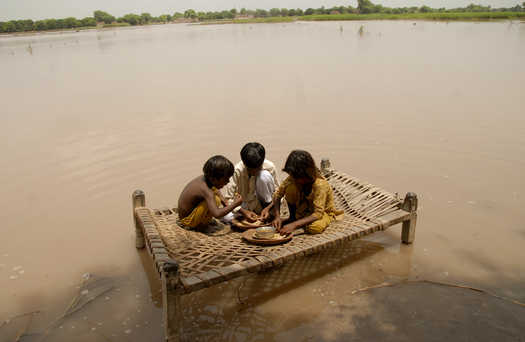
A McClatchy Newspapers reporter toured the region around Sukkur on a Pakistani army helicopter and saw mile after mile of water, swamp-like in some places, like the open sea in others. Thatched roofs and the tops of trees rose above the water. The outlines of abandoned villages were just visible beneath the surface.

The helicopter pilots had been diverted from battling Taliban militants in the Waziristan region bordering Afghanistan. Around 60,000 Pakistani troops are participating in rescue efforts, raising concerns about the country’s anti-terrorism campaign.

When the helicopter swooped low, it became apparent that there were people struggling to survive in the watery landscape, marooned in dozens of villages on slightly raised ground. Women, men and children could be seen in waist-high water, their buffaloes wallowing in groups.

Hundreds of people had taken refuge on raised embankments, built to hold irrigation channels or dirt roads, but they were stranded without food or shelter from the ferocious sun. Goats, donkeys and trunks of possessions kept them company.

While the military continues to rescue people, many others are refusing to leave their villages, hoping for the water to recede. However, the fresh onslaught that’s on its way from the north could make survival all but impossible.

Ramadan or Not, Hunger Hits Pakistan Flood Victims

By Mahmood Farooq for The Associated Press

Pakistani flood survivors already short on food and water began the fasting month of Ramadan on Thursday, a normally festive, social time marked this year by misery and fears of an uncertain future.

The U.S. announced a navy ship with 19 helicopters and 1,000 Marines on board was close to the southern coast of the country and relief flights would soon begin. The U.N. launched an emergency appeal for international assistance for Pakistan after the already-poor nation was hit with one of its worst-ever natural disasters.

Damage to crops, roads and bridges have caused food prices to triple in some parts of the country, adding to the pain of those marking the fasting month.

“Ramadan or no Ramadan, we are already dying of hunger,” said Mai Hakeema, a 50-year-old who sat alongside her ailing husband in a tent outside the city of Sukkur. “We are fasting forcibly, and mourning our losses.”

Observant Muslims fast from dawn to dusk each day for a month each year to control their desires and show empathy for the poor. The month is marked by increased attendance at mosques, a rise in charitable giving and family gatherings that coincide with the evening breaking of the fast.

While millions of flood-affected people were performing the fast, Mufti Muneebur Rehman, one of the country’s top religious scholars, said victims living in difficult conditions dependent on charity could skip the fast and perform later in the year.

“I am sad to miss the first day of fasting,” said Ghullam Fareed of Gormani village in eastern Punjab province. “Later, when we reach home, we will compensate for this.”

In the northwest, where many are especially devout, many refugees said flood or no flood, they would fast.

“I cannot disobey God, so I am fasting as it is part of my faith no matter what the conditions are,” said Fazal Rabi, 47, who was staying in a tent village in Akbarpura.

The floods hit the country more than two weeks ago, beginning in the northwest before spreading down the country and inundating thousands of villages. Around 1,500 people have been killed, and the U.N. estimates up to 7 million people need emergency assistance.

On Wednesday, the U.N. appealed for $460 million to provide immediate help, including shelter, food, clean water, sanitation and medical care.

“Make no mistake, this is a major catastrophe,” U.N. humanitarian chief John Holmes told diplomats from several dozen countries in launching the appeal in New York. “We have a huge task in front of us. The death toll has so far been relatively low compared to other major natural disasters, but the numbers affected are extraordinarily high.”

The United States said it was more than doubling the number of helicopters it is providing to help.

Defense Secretary Robert Gates said the USS Peleliu was off the coast near Karachi, carrying 19 helicopters and about 1,000 Marines. The helicopters will help rescue people and deliver food and other supplies.

The Pakistani government’s response to the crisis has been criticized by many as too slow and patchy, and the civilian leaders have struggled to rally public opinion in their favor.

Pakistani Prime Minister Yousuf Raza Gilani flew to southwestern Baluchistan province Thursday to see flood-hit areas. He told The Associated Press that Pakistan still needs more helicopters to assist in the relief work.

“We will try our best to reach millions of people to ensure that they get food and other basic items during and after the month of Ramadan,” he said while aboard a military plane.