Archive for the ‘ Pakistanis ’ Category

U.S. Says Pakistan Let China See Copter

By Mark Mazzetti for The Seattle Times

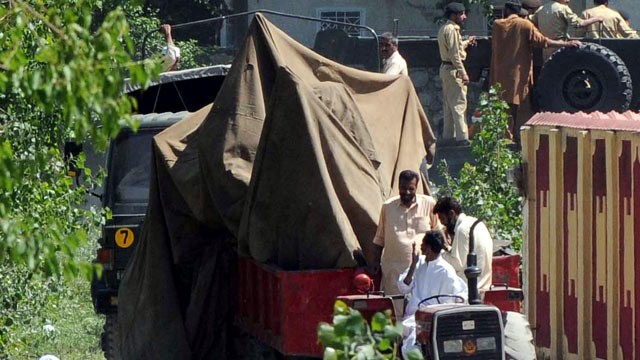
In the days after the raid that killed Osama bin Laden, Pakistan’s intelligence service probably allowed Chinese military engineers to examine the wreckage of a stealth American helicopter that crashed during the May operation, according to U.S. officials and others familiar with the classified assessments.

Such cooperation with China would be provocative, providing further evidence of the depths of Pakistan’s anger over the bin Laden raid, which was carried out without Pakistan’s approval.

U.S. spy agencies have concluded it is likely that Chinese engineers took detailed photographs of the severed tail of the Black Hawk helicopter equipped with classified technology designed to elude radar, the officials said.

The members of the Navy SEALs team who conducted the raid had tried to destroy the helicopter after it crashed at bin Laden’s compound in Abbottabad, but the tail section remained largely intact.

U.S. officials cautioned they did not yet have definitive proof the Chinese were allowed to visit Abbottabad. They said Pakistani officials had denied they showed the technology to other foreign governments.

One person with knowledge of the intelligence assessments said the U.S. case was based mostly on intercepted conversations in which Pakistani officials discussed inviting the Chinese to the crash site.

He characterized intelligence officials as being “certain” that Chinese engineers were able to photograph the helicopter and even walk away with samples of the wreckage. The tail has been shipped back to the U.S., according to American officials.

The U.S. assessments were disclosed Sunday by The Financial Times. The newspaper cited Pakistani officials who denied the accusations.

Google Celebrates Pakistan’s Independence Day

By Sanain for Allvoices

For the very first time in the history of Google, a Google Doodle has been especially designed for Pakistan, on their 64th Independence Day. Google has put a green-colored doodle representing the color of Pakistan’s national flag on the Pakistani Google homepage.

The doodle is an absolute eye-catcher. The “l” of Google is replaced by “Minar-e-Pakistan”, which is the National Tower of Pakistan in Lahore. The upper half of the “g” is replaced by “A Crescent and a Star”, which represents an important part of Pakistan’s national flag. There can also be seen small-colored stars around the logo.

Pakistan’s Independence Day is observed every year on August 14, the day Pakistan was made an independent country based on borderlines created by the British towards the end of their rule of India. On this special day, Pakistan, in 1947, became an independent country and also the largest Muslim country of Asia.

The day is a national holiday in Pakistan. Main events of the day include flag raising ceremonies, tributes to national heroes, fireworks taking place in Islamabad, the capital of the country, changing of the guards at the mausoleum of Mohammed Ali Jinnah (Mazar-e-Quaid), Wagah Border ceremonies, patriotic fashion shows and musical concerts.

On its Independence Day, Pakistan also releases some prisoners who were arrested for illegally crossing into Pakistan from the neighboring and archrival country, India.

The main celebrations take place in Islamabad, where the president and prime minister raise the national flag at the presidential and parliament buildings and deliver speeches to the people of Pakistan. These speeches basically highlight the achievements of the government, goals set for the future and in the words of the father of the nation, Quaid-e-Azam Muhammad Ali Jinnah, bring “Unity, Faith and Discipline” to its people.
The credit for Pakistan’s independence goes to their famous leader, Muhammad Ali Jinnah, also known as the Quaid-e-Azam. His unparallel struggle and endeavors made it possible for Muslims of the Indian subcontinent to get a country for themselves.

The struggle for Pakistan’s independence has a background behind it. Pakistan was achieved to establish a Muslim country, which would prove as an example of piety, fair play and unity for the rest of the Muslim brotherhood.

It should be noted that last year, Pakistani government did not celebrate the Independence Day to show solidarity and moral support with the people affected by floods in 2010.

Pakistan May Be Standing in Way of Polio’s Eradication

By Uri Friedman for The Atlantic Wire

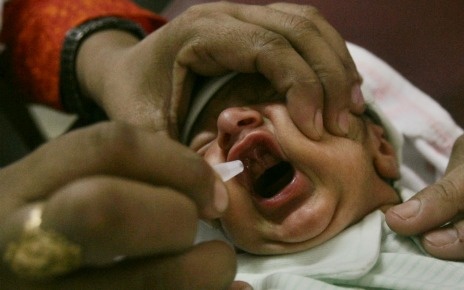
Several Pakistani news outlets today are dissecting a troubling finding from the U.N. Children’s Fund: the 63 cases of polio diagnosed in the country so far this year are nearly double the 36 detected during the same period last year. The highly contagious viral disease, which attacks the nervous system and can cause paralysis or even death, is most evident in the province of Balochistan and has now spread to other areas that haven’t been infected for the past five years. The U.N., which is trying to eradicate the disease by delivering oral vaccines to children, says that these findings suggest Pakistan could be the “last polio reservoir worldwide”–the country standing in the way of eliminating only the second global epidemic disease after smallpox.

This isn’t the first time Unicef has made the claim. In a 2003 report, for example, the organization called Pakistan “polio’s last frontier.” But what’s particularly troubling now is that while the number of cases is dropping in India, Nigeria, and Afghanistan–which, along with Pakistan account for over 90 percent of cases–the disease is spreading in Pakistan (in fact Pakistani President Asif Ali Zardari has declared polio a national emergency). Pakistan’s Express-Tribune cites administrative blunders, resistance of local populations, security challenges for vaccination teams, and Pakistan’s proximity to polio-infected Afghanistan as reasons why the country appears to be losing a battle against polio that “we can simply not afford to lose.” Other reports say anti-vaccine messages from radical clerics and the absence of a national ministry of health are also to blame. The recent revelation that the CIA set up a fake vaccination program in Pakistan to collect DNA from Osama bin Laden’s family members, Reuters notes, may only make immunization drives more difficult.

All that being said, Pakistan isn’t the only obstacle preventing the international community from finally eradicating polio. In an April report, the Global Polio Eradication Initiative announced that the project, which was launched by Unicef and other organizations, didn’t have the funding necessary to reach its goal of stamping out the last remnants of the disease by 2012. The report also noted that polio had reappeared in four disease-free countries–Chad, Angola, Democratic Republic of Congo and South Sudan–and called the state of Kano in northern Nigeria, where rumors were circulating that the polio vaccine would sterilize children, “a smouldering risk that could yet undermine the whole eradication effort.”

Poetry Soothes the Pain in Pakistan

By Nahal Toosi for The Associated Press

The outrage was swift after Pakistani security forces shot dead an unarmed young man in the southern city of Karachi, an incident caught on videotape and broadcast widely. Editorial writers demanded justice. Television talking heads decried the brutality of the men in uniform.

And then, a few poets got to work.

“No regard of life! No fear of Allah! Animals in jungle are better than you,” one English-language poem posted on YouTube rails at the culprits in the June incident. Another, in Urdu and circulated on Facebook, mourned victim Sarfraz Shah, who had “told his mom he will return home early.”

Pakistan is a country that reveres poetry, gently weaving it into daily life, and the last decade has provided no shortage of material. The rise and fall of a military ruler, the demands of a foreign superpower, the devastation of Taliban bombs — these themes and more have crept into Pakistani poems.

Some of the resulting verses carry overt messages about specific events. Often, though, the approach is more subtle, and occasionally, it’s tinged with humor.

“Of course, everything which is happening around a poet, it has an effect,” said Shahzad Nayyar, a published poet based in the eastern city of Lahore. “Such … events, which are causing destruction, which are causing loss to man, material and property, they are affecting poets a lot.”

Although Pakistan is just 64 years old, its people’s poetic tradition is centuries old and is intertwined with that of the rest of South Asia, while also influenced by the Persians. Urdu is the most widely used language, but even regional languages, such as Pashto and Sindhi, have notable poetic histories.

Today in Pakistan, one can find poetic verses on the back windows of taxis, on the sides of delivery trucks and atop gravestones. Newspapers regularly publish poetry, while Pakistani politicians, such as the country’s ambassador to the U.S., post verses on their Twitter feeds or use them in speeches.

Poetry recitals — known as “mushairas” — can draw thousands of spectators and last deep into the night, with audiences shouting encouragement to the men and women onstage. Sometimes, mushairas are part of larger gatherings, such as weddings or trade conferences; others are intimate affairs.

The country even has a national holiday dedicated to a poet-philosopher, Allama Muhammad Iqbal. Iqbal’s writings were seen as an inspirational force toward the creation of Pakistan as a Muslim homeland in 1947, though he died in 1938.

Of the 1,000 books published each year in Pakistan, there are some 50 books of poetry, said Saleem Malik, vice chairman of the Pakistan Publishers and Booksellers Association. While a handful of poets may earn enough to live on writing alone, at least for a while, most are engaged in other professions.

Many of the poetry books are self-published and distributed for free among friends. Still, that doesn’t account for the poetry that appears in other forums, such as magazines or websites such as Facebook, a popular setting for younger poets who can’t afford to publish their own books.

Perhaps the most popular form of poetry in Pakistan is the ghazal, which is made up of five or more units of two lines each and often sung.

Some of the most well-known Pakistani poets say that despite the material provided by the turmoil of recent years, they are careful about how they word their poems and often prefer to use indirect language and symbolism. This is in part to avoid being labeled a “propagandist.”

“It loses your emotional power when you are direct — it becomes like a slogan,” said Farhat Abbas Shah, a poet especially popular with younger Pakistanis.

Iftikhar Arif — a poet so famed in Pakistan that one section of his many, teeming bookshelves is devoted just to academic tracts written about him — said poets should aspire to write in a universal manner that can be appreciated beyond national borders and withstand the test of time.

There are poems written from other periods of turmoil in Pakistani history that are still relevant today because of this approach. “There is a history, perhaps more honest, more correct, more sincere, written by poets,” Arif said.

The line between direct and indirect is a fine one, however, and over the decades, some of Pakistan’s most popular poets have gone back and forth.

The late Habib Jalib, often described as a “revolutionary” or “the People’s Poet” raged against political tyranny, and even referred specifically to former U.S. president Jimmy Carter in his famed collection called “Ten Poems.”

Kishwar Naheed, a spry 71-year-old who is considered one of Pakistan’s pre-eminent feminist poets, is among those who occasionally embraces the direct approaches. In “A Mourning Poem for Bajaur,” Naheed decries the violence gripping Pakistan’s northwest regions bordering Afghanistan:

“Coffins have become so numerous, That the city is shrinking,” the poem begins.

A later verse: “We have the same court-yards, the same threshers. But bullets jump through them, Riddle holes in my fields, and in the bodies of my children.”

Naheed, who has published more than a dozen books of poetry, says every couple of months she receives threats because of her poems.

“They may say, ‘If you continue like this, you may have an accident in your car,'” she said, with a grin. “But I don’t mind having such reaction. If you don’t have a reaction, that means you have no appeal.”

Pakistani poets insist that their community is largely a peace-loving, liberal bunch — though many point out that they may feel just as much ire for U.S. actions toward Pakistan as they do for religious extremists.

Still, militant movements and their sympathizers also use poetry as a tool. After the U.S. killed Osama bin Laden in a nighttime raid in May, a group at Punjab University in Lahore advertised a poem and essay contest dedicated to glorifying the al-Qaida chief.

Taliban operating on both sides of the Pakistan-Afghan border, where the Pashtun ethnic group dominates, often use poems and chants, shared by way of CDs and cell phone recordings, to reach out to a largely illiterate population and persuade ordinary citizens to resist foreign troops.

Much of the poetry of Pakistan is not high art, but rather street-level verses exchanged by text messages, often with anonymous authors. Much of it is laced with the bitter, resigned humor of a people beset by poverty and downtrodden by corrupt elitists.

One popular Punjabi-language poem chastised former military ruler Pervez Musharraf, who was eventually ousted in 2008.

“You rush to Washington all the time, and please Bush again and again,” it says. “Beg at his feet all the time, and threaten the oppressed. Why don’t you confront the oppressors?”

Rights Violations: Pakistan Maintains Discreet Silence Over Syria Protest

By Saba Imtiaz for The Express Tribune

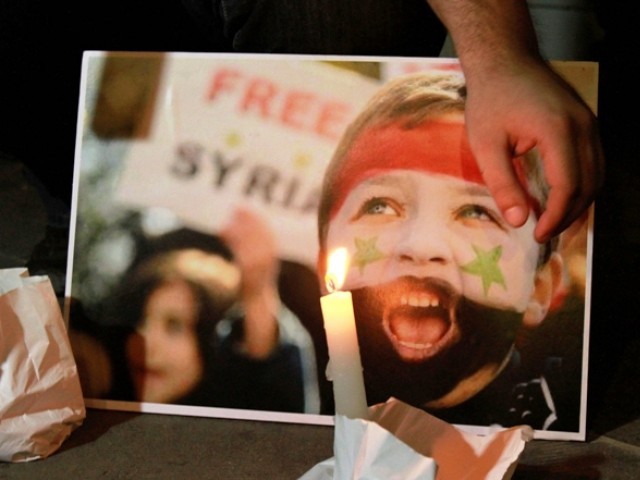
As the chorus against the Syrian government grows louder, Pakistan remains silent on the issue of human rights abuses in Syria. According to Amnesty International, over 1,500 people have been killed since March in the protests against Syrian President Bashar alAssad’s regime. Pressure against Syria appeared to grow over the weekend from Arab states, as the Gulf Cooperation Council asked for an immediate end to bloodshed.

On Monday, Saudi Arabia’s King Abdullah issued a written statement on the situation. “What is happening in Syria is not acceptable for Saudi Arabia. Syria should think wisely before it is too late and issue and enact reforms that are not merely promises but actual reforms. Either it chooses wisdom on its own or it will be pulled down into the depths of turmoil and loss.” Soon enough, Saudi Arabia, Kuwait and Bahrain had recalled their ambassadors from Damascus for ‘consultations’.

In April, Pakistan joined China and Russia in voting against a resolution by the UN Human Rights Council condemning the violence in Syria. Pakistan’s ambassador to the UN Zamir Akram was quoted as saying, “My country has always believed that ‘naming and shaming’ is an approach which is counterproductive.”

Three months and over a thousand dead bodies later, no public statement has yet to be made on the situation in Syria. The Foreign Office spokesperson did not respond to a query till the filing of this report.
According to former foreign minister Khurshid Mahmud Kasuri, Pakistan’s silence is a product of “historical links between the Bhutto and alAssad families”.

President Bashar’s father, the late president Hafez alAssad, was believed to be a close ally of former prime minister Zulfikar Ali Bhutto. Murtaza and Shahnawaz Bhutto travelled to Syria in 1979 to seek support for their campaign to save Bhutto and were offered asylum by the elder alAssad. Murtaza spent several years in Syria before returning to Pakistan in 1993. In 1981, a Pakistan International Airlines flight was hijacked and forced to land in Kabul, and then Damascus. The hijacking is widely believed to be the work of the Al Zulfikar Organisation.
Kasuri said that given the high death toll, “the government of Pakistan needs to make its position clear [and say] that it stands with the people of Syria.”

Pakistan’s silence, according to former foreign secretary Shamshad Ahmad, shows lack of a foreign policy. “Foreign policy is a reflection of a country’s internal state of affairs. If the state is in disorder, it has no foreign policy. Forget Syria or any other Arab country – Pakistan has enough problems at home and has no time to focus on international issues. No one is going to pay any attention to what Pakistan says because it has no credibility. No country is looking to Pakistan for support.”

Pakistanis for Peace Editor’s Note– The writer makes some valid points about Pakistan’s foreign policy or lack thereof. Being complicit also in the suppression of the civilians in Bahrain by providing troops as illustrated in this article shows that the country is often found on the wrong side of terrorism, women and religious minorities rights, and democratic and human rights. Not a good equation and no excuse for any of it any way one looks at it.

Pakistan Attractive as Growth Outweighs Violence, Atlas Says

By Naween A Mangi for Bloomberg

Atlas Asset Management Ltd., manager of Pakistan’s best-performing equity fund, said Asia’s cheapest stock market offers “attractive returns” as the economy grows even with mounting terrorist attacks and political violence.

“I really don’t spend any time worrying about law and order,” said Muhammad Abdul Samad, 40, who oversees $77 million in Pakistani stocks and bonds as chief investment officer at Atlas Asset in Karachi. “If you want to make returns, you have to look at the positives: we have a huge market of 180 million people and the economy is still growing.”

Gains in National Refinery Ltd. (NRL), the second-biggest oil processor, and Attock Petroleum Ltd. (APL), a fuel retailer, boosted Atlas’s top fund in the year ended June, Samad said. For the fiscal year starting July, it’s seeking investments in banks, oil and gas, and fertilizer industries, he said.

Pakistan’s benchmark stock index, which trades at 6.4 times estimated earnings, the lowest in Asia, has fallen 9 percent since the end of June as escalating violence hurt business confidence. Prime Minister Yousuf Raza Gilani’s government aims to boost economic growth to 4.2 percent in the year to June 30, 2012, from 2.4 percent in the previous 12 months.

Turmoil on global stock markets may prompt the fund to change its asset allocation, increasing cash holdings or preferring defensive stocks with higher dividend yields, Samad said on Aug. 5, when the MSCI Asia Pacific Index tumbled more than 4 percent to cap its worst week since October 2008.

“Selling from foreign portfolio investors is affecting the local market,” Samad said.
Last year, global funds bought $344 million worth of Pakistani stocks compared with net sales of $65 million, according to central bank data. More than 35,000 Pakistanis have been killed in terrorist attacks since 2006 as Taliban militants retaliate against military offensives in the northwest, according to the government.

Samad’s 650 million rupee ($7.5 million) Atlas Stock Market Fund outperformed all Pakistan’s 30 equity funds, according to Invest Capital Markets Ltd. The fund returned 40 percent in the 12 months ended June 30 and beat the 29 percent return of the benchmark Karachi Stock Exchange 100 Index.
His top five holdings as of June 30 were Nishat Mills Ltd., MCB Bank Ltd., Pakistan Oilfields Ltd., United Bank Ltd. and Allied Bank Ltd.

“Banks are going to post attractive earnings because if interest rates come down, they will lend more to the private sector and if they don’t, they will invest in high-yielding government securities,” said Samad, adding that the three banks are among his top picks this fiscal year. “Banks are in a comfortable position either way.” Pakistan’s central bank unexpectedly cut the benchmark interest rate to 13.5 percent on July 30, after holding it at 14 percent, one of the world’s highest, for four straight reviews.

In the oil and gas sector, Samad likes Pakistan Oilfields, Pakistan Petroleum Ltd., and Attock Petroleum. Pakistan, which imports 80 percent of its fuel needs, is increasing production to reduce reliance on shipments from overseas. He also favors Fauji Fertilizer Ltd., the biggest urea maker, and Fauji Fertilizer Bin Qasim Ltd. (FFBL), a fertilizer producer.

Samad said investors who “select carefully” can make a return of as much as 30 percent this year because Pakistani stocks are “heavily undervalued.” Samad said he keeps about 4 percent of his fund “active” and may sell if a stock rises by 10 percent to 15 percent.
“We don’t go for speculation or price momentum and we don’t churn the mix too much,” said Samad, who has an MBA from Southeastern University in London and has been at the fund management firm since 2005. “If the company is fundamentally strong, it will definitely outperform the market.”

There are 137 funds in Pakistan overseeing 250 billion rupees as of June 30, up 25 percent from a year ago, according to Invest Capital, equivalent to 4 percent of the 5.9 trillion rupees sitting in the nation’s bank deposits.
“Active fund management, timely investment and divestment, as well as the performance of some stocks like Attock Petroleum were main reasons for Atlas’s outperformance,” said Mazhar Sabir, an analyst at Invest Capital Markets in Karachi.
Samad said Atlas may introduce a government bond fund this year targeting investments of three to five years and is considering a dividend-yield equity fund and a sector-specific stock fund next year.
“In the short run, law and order problems definitely hurt investors,” Samad said. “But in the long run, there’s no impact. And we’re here for the long run.”

Karachi Attack: Pakistan Officers Face Court-Martial

As reported by the BBC

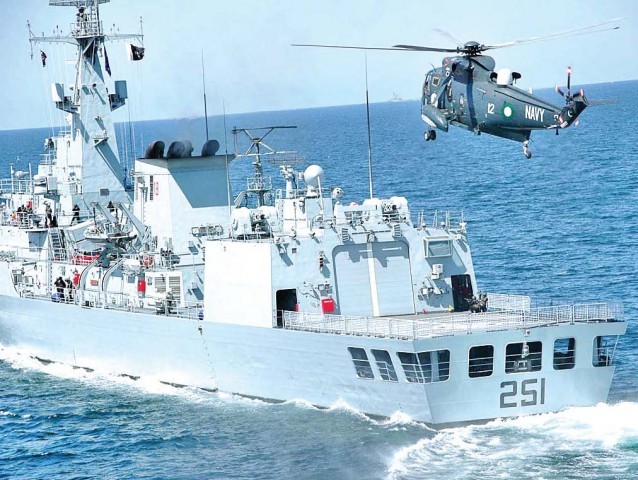
Three Pakistani naval officers are to face a court martial on charges of negligence after a militant attack on a naval air base in Karachi in May.

Ten soldiers died and 15 were wounded in the attack which took place at the Mehran naval aviation base on 22 May. It took the security forces some 17 hours to secure the base.

A naval official said the three officers were facing trial because they held positions of responsibility, not because of a connection to the attack.

The accused are Cmdr Raja Tahir, base commander at the time of the attack, and two officials beneath him, at the rank of captain and commander, according to naval sources quoted by several news agencies.

Daring attack

Cmdr Tahir was replaced two days after the attack during which several foreigners were taken hostage before being rescued.

“They face charges of negligence during the attack on PNS Mehran in May,” an unnamed official told Agence France Presse.

No date was given for the start of the court martial.

“They are being tried because they were at a responsible position, and were responsible for the security and other affairs of the base,” an unnamed official was quoted as telling Reuters.

The Pakistan Taliban said the raid was to avenge Osama Bin Laden’s killing by US special forces in the Pakistani town of Abbottabad on 2 May.

The attack at the heart of Karachi, the country’s economic hub and Pakistan’s largest city, underlined the military’s vulnerability.

Two attackers were killed and a third blew himself up during the attack when militants disguised as naval officials stormed three hangars housing aircraft at the naval base.

During the daring raid, they used rocket-propelled grenades to damage and destroy several warplanes, including two multi-million dollar anti-submarine and marine surveillance aircraft – the US-made P-3C Orion.

The planes were believed to be crucial for Pakistan’s maritime surveillance capabilities. A former Pakistani navy commando, Kamran Ahmed, has been detained along with his brother in connection with the attack.

India and Pakistan, Talking

As reported by The New York Times

With a relationship as combustible as that between India and Pakistan, it’s progress just to get the two sides in a room. Last week’s meeting was better. Their foreign ministers announced modest, but very welcome, agreements concerning the bitterly disputed region of Kashmir.

They promised to double the number of days when cross-border trade between the two parts of Kashmir — one controlled by India, the other by Pakistan — is allowed and to expand and expedite travel permits for Kashmiris who want to cross the border for family visits, tourism and religious purposes. India and Pakistan have fought three wars since 1947, two over Kashmir. Even these small steps could help chip away at their visceral mistrust.

Three weeks ago, some doubted the meeting would even happen after three explosions ripped through Mumbai, killing 24 people. The Mumbai attacks in 2008 that killed 160 people were blamed on Pakistani terrorists and sent relations with India into the deep freeze. So far, suspicion for the recent attacks has fallen on Indian terrorists.

Prime Minister Manmohan Singh of India deserves huge credit for staying engaged despite Pakistan’s failure to prosecute those responsible for the 2008 horrors. And he deserves credit for not shooting first and asking questions later after the recent attacks.

We wish we could say the same of Pakistan’s leaders. Before there can be a true reconciliation, and stability in the region, Pakistan’s Army must realize that using militants to try to counter Indian influence in Kashmir and Afghanistan is self-destructive — and that homegrown extremism, not India, is the real threat to Pakistan’s survival.

India and Pakistan have more to talk about, including cooperation on water, expanded trade and their joint stake in a stable Afghanistan. President Obama’s drawdown of American troops will go easier if India and Pakistan are part of the solution, not fighting over the spoils. New Delhi insists that it will accept no outside mediation. Washington needs to keep pressing the two to work together.

The United States and its allies are planning a conference in Bonn in December and hope to rally international support for a broad regional strategy that includes a peace deal for Afghanistan, trade agreements and ambitious energy projects. India and Pakistan need to be full participants. The payoff could be huge if their leaders muster the courage to resolve their differences.

How to Succeed in Business in Pakistan

By Naween Mangi for Bloomberg Businessweek

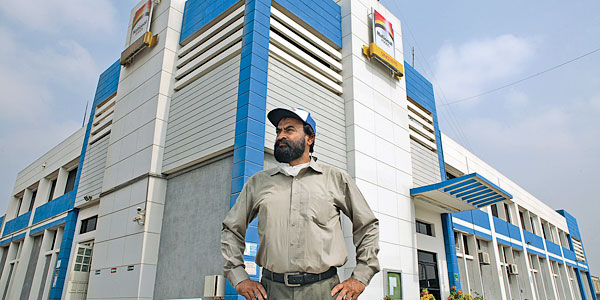
Muhammad Azhar Ali, factory manager for National Foods in Karachi, Pakistan, has a set work routine. At dawn he calls his production managers, who live in different parts of this sprawling city of 18 million on the Arabian Sea, to find out whether outbreaks of violence have rendered any areas dangerous.

If conditions seem especially risky, Ali slips two wallets into his pocket—one real and the other filled with expired credit cards and loose change, ready to hand over if bandits hold him up. He’s been held up once. He checks to make sure he isn’t riding in the same car as the day before, usually shunning his company-provided Toyota Corolla (a favorite vehicle for Pakistan’s upper-middle class) for his own less conspicuous Suzuki Cultus hatchback.

Finally, Ali and his driver head out to meet the 15 buses that have picked up employees at different collection points. Once all the buses have assembled at the rendezvous, Ali leads the convoy 50 kilometers from the city center to National Foods’ main plant. When the convoy arrives at 7:45 a.m. after a 90-minute drive, the workers line up outside a boundary wall topped with barbed wire and go through a body search as guards armed with shotguns look on. Ali monitors the security check on closed-circuit television from his office. The workday is about to begin. He has been up for more than three hours.

“Anyone else in my position in another country would have half the work I do,” says Ali, 49, who has worked at the company, Pakistan’s largest maker of spices and pickles, for over 25 years. “If I didn’t have to spend so much time figuring all this out, I would be looking at ways to enhance productivity.”

Companies across Pakistan’s industrial heartland are struggling to cope with rising insecurity, incessant power outages, and government corruption and inefficiency. Pakistan has lost 35,000 civilians in terrorist attacks since 2006. The war on the Taliban has cost $68 billion in destroyed infrastructure, higher security costs, lost foreign investment, and more.

Karachi has suffered retaliatory attacks from the Taliban such as the 16-hour siege at a naval air base in May that left 10 guards dead. Firefights erupt almost daily between the followers of Pakistan’s numerous political parties. Gunmen killed 664 people in the city between Jan. 1 and June 30, according to the Edhi Foundation, a charitable operator of ambulances. A Karachi resident is almost three times more likely to be killed by a bullet than in a road accident.

Gun battles lead to factory shutdowns in the city almost every month. The government hopes to boost economic growth from 2.4 percent in the last fiscal year to 4.2 percent this year. Growth needs to be 7 percent or more to accommodate all the young people joining the workforce. Large-scale manufacturing contracted 2.3 percent in May, vs. a year ago. Only 1.5 million of 180 million people pay taxes. Many of National Foods’ rivals pay no taxes as they sell unbranded spices bulked up with brick dust. “Working in Pakistan is like always being in a nightmare,” says Abid Muhammad Ganatra, director of finance for the nation’s biggest cement maker, Lucky Cement, in Karachi. “We have to work constantly to mitigate the pressures, to develop strategies to ensure growth. That’s why top management usually has sleeplessness.”

Some companies still manage to grow. At publicly traded National Foods, sales rose 23 percent to 7.4 billion rupees ($81 million) in the fiscal year ended June 30. In the company’s first year, in 1970, revenue was only 5,000 rupees. “Back then, it was a one-room operation where red chili, coriander, and turmeric were manually ground,” says Shakaib Arif, chief operating officer. “Now we make 60 million packets a year with 2,000 employees.”

Political violence is not National Foods’ worst problem. “The biggest challenge by far is energy,” says Arif, 38. Demand for electricity in Pakistan is three times supply. President Asif Ali Zardari is trying to attract independent power producers to Pakistan and has big plans to build hydroelectric plants.

Companies cannot wait. “We have created a mix of power we get from the grid, and what we can generate using our gas and diesel generators,” Ali says. “It costs three times as much to produce the power through generators.” Many factory floor, office, and bathroom lights are kept off to compensate. Ali often visits the powerhouse, a room at the plant that contains huge German-made diesel generators. Scarcity of fuel is a frequent worry. Bigger companies like Lucky Cement don’t rely on the national grid at all. It started generating its own power in 1996 and can produce 150 megawatts from its plants.

Karachi’s residents have taken to the streets this summer, burning tires and disrupting traffic to protest outages lasting days at a time. “In the morning I assess my workers,” says Sajjad Farooqi, who supervises National Foods’ weighing department. “If I find someone is stressed out because he hasn’t slept all night without electricity or that inflationary pressures are causing strain in his family, I have to change his shift and give him easier work.” Inflation averaged 15.5 percent over the last three years because of rising food and energy prices as well as record government borrowing.

National Foods tries to attend to the cultural and economic needs of its workers. A subsidized canteen sells a meal of curry and flatbread for as little as 25 rupees, while a prayer room accommodates 200. Separate working areas exist for women, an unusual perk in a Pakistani factory. Adult literacy classes are available. “We have to provide workers with incentives because they are facing a lot of pressures,” says Khalid Mahmud, who oversees 175 workers in the pickling operation. “Every month I give my most productive worker two T-shirts, 1,000 rupees, and take them to dinner. These prize winners are then keen to help us out when less workers show up and we need to meet production targets.”

The company joined 13 other factories earlier this year to hire a security patrol. A driver, a supervisor, and three armed agents patrol the streets from 7 p.m. to 7 a.m. in an open jeep, stopping at each factory to ensure the guards are not asleep. “We have to plan knowing we are in a war zone,’’ says National Foods Chairman Abdul Majeed. Last year the company was warned by the Karachi police that Taliban fighters had entered the city and were looking for factory jobs to support themselves and their families until they returned to battle. National Foods stepped up its screening and referral process.

The country’s lack of security takes its toll. “Every time I stop at a light, I look around me and think a gunman is about to come,” says Arif, who drives in a small car when visiting the Karachi factory. “I’ve already been held up three or four times.” Ali, the factory manager, has his own way of handling the tension. “When I get into the car in the morning, I close my eyes and rest. I don’t want to know if any gunman is coming. I let my driver take all the stress.”

The bottom line: Violence and energy shortages strain Pakistan’s economy, which is expected to grow 4 percent this year, well below India’s 8 percent rate.

Why My Father Hated India

By Aatish Taseer for The Wall Street Journal

Ten days before he was assassinated in January, my father, Salman Taseer, sent out a tweet about an Indian rocket that had come down over the Bay of Bengal: “Why does India make fools of themselves messing in space technology? Stick 2 bollywood my advice.”

My father was the governor of Punjab, Pakistan’s largest province, and his tweet, with its taunt at India’s misfortune, would have delighted his many thousands of followers. It fed straight into Pakistan’s unhealthy obsession with India, the country from which it was carved in 1947.

Though my father’s attitude went down well in Pakistan, it had caused considerable tension between us. I am half-Indian, raised in Delhi by my Indian mother: India is a country that I consider my own. When my father was killed by one of his own bodyguards for defending a Christian woman accused of blasphemy, we had not spoken for three years.

To understand the Pakistani obsession with India, to get a sense of its special edge—its hysteria—it is necessary to understand the rejection of India, its culture and past, that lies at the heart of the idea of Pakistan. This is not merely an academic question. Pakistan’s animus toward India is the cause of both its unwillingness to fight Islamic extremism and its active complicity in undermining the aims of its ostensible ally, the United States.

The idea of Pakistan was first seriously formulated by neither a cleric nor a politician but by a poet. In 1930, Muhammad Iqbal, addressing the All-India Muslim league, made the case for a state in which India’s Muslims would realize their “political and ethical essence.” Though he was always vague about what the new state would be, he was quite clear about what it would not be: the old pluralistic society of India, with its composite culture.

Iqbal’s vision took concrete shape in August 1947. Despite the partition of British India, it had seemed at first that there would be no transfer of populations. But violence erupted, and it quickly became clear that in the new homeland for India’s Muslims, there would be no place for its non-Muslim communities. Pakistan and India came into being at the cost of a million lives and the largest migration in history.

This shared experience of carnage and loss is the foundation of the modern relationship between the two countries. In human terms, it meant that each of my parents, my father in Pakistan and my mother in India, grew up around symmetrically violent stories of uprooting and homelessness.

But in Pakistan, the partition had another, deeper meaning. It raised big questions, in cultural and civilizational terms, about what its separation from India would mean.

In the absence of a true national identity, Pakistan defined itself by its opposition to India. It turned its back on all that had been common between Muslims and non-Muslims in the era before partition. Everything came under suspicion, from dress to customs to festivals, marriage rituals and literature. The new country set itself the task of erasing its association with the subcontinent, an association that many came to view as a contamination.

Had this assertion of national identity meant the casting out of something alien or foreign in favor of an organic or homegrown identity, it might have had an empowering effect. What made it self-wounding, even nihilistic, was that Pakistan, by asserting a new Arabized Islamic identity, rejected its own local and regional culture. In trying to turn its back on its shared past with India, Pakistan turned its back on itself.

But there was one problem: India was just across the border, and it was still its composite, pluralistic self, a place where nearly as many Muslims lived as in Pakistan. It was a daily reminder of the past that Pakistan had tried to erase.

Pakistan’s existential confusion made itself apparent in the political turmoil of the decades after partition. The state failed to perform a single legal transfer of power; coups were commonplace. And yet, in 1980, my father would still have felt that the partition had not been a mistake, for one critical reason: India, for all its democracy and pluralism, was an economic disaster.

Pakistan had better roads, better cars; Pakistani businesses were thriving; its citizens could take foreign currency abroad. Compared with starving, socialist India, they were on much surer ground. So what if India had democracy? It had brought nothing but drought and famine.

But in the early 1990s, a reversal began to occur in the fortunes of the two countries. The advantage that Pakistan had seemed to enjoy in the years after independence evaporated, as it became clear that the quest to rid itself of its Indian identity had come at a price: the emergence of a new and dangerous brand of Islam.

As India rose, thanks to economic liberalization, Pakistan withered. The country that had begun as a poet’s utopia was reduced to ruin and insolvency.

The primary agent of this decline has been the Pakistani army. The beneficiary of vast amounts of American assistance and money—$11 billion since 9/11—the military has diverted a significant amount of these resources to arming itself against India. In Afghanistan, it has sought neither security nor stability but rather a backyard, which—once the Americans leave—might provide Pakistan with “strategic depth” against India.

In order to realize these objectives, the Pakistani army has led the U.S. in a dance, in which it had to be seen to be fighting the war on terror, but never so much as to actually win it, for its extension meant the continuing flow of American money. All this time the army kept alive a double game, in which some terror was fought and some—such as Laskhar-e-Tayyba’s 2008 attack on Mumbai—actively supported.

The army’s duplicity was exposed decisively this May, with the killing of Osama bin Laden in the garrison town of Abbottabad. It was only the last and most incriminating charge against an institution whose activities over the years have included the creation of the Taliban, the financing of international terrorism and the running of a lucrative trade in nuclear secrets.

This army, whose might has always been justified by the imaginary threat from India, has been more harmful to Pakistan than to anybody else. It has consumed annually a quarter of the country’s wealth, undermined one civilian government after another and enriched itself through a range of economic interests, from bakeries and shopping malls to huge property holdings.

The reversal in the fortunes of the two countries—India’s sudden prosperity and cultural power, seen next to the calamity of Muhammad Iqbal’s unrealized utopia—is what explains the bitterness of my father’s tweet just days before he died. It captures the rage of being forced to reject a culture of which you feel effortlessly a part—a culture that Pakistanis, via Bollywood, experience daily in their homes.

This rage is what makes it impossible to reduce Pakistan’s obsession with India to matters of security or a land dispute in Kashmir. It can heal only when the wounds of 1947 are healed. And it should provoke no triumphalism in India, for behind the bluster and the bravado, there is arid pain and sadness.

—Mr. Taseer is the author of “Stranger to History: A Son’s Journey Through Islamic Lands.” His second novel, “Noon,” will be published in the U.S. in September

-Pakistanis for Peace Editor’s Note– Aatish Taseer’s brutally honest and forthright column is one of the best articles I have read in a long time.  As a Pakistani American, I find a lot of truth in what he is saying, no matter how ill received it may be back in Pakistan, I feel that Aatish does make some good points and it was well worth sharing with you readers.

Amir Khan on George Lopez

Here is a video of Amir Khan on the George Lopez show after the win against Zab Judah.

Pakistan’s Glamorous New Foreign Minister Wows India

By Robert Zeliger for Foreign Policy

She’s young, stylish, sharp and pretty, and Indians are falling for her. Yep, it seems that Pakistan’s new 34-year-old foreign minister, Hina Rabbani Khar, has accomplished what years of tense diplomacy haven’t been able to — create some genuine goodwill between the two constantly sparring nations. In her first official visit today to India since taking over the foreign ministry last week, Khar met with her Indian counterpart, S.M. Krishna. The two agreed to boost security, trade, transportation, travel, and cultural links between the countries — in what analysts called some of the most productive talks between the two sides since Pakistani militants killed 166 people in Mumbai three years ago. But it’s her youth and glamour that are credited with creating a “fresh start atmosphere.” She later met with India’s Prime Minister Manmohan Singh.

But who really cares what happened behind closed doors. More importantly: she got high marks for wearing Roberto Cavalli sunglasses, classic pearl and diamond jewelry, a blue designer dress, and toting an Hermes Birkin bag. And thus ladies and gentleman, a glamour icon is born. We give it three months before Vogue comes calling… wait, maybe two.

Indian papers and news programs today gushed over Khar, praising her beauty and style. The Times of India headlined their front page story: “Pak Puts On Its Best Face.” The Navbharat Times said the country was “sweating over model-like minister.” The Mail Today said she had brought a “Glam touch to Indo-Pak talks” and asked, “Who says politicians can’t be chic?” These are not the usual superlatives Pakistani diplomats are used to getting in the Indian press.

Of course, not everything was picture perfect. The Indian press did attack her for meeting with a Kashmiri separatist group later in the day.

But overall, it was hard not to sense the generational shift as Khar spoke about “a new generation of Indians and Pakistanis [who] will see a relationship that will hopefully be much different from the one that has been experienced in the last two decades” after meeting with the Indian foreign minister who — through no fault of his own, save for his misfortune of being born 79 years ago — did totally look like her grandfather.

As Seema Goswami, a leading Indian social commentator, put it, “She’s incredibly young pretty, glamorous and has no fear of appearing flash. She wore pearls when she arrived and diamonds for the talks. We’re so obsessed with her designer bag and clothes that we forget she first held talks with the Hurriyat [Kashmiri separatists]. She could be Pakistan’s new weapon of mass destruction.”

The Norway Tragedy

By Farooq Sulehria for The News International

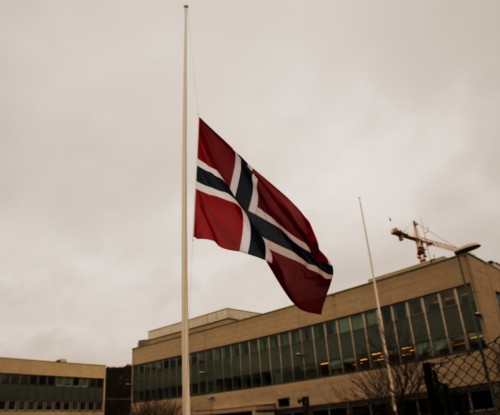
One does not expect funeral processions in paradise. The horrific events in Norway on July 22 – the bomb blast outside the office of Prime Minister Jens Stoltenberg in Oslo, followed by a shooting spree in the holiday island of Utoya, which together claimed 92 lives – were this kind of tragedy, because they happened in a country which is a haven of peace.

The Oslo massacre has taken away its innocence from Norway. In the same way as the murder of Prime Minister Olof Palme in February 1986 marked the end of the fond myth of an eternally peaceful Sweden. He was shot as he walked home with his wife from a cinema in Stockholm.

As Pakistani-born activist Toni Usman notes in an email to his friends, Norwegian democracy is unique in that the prime minister and other ministers can go about their daily lives without security by their side. King Harald V “can travel by public transport without anyone batting an eyelid, and it is this democracy which is under attack.” A successful TV and stage actor, Usman himself is a shining example of tolerance in Norway, a country where royals, elite politicians and celebrities freely mix with commoners. Ordinary citizens live a life unheard-of in much of Europe, without violence or fear of theft. The Norwegian lifestyle may appear naive even to Europeans.

Secret addresses or telephone numbers are rare. Online, Yellow Pages will offer aerial shots of people’s homes, maps of areas where they live, even their email addresses. The press runs details on celebrities’ incomes and fortunes. “To them, living in an open society has been not just a privilege, but also a statement to the rest of the world; a display of how it is possible to live together in peace,” as a BBC correspondent commented.

After another assassination there in September 2003, when Foreign Minister Anna Lindh was stabbed in Stockholm, Sweden drew a security wedge between top politicians and ordinary Swedes. But Norway still resisted calls for greater home security.

Since July 22, all public places such as clubs and restaurants have been closed as these lines are being written on July 24. Parliament House is surrounded by troops. The Oslo city centre looks like a war zone.

Anders Behring Breivik, apparently the lone director and scriptwriter of the tragedy, has confessed to his crime. Norwegian and Swedish media are rife with reports about his extreme Islamophobic and anti-left views. It is not coincidence that Breivik unleashed his terror on activists of the Labour Youth Club, the youth wing of the Norwegian Labour Party.

Both the Labour Party and the AUF have been campaigning against racism. Ever since the 1950s, a summer camp at the island of Utoya has been a regular feature of AUF activities. (Most Scandinavian left parties, big or small, hold summer schools for the political education of their cadres.)

The Norwegian Labour Party, perhaps the most radical wing of social democracy in Europe, has a unique history. Once a member of Lenin’s Third International, the Norwegian Labour Party is staunchly pro-immigrant, in a country that has seen the phenomenal growth of the anti-Muslim Fremskritts Party (Progress Party). Breivik had been a member of the Fremskritts Party between 1999 and 2006.

In Norway, “Muslim” has become synonymous with the word “Pakistanien.” The carnage is therefore extremely significant for Pakistan because Pakistanis constitute Norway’s biggest immigrant community.

Until Breveik’s identity was revealed, Pakistani Norwegians remained behind closed doors, hoping against hope that no Pakistani link was found to the atrocity.

Ironically, when Breveik’s identity had been established, the Pakistani community began to invoke victimhood. Whitewashing even the crimes for which Al-Qaeda & Co. have claimed responsibility, some community leaders were heard saying, “Look! We are always implicated for nothing.”

In terms of proportion, Norway hosts the largest immigrant population of Pakistani origin in any European country. Yet the Pakistani media downplayed the tragedy, out of ignorance perhaps. An Al-Qaeda signature on the tragedy would have proved fatal not merely for Norwegian Pakistanis but also for the sizable Pakistani-Danish and the small Pakistani-Swedish populations.

The Norwegian leadership, as well as the media especially the daily Dagbladet, played a praiseworthy role in the immediate aftermath of twin tragedy. No knee-jerk response.

However, refusing to learn any lessons from the News of the World scandal, the Murdoch press was quick to discover Al-Qaeda footprints in Utoya. The Sun, the flagship of Rupert Murdoch’s media empire in Britain, described the tragedy as “Norway’s 9/11.” The headline screamed: “AL-QAEDA MASSACRE.” (Yes, in capital letters.)

Qatar’s Al-Jazeera, as if in a bid to outdo even the Murdoch media, attributed the tragedy to Mullah Krekar, a Kurd from northern Iraq living in Norway. Mullah Krekar is a controversial character. When his asylum plea was rejected, he appealed to the courts to reconsider his case. However, he keeps declaring that his mission is to annihilate Western civilisation.

But such lucky escapes do not offer any respite from the growing fascism and religious fanaticism in Europe. Norwegian police seems to have been monitoring extremist Muslim outfits too closely to keep an eye on their Christian counterparts. The tragedy demonstrates yet again the dangers inherent in the “othering” of Muslims on the continent.

One hopes that the Norwegian paradise has been lost only temporarily, not forever. Prime Minister Stoltenberg has advised Norwegians to stay optimistic despite the tragedy. “The answer to violence is even more democracy. Even more humanity,” he says.

Amir Khan, A Son of Pakistan

By Manzer Munir for Pakistanis for Peace

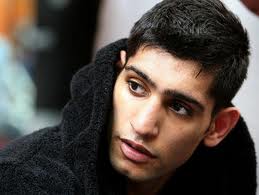
Amir Khan is a British boxer. Let’s first get that straight. He represented Britain in the 2004 Olympics in Athens, Greece where he was the only British boxer in the contingent. In those Olympics, the British flag was raised and a medal counted towards their overall tally due to Amir’s performance. At the age of 17, he brought home the silver in his lightweight boxing class and became the youngest British boxer to represent the United Kingdom since Colin Jones in 1976.

Since then, an impressive professional career has blossomed to where presently Khan is the current WBA Super Lightweight champion of the world. He has a record of 26 wins and only one loss with 17 of those wins coming by way of a knockout. That sole loss to Briedis Prescott, where Khan was knocked out in the first round, is the only blemish in his otherwise stellar career. Since that bout in 2008 against Prescott, Khan has gone on to defeat such notable fighters as Marcos Antonio Barrera, Marcos Maidana and Paul McCloskey. Today he is considered one of the best pound for pound British fighters in the world.

Standing in his way to even bigger fame and glory was tonight’s fight against Zab Judah, the IBF light welterweight champion of the world and a fighter who had won five world titles in different weight classes. The fight was thought to be very interesting as Judah is considered a very experienced fighter and someone who was capable of knocking out the lightening quick Khan. The winner of tonight’s fight also would go on to unify the Light Welterweight titles as he would be the IBF and WBA Light Welterweight champion of the world.

In the boxing circles there was also a lot of talk of a potential fight in the near future with the undefeated Floyd Mayweather Jr. prior to Kans’s fight against Judah. Mayweather is considered as one of the best boxers in history due to his impressive undefeated fighting record of 41 wins and 0 losses. In an interesting note, Amir Khan is trained by Freddie Roach who also happens to be the trainer for Manny Pacquiao, the seven division world champion and also arguably one of the best fighters of all time. Pacquiao is the only boxer that Mayweather has refused to fight due to one reason or another. A fight that boxing fans around the world have been salivating at for several years now. A potential fight between Khan and Mayweather will need to suffice the fight fans until and if the Mayweather vs Pacquiao fight ever materializes. Therefore saying that the ramifications of tonight’s fight are big would be an understatement in the boxing community.

As for me, my love for boxing must have started at an early age when I learned that my father, on a training trip to the United States, met and had a lengthy meeting with the greatest of all time, Muhammad Ali. At that time my dad had gone to America in the 70’s on a training course on behalf of his company. While staying at the Hilton hotel in Memphis, Tennessee, he ran into the world heavyweight champion Ali in the lobby where a crowd was hounding the champion.

Instantly recognizing Ali, who surely must be one of the most famous people the world has ever known, my dad reached out to shake his hand and at the same time uttered “Asalaam-alikum” to Ali. Grabbing my father’s hand, Ali replied with “Walikum Asalaam” and asked where my father was from, to which he replied Pakistan.

Intrigued with meeting a Muslim from the East as he later stated to my father, Ali invited him to his penthouse suite where my dad proceeded to spend close to two hours with Ali and his entourage during which time the champ asked him many questions about Pakistan and Islam. In particular, he was interested in how the religion was practiced as compared to the way practiced by the Muslims of the Nation of Islam in America, an organization that Ali was influenced by.

Having heard numerous accounts of his story growing up along with seeing countless pictures of my dad and Ali during their encounter so many years ago, not only endeared me to the champ but also to the sport of boxing. Since then I have always followed boxing and seen many great fights and boxers. But for the first time, my interests in boxing along with many people of Pakistani origins has piqued further by the arrival on the world stage of Amir Khan.

Although he is known as the pride of Bolton in England where he was born, his Pakistani origins are never far away as they are a big part of his life and spirituality since his family hails from Kahuta in Rawalpindi, Pakistan. Kahuta which was previously famous for being the site of Pakistan’s main nuclear facility is now also known as the area of Pakistan where Amir’s family originates.

This nation of Pakistan has in the last few years perhaps become synonymous with terrorism, instability, bombings, religious intolerance and extremism. But for one night, the Pakistani people can raise their head with pride and claim Amir as one of their own. He is a product of their soil who is making the country proud during a difficult time in their history. It is also a credit to his native England that promoted an environment for him to train and succeed. There is no limit to the amount of other talent in Pakistan that would have a chance to succeed if only there were such facilities and opportunities in Pakistan or even stability and security that was provided to Khan in England.

There is no doubt that to many people both inside and outside the nation of his forefathers, Amir Khan represents the best of every Pakistani. To these people. whether they are Pakistani Canadians in Toronto, or a youth in the inner streets of Birmingham, UK or a Pakistani American eating paan on Devon St in Chicago, Amir Khan is one of their own.

As he fought and defeated Judah in Las Vegas Saturday night, Amir Khan looked up and saw the thousands of British fans in attendance who had traveled from the UK and were proudly waiving the Union Jack. Deep inside, he must have known that many more millions in Pakistan and across the world were praying and hoping for even greater future success for him as the hopes and dreams of an entire nation are squarely on his able shoulders.

–Manzer Munir, a proud American of Pakistani descent, is the founder of Pakistanis for Peace and blogs at www.PakistanisforPeace.com as well at other websites as a freelance journalist and writer.

Musharraf Moves to Mend US-Pakistan Relations

By Lydia Mulvany for The Mimami Hearld

Former Pakistani President Pervez Musharraf said Thursday that his country wasn’t complicit in hiding Osama bin Laden but was “extremely negligent” for not knowing that the al-Qaida leader was living a 75-mile drive from the Pakistani capital.

Speaking in Washington, the former military dictator sought to heal a U.S.-Pakistani relationship that’s become badly strained since the American raid May 2 that killed bin Laden, saying mutual interests in the global war on terrorism bound the countries and that blaming each other was counterproductive.

“The United States and Pakistan must restore trust,” Musharraf told an audience at the Woodrow Wilson International Center for Scholars. “Confrontation would be most unwise.”

The bin Laden incident pushed U.S.-Pakistani relations to their lowest point in years. American officials weren’t happy when, after a decade-long hunt, they found al-Qaida’s leader living in a garrison town so close to Islamabad. Pakistani officials were outraged that they weren’t told about the unilateral raid beforehand.

Since the raid, Pakistan has restricted visas for American officials and expelled military trainers. The U.S. has cut off $800 million, about one-third of its aid to Pakistan’s military. The U.S. has long complained of ties between Pakistan’s military and insurgent groups that have attacked American-led forces in neighboring Afghanistan.

But Musharraf said that if Pakistani intelligence had colluded with bin Laden, it also would have known that the CIA was operating a safe house nearby and whisked the al-Qaida leader away. He described bin Laden’s high-walled compound in the town of Abbottabad as a normal dwelling that wouldn’t have raised suspicion.

He also claimed that Abbottabad – which is home to a major military college that’s been described as Pakistan’s West Point, as well as other military installations – wasn’t a garrison town but a touristy resort area with many colleges.

The recent raid was a “violation of sovereignty,” Musharraf said, echoing a widespread Pakistani complaint. He added that Pakistani antipathy toward the U.S. also stems from the American campaign of drone strikes on militant targets, which reportedly have caused civilian casualties, as well as lingering bitterness over U.S. sanctions for developing nuclear weapons in the 1990s.

The way forward for Pakistan, Musharraf said, is to show that it isn’t complicit with terrorists and to deal with domestic extremism. It also needs to establish an honest, stable government in the 2013 elections, said the former leader, who’s expected to mount a run for president.

Musharraf, who seized power in a military coup in 1999 and resigned in 2008, embodied the frustration and contradictions of American policy toward Pakistan.

Mark Quarterman, a senior adviser at the Center for Strategic and International Studies, a nonpartisan Washington research center, said that many wanted to see Musharraf as a modern, progressive leader: He wasn’t an extremist, his wife and daughter didn’t wear veils and the family even had a dog, an animal many Muslims view as impure. Ultimately, however, Musharraf’s rule was a military dictatorship and, according to many experts, he didn’t do enough to rein in Taliban militants who were operating in remote corners of Pakistan.