Archive for the ‘ Pakistanis ’ Category

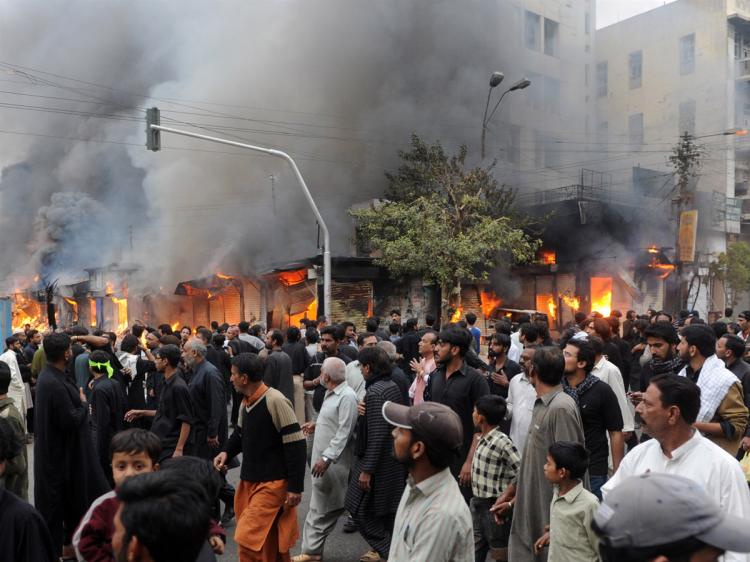
Bomb Strikes Shiite March in Pakistan

As Reported by The Associated Press

Three bombs ripped through a Shiite Muslim religious procession in the eastern Pakistani city of Lahore on Wednesday, killing 25 people and wounding about 150 others, officials said.

The explosions appeared to be the latest in a string of attacks by Sunni extremists against the minority Shiites they consider infidels. Allied with al-Qaida and the Taliban, the bombers are also seeking to destabilize Pakistan’s U.S.-backed government.

The blasts were the first major attacks since Pakistan was hit by devastating floods more than a month ago. Lahore, the country’s political capital and home to much of its military elite, has been regularly targeted by militants over the past two years.

The bombs exploded at three separate sites Wednesday evening as 35,000 Shiites marched through the streets of Lahore in their traditional mourning procession for the caliph Ali, one of Shiite Islam’s most respected holy men.

Prime Minister Yousuf Raza Gilani condemned the blasts in a statement and said the attackers would not escape justice.

After the blasts, the marchers erupted in fury, setting fire to a police station, another police facility, two police cars and three motorcycles, said Zulfiqar Hameed, a senior police officer. Police lobbed tear gas canisters at the crowd and fired shots in the air to disperse the assailants, he said.

The first blast was a time bomb that exploded in the street near a well-known Shiite building, Hameed said. Footage of that explosion shown on Geo television showed a small blast erupting amid a crowd of people on the street followed by a large plume of smoke. Hundreds of people fled from the blast, while others rushed to carry the wounded to safety.

Minutes later, with the streets in chaos, a male suicide bomber who appeared about 18 years old tried to force his way into an area where food was being prepared for the marchers to break the traditional Ramadan fast and exploded, Hameed said. Soon after, another suicide bomber detonated himself at an intersection near the end of the procession.

Abbas Kumaili, a prominent Shiite scholar as well as a senator, called for three days of mourning over the attack and lashed out at the bombers.

”They are our enemies, both Shiites and Sunnis should remain united and foil their evil designs,” he said.

The blasts killed 25 people and wounded about 150 others, said Sajjad Bhutta, a top local government official.

Hours earlier, three people were wounded in a shooting near a similar Shiite procession in the southern city of Karachi, but senior police officer Iqbal Mahmood said the incident did not target the march.

Islamist extremists have a history of attacking Shiites, non-Muslims and others they deem unacceptable.

In July, twin suicide attacks at Pakistan’s most popular Sufi shrine killed 42 people. Another suicide bomber wounded eight worshippers at a Shiite mosque in eastern Pakistan.

Meanwhile, a bomb exploded near a police vehicle in the town of Shabqadar in northwest Pakistan, killing one passer-by and wounding 15 people including one police officer, police officer Nisar Khan said.

The bombings came after Pakistan army jets and helicopters targeted militant hide-outs near the Afghan border, killing 60 people identified as insurgents or their family members, including children, said security officials and a witness.

The attacks occurred Tuesday and Wednesday in different parts of the region.

There was no independent confirmation of the casualty figures because the area is too dangerous for outsiders to visit.

The raids Tuesday took place in several villages in Teerah Valley in the Khyber region and killed 45 people, the officials said. One official said some vehicles rigged with explosives had also been destroyed. He could not say how many.

He described the dead as insurgents, but said it was possible that people living with them could also have been killed. Separately, an intelligence officer said some women and children had been killed in the attacks.

Jihad Gul, who lives near one of the villages, said he had seen the bodies of at least 20 women and children.

Army spokesman Maj. Gen. Athar Abbas said reports of civilian casualties were unconfirmed.

The security officials spoke on condition of anonymity because they were not authorized to speak to the media.

An air attack Wednesday in the adjoining district of Orakzai killed 15 suspected militants and wounded 10 others, according to local government official Jamil Khan and a brief army statement.

Pakistan’s army has been fighting Islamist militants in different parts of the northwest for more than two years.

Militants who fled major operations in the South Waziristan and Orakzai tribal regions are believed to have set up new bases in Khyber, about 60 miles (100 kilometers) northwest of the main city in the region, Peshawar.

The American Debate: Where Has All The Love Gone?

By Dick Polman for The Philadelphia Inquirer

As we navigate the waning days of our xenophobic August, with so many opportunists in high dudgeon about Muslims in our midst, perhaps it’d be wise to quote a notably tolerant Republican – somebody whose words might possibly shame the fearmongers who currently pervade his own party.

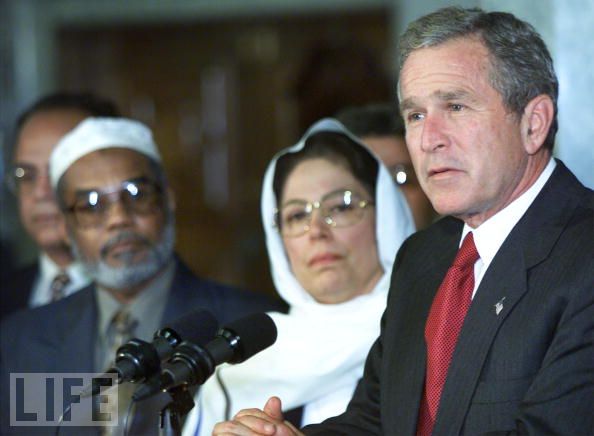
For instance: “America counts millions of Muslims amongst our citizens, and Muslims make an incredibly valuable contribution to our country. Muslims are doctors, lawyers, law professors, members of the military, entrepreneurs, shopkeepers, moms, and dads. And they need to be treated with respect. In our anger and emotion, our fellow Americans must treat each other with respect. . . . They love America just as much as I do.”

On Sept. 17, 2001, so said President George W. Bush.

Hey, I’m starting to miss the guy. Notwithstanding all the disastrous aspects of his presidency, his generous, inclusive attitude toward immigrants of color – particularly Muslim Americans in the wake of 9/11 – was always in the finest American tradition. We could use a sustained dose of his tone today.

Unfortunately, the conservative movement that he twice led to victory now seems to have shelved that pluralistic tradition, preferring instead to sow fear to reap short-term political gain. And not a single prominent Republican politician has had the courage – heck, it’s not even courage, it’s a duty – to step forward and denounce the roiling irrationality that currently infects our political discourse.

So we’re stuck with the faux issue of a “ground zero mosque” that’s actually not just a mosque (it’s a proposed community center with an interfaith board of directors) and not at ground zero; with Newt Gingrich equating all Muslims with Nazis; with myriad attacks on mosques in Florida (pipe bombs, bullets); with Sarah Palin Twittering her simplicities; with an evangelical pastor who plans to mark the 9/11 anniversary by burning copies of the Quoran (when asked what he knew about the Quoran, he replied, “I have no experience with it whatsoever”); with a tea party blogger who writes that all Muslims are “animals” who worship a “monkey god,” and whatever else the haters are doing in our name.

Since no elected Republican dares to utter a peep, let us try to quell the hatred, however briefly, by skimming the cream of the Bush ouevre. What you’re about to read was mainstream Republican thinking just a few scant years ago.

From the president’s second inaugural address, on Jan. 20, 2005:

“In America’s ideal of freedom, the public interest depends on private character – on integrity and tolerance toward others . . . . That edifice of character is built in families, supported by communities with standards, and sustained in our national life by the truths of Sinai, the Sermon on the Mount, the words of the Quoran . . . .”

From remarks on June 27, 2007, at the rededication of the Islamic Center in Washington:

“We come to express our appreciation for a faith that has enriched civilization for centuries. We come in celebration of America’s diversity of faith and our unity as free people. And we hold in our hearts the ancient wisdom of the great Muslim poet Rumi: ‘The lamps are different, but the light is the same.’ ”

From remarks on Sept. 17, 2001:

“Both Americans and Muslim friends and citizens, tax-paying citizens . . . were just appalled and could not believe what we saw on our TV screens. These acts of violence against innocents violate the fundamental tenets of the Islamic faith. And it’s important for my fellow Americans to understand that. The English translation is not as eloquent as the original Arabic, but let me quote from the Quoran itself: ‘In the long run, evil in the extreme will be the end of those who do evil. For that they rejected the signs of Allah and held them up to ridicule.’ The face of terror is not the true faith of Islam. That’s not what Islam is all about. Islam is peace.”

Compared with what we’re hearing on the Republican right these days, Bush sounds like a “Kumbaya” folkie in the tradition of Peter, Paul, and Mary. But even at the time, he was no starry-eyed naif. Aside from the fact that his calls for tolerance were in the best American tradition, there was also a dash of calculation. He and his advisers knew that al-Qaeda wanted to frame the war on terror as a clash of civilizations. Therefore, it ill-served America to behave as though it were at war with Islam. It was smarter to embrace the followers of Islam, as a way of isolating the violent extremists who had perverted its tenets. Basically, this was a national-security priority. It still is.

Bush’s former chief speechwriter, Michael Gerson, understands that. He’s one of the only Bush alumni who has spoken out; in a recent newspaper column, he reiterated the Bush credo: “A president not only serves Muslim citizens, not only commands Muslims in the American military, but also leads a coalition that includes Iraqi and Afghan Muslims who risk death every day fighting Islamic radicalism at our side.”

In other words, Americans who attack their fellow Muslim citizens – and politicians who inflame such attacks or remain mute – are weakening America. As Gerson put it, treating Muslims as bogeymen, and assailing their Lower Manhattan project, will “undermine the war on terrorism. A war on Islam would make a war on terrorism impossible.”

Of course, it’s easy to understand why the post-Bush GOP has done nothing to quell the Muslim-bashing. Its priorities are decidedly short-term. Forget the war on terror; this party is primarily focused on the war for control of Congress. Its conservative base is angry, fearful, and ginned up for November. Muslim American voters are far less numerous, and the liberals and moderates who lament the current hysteria aren’t likely to vote Republican anyway – or even to vote at all this year.

So it’s probably futile to wave the flag and quote George W. Bush again, but let’s give it one last try. Six days after 9/11, he warned his fellow citizens that Muslims “must be not intimidated in America. That’s not the America I know. That’s not the America I value.”

Is that really so hard to agree with?

It’s Not Just Cricket

By Alan Black for The Huffington Post

The English in their empire conquests to India and Pakistan brought the game of cricket in their armory, best understood as complicated. With the pavilion hosting tea, the sound of the leather ball on the willow bat soon spread across the verdant lands of the subcontinent. The locals embraced a game played by spectacularly white men with unimpeachable manners, in spectacularly white clothes.

Today, India and Pakistan are as mad for cricket as they are for being at each others nuclear throats. Cricket has helped keep the peace by allowing Indians and Pakistanis to throw cricket balls at each other. But while democratic India has become a stage for Western capital and its values, Pakistan sinks deeper into a sticky wicket of terrorism, biblical style floods and now something disabling and disastrous for the nation’s identity — the Pakistani national cricket team, the pride of the nation, have been caught red handed in a betting scandal that has knocked the tea cups off the saucers, spoiling the cucumber sandwiches.

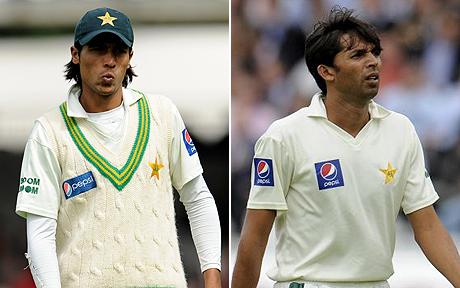
Currently, Pakistan is playing England at the home of cricket in London, a sporting venue grandly named Lords. Over the last weekend, a national UK newspaper revealed a sting operation conducted by undercover journalists, who paid a man around $250,000 for information on when certain Pakistan players on the field were going to cheat. The operative, it is claimed, is linked to illegal gambling syndicates. Sure enough, the players cheated on cue and the sounds of the London bobbies running to catch the villains came shortly after. Now, the Pakistanis require something slightly stronger than tea — high powered lawyers will be a start, maybe a stolen plane to make their getaway.

For years, Pakistani cricket has been suspect. Investigators in the past were stumped and failed to prove what seemed obvious to any sentient viewer — Pakistan was cheating, throwing games to cash in on payments from gambling crime, the cricket version of baseball’s Black Socks. Pakistan has been on the back foot over the claims denying it as a conspiracy against them. But this scandal has bowled them out. The News of the World has all the evidence on videotape. It’s irrefutable — in flagrante delicto.

The London police and cricket’s governing authority are using much diplomatic nuance at this stage of the criminal investigation, Only recently, the British Prime Minister David Cameron insulted Pakistan while he was visiting their enemy, India. And now this! Cheats at Lords, the home of English cricket. This stain on the linen will provide more ammo for the prejudice merchants loading another flare to fire at poor old Pakistan — how can you trust them?

Should Pakistan be banned from international cricket, somewhat unlikely but possible if the poison goes all the way to the top of their game, the impact back home will be enormous. For millions of Pakistanis, cricket is more important than life or death. It is Pakistan’s rope to the world. A chance to show how great they are at a tremendously demanding and skillful sport. Add one more disaster to a nation seriously down on its luck.

Aging Philanthropist is Pakistan’s Mother Teresa

By Chris Brummit for The Associated Press
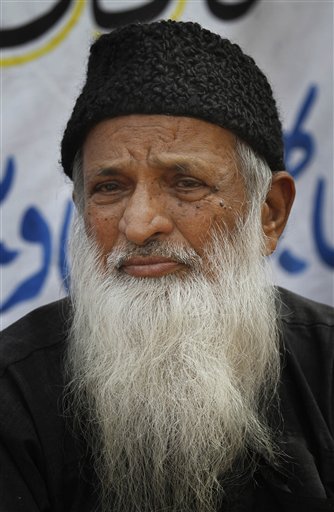
The aging man in mud-splattered, frayed clothes has barely lowered his body onto the sidewalk when the money starts piling up. Heeding his call for donations for flood victims, Pakistanis of all classes rush to hand over cash to Abdul Sattar Edhi, whose years of dedication to the poor have made him a national icon.

He thanks each donor, some of whom ask to have their photo taken next to him. Four hours later, the crowd remains — and the equivalent of $15,000 is overflowing from a pink basket in front of him.

Edhi has been helping the destitute and sick for more than 60 years, filling the hole left by a state that has largely neglected the welfare of its citizens. Part Mother Teresa, part Gandhi, with a touch of Marx, he is the face of humanitarianism in Pakistan.

Funded by donations from fellow citizens, his 250 centers across the country take in orphans, the mentally ill, unwanted newborns, drug addicts, the homeless, the sick and the aged. His fleet of ambulances picks up victims of terrorist bombings, gang shootings, car accidents and natural disasters.

Pakistan’s corruption-riddled government acknowledges Edhi and other charities do the work that in other nations the state performs. The country has no national health service, insurance program or welfare system, and few state-run orphanages or old people’s homes.

The foundation offers an alternative to charitable work performed by hardline Islamist groups in Pakistan, some with alleged links to terrorism. The spread of these organizations has triggered concerns in the West, including their work in the aftermath of this summer’s floods.

Edhi is a devout Muslim, but critical of Islamic clerics in general, not just extremists. He says they focus on ritual, preaching hellfire and defending the faith against imagined enemies, rather than helping the poor — which he says should be the cornerstone of all faiths.

The 80-something Edhi — he and his children disagree on his exact age — lives with his wife, herself a charity worker, in a tiny room in one of his welfare centers in Karachi, a bustling port city. His bed is a one-inch thick mattress on a piece of wood.

“I am a beggar for the poor,” he says, stained teeth showing in a wide smile, eyes sparkling after a week touring flood-hit areas. “Serving humanity is the biggest jihad. It is the real thing.”

___

Edhi deals with birth and death, and almost everything in between.

Just above his bedroom, a maternity ward and an orphanage are home to 18 children, many of them abandoned by their mothers in cradles left outside his centers. They wear hand-me-downs from the city’s rich. Edhi’s wife, Bilquis, tries to get the children adopted, but few Pakistanis want to take girls or older children, she says.

On a recent afternoon, the kids shouted out English nursery rhymes and danced. They then sat cross-legged on the floor, drinking tea from plastic mugs and eating spicy pastries and sticky sweets that an anonymous benefactor had dropped off.

The home was clean and bright, with plenty of toys and loving staff. But there was no place to play outside, and the roar of motorbikes from the lanes below was a constant backdrop.

Across town, workers at the Edhi morgue were dealing with latest influx of bodies. They receive around 25 a day, half of which are never claimed — the city’s unloved and unknown.

Working quickly but carefully, they cut the clothes from the bodies, lather them with a bar of soap from head to toe, rinse them with water from a jug, then wrap them in a white sheet. The bodies are bussed across town, prayed over and buried in unmarked graves.

The body of American journalist Daniel Pearl, killed by al-Qaida terrorists in Karachi in 2002, was picked up by an Edhi ambulance and taken to the morgue, the largest in the city of 14 million people.

The morgue is attached to a hospital for the homeless, a dispensary, a shelter for boys and women and children, even a wedding hall for the marriages arranged for children who have been looked after by the foundation. The smell of baking bread from an oven that churns out 9,000 loaves a day fills the air.

“The poor can come here and get a solution to all their problems,” says Ejal Hassan Zaidi, who had accompanied a neighbor to the morgue to collect the body of his 3-year-old daughter, killed in a hit-and-run incident hours earlier. “From the cradle to the grave.”

___

Born in what is now India, Edhi and his parents moved to Pakistan in 1947 when that country was created as a Muslim state at the end of British colonial rule. The family was quite well off — his father was a traveling salesman — and socially progressive.

In his biography, Edhi credits his mother for setting him on a humanitarian path. She urged him to give half his pocket money to someone poor every day and rebuked him if he didn’t.

“‘You have a selfish heart, one that has nothing to give,'” he remembers her saying. “‘What kind of human being are you? Look at the greed in your eyes. Already you have started robbing the poor. How much more will you rob from them in your lifetime?”

When she was dying, he looked after her, bathing her emaciated body and washing and braiding her hair — experiences that would also shape his life.

“The first night she spent in the grave, I dedicated my life to the service of mankind,” he says.

Edhi started small. In 1951, he bought an eight-foot-square shop in a slum neighborhood in Karachi that he converted into a dispensary. Seven years later he bought a van that he used as an ambulance, writing “Poor Man’s Van” on both sides.

He became intimately involved in the business of caring for the sick and dying. He would drive the ambulance to the scene of an accident to pick up the bodies, administer injections during a flu outbreak and travel across the country to help after earthquakes and other natural disasters.

Edhi’s record of round-the-clock service and frugal lifestyle attracted donations, and he soon had a fleet of 14 ambulances. In the 1980s and 90s, he opened centers and ambulance services throughout the country. He donated $200,000 to releif efforts after Hurricane Katrina, and his workers have also helped out in disasters in Asia and the Middle East.

___

Pakistanis are a generous people, required by their Muslim faith to give away 2.5 percent of their wealth each year. The last nationwide survey done in 1998 showed that Pakistanis gave the then equivalent of $820 million to charity, around the same as the government’s health and education budget at the time. There are no numbers on how rising terrorism and a poor economy have affected this philanthropy.

Edhi does not accept donations from international organizations or governments, including Pakistan’s, saying he doesn’t need outside help and it is important for Pakistanis to help each other. He and his wife live simply of the interest from some savings.

The foundation does not produce detailed financial statements or annual reports. Edhi points to a wall of files in one office in which he says everything is accounted for. Donors do not seem to mind, such is their trust in him.

“You ask any Pakistani on the streets, Edhi is total credible with them,” says Anjum Haque, the executive director of the Pakistan Centre for Philanthropy. “The success of the trust is down to Edhi himself.”

Last year, donations to Edhi-run charities totaled around $5 million, according to Faisal Edhi, the founder’s son and trust member. A significant chunk of the funds comes from overseas Pakistanis, who want to donate to their homeland.

The lack of transparency has caused some concern among others in the charity sector in Pakistan. Faisal Edhi acknowledges that some of their 13,000 employees — who receive very modest salaries — might skim money off donations. There have also been questions raised about the lack of professionalism and efficiency, specially as the foundation has grown.

Edhi Village, a 65-acre complex in the undulating hills beyond the northern slums of Karachi, is home to 300 children, many picked up off the streets, and 900 adults, many elderly or suffering from mental disabilities.

Most wear clean, ironed clothes, and the food is fresh. Yet there are also signs of neglect. One naked youth dragged himself through a puddle. Some had no shoes and begged visitors to buy them a pair.

The adults live in rooms around the size of three tennis courts, bare except for raised sections for sleeping. They are locked inside for part of the day. There are two doctors, four nurses and two ward boys looking after them.

“We do the most we can do with our resources,” says Billal Mohammad, a regional Edhi manager. “They would be living on the pavement under the sky. We give them shelter, food and treatment. You must not see this place throughout Western eyes.”

___

Edhi has made no secret of his dislike of Pakistan’s ruling class. So it was a surprise to see a gaggle of politicians using one of his orphanages in Karachi as a venue to mark the recent birthday of President Asif Ali Zardari.

The visitors spooned cake into the mouths of the children, shouted political slogans for television cameras and asked Edhi to be photographed next to them. He said he only let the politicians in so the children would have a party to enjoy.

“So what if the politicians are using me? They even use God,” said Edhi, who sat by himself for most of the event. “Landowners, clerics, politicians. They are all looters. There is no fear in telling the truth.”

Hardline Islamist groups have criticized Edhi for his progressive views on women and the secular nature of his work. Some have said that by accepting newly-born babies from unmarried mothers, he is promoting premarital sex.

“We meet them and we read their newspapers. They say we are non-Muslims, unbelievers and communists,” says Faisal Edhi. “The jihadi groups don’t like us. They don’t believe in humanity.”

There are questions about what will happen to the foundation when Edhi dies. He says his two sons and three daughters will take over, though without him at the helm, people may not give as generously.

For now, his children appear more concerned about their father’s health. Apart from an afternoon nap, he works just as hard as he did when he was in his 30s, they say.

“We tell him to take it easy, but he doesn’t listen,” says daughter Almas Edhi. “He wants to keep busy.”

On the Net:

  • http://www.edhifoundation.com/
  • http://www.pcp.org.pk/
  •  

    Pakistanis for Peace Editor’s Note– At a time when the Pakistani nation is in turmoil and dismay due to the epic floods, endless bombings and violence, vast corruption amongst the government, the Sialkot killings, and even the match fixing disappointment from the once cherished national cricket team, Abdul Sattar Edhi and his lifelong service to the people of Pakistan is a testament to the awesome goodness found in one Pakistani man. His service to the orphans, the destitute, homeless, and the generally downtrodden of the country make him a shining role model and a beacon of what is good about the Pakistani people. If there is anyone more deserving of a Nobel Peace Prize than Edhi, then we have not found them as of yet. May he continue to inspire not just the Pakistani people, but all people everywhere with his selflessness and humanity.
    Millions of Pakistani Kids Risk Waterborne Disease

    By Asif Shahzad for The Associated Press

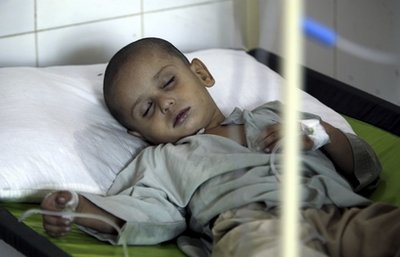
    Five-year-old Shahid Khan struggled to remain conscious in his hospital bed as severe diarrhea threatened to kill him. His father watched helplessly, stricken at the thought of losing his son — one of the only things the floods had not already taken.

    The young boy is one of millions of children who survived the floods that ravaged Pakistan over the last month but are now vulnerable to a second wave of death caused by waterborne disease, according to the United Nations.

    Khan’s father, Ikramullah, fled Pabbi just before floods devastated the northwestern town about a month ago, abandoning his two-room house and all his possessions to save his wife and four children.

    “I saved my kids. That was everything for me,” said Ikramullah, whose 6-year-old son, Waqar, has also battled severe diarrhea in recent days. “Now I see I’m losing them. We’re devastated.”

    Ten other children lay in beds near Khan at the diarrhea treatment center run by the World Health Organization in Pabbi, two of whom were in critical condition.

    Access to clean water has always been a problem in Pakistan, but the floods have worsened the situation significantly by breaking open sewer lines, filling wells with dirty water and displacing millions of people who must use the contaminated water around them.

    Children are more vulnerable to diseases such as diarrhea and dysentery because they are more easily dehydrated. Many children in Pakistan also were malnourished before the floods, weakening their immune systems.

    The Pakistani government and international aid groups have worked to get clean water to millions of people affected by the floods and treat those suffering from waterborne diseases. But they have been overwhelmed by the scale of the disaster, which has displaced a million more people in recent days.

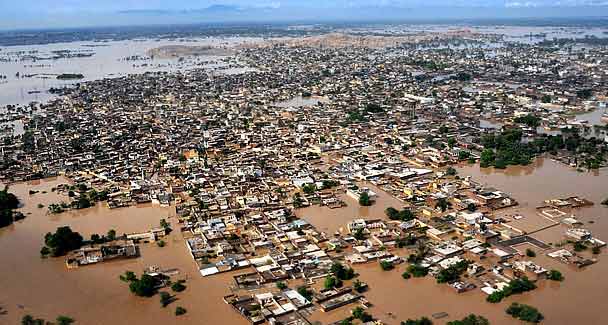
    The floods started in the northwest in late July after extremely heavy monsoon rains and surged south along the Indus River, killing more than 1,600 people, damaging or destroying more than 1.2 million homes and inundating one-fifth of the country — an area larger than England.

    Some 3.5 million children are at imminent risk of waterborne disease and 72,000 are at high risk of death, according to the United Nations.

    The World Health Organization set up the diarrhea treatment center in Pabbi about a week ago with the help of several other aid groups. Workers have already treated more than 500 patients, mostly children, said Asadullah Khan, one of the doctors.

    Some of the patients have been treated multiple times because broken sewer lines have contaminated the water in the town’s wells and pipes, said the doctor. “It is circulating the disease again and again,” he said.

    The aid groups set up a similar treatment facility several days ago in Nowshera, a city adjacent to Pabbi that was also engulfed by the floods. Residents who have begun to return in recent days have encountered a scene of total destruction: caved-in houses and streets covered with mud and debris.

    Most of the population lacks access to clean water, and mosquitoes have proliferated in stagnant floodwater around the city, raising the risk of malaria. Government help is nowhere to be found.

    “It is trash, dirt, germs and odd smells everywhere,” said Zahid Ullah, whose 3-year-old and 10-year-old sons were being treated for gastroenteritis at the facility in Nowshera. “It is a big danger.”

    Even at the hospitals where the diarrhea treatment centers have been set up, mobs of flies hovered around the patients despite attempts by staff to kill them.

    The World Health Organization and the United Nations Children’s Fund appealed to the world on Saturday to provide water purification units, family hygiene kits and other items needed to increase access to clean water in Pakistan.

    Guido Sabatinelli, the head of the World Health Organization in Pakistan, said the international community’s help was critical to help Pakistan avoid a second wave of death from waterborne disease.

    “We are fearing the epidemic of disease,” said Sabatinelli. “Access to safer water, potable water” is critical, he said.

    Asma Bibi couldn’t agree more. The young mother searched in vain for clean water on the outskirts of Nowshera as her feverish 2-month-old son, Ehtesham, sweltered in a tent set up for flood victims. They had run out of water the day before.

    “My son is sick. He hasn’t breast-fed in two days,” she said. “He needs milk. He needs water.”

    Police Question Pakistan Cricket Team Over Newspaper’s Matchfixing Allegations

    By Richard Sydenham for The Canadian Press

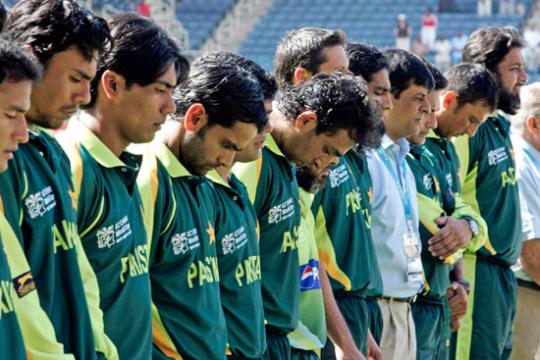
    Police have questioned Pakistan’s cricket team over newspaper allegations of matchfixing during the current Test match against England at Lord’s, the team’s manager said on Saturday.

    “I can confirm that we are aware of the allegations and Scotland Yard police are with us now at the hotel and we are helping with their inquiries,” team manager Yawar Saeed told The Associated Press. “This is as much as I can say at the moment.

    ” British newspaper the News of the World alleged in its Sunday edition that Pakistan players were secretly paid to deliberately bowl no-balls during the fourth and final Test against England as part of a betting scam.

    The newspaper says it has secretly-filmed video footage of its undercover reporters, posing as front men for a Far East gambling cartel, in discussion with a man who appears to accept 150,000 pounds (C$244,000) in order to make sure no-balls are bowled at certain times during the match.

    The News of the World says it has passed all its evidence to the police. Scotland Yard police said in a statement: “Following information received from the News of the World, we have today arrested a 35-year-old man on suspicion of conspiracy to defraud bookmakers.

    ” The International Cricket Council said it was aware of the situation and it, along with the England and Wales Cricket Board and the Pakistan Cricket Board, was “fully assisting” police with their inquiries.

    “No players nor team officials have been arrested in relation to this incident and the fourth npower Test match will continue as scheduled on Sunday,” said the ICC’s statement. “As this is now subject to a police investigation neither ICC, ECB, PCB nor the ground authority, the MCC, will make any further comment.”

    Any player found guilty of involvement in matchfixing faces a life ban from the sport. Pakistan needs to win the final Test against England at Lord’s to salvage a draw in the four-match series, but it faces an uphill task after scoring just 74 in reply to England’s first innings total of 446.

    No Change Seen in Pakistan’s View of India Threat

    By Myra MacDonald for Reuters

    The Pakistan army is unlikely to change its assessment of the threat from India despite heavy demands on its troops to provide flood relief while also fighting Islamist militants, a senior security official said.

    The Wall Street Journal said this month Pakistan’s Inter-Services Intelligence (ISI) agency had decided — for the first time in the country’s history — that Islamist militants had overtaken India as the greatest threat to national security.

    But the security official suggested this was a misinterpretation of the stance of the Pakistan army, which views the threat from militants and India in very different ways, rather than comparing them against each other.

    “These are two mutually exclusive threats. The magnitude, the type, is quite different. One is an internal threat which is insidious, difficult to quantify. It is a clear and present danger. This is a very serious threat,” he said. “The other is a conventional threat. What has India done, politically and militarily, for this threat to have been reduced?”

    Another official said the threat from India had if anything increased into both a conventional and unconventional threat, as it used its presence in Afghanistan to support those fighting against the Pakistani state in its western border regions.

    India denies accusations by Islamabad that it backs separatists in Baluchistan province, which borders Afghanistan, saying it is interested only in promoting Afghan development.

    With flooding which has uprooted some 6 million people further destabilizing a country already battling militants, the WSJ report raised the possibility the Pakistan army might revise its assessment of the threat from its much bigger neighbor.

    It keeps the bulk of its troops on the Indian border.

    INDIAN FLOOD RELIEF

    India has promised Pakistan $5 million in flood relief and analysts there see no chance of it exploiting its nuclear rival’s current vulnerability by raising tensions on the border.

    “At this time no one is thinking of anything other than how to help them get over the suffering and the damage,” said retired Brigadier Gurmeet Kanwal at the Center for Land Warfare Studies.

    “The Pakistanis should feel free to pull out their troops for flood relief as and when they want. The Indian Army obviously cannot give any written guarantees but our DGMO (Director General of Military Operations) could reassure his counterpart that we have no intention of attacking them at such a time.”

    The DGMO’s of the two countries talk by phone once a week, mainly to clear up misunderstandings over any ceasefire violations on the Line of Control dividing disputed Kashmir.

    But the security official said that Pakistan’s military deployment was based on its assessment of India’s potential offensive strength. “The configuration of any defense force is based on enemy’s capabilities and not intentions,” he said.

    Pakistan has taken more casualties in its battle with Islamist militants than in all its wars against India combined — the two countries have fought three full-scale wars since independence in 1947 along with other smaller conflicts.

    Yet for Pakistan to drop its guard against India would require progress on political disputes, including over Kashmir, officials say.

    India broke off a peace process with Pakistan after the 2008 attack on Mumbai by Pakistan-based militants and despite several attempts the two countries have been unable to get their talks back on track again.

    And even while Pakistan fights militants on its western border with Afghanistan, it remains wary of sudden Indian retaliation should there be another Mumbai-style attack on India.

    “This enforced attention to the western border has made the Pakistan army reassess its priorities,” said western military analyst Brian Cloughley, an expert on the Pakistan army.

    “But it still does not wish to drop its guard to the east, especially as the there is still the threat of a swift and dramatic attack if a terrorist outrage in India is determined by India to have been planned in Pakistan.”

    Pakistan has said it cannot guarantee there will be no more attacks on India, arguing that it too is a victim of bombings.

    Aid Flooded Pak by Withdrawing Army

    By Swaminathan S Anklesaria Aiyar for The Times of India

    Pakistan is suffering its greatest human tragedy since Partition. The floodwaters of the Indus are an incredible 20 miles wide, sweeping away entire towns, villages and farms. Over 20 million people have been displaced, far more than the nine million displaced by Partition in 1947. The immediate death count of 1,500 will soon increase hugely through disease and deprivation. Rehabilitation could cost $100 billion.

    Some Indians might be perverse enough to rejoice that an enemy has been hit by a natural disaster — an act of God, as it were — and will be crippled economically for years. But most Indians will surely want to help their neighbours. In these traumatic times, we need to think of Pakistanis as humans in distress, not foes.

    Even those who cannot think beyond realpolitik should see that the floods are potentially a strategic disaster for India too. Flood damage will create a fertile breeding ground for Islamist militancy. Islamist NGOs with links to terrorist groups like the Lashkar-e-Taiba and Jaish-e-Mohammed are at the very forefront of flood relief efforts and hence are gaining popularity. Meanwhile, the civil administration is seen as corrupt and ineffective. President Asif Zardari has further ruined his low reputation by going on foreign junkets.

    The Pakistani army has in the last year battled some, though by no means all, militant groups in Swat and FATA (federally administered tribal areas). But much of the infrastructure built to reach the remote tribal areas has been destroyed by the floods. Besides, the Pakistani army is redirecting its efforts in the region, from combating militants to combating flood damage. The militants are re-occupying the resultant political vacuum.

    The ISI recently came out with a study suggesting that Islamist militants had become a greater threat to the country than India. Flood damage can only deepen that perception. True, the army wants to back the Afghan Taliban even while battling the Pakistani Taliban, and this results in muddled thinking and sabotage of peace initiatives. The resolution of these contradictions is not in sight.

    One day, the Pakistani army and the ISI will have no choice but to confront the reality that Islamist militants are Frankensteins that threaten their own creator. The ISI’s assessment should bring that day somewhat closer.
    In the light of both human and strategic considerations, how can India help Pakistan? Individual contributions from Indian citizens must be encouraged, and red tape thwarting contributions in cash and kind must be cut. But the Indian government should not offer more than a modest amount of food and financial aid. Pakistan requires billions of dollars for relief and rehabilitation, so anything India offers will be a drop in the ocean.

    Besides, recipients are rarely grateful for alms: they resent being supplicants, and suspect the motives of the donors. The US saved India from mass starvation after the twin droughts of 1965 and 1966 by giving record food aid. But this won the US very few friends and stoked resentment from many who felt India’s independence was being compromised. The US will once again be the chief donor to Pakistan, but will gain virtually no popularity or gratitude.

    If food and financial aid will not help much, how can India best help Pakistan? The best way will be for the Indian Army to unilaterally withdraw from the border in Punjab, Rajasthan and Gujarat. This will pose no military risk whatsoever: flood-stricken Pakistan cannot possibly embark on military adventures against India. But the withdrawal of Indian troops will mean that the Pakistan army loses all excuses to avoid diverting manpower and financial resources from the border to flood relief and rehabilitation. This will cost India nothing, yet will release very large resources within Pakistan. Its impact on the Pakistani psyche will be significant. Even analysts who distrust Pakistan agree widely that India has no alternative to diplomatic engagement: cutting off ties will not win any minds and hearts there. Unilateral withdrawal will itself be a form of engagement, and will encourage other forms.

    The wrong strategy will be to try to negotiate a mutual withdrawal of troops. Withdrawal must be unilateral and immediate. Defence hawks will express dismay that India is so soft on an enemy that encourages terrorism. But unilateral withdrawal will be a flood relief measure, not a military surrender. In the bargain, it will oblige Pakistan to withdraw its own troops and redeploy them for flood relief: its public opinion will be outraged otherwise.

    Dr Manmohan Singh, you say we must be proactive in the peace process with Pakistan. The tragic floods there have given you an opportunity to be proactive in a way that will not come again. Go for it.

    Pakistan Faces Economic Hit from Flood

    By David Roman for The Wall Street Journal

    The flooding in Pakistan will inflict serious damage on its economy, posing another major challenge for a cash-strapped government struggling to keep a recovery on track in the face of high inflation and a relentless Islamist insurgency.

    Assistance from the International Monetary Fund and Western countries will likely help Pakistan avoid another brush with bankruptcy as it tries to cope with the damage, which by some estimates may reach $43 billion. But the floods will weigh heavily on economic growth this year and leave a long-term mark on the economy.

    “It’s a very serious tragedy,” said Philip Wyatt, a senior economist at UBS. “The hit on the growth rate is going to be very severe … We can see a loss of one or two points of economic growth, depending on the damage.” In the last fiscal year ended June 30, Pakistan’s economy grew 4.1%.

    Moody’s Investors Service, which had expected Pakistan’s economic growth to pick up to 4.5% this fiscal year, may lower its estimate to 3% to 3.5%, said analyst Aninda Mitra.

    The flood began in July and at one point covered a fifth of the South Asian nation, or land roughly equivalent to the size of Uruguay. According to the United Nations, the disaster has affected close to 20 million people, killing 1,500 and leaving 1.2 million homes damaged or destroyed.

    Coping with the social and economic costs of the catastrophe will strain the government’s finances. The budget deficit was already on track to reach 4.5% of gross domestic product in the fiscal year ending June 30 before the crisis but now could widen to as much as 6% to 7% of GDP, said Mr. Mitra. That’s a grim prospect for a country, which had external debt totaling $55.63 billion as of June 30.

    President Asif Ali Zardari’s government has been reaching out to other countries for help. A delegation met with IMF officials Monday in Washington. Donors including the U.K. and the European Union have so far pledged almost $500 million in additional help.

    Moody’s is unlikely to upgrade Pakistan’s credit rating in coming months due to the devastation from the floods and other challenges, but the country’s current B3 rating “adequately captures the risk” of the likely economic slowdown and is unlikely to be downgraded further, said Mr. Mitra. A B3 rating is just one notch above the C level, which applies to countries in effective sovereign default, and makes it hard for a country to issue bonds in the international market.

    The natural disaster is the latest setback for the Pakistan economy, which after several years of strong growth almost ground to a halt in 2008, hurt by budget overruns, a loss in export competitiveness due to high inflation, and an insurgency that continues unabated. On Monday, while emergency workers worked to shore up levees in two southern cities, at least 36 people were killed in three separate bomb attacks across the country, and 12 suspected militants were killed in U.S. drone attacks near the Afghan border.

    Concerns about the economic fallout have kept pressure on Pakistan’s financial markets, though the impact has been moderate.

    The cost of insuring against a default or restructuring of Pakistan’s bonds remains at very elevated levels, but has been relatively steady in recent weeks, a sign that investors anticipate IMF and U.S. support to prevent any fiscal crisis. The spread on Pakistan five-year credit default swaps was quoted at 1,099 basis points Tuesday, roughly on par with those of other high-risk sovereign bond issuers like Venezuela, but well below early-2009 highs of over 2,100 basis points during the global financial crisis.

    Pakistan’s benchmark stock index, KSE-100, has fallen 7% so far in August, but is up 4% so far this year, roughly in line with other emerging market indexes.

    The Pakistan rupee, one of Asia’s weakest currencies in recent years, has fallen in recent days, but has found support above its record low against the dollar of 85.84 rupees hit on Aug. 2, helped by expectations that remittances from overseas Pakistanis, which have averaged around 10% of GDP in recent years, may rise to help families at home cope with the floods.

    But analysts expect the rupee to remain under pressure in coming months due to Pakistan’s current account deficit and high inflation rate, which ran at 12.3% in July. The floods are likely to push up food prices and transportation costs for other goods, likely eliminating any chance that inflation might fall below 10% this year, said Mr. Wyatt at UBS.

    Crisis in Kashmir

    By Ashok K Metha for The Wall Street Journal

    A few months ago, Pakistan was virtually begging India to restart the dialogue process between the two governments, suspended after the 2008 Mumbai terrorist attack. Now Pakistani spokesman Abdul Basit asserts that Pakistan will not agree to “any preconditions for resuming the dialogue process.” Why did Islamabad’s attitude change?

    The answer lies in two cities: Srinagar and Kabul.

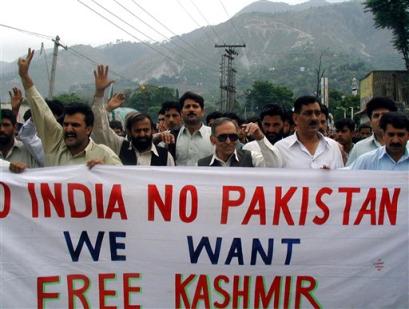
    With 62 civilian deaths in the ongoing rioting in the capital city Srinagar and two districts, over the past couple months Kashmir has witnessed a fresh uprising against the symbols of the state. Kashmiris are using every avenue they have—from stones to the Internet—to demand azaadi, or freedom. The mostly spontaneous upheaval involves young men, women and even children. Kashmiris want freedom from corruption, bad governance and the overbearing presence of soldiers.

    For decades Pakistan has been trying to wrest Kashmir away from India by sponsoring insurgency. But today, thanks to the ineffective administration in Srinagar, Pakistan doesn’t have to try very hard. After the security forces managed to restore law and order three years ago, India failed to take the political initiative, and frittered away its gains. The result is widespread disillusionment. At a ceremony commemorating India’s Independence Day this month, a local policeman threw a shoe at Omar Abdullah, chief minister of Jammu and Kashmir, whose grandfather Sheikh Abdullah ratified the state’s accession to India.

    Up until 2008, the state had a lot going for it: several round-table meetings for self rule and confidence-building measures, periodic release of economic packages, annual visits by Prime Minister Manmohan Singh, conferences connecting the people and quiet dialogue with moderate and hardline separatist leaders. The ceasefire on the Line of Control was holding, and a four-point formula for resolving the Kashmir dispute hammered out with Pakistan through back channels seemed as good as done.

    Indian security personnel beat detained Kashmiri Muslim protesters in Srinagar, India.
    Mysteriously, the peace process then ground to a halt. The India-Pakistan dialogue began unraveling soon after Gen. Pervez Musharraf left the scene. The new Pakistani Army Chief, Gen. Ashfaq Kayani, a Fort Leavenworth graduate and favorite of the U.S. establishment, reversed the process of reconciliation. The ceasefire has become shaky, and the Pakistani government’s rhetoric on Kashmir has returned to the rights of the people to self determination and “diplomatic and moral support to Kashmir in their legitimate struggle no matter how brutally Indian forces try to suppress it.”

    The reason Gen. Kayani feels emboldened to take a harder line is easy to discern. Tensions deepened after the U.S. elevated Pakistan from “major non-NATO ally” to the linchpin of its Afghan exit strategy, and excluded India from a political solution in Afghanistan. Despite the denials of U.S. Af-Pak point man Richard Holbrooke, the Afghanistan-Pakistan free trade agreement has only underscored India’s irrelevance to Kabul.

    Civilian strife in the Kashmir Valley will only strengthen Pakistan’s case that resumption of a dialogue on Kashmir alone will enable a more focused fight against the Taliban on the Western frontier. This is not entirely true, as the Pakistan Army has already redeployed to the west 52% of its offensive and 45% of its defensive forces previously devoted to facing down India.

    The priority for Delhi is to stop the stone-throwing in Kashmir. Every death—one recent fatality was a child of eight years old—is fresh cause for protests. On an hour’s notice, 10,000 people will come out on the streets to join the funeral procession of someone they don’t know. Further, Kashmir’s moderate Islam is being radicalized by the hardline Jamaat-e-Islami, which has made even separatist leaders irrelevant. No one is willing to talk unconditionally anymore.

    Delhi will have to start from scratch in rolling back alienation by reaching out to youth. Yet Rahul Gandhi, India’s prime-minister-in-waiting and supposedly its youth leader, has not reached out to his favorite constituency in Kashmir. Neither has Congress President Sonia Gandhi or Prime Minister Manmohan Singh visited Srinagar since the troubles began in June. Until a few months back, Kashmir was the most violence-free state in India, as security forces had significantly marginalized insurgent and terrorist groups over the last three years.

    Islamabad is not about to take over Kashmir—according to a survey by London-based think tank Chatham House last month, just 2% of the population favors joining Pakistan. But as the cry for azaadi grows louder, no one has a clue when this uprising is going to stop. Even as the faithful observe Ramadan, Delhi needs to do something before U.S. President Barack Obama’s scheduled visit in November.

    India, Pakistan Can’t Break the Ice, Even in Hour of Tragedy

    Reported by Sanjeev Miglani for Reuters

    Pakistan’s catastrophic flood continues to boggle the mind, both in terms of the human tragedy and the scale of the damage it has wrought, and even more so over the longer term. One official has likened the disaster to the cyclone that devastated what was once East Pakistan, setting off a chain of events that eventually led to its secession and the birth of Bangladesh.

    Not even that spectre, raised by Pakistan’s ambassador to Britain, can however dent the steadfast hostility between India and Pakistan. For a full three weeks as the floods worked their way through the spine of Pakistan from the turbulent northwest to Sindh in the south, Islamabad made frantic appeals to the international community not ignore the slow-moving disaster, and help it with emergency aid, funds. But next-door India, best-placed to mount a relief effort probably more because of the geography than any special skill at emergency relief, was kept at arm’s length. An Indian aid offer of $5 million, which itself came after some hesitation and is at best modest,was lying on the table for days before Pakistan accepted it. ”There are a lot of sensitivities between India and Pakistan … but we are considering it very seriously,” a Pakistani embassy spokesman told our reporter in New Delhi earlier this week. Things appeared to have moved faster only after Indian Prime Minister Manmohan Singh called his Pakistani counterpart Yusuf Raza Gilani expressing sympathy and reminding him of the offer of aid. Millions of Pakistans meanwhile continued to struggle for food.

    To some extent, Pakistan’s hesitation in accepting aid from India is understandable. India is the traditional enemy. It is also the bigger country of the two. And over the last two decades it has become easily the more prosperous entity, courted by the world’s industrialists while Pakistan is “haunted by the world’s terrorists”, as columnist Vir Sanghvi writes in the Hindustan Times. A Pew poll that we wrote about a few weeks ago showed how deep-seated these Pakistani fears are: a majority of those polled said they considered India to be the bigger threat than al Qaeda or the Taliban, despite the violence they have suffered at the hands of the militant groups over the past few years.

    As Sanghvi writes:

    But, to be fair to the Pakistanis, let us accept the position that decades of hostility between our two countries have led to a situation where the Pakistanis simply do not trust us. Let us also accept that they are so resentful of India that even in their hour of greatest crisis when thousands of people have died and millions are homeless, they will still spurn India’s hand of friendship. And let us grant them their claim that given our history, they are justified in being suspicious of India.

    But then, you have to wonder, if the two nations cannot even keep up basic neighbourly ties such as offering aid and commiseration at times of natural crises, what chances they can ever come to a peace deal that will demand much more from them ?

    It was pretty much the same in 2005 when the earthquake struck Pakistani Kashmir and the authorities struggled to provide aid to the affected. And Indian aid offer was initially ignored, later blankets from India were accepted. But even then Pakistan had people cut out the label that read ‘made in India’ on each blanket.

    Indeed, some Pakistani writers are already criticising the government of bringing dishonour to the country by accepting Indian assistance. Commentator Shireen M. Mazari in a piece entitled “What Have We Become” says the Pakistani government accepted the Indian offer for help under pressure from the United States and that it was a matter of shame. By taking Indian aid, Pakistan had let the people of Kashmiri down just when they had risen in revolt against Indian forces.

    “This money has the blood of Kashmiris on it and one wonders how our Kashmiri brethren must be feeling as they face the bullets of Indian forces every day and see us taking Indian “aid”,” Mazari wrote.

    Kashmir, then, can’t be far from any discourse relating to India and Pakistan. It is the core dispute at the heart of 60 years of difficult ties, says Pakistan and must be resolved before any normalcy can take place. India doesn’t even consider the territory to be disputed, so the argument, at least in public, hasn’t changed much in over half a century.

    For the 20 million affected by the flooding in Pakistan, and facing a future that would daunt any of us, Kashmir must, at the moment, be a distant thought.

    Pakistan Accepts Flood Aid Money From Rival India

    By Issam Ahmed for The Christian Science Monitor

    Pakistan has accepted an offer of $5 million of flood aid from neighbor and longtime rival India, in a move that could spark a political backlash at home.

    In an interview with Indian news channel NDTV, Pakistani Foreign Minister Shah Mehmood Qureshi described the offer of aid, made last week, as a “very welcome initiative” which the government of Pakistan has agreed to accept, after taking some time to decide.

    But it would have been better to say “thanks, but no thanks,” according to Liaqat Baloch, secretary general of Pakistan’s second-largest religious party, the Jamaat-e-Islami.

    “Pakistan has many disputes with India, with reference to Kashmir, and the Indian Army engaging in brutality in occupied Kashmir,” he says. “In the past, when Pakistan tried to support India after their natural disasters, India never accepted. Therefore it would be better if our government refused the aid with a big thank you.”

    Al Khidmet foundation, Jamaat-e-Islami’s charitable wing, has been one of the most visible aid organizations in the flood-affected areas.

    The two countries have made efforts in recent months to repair bilateral relations, which took a plunge following the 2008 Mumbai attacks. India blames those attacks on Pakistan-backed militants. The two countries have fought three full-scale wars, most recently in 1999.

    The United States had urged Pakistan to accept India’s offer of aid earlier this week. When Indian Prime Minister Manmohan Singh called his Pakistani counterpart to offer his condolences following the worst natural disaster in Pakistan’s history, it was an event widely reported in the Pakistan media.

    “In such times of natural disasters, all of South Asia should rise to the occasion and extend every possible help to the people of Pakistan affected by the tragedy,” Mr. Singh said, according to a statement released by his office.

    According to Badar Alam, editor of Pakistan’s Herald magazine, the amount of aid pledged is “symbolic, but its effect is immense. It’s a good confidence building measure between the two countries.”

    But, he warns, Pakistan’s religious parties will try to spin the move “as a sign of weakness.”

    “They will see it as a capitulation to India, that our own government is so weak we have been forced to accept help from the historic enemy,” says Mr. Alam.

    Mosharraf Zaidi, a columnist for Pakistan’s The News, termed the decision brave: “It’s a tremendous gesture, very mature. India should be commended for donating it and Pakistan should be commended for accepting it.”

    “The whole idea in an emergency is you’ll have the Jamat ud Dawas [the charitable wing of banned militant outfit Lashkar-e-Taiba] and you’ll have competing powers working almost in tandem to support people. It shows that no matter what our value systems, we have to work together right now,” he adds.

    Some 20 million people are affected by Pakistan’s worst flooding in recent memory; Pakistan’s government estimates around 1,600 deaths and millions homeless or displaced. The United Nations appealed to the international community to donate $460 million in emergency assistance last week, and has met half of that goal. Yesterday the US increased its flood aid to Pakistan from $80 million to $150 million.

    -Pakistanis for Peace Editor’s Note- It is a good decision by the Pakistani government to accept the aid offer from India. Not only will this be a confidence building measure between the two nations, it will save countless lives, and no nation is too proud to save the lives of its citizens.

    U.S. Strategy in Pakistan Is Upended by Floods

    By Mark Landler for The New York Times

    WASHINGTON — The floods in Pakistan have upended the Obama administration’s carefully honed strategy there, confronting the United States with a vast humanitarian crisis and militant groups determined to exploit the misery, in a country that was already one of its thorniest problems.

    While the administration has kept its public emphasis on the relief effort, senior officials are busy assessing the longer-term strategic impact. One official said the disaster would affect virtually every aspect of the relationship between the United States and Pakistan, and could have ripple effects on the war in Afghanistan and the broader American battle against Al Qaeda.

    With Pakistan’s economy suffering a grievous blow, the administration could be forced to redirect parts of its $7.5 billion economic aid package for Pakistan to urgent needs like rebuilding bridges, rather than more ambitious goals like upgrading the rickety electricity grid.

    Beyond that, the United States will be dealing with a crippled Pakistani government and a military that, for now, has switched its focus from rooting out insurgents to plucking people from the floodwaters. The Pakistani authorities, a senior American official said, have been “stretched to the breaking point” by the crisis. Their ragged response has fueled fears that the Taliban will make gains by stepping in to provide emergency meals and shelter.

    “It certainly has security implications,” said another official who, like others interviewed for this article, spoke on the condition of anonymity because he was not authorized to discuss internal policy deliberations. “An army that is consumed by flood relief is not conducting counterinsurgency operations.”

    On Thursday, the United Nations will convene a special meeting devoted to the floods, hoping to galvanize what has been a lackluster global response. Secretary of State Hillary Rodham Clinton is expected to announce that American public aid has surpassed $100 million, an official said.

    “We’re obviously not oblivious to the political and strategic implications of this catastrophe, but right now, we are fully focused on the emergency relief effort and trying to get a good assessment of the needs,” said the administration’s special representative to the region, Richard C. Holbrooke.

    Noting that several weeks remain in the monsoon season, Mr. Holbrooke said, “Worse may be yet to come.”

    The disaster comes after a period in which the administration seemed to have made strides in repairing the American relationship with Pakistan. Mrs. Clinton visited Islamabad in July with a long list of pledges, including the upgrading of several power plants and a plan to promote Pakistani mangoes. Now, these projects seem almost beside the point.

    “Before, there were power plants in need of refurbishment,” said Daniel S. Markey, senior fellow for India, Pakistan and South Asia at the Council on Foreign Relations. “Now there are power plants underwater.”

    In recent days, the United States has sent 15 helicopters, rescuing nearly 6,000 people. On Wednesday, military cargo planes delivered 60,000 pounds of food and other relief supplies, bringing total deliveries to 717,000 pounds. The speed and scale of the effort, officials in both countries said, have helped bolster the checkered American image in Pakistan.

    In another hopeful sign, officials said Pakistan and India had been in close touch about the floodwaters, some of which are flowing into Pakistan from India. Such communication, between historic archenemies, could augur reduced tension in other areas, one of the officials said.

    Against that, however, are the staggering dimensions of the disaster. A senior Pakistani official told the administration on Tuesday that the next flood surge was likely to inundate much of Punjab, the densely populated region that borders India and produces much of Pakistan’s food.

    So far, this official said, the greatest damage has been in regions that are also hotbeds for Islamic insurgents, which has set back the army’s fight against extremist groups. Local governments in those places have largely collapsed, leaving the army as the only source of authority.

    With 20 million people displaced from their homes, the Pakistani authorities are girding themselves for an immense migration to the major cities, which they fear could sow further instability.

    “Americans have not yet registered the enormity of the crisis,” Pakistan’s ambassador to the United States, Husain Haqqani, said in a telephone interview from Islamabad, the capital.

    Pakistani and American officials said reports of hard-line Islamic charities providing relief were exaggerated. One pointed out that the floods had hurt the insurgents as well: there was a report of small arms and ammunition belonging to a militant group floating in the water.

    Still, people in both countries warned that if rebuilding and rehabilitation efforts bogged down, the Taliban and other militant groups would try to take advantage of it. “The real test is, can their government provide the most fundamental services?” said an administration official.

    Parallels to this crisis are hard to find. One official cited the example of the Indonesian province of Aceh, which had been racked by a three-decade insurgency fought by the separatist Free Aceh Movement. After the tsunami swept through in 2004, killing 170,000 people, the separatists and the Indonesian government quickly signed a peace treaty, in August 2005.

    There are, however, big differences between a localized separatist group and an international jihadist movement.

    “If the flood proves to tilt the balance of power in Pakistan, it’s more likely to tilt toward the militants than toward the government,” said Bruce Riedel, a former intelligence official who helped the administration formulate its initial policy for Pakistan and Afghanistan.

    Already, Pakistan’s president, Asif Ali Zardari, has been exposed to withering criticism at home for going on a trip to Europe during the early days of the flood. American officials said they were determined not to get drawn into the dispute, noting that in any event, Mr. Zardari had been stripped of many of his powers in a recent constitutional change.

    Decisions on how the flood will affect American economic aid may be influenced by a trip to Pakistan by Senator John Kerry, the Massachusetts Democrat who co-sponsored the five-year nonmilitary assistance package with Senator Richard G. Lugar, Republican of Indiana.

    Senator Kerry, accompanied by Dan Feldman, a deputy to Mr. Holbrooke, is scheduled to tour the flooded areas on Thursday. Mr. Kerry has said he is open to redirecting aid money, though some analysts said they were skeptical that Congress would approve additional financing. Military aid may also come under scrutiny, according to administration officials.

    “Every dimension of our relationship — politics, economics, security — is going to see major shifts as a result of this historic disaster,” said Lt. Gen. Douglas Lute, the White House coordinator for Afghanistan and Pakistan. “All the tools of diplomacy have to be examined in light of this new reality.”

    Pakistan Floods: Why Should We Care?

    By Ethan Casey for EthanCasey.com

    Yesterday a non-Pakistani friend here in Seattle emailed me: “I wanted to ask you which you think would be the best organization to make a donation to for the current crisis in Pakistan. We usually give to MSF, but their website doesn’t seem to offer the opportunity to give specifically for Pakistan. Can you offer advice?”

    This friend is British and greatly prefers British media outlets, but I need to believe that there are many Americans who also want to help flood victims in Pakistan – or who would want to, if they knew the scale and severity of the disaster.

    Why don’t they know? We can, and I do, blame “the media,” but that’s unhelpful and ultimately a cop-out. Each of us individually has the opportunity and responsibility to be aware of every tragedy in our world, and we should be willing to exert ourselves to redress them. We’re all in this together. But the real problem is that there’s too much tragedy, and it’s happening too fast, and these days Americans are distracted and confused and worried about serious problems close to home, like our own jobs and mortgages.

    This is understandable. But you need to know that all indicators are pointing toward an enormous, long-term human tragedy unfolding in Pakistan, and we need to do something about it, for several good reasons. The New York Times acknowledged one of these when – belatedly, in its first significant coverage of the floods that I noticed – it headlined an August 6 article “Hard-Line Islam Fills Void in Flooded Pakistan.”

    A related point is that we Americans owe Pakistanis a measure of basic human respect and compassion, as well as gratitude specifically for the sacrifices they’ve made at our behest in several wars in Afghanistan. When we repay this debt, it will also redound to our benefit. “It’s high time we showed Pakistanis the best of America,” disaster relief specialist Todd Shea told me last year. “If you’re a true friend, you don’t run out on somebody when you don’t need them anymore. … Pakistanis don’t trust America anymore. We need to show Pakistanis who we really are.”

    Todd Shea runs a charity hospital in the Pakistan-administered portion of the disputed region of Kashmir, where he has been working since the October 2005 earthquake that killed 80,000 people. He also responded urgently and effectively to the World Trade Center attack, the Asian tsunami, Hurricane Katrina, and the earthquake this January in Haiti. He’s currently on the ground in Pakistan, running medical camps and providing drinking water, food, and other relief. An August 11 update on his organization’s website suggests the scale of the challenge:

    In a recent statement appealing for more aid to Pakistan, UN humanitarian chief John Holmes said: “While the death toll may be much lower than in some major disasters, taking together the vast geographical area affected, the numbers of people requiring assistance and the access difficulties currently affecting operations in many parts of the country, it is clear that this disaster is one of the most challenging that any country has faced in recent years.”

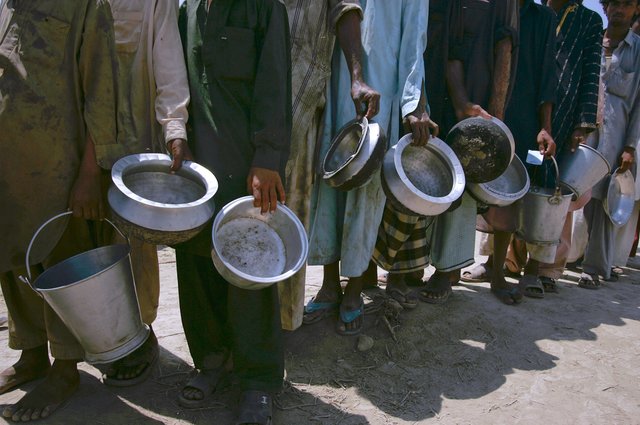
    Thousands of people are camped out on roads, bridges and railway tracks – any dry ground they could find – often with nothing more than the clothes on their backs and perhaps a plastic sheet to keep off the rain. “I have no utensils. I have no food for my children. I have no money,” said one survivor, sitting on a rain-soaked road in Sukkur along with hundreds of other people. “We were able to escape the floodwaters, but hunger may kill us.” …

    There is a desperate need to send more well-equipped medical teams to the flood-hit areas to prevent the further spread of disease. The victims of the flood have lost everything and cannot cope with potential epidemics on their own.

    I’m writing this article because I live and work between two worlds: the mainstream North America that I come from, and the Pakistani immigrant community. My job is to help bridge the gulf in awareness and sympathy between those worlds. What I’m seeing right now is that Pakistani-Americans and their admirable and effective nonprofit groups are jumping once more into the breach, as they always do. And, as always, they’re confined – and confining themselves – to soliciting funds from each other.

    The flooding is “well timed” in the sense that the fasting month of Ramadan has just begun, and many Muslims will be directing their annual zakat charity contributions toward flood relief. Pakistani-Americans are generally an affluent community, but there’s a limit to what they can do. Wealthy Pakistanis in Pakistan also need to help, and surely are helping. Just as important, we non-Pakistani Americans and Canadians must help. We also must somehow self-raise our own awareness, given the paucity of decent media coverage. This is important both for obvious-enough political reasons, and simply because it’s the right thing to do.

    I see troubling contrasts between the outpouring of generosity and attention that followed the earthquake in Haiti and the averting of eyes from the flooding in Pakistan. I see several reasons for this: Haiti is nearby; the earthquake killed 200,000 or more people all at once. In addition, though, there’s the fact that Haiti is not a Muslim country. The earthquake fit right in with the story we were already telling ourselves about Haiti, which is all about poverty and tragedy. Dr. Paul Farmer sums it up pithily in the title of his book The Uses of Haiti. The uses of Pakistan are different. We need to move beyond the uses of both countries and toward understanding them accurately and respectfully, in their own terms. Our awareness of Haiti should be more political and of Pakistan less so, or differently so.

    Anyway, back to my friend’s question. The short answer is that, as always, grassroots groups are more nimble and effective, and your money will be put to better use if you give it to groups that are nearer the ground. This is why the nonprofit groups founded and run by Pakistani-Americans are crucially important. I’m including links to several of these below, and I recommend them all.

    I was jolted the other day when another friend suggested that being asked to donate to the excellent Islamic Medical Association of North America “could possibly turn some people off.” He’s probably right, but we goras need to get over our knee-jerk aversion to the word “Islamic.” Your doctor might be a member of IMANA. As a Haitian woman told Paul Farmer years ago, “Tout moun se moun” – all people are people. We’re all in this together.

    Please contribute to flood relief in Pakistan through one of these organizations (listed in alphabetical order):

    APPNA    www.appna.org/

    The Citizens Foundation   www.thecitizensfoundation.org/

    Developments in Literacy   www.dil.org/

    Edhi Foundation    www.edhifoundation.com

    Human Development Foundation     www.hdf.com/

    IMANA    www.imana.org/

    Islamic Relief USA    www.islamicreliefusa.org/ 

    Relief International   www.ri.org/

    SHINE Humanity   www.shinehumanity.org/

    UNICEF    www.unicef.org/

    Rescuing Pakistan’s Flood Survivors

    Recovery efforts are underway in Pakistan where monsoon rains and severe flooding washed away tens of thousands of homes, killing thousands and leaving millions homeless.

    How you can help? A number of charities are mobilizing medical, shelter and humanitarian aid, responding to the great need for flood survivors’ immediate needs.

    AmeriCares emergency relief experts are working to send medical assistance and other aid to the flood-affected region in Pakistan. They are accepting online donations as well as phone donations at  1-800-486-HELP (4357)

    British Red Cross is accepting donations of goods to the Pakistan Flood Appeal. Monetary donations in pounds can also be made online or by calling 0845 054 7206 in England.

    CARE is supporting the distribution of emergency supplies and providing aid to health teams and mobile clinics in the affected communities in Pakistan. You can help by making an online donation.

    Catholic Relief Services is currently organizing shipments of humanitarian aid to Balochistan, one of the affected areas. They are also sending emergency shelter kits and hygiene supplies to other flood-affected regions in Pakistan. Donations to their Emergency Relief fund are being accepted online and by phone at   1-800-736-3467.       

    Concern Worldwide US is responding by sending emergency teams to the region, and they have launched their Pakistan Emergency Flood Appeal. They are working to provide about 9,000 families with kitchen sets and hygiene kits, clean water, temporary sanitation, and dry rations of food. Online donations can be made dollars, euros and pounds.

    Church World Service is distributing food packages and shelter material for flood-affected families in Balochistan, Khan and Khyber Pakhtunkhwa, as well as mobilizing a health unit to offer emergency medical assistance in Mansehra. Your donation can be made online and by phone at  1-800.297-1516        

    Direct Relief International is providing emergency medical aid to healthcare partners responding to disaster in Pakistan. Donations to their Emergency Response fund can me made online and by calling  1-800-676-1638    

    Doctor’s Without Borders is supporting basic health units in the flood-affected areas of Pakistan. The organization is also helping with water distribution to health structures, as well as hygiene products, cooking sets and other supplies. They are planning to send additional personnel and mobilizing resources to assist relief efforts. Contributions can be made online and by phone at 1-888-392-0392      

    International Committee of the Red Cross continues to distribute relief supplies to over 7,000 flood victims in Balochistan. The ICRC and its partners are finalizing medical contingency plans for flood-affected areas, and for repairing critical water infrastructure. You contribute by making a donation in numerous currencies online.

    International Federation of Red Cross and Red Crescent Societies are performing rapid needs assessments in affected areas and distributing food coupons and other relief items including tents, hygiene kits, tarpaulin sheets and kerosene stoves. They have also set up a medical camp in Sultan to offer immediate medical aid to affected families. You can help now by making an online donation.

    Islamic Relief USA is providing food and water for 700 families In Noshara, distributing emergency supplies and working with the United Nations World Food Program to distribute food to 2,000 families in Bakhtiarabad. Islamic Relief has launched a campaign to aid the victims of the floods, which you can support by making an online donation.

    Mercy Corps is accepting donations to provide flood victims in the hard-hit Swat Valley with water, food and tools to clean up and rebuild. You can donate online.

    Oxfam Great Britain is looking to provide the needed temporary shelter, clean drinking water and toilets to help avert a public health catastrophe. They are accepting online donations in pounds, euros and dollars, and can be reached by telephone internationally at  +44 (0) 1865 47 2602. In England, you can text ‘DONATE’ to 70066 to make a donation of 5 pounds to their Pakistan Floods Appeal.

    ShelterBox distributed hundreds of ShelterBoxes to families rescued from the flood in the Punjab and Khyber Pukhtunkhwa (KPK) regions. Find out how to become part of the ShelterBox Team or help the efforts by making an online donation in the UK and the US.

    SOS Children’s Villages supports the children of Pakistan through different programs across the country and offers care of lone children following the disaster, as they did after the Kashmir Earthquake. You can make a direct donation in dollars or pounds and you can sponsor a child in Pakistan here.

    UNICEF‘s Pakistan office is providing assistance for water and sanitation, health, and nutrition. They are distributing clean water and water purification tablets to prevent water-borne diseases and will continue to asses the situation to determine if further fundraising appeal is needed. If you are interested in becoming a UNICEF volunteer click here or support flood-relief efforts by making an online donation.

    World Food Programme is making food distributions to 35,000 families affected by the flooding in Northwestern Pakistan. WFP Pakistan plans to assist up to 150,000 families over the next few months as access to the affected areas improves. You can help by making an online donation in either euros, dollars, pounds or yens.

    World Vision is working to distribute food and clean water to the affected communities in Pakistan. They have created the World Vision’s Flood Relief Fund which you can support it by making an online donation.

    Operation Blessing International is sending emergency medical relief teams to Peshawar, Pakistan. Working with their disaster relief partner charity Humedica, OBI will offer medical treatment and distribute food, clean drinking water and emergency building supplies to thousands in need from this flood. Support for OBI’s disaster relief efforts can be made online or by calling 1-800-730-2537  

    Save the Children is providing food and water, shelter, sanitation and other immediate needs for the families and communities affected by this disaster. They are accepting donations to their Pakistan Children in Emergency Fund online as well as by phone by calling in the US    1-800-728-3843